The professorial looking madman who auditioned for his position as top law enforcement officer for the most litigious and lawless president in history, lectured his questioner on the definition of the squishy word “corruption.”First, an excerpt from his audition for Attorney General:
This is an expression of Barr’s wildly extreme view of the powers of the Unitary Executive. Presidential accountability for ‘corrupt’ acts committed while in office? Balderdash! Nothing the president does under his limitless Article II powers can be scrutinized for corruption if the president does not want it to be.
During his confirmation hearing, Barr patiently gave Senator Dianne Feinstein one of his trademarked circular lectures on the definition of “corruptly” (while running out the clock on substantive questions, like an expert college basketball team freezing the ball in the old days):
What it means is using it in the nineteenth century sense, it meant ‘to influence in a way that changes something that’s good and fit to something that’s bad and unfit’, namely the ‘corruption of evidence’, or ‘the corruption of a decision maker’. That’s what the word “corruptly” means, because once you dissociate it from that it really means, very hard to discern what it means. It means “bad”… what does “bad” mean?
Fair point, Bill. Who among us can really define a word like “bad”? It’s almost meaninglessly vague, like the world “corruptly” itself, as used in the twenty-first century sense.Presumably even the nineteenth century mind would have had trouble comprehending something as abstract as “corruption of the Department of Justice.”It’s all such a matter of opinion!
And so it is with the Law and Order president, who lost thirty legal challenges to the orderly election that decisively ousted him. He will not be thwarted by an election he knows was rigged (he himself did his best to rig it, after all), by mere law as applied by so-called “judges”, when there are “bad” things he can still do to cling to power that he will never be held accountable for.
Michigan, a state he lost by 155,000 votes (15 times Trump’s 2016 margin in Michigan, twice the total 78,000 combined margin that gave him the Electoral College when he narrowly won Michigan, Wisconsin and Pennsylvania) has a process for a final statewide vote certification, after each county certifies the votes (which they’ve already done). No problemo — after you lose in court to stop thecounties, which all legally certify their results, here’s what you do:
Fly the Republican members of the Michigan state canvassing board, along with top Republican state legislators, to Washington D.C. where you meet them at the White House, treat them to a lavish meal at the four-star Trump Hotel (the RNC will pay) and unleash the famous charm/terror offensive on them, convince BOTH canvassing board members to “illegally” contest the certification results in every county in Michigan. Stall things, to throw the election results, known to everybody and recounted in several places, into chaos.
After all, as Mr. Barr argues, along with nonpartisan legal geniuses like Alan Dershowitz, the president is the only one with the power to decide, if he honestly (even if delusionally — or delusively, which we learn is a more proper, if more obscure, statement of the same thing) believes something is in the best interests of the nation, whether that thing is, to be crude, “good” or “bad.” Simple, right?
Nothing wrong with wining and dining Republican state officials at your luxurious hotel to influence them to refuse to do their sworn legal duty so you can hopefully throw out an election result, delay, delay, delay the official certification of your corrupt enemy as president and hopefully find a way to game the constitutional system. Article II says so — there’s nothing about a president’s obligation to “obey” so-called election results in there. Nothing!
Because a friend called me Mr. Sunshine the other day, with some irony (for one thing, I avoid the sun, I hate that life source which has caused me multiple operations to remove cancers from my nose) I feel an obligation to set out a few reasons to feel hopeful and to act with optimism and determination. Particularly about taking those two senate seats in Georgia, the ones that will allow the democratic process to move forward without the deliberate, cynical obstruction that McConnell and his 51-49 will insist upon.
Terror is scary as hell — obviously, it’s terror. The threat of terror can be terrifying, as it is intended to be. When an angry, powerful person promises an army of 50,000 armed loyalists making sure there’s no (wink wink) “voter fraud” at certain polling places — it’s very scary. It didn’t happen, anywhere really. There were no crowds of Proud Boys standing by, or Bugaloo Boys, or Game Boys, few of the best members of the Klan, very few of the finest of American Nazis. The goon squads, the death squads, the terrifying, bellowing armies of the night did not appear. A beautiful thing, speaking well of our nation, and something to be happy about.
ONE: We withstood the threat of goon squads intimidating voters to support a would-be tyrant(and tens of millions lined up to vote in spite of the threats)
The goon squads were as absent as the predicted rioting, invocation of the Insurrection Act, martial law, counter-insurgency forces deployed in “anarchist jurisdictions” and the rest of a would-be dictator’s terrifying fever dreams. Of course Trump is going to do everything possible to set a thousand shit fires before he leaves office, and will certainly set hundreds, but the very worst did not come to pass, which speaks well of our experiment in democracy here.
TWO: In spite of the relentless pressure on millions of our fellow citizens, there has been no wave of crime during thisawful pandemic
The pandemic is terrifying. Under the best government control, it would be a hard road protecting millions from a worldwide disease that is airborne, highly contagious, incurable and potentially deadly. Under our federal government’s laissez-faire approach (that’s French for “let the powerless fuck themselves, ehn?“) a quarter of a million of our fellow citizens who didn’t need to die horrible deaths died unspeakably awful deaths. Our neighbors and loved ones continue to get sick, thousands die. The stress of it is sometimes hard to bear.
We have an administration coming in that will make every effort to have us all follow the best medical advice to control the spread until everyone can be vaccinated, but the beginning of their work could be another 100,000 deaths from now, as the disease continues surging uncontrolled in many parts of the country.
There is only this reason to be hopeful at this moment in regard to the pandemic (yes, the vaccines will be great, too, but in a few months, at the earliest — if you and your loved ones live that long): under incredible pressure, terror and increasing desperation, Americans, particularly ones forced into official poverty and threatened with imminent homeless, have not been committing violent crimes of desperation.
Think of that for a minute, this lack of wild lawlessness says something very good about the basic humanity of our people here. A corollary — people tend to help each other during public emergencies, after catastrophes, when trouble is worst, Americans always have too.
THREE: The incumbent Republican president lost the race in faithfully Republican Georgia. We can get two senators to make it 50-50.
Trump’s open (and clandestine) attempts at nationwide voter suppression, although many and mighty, did not manage to swing the election to the unhinged would-be strong man. In spite of an open criminal conspiracy to suppress mail-in voting, and widely stoked fear about intimidating in-person voters, record numbers lined up, sometimes for 8 hours, to personally cast enough votes to indisputably vote the “You’re Fired” guy out by the largest margin since incumbent Herbert Hoover lost to Franklin Roosevelt in 1932.
In Georgia, where the current governor was elected by a 55,000 vote margin (after purging 107,000 eligible voters who were likely to vote against him — among the more than 500,000 voters he’d purged prior to the gubernatorial election he supervised), where voter suppression is practiced fairly openly, the anti-Trump candidate managed to eke out a victory.
Reason to be optimistic: Americans, including a large contingent of Georgians understand exactly how crucial a 50-50 senate is to the continuation of democracy. Every reactionary, evangelical and racist in the great state of Georgia will be driving people to the polls to vote Republican– millions will go to cast their votes for Jon Ossoff and Reverend Raphael Warnock. Warnock led Loeffler by 7 points on Nov. 3, though he didn’t approach the 50% needed to win in Georgia [1]. Ossoff and Perdue were close, Perdue had a 2% lead (and thankfully 2/10ths of a percent less than the required 50%).
Democracy can win this close runoff in Georgia. There are activists, led by Stacey Abrams (who registered tens of thousands of voters in Georgia) who is mobilizing many of them, bringing out the vote, particularly those voters who never registered. It’s going to be close in Georgia, two votes crucial for democracy or continued corrupt government dysfunction and obstruction.
More on what you and I can do to bring out the vote in Georgia tomorrow.
Love beats hate in the end. Believe it, because subscribing to the opposing view leads inexorably to the end of all hope for anything better, ever. Things that look hopeless often get better, if enough work is done. The work starts now.
[1]
On Nov. 3, Warnock topped a field of 20 candidates running in a “jungle primary” special election that included Loeffler, who Gov. Brian Kemp appointed to fill the Senate seat vacated by Johnny Isakson in late 2019. Warnock received 32.9 percent of the vote, while Loeffler got 25.9 percent. Her main Republican challenger, Rep. Doug Collins, received 19.9 percent.
There is a way to be right no matter what. Declare yourself right and walk away, or simply stand your ground and keep insisting you’re right.
It won’t work in every situation, granted. A policeman or judge (or jury) does not necessarily have to agree with your assertion that you are right. But in many, many situations, you’re free to simply argue “I’m right and fuck you!” and be done with it. If you get away with it, many people will applaud you for this ballsy “take no prisoners” attitude. Who cares what anybody thinks, based on whatever supposed evidence, when you know beyond any doubt that you’re right?!
The price for employing this technique? You’re pretty much an asshole who doesn’t listen to reason, cannot be persuaded, believes only your will has weight or value, no matter how terrible the consequences of your insistence. It marks you as a person for whom being right is the only acceptable outcome, no matter how idiotic and/or destructive what you’re insisting on might be.
It is a prerogative more easily used by a wealthy person than a poor person. A poor person can use this time-tested technique too, but there is a higher likelihood of problems flowing from it, if you are poor. Being wealthy carries some perks most people don’t have. It’s why they call having more money than you can spend in your lifetime “fuck you money.” Have enough money, you can tell anyone to take a hike, or take a long, luxurious one yourself.
It seems obvious to note that we’ve seen this hardline approach to right and wrong up close for the last four years, playing out many times every day IN ALL CAPS on our televisions, computers, phones. It’s about all everyone has been talking and texting about lately because of our dynamic social media president, a man who knows only one move: “double down”. Mr. Trump, a self-made billionaire business genius who was a millionaire by age eight, a multimillionaire by his teen years, is about the greatest example of what you can do, if you are rich and confident enough and only want to be right, no matter what.
His election mandate in 2016 was a slim 78,000 votes, in Wisconsin, Michigan and Pennsylvania, combined, (not much over 1% total in those three states) that gave him the Electoral College landslide of 306 votes. The large margin for his opponent in the popular vote, Crooked Hillary, was the result of Mexican zombie votes, three million cases of voter fraud. His Presidential Voter Fraud Commission would prove it. They were unable to prove that even 10 dead Mexicans voted illegally for Hillary (or one, for that matter), though they successfully referred six people for prosecution for voting fraud before disbanding after a diligent six month search. Then, goddamn it, wouldn’t you know it? In 2020, another rigged, fraudulent election, this time outright stolen from him!
Just a few of Donnie T’s greatest hits: abuse of power is not an offense for which a public official can be legally impeached (though quietly carrying out one’s duties, like Alexander Vindman’s brother, is more than adequate grounds for firing), the pandemic is fake, a mere attempt by radical Socialist Democrat partisans to hurt his presidency; asking a foreign leader for dirt on your political opponent– if they want the weapons you’re holding back– is perfectly fine; ditto engaging in a four year pattern of contempt of Congress, defying legal subpoenas, using litigation, and multiple appeals, to prolong debates over one issue after another you know you will lose, delay is the ticket in U.S. Courts as every skilled litigant (who has a lot of money) knows.
You can get upset about US government workers ripping babies from their refugee mother’s arms at our Southern border, but only if you forget that those babies are illegal alien babies, most of them mere props of terrorists, rapists and worse. Firing career public servants is perfectly legal, as is making the entire Civil Service “at will” employees who can be fired at any time, with or without cause; ditto the so-called environment– we need jobs more than we need anything else. If 250,000 more of us have to die during this pandemic, it is the will of God, the God who gave us the brave, brilliant flawed vessel of Mr. Trump, an unlikely but uncanny champion, to tirelessly fight America’s real secret enemies who would steal, rape and murder all white, Christian, children (so as to drink their blood).
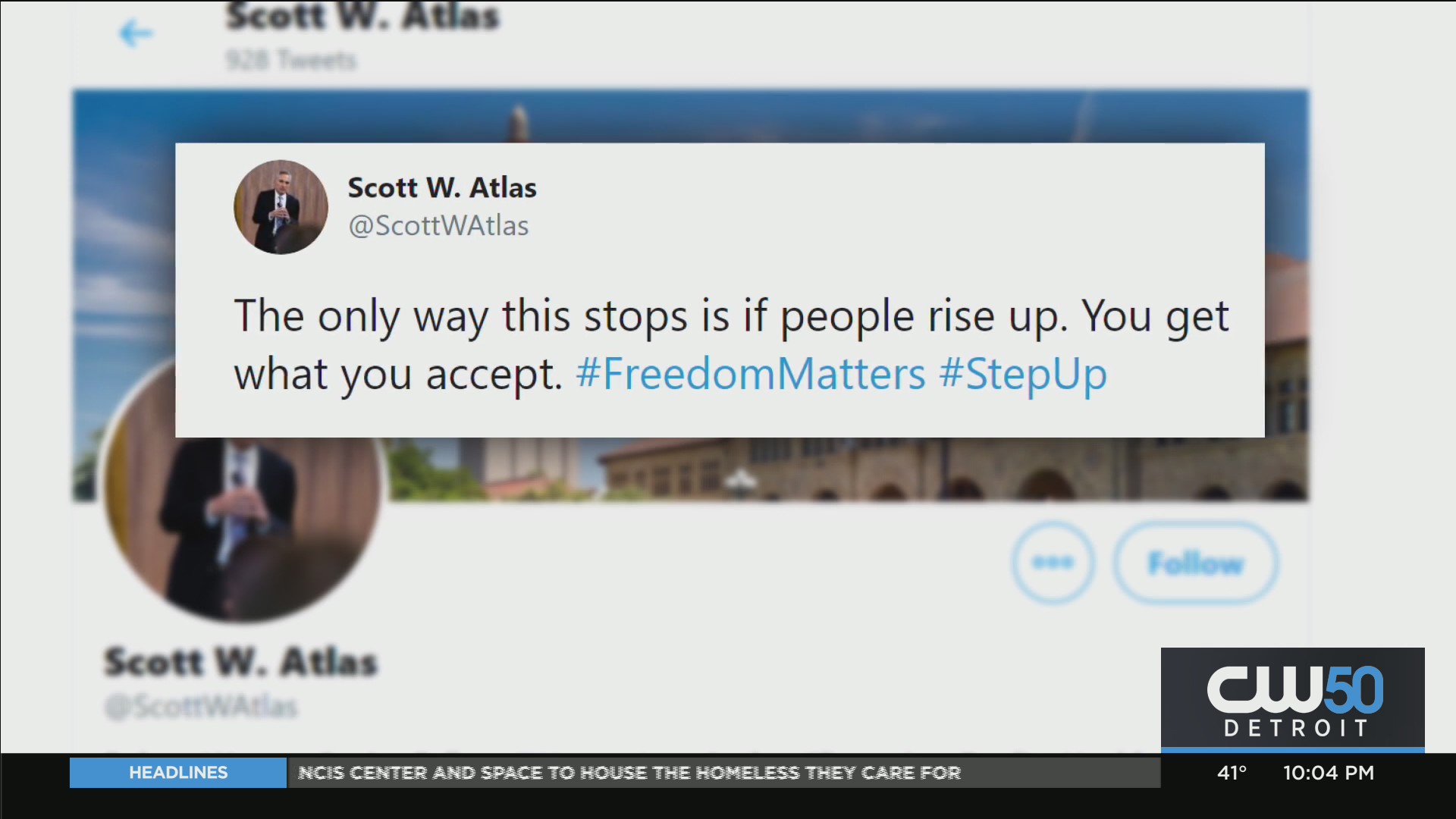
As the president continues to block a rational transition to the Biden administration, at the height of the pandemic, President Trump’s top pandemic advisor, Dr. Charles Atlas, urged the citizens of the great state of Michigan to “rise up”– another incitement to violent overthrow of Democrat Tyranny, in the form of a mask mandate and the closing of businesses to protect residents against a new surge of COVID. (No call to behead the traitorous Republican governors of North Dakota and Utah who imposed similar mandates? Come on, Atlas!)
Atlas is right, of course, about one part of that: we only get what we accept. Bill Moyers published this piece, with the clever “Dr. Atlas Shrugs” (a tip of the cap to the grande dame of sanitized fascists, Ayn Rand) in the headline, which gives more detail for any egghead who might want to go beyond the good doctor’s tweet (which Atlas, shrugging, later denied was any kind of incitement to violence, “rise up”, you know, like “stand by,” LOL!) [1].
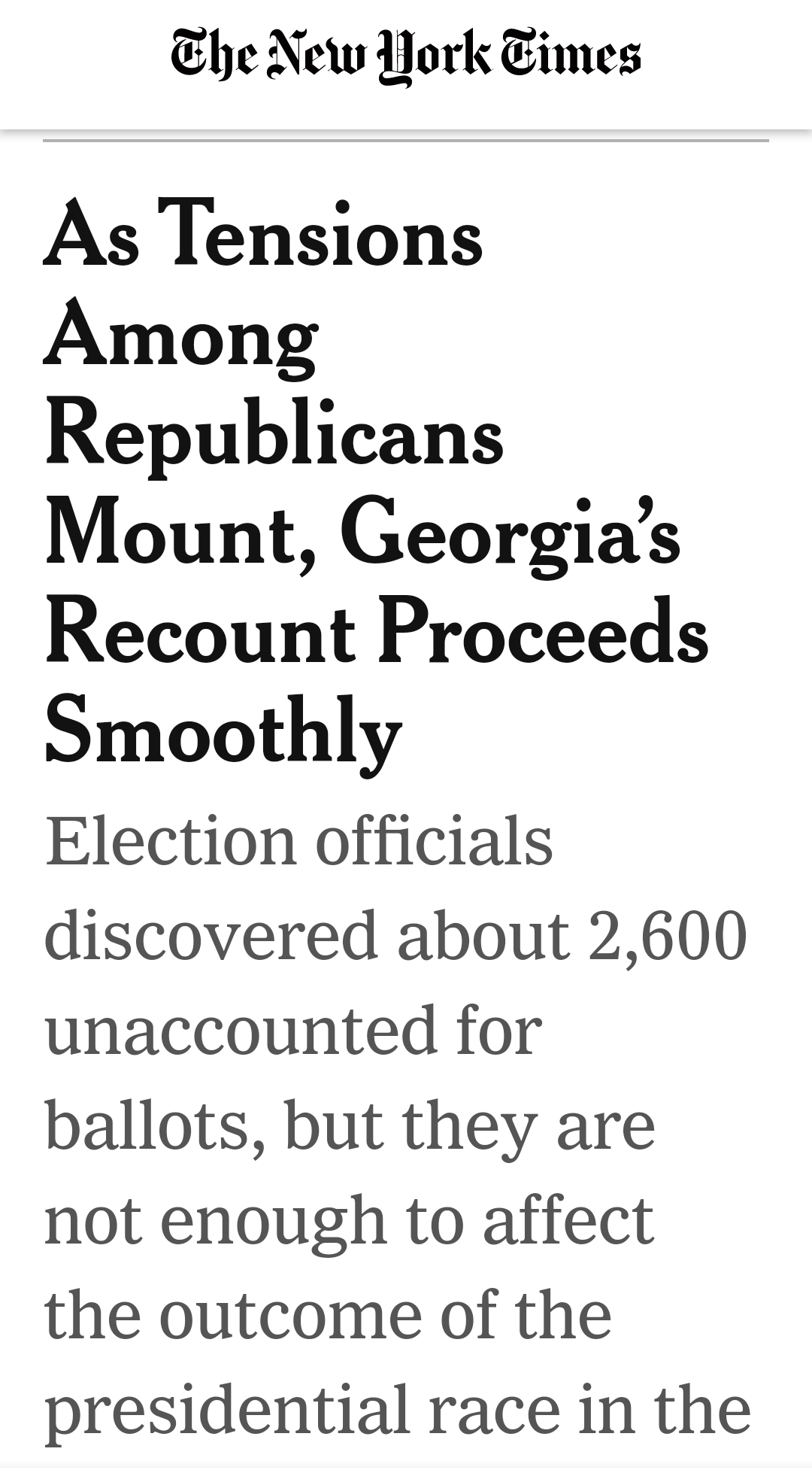
Anyway, fuck Atlas and the whores he rode in on. He’s just another incendiary device in Mr. Trump’s unrelenting blitzkrieg on objective fact, evidence, all that unfair Communist claptrap and folderol. I mean, just look at these complete lies from yesterday’s New York Times!
The “Times” makes it seem as if the Republican Secretary of State of Georgia is being pressured by his own party to resign, or to throw out the fraudulent signature-mismatched votes that gave Biden the stolen, rigged election in Georgia. Well, he is being pressured, sure, OK, that’s just hardball party politics, but it’s not like he’s getting death threats, though, naturally, he reports he is. Which, of course, he would. He’s clearly in on the Biden scam! Another traitor!
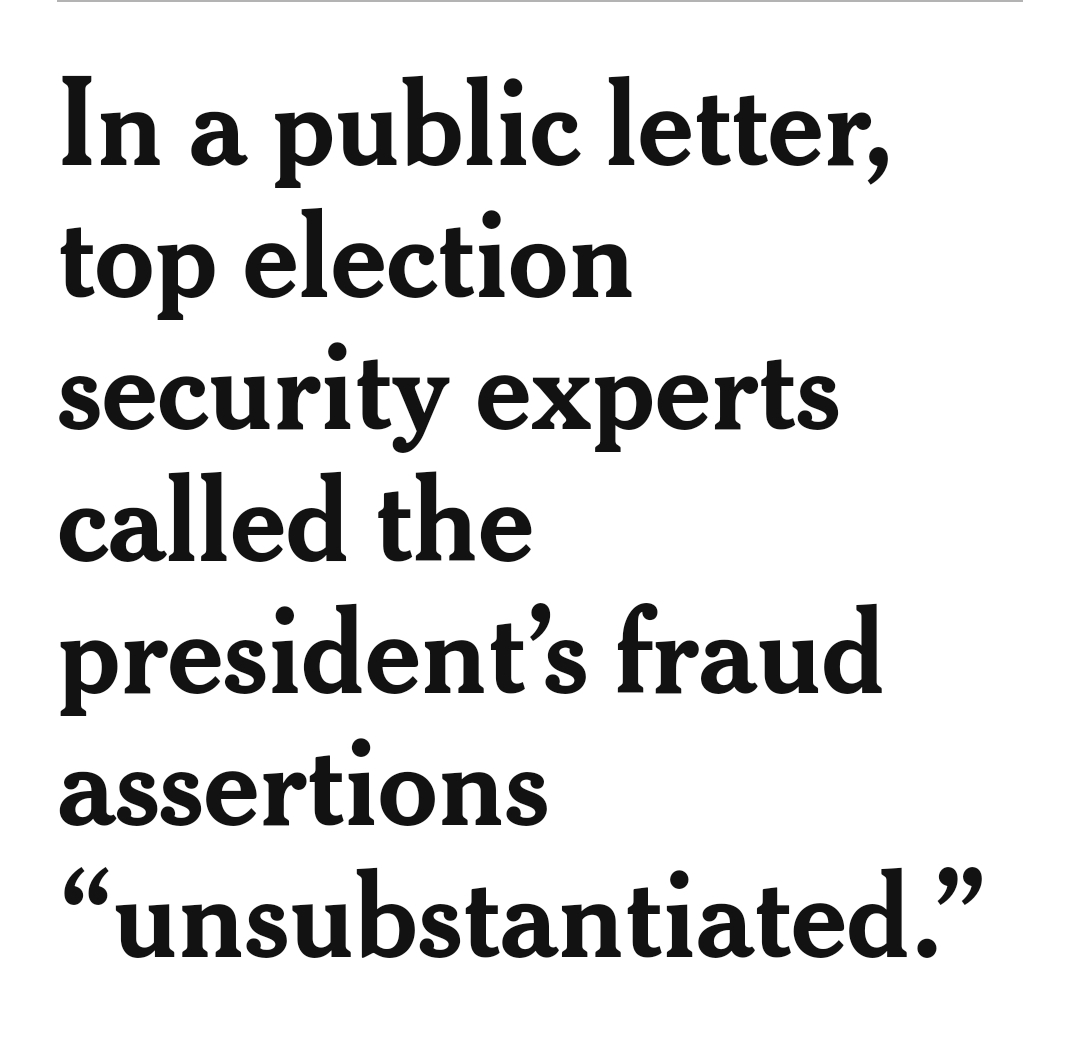
OF COURSE THESE “EXPERTS” WOULD SAY THAT! They wouldn’t know fraud it if came right up and DID NOTHING TO THEM!
I’m hoping we don’t have blood in the streets as this FAKE electoral dispute senselessly continues while administration loyalists stand proudly, manfully working up passions for the violent end of electoral democracy in the USA. As things stand at the moment, I don’t think there will be a Second Civil War, but, objectively, it is Mr. Trump’s only path to staying in power after losing the election. Worth a shot, no?
Georgia’s Republican officials disenfranchised hundreds of thousands of voters since 2017 — purged at least 107,000 eligible voters before their current governor (the man who, as Georgia Secretary of State, unilateraly ordered and oversaw the voter purge) won a 55,000 vote victory over Democrat Stacey Abrams. Soon to be preemptively pardoned Louis DeJoy deliberately slowed mail delivery in 2020 from places like Atlanta, where Democratic voters outnumber Republicans. How many votes were undelivered? We’ll find out in the coming months, perhaps.
The Republican party did everything possible to suppress the hated “Democrat” vote in Georgia, including outright cheating, and Biden still managed to squeak out a 14,000 vote win in the great state of Georgia, thanks to the dedication of millions of voters in Georgia who would not be deterred, not take what they were being forced to accept.
I thought of these dedicated voters fleetingly yesterday, as I posed these two candy bars on the cashier’s conveyor belt for their portrait.
The cashier looked confused at first, as I fussed lining up the shot, trying to get an angle that reduced the glare enough to make the labels readable. Then she read the labels. “It’s everything now,” I said to her, “you can’t buy a fucking candy bar without having to pick a side…” She told me, as she announced her register closed, that she’d never noticed that about the Twix bars, until now. I shook my head, tight smile mostly a smirk, turned to put the candy bars back on the rack.
The expression on her face, the cashier was what we in the U.S. call a “black woman” or “African-American”, was that unique mixture of bemusement and bottomless sadness, plus a bit of resolve. Sekhnet and I nodded in agreement. We all wished each other a cheerful “be safe,” and Sekhnet and I went to find the car in the Target parking lot.
[1]
Here’s one nice slice, to give you the general flavor of both sides of this “argument” about wearing masks during a deadly pandemic:
During his interview, Dr. Atlas railed against those who refuse to accept facts that contradict what they want to believe. He lambasted people unable to admit that they’re wrong. But when asked about Dr. Fauci’s comment that Dr. Atlas is an outlier on epidemiological and public health issues relating to the pandemic, he said, “I’m proud to be an outlier, especially when the ‘in-liers’ are completely wrong…I’m not afraid to be a contrarian because I know I’m right.”
I woke up today fighting off a strong feeling to just stay in bed, even though I knew that wouldn’t help me at all. I could think of little else that might help me today, as I started going about my day. My reaction to stressful feelings (which I neither endorse nor reccomend), things some experience as acute anxiety, is to think of something else, focus on something that makes me feel engaged and “productive” (like tapping out these words, to organize the thoughts behind them) and worry about the anxiety-producing tasks later (three or four medical appointments — one involves finding a new doctor– and spending a few hours on the phone to take care of paying some old tax penalties).
I began thinking abouta recent conversation between Lewis Black and Marc Maron (on Maron’s WTF podcast) I heard the other day. They covered a profound point about the disorienting situation we find ourselves in, and the required American response to it.Profound, but obvious, once you think about it for a moment.
LewisBlack is famous for his angry rants. He got one of the last big laughs my mother had before she died in 2010, answering his own question about whether the voting booth is a place where you ever find the name of a candidate you truly believe will do a great job representing your beliefs. “No! you pull the curtain closed and it’s two bowls of shit! And you have to pick one!”
At one point Maron says that lately, in his isolated state, in these crazy times, when the latest infuriating news story unfolds, he just feels like crawling off and dying. Black chuckles sympathetically and says “you missed the anger exit! You drove right past the anger off-ramp.”
Black tells Maron that he had never much experienced anxiety or depression in his life, but that during his first ten weeks in solitary in his New York City apartment he became familiar with both, acutely, daily, hourly, for the first time in his life.
He realized why: anxiety is an appropriate response to the terror of an uncontrollable pandemic that kills tens of thousands, especially when you’re in the epicenter of the American outbreak and in the top risk group for death (Black is 72). He noted that depression is also a natural and understandable feeling, when you’re suddenly prevented — by a legitimate fear of death — from doing many of the things that made your life enjoyable, even bearable, before the pandemic. Then Black points out the great American disconnect.
Here in the good old USA, of course, we’re pretty much required to pretend everything is pretty much fine. How are you holding up, man? “I’m fine, all things considered.”
You’re not fine, really, even if you mostly are safe. You’re also more than usually isolated, anxious, disoriented, depressed, angry, many things are legitimately buffeting your moods these days. You’re right to feel all those feelings. Sure, you’re not intubated in a hospital like thousands of Americans, not dead in a portable morgue outside an overflowing hospital, not beaten up or shot to death by white nationalists violently overthrowing the results of the most recent US election, acting to defend a president who continues to show depraved indifference to the unchecked mass death of his citizens, but are you really “fine”?
I ask you to consider the question again — are you really fucking fine?
I try to give everybody I know a wide emotional berth these days. We are all in a very, very tough emotional situation, a do-or-die daily struggle. Nobody knows how to handle this, though we manage to put together coping strategies for a very difficult situation as best we can. I spend a couple of hours writing every day, take in the news, read an article, a court decision or two, cook a meal, play the guitar, learn something on the piano, walk 4.5 miles in 75 active minutes or so. Good for me, most days. Most people I know have much different routines. Those routines are good for them, most days.
This is not in anyone’s experience, how to emotionally adapt to a quick spreading incurable worldwide airborne killer disease that appears intent on infecting people for the foreseeable future. We’re now eight months into this semi-lockdown, with no end in sight. Places that have not tried to reasonably control the spread of this horrible disease have seen huge surges in infections — those places continue to infect every place else. The federal government washes its hands of the whole deadly situation as its leader defiantly hosts super-spreader events that infect dozens of his own inner circle.
Add to it that half of our country is militant in insisting that scientists and politicians urging safety precautions based on science, are a bunch of lying, tyrannical, traitorous liberal weenie douche bags whose lying, self-serving heads should — in a more just world than this one — be on pikes. Wearing a mask is a sign of contemptible cowardice to a sizable proportion of our fellow citizens. Anthony Fauci requires government security protection due to the many death threats against him and his family.
Add to it that we have a stridently divisive president, who lost the election decisively and trials in the Electoral College 306-232, and still insists he won the rigged election while his most ardent lackeys (and more than 73,000,000 of our fellow citizens) passionately defend his decision to not give up until it’s actually indisputably proven that he actually lost the election — which many of them believe he hasn’t actually lost.
These are not any way close to “normal” times, which, lest we forget, always provide most of us many reasons to be sad, stressed, anxious, angry, depressed. These trying days are about the furthest thing from “normal” time. Conjuring this coordinated constellation of shit would challenge the imagination of an inspired writer of dystopian future novels.
If you love Trump, you’re outraged because he got robbed by corrupt lying liberals and an army of his enemies in the lying liberal media. If you hate Trump, well, you have reason for outrage, too.
Entitlement to our feelings is always in dispute, often very hotly. Much human energy is spent contesting the strong feelings of others, “unreasonable” feelings we don’t feel, relate to or agree with.
People we love, when they have strong feelings, need to be heard — it’s the very first thing they need. When they are hurt, we need to soothe them. To pretend everything’s fine so you can feel like you’re not a “loser” (whatever the hell that is) well, it may be characteristically American, but that don’t make it… I don’t know… right.
Yes, it is always good to feel gratefulness, as we all should, if we have our health, are not in danger of eviction and homelessness, are not being forced into poverty (as millions of Americans are and have been in recent months), are not mourning for dead loved ones, like millions of our fellow Americans who lost the 246,000 American loved ones already recently dead of COVID-19. If we are not directly in danger, or grieving soul-tearing loss, we should be grateful, of course.Gratefulness is a great blessing we can give ourselves.
Remember, though, you have every right to feel what you are feeling in these scarily maddening days. Seriously, if you are not, at least sometimes, feeling anxious, depressed, angry, discouraged, oppressed, disoriented– what the hell is the matter with you?
Here’s a link for a list of ways you can help in the fight to have a functioning Senate under Biden and Harris(and to restrain the anti-democratic urges of Mitch McConnell):
As the president continues to deny that he lost the election, and Mitch McConnell prepares 12 more right-wing judges for lifetime appointments to the federal bench (with 23 more waiting for Lindsey Graham’s committee to rubber stamp them) Democracy Now! reports today:
Utah and North Dakota are the latest states to mandate mask wearing. Meanwhile, in South Dakota, where the COVID-19 death rate is among the worst in the world, Governor Kristi Noem, a close Trump ally, has said she would not enforce a mask mandate even if ordered by future President Joe Biden.
Another few seconds of diligent internet research gives us the current population of the state that gave 61% of its votes to Mr. Trump– 899,174. I’m sure the governor has the support of the entire state in agreeing that mass COVID-19 infection and death is preferable to allowing other states, or a president other than Donald J. Trump, to tyrannize the loyal citizens of South Dakota.
South Dakota’s population of almost one million, we learn, is 84% “white” [1]. It’s numbing to recall that 58% of “white” men voted for Donald Trump, along with an astounding 55% of “white” women — after Trump’s first four year attempt to Make America Great Again, Lock Her Up, Build that Wall, etc.. It was the large increase in the minority “non-white” vote, voting decisively for Biden, that defeated Donald Trump by a national margin of 5,600,000 votes and counting.
I put “white” in quotes because members of minority ethnic groups, like Jews, Italians, light-skinned Latinos, regarded not long ago as “non-white”, can become white in a racist country by attaining affluence and a measure of political power. This transformation to white is not possible for other groups with darker pigmentation, of course, but that is a function of racism.
Which we do not talk about here. To whose advantage is it to discuss something so ugly in the greatest nation God has ever bestowed His grace upon?
[1]
The “black” population of South Dakota, we learn, has doubled in recent years, to 2%.
Black residents still make up less than 2 percent of South Dakota’s population, putting the state in the bottom 10 in terms of percentage. Mississippi is the highest, with 37 percent of residents identifying themselves as black. Mar 30, 2011
from Heather Cox Richardson’s most recent “Letters from an American” (for history only, scroll to “headline” font I’ve inserted);
… Meanwhile, the president appears to have lost whatever interest he might have had in actually governing. As the country reels from the coronavirus surge that has now infected more than 10 million of us, killed more than 244,000, and crippled the economy, he is apparently focused exclusively on the past election. He has not gone to a coronavirus task force meeting in at least five months, rarely reads the daily reports on the virus, and is no longer briefed about the crisis by doctors. He has apparently decided simply to let the conflagration burn. At the same time, he is refusing to let his staffers talk to incoming Biden staff about the pandemic.
“The duty of a president is to protect the national security of the United States, and this is the most prominent disease of mass destruction America’s ever faced, and we have a commander in chief who has run away from the problem and has made it worse,” Jack Chow, a U.S. health official under George W. Bush, told reporters from the Washington Post. “We had an opportunity twice over the past eight months to bring it down to safer levels, and we failed. We are on the verge of losing control of this pandemic.”
And yet, most Republican lawmakers are not willing to challenge Trump in public.
Indeed, in his willingness to abandon governance for his own benefit Trump is simply following the lead of Republican lawmakers like Senate Majority Leader Mitch McConnell (R-KY) who has steadfastly refused to take up bills from the Democratic-led House of Representatives, including a coronavirus relief package to address the coronavirus recession. Instead, McConnell has focused on packing the courts with pro-business judges. Excerpts from a new book by former President Barack Obama, due out next week, reveal McConnell’s response to a plea from then-Vice President Biden to pass a worthwhile bill. McConnell answered: “You must be under the mistaken impression that I care.”
Today’s Republican Party has traveled a long way from the party of Abraham Lincoln.
In the 1850s, the Republican Party rose to stand against a small group of wealthy southern white slaveholders who had taken over the government. Those slaveholders made up only about 1% of the American South. They ran the Democratic Party, but they knew their system of human enslavement was unpopular and that they were in a political minority even in the Democratic Party. It was only a question of time until the majority began to hem in their ownership of other human beings.
So when folks started to urge the government to promote infrastructure in the growing nation, building roads or dredging harbors, for example, these southern leaders worried that if the government began to intervene in the economy, the regulation of slavery would be just around the corner. They pushed back by insisting that the government could do nothing that was not expressly written in the Constitution. Even if the vast majority of the people in the country wanted the government to do something, it could not.
As pressure grew for government to promote economic growth for ordinary Americans, the southern slaveholders worked to cement their power. They courted poor white voters, telling them that any attempt to regulate slavery was an effort to lift Black people over them. From their stronghold in the Senate, southern leaders stopped legislation to develop the country and instead pushed laws that spread slavery into the West. When northerners objected, southern leaders packed the Supreme Court and got it to agree that Congress could not stop the spread of southern slavery even across the entire nation. But while they insisted the federal government could not promote the economy for ordinary Americans, they demanded a sweeping federal slave code to protect slavery in the West.
Their system was best for thenation, they explained. Society was made up of a mass of workers, drudges who weren’t terribly smart, but were strong and loyal. They were the “mudsills” of society, akin to the wood hammered into the ground that supported the grand plantation homes above. Directed by their betters, these mudsills produced capital, which accumulated in the hands of the wealthy. There, it did far more good than if it were distributed among those who had produced it, because society’s leaders used their wealth to innovate and build the economy, doing what was best for the workers, who could not understand their own interests. The nation thrived.
To secure this system, though, it was imperative that the mudsills could not vote. If they could, workers would demand more of the wealth they produced. White southerners had enslaved their laborers, South Carolina Senator James Henry Hammond told his northern colleagues in 1858, but northerners had not, and they foolishly allowed them to vote. “If they knew the tremendous secret, that the ballot-box is stronger than “an army with banners,” and could combine, where would you be?” Hammond demanded. “Your society would be reconstructed, your government overthrown, your property divided… by the quiet process of the ballot-box.”
Men like Abraham Lincoln organized to overturn the idea that they were mindless workers, doomed to menial labor for life. In 1859, Lincoln articulated a new vision for the nation, putting ordinary men, rather than elite slaveholders, at the heart of national development.
Lincoln’s “Free Labor” theory held that the nation worked best when the government supported ordinary men rather than a wealthy elite. Ordinary men worked more intelligently and innovated more freely than an elite, and when the government used its power to free up resources for them, they built the economy far more efficiently than the enslaved workers who were hampered by the commands of an out-of-touch plantation owner. Rather than shunning economic development, the government should embrace it, they said, spreading free labor, rather than slavery, across the West.
When Lincoln won the 1860 election, southern leaders refused to accept the results of the election. They left the Union to launch a new nation that rejected the idea of human equality and was instead based on human enslavement.
Left in charge of the government, the new Republican Party rebuilt it according to Lincoln’s vision. To pay the enormous cost of the Civil War, they invented our first national system of taxation, including the income tax. Then, to enable people to pay those taxes, they spread opportunity to ordinary men, giving them western land (that we now recognize belonged to indigenous people), establishing our state universities, and building a railroad to take people across the country. Ultimately, they included Black men in their vision, abolishing slavery, establishing Black citizenship, and guaranteeing Black men the right to vote so they could protect their own interests.
Under the leadership of the Republican Party, Americans were, Lincoln reminded them, resolving “that government of the people, by the people, for the people, shall not perish from the earth.”
If you are (choose your mainstream American pejorative) liberal, progressive, socialist, where do you sign up to join a movement that is working hard and effectively to make change in a violently divided USA? This is not a problem on the right, even actual American Nazis have a clear list of well-known mainstream outfits to join, ideologically pure and nonjudgmentally welcoming, many with a virtual guarantee of a good paying job in the future. The Democratic Party is not a party of the left, however many times the “radical left” tag is repeated by the Loser-in-Chief and his lackeys.
The problematic Democratic party is not the subject of my question, but a word is in order, since I mentioned them. As a party they are famously spineless, their “opposition” always nuanced and cautious, always tacking to the “center-right”, their leaders are the iron-willed vote counting supporters of a slightly less horrible version of the status quo than the one embraced by their wealthy counterparts in the no holds barred Party of Lincoln. The popular (and hated) Bill Clinton was one of the genius architects of this move to the “center, the rebranding of the Democratic party into the socially progressive, fiscally conservative, large-tent neoliberal party of prosperity (for the investor class). Clinton was called, based on the influential laws he signed, the greatest Republican president of the twentieth century, and truly.
Worse than the party’s sly shuffle toward the political right, Democrats are prone to lynching their own, you can ask Al Franken about that. They are famous for knitting their brows and forming “circular firing squads” when the going gets tough. Faithful Nazis, on the other hand, are diehards who continue marching forward into the storm of bullets, no matter what the odds against them. Fuck them all, a pox on both of their stinking houses.
That said, there is, sadly, no choice at election time — a person on the left simply can’t vote for the party of the radical right. And voting for one party or the other, as we’ve seen over and over, is essential for preventing the very worst of us from ruling the rest. As Medhi Hassan said the other day: the far left in this country are calling for health care for everyone, the far right are Nazis.
My question remains. For someone on the left, for a person longing to work to see an actual reckoning with American injustice, the unaddressed racism, the institutionalized poverty, the utter disregard for the lives of most of our citizens, you can search the internet long and hard and find a scattering of small organizations you might join, hoping to find a large group of people who feel exactly the same way you do. Most of these outfits seem to only allow you to make a monetary donation to your favorite of their projects, that’s it for options for active participation.
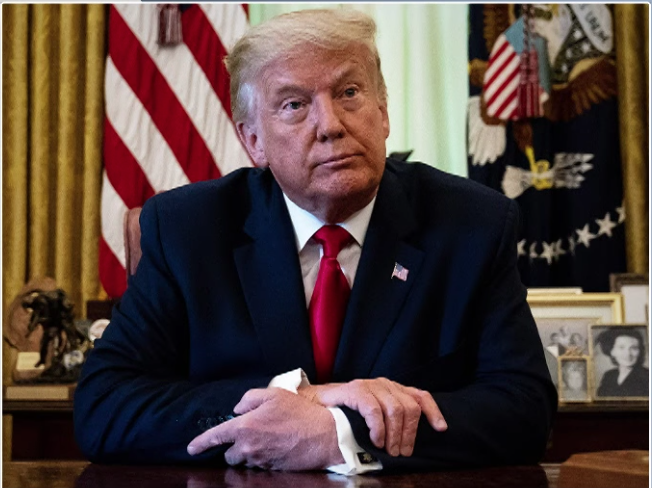
If you are on the extreme right of the political spectrum, just click Republican. Done! Join the 73,000,000 and counting who again voted for your candidate, the greatest, most pious president in the history of white Christendom. A word from him (breaking his public silence since losing the election):
Truer words were never spoken by our president — he guesses right, time will tell.
Back to my original question — how to join our voices to millions of others who clearly feel much the way we do, to make real change, effectively influence our government’s policies directly and forget about hoping that politicians will do the right thing once elected.
It does not seem like an outrageous idea, to take one obvious example, to use some of that trillion dollars (literally $1,000,000,000,000) that America’s 614 billionaires have made so far during the pandemic to protect Americans at risk of death from the pandemic. A trillion or so would go a long way toward ensuring that masks and tests are available everywhere, that fewer Americans die, or merely become homeless, that millions fewer sink into poverty, that the US doesn’t continue to lead the world in out of control COVID infection and death rates. Unthinkable! To suggest something like this radical, confiscatory redistribution of legally earned wealth marks an American citizen as a murderous Stalinist Maoist intent on destroying our sacred way of life!
It’s clear that the Republican party literally doesn’t care how many Americans die of COVID-19. Senate (narrow) Majority Leader Mitch McConnell has blocked a debate on the pandemic relief bill the House prepared months ago, as he blocked countless bills and nominations while lustily hogtying President Obama.
There will be no discussion of preventing mass death, mass homelessness, mass suffering, McConnell announced grimly, until we appoint a 6th Federalist on the 9 vote Supreme Court and then recess, then come back to fight the indisputable election results for as long as possible in hopes of finally overturning this democracy argle-bargle once and for all time.
We will never know how many Americans suffered horribly and died deaths that could have been prevented if the federal government had acted in a responsible way, if it had shown the slightest concern for the safety and lives of its citizens. I have a feeling, looking at the sharp vertical rise on the US COVID graphs since early voting started, that thousands died needlessly because Republicans fought to limit absentee voting and millions were forced to expose themselves to infection in order to vote in person.
If you are a conservative, in college now, you can compete for a scholarship at a place like the Institute for Humane Studies, a Charles Koch-network financed echo-chamber for the amplification and legitimization of destructive, wildly insane ideas, a “think tank” as such places are called. Do well there and the world is your oyster.If you come from a comfortably affluent home, you could be the next Brett Kavanaugh– go to the right schools, join the right society in law school (Federalist), demonstrate your partisanship over and over, work diligently for extreme partisan judges and politicians, tirelessly serve the interests of the corporations (and the religious right, that helps) — and, sky’s the limit, little buddy.
There is nothing remotely analogous to this organized network of influence and advancement on the left.
I am a big admirer, and supporter, of Amy Goodman and Democracy Now! One of her proteges, Jeremy Scahill, has done some crucial investigative reporting and is the author of several excellent books, including Dirty Wars, detailing the multiple clandestine wars the US is fighting, the presidential kill list, the extrajudicial use of drone launched missiles to eliminate enemies on several continents. Scahill and others founded a news organization, dedicated to reporting that takes the fight to the powerful and unaccountable, called The Intercept. He had an excellent podcast called Intercepted that I listened to every week along with an equally great one called Deconstructed, hosted by Medhi Hassan.
In the fearful lead-up to the election, poor Sekhnet was wracked with the terrors of PTSD. She was reliving the horror surprise of the 2016 election, daily, hourly (she alone was not surprised by the result in 2016, she reminds me– though horrified and traumatized she also was). One evening right before the election she was beside herself because one of the founders of The Intercept, Glenn Greenwald, had angrily resigned, citing gross censorship at the left-leaning news outlet. This was going to be a huge story on FOX, she predicted.
Greenwald had written a piece that included the possibility that there might actually be a newsworthy story, unflattering to Joe Biden, behind the Hunter Biden laptop that Giuliani announced finding, a purported treasure trove of dirt on Democratic presidential candidate Joe Biden. Greenwald published his correspondence with an Intercept editor who suggested he cut some of the article, and made a principled declaration, a couple of days before the election, that he would not submit to pro-Biden censorship at the news outlet he had co-founded. Greenwald lives in Brazil, where his lover, a Brazilian politician, is a target of the authoritarian Jair Bolsonaro. He seems to have limited patience for left-wing handwringing in the USA over an article that might hurt Joe Biden’s electoral chances, in however small a way.
To be sure, there are problems with Biden, from the left, many problems. On the other hand, is amplifying unsubstantiated rumors started by Rudolph Giuliani and promoted fleetingly by Rupert Murdoch, on the eve of a momentous election, the best use of your freedom of the the non-corporate press? I don’t want to take sides and, frankly, I don’t give a shit who is right or wrong in this particular dispute. Greenwald could well be the asshole, the Intercept editorial board could well be the assholes.
The point is, the fucking left is busy arguing over who is doing the most to serve the greater good, while every Nazi-admirer in the US is nodding in approval as Mr. Trump mumbles incoherently about not submitting to an unfair, illegal coup d’etat and guys like McConnell and Graham are doing their level best to pull off a miracle and get several state legislatures to flip their election results and give the presidency to the candidate who clearly lost. Can you honestly not tell me who the bigger assholes are?
If you are burned by the injustice we see all around us, where do you sign up? I am asking a very serious question, brothers and sisters.
My best, and only, current ideas for giving us at least a shot at democratic government for the next few years:
Also, from another group devoted to ensuring a functioning Senate:
Dear Tinicum Together Postcard Writing Friends,
You changed the course of history through your postcard writing. You are among 600 Tinicum Together postcard writers from 32 states who wrote approximately 75,000 postcards to Democrats in Erie and Bucks counties. You secured Bucks, a Democrat-leaning county and you flipped Erie, a pivot county that had voted Obama, Obama, Trump. Many of you shared with us your joy and pride seeing Erie move to blue when the results came in. You helped flip Erie one postcard at a time, one voter at a time.
We are working with the Democratic Party of Georgia and the leadership of the Democratic Committees in Douglas, Paulding, Carroll and Cobb Counties in Georgia to bring our personal postcard writing to the Ossoff and Warnock US Senate runoff campaigns to be held on January 5. The Georgia Democratic organizers have created postcard messages to meet the needs of their communities.
We need your postcard writing energy and financial support for this next critical postcard writing campaign. Inspiring Georgia voters to elect these US Senate candidates will help protect health care, women’s rights, and the planet.
We estimate we will need $25,000 to purchase pre-stamped postcards and envelopes, duplicate informational materials, and mail packets to our volunteers. Please ask friends to join you in donating in one of two ways: please use VENMO (@Tinicum-Together) or send checks made out to Tinicum Together to POB 61, Erwinna, PA 18920.
The COVID-19 pandemic makes door-to-door canvassing dangerous. Voters delete unwanted emails, screen phone calls, and discard printed campaign materials but they savor your handwritten postcards personally written to them. Please ask friends to participate in this effort and let us know how many postcards and names/addresses you would like us to send to you. We will begin to mail the packets by the end of the week.
Also, please donate to Stacy Abrams’ organization Fair Fight
Here are some other ways you can help in the Georgia runoff:
Donate. Both Block Power and Voter Participation Center are nonprofit, non-partisan 501(c)3s so . . . on top of giving by check, credit card, or stocks, you can also give through a DAF, charitable fund, or family foundation. Block Power: (tax deductible option, 4 preferred) Click Here
The Voter Participation Center: (tax deductible) Click Here
Ossoff Campaign: (not tax-deductible up to $2,800 per individual) Click Here
Ossoff Victory Fund: (not tax-deductible up to $10,000 ): Click Here
Talking Points from the activist/organizers who compiled this list Inviting others to participate (from the Rev. Raphael Warnock Zoom session)t:
Congratulations to us all…but there is no rest for the weary! As you know, we are immediately turning our community’s attention to the GA runoffs! Who would have thought that clinching the Senate for the Democrats would come down to exactly 2 Senate seats, in Georgia, in a runoff!But that’s where we’re at and we have to meet the moment. This dream is in sight. Here is our plan: Since so much money is going to pour into the “usual suspects” – Ossoff and Warnock’s actual campaigns, and other known strategies, what we are doing, which has always been our MO, is presenting our community with smart, researched, and cost-effective strategies with a huge value proposition that, but for our community’s funding, would be underfunded and undiscovered. That way, we know we’re being additive. You will have the opportunity to meet Reverend Warnock and hear our recommendations.