colors and books sent as colorful thank yous and updates
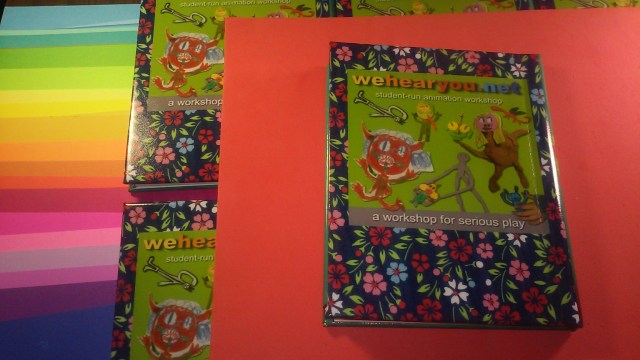

colors and books sent as colorful thank yous and updates
Want to see some beautiful and delicious tomatoes and peppers grown on a little backyard farm on the banks of the tranquil Grand Central Parkway? I thought so.
(turn down volume a bit for best results)
One of these rare glimpses of a deep and fascinating universe living inconspicuously within a friendly person passed and greeted many times in the hallways of the NYC Housing Courts over the years. A great short interview very much worth checking out.
Although I ate chicken, steak and hamburgers often during my childhood, and particularly loved fried chicken, flank steak, deliciously marinated, and burgers char-grilled over coals, I have been a vegetarian now for seven or eight years. As they say, just because you’re a vegetarian doesn’t mean bacon stops smelling delicious. The smell of burgers on a charcoal grill still gets to me, though I haven’t eaten one in years. Same for pastrami (a childhood delicacy) and barbecued brisket (which I discovered very late in my meat eating life), damn that stuff smells delicious. As for my vegetarianism, a friend corrects me, I am a pescatarian, since I eat fish a couple of times a week.
I zestfully ate the lean muscle of many animals over the years, what we call meat, but was always squeamish about eating internal organs, feet and necks. My mother loved to gnaw on a neck, or chicken feet, working her way around the tiny bones and sucking out the marrow with a smile of pleasure; I’d watch in horror. Squeamish is defined as a “prudish readiness to be nauseated” and no Victorian lady was ever more ready to recoil prudishly than I was from the smell of a calf’s liver frying with onions. The odor would literally sicken me and drive me from the house.
Why did I stop eating meat? I heard Michael Pollan on the radio, a long interview on WNYC, I think he was speaking to the gourmand Leonard Lopate, a man who will seemingly try any food. Pollan described something I’d witnessed as a teenager and was able to ignore at the time: animals we eat are raised in death camps not much different in spirit than places like Auschwitz.
Yes, this was an uncomfortable fact, and I’d seen the brutal treatment of tiny chickens and turkeys on kibbutz in Israel, but then Pollan described the intelligence and suffering of these meat animals and I looked over at my cat, a handsome carnivore, and he seemed to nod. Pigs become very depressed, they are much smarter than dogs, smarter than cats. They have to be restrained and drugged to stop them from freaking out in the weeks and months before their painful slaughter.
Delicious, yes, but also way smarter than this cat I like very much. The cat has a personality, preferences, moods, a certain brutal sense of humor. I will cry when he dies, hopefully many years from now. Sekhnet will be inconsolable, she cries at the thought of how inconsolable she’ll be. I suddenly could not eat pork, delicious as it is. Or cows for that matter, large gentle animals who, raised by the millions for meat, are big players in global warming with their ruminant farting. Human love of burgers has incented (as the capitalists now say) the destruction of the Amazon jungle, the earth’s lungs, for grazing land for cows. They say a vegetarian who drives a Humvee has a smaller carbon footprint than a bicyclist who regularly eats cow. That is another matter, also important, but it was the idea of the terrible lives these sentient animals raised in industrial death camps lead that instantly made me unable to eat meat.
I recalled the way we chased down baby turkeys, sometimes they were kicked, take four or five in each hand, upside down by the feet, pass them to someone with a pair of clippers who’d snip off their beaks. A spurt of blood and they’d be passed to someone with a syringe who’d shoot them full of antibiotics, hormones and who knows what else. Then they were thrown into another section of the enclosure with their squawking, blood spattered colleagues. I have a vivid memory of these birds, all with blue eyes, suddenly turning into a friend of mine, a beautiful girl with blues eyes. I excused myself and went into the bathroom to write this up in my journal. I was eventually rudely called back to work in the turkey coop. There were thousands more turkeys to get ready for meat and I was a needed volunteer. Eventually, decades later, after hearing Pollan’s description, I had to stop eating birds too.
This does not make me highly moral, of course. Hitler was a vegetarian for the last fourteen years of his hideous life. He gave up meat in penance for his part in the death of the young niece he was obsessed with. The only woman he ever truly loved, he said later in his life. At twenty-three Geli Raubal finally shot herself in the lung in 1931, with Hitler’s gun, during the last leg of Hitler’s marathon to power. Who could blame her? Hitler was obsessed with her, jealously kept her virtual prisoner in his apartment, and though we may like to think of him looking at her through a bathroom keyhole and jerking off, her nauseated face as he rubbed against her sometimes, it is probably just because Uncle Hitler was fucking Hitler that she chose death over life in the end. In any case, when he snapped out of his depression and got back to his life’s work, he gave up meat.
So, although I can’t eat meat these days (fish, a hypocritical compromise) I’m not on a moral high horse about it. I’m on a moral high horse about many other things, of course. I also wish people would stop eating so much increasingly poisonous and earth-damaging meat, but enough on that.
Toward the end of my mother’s long death from endometrial cancer she lost a lot of weight. She had always been very heavy, but after my father’s death, nibbled at by cancer, she lost most of her excess weight. “The widow’s diet,” she called it, a lost interest in cooking and eating, for the most part. She was almost gaunt by the end.
A few years before she died we were driving in her Cadillac in sunny south Florida and she suddenly said “I feel like Golden Corral all of a sudden. Do you want to go?” I was hungry, and she expressed so little interest in food, that I immediately I swung the car toward Golden Corral and we got our trays and giant plastic cups.
Golden Corral is a large scale buffet with many stations. It’s possible to eat semi-healthily there, if one sticks to three or four foods, but that’s not why people go there. My mother was thinking of fried chicken, macaroni and cheese, a bunch of other things I wouldn’t necessarily put on my plate. I had not yet heard Michael Pollan’s description of the suffering of animals raised and slaughtered in Auschwitz and I took some fried chicken along with some side dishes.
I’d had a tasty steak there a few weeks earlier, and I took a thin well-done steak as well. I did not notice the tell-tale onions. My mother ate the chicken happily for a moment, and then pretty much lost her appetite, the cancer was all over her and probably had something to do with it. She watched me eat and asked me how I liked this, wasn’t the macaroni and cheese good, and so forth.
I sliced into the thin steak, took a morsel on my fork, put it in my mouth and chewed it. It tasted funny, it tasted bad. This was not the tasty steak they’d served for dinner a few weeks earlier, this was some kind of horrible lunch time meat.
“It’s liver,” I said right after swallowing it, with a nauseated face that made my mother laugh.
“It’s not liver,” she said dismissively. For some reason I’d swallowed the foul tasting dark meat and I was feeling sicker by the moment. A waitress passed by. I asked her if it was liver.
“Yes,” she said with a big smile, “isn’t it delicious?” I gave her the expression of Woody Allen about to go into the MRI. My mother laughed again and told me to grow up, that it wouldn’t kill me. I wasn’t so sure.
Not long afterwards I heard Pollan describe the torment of literally tens of millions of animals raised in factories to be killed so we might cook and eat them and I could finally stop worrying about eating liver.
It turns out that, sure every rat in a cage with a button to administer an instant orgasm will die with his or her paw on the button, and that same rat, alone, will prefer drugged water to plain, until death, but this may not prove much about addiction. These are rats in solitary, they behave differently than rats in a Rat Park where they have good food, a social life, best friends, sex, exercise, rat toys, treats, things that rats really dig. The rats in the Rat Park drink the regular water because they’re thirsty from having fun, they are not looking for the drug water to take them out of their dreary, isolated existence in solitary confinement.
Turns out, as TED speaker Johann Hari makes a good case, that drug addiction is a response to misery and isolation more than a genetically hard-wired disease, chemical problem or moral weakness. I always love those who can hold their liquor pontificating about sobriety and the need to punish people addicted to arbitrarily illegalized drugs. We live in a binge and gorge and hoard-more-than-we-can-use society where we are marketed to all day long to stoke our longing for newer and better things to buy and have — hard for me to see the kid getting high as a criminal. The TED talk on this was very well-done.
I like TED talks, many of them are great, few of them are not at least interesting and well-done. But there is a sinister side to the silently corporate sponsored TED events that makes me want to say, and I hope you will forgive this outburst, “suck my ass, TED!” Check out the price of admission, once you apply for your ticket:


Yes, that’s $8,500. Put up or shut up, yo. Nobody’s holding a gun to your head.
“So are you working hard? Busy?” asks one of my few living cousins, now in her ninth decade. She means, I suppose, ‘are you still delusional?’ I tell her cheerfully that I’m working hard and busy, I describe the marketing and this week’s well-received unveiling of the new pitch I’ve been working on all summer. I explain breezily that I’m currently focused on marketing, a necessity my team would have been working on all along, if I had a team. The program itself runs very smoothly, done over 100 times now all over, without a glitch. She likes this, a retired teacher, does not sneeze at it. Tactfully avoids asking if I’ve made a dime in 2015, usually her husband’s second or third question.
“Still working alone?” she asks, and I cheerfully tell her that, except at the sessions themselves where I have assistants, yes, still delusional.
“And how is Sekhnet?” she asks cheerfully, and we’ve successfully negotiated the minefield of my difficult mission. Now we are in the lush backyard farm that farmer Sekhnet lovingly tends for hours every day, before and after her long hours at work. I can see that colorful oasis spread out under the window. A paradise of color and deliciousness, brought forth from the dirt.
Then, after talking about the organic fruits of this magical garden, and the health it brings, we’re on to raccoons, possums, feral kittens. They have them too, in New Jersey and the Berkshires, plus a litter of baby skunks and their mother. Luckily for everybody the mother skunk took her babies and left the garden after a while, there would be no need for any violence against them, just as the exterminator had predicted.
Downstairs almost all the components for garden fresh sauce are prepped, waiting in their metal bowls for the first pop of garlic in the olive oil and then the sauce making begins. Sekhnet is out buying onions, we’ve used up the ones she grew this season. I have to go down and pick some fresh oregano (delicious), chop it, get it ready for the sauce. Two large bowls of perfectly ripe tomatoes, red, yellow and green, all zipped out of their skins, wait patiently for the Saucier to begin.
Life moves at its own pace, if you can walk calmly and excitedly with it, you’re blessed. Ideas take time to germinate, must ripen into action. At least this is what I have been philosophically brushing into my drawing book lately. If you are in something for the long haul you must develop a philosophy that helps and doesn’t hurt your chances.
That said, I need to get a few hours in punching the heavy bag of revising the pitch, starting on the next one, much shorter and sweeter, showing the fun and the therapeutic value of working in a creative team helping each other animate ideas, still objects miraculously taking life on a colorful screen while cancer waits impatiently outside, ready to continue its assault, pissed off to be outside waiting to return to the center of the merciless universe.
A good thing, I believe, keeping that killer waiting in the hall for a while as kids and their families get a break, play, have some goddamn fun. Now I just have to sell the excellent means I’ve invented to do that.

click above to see 59 second project-in-progress
Thoughts are more susceptible than most things to being, at the same time, reasonable and helpful and bizarre and unhelpful, according to the angle they’re viewed from, how the light hits them.
In discussing whether I might actually be mad, trying to do the quite possibly impossible thing I’m trying to do, the teenage therapist and I seem to agree that the jury is still out. Clearly, the most sensible thing to do is find something to do that brings in money. If it’s something that also brings personal satisfaction, helps others, is enjoyable and challenging — that’s great. But given the choice between earning a living or being in a constant state of turmoil over a ridiculously challenging thing requiring a good deal of self-reinvention while not bringing in a groosh or a kopeck… most people, on every shade of the elusive sanity spectrum, would choose the former.
I am ambiguously blessed, at the moment, not to have to occupy myself with the vexing question of how to pay my bills. Five years ago I inherited enough money to support the average person three to five years. Not lavish years, mind you, but average years for the average person living a modestly middle class life. I have always tried to keep my expenses low, my options open for working the fewest hours in a conventional job. Five frugal years later I still have money, riding on the “free market” roulette wheel like the trillions scooped off the slanted table the last time the richest and cleverest gamed the system prior to the “collapse” (or wholesale fraud, if we want to be more accurate) in 2008. For the moment I am not worrying about that, though, of course, I probably should be. My not worrying is another tick on the side of the ledger the jury may lean toward when deliberating over my relative sanity.
But here was the slightly odd thought that snuck up on me the other day. I’m working strictly on marketing now, as much as I can, focused on presenting the workshop in a light that will make it hard for public school innovators in the de Blasio administration to resist. This marketing work is also necessary for interesting and recruiting the best possible people to work with me on the program. I’ve spent many hours removing all self-deprecation, self-doubt and frustration when I describe the program. I’ve eliminated all references to the likely impossibility of my task. I focus, when I can, on how well the program I designed works for its intended purposes.
I am making my language terse, yet natural. In the first minute I now summarily answer the most obvious questions: who I am, what brings me to the room and why this program is so important and valuable. I am isolating the talking points, keeping them simple and rotating them, repeating each one enough times for the message to hopefully sink in. You want to involve children in their education, make them eager partners in their own learning? Give them a stake, let them learn what fascinates them and let them teach each other. You really want children to become creative problem solvers? Put them in a room full of art supplies and technology, with an exciting end-product they can enjoy, and adults who set things up then take a back seat, and watch what they do. Etc.
The odd thought, yes, I’m coming to it presently. I’d been stuck for a while trying to complete the pitch. I need to be able to present a snappy and memorable show during the structured yet natural twenty minutes I will get to pitch it some day. Improvisation in a sales pitch is foolishly risky business, as I’ve learned in a gently brutal manner. Wrestling with the technology to make the AV (I reveal my age with this anachronistic reference to “Audio Visual”) side of the presentation has been an added frustration. Every added frustration makes the mountain I have to climb steeper. The fucker is already almost vertical, any steeper and I’ll have to find or design special shoes to allow me to walk upside down. Another of five dozen, sometimes ridiculous, workarounds so far.
But this week I was finally able to negotiate the last technical hurdles with the program I’m using to create the pitch (a total of five hours winning over ever more supportive and expert tech support) and it gave me the ability, at last, to record version after version and watch them back. Recording myself was a useful bit of advice I received a few weeks ago when the very idea of watching my sluggish progress set my teeth on edge. Being able to finally see my work played back eliminated the rehearsal-to-myself motivation problem, and the equally vexing one of finding someone to do me the favor of watching each version and helping me assess my snail-like progress.
“Wait,” you will say, “you supposedly have an organization, a non-profit founded in the Spring of 2012. Why do you still need to find people to do you a favor? Call a meeting and….” Shut the fuck up, would you, fuckface?
Ladies and gentlemen of the jury, ignore this well-meaning yet provocative clown and my client’s outburst as well. My client suffers from acute Founder’s Syndrome, a well-known condition that eventually afflicts the CEO of virtually every one-person organization.
Anyway, now that I can work on the pitch and watch it in progress it’s much easier to see transitions that are bad, points that are not made clearly, glitches, clumsily worded talking points and so forth. Clearly this is the work of a committee, a team, but since I have neither, it’s taken way, way longer to complete. Now that it’s finally not so difficult to see and fix weak points I’ve made good progress the last week and it’s now virtually done. I’ll be presenting it to a successful non-profit entrepreneur on Tuesday and once more have the benefit of his experienced feedback. He has mastered a pitch that is successfully selling a once one-man program related to mine. My pitch is ready now, 48 hours before the meeting, though I plan to polish it a bit more, if I can.
Now the slightly odd thought, after one last bit of set up. I ran the short new segment by Sekhnet the other day. It contained my freshly written “who am I, why am I here, why should you care?” rap. She was distracted from my short personal and professional message by the flash of oddly unrelated animation on the screen. She was right to be distracted, I could see at once. I set to work making the proverbial enormous changes at the last minute. Had I presented that first version to the social entrepreneur I’d have lost him in twenty to sixty seconds and he’d be bracing for a wasted 20 minutes with a clearly mad person with a single good idea and a hundred bad ones.
Several hours of concentrated work later I had a 49 second animated clip that I can actually link to this post (later) explaining who I am, why I am here and setting up why my program is something you should check out. These simple questions had been impossibly ticklish ones for me to answer. I knew the new version was pretty good. Ran the less than minute by Sekhnet. “I like it,” she said, after a little laugh at 0:20 where I’d inserted a little bark of levity, “it really shows how much work you did developing the program”. Went back to work, tweaking a couple of things I noticed while showing it to her. I fixed several other small weak links in the pitch.
At the end of a very productive day I stood at the mirror shaving. As I watched myself I noticed a small twinkle in my eye. In that small moment of satisfaction I glimpsed an entire universe of truth and I had this odd thought: it’s easy to have ideas and it’s morally satisfying to have ideals; living them is the hard part. I don’t personally know many people working as hard to live their ideals directly, to see their unique ideas mischievously afoot in the world. It is hard, maybe impossible, work, but it’s the best work I could hope for, it occurred to me in that moment. I am also blessed, by pure luck of circumstance, to be free and able to pursue it for as long as I have been.
I pushed aside the thought of all of my more successful friends, figuring out how to live well doing things that are also important, or sometimes not; pushed aside the often odious comparisons that come so naturally to all of us here in the Free Market.
I am free, the twinkle in my eye reminded me, and lucky to be doing important work for which I am uniquely suited. I’ve learned to savor the small but crucial moments of reward that are invisible to most people. This could be a sign of madness, of course, seeing these tiny, isolated moments as a blessing, but I prefer (in the custom of all madmen) to think not. It’s crucial to drink fully of every life-sustaining moment of reward we feel in order to persevere in any difficult undertaking. I’ve learned to suck every drop of juice from these rare and subtle moments of reward one must be vigilant to enjoy.
If my life is harder, harder to explain and less materially sustainable than the lives of many people I know — these are all part of the price the world extracts from those who dream of a more merciful society and struggle to make these dreams real in the world. There is a price to be paid for being different, clearly, and it’s not just a theoretical price. Part of that price involves the occasional questioning of your sanity.
It was an excellent moment in front of the shaving mirror, even if, at the same time, a slightly odd thought.
click the picture having some fun animating
Those in our great and wealthy nation who are cruelly fucked need to understand it is usually nothing personal. Truly. Nobody gives a shit about you as an individual, that is what the cruel part of cruel fucking is all about. You as a person are erased, but it’s nothing personal. The mistreatment was not meted out to you as an individual, so don’t get so individually indignant, man. Let us look at the case of American blacks, for example. Let’s take a short historical look at this cruel fucking, see if we can put it in perspective.
We should all be able to agree that the deliberate murder of perhaps ten million African ancestors during the mass kidnapping of slave laborers to the New World was an inhuman atrocity. As bad as the Holocaust with a capital H was, and as many millions murdered, the sickening carnage of the “Middle Passage” makes any decent person want to vomit as much as the black and white film of rubbery skeletal cadavers being dumped down chutes in the death camps does, or Henry Morgenthau’s contemporary accounts of the nauseating brutality of the genocide Turks inflicted on the Armenians during WW I, or any modern-day version, for that matter. There is no comparing mass murders, they are all the same. Done with that argument, OK?
We can agree, one would hope, that slavery was an unmitigated evil that caused irreparable harm, while creating and concentrating vast wealth, and led eventually to a cataclysmic outburst of mass psychosis in which three quarters of a million, mostly poor, Americans lost their lives in combat, (more than the total of American dead in all other wars combined) another quarter million dead civilians, not to mention the countless maimed, amputated, brain damaged. The war was fought, as most are, to preserve the privilege of the wealthy who stood to lose a fortune, and their genteel way of life, if slavery was abolished. There was talk, for a time, about 40 acres and a mule for every freed slave, to minimally compensate them for their centuries of unpaid labors and to put them on their feet as free families. Nothing was ever done about that, there were soon much more pressing problems for America to deal with. After the war the nation went into the worst economic depression in its hundred year history, at the end of which the robber barons made untold monopoly fortunes. For the masses of all colors — mostly misery.
The only good thing about the Civil War– the end of slavery. The 13th Amendment made slavery illegal under the U.S. Constitution, except that the Supreme Court quickly put the 14th Amendment, enacted to protect the rights of freed slaves, into a judicially crafted ninety year deep sleep. While the 14th Amendment slumbered the Ku Klux Klan put on the kind of horror show that hate-filled sore losers with weapons are apt to put on, if not restrained by the law. A century of terrorism, protected by state laws upheld by the Supreme Court’s perverse 1873 14th Amendment ruling (the resurrected 14th has been in place now for fifty years and tens of thousands of cases brought under it), which gave the former rebel states, who had taken up arms against the nation they seceded from, the last word on the treatment of its citizens, including former slaves.
It is not surprising that the lot of former slaves was hard in the former Confederacy.
A mass migration northward towards decent paying industrial jobs resulted in a large gathering of the descendants of slaves in the ghettos of major cities. The decent paying industrial jobs eventually were sent places where the corporations could pay the workers less and therefore keep more of the profits. Ghettos traditionally have the worst city services, worst schools, highest crime, highest unemployment rates, most repressive policing, and currently– a school to prison pipeline. And as prisons are increasingly privatized, finally a profitable use for the bulk of these disaffected, often angry, sometimes violent, sons and daughters of the ghettos.
So while some of us felt proud recently that America had its great post-racial photo-op, a very accomplished and unique half-black man is currently president, it is good to keep things in perspective. It’s not post-racial in ghettos and housing projects, or in prisons, or on Ivy League campuses or in corporate board rooms. This country is as divided in many ways, including matters of basic civil rights and race, as it was immediately prior to the Civil War. Millions of Americans, of all races and every national origin, are simply, how to put this tastefully?… fucked.
People who are the recipients of sex they did not consent to are often deeply disturbed by the experience. That said, if it is done on an institutional level, and you live in a democracy where, unless your point of view has billions to spend selling itself via free speech, you have almost no voice as an individual and you must not take it personally. You really must not take it personally, man.
Really, I mean… you know what I’m saying?

