A. W. Skaynes (2004-2018)
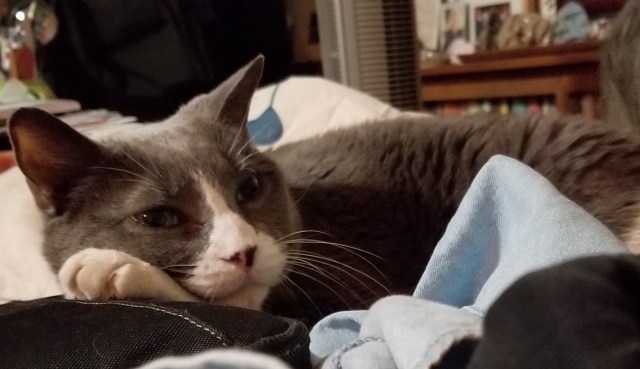
Essential Image for The Book of Irv
My brother-in-law, who used to like to argue with my father, described his father-in-law’s effortless fighting style. He painted the picture of my father, lying on a couch, reading the paper, a sword in his other hand, nonchalantly parrying each point and, whenever he chose, driving his rapier home. It is a wonderful image.
We can forget, for a moment (jury, please disregard what you are about to hear) that my brother-in-law generally employed an emotional style while his father-in-law’s was cool and analytical. It’s a particularly apt image of my father fighting my brother-in-law, who my father regarded as an intellectual lightweight, but it’s also a great image of the old man’s almost bored comfort with argumentation.
What about when he felt he was being opposed by an intellectual foe closer to his own powers? I got a chance to witness this up close, two years before he went to meet his maker.
In the den of his Florida apartment, confronted with a piece of evidence he could not talk his way past, by a son who not was only a lifelong adversary but now a trained lawyer as well, I saw what he could do when cornered.
Granted, he had almost nothing to work with, would two years later, as he was dying, admit as much. But watch how nimbly he moves, up on his toes, cunning, hyper-alert, constantly moving. His eyes dart left and right as he improvises. He dances like Slobodan Milosevic in front of the World Court, with the adroitness of a brilliant but demented ballerina. He’s got nothing, but still he fights, back to the wall, battalions nipping at his flanks. There is virtually nothing left to argue, and he is completely surrounded, but this does not stop him. He holds off the enemy with ad hominem attacks since he’s got nothing else to fight with. Then, exhausted by it all, he goes for the kill. And in that moment loses the long war, but that does not matter to him in that moment.
He’d deeply regret this behavior when he was dying, but while he was alive he felt there was nothing he could do about it. The essence of tragedy, really.
Joe Frank on the advantage, to a writer, of not avoiding pain
The late, great Joe Frank [1], who died recently at 79, was memorialized by radio superstar Terry Gross. She played an interview she did with him in 1989. You can hear the whole interview, illustrated with tasty slices of his radio shows, as well as read the transcript from which the following was clipped, here. The entire twenty minutes you will spend to hear the whole episode is time well spent. (IMHO, LOL! ROTFLMAO!)
At one point Terry asks him a question that yields what struck me as profound answer. The answer resonated with my experience, I guess is what I’m trying to say. Those of us who work on writing thoughtfully about our condition here should have a look at Joe Frank’s answer about personal fears and insecurities.
GROSS: You know, a lot of your more personal shows deal with fears and insecurities – ones that, you know, we can all relate to. But I wonder if when you take your own insecurities and put them in a kind of persona and make them into an hour radio program, if they’re easier to deal with than they are, say, when you’re lying awake alone in the middle of the night.
FRANK: Oh, yeah. As a matter of fact, by using those experiences for radio programs, you transcend them. You almost look for bad experiences or painful experiences. Whatever tragedies might befall you, you can always, right away, think, well, that would make a great story for radio. And so that whatever happens, even if it has a great negative content, even if it’s painful – because you can then tell it on the radio and share it with many listeners and move people or entertain people, it then takes on a positive value.
And I remember distinctly that – coming to that revelation a number of years ago when I realized that I no longer wanted to avoid pain – that I could use it in a way that was very productive so that it was easier to experience whatever suffering came my way.
[1]
What we learn from the torture debate
(Sekhnet, sticking to her guns, found this post to be more bullshit. No defense I can offer will justify that sick, misleading shit I posted yesterday, according to her. Her real horror, I think, is that not only did I describe a truly ugly scene, I presented myself as a merciless bully and a brute, two things I have dedicated myself to not being.)
The main thing we learn from the torture debate is that humans are capable of justifying virtually anything, in the name of something else. It is particularly true if the thing we are justifying is a total abstraction to us. If something doesn’t touch us, if we never see it, hear it, or smell it, it remains completely hypothetical.
If we’re forced to look at something truly, unbearably ugly, and not allowed to turn away, we might be sickened by it, probably will be. As long as it’s unseen, far-away, abstract, a matter of principle or wartime strategy, something we personally will never experience, well, that’s not so bad. We can easily deal with any discomfort a mere idea might raise, make arguments that sound quite reasonable in support of how easily we can dispose of such hard questions as “is it right to torture?” and “isn’t it just your own tough shit that you’re a poor, powerless asshole?”
We can use powerful hypotheticals to support our hypothetical beliefs. In support of torture we have a great one. You’ve captured one of the terrorist bombers who knows where the ticking time bomb is hidden. You see this on TV and in movies from time to time. We’ve seen the evildoer planning this, grimly laughing about it, planting the bomb, we all know he’s the guy, and then, against all odds, Jack Bauer captures him. Bauer knows the rules, put in place by privileged, high-minded legalistic pussies, but he also knows the stakes. He knows he has a duty to do whatever it takes to get this evil bastard to tell him where the bomb is that is going to blow up thousands of innocent people. He breaks the guy’s nose, for starters, to show he’s serious as cancer about saving those children. Who could blame him?
In the real world this “ticking time bomb” scenario is very unusual, having the guilty terrorist shackled to a chair with hours or minutes until the bomb he planted goes off virtually never happens. Yet, the “ticking time bomb” hypothetical is convincing enough for most people to reason “hey, they hate our freedom, they’ve already killed thousands of us, are currently beheading and crucifying others of us… better to err on the side of caution. Sometimes you have to go to the dark side and do unthinkable things to protect higher values, and innocent lives.”
I always picture the “Worst of the worst” in Gitmo, most of whom have been quietly released over the years. I imagine the ugly smirk on the face of the longtime enemy of the sixty year-old Afghani pediatrician as he walks away counting the $25,000 in tip money the Bush/Cheney Administration doled out from a huge wad of bills to those who turned in terror-related bad guys. He is picturing his old enemy stripped naked and doused in piss, in a freezing cell, denying, ever more weakly, that he has any connection to Al-Queda or the Taliban or anyone else they are harshly questioning him about. The laugh of that cynical, mercenary weasel who gave false witness against his neighbor is what I picture when I think of many of the people America tortured recently.
Again, the “ticking time bomb” rationale is good enough for those who feel due process is not due to bad people, or people we strongly suspect may be bad people, or people somebody said are bad. It’s more than good enough for people who never need to think about things like due process in the first place. If the person is innocent, he has nothing to worry about while he’s being tortured, right? Besides, we have a million other more pressing problems than what’s being done in our name, to protect us, in secret sites around the world.
I decided in the previous piece, duly objected to by Sekhnet who raised a loud alarm (she’d been a victim of a sick sibling’s bullying as a girl, doesn’t tolerate bullies and urged me to take down the offensive post), to show in action how easy it is to torture anybody you have the power to torture, if you have no qualms about doing it.
The narrator believes he is making a point worth making by any means necessary. I would argue that the narrator’s treatment of his guest was far less harrowing than a similar session at any of the “black sites” where people suspected of being America’s enemies were roughed up far worse. Nonetheless, it was undeniably a horrific breach of one human’s duty of decency toward another, in its quiet, sick, immediately identifiable way. I mean, everybody’s got to urinate after they drink a lot, that’s a pretty universal human need. I, personally, would never do it to anybody, but I can clearly see it, and exactly how it would turn out.
As I wrote to Sekhnet:
The point I was trying to make in the piece is that if someone is determined to be brutal, and is stronger than the other party (or well-armed), an individual, with all the best arguments in the world, with right completely on his side, cannot resist that brutality. It’s that helplessness against inevitable violence that is the corrosive heart of torture.
The fictional wealthy lawyer who was subjected to this cruel psychological experiment would be rightfully filled with anger and hatred towards someone who could pose as his friend only to win a stalemated argument by forcing him to piss himself. Totally unfair! Inhuman.
Exactly the point I was trying to make about the cruel, merciless heart of torture. Once you go to the dark side, and justify it with highflown moral arguments, hell’s the limit. No?
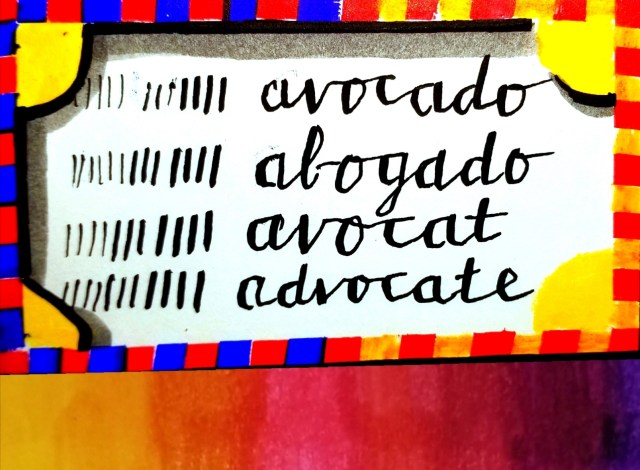
Tonight’s colors for you
The Torture Debate
Disclaimer from Sekhnet about this piece:
“I hated it. ‘I hated it’ was an understatement. I urge you to take this down, people will not realize it’s fiction. They will think this is something that really happened, you acting like a complete asshole. It’s horrifying, and very realistic, it’s plausible to people who never met you. It seems to have been written from life. They will think this is an actual story from your life, and it’s a sick story. And the connection between the narrator’s torture debate with his colleague is not made to what the asshole narrator does to his guest. It’s just plain stupid.”
Enjoy.
Rest assured, this is a harmless work of complete fiction:
The Torture Debate
A classmate of mine from law school I hadn’t heard from in decades, a striving type who’d gone to work for “the man”, and “done very well”, called to check in with me, the great idealist. Our career trajectories could not have gone much differently. He was very wealthy, loved the new tax cuts, I was still idealistic, and paying off my student loans on the drip, drip, drip plan. I got a couple of laughs out of him before he turned serious, began talking politics.
It wasn’t long before we found ourselves coming from our respective corners, the then-contentious subject of torture reared its ugly head, specifically the issue of Americans and foreign partners collaborating in the torture of terrorism suspects. His points were predictable: the human right of one particular individual, or hundreds, not to be handled inhumanely did not equal the human rights of a little blonde girl not to get blown up by a fanatic on her way to school.
We eventually “agreed to disagree,” with appropriately fake phone smiles, about things like whether a stress position, forced enemas, a freezing cold cell or prolonged sleep deprivation were actually torture or merely forms of tough, but perfectly legal, ‘coercion’ to get vital information to save the lives of those innocents whose deaths from a terrorist’s bomb were imminent. After we reached this lawyerly agreement I thanked him for calling and told him I had to get going. He said he’d be in town the following week and asked if I’d be free to meet him at some point. He cheerfully accepted my invitation to come by for a drink.
He liked the drink I served him very much, the last of a bottle of 12 year-old MacCallan’s. We drank a toast with that lovely single malt, followed by a round of Johnny Walker Black, also good. We chased the whisky with small glasses of cold seltzer and, being both suddenly thirsty, found ourselves musing over the peculiarly unambiguous American use of the word “drink.”
“I haven’t had a drink in ten years,” I said, setting up the old gag.
“Boy, you must be thirsty!” he said, smiling like he’d spiked the winning shot at the Canker, Boyle and Whitehead annual volleyball tournament.
“If you are, in fact, thirsty,” I said, “I can get you a delicious drink I just re-discovered. I think you’ll find it quite refreshing.” I brought him a tall, frosty glass of fresh squeezed pink grapefruit juice, very sweet, spiked with a splash of ice cold seltzer. I had one too. The delicious combination of the sweet liquid fruit and the cold bubbles really hit the spot. He liked it very much, too. I offered him a refill and he smiled, thanked me and drank that also.
When I came back from the bathroom I asked if he’d like one more. Best to avoid dehydration while drinking whisky, I reminded him. With a slightly sheepish smile he said he wouldn’t mind one more, if I had enough. I assured him I did and brought him another tall, frosty drink. We had another shot of whisky, too.
When he got up to go to the bathroom I stood, put a firm hand on his shoulder and restrained him.
“No,” I said.
Unable to dislodge my hand he quickly became indignant. He started using his words. Being stronger than him, and determined, I was not obliged to pay the slightest attention to his arguments. I would remain, for purposes of this particular dispute, the proponent of argumentum ad baculum, which the internet informs us is the fallacy committed when one appeals to force or the threat of force to bring about the acceptance of a conclusion
We were locked this way for over an hour, maybe two hours. Every time he tried to get up, I’d press down with force. The futility of this exercise of trying to stand, once it became clear that I was determined to argue like a “Might Makes Right” asshole, finally overwhelmed him.
After the ignored legal and moral arguments came the cursing and the attempts at intimidation. When the cursing was done, the appeals to my common decency, the ethical standards of our shared profession, to our long ago friendship, began. The consciences of my dead parents, who he’d met at graduation, were eventually dragged into his shameless appeal. The appeal got so personal I had to stop looking at him. Eventually, he was quiet.
It took a moment before I realized my work was done. His chair was in the middle of a dark lake. His ride home would be embarrassing, his tailored leisure pants would need a dry cleaning and his expensive shoes appeared to have been ruined.
Then the tears began, which was horrible to see, really. Hosing down the tile floor afterwards, I knew that my old classmate now had every right not to call me next time he comes to New York. Worse, I’ll never get to find out who won that long-running debate between us about the exact nature of torture.
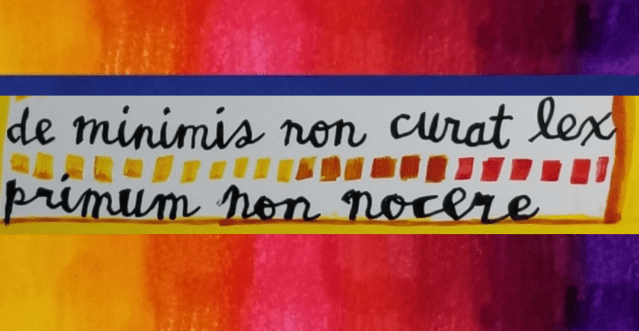
two self-evident truths
Crude calligraphy aside, we hold these two to be self-evident.
The first means “the law does not concern itself with trifles”, a self-evident yet supremely aggravating truth to everyone fucked without a remedy at law.
The second means “first do no harm” and it is one we should all try to live by, is it not?
Five Minutes
(Start the clock) Five minutes is very little time, the cosmic wink of an eye. Five minutes is a terribly long time to hold your breath. Five minutes of an awkward pause at an emotionally fraught impasse seems an eternity too. In reality, five minutes is enough time to express a lot.
The missile has been launched, is landing in now 3:44 minutes. Now 3:33. If I gather my thoughts for thirty seconds I can stop counting down and use my remaining time for whatever may be most important to say to whoever I am with as the universe is about to end for both of us. Saying “2:17!” adds little to the conversation, though it’s also true.
Now I have one minute and a half left, less. It seems a good time to point out that a loving attitude is better than a hating one, almost every time. To remember things we love is a better way to spend these last moments than terrified of that approaching warhead. There will be a flash in a few seconds, and the end of this beautiful world.
time.
The Pleasure of Reading
Last night we visited Sekhnet’s aunt, the widow of Sekhnet’s father’s brother, on the occasion of the energetic aunt’s 98th birthday. Aunt Lillian has always been a big reader and had several paperbacks on her coffee table. “You want this?” she asked me, holding up a book by Nelson DeMille.
I’d read a couple of DeMille’s books, given to me years ago by Sekhnet’s favorite cousin on her mother’ side. He used to buy them in airports, read them on planes. He loved DeMille’s wiseass, macho narrator, a private eye with a dozen wisecracks ready for the bad guys who were about to torture him. DeMille has a million or more fans, and has written many bestsellers. He is no slouch, a kind of heir to Elmore Leonard, even if sometimes without Leonard’s unfailing gift for understatement.
The book hadn’t been Aunt Lillian’s cup of tea, the wiseass, macho narrator no doubt had put her off, but she told me, in selling the book “he’s a good writer.” He is. He writes to engage the reader, to entertain and to sell books. He is very good at all of these things. Reading his book last night and today reminded me of why we love to read a good tale. DeMille has gotten better with age, or maybe I’ve just forgotten how quickly each of his other books sucked me in. I’ve snipped out a few examples, which I’ll share and then be on my way.
Of his narrator’s backstory, he says:
FYI, I spent five years in the U.S. Army as an infantry officer and got blown up in Afghanistan. That’s the short story of how I wound up here. The long story is a long story, and no one in Key West wants to hear long stories.
As a reader, I wanted to hug the guy when I read that. Instead of wasting a paragraph, or several, on made up details, he gives us a punchline that reveals a lot about the narrator and heads right back to setting up his story.
About his father, the narrator says:
…my father was a man of few words. If I’d gotten killed overseas and he had to put my obit in the Portland Press Herald at twenty dollars a word he’d be Yankee frugal and Maine taciturn, and just say: Daniel MacCormick died. If it had to be a six-word minimum he’d show his practical side and add: Car for Sale.
Well, maybe I’m being hard on the old man. He was proud of me when I joined the Army, and before my second deployment to Afghanistan he advised, “Come back.” Well, I did, and he seemed pleased about that, but a bit concerned about my physical injuries, though not so much about the post-traumatic stress, which he doesn’t believe in. He liked to say he came back from Vietnam the same as when he left, which, according to my mother, is unfortunately true.
Great shit, fun to read. Even if the joke about the obit might be an elderly one, it is recycled deftly by the talented Mr. DeMille and serves the telling of the tale.
One last one before I make myself lunch and eat it while reading a few more short, tasty chapters of The Cuban Affair:
(The narrator is a charter boat captain in Key West. His first mate Jack is an ornery seventy year-old Viet Nam vet. They are about to meet mysterious clients who have offered him millions for a dangerous mission.)
Jack always wore jeans and sneakers, never shorts or flip-flops, and today he’d chosen his favorite “I Kill People” T-shirt.
I suggested, “The Maine T-shirt I gave you would be good tonight.”
“Yes, sir.”
He doesn’t mean “yes,” and he doesn’t mean “sir.” He means “Fuck you.” Sometimes he calls me “Captain,” and I never know if he’s using my former Army rank or my present title as licensed sea captain. In either case he means “Asshole.”

