Why would it bother me?

My father never bought products made in Germany.  It was because of German industry’s involvement with the death camps.  IG Farben paid the SS $1 a day for slave laborers from Auschwitz, they were marched from the death camp to the nearby factory until they couldn’t be profitably used anymore, then they went into a gas chamber.  Mercedes-Benz, according to my father, a student of history who read the NY Times every day, built some kind of killing machine (I forget exactly what he told me), possibly the gas chambers or ovens for The Final Solution.  I may have them confused with BMW, who also used slave laborers from the death camps.  The drivers of both brands, to this day, tend to be unyielding at crosswalks, I’ve noticed.

“Is it right to hate the children and grandchildren of people who made money working for Hitler?” I asked, a bit rhetorically, when I was in high school.  

“It’s justified,” said my dad, “and I hate them.”   

“Would Viet Namese people be justified, 50 years from now, in hating us and boycotting American made products because of what the government of the USA did to their parents, grandparents, their countryside?” I asked him.  

“Yep,” said my dad.   I think he was right, too.  Particularly if you live in a democracy– the government speaks for the electorate.   In spite of literally millions turning out to protest Cheney, Rumsfeld, Wolfowitz and Bush’s march toward war against Iraq, our government visited hell on that nation.  Do Iraqis have a right to hate America?   You bet your ass they do.

One of my problems is that I never get over certain things.  I find myself thinking of the calculated and bogus case that was made for raining death and destruction on the population of Iraq.  I think of how President Obama generously turned the page on recently committed American war crimes, while justifying his own highly classified murderous practices.  

The final “evidence” of the connection between Saddam and 9/11 that was trumpeted by the Bush Administration was from an al-Queda prisoner we’d secretly shipped to Egypt to be tortured.  In order to get the torture to stop al-Libi said Saddam was training al-Queda in the use of poison gas and other chemical WMD.   When he was released by the Egyptians he immediately recanted, admitted he told them that to make the torture, the super-super enhanced interrogation, stop.  Yet his information, extracted under torture, was the lynchpin of the entire falsified case for invading Iraq.

Then you have the war, the debates, the traitors, the people who hate our freedom, freedom on the march, torture redefined as necessary to use against people who hate our freedom, we call it “enhanced interrogation” now and we only did it a few times, destroyed videotapes of the worst of it, pretended (as Cheney continues to) it had extracted “actionable intelligence”, though it’s highly unlikely it ever did, classified memos relating to its use, blah blah, economic disaster in 2008 orchestrated by powerful elites who profited handsomely from systematic fraud and were never punished for any of it …. so really, who today can be expected to get excited about this paragraph?

 There is a sad postscript to the story. Al-Libi is the only “high-value” detainee who was not sent to Gitmo for eventual trial before a military tribunal. Instead, he was quietly turned over to Moammar Gadhafi’s henchmen in Libya, and just days after being visited by Human Rights Watch, was found hanging from his neck inside a Libyan prison. His family believes he was murdered to cover up the true story of what happened to him. We’ll never know the answer to that, but we do know with certainty that an American president used bogus intelligence from a tortured detainee to make a false claim to the American public and to the world.

source

Ho hum.  Maybe some day I’ll grow up, I can only hope.

Paul Krugman chimes in

It is now generally admitted, most recently by the brother of former President George W. Bush,  that the decade long Iraq war was a wrong-headed trillion dollar disaster (that killed and permanently disabled tens of thousands and displaced millions).   Now, we are told again, by a profit hungry media eager to get on to the next sponsored event, to simply move on.

Not so fast.  Here’s Paul Krugman, jumping in with some intelligent points worth making.   At least from my constantly griping point of view.

NY Times on the importance of play in early childhood education

A friend sent me an article from today’s Times, making the same point I’ve been trying to make for the last few years.  Play is a key to getting young kids interested in learning and interacting as part of an inventive, inquisitive group.  I was glad to get the piece, which supported my thesis, though it also aggravated me slightly to read it.  

Written by a freelance science writer in the well-balanced style that is the Times’ trademark, it quoted several educational researchers who believe that more play should be part of early schooling, instead of the accelerated academics pushed by our country’s misguided, corporate-driven educational mandates.  “No Child Left Behind” (surrrrrre…), the article suggests, may underestimate the academic value of young children discovering learning in joyful play, rather than by forcing them to do cognitive tasks at an age when they cannot fully understand or participate in them.

True enough.  Play is crucial for a lot of reasons, at all stages of life, but particularly for kids beginning school.  Glad to see the NY Times printing an article about it.  Here’s the thoughtful, well-written piece.

A sardonic tendency, ingrained by my father, no doubt, twitched after reading an article which, to me, stated the painfully obvious and brought this unfortunate analogy to mind:

“Seven-year multimillion dollar Harvard study of 100,00 children and young adults strongly suggests that children forced by abusers to engage in sexual activities are far less likely to be enthusiastic about sexual intimacy later in life.  Researchers debate….”

I know, I know.

We get to the heart of the discussion on play vs. academic tasks for tykes with this paragraph:

The stakes in this debate are considerable. As the skeptics of teacher-led early learning see it, that kind of education will fail to produce people who can discover and innovate, and will merely produce people who are likely to be passive consumers of information, followers rather than inventors. Which kind of citizen do we want for the 21st century?

The answer really depends on who you ask, as many answers do.  Those who profit from a passive, easily manipulated consumer society have a vested interest in keeping masses of Americans as stupid and gullible as possible.  Which kind of citizen do we want for the 21st century?  It depends on who “we” is.  If it’s the good folks who make billions on ever more sophisticated standardized tests for tykes?  No brainer.  If it’s those who believe that democracy can only work properly with an educated, thinking populace able to intelligently discuss and creatively tackle problems?  

Well, you and I know which side we’re on– but then, nobody is paying us the big bucks to be on the side of profiteers at any cost.  Easy to condemn educational profiteers, I suppose, but, on the other hand, everybody’s got to make a living.

Oh … bama

Obama’s a cool guy, don’t get me wrong.  Smart, funny, gives thoughtful speeches he probably has a hand in writing.  Check this out, to get a taste of what I mean.

Presidents only have so much power, Washington is a corrupt town, money owns all American politicians.  No politician can obtain even local office without being financed by the wealthiest citizens, a presidential candidate least of all.  It has always been thus, although recent rulings about the coolness of undisclosed “dark money” make it much more in-your-face than ever before.  

The privileged few have a much greater say in our democratic republic than the masses of poor and working people, always have, always will.   George Washington, we learn, was the wealthiest man in America and, naturally, the father of our country.  Don’t want some poor boy as your dad, obviously.  The super-rich decide elections openly now — 97% of American elections go to the candidate that has the most money to spend on the best ads.  Go fight City Hall, boo hoo for you.

Yet, if Al Gore had insisted on fighting the unsupportable Supreme Court one-off that decided the 2000 election, as it was in his power to do as president of the Senate and person in charge of the official count of Electoral College votes, and somehow become President instead of the challenged George Dubya Bush, many terrible things would not have happened.   There would have been no preemptive attack on Iraq, with its massive, almost incalculable, octopus tentacled harms, for one thing.  It’s unlikely Americans would have employed torture against those suspected of hating our freedom.   So the president, the grievous similarities between the two highly compromised political parties aside,  does make a big difference and the buck often stops with him, or her.

Like it does with President Obama.  A man who sells his brand as brilliantly as Mr. Obama does while campaigning, speaks as convincingly as he does on many important issues– I hold him to a higher standard than a president who winks and smirks and has trouble not mangling his own sentences while doing the most damage in the shortest amount of time in the sincere belief that God and Jesus have his back and that he is doing their work.

Nobody alive today is to blame for slavery, except that practiced by our corporations — and most of those slaves are not Americans. Likewise, the hundred years of lynching and terror that followed the end of Reconstruction after the Civil War– nobody alive now had any say in that dark and brutal age of human rights.   Today protesters march against the same things that were in full force and effect fifty years ago– systematic, widespread police brutality against underprivileged (I love that word) non-white citizens.  Now a couple of cops are going to stand trial for what appears to be depraved indifference and the possible deliberate torture of a man they killed with a rough ride in a police van after an arrest that was possibly for no good reason except that he had an attitude of some kind.  Obama gave a couple of thoughtful speeches.   It’s a process, as he thoughtfully points out.

It’s churlish, I know, to point out how many of Cheney and Bush’s worst policies Mr. Obama has allowed to continue.  Pointing out, for example, that he’s massively escalated the once highly controversial policy of extrajudicial killings worldwide, signed off on the murder of an American boy not charged with any crime or associated with any threat?  Churlish of me!   I have to stop doing that, stop hating our freedom to love a president who came to office advertising Hope and Change.  Churlish and immature.  I hang my head and hope to grow up one day, like the rest of my friends.

Life in Our Democracy

I sat quietly the other night when several people gushed about how much they love President Obama.  I do not love Obama, partly because I have no idea what he actually stands for.   He’s a great speaker, a master salesman, clearly brilliant, but he continues to do many things Bush and Cheney did, hateful things, and he gets a pass from those who love his eloquent thoughtfulness and the way he comes off, somehow, as a cool guy and man of the people.

Obama must get a pass in a certain way, if only because of the fanatical opposition he faces, much of it fueled by barely concealed racist hatred.  Even if he wanted to, there are limits to what a president can do, although, to me, he’s done very few truly positive things while continuing virtually every anti-democratic policy of his unscrupulous predecessors.  

The American president is not all-powerful, it’s true, though Cheney took many brutal steps towards restoring the Unitary Executive.  Among the things presidents can now do without real oversight is create a secret kill list and carry it out,  kill anywhere on earth with missiles fired from robot planes, institute a top secret kidnapping and torture program,  designate anyone as an Enemy Combatant and hold them without charges forever, classify as state secrets anything even remotely compromising, or embarrassing, to the administration, conduct secret data collection on virtually every American’s private communications, severely and publicly punish those who try to expose corruption, torture and other illegality.  

The lack of the transparency necessary for a functioning democracy was striking under Bush and Cheney, the most opaque administration to date — and rightfully so, they had a lot to hide.  The press, with few exceptions, were their tuxedo clad lapdogs, gratefully licking their faces instead of probing for the news that Americans needed to know– like the fact that the entire case for the long, destructive, destabilizing, demoralizing, illegal and immoral multi-trillion dollar war in Iraq, like the extensive torture program, was founded on a tissue of lawyerly bullshit that would not have stood up even in a kangaroo court run by kindergarten kids.  

Things are even more opaque under President Hope and Change, Freedom of Information is much harder to come by and the 1917 Espionage Act has made traitors out of whistle blowers and other people of conscience and put the death penalty on the table as reward for their acts of civic courage.

Of course, there’s the psychopath test for presidents.  It is impossible to even get on the ballot without raising literally hundreds of millions and showing the ability to kill without hesitation or remorse.   Not only are presidential candidates required to say whatever big donors want to hear said, to raise enormous sums of money for their ad campaigns but, if they are in position to, they must show they will not flinch from doing terrible things.  

If you are a governor, race back to your state to sign the death warrant for a retarded woman who has found Jesus and begs for life in prison instead of the needle.  Tough on crime, I got your Jesus right here, lady.  That murderer who tried to kill himself when the cops closed in, bungled the job and wound up with an IQ of 70?   Strap him into the electric chair yourself, after he saves the pie from his last meal for “later”, pose as you do with a resolute expression the American people will understand.  Enjoy your pie, bitch.

When Bush’s people rewrote the bankruptcy laws they made it impossible to get out of student loan debt, except by the death of the debtor.  Run up the maximum on all your credit cards, buy too many houses, fuck up in any other way, no worries, all that can be discharged in bankruptcy.   Borrow $40,000 from the U.S. government to get a degree at a state school and you will get this email from time to time:

 Dear Borrower,

Your federally owned student loans are running just a few days late.

There is an easy way to bring them current!!

By changing your due date to another day of the month that would better fit into your budget based on your pay date, other bills, etc., we can bring your loans current.

Just choose any date between the 1st to the 15th of the month to better meet your needs.  In doing so you will skip your upcoming payment and resume payments the following month on your new due date.

Please contact us as soon as possible to avoid going into default at (866) 264-9762 orDLCollections@osla.org.  Our Customer Service Representatives are available to take your call M-F from 8am-5pm CST.  You may also manage your account online 24 hours a day at osla.org.

Sincerely,

Default Aversion Team

And they call me every month, too, just a few days after the due date passes.  They remind me, if I ask, that I am paying the historically low 3.75% interest rate, tell me how lucky I am, how wise I was to lock it in.  Some borrowers are paying the government 7% and more on loans they took to get college degrees.  

Liberal lioness Elizabeth Warren is sponsoring legislation to cap student loan repayment at 3.9%.  I love Elizabeth Warren and I watch her struggle to pass a law that will marginally help a few without solving the larger problem and I despair for my country.  Reminds me of Obamacare, applauded by everyone not effected by it as a great step forward, even if possibly a bit of a gift to the private health insurance and pharmaceutical industries.  

We are a great democracy and an Exceptional People in name only, it goes without saying.  We are a country run by advertisements, slogans and mindless, fanatical cheering for one of two teams who are fierce rivals but almost indistinguishable in their goal: to protect the privilege of the persecuted one percent that finances their campaigns.  

A few random ideas for helping students paying massive interest to the government on education loans made to them:  tie the interest rate on student loans to actual income, let unemployed graduates pay down the principle interest-free until they are earning a living.   Make the repayment rate the same rate banks and corporations pay to borrow from the US Treasury.  

The federal government can spend literally trillions to murder people who pose no threat to Americans, average working people who live thousands of miles from the U.S.  They can spend billions annually on a failed war against a drug that kills almost nobody while alcohol is legal and causes death and destruction everywhere it is abused.   They can’t figure out a way not to gouge a generation of college graduates who get these notices every month, and friendly phone calls, from the Default Aversion Team.  

President Obama was in town last week, wearing a tux and making jokes at dinners where people paid thousands of dollars to eat rubber chicken and shower our brilliant president with love.   Many hate Barack Obama, it’s true, and I like to see him get his love.  But I also have to say:  what the fuck?  This is really the best you can do, my man?

Cone of Learning and Albert Goering

cone of learning

This convincing, and intuitively true-looking baby, it turns out, is a tissue of bullshit.   The impressive, invented percentages were apparently put in by someone using Edgar Dale’s illustrative Cone of Experience.  Based on the famous maxim from Confucius:

I hear and I forget,
I see and I remember
I do and I understand
 

Cone of Experience[edit]

An example of the false “cone of learning” attributed to Dale

Dale’s “Cone of Experience,” which he intended to provide an intuitive model of the concreteness of various kinds of audio-visual media, has been widely misrepresented. Often referred to as the “Cone of Learning,” it purports to inform viewers of how much people remember based on how they encounter information. However, Dale included no numbers and did not base his cone on scientific research, and he also warned readers not to take the cone too seriously. The numbers may have originated as early as the 1940s, when a scholar at the University of Texas at Austin created visual aids for the military.[5] [6]

http://en.wikipedia.org/wiki/Edgar_Dale

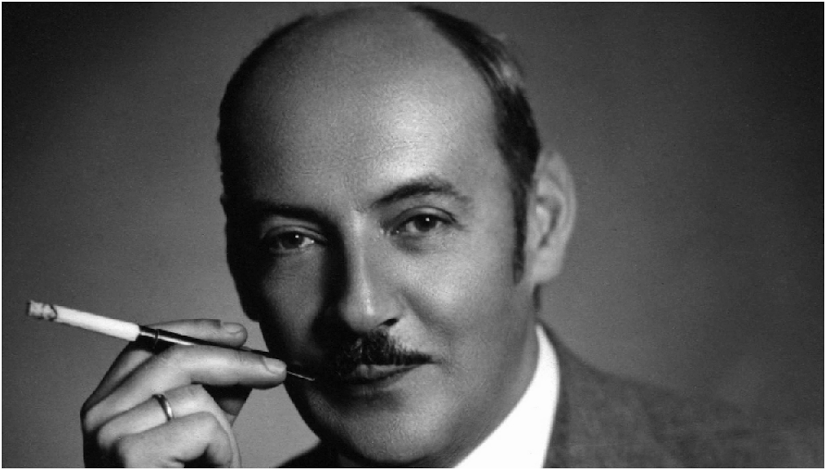
Albert Goering, looking elegant in this studio portrait from the early 1930s, was the brother of Nazi number two (literally– big, unflushed number two) Hermann Goering. Albert was quietly but resolutely anti-Nazi, and actively saved people during the Thousand Year Reich.  He was on the Gestapo’s radar several times, but Hermann stepped in to squash the investigations.  After the war he was imprisoned and interrogated with the rest of the war criminals at Nuremberg.  He was locked up for a long time before people he saved began to come forward and he was eventually released.  The rest of his life was pretty much fucked– his name was Goering.

Albert Goering

Communist

Back before free markets ruled the world, before freedom was on the march everywhere, before we all enjoyed the true, universal democratic freedom afoot in the world today, there was a serious debate over the most just way to organize societies.   This debate goes back centuries, to the earliest times.  It was formally ended  by Ronald Reagan, already possibly demented, when he caused the Russian Communists to tear down the Berlin Wall, ending the Cold War between Capitalism (freedom) and Communism (repression).

During what’s known as the Enlightenment in Europe, after dim centuries of monkish superstition and misery, the lives of human individuals were put at the center of the debate.  For the first time inalienable natural rights were discussed– the rights to life, liberty and, in Jefferson’s felicitous phrase– the pursuit of happiness.  

Rhetorical phrases are just that, and how ironic or accurately descriptive they are depends on experience down here on the ground where most of us are compelled to live.  “Freedom on the March” means something different to those stirred by their president declaring it and those who find themselves homeless and orphaned, lives trampled by the boots of their liberators as freedom, not always graceful, marches in.  

But I am hopped up, trying to motivate myself somehow to get on with my day.  A thought, then, and into my work:

My grandmother grew up in a town in the Ukraine where Jews were treated harshly for centuries.   Two decades after she left all the Jews in her town were murdered, some slowly, the rest shot and left in a ravine in the summer of 1943.  When she was a teenager in Vishnevitz, for a brief period, the Russian Revolution brought the promise of freedom, equality and inalienable rights in the form of Communists on horseback, with machine guns mounted on carts, with books and organizers and the burning idea of shaking off centuries of murderous repression.  A bright girl, she seized on this hopeful dream and was, for the rest of her life, in spirit if not in actual party membership, a Communist.

Your grandma was a fucking Commie, you will say.  Yes, I will reply, and she was not wrong.  There was once a debate about the most just way to organize human affairs.  Karl Marx, whatever virtues and flaws were in his idealistic system, underestimated one thing: the fatal resolve of Capitalism.   Regarding the famous apocryphal Lenin quote that capitalists will sell you the rope to hang them with, they will.  Right after they’ve poisoned the last drop of water you will drink to wet your whistle after doing the sweaty deed.

Elizabeth Warren

“powerful interests benefit from a system that is complicated and opaque”

Elizabeth Warren was deemed too controversial to head the new federal U.S. Consumer Financial Protection Bureau she’d called for.   This agency would investigate complaints by ripped off consumers,  give them a way to get compensated when their powerful fellow-citizens, corporations, take advantage of them in a predatory way.    President Obama decided the confirmation debate on the floor of a Congress intent on thwarting his every idea, even ideas they agreed with, would be futile and politically costly.  He nominated a less controversial person to head the agency, appointed him during a recess and that was the last anyone heard of this bold new agency.  Nobody’s fault, a defender of Mr. Obama could say, just the sad reality of the highly polarized wedge issue politics of the day.

Elizabeth Warren ran a successful campaign for the senate in 2012 and took office in January 2013. I get emails from Senator Warren from time to time.   I like what she has to say very much, and what she consistently seems to fight for.  Here is a great quote from her I heard last night, apparently made over a year ago:  

“I’ve been in the senate for nearly a year and believe as strongly as ever that the system is rigged for powerful interests and against working families.  We could talk about a lot of ways the system is rigged: lobbyists, campaign finance, the court system, but I want to raise a specific issue that we need to spotlight:  how much powerful interests benefit from a system that is complicated and opaque.”  

A system that is complicated and opaque.  Well said.  Other adjectives come to mind as well, but she cuts through to the essence, resisting the urge to use words like convoluted, deliberately confusing, obfuscatory, immoral.  Ask a financial genius to describe the industry-wide scam that torpedoed the economy in 2008, the bundling, tranching and reselling of toxic “derivatives” that were somehow swapped for the tremendous profits of few, and the bankruptcies of many, after being rated triple A investments by rating agencies that were essentially paid to give these false and misleading ratings to poison.    The genius would have a hard time describing it in a way anyone not trained in the industry could understand.

Although, the simple fact, after the fact, is that a massive fraud was perpetrated, industry-wide, arguably under cover of complicated and opaque law, and nobody was ever forced to return a dollar of the billions and billions transferred from retirement accounts and life savings to the personal wealth of already very rich executives and investors.  The opaque, complicated and loophole strewn laws these wealthy interests agreed to so that a future tsunami of financial highjinx does not roll over us lack the simplicity and effectiveness of the FDR-era law* they had repealed in order to perpetrate this massive transfer of wealth.  

Glass-Steagall, the repealed law, prevented a major financial crisis for more than 50 years (they’d previously happened every 15 years, culminating in the stock market crash of 1929), until loopholes began appearing under Reagan in the 1980s.  Shortly thereafter we had the Savings and Loan Scandal.  Once the law was repealed (under Bill Clinton’s watchful and practical eye) we had the first world-wide financial disaster since 1929.  An amazing coincidence, no?   

The devil is in the details and if the details are complicated, confusing, opaque, impossible to parse– voila, the devil is free to cavort as much as he likes.  Here’s one that struck me from Elizabeth Warren’s recent email about regulation to curb the interest rates of student loans:

“Since last year, nearly a million more borrowers have fallen behind on their payments. Altogether, students are now struggling with $100 billion MORE debt than they were a year ago.

Student loan debt was an economic emergency last year – and now that emergency is getting worse. That’s why I’m reintroducing the Bank on Students Emergency Loan Refinancing Act. Join me in telling the Senate Republicans: Student loan refinancing can’t wait another year.

” … I don’t kid myself: Refinancing loans won’t fix everything that’s wrong in our higher education system. We need to cut the price of college, to reinvest in public universities, to shore up federal financial aid, to crack down on for-profit colleges, and to provide better protections on student loans.

But let’s start with the $1.3 trillion in outstanding student loan debt. Let’s start by cutting back on the interest payments that are sinking young people and holding back this economy. Tell the GOP: Let’s start with Bank on Students.

The bold proposal that Republicans filibustered last year would limit the interest rate in this trillion dollar government sponsored industry to 3.9%, four times what savings banks pay to depositers, three or four times the interest rates banks are paying for two year CDs.   A quick check of mortgage and other loan rates shows rates below 3.9% for people buying houses or cars, or refinancing homes.   I don’t know what rate investment banks and corporations are paying to borrow money these days (as close as I can tell this is the federal funds rate, lowered to 0.0-0.25% in December of 2008) but I believe the 3.9% interest rate is more than 10 times higher than that, if not infinitely higher.  

Ah, go fight City Hall, it’s complicated and opaque, you know what I’m saying?  But let us end with Elizabeth Warren’s succinct 2011 refutation of the Libertarian worldview and her answer to the charge that in advocating for higher tax rates on the wealthy she is engaging in “class warfare”:

There is nobody in this country who got rich on his own. Nobody. … You moved your goods to market on the roads the rest of us paid for; you hired workers the rest of us paid to educate; you were safe in your factory because of police forces and fire forces that the rest of us paid for. You didn’t have to worry that marauding bands would come and seize everything at your factory, and hire someone to protect against this, because of the work the rest of us did. Now look, you built a factory and it turned into something terrific, or a great idea. God bless. Keep a big hunk of it. But part of the underlying social contract is, you take a hunk of that and pay forward for the next kid who comes along.

source

NOTES

*  [in 1987] Thomas Theobald, then vice chairman of Citicorp, argues that three “outside checks” on corporate misbehavior had emerged since 1933: “a very effective” SEC; knowledgeable investors, and “very sophisticated” rating agencies. Volcker is unconvinced, and expresses his fear that lenders will recklessly lower loan standards in pursuit of lucrative securities offerings and market bad loans to the public. For many critics, it boiled down to the issue of two different cultures – a culture of risk which was the securities business, and a culture of protection of deposits which was the culture of banking.  

(and from the end of the PBS piece)

Just days after the administration (including the Treasury Department) agrees to support the repeal [October, 1999], Treasury Secretary Robert Rubin, the former co-chairman of a major Wall Street investment bank, Goldman Sachs, raises eyebrows by accepting a top job at Citigroup as Weill’s chief lieutenant. The previous year, Weill had called Secretary Rubin to give him advance notice of the upcoming merger announcement. When Weill told [noted corporate cocksucker] Rubin he had some important news, the secretary reportedly quipped, “You’re buying the government?”

source 

First Person

There is such a thing as too much solitude, no question.  Many people have it — while some good souls find themselves dragged under by the endless demands of others with little time left for themselves.  The sword is sharp on both sides, and like anyone with a bit of sense knows, it’s best to stay clear of the edges of sharp swords.   Moderation, in media res, and so forth.

“You have to get out more,” she said.

“Without a doubt,” he, I, they said.    

I did some research on a humanistic educational theory that parents developed to bring a love of life and beauty back to the young children of their war torn region. Reggio Emilia, as it is called, centers, like my program, on listening to what the children care about and helping them pursue it in all its colors, flavors, quirky child-driven nuance.   Used mostly for very young children, it sets them on a path of loving nature, and creativity, and gets them in the habit of treasuring and following what they love.   Following what children love was not a major characteristic of life under Mussolini, or Hitler, for that matter.  Following what you love, with attentive adult guides, is probably the best way to learn, though.

I was concerned, before I first started doing the workshops, that today’s children, watching an unprecedented amount of flashy content on TV and other screens, would not be creative, would ape what they see in video games and the like.   I was relieved to see the creativity flow with little reference to the media they consume all day.  In mixed groups, girls and boys and different ages, even violence, a signature of our culture, was not pronounced in the animation they made.  Kids played with the materials, experimented, thought up ideas, tried them, piggy backed on other ideas.  They were protean in their creativity and had little inclination to look back and refine even their most brilliant ideas; they had new ideas they wanted to try out.

First person– everybody is the protagonist of their own life, wants to be, needs to be appreciated as unique and special, even if only by one other person.  The billion blahgs and facebook pages demonstrate this deep human need to be seen as special.   Now we’re back to Reggio Emilia.  Each child in that classroom is treated as a unique and equal partner, no more fascist hierarchy where obedience is do or die. Some kids are verbal, some kids are builders, mechanics, engineers, some need to move all day, others to sit quietly.  Reggio Emilia, from what I can tell, embraces these differences, recognizes the value of each style as having something important to contribute, lovingly encourages the individuality of each kid in the context of a caring, sharing community.

I sent two friends my quick reaction to the tuition of one of a couple of NYC schools that practice the Reggio Emilia approach.  I prefaced the number with a “youch!” or an “ulp!”.  One friend wrote me back that everybody’s got to make a living and suggested I was being stubborn and foolish for not working with people who share my beliefs, even if they work for the children of parents who pay $39,000 tuition for kindergarten.  He had a point.   The other fellow sent me a link, which is here.  

The author of the linked piece describes the Reggio Emilia philosophy, lays out its origins in a war ravaged Italian village, and describes its embrace in some of the most expensive private schools around.   It goes on to suggest that maybe the approach would be appropriate for children raised in the war torn slums of our nation.  My thought exactly.

I have been chided for my prejudice against the fucking striving rich before, and will certainly be taken to task for it again.   In its way it’s as bad as being a racist, I suppose, to assume that because you devote your life and energies to the maniacal acquisition of wealth you are a shallow person.  Everyone wants the best for their children, after all, or most people do, and the children of the wealthy have as many needs, and troubles, as the children of the poor.  Well, maybe not quite as many, but close.   You can have a parent who is a treacherous and destructive asshole either way, for one thing.  

Of course, your odds are much better of having a frustrated parent wallop you if you grow up in a dangerous slum where that parent fights a war every day to put macaroni and cheese and chicken nuggets on the table than if you grow up in a comfortable situation.  A nanny, governess or other caretaker will be much more circumspect about socking a kid, in my experience.  But this is a cheap paragraph, its point minimal and somewhat peevish, so let us move on.  

“Round things up, Bubba, you have a lot on your checklist to do before you set out today,” an imaginary chaperone chimes in.  

The children of the poor are a problem to be dealt with, whereas the children of the well-to-do— them that’s got shall get.  Schools for the children of the poor generally suck.  The kids come to school with all kinds of problems the schools are not equipped to deal with and society clearly has a lot of other priorities– and not a whole lot of use for the masses of poor people who live and have kids in slums.  The parents and grandparents of these children are not equipped to deal with many of their problems, how can the children be expected to file in, sit quietly and read books, not fight?   How can public school teachers be expected to be teachers, mediators, social workers, child psychologists able to treat multiple patients at once in real time while motivating the fifth and tenth generation children of the hopeless to do well on the standardize exams most of them will fail?  

So public school comes to stand in for “school for poor people’s kids, hopeless prison prep schools” and alternative schools, pitted against the public ones as competitive Free Market models, often funded by the public dollar, are seen as the solution for everybody else.  A handful of the best of the poor kids, able to get scholarships or vouchers of some kind based on merit, get to go to these schools and — will you look at how well they seem to do!  These scattered successes by poor kids given the chance to succeed are touted as proof that public education has failed, like the rest of non-privatized social endeavor in our democracy.

Sure, it’s a question of priorities, but it’s also, as many will be quick to point out, just the way things actually are in a free and competitive society.   Few will be more than momentarily enraged that a group of powerful ideologues plunged the US into an unprovoked decade-long war, based on a new casus belli, “pre-emption”, to the tune of hundreds of thousands maimed and killed and trillions of dollars spent, literally.  Trillions are each one thousand billion.  Unlimited money for liberty, not a cent for tribute!     

“You’d do better to wrap things up than to go on in this vein, everyone knows you’re mad as hell, barking mad, in fact, woof! woof!, but like the rest of us you’re just going to fucking take it,” says whomever.  

Yes, of course.  And I have a long list of things I need to do now, excuse me.