

I know it’s a childish thing to expect, particularly after practicing law for ten years, that there would be a fair arbiter you could appeal to to uphold basic fairness. It’s like expecting there to be a record, and making statements for the record. You know, when the appeals court looks over the record, you dig, they’ll see I’m right and the judge was wrong. You think there’s really a record? Heh.
“Watch out for that weasel,” a colleague once warned me about a certain judge. “They have a foot switch that turns the recorder on and off so he can edit what goes into the record on the fly. If the tiny red light on the side of his name plate goes out, you are not being recorded. So when he takes a long pause and says ‘so, you refuse to answer the question, counselor’, right after you’ve answered the question, he already has his proof of your refusal to answer because what you just said was not recorded for the record. You have, in fact, already refused to answer, on the record. So don’t speak unless that red light is on, and ask him why you are off the record if the red light is off.”
“Damn,” I remember thinking, though, on reflection… duh!
While I was dismayed, and a little angry, to finally learn that there is no corporate Ombudsperson at the Allen Pavilion to visit with a stack of Obamacare bills, some of which I owe, some of which I don’t, some of which have the wrong payment amount demanded in them, one of which is currently in collection, I am not really surprised. That Ombudsperson would be overwhelmed, her job impossible to keep up with, the billing irregularities under the complex new law are as numerous as the stars in all the galaxies. The guy at the billing window at the Pavilion tells me I have no idea how many problems patients have been having with multiple erroneous and ridiculously high bills.
Want to make a record? A better idea than worrying about that is to simply go fight City Hall. Or practice until you find your way to Carnegie Hall. Or go back in a time machine and buy a cheap suit from Robert Hall. Next guest!
National treasure Bill Moyers on the corruption involved in the creation of the Patient Protection and Affordable Care Act.
You may be correct to feel that not being told the price of a medical service until after you’ve bought it is like going into a store and not being told, until after you make the purchase, the nonrefundable price, which you are 100% responsible to pay. Or, like a restaurant where the bill is secret until after you’ve eaten, a policemen waiting to take you in if you refuse to pay whatever the restaurant demands. Seems unreasonable, un-American, but according to the Patient Protection and Affordable Care Act, the practice is neither of these when it comes to medical services.
Critics will be critics, and some critics ignore the facts in their zeal to score points, but a few things about the flawed step forward that is Obamacare (The Patient Protection and Affordable Care Act– PPACA) are beyond dispute. Systemically, it is an improvement over what existed before. The elimination of the grotesque loophole of “pre-existing condition” exclusion from coverage alone was worth the fight. Giving the medical industry financial incentives to prevent disease rather than continuing to profit off billions in late in the game testing and end of life treatment is another long overdue step in the right direction. It can’t be denied that millions more Americans have health insurance under the PPACA and access to preventive care, many for free.
Those things said, huge problems remain with this compromise, authored by a health insurance industry insider, that keeps the private health insurance and pharmaceutical industries firmly in charge of seeing their profits undisturbed. Millions are still uninsured under the PPACA and tens of thousands of Americans will continue to die preventable deaths every year from treatable diseases discovered only in their fatal stages at ERs across the country.
Individuals may find also find themselves among a few million in an income category a little too high for free service, and too low to qualify for and afford the premium service members of Congress receive. Such persons will, unfortunately, be a bit screwed by the details of the PPACA.
The high deductibles, outsize charges for routine services, billing irregularities and other unappealable indignities may cause these patients to feel unprotected and that the mandated health care they pay for each month is sometimes obscenely unaffordable. These Americans must take solace from the fact that it is truly nothing personal.
Yes, it’s your individual problem, true, since the bills will be enforced by lawyers sent to collect all charges, but take courage in knowing that you are not alone in being partially unprotected by the Patient Protection and Affordable Care Act, an otherwise wonderful program. It’s nothing truly personal, surely you can see this. It affects millions, so stop your belly-aching!
If you consult for twenty minutes with a physician’s assistant, for example, who has never heard of the symptom you report, repeats your google research while you sit there, and who orders a blood test to rule out certain things, you may have a little sticker shock when you get the bill for $507. This sticker shock comes about because there is apparently no provision in the law that the patient be informed of cost prior to receiving a service. Call your insurance company and they will tell you the doctor must first bill them for the service and then the price is determined, according to negotiated rates, and sent back to the doctor, who will in turn bill the patient the deductible amount.
It’s all right there on the bill: consult with physician’s assistant: patient’s responsibility– $180. Subsequently reduced, without explanation, on a follow-up bill thirty days later, to $110. Blood test: $641. Patient’s responsibility: $327. Insurance, oddly, paid the corporation representing the doctor $314 for the blood test. $437 for a visit to a physician’s assistant? Call to ask about these charges and you will be told the charges are all correct, sir, all the proper codes were entered, these are the legal rates your insurance company agreed you would pay. You can take it up with the attorneys who are handling the collection matter for the doctor’s office.
Have a nice day and, please, keep in mind that this is strictly legal, enforceable and absolutely NOTHING PERSONAL! Only a baby would take it personally, though plenty of folks, apparently, are squawking like babies about their treatment under this inarguably great step forward.
To be fair, though, would you rather be treated unfairly with the right to be hospitalized (at no expense beyond your premiums and deductibles) when you finally have a stroke or without that right? You’d have to be a fool not to see that this is a no brainer.
Bad things happen when anger is swallowed but not digested. Anger that is not acknowledged seeps out in ways that are famously bad for the health, the body, friendship, peace between individuals, groups and nations. It is threatening and highly toxic, possibly the nastiest emotion humans have to deal with. Anger that is swallowed fills us with a bitterness that banishes mercy and makes us capable of justifying any cruelty.
Ask the guy who feels how viciously unfair I was to express how hurt I was by his failures to keep promises I depended on, and his subsequent inability to take responsibility. And I didn’t even swallow my anger — I was like a cat determinedly hacking up an indigestible hair ball– and it took days, and it’s still not completely out of my craw. Being treated unfairly is indigestible, and when done by a good friend who insists you are at fault for being over-sensitive, it can lead to an inner tumult that is hard to quiet.
Hacking up the hair ball I did, in the form of words on this blahg setting out exactly why I’d felt so hurt, filled the meditator with rage, which he barked at me when I tried to leave the door open for a conversation between old friends. His rage was justified, you see, because no matter what he may or may not have accidentally done to me, I had no right to be deliberately mean to him in return. I had betrayed him by not being content with his repeated assurances of friendship and instead making an unfair public accounting of his disappointing shortcomings, things he already hates himself for. Anger always justifies itself.
I open this hideous and uncomfortable subject not to give useless advice or even insight, just to point out one popular way unprocessed anger seeps into the world. This provocative technique is done passively, “innocently”, and I will illustrate its mechanism as clearly as I can. It is either this exercise or finding a way not to snarl “what the fuck?!” at the sender of a recent email that rankled me by unconsciously employing this very technique.
My father had a colleague who became very close to the family when I was a boy. My sister and I found this brilliant woman funny, and caring, and she seemed to relate to us as a peer. She was like a very cool big sister to us. My mother was very fond of her too. Then, seemingly out of the blue, my father was done with her, for reasons he was too disgusted to detail for his disappointed kids. We never saw her again.
Years later my father and I spoke about what had happened to their close friendship. “She is pathologically competitive,” my father said, his face very much like Clint Eastwood’s iconic mask of hatred when he is confronted by an on-screen enemy. “She will fight to the death over everything and never gives an inch, especially when she’s wrong. Her reflexive self-justification makes her impossible to deal with, even after years of therapy and supposed introspection, she still has no insight into how damaged and enraged she is. She is always primed to fight and she fights even the smallest things to the death. She’s one of the most maddening and provocative people I’ve ever met, and I finally just had enough, after a particular incident at a conference we did with Gladys Burleigh.” That the same could be said for my father, minus the years of therapy, did not need to be spoken by me at the time.
My father had come to another breaking point with a good friend, part of the pattern of his life that troubled me greatly growing up. It seemed to me he never gave these close friends a chance to make amends. It took me decades to see that things sometimes advance beyond the point where amends are possible, much as it saddens me to see this. When things become ugly enough between two people trust is torn and it can become almost impossible to make amends. Anger puts each of them on the defensive, they become the worst versions of themselves and can justify their behavior down to the snarl.
Back to the point then, what happens to anger that is swallowed? My father executed a sentence of death on this woman my sister, mother and I felt so close to. He felt 100% justified. Decades later I was talking to Sekhnet about how close I’d felt to this one time friend of my father’s and she urged me to look her up on the internet. I found her easily.
We had a mutually delightful reunion by email which led to Sekhnet and me spending several days in her guest house in Santa Monica during a trip to California. In her version of that conference my father had alluded to as the last straw, it was my father and Gladys who had set-up, sabotaged and betrayed her. Unbelievable! she’d laughed, when I gave her my father’s version.
A great animal lover, she had a rescue dog, a lovely, skittish black lab, smaller than your average black lab– possibly still not full grown at the time. She named the dog Boo! Boo! was immediately very friendly with Sekhnet but seemed afraid of me. Our host explained that Boo! had been abused by the man who owned her and that she was skittish around men. By the end of our stay my cooing at Boo! to come over and not be afraid turned into “get off me, Boo!” as the affectionate dog would not leave me alone.
Had the story ended on this lovely note it would have been a wonderful tale of redemption. My father had been wrong about many things, as he sadly admitted on his death bed, and his banishment of this wonderful woman was just another of them. Except, the story did not end on this lovely note. I have written about this at length elsewhere and it wearieth me too much at the moment to dig it all up, but I offer you the bones, which are hopefully illustrative enough to illuminate my point.
An unflinching advocate of social change when I knew her, a crusader for the underdog and righteous fighter for the oppressed, she had become, several decades later, a deeply conservative supporter of Dick Cheney, Sarah Palin, Rush Limbaugh, Dennis Prager, Glen Beck and a host of other characters that would have made her earlier self recoil. She asked if I’d be willing to have a dialogue about politics, which she’d had a revelation about after 9/11, as a favor to her, since we had such excellent communication and all of her other liberal former friends had cut her off (and she had new ones who were, like her, political independents of the far right). To my eternal regret, I agreed.
The correspondence did not go well. She and I found no common ground, and worse, for me, whether she had a coherent answer or not (and I eventually tried to reduce our Bush era correspondence to two questions: why Iraq? How do you justify torture?) she was vehement. She insisted she was right, whether her answers made sense or not. All of the experts she believed in told her that if we did not rain death and torture on those who hate our freedom they’d literally be upon is in our beds, literally cutting our throats. Besides, we never tortured anyone, she insisted, and we only water-boarded three people (which she didn’t consider torture, in any case) and only because they desperately needed it and there was, presumably, a ticking time bomb and it was us or them.
A difference of opinion, we might say, and not something that should lead to the end of an otherwise wonderful friendship. Our disagreements escalated. My detailed emails were dismissed for their hopelessly misguided liberal bias, the larger points unanswered. It soon became an exercise in masochism for me. I eventually had enough. We had a long falling out, I came to see her exactly as my father had described her– pathologically competitive, incapable of giving an inch of ground and irrationally spoiling for a fight.
After years of silence I sent her a piece about Ahimsa that I’d written, she wrote back very moved, and grateful for the chance to renew a warm and mutually beneficial friendship. She agreed 100% that we would no longer discuss politics, that it was a third rail we would not allow to electrocute our friendship again.
Except, even though she continually renewed her promise not to send political emails, darn it, she could not resist once in a while (sometimes accidentally, she claimed) sending me something she really thought might change my mind. She’d apologize most of the time when I reminded her I didn’t want provocative political emails and she promised each time not to do it again. But she simply couldn’t help herself, darn it, sometimes a given piece was just too convincing for me not to be convinced by.
During all the turmoil over the deaths of unarmed black young men at the hands of police she sent me a piece that complained about how these same agitators who protest against the police conveniently ignore the hundreds of times more deaths black young men inflict on each other. An opinionated and simplistic response I found not only irrelevant, but idiotic and inflammatory, and not even well-written. A self-appointed American pundit compares killings by the police, sworn to serve and protect, with killings by violent criminal gangs, sworn to get rich or die trying? This is your response to protests against police killings of unarmed civilians? Really?
But, see, she couldn’t help it, you dig? She was still earnestly trying to convince me she was right, get me to see the truth, get me on board with those who see the light, no matter how many times I’d expressed how these attempts make me feel. I was so willing to have frank dialogue about so many things… why so closed minded about politics?
To me, there is only one explanation for this seeming irrationality that makes sense. This is one thing that happens to anger that is swallowed whole: it comes out as otherwise unexplainable tone deaf determination to be right that cannot consider the provocative effect it will have on the person it is directed to.
The expression is very often directed at someone who had nothing to do with the original swallowed anger, which starts early in childhood, goes into a mass of general anger and creates the conditions for this kind of righteous moral tone-deafness. And it’s “innocent”, you dig, and it conveniently becomes another proof that the person who gets upset over it is just an irrationally angry hot-head himself.
The People rest.
From my congressman, who recently voted against giving this and the future president the authority to negotiate international trade deals in secret and have them voted “yes” or “no” in a fast track toward his or her desk for signature:
While I voted YES on the Trade Adjustment Assistance (TAA) to extend AGOA, I am not fully supportive of the trade package which I believe should be more inclusive to ensure our workforce is better equipped with education, jobs training and modernized infrastructure. I will continue to fight for measures that will make certain Americans are globally competitive.
And let us sign his name to it:
Sincerely,

Charles Rangel

What is TAA? Let’s see:
WASHINGTON (MarketWatch) — The House of Representatives passed a bill Thursday that would aid workers who lose their jobs due to international trade deals. The measure previously passed the Senate and now goes to President Barack Obama’s desk. Obama has said he wants to sign the worker aid bill and the “fast track” trade authority bill. Fast track has already cleared Congress. Just six House Democrats voted no on the aid bill. Most Democrats voted against it two weeks ago to slow the fast track bill, but were ultimately unable to defeat the trade authority sought by Obama.
Courage is a rare and indispensable thing. It is necessary for overcoming fear, which is all around us in a tumultuous world that ends, inevitably, in our certain death. I don’t mean courage in the sense of being able to rush headlong into danger, although, in the moment sometimes it comes to that, but more the daily courage to act on what you know to be true in the face of an immense crowd chanting the opposite, loudly and constantly. Or in the face of a small, silent crowd, for that matter.
Encouragement is a good and important thing to anyone facing any kind of challenge. Note the way ‘courage’ is embedded in the word encouragement. We can actually give courage by sincerely encouraging. Presumably one encouraged consistently during the formative years will internalize enough fearlessness to continue without the need for external encouragement. Blessed are these people, instilled with an incalculably valuable gift by the people who raised them.
Me, some days I find myself looking through the eyes of my grandmother’s beloved little brother who never made it out of Vishnivetz. The youngest of seven Marchbein children, my grandmother spoke of him with love, and a glitter of joy in her eyes, the one time she mentioned him to me. She was scratching my back, no doubt, as she often did when I was a boy, and told me about how much she loved her wonderful little brother, whose name was a Yiddish diminutive variation on Joe.
No mention, of course, of what became of him, or the other six siblings, though I would find out years later exactly how things ended for them all. Explaining, at least in part, why my grandmother resorted to so much vodka so often in her final years.
I am that beloved youngest sibling, standing on the lip of a ravine on the northern outskirts of Vishnevetz, in my underwear, amid the pounding of drums, the crashing of cymbals and the drunken ruckus of Ukrainian peasants who are trying on my clothes and scrambling over the ravine like demented monkeys. It is evening, the sky is darkening. I am waiting, and I can see what I’m waiting for. The group before me has just had it — a bullet in the back of the head, one for each. One more shot for the occasional twitcher and then a little dirt thrown over this layer. “Next,” motions the Nazi in charge, like the maitre d’ at a horribly overpriced restaurant the critics can’t get enough of.
I cannot get past this ancestral memory at the moment, though I try. It is more than enough to stop me in my tracks, force me to the keyboard to try to tap it out of mind. Some days the incomprehensible hatred, greed and stupidity of human beings lays on my heart like an anchor. Why should such long ago events, no matter how terrible, stop me from doing what I need to do today? Where is the courage to acknowledge it as just another terrible and distracting thought, one to think and let go of, and let myself get back to work?
What is work? Today it is sitting at the kitchen table, where the new laptop is set up and ready to go, and clicking “play”, the timer on my cellphone running. Watching the pitch that I need to refine, make sure it’s as close to ready as I believe it may well be, note what I still have to improve. I have been working on to it now for over a month. My immediate task is to make sure the automation is working correctly and timing the presentation, which aims to be about ten minutes long.
Does not sound like particularly hard work, though I’ve been nervously unable to get to it so far. Instead I am thinking of a ravine I never saw, on the outskirts of an old town cursed by God himself.
Of course, it’s the fearful difficulty of the entire enterprise that is upon me today. The arbitrary slaughter of my family thirteen years before I was born is just a manifestation of my feelings of futility. The fear is knowing that everything is riding on the pitch being a wonderful evocation of the thing I’ve been working on, unpaid, for the last few years.
An excellent sales pitch is the difference between life and death, I understand that finally. No shame in being a shameless shill for something that can help so many kids, give myself a better and more productive life in the process, I understand that now too. I’m ready to do it, truly, and working on it. Except for the feeling of discouragement I have to talk myself out of.
The pitch will explain why the program I’ve created, which has worked 100 out of 100 times, under very bad circumstances about half the time, and even been greatly appreciated by several amazed adults who’ve seen it in action, is something the NYC public school system, and every children’s hospital and juvenile cancer ward, should pay to have their kids participate in.
The good work will then go on, the joyful laughter will be heard, the heartwarming feelings will be stirred. The alternative? Nothingness, the years theorizing, designing, field-testing, being delightfully confirmed in my theories, refining, trying to document, raise funds, publicize… gone with no meaningful trace.
I’ve refined the pitch now for a few weeks, showed draft 3 to two professionals last week who gave me excellent feedback. I am using their notes to make draft 4 much better. It is already much better, after several hours work on it yesterday. I am sure of it.
All that remains for me to do at the moment is to press “play”, start the timer, and watch the show. Then I will know how close I am to having something I can present that will do the bulk of the selling for this wonderful program; that and being in and out of the sales meeting in 20 minutes or less and leaving the potential purchaser with a warm feeling of confidence in me and my product. Nothing to it, baby.
And so I have successfully talked myself into doing the obvious now, as soon as I’ve hit the “publish” button I’ll head right in there with my timer.
Even though I am also, clearly and at the same time, still standing by that godforsaken ravine in Eastern Europe waiting for that coup de grâce as the supercilious maitre d’ distractedly fusses with the collar of his uniform in the hideously warm Ukrainian night.
The devil famously cavorts in the details, leaving a sloshy trail of offal for the squeamish to tread while picking among the good intentions of the compilers of pertinent details.
I’m thinking suddenly of the so-called Blatch Settlement, an agreement entered into between The Legal Aid Society (“Blatch” on behalf of a class of the disabled in public housing, one of whom was named Blatch) and New York City Housing Authority (“NYCHA”on behalf of the public authority’s right to evict the disabled). It is as good an example as any of the imperfection of the law. No surprise, as it’s created and agreed to by necessarily imperfect people. The result is predictable: those most affected by it have the least to say about it, the rules are imposed on them by those with the least at stake. With all that, Blatch is a kind of masterpiece of its kind. The tasteful marriage of modest, yielding reform and extroverted, stubborn status quo.
A little background: NYCHA is subsidized housing in New York City. Tenants pay something like 30% of their monthly income to live in these tall, vertical low-income replacements for slum tenements. The amenities are often not great, there is more crime in NYCHA projects than in the average apartment complex, there is more fear and hostility from the building staff than in your average apartment building. NYCHA runs the NYC version of the projects.
NYCHA has many, many buildings. Hundreds of thousands of low income NYC tenants live in this “housing of last resort.” When you are evicted from a NYCHA apartment that’s usually the last stop before homelessness or prison. As they say in the movies: your choice, bitches.
A woman with severe mental problems who lived in a NYCHA apartment in Brooklyn was summoned to court for nonpayment of something like $100 in monthly rent. She may have missed two months rent when they summoned her to court. She had been refusing to pay because, among other things, Reagan’s people were leaving cans of human feces in her bathtub.
The agoraphobic woman did not show up in court. Since she didn’t appear, nor did anyone show up in her place, a default judgment was entered against her. Several days later the marshal posted a 72 hour notice of eviction on her door.
The marshal’s notice is literally the sign for the tenant to rush to court, as they are notified they have a right to on the notice, and have the judge sign an Order to Show Cause which gives them another chance to argue why they should not be evicted: I have the money, I’m getting the money, I have rats playing cards at my dining room table. Tenants can sometimes get many Orders to Show Cause signed, dragging out evictions for months, or even years. Landlords naturally hate this and NYCHA hates it too.
In the case of Eleanor Bumpurs, a large, reclusive NYCHA tenant with a history of emotional disturbance, the marshal, police and armed NYCHA employees came to her door the day of the eviction, in October, 1984, ordering Ms. Bumpurs out. Here is a great and terrible paragraph from the wikipedia entry on Eleanor Bumpurs describing the wisdom of the city bureaucrats prior to the eviction day:
Four days before the eviction attempt, the city sent a psychiatrist to visit Bumpurs. He concluded that Bumpurs was “psychotic” and “unable to manage her affairs properly” and should be hospitalized. A Social Services supervisor decided that the best way to help Bumpurs was to evict her first, then hospitalize her.[3]
It would be a fateful decision for the tenant. Ms. Bumpurs did not cooperate. Floridly psychotic people are not known for being cooperative, as even a NYC Social Services supervisor might have known. Things escalated until eventually the authorities broke down her door, as they had the legal right to, and forcibly tried to subdue the large, hysterical 66 year-old and remove her from the apartment they were seizing, a home no longer hers.
The story I recall hearing at the time was that, fearing for her life, in a nightgown, she attacked them wielding a large kitchen knife. She was, according to the men who killed her, threatening their lives at that moment as they tried to force her out of what had been, until recently, her home. At least one of the men present fired two blasts from his shotgun, the first shattering her knife wielding hand, the second putting nine pellets into her chest, killing her.
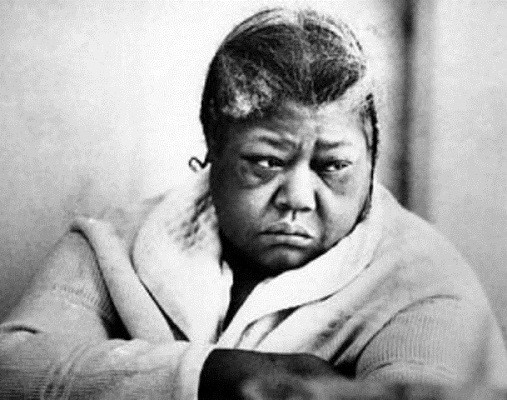
The City eventually paid a $200,000 settlement to her family. Meanwhile, the chief judge in NYC formed a commission to figure out how to prevent this kind of horror from happening again. The solution was the creation of the deeply flawed Guardian Ad Litem (“protector for the suit”) program. The judge would appoint a “GAL” to stand in the shoes of a person not able to adequately defend themselves against an eviction attempt. Initially most of the Housing Court GALs were lawyers, but I believe that presently no GALs are lawyers. There is no requirement that a GAL be a lawyer, and as time went by, and GALs were treated by the court with less and less respect, and paid a modest flat fee for an often enormous amount of work, sometimes including multiple Orders to Show Cause and a dozen court appearances, it became untenable for lawyers to act as Housing Court GALs.
NYCHA has a zero tolerance policy for tenants. If they are summoned to a hearing by management and don’t show up, or don’t shape up, the NYCHA administrative judge, two steps later, issues an order to evict them. They may be hostile and defensive at these hearings, act like animals backed into a corner by indignant NYCHA staff and aggressive NYCHA attorneys (as a group the most reflexively prosecutorial I’ve met), whatever, they get their say, or not, and then a NYCHA judge finds them ineligible to stay in housing of last resort.
The good news for tenants is that NYCHA has to bring the tenant to court before they can actually get the warrant to legally evict them. The bad news is that the NYCHA hearing officer’s decision is binding on the NYC Housing Court judge and momentary delay of the eviction is the only play for the Housing judge who finds the tenant unable to defend herself.
I was called to act as GAL by a very compassionate judge troubled by having to evict a gentle woman of obviously limited intellect who NYCHA found had illegally allowed banned felon children to visit her on three occasions over the course of several years. Not preventing a visit from a family member with a felony conviction is grounds for eviction under NYCHA’s rules. In that case I was able to use the NYCHA hearing officer’s comment that she appeared to be a “nice, gentle woman” (“who happened to raise three felons”– which I left off) as a lever to pry the administrative case back open. I asked to be appointed as her GAL in the administrative hearing as well as the court proceeding.
The NYCHA hearing officer later noted to me that it had been a mistake to write that the tenant seemed nice. He pointed out that the second half of that sentence pointedly referred to her children, the felons, but admitted he’d been foolish to include a reference to what a sympathetic and harmless seeming old woman she was. The law is the law, and eviction is the punishment for disobeying a clear NYCHA mandate.
In perhaps my finest moment as a lawyer (a moment extended over the course of over a year), I managed to get the charges against her dismissed by NYCHA and her case in Housing Court dismissed. It was the result of more than a hundred hours of hard, and at times inspired, work, including forensic investigation and vigorous cross-examination of NYCHA personnel.
The post-hearing pages I reserved the right to submit, wrote and sent to the hearing officer were, without a doubt, the most persuasively argued pages of my legal career. I was paid the statutory $600 to help this helpless and likable woman avoid eviction. That comes out to less than $6 an hour for my legal work, once you do the long division.
Her final NYCHA administrative hearing was not very long before my mother died, and as we stood outside the hearing room, feeling we had quite possibly won – or at least put up a hell of a good fight– the tenant I eventually saved from eviction told me how sorry she was to hear that I was losing my mother.
“Your mother must be a great person to have raised a son like you,” she told me as I shook her hand the last time we saw each other.
This, clearly, was a rare and exceptional case. More common was a hard kick in the ass from an overworked and frustrated judge with no dog handy to boot.
The Blatch Settlement was a hard-negotiated agreement that in a case where NYCHA knew the tenant was disabled, or unable to adequately defend herself, NYCHA had a duty to inform the NYCHA administrators and the Housing Court that the tenant required the services of a Guardian Ad Litem. It required the appointment of a GAL in such cases. So now the tenant who can’t speak for herself has someone at the table who can. A great step forward, no?
Except that there is nothing in the Blatch settlement forcing NYCHA to do this, no real consequence for NYCHA’s failure to do it, except that it’s easier now for a non-attorney GAL in Housing Court, if he knows about Blatch, to have the case of a disabled tenant slated for eviction after a one-sided administrative ordeal without a GAL, sent back to NYCHA for a new hearing with a GAL. Then back to Housing Court, and here we go loop de loo.
If the tenant had a GAL at the administrative hearing, and NYCHA does not inform the judge in Housing Court of this fact, as unambiguously required by Blatch: no harm, no foul. The judge merely delays the proceeding and appoints a GAL.
Of course, I know the real problem here. It has more to do with my own contemptibly naive belief in some twisted version of justice, with what SHOULD be, than with any law. I suppose I get this from my father, and it’s fitting, in a way, to wake up thinking about the Blatch Settlement on Father’s Day. Do I really, in my heart of hearts, imagine that, as a group, the descendants of people who were once legally sold, raped, killed for disobedience, forced to work virtually unpaid and lynched in many states for a century after slavery was abolished, are going to be given anything like a fair shake by the legal system, even in this exceptional nation, the land of the free and the home of the brave?
I can see my father’s knowing smirk.
As my grandmother would say in answer to such a question: “please….” turning her face away with a big, dismissive wave of her thick, expressive hand.
That you have, with increasing cunning, greatly limited the chances of any but a few for having anything like that prosperous life advertised constantly on TV, movie, smart phone.
Granted, you have planted bitter hopelessness in the lives of millions, while smiling and taking bows, and praising your own exceptional greatness and generosity.
Granted some of your most generous ilk made $45,000,000 last year, mostly in speakers’ fees, speaking off the cuff, and you are very droll and charismatic.
Granted, those fated to have almost nothing will get ever less and the three hots and a cot in a privatized facility will begin to look good as a free alternative to grad school. That or going for the glory and ending in a hail of bullets.
Granted, a family of one cannot actually live on $400 a week, but that is way too much to expect successful people to pay for unskilled, menial help.
Granted, the rantings of one silent, solitary voice here don’t amount to a hill of beans in this crazy mixed up world.
I don’t know where this song comes from, I certainly don’t recall choosing it among all the songs in the world. But while there is breath here to sing it, sing it I will.
Aggrieved that her beloved father had retired from retirement to get back into the intrigues of early American politics, mounted a vigorous and all-consuming presidential campaign and moved from Monticello to the nation’s capital, Martha took a break from their lively correspondence. When she did finally write after he was elected president she did not congratulate him on his win or make any other mention of the presidency.
Damn!
Thomas Jefferson, now president, was long accustomed to keeping his darker passions subdued. In fact, most biographers site his whipping of his horse bloody as one of the only outward signs of anger he ever showed. His beloved daughter’s silence finally got to him, though, and he wrote to her:
“It is a terrible thing that people will not write unless they have materials to make a long letter when three words would be so acceptable.”1
Dig it.
1: Thomas Jefferson, An Intimate History; Fawn M. Brodie p. 327

