Sam Cooke, Malcolm, Ali

My father’s favorite singer was Sam Cooke.  He bought every new Sam Cooke album as soon as it came out, carrying the disk home in a flat bag from the Sam Goody’s in Brooklyn he passed on his way home from work.  We would listen to the sides over and over on the turntable in the living room. Nobody ever sang better than the smooth, soulful Sam Cooke, and nobody before him, apparently, with the possible exception of Frank Sinatra, ever had a better handle on the business side of their musical careers. 

There is much to say about this remarkable man, a supremely graceful musician who never sang a wrong note, or a note without its full emotional impact, a master pop songwriter and producer, a nurturer of young talent,  a cross-over artist often credited with inventing soul music, an icon.  I read and recommend the great biography by Peter Guralnick, Dream Boogie: The Triumph of Sam Cooke, which came out very shortly after my father died.  

It may have even been released a week or two after my father died (first hit on google informs me it was published three years after Irv died, another site says it was released about a year after, the third gives the publication date, very authoritatively, as a few months after he died.  Fucking internet…).   Many times while reading it I thought what a shame my father had never gotten a chance to read the wonderfully detailed account of his musical idol’s life.  I need to peruse a copy of it to find and accurately set out the scene I’m about to describe from almost eleven year-old  memory.

It was a scene that struck me with particular poignancy.  After Cooke wrote and recorded the classic “A Change Is Gonna Come”, which became an anthem of the Civil Rights movement, a symbol of the struggle almost as famous as King’s “I Have A Dream” speech,  he sat with his guitarist listening to the playback.  He turned to him, I believe it was his longtime friend and collaborator Leroy Crume (though, if it was his guitarist, google suggests it may have been Clifton White, who played on most of his albums including the beautiful Mr. Soul)  (and, if it wasn’t a guitarist, it was most likely S.R. Crain who sang back-up on the recording) and said “this is good, isn’t it? You think my father would like it?”  

And his friend said to him “Sam, your father would love it.  He would be very proud of you.”  Sam died two weeks before the track he performed live only once was released as a single.    

NPR tells a nice story of the origin of the tune, and they quote Guralnick, but without that anecdote, which, I have to say, reading it shortly after my own father’s death, got to me a bit.  I have not been able to verify on-line that his father, Reverend Charles A. Cook, was actually gone by the time he wrote and recorded the tune, but that’s the internet for you.

I thought of Sam Cooke just now because I read today that he was seated ringside at the Cassius Clay- Sonny Liston fight in Miami in February 1964.  Malcolm X was also at ringside, already cast out of the Nation of Islam by Elijah Muhammad, and hoping that a victorious Cassius X, a man who fondly regarded him as a wise older brother and good friend, would  be his ticket back in.  Sam Cooke and Malcolm exchanged greetings before the fight and were both with the victorious new twenty-two year-old world heavy weight champion at his private victory party at the Hampton House Hotel.  

The three opted to stay at the colored Hampton House for the party, also attended by football great and Richard Pryor friend Jim Brown, rather than a more upscale party originally planned for the Fountainbleu, Miami Beach’s swankiest hotel.   Cooke, at the height of his powers, had, in fact, managed to talk his way into a suite at the strictly segregated Fountainbleu, having his manager make a scene until Cooke got his suite there.  But the celebration took place in the colored part of town where the new champ was much more comfortable.

Before the year was out, after an infamous summer of riots, Cooke would be dead at 33, shot by the night manager of the seedy Hacienda Motel in Watts as he banged on her office window, wearing only a sport jacket, screaming that a hooker had stolen all his clothes and his wallet.  His last words, according to the woman who killed him, were “lady, you shot me!”

My father mourned this death, even as he gave a dark laugh when he described the crude attempt, by the Amsterdam News, I think it was, to draw some clothes on the naked, dead body of Mr. Soul.

Malcolm would be shot dead almost exactly a year after greeting Sam Cooke at the fight and the after-party, after being marked as a traitor worthy of death by The Messenger, Louis X (Farrakhan) and others inside the Nation of Islam (with assists from the FBI, NYPD and others).  Clay would become Muhammad Ali not long after the fight, and, under orders from The Messenger, shun his former mentor Malcolm X, regarded by the hypocrite Elijah Muhammad as a traitor, liar and hypocrite, a man worthy of death.  

Once Ali, who my father also got a big kick out of and quoted at the table,  turned his back on Malcolm in blind obedience to the so-called Messenger, the rest, as they say…


Two, three or four sides to every story

Truth exists in various shades and titrations.   If truth could be had pure and unfiltered, and it’s hard to say if it could be, people would revolt, as they do, by adding in other truths to filter out the hard ones.  Is it true that animals have souls?  What is a soul?  Put more concretely, do millions and millions of animals like cows and pigs suffer greatly from confinement in tiny pens, separation from their babies and being herded to violent, bloody deaths so that we can have affordable meat?  

OK, sure, yes, they do, it’s true, they may very well suffer greatly.  And we, of course, wouldn’t like that either, being penned into tiny cells, having our offspring seized at birth, being herded to our murders. We wouldn’t like that at all.  If we related too much to the feelings of animals destined to be meat we’d make the inevitable comparisons to Auschwitz and we’d be appropriately outraged.  

So, in order to make the plain truth less horrible, more palatable, if you will, we add in other truths, and slightly adulterated truths: their meat is delicious, in proper portions and cooked the right way it is very nutritious, humans have always eaten animals,  many animals eat other animals, our digestive tracts were designed to assimilate the proteins of meat, our teeth enable us to eat meat, people need to eat meat to survive, animals have much less self-awareness than humans, grass fed cows and free range chickens at least have a nicer, more natural life, etc.

My father joined PETA (People for the Ethical Treatment of Animals) after his retirement when he had time to reflect on this industrial cruelty to animals.  Although  he continued to eat meat (I believe he stopped eating cow, and he had only once tasted pig), he ate meat much more sparingly and with a sense that it was wrong.  

I’m not saying vegetarians are more moral than carnivores and omnivores, we have the easy example of Mr. Hitler to debunk that idea, but in order to eat and enjoy meat we have to forget that the dish on our plate was once part of an animal that felt affection, and sorrow, and fear.  And, more than that, an animal that had lived a life of unimaginable pain and despair in order to be sold to us as meat for as low a price as we are able to pay.  

I make all the necessary arguments when my shrimp dish arrives in a restaurant, and I’m challenged to reconcile eating once sentient sea creatures with my moralistic refusal to eat birds and mammals.  I make some causal, slightly sheepish remark about their lack of higher consciousness– though I know the argument to be complete bullshit.

I do this because our kind can never do anything in good conscience without justifying it, no matter how feebly.   This brilliant piece by David Foster Wallace says it all, in the moment he describes the supposedly unfeeling lobster’s clear preference for not being boiled alive.

Anyway, away from this uncomfortable animal/meat truth metaphor, and eschewing further practical arguments against the industrialized mass-killing machine that gives us affordable meat (preservation of the rain forest, reducing our carbon footprint, more efficient use of farm land, reducing diseases caused by diets of fatty meat, eliminating world hunger, etc.) and leaving aside the strong case for not eating fish either, let’s have a look at a controversy I’ve touched on regarding my father and his blond former friend and colleague.  The subtle but undeniable nature of the truth may emerge, Rashomon-like, from their contrasting views of the terminal event in their friendship.

My father was very close to Gladys.  My sister would probably agree that he loved Gladys, from the way he talked about her at the dinner table.   They got each other, had similar dark senses of humor, could talk on the phone for long stretches, although they didn’t do it often, and laugh at terrible things.   Gladys had divorced her husband after she got tired of being beaten on, but not before taking a frying pan to the man’s head.  My father loved this image.  I suppose part of him wished he’d grabbed the violent little tyrant who called him Sonny and given her head a couple of playful passes with a light skillet.  

Gladys had sadness in her life.  “Irv, I’m a barren woman,” she’d told my father, explaining a lot in a few words.  My father and Gladys got each other and deeply appreciated each other, it was an uncomplicated mutual friendship.   It might have been the deepest friendship either of them ever had.

My father and his blond friend had a more complicated relationship.  Unlike Gladys, she both idolized (at first) and competed with my father.  My father both supported and undermined her at every turn.  It was simply his way, how he had learned to do it.  She was a talented folk singer with a beautiful, pure voice and my father encouraged her to sing, although surely never without a quip about how neurotic she was to be so self-conscious with such a beautiful voice.  This way he was able to compliment her and make her feel even more self-conscious at the same time.

I heard her perform before fairly large audiences a couple of times and she was great.  My father invited her, a young WASP, to a Young Judaea function where she sang for an appreciative audience of Jewish teenagers.  I remember that performance very well, my sister and I were sitting on the floor a few feet from her.  She moved that crowd with her guitar, her beautiful voice, her passion.  She led sing-alongs in the second part of her show that brought smiles to every face and it was inspiring to hear all those voices joined in hopeful song.  

It was only later that I found out that she’d vomited shortly before the performance and was covered in cold sweat as she began singing those songs of social commentary and protest I remember so well.  I can still hear her beautiful voice singing “here’s to you, my rambling boy, may all your rambling bring you joy…”

In hindsight it seems inevitable that the two, once so close, would have a falling out, just as it seems inevitable now that my father and Gladys, who had a much more uncomplicated friendship, never would.   Inevitable, also, that irreconcilable sibling rivalries would rear up among these three surrogate family members, with my father in play.  My father was a man who always took sides in the zero-sum world he lived in.  

The three were at a conference where they would be presenting their work to some large, important audience.  They had divided up what each of them would present and how they would present it.  The conference was a big deal, as I recall it was sort of the culmination and validation of their years of work as the Office of Intergroup Relations at the Human Relations Unit of the Board of Education.  The conference was at a hotel somewhere, and very prestigious, as I remember it.

It’s not hard to imagine the case of nerves each of them must have had right before they took the stage in that big auditorium.   That there was some controversy over how they’d present their talk is undeniable now.  There was disagreement afterwards over what the exact agreement had been.  Evelyn (why pretend that’s not her name, or that she had no name?)  got up to present her talk moments after either Gladys or my father had completely undermined the points she was about to make.  

According to my father, that was Evelyn’s insane perception and her insistence on being right and far from what had actually occurred.  The “agreement” she remembered was nothing more than what she had wanted to present all along, the very points they’d argued about.  She had rejected the good counsel of Gladys  and my father, become more and more contentious, and insisted on doing it her way, no matter what the rest of the group thought, no matter what the consequences for the group might have been.  

It was, according to my father, part of her pathology, an escalation of her war to be right no matter what. That she quit the Unit soon after was, to my father, the proof that she was creating a pretext to feel like the innocent victim and to leave in righteous anger and start her next career, as a therapist, a career in which she could never be told she was wrong by anyone, unless that person was insane.

Evelyn’s story is equally straightforward.  They had discussed how they’d present their work and each agreed to present a certain aspect of it.  Everything had been agreed to beforehand.  Evelyn had written and practiced delivering her remarks in accordance with that understanding.  She was doing what they all agreed she should be doing.  She even ran the speech by Gladys and my father shortly before the conference and they both told her it was good to go.  

Then, right before she took the podium, one of them, in their remarks, cut the legs out from under her by undermining everything she was about to say.  They  had changed the script on her with no time for her to make any adjustments.  Her speech, in this sudden new context, was now ridiculous and humiliating to deliver.

As she got ready to speak she was flooded with the terrifying feeling of having been betrayed by two people she loved and trusted.  She could not remember a worse betrayal, she said, since early childhood.  Her childhood, as she told it, was as horrendous as my father’s had been.  In both cases it was their mad mothers who had made their early lives hell.  As she took the platform, she felt like she was again standing in that hell.

I assume that both of these stories, Evelyn’s and my fathers, are essentially true. It’s not that the truth lies somewhere in the middle, either.  Was there a misunderstanding?  Apparently so.  Was there anxiety, and rivalry, and the ultimate taking of sides?  Yes.  But undeniable truth is there in both accounts, and it is not somewhere in the middle.  

This Solomon-like splitting of the baby so characteristic of our dualistic culture is one of the root causes of human idiocy, it seems to me.  The truth is not to be found by a judicious balancing of both sides, though truths may weigh on both sides of an argument.  The truth is in large part what was honestly felt by each of the parties, what motivated them to act as they did, and to feel justified.  In this case, I don’t see anyone as lying or even distorting.  

They are telling the story as they each perceived it and there is not even anything inconsistent in the two versions, except for the placement of blame and what is emphasized and what is left out.  I can readily accept the basic truthful contours of both versions of this story.  

In other cases there is much more truth on one side than on the other.  Often this is most inconvenient, of course, and gives way to emotional screaming instead of actual intelligent discussion.

While it’s true that most scientists who study the climate predict dire events including disastrous sea level rise, and that many attribute much of the effect to the carbon human industry pumps into the atmosphere, there are other scientists who downplay the human role in global warming.  The truth, as presented on fair and balanced outlets like Fox News, lies somewhere in the middle, we are told.  The “debate” is shaped by its framing: there may be reasons to be alarmed but the alarmists must not be allowed to prevail over skeptics who deserve to have an equal say in the debate.  

Which is probably as close as a profit driven corporate entity like Fox can ever come to the the truth of a given issue, given the demographics, the sponsors, the particular market place for their ideas.  As a result, instead of an earnest search for solutions to vexing problems we get this “both sides of the debate must be heard” kind of infotainment. In the post-Fairness Doctrine age in which we live, Americans remain the most obstinate deniers of human involvement in climate change of any nation on earth.  Climate change may be already dramatically playing out across the globe, but we suspect the motives of those who keep trying to make it front page news.

In fact, current day Evelyn will send you a series of learned articles actually proving that the whole climate alarmist thing is financed by people like Al Gore and George Soros who have a devious political agenda of their own.  Though I disagree with that position, and it’s pointless to argue with someone who believes it with unshakable faith, her reflex to be right does not necessarily invalidate her view of what happened at that long-ago conference with my father and Gladys.

Nor, of course, does my father’s story seem lacking in truth.   We see things as we must and in light of our lived experiences.  Is it possible to be an honest, gentle, sensitive person who protects the weak, loves babies and animals, is a champion of social justice and also be a brutal and destructive prick capable of doing exactly what Evelyn accused him of, and worse?   Absolutely.  

You will see a vivid illustration of this when I describe my father’s vicious behavior toward my shy, vulnerable one-time girlfriend, Francoise.  She was a beautiful caramel colored girl, the daughter of a French mother and an angry black G.I.   His treatment of her the first time they met (and the only time) is a hideous example of a white ‘race man’ dedicated to racial equality, whose best friends were blacks and a hipster who hung out with blacks (who ended up driving himself into a fatal one car crash when his daughter was about to give birth to an arrogant black guy’s baby), behaving like Archie Bunker, Lester Maddox and George Wallace, rolled into one silent, glowering Jewish guy with mutton chop sideburns.   I will untangle that last, long non-sentence for you in the coming days.


Indigestible Anger

If you are whipped in the face by your mother during your earliest memories, which I hope you never were, certain bad results are inevitable.  Many people have early childhood traumas that twist them in ways they will rarely understand, but I can’t think of many worse than violent betrayal by your main caretaker.  Being whipped in the face by the mother who is your first teacher of life and love is about as hard a start as a child could have.

Try not to smile at the next picture you see of a mother animal of any kind with her tiny replica next to her.  Baby animals are born to be cute and seeing them, tiny versions of their mother, next to mom almost always uncreases the brow.  Now advance to the next frame and watch the mother viciously bite the baby animal, blood flowing, the baby screaming.  Not cute anymore, is it?

“You are flailing today, Elie,” notes the skeleton impassively, though with that persistent grin.  “That bit about Malcolm X you wrote the other day, with its long encyclopedia entry in the middle, and the mini treatises on Fourteenth Amendment jurisprudence, or lack of jurisprudence, and the Voting Rights stuff, threw you off your game.  I am less than half formed in these pages.  Tell them something they don’t know already.  The insight that a baby whipped in the face will bear its suffering throughout life is not worth the dirt under my left scapula.”

He’s right, of course.  I am just taking a moment to note again that in the case of a baby whipped by its mother it’s easy to see why anger would become a lifelong problem.   Express any sort of outrage to your mother that she would whip you in the face, at two, and things are likely to go a lot worse for you.   Nothing warps the impulse to be happy more surely than unfairness shoved down your throat over and over when you are young.  The indigestible anger goes into some hidden place in the psyche, waiting for its chance to burst out and rage.  

And yet, in most ways, in most situations, my father appeared in control and completely sane, even when he was insisting on things that were completely insane.  In the same way that Malcolm X could make an excellent point in the same lecture where he described the creation of the white devils by a scientist named Yakub, or during an ugly emotional reaction to an event, like his unrepentant celebration of the deaths of 120 southern whites when a flight to France went down, my father, who often justified completely mad crap,  could often be dead on with his insights.

Here is a case study, cannibalized from an earlier post on this blahg.  This is about the brilliant, blond folk singer and social activist my father greatly loved, his friend and colleague from The Human Relations Unit, whose fall from grace, when it came, was as swift and absolute as any I can recall.  


My father’s colleague and close friend became very close to the family when I was a boy.   We spent a lot of time with her.  My sister and I found this brilliant and talented woman funny, and caring, and she seemed to relate to us as a peer.  She was like a very cool big sister to us.  My mother was very fond of her too. Then, seemingly out of the blue, my father was done with her, for reasons he was too disgusted to detail for his disappointed family.  One day she was just gone and we never saw her again.

Many years later my father and I spoke about what had happened to their close friendship.   “She is pathologically competitive,” my father said, his face very much like Clint Eastwood’s iconic mask of hatred when he is confronted by an on-screen enemy.  “She will fight to the death over everything and never gives an inch, especially when she’s wrong.   Her reflexive self-justification makes her impossible to deal with, even after years of therapy and supposed introspection, she still has no insight into how damaged and enraged she is.  She is always primed to fight and she fights even the smallest things to the death.  She’s one of the most maddening and provocative people I’ve ever met, and I finally just had enough, after a particular incident at a conference we did with Gladys.”  That the same could be said for my father, minus the years of therapy, did not need to be spoken by me at the time.

My father had come to another breaking point with a good friend, part of the pattern of his life that troubled me greatly growing up. It seemed to me he never gave these close friends a chance to make amends.  It took me decades to see that things sometimes advance beyond the point where amends are possible, much as it saddens me to see this.   When things become ugly enough between two people trust is torn and it can become emotionally impossible to make amends.  Anger puts each of them on the defensive, they become the worst versions of themselves and can justify their heartless behavior down to the snarl.

Back to the point then, what happens to anger that is swallowed? My father executed a sentence of death on this woman my sister, mother and I felt so close to.  He felt 100% justified.  Decades later I was talking to Sekhnet about how close I’d felt to this one time friend of the family’s and she urged me to look her up on the internet.   I found her easily.

We had a mutually delightful reunion by email which led to Sekhnet and me spending several days in her guest house in Santa Monica during a trip to California.  In her version of that conference my father had alluded to as the last straw, it was my father and Gladys who had set-up, sabotaged and betrayed her. “Unbelievable!” she’d laughed, when I gave her my father’s version.

A great animal lover, she had a rescue dog, a lovely, skittish black lab, smaller than your average black lab– possibly still not full grown at the time.  She named the dog Boo!  Boo! was immediately very friendly with Sekhnet but seemed afraid of me.  Our host explained that Boo! had been abused by the man who owned her and that the gentle dog was skittish around men.  By the end of our stay my cooing at Boo! to come over and not be afraid turned into “get off me, Boo!” as the affectionate dog would not leave me alone, licking my face and sitting on me whenever I was within reach.

Had the story ended on this lovely note it would have been a wonderful tale of redemption.   My father had been wrong about many things, as he sadly admitted on his death bed, and his banishment of this wonderful woman was just another of them. In fact, I once put the two of them on the phone and they had a very cordial chat, reminiscing for a long time, as my father made her laugh again.  A beautiful story, if that had been the end.   Except, the story did not end on a lovely note.   

An unflinching advocate of social change when I knew her, a crusader for the underdog and righteous fighter for the oppressed, she had become, several decades later, a deeply conservative supporter of Dick Cheney, Sarah Palin, Rush Limbaugh, Dennis Prager, Glen Beck and a host of other characters that would have made her earlier self recoil.  

She told me she had converted to Judaism and, as a Jew, she valued these brilliant uber-conservatives as the best friends of Israel.  I questioned whether these people were really friends of Israel at all, as they seemed to me to support the worst of Israel and for all the wrong reasons.  She asked if I’d be willing to have a dialogue about politics, which she’d had a revelation about after 9/11, as a favor to her, since we had such excellent communication and all of her other liberal former friends had cut her off (and she had new ones who were, like her, political independents of the far right).  To my eternal regret, I agreed.

The correspondence did not go well.  She and I found no common ground, and worse, for me, whether she had a coherent answer or not (and I eventually tried to reduce our Bush era correspondence to two questions:  why Iraq?  How do you justify torture?) she was vehement.  She insisted she was right, whether her answers made sense or not.  All of the experts she believed in told her that if we did not rain death and torture on those who hate our freedom they’d literally be upon us in our beds, literally cutting our throats.  Besides, we never tortured anyone, she insisted, and we only water-boarded three people (which she didn’t consider torture, in any case) and only because they desperately needed it and there was, presumably, a ticking time bomb and it was us or them.

A difference of opinion, we might say, and not something that should lead to the end of an otherwise wonderful friendship.  Our disagreements escalated.  My detailed emails were dismissed for their hopelessly misguided liberal bias, the larger points unanswered.   It soon became an exercise in masochism for me.  

It was also another sad illustration of how feeble even the most well-marshaled and diplomatically deployed facts are against the torrential power of strong emotions.  We had liberated Iraqis from a modern-day Hitler?   Really?  Ask the millions of Iraqis fleeing their homes during the American occupation how liberated they felt.  I was missing the point, she told me.  I eventually had enough.  

We had a long falling out, I came to see her exactly as my father had described her– pathologically competitive, incapable of giving an inch of ground and irrationally spoiling for a fight.  

After years of silence I sent her a piece about Ahimsa that I’d written, she wrote back very moved, and grateful for the chance to renew a warm and mutually beneficial friendship.  She agreed 100% that we would no longer discuss politics, that it was a third rail we would never allow to electrocute our friendship again.

Except, even though she continually renewed her promise not to send political emails, darn it,  she could not resist once in a while (often accidentally, she claimed) sending me something she really thought might change my mind.  She’d apologize most of the time when I reminded her I didn’t want provocative political emails and she promised each time not to do it again.  

But she simply couldn’t help herself, darn it, sometimes a given piece was just too convincing for me not to be convinced by.

During all the turmoil over the deaths of unarmed black young men at the hands of police she sent me a piece that complained about how these same agitators who protest against the police conveniently ignore the hundreds of times more deaths black young men inflict on each other.  An opinionated and simplistic response I found not only irrelevant, but idiotic, inflammatory, and not even well-written.  A self-appointed American pundit compares killings by the police, sworn to serve and protect, with killings by violent criminal gangs, sworn to get rich or die trying? This is your response to protests against police killings of unarmed civilians?  Really?

But, see, she couldn’t help it, you dig?  She was still earnestly trying to convince me she was right, get me to see the truth, get me on board with those who see the light, no matter how many times I’d expressed how these attempts make me feel.  I was so willing to have frank dialogue about so many things… why so closed minded about politics?

To me, there is only one explanation for her seeming irrationality that makes sense.  This is one thing that happens to anger that is swallowed whole:  it comes out as an otherwise unexplainable tone deaf determination to be right that cannot consider the provocative effect it will have on the person it is directed to.  

The expression is very often directed at someone who had nothing to do with the original swallowed anger, which starts early in childhood, goes into a mass of general anger and creates the conditions for this kind of righteous moral tone-deafness.  And it’s “innocent”, you dig, and it conveniently becomes another proof that the person who gets upset over it is just an irrationally angry hot-head himself.  

I know that she was raised by a mother she tells me was insane.  I can imagine the pain of that upbringing, it is not so different from my own, although my father was masterful at presenting his insanity with wit and seemingly irrefutable logic.  Hey, Dad, you was like the narrator of the Telltale Heart!  

“TRUE! nervous, very, very dreadfully nervous I had been and am; but why WILL you say that I am mad? The disease had sharpened my senses, not destroyed, not dulled them. Above all was the sense of hearing acute. I heard all things in the heaven and in the earth. I heard many things in hell. How then am I mad? Hearken! and observe how healthily, how calmly, I can tell you the whole story,” quoth the skeleton.


My father and Brother Malcolm, part 2

It wasn’t his espousal of the teachings of the vain and corrupt Elijah Muhammad that made my father interested in Malcolm X, of course, it was everything else.  At the time Malcolm was on the scene, shit was jumping off big-time in the Civil Rights movement my father was part of.  The need for radical social change had become urgent to millions of Americans.  The pendulum was still swinging toward hope and mercy, but it was poised to swing back toward intolerance and blame.   Malcolm was a compelling spokesman for the cause of human equality by the time he was marked for death.  

For most of his public career Malcolm prefaced his pronouncements with “as the Honorable Elijah Muhammad teaches,” although this became harder and harder for him to say as time went on.  My father always wryly added “as the Honorable Elijah Muhammad teaches” when telling some Malcolm anecdote, like his description of the mad scientist Yakub who created the race of white devils six thousand years ago.  Malcolm chafed more and more in the straitjacket the self-important Elijah Muhammad tried to keep him in.  It’s not hard to figure out why, if you do the simple arithmetic.  

Elijah Muhammad, a halting reader with a fourth-grade education, was a convert to a religion whose religious books he could not read.  He knew a single phrase of Arabic, the greeting “peace be unto you”.  He learned the simplified, idiosyncratic black nationalist Islam he taught from a mysterious drifter named Wallace Fard.   My father chuckled as he described the sci-fi aspects of the white looking Fard’s black-pride version of Islam with its blue-eyed white devils.  It is probably worth keeping in mind that Fard’s theology is no stranger than the creation myths and miraculous visions at the core of many other religions. 

Wallace Fard arrived in Detroit in 1931 leading a small, secretive sect called The Nation of Islam.  To his black converts he preached racial separation and self-reliance, along with his esoteric brand of Islam.  Fard taught that blacks were the original and superior race, and that they had been ruthlessly subjugated for 6,000 years by the evil white race created by the big-headed scientist Yakub in a centuries-long genetic experiment gone terribly wrong.  These mutant whites would be forced from power when death rained down from the Mother Ship to destroy Yakub’s hideous experiment, according to all-merciful Allah’s plan.

Elijah Muhammad served as Fard’s Top Minister  from 1931 until Fard disappeared without a trace in 1934.  To Elijah Muhammad, Fard’s most ardent follower and heir apparent, his master’s mysterious disappearance was the final proof that Fard had been the incarnation of Allah.  For the rest of his life Elijah Muhammad remained a disciple of Fard, holding himself out as the Messenger of Allah, someone who personally knew and spoke to Allah.   He soon discovered that his deep faith imbued him with new-found business abilities and he built up the Nation of Islam, making it a financially viable entity in multiple sites.

Its message of submission to a God who loved blacks and would deliver them from the white devils all around exerted a powerful attraction for members of a despised race who could find discipline, pride, and fellowship in an organization that preached all these things.  As sad as it may look in my capsule summary here, as fatal as its internal politics would prove to be to the evolving Malcolm, Malcolm often credited Elijah Muhammad with saving his life when he was in prison.   Many other members could say the same thing.

Malcolm’s faith, study and transformation into a Minister of the Nation of Islam undoubtedly did save him.  He went from an enraged inmate to a committed leader of Black Muslims, a man ready to do anything necessary to change the world.  And, crucially, The Nation of Islam gave him a platform from which to do it.

The Nation of Islam gained much wider membership once Malcolm X came into the fold and became its charismatic, telegenic face.  He joined and became a minister after corresponding with the Messenger from prison and converting to Islam  It was Minister Malcolm’s charisma, bearing  and organizational talents that allowed the small sect to grow into a fairly large national movement with storefront mosques in thirty cities.  

Elijah Muhammad preached a strict code of discipline and morality, with serious beatings and even death for violators. A Muslim must not drink, smoke, steal, covet, commit adultery.   The Messenger, although he succeeded in keeping it quiet for many years, had impregnated as many as seven young assistants over the years.  Young women he then expelled and banished as fornicators and adulterers.  He also lived the life of a pasha on the backs of his mostly poor followers.  His followers were forced to pay higher and higher dues to finance the lavish lifestyles of the Messenger and his sons.  

Elijah Muhammad also seemed to have had no coherent plan or vision, beyond demanding strict obedience to his interpretation of Allah’s will until the Mother Ship arrived, as prophesied, and blacks would once again rule the earth, after learning discipline and self-sufficiency.

Even while Malcolm was giving all credit to the Honorable Elijah Muhammad, and his pronouncements were faithfully bound by his master’s world view, even while forcefully expressing ideas that he would recoil at later in his life, his fierce intelligence and skill as a speaker were always apparent.  His poise and cool under fire were as undeniable as his charisma.  He was the image of a man of integrity in complete control of his life, no matter what anyone had to say against him.   My father identified with all of these things big time.  

Irv was a natural public speaker who could improvise a moving funeral oration with seeming ease.  He would gauge his audience and make adjustments on the fly, like Malcolm.  They both knew how to get the tears to flow and when it was time for quick laugh to break the tension, to reset the pace.

Malcolm was a tall, good-looking man with an electric, camera-ready smile or a convincingly implacable expression, depending on the needs of the moment.   My father, oddly enough, to think about it, was a tall, good-looking man in his day too.  He was self-effacing about his looks, particularly as he gained weight once he had a family on his shoulders and indulged his bad eating habits.  He more than once told someone over the phone who asked what he looked like that most women compared him to Rock Hudson.  He’d give a mild chuckle afterwards.  

The photos of him as a young man show a confident looking man with thick black hair and nice features.  Rock Hudson was not a ridiculous stretch, or sometimes it was Cary Grant, though my father always made the comparisons with characteristic self-mockery.

But the main thing I think my father identified with in Malcolm was the rage, and the ability to intellectually channel that rage into an articulate, undeniable argument.  Both men did this somewhat destructively at times, though Malcolm and his views continued to evolve, while the cornerstone of my father’s belief, and what doomed him to his miserable final years, was that people could not evolve.  But there was a similarity in their techniques, skill sets and basic beliefs and my father enjoyed watching the masterful Malcolm X at work.

My father admired Malcolm for the same basic reason he loved Richard Pryor and Lenny Bruce — their audacity and unflinching honesty in presenting important things most people didn’t want to look at.   The facts, Malcolm kept saying, look at the plain facts in front of you.  Go to the home of the average white person, look at their lives, then to the home of the average black person, look at their lives.  What is mysterious about the claim that America is a deeply racist country?  

***

Martin Luther King was arrested on the eve of the 1960 presidential election for sitting at a segregated lunch counter.  For this crime he was taken to a jail deep in the backwoods of some redneck state.  The law in those days was that the states had the right to deal with their Negroes however they pleased.  The Fourteenth Amendment, which guaranteed American citizens federal protection from arbitrary and hateful state laws, had not been enforced in almost ninety years by then.  As the Supreme Court said,  when they put the Fourteenth Amendment into a deep sleep a decade after the end of the Civil War,”the Negro’s day as the special favorite of the law is at an end.”

Nixon, on hearing of King’s arrest and the move to a rural prison where King might be killed, apparently appealed directly to Ike about it.  Ike was probably playing golf and told Nixon they’d talk about it another time, maybe. Few people ever learned of Nixon’s prompt, unsuccessful behind the scenes attempts to get King out of jail.

Candidate JFK called King’s wife, Correta Scott King, and expressed his concerns.  The phone call made the news, King was soon released from jail.  King thanked presidential candidate JFK on TV.

Some say that phone call to King’s wife won the 1960 election for JFK, who got the almost unanimous vote of those blacks who got to cast a ballot, along with those votes from the cemetery in Illinois.  JFK was elected by a razor thin margin of 120,000 votes nationwide.  He likely would have won in a landslide if the Voting Rights Act signed by Lyndon Johnson a few years later, which ended most of the shenanigans that prevented many blacks from voting in many states, had been in effect in 1960.  

The Voting Rights Act, by the way, that the Supreme Court ruled recently is unnecessary to enforce.  The 5-4 Majority held that federal oversight of fair elections is no longer needed even for states with the most egregious histories of racism.  The Majority wrote that even if these new laws made it virtually impossible for many poor people, old people, college kids, non-white people, to assemble the required three forms of acceptable ID documentation the laws now require for all voters, there was no Constitutional violation of the rights of citizenship involved. 

In the country where my father and Malcolm were born, those who were not “white”, or not “normal” got what they got and, you know, shut up about it.  I was born into the same country, almost sixty years ago, more than thirty years after my father and Malcolm were born into it.  During my childhood, blacks could still be killed with impunity in many of the states that now vote solidly Red in national elections, states that still lead the nation in executions and deaths by firearms.  It was not only in the former Confederacy that blacks were treated as second and third class citizens.  Our  unbroken history of racism is part of the unthinkable underside of the American Dream that was always there and that now intrudes on the sleep of more and more Americans as time goes by.

As I said, the sickening injustice of it burned my father, the thought that even someone as mild-mannered, and upright-seeming as the pious, eloquent and nonviolent Reverend Dr. Martin Luther King could be trussed up and taken to some holding cell for possible lynching merely for having the temerity to sit at a lunch counter where people their fellow citizens called niggers were not allowed to sit.  What?  Does it even sound possible that someone could be arrested for that in America?

It burned Malcolm, too, obviously.  King was risking his life to get the legal right to sit at a lunch counter with white racists who hated him?  What?  That symbolic act was worth being burned alive for?   What is worth dying for, Malcolm X said, is fighting for the right to be a full human being.  Or, as it was commonly phrased in those days, the right to be a man.

It seems like an abstraction, perhaps, fighting for the right to be a human being.  Being denied the right to be a man is no abstraction for a boy growing up in a town, like Lansing, Michigan, like Peekskill, New York, where the Klan has the final word on whether you and your father will walk down a given street or, perhaps, if you insist, we’ll beat the shit out of the two of you and burn your fucking house down in the middle of the night instead, how about that?  “Your choice, sir,” they’d say with a smile.  

I feel my blood percolating as I try to write this entry.  You know, we’ve come so far, in the more than 150 years since all Americans recognized the unalienable truth of Jefferson’s words that “all men are created equal”.  In the more than 150 years since the bloody war to free the slaves ended, Lincoln was slaughtered, and the Constitution was amended to ensure freedom for all Americans.

Malcolm X told Alex Haley, while pacing that small room in which Haley interviewed the doomed Muslim, that being dissatisfied with grudging progress for the Black Man was like being called ungrateful when a knife was pulled partially out of one’s back.  “The knife is shoved in ten inches and the man pulls it out four inches and says ‘that’s much better, isn’t it’?   Well, you could see it that way, unless the knife is still stuck six inches deep into YOUR body.”  

As far as my father saw it, visiting high schools where blacks and whites were squaring off to kill each other near the sites of recent race riots, where the edict of 1954’s Brown v. Board of Education to end inequality of education by integrating the schools was proceeding with “all deliberate” snail-like speed, Malcolm was simply putting the plain facts out there, as simply and straightforwardly as possible.  Something had to be done about it, and he was going to keep putting himself front and center in the struggle to do it.

In 1964 the school I went to in Queens was integrated for the first time, after a fierce battle among parents and teachers during which my mother and her friends were called Nigger Lovers and, slightly more amusingly, Commies.  I recall one of my teachers, a haughty, opinionated francophile named Harriet Bluming, loudly and repeatedly expressing her racist view, in the cafeteria of our school, that newly arrived Negro kids misbehaving in the lunchroom would grow up to be on Welfare and blaming white people for all their problems.  Some of the young Negros snarled back at her, but she gave them no quarter.  

Meanwhile, as Bluming tongue lashed the unruly Negro ten year-olds, down in Mississippi, leftist lawyers from New York were making successful arguments that the never repealed 1872 Ku Klux Klan Act gave the federal government the right to enforce the law when a gang of men, including local law enforcement, hauled three Civil Rights workers off a state road and murdered them in the woods of Mississippi.  The good whites of Mississippi resented this unjustifiable intrusion on “States’ Rights”, of course, but the Fourteenth Amendment was enforced for the first time in almost a century.  It would be used in every Civil Rights case that followed.

When my father had a black colleague over at the house in 1964 it was considered a radical thing to do.  Our neighbors were shocked to see a Negro laughing and coming in and out of the house.  We integrated Pastrami King after my graduation from sixth grade a few years later, with the family of a brown-skinned classmate I was friendly with.  Posing with his arm around his colleague and friend Gladys in a photo I have, at some dinner where my father wore a tuxedo and has a black hand gripped in his other hand, was, tame as it seems now, something of a radical act in those days.  
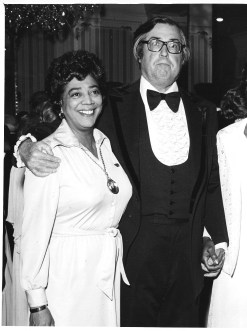
Irv and Gladys

Now, fifty years later, when we are a post-racial nation, as many “color-blind” whites like to insist we are, these things are still not natural for most Americans.  The younger generations, it’s true, are more tolerant, much more inter-racial, but millions of  Americans in the second half of their lives– not that much.      

How was it possible for an elected official to yell “you lie!” at the President of the United States during a nationally televised presidential address a few years ago?  Because the president was, a, well, he was, possibly a secret Muslim, not definitely a US citizen, a kind of socialist, a fascist, a man who cheated to become president, you know, an illegitimate president who came to office by a kind of fraud or shady electoral subterfuge, in a much different and more dangerous way than any recent predecessor, he was a different, a less respectable kind of president, he lacked the pedigree, he was….

“Christ,” says the skeleton of Malcolm X, “say the word.  The word is nigger.  ‘The president is a nigger’ is what he actually dog whistled.”

And as such, and being politically inexperienced, he had to be very careful, our first Black president, our post-racial president.  Very careful, you understand.  He had to remain supremely dignified, more so than Jackie Robinson, even.  A hard slide into a foul-mouthed bench jockey playing shortstop was out of the question. Our post-racial president walked with that heavy burden on his back, the weight of hundreds of years of racism, de jure and de facto.  He did a pretty good job, considering his hands and feet were tied for much of his first term, and for his second term.

And my father, choked as a boy on his family’s poverty, on being in a tiny, powerless minority of Jews in a town where the opinions of the Klan were much more universally respected than any others, identified 100% with the choking rage of another boy, born into poverty, part of a despised minority that could be beaten or killed with impunity, whose first memory was the Klan setting fire to his childhood home.   2016, gentle reader, almost a century of bold progress, and I am choking on the same goddamned things that choked them.

My Father and Malcolm X

My father admired Malcolm X, El Hadj Malik El Shabbaz, born Malcolm Little almost exactly a year after my father, on the day before my mother would be born three years later.  They were contemporaries.  They were both burned by the sickening injustice of the world they were born into.  

Both were eloquent, persuasive, quick-witted speakers.  My father must have felt like a pretty good amateur fighter when he watched Malcolm work.  He was inspired by and took pride in Malcolm’s indomitable quickness in the ring, the way he shined in the spotlight, his slick moves.  He delighted in watching the remarkably skilled self-taught boxer in the big fights.

I was eight and a half when I heard the news, on the radio, sitting alone in my parents’ bedroom waiting for something to come on TV, that several men had cut doomed Malcolm down in a hail of bullets in the Audubon Ballroom.  I remember how hard the news hit me that February evening.  I am sickened to this day about the cover-up and the fact that the bloody crime scene was mopped up immediately so that the scheduled dance could be held in the ballroom three hours after the assassination.  

February 21 would acquire further meaning for me as an early love of my life was born on that day, and so was my only aunt.   February 21 was also the day Spinoza had died, and, three hundred years later to the day, my grandfather, strong, gentle, frightened Sam.  Sam had a right to be frightened, his six brothers and sisters, all his nieces and nephews, possibly his old parents and any aunts and uncles still alive, and all of his surviving cousins, had been marched out of the house he grew up in, and the ones nearby, for a bullet in the back of the head and a mass grave in a ravine.  He was only alive because he’d followed his strong-willed fiancee to New York twenty years earlier.

When we talk about history, whether we mention the frequent atrocities or not, this is the kind of thing we are talking about.  My father could minimize the psychological effect of having all of your parents’ aunts and uncles summarily executed at the whim of some hateful fucks, just as he tried to minimize the whippings across the face he’d endured from his mother (her family similarly wiped out) when he was a very young child. Minimizing anguish can only do so much, the violence is always there. .    

All the atrocities one hated could be felt as one while Malcolm whipped some apologist for racism with irrefutable, brutal logic.  Malcolm, at his best, brought a feeling of catharsis to the discussion– to hear someone finally speaking clearly, and strongly about exactly what needed to be spoken of clearly and strongly.  

I learned from reading that part of Malcolm’s genius as a radio debater was his superb sense of timing.  I’m sure my father was very much aware of Malcolm’s clock management skills.  Malcolm X was Michael Jordan in the last thirty seconds of a radio debate.  He’d wait, timing his game winner to come at the buzzer and he rarely missed.  

Debating a black academic of some kind who took a superior tone, Malcolm goaded the man by referring to him throughout as “doctor”.  The man corrected him and finally, in exasperation, said “Malcolm, you know very well that I am not a doctor.”

“Oh,” said Malcolm with feigned innocence, “you speak so authoritatively on the subject of the so-called progress of the Negro that I just assume you have a doctorate in this subject.”  

The shot clock on the radio studio  wall now down to thirty seconds, Malcolm set up the last shot of the game.    

“Are you aware of how white academics where you work, in fact, all the white people where you work, refer to you, doctor, when you are not present?”  

His opponent, who’d been insisting Malcolm’s anger at American racism was not helping matters, gave some prissy demurral, asked how he or Malcolm or anyone in the world could possibly know with any degree of possible certainty, or even hypothetically, what was supposedly being said of him when he was not there.  

Malcolm dribbled for a moment, glanced at the game clock.  Then he sent one in a perfect arc, that hit nothing but net.  “Nigger,” he said, as time ran out.  

“How can you not love that shit?” asks the skeleton of my father from his grave in Cortlandt, NY.

My Father’s Sense of Humor

A sense of humor is a funny thing to try to describe, of course, very personal and ticklishly hard to render in words.  What’s funny?   It’s like pornography to that famous Supreme Court justice whose name nobody today remembers: I can’t exactly describe it, but I know it when I see it.  

Very hard to describe somebody’s sense of humor, which is always seen in a sudden flash. It’s like trying to describe a unique smell, or the essence of music to a deaf person.  

Music is these wonderfully organized sounds that hit the eardrum in a beautiful way and stir ineffable emotions, you know what I’m saying?  Hey!  Are you fucking listening to me, deaf guy?  I’m trying to explain what music is here.  

Tell a funny story, and watch the confusion on the listener’s face as to why this story is funny, or even worth telling, and in the moment of defeat you’ll say, or just as often the tired listener will say “I guess you had to be there.”  And it’s usually true, you usually did have to be there.  

There’s the matter of timing, pacing, facial expression, and body language, when and where the supposedly funny thing happened, and who it happened among, the context, what the stakes were.  Take a funny bit by a great comedian, something that cracked you up, and write it out verbatim.  Chances are it’s not nearly as funny, if at all, as it was when performed by the talented comic.  I can assure you, it was fucking hilarious.  I guess you had to be there.  Are you even listening to me, you deaf bastard?

My father was fucking funny, is what I’m trying to tell you.  He was a lot of other things that were not funny at all, true enough, but he also had a keen, dark sense of humor and a quick wit.  It’s hard to give you examples, though.

My father, standing at the top of the stairs leading from the kitchen down to his bathroom, pointing his ass at his family, his wife threatening him, timing his exit to the predictably horrified reaction to his perfectly executed fart, is it really funny?  And if it is funny, is it “ha-ha” funny or just funny as in weird?

I consulted a psychotherapist on this particular instance of my father’s wicked sense of humor and her take was that “he came off as less funny than hostile and angry, at least as regards the farting part.”  She noted that “blatant public farting can serve as a means for people who feel ‘powerless’ in their lives to exert a measure of control/power over others.”  Bingo.  I recognize all that, that’s why he was doing it, but… I guess you had to be there.  I guess asking a fucking psychotherapist about humor is pretty funny in itself.   

Eli, that great, funny, savage older first cousin of my father’s, once tried to describe my grandfather’s sense of humor to me.  Eli was a great story teller, and very funny himself, but it took him a long time to dig up a few tiny examples that gave me a sense of my grandfather’s deadpan style.  He described Harry’s face with an unforgettably poetic image: “two eyes, a nose, and a mouth”.  That was it.  Eli zipped a finger across his lips, showed the mask, blinked once impassively to show what he was talking about.

“OK, I got one,” he said at last.  “I was trying to teach Uncle Harry to drive, you know, he was out of work and my father was going to hire him to work in the garage, but he couldn’t be much use unless he could drive and move the cars around.  So I took him out in the car in Peekskill, which is very hilly territory, if you remember what Peekskill is like.  And we’re going along and we come to a hill, and he starts losing power.  So I say ‘Uncle Harry, give it gas, give it gas!’ and he turns to me with that face and says ‘gas costs money’ and the car starts rolling backwards, and we’re going to get killed.  I shoved my foot on to the gas pedal and grabbed the steering wheel, and pulled the goddamn car over at the top of the hill and that was the end of the driving lessons, but that was him.  ‘Gas costs money.'”

Funny I am only now making the connection.  Gas costs money, unless it’s the gas that comes out of your ass, which costs nothing except the horrified look on your children’s faces when you tell them to ‘prepare for…. gassing’ and blast them with it.  I will get back to you with examples of my father’s sense of humor as I am able to dredge them up, so you will understand I am not making this up.

OK, I got one, though a minor one you probably really did have to be there for.  When my grandmother was dying at home, in my former bed, actually, she was in a lot of pain at the end and wouldn’t take her synthetic heroin except at precise four hour intervals.  She’d cry out in pain for two hours at a time sometimes, refusing her pill until it was exactly four hours from the last one, no matter what any of us said to assure her it would be fine to take one after only three hours if she was in agony.

She’d asked me to hang up a small painting on heavy paper I’d done for her, so she could study it on the wall.  I went downstairs to get a hammer and nail.  As I headed up the stairs with the hammer my father said “is that for the fly on grandma’s nose?”

You had to be there, perhaps, but I remind you, there are few things more important for the doomed than a good laugh whenever possible.

My friend mentioned that his children had taught him what to do when they received a text that asked them to do something they weren’t ready to do: ignore it.  “It was a great lesson, though it took me a long time to catch on.  Now I do it all the time whenever they send me a request to do something I’m not ready to do.  And the beauty is, they taught it to me and so they really can’t complain about it.” 

I offered him one of my father’s staples.  “You show me a man who doesn’t respond when his father texts him a request, I’ll show you a man who lost the right to whine like a fucking baby when his father does the same to him.”

My Father’s Laughing Attacks

My father was prone to fits of laughter so strong he’d turn fire engine red as he howled and struggled for breath, wiping tears from his eyes.  These fits didn’t come over him very often, but he was susceptible to them for his whole life.  Some of the things that made him laugh this way didn’t have that effect on the people around him, but some of the things that cracked him up made my sister and me laugh too, and our mother.  

I have inherited this proneness to the laughing fits.  Sometimes I will try to explain why I am laughing so hard to someone, but it’s almost always impossible and it often makes things worse for me.  For one thing, my voice goes up a couple of octaves and I gasp to speak in a voice that sounds like I’ve just gulped helium.  For another, it’s a struggle to breathe, laugh that hard and make a subtle point at the same time.  I just have to ride them out, as my father generally did.  

One of the features of his fits was the breathless repetition of a partial phrase, repeated a few times, a fragment of an explanation of what was so funny that he was powerless to convey as the laughing fit gripped him.

One of the things my father was known for, around the dinner table especially, was an unfortunate ability to fart seemingly at will.   He’d often announce the imminent threat with the phrase: “prepare for … gassing!”  We’d brace ourselves.

“Irv, don’t you dare!  I’ll divorce you!” my mother would threaten, pointing at him with a serious look on her face to show she wasn’t kidding.   My sister and I would protest angrily too, but our indignation only egged him on.  

The tension wouldn’t last long, my father would smile and let out a loud blast. We’d all recoil, my sister, who sat next to him at the table, would move limply out of the way and my father would head down to the bathroom, chuckling.  

He’d sometimes tell us to prepare for gassing from the door in the kitchen that opened to the stairs to his basement bathroom.  After he said this he’d wait at the top of the stairs, poised, regarding us over his shoulder, shooting us an ominous look before impishly delivering his payload and heading down to the bathroom, smiling. These were the times, in the tense moment before my father made good on his threat, when my mother would call him a pig and snarl about divorce.

“Do you do this with your friends at work?” my mother asked him disgustedly once.

He started to laugh.  As a matter of fact, just the other day he’d been riding out to a high school in the ass end of Brooklyn with Phil Trombino.  I think he may even have warned Phil what was about to happen and Phil probably told him it was nature and what the hell, make yourself comfortable.  

“It was a cold day, so the windows were up, the heat and the defroster were on, and Phil was driving, and I let out a hot one.  It was a pretty bad one.  And Phil almost crashed the car into an oncoming truck.  He began pawing at his eyes,” my father started laughing, began to lose it, and with difficulty he said “he was… he was… pawing at his eyes, and Phil said…. Phil said….’man, Irv… you’re powerful!”  And he dissolved in a fit of laughter that lasted a while.  The rest of us laughed too, as much at his helplessness in the face of the story as at the story itself.

I still have the image of poor Phil Trombino pawing at his eyes.  “He was pawing at his eyes,” my father kept bawling as he hopelessly tried to pull himself together.

Trombino’s Broken-Hearted Teammate

Somewhere in his travels between Class A, AA and AAA ball, Phil Trombino had a teammate from Puerto Rico, or maybe the Dominican Republic, who grew more and more depressed as the season went on.   Trombino comes down to us as a big guy with a big heart who was always ready to help, and seeing his teammate so depressed, he took him to breakfast and tried to cheer him up.

“It’s no good, Phil, I have to kill myself,” the ballplayer said.  “My wife’s got a new man, she don’t love me anymore.”

Phil asked how he knew this.  Did he hear it from his wife?

“That’s the problem, my wife don’t send me one letter since I come here,” said the disconsolate man. “I write to her every day. Every day, Phil, and  I beg her but she don’t write.”  Phil pondered this.  

As they left the diner his teammate pulled out a letter to his wife, stamped and ready to go.  “I write to her one last time,” he said, “she don’t write back to this one, I will jump under a goddamn bus.”

He walked over and dropped the letter through the slot of a tall red receptacle.  Phil began to smile.

“You been mailing all your letters home from there?” Phil asked.

 “Every day, I send her a letter in there every day, Phil.  No letter from her, not one!”

Phil put a large hand on his teammate’s shoulder and began to laugh.  “Well, you can stop worrying, man.  Your wife still loves you.  That’s the garbage can.  You’ve been putting all your letters in the garbage can, your wife hasn’t had a single letter from you.  That blue box across the street is the mailbox, man.  This here is the garbage can.”

History does not record the reaction of the long ago teammate, but my sister and I had a good laugh, along with our mother.   And, clearly, I never forgot the bones of this old story my father told us once over dinner.


Primary Sources– Phil Trombino

I decided to use Phil’s name for at least two reasons, I realize now.  It’s a cool name and it recalls a couple of funny stories my father told my sister and me about his colleague and friend, Phil Trombino.  

I have nothing but good things to say about Phil, who I don’t believe I ever met in person or spoke to, so there is nothing for anybody to fear when I use his actual name.  

It’s a different case with the blond, folk-singing member of MENSA who became my father’s deathly enemy after their close friendship ended and she moved out of New York.   His story was that she was pathologically competitive, had this insane need to be right no matter what, and this became especially, and maddeningly, intense when she was wrong.  

Her version is that my father and Gladys set her up to publicly humiliate her, at the end of a long campaign of conspiracy and sabotage by my father and Gladys.  Gladys, a colleague at the Human Relations Unit and a beloved friend, and my father were, for many years, thick as thieves.

I have good reason to believe both of these stories.  I have stories of the former folk-singer in her later years, we were in touch not that long ago, but I would not want her name dragged into this Book of Irv.  I’m fairly sure she wouldn’t either.

I would also not use the unique and colorful last name of his good friend Harold, who put a price of $75 on their long affectionate friendship.  Harold and Irv were really the ideal, dark-humored brothers neither of them had ever had.  In addition to having a keen sense of humor and a deadpan style, Harold was held up to my sister and me as a living genius.

“He’s literally a genius,” my father explained it to us once.  “He can speak, read and write about six languages, all very well.  He’s a licensed electrician, can wire and build anything.  He flies an airplane, he can take a plane’s engine apart and put it back together.  He built that house they live in and he installed all the plumbing.   He’s a wine expert.  And he plays several musical instruments.”

“Violin, cello, piano, banjo, mandolin, ukulele, organ…,” my mother said, beginning to count them off,  “he plays about ten instruments, maybe more.  Saxophone also, I think, and clarinet, I think, and flute.  Yes, I’ve heard him play the flute.  He’s an excellent flautist,” added my mother.

Excellent player, genius, droll and likable fellow, but after putting a price of $75 on my father’s friendship nobody ever talked about him again in our house, that I can recall.  Except in the context of a great memory my sister and I have about his son’s hilarious and completely off-beat joke, I don’t think his name ever came up again at the dinner table where, in the old days, we’d see him from time to time when he’d stopped by the house in the car he rebuilt himself to drop off a book for my father or just say hello on his way out to the Island. 

Harold’s probably gone by now, he’d be over ninety if he was alive, but just the same, the way things ended with him and my father, it would only be hurtful to Harold’s family, if they ever read this, to learn the details of the ugly end without a chapter about the years of their great friendship, years I know little about, since I was too young to witness any but the last few.  My sister and I loved Harold and enjoyed his family.  We have a few hilarious memories of times spent with Harold, or Harold’s kids.

But Phil Trombino, I found it impossible not to type his name  when I mentioned the Italian member of the Mod Squad at the Human Relations Unit.   I did a google search, and his name popped right up.  Phil did play minor league ball, for seven seasons, it turns out.  Now I had a primary source.  Suddenly we learn that he was born in 1947, so he must have been a kid when he worked with my father.  “You could look it up,” as Casey Stengel used to say.  In 2016, of course, you can look it up, and it takes less than a second.  I went to look at the back of his baseball card.  

Phil Trombino was a lifetime .309 hitter as a minor league first and third-baseman and occasional outfielder.  He played in the minors from the age of 20 to 27 or so.  His last year in professional baseball was the year I graduated from High School.

This is what got me wondering about the time frame of the Human Relations Unit. The summer that I was eleven years old, prime time for the Office of Intergroup Relations, I would think, in 1967, Phil Trombino was the starting first baseman for the Iona College baseball team.  That season he hit .441, setting a school record that stood for years.  To this day it’s the second highest season average ever compiled by an Iona College baseball player.

Phil Trombino school record


The Mod Squad

Most Baby Boomers will remember a TV show called “The Mod Squad” that ran in the late 60s.  On that show three rebels with criminal pasts, a blond hippie chick, a black revolutionist and an angry young white man, were drafted into a tight-knit undercover crime fighting squad where they could use their smarts and street cred to bust bad guys.  The black guy, played by Clarence Williams III, used to whip off his sunglasses, shake his head with its large afro, and defiantly pronounce his name:  Leeen-KAHN! during the opening of each show.  Lincoln “Linc” Hayes, what a cool guy he was.

Around this time the NYC Board of Education launched its own Mod Squad.  They had the blonde hippie chick, a member of MENSA who played guitar and sang protest songs in a high, pure voice.   They had a couple of angryish Black men and women and a few Hispanics who talked like their hermanos from the streets.  There was a young Italian guy named Phil Trombino, very funny, a former minor league ballplayer.  There was a big Jew with longish hair and bushy “mutton chop” sideburns, who always said exactly what was on his mind, who had your back, no matter what, and who was regarded by the rest of the Mod Squad as a no-bullshit character.

The big Jew quickly became the leader of the sensitivity and role playing sessions the outfit conducted with troubled high school gang leaders.  His plain-spoken style, understanding of the underlying issues and quick wit facilitated dialogue.  He was a fan and skilled practitioner of the old Black game he called “the Dozens”– cutting contests in which the participants made fun of each other brutally and personally and the winner was the guy who got the biggest laugh from his put down.  “If you grin, you’re in,” he explained.  Laugh and you’re next, fair game, let’s see what you got.

He was quick to spot bullshit during the training sessions he ran, and when he did, he wouldn’t hesitate to call it.  “Dass some shit,” he’d say, with a sneer.  He’d come home at night, after a few days with the rumbling “brothers”, and the other “bad actors” he’d worked with, and bring the street to the table with him.

“Dass some shit,” he’d say, when I pushed away the plate of whatever it was my mother was trying to make me eat.  He’d quiz my sister and me about the meaning of the street lingo he’d picked up at these sessions.  We generally had no idea what these bizarre phrases could be referring to.  “As they say in the street,” was often added to the things our father said at the table.

“The language they speak in the ghetto is a constantly evolving insider language, it changes very fast, so that you have to run the streets, with an ear to what’s happening right now, to have any idea what the insiders are talking about.  It’s a hipster language designed to exclude squares and act as a code to bedevil The Man,” he hipped us.

I could see that.  “The only power they have, most of these kids, is the power to create their own style, to create a sub-culture.  The underclass always creates what’s hip, then it gets co-opted by the retail establishment and used to sell product.”  Soon enough we began to notice this all over.  McDonald’s, purveyors of death to millions and destroyers of the lungs of the planet in the Amazon, was called Mickey D’s on the streets of many poor neighborhoods.  It wasn’t long until Mickey D picked up on it, called themselves Mickey D, to show they were hip, you know, down with the niggas in the hood, you understand, bringing and slinging that delicious shit.   The advertising motto that helped them sell a few billion more burgers and fries was a slightly more marketable version of “I be loving me that shit all up in here, yo.”

I don’t know how long the Board of Ed Mod Squad was in business.  I was just a kid, at an impressionable age, and it made a big impression on me.  Here was an honest, no-bullshit approach that seemed like it could work to really change the world for the better.  Have kids from groups who were fighting each other meet in a neutral setting where adults, who were not squeamish about telling an asshole kid to sit the fuck down and listen to your colleague, or discuss the origins of the word “motherfucker”, could, with humor, understanding and frankness, get them to see that they had much more in common with each other than they had reason to fight.  If this was ever done on a large scale, all poor people would realize the folks they should be organizing to fight were not other poor people, but folks like the powerful folks who could unblinkingly say on TV, “frankly, we tortured some folks.”

Like all human institutions, and many of our more noble experiments, this short-lived Board of Ed innovation appeared, in retrospect, to have been doomed from the start.  The violence escalated year after year, as these gang members fought each other before being drafted into a senseless, endless war thousands of miles away.  American society itself was increasingly violent, it didn’t really give a rat’s rump about what poor people needed, young people, anybody. The government sent the military against protesters, continued putting people to death, incarcerated them in larger and larger numbers for smaller offenses, sent them to be maimed in wars that made sense only to the industries and individuals who directly profited from them.  The poor were subjected to this violence disproportionately, but that’s always the case.

“During the Civil War, if you had the cash, you could get out of serving in the Union Army by paying $300,” my father informed us.  “You could also hire a substitute to serve in your place, some poor bastard who had no other options.  Do you think the sons of the rich were rushing off to die in trenches during the worst carnage of that war, once it became clear what the nature of it was?  A few, maybe, at the start, seeking glory, but most of them?  Their lives were far too valuable to throw away charging up some muddy slope in Georgia.”

It has always been so.  One last thing about this Mod Squad for now: my father, who was at one time best friends with the blond haired Marxist WASP with the beautiful singing voice, came to truly hate her after a couple of years.  She actually left New York City in the aftermath of their falling out, which she saw as a traumatic betrayal.  The Human Relations Unit, and its Office of Intergroup Relations, (for which my father was Coordinator of Pupil Programs) soon went the way of the Dodo bird and ten thousand other unique and cool species since.