In fairness to POTUS

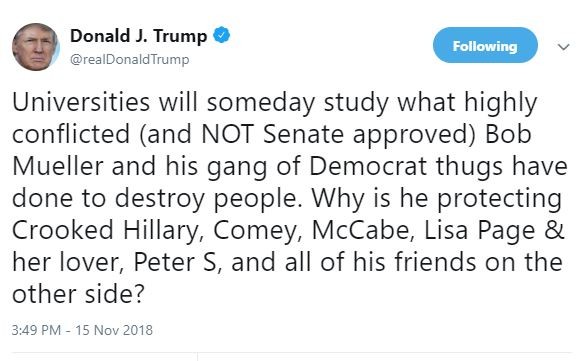
The president once again displays that he is at least as non-partisan, fair-minded and democratically inclined as his recent Supreme Court pick, Justice Kavanaugh.  If you need proof of this, look no further than his latest prophecy:

Trump tweet.JPG

The wags on the internet are saying the only university that might study this would be Trump University.   Fake news fucks…

On a more serious note, who on earth is Peter S, and why are those vicious crooks defending him?  Sounds sinister indeed!

A Modern Tragedy

A completely avoidable misunderstanding, made possible by a design flaw and human error.  The first party did exactly the right thing, the second party was continually misinformed, by day seven both parties were right to be indignant, both parties were right to think the other a complete asshole.  It took seven days for these things to shake out, once the truth became clear, and it is a modern tragedy completely of the digital age.  The whole ugly thing could have been avoided, but for a failure of technology (and, failing that, human follow-up).

When I was fifty my mother and Sekhnet ganged up on me to make me buy private health insurance [1].   One of the first doctors I saw was wiry a young urologist who introduced himself, with a firm handshake, as Matt.   He looked at my records, smiled and said “fifty years young.”   He was probably thirty-one at the time.   Matt was very good about returning an email.   If I had a concern or question I had his return email within a very short time.   This alert responsiveness to a patient’s concerns is an excellent trait in a caregiver.

Five weeks ago I had a single two-day incident of gross hematuria, blood in the urine (with clot).   The second day I painlessly passed a soft blood clot half the size of a Q-tip and that was the end of the bloody urine.   I went to Matt’s office and had a CAT scan and blood and urine tests at the end of October.   My last test was a cystoscopy (google it) on November 8, when I would also get the other test results and some medical insight, but the cystoscopy had to be postponed at the last minute, for a legitimate, unforeseeable reason.   My new test was scheduled for a month later.   I wanted to know the results of the CT scan and other tests, to know if those tests had ruled out the possibility the hematuria was a final symptom of late stage bladder or prostate cancer.

When the cystoscopy was rescheduled I called to ask Matt the results of the previous tests.  His receptionist told me he’d get right back to me.  When I didn’t hear back, I called the following day and the receptionist expressed surprise, told me she’d given him the message, that he was very good about getting back to patients.   I called back twice more over the next few days and on day four I asked for Matt’s email address to follow up (my last email to him was maybe ten years back and they’ve changed email addresses).  I was told they don’t give out personal email addresses for doctors.  I persisted and was reluctantly given the email address of  the director of the urology office.  She would forward the message to Matt, which was better than nothing.  I sent a detailed email.  I knew once Matt read the email he’d get right back to me.

On the fifth day, still having heard nothing, I was connected to the director of urologic delay who told me she wouldn’t be able to forward the email to him until two days later, when he was physically in the office.   This was some kind of semi-rational but inviolable protocol at the corporation that employs Matt.   When she told me this I restrained a snarl and told her to keep in mind that the next step for me, if I didn’t hear back two days later, was filing an ethics complaint.

In the late afternoon of the day the email was supposed to have been forwarded to Matt I found the number for the Patient Services Administration.   The woman I spoke to placed me on a long hold to speak to the urology department.   I hung up and waited for her return call, which came a few minutes later.   I was promised a call from her supervisor, probably the following day.    A few minutes later I got a call from Matt’s receptionist, telling me the doctor wanted to speak to me.   She put me on hold.  After a minute or two on hold I hung up.  Matt called back, but his number kept coming up “Scam Likely” on my phone and I ignored the first couple of calls.  Thankfully, he persisted.  

He was plainly aggrieved, since he had already done exactly what any patient would have wanted him to.  He didn’t know what was the matter with me, why I was threatening an ethics complaint.  An ethics complaint, seriously?   He told me he’d left me at least four messages since day five, the first time he’d heard that I’d called.  He had all the date and time stamps of his calls on his phone, in case I needed proof that he’d called me numerous times.   He then made an excellent, very cogent argument defending his behavior and questioning mine.  

I told him I’d had only one missed call from “private”, early in the morning of day five, but no message.   I get notifications of missed calls and I’d had only that one.   He told me that I need to learn to use my phone, because he’d left at least four voicemails.   He told me I should perhaps get a “second opinion” from another urologist.   He was clearly hurt and pissed, felt unfairly attacked.  We patched things up, he told me the tests had come back fine, gave me his email address (in violation of hospital policy, he noted), and we said goodbye.

There is a known issue with voicemail on my phone that is now also known to me.  It is known to Samsung, who makes my Galaxy S-8 phone, and known to T-Mobile, the company that provides my cell phone service.   It is impossible to get notification of new voicemails, somehow.   Frustrating, yes, and there are youTube videos and user forums about it, but nobody, including the tech experts at either company has a solution.   I spent almost two hours with experts at both companies and searching the web.   You can’t fucking do it.   Unless you periodically check for voicemail you have no way of knowing if you have any new messages or not.   I didn’t fully grasp this until Matt chided me for not retrieving his several messages.  I rarely check voicemail, most of them left by robots, because people who need to reach me send a text, an email or a WhatsApp and I get right back to them.

I went through my mostly robotic voicemails and found his first, not from five days after the postponed cystoscopy, as he’d told me, but from the moment I was supposed to have been having the procedure, less than half an hour after I spoke to his receptionist. He informed me that the CAT scan was fine, the urine cell test showed nothing suspicious, that to be thorough he needed to take a two minute peek into my bladder, but that there was nothing to worry about.   He said he knows how anxiety producing this kind of thing can be but that I should be reassured that the tests had all come back fine and there was no likelihood of a worst case scenario.

Now, a full week later, he was peeved because an insane patient, probably driven mad by unwarranted anxiety, kept calling, sent a controlled but clearly angry email and was escalating things in the bureaucracy and threatening to put him in front of an ethics board.    I was peeved because I kept being told that the doctor had my message and that I simply had to put my thumb back up my ass and continue waiting for his call.  

He was right to be peeved, since not only had he done nothing wrong, he had done the very thing you want your doctor to do, and he’d been compassionate in his message as well.   I was right to be peeved, because as far as I was being told by his staff, Matt was now simply acting like the bureaucratic, liability alert, ass-covering institution he works for and there was nothing I could do about it, except to stop bothering them.   Nobody I spoke to apparently even bothered to follow up with him until day five.  If his receptionist had talked to him the first time I called back, he would have told her to have the patient check his voicemail.  And — done.  I’d have left him a thank you note.  As it is I sent him an email clarifying and apologizing, though, based on what I was told every time I called his office, I hardly knew what else I could have done, given the information I was getting.

A modern day tragedy, seriously.   Each of us assumed the ubiquitous technology was working as designed, each of us assumed the other was acting badly.   The only saving grace that kept things from getting really ugly is that the doctor I was dealing with is a mensch, something that I also strive to be.


[1]  It was fairly expensive, even at the discounted rate for my low income, and my premiums increased by 10% to 20% every year, doubling within a few years.    I pay much, much less now under the Affordable Care Act.

Two Approaches to Anger

Anger is a complicated emotion most often triggered by feeling unfairly treated.   I don’t know that the exact recipe for anger can be arrived at, since it is a protean emotion that comes in many distasteful flavors.   A feeling of aggravating powerlessness is probably always present, as is fear and the associated fight or flight chemicals — and feeling hurt.   Having unfair things done to you that increase your feeling of powerlessness, of being disrespected, will almost certainly make you angry.

I knew a couple who rage at each other constantly.   When their children were young the man agonized about the damage they were doing to their growing kids by openly warring in front of them all the time.   Apparently they couldn’t help it, when the rage built to a certain point they simply had to start screaming at each other.    Unfortunately, this kind of thing sometimes happens in families.   I saw a lot of rage in my childhood home and, in spite of a lot of hard, conscious work, I am still not entirely healed from it.   I am 62, by the way, and have come to understand there is no complete healing possible, if you’ve been scarred enough by violence. You might learn to do much better, but that’s the best you can do.  The damage is always there too.

There are two common approaches to anger.   One involves feeling and expressing it and the other’s main concern is repressing it.   Anger is a supremely threatening emotion, and either way, express or repress, there is a cost.  

The only productive use for expressing anger in a relationship, it seems to me, is to let someone know (and this only works if the person cares about your feelings and is not enraged themself) why you got angry.   If you can make the reason you’re hurt clear, there is a chance the other person, being aware of your sensitivity, will do better to avoid doing the specific thing that hurts you and makes you angry.    That is the best case scenario.   It is hard to do, and is only effective if you can express what you need without anger.   That’s another good reason to calm yourself before attempting to talk to someone who has made you mad.   Feeling anger and being able to calm yourself enough to talk about the underlying issues is hard to do, hard to learn, takes a lot of practice.

I understand that this path requires sitting with a painful emotion, deep thought, difficult introspection, digesting how much of the anger-producing situation might be your own doing, figuring out what you could have done differently, better.  It means engaging with an extremely unpleasant emotion.   The upside is that if you can express your needs clearly and sensibly, and the other person is mature and not a jerk, things might be better in your relationships.  

The way of repression, suppression, denial is a lifelong trap, it seems to me.  When my warring friends make up they scrupulously pretend that everything is fine, speaking softly, walking delicately on yer proverbial eggshells.  The underlying things each does to provoke the other to rage are waiting, poised, sly, opportunistic, always at the ready.   They leap out at each other with teeth bared, ready to fight to the metaphorical death.   This couple has learned nothing about their mutual rage over the course of many years, except that pretending everything is fine is preferable to looking directly at the monstrous emotions that make them want to kill each other.  Until those emotions take over again and they are screaming at each other while their now adult children wince.

If you become adept at suppressing anger you inevitably suppress other emotions that make us human.   If you don’t allow yourself to feel the common human emotion of anger, something each of us has to struggle with, you also deny yourself the mercy to forgive, to fully and freely feel the many changing emotions that are part of life.  You must be eternally vigilant against anger, clamp down on every other strong emotion in the interest of repressing anger.

The most positive, grateful, peaceful person in the world will, from time to time, encounter aggravating and frustrating situations and people.    You don’t have to always express anger, it’s better to remain mild, sure, but you really do have to feel anger to learn to deal with it better.   Training yourself not to feel anger no matter what will make you a kind of monster.   That is because the anger is actually impossible not to feel once provoked and the feeling has to go somewhere.   If you suppress it, the anger can only go inside.   Anger turned inward produces depression, anxiety, self-justifying assholishness of every kind.

I knew a guy whose best friend in college, a writer he looked up to in the writing program they were in, was screwing the guy’s longtime girlfriend on the sly.   Apparently turned to him in a bar one night, smiled and sang “You’re Gonna Lose That Girl” to him before he quietly went off and seduced the young woman.   This guy wrote a reality-based novel about his college days, and his narrator agonizes for chapter after chapter about why his girl has suddenly, unaccountably given him the cold shoulder.   After page after page of self-torment it turns out the novel’s charismatic protagonist, the writer friend, had turned her into a party girl.    She was no longer interested in the bookish sidekick, she moved on while this guy wrote a doorstop of an unpublished novel about it.  

I asked the guy why his doppelganger in the memoir-based novel wasn’t at all angry when he found out the reason for his months of unbearable misery, the double betrayal by his best friend and his lover.   He told me he simply wasn’t mad, that’s what actually happened.  Not very satisfying from a narrative point of view, I told him.  But it’s exactly what happened in his life, he said, defending his choice to write an accurate, if thinly fictionalized, account of what actually took place.  Forty years later, he’s still good friends with the now professional writer, though he himself no longer writes.

This same guy suffers frequently from a particularly active case of Tension Myoneural Syndrome.   That is crippling pain, usually in the spine, that is (according to Dr. John Sarno, this man’s guru)  the body’s dramatic attempt to distract the consciousness of the sufferer from crippling, terrifying rage.   My insistence on talking about anger, and working on reducing its power over my life, has made this man decide to write me off as a person not worth knowing.    I have to laugh, though it’s not a pleasant laugh.   Fuck the guy’s wife, you’re cool.   Engage the subject of the anger that torments most of us, that actually physically cripples him regularly, and you are fucking out of bounds, sir, completely fucking out of bounds!

Oh.  So sorry!

Another sad illustration of one the many ways undigested anger can fuck you up.  

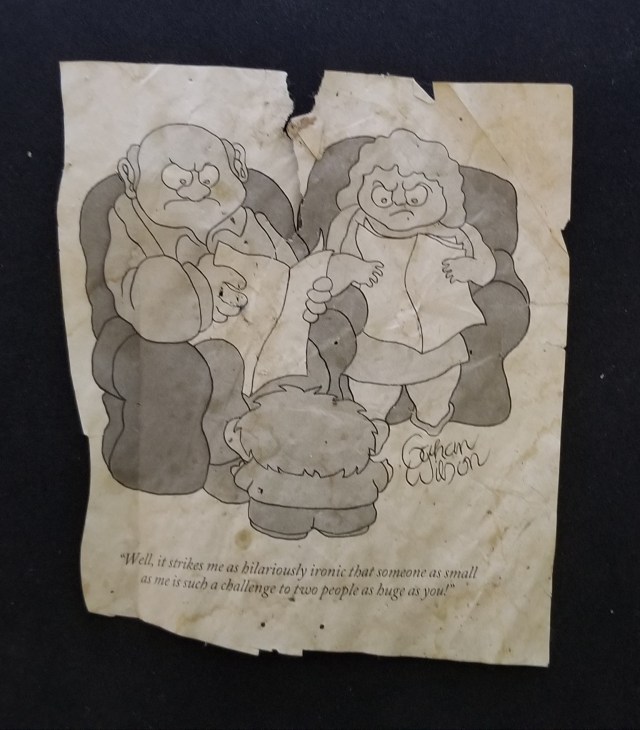
20181114_134711.jpg

The Saddest Punchline I know

It’s funny how much clearer a thing sometimes becomes once it’s dead, its lifecycle complete.   It happens with people, and beloved pets and it happens with relationships gone wrong.   You see the thing whole, finally.    I recently lost a friend I’ve known since we were eight and it’s been bothering me for some time, exactly how the friendship became toxic, why it is now so intolerable to me to be treated the way he continues to treat me.

Now that our long friendship is truly dead, the whole outline is there for me to see.  Today I got the last few elusive pieces to complete a sorry picture I could not, for the life of me, truly understand.   Now I finally get it.  The punchline is deep, but about the unfunniest one I can think of at the moment.

He seemed to look up to me and often competed with me, and I never knew why.   Years ago he told me to use a certain gauge of string on my guitar “you’ll feel better about yourself,” he told me unaccountably.   His vying sometimes took insane forms.   

At some point he found he could make me angry by being provocative and steadily ignoring my mounting aggravation.  As my feelings got more unpleasantly stirred, and he pressed on stirring, I’d eventually react with anger, restraining myself each time, but barely.   This sick pastime seemed to become a tic with him.   I really believe he actually could not help himself, it gratified him, somehow, to see me angry.

His wife, who I was quite friendly with [1], was often furious with him because he was not always honest with her. The thing she hated most was a liar, which I can understand, since without trust, what do you really have with another person?   Funny to say, his occasional untruthfulness never bothered me that much, though I prize honesty more than most things.  

It also outraged her that he never stood up for himself, except against her.  I think this enraged her even more than his occasional looseness with the facts.

My childhood friend’s wife weaponized a casual remark I made to her and deployed it to crippling effect during a marriage counseling session they were having.  “Your best friend says you’re a fucking liar too!” and she took my remark, which she bent to her use, and whipped him across the face with it until he was bloody.  

“And you’re not even man enough to stand up to him!” she later told him.  The therapist apparently agreed with his wife that if he didn’t confront me, his marriage was over.

He showed up in a panic to confront me, his right eye actually twitching as he leveled his accusation:  you deliberately or recklessly tried to destroy my marriage, our friendship is probably over, it all depends on your answers.   I thought hard and explained things as best I could, as friendship demands — when you see a friend in anguish you do what you can to help.  I agreed that if I maliciously or negligently undermined his marriage, neither he nor his wife should be friends with me.  I described how my casual remark was weaponized and gave him reasonable things to tell the therapist and his wife.  I did this under pressure, but though he seemed calmed down, gratitude wasn’t in the cards any more than an apology was for the wild accusation.

I realized afterwards that things had clearly gotten out of hand and we needed to either stop the ugly cycle or call it a day on our friendship.   We spent five hours or more trying to talk it out, but he could not yield.   He would not allow that he’d been a shaky friend, put me in impossible positions, returned acts of friendship with repeated senseless provocation.  He defended his actions in detail and when I remained skeptical (it was at the end of five hours of this) told me he loved me.   I told him love is how you act when someone you care about is in pain.  Doing a dance and singing a song and telling your friend he is not really hurt when he is, none of that is  love.  Merciful action is love.

Provoking, being unrepentant, though you apologize grudgingly, explaining why you really didn’t provoke, how there was actually an implied apology that you’re lying about not receiving, well, that’s not really love.

One thing bothered me more and more.   With our estrangement I’d lost the friendship of his wife, his two sons, great young men, and a mutual friend who appeared to have taken his side in our impasse.   I wanted to know what my final unforgivable act against him had been.  I suspected it was my exasperated detailing of many the reasons I don’t respect him, twenty minutes into our five hour marathon, but I couldn’t be sure, since he never contacted me or sought to reconcile after our meeting went badly.  “It was a bad day,” he admitted today with some sadness, as close to admitting he’d been wrong in how he acted as he can get.

It took some time, and some work on my part, a series of calls and emails, but today he called me back to answer my question.  He did not want to talk about the past.  He felt it was a mistake to go over the hurtful things again, it would only lead to more and more conflict to go back over those mutually aggravating things.  It was both of our faults, even though he admitted without condition that he’d been wrong too.   His idea was that we just need to put it all behind us and continue on as if none of it had ever happened, just be friends again, like we used to be.   It struck me as an impossibly stupid idea and I told him why.  

With patience, about forty minutes in, I was able to get the answer to my original question about my unforgivable final act.   When we parted after the long talk he had no particular gripe against me, he said, in fact, he was still hopeful about saving our friendship.   After all, I had been for the most part mild during most of that long, sometimes agonizing conversation on that bad day for him.   It was after his wife called a week later to give me an ultimatum about forgiving him immediately and unconditionally or dropping dead that he learned the reasons to be furious at me.

His wife told him I’d made a secret recording of our conversation, which was a betrayal he simply could not forgive.   I explained the difference between being a fucking fuck who wears a fucking wire (for purposes of making a tape for others to use to incriminate somebody) and recording a talk, for personal use, with someone who has a famously spotty memory, is addicted to equivocation and energetic and nimble disputing specific arguable details.   This guy, I must point out, while very emotional, is also highly intelligent and skilled in the art of verbal self-defense.

The second unforgivable thing I’d done, and again, he qualified it, this was admittedly second hand, from his wife again, was that I’d told her that shortly into his bad day trying to make me accept his apology without having to take full responsibility for his actions, he’d made me mad enough to feel like socking him, throwing him on the ground and kicking him, just to make it stop.  In his opinion, and in his wife’s, that is simply intolerable to say about a friend of more than fifty years, no matter how mad you feel, no matter what the provocation might have been, no matter how many provocations in a row you’d been hit with.

I didn’t bother pointing out that I hadn’t laid a finger on him, that I used the image of violence to convey to his wife how angry he’d made me.  Fuck him, you know? Plus, of course, his wife, who I said this to (“to whom I said this”…), has felt exactly the same way about him countless times and understood the impulse very well when I said it.

Now here is the punchline, and it is as horrible as I promised.   

The real reason he was so angry at me was that I’d told his wife, and I had this insight only at the very end of a long talk with her, that the reason he always feels he’s in an unfair competition with me is that he has trouble standing up for himself and believes that I don’t.   “Rob feels like he’s a pussy,” I told her,  as it dawned on me, “and he believes, for whatever reason, that I am not a pussy, and he’s very angry about it.”    

“You are definitely not a pussy,” she told me.

Then she told her husband that anyone who could be friends with someone who says he’s a pussy is a fucking pussy she will not be married to.

Yow.  

It also turns out she never conveyed my conciliatory offer, made several times and emphasized, repeated once more as I said goodbye.   I told her Rob was welcome to call me as soon as he made some of the progress he promised he was striving for in therapy.   He needs to develop some insight about the often provocative effect of his actions on those close to him.   “She never told me that,” he said, sounding sad.

Lady MacBeth got nothing on this girl, nor does her husband either, for that matter.

writing as meditation

Young writers sometimes wonder where the line is between attempted self-therapy and writing that others will find worth reading.   It is a worthwhile question to ponder, though there is sometimes no bright line between writing to work out your own issues and writing to engage others.   It has a test, though, whether what you write interests somebody else in reading it.   Is there enough here, and in my own life, for me to identify with what the writer is writing about?   Does this thing I’m reading engage me enough to read on?

You are always the judge of that, reader.

At the moment I’m writing to meditate, to calm my roiled mind.  I spent fifty-one minutes an hour ago talking to a frenetic moral tap-dancer.   He could not allow, without condition, that what I was saying, though he told me he agreed with it, was actually correct because perhaps I was overlooking that other thing, you know, the thing?   Maddening, but thankfully the last conversation with this particular poor devil.   His wife apparently told him in no uncertain terms that only a “pussy” would continue trying to be friends with someone who suggested he was a “pussy”.   Thank god all that got resolved.

My next call was to the office of the urologist who cancelled my appointment on November 8 and has been silent since, in spite of my three calls, repeated promises from his receptionist that he’d call me, and a detailed email from me.  I was told, after a very short hold, by the director of urologic bureaucracy at the well regarded medical corporation, that she could not forward the email I’d sent for her to forward to the doctor, since he was not physically in the building until Thursday.   You can understand, I imagine, why this would be so.   My deep breathing facade cracked for only a moment, as I told her to keep in mind that this ongoing failure to respond to a patient’s legitimate concerns was approaching a medical ethics complaint.   She told me she’d keep it in mind.

There are many battles in this life that you cannot win.   They should not be battles in the first place, but they are.  It should not be a matter of winning or losing, but it is.  If there was a fair arbiter somewhere (there pretty much isn’t for most things) the fact that you are in the right would be weighed in your favor.  In many cases the fact that you are right, maintain your position and keep insisting on being heard, makes you a goddamned stubborn troublemaking loudmouth, a problem, a challenge, an adversary.

A Saudi prince imprisons his rivals for power, kills a few, makes himself heir to the throne, promises liberal changes in his medieval religious fundamentalist kingdom.  Suddenly an upstart Saudi writing for a prestigious American newspaper is criticizing him!   Bring him to the consulate, put a bag over his head.  Of course he will say “I’m suffocating. … Take this bag off my head, I’m claustrophobic.” (as reported by Al Jazeera, citing a Turkish reporter who allegedly heard the recording).    Suffocating, you say?  Oh, so sorry.  Here, let me chop off a few fingers for you, that should make you feel better.  We want you to be comfortable, your business is very important to us, please continue to suffocate.

How do we recover our humanity in the face of brutality?   My best bet is by sitting still, hands on the keyboard, and combing through my thoughts, setting them down as clearly as I can while I breathe.   It is not for everybody, I know, but it seems to help me.  I recommend it.   It is certainly better than smashing furniture or being mean to people.

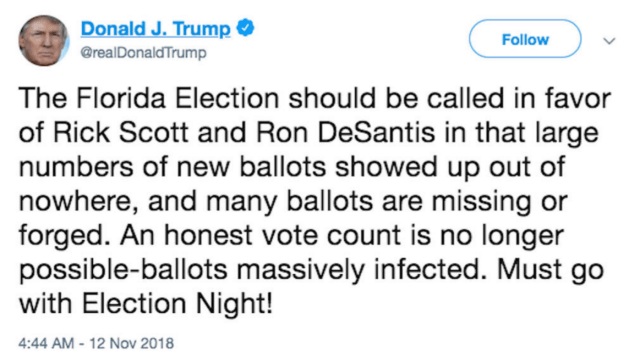
It helps to think of justice and basic fairness, though they are both increasingly endangered in our world of alternative fact, xenophobia, race hatred and blame.   When people are in a rage, or defensive, they are not at their best.  They are, sad to say, probably at their worst.  They are capable of justifying every terrible thing and throwing the entire blame on you.   Look at the president insisting in a pre-dawn tweet that the Florida elections, though too close to call by Florida’s own laws, should be done, done now, stop counting ballots, infected ballots, while his candidates are still winning, clinging to statistically tenuous margins of victory.   

Yet, there is a sense of justice, and fairness, always alive in the hearts of people who are not enraged.  If you look at a situation fairly, and calmly, the answer is usually pretty clear.  Fair means looking at things from various angles, deciding which is the most just course to take in light of everybody’s needs and concerns.   It’s not that hard.

Unless you are an institution, with a corporate reputation to defend, or someone benefiting from a very unfair arrangement, or someone so aggrieved that you want to bash so-called fairness in its fucking face.   Blow the whole thing up.  Take explosives and make everything shred into oblivion, or do it with a gun, yeah, I said a gun!   These types often have the last incoherent word, then turn the gun on themselves.  Winners, don’t you know?

Don’t be like that, friend.  We are all better than that.

“Do you feel a little better now, El?”

ah, shut the fuck up…


Fair Elections

When I went to vote the other evening, in the cafeteria of the nearby middle school, I found the table where my immediate neighbors and I get our ballots.   They opened a spiral bound book to a page where my name and my signature appeared over a blank box.   They turned the book around, handed me a pen and I signed in the blank box.   The two signatures did not look identical, I noted to myself.   As they handed me my ballot I commented that it was nice I didn’t need five kinds of specific government issued ID in order to vote.   The poll workers at the table smiled.

“How do you know I’m not one of those three million dead Mexicans who voted against the president last time?”  I asked, with a zombie-like smile.    They emitted a small laugh that made me later add to my telling of the story “I thought you poll watchers were supposed to be nonpartisan.”   I took the large, two page ballot, with the ambiguous and problematic ballot initiatives I’d decided to vote against (2 out of 3 passed) and voted for a bunch of people I don’t particularly like, none of the candidates I’d supported in the primaries had made it to the final ballot.   That’s America.   If you still don’t think it’s important to vote for lesser evils, look no further than lying, irrational, authoritarian, two year-old President Pantload and tell me so.   We have a shit system, make the best of it, folks.

At 4:44 a.m., as even I was making little sleeping sounds on my pillow, our president tweeted this:

Screen shot 2018-11-13 at 1.19.52 PM.png

Same shit, different day.   After he lost the popular vote in November 2016 by about three million votes he came up with the story that three million dead Mexicans had come out of their graves to vote for his lying, crooked, felonious opponent.  He’d been fraudulently robbed of a huge landslide victory that was rightfully his.  He formed a committee to uncover this massive illegal zombie voter fraud[1].   It was headed by his religious fanatic V.P., a Koch-funded zealot, and Kansas secretary of state Kris Kobach, also funded by Koch (in their home state).   Kobach styled himself an expert in voter suppression though he lost his bid to become governor of the largely Republican state.   Kobach’s loss was, due, likely (or unlikely, if you prefer), to massive fraud by the very people whose votes he was trying to suppress.  Here the brilliant Jane Mayer analyzes the Trumpist’s loss.

Study after study shows that in person voter fraud is virtually non-existent.  The real fraud in American elections is in how the candidates are selected (based largely on their ability to raise huge sums of money, particularly oceans of that limitless dark money) and how easily electronic voting machines can be manipulated to get the desired results.   Oh, yes, and how many votes are suppressed by a variety of measures including laws that target certain problematic demographics, the young, minorities, etc.

Now that Barack Obama is safely in prison after illegally wiretapping Trump during the last presidential campaign and the millions of dead Mexican rapist voters are back in their graves, stakes through their hearts, and the most extreme partisan available was forced through to cement the rightist majority on the  Supreme Court, and the Saudis have exonerated themselves for the premeditated murder of a prominent critic, and in spite of continued mass shootings there are no more hysterical cries for sensible gun control (that would cost, conservatively, 10,000,000, or possibly even a billion, American jobs, along with our freedom)  everything should go back to normal now.    The president’s party, in spite of losing 32 seats (with ten still too close to call) in the House, and six governors (with two too close to call), had a big win in the midterms, getting all nine of their senate seats that were up for grabs, or most of them, or whatever.   Huge night for the president and his agenda, whatever that may be.

God bless these United Shayssssh and, for god’s sake, go back to sleep Mr. President!


[1] Jane Mayer:

The commission disbanded in disrepute after becoming stymied by in-fighting and the failure to find any significant fraud, but it nonetheless helped to make Kobach a rising conservative star.   source

Hiding Damaging Information

What was once the speciality of organized crime dons, making information that’s bad for business disappear, and pesky witnesses, they also need to go, is now a cornerstone of good corporate governance.   It is not limited to government officials, who have long concealed the bad things they do, going back to the days when the Author of Liberty, Thomas Jefferson enjoyed the services of a shady journalist, James Callander [1], who smeared Jefferson’s political opponent prior to the 1800 presidential election.   A few years later Callander drowned in shallow water near the shore of a Virginia river, after turning on the Author of Liberty and smearing him by publishing the salacious, long-concealed facts of the president’s long sexual affair with “Dusky Sally” Hemings, his slave, and fathering mixed race children.  Making evidence disappear is the best way to do business unimpeded and to ensure one’s legacy, and it’s not just for psychopaths anymore.

This ugly blustering clown we have abusing the bully pulpit now is perhaps our most grotesque national example.   The murder of that Saudi journalist in the Saudi consulate?    We have to wait for the Saudi investigation to conclude to see if they killed him or not.   Conflicts of interest, using the office of the president to increase his personal wealth, appointing unqualified people to powerful positions based solely on their personal loyalty to him, lying about a group of desperate migrants fleeing more than a thousand miles on foot to make a legal request for asylum, encouraging hate crimes by violent, sometimes unhinged, rhetoric, demonizing the press, denying climate catastrophe, blaming states for federal failures to act, on and on.   What do you say about all this, Mr. President, sir?   The liberal media is lying about me because I am winning so much!

Now that the Democrats are once again in charge of House committees, I hope Jerald Nadler, soon to be chairman of the House Judiciary Committee, will make good on his promise to investigate the likely perjury of Brett Fucking Kavanaugh.  Let us leave aside the raging debate about whether the pouting parisan could have been convicted in a criminal trial based on Blasey-Ford’s testimony– and let us agree he could not have been, certainly not without a thorough FBI investigation that could have provided corroboration — and the serious questions about his judicial temperament after a passionate temper tantrum during which he snortingly denounced the vast, well-funded godless liberal conspiracy against him.  Let’s leave aside the immediate, real-time addition, from an IP address inside  the House of Representatives, to Wikipedia updating “Devil’s Triangle” to include the drinking game he’d made up lying to Sheldon Whitehouse under oath about the meaning of one of the brags under his photo in his prep school yearbook.  We’ll even forget, for the moment, his belligerent demeanor, his sense of entitlement and the many evasive things he said, including several likely lies under oath.

Let us only focus, for a minute, on the historically liberal classification of his written record as a lawyer and judge.   90% of his legal writings were withheld from scrutiny during the disgracefully partisan confirmation process.   Classified, top secret, like his president’s financial information.

This shroud of secrecy over Kavanaugh’s partisan record, dating back to his law student years as a hard drinking Federalist Society zealot, contrasts starkly with the full records disclosed for every previous nominee, for each of  Obama’s recent appointees.    Kagan and Sotomeayor’s full writings from their judicial and legal careers were given to the Senate Judiciary Committee (and Obama had a terrible record on transparency, in spite of his many inspirational speeches about it).   Less than 10% of petulant partisan Kavanaugh’s record was available for scrutiny by the body rubber stamping the zealot’s rushed confirmation by a one vote majority.

Fine, the extremely limited FBI investigation into Blasey-Ford’s allegation, with the artificial and deliberate one week timeline truncated by the lying president’s maneuvers to actually about three or four days,  did not turn up corroboration.    Fine, there was a deliberate effort to hide most of Kavanaugh’s political zealotry.   Fine, he got a little worked up defending his “good name” and intemperately attacked everyone he believed was behind the conspiracy to destroy his life, especially Bill and Hillary Clinton.  

Not fine, he clearly had a lot to hide and appears to have lied repeatedly to the Senate Judiciary Committee, under oath.   The House Judiciary Committee has the power to issue subpoenas for witnesses, to hold hearings.   Do it, Jerald.  Checks and balances are nothing unless the powers that uphold them are regularly exercised.   And by the way, we have a right to hear more, under oath, from this snarling partisan piece of shit, Mr. Kavanaugh.


[1]   From the Monticello website:

Having established himself as a journalist in Philadelphia, Callender proceeded to criticize elements of the U.S. Constitution that he believed were undemocratic, such as the election of the president through the Electoral College. He said that the Senate was flagrantly unrepresentative because it was not directly elected by the people, and blasted George Washington, who had “debauched” and “deceived” the nation by promoting himself as a popular idol. An advocate of an unfettered press, Callender declared, “The more that a nation knows about the mode of conducting its business, the better chance has that business of being properly conducted.”2 Throughout Callender’s career his writings were rabidly partisan.

source

Only in America, folks

Fortunately for me, I write quickly.   I dreaded having to write this note, but it took me only a few minutes once I sat down to do it.   Nobody should have to write this kind of note to their fucking doctor.  

Matt:

When I was “50 years young”  (12 years ago) you introduced yourself to me as Matt and gave me a card with a number where I could text you, and you were very good about responding to the one or two I sent.   Your current card has only a generic email address [1], so I am sending this there, to the attention of Glenice, who was kind enough to confirm that I should have been able to see you during my October 25th consultation with you.

On that date I saw only Nancy S______, ANP, who ordered tests, prescribed Flomax and told me I have to begin taking it immediately.  She also instructed me how to stand so that she could give me a prostate exam, though I had one quite recently and we agreed not to do another at that time.

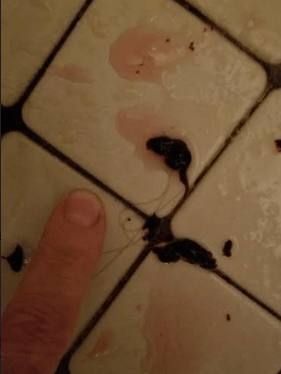
On October 5, 2018 my urine was a brownish ketchup color.  On the following day I painlessly passed a blood clot, and that was the end of the blood tinged urine.

Screen shot 2018-11-11 at 3.16.20 PM.png

Nancy informed me that this is called gross hematuria, a condition the Mayo clinic states is sometimes impossible to determine the cause of.   She ordered a CAT scan, which I had on October 30, and a cystoscopy.   She also told me I’d retained a few ounces of urine in my bladder and had to begin taking Flomax, no matter the side effects I complained of the last time I took it, years ago.   The cystoscopy was scheduled for November 8.  A few hours before my appointment I had a call from your office rescheduling the exam for December 6.  I called Glenice who promised me a return call from you that I have not yet had.

I understand the imperatives of corporate medicine, but I don’t think you could defend this to your urology students as good medical practice.   I have no results from the CAT scan, have been given no medical opinion, have not seen the doctor I paid to see on October 25, have had no return call from him after the cystoscopy was cancelled.   Might the CAT scan results eliminate the need for the cystoscopy?  What, if anything, did the CT scan show?    Is this isolated instance of gross hematuria something I can safely put in the rearview mirror or should I be worried about the possibility that it may be a sign of late stage prostate or bladder cancer?  

I am currently being treated for idiopathic membranous nephropathy and my initial call was to my nephrologist.   He told me hematuria is not a known effect of my kidney disease and said I should call my urologist.  I got the earliest appointment with your office.  A month later I still know exactly nothing.

You can email me, text me at ______, or call that number any time after 1 pm. I don’t think you — or anyone–  would be satisfied with this kind of treatment from your doctor (leaving aside the very long waits for a blood test– which neglected to include the creatine test required for the CT scan– the appointment with your ANP, the hours waiting for the CT scan, the month long postponement of a diagnostic test).   Please advise.

Eliot

(I discovered, after writing it, that there is no place to actually fucking send it… you’ve got to admire corporate medicine, baby.  During regular office hours I can call and possibly even get an email address to send it to)

USA!  USA!!!!


[1]  Correction,  one always has to read the fine print carefully when dealing with corporate vampires.   There is no email contact information available for the department of urology, this is where the URL on the business card takes you, to the corporate not-actual-contact page of these Hippocratic oath taking corporate dickheads.   I can’t wait to get the hospital’s next solicitation letter telling me about the wonderful, selfless work they are doing, without profit, for the community.


Thinking v. Selling

There is a big difference between critical thinking to solve problems, a largely neglected art, and selling, the most widely practiced art in the world today.    It extends far beyond politics, where the distinction could not be more clear.    To think productively, to actually solve problems, we need to be able to look squarely at facts and have as many relevant pieces as possible in front of us to consider.   Thinking well requires open-mindedness, intellectual honesty and a small measure of courage.  

In selling, certain facts need to be deemphasized, harmful facts removed entirely from the conversation.  The problem in sales is much more limited — simply to get the customer to buy — and the techniques used are infinitely more practical, with success or failure readily measurable, written in red or black.     One downside for us, as a society, is that being constantly subjected to the unabashed puffery of 24/7 sales pitches makes us question almost everything we hear as possible bullshit.

The imperative to learn, the thing that makes us wonder and think in the first place, often needs to be suppressed in the service of making the sale.   The art of persuasion, in the highest sense, requires laying out as much as can be known and allowing fairness to emerge organically from an open-ended dialogue.   The honesty needed for growth as a human is almost the opposite of the main quality needed for clinching a sale.

I don’t want to bring in our compulsive liar-in-chief, though he is perhaps the best illustration of this distinction that comes to mind, and of course, he’s ubiquitous.   Thoughtfulness, and reference to the observable world, is replaced, in every case, with the imperative to win, to clinch the sale, to “make the deal”.   You give a massive tax cut to the wealthiest people and “persons” in the world, selling it as a gift to the middle class.  It is clearly not, as almost all of the benefits go to the already fabulously well-off.  

At election time you swear you are about to pass a real middle class tax cut, in the next few days, in fact.   You swear to this even though Congress is not in session and no law can be passed when Congress is not in session.   When somebody from the press raises this obvious flag that you’re not being truthful, simply call them rude, stupid, fake, working for a failing outfit, an enemy of the people, tell them brusquely to sit down, scold them with authority, like you’d talk to a disobedient dog.   The angry base loves this kind of alpha dog behavior.  

The invading illegal caravan of smallpox, leprosy and tuberculosis infected raping child terrorists, same deal.   An immediate and terrifying existential threat to all of us, trumpeted hundreds of times in the days before the election, many millions spent to send troops to the border for a muscular photo op — nothing mentioned about this rapidly advancing murderous hoard since.  The art of the deal.

Writing, it strikes me more and more, is thinking made visible.  Blessedly, from time to time, we see wonderful, thought provoking (as we say) books and articles being published.   The art of selling is something I know almost nothing about.   Thinking as clearly as I can is something I try to practice every day as I set my thoughts down here.   My hope is that sometimes these musings can help shed light on what others are also mulling over.  The daily practice of writing/thinking has improved my life, I have to say.   I couldn’t put a price to it, though it certainly would behoove me to.  

I offer, once again, an example from my own life of the muddle of emotions that can blot out virtually all thought and possibility for insight.   By way of introduction, let us note again that emotion is almost always the deciding factor in life.   The way something makes us feel determines how we react to it.  The most intelligent argument is not often persuasive unless it is also engaging and emotionally satisfying.    Both strands, feeling and analytical thought, must be brought into play to make a persuasive case.   We humans love a sensible story that makes emotional sense to us.

So here’s a little story that may illuminate the difference between thoughtfulness and the unreasoning need to win at all costs.  I had a childhood friend who went to an Ivy League college where he made a friend, Andy, a brilliant guy with a history of periodic stints in the laughing academy.   Originally diagnosed as schizophrenic, Andy’s occasional spells of wild behavior were later classified as the manic end of Bipolar Disorder.   Psychiatry is as much an art as a science, though some scientists make arguments to the contrary.   Levels of various chemicals in the brain can be tested, neurotransmitter and other levels balanced, rebalanced, and so forth.  It can make a difference, or not.

For decades they did this to the brain of this fellow, who became one of my closest friends.  I was around for at least two dramatic episodes of Andy slipping over to the other side of madness, had to bring him to the mental ward myself the final time.    It was scary to be close to someone in the grips of full-blown mania, full of energy and far from reason, though it never caused me to question our friendship.

When, in the end, years later, he behaved with viciousness toward me, I did not attribute it to his mental illness.  I attributed it to him being an enraged asshole, pure and simple.   Our mutual friend was devastated to hear that I’d finally written Andy off and did his best to convince me, during a long phone call, that I needed to forgive and forget, that we all needed to be friends.  

I told him I appreciated the sentiment, and the peace-making impulse, but that I was too hurt and angry at the moment to consider any of it.  I explained to him that as far as him trying to be a mediator between us, he was in the worst possible position to do it.   The first requirement for a mediator is that she be disinterested in the issues and outcome, focused impartially on trying to help the parties resolve their dispute.   Here, his close involvement with both of us would make that disinterest impossible.  He said he understood.

Now we can fairly consider whether I was right or wrong to feel so hurt by my mad friend’s betrayal, or so angry.  That is certainly a reasonable question.   Put it to the side for the moment and consider, for purposes of this story, that I was deeply hurt and very angry.   All you really need to know is that when Andy and I spoke to try to work things out, my old friend attempted to bully me over the phone.   It was an impressive demonstration of the opposite of good will.

I have learned, over the years, that you can’t argue with someone’s feelings. Feelings are real.   You must address those feelings first, if you care about having a relationship, or even a conversation.   If you tell me I hurt you, and I care about you, I have to accept, first of all, that you are hurt.  The impulse may be to say you’re crazy to feel that way, I never intended, I would never, blah blah blah, but that self-justifying impulse does nothing to help assuage the hurt your friend has expressed.   Only acknowledgment of the feeling can be of any help when strong emotions are in play.  It is a necessary first step to any real dialogue and sensitivity to a person’s emotions is a prerequisite for friendship.

I saw my old friend a few days after that phone conversation.   He once again began trying to convince me that I needed to forgive my former friend Andy, who had reportedly told him “I owe him an apology, but I’m too stingy to give it”.   I gave Andy’s advocate hypothetical after hypothetical to try to make him understand how hurt I was, since he could not seem to grasp it.  He brushed each one aside.  “That would never happen to me,” “you seem to have a fixation on that”, “well, that’s because you handled that completely wrong” “that’s your problem right there,”  “I’m not prone to violent anger like you are,” “you foolishly trusted Andy” and so forth.   I grew aggravated and told him so, but he would not relent.  There was an important point he needed to make, a point he believed would make me see how rashly I was behaving, mitigating facts I needed to know that might make me actually forgive poor Andy.    

In the end, in the face of my rising aggravation and finally real anger, he put the important facts on the table, Andy’s excuses for his final “betrayal”.   Andy claimed he’d left me a missed call, apparently, that I didn’t return for days,   He hadn’t slept for days before and had bronchitis on the day he promised to help me with a vexing programming problem he told me he could solve in a few minutes.   He couldn’t keep his promise to do that simple thing because he had several excuses, he was very sick, sleepless, tried to call, had obligations to members of his Zen cult that came first.   Why was I being so rigid, so petty, so fucking angry?

“Why didn’t you get the hell out of there?” a friend asked reasonably when I told him the story of my friend’s ruthless attempt to make me forgive.   I told him he’d picked me up and driven me to his house, I had no immediate way to leave his suburban enclave.  

Incidentally, all of Andy’s excuses were known to me, my friend and I had discussed them all a few days earlier.

Eventually, after a long negotiation that tested every bit of my resolve to be nonviolent, my friend apologized for his insensitivity.   We remained friends, but a troubling trend soon emerged.   He did not seem able to resist provoking me.  In the end, when I could not get past this tic of his, he admitted that he had only apologized about the Andy business because I was so upset at the time.  He had been right, he said, to insist, to try to bring facts to my attention that might help me forgive.  He would do it again, he said.

In other words, no matter how aggravated you may have been, no matter how many times you urged me to stop, or reconsider, or slow down, no matter how disturbed your feelings, no matter how angry you became, what I had to say was more important than any of your so-called feelings.  Your anger is your own problem, not mine.

Now at this point you may be thinking this person simply may not really know what friendship is.   Maybe he needs to be left where he is, done. Goodbye friend, as little hope for you as for peace in your endlessly contentious marriage, or easily healing the many harms you’ve done to your children by your long example.

Call it a snapshot of the definition of insanity attributed to Einstein, or some kind of sentimental Anne Frank-like naivete about long-time friendship, or me just being a fool.    A couple of months after our falling out I called a couple of times, left messages, and, at his texted request, sent this email:

It depresses me that people I was friendly with and had no quarrel with, your wife, your sons, R____, have all vanished from my life as a result of our falling out.  Not to mention you.   I understand your wife and kids have to take your side, whatever it is, but still.   And you can’t even pick up the phone and return a missed call? (that was a rhetorical question)

What was my final, unforgivable act against you?

What did you tell R_____ that made him cut off communication with me?   When he left the US we were seemingly the best of friends, he was apologizing that we’d only managed to squeeze in one quick visit when he first arrived.  Then, as a prelude to complete radio silence,  I got a reference to “other developments over the last year or so” that presumably magnified the differences between us beyond the point of possible friendship.

Did you talk to your rabbi in the days before Yom Kippur and, if so, what did he tell you?    I don’t think it’s possible that a rabbi would advise someone to make no further attempt at reconciliation with his oldest friend during the Ten Days of Repentance.   I conclude you didn’t discuss it with your spiritual adviser.   I think you should consider this seven minute discussion on apology, forgiveness and atonement: 

https://www.wnycstudios.org/story/metoo-men-repent

It only took him a few days to craft this measured reply:

I do want to find a way for us to be friends again, but I suspect that responding to your questions will get us into the same back and forth mess that electronic communication had got us into earlier this year.  What I suggest would be for us to cut to the chase and for you to let me know what you are looking for from me?  If you are interested in exploring what Judaism would counsel us to do, I’d be open to sitting down with a Rabbi (like Rabbi P_____ from the Chabad) and put our situation before him.

Just one more test, I see, of my ability to rein in the impulse to dash an impossible person to the ground and deliver just enough kicks to let him know how I truly feel about his idiosyncratic take on love and friendship.