Great Insight into Toxic Masculinity

I heard this on an excellent podcast called Scene on Radio.   John Biewen has enlisted Celeste Headlee this season to explore the idea of manhood in our society.   You can hear this entire episode here.   Well worth checking out.   Below is a section of the conversation that literally made me stop, while listening, to hear it again and take note of it.   Thankfully, and helpfully, John puts up the transcript of each show (bless him):

Joshua Goldstein: What the pattern of history shows across the board is that it’s really hard to get men to fight; it’s not a natural thing. So, just look at the pervasiveness of conscription through history; you have to draft men into the army and then, when it actually comes time to fight, a lot of armies have used either drugs or the rum ration in the British Army, a lot of these militias in Africa and recent civil wars giving various combinations of drugs, amphetamines and then after the fact, people are very traumatized by it.

Societies, cultures have to work at men from childhood. One of the strong motivations that a lot of cultures have found effective is this appeal to gender, that you’re not a real man unless you can fight in a war and so we raise boys to be tough, to not cry, and to suppress their feelings, except for anger; anger is okay, but sadness and stuff, not supposed to feel it, not supposed to show it. Man up, tough it out, soldier on, and after year after year after that, then they’re ready to be put into the military and they’ll be able to do these unnatural horrible things and follow their orders.

We could do that with women, as well, but it would undermine the appeal to men that they’re proving their manhood. When women have gone in the military, sometimes the men say, “hey, if a woman can do this job, then what’s that make me? I thought I was proving what a man I was.”

Barry Lam: Goldstein became interested in the provocative idea that the need to prepare men for the violence of war is where our ideas of manhood come from. This idea runs counter to the view that men are in some ways, biologically or naturally, violent and aggressive and that they are the source or cause of war. Instead, Goldstein likes the view that a culture perceives a need for its members to engage in violent force on its behalf and it fulfills this need by establishing for its members that the traits that make a good man are the very ones that make a good soldier.

Tom Digby: My name is Tom Digby. I am professor emeritus of philosophy at Springfield College in Springfield, Massachusetts. The book is titled Love  and War: How Militarism Shapes Sexuality and Romance.

Barry Lam: In Digby’s book, he finds three important norms of manhood that he thinks follow directly from the norms for being a good warrior.

Tom Digby: The number one requirement actually, of a warrior is to be able to manage the capacity to care about the suffering of others and of himself. You care deeply about the people you’re fighting with, but you don’t care at all about the suffering of the people you’re fighting against.

Barry Lam: Selective empathy. You have controlled and marked empathetic care for those in your community, under your protection, and none at all for those outside of it. The second Digby calls a faith in masculine force.

Tom Digby: You know I describe it sometimes more broadly as just a faith in force. For example, when a man is expected to be able to unscrew the lid from a pickle jar, there’s this assumption that men are strong and forceful and able to do forceful things.

Barry Lam: The idea is that a real man, a good man, the norms for a man include the capacity to solve problems using physical force, but this faith in force also means that the society itself seeks out masculine force to be the solution to its problems. The counterpart to the norms for masculinity that derived from the warrior are the complementary norms for femininity.

Joshua Goldstein: The woman is going to represent the normalcy of  society; while the men are fighting wars, the women will be maintaining civilization, the kind of things that the men can feel like, “I’m fighting for my girl back home” and the whole way of life that she represents, so that’s sort of how it’s been structured as a way to motivate the men.

Barry Lam: If Goldstein and Digby are right and part of the very standards for being a good man are the traits for being a good soldier and built into the norms for being a woman are only complementary or supportive traits, then the disadvantages that women face in trying to be soldiers are going to be deeper than just physical ones.

The rest of a fascinating discussion is here.

The tome of the unknown soldier

Thinking about the fate of this impossibly long manuscript I’ve written about my father’s life during the last couple of years, I realize I can’t put it into final form until I really focus on what the book is about. It’s not a book about a man being a monster, it’s a book about the way his little soul was destroyed, yet how a spark remained, which burned brightly at the very end.   It’s not about history, and disappointed idealism, and powerlessness, or about the damage done by abuse, it’s about gaining perspective and learning from our worst mistakes.   It’s about the roots of rage and, in the end, forgiveness, once the heartfelt apology can finally be made.

One problem I have to ignore, I am writing the story of an unknown man, and I am an unknown man writing this story.    This is something I have to put out of my head, because it makes the entire project feel insane to me.   If my father had kept children chained up in the basement, and had been prosecuted in a famous trial– well, there would be a good chance a publisher might be interested.   If he’d taken bold risks to make a shit ton of money, again, an American fable you might find on the big book table at Costco.   If I’d been a celebrity, the story of my father would have a certain interest to my fans.   Etcetera.   I have to ignore this, entirely.   Otherwise it will sink this little paper boat I am attempting to steer across the cold sea.

Reading Hannah Arendt’s masterpiece Eichmann in Jerusalem, as I occasionally do, I’m reminded again that prominent Jews often had a much different fate than the masses of anonymous Jews, who also tended to be fairly poor, when it came to the final destination of their train rides.   It’s no surprise, of course, to learn that the Nazi regime treated rich and poor Jews differently, or even that Jewish criminals sent to the death camps often survived their terms while tailors, shoemakers, teachers, small merchants, small town rabbis rarely did.    Hitler had 324 Jews on his  “do not touch” list, which is really no odder than many other things about the twentieth century’s most popular psychopath.   Nobody on my family was ever close to being on such a list.

If you are prominent, of course, you will always have advantages that those who are not prominent will never have.   That is simply how it is and how it has always been.  This is something else I need to ignore, constantly.

I am thinking of this in terms of my father’s life, of the tome I have written a long, endless draft of.  The tome of the unknown soldier.    The man was one of 16,000,000 Americans who served in the armed forces in the desperate days between December 7, 1941 and August 1945.   Sixteen million!   My father, Irv, was one of that vast army of young Americans who fought monsters in Europe and Asia.

Did my father fight gloriously, killing die-hard Nazis and regular Germans drafted into the Wermacht and ordered to fight for commander-in-chief Hitler?   Irv was not in combat.   He was an aircraft mechanic, in spite of his lack of mechanical aptitude.  He explained that he’d been the only guy in his outfit who could read the manuals to the men who did the actual repairs, tell them which parts they needed.   Young Irv was not stationed in Europe until the very end of the war, after Hitler had killed his wife, his dog and himself.   What was it like for a twenty-one year old Jew who had lost most of his family to the madness enflamed by the murderous Mr. Hitler?   He never gave a clue, really.

“So, wait, wait.  You are writing a long, tortuous book about the life of a man who was not famous, not prominent, not a hero, who said nothing about possibly the most interesting time of his life?    You wrote in his eulogy that he had traveled, with an escort of NYC policemen, to address hostile crowds about the necessity to integrate New York City schools, and you added that he never mentioned this to you, that you found it out from your mother, his wife of 54 years, who told you about it as you were writing the eulogy.   I don’t understand who you think the audience might be for this book about such a distinguished nobody.”

If I would sell this manuscript I have to make it clear why you will care about the life of this man.   It has thus far been almost impossible to describe why you should give a rat’s ass about the lessons I may or may not have learned from this anonymous fellow.   You should have met him, the whole project would make more sense to you.   Now, if my work succeeds, you will have to depend on me as your reliable narrator, no matter how unreliable I may also be.    As my father might have said “ain’t dassum shit?”

A Serious Note on Hate (and a great tune by Charles Mingus)

Hate is fucked up, let’s face it.  I used hate lightly in two recent posts, about the fucking super-wealthy and another one about the accursed poor.   I was being a little ironic, though irony about hate, I think now, might be a misguided use of irony.   There’s enough hate in the world without ironic hate being added to the mix.

When I was a boy, my grandmother, Yetta, always gave me grief when I’d come home from school and tell her about a teacher I hated.  (Harriet Bluming, my fifth grade teacher, comes to mind. Bluming was a snob who regularly persecuted a scapegoat in class, a girl named Simone, and was a snarling racist in the lunchroom, where she bitterly fought with ten and eleven year-old black children recently bused into the school.  Way to be a role model, I’ve always thought.)

“You HATE her?” Yetta would challenge me, when I vented my feelings for someone like Bluming, “you would kill her, or watch somebody killing her?   You don’t know what hate means.   Shut up!  You don’t HATE her.”    

“I hate her, grandma,” I’d say, full of the righteousness of childhood.  I suspect now that Yetta was probably right on this issue, I really should leave hate to the real haters.  I wouldn’t have been able to kill Harriet Bluming, or even watch somebody torturing her, deeply as I disliked the despicable woman.

On the subject of Yetta and hate, a friend reminded me of her classic line after she got a call from an old acquaintance who’d been silent since Yetta was diagnosed with the colon cancer that quickly killed her.   She had cooed to the woman, calling her sweetheart, thanking her for the call, inviting her to visit any time, assuring her that the cancer was not contagious.   She hung up the phone and announced, with vehemence, “I hate the guts from that woman!”  

Anger is a very common emotion, ubiquitous in human affairs.   The desire to hurt someone when angry is also common.   Acting on this desire is another thing, as is turning anger into real hatred.  Hatred is poison.  Spit that shit out, friends, do not swallow it. 

What is the proper response to news of a lynching, to photos of the twisted face, eyes bugging out?   It is not to assure people that in fifty years or so our laws and social attitudes might evolve to the point when people are ready to have a federal anti-lynching law to punish the perpetrators of this grotesque and heinous hate crime and prevent its use as a protected means of terrorist expression under racist state laws.   The proper response to terrorism and acts of hatred is banding together as civilized people and demanding an end to it, taking action to end it until it ends.   A rare response, granted, in our busy, bottom-line world.

On Christmas I am posting a remarkable 1960 track by the great Charles Mingus, originally called Fables of Faubus.  You can hear it and watch an excellent and somewhat chilling video here.  

Orval Faubus was the race card playing governor of Arkansas, the man who famously stood up to the Supreme Court’s desegregation decision and ordered Arkansas National Guard troops to Little Rock to prevent the integration of Central High School, where nine blacks were attempting to enroll, in 1957.  It presented Eisenhower with a constitutional crisis which he took prompt action to end.   Wikipedia:

In October 1957, Eisenhower federalized the Arkansas National Guard and ordered them to return to their armories which effectively removed them from Faubus’ control. Eisenhower then sent elements of the 101st Airborne Divisionto Arkansas to protect the black students and enforce the Federal court order. The Arkansas National Guard later took over protection duties from the 101st Airborne Division.   In retaliation, Faubus shut down Little Rock high schools for the 1958–1959 school year. This is often referred to as “The Lost Year” in Little Rock.[10] In a 1985 interview with a Huntsville Arkansas student, Faubus stated that the Crisis was due to an “Usurpation of power” by the Federal Government. The State knew forced integration by the Federal Government was going to meet with unfavorable results from the Little Rock public. In his opinion, he was acting in his State’s best interest at the time.

Faubus’s grandstanding as a proud segregationist won him many votes and admirers across the south.

Mingus asked a simple question about Faubus and his ilk: “why are they so sick and ridiculous?”   A legitimate question for a black genius to ask in the late 1950s, a question that remains legit and relevant today, in fact. 

Columbia, the record company Mingus was signed to, did not allow Mingus to release Fables of Faubus with lyrics.   Why was this corporation being so sick and ridiculous?   It was, we imagine, a business decision.  Mingus led a brilliant jazz combo that improvised to the changes of the tune, so there was plenty of musical material in addition to the lyrical section, a call and response between Mingus and drummer Dannie Richmond.  Fables of Faubus was released by Columbia as an instrumental in 1959.  

It was only when Mingus changed labels, the following year, that he put out the tune, under the title Original Faubus Fables, since contractually Fables of Faubus belonged to Columbia.  Dig the great vocal duet between Mingus and drummer Dannie Richmond.   A jazz critic had these insightful words about it:

Critic Don Heckman commented of the unedited “Original Faubus Fables” in a 1962 review that it was “a classic Negro put-down in which satire becomes a deadly rapier-thrust. Faubus emerges in a glare of ridicule as a mock villain whom no-one really takes seriously. This kind of commentary, brimful of feeling, bitingly direct and harshly satiric, appears far too rarely in jazz.”[8]

Dig it.  Czech it out.  Have a holly, jolly Christmas.

Why I hate the poor

A caveat:  our species, homo sapiens, while it goes through a childhood stage where fairness seems the most important thing in the world, is not, first and foremost, really concerned with fairness in any serious, lifelong way.  Please keep that in mind as you read my unfair account of why I hate poor people.

Why do I hate poor people?    First of all, there are just too many of them on the earth.   If you have no money, and a hard time feeding yourself, why do you have a child, then another, and sometimes many children?  Okay, I get the counter position — do the poor not have the same right as the wealthy to have a child to love?   Fair enough, but on the other hand, there are already billions, literally, of poor people on the earth.  Our planet cannot sustain the overpopulation we have now, let alone many millions more poor, hopeless, hungry children.  So when the rich, who tend to have a reasonable number of offspring, complain that the poor lack restraint when it comes to procreation, you can see their point, in a way.

Is it an unfair point?  In a way.  Would it be better, and more manageable for everyone, if each poor couple only had one or two children, or none?    Yes.   Would it be fair to require each poor couple to stop having sex after they had a child or two?   No.   Would it be fair to expect every poor couple to go out and buy birth control (assuming their religion allowed it) for many years after having the responsible amount of children?   Probably not, if they are already having a hard time feeding, clothing and sheltering themselves and their one or two babies.

Face it, though, fairness really does not enter the discussion of poverty.   If fairness in dealing with the brutality of poverty was the issue, everyone with a billion dollars would simply be required to donate 10% to a fund to end poverty by providing opportunities for poor people to emerge from the horrors of poverty.   For every billion you are worth, one hundred million donated, as a tax- write off.   Instead of your tax going to fund the programs of a government you most likely hate, just give it as forced a one time charitable donation to end poverty.   

People like the Koch brothers would contribute about ten billion to the fund.    They would do this hissing, screaming, kicking, biting, marshaling an army of lawyers to bring dozens of lawsuits.  They would be coerced by the very government they’ve spent a small fortune buying influence over to avoid government coercion of any kind.    But if fairness were really to be practiced, they’d be forced to do it.   Betsey DeVos, ignorant Secretary of Education, and her husband, Mr. Amway, would kick in about six hundred million.  The money would be overseen and distributed by a committee of our best and brightest, for low-cost housing, nutrition, job training, health care, education, subsidized college and so on.   Poverty could be eradicated once and for all, within a generation, if fairness were really our goal.

But wait, why should the super rich pay?   Not only because I hate them, they can best afford it.   Why, just because they have been immensely successful, or supremely fortunate in their birth, should they be punished by being forced to give that giant percentage of their hard-won wealth? Not only because I hate them, but because it’s fair.   A person can’t really spend even one billion dollars in a lifetime, no matter how many homes, planes, gold toilet bowls one buys.   If you can spend it just to prove me wrong, fuck off, you and your jackass addiction to sickening, wasteful luxury.

Hating the poor because they just keep fucking is a reductive reason for hating them, I get that.   I hate the poor because they keep churning out more poor people? The same could be said for the fucking rich, or even the middle and working classes.   Look at the president’s entitled offspring.  Would the world be better off without them?   Inarguably.   But I must have more reasons for hating the poor than the dumb one I have managed to spew so far.   I certainly do.

Many of the poor are in despair.   They are depressed, anxious, fearful, sometimes lashing out at innocent people, simply because their victims are not poor.   What the fuck?   Just because you were born in desperate circumstances, just because your parents and grandparents were born in desperate poverty… that doesn’t give you the right to be a jerk. [1]   Or maybe it does?   The jury is out on this one, but let’s look at a few of the facts of the case, for a minute.    

If you have an emotional disorder, like you wake up screaming in terror after short sleep every night, and you are the child of wealthy parents who love you, you will receive immediate treatment.   This includes a serious discussion with the parents, an examination by a physician, a full battery of tests, a psychiatric exam, talk therapy and possibly a course of carefully monitored psycho-pharmaceuticals.   If you are the tormented child of poor parents, the options will be fewer.    If your family qualifies for something like the Medicaid we have here, you will possibly be able to go on to disability and get medication.

Are medications for mental and emotional disorders always the best way to treat something like a reflex to terror, particularly if founded, not on terrifyingly imagined threats but real, day to day existential dangers?    Admittedly, no.   Are the meds better than nothing?  100%, certainly 50%.   Yet there are probably tens of millions of poor people and their children who get no treatment at all for serious emotional problems.

Am I really blaming the poor, who have much more to fear, many more physical, day to day reasons to be anxious than people with the money to pay for their immediate needs and wants?  Am I brushing aside the trauma associated with chronic hunger, violence associated with hopelessness, the fear of having what little you have snatched by someone more ruthless than yourself?   No, but still.   Not hating is fucking hard work, yo.

The children of the poor, when they become teenagers, often display a lot of anti-social behaviors.  They talk too fucking loud.  They throw garbage on the ground.   They are often promiscuous.   They take drugs.   They have children, while they themselves are still children, the poster children and poster grandchildren for irresponsibly.   When you tell them to stop talking so fucking loud they tell you to shut the fuck up and to stop looking at them.   When you tell them to stop throwing garbage on the floor, they threaten to throw you on the floor.   Forget about lecturing them about having less sex, taking drugs, having as many children as they feel like having.   What a bunch of selfish, intractable young assholes.

Of course, this behavior is not restricted to the children of the poor.  Many years ago, I once subbed in an elite private high school on New York City’s upper east side.   As I stood at the blackboard I had an experience I never had in hundreds of classrooms teaching impoverished NYC children.   An angry preppie came up to me, he was about my size, perhaps a little bigger, stood in front of me glaring, smirking provocatively for his classmates and refusing to move.   So I guess the children of the rich, when they become teenagers, can display anti-social behaviors and be just as fucked up as poor kids.   The poor kids I taught, I have to say, were, as a group, less entitled and more inclined to share than the rich kids at the prep school seemed to be. 

I grant you that it is hard to understand the pressures poverty places on an individual unless you’ve actually encountered any of them.  I’ve had the barest taste of it, and I can tell you how bad it tastes, though I am far from impoverished (at the moment) myself.   In order to not have to work for a living I have been frugal with the funds I have.    I’ve been living, since my mother’s death in 2010, on an income 164.74% over the Federal Poverty Level (“FPL”).   The FPL is set by bureaucrats who have never lived at anywhere near this arbitrarily set, terribly low monetary amount.   It is set very low, below what one needs to actually pay for everything required by a life that is not terribly, terrifyingly insecure.    That artificially low number helps when it is time to tabulate the numbers of people who are, from time to time, statistically lifted out of poverty.

I point out again, that though I live on a low income I have fixed myself, for the simple, selfish reason of not having to work for a living, I do not really live in poverty.   Far from it.   If the sun is glaring as it makes its fiery descent, and, blinded, I tap the brakes a second too late to avoid an imprint on the solid white ass of the stopped leased car in front of mine, I can easily get the $400 to pay the outraged woman in front of me (after verifying with a body shop that this charge is about right), meet her in a local Dunkin’ Donuts, and hand her the cash.  It barely hurts, although I could have also bought a nice piece of long-desired musical gear I won’t get now.

I stand on cold, or sweltering, NYC subway platforms late at night, powerless and angry.  The logic for the poor service at nights in NYC is simple: if you were not a powerless asshole unwilling to spend more than $2.75 to get home you could just jump in a cab, an uber, a lyft, spend the $40 or $50 not to be a powerless asshole with nothing to say about how long you have to fucking wait for public transportation, you wouldn’t be waiting forty minutes to stand on your crowded ride.  If you don’t stand for unreasonably long stretches on freezing subway platforms to get home, it means nothing, really, that many poor bastards have to do it every night.   What you don’t actually experience is an abstraction that will not move you very much, more often than not.  

The indignities of the services for poor and working class people are one thing.  Imagine being poor enough to need government assistance of any kind.   My friend, you are pretty much fucked.   When I worked as an officer of the court, I found myself standing in the shoes of hundreds of impoverished New York City tenants who, but for me, were totally fucked.   The double amputee who got a mailed notice, on Monday, to appear for a face to face meeting the following day, and was unable to get an Access-a-ride scheduled on such short notice?   She immediately lost her public assistance, with no right to appeal, for her failure to attend a mandated “face to face”.   Many moons passed, an eviction proceeding was initiated and she was in debt to her landlord something like $13,000 before I was called in to try to prevent her eviction into homelessness.

Wait, I know, I know.   Why had she had her legs amputated?   Diabetes.  How did she become diabetic?  By being obese, by eating irresponsibly, by not hiring a personal trainer, and eating coach, not seeing the proper experts before it was too late, before she simply ate herself into a lifetime disease and had both of her legs amputated.  I know.    Why was it my problem?   I know, I know…

I appeared in court month after month, for more than a year, as her debt to her landlord doubled.   The attorney for the landlord was furious at me, but I played things out as I had learned to do.    The court is loathe to evict a woman with no legs, send her rolling to a homeless shelter, it makes everybody look bad.  Yet, she was a deadbeat who owed her landlord more than $20,000 formerly paid by a government program for disabled indigents.   The landlord’s attorney railed every time we went before the judge, but to little effect.  It took me more than a year to realize I could only resolve the situation by having the judge sign a subpoena for the head of the agency to appear in court and explain why the agency had cut off my client’s benefits and was not hearing an appeal yet. 

When I served the subpoena (ad testifcandum, as opposed to duces tecum — production of documents) for the agency head to appear in court to testify about why the double amputee had not had her appeal, or her benefits restored, in more than a year and a half, I quickly got a call from the head of the agency.   Would it be possible to send an assistant, she wanted to know?

“You should talk to your own legal counsel about this,” I told her, “You are personally named on the subpoena, and the judge ordered you to appear.  I’m not your lawyer, as you know, and I can’t really give you legal advice.  All I can tell you is that refusal to answer a lawful subpoena is contempt of court, and it would be up to the judge to decide how severely  the contempt of court would be punished.”   Of course, I was talking mostly through my ass, there would likely be no consequence for this bureaucrat not appearing in the lowly Brooklyn Housing Court.

The ruse worked.  She showed up, was a lovely woman with whom I chatted for a long time before the judge saw us.   By the time we were in front of the judge we were of one mind.   The director of the agency kept her promise to the judge, had her people pull all the proper papers, expedite the appeal process, and within a week or two the double amputee had been restored to the rent-subsidy program her poverty and physical disability entitled her to.   The back rent was paid by a huge grant and I got paid my $400 by New York City for more than a year of legal services.   Fair is fair.   This particular story, which should never have taken place,  had a happy ending.

Poverty sucks.   Everybody knows that.   Poor people don’t like it, they just often have no choice about whether to be poor or not.   More determinative than work ethic, high morals, determination, creativity, desire, discipline are the circumstances one is born into.   The data shows that a person born into poverty, in most cases, will die in poverty.  Simple fucking math.  Better to be born to parents with money that parents eternally insecure about paying for what they need?  No question.   The children of the rich, while they may have many legitimate complaints about the unfair things they face in their lives, are innately less sympathetic to me than even the often obnoxious, angry, in-your-face children of the poor.   Not to say I don’t hate them too, of course.


[1]  I note, in spite of the unfairness of doing so, that the poor are disproportionately locked up as criminals.   This is because they are stopped and arrested in large numbers, cannot make bail (odds of conviction go up tenfold if you can’t get out of jail on bond) and wind up pleading to lower crimes to minimize their prison sentences.   Wiseasses like Anatole France may crack that “the law in its majestic equality forbids rich and poor alike from begging for alms, stealing bread and sleeping under bridges” but, well, wiseasses will be wiseasses.

Why I Hate the Rich

There is only one game in town for real success in America.   The game is won by the person who acquires the most money, and fame, along the way.   To finish respectably, you have to have, at minimum, by the time you’re old, more money than you will ever need.    Ensuring yourself of this uncertain amount is a tricky proposition in an eternally insecure culture that operates on the casino model — big rewards for big risk but you can lose everything on a bad turn of the wheel.   (That’s why you diversify, schmuck.)   It’s also why, all other things being equal, it is best to inherit a hundred million dollars or more from your parents, who inherited it from their parents and on back several generations.  Old money, there is nothing that smells quite like it.

I am a bitter man when it comes to the fucking rich and their endless privilege.  I am disgusted by how their distorted worldview and values play an overly large role in public discourse, the laws we live by and the brutalizing poverty many must live under while others enjoy unimaginable luxury.  Not content to enjoy their vast wealth and leave others alone, they frequently extend their slimy tentacles into the personal lives of millions upon millions of people who will never meet one of their filthy rich ilk.   What the fuck is up with that?   I’ll write more about my specific reasons for hating these supremely entitled fucks as soon as I set the stage a bit.

Hard-working friends with solid middle class lifestyles (a vanishing breed here in the land of the free) remind me from time to time that I made a conscious choice not to compete for wealth, not to dedicate myself to doing the hard work to advance a career, not to endure even a small amount of abuse in the interest of making good money, not to put in the long years to get a pension, a decent Social Security payment and all the rest.   They suggest that I’ve made a choice they can respect, abstractly, but one that, sadly, identifies me as a cipher, an individual whose life, fundamentally, makes little objective sense in the larger ocean we are all splashing in.  Condensed to a simple question:  if I am so smart, and so talented, why choose to be poor?

It is not easy to explain, even to myself.   Whatever I write here, for example, so much belly aching, no matter how well-written some of it may be.   If someone paid me for it, as happened a couple of times when a guy bought short pieces for publication and swapped in a bunch of random cliches for phrases I’d carefully chosen, well, that’s a different story.   The congratulations emails come flying in when the compromised prose was published.   But this endless stream I produce in my daily writing?   Well, it kind of speaks for itself, duddn’t it?

People literally don’t know what to make of anything we might think of as “artistic”, or even just expressive, unless it is monetized.   If you see it in a museum, it makes you think, provokes a certain awe, you can read learned glosses on the work of art you are experiencing, the depthless insights of the artist, his influences, his place in art history.   If you see something very much like that art work in your friend’s sketchbook, truthfully, what can you say?   “I like the colors,” or “is that supposed to be anything?”  or “is that me?”.   If it arrives in the mail, you can just look at it and shrug it off with a quick shudder.  What the hell is it supposed to mean?

Look, I say god bless you to anyone who doesn’t have artistic pretensions.   My grandmother fucked me up good with that fevered dream of a genius so prolific and undeniable I’d be able to draw on a table cloth at the most expensive restaurant in Paris to pay my bill in full, with a thousand dollar tip.  She didn’t factor in the magnificent ambition and entrepreneurial genius necessary to achieve a fame as vast as Picasso’s, the fame that enables a few brushstrokes on a linen table cloth to create an objet d’art worth the price of a hundred gourmet meals.

To my grandmother’s great chagrin, I was never ambitious or entrepreneurial, I just loved to draw.    At the same time, ever since I was a kid, I realized, on some level, that time is the only real wealth we have.   If you have the treasure of time you can invest some of it in learning to express yourself.   This expression, it always seemed to me, was as crucial to develop as the ability to really listen to other people.   Just to say, I suppose, that I have always had some kind of artistic pretensions about the meaning of my life and my abilities.

Which brings us to the arbiters of who is an artist and who is merely a pretentious person who wants to be one.    Let me say, first, that I have no problem with these arbiters, no burning desire to see my casually scrawled signature painted, 100 times its normal size, on a tastefully lit white museum wall at the threshold of a lifelong retrospective of my work (unless, of course, I had to exert myself in no way and there was a huge cash payment to me when the museum mounted the show).  Years ago it bothered me beyond describing that the “art world” was the province of a cliquish group of born-wealthy connoisseurs who were the gatekeepers of what is High Art and what is, well, simply neuroses made visible.   Let them keep the gates, the palaces of art, the incomprehensibly priceless objets d’art and all the rest.   I can’t use it.

Please believe, it is truly not bitterness about art.  I have as little use for high art as I do for the catalogue of a show I saw as a teenager.   Or my vast collection of Mad Magazines, long ago shipped to the son of an old friend who was also a great lover of the “usual gang of idiots” over at Mad.   Or anything else, really.   Being blessed is its own reward and I consider it a blessing to have these things I love to do, things that enrich my life, that make spending time doing them a blessing to me.  I’m not grasping for any additional blessings, I’m just trying to explain myself.

 Writing, it seems to me, is the most accessible form of expression.   Everybody I know reads, many actually love to read.   A well-written paragraph can break the heart or give a surge of hope.  A handful of times over a long life someone will tell you “that was beautiful,” or “you made me cry”.    Bingo, like a kamakaze finding the smoke stack to fly down, the explosion, the ship sinking, everybody on board killed.

I didn’t start writing this to talk about self-expression, though it is sometimes hard not to.   We have time and we have the expression of our thoughts and feelings.   Picture your life without either one.   How was your day, dear?   I had no time and nothing to say about it.

Onward, then, why I hate the fucking rich.

If you are born into great wealth, you will be given every chance in the world to grow up to be whatever you dream of being.   You can be a contemplative, reading widely and listening deeply and, instead of merely speaking, writing your thoughts on the most beautiful 100% cotton paper available, in fantastically rare ink drawn through an exquisitely perfect writing instrument.    You can go into business, whichever ones you like, with plenty of capital to support you in failure or success.  You can be a lout, a spoiled rich idiot who simply follows his every impulse, shoots endangered animals, fucks people over, has lawyers pay ’em off to shut the fuck up, etc.  If you are born rich, outside of murder with multiple eye witnesses (who are not members of your rarefied social class), there is little in your life that you will ever be held accountable for.

This kind of upbringing, in most cases, results in an individual who believes, as Ivanka Trump apparently does, as does her husband Jared, that anyone who works hard can become a success.   The corollary is that failure is a vice of the lazy, the weak, the unworthy.    If I managed, with a mere few million dollar loan from daddy, to launch a fabulous international brand, what is to stop these whining parasitic takers from doing the same, instead of bitching about how unfair life is?

Chris Hedges uses the phrase The Pathology of the Rich to describe the worldview of people born into vast inherited wealth.   “Pathology” might seem a little unfair, even though I can clearly see the thing he describes, the thing I hate, as a disease.   The simple cause of their rarified, if myopic, view of the world is not hard to see.   If you are born rich you do not have the same experience of life as 99% of the world does.   Hardly anybody can identify with frustrations they have never personally experienced.   If you are sheltered from the most common frustrations of poor people, how will you have any way to relate to them?   The result is a worldview that makes a certain twisted sense.  Hard work equals good fortune equals being rich.   Laziness equals poverty and self-pity, with all the other pathologies appurtenant thereto.

A rich fifteen year-old in an elite boarding school who happens to once make the childish mistake of using an eight year-old boy as an unwilling sexual partner?   No need to ruin the boy’s life, either one of them!  These things are worked out privately, discreetly, no call to get the police and the courts involved, destroying lives and reputations over a youthful mistake.   A few words among gentlemen, the families both need to be consulted, there is a win-win resolution to be negotiated here.   Otherwise the boys will both be shamed and the families’ good names dragged through the mud.   Unthinkable.   The young pederast will be forever tarred a pervert and sex offender simply for one youthful indiscretion.  A terrible outcome, we can all agree.  

If the young pederast had been a scholarship student, from a family of working class swine, well… we rest our case, that’s clearly a different story.  Expel him immediately, after a call to the local constable.  How dare he sodomize his social superior?!

Let the same outrage occur among the poor– these same enlightened philosophers on the board of the elite boarding school will set up a howl for the swiftest and most severe punishment of the savage young child-rapist.  Society must never tolerate such perversion, such predation! How dare they?!

So far it has all been the hereditarily wealthy I’m railing against, but what of the people who, through their own tireless and heroic efforts, acquire vast, self-made fortunes? Some become so wealthy, mind you, that their excrement ceases to emit a bad odor. Universally, it seems, this type is admired and shown as proof that anyone who is talented enough, and dedicated enough, who works hard and smartly enough, can acquire a fortune.  Anyone who makes a billion dollars is automatically considered a genius and a great authority on all matters, often the best possible expert on how to help the children of the poor and dispossessed.

It is no impediment, of course, that most of these self-made successes had many advantages growing up– the best schools, elite universities, crucial business connections, strokes of good luck including excellent timing.   But forget that, these supernovas soon become just like their fellow twits in the highest branches of that cuckoo tree that is super-wealth.  The best of the best.  The only thing they require is vast returns on their already vast fortunes and the lowest possible tax bills.

Rich people necessarily divide the world into people like themselves, the very best people, and that vast and hopeless hoard of mankind who does not share their work ethic, drive, values, faith, native optimism.   I can understand that.   The part I don’t get is why these fantastically fortunate fucks are not content to enjoy their wealth without exerting power over the rest of us.   What business is it of the super-rich if the children of the poor are able to attend excellent public schools?   How are they actually affected if poor people are allowed to have access to affordable health care?   If poor women are able to get an abortion if they find themselves in a difficult spot where they have to make that agonizing choice?

Why can’t these rich fucks just stay in their beautiful enclaves and be content to run the art world, the philanthropic world, corporate board rooms, high culture?   If they could simply do that, I’d have no beef with them.   But they can’t, can they? They need to make educational policies, and environmental laws, and human rights enforcement decisions for all of us.

They want to rule the world.   They do rule the world.   I have always hated the heedless, entitled motherfuckers who dream of nothing but more wealth, more luxury and more power.  Yes, I know there are a some good ones, and just because you’re rich doesn’t mean you’re a grotesquely privileged, empathy-challenged piece of shit, though wealth beyond a certain point is strongly suggestive of it.  I hate the rich for their ability to fuck up without consequence while haughtily judging everybody else.   Fuck them and the whores they rode in on.

Craft

I watched an excellent documentary on Frank Zappa, an eccentric musical genius and original thinker who was also a hell of a guitar player.  The film was called Eat That Question (from the title of a Zappa tune).  It struck me how devoted to his craft the almost maniacal Mr. Zappa was.

If you have something you love to do, it is a beautiful thing to hone it to the highest excellence you can reach.   That honing strikes me as a lifelong effort and it seems to me the minute you become totally satisfied with the craft you’ve attained, like, say, Eric Clapton apparently did, you go on autopilot, begin to roll backwards and start to take on a certain stink.

There is a craft, for lack of a better word,  to everything we practice.   A way of doing the thing each time we do it, with an eye toward doing it even better.   In the case of writing, for instance, it is finding a thought or feeling that is important enough for you to focus on and express.   Then you need to put it into words.   Then comes the most important part, to arrange the words so that everything is as clear to the reader as you can make it.   If you decide it’s good enough, before it is, you are not taking your craft very seriously.

(Then you will need to have another cup of coffee, shower and put your pants on, it’s already almost four o’clock.  Yee gads!)

POTUS 1, 7 year-old Guatemalan girl 0

Another big win for the president in his war to keep America safe while he is making it great again.    You can read the sickening details from the freedom-hating communists at the Associated Press.  The story, published a week after the girl’s death, has suddenly become big news.   A story about one little stinkin’ illegal alien dead kid, who died more than a week ago, suddenly all over the news, like it’s a big deal!   Isn’t that just like the merciless freedom-hating vultures of the lying media for you?

Apparently nobody is to blame for allowing this young child to die of shock and liver failure from dehydration while detained by U.S. border agents in the desert — how were they to know she needed water?   What if she was a terrorist?   They’re already working on a story: she wasn’t sweating, so she seemed to be fine, it was hot, but she wasn’t sweating.  Plus, her father said she was not ill, he allegedly signed papers to that effect (in English, a language he doesn’t understand) before border agents let the little girl die over the course of the next several hours.  As soon as her body temperature rose to 105.7 they took immediate action, flew her to get medical attention, unfortunately medics couldn’t save her.  So, really, who is to blame?

Screen shot 2018-12-20 at 4.28.54 PM.png

I have a couple of prime suspects, though, ultimately, of course, it goes to Individual 1 who is the leader of the free world.   There’s a reptilian self-hating Jew named Stephen Miller who works for the president, helps him formulate many of his most despicable and racist policies and the stirring rationales for them, writes some of POTUS’s most soaringly Hitlerian speeches.  I’m sure there have been others working with them as well, some of whom probably have not yet quit, been fired, arrested, indicted or convicted.

The death of  another little brown girl, this one named Jakeline Caal Maquín, seven, because of a zero-tolerance racist immigration policy promulgated by the leader of the free world and spewed by him to rally after rally of fist-pumping white people, the base, is murder, even after you factor in all the arguments about the tragedy.   Yes, her desperate father may arguably have put her in danger, fleeing from one hellhole into a hostile desert where U.S. border agents took the asylum seekers into custody.   Agents known to be particularly ruthless under orders from this oddly bellicose orange man with the puffy white eyes.  He presides over a land where it is shoot first, figure out your stand-your-ground defense later.   Go out on Fifth Avenue and shoot somebody, POTUS, and see how long it would take for a cop to slap the cuffs on you and read you your rights.  Your base might be upset, but then, they are already upset.

I’ve written here several times since October 2 about the Saudi journalist murdered, without consequences, by billionaire crown prince Muhammed Bin Salman (MBS).   During the last few days Senate Republicans joined in a resolution condemning MBS as the person who sent the hit squad and ordered the killing of Jamal Khashoggi.      Several Senate Republicans also crossed party lines to carry the vote to end U.S. support for the Saudi-led war in Yemen.   Progress I won’t sneeze at.    And, while I’m not sneezing, Khashoggi, horrific and inexcusable as his killing was, at least got to live more than sixty years of his life.

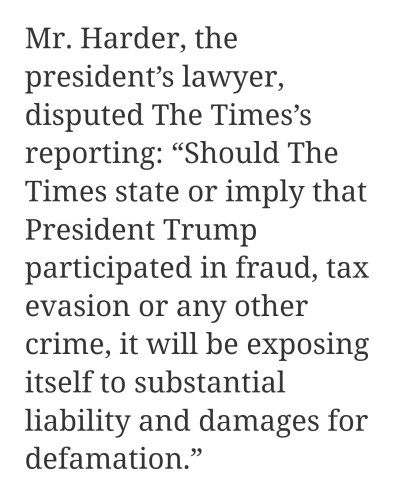
But the death of little seven year-old Jakeline Caal Maquín must not be (though, of course it will) just another anonymous, quickly forgotten example of the depraved indifference America’s own leader has shown toward the human props he deploys in his increasingly grotesque attempt to throw meat to his base, focus attention away from his own criminal enterprises and a legal position growing more tenuous by the day.   Call me weak, but I’m more concerned with the immediate fate of traumatized children still in cages, at the hands of my own government, than I am about how soon this Orange menace winds up immiserated and  incarcerated.

Yes, Obama was the Deporter-in-Chief, sure, no dispute here.   Both he and his predecessor, and all of them, really, always talked about deporting criminals, dangerous people without legal immigration status (a relatively small subset of immigrants, by any measure). But look at this graphic and see if you can keep from getting angry.   I can’t. 

Screen shot 2018-12-13 at 8.53.34 PM.png

If you somehow still think the perpetually angry man on the left is “good for America” (or for anything, actually, except perhaps as an object lesson in how not to be a “winner”) picture another child, “accidentally” murdered (nobody’s fault, nobody’s fault [1]) in the service of a “winning” political talking point, take a long look in the mirror and think again.  

And then, go fuck yourself.


[1] As even the lying AP admits:  

An autopsy was scheduled to determine the girl’s death. The results could take weeks.

Racism vs. Humanism

I know that I’m not boldly going out on any kind of moral limb by saying that racism, a creation of fear and rage and perhaps mankind’s most popular eternal justification for hatred,  is irrational.   I mean, internally, racism is not a system that makes sense.   One obvious reason is that it requires making blanket pronouncements against millions of people you’ve never met, just because they fit a certain ethnic or “racial” demographic, which is just ignorant.   I don’t mean to sound judgmental, God forbid, but racism, on it’s face, doesn’t pass the ‘what the fuck, are you a desperate, clueless fucking imbecile?’ test.  

Many racists will at some point encounter a member of the hated race who will do him some kindness, maybe save his life, donate a vital organ or something, or just go out of his way to extend some unexpected kindness to the racist.  Here is the beauty of racism, if it is ardent and staunchly enough held.   A good racist will appreciate the human individual in question and conclude “well, I thank him, he’s one of the good ones.  I guess that proves those (insert racial slur) have at least one decent one among them.”  

If the racist begins to question his belief, based on a few individuals who refute the stereotype, the whole thing starts to unravel.   His fellow racists will disown him as some did when Donald J. Trump, whose credentials are otherwise pretty strong,  “gave his daughter to a Jew.”    

You want consistency in a racist’s “thinking”?   Good luck, sister.  Adolf Hitler himself, poster child for muscular,  mass murdering, evangelizing, yea, charismatic racism, with racist credentials so impeccable that he’s an idol to haters more than seventy years after he finally blew his brains out, made a few exceptions.  It is well known that every top Nazi had a Jew or two he knew to be a decent chap.  “Don’t put a finger on Max Grossman,” a top SS officer would order, “Max is under my protection.”  Max might have been the SS guy’s brave platoon leader in World War One, or had done some other great service to the SS guy, maybe he was the likable, discreet, self-effacing brother of the Jewish woman the SS guy was having a long, secret affair with.

Would it blow your mind to learn that Hitler himself had a list of Jews not to be touched, as he was insanely rounding up and mass murdering every Jew he could find anywhere?  [1]   It wouldn’t have blown my mind, really.  Nothing about the “philosophy” of racism makes much sense and one should expect no real consistency in a belief system that is based on visceral ignorance.   Of course, if somebody saves your life, most people will not kill that person.   If you have an admired teacher you love, you’d tend to spare her while putting everybody else into cattle cars rattling off for slaughter.  A doctor who saved your mother’s life, fine, don’t put her in a gas chamber.   This is sometimes called “common decency” a trait long exhibited among humans.

But here is a mind blowing fact about the versatile Mr. Hitler.    That widely admired totalitarian psychopath (we are living in a renaissance of Mr. Fucking Hitler and his type)  had a list (we learn from Hannah Arendt’s wonderful Eichmann in Jerusalem) of  a few Jews who were not to be harmed, even as the rest of their detested “race” were exterminated like insects.    A few names, ja.  

That insane bastard had the names of three hundred and forty Jews on his fucking Do NOT Exterminate list!  340 Jews!  On Hitler’s list!  (Arendt, 133).

Do not touch a hair on their poisonous heads or you will dance until you die from a length of piano wire.   Do you know how agonizing a death hung by thin, sturdy wire is?  Adolf could show you a few movies of his enemies, their stupid gyrations in slow, comical, climbing death.  Hitler, toward the end, apparently loved nothing more than watching the reels over and over, his enemies slowly choking to death as they kicked their feet and jerked, and soiled themselves.  Humiliating deaths!   Ha!   Who is laughing now, asshole?    So, you kill one of my 340 pet Jews, you will know my wrath.  Be warned.  

Hitler didn’t have to say it twice, or even spell it out, for the Fuhrer’s every spoken word had the force of law (Fuhrerworte haben Gesetzeskraft)  (Arendt, 148).

If the law you must live by is the word of a violent and insane racist apt to say and do literally anything … good luck to you, Bozo.

I called this post Racism v. Humanism.   Humanism, a belief (I say, off the top of my humanistic head [2]) that humans can discover higher truths and solve even terrible problems by the application of rational thought, research and common effort.   Most human beings down through the ages, unless filled beyond bursting with fear, rage and ritualized hatred, would chose humanism over racism, everything else being equal.   Humanists see the best in our fellow humans; racists imagine the worst.   Humanism works toward a common future for humanity that does not include our mass extinction.   Racism, not so much.


[1]  While also, of course, being willing to kill millions of non-Jews, collateral damage, if you will, in his war to purify Aryan blood and make the world safe for the whitest of easily suckered white mongrels.

[2] A humanistic head that also requires me not to talk exclusively through my ass. Finding more information took less than three seconds.   Jeeves gives us this more detailed definition of Humanism:

an outlook or system of thought attaching prime importance to human rather than divine or supernatural matters. Humanist beliefs stress the potential value and goodness of human beings, emphasize common human needs, and seek solely rational ways of solving human problems.

What I’ve Learned So Far

A caveat, first.   We don’t get to learn that much of great importance, the vast majority of us, in the short time we’re given here in this distracting, demanding world.  I’ve learned this so far, which I’ve found useful, and which I’ll write now and post.  I share it here partly out of pride that I’ve been able to learn it.  I offer it also for whatever help or comfort it may give for some of what you might be struggling to understand in your own life.

Parents don’t fail their children, in most cases, out of any kind of malice or ill-will.

This simple truth is in no way intuitive or obvious, though when you read it you might go “duh…”   As kids we hope for everything from our parents, and almost none of us get that.   The rest is on us.

There are extreme situations, of course, where insane people do unspeakable things to their children.  To the children of those outliers, I really wouldn’t know what to say that could be of use to you, having had to live through that unimaginable nightmare, outside of that none of it was your fault.  I am also not talking to anyone who survived a childhood in an actual, violent, physical war zone, a truly inconceivable horror, except to wish that your parents were heroes and that you and your family were spared the worst.   This piece will probably be most digestible to anybody raised by more or less ordinary, average, normal, regular parents living in peacetime.

Being born to parents, or a single parent, or raised by an adoptive parent, or a parent figure, who is able to give you exactly what you need in life, all the essential things, or even simply a life-affirming sense of being loved that never deserts you, is a matter of luck as great as any other lucky thing in the world.  How were the stars twinkling the night you were born, or, if by day, where was the sun, exactly?   Who can say?  Even if the stars actually have anything to do with luck in the first place, which, who the hell knows? 

My sister and I had painful childhoods, we watched each other suffer, gave each other what little help we could, even as we fought each other much of the time.   None of it could be helped in the house we grew up in.  Yet, our parents were not sadists, psychos, creeps, fools, jerks, nuts, assholes, zealots, criminals, compulsive liars or even particularly rigid people.   They were both very intelligent, sensitive, had good senses of humor,  and both loved us AS WELL AS THEY COULD.  

That is the key there, keep it handy.  

They did what they thought was best for us, always.   How were they to know that at the most crucial emotional moments for my sister and me they had literally no fucking clue how to give us what we needed?   Where were they to have learned that blessed skill?

They certainly had no role models.   Their childhoods were MUCH worse than my sister’s and mine.   I guarantee that, can see few things more clearly than I see that. And my parents’ parents’ childhoods had been worse than my parents’ childhoods and so forth, all the way back.

My father, I learned toward the end of his life, had been whipped in the face (in the face) by his angry, ignorant, religious fanatic mother, from the time he could stand. One year old, or whatever, he’s finally on his feet and — BOOOOM!!!!   In your fucking face, bitch, don’t you fucking look at me, asshole (but hissed in Yiddish).   It’s hard to imagine the horrors of her childhood, except that everyone left behind in that impoverished hamlet she came from was slaughtered in 1942.  

My mother’s mother was charming, dynamic, loved me to death as I loved her, but even as a kid I could easily see how hard she’d come down on my mother, her only child.   Countless yardsticks broken over her daughter’s ass, was the phrase I used to hear, from both my parents.   I always pictured the flimsy yardsticks I knew, with the ads printed on them, no big deal, I could effortlessly snap ’em myself as a ten year-old.  Years later I saw a yardstick from back then.  36 inches of solid squared lumber an inch thick, with numbers and lines carved into it, not those thin, light almost balsa wood jobs they gave away at the hardware store when I was a kid, with the numbers printed on.   Not much was known about my mother’s mother’s childhood, except that twenty years after she left everyone in her large family, and her husband’s, was shot and left in a mass grave in August 1943, if they hadn’t died earlier from starvation, disease, cold or other violence, in the cruel year before the final massacre.

Do I take valuable lessons from my parents?   Yes, from each of them.   I carry them with me every day, wherever I go.   Did I have to undo many curses they placed on my little soul as they ineptly tried to protect me, and love me, and make me not ask terrible questions they couldn’t answer, and encourage me, and discipline me, and praise me, and keep me humble, show me new things, and shield me from things, make me cautious, and brave, empowered, outspoken and submissive and the hundreds of other crucial things parents must constantly do well, in real time, with no notice, and that they receive absolutely no training or preparation for, or sometimes even a clue about?   Many curses that I still have to deal with all the time.  Things that in their angriest moments they never would have dreamed of wishing on me. But there it is.

Did I vex my parents?  Every single day of their lives (at least until the final years of my mother’s lonely life when I’d finally learned not to, and the sudden last two days of my father’s life on the eve of my mother’s widowhood).   Did I disappoint them?  Too many times to count.  Were they proud of me nonetheless?   More than they could say.  Did they love me?   They loved me the very best each of them could love anybody.   More I could not ask of anyone.

What did I learn?  To smile at the idiotic, dependably merciless voice that was in my head year after year, repeating the vicious, undermining things my parents hissed at me when they were too frustrated and angry to remain coherent.   How long did it take me to learn that life-saving trick?  More than thirty years, I think.  It was not quick, I can tell you for sure.  The beauty part is, after enough practice, that ugly little fucker finally pretty much shut the hell up.  What I learned, as that victimizing voice was fading, was to always be merciful to myself. 

Do I ever doubt that I have a good heart?    Never.   Do I question my motivations? Only on rare occasions, and when I find myself on shaky ground I almost always try to fix what I can fix.

But, isn’t that true of every asshole, they believe they have a good heart and that they are right all the time?   Yes.   So doesn’t that mean I’m an asshole?   Not really.

My parents, luckily, gave me the tools to work things out, though they often thwarted me as I was trying to learn to use them.   I’m not proud of the grief I caused them during our long struggle, but neither do I blame them now for the grief they caused me.   How long did balancing that unthinkable mess take, until there was no more pain or regret involved?   I don’t know, maybe forty years, and I have to keep practicing to keep it straight, but it is quite easy to practice now.

What did I learn?   That most people, most of the time, are doing the best they can, within their limitations.   The only thing we can fairly ask of someone else is not to treat us unfairly.   We have the right to demand the best of our loved ones, and we will most often get it, especially if we give ours to them, unless we are making unreasonably one-sided demands.

What did I learn?   “What is hateful to you, do not do to somebody else.”   It is easier to master that than the other formulation of the same golden rule: do unto others as you would have them do unto you.   We all, each of us, viscerally and instantly know what is hateful to us.   Love can be trickier, even as love, is also, first and last, trying never to do something we find hateful to a person we love.  And if we do fuck up, which we always do, being humble and making amends.

Do I think having finally learned that make me Jesus, or Hillel, or anything special? No.  Isn’t it true I’m just another asshole?   Fine.   But I’m an asshole who will try not to treat other people like assholes, to the extent that I can, and whenever I act with mercy toward another I feel a certain peace and a greater sense of hope for my fellow assholes on this poor, persecuted planet.  I feel like mercy for others, when I can give it, flows directly from my mercy for myself, is part of the same process.

As I told an old friend the other day, and as I spoke it surprised me to hear me saying it: I find I’ve become more patient than I ever thought I could possibly be.  Those feelings of mercy and hope, and learning to nurture myself, help others when I can (and when I can’t help, not hurting), to me, are most of the ballgame, right there.

That’s what I’ve learned.