Dismaying that NOBODY is covering this crucial lawsuit!

I realize the “news” under our vulgar distractor-in-chief is a constant torrent of diarrhea coming at us through high-powered spray hoses and at this point most of us reflexively turn away from it. Still, the news media has not been following what several of them have fairly characterized as a crucial election 2020 story, teasing a federal ruling– by a Trump appointee– on the virtual non-existence of frequently claimed voter fraud.

I should make a separate category for this case so you can have my many posts on it all in one place. I’ll do that now. OK, click the link to view my several posts in order HERE.

The Trump campaign and the RNC brought a federal lawsuit in key swing state Pennsylvania to stop the expansion of absentee voting, which included provisions for the widespread use of drop boxes for mail-in ballots. The lawsuit was filed on June 29, 2020. There were hundreds of documents filed in this case, (410 as of last filing) you can see them all here. Click on any entry to read the public filing (any news service, incidentally, could do the same).

You can, for example, read the judge’s entire short August 13 order to Plaintiffs, granting Defendants’ motions to compel the production of actual evidence of the RNC/Trump campaign’s claims. JUDGE RANJAN’S ORDER IS HERE and at the bottom of this post for your scrolling convenience [1].

You will notice, if you read the judge’s order, that he orders Plaintiffs to produce specific, responsive evidence and that “if there are no responsive documents, Plaintiffs must state as much.” The judge details exactly what specific evidence (or admission they have none) Plaintiffs must provide in section 2) of his order.

He gives them until the close of business the following day, August 14th, to provide the evidence (which has never been produced anywhere) of the massive voter fraud and abuse they predict, or admit they don’t have evidence.

Reading the order I at first believed I may have been seeing another encouraging judicial profile in courage: a judge, appointed by Trump, telling him that his case would not go forward without evidence. Then the media went silent on this case.

I did my own research (tip of the hat to my old friend from law school who provided me the link to the docket). In light of further reading, Judge J. Nicholas Ranjan does not appear to be performing any kind of profile in courage, as I will explain in a moment.

The bold-faced type below is from the August 14 New York Times report of the order. Facing that is a section of the August 23 Reuters account of the same thing, phrased not as an “order” but as the judge asking the campaign to do something they simply declined to do, assuring the judge they’d win the case without evidence.

Both of these reports can’t be true. The judge’s order of August 13 was clear and explicit. It was actually an order, and not a polite ask the party could politely decline by telling the judge their case would be just fine without the evidence. You can see for yourself below [1] or on the actual docket of the case (above) that the “ask” narrative is ridiculous. How does a mainstream news organization make that kind of rookie blogger error?

Reviewing the filings on the online docket, we can see that Plaintiffs filed nothing on August 14, in spite of being ordered by the judge. Contempt of court? They don’t seem to have filed anything responsive to the judge’s order after August 14th either, which is surprising and confusing, since the only two stories updating the progress of the case (Reuters and this one, from the Intercept) cited their submission of hundreds of pages (“over 300 documents”, “524 pages”) of non-responsive documents containing no evidence of voter fraud.

Judge Ranjan writes well, and his analysis of the applicable law appears to be sound. He appears to be a qualified judge, unlike some of his recently appointed extreme-right ideologue colleagues (some deemed unqualified by the non-partisan American Bar Association). Yet he crafted a few beautifully tell-tale lines in his opinions in this case which suggest he may not be as dispassionate in this matter as his August 13 order might make him appear. Here are two.

The first is from his August 13 order to Trump 2020 and the RNC to produce evidence (addressing defendants’ request for attorneys fees for being forced to fight a lawsuit brought without evidence, to suppress the vote):

4) Pursuant to Rule 37(a)(5)(A)(ii), the Court finds that Plaintiffs’ positions were substantially justified, and so will not award reasonable expenses or attorneys’ fees.

That might be fair enough, if that subsection of Rule 37 states some legal ground for presuming a lawsuit “substantially justified” until proven otherwise or something like that. On the other hand, if the cited rule is not so generous, Judge Ranjan summarily concludes that the RNC/Trump positions were “substantially justified” even without seeing any of the evidence he ordered them to produce. In that case — hmmmm… 

As to Trump’s “substantially justified” lawsuit, this next bit is as close to analysis as we get from the judge. The audacity of this amazingly supple sentence would make legalistic wordsmith and prose contortionist Robert Mueller III blush and fall on the floor:

In the context of recently analyzing why the law compels him to “stay” the case until the resolution of related state law cases, he crafts this wonder of a sentence, which I have carved up a bit, for emphasis and ease of appreciation:

while Plaintiffs do assert one facial constitutional challenge and allege a few violations of statutory provisions 

that are probably not ambiguous,

these claims are intertwined with those that are less clear.  [2]

Dig it, I’m not saying every one of these assertions are necessarily legally ambiguous, a few of them are probably not, one is arguably an actual constitutional claim, but those claims that are probably not ambiguous are freely mixed in and entangled with claims for which we have even less confidence of their probable unambiguity, if you know what I’m sayin’.

I read that abortion of a sentence, the truth of what I was actually reading hit me hard and my heart sank. The words that came into my mind next were these, uttered recently to a cheering audience in red MAGA hats by the innocent and heroic non-perjurer Michael Flynn (and much in the news lately as well):

Where we go one, we go all.

[1]

ORDER GRANTING MOTIONS TO COMPEL [ECF 366, ECF 368]

After considering the parties’ submissions on the motions to compel, the Court hereby ORDERS as follows: 

1) As to the motion to compel filed by the Democratic Party Intervenors [ECF 366], Plaintiffs shall respond fully to the Democratic Intervenors’ Interrogatory Nos. 1-9 and Document Requests Nos. 1-4 and 9 with specific information or documents requested and/or specifically identify by Bates number which document(s) produced are responsive to each Document Request and Interrogatory. If there are no responsive documents, Plaintiffs must state as much.

2) As to the motion to compel filed by the Sierra Club Intervenors [ECF 368], the Court finds that instances of voter fraud are relevant to the claims and defenses in this case, particularly since Plaintiffs are reserving their right to introduce such evidence or retain an expert regarding the same. Plaintiffs shall produce such evidence in their possession, and if they have none, state as much. More specifically, Plaintiffs must respond fully to the Sierra Club Intervenors’ Document Request Nos. 1 and 15, “as narrowed to include documents, data, analysis and communications relating to allegations Case 2:20-cv-00966-NR Document 374 Filed 08/13/20 Page 1 of 2 2 in the Amended Complaint concerning potential or actual fraud or voter misconduct,” including as relates to: a) “non-uniform procedures concerning drop boxes in Pennsylvania”; b) “fraudulent voting resulting from the use of drop boxes, absentee ballots, or vote-by-mail in Pennsylvania”; c) “fraud resulting from the use of third-party groups to collect absentee or mail ballots in Pennsylvania”; d) “the existence and/or prevalence of fraud, ballot harvesting, ballot manipulation or destruction, or duplicitous voting in Pennsylvania”; and e) “the prevalence and/or counting of absentee or mail ballots in Pennsylvania that lack a secrecy envelope, whose envelope contains any text, mark, or symbol which reveals the elector’s identify, political affiliation, or candidate preference, or whose envelope does not include on the outside envelope a completed declaration signed by the elector.” 

3) Plaintiffs shall provide supplemental responses and documents consistent with the foregoing no later than August 14, 2020. 

4) Pursuant to Rule 37(a)(5)(A)(ii), the Court finds that Plaintiffs’ positions were substantially justified, and so will not award reasonable expenses or attorneys’ fees.

[2] Judge Ranjan concludes:

Thus, the state court’s resolution of the uncertain questions could narrow even these claims, or at least cause Plaintiffs to present them in a different posture. Under these exceptional circumstances, the mandatory elements of Pullman abstention are satisfied.

oops…

FOX headline:

Graham shares newly declassified FBI docs showing ‘clear’ bias toward Trump

What Lindsey Graham is touting on the spot is new proof of the clear bias AGAINST the innocent Trump and all of his associates that were unfairly prosecuted, convicted, sentenced. Not only did the FBI not protect Trump, as they did Hillary, but Graham purports to have irrefutable proof that Hillary Clinton got preferential treatment while FBI leadership was actively persecuting and illegally spying on Trump and his best people.

The long “Libertarian” campaign against the US Postal Service

In their single-minded determination to privatize every aspect of American government, outside of the military and the police (and possibly local fire departments) wealthy lovers of Liberty have long eyed the popular United States Postal Service as ripe for privatization. The history of this well-engineered plan is discussed here. It is laid out in an article HERE

Ridding us all of the US Postal Service was a longtime dream of America’s most aggressive and influential Libertarian, Charles Koch. Koch-funded institutes, think-tanks, candidates and other organs of influence have moved his once extremist vision into mainstream Republican politics Here is a short history of the recent, organized Republican/Trump administration attempt to bankrupt and dismantle the public postal system.

The skinny: 2006 the lame duck Republican Senate (rascals voted out in the blue wave that preceded Obama 2008), a few days before Christmas, in the dead of night, by voice vote, passed the crippling , Postal Accountablity and Enhancement Act, forcing the Postal Service to fully fund all pensions 75 years in advance, eventually creating a $72,000,000, hole in the USPS budget.

It turns out that, during the Obama administration, of course, Mitch McConnell blocked the nominations by Obama for the USPS Board of Governors. This left the board vacant and allowed Trump to fill all vacancies. This allowed the USPS Board of Governors to appoint Louis DeJoy, until May the finance director of the Trump 2020 campaign, during the pandemic, when voting by mail became much more crucial to ensuring everyone’s right to vote safely. This appointment allowed DeJoy to remove mailboxes and high-speed sorting machines and institute strict rules about overtime in order to hobble the timely delivery of mail.

As always, nothing to see here. Nothing to fucking see here!

In other news:

Both of these things cannot be true

A federal judge ordered Trump to produce evidence by August 14th, a judge politely asked Trump if he felt like producing evidence.   Both cannot be true.

President Trump, as part of his open national effort to suppress the “Democrat” vote, has gone to court to challenge the use of drop box voting in Pennsylvania.   He won that key state’s twenty electoral votes in 2016 by a whopping 0.7 percentage points, 44,292 votes.   The more people he stops from casting ballots, the better his chance to win the Electoral College votes of the Commonwealth of Pennsylvania. 

Trump knows that his best, likely his only, chance of re-election lies in motivating his diehard base by constantly stoking their anger, their most extreme fears, driving them to the polls in their full 40% numbers, and making sure large numbers of voters for the other party do not get to vote.   He is also setting things up to contest the results of another “rigged” election if he loses.  He will do this in court and by “Second Amendment” means, if necessary.  Those who believe Trump is fighting a cabal of Satanic pedophile cannibals will take up arms, as they did recently against the tyranny of a “Democrat” governor who attempted to force them to wear masks during an extremely infectious pandemic.

Trump’s legal team in the Western District of Pennsylvania made explosive claims about widespread voter fraud, claims they offered no evidence to support.   As Bill Barr has said when questioned about what proof he has of voter fraud: “it’s obvious!”.    The judge in the Pennsylvania case was appointed by Trump and McConnell.   It seemed Trump might have another Neomi Rao, the loyally partisan DC District Court of Appeals appointee, overseeing his claims that to allow widespread absentee voting in Pennsylvania would inevitably lead to massive “Democrat” fraud.

On August 13 the federal judge in that case ordered the Trump campaign and the RNC to submit evidence of fraud or admit it had none.   As reported the following day in the New York Times:

Screenshot_20200815-003724_Messages

Though this order appeared to be a do-or-die profile in courage by this 42 year-old Trump appointee, drawing a line in the federal court sand against the president’s constant abuse of the court system to delay and bully (in cases he almost always loses in the end), there was no media follow up on this case. Over the following days I wrote to news directors at several outlets, was in communication with the news director at WESA, the public radio station in Pittsburgh, where the district courthouse is. The only article I saw was published on the Intercept website. It is headlined:

TRUMP COMES UP EMPTY WHEN PRESSED FOR EVIDENCE OF ELECTION FRAUD IN COURT:

The Trump campaign’s 524-page response to a discovery demand turned up precisely zero instances of mail-in vote fraud.

WESA published this piece earlier today.

This morning a friend sent me this Reuters piece which contains this, eh, analysis:

The Trump campaign says the ballot drop box invites fraud. The federal judge asked the campaign to provide evidence of actual fraud, but the campaign declined, arguing it did not have to do so in order to win the case.

The upshot of the Reuters update is that federal judge Ranjan put the federal lawsuit on hold to allow state lawsuits to resolve the state law issues. Presumably, on the advice of his superiors, the new judge chose to “stay” the case rather than dismiss the complaint outright as a flagrantly political stunt submitted in bad faith and without any evidentiary basis. Reuters reports:

The Republican president has repeatedly and without evidence said that an increase in mail-in ballots would lead to a surge in fraud, although Americans have long voted by mail.

There is perhaps no more consequential lawsuit than the one in Pennsylvania, which Trump won by less than 1 percentage point in 2016 and is considered essential to his re-election effort.

J. Nicholas Ranjan, U.S district judge for western Pennsylvania, said the federal case brought by the Trump campaign would not move forward until similar lawsuits in state courts are completed or unless they are delayed.

But what’s with Reuters’ ridiculously anodyne statement of Trump’s apparent defiance of a court order?

but the campaign declined, arguing it did not have to do so in order to win the case.

The federal judge didn’t “ask,” he ordered the campaign and the RNC to produce evidence or state that they had none, according to every report I read a week earlier.  A judge does not ask when issuing a court order. That’s why it’s called an “order”. 

The powerful plaintiffs respectfully disagreed with the judge’s “request” and said they’d win even without evidence, like in the rigged Senate “impeachment” “trial”.   

What the fuck, man, is everybody asleep?

On His Way Back from Epstein’s?

World-class instinctual expert on propaganda, Adolf Hitler, applauded the Allied propagandists who, during the World War (the first, and at the time, only one) created incendiary, aggressively lying captions for news photos.  These captions effectively inspired hatred, rage and terror, three things needed to make an army fight a hated enemy (or civilian group, for that matter) to the death.   Mr. Hitler could not endorse this tested and effective technique of creating lying captions strongly enough.  He sang its praises lustily in the pages of Mein Kampf.     

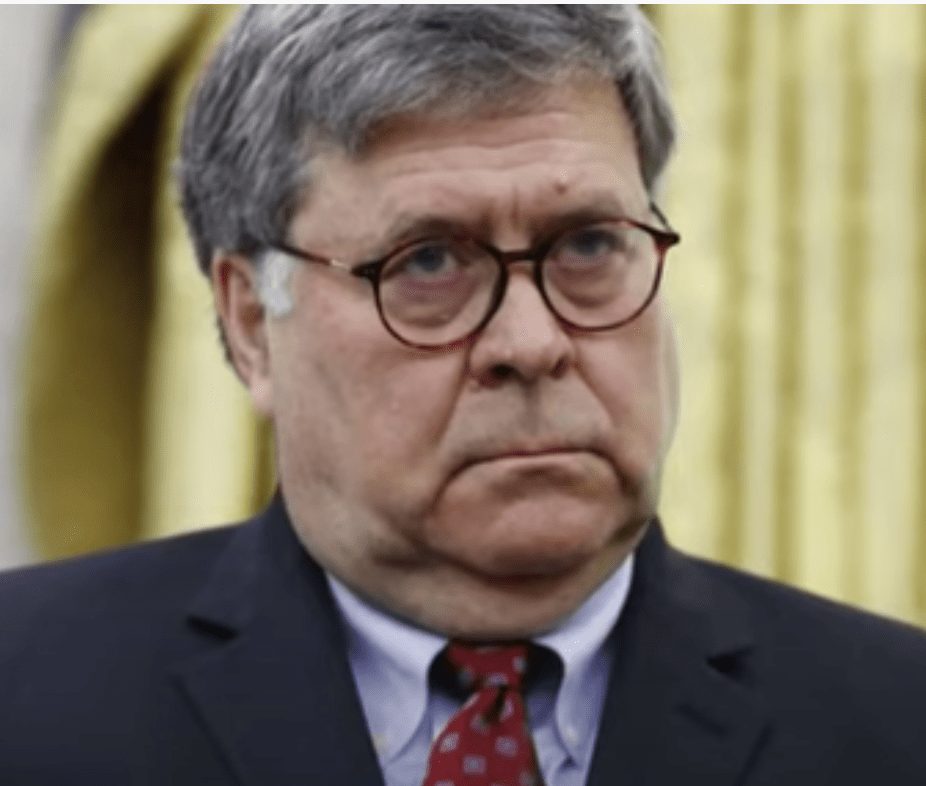
So, using this principle, I could take, say, an otherwise innocent picture of somebody, like this one:

And simply provide a scandal-evoking caption like:

Coming home from Epstein’s?

to suggest, without a shred of evidence (and with perfect deniability– it’s just a question!), that the man pictured here is with a child prostitute, solicited and groomed by Jeffrey Epstein and Ghislaine Maxwell [1], for the use of wealthy, influential pedophiles. The girl is a takeout order.

It is a small step from producing fake photographic “proof” (the kid is actually a young self-made entrepreneur-in-training named Ivanka Trump) to spinning the rest of the conspiracy– not only does this evil pervert pay a sex-trafficker to kidnap this young girl so he can take her away in his limo to sexually abuse her, but, even worse, not long after this picture was taken he murdered her and drank her blood.

And, of course, as the mysterious and all-knowing oracle named W preaches: only Joe Biden can save us from this dastardly plot hatched by this depraved sex-pervert cannibal and his likeminded followers!!!

[1] The above link will take you to a long Guardian article about Maxwell’s father, Ian Robert Maxwell, controversial self-made millionaire media titan and politician and his influence on Jeffrey Epstein’s best friend. In Ghislane’s larger-than-life father’s defense, and you have to love it, his widow had this to say:

In her autobiography, Betty, who died aged 92 in 2013, described Maxwell as bullying, unfaithful and frequently absent. But she insisted he was “not the degenerate monster” many said he was.

source

There will be those who will try to refute this

The more I think about the coalition of conservatives who formed the Lincoln Project , their political views, the efforts they’ve made in the past to bring something like this about (Trump was an unintended consequence for them, though predictable) the less I like this group — though I respect that they’re trying to atone for bringing the nation to the brink of totalitarianism. And, as their type always has, they make very powerful political ads.

This hard-hitting spot is not going to sit well with the pro-evil forces, I can tell you for sure. It can be refuted only by calling all reports of federal action and inaction in a pandemic, all death and infection numbers, all comparisons to other nations, all reports about political calculation by the most nakedly “transactional” administration in history, all “news”, the product of vicious, lying partisans intent on destroying the greatest genius that has ever led a nation in the history of the world.

It’s perhaps worth noting that the teenaged daughter of Kellyanne and George Conway, Kellyanne perhaps the loyalest and most savage of Trump defenders, he of the Lincoln Project– and a man who holds that Trump suffers from an extreme and malignant form of narcissistic personality disorder — effectively forced both of her parents out of politics for the foreseeable future. The fifteen year-old “influencer” announced her intention to “emancipate” herself, to get out of the madhouse she’s been growing up in. Kellyanne and George both publicly agreed to a public ceasefire, Kellyanne announcing that she’s stepping down as Trump’s loudest mouthpiece, George stepping away from the Lincoln Project.

May the most malignant conspiracy theory… not win.

A Few More Thoughts About Time

When I got the call from my sister, during a festive meal at the home of old friends, that my father had been admitted to the hospital after being brought to the emergency room, time changed.   

“When I saw the doctor’s face I knew this was it,” my sister told me, “he looked like the malach ha mavet (Angel of Death).”  The specialists my father had been seeing regularly — cardiologist, endocrinologist, hematologist — collectively had no clue that their patient was in the last stage of liver cancer, days from death.    The ER doctor, assessing my father’s jaundiced color, difficulty moving and tapping his stomach, distended with ascites (liver-related fluid build up in the abdomen) [1] knew at once that this man was in the last days of liver cancer.

Two doctors were at the dinner table when I got the news.  When I mentioned the ascites they both told me not to worry, that ascites can be from many things [2], that I should wait and talk to the doctors at the hospital.  I consider their reassuring lies to have been a kindness, under the circumstances, and always think of their unspoken, united determination to shield me from extra worry with great fondness.

“If you have any family who want to see him before he goes, you should call them right away,” the ER doctor told my sister.

A couple of days later I arrived in Florida.   My father was attached to a bag hanging off the side of the hospital bed.  The bag was filling with the most unhealthy looking liquid I’ve ever seen.   It was the color of cancer.  It dripped away, along with what was left of his life, for the three or four days I was in Florida before my father breathed his last breath.

My father was eager to see his little brother, a man he had always bullied and dismissed.   Once, late in his life, when my father was returning from a short visit to his brother I asked him how my uncle was doing.   My father paused for a few seconds to reflect then uttered this great line:  “let’s just say, he remains unchanged.”   At the end my father was anxious for his brother to be there and his brother rushed to Florida.

I went to pick my uncle up at Ft. Lauderdale airport.   When we got to the hospital he immediately stopped the doctor, who’d met us in the hall to update us about the patient’s condition, to ask if there was any chance of a liver transplant for his dying 80 year-old brother.   I had to take my uncle by the arm to let the uncomfortable doctor get away.  The way the two brothers clung to each other at the end was poignant to see.

My uncle was a bossy man and he instructed us all, at around nine pm, that it was time to let the dying man rest.   For some reason we all left the hospital.  I even attempted to get to sleep, hours before my natural bedtime, which is around four a.m.    Suddenly I sat up, thinking “what the fuck?,” got in the car and headed back to the hospital.   

My father, who’d told me earlier in the day that he wanted to talk to me, that he was still assembling his thoughts, was wide awake when I arrived around one a.m.   He appeared to be expecting me.  I’d always had an adversarial relationship with my father, one I’d tried many times to improve, but my father was so deeply, fundamentally wounded that meaningful peace with him was pretty much out of the question.   

I’m a fairly creative person, with an active imagination, and, once I left my parents’ house, I’d tried everything I could imagine over the years to make peace with my old man.  In the end, when he angrily told me that if he ever told me what he really felt about me it would do “irreparable harm” to our relationship, I saw that his desperation was too great for him to overcome.   He would “win” by destroying what was left of our ability to discuss things beyond the weather, baseball, history and politics.   I stopped banging my head against the locked door at that point.

I am writing about time.   Two years passed from that final slamming of the vault on any hope for real dialogue with my father.  Nobody knows from one minute to the next how long the rest of their life will be.  I can measure it now:  two years elapsed from the time I became certain that no true peace with my father was possible.   

During those years I was in psychotherapy, and I finally reached a point where I was able to understand that my father was incapable of doing any better; that he was actually, sad as it was, doing the best he could.  Knowing this allowed me to let go of a lot of the anger I had toward him.   

Luckily, I had this revelation a few months before I got that call from my sister than our father was not long for this world.  I was ready, in a sense, in a way I couldn’t have been holding on to the pain and anger my father’s righteous prosecutorial rage inspired in me.

Now, on April 29, 2005,  it is after one a.m. on what would turn out to be the last night of my father’s life.   The first question he asked is if I’d brought the digital recorder I’d bought for him earlier in the day.   I’d left it with the nurse, got it, turned it on, propped it on his chest.   

The next thing he said was that his life was basically over by the time he was two.   He didn’t mention why, it was something I already knew (though not from him) — his angry, religious mother had whipped him in the face from the time he could stand.   Add to that “grinding poverty” and turning five as The Depression began, being the poorest of the poor in a small town as everyone in your family back in Europe is being rounded up and killed, you begin to get the picture.   Betrayal by a mother, shame and humiliation are not easily overcome.   I can’t imagine the struggle my father had, to appear strong, infallible, while making only glancing references to the “demons” we all must deal with.

Because I was no longer that angry, because my father was dying, I knew my purpose in that room was to make his death as easy as it could be.   I was not there to challenge him, I was there to comfort him.  I understood without needing to think about it that these moments were not about me, they were about him.

When he apologized for putting obstacles in front of my sister and me, making our lives harder instead of helping us in times of need as a loving father should, I told him he’d done the best he could.   

When he told me he’d felt me reaching out many times over the years, I nodded, thankful to hear him finally acknowledge it.   He lamented that he’d been too fucked up and defensive for us to have this kind of conversation fifteen years ago.   

At the time the number seemed off to me — thirty years of war, fifteen of peace?   Later I realized that fifteen days, or even fifteen hours, of this kind of honesty would have been an amazing blessing.

We spoke quietly for several hours, the door to my father’s hospital room open, everyone else on the floor asleep.   The nurse, an angel in human form, sat outside the room.    The look of love she gave me when I left I will never forget.

Early next evening, as the sun was beginning to set, my father told my sister, my uncle and my mother that since I’d arrived it was a good time for them to take a break, go to the cafeteria and get something to eat. 

As soon as they were gone my father said to me “I don’t know how to do this.”   I assured him that nobody did, that it would be fine.   The nurse helped take down the bar on one side of the bed so I could sit closer to my father.  I don’t remember if I had my hand on him, or arm around him, or anything like that, but I sat close by.   

His breathing got shallower and shallower, death from liver cancer is supposed to be one of the gentler ways to go.   After the liver goes, the kidneys shut down and you go to sleep, only forever.   

A friend later told me the Talmud poetically compares the moment of death to removing a hair from a glass of milk.  It is an excellent description in the case of death from liver cancer.

Within twenty minutes or so my father took his last breath.   I reached over and closed his dead eyes with the fingers of one hand, like I’d done it a thousand times.

[1] A 0.66 second search reveals: 

Ascites is when over 25 milliliters of fluid fills the space between the abdominal lining and the organs. It’s usually caused by cirrhosis.

[2]  It turns out they were misleading me, not lying:

But the most dangerous problem associated with ascites is infection, which can be life-threatening. Ascites may go away with a low salt diet, and with diuretics (water pills) ordered by your provider.

Worthwhile investigations take time

I heard two award winning investigative reporters say that time is the single most important aspect of doing a full investigation into anything.   If you have the time to follow every lead, and go where that lead takes you, you will discover things that are impossible to learn if you’re working under a deadline.   To perfect any difficult thing, there is no substitute for time.   Robert Caro, the great biographer and historian, famously sometimes takes a year or longer to dig for the truth about a single disputed fact that troubles him.

Let’s take a moment to consider the gift of time itself, the single greatest gift we have, until we don’t have it any more.  Brother David Steindl-Rast gives a beautiful meditation on gratefulness for the gift of time and our ability to appreciate the wonders our senses provide us, if we take a few moments every day to pay attention.   He speaks midway through this beautifully illustrated TED talk by visionary nature photographer Louie Schwartzberg.   Well worth ten minutes to watch in its entirety, the monk’s inspirational short speech is cued up HERE (if you’re in a hurry).


Back to investigations, my own leisurely dive into my father’s life is a perfect example of the benefit of spending as much time as needed to gather something worthwhile.  Without any time limit, I carefully wrote out everything I know or could imagine about my father’s life.  I constructed this tricky puzzle, with many key pieces missing, in a darkened room, free from any thought that I had to rush.  In the end, after more than two years of doing this daily, I am finally able to truly understand my father’s motivations — in a way that was impossible for me to grasp as I was working toward it.   I don’t agree with every position he took, but I feel like I completely understand why he took each one.  That empathetic view was unimaginable to me as I was working over the sketchy puzzle in the dimness.

A long, thoughtful investigation will always be more fruitful than one done in a hurry.   We tend to miss details when we rush.  Sometimes these details can be very important.   The gift of time can cut both ways, as when it is extended or contracted for an unscrupulous purpose.

If, for example, A.G. Bill Barr empowers a federal prosecutor to launch a limitless, global exploration into the detailed investigation into Mr. Trump and associates that he calls “a travesty” based on the “flimsiest” of evidence, embarked on after illegal “spying” — after enough time and resources are invested something will likely be turned up about some irregularity or impropriety.    Something concrete to support Barr’s politically handy theory of partisan “presidential harassment” and baseless “spying” on a president who (in spite of massive proof to the contrary) took no help from Russia or anyone else.

As it turned out, in the case of “Russiagate,” there was incorrect information on two of the four original FISA warrants that began the surveillance and investigation into the Trump campaign’s coordination with Russian state actors who were later shown to have meddled directly in all fifty US states on behalf of Mr. Trump.  False information, perhaps a dozen instances of it, in at least two applications for the FISA warrants to wiretap Trump foreign policy adviser Carter Page [1]. 

After enough digging by a team of prosecutors and investigators, a malefactor was found, an FBI lawyer who left out that Page had been an informant for the CIA at one time.    A smoking gun!    As announced a few days ago, this now unmasked traitor (who claims the mistake was inadvertent, not part of a Deep State coup d’etat against a duly elected American president) is going to plead guilty for this deliberate misstatement on an application for the original FISA warrant that got operation Crossfire Hurricane up and running.   

I’d always thought the standard of proof for a FISA warrant to be approved was fairly low.  I’d understood that something like 99% of them were approved by the Foreign Intelligence Surveillance Court.  Though 99% of them are granted, based on probable cause to reasonably suspect a national security threat, the standard of proof to submit a warrant is higher than I supposed.   Here is an article extensively quoting an FBI insider’s description of how high the bar for a FISA warrant actually is.

That said, the DOJ’s own Inspector General, like the DOJ’s Special Counsel Mueller before him, and the Republican majority Senate Intel Committee since [2], determined that there was adequate legal predicate for the investigation of what is now known to be widespread, high level cooperation between the Trump campaign and Russia, an investigation that resulted in numerous prosecutions and guilty pleas.   The DOJ’s IG pointed out the errors and omissions in the paperwork to get the FISA warrant and concluded that ambiguities in FBI and DOJ policy need to be tightened up.   He also made a referral for prosecution, which was not publicized much at the time.

It turns out the FBI lawyer was referred for prosecution by DOJ Inspector General Horowitz, not by the Barr/Durham criminal investigation [3].   But that is not for lack of effort by Barr/Durham who are determined to have some dramatic criminal indictments for an October Surprise to help their candidate.

With enough time and effort, a dogged team of investigators can usually turn up some kind of wrongdoing, about something.  If not Whitewater, for example, incriminating, irrefutable DNA on a blue dress.   Contrast this kind of thorough long-game investigation with one conducted under a tight deadline.

The tight negotiated deadline in the FBI’s five-day investigation into the sexual impropriety charge against Brett Kavanaugh is an example of a  investigation starved for time to investigate.   Even within that tight time frame, if the intent had been to verify or dismiss the allegation against the judge, the FBI could easily have learned if there was a house among that small circle of people at the gathering nobody specifically recalled (except for the girl who was traumatized) that fit the description the witness gave.   You walk up the stairs, bathroom on the left, bedroom directly across.   Who owned the home during the summer in question?   Did the parents work late every day?   Were they in town during the month the event nobody remembered took place? 

The answers to those relatively straight-forward questions make it more likely than not that one or the other was telling the truth, based on a now verified (or not) recollection of place.  Confirm the place, confirm the time frame, re-interview everyone there with this new information, other leads emerge, in time.

Of course, some investigations are merely for show, to demonstrate a willingness to investigate the truth or falsity of the statements of those involved, even if, as in the case of the Kavanaugh/Blasey Ford controversy, the FBI spoke to neither Kavanaugh nor Blasey Ford, nor Kavanaugh’s high school best friend, who was allegedly also in the room, also drunk, laughing uproariously and finally throwing himself on top of the two teenagers struggling on the bed, allowing one to escape.

Time, the only gift any of us cannot do without.


[1]  Wikipedia

Carter William Page (born June 3, 1971) is an American petroleum industry consultant and a former foreign-policy adviser to Donald Trump during his 2016 presidential election campaign.[1] Page is the founder and managing partner of Global Energy Capital, a one-man investment fund and consulting firm specializing in the Russian and Central Asian oil and gas business.[2][3][4]

[2]  Wikipedia:

The Republican-controlled Committee released its final report on 2016 Russian election interference in August 2020, finding that despite problems with the FISA warrant requests used to surveil him, the FBI was justified in its counterintelligence concerns about Page. The Committee found Page evasive and his “responses to basic questions were meandering, avoidant and involved several long diversions.” The Committee found that although Page’s role in the campaign was insignificant, Russia may have thought he was more important than he actually was.[101]

[3] Wikipedia 

Horowitz did fault the FBI for overreaching and mistakes during the investigation. These included failing to disclose when applying for a FISA warrant to surveil Page in October 2016 that he had provided the Central Intelligence Agency details of his prior contacts with Russian officials, including the incident the FBI indicated made Page’s conduct most suspicious.[84] In addition, Horowitz found that Kevin Clinesmith, an attorney in the Federal Bureau of Investigation’s Office of General Counsel (OGC), intentionally altered an interagency email to exclude from the FISA warrant application that Page was a CIA source from 2008 to 2013.[84][92] According to the Horowitz Report, if the FISA court judges had been informed of Page’s CIA relationship, his conduct might have seemed less suspicious, although the Report did not speculate on “whether the correction of any particular misstatement or omission, or some combination thereof, would have resulted in a different outcome.”[84][93] Horowitz referred Clinesmith to prosecutors for potential criminal charges.[94] On August 14, 2020, Clinesmith pleaded guilty to a felony for making a false statement by altering the email.[95][96]

Horowitz attributed the warrant problems to “gross incompetence and negligence” rather than intentional malfeasance or political bias.[97] In a December 10, 2019, interview on Hannity, Page indicated that he had retained attorneys to review the Horowitz Report and determine whether he has grounds to sue.[98]

In December 2019, the Justice Department secretly notified the FISA court that in at least two of the 2017 warrant renewal requests “there was insufficient predication to establish probable cause” to believe Page was acting as a Russian agent.[99]

In a subsequent analysis of 29 unrelated FISA warrant requests, Horowitz found numerous typographical errors but just two material errors, which were determined not to impact the justifications for the resulting surveillance.[100]

Update on Trump 2020-RNC filing of evidence of vote-by-mail fraud!

In granting a motion in the case Trump 2020 and the RNC brought to restrict alternatives to live, in-person voting in Pennsylvania, Judge Ranjan ordered Trump’s lawyers to submit evidence of mail-in voting fraud or admit that it has no evidence.    Never ones to be put in a corner, or back down, or admit their claim was based on nothing but a desire to win at any cost, the Trump campaign chose a third option:   they submitted 524 pages of what purported to be evidence of fraud. 

Did they offer any actual evidence that allowing voters to submit mail-in ballots at drop boxes (to get around Trump mega-donor Louis DeJoy’s multi-pronged slowdown of US Postal Service mail delivery): “provides fraudsters an easy opportunity to engage in ballot harvesting, manipulate or destroy ballots, manufacture duplicitous votes, and sow chaos.”???

No.

Did they admit that they had no proof?

No.

524 pages, your honor, some of it redacted.   Read it and weep, chumps.  One of the parties in the lawsuit had this comment after reading it all.

“Not only did the campaign fail to provide evidence that voter fraud was a widespread problem in Pennsylvania, they failed to provide any evidence that any misconduct occurred in the primary election or that so-called voter fraud is any sort of regular problem in Pennsylvania,” said Suzanne Almeida, interim director of Common Cause PA, one of the parties in the lawsuit. The Trump campaign did not immediately respond to a request for comment for this story.

source

Beautiful NY Times nuance in arguable Trump perjury

You have to admire a newspaper that can report that Senate Republicans “rejected” Trump’s claim (under oath) that he did not recall talking to Roger Stone about the perfectly timed release of hacked DNC emails, while fairly pointing out that the Senate Intel Committee report did not state that Trump was lying.   They rejected his claim, yet didn’t claim he was lying, though they rejected the truth of what he submitted under oath.

A neat display of lawyerly Republican contortions and a nice bit of New York Times journalism, in an article that notes Trump and Stone spoke by phone at least 39 times (that are known) from March to November 2016, and that they spoke (on a Trump assistant’s phone, as the careful conspirators often did, for deniability) on the eve of the disclosure of hacked emails that was timed to knock the “you can grab ’em by the pussy” tape off of the news.

Let’s have a look at this neat bit of journalistic fairness:

The Republican-led committee rejected Mr. Trump’s statement to prosecutors investigating Russia’s interference that he did not recall conversations with his longtime friend Roger J. Stone Jr. about the emails, which were later released by WikiLeaks.

Senators leveled a blunt assessment: “Despite Trump’s recollection, the committee assesses that Trump did, in fact, speak with Stone about WikiLeaks and with members of his campaign about Stone’s access to WikiLeaks on multiple occasions.”

The senators did not accuse Mr. Trump of lying in their report, released on Tuesday, the fifth and final volume from a three-year investigation that laid out extensive contacts between Trump advisers and Russians.

source

Beautiful, no?   They rejected Trump’s claim under oath that he didn’t recall ever talking to Stone about the WikiLeaks dump, yet… they did not accuse Mr. Trump of lying.   

Both fair and balanced. 

Meanwhile, no Republican on the Senate Intelligence Committee will talk to the New York Times.   You can’t blame them.  As Mr. Barr told Representative Swalwell in reply to his question about whether he was investigating Mr. Trump for commuting the sentence of Mr. Stone, who bragged about dummying up for Mr. Trump and not turning rat, “why should I?”

As for convicted perjurer Roger Stone, he dismissed the whole thing as a fabrication based on the sworn testimony of two fucking liars, two stinkin’ rats.

In fairness to the Grey Lady, the editorial board did publish this today, entitled The Trump Campaign Accepted Russian Help to Win in 2016.  Case Closed:

A bipartisan report released Tuesday by the Republican-controlled Senate Intelligence Committee cuts through the chaff. The simplicity of the scheme has always been staring us in the face: Donald Trump’s 2016 campaign sought and maintained close contacts with Russian government officials who were helping him get elected. The Trump campaign accepted their offers of help. The campaign secretly provided Russian officials with key polling data. The campaign coordinated the timing of the release of stolen information to hurt Hillary Clinton’s campaign.

The editorial board takes a paragraph or two to debunk the narrative being spun by AG Barr that “Russiagate” was a transparent partisan attempt to persecute the president.   Then:

The committee documented that, on Oct. 7, 2016, Mr. Stone received advance notice of the impending release of the “Access Hollywood” tape, in which Mr. Trump brags about sexually assaulting women. In response, Mr. Stone made at least two phone calls arranging for WikiLeaks to release stolen internal emails from the Democratic National Committee.

it concludes:

There’s no way to sugarcoat it. In less than three months, the American people could re-elect a man who received a foreign government’s help to win one election and has shown neither remorse nor reservations about doing so again.

Case closed, voters?   Or, a second Civil War against the angry, violent hoards who hate the white Christian values typified by great men like Donald Trump, William Barr, Mike Pompeo, Mike Pence and Michael Flynn?