A Fascinating Investigative Piece from Trump, Inc.

The team at Trump, Inc. a group of investigative reporters from ProPublica and WNYC, has put together a fascinating series of reports about Trump’s frequently fishy-smelling money-making operations.   The shows are extremely well put together narratives.   A recent show was called “The Accountants”  and it is from this highly recommended show that these notes of mine are taken.  The episode transcript is the source of all block quotes.

When the New York Times reported that, for tax purposes, Donald Trump had lost over a billion dollars during a single decade, and avoided paying federal income tax for eight years between 1985 and 1994, Trump’s lawyer:   

said the tax information in the Times’ story was “demonstrably false,” but cited no specific errors.

In a prior NY Times story, reporting in great detail about the intricate tax avoidance schemes Trump’s father employed to pass on a billion dollars to his children with minimal taxes paid, one of Trump’s lawyers, (likely a famed legal hard-on named Harden) in an act of bravura puffery, called the Times reporting “100% false, and highly defamatory”  (of course it was, which was why Trump successfully sued the now defunct Grey Lady).  Trump, Inc. explains:

We know now that, as Donald Trump’s businesses were struggling, the Trump family accountants helped funnel millions of dollars from Fred Trump to his children.

[BEAT, THEN MUSIC SLOWLY COMES IN]

CRAMER: In 1992, the Trump Family set up a company called “All County Building Supply & Maintenance.” It was owned by Donald Trump, his siblings, and a cousin. The New York Times uncovered a number of suspect tax strategies that the Trump family used, and All County was one of them. Out of all of the schemes, The Times said All County was the “most overt fraud.” A lawyer for Trump called the Times’ reporting “100% false, and highly defamatory.”

Again, recall, history speaks for itself.   The Times published a 100% false and highly defamatory article that claimed the Trump family had committed financial crimes, including tax fraud.   Trump sued, the case was a slam dunk, the Times is no longer in business.   

On the eve of the Supreme Court arguments over whether Trump has the unprecedented privilege of complete immunity from investigations of any kind while president, Trump, Inc., dug into the story of his accountants.  His accounting firm is one of the parties, along with Deutsche Bank and everybody else, that the secretive Trump is insisting cannot be legally  compelled to turn over subpoenaed records, even to criminal investigators in New York State. 

The dogged team from Trump, Inc.  eventually located one of the Trump family’s longtime accountants, Mitchell Zachary (who was amazed that anyone in the media had found him and happy to speak to them, at length).  Trump Inc. continues:

I asked Mitchell Zachary about All County during our first interview.

ZACHARY: Yep. Know all about it.

CRAMER: Whose idea was that?

ZACHARY: Speci— Well, uh, it wasn’t mine. I — I’ll tell you that. I wish I could take credit for it — it was brilliant — but it wasn’t mine.

CRAMER: Here’s how it worked. Fred Trump bought supplies for his buildings — like refrigerators, stoves, and boilers — from this company, All County Building Supply & Maintenance. All County sold Fred those supplies at hugely marked up prices.

But remember, All County was owned by Fred Trump’s children, and they profited off those huge markups. The Times found that, over time, Fred was able to funnel millions of dollars to his children through All County, and could have avoided paying millions of dollars in taxes.

ZACHARY: I knew what that whole thing was about, you know. It was part of the estate planning strategy.

CRAMER: In the mid-‘90s, Mitchell Zachary left the Trump tax team, and began working on estate planning for Fred Trump.

Zachary told me that All County was implemented by the Spahr accountants, but that he wasn’t part of the team that developed the strategy, and he didn’t work on it directly.

ZACHARY: I wish I could take credit for it, but I only learned from it.

CRAMER: What did you learn from it?

ZACHARY: Uh, that if you plan properly [PAUSE] on a very, very large estate, then — if you have time — you could take steps to reduce the value of the properties. That was the main purpose of All County — to reduce the value of the properties for estate tax purposes.

CRAMER: A former Chief of Investigations for the Manhattan District Attorney’s office, Adam Kauffmann, told the New York Times that the Trumps’ use of All County would have warranted investigation for “defrauding tenants, tax fraud, and filing false documents.” The statute of limitations for criminal prosecution has expired.

The Times reported on another tactic used to reduce the Trumps’ tax bill: Dividing up legal ownership of Fred Trump’s properties so that he lacked complete control. That helped an appraiser justify lower values, which meant lower taxes.

ZACHARY: So, at that time, uh, we brought in this appraiser and he took anywhere between 35% and 40% discount. This was a common technique we used, okay? Well, the IRS hated that.

CRAMER: After Trump’s parents died, the IRS audited their estates and found they were worth 23% more than the Trump family had claimed.

All told, the Times found that Fred and Mary Trump transferred over a billion dollars of their wealth to their children — which could have meant paying over $500 million in taxes. The Trumps paid a fraction of that.

Mitchell Zachary defends the firm’s work for the Trump family, saying it was aggressive but within the law. He said Donald Trump’s taxes were frequently audited, and pointed out that the IRS reviewed their work on the estate taxes.

The ever-secretive Trump, with nothing whatsoever to hide, made his accountants lock up all of his financials every night when they were done with a day’s work massaging them.   The Artist of the Deal, a man famously reluctant to pay his bills, also demanded special, discounted fees, that his accountants were glad to provide.

CRAMER: Confidentiality was more important with Trump than with most clients. At Spahr, the policy was: You couldn’t leave Trump’s documents out overnight. You had to lock them away in a cabinet.

ZACHARY: More than any other individual [BEAT] that I’ve ever seen, he was very big on promoting that he’s this super-rich billionaire. That’s not what you see when you look at his personal tax returns. 

CRAMER: Donald Trump basked in the perception that he was money. In interviews with journalists, he sometimes produced papers, compiled by his accountants, which he said proved his wealth. Trump sued the journalist Tim O’Brien after O’Brien published a book claiming Trump was not a billionaire. Trump lost.

In the end, Donald Trump cared a lot about one other thing: his fees. The firm promised Trump his fees wouldn’t go up after the merger, and he gave the okay. The merger went forward.

Summarizing the first sections of their report on his accountants, on returning from a musical interlude, Ilya Marritz said:

MARRITZ: And we’re back. Let’s just recap where we are.

One of Donald Trump’s former accountants, Mitchell Zachary, has confirmed that Trump was not the super rich guy he presented himself as in The Art of the Deal. To protect that image, Trump’s accountants applied a high level of secrecy and security around his finances. 

Despite its big-name client, the accounting firm was still small. And the partner in charge of Trump’s taxes was accused of malpractice, and was found to have committed fraud. The firm lost its malpractice insurance.

Meg picks up the story now, with Mitchell Zachary out of the picture, and Donald Trump branching out from real estate to branding and entertainment. 

And on they go, invading this most private of public citizen’s well-guarded privacy.   And I keep listening.   Oh, my goodness.  I can’t believe how petty I am to keep taking in 100% false and HIGHLY defamatory information dredged up (or simply made up) by obvious liars.   How I often think so badly of this very fine person, our excellent and unaccountably constantly attacked totally innocent and serially exonerated president.   It’s almost like I have Trump Derangement Syndrome!   I need help — any ideas greatly appreciated.

Meantime, check out this excellent episode, a very listenable narrative.  Here’s a bit more, from the transcript, from their discussion with Trump’s talkative, longtime accountant Mitchell Zachary:

CRAMER: He says you can see from the Times reporting that Trump appears to have lost more money than anybody during that period of time.

ZACHARY: So naturally, it was very unusual.

CRAMER: He does not think Trump was pushing the envelope.

ZACHARY: Yeah, we were a little aggressive, but not, uh, pushing the envelope too far. The man lost a lot of money. We didn’t need to push the envelope.

CRAMER: At one point, he put it like this: Trump had lost so much money, “he was a built-in tax shelter.”

Trump was a difficult client. Zachary told me that collecting fees from Trump was awful. Eventually, Spahr negotiated a deal: Lower fees if Trump paid on time.

ZACHARY: Donald always made it clear. You get the privilege of saying you’re Donald Trump’s accountants, and you have to pay the price.

CRAMER: Mitchell Zachary worked under a partner at the firm, a man named Jack Mitnick. For decades, Mitnick was the accountant behind the Trump family’s tax strategy. Zachary said Mitnick was known around the firm as a ‘Tax God’ — an accountant so gifted, you had to sit up and pay attention.

[HI-HAT MUSIC PLAYS]

ZACHARY: And what I learned from Jack Mitnick was keep researching until you find a way to do what you want to do. Don’t give up. Just keep digging.

CRAMER: Zachary told me that Mitnick had an especially close relationship with the Trumps, that Mitnick was constantly on the phone with either Donald or Fred. He had tax ideas for them, they had questions for him — and that they wouldn’t make a move without discussing it with Mitnick first.

[MUSIC OUT]

CRAMER: My conversations with Mitchell Zachary began in January, on the phone. At the very beginning of March, Peter Elkind and I flew to Florida to meet him. This was back before social distancing. Some of the tape is from our in-person interview.

[MUSIC COMES BACK]

ZACHARY: Okay. You have to understand, Jack … The — the aura around Jack Mitnick was that he was infallible. I mean, when I first came there — you might find this interesting or not — I couldn’t call him Jack. I always called him Mr. Mitnick. That’s part of his — his aura. You know, that he’s the biggest tax expert in the world, and he’s always right. And if he blesses something, you can do it. That was the feeling that everybody thought about Jack. 

[MUSIC OUT]

CRAMER: He seemed to screw up again and again and again, though. 

ZACHARY: Yeah. He didn’t always win. His opinion wasn’t always a winning position. 

CRAMER: Do you think he really, like, took a lot of extreme positions?

ZACHARY: Probably. I think the court cases bear that out. 

[DRIVING MUSIC COMES BACK]

PETER ELKIND: Well the first case is called Fresci vs. Grand Coal Venture.

CRAMER: This is Peter Elkind. Peter came across a federal appeals court opinion from 1985, involving Jack Mitnick and a group of investors. Mitnick was working for them, managing their investment in coal mining in North Dakota.

ELKIND: He was accused of deceiving the investors. That basically, even though he was the administrator of this operation, he told them that if this one coal mine that they were pouring their money into didn’t pay off, if it wasn’t productive, that he had another coal mine that would be productive and he’d guarantee that they’d turn out fine — that they’d make money.

CRAMER: Mitnick knew that was not the case. The investors accused him of fraud.

ELKIND: And after reviewing the record, both a district court — a trial court — and an appeals court concluded that that was justified. In fact, the appeals court, in a written opinion, said that the record amply demonstrates that he committed fraud, and even in the opinion said that the matter should be referred to the appropriate Professional Conduct Review Committees.

[MUSIC PLAYS FOR A MOMENT]

CRAMER: Mitnick continued working at the firm as a Senior Partner, and he continued to work closely with Fred and Donald Trump.

[BEAT]

CRAMER: The office building where Jack Mitnick and the Spahr accountants did Donald Trump’s taxes for many years was this place. It’s a blocky concrete structure with a sort of shabby, mid-century appeal. It’s out on Long Island — a short drive from Fred Trump’s home in Queens. Peter and I went there in January.

CRAMER: In the space, there’s kind of an atrium in the middle, with a central staircase going downstairs.

CRAMER: Inside, the offices have low ceilings and windowless hallways. We just went to have a look.

[ELEVATOR BEEPS] 

CRAMER: It’s a squeeze to get more than two people in the elevator.

It makes sense that Fred Trump’s accountants worked here. Fred himself worked out of a renovated dentist’s office on Avenue Z in Brooklyn. But it’s a long way from the marble and gold of Trump Tower.

Ultimately, by staying close to his father’s accountants, Trump also stayed close to his father’s wealth. Kind of, like, the rich-person version of staying on your family’s cell phone plan.

We know now that, as Donald Trump’s businesses were struggling, the Trump family accountants helped funnel millions of dollars from Fred Trump to his children.


The Benefit of Thinking

I’m currently experiencing an annoying and intermittently painful medical situation, a bit of the old gross hematuria that’s been going on for a few days.   I’ve learned not to stray too far from a bathroom, as the sudden urge to piss a little blood and a few clots sometimes becomes, in two seconds, completely unbearable.   I am assured by my urologist that this is not unexpected in a man my age and that medicine doesn’t know the exact reason I’m having these troubles (science calls such unknowable things “idiopathic”) or how long they will persist.   I’m waiting for test results that could shed more light in a day or two.   I’m told we can safely rule out all of the most scary end-stage cancer possibilities and so I’m inconvenienced, and drinking ridiculous amounts of water (a gallon and a half the other day) but otherwise not full of fear.

But enough of my medical troubles which nature will resolve, or medical science eventually will.   The reason I bring them up is to foreground the life-affirming power of wrestling a difficult intellectual/emotional/moral puzzle into comprehensibility and how the effort brings a great sense of satisfaction as it helps put physical suffering into perspective.   I find it a particularly rewarding exercise in this age when supremely confident, heedless ignorance is triumphantly strutting at the head of several of the earth’s largest nations.

I’ve spent the last few days, between hundreds of sessions straining and groaning in the bathroom, writing and thinking, thinking and writing, digging my way to the bottom of a deep, extremely vexing situation, the tragic end of a friendship of fifty years.   Thinking helps writing, of course, and writing — and rewriting —  greatly helps clarify thinking, I find.   

After many hours, I finally wrote the final words on the subject, explaining to a perplexed girlfriend (two actually, my friend’s and mine)  exactly why I could struggle no more to save something that appears to be dead.   When any doubt about my motives and my sincere efforts to resolve things was cleared away I felt a great sense of relief and release, having worked to fully set out what had been impossible for me to fully grasp — or explain– before the hours and hours I put into grappling with the thorny issues.  It was not the effort to be “right” that consumed me, it was the effort to fully understand and articulate exactly why I’d been so hurt, why the situation was so intolerable to me.

One great beauty of this process was that in the end I had something I could read to Sekhnet, that put my feelings into a reasonable frame for her.  It allowed her to understand that I had not acted out of blind anger, or pettiness, or pride or any impulse but trying to preserve a friendship that was clearly on life support while in a death spiral.  It put its finger squarely on what has become unsupportable in that friendship.

In the midst of this exercise, which took several days across several weeks, we watched an excellent 2013 movie called Hannah Arendt.   I rediscovered Hannah a couple of years ago and wrote a kind of intro to her calling her the Intellectual It-Girl for this moment in history.  She is a hero of mine and, among other things, a great analyst of totalitarianism and how it operates — how it requires ignorant faith in irrational ideas and leads to the violent repudiation of rational thought.

Her masterpiece, Eichmann in Jerusalem, is perhaps my all-time favorite book [1].  In that short book, which made her legions of devoted enemies, she gets as close as anyone to isolating and describing that irresistible impulse in some humans, pursuing a perverse but common notion of ambition and integrity, conforming without thought to abnormal new norms, to commit the most monstrous evils, while themselves being neither psychopaths, fanatics nor monsters. 

We watched the 2013 movie, which starred the superb Barbara Sukowa as the Hannah of my dreams.   Take a look at the trailer.  I was tickled all the more, watching the film a couple of days before what would have been my mother’s 92nd birthday (happy belated birthday, mom), at Barbara Sukowa’s uncanny resemblance to a younger Yetta, my mother’s mother.  We both thought the movie was great.  It showed clearly the price Hannah Arendt willingly paid to not kowtow to any particular interest group, tribe or ideology, but to get to the deeper, more difficult truth of the matter she was investigating, wrestling into comprehensibility and presenting for readers.  

To my knowledge nobody has ever written a better short history of the Nazi era than Hannah Arendt’s masterpiece.  It would certainly be hard to imagine one.   The unsettling insight that emerges from the book is that ordinary people will do unspeakable things under unspeakable conditions and that some of history’s greatest “monsters” are simply ambitious people who unthinkingly go along with their insane masters’ plans [2].

In the case of Eichmann, he unquestioningly did whatever he was told by his superiors.  First he diligently sought to expedite Jewish emigration, a good solution, he thought.  Then, in phase two, he applied himself to the forced expulsion and concentration of Jews, which was admittedly less pleasant for him, but nonetheless necessary.  He was equally diligent in the performance of his duties in the final stage, his least pleasant task: getting the optimum number of Jews on the optimum number of trains to optimize the number that could be solved, finally.

A man like Eichmann deserves to be executed, if anyone does; Arendt doesn’t flinch for a second over the fate of a blindly obedient unthinkingly murderous cog like Adolf Eichmann.  He doesn’t get a pass, because he’s a clown, for his willing participation in one of the most gruesome mass murders, certainly the most coldly efficient, in world history.   Hannah:

The German text of the taped police examination, conducted from May 29, 1960, to January 17, 1961, each page corrected and approved by Eichmann, constitutes a veritable gold mine for a psychologist — provided he is wise enough to understand that the horrible can be not only ludicrous but outright funny.   Some of the comedy cannot be conveyed in English, because it lies in Eichmann’s heroic fight with the German language, which inevitably defeats him.   (p.48)

She was right, the comedy couldn’t be conveyed in English, though she gave it a shot, a short parade of absurd examples of Eichmann’s limited and ridiculous powers of expression, to give a sense of it.  She concludes:

The longer one listened to him, the more obvious it became that his inability to speak was closely related to his inability to think, namely think from the standpoint of somebody else.   (p.49 — in the margin I see I have written “Trump” in pencil, hmm…)

To present Eichmann as one of history’s greatest monsters — well, to her it completely missed the point.   An important point.  A crucial point.  When we stop thinking, analyzing, acting as moral agents, we become capable of unimaginably monstrous things.   Like shipping millions of Jews to their deaths while insisting you are no killer, never ordered a single killing, never deliberately hurt anyone, are not in the least bit antiSemitic, have never harbored any ill will toward anyone.

Fortuitously, a friend just sent me a link to the first article by Arendt published in the New Yorker in Febaruary, 1963  (the articles that later became Arendt’s book length masterpiece).  Read the opening, admire the mind that, fluent in English, French and German (and probably other languages) can say, without hesitation, that the German translation (the only one Eichmann and his lawyer could understand) was by far the worst.   The three Israeli judges, good men all, were originally German Jews.   They struggled at times to correct the poor German translation, to clarify things, and they did not pretend to wait for things to be translated into Hebrew before they replied.   Hannah admired these qualities in the judges as she lamented the terrible German translation that surely muddied the clarity of the proceedings.   She wonders why, with so many fluently bilingual German Jews in Israel, the German translation had been so poor.  It is something to think about — and perhaps another of several reasons Arendt’s book was not published in Hebrew, or available in Israel — none of her books were–  until 1999.  

Of course, thought is famously hard, as is expressing thought coherently, as is arguing intelligently about which thought is more profoundly thought.  Sekhnet and I loved the movie.   A very articulate and well-read critic at the New Yorker had problems with the movie, serious ones, and equally profound problems with Arendt herself.   You can read it and emerge convinced that the filmmaker and Hannah Arendt both missed the mark, badly.  In the end, the critic acknowledged that Arendt had inadvertently written a ‘masterpiece’– though he claims this happened by accident.   Take a look at the smart review if you have some time.  Or, better still, watch the movie — then read her book.   Then read this brilliant jerk-off’s well-argued opinion.

For me, the guy’s surgical critique of Arendt (and the film about her)  brought to mind words I read at the end of a short biography of Django Reinhardt, included as part of a book teaching a few of Django’s guitar parts note for note.    The writer who’d been paid to write the short bio (not the musician who lovingly transcribed what Django had composed and improvised) concluded with his considered opinion that Django had been a “near genius.”   I immediately felt the urge to contact this hack writer and correct him.  Actually, the urge was a bit more direct than that.   Everyone is entitled to their own opinion, of course, but, as someone pithily put it once: not their own facts [3].

There are facts, things that actually happened, physical things, tapes that can be played back to confirm what was said or show what was actually done, documents, there is data, ideally verifiable and reliable data compiled by scientists.  Facts make our beliefs more or less solid, basing action on fact separates considered opinions from absolute, blind faith or sheer stupidity.  The factual world, the idea of truth itself, is under attack.  No useful understanding of anything is possible without first knowing, as factually as possible, the thing you are trying to understand.

In Brazil, strongman former military junta member Jair Bolsonaro is doing the same work Narendra Modi is doing in India, the tireless work this orange-toned manipulator is doing here:  the human and scientific facts have NOTHING TO DO WITH ANYTHING!   Bolsonaro has taken to insisting, aping his American counterpart, that hydroxychloroquine (70% of the world supply is manufactured in Modi’s India) is a miracle drug that will protect everyone from the virus, as the pandemic sweeps through Brazil’s crowded favelas, its slums, as it has been wildly spreading here in what has become the world epicenter, of the pandemic and denial of the pandemic, both.  As it is sure to sweep the crowded slums of India, makers of most of the world’s most miraculous miracle drug.    If you follow leaders like these, and carry out their orders, in spite of the shakiness of the “logic” they present, be prepared for the judgment of history — if, indeed, we will have history in the future — or any human future at all, for that matter.


[1]  Right up there with The Collected Stories of Isaac Babel (Walter Morrison translation).   If you have not read these stories, particularly if you’re a writer pick up this out-of-print book, (you can also read this post.)

[2]   A tangentially related point enraged legions of Jews and others against Arendt.   She noted that had the Jews not voluntarily organized themselves, had their leaders not helped keep order in their ghettos and make lists of Jewish property and designate which individuals were to be deported, that fewer Jews would have died in the chaos that would have resulted from lack of Jewish cooperation — chaos that would have required massively more Nazi manpower to supervise (the Jews were forced to provide their own police forces to assist the Nazis).   People wanted her head for this, though she made this hard to dispute observation in passing while describing several desperate cases of certain Jewish elders, forced into the unimaginably hellish position of having to deal with the Nazis who were busily killing them, some of whom believed they could make moral deals with monsters, at times making decisions a few would later commit suicide over or, in at least one case, later face criminal prosecution in Israel for (he was murdered during the trial)

[3]  Daniel Patrick Moynihan, as the internets inform us.

A Fitting Outcome

The president revealed to a gaggle of reporters yesterday that he has been taking hydroxychloroquine for the last couple of weeks, even though he keeps testing negative for COVID-19, in the tests he gets regularly.   

President Donald Trump: “Good things have come out about the hydroxy. A lot of good things have come out. And you’d be surprised at how many people are taking it, especially the frontline workers, before you catch it. The frontline workers, many, many are taking it. I happen to be taking it. I happen to be taking it.”

Reporter 1: “Hydroxychloroquine?”

President Donald Trump: “I’m taking it, hydroxychloroquine.”

Reporter 2: “Right now?”

Reporter 3: “When?”

President Donald Trump: “Right now, yeah.”

Reporter 3: “Yeah, when?”

President Donald Trump: “Couple of weeks ago, started taking it.”

Reporter 4: “Why, sir?”

President Donald Trump: “Because I think it’s good. I’ve heard a lot of good stories. And if it’s not good, I’ll tell you right: I’m not going to get hurt by it.”

source


Hydroxychloroquine is the antimalarial drug  FOX and Trump were enthusiastically promoting a while back as a COVID-19 cure, even though the drug was untested for that use.   Since then:  

Multiple studies have concluded that hydroxychloroquine is not an effective treatment for COVID-19 and can in fact have dangerous side effects, including a high risk of cardiac arrest. The FDA issued a warning about self-medicating with the antimalarial drug last month following Trump’s repeated remarks touting its effectiveness. On Monday, Fox News host Neil Cavuto warned viewers about the dangers posed by the drug just moments after the president’s remarks were broadcast.

Neil Cavuto: “If you are in a risky population here and you are taking this as a preventative treatment to ward off the virus, or, in a worst-case scenario, you are dealing with the virus and you are in this vulnerable population, it will kill you.”

source

The president will, no doubt, deal with the traitorous Neil Cavuto later, and I have nothing more to say about that.   Why get involved?   

I just point out, if this is a rare instance when our president is not lying (and we note that he is almost always compelled to lie), and he is actually taking this drug that is known to cause cardiac arrest — “Osir, to willful men the injuries that they themselves procure must be their schoolmasters,” as the Bard had a wicked woman say insightfully of a stubborn fool in one of his greatest plays.

It is most likely that Mr. Trump is lying about taking ‘the hydroxy’, since much of what he says is a lie.   He is, famously, unable to stop himself from lying  about most things (except, presumably, the size of his perfectly adequately-sized penis).   He’s almost certainly lying about his use of hydroxychloroquine, but, forgive me if I do not give him a pass for this lie that will — as surely as a studied drug noted to cause heart attacks in  vulnerable patients causes heart attacks  — kill people who follow his lying example.

The actual fascist in charge of Brazil, Jair Bolsonaro, an angry militarist and former member of a coup whose only regret about the coup that ended democracy in Brazil for a time a few decades back, is that top coup leaders did not follow his advice and do what was necessary to keep power permanently: execute perhaps 20,000 dangerous intellectuals, leaders and activists.    Now Bolsonaro, who dismisses the virus and opposes quarantine efforts,  is also touting hydroxychloroquine as a miracle cure, as his country is currently number three worldwide for coronavirus infections and death.   

We’re number one.  Putin’s Russia is number two.  Number three is fascist ruled Brazil.   Way to go, boys.

You could say it would be fitting for these three, denying the deadly virus is a threat, claiming they are personally impervious to it as they force millions to be exposed and many to die from it, contracted the virus and were incapacitated, unable to stand at a podium and spread the contagion of their ignorance and hatred.   

Say Jair and Donald both actually were taking “the hydroxy”, prophylactically, and Vladimir too, and suppose all three suddenly had the symptoms the lying FDA has warned of.   Imagine the worst– all three clutching their chests, striking a heroic pose, perishing of cardiac arrest.  A fitting outcome?

The freedom-loving Americans who refuse to remain locked down, insist on going out, getting back to work, to play, who will die in larger numbers than if they followed the advice of our best experts — same deal.   If half of the people who would vote for Trump, Bolsonaro, Putin, all follow their leaders’ advice, go out, contract the deadly disease, die — a fitting outcome?

I am too prejudiced to judge that fairly.  Perhaps you can.


The Lincoln Project

There were Republicans, not that long ago, who held conservative views but were able to act in a bi-partisan way when a larger public good was at stake.    That party is pretty much gone.   Trump’s Republican party is a party of die-hard extremists to whom partisan power is the only end.    Mr. Trump demands complete loyalty to himself and to whatever idea pops into his fertile brain.   He is prone to championing sometimes wild conspiracy theories and often confidently relies on “alternative facts” to back them up.   Members of his party are on notice that they’re expected to have his back, no matter what, on pain of swift, public reprisal by the president.  The Lincoln Project is a group of conservative Republicans determined to end Trumpism.

The Republican Senate released a report that documented extensive Russian electoral interference, in all fifty states, on behalf of their presidential candidate in 2016.   The report detailed, as did a House report, and special counsel Mueller’s report, that this pro-Trump Russian electoral interference occurred in 2016, is ongoing and sophisticated [1].  The president continually refers to this well-documented Russian help he received as a HOAX and promises to punish the perpetrators of this traitorous hoax that infuriates him, as it appears to call the legitimacy of his historically narrow victory (78,000 votes in 3 states) in 2016 into unacceptable question.

The Republican senate has voted as a bloc to block any meaningful safeguards against massive Russian interference in the 2020 election.   It makes sense, if you are purely partisan, to want to preserve any advantage you have for remaining in power.   If Putin wants Trump, who are American Trumpists to argue with that — it’s win-win, no?   Plus, as Mr. Trump freely admitted on national television, allowing every American to vote is a ridiculous Democrat idea, creates a huge, unfair disadvantage for Republicans, they’d never be elected to anything ever again if everyone was allowed to vote, according to the president.

I’ve been gratified to see a conservative group calling themselves The Lincoln Project (Lincoln was the first Republican president, at a time when the party was anti-slavery) running very hard hitting ads against the extreme direction their party has taken under Trump.   In fairness to history, Bush-Cheney were not that much better than Mr. Trump, but at least they were sneakier and somewhat less brazen — and they didn’t have the benefit of a Senate majority leader as unprincipled as Mr. McConnell (his historic reign started in 2015).   

The Lincoln Project spots harness the brilliance that Republicans have shown, in recent years, in crafting ads to influence electoral outcomes.  With any luck, the efforts of these principled conservatives will cancel out ongoing, increasingly sophisticated Russian efforts to influence the outcome in November 2020 and help us avoid four more years of irrational, required fanaticism under Mr. T.   God help us all if they don’t.

Here is one of the many the Lincoln Project has produced:


[1]  Not everyone will have the stomach for this chilling article about the extent and skill of Russian election meddling and our unaddressed vulnerability to it—  (by Franklin Foer, staff writer for The Atlantic)  and Putin’s endgame of destroying democracy in America by sowing division, discord and distrust for democracy itself — but it is grimly fascinating, and important.  

Fantastic History Lesson — highly recommended

I salute Jeremy Scahill for his excellent podcast Intercepted, and for his most recent one in particular.   Best history lesson I’ve had in a long time.

Americans are famous for not knowing much about our history, not caring about what happened here, or anywhere else. twenty years ago, five months ago, a hundred years ago, two hundred years, five hundred — what difference could the past possibly make now that it’s over?    We are, as a society, pretty much doomed, as in that classic phrase about the lessons of history, to repeat the same mistakes over and over if we neither care about nor learn from the triumphs and calamities of the past.   

This looking back works in trying to improve our personal lives too, of course, weighing our present decisions against the way past decisions turned out, good and bad.   History, the unfolding of what happened in the past under certain conditions, is our best (and really only) guide to what might happen under similar present conditions.   A study of well-reasoned history can point us to what we need to do differently this time to avoid an unwanted result.

Jeremy Scahill is a hard-nosed journalist with a keen interest in history.  He always places his stories in the larger context of what came before.   It is impossible to understand complex situations without the insight that only historical context provides.    News story: man savagely beats up another man, is in turn savagely beaten by angry mob.    Does the context matter?  Most people would say it does.   

Factoid:  one hundred and fifty seven years ago (almost eight score and seven years ago) Lincoln freed the slaves.   Lincoln’s Emancipation Proclamation of 1863 is one of those shorthand markers, like 1492, 1620 and 1776, that most American school children are taught about, memorize.   These dates serve as magical, isolated moments of the past when great things happened.   1492 Columbus discovers America, Protestant pilgrims fleeing religious persecution land on a rock in the New World in 1620, Thomas Jefferson proclaims all men created equal in 1776, Lincoln frees the slaves 1863.  Knowing these widely tested Cliff’s Notes factoids is knowing virtually nothing about anything that happened in 1492, 1620, 1776, 1863.

The discussions Jeremy Scahill had the other day with two Pulitizer Prize-winning authors, historians and Yale professors David Blight and Greg Grandin, are the most illuminating and fascinating expositions of American history I’ve heard in a long time.   I cannot recommend listening to this hour highly enough.

Jeremy’s most recent Intercepted podcast is called What Reconstruction and the New Deal Can Teach Us About What Comes After the Pandemic Presidency [1].  David Blight lays out the history of Reconstruction, the years after the Civil War, in a way I’ve never heard before (and I have done some reading and research about this era). 

For example:  Lincoln’s position was that the states that seceded from the Union and took up arms against it had not had a constitutional right to secede and therefore there was no need to formally readmit them to the Union after the war.   The position of the slain president’s militant party in Congress was that no state who took up arms against the government could be readmitted to the Union without swearing allegiance to the newly amended U.S. Constitution.  That amended constitution reflected the decisive outcomes of the Civil War.   

The U.S. Constitution  now explicitly outlawed slavery (with exceptions, of course),  guaranteed that states could not abridge the rights, privileges and immunities of federal citizenship (with massive, Supreme Court imposed, restrictions, of course), and guaranteed the right to vote to male former slaves (with exceptions, of course).   

The tension between these positions, Lincoln’s and Congress’s (Lincoln’s, of course, would have meaningfully evolved as the master politician worked), White Supremacist President Andrew Johnson’s and Congress’s,  winds up at the heart of the eternal “States Rights” controversy, left unsettled by our bloodiest war, an angry debate that rages to this day, as the current president urges quarantined citizens of Blue States to take up arms against tyrannical  government restrictions on their liberty.

Greg Grandin, in discussing the humane innovations of the New Deal,  picks up this characteristically American notion of liberty as freedom from coercion.   Andrew Jackson, our current president’s favorite (a man who would have prevented the Civil War, had he lived long enough, according to Trump) made his fortune as a slave trader.   He was marching a column of chained slaves to market in 1811 when he was stopped by a government regulator who asked to see his papers.   This coercive demand outraged the hot-tempered Jackson, who refused to show this bureaucrat any papers and conducted a year-long campaign (Old Hickory was also a lawyer) that resulted in the firing of the regulator. 

The principle, according to Jackson, was that he, a Free White Man, had the absolute right to be free of government coercion (as opposed to the human chattels he was lawfully marching to market, of course).  The same principle is advanced by Libertarians and many Republicans today:  liberty consists in freedom from all government coercion.

The demands of the present crisis we face are almost unbearable to consider.  Great imagination will be required to find solutions to the several gigantic, deep, deadly problems we face.   Looking at examples from history, of things that worked well and things that failed spectacularly, is more important in this moment than in most historical moments.   We need the inspiration of historical leaps of collective creativity that brought about better things.  If not now, when?  If not us, who?


[1]  The  Intercept’s description of the discussion:

THE 2020 ELECTION is six months away, more than 80,000 Americans have been killed by coronavirus, and official unemployment is inching toward 20 percent. This week on Intercepted: An in-depth historical look at some of the great crises in U.S. history and how the president, Congress, and social movements have responded. David Blight, Yale history professor and Pulitzer Prize-winning author of “Frederick Douglass: Prophet of Freedom,” discusses the era of Reconstruction, the swift dismantling of its hard-fought gains, and the enduring power of white supremacy. As Joe Biden talks of building a presidency in the spirit of FDR and the New Deal, Greg Grandin, whose book “The End of the Myth: From the Frontier to the Border Wall in the Mind of America” won the 2020 Pulitzer in nonfiction, discusses the battle for the New Deal, who was left out of its gains, and analyzes what such a program would look like in the aftermath of the Trump presidency.

Transcript coming soon.


Defender of Democracy

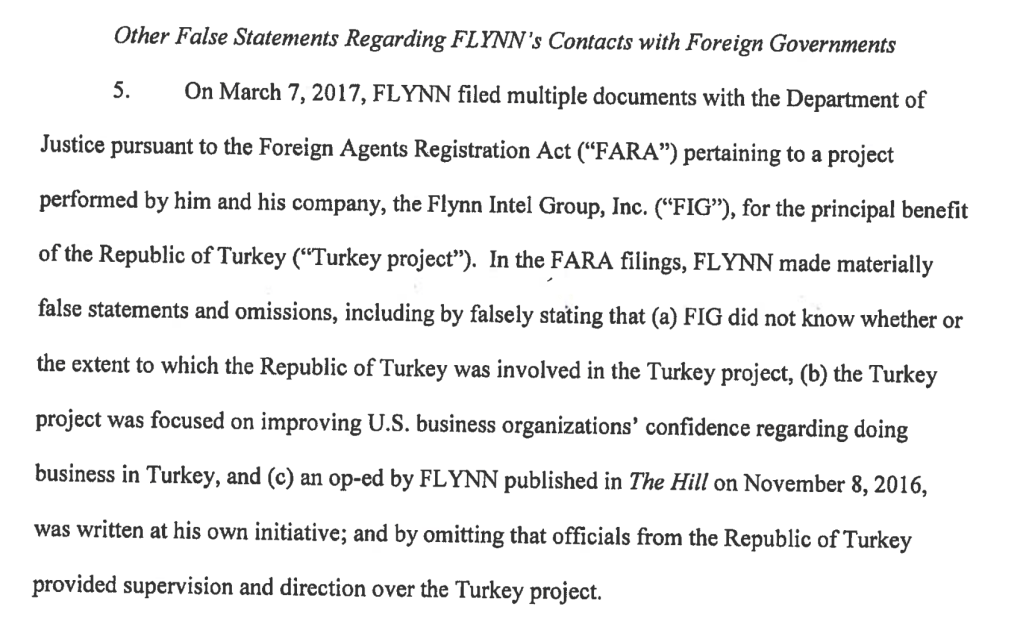
Judge Emmet G. Sullivan, the federal judge presiding over the Mike Flynn case, the prosecution Bill Barr has now decided was launched by possible criminals in his own department, took a bold, creative and highly principled step in considering the DOJ motion to drop the Flynn prosecution.  The DOJ request is unprecedented, a bit of supreme creativity by innovative provocateur Bill Barr; never has someone who pleaded guilty under DOJ prosecution had the case against them dismissed.    Judge Sullivan counter-moved with equal flair.   I salute a judge who stands up for the rule of law this way.   Principled individuals in positions of power are democracy’s only defense against unprincipled individuals in positions of power. 

Flynn’s new defense team, working closely with Barr’s DOJ, insisted to Judge Sullivan that he had no choice but to dismiss the case against their client.   As a matter of law, this may be so.   If the prosecutor drops the criminal case, the case is over.   Flynn’s lawyers told Sullivan that the proper venue for those who have a critique of the DOJ’s admittedly novel move (kidding, they didn’t admit the move was novel, why would they?) is the op-ed page, a place where critics are free to whine and carp about the DOJ’s unappealable decision to their hearts’ content.   The law, they said, is clear.   DOJ prosecutes, DOJ can end prosecution at any time, for any reason– case closed.

Op-ed, you say?    Retired Judge John Gleeson (another judge with a reputation for a sturdy spine) had co-written an op-ed in the Washington Post the other day, very skeptical of the way Barr has suddenly reversed the DOJ’s stance on a close Trump ally who pleaded guilty under oath to lying to the FBI about illegal contacts with foreign governments.    It turns out Flynn didn’t lie to the FBI once, he lied repeatedly, that the FBI gave him numerous opportunities to correct his lies, Flynn continued to lie.  Flynn admitted his guilt under oath, claimed God had told him to repent, move on with his life.   Now, with a new legal team, Flynn claims he was misled by his original legal team into taking the guilty plea, he actually didn’t mean to admit jack shit, he wants to withdraw his guilty plea, retract his sworn statements to the court.   

This presents an interesting legal question:  did Flynn commit perjury when he swore that he had lied to the FBI and then changed his story to say he never meant to admit lying to the FBI?  To simplify this sticky legal conundrum, Barr decided to simply step in and dismiss the case against Flynn.   Judge Gleeson is apparently not convinced that Flynn is not now guilty of the separate felony of perjury.   Judge Sullivan wants to hear more from Judge Gleeson about Flynn’s possible perjury and other issues.  He appointed Gleeson to oppose the Justice Department’s motion to drop the Flynn prosecution.   Much better than even the fiercest op-ed, I’d say!

You can read the lying New York Times story at this link, for more details.

The Opposite of Love

The opposite of love, it is said, is not hate — it’s indifference.   I think this states a profound reality– it is a very cruel fate to experience utter indifference to your suffering.    There is little difference, to the person suffering, between deliberately inflicted cruelty and that inflicted by nonchalant indifference to your suffering.   

Love and hate are related by a strong feeling towards another — indifference is the absence of any human connection whatsoever.  Indifference utterly erases the humanity of the subject of its neglect in a way that even hatred does not do.  Not to defend hatred, of course, but I’m trying to make this distinction between love and indifference as clear as possible.

It can be illustrated by a famous historical example.   The debate took place between former prisoners of the Nazis and former prisoners of the Soviets about which form of cruelty was worse.   The Nazis were known for expressing hatred and contempt for their captives, deliberately humiliating prisoners, subjecting them to sadistic treatment.    The Soviets were known for their utter indifference — to prisoners freezing in extreme cold, losing digits and limbs to frost bite or gangrene, to prisoners dying of disease or starvation.   The Nazi jailers made their hatred known, the Soviets made their indifference plain.   The verdict: pick your poison, both will kill you just as dead.

In comparing an administration that singles out a despised class of people for harsh treatment, as in babies ripped from their mothers’ arms at the border and sent to cages far away, with one that actually murders those babies in front of their mothers — well, obviously, the one that actually kills the children in front of the parents is worse.   

Though, of course, that’s not a thought that offers much consolation to the mother of the infant who is snatched and sent far away, never to be seen again.

The Unseen Toll of the Plague

I am starting to notice that people, in general, are getting quite emotionally frayed, which is not surprising, given what we are all up against.  The emotional strain from our fear and anxiety comes out in a variety of ways as we are cooped up and isolated from each other and from most of our habitual pursuits and distractions.   Do not underestimate the effect of having our habits disrupted, particularly having our most beloved distractions taken away from us.

I am expecting the acting out of frayed nerves to hit the public sphere in a big way soon — understandably desperate people doing increasingly crazy things.  As worrisome as death from COVID itself is, these sometimes twitchy attempts to cope with pressures virtually no-one alive has ever had to deal with, these changes to our perceptions of the word around us, are another cause for concern. 

This already scary, disorienting situation is much more upsetting because we have a terrible two year-old and his hand-picked loyal henchmen spouting an endless fountain of counter-factual … whatever it is that comes out of their “mouths”.

We Americans live in a very competitive society, divided into winners and losers.   It is more divided now than at any time since the Gilded Age that followed the great economic devastation in the decades after the Civil War.   Our greatest winners have spent fortunes over decades to convince significant numbers of the losers that the most important thing in life is freedom from the tyranny of a coercive government that wants to seize your liberty.   It is an easy myth to promote, easy for the average citizen to relate to, since interactions with government bureaucracies are almost always frustrating.   I found myself snarling at the screen when I logged on to the IRS website for a couple of simple answers last night.

If you are wealthy you don’t need any help from the government.  You need the government to leave you and your wealth alone.   If you are threatened by a flood, a fire, an earthquake, an angry mob, lose your home, get cancer — and you are not wealthy — you will reasonably want help from the government you pay taxes to. 

We have had a social safety net in our wealthy nation for almost a century.   Before we had the New Deal social programs there was no tax-supported retirement system (Social Security), no limits on child labor, no limits on the hours employers could demand of workers, no minimum wage, no protections against sudden impoverishment (Welfare) and so on.  

You can argue that having such things, and a much better public health system, are net goods for society.   People are less afraid, less insecure, feel more supported and connected when they operate in a system that has some kind of safety net to catch the many who sometimes fall.   These social protections would seem a good thing for the wealthy as well:  people who are not desperate are much less likely to take to the streets in violent mobs.

Of course, this is all communistic poppycock to most inheritors of vast fortunes, to the outliers who acquire billions by their own initiative.  To them the only value is liberty, freedom from coercion.  We are fine, just leave us alone.  Just do what we do– dream big, work hard and be successful. 

Ivanka Trump and her husband Jared are good examples of this winner work ethic.  They work hard, are super-confident, and aggressive in pursuing their dreams.  It doesn’t hurt that both started with millions of dollars from their parents, and up-and-running business empires to run, but don’t discount their genius!   Do not dare discount their genius.

Knowing that great people like Ivanka and Jared are working hard to make sure we’re all safe should be a comfort, if you are an idiot — or insane.

Just sayin’.