You Can’t Argue with A Feeling

There’s a point in a serious, hard to resolve conflict where nothing you can say or do will avert a terminal impasse. It is no longer possible to talk about objective things that actually happened and find any agreement, we’re in the realm of feelings – hurt feelings, at that – so, everybody gets to be right.

Everybody gets to be right. You get to have very fine people, on every side of every issue. You get to have courts rule in your favor with or without evidence, if you have the power to make them feel the way you do. You get to be right, no matter how strong the case is that you’re wrong.

Among people who care about each other, things can be done to soothe hurt feelings. The first thing we do for someone is listen, without trying to correct anything the person is feeling. Between people who despise each other, or have hurt each other beyond caring, hurt feelings are their just desert for being assholes — you know, fuck ’em.

Common Argument Technique (Reframing) Analyzed

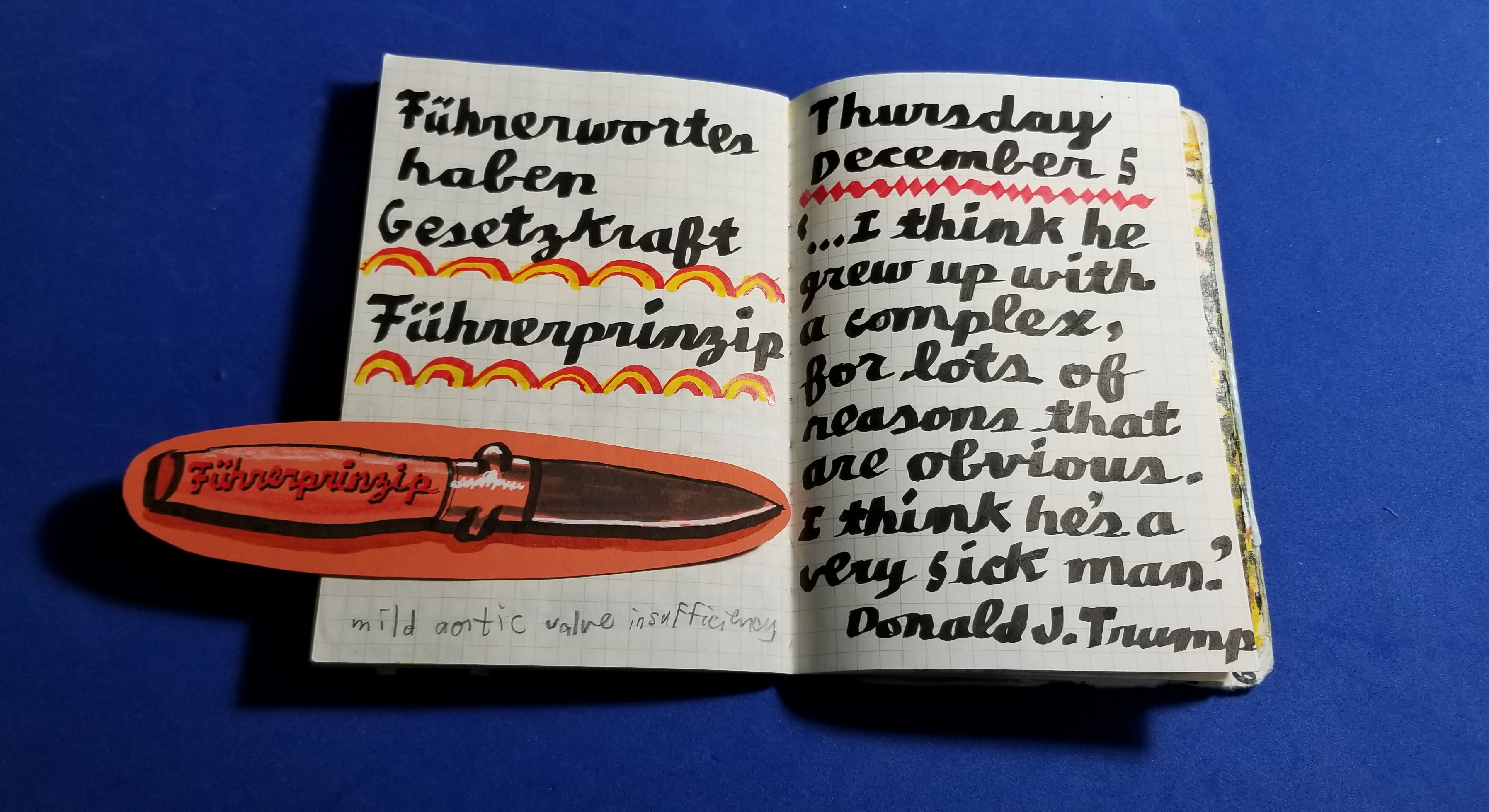
When you argue with someone who constantly reframes what you’re talking about, so that you’re always discussing the issue they want to talk about, from their chosen perspective, it’s difficult, if not impossible, to ever reach agreement about anything. This technique is used all the time in bare knuckle politics and the partisan interpretation of law, and it can be maddening. It can also be hard to see or counter, until you learn to spot it as it’s happening.

Here is a recent example, from my life, which lays out clearly how reframing can create a false equivalency that can then be used to drop the mic, having won the argument. It’s likely you’ve experienced the same thing, possibly without being able to get a handle on what actually happened. If so, this illustration may help you see it more clearly.

An old friend questioned me about my falling out with an old jamming partner. I described how tensions had been rising and anger was being stored up by the ace harmonica player. I wasn’t aware of how much resentment this guy had stored up, since he never mentioned any of it to me. In the end, and suddenly, a spark burst into a bonfire. Hurt escalated quickly, and, had the confrontation been in person, and we were the types to resort to violence, we would have come to blows. Things were said in anger that could not be taken back. It was the end of our ability to ever get along again. My later attempt to make peace did not succeed.

The old friend who questioned me later jumped ugly during a couple of tense phone calls, yelling and angrily hanging up mid-sentence the last time we spoke. We then communicated a few times by email, trying to make things right. He felt no need to apologize until I brought it up weeks later, in taking my leave of the troubled friendship he said he was trying his best to save. He no doubt felt justified in his angry actions, under the theory, I suppose, that since I had mercilessly and infuriatingly provoked him, I was the one at fault and so he didn’t need to explain why a person would hang up on somebody like that, let alone apologize for it. Anyone with any self-respect would have done the same thing.

It became impossible to pretend to a friendship that had obviously outlived itself. I finally threw in the towel. To my mild but persistent dismay, he was determined to have the last word.

Here is his reframing of my comments about the awful final, unresolvable confrontation with the harmonica player, which he used to demonstrate that I was the unreasonable, unyielding party in our unresolvable dispute, the cruel bastard who had ended our friendship for no understandable reason:

You’ve said many unkind words to me, Eliot, and I’ve been deeply hurt. When we were discussing your issues with Noam about a year ago, you said something along the lines of, when you have a disagreement with a friend, you try hard to get to a meeting of hearts and minds, but once you conclude that’s not happening, you give it to them with both barrels. I feel that’s where you’re at with me. I feel you no longer value the relationship, but value articulating your grievances and causing me pain in retribution, for whatever purpose that may serve for you. If at this point you just want to be sure you’ve “given as good as you’ve gotten, and then some,” I think you have. 

The beauty of this paragraph is that it makes one of us clearly wrong and the other one the victim of the wrong person’s senseless, deliberate cruelty. When I disagree with a friend, and don’t manage to persuade him I’m right, I blast him with both barrels of the old shotgun.

Note that it could not have been accomplished without reframing.

Substitute “disagreement” — a common human experience we all deal with regularly, a largely intellectual conflict — for “violent fight” — an emotional flare up, something hopefully rare, and always upsetting — et, voila! you have the proof you need of who’s being reasonable and who is undeniably at fault for the end of a long friendship. Never mind that it always takes two to Tango, Foxtrot or Waltz.

What I actually told him, in relation to Noam, was that once I recognize behavior as abuse, motivated by sustained, righteous anger, and I fail in my best attempts to defuse that abusive situation (where anger is dumped on us that we’ve done little to bring on and the other party won’t yield a millimeter in their insistence that we are exclusively at fault), I owe that person nothing but a figurative punch in the face.   

Friends can do this sort of thing sometimes, argue using unfair politician’s tricks to reframe what is actually at stake and why, particularly when they feel defensive, and it is best to overlook it most of the time. We all can be assholes, our friends are people who value the best of us and don’t slam us for our weaknesses. I had a friend for many years who was a habitual liar, it never bothered me much since it rarely had a direct effect on me or my friendship with the guy.

These kinds of flaws only become dangerously contentious when good will has been otherwise lost in a friendship. When we share a problem with a friend who tells us we’re crazy, that it’s all in our head, or who won’t address our concerns at all — it’s pretty much game over. Once that happens, every technique available can come into play to pry whatever remains of friendship apart. What I think about then is trying to leave with integrity, taking my leave in a way that explains my position as clearly, and nonviolently, as I can.

Of course, not matter how gracious I may try to be, it doesn’t change the other person’s sincerely held belief that I am the violent, enraged asshole who deliberately and unilaterally blew everything up. Nothing I can do about that. Having extended courtesy and fairness to the other party makes me feel better about my difficult decision. It also supports my improved ability to make healthier choices based on an honest assessment of what actually took place, to own and try to fix damage I’ve caused and to let go of blame unfairly thrust on to me.

Of course, the injured party, reading this account, will snarl at this further proof of my pathological need to be right, and sanctimoniously unforgiving, and the lengths to which I’ll go to preserve my self-righteousness. Fortunately, that particular snarl is no longer really my problem.

No Good Deed…

No good deed goes unpunished, it is often said. Usually by people trying to be philosophical about that bitter feeling when your best attempt to make something better by doing a kindness comes around to bite you in the ass. I woke up with that cliche in mind today and find myself needing to organize some thoughts about it.

I saw a cool short discussion of why so many people want to be writers these days. The little animation makes a convincing case that the desire to write stems from existential loneliness (which is on the upswing in this era of “social media” — and heightened during the pandemic, of course) — an unfulfilled need for intimate back and forth conversation all too rare in real life. To accommodate ourselves to our relative isolation, many of us conduct internal conversations on the page that we wish we could have in life [1].

I recently attempted an extended soul-draining good deed over the course of several months and got a sharp, defensive, hurt retort by email the other day. The upshot is that I am mean, vengeful, incapable of generosity– and deluded. This is the verdict of an old friend with his own emotional limitations. Though I had no confusion about where the anger was coming from at this point in our long back and forth, it’s an argument, isn’t it?

Nonetheless, it irked me, after my patient efforts to get through were all ignored, to get this shotgun blast blaming me for being a rigid, vindictive, insensitive putz. I gave an adorably reluctant Sekhnet the two minute version last night, she was sympathetic as I read part of the email, after dismissing anything he might have written to me by telling me to consider the source and the context. She was right. Nobody else I know can reasonably be expected to listen to a few pertinent takeaways as I struggle toward them in conversation. So I’m going to give it an hour or two here, make a fuller account of why this resonates with me so much.

I’m also hopefully doing a good deed by providing a discussion that might be helpful to someone in turmoil about a relationship turned sour, and to anyone who’s had to give up on an old friendship after a long struggle not to.

First, there is the matter of the good deed itself. Most “good deeds” are done for a variety of reasons. For one thing, it makes us feel better to do something nice for a person in need. I once liberated two women, strangers, who were locked in their apartment, plaintively calling out of a window overlooking an alley. Overcoming my feeling, on that dark, deserted street, that someone might be waiting behind the door to knock me out with a baseball bat and take my wallet, I entered their lobby and went to unlock their door. The women were relieved and grateful to be saved from their predicament by a sympathetic stranger. I felt good too, and a little better about mankind in general.

One person’s good deed may be another person’s self-righteous, passive aggressive kick in the groin. Strictly a matter of perspective. Think of the difference between a terrorist and a freedom fighter. Picture outgunned, desperate Jewish partisans in the Warsaw Ghetto as the Nazis were “liquidating” the population. I suppose it’s possible to say there were very fine people on both sides, everyone believing they’re on the side of the angels, especially when fighting for their own notion of freedom. Not many would say that, perhaps, but you see what I’m driving at about our point of view being key to analyzing right and wrong.

For purposes of this exercise, let’s agree that a good deed is rarely 100% selfless and altruistic. It’s just part of the nature of good deeds. They make us feel better to do them, they help somebody else — or not. When they don’t help, they can hurt. Unwanted results in such cases are to be expected, sometimes lead to punishment, as they say.

I try to practice of my secular version of Ahimsa (non-harm) and I attempt to “first do no harm.” This doesn’t always result in a peaceful outcome, though I’m doing better now than years ago. It is much more important to me these days to avoid fights than to win them. I try my best to see things from the other person’s point of view, to listen, to be fair, to phrase things in a way I think will be heard, to eventually realize when I need to accept, with as little anger as possible, that there can be no agreement in this particular case. I try to avoid the bad feelings that can easily come from these clashes. I withdraw when I see a relationship is no longer a mutual exercise in overlooking human flaws in the other. Sometimes, in spite of my efforts, I get drawn into an existential showdown anyway.

I recognize that this strong reflex to fight back is from my childhood. I was raised by an implacably angry, very smart, adversarial father. In my conscious mind, I am now taking a nonviolent stand by being direct: laying out the causes of friction with as little anger as I can and appealing to conscience when I feel somebody is unfairly accusing me of being the aggressor. To a longtime observer, my need to take this stand probably feels like “here we go again, he really, really needs to be right…”

It’s true, it’s hard to know for certain sometimes that what we think we’re doing is what we are really doing. I had a troubled friend who dramatically and infallibly illustrated this principle. He lived the Repetition Compulsion over the decades I knew him– endlessly replaying the identical, primal three-act play in every situation. It always began with great excitement and inevitably ended in betrayal, anger, sometimes violence. No matter how often he fell into the same trap, he was never wrong. Also, he could not see the pattern, had no clue that he was performing the same idiot drama over and over. Maybe I’m the same way?

Memory is unreliable, we’re ruled as much by emotion as by Reason, we believe things that turn out to be shaky, outright mistaken. The world, if we scroll through the Doom that is today’s headlines, offers unlimited proofs of the power of irrationality and delusion. I am obsessed with this issue, as you can read here on any given day [2].

So, you may be forgiven for seeing my writing here as just so much venting, a twitchy, idiosyncratic virtue dance to make myself seem righteous. People I’ve known who thought themselves the most brilliant, the most insightful, were also, in fundamental ways, the most broken. We all virtually always believe we are doing the right thing for the right reasons. Otherwise, how could people gather to do things like burning down the home of a voting rights activist?

I’ve digressed from the story with these caveats about my own reliability. Of course, I believe I am right in this case– but, of course I do! So just two or three illustrations that I think will complete the point I’m trying to make.

A longtime friend, a lawyer by profession and personal style, called after my health insurance had been abruptly (and mistakenly, it finally emerged) cancelled last January. He was angry that I seemed to be so angry about it, had written him a couple of overwrought emails and then sent him one that he called “snide and inaccurate”. He told me he was concerned about my out of control anger, worried where it might lead me. Within a few minutes he cut me off and loudly challenged me to tell him to go fuck himself, if that’s what I felt like doing.

This guy was an old friend, one of a small handful I have left. I managed to calm him down. In the discussion that followed he admitted that my email had not been inaccurate, or even very snide. It was snide, he said, by the standard of my usual breezy communications with him, which is why the snideness struck him so hard that it also felt inaccurate, which he now allowed it was not. After the call, I felt good that I’d avoided a shouting match with an old friend who was obviously going through some stressful shit on his end.

I know, “Jesus, El, this guy sounds like… well, you described it yourself.” Sure, but we had been friends for about fifty years. He is a very smart guy, good sense of humor, we shared many beliefs about the world, a taste for blues guitar, a love for good, clear writing, we went back decades and had always been loyal friends to each other. You don’t throw all that away because the guy is having a bad day and calls to take it out on you. Or do you?

In hindsight, maybe you do. It certainly feels that way in light of the relentlessness that followed. But hindsight, you know what they say about that superpower.

The crankiness continued, on a slow boil, expressed through endless challenges to most things I said in the weeks that followed. This rigorous contestation was always part of my friend’s nature — he relates by parsing, analyzing, challenging assertions, testing the strength of claims. It served him well in his legal career, if not always in his personal life. I was very slow to grasp how much he was deploying these things to … I don’t even know, destroy our friendship?

He has a dark view of the human race, seeing people as basically flawed, unreliable, deluded, incapable of not being selfish. Perhaps it was inevitable that his closest friend had to be shown to be the same as everybody else. He said I was a better person than him, at least I was struggling against my crabbed human nature, but over the years more and more bitterness crept in.

I will spare you all the ugliness of the months that followed. I isolated for my friend the two most intolerable things in our frayed friendship. These were things I thought he’d be able to see and make adjustments for, as he told me I was his best friend and that he was determined to do everything in his power to make sure our friendship continued.

The first was the lack of response to concerns I raised. He would simply ignore them, no matter how many times I raised them. I told him this was particularly hurtful to me because it was my angry father’s favorite technique for getting under my skin. I presented him with my belief that virtually anyone, bringing a concern to a close friend, would be rightfully hurt if that concern was ignored. He had no comment about this, no matter how many times I raised it.

The other thing that was intolerable was the reflexive lawyerly reframing of every issue to shift the ground of the discussion. This was another dreadful adversarial technique I knew well from childhood. As a kid I’d try to explain why I was upset and my father would cooly counter that I was conveniently sidestepping the real issue: my vicious, uncontrollable temper. Suddenly I am struggling to defend myself, and stay calm enough not to prove my father’s provocative point, the hope to get my father to understand why I was upset long gone.

Reframing is a very easy technique to use. Even a man of limited smarts like Mike Pence can do it almost in his sleep, as he did over and over the other night while talking over his female opponent for Vice President. All you need for reframing is a perceived weakness in the person you’re talking to and a desire to dominate. They say A and you immediately pivot to X, and, HA! now they have to defend why they want to put 100,000,000 Americans out of work!

In the end, after thousands and thousands of words spoken and written, and reducing the friction between us to just these two crucial points, I had no response to anything I’d raised, except for my friend’s protestations that he still didn’t understand exactly what I was asking him for. In the end, after all my attempts had come to nothing, I sent him these thoughts, before repeating, with some anger, a few of my many unheeded attempts to make peace:

Intimate friendship is rare and can be hard to maintain, in my experience.  Real mutuality takes trust, mutual vulnerability and sometimes work, including a two-way readiness to overlook a friend’s faults and to accommodate ourselves to a friend’s weaknesses and problems.  We can all be assholes sometimes, the beauty of real friendship is that our asshole side is not held against us, not tallied on some kind of ledger for future use at the worst possible time — and that we repay our friend’s generosity in kind.   

When our attempt to explain why we’re hurt is met with resistance, reluctant acceptance, impatience, then anger, and that anger is redoubled (as when a friend angrily cuts us off, hangs up the phone and texts us back to tell us he’s done with us violating him), then, for weeks, the friend stands on his right to be angry and unapologetic, and later, after multiple explanations, claims to still not understand the exact nature of his hurtful acts … I’m not sure how a friendship moves on from there.  I haven’t figured it out in my life, anyway.

It may be that like all living things, friendships have life spans.   As much as I understand from your last email that you want to somehow salvage our friendship, the idea that you’re unable to imagine, after so many years, how I feel, how I think, even what I actually mean when I try my best to be clear (let’s stipulate that I express myself with reasonable clarity), is impossible to get past.  

It turns out knowing how to take care of a friend’s hurt feelings is the most essential part of being a good friend.   Of having good friends, of deserving the few close friendships we’ve managed to sustain.  Knowing how to take care of a friend’s hurt feelings is another way of describing intimate, mutual love, which requires a reflex to mercy above all else.

I’m not entirely sure how we’ve come to this sorry pass — this brutal contest of vanities — and, outside of this little intro, I really don’t have anything to add to what I’ve written below.  Along with the sadness is a sense of disappointment at our mutual limitations, that I, in spite of exhaustive efforts, haven’t been able to figure out a way to solve this sickening moral puzzle.   It feels like a failure of my ahimsa shtick, the “first do no harm” business of being a loyal friend, and a mensch.

I balance that disappointment with the knowledge that we can only work to change ourselves, not others.   If you can’t overcome a reflex to act abusively when you feel righteously angry, even with someone you deeply care about, nobody but yourself can help you with that.   The breaking point for me is when somebody, claiming to love me, stands on their right to act abusively — fuck that.

Anyway, no need for a reply like to the other emails.  Each reply did more harm than good, in spite of the good intentions expressed in each one, each one made the hole deeper.  Your good intentions were complicated by the confusion you expressed, and the lack of confidence that you knew how to interpret the past, understand the present or move productively forward.   Your confusion and lack of confidence in our friendship are things it’s unproductive for me to grapple with at this point — particularly since you acknowledge that I’ve always been a good friend to you.

I understand you may want to have some kind of last word, but it’s not necessary.   As I’ve sat weeks (now months) with this email ready to go I’ve wondered from time to time if there’s any real point to sending it.   I’ve decided I don’t want to leave you hanging after our many years of good friendship and your last good faith attempt to salvage it.  It doesn’t seem right to finish without some kind of closure that might help you understand the impossibility of my situation, of our friendship, even if only a complete explanation of why I have nothing to add to what I wrote weeks, and now months, ago.    

I understand the impulse to have a last word of some kind might be strong.   You may feel a reply would be your last chance for a summary, an understanding, an expression of any final regret, etc., but I urge you to consider, again, out of friendship, whether your reply will do anything to make me feel better about the end of our long friendship, or go any way toward mending what is torn.  If not, just don’t do it, OK?   In any case, if you need to reply, there’s absolutely no rush.   At least hold on to what you may have written for long enough to repeatedly reread and refine it, if you need to make some kind of reply.  On my end, there’s no need.

It’s very sad, either way you slice it — eternal silence by way of final reply or a categorical final reply like the one below.  Little rehearsals for our own deaths, I suppose, these leave takings from old friends after so many decades.  On the other hand, I don’t know anyone else who has a friend from Junior High School still in their life.  Also, sadly, we all have to die, something I find myself thinking about more and more these days as the death count continues to rise in the greatest nation Jesus ever blessed.

I’m sad about the loss of our long friendship, but as I’ve seen in other situations like it over the years, it is best to be philosophical.   The most important thing when a friend is not treating you with the mercy you’ve tried to extend (and have a right to expect in return), and when nothing you say or do makes any difference in that friend’s perceptions, is to leave.   

Sad, truly, but sadder still is fragile, self-conscious, sentimental friendship, waiting for the next chance to repeat the same enraged, clueless dance and shatter into painful pieces again.  There is relief at the end, to be finally out of harm’s way.    

With that, my regrets and my immediate reply to your email of May 27

(in part that email offered many specific things I’d raised in previous emails that he’d never responded to– this is key to appreciating the last line of his first paragraph below).

Here he is, the final 10% of his long reply:

I understand well that I’ve hurt you, Eliot. I’ve told you I’m sorry. You apparently find my conduct unforgivable. I’ve asked myself (and others) many times what you might be looking to me for that I’ve failed to offer, that would demonstrate to you that I’m someone you still want to be friends with. I find no answers in your emails or elsewhere, and reluctantly  conclude you really don’t want that.

You’ve said many unkind words to me, Eliot, and I’ve been deeply hurt. When we were discussing your issues with Noam about a year ago, you said something along the lines of, when you have a disagreement with a friend, you try hard to get to a meeting of hearts and minds, but once you conclude that’s not happening, you give it to them with both barrels. I feel that’s where you’re at with me. I feel you no longer value the relationship, but value articulating your grievances and causing me pain in retribution, for whatever purpose that may serve for you. If at this point you just want to be sure you’ve “given as good as you’ve gotten, and then some,” I think you have. 

If I’m mistaken and you actually do still want to be friends with me, the door is open. If not, nothing more needs to be said.  In any case, my best to you and M.

The issue with Noam, as presented by my friend, was slickly reframed, probably by the instinct to remember something in the light kindest to oneself. It is reducible to this:

If I have a disagreement with a good friend, try my best and can’t get my friend to agree with me, I give it to them with both barrels, like the brutal, self-righteous asshole I am.

The issue with Noam was not a disagreement, except in the broadest sense of the word. Noam had picked a fight with me, out of the blue, for no apparent reason, over what turned out to be a catalogue of unexpressed resentments, as he finally admitted. It was not a “disagreement” that could be worked out with Reason, it was open hostility that could not be pacified, that had become mutual.

For anyone who has made it this far, a bit of “sorbet”. Here is the footnote (written by this same articulate fellow) that I closed my last snide, if not inaccurate, email with, his own words about the end of my friendship with Repetition Compulsion Man from many moons ago:

[FN]

Not ever having really known him –I was around him at times but have no recollection of actually exchanging any words with him directly –I could only vaguely comprehend the basis for your position. His email opens a window. Very manipulative and emotionally Byzantine, the art of placing blame while trying to appear not to have done so, but rather to have made a bold and mature gesture. Very frustrating, if not infuriating, watching someone bob and weave so strenuously to evade emotional connection and basic responsibility, seeking to anticipate and counter objections and arguments rather than open a line of communication.  I can only assume it’s infinitely more exhausting for him than it is for the recipient, and that’s saying something.

[1]

[2]

Just the other day, the Supreme Court ruled that lack of evidence of actual voter fraud is no obstacle to the South Carolina state legislature imposing its will in a democracy by passing laws to prevent a practice they believe could result in such fraud. We have a raving emotional basket case as our fearless leader. Tens of millions love him and regard him as their savior from a cabal of immensely powerful cannibal pedophiles. And so forth.

a gratuitous self-quoting headilne:

It’s very sad, either way you slice it — eternal silence by way of final reply or a categorical final reply like the one below.  Little rehearsals for our own deaths, I suppose, these leave takings from old friends after so many decades

The Book of Lost Souls

As my grandmother, who loved me fiercely, was on the bed in my childhood bedroom dying a painful death from colon cancer, I went down into the basement where I slept and wrote a song one night. I was in my early twenties at the time and was certain I knew a great deal more about life than I actually did. I sang quietly there in the basement, playing some nice guitar chords against a plaintive melody I can almost remember. The lyric that I recall, the chorus, was “when you have love, you never die.” The line repeated several times, and then again as the song faded out. It wasn’t true, of course, she died a few days later and remains steadfastly so. The fact is, no matter how much love we have, we always die.

My grandmother was one of seven children born to her parents in a Ukrainian town near Kremenetz, not all that far from Khmelnitsky, a city named for a Ukrainian nationalist famous in Jewish history as an enthusiastic slayer of Jews, a major pogromnik. A talented, ambitious girl and an adventurous young woman, my future grandmother embraced the vision of universalism, equality and the brotherhood of workers she learned from the idealistic young commissars of the Red Army who took over her neighborhood of the Ukraine after a bloody civil war. She brought that vision with her, along with her dreams of some kind of personal greatness, to the United States, where she arrived, after a fairly harrowing ocean crossing, at twenty-one or so, in 1921. She was the only one of her family to leave. My grandfather, also one of seven siblings, followed two years later, also the only member of his family to get out.

As I write about my grandmother, as you read these words, a small sense of her eternal soul flickers and shimmers a bit. Her soul, while I am considering it, is not truly lost. I knew and loved her well.

Then I think of her six siblings, and their spouses and children, and my grandfather’s six siblings and their families. Of all these only her adored youngest brother, Yussele, Joe, has a name that anyone alive (me) knows. I wonder how many were still around when another group of true believers took control of that inhospitable corner of the Ukraine. One airless Ukrainian night in August, 1943 the last of them officially became Lost Souls.

What I know from a small monument in the cemetery where my grandparents are buried (erected by the Vishnivetz Benevolent Society), and from transcripts of translated witness history (the only mention of the atrocity that I have found on the internet) is that the survivors of the hastily constructed ghetto in that small town, after being starved and tortured for a year or so, were marched after dark to a ravine on the north western edge of town.

They were marched to the sound of drums, the clanging of pans and the yowling of brass instruments, to drown out the cries. The ravine had been prepared in advance, the earth softened up. Layer after layer of doomed Jews were buried there, fragments of their bones skitter in the wind to this day, according to a travel piece about the town I read in the New York Times a few years ago.

What to do about these lost souls? Have they nothing to say? No right to their tiny place in the mad story of in the world? Who am I to write about these lost souls? The only one left alive who knows any of them ever lived.

When I was a boy, and learned about this mass murder of every one of my great aunts and great uncles and all of their children, the immensity of the horror was too much for my parents to discuss. My grandparents never uttered a peep about their loss, I never heard so much as a clue from either of them that anything bad had ever happened. Everyone pretended, it appears, that everyone getting a bullet in the neck and being hastily tucked into a mass grave was normal; that bad, even unthinkable, things happen, that you clutch tightly to the people you love, even as you sometimes battle them to the death.

At one point, for two years or so, I sat every day, as I am sitting now, thinking and tapping at a computer keyboard, trying to tell a story that is, at best, a puzzle with most of its pieces missing. I wrote more than a thousand pages diving into the life of my father, holding it against him, at first, as I had for decades, that he got angry when I persisted in trying to learn more about the murder of our family. True, he called me a drama queen (or whatever the equivalent of that phrase was when I was eight years old) and accused me of trying to claim some kind of victimhood I wasn’t entitled to since the people who died were mere abstractions I’d never even met. I understand now that he had no way to process this atrocity, no way to discuss it with his young child. In the context of his own life, articulate, righteous anger was the best he could summon.

When I was thirteen, by the tradition of my religion, I read part of a holy book to the community and “became a man,” I have few recollections of that day, except that a girl from Hebrew School who I liked, who had not been invited to the bar mitzvah party, showed up anyway in that catering hall on Hillside Avenue. She spirited me away from the party, down a flight of stairs, sat on my lap on an upholstered chair under the room where the festivities were going on and kissed me on the lips a few times.

I mention this to illustrate how elusive the past is. I was there, I am said to have an excellent memory, and I remember one detail. I have a few mental images of myself in the chapel, reading from the Torah (my part was read from the same xeroxed and marked up page I’d learned it from). Mostly, no memory at all of that memorable day.

As we also learn, given enough time, a life seems to go by in the wink of an eye. Thirteen years is not very long to be alive. Thirteen years passes quickly, I’ve discovered as 13 turns to 26 then to 39 and so forth.

A few months less than thirteen years before I was born there was a terrible racket in the Ukrainian night, and then, after the ruckus was over, the silence of death. Every Jewish soul that was alive that night when the banging started — that soul was lost forever. Have we nothing to learn from this?

The Pursuit of Happiness

In these dark, threatening times we should, more than ever, be reaching out to others, sharing hope and joy; pursuing happiness. Instead, the chilling shadow of constantly predicted doom, sprayed over us by high pressure firehose, can easily darken our waking hours.

We are living through a vast war on so many fronts it’s hard to remember, through the lens of this endless multimedia blitzkrieg, how beautiful the ocean is, the sky, trees, the natural curiosity and playfulness of kids and other young animals, the faces of people we love. Happiness, it often seems now, will have to wait on a few major world factors changing for the better.

Meaning that to pursue happiness, we need to become part of the change we want to see in the world. It is on each of us now to figure out how to do our part carrying a mercilessly heavy burden to get us all to a better day. And figuring out how to remain as happy and decently human as possible while we do it.

As I was reading NY Times headlines on my phone late last night (while Sekhnet battled a little insomnia) I saw a reference to “doom scrolling”– an excellent description of exactly what I was doing, reading the newspaper at this perilous moment in human history.

It’s very scary not only here in the United States, life everywhere on the planet is imperiled, at war, trying to make sense of massive global chaos, violence and destruction — in the face of vigorous, constant, brazen propaganda, much of it insisting there’s no problem at all — except for irrationally enraged cranks intent on deception and violence. The whole problem, everyone seems to agree, is inchoately angry, vicious assholes on the other side of every damned issue!

I then, to my chagrin (since I was by then aware I was “doom scrolling”), clicked on an Op Ed that was one of the worst evocations of possible doom here in America that I’ve ever seen. Entitled Whose America is It? it makes the point that in these radically polarized times both sides see the opposing party as not only 100% wrong and despicably deluded, not only as enemies but as less than human.

We have learned over and over that dehumanization is the precondition for mass violence, you have to see an enemy as a disgusting piece of garbage before you can kick him in the face and then shoot him. It’s much harder to brutalize and kill a fellow human being, it seems.

I’ve been urged by my few good friends to disconnect from this soul-crushing cycle of violence that is the news, get out into nature, immerse myself in the preciousness of our world, refresh my spirit. I understand their point– unless I can figure out how to join with others to take effective action I am just marinating in a horror movie and spouting random opinions to nobody in particular. I vow to take a day off, enjoy the beautiful weather we’re having in NYC lately, be thankful that the air here is not toxic like on the west coast, that the pandemic is not ripping through here at the moment, that constant ambulance sirens are not shrieking by all night as they were a few months back.

I decide to start the day doing something I love. I will go downstairs to play the guitar, finish learning a musically ingenious song I’ve been working on, a beauty Louis Armstrong made popular a few years back. But, first, I’ll quickly catch up on the headlines, just for a second. In that second I see, no surprise, that this evil blowhard is pursuing his own perverse notion of happiness, making sure the world is ruled by his master’s irrefutable will, presumably a reflection of the divine will of this guy’s fervently beloved deity. Stops me in my tracks, it does.

No details really needed, here’s a picture of this dogged pursuer of happiness, from today’s news.

Presumably animated by his deep faith in the compassion and wisdom of the Christ he venerates, he gives a speech urging federal prosecution of protesters arguably exercising their First Amendment rights. He wants federal prosecutions of angry protesters under a draconian federal sedition law that allows imprisonment for twenty years for “sedition” which is, in common parlance, a synonym of “treason” [1].

Rings a bell. Weren’t the unconstitutional Alien and Sedition Acts, designed to muzzle political opponents, the downfall of the John Adams administration? [2]

Damn this mind of mine, and its endless interest in the idiocies of our most powerful humans that are recorded as history!

As soon as I finish editing this (won’t take long) I’m going to force myself to make that unpleasant call to try to resolve a large, surprise tax bill, make an appointment to have my clogged ears cleaned, and go finish mastering “Do You Know What It Means (To Miss New Orleans)” on the piano as well as guitar. Playing it in time on the piano (mainly that Bbm7-9 Eb7-9 Eb7 Ab7 sequence) is a musical challenge so far that feels very much like the pursuit of happiness.

Happiness, happiness, and justice shall you pursue.

[1]

While seditious conspiracy is generally defined as conduct or language inciting rebellion against the authority of a state, treason is the more-serious offense of actively levying war against the United States or giving aid to its enemies.
Sedition – FindLaw

Sedition is defined as words or speech that incite people to rebel against the government or governing authority. Words that inspire a revolution that overthrows the government are an example of sedition.
Sedition dictionary definition | sedition defined – YourDictionary

[2]

The Alien and Sedition Acts were a series of four laws passed by the U.S. Congress in 1798 amid widespread fear that war with France was imminent. The four laws –which remain controversial to this day– restricted the activities of foreign residents in the country and limited freedom of speech and of the press. Mar 5, 2020
Alien and Sedition Acts – Definition, Significance & Purpose …

Follow the link above and we see that these partisan, free speech limiting laws were brought to you by our original Federalist party (talk about yer small world!) — under the headline:

Dueling Political Parties 

The Federalist Party, which supported a strong central government, had largely dominated politics in the new nation before 1796, when John Adams won election as the second U.S. president.

In opposition to the Federalists stood the Democratic-Republican Party, commonly known as Republicans or Jeffersonians for their ideological leader, Thomas Jefferson. Republicans wanted to reserve more power to state governments and accused the Federalists of leaning more towards a monarchical style of government.

Thinking About Thinking

I’ve noticed a mysterious little flurry of viewers to a post I wrote two years ago about Hannah Arendt and her view of thinking and creativity. It is lack of imagination, Arendt asserted, and the dumb obedience this crabbed view of the world produces, that leads men, seeking to escape loneliness (among other things) to join movements in which they may be required to function as monsters, carry out unthinkably inhuman orders. They simply accept the rationale they are given, join a movement and execute the wishes of a Leader who may or may not be wise, capable or decent. A leader who may, in fact, be Adolf Hitler.

Adolf Eichmann, portrayed to this day as one of history’s most infamous monsters, was, as observed by Arendt during his sensational, important trial in Jerusalem, an unremarkable man of modest intellectual gifts who insisted it had been his duty to obey the laws of the new order in Germany. He spoke in cliches, often repeated stock Nazi phrases and was incapable of imagining that a regime that made mass murder ordinary, normal and lawful could have anything wrong with it. The several psychiatrists who examined him prior to his criminal trial in Jerusalem concluded he was not a “man obsessed with a dangerous and insatiable urge to kill” or a “perverted, sadistic personality” (as the prosecutor later wrote of Eichmann — and as the ad for the current Netflix offering about him suggests).

Half a dozen psychiatrists had certified him as “normal” — “More normal than I am after having examined him,” one of them was said to have exclaimed, while another had found that his whole psychological outlook, his attitude toward his wife and children, mother and father, brothers, sisters, and friends, was “not only normal but most desirable”– and finally the minister who had paid regular visits to him in prison after the Supreme Court had finished hearing his appeal reassured everybody by declaring Eichmann to be “a man with very positive ideas.”

(Eichmann in Jerusalem, pp. 25-26)

It was Eichmann’s utter lack of imagination, his willingness to believe what his superiors told him, his ambition to succeed and advance in his career, that made Eichmann the hardworking cog in the Nazi killing machine that he became. He was not troubled by conscience because what he was doing he had been legally ordered to do, he had only been doing his job. He literally could not imagine refusing to do his legal duty. A refusal to do it would have resulted in his own demotion, imprisonment, probably death — all unimaginably harsh and self-destructive outcomes. End of inquiry. Arendt was internationally vilified for “humanizing” this monster in her 1963 masterpiece. I’m with Hannah, she gives us a crucial understanding in her deep portrait of an otherwise ordinary enabler of evil.

In law school students are drilled in thinking through and articulating both sides of an argument, imagining as many avenues of legal attack to the client’s position as possible in order to defend against them. Rigorous thinking means sometimes considering ideas you might find repellant, overcoming the reflex to simply cast them out with a grunt of disgust. A mark of the agile mind, someone said (F. Scott Fitzgerald?) is being able to keep two contradictory thoughts in mind at the same time. We live in the instant information age, so here you go:

“The test of a first-rate intelligence is the ability to hold two opposed ideas in mind at the same time and still retain the ability to function.” [1]

We are not trained to be nimble, creative thinkers — we are trained to be earners and consumers, as well as reflexive moralists who do not dwell on crazy-making nuance. From birth, here in the United States, we are exposed to hour upon hour of commercial advertisements, teaching us what to buy. By the time we are in kindergarten we can recite countless commercial tag lines and sing (at least when I was a kid and every product had a catchy little tune attached) dozens of jingles. I often lament that I can easily sing the entire “Veep” (a lemon lime soft drink, circa 1961) jingle perfectly but can’t recite a single line of Shakespeare or the Bible accurately.

In a sense it’s not anyone’s fault that we are a largely superficial, stubbornly opinionated culture, we’ve become this way by design, for the massive profit of the beneficiaries of this commercialized state of affairs. Imagining a fundamentally different way of life is almost impossible, given the pervasiveness of the one being sold to us 24/7 and now, literally so: carried on smart devices in our pockets, with little notification sounds to remind us to look at them. We tend to latch on to whatever suits our views, gravitating to items that support our confirmation bias.

Every moral and political issue is reduced to an oversimplified false duality — yes or no. If you critique an extractive, highly polluting consumer society that may well be destroying the earth for short-term profit it is easy to see what you are: a Communist, a soul-dead enemy of freedom and liberty. There is no other frame to think about such things here, though a desperately needed one is evolving with things like The Green New Deal.

Thinking about crowds carrying torches, united in some cause, often a violent one, we can set them in virtually any epoch in history. The rationale of the march is always similar — we are in pain, we are afraid, we’re angry, we are the victims, we are going to kill the people who are victimizing us! It’s true that once we have murdered the evil bastards our miserable life remains pretty much the same, the anger, pain and fair have not vanished — but that just means we haven’t killed enough of them. It is the triumph of action without thought, without imagination, without Reason, that leads to every mass catastrophe (not caused by “Acts of God”) that humans have ever fallen into.

It’s tempting, of course, to make comparisons between a guy like Eichmann and some of the political actors of our time. What “belief system” must one accept to justify the caging of children forcefully ripped from their mothers’ arms? It’s tempting to compare the thousands in perfect solidarity at a Nuremberg rally to the crowds today at certain political rallies, the fascist goon squads of 1930s Germany to a gang of men who take up arms to protest the tyranny of mandated mask wearing to slow the spread of a deadly pandemic. These types can imagine only one version of the world, as they believe it is, with powerful, evil cannibal child molesters trying to gain the upper hand, doing whatever they can to destroy our cherished way of life.

These crowds live, as we all do today, in echo chambers that magnify whatever bias they had last night, the one they wake up with today. A few guys are getting incredibly rich running these massive echo chambers while the rest of us face ever greater peril from endlessly magnified real problems that require deep thought, serious discussion and ingenious solutions, problems that are reduced to idiotic black or white, red or blue, yay or nay.

Thinkers are easily killed by violent men of action, men with guns, ropes, bombs. Violent, unthinking emotion, time after time, prevails over reflection, understanding, mercy, wisdom. That doesn’t make the attempt to understand, to be merciful, foolish. Understanding, and imagining a better future, is the only chance we have against the hoards who increasingly believe that politically powerful cannibal child rapists are coming to get all of the little white, Christian children in America and that only one man, an admittedly flawed vessel– but one secretly filled with Christ’s love — can save them. Decency prevails, when indecency becomes impossible not to see. The unimaginable stink of the thing can finally wake dozing souls to say: enough, goddamn it.

But we have to think. We actually have to think.

[1] F. Scott Fitzgerald, 1936, yo. A year one would have done well to keep this test in mind.

De-escalation is for Losers, according to Winners

If he wasn’t so destructive it would be tempting to feel sorry for him. That can be said for many angry, tyrannical, violent people, and it applies to our president, of course. Raised in a home where his ruthless and lawless father taught him that only “winning” matters, he never really had a chance not to be warped the way he was. Still, I’m not tempted to feel sorry for him. Not every abuse victim grows up to double down on abuse as an adult. Those who insist on their right to abuse others deserve our scorn.

This type sees every conflict as a zero-sum game to be won or shamefully lost. My father, an infant victim of vicious abuse, came to see the world this way, but deeply regretted the life-crimping idiocy of that view as he was dying.

Only in sports, where a neutral party keeps score, enforces rules of fair play and the team with the higher score beats the other team, does winning and losing in the strict sense actually come into play. The team that loses is not regarded by the victors as “losers” unless the winning team is composed of immature jerks. The rest of the uses of “winner” and “loser” are metaphorical and used to justify exploitative behavior by zero-sum thinkers, people too stunted to see the world otherwise.

At the same time, of course, there are winners and losers in every negotiation, victims and beneficiaries of every law. Every time the super-wealthy get another tax break, they win, the public’s ability to pay for programs and maintain infrastructure loses. Every time a court rules that private parties can be as homophobic as they like in conducting their business — a win for homophobes, a bitter day for homosexuals and their friends. Whenever an unarmed person is killed by police and an investigation determines the killing was justifiable– somebody wins and the family of the dead person (and society at large) loses again– and has their noses rubbed in their “loss”. There are countless examples of this kind of shit, which some call injustice, but that doesn’t mean the world, or nature, actually works in this smash ’em in the fucking face and WIN! way. It is a construction favored by authoritarian types.

Every sustainable system requires some give and take, cooperation and compromise always leads to better results than zero-sum warfare. Cooperative systems do not view things in absolute terms — that one party wins everything, the other must lose everything. Seeing things as win-win is for LOSERS, according to those who believe the world is composed of winners and losers. Like I wrote at the top, you could feel sorry for this type if they weren’t such ruthless, destructive fuckers.

Their approach to conflict is to dominate. You dominate people who work for you, dominate the news cycle, you dominate protests in the street, dominate the news about the protests in the street. You escalate conflict constantly, to prove your strength (which you always doubt and so must continue to prove). You provoke confrontations to demonstrate that you are capable of using more violence than the other side.

I recognize this idiocy from my senseless childhood battles with an adult who waited almost fifty years to realize he was wrong for framing everything as a war. When we’re upset we need somebody to de-escalate the situation, not enflame things by framing it as another instance of a war we are going to lose. Even as a very young boy, I understood this, was dismayed that my hurt was always quickly recast as irrational anger. If I wasn’t angry before, I was once I was angrily accused of being angry. And so it goes.

It’s now common to call the recasting of legitimate feelings as crazy delusions “gaslighting,” though I always still think of it as reframing. As the Kenosha sheriff said the other day about the people murdered by a 17 year-old from out of state who came to “police” the protest over the Jacob Blake shooting, a kid in illegal possession of a deadly long gun; if they had obeyed the curfew, they wouldn’t have been killed.

See what he did? Now we’re talking about lawbreakers, and maybe they shouldn’t have been killed, but clearly, they shouldn’t have been on the street after dark, openly violating the curfew. Not saying it was their fault, but if they’d obeyed the law they’d still be alive.

When people with a legitimate grievance, protesting legally, are met by a display of unyielding state violence — the outcome is not hard to predict. Maybe instead of “defund the police” the call should be more explicit:

De-escalate!

recruit police who are prone to de-escalate, mediate, problem solve, change the culture, send police out to emergencies with people trained in these things. Make violence a last, not first, resort.

When police show up where somebody is upset, acting crazy, if they have no training in how to de-escalate the situation, they will use the only tools they have and it is likely that someone will get hurt. A person who doesn’t need to die will often lose their life in this situation [1].

It’s a very weak definition of “Law and Order” to insist that a naked man acting irrationally is justifiably killed by police who inform him to lay face down on the ground. He disobeyed a direct order: subdue him, choke him, shoot him if necessary.

The police are not trained to de-escalate these situations. They should be. There is nothing weak about someone with the power to kill you instead calming you down, protecting you.

[1]

These killings of citizens by police are so common (contrary to Bill Barr’s lying assertion that “only seven” unarmed blacks died at the hands of police last year) that most of them don’t even make the news:

In Arizona, body-camera and surveillance footage released Tuesday show Phoenix police officers held a man on the hot asphalt for nearly six minutes before he died in the back of a police car earlier this month. Twenty-eight-year-old Ramon Timothy Lopez was apprehended on August 4, chased and tackled to the ground by one of the officers. Two others later arrived on the scene. After pressing him into the scorching hot pavement for six minutes, Lopez was lifted and placed in the back of a police car, where he was later found unresponsive. Photographs revealed his skin was covered in burns.

source

When I mentioned this story to a friend she asked me what the guy had done. I have no idea, but I whatever was doing — how does it justify what they did to him — killing him without a trial by burning him and suffocating him on the hot pavement? Depraved indifference to human life, at best.

A Few More Thoughts About Time

When I got the call from my sister, during a festive meal at the home of old friends, that my father had been admitted to the hospital after being brought to the emergency room, time changed.   

“When I saw the doctor’s face I knew this was it,” my sister told me, “he looked like the malach ha mavet (Angel of Death).”  The specialists my father had been seeing regularly — cardiologist, endocrinologist, hematologist — collectively had no clue that their patient was in the last stage of liver cancer, days from death.    The ER doctor, assessing my father’s jaundiced color, difficulty moving and tapping his stomach, distended with ascites (liver-related fluid build up in the abdomen) [1] knew at once that this man was in the last days of liver cancer.

Two doctors were at the dinner table when I got the news.  When I mentioned the ascites they both told me not to worry, that ascites can be from many things [2], that I should wait and talk to the doctors at the hospital.  I consider their reassuring lies to have been a kindness, under the circumstances, and always think of their unspoken, united determination to shield me from extra worry with great fondness.

“If you have any family who want to see him before he goes, you should call them right away,” the ER doctor told my sister.

A couple of days later I arrived in Florida.   My father was attached to a bag hanging off the side of the hospital bed.  The bag was filling with the most unhealthy looking liquid I’ve ever seen.   It was the color of cancer.  It dripped away, along with what was left of his life, for the three or four days I was in Florida before my father breathed his last breath.

My father was eager to see his little brother, a man he had always bullied and dismissed.   Once, late in his life, when my father was returning from a short visit to his brother I asked him how my uncle was doing.   My father paused for a few seconds to reflect then uttered this great line:  “let’s just say, he remains unchanged.”   At the end my father was anxious for his brother to be there and his brother rushed to Florida.

I went to pick my uncle up at Ft. Lauderdale airport.   When we got to the hospital he immediately stopped the doctor, who’d met us in the hall to update us about the patient’s condition, to ask if there was any chance of a liver transplant for his dying 80 year-old brother.   I had to take my uncle by the arm to let the uncomfortable doctor get away.  The way the two brothers clung to each other at the end was poignant to see.

My uncle was a bossy man and he instructed us all, at around nine pm, that it was time to let the dying man rest.   For some reason we all left the hospital.  I even attempted to get to sleep, hours before my natural bedtime, which is around four a.m.    Suddenly I sat up, thinking “what the fuck?,” got in the car and headed back to the hospital.   

My father, who’d told me earlier in the day that he wanted to talk to me, that he was still assembling his thoughts, was wide awake when I arrived around one a.m.   He appeared to be expecting me.  I’d always had an adversarial relationship with my father, one I’d tried many times to improve, but my father was so deeply, fundamentally wounded that meaningful peace with him was pretty much out of the question.   

I’m a fairly creative person, with an active imagination, and, once I left my parents’ house, I’d tried everything I could imagine over the years to make peace with my old man.  In the end, when he angrily told me that if he ever told me what he really felt about me it would do “irreparable harm” to our relationship, I saw that his desperation was too great for him to overcome.   He would “win” by destroying what was left of our ability to discuss things beyond the weather, baseball, history and politics.   I stopped banging my head against the locked door at that point.

I am writing about time.   Two years passed from that final slamming of the vault on any hope for real dialogue with my father.  Nobody knows from one minute to the next how long the rest of their life will be.  I can measure it now:  two years elapsed from the time I became certain that no true peace with my father was possible.   

During those years I was in psychotherapy, and I finally reached a point where I was able to understand that my father was incapable of doing any better; that he was actually, sad as it was, doing the best he could.  Knowing this allowed me to let go of a lot of the anger I had toward him.   

Luckily, I had this revelation a few months before I got that call from my sister than our father was not long for this world.  I was ready, in a sense, in a way I couldn’t have been holding on to the pain and anger my father’s righteous prosecutorial rage inspired in me.

Now, on April 29, 2005,  it is after one a.m. on what would turn out to be the last night of my father’s life.   The first question he asked is if I’d brought the digital recorder I’d bought for him earlier in the day.   I’d left it with the nurse, got it, turned it on, propped it on his chest.   

The next thing he said was that his life was basically over by the time he was two.   He didn’t mention why, it was something I already knew (though not from him) — his angry, religious mother had whipped him in the face from the time he could stand.   Add to that “grinding poverty” and turning five as The Depression began, being the poorest of the poor in a small town as everyone in your family back in Europe is being rounded up and killed, you begin to get the picture.   Betrayal by a mother, shame and humiliation are not easily overcome.   I can’t imagine the struggle my father had, to appear strong, infallible, while making only glancing references to the “demons” we all must deal with.

Because I was no longer that angry, because my father was dying, I knew my purpose in that room was to make his death as easy as it could be.   I was not there to challenge him, I was there to comfort him.  I understood without needing to think about it that these moments were not about me, they were about him.

When he apologized for putting obstacles in front of my sister and me, making our lives harder instead of helping us in times of need as a loving father should, I told him he’d done the best he could.   

When he told me he’d felt me reaching out many times over the years, I nodded, thankful to hear him finally acknowledge it.   He lamented that he’d been too fucked up and defensive for us to have this kind of conversation fifteen years ago.   

At the time the number seemed off to me — thirty years of war, fifteen of peace?   Later I realized that fifteen days, or even fifteen hours, of this kind of honesty would have been an amazing blessing.

We spoke quietly for several hours, the door to my father’s hospital room open, everyone else on the floor asleep.   The nurse, an angel in human form, sat outside the room.    The look of love she gave me when I left I will never forget.

Early next evening, as the sun was beginning to set, my father told my sister, my uncle and my mother that since I’d arrived it was a good time for them to take a break, go to the cafeteria and get something to eat. 

As soon as they were gone my father said to me “I don’t know how to do this.”   I assured him that nobody did, that it would be fine.   The nurse helped take down the bar on one side of the bed so I could sit closer to my father.  I don’t remember if I had my hand on him, or arm around him, or anything like that, but I sat close by.   

His breathing got shallower and shallower, death from liver cancer is supposed to be one of the gentler ways to go.   After the liver goes, the kidneys shut down and you go to sleep, only forever.   

A friend later told me the Talmud poetically compares the moment of death to removing a hair from a glass of milk.  It is an excellent description in the case of death from liver cancer.

Within twenty minutes or so my father took his last breath.   I reached over and closed his dead eyes with the fingers of one hand, like I’d done it a thousand times.

[1] A 0.66 second search reveals: 

Ascites is when over 25 milliliters of fluid fills the space between the abdominal lining and the organs. It’s usually caused by cirrhosis.

[2]  It turns out they were misleading me, not lying:

But the most dangerous problem associated with ascites is infection, which can be life-threatening. Ascites may go away with a low salt diet, and with diuretics (water pills) ordered by your provider.

Worthwhile investigations take time

I heard two award winning investigative reporters say that time is the single most important aspect of doing a full investigation into anything.   If you have the time to follow every lead, and go where that lead takes you, you will discover things that are impossible to learn if you’re working under a deadline.   To perfect any difficult thing, there is no substitute for time.   Robert Caro, the great biographer and historian, famously sometimes takes a year or longer to dig for the truth about a single disputed fact that troubles him.

Let’s take a moment to consider the gift of time itself, the single greatest gift we have, until we don’t have it any more.  Brother David Steindl-Rast gives a beautiful meditation on gratefulness for the gift of time and our ability to appreciate the wonders our senses provide us, if we take a few moments every day to pay attention.   He speaks midway through this beautifully illustrated TED talk by visionary nature photographer Louie Schwartzberg.   Well worth ten minutes to watch in its entirety, the monk’s inspirational short speech is cued up HERE (if you’re in a hurry).


Back to investigations, my own leisurely dive into my father’s life is a perfect example of the benefit of spending as much time as needed to gather something worthwhile.  Without any time limit, I carefully wrote out everything I know or could imagine about my father’s life.  I constructed this tricky puzzle, with many key pieces missing, in a darkened room, free from any thought that I had to rush.  In the end, after more than two years of doing this daily, I am finally able to truly understand my father’s motivations — in a way that was impossible for me to grasp as I was working toward it.   I don’t agree with every position he took, but I feel like I completely understand why he took each one.  That empathetic view was unimaginable to me as I was working over the sketchy puzzle in the dimness.

A long, thoughtful investigation will always be more fruitful than one done in a hurry.   We tend to miss details when we rush.  Sometimes these details can be very important.   The gift of time can cut both ways, as when it is extended or contracted for an unscrupulous purpose.

If, for example, A.G. Bill Barr empowers a federal prosecutor to launch a limitless, global exploration into the detailed investigation into Mr. Trump and associates that he calls “a travesty” based on the “flimsiest” of evidence, embarked on after illegal “spying” — after enough time and resources are invested something will likely be turned up about some irregularity or impropriety.    Something concrete to support Barr’s politically handy theory of partisan “presidential harassment” and baseless “spying” on a president who (in spite of massive proof to the contrary) took no help from Russia or anyone else.

As it turned out, in the case of “Russiagate,” there was incorrect information on two of the four original FISA warrants that began the surveillance and investigation into the Trump campaign’s coordination with Russian state actors who were later shown to have meddled directly in all fifty US states on behalf of Mr. Trump.  False information, perhaps a dozen instances of it, in at least two applications for the FISA warrants to wiretap Trump foreign policy adviser Carter Page [1]. 

After enough digging by a team of prosecutors and investigators, a malefactor was found, an FBI lawyer who left out that Page had been an informant for the CIA at one time.    A smoking gun!    As announced a few days ago, this now unmasked traitor (who claims the mistake was inadvertent, not part of a Deep State coup d’etat against a duly elected American president) is going to plead guilty for this deliberate misstatement on an application for the original FISA warrant that got operation Crossfire Hurricane up and running.   

I’d always thought the standard of proof for a FISA warrant to be approved was fairly low.  I’d understood that something like 99% of them were approved by the Foreign Intelligence Surveillance Court.  Though 99% of them are granted, based on probable cause to reasonably suspect a national security threat, the standard of proof to submit a warrant is higher than I supposed.   Here is an article extensively quoting an FBI insider’s description of how high the bar for a FISA warrant actually is.

That said, the DOJ’s own Inspector General, like the DOJ’s Special Counsel Mueller before him, and the Republican majority Senate Intel Committee since [2], determined that there was adequate legal predicate for the investigation of what is now known to be widespread, high level cooperation between the Trump campaign and Russia, an investigation that resulted in numerous prosecutions and guilty pleas.   The DOJ’s IG pointed out the errors and omissions in the paperwork to get the FISA warrant and concluded that ambiguities in FBI and DOJ policy need to be tightened up.   He also made a referral for prosecution, which was not publicized much at the time.

It turns out the FBI lawyer was referred for prosecution by DOJ Inspector General Horowitz, not by the Barr/Durham criminal investigation [3].   But that is not for lack of effort by Barr/Durham who are determined to have some dramatic criminal indictments for an October Surprise to help their candidate.

With enough time and effort, a dogged team of investigators can usually turn up some kind of wrongdoing, about something.  If not Whitewater, for example, incriminating, irrefutable DNA on a blue dress.   Contrast this kind of thorough long-game investigation with one conducted under a tight deadline.

The tight negotiated deadline in the FBI’s five-day investigation into the sexual impropriety charge against Brett Kavanaugh is an example of a  investigation starved for time to investigate.   Even within that tight time frame, if the intent had been to verify or dismiss the allegation against the judge, the FBI could easily have learned if there was a house among that small circle of people at the gathering nobody specifically recalled (except for the girl who was traumatized) that fit the description the witness gave.   You walk up the stairs, bathroom on the left, bedroom directly across.   Who owned the home during the summer in question?   Did the parents work late every day?   Were they in town during the month the event nobody remembered took place? 

The answers to those relatively straight-forward questions make it more likely than not that one or the other was telling the truth, based on a now verified (or not) recollection of place.  Confirm the place, confirm the time frame, re-interview everyone there with this new information, other leads emerge, in time.

Of course, some investigations are merely for show, to demonstrate a willingness to investigate the truth or falsity of the statements of those involved, even if, as in the case of the Kavanaugh/Blasey Ford controversy, the FBI spoke to neither Kavanaugh nor Blasey Ford, nor Kavanaugh’s high school best friend, who was allegedly also in the room, also drunk, laughing uproariously and finally throwing himself on top of the two teenagers struggling on the bed, allowing one to escape.

Time, the only gift any of us cannot do without.


[1]  Wikipedia

Carter William Page (born June 3, 1971) is an American petroleum industry consultant and a former foreign-policy adviser to Donald Trump during his 2016 presidential election campaign.[1] Page is the founder and managing partner of Global Energy Capital, a one-man investment fund and consulting firm specializing in the Russian and Central Asian oil and gas business.[2][3][4]

[2]  Wikipedia:

The Republican-controlled Committee released its final report on 2016 Russian election interference in August 2020, finding that despite problems with the FISA warrant requests used to surveil him, the FBI was justified in its counterintelligence concerns about Page. The Committee found Page evasive and his “responses to basic questions were meandering, avoidant and involved several long diversions.” The Committee found that although Page’s role in the campaign was insignificant, Russia may have thought he was more important than he actually was.[101]

[3] Wikipedia 

Horowitz did fault the FBI for overreaching and mistakes during the investigation. These included failing to disclose when applying for a FISA warrant to surveil Page in October 2016 that he had provided the Central Intelligence Agency details of his prior contacts with Russian officials, including the incident the FBI indicated made Page’s conduct most suspicious.[84] In addition, Horowitz found that Kevin Clinesmith, an attorney in the Federal Bureau of Investigation’s Office of General Counsel (OGC), intentionally altered an interagency email to exclude from the FISA warrant application that Page was a CIA source from 2008 to 2013.[84][92] According to the Horowitz Report, if the FISA court judges had been informed of Page’s CIA relationship, his conduct might have seemed less suspicious, although the Report did not speculate on “whether the correction of any particular misstatement or omission, or some combination thereof, would have resulted in a different outcome.”[84][93] Horowitz referred Clinesmith to prosecutors for potential criminal charges.[94] On August 14, 2020, Clinesmith pleaded guilty to a felony for making a false statement by altering the email.[95][96]

Horowitz attributed the warrant problems to “gross incompetence and negligence” rather than intentional malfeasance or political bias.[97] In a December 10, 2019, interview on Hannity, Page indicated that he had retained attorneys to review the Horowitz Report and determine whether he has grounds to sue.[98]

In December 2019, the Justice Department secretly notified the FISA court that in at least two of the 2017 warrant renewal requests “there was insufficient predication to establish probable cause” to believe Page was acting as a Russian agent.[99]

In a subsequent analysis of 29 unrelated FISA warrant requests, Horowitz found numerous typographical errors but just two material errors, which were determined not to impact the justifications for the resulting surveillance.[100]