dramatis personae — Book of Irv

I’m reading the engaging Straight Life, Art Pepper’s recorded stories transcribed and artfully arranged by his wife Laurie.  She interspersed illuminating bits of interviews with people who knew Art and, very helpfully, placed a cast of characters at the front of the book for easy reference when an interview popped up.  Here is the first pass at the cast for Book of Irv, tip of the cap to Laurie Pepper:

Irv: (1924-2005) the skeleton who helps tell his own unwieldy life story.

Evelyn (1928-2010) Irv’s wife of 53 years, a Bronx girl, from the Concourse

Uncle Aren (Harry Aaron Gleiberman) (1876-1967) Irv’s uncle, escaped Czar’s army in 1904, brought youngest sister Chava to U.S in 1914.  All remaining family in Truvovich, including three other siblings, killed some time between July 1941 and November 1, 1942.

Chava (1895-1953)  Irv’s mother: red-haired, small, religious, implacably angry.

Eliyahu (Harry) (1893-1948)  Irv’s father, “an illiterate country bumpkin completely overwhelmed by this world”; a simple, straight man; two eyes, a nose and a mouth.

Paul (1926-2013) Irv’s younger brother, socially progressive career civil servant and dead-ringer for Stephen Colbert

Eli (1908-1996)  Aren’s oldest son, Irv’s first cousin.  A tender, charming, brutal roughneck who loved to fight and gleefully fought Evelyn for decades.  The keeper of the darkest, most illuminating stories of Irv’s childhood.

Nehama (1911-2014) Aren’s daughter, Irv’s first cousin.  A brilliant woman, the first female graduate of the Jewish Theological Seminary.  She, Dave and Aren “ran the family” and decided Irv and Paul were fit only for trade school.

Dave (1912-2002) Aren’s youngest, Irv’s first cousin.  Top student with an eidetic memory, he practiced law for a few years until he figured out a better way to become a millionaire.  A Communist earlier in his life, he owned a bank in later years.

Yetta (1900-1979): Evelyn’s mother, the dynamic woman Irv always called “Mom”, talented, opinionated, fond of vodka– only survivor of seven siblings killed by August 1943

Sam (1899-1978):  Evelyn’s father, Pop, a strong, quiet man who loved nothing better than “shooting pictures”, Westerns —  only survivor of seven siblings killed by August 1943

Eliot (Eliyahu) (1956-   ) narrator of his father’s perplexing life story.

“My sister” (1958-   ) a very private person whose privacy I seek to preserve, beyond her insights in helping understand and tell Irv’s story 

Benjie (born c. 1952) colleague, close friend and business partner of Irv and Evelyn in Tain Lee Chow.  A modern Orthodox Jew, Benjie was funny, shrewd at business, hard-working, he was the son my father never had.  “He was the father I never had,” said Benjie at Irv’s funeral.

Arlene and Russ: dear friends of Irv and Evelyn’s;  Arlene bright and entrepreneurial, Russ,  professional bass player and hipster– both wildly entertained by Irv’s wit

Caroline and Ralph: close friends of Evelyn and Irv’s until one cataclysmic day when Irv threw them out of his house for good

Gladys: dear friend and colleague of Irv’s, only person his children recall him spending hours on the phone with

Harold:  close, long-time friend of Irv’s, a genius who “put  a price of $75 on our friendship”

Evelyn: colleague, friend, close to the entire family; member of MENSA, Socialist, singer of protest songs.  One of the most dramatic falls from grace in the Book of Irv.


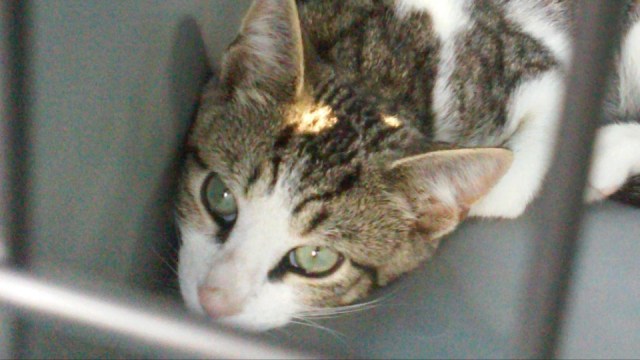
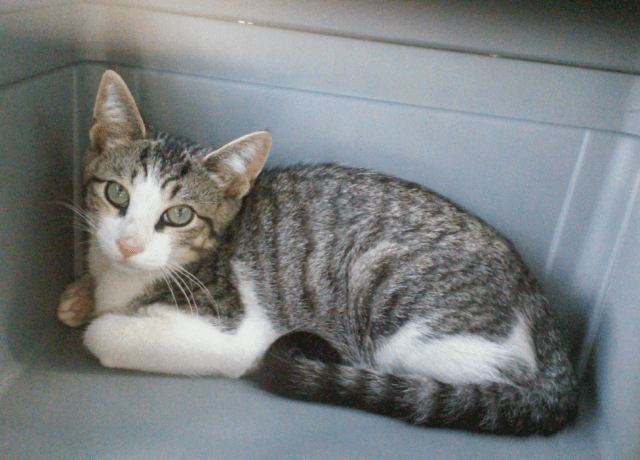
Brave male kitten returns from catch-and-release

He whimpered a bit, then was stoic for the rest of the ride, watching me as I drove.  When I opened the carrier in his ancestral garden he cried again.   His sister, the alpha kitten, hearing this, came towards his cage as he emerged.  He went into the bushes and straight to business: a long piss.  Then he hunched like Arnold Palmer, instead of a putt he dropped a long, slow turd.  He kicked some leaves over it, found the food bowl, had a bite to eat, and dashed off in the direction his sister had walked off in.

Screen shot 2016-08-15 at 5.16.51 PM.png


Little Bro headshot.jpg

OK, Now you know this is just crazy

“You do realize,” said the skeleton, “that you’ve written all the pages you need, sketched out all the material you require to begin assembling the Book of Irv in earnest.  At this point it’s absurd to have any more of these ongoing imaginary chats with a fucking skeleton.  This is just your typical neurotic pattern.  

“Look, your entire life you have done any number of things with assurance and style.  The one thing you have never done is the truly hard work of bringing your products into the marketplace and getting paid.   Wouldn’t your life be much easier, much more sustainable and understandable, if you were recognized, and paid, as the writer you are?  

“You have sometimes done 98% of the work to make something as good as you can make it, I’ll give you that.   You seem to have an absolute aversion for doing that final 2%, the daunting part that’s no fun, that seems somehow uncreative to you– creating the monetary value of what you do.”

That’s fair enough.  I have a sheaf of rationales right here, starting with this antiquated machine I am tapping on right now, which makes it difficult to cut, paste, organize, but the basic point is fair enough.   I am here at this balky machine because I had to stay another night in a sweltering house to pick up a neutered kitten from a vet in College Point today.  You make a good point though.  I can only say, I am still searching for an elusive piece of the essence of the story here.  There are some elements still missing.

“There will always be essential elements missing, that’s life, Elie, even in a Hollywood script.  And, anyway, wouldn’t these missing pieces be easier to find as gaps in the narrative once you start organizing and constructing the story itself?”  

Quite likely they would, yes.  

“Yet you persist in nattering with a pile of bones.  Does this make sense to you?”

In the moment it does, in an odd way.  

“‘Odd’ is a good word for it,” said the skeleton.

Look, you worked, and worked.  You worked all day and then, after a nap on the couch and a fight with your children over dinner, you drove off to another job you did at night.   What you thought as you drove to that second job is anyone’s guess.  You eventually saw your youthful ideals as a threat to what you’d acquired during a life spent largely running away from your fearful inner life.  

When you retired, and finally had the time, you did not reflect, though you finally had the leisure to reflect.  Instead you read every newspaper you could find, once you had a computer you added the Jerusalem Post and others. Your real self-examination began only after you got the death sentence, six days before the end of your life.

“What’s your point?” asked the skeleton testily.

It’s a life strategy, the most common one there is.  Keep yourself busy.  Don’t stop running the treadmill long enough to wonder what you’re doing.  If you stop to wonder that, the whole thing collapses.  Work is synonymous with being productive, after all, and we’re taught that work is the most moral use for one’s time.  It has the added benefit of leaving no time for brooding on things that might gnaw at your soul.  Wear yourself out chasing material security, live in a nice house.  Let the emotional chips fall where they may.  

“Well, your current life as a gentleman farmer is made possible only by the fact that my life strategy was mindlessly chasing material security.  No little irony in you lecturing me about my misguided values when you are the pontificating beneficiary of those values.”

I have an old friend whose nightmare is being forced to sit down and write his innermost thoughts on a page.   He would rather do anything else.  The idea of not working, unless he’s on vacation somewhere beautiful, is terrifying to him.  Me, my fondest hours are spent doing something that would cause this fellow to jump out of his skin.   We have different needs in life.  Perhaps I’m cursed to think I’m engaged in a long search for truth, to the exclusion of things most people find much more important.  

“You poor fuck, I did that to you,” said the skeleton, sadly.

I understand about success, and I’m trying to pursue it now, trying to figure out how to get paid for what I do.  It is easier to pursue success if you leave creativity out of it, but that seems impossible to me.  Makes me a despicable, spoiled prick on one level, an idealist on another.

“We can both live with despicable, spoiled prick,” said the skeleton.

I can’t escape my need to be creative, I’ve tried, I can’t overcome it.  I know it sounds weak, self-indulgent, petty, but I have a compulsion to draw, play guitar, improvise.  I literally can’t live without doing these things.  For years it caused me great anguish, watching hacks succeed in each field while incredibly talented people I know were reduced to misery, perceiving themselves as failures, in spite of their impressive achievements, because they did not have what it takes to become ‘professionals’.  When I was a lawyer, sitting in court, I was constantly drawing on my copies of the legal papers I drafted.  I carried a dozen pens and mechanical pencils in my lawyer bag.  I once brought a ukulele into the Civil Court and played it in the stairwell waiting for my case to be called.

“You always were a talented little fuck, nobody can really argue that point, even though, in fairness, Elie, who gives a rat’s perfectly turned thigh?   I understand it created some dilemmas for you.  As long as you realize your problems are the problems of a despicable, spoiled prick,” said the skeleton.

I could agree with that assessment wholeheartedly if I lived the life of a spoiled bastard.  I take some comfort in my lack of covetousness.   Houses, cars, clothes, beautiful musical instruments, fabulous travel locations… none of these things mean much to me as rewards.  If I never eat in a fancy restaurant again, I will feel no poorer.  

“Well, bully for you, then, you’ve got the world on a string,” said the skeleton.

My dilemma remains.  Until I sell your fucking story, I have not succeeded.  I am a perplexing mystery to everyone who truly cares about me, until I get paid.

“Well, that makes me happy, you know, to have become the hallmark of your success or failure as a human at the age of sixty. Pretty neat, really,” the skeleton said with a wry wink.

Pretty neat, yes.  Look at my past options for a second and you will see that my dilemma was not as uncomplicated as it might seem at a quick glance.  

I’ve always been squeamish (‘exhibiting a prudish readiness to be nauseated’) about advertising and commerce, the most sensible uses for drawing talent, or a way with words, for that matter. Advertising copywriters and idea men make big bucks.  The dream of becoming Picasso, selling even scrawls produced using a brush stuck in my ass, was a ridiculous one, encouraged by grandma, in all her vainglorious madness.  I have come to see the job of the museum artist for what it is: convincing rich people that your work is profound, getting them to love you and your work, bid large sums for it.  

I understand that the music business is only a livelihood for the most talented, ambitious 0.01% of people who have musical ability.   Virtually all of those who make it big have to have, in addition to musical talent, top 1% looks (or at least a unique and not ugly look), insane marketing smarts and a stroke or two of brilliant luck.  Outside of making it big, or being a studio player, there are very limited gigs for otherwise talented players.

“Boo fucking hoo, this is what you’re doing today?  Really?” said the skeleton.

Righty-Oh!  Off to pick up that blue eyed kitten from the vet on College Point Boulevard.  Ha hey!

Irv’s Phantom Strength

“You might call it ‘false masculinity’, I suppose,” said the skeleton of my father, philosophically. “It was a kind of hyper-masculine pose where I pretended nothing could penetrate my armor, and that anyone who didn’t wear armor was a weakling who couldn’t take a punch.  It embarrasses me now to realize how transparently weak that pose is.”

It’s a pose of strength, with an emphasis on pose.  It’s a stance taken to give the impression of great strength, by revealing nothing but disgust poised to explode into righteous anger.  It answers need with silence, withholds that which is most needed.  

“Well, it is a pose, and it does create a certain impression,” said the skeleton. “The thing is, I suppose the beauty and horror of it, is how easy it is to do.  You can completely negate your opponent solely through body language, facial expression, non-verbal cues and, if words are needed, a few clipped, terse ones are all it takes.  The main thing is to give nothing, cede not a millimeter.  Less is more.  Think of that mask of masculine malice Clint Eastwood wears in so many movies.  The squinted eyes, the stony stare, the upright posture, the monosyllabic rejoinders, the unstated but perfectly articulated threat of violence.  It is an implacable pose, for sure.”  

Here’s the really devilish part, that pose of strength works best when deployed against vulnerable people, people prone to fear, like children, naturally weak and dependent, intuitive and easily confused.  It takes nothing to make a child feel like the innately inferior race ruled on summarily in Dred Scott, ‘with no rights that the white man was bound to respect.’  

“Well, listen Elie, you have a problem here.  What you’re saying is true, but it’s not a story element.  You’re committing the cardinal undergrad writing shortcut– telling rather than showing.  You want your reader to feel what you’re driving at here, abstraction won’t do.  You’ll have to dredge up some painful ancient memory where you were made to feel exactly the way you are describing here.  You have to narrate it, show us this mechanism in action, make us feel how it felt.  Just laying it out abstractly isn’t going to butter the biscuit, as your friend the madman was wont to say,” said the skeleton.  

Funny you should mention my friend the madman, dad.   The way he turned into a hissy, provocative version of Uncle Paul in the end.   Mom always hated Uncle Paul because she found him to be a bully.   He bullied her because he thought he could get away with it.  He was afraid of you, so he was overbearing with mom, whenever they were alone.  

“Well, that’s the classic bully, the person was bullied by someone stronger and it instills this burning need to take it out on somebody. In my brother Paul’s case he was bullied by his much bigger older brother, me, and he takes out his rage by tormenting people he feels like he can dominate.   Funny, you always saw Paul as a mild-mannered, bright, kind of corny guy who just wanted to be liked.  Mom saw that other side of him early on, which you saw for the first time much later on, that year you and your sister went to spend Passover with him and Barbara.  You were an adult already when you saw that enraged, autocratic Paul that mom was so repelled by.”

Yeah, it is funny how it can sometimes take literally decades to see exactly what was on the end of your fork all along.

“Naked Lunch,” said the skeleton.  “Well, anyway, you’ve transcribed your full-color notes on this point and can fold up the tents for the night.   Why not go get some sleep?”

Dog Days

The dog days of summer, dear diary, are heavily upon us here in New York City.   The radio warns of a fourth straight day of heat alert, real-feel temperatures again well above 100 with humidity to melt you.  Keep your pets inside, air-conditioner on high, the expert on the radio advises.   Check on the old people next door, make sure they have not parboiled.   The city opens “cooling centers” where sweat-soaked, stinking citizens can come and recover in super-cooled public rooms scattered around the more working class neighborhoods.

I am a complainer by nature, so it will surprise no-one to hear me bitch about lifting my head from a wet pillow, unpeeling myself from the wet sheets and picking up the thermometer I’d dragged up to the bedroom late last night.  I smirked as I read “95”.    I nodded grimly, this all figures, I said to myself, possibly out loud, as I began to mutter and staggered downstairs to get something to drink to restore some of the lost hydration I’d left soaking the bed.

A pair of bare feet at the bottom of the stairs startled me, I caught the next mumbled syllable in my throat.  It was Sekhnet, waiting for a call-back from work, stretched out near the cat, both of them vaguely in the warm wind of a tower fan, the only thing standing between any of us and certain death from heat stroke.   There is a tower fan next to me now as I write, bringing semi-cool air to my left armpit and side, wicking away the freely flowing sweat. I dare not write much longer, for fear of burning out this laptop in the 95 degree heat up here.  

Sekhnet was somber there on the living room floor.  We’d trapped three feral kittens the last few days, had them neutered by a vet a friend recommended, with certificates from a nonprofit making each wild animal’s care come in at not much more than a hundred and thirty dollars.  The two I picked up at the vet’s yesterday, after their hysterectomies, cried all the way home.  It was pitiful.  I was glad Sekhnet wasn’t there, her sobs would have drowned out the wails of the miserable little cats.

These feral cats have brutal, short lives in Sekhnet’s garden, though she cares for them like they were her own pets.  An old one lives to be two or three.  We have seen many generations now, and each generation has ended badly, dead kittens found here and there virtually every season, the older ones simply disappearing.  A dead kitten was found today, one of the almost full-grown males from Mama Kitten’s previous litter.  The grey, tiger striped corpse was found under the Chan’s apricot tree.  Sekhnet had Joe open the contractor bag so she could identify the dead cat.

“Scratchy,” she told me, and urged me not to mention it to the younger brother of the neighbor next door if I see him across the garden fence, to let his older brother tell him when he gets home from work.   The younger brother is a sad, limited man.  He has some kind of mental problems that erupt in screams sometimes, once in a while the cops are called in.   Not much danger of me running into the brother, or anyone else, as I won’t be spending more than a moment out there today, and certainly not a second at the garden fence.

“Mama Kitten had her litter, as I told you she was,” said Sekhnet, “she came by today and she’s not pregnant any more.”  Mama Kitten had her first litter at the age of six or seven months.  Three kittens, two of whom survived, one of whom survives today (the third is the corpse in Joe Chan’s contractor bag).  The runt of that litter, cute, spunky Dobbie (named for his long ears which made him look like J.K. Rowling’s house elf) made a nice meal for a red-tailed hawk, as far as we can tell.

We watched the two surviving kittens of that first litter eventually drive Mama Kitten out of the garden and take the turf for themselves.  Talk about ungrateful fucking offspring.  Talk about the cruelty of nature.  (Talk about a metal laptop heating almost to frying pan temperature…).  She’d come around to visit, always affectionate– rare in a feral cat.  She’d come to trust Sekhnet and me, would rub her face on our legs, let us pet her one stroke as she’d walk the length of her body under our hand.  

One day, as all the feral mother cats around here have always done, she came to the garden to introduce her new kittens to their benefactor, Sekhnet.  She marched four of them past, three with white faces like Dobbie’s, one who looked like her tiny twin.  Of those four, three survived (one disappeared a week or two ago, probably lunch for a red-tail).  All three have now been neutered (though it seems the runt may not be up for the challenge of survival– not having taken a bite since returning from the vet’s yesterday, staying out of sight) and…

“Mama Cat came by, skinny again,” reported Sekhnet somberly.  In a nest somewhere nearby she has her next litter, four or more adorable little doomed kittens born on a very muggy day in hell.   Mama Kitten was the one we were trying to trap, to have her spayed and the embryonic kittens aborted, but she was too wary, too close to giving birth by the time we arranged with our friends to come by with the traps and expertise in how to catch the ferals so they could be released back into the wild in a way that would not increase their already too large numbers.  

“She loved the turkey, which is what we should bait the trap with, once she reappears with her new batch of kids, once they’re weaned,” said Sekhnet.  “She hated the sardines though, she gave me a very dirty look and jumped back when I offered them.   Mini-Me ate the sardines, though Mama Kitten hissed at me for offering them to her.”  

The mother kitten began hissing at her kids when she became pregnant again, making sure they were on their own before she brought the next batch into the world.  So far this beautiful little cat, now little more than a year old, maybe a year and a half at most, has given birth to seven kittens that we’ve seen and several more newborns, tiny and suckling somewhere behind a garage, waiting to become Sekhnet’s adorable little charges.

Meanwhile, it is about a hundred degrees and only two of her last batch of four kittens is accounted for, the one who looks like her and the one still at the vet’s.  Hearty, brave and recently spayed, the little alpha kitten who looks like her has been up and around, eating with her usual gusto.   Her sister, skinny and withdrawn, traumatized by her trip to the vet, did not eat yesterday and has not been seen today.  The blue-eyed Dobbie-looking sibling, who turns out to be a boy, I will pick up at the vet’s tomorrow.  He will probably cry the whole way home, like his sisters cried yesterday.  Luckily, Sekhnet will be at work and not in the car, crying along with the cat.

Well, diary dear, I’d better shut this machine down, before it fries itself.  I ought to hop into the shower and drink another liter of seltzer, if I know what’s good for me.  Stay cool!


PTSD

“The story of a brutalized life can’t be grasped unless you understand the lifelong damage trauma produces.  They refer to this trauma-induced damage now as PTSD, Post Traumatic Stress Disorder, you can find it in the DSM that every shrink has on his desk, it’s now a well-known syndrome.  The trauma will trigger echoes throughout your life, put you right back into it, where you will have to fight for your life,” said the skeleton of my father.

“That’s one reason I had such undying hatred for pedophiles, the lifelong damage certain adults do by putting their own need for domination and pleasure above the life and well-being of a child.  Child molesters perform the archetypal atrocity — never aware of anything beyond their own raging desire, devoid of  empathy. 

“From the point of view of the survivor of an atrocity–  imagine living through the trench warfare of World War One, somehow surviving that sickening, senseless slaughter.  At the end you and the other survivors leave the battlefield crusted in filth, stinking, sticky with the blood of your friends who were slaughtered.  They have to cut the uniform and boots off you.  They give you a shower and a new uniform, a haircut and a shave, pat you on the back and send you home.  They have a parade for you when you arrive back home in your French village, or in London, or Berlin, or Fort Lee, New Jersey.  The stench never leaves your nostrils, and at night when you wake up from a nightmare, you will not be reassured to find yourself in your own bed,” said the skeleton.  “It’s like one of God’s curses from Levitcus 26, for the lucky ones.  ‘As for those of you who are left…’

“Eddie got back from Vietnam where he saw a lot of combat, he became a cop.  You remember Eddie, a handsome, dashing guy, a man’s man, charming, great sense of humor.  He used to say he had no patience for the whining vets who wanted to blame the government for their problems, that they should just man up and suck it up and stop blaming other people because they were fucked up and so on.  Then he marries the beautiful, smart, lovely and accomplished Christine, you remember, at their wedding you pinned me to the spot, made me admit I’d abused you and your sister, which I did… but anyway, do you remember how things ended with them?  

“With the most normal and lovable All-American hero and the love of his life, that super-couple everyone wanted to be around?  Things ended badly for them.  He was fucking everything that moved, I understand, with a wife like that.  He even tried to put the moves on one of her daughters.  She wasn’t a little girl, you know, she was in college, but… what the fuck was he thinking?

“It reminds me of what Lance Rentzel said when they asked him about reports he was cheating on Joey Heatherton: ‘why would I go out for a hamburger when I got steak at home?’  I know the quote’s attributed to Paul Newman, but I always imagine it was Rentzel.  Which would have meant Lance would have had to have said it prior to exposing himself to that ten year-old girl, whose family wouldn’t settle, and he not only fell from grace, his filet minon divorced him.  

“Anyway, you know, you always paint our family dinner table as a scene from the First World War.  You have biplanes strafing, barbed wire, coils of chlorine gas rolling in, the enormous piles of human shit, washed with piss, one forgets that thousands of men in muddy trenches have to shit and piss every day, and deal with lice, and crotch rot, and stink foot, and gangrene and all that other crap, that’s before they are ordered to go over the top with bayonets fixed and charge into the machine guns.  

“You were being poetic, I suppose, describing our family dinner table like something out of Ypres in World War One, but you were not completely wrong about it.  It was like that, in some fundamental way, you captured its essence.  It was a war.  I always called it a war, each meal was another skirmish, another battle.  I don’t dismiss the trauma of trying to eat your dinner every night at a table where your father is snarling and assuring you that you will lose the fucking war, no matter how many battles you may win, I am saying this to make a larger point.  

“When you are the victim of systematic and inescapable brutality, generations of our ancestors used as punching bags, and worse, or those poor bastards who find themselves on actual battlefields, facing sudden death from any direction for reasons they can only think of in terms of bravery, honor and defense of their fellow soldiers …

“Look, Elie, I’m talking emotionally now, you will have to comb and iron this into something more presentable, the point is, those who have not experienced these traumatic things will have find it impossible to understand what you are even talking about.  It’s like the way I always mocked you, ‘boo hoo, my father is so mean.  Grow up, you little wimp….’.  You don’t say that to a seven year-old.  I mean, you only say it if you are twisted that way.  The only thing that will twist you that way is having been brutalized.”

I understand the workings of this infernal machine very well, dad.  Now I do.  I understand it clearly now, though it was a little out of focus for me for the first few decades.  

“Well, you will be doing a great service if you can lay this out clearly for others to see,” said the skeleton, giving me my next assignment in this long voyage to tell his story.  “You have to make sure they can actually feel that moment, when you snap awake, in the middle of the original trauma that turned you into a monster, choking on all those feelings, with only a terror to survive.”  

And that moment of clarity and moral resolve when you choose not to be a monster.

 “Yes, do not neglect to describe that moment,” said the skeleton, urging me to go to sleep now myself.

Dramatic Arc (and the outrageous price already paid)

“Look, you’ve come to the hard part,” said the skeleton, yawning.  “Remembering everything you could about my life and writing it down, day by day, as it came to you– what your professional writer friend called ‘the memory dump’ phase– well, that was the easy part.  Now that you’ve got 180,000 words worth of memories dumped… heh.  Good luck putting it into a nice salable narrative now.”

Indeed.   

“Now, like everything else in life– if you want to sell it, there has to be an immediate dramatic focus that gets a reader’s attention, makes people line up to buy it.  No publisher is going to pay you without the marketing department’s promise that they will get paid way more.  No profit in selling something for no profit, you dig.

“It’s got to be sexy, even a story about celibacy has to be sexy.   You want to read about some priest who tortures himself because he finally jerked off?  Nah.  You want to read about the explicit torments that finally broke this charismatic monk (even if he was, or especially if he was, a real-life troll) and made him vividly spank the puppy.  I can’t tell you how to frame this story, but ingeniously frame it you must.  You haven’t told my story until it’s a tale people need to hear the end of.  A story with a pay-off they’ll pay for.

“It’s not like I killed ten people from a tower, or physically beat the shit out of you and your sister, or was a famously violent racist demagogue, or a beautiful and shameless young female celebrity, or even was assaulted by cops and the recipient of a huge cash settlement from the city.  I wasn’t fabulously rich, I wasn’t particularly talented.   I didn’t do anything to make me famous or newsworthy.   Was I even remarkable in any way?  What is the real story here?”

Leaving aside the question of why I am wrestling with it here, on a ‘public’ website, I have an idea of the shape it needs to take.  It starts with a heated and relentless 45 year argument with seemingly no end.  The argument ends, the last night of the angry old man’s life, with too-late agreement, the deathbed gift of reconciliation for the man about to die, after he admits most of the blame was his for the long war.

The reader wakes up in a room where the war is raging, fire is belching out, there’s screaming, machine gun racket, the death-groans of mortally wounded animals.   There is no apparent cause for the war, as senseless and brutal as any, but a young child is being angrily blamed for starting it, continuing it.  Both adults are furiously wailing at the kid, trying to get him to admit he is a fucking war criminal.

We see the accused kid at the beginning, a baby in his crib, old enough to hold his head up and turn it to his father, but not old enough to do much more than that.

“You were certainly old enough to stare at me accusingly with those big, black eyes,” says the father, “you never took your goddamn eyes off me.  Every time I turned my head, there was you, with those two big, black eyes, boring into me, accusing me of God knows what.”  

Panning back the camera shows we are not in a random insane asylum.  This is an ordinary kitchen table in a suburban home, although the table is on fire, with the rat-tat-tat of strafing machine guns, the whiff of rolling chlorine gas, the pounding of the big guns.

“You’re so goddamn melodramatic,” the mother says to the boy, opera wailing in the background, her eyes burning with passion.

“Leave your mother out of this,” snarls the father, “you started it, you continue it, you fight us every step of the way and you may think you’re winning, you may even be winning this battle, but you’re going to lose the war.  I guarantee, you will lose this war, mark my words.”  

The camera once again pulls back to take in the wider scene, assure the reader again that we are not viewing a tight shot in a madhouse.

We are also, of course, viewing a tight shot in a madhouse.  There are thousands of these madhouses on every block in suburbia, on every floor in every city.  I always think it a kind of blessing that I grew up in a house where the war was at least out in the open.  

That could be the PTSD talking, trying to put a positive spin on the terror of it, I suppose.   Can it be that some things are just horrible with no redeeming features?   

“It can certainly be that some things are just horrible with no redeeming features.  You want one?  Poverty.  Big word for only three syllables.  You want another one?  Rage. One syllable, total motherfucker.   But most horrible things, it’s true, I’ll grant you, there is usually some kind of redeeming feature.  The scale that we weigh such things on is very tricky to operate,” the skeleton made a crazy balancing gesture on an invisible scale between his bony hands.

You got that right.  I’m taking objectively horrible senseless brutality, and weighing it against the many infinitely precious things that came with it.  But not without a phenomenal cost.

“Not without a phenomenal cost,” said the skeleton.

My Father’s Papers

A friend, after his father’s death, found a small box containing his father’s most important documents, arranged in a neat pile.  The several most valued were banded together in a short stack, wrapped in paper.  Looking through this small collection of selected membership and identification cards, dated photos, important legal documents and concise, hand-written notes my friend was able to assemble a chronology of his father’s life, learn a few things he hadn’t known about his father.  

My uncle, a meticulous man with an impeccably organized file cabinet, left labeled folders containing his life’s work.  My cousin, who couldn’t stand his father, looked over these papers and tossed most of them.  

“He wrote two children’s books he never did anything with,” my cousin told me the other day about my father’s brother.  That his father had never pursued publication provided yet another reason for my cousin to be disgusted by his narcissistic father.  It surprised me that my uncle had written two children’s books.  I asked if they were any good.  

“No, they were both complete shit, corny Jewish-themed stories illustrated with kind of stick figure drawings, but, of course, he never did anything with them, made a feeble attempt to get them published and left them in his file cabinet for me, along with sheafs of plans and proposals for his National American Civil Servants’ Museum, which, mercifully, died with him, ” said my cousin.  

This is a perfect illustration of the hanging judge’s modus operandi, turning a reasonable conclusion– my book attempts were feeble so I won’t persist in trying to publish them — into an another proof of why the defendant deserves to fry.    

“We’re all prosecutors or defense attorneys, most of us constantly switching roles,” said the skeleton of my father, who left virtually no papers behind, but had been skillful and active for both the prosecution and defense his entire life.

After my father died I found a leather-bound volume with my father’s name embossed on the cover.  The leather was soft, thick, reddish tan, and there was no hard cover beneath it.  In the bound volume was my father’s Masters’ thesis, a few hundred typed pages on onion skin paper.  You could see the indentations the typed letters left in their carbon impression on the copy that was bound for my father.   The thesis was about the abortive attempt to form a third political party, the Union Party, to help unseat FDR, who would go on to win the 1936 election in a landslide.  

At the center of the story was the party’s founder, a firebrand Catholic priest called Father Coughlin, a man my father mentioned from time to time as an early example of a dangerous mass-media demagogue.  Coughlin broadcast his populist, increasingly antisemitic talks to an audience of millions coast to coast on the new medium of radio.  

In 1938 Charles Coughlin’s popular weekly magazine, Social Justice, would publish, in installments, the famous 1903 Czarist forgery The Protocols of the Elders of Zion.  The Protocols, still cited by anti-Semites as proof of their deepest suspicions,  sets out the imagined minutes of a sinister meeting in which leaders of the international Jewish conspiracy that controls the world set out their twisted beliefs.

My father’s thesis does not focus on this sordid, tasty part of the story, which in any case only emerged full-blown a couple of years later, when Coughlin began expressing admiration for Mr. Hitler and Mr. Mussolini.   This was after the assassination of the charismatic Huey Long, Coughlin’s intended presidential candidate, ended any real chance for the Union Party.  

My father’s thesis has little dramatic color, it is a workmanlike, academic description of the failed attempt by a group, with Father Coughlin its most important component, to oppose the popular president whose New Deal had begun to create the social safety net Americans are protected by to this day.

“Look, man, you never listened to me, that I can recall, but you might want to listen to this,” said the skeleton of my father. “You’re reminding me of your boy Woody Allen as the young Alvie Singer in Annie Hall, avoiding sex with his first wife, Alison Porchnick, by fretting over Lee Harvey Oswald’s marksmanship.  You remember him pacing the room, chin in hand, as Alison sighs on the bed, and he’s ruminating out loud about whether the fatal shots could have come from the angle of the book depository window, out of the barrel of that crude rifle?

“Father Coughlin, really, Elie, who gives a fuck about the Rush Limbaugh of the 1930s?  The hard work, taking what you’ve written and making a compelling pitch out of it– well, that’s a lot harder than daydreaming about moving the hearts of your readers with an endless series of arguably interesting asides.  You want to move the hearts of your readers?  You already know what to do, tell them a moving story.  There is one gigantic story here, staring you in the face.

“The story is about rage and the difficult project of seeking a healthy refuge from rage, and finding forgiveness.  Rage was in the hearts of the people who ripped through areas of Europe where terrified strangers, among them almost our entire family, waited to be murdered.  Rage was in the heart of my tiny mother, whipping me across the face.  My own rage, expressing itself through the bursting skin that could no longer contain it.  I’d be carted to the hospital, snarling, insisting that I was the most sane, balanced, reasonable man in the world.  Left you and your sister twitching, wondering for decades what the hell was wrong with you that you could drive your father to such anger. 

“How old were you before you realized how insane it was that your mother and I believed, until our deaths, that you were an irrationally enraged baby who accused, challenged and attacked us from the moment you were born? ”  

I was probably a young teenager, I would guess.  Though, outside of fighting it, I had little idea what to do about it until I was in my early thirties.

“How many decades passed before your sister realized she’d been blamed for things, tried and found eternally guilty, on the flimsiest of evidence,  tiny indiscretions that should probably not even have been made an issue of at all, let alone set out as the bedrock of her supposedly defective character?”  

Decades, she told me.  She was literally forty before she began to piece it together in any meaningful way.

“Right, so you blame yourself, that’s the only natural conclusion.  Believe that if somebody is beating the shit out of you it must have something to do with you.  Like the Jew who ran the little store in the muddy shit-hole in Belarus.  What did his actions have to do with the horde that stomped in, raped his family and cut his throat?  

“Wait, I retract that.  Nobody wants to read a long, musing account of anonymous slaughter.   It’s like my Masters’ thesis– it served the purpose it was intended for, fulfilling my academic requirement for the degree, but I’d never think of having something so dry published.  True, well-researched, arguably insightful it also may be, but dry.  Too dry for the mass audience any writer even minimally hip about marketing would even consider sending out.

“Look, here you are, once again betting the entire farm on this project, that you will succeed, against all odds, in writing such a nuanced and moving portrait of an alternately endearing and monstrous man that your audience will coo over your discussions with Terry Gross and Leonard Lopate.  You’re going for the fence on every swing.  You imagine that following this book, two or three others, then the elusive MacArthur grant that will enable you to fund your society-changing democratic problem-solving workshop for poor kids.

“In the end, it’s your papers, Elie.  Not a small, carefully selected, preserved batch that tells a concise, simply told tale, but a rambling, sprawling, meandering, tortuous, recursive attempt, a hundred thousand papers long, mostly on colorful,  incomprehensible scraps, to tell the simplest story ever told: I was alive.”

The skeleton seemed to sigh, no longer alive, the telling of his story left in someone else’s shaky hands. 
 

Forgiveness

“Martin Luther King, Jr., sitting up in heaven, has got to be one of the most pissed off angels up there,” said the skeleton of my father, considering King’s famous remark that forgiveness is not an occasional act but a permanent attitude.  

“Forgive those who hate you, forgive those who humiliate you, forgive those who will never act humanly toward you, forgive those who will never admit they are shitting on you.   King has got to be the angriest man in heaven.  He did everything the way you would wish an oppressed person to petition for change.   See how much has changed as a result of his life and sacrifice?”

Well, less than half of black children in America are now born in poverty.  

“The percentage has actually gone up under our first black, our first mulatto, our first post-racial president,” said the skeleton.

That’s not fair, dad.  He’s going to make some serious Tubmans on the lecture circuit when he’s through being the president.  Plus, he’s surrounded by people who hate him, just because he’s a Muslim born in Kenya.

“Of course, you’re right,” said the skeleton.  

I am thinking about forgiveness.  Not as a permanent attitude but as a psychic necessity.  If we don’t forgive, we carry the hurt and anger of the original injury until the end.

“Well, you can always use denial.  That’s what most people do.  You keep it in a box with a tight lid.  The shit will come out once in a while, during a fight, or a bout of insomnia, but most of the time it can be kept quietly in an air-tight box.  That’s the way most people handle it,” said the skeleton. “You know, that’s probably a good part of what my psoriasis was about, holding the rage in until it split my skin open.” 

Did you ever forgive anyone?  

“No, not really.  But, look, I felt bad about that at the end, when I sought your forgiveness for having been such an implacably angry bastard,” said the skeleton.  

I was kind of amazed to hear my almost eighty-one year-old father apologize for the first time.  

“Well, that’s the way it is, most of the time.  We don’t do things until we have to,” said the skeleton.  “I know you and your sister speculated about whether, if I’d known I was dying months in advance, I would have had the kind of discussion you and I had the last night of my life weeks or months earlier.   You said I would have started making my peace in a more systematic way, your sister said I would have waited ’til the very end anyway.  Who knows?  

“Most of what you are assembling here is in the realm of speculation.  The muddy, doomed little hamlet of Truvovich?  Did it even exist in the first place?  I assume so, because that’s what I was told by my mother, my uncle.  Look on a map, even one made before the Nazis raked under hundreds of such ill-fated little shitholes.  No trace of the place.

“So you speculate, it was across the Pina River from Pinsk, a ferry ride, they said.  In the marshes, yes, that’s what’s across the river from Pinsk.  Marshes, mud, we’ve heard the place described as muddy.  You speculate.  Sometimes that’s all we have to go on, sometimes not even that.

“So now you find yourself floundering as you try to find the narrative whip to drive this herd of meandering dogies into a story.  Are you surprised?  There is a wealth of detail here in these five hundred plus pages, but not the thread of a story.  Have you made your reader vitally curious about this fascinating monster of a protagonist?  No?  Then, as Calvin Coolidge told the woman who bet her husband she could get the taciturn president to say more than two words:  you lose.”  The skeleton sniffed the hot, humid, mid-summer breeze.

I lose, sure, unless I can find my way.  

“Here’s hoping you find your way,” said the skeleton, looking out with sightless eyes, his jaw set in permanent wryness.

If We Can’t Change…

…there is no point to imagine anything better about ourselves.  We are born carved in stone, whatever our original features and limitations — so be it, our power to change any of it is virtually nil. It is folly, then, to imagine draft two, improving the flow of thought and feeling, rendering it in more moving language.  

“Well, that’s reductio ad absurdum, you know that,” said the skeleton of my father, much wiser now eleven years after his death.  “An exaggerated straw man jackass position to try to make the adversary’s view look ridiculous.”  

Well, in the case of this argument, my position is aided greatly by the exaggerated straw-man jackass absurdity of my adversary’s.

“Well, the proof of your position will be if you succeed, after a life of avoiding all contests.  The proof will be if we read about this book, well-received in the New York Times.  The proof will be a decent pay day, or not.  I’m not the one to judge whether you are deluding yourself about there being a story here worth telling, Elie,” said the skeleton.  “I’m also not the judge of whether you are the man to draw the story out of the stone I was carved in.”  

It’s me or nobody, old man.  

“‘Old man’ is for people who are alive.  I am old, I am five, I am every age I ever was during my life.  Who is the man, after his life is over?” the skeleton of my father paused meaningfully, expression mysterious as a Sphinx.  

“My life is now a book, every week a paragraph, every few years a chapter, if you can make it so.  Go ahead, if you can, see what you can make out of it.  I wish you the best, I’d like to be remembered as more than a modest, sagacious man, to those who can read the Hebrew words carved into my headstone, should they happen on my grave in an obscure corner of Westchester.”

That is the plan, really my only plan at the moment.  Why the hell not?  There are virtually no other stories about anyone else in our brutally pruned little family, no more than a shard left of any of them.  The wind whispering past your grave knows more about all this than anyone alive.  

“Besides you, presumably,” said the skeleton, eyes on nothing.  

Besides me, here for another few winks of an eye.