Book of Friedman (2)

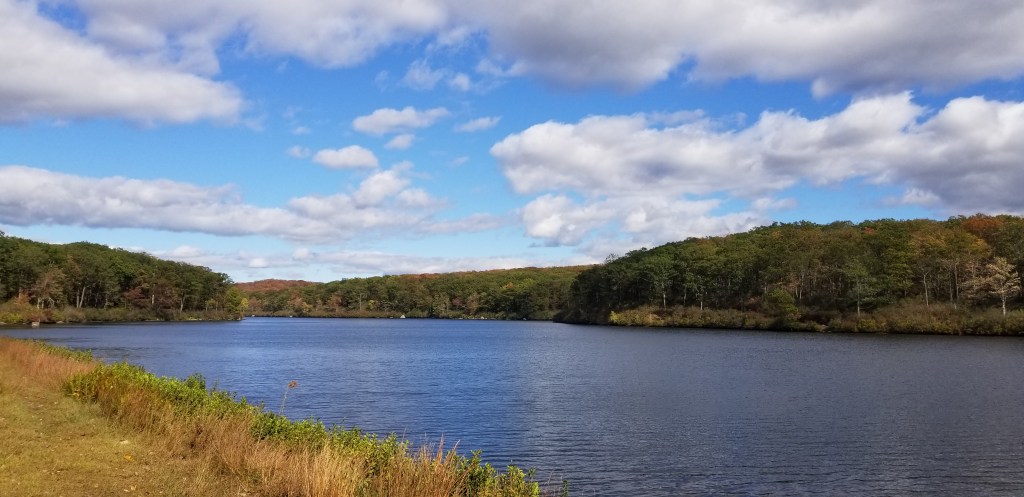
When Friedman was a boy, (and his name was Mark, a name I should also use), his family spent some time, over the course of several summers, camping near Lake Sebago in bucolic Harriman State Park. Presumably they crossed the road by the family camping area and hiked up a trail to a beautiful manmade lake (you could see the blackened skeletons of the trees on the bottom in some places) that captured young Mark’s romantic heart. Some time around his thirtieth birthday Mark became determined to get into great shape. He began swimming regularly in a public pool near his apartment on the Lower East Side of Manhattan. Then he remembered The Lake.

“Do you want to go to The Lake?” he’d ask. It was a beautiful spot, about an hour from the city, and the uphill hike was enough to get the blood pumping, up a tall hill on a rocky trail, down to a stream you cross on big rocks, up another hill, across a meadow, over a dirt road, and then, through the trees, a pristine, beautiful lake in a clearing. On a hot day, after an hour’s walk, there was nothing better than jumping into the cool, clear water of that lake. Mark used to drink the water as he swam from one end of the long lake to the other, back and forth. He would often swim for hours at a stretch, come out, eat something, have a couple of pulls on a joint, dive back in for a few more hours.

Here was the thing, though, after a refreshing dip, when you came out, there was little to do at The Lake. The rocky shores sloped toward the water, so you couldn’t stretch out anywhere without rolling downhill, or being on an awkward, uncomfortable angle on the rubble. You’d sit on a log. There were woods all around the lake and under the trees, after several hours, as the temperature began to go down, it often grew uncomfortably cool and clammy in the shade. Also, the swarm of ravenous mosquitos that hatched just before sunset, having little prey but Mark’s friend or two with him at The Lake, would joyously feast on anyone not in the water swimming.

After the first couple of trips to The Lake, unless you wanted to swim all day, there had to be a negotiation. Mark specialized in negotiations. He would offer to bring a joint, and chip in 60% so you could buy the provisions for the delicious speciality sandwiches that were eaten at The Lake, and he’d pay for gas (he drove his car up there) but you had to make the sandwiches, bring the drinks, and insect repellent, and anything to entertain yourself. There was always a negotiation with Mark, always.

He named the lake Lake PeeDee, after his older brother’s Irish Setter, a dog he convinced his older brother to give him. (Years later I’d find Lake PeeDee a map, labeled Lake Wanoksink). PeeDee, who, in his doggish exuberance would run ahead on the trail, circle back, race ahead, circle back, would dive into The Lake as soon as we arrived, his orangey chestnut coat turning a dark burgundy as he got soaked. Like me, he’d pull himself out of the cool water after paddling around for a few minutes. Unlike me, he’d shake himself dry, curl up and fall into a deep sleep.

Sitting uncomfortably on the shore, or walking around in the itchy woods, fighting the mosquitos, and waiting for Mark to finish his interminable swim was as good a metaphor for our friendship as I can think of. It was a beautiful spot, no question, but it could also become a profoundly horrible spot if you were not swimming. The relative beauty or horror all depended on your perspective on how successful the negotiation had been. The measure of Mark’s art as a negotiator was that he always got what he needed out of the back and forth, that was the only way he knew to feel whole, I suppose, by winning. So unlimited swimming time was never on the table for discussion, his right to do that went without saying. That his winning always resulted in his later much greater loss never really dawned on him. This is why his life is a cautionary tale, boys and girls.

The tale is simple and brutally consistent in its outline. It is also the greatest example of the Repetition Compulsion that I know of. I think of it as a three act play. In act one he encounters a person or an idea that will magically transform his world. Swimming was one such idea, and it became an obsession. If a person, it was the one he’d been looking for his whole life: totally unlike anyone in his loser circle of depressed friends. This person was brilliant, funny, cool, wise, hip, strong, talented, nonchalant, deeply sensitive but not in a wimpish way at all. During Act One he’d wax rhapsodic and at length about this life-changing encounter with this amazing thing or person. It was literally going to change his entire world this time.

When the curtain went up on Act Two, things were beginning to become a little less than ideal. The idealized life-changer was showing signs of not living up to expectations. He didn’t actually feel that much better after swimming for hours at a time for a couple of years. The brilliant, funny, cool, wise person had a stubborn side, a petty side, was not always that funny– sometimes not funny at all– maybe wasn’t cool at all, and as for wisdom, not very wise, it seemed. There was a desperate element of dread hanging over Act Two as he realized he was about to be disappointed or betrayed again, which gnawed at him mercilessly as he reported these nagging suspicions.

The inevitable, brutal dramatic denouement of Act Three was only a matter of time, once Act Two was unfolding. When I think back, our friendship was a mutually exciting Act One then decades of Act Two, culminating in an extreme slow motion Act Three. Act Three was always the same, always bruising, always final and irrevocable. The other person was revealed as a supremely disappointing putz, ungrateful, unreasonable, disloyal, irrationally angry. Friedman’s demanding nature, and the constant nickel and diming of his eternal negotiations, of course, had nothing to do with this dramatic arc.

After seeing the identical play many times over the years, I’d become impatient when he’d insist on describing acts two and three in great detail. Nobody listened to him, that was one of his fondest laments, and so, as his oldest friend, the least I could do was fucking listen to him and let him tell his own story. Yet, human nature being what it is, I became less and less able to keep myself from making premature, if accurate, predictions each time he told the latest iteration of his eternal story.

“OK,” I’d say, having grasped by his telling that Act Three had already transpired, “so did he rip you off, physically attack you, curse you out, slander your name, steal from your business, smash your windshield or sack your home?” This kind of question would drive him wild– who was telling the story, him or me?! He would glare, arms crossed over his chest, the picture of active churlishness. I realize now how painful it must have been to him, being constantly betrayed by vicious putzes and his oldest friend acting like a dickishly superior theatre critic, breaking in to critique a play directed by his lab rat, a play he once again hadn’t even sat through til the end.

Finally, after every detail was recounted, he’d reveal the dramatic ending: he confronted me in a rage when I chanced on him at a restaurant, loudly called me a fucking Jew, threatened to punch my face in, never paid me back the money I loaned him, or even answered my calls or emails.

OK, I’d think, better than the time he was punched in the face, called a fucking Jew, and they later broke into his business and loaded up a truck with his provisions. Better than the time they ransacked his house and stole his bicycle. Better than that wedding for one of his workers, the one he’d been flattered to be invited to, until he noticed that all the food had been stolen from his own commercial kitchen. Better than the lawsuits. If I made any of these comments he’d snarl, I was missing the point — his life was cursed, he was doomed to a parade of fucking betraying putzes! Including, it went without saying, me.

Of course, the question in your mind at this point must be, how on earth could you have been friends with someone this clueless and toxic for so many years? What possessed you to continue going up to The Lake to be miserable? Good questions, and I will begin to provide the answers that I have, when this tale continues.
The Book of Friedman

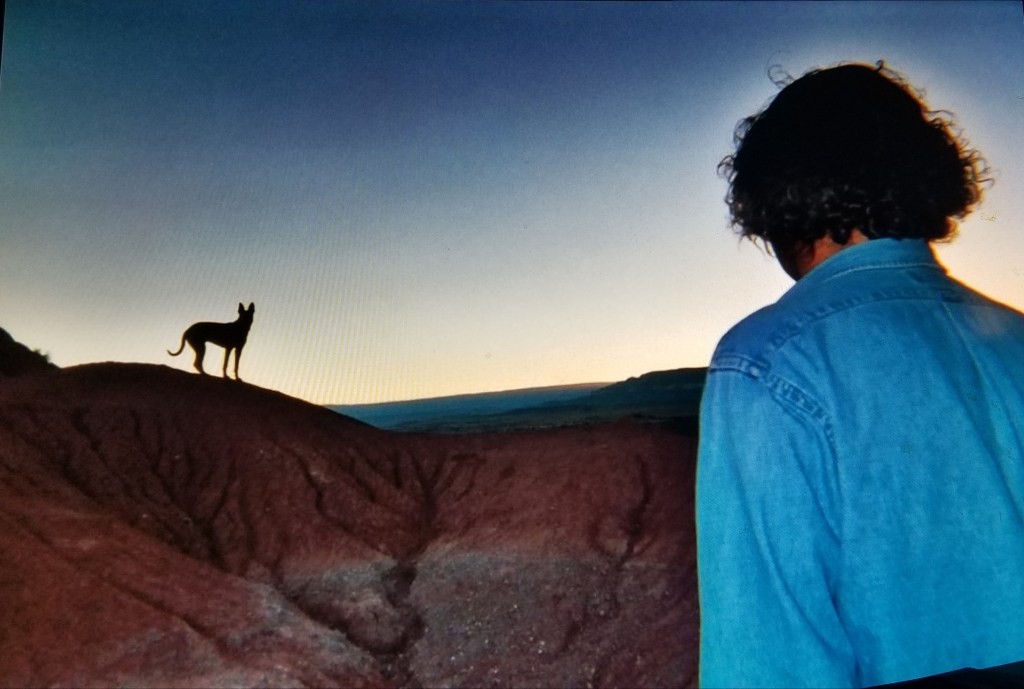
Friedman, a man with a problematic singing voice, was, at one time, a prodigious writer of highly personal songs that were often hard to listen to, sung in that difficult voice of his. A central tragedy of the poor devil’s life — to write with sensitivity for an instrument so ill-suited to music. The singer-songwriter had a good sense of pitch, it was not a matter of tone-deafness, in the strict sense. For all his skill on guitar and piano, for all of his original musical ideas, his singing was more than anything a certain lack of grace.

When he was found dead, naked in a chair last summer in his home in Santa Fe, his older brother was contacted by a Medical Examiner. “Just like on TV,” he said. The two brothers flew down to New Mexico to clear his cluttered house and settle his tangled business affairs. They lived for two weeks as guests of Friedman’s ex, a generous woman he finally rejected when he felt she’d been insufficiently supportive when he was inconsolable over the death of his mother, at almost a hundred. “She was his rock,” said his older brother, after their mother died, “he was lost without her.”

The older brother was dogged by guilt, he’d finally had it with his demanding, eternally unhappy youngest brother and had laid into him at one point. The younger brother had never spoken to him again. It had been three years. Then the call from the Medical Examiner asking what to do with the dead body. The middle brother, always a practical man, had avoided a fatal falling out with the youngest by always keeping him at arm’s distance. When an annoying email arrived, screen after screen of tortuous arguments, the middle brother immediately hit delete. He took the same approach to the clutter in the dead brother’s house. Several cartons of contractor bags, a quick look and toss the stuff.

Among the things tossed, to my great regret, were a series of letters between Friedman and the father he always complained didn’t respect him. A box of letters between father and son. They felt like voyeurs after beginning to read them and quickly tossed the collection. As a longtime student of Friedman, and someone who knew his father pretty well too, I feel the loss of these unknown letters keenly. Goddamn, I would have loved to read those letters! There was a book full of pathos and insight in that back and forth, 100%.

Another book, saved by the older brother, exists. It is the hard-covered once blank book where all of the lyrics (and probably the chords) to all of Friedman’s songs were inscribed. The definitive record of a life in music that was almost lived. If only he’d had the voice to sing them. It occurred to me recently to ask the brother if I can borrow this book for a while, to read his collected songs and use them to reconstruct his painful, illuminating life. The endlessly repeating tragedy of his life is the greatest cautionary tale I know.

Many years ago, and I mean decades now, Friedman accused me of using my friends as lab rats in my psychological dissections. I suppose he had a point, the long serving, giant lab rat, though I plead science and the expansion of human knowledge as a redeeming rationale for my experiments (as all the great monsters of history have). We are raised, many of us (and probably all of us who are subject to bouts of misery), deliberately blinded to what we are actually up against in this life. It takes determination, and openess, as well as a certain amount of blind luck, to eventually begin to see the crucial clues that are zealously hidden from us. Friends as lab rats, a small price to pay sometimes, to learn the things we need to learn to live less miserable lives.

(Cold? I don’t know. It certainly doesn’t put the narrator in the most sympathetic light. Start again.)

In telling the story of the talented, miserable, demanding, aggressively unhappy Friedman, I will try to illuminate the two paths open to each of us. We can struggle, in the darkness, to be right, always, to justify, everything, to prevail, at any cost. We can struggle to grasp what is intolerable in our lives, work to see and understand what particularly triggers our misery, seek to suffer less and inflict less pain in the world. I am, clearly, biased toward the second way. Friedman is the greatest example I know, though far from the only one, of the first way — the way of righteous anger and eternal victimhood and fatal disappointment.

Yes, we also have a president now who fits that description– a selfish, childish person who is always the victim, always right to be angry, a fundamentally unhappy person who, although already very wealthy, can never get enough. Forget him, if you can, as I tell you the story of Friedman, the youngest of three boys, an envious sibling who never got enough respect from dad or love from mom.

“OK, let me get this straight, sir,” says nobody in particular “you propose to tell the story of a remorseless, graceless asshole, with no insight into his own misery, told without sympathy, the tale of a putz famous for sweeping others into the ‘putzbin of history’ for betrayals real and imagined.”

I wouldn’t use that as my elevator pitch, no.

“Get on with it, then, why should anybody give a rat’s tutu about this so-called book proposal?”

Insight, man. Hard to come by. Look at it as I pieced it together. At one time this guy was my closest friend. Over the years I came to see, more and more unmistakably, that he was, in elemental ways, an unredeemable version of the worst of my father. Both were smart, articulate, capable of waging fierce arguments to the death, both were supremely sensitive in their own feelings and often monstrously insensitive to the feelings of others. My long wrestling match with Friedman turned out to be an attempt to get a grip on the dilemma with my own father.

“OK, so far you ain’t selling jack, son.”

Says the voice of the internalized victimizer. Look, I’ve been putting together clues for many years now. The Book of Friedman might be the most straightforward way to put them between two covers in the context of a story with a start, middle and end. Much easier to write than draft two of the 1,200 pages I’ve written as I came to see my father’s tragic point of view through his too late clear eyes.

“If you say so…” then there is the pregnant pause, more potent in its power to undermine than any words could be, “we’ll see if this idea comes to anything more than dozens of other big ideas you’ve hatched over the course of the long misadventure that has been your life here, dreamer.”

Which leaves me with this toothache of a thought: What is left of our lives here, beyond what we leave behind?

Civil War Reenactor Death Cult

I don’t pretend to fully understand some things about human behavior. Why did tens of thousands of poor southern whites, men who benefited zero from slavery, enthusiastically enlist in the Slaveholder’s (the antebellum 1%) Insurrection, the American Civil War?

It was cast as the fight for freedom, to protect a cherished way of life from tyrannical encroachment, a glorious cause to die for, OK, but how does that actually work? How do thousands of men sign up to fight to the death (or dismemberment) for a cause they derive no benefit from? I have never been able to wrap my brain around that one.

The continued controversy over removing/not removing statutes of traitors to the United States, men who took up arms in a bloody rebellion against their country, for the sake of “home rule” is just as mysterious in its way. These statues were erected decades after the Civil War, during the height of xenophobia, white supremacism and what is quaintly called Jim Crow — the viciously racist Black Codes in all of the states of the defeated Confederacy.

These statues were monuments to a glorious lost cause that will never die: White Supremacy. Sometimes they were placed on pedestals near the sites of forgotten (by whites) atrocities against black citizens. What nation puts up statues honoring violent traitors who treated their countrymen as enemies to kill? What is the actual controversy about taking down these deliberate rewritings of history erected decades after the Confederacy lost the war to preserve its cherished autonomy?

Today’s events are giving me a tiny bit of insight, but not much. We are seeing that same “mentality” of irrational, heroic certainty in action, during a plague, a highly infectious, incurable, often deadly pandemic. The president has (while accusing his enemies of doing the same) politicized reasonable medical precautions, like the CDC-recommended wearing of masks — only faggots, douchebags and cowards wear masks, masks are for cucks, weak, loser men whose wives have sex with others because their cuckolded husbands are so lacking in virility. As for women? Who cares, grab ’em by their gullible husband’s pussies. If you’re the leader, they let you do it!

In every state that has reopened on a wide scale, cases of COVID-19 have reached new record levels. This is not spin, it’s not the result of better testing by a brilliant administration always one step ahead of the rest of the world. It’s data, verifiable numbers based on new reported infections. Florida — big increase in COVID-19 since reopening, the most cases ever so far in that state. Same unmistakable cause and effect in Texas, Georgia, Alabama, most, if not all, of the former Confederacy, in fact. Check the map. Jesus, it’s not all that hard to see the trend. If you trust your eyes, rather than the assurances of a compulsive liar.

I don’t know how to think of the president’s deliberate lying, in this case about the science, other than depraved indifference to human life, malignant narcissism or simply good old-fashioned evil. He’s hellbent on basking in the adoration of his people, a solid block of Americans who vociferously love him no matter what.

As one of his many lawyers insisted in federal court, somehow keeping a straight face, (in a case claiming absolute secrecy for everything the president or anyone he talks to says or does), the president could not be arrested or criminally investigated if he shot somebody on Fifth Avenue. The point is clear, Mr. Trump could shoot somebody on Fifth Avenue, in the face, with a small caliber handgun, then skull-fuck the corpse, and not lose a single vote. Chant it with me: USA! USA!!!.

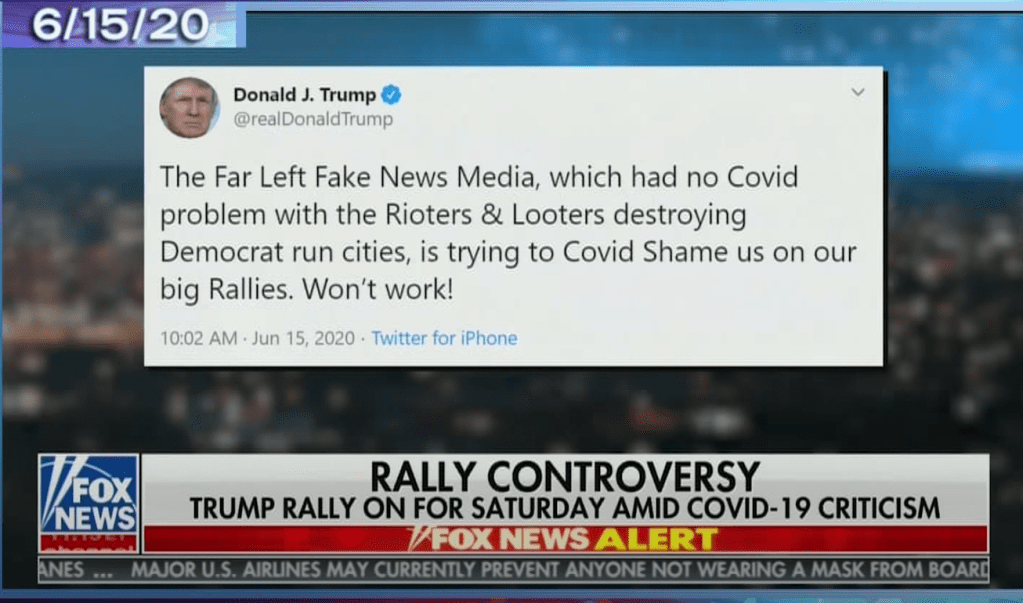
The man does have an undeniable talent for spinning things, to the delight of his unshakable base. Here’s his quick, witty take on the recent events on American streets, the plague, the ongoing mass protests against widespread police brutality against unarmed Americans, and radical Democratic tyranny (and of course, the media’s constant, shameless lies):


You can’t “Covid Shame” a leader like Trump– NO WAY. He’s determined to have live rallies. They are what he lives for, literally, vividly performing for adoring campaign rally crowds.

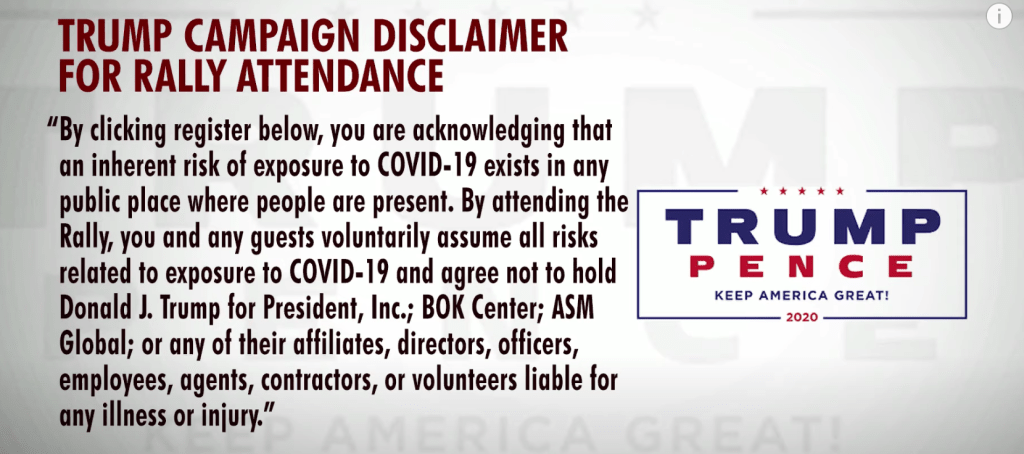
In spite of the way he often sounds, the man’s not completely stupid. He knows there could likely be a pandemic spike among those who attend his live, packed, freedom loving, maskless rallies. He truly doesn’t care. Plus– he’s taken a reasonable precaution. His lawyers have drawn up a waiver that everyone who attends his rally must sign before they will be admitted. Standard legal disclaimer of any and all liability, the kind you must click “Accept” at the bottom of to use virtually any on-line product.

If you catch this incurable Democrat HOAX disease, don’t try to blame us, numb nuts! We’ve got your electronic John Hancock right here on the waiver. The language, you can plainly see, is neither hortatory (as the president tweeted of something else recently) nor precatory, it is unambiguous and mandatory, binding and iron-clad. Read it and sign, chump. Then scream along with me: LOCK THEM UP! LOCK THEM UP!!!


Now, let the wild rumpus begin! The South shall rise again!

Plague Mice

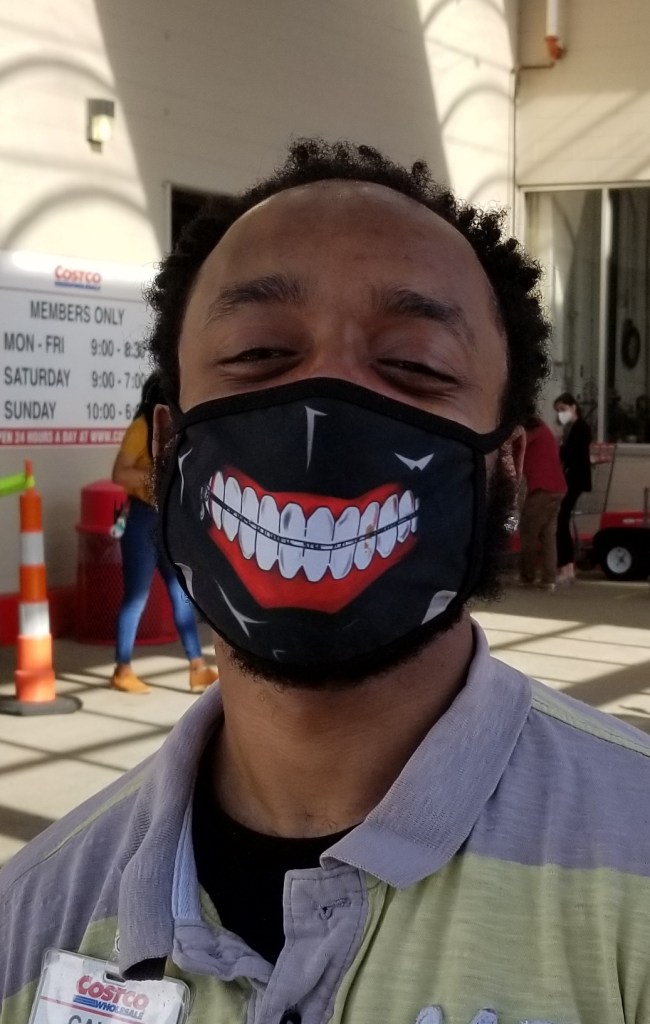
Had a cheerful greeting from this guy at Costco today, who, when I asked him to smile for the camera, went:


Here is a meditative little track for you: Plague Mice. A recent long-distance (over 10,000 mile) collaboration with guitarist Paul Greenstein [1].

We figured, since we were doing it during a worldwide plague, that those beautifully singing mice who solo along with Paul’s guitar could only be Plague Mice. We offer the tune as a hope for better times, and soon.


[1] Technical details: My parts were done on a Ditto looper, recorded on my phone, sent to Paul, Paul improvised that cool melody over the top, with the soulful chorus of digital mice singing over his guitar. Paul called dialing in that electronic, ethereal mouse chorus effect “putting eyebrows on it” , as Frank Zappa used to say.

I say nice eyebrows, man.

Music Lessons

My teacher of basic music theory and guitar harmony in high school was a talented, nasty, brutally superior classmate named Speed. (A member of his family was Abraham Lincoln’s close friend, Joshua Fry Speed, for you history bugs).  Speed, who started on harmonica (which he played incessantly in gym class, to the horror of the drill sergeant) and quickly taught himself guitar, was a prolific composer, one of the greatest musicians I’ve known, and a demanding prick.

When he played his complicated tunes, he’d grunt with genuine disgust every time he hit a wrong note or chord.  He was angry at himself for not being able to flawlessly play things nobody else at the time could play either.  After all, he’d already been playing for a few weeks!  A complicated and tormented fellow, and great musician and writer — also very funny, but also– quite brutal.

Unsurprisingly, the talented Mr. Speed was a merciless teacher. He showed me all the fancy chords he used, the 7-9 chord, the 7 raised nine, the flat nine, the eleventh, the thirteenth, the sus2 — or added nine, the seven flat fives, major and minor, the augmented chords (and I left out the beautiful sixth chords). He taught me why each one was named the way it was, demonstrated the many harmonic uses for each of these “jazz chords” (these chords are extensions of the essential major, minor, dominant seven and diminished chords that all guitarists learn).

It was a great bootcamp for someone with natural curiosity about music, though I was more drawn to Crosby, Stills and Nash tunes, much simpler, which were fun to play on guitar. Speed held me to a much higher standard, a standard I always disappointed him by failing to attain. I did learn a lot of chords, and how to play them smoothly in various positions, something that came in very handy, but eventually the brutality of the “lessons” just got to me and I finally had to tell Speed to fuck off.

What I’ve learned since, so elemental, took me many years to realize. What I love about music is the dialogue between the different parts, the way each voice adds an essential element, and the active listening and nuanced response required for good ensemble playing. Music is really a beautiful conversation, when it’s grooving. How did Speed miss teaching me this basic concept? Too mad, I guess.

You start from silence, then a nod, or a count, or somebody hitting something in time. Listen to any great arrangement, there’s a lot going on, but most of the parts are quite simple. One voice may be hitting one note over and over, a pedal tone this is sometimes called. But it is hitting that note in a crucial rhythmic spot, driving the music forward. That beat provides an anchor for a harmony instrument to spread some colors over, which in turn opens still more possibilities, rhythmic and melodic both. The way things interact musically, an endless mystery that does not perplex at all– it delights.

There are “infinite” harmonies to any melody, Speed once told me. Maybe so, but it is the beautiful ones that compel us to sing and nod and dance along. And, again, all music starts in silence — and the beats of silence in the music are very precious too.

The prerequisite to making good music is relaxation, grace is required to hit the notes calmly and strongly. The crucial element of generosity in your fellow musicians, and towards yourself, cannot be overstated. Relaxed, engaged listening is essential for creative, musical collaboration. It’s hard to be relaxed playing with a guy like Speed, perfectionistic, always demanding more than you can do, sometimes more than even he can do.

He had bands, with excellent, top-shelf jazz musicians, they played his stuff well, but still — there was often a joy missing, it felt to some in the audience.  It felt to me.  These great top musicians loved the challenge of his music, though sometimes it was just too damned challenging for the listener.  I remember in one club, dramatically, the dance floor emptied long before his first set was over.  The club owner suspected he had a genius on the bandstand, but he was openly perplexed about letting them come back on.

The best of Speed’s songs, there’s a darkly brilliant one called “I Can’t See You” that always comes to mind, although supremely difficult to play (on the only version I know Speed plays all the instruments) are full of soul, grace, space, cleverly interacting off-beats, and there is beautiful singing and clever wordplay among all that.   I remember this track (done on a 4 track tape recorder) before the vocals, it was gorgeous as an instrumental too, but that version had to be sacrificed due to the technology of the day, which required “bouncing” of tracks for any overdub beyond number three.   Anyway, you can hear all those things, the compelling dialogue between the different parts, in this song, as in any realized piece of arranged music.

I often think of this story, in relation to Speed, who always disparaged my guitar playing and musical naiveté.   More than a decade ago (2011, I see now, scrolling through gmail to find the track) I sent a basic track (two guitars and piano, against a drum patch) to a genius I knew in high school, Frank Burrows, the only guy alive, when we were in high school, who could play Speed’s compositions (he’d been playing guitar a year or so by then).

To my delight, Frank orchestrated the track, literally, he arranged an orchestra of instruments over my track.  He came up with many colorful, sometimes madcap, parts that made the simple ideas in my track blossom.  It was brilliant, as was his hauntingly evocative C part (at 3:40, below), which ends the tune.  It was as thrilling for me as sending a tune idea to Frank Zappa, or Jimi, or Django, and getting back a fully realized musical version, virtuosically played by an entire skilled band.    I emailed the finished track to Speed. Speed liked it, and confessed he couldn’t tell my playing on it from Frank’s.   Fucking A, I thought to meself, I finally graduated!


Aside from the ego gratification of playing music well, and having people admire your efforts, there is a much more fundamental benefit of playing music, it seems to me.  The beauty of the thing itself.   My playing, and Frank’s, are exactly the same in their intent and effect, whether Speed applauded them or disparaged them.   The notion of appreciation must lie in the heart of the player, as it does for anything we truly love.   

This is also a good life lesson — kindness, always, toward the self. That is the true and only root of kindness and generosity toward others.

Think of it like this — every note you faithfully play, or sing tunefully, once it fits into the larger scheme of music, becomes a living moment of grace.   There is no comparison, no consideration other than serving the music properly, making the thing you are playing sound better.   There is no greater reward for doing anything than a beautiful result.   With music, you have it at once, as you play it well.   No need for the dough to rise, the cake to bake, the critics to nod — it’s there, in the air, light and precious as the air, just as beautiful and almost as essential to life.


Write Every Day

Anything you care about, want to get better at, you need to do every day. This goes for music, learning languages, reciting poetry, improving your vocabulary, gaining flexibility in body or mind, mastering any skill. Daily practice is the best way to improve your skill.

More productive than a five hour session, followed by a week of inaction, are seven daily fifteen minute sessions. Constant, regular practice is the way we build better habits, better technique. This kind of daily practice helps us remember and internalize our advances and make steady improvement.

Take your 140 character tweet (I don’t use Twitter myself) and really look at it before you let it fly out into the world. Is there anything you wrote that can be written better? Fix it. Is there a phrase that could be read two ways? Turn it to the way you want it to be read.

You can say it really doesn’t matter if you write well, badly, clearly, muddily, that ignorance and sloppiness clearly rule already so what is the stinking point, Daddy-O? The point is not to lose the notion of craft, pride in your work, the pursuit of excellence, reinforcing the benefits of steady effort to make yourself better at what you love to do.

George Carlin had it right: think of how stupid the average American is, and realize half of them are stupider than that.

That does not apply to your efforts, if you are dedicated to self-improvement in any field. It is never stupid to try to do better. Also, don’t forget that half of Americans are also smarter than the average– that’s 150,000,000 people. Also, stupid people deserve the best we have too.

My two cents: put in at least fifteen minutes toward the worthy goal of making yourself better every day. If you miss a day, don’t trouble yourself, just start a new streak the next day. The improvement you will begin to see will motivate you to continue. In your small way, you will be making the world a better place.

Police State, anyone?

In our polarized, black and white zero-sum culture there are, we are constantly told, only two choices. In the case of routine police violence against unarmed civilians the choice is presented this way: Law and Order OR anarchy and a tidal wave of violent crime. Police with a monopoly on legally sanctioned violence or turning the streets over to vicious criminals?

We know, as my father realized poignantly close to the moment of his death, that the world is almost never black and white (almost every non-Nazi would choose Mussolini over Hitler, given the choice, though few actually admire Benito). Presenting things as a simple either/or choice saves a lot of wear and tear on weary, anxious, angry souls, I suppose, but it comes at a price.

The phrase “Police State” popped into my head just now, as I listened to another interview about Attorney General Bagpiper Bill Barr mobilizing an array of armed forces never seen on the street– tactical forces like the Bureau of Prisons riot squad (used for putting down prisoner uprisings in prisons), for example — to violently put down a peaceful demonstration near the White House, clearing the way for his deeply religious boss’s somber photo op. Barr, of course, denies that his dispersal of the “riot” had anything to do with Trump’s desire to walk to a nearby church and silently hold a Bible in his inexplicably gloved hand.

We have come to expect lies from the unprincipled Mr. Barr, a pugnacious right-wing provocateur who relishes expanding and openly abusing the already vast powers of his powerful office, and those of the Unitary Executive, in this case Trump, the living embodiment of Barr’s fervently autocratic worldview, but the phrase Police State puts it into perspective.

Wonder why the term Police State is so ominous? It is a state where the police, with a monopoly on the use of deadly force, have the absolute power of life and death over citizens, where disobedience to police orders can mean instant, summary execution. If the authorities can unleash the full force of state violence on people exercising rights guaranteed by the Constitution (in our case the First Amendment rights to peaceably assemble and petition the government for redress of grievances) then we are reduced to arguing about whether pepper spray is the same as “tear gas” — and we live in a state where the unaccountable abuse of power is just the way it is.

Just the way it is, my friends. One nation, under God, indivisible, with liberty and justice for all.