1924 (part 1)

Some time around 1922 or 1923, a year before the Immigration Act restricted the entry of people like my grandparents, in the crowded, polyglot slum of New York City’s Lower East Side, my father’s mother gave birth to her first child, a girl. The baby did not live long and the whereabouts of her tiny corpse are unknown. In fact, I’m not sure how I even heard about this poor child, born of two desperately poor immigrant parents. Probably from my father’s first cousin Eli, source of much of what I know about my father’s early life. History records that on June 1, 1924, my father was born in that same slum, moved to Peekskill as a toddler (in his Uncle Aren’s truck) and later lived, as a middle class homeowner, to be almost 81. I was there to close his eyelids after he took his last breath.

My father never went into the details of his years of grinding poverty. He always used that term, “grinding poverty,” spoken through gritted teeth, to evoke the circumstances of his hard life before the army. Of his mother, who turns out to have been a savagely unhappy little woman, all he ever said, in Yiddishized Hebrew, was “may she rest in peace.” He said the same about his father, about whom even less was ever revealed. A few hours before his death, my father described his father, in his breathy dying man’s voice, as “an illiterate country bumpkin, completely overwhelmed by this world.” He did not speak of his mother. I knew by then pretty much why.

The rest of my father’s large family, outside of his mother’s brother, Uncle Aren, the American patriarch who’d fled the Czar’s army in 1904, disappeared into the fog of war, literally. Their muddy hamlet in the Belarusian marsh, somewhere between Pinsk and Stolin, was erased from history, wiped off the maps, if it ever was on any map. That little town met the fate of hundreds of other little Jewish towns in those dark years when Hitler was restoring Aryan honor to Germany. After the German occupation of those areas the towns and their inhabitants simply ceased to exist.

The family in Europe was disappeared while my father was training to fight in what would become the Air Force. The immensity of this loss was something my father never spoke about, outside of dismissing it as talk of “abstractions” when I got old enough to know and be deeply disturbed by it.

The arc of my father’s life is almost unimaginable today, an impoverished boy from the slums growing into a well-educated, solidly middle class burgher. He worked hard, two jobs, followed the rules, took advantage of the GI Bill (which worked wonders for white vets, not so much for other vets) and a rare moment in history when the American Dream of a life of financial comfort could actually be lived by children born in extreme poverty. He made this transformation along with tens of thousands of the generation who fought World War Two.

My father, according to my sister, never had a happy day in his life. It’s an interesting question, because, though he had all the tools for happiness, she might be right. He found the humor in things, he was quick, he had a dark take on things (though he loved animals and small children), was beloved by his few close friends, was an avid reader with a deep interest in history and justice. He made his friends laugh and often his family as well. He could also be cold, hard, unbending. He died with terrible regrets, he’d learned basic lessons too late to put them to good use. At the very end all he hoped for was one actual conversation before he died, one that wasn’t a death match. We managed to have that talk, and then he was dead.

Years later I took many months, a couple of years back, writing an unwieldy first draft of “The Book of Irv,” an attempt to fully think his life through. My idea was to put a tricky story into perspective, letting nobody off the hook, but at the same time, taking pains to also not vilify or punish anyone. To my amazement, this long exercise in trying to see the whole picture left me with the ability to see my father’s life and sometimes troubling attitudes and actions completely from his point of view. Seeing his viewpoint clearly doesn’t make me agree with the worst things he decided, but I can understand them, even empathize. A few years earlier, before my long exploration of his troubling life, the thought of reaching that understanding was unthinkable.

Because my father was often harsh to me and my sister, I was usually harsh in my judgments of him.  There are certain things I took him to task for that I understand now were completely reasonable and within his rights.  This understanding emerged only after I became able to see the position from his viewpoint. As a boy and a young man, I was hard on him for the way he permanently banished good friends who hurt him. People we once enjoyed the company of, laughed long and loud with, were suddenly dead, simply dead.

He was famously unable to forgive, in the end unable to forgive himself for the rigidly black and white way he’d seen the world, for how that worldview often made him act toward the people closest to him. I see now that those two traits, cutting friends dead and being unforgiving, don’t necessarily add up to an unreasonable position; although a fault may come into play it doesn’t always negate a perfectly understandable motive.

I’ve learned about that terrible moment when it becomes clear that friendship is returned grudgingly (if at all) and looking away only prolongs the estrangement that is already well underway. This is not merely a matter of being unforgiving, sometimes it is simply the way it is between humans who have long been close but who have stored up grievances against each other. As I observed in my own life, and learned from my father’s steady example, there is sometimes a point of no return, even in once close relationships.

To tolerate painful treatment from someone you trust is being a party to your own abuse and there is no healthy reason to do it. Abuse is where you have to draw the line, in every case where you have choice in the matter. If you point out to a friend that they are hurting you and your friend says “I am not, you have a problem and your vicious accusation is yet another example of it” it is probably time to use the door. The old man was not wrong about that, however quick he might have been to slam that door, to shut friends into eternal darkness when they hurt him.  The timing of this inevitable moment, one you see it, now seems to me a matter of pulling the bandaid off quickly or slowly.

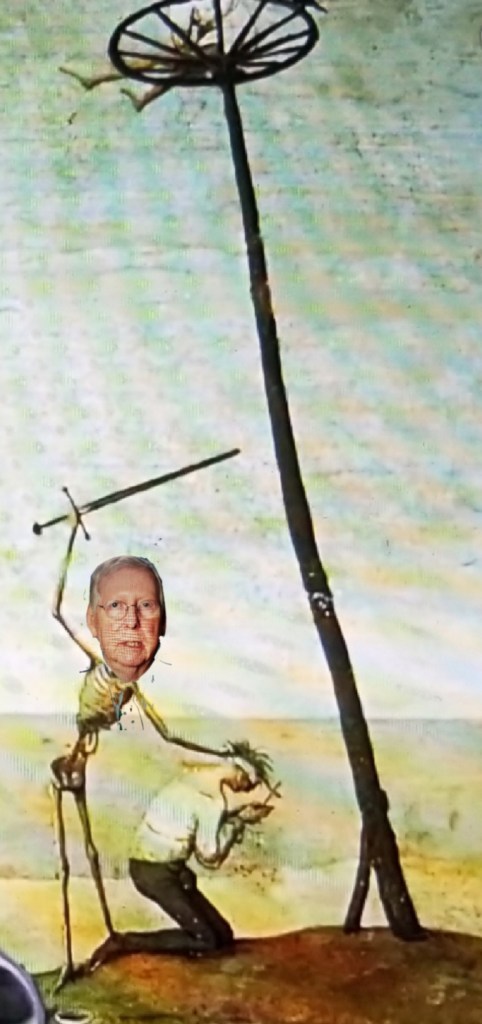
My father’s skeleton has been quiet, outside of remarks he made over the course of a few months, a couple of years ago. Those unexpected conversations with my father’s skeleton often had moments of real surprise for me, as if I really was hearing things for the first time, things my father would have said if that conversation the last night of his life had continued. Somehow I knew that it wasn’t merely my imagination conjuring these responses, they made organic sense to be coming from my father’s now wiser skeleton.

If the voices of my father’s parents, the ancestors he never saw, ever spoke to him, or cried out to him, I cannot say. He rarely spoke of either of his parents, and if he did, it was only to comment that they should rest in peace. If the murdered souls in that unlocatable marsh near Pinsk could call out to me, it would be in a language I can’t understand. The closest I can come to imagining them is the few of them I knew, and the lessons of those lives are the stories I am interested in telling now, before the clock runs out on my time to tell them — before the next personal extinction arrives.


Pandemic Learning

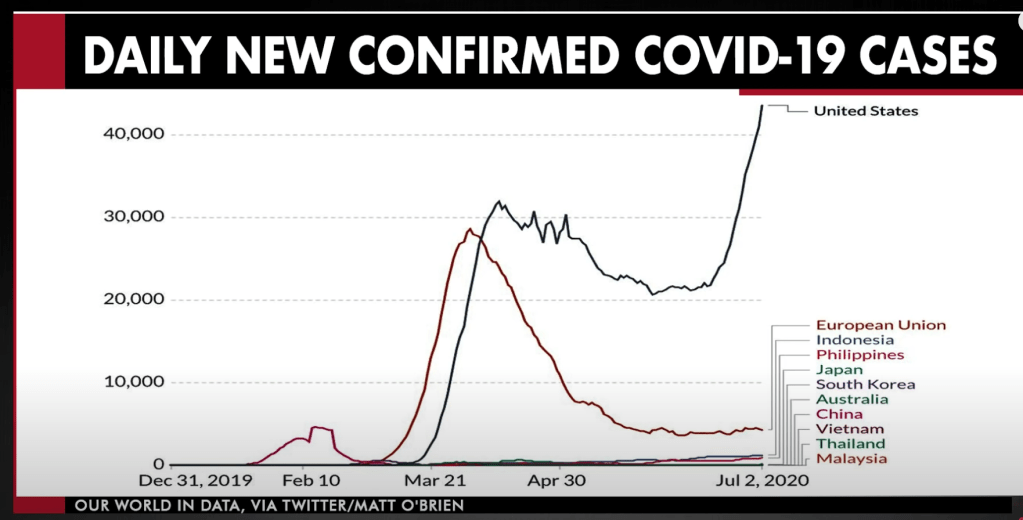
This worldwide outbreak of an incurable disease is disorienting. Nobody alive has any living experience with the last one, which was over a hundred years ago. You’d have to be 110 to remember much, and little was known back then, except, in hindsight, that a deliberate lack of good information increased the spread of the deadly plague. So today we are are trying to learn, slowly, how to operate during this hellish time of social isolation against the backdrop of a disease that has killed over 130,000 of us here in the United States of America so far. Here is something I learned yesterday that seems useful.

Get up every so often and move for five or ten minutes, throughout the day. It actually makes you feel better than sitting around for hours at a stretch.

I have a fitbit pedometer clipped to my shirt. I try to get my 10,000 steps a day and come pretty close most days. I walk after the sun goes down, since I’ve had numerous skin cancers scalpeled off my nose. I walk my five miles during the coolest time of the summer day. This little pedometer keeps track of another stat: active minutes and when you are logging them. Here is what I learned.

One of the bits of data you get at the end of the week is how many hours, during the average person’s 9 active hours per day, you have moved at least 250 steps. That’s a walk of three or four minutes. I consistently score 2 of 9 hours daily, correlating with my evening walks. That means for 7 hours of the day, I am sedentary, for no real reason except inertia.

I have been feeling a lack of energy lately, a certain resignation to everything stagnant in my life, powerless against every powerfully destructive force we are up against, a wave of futility kept washing over me. I write, read and watched news clips but I am constantly distracted, seeking distraction during my distractions. I took no joy in drawing, practicing calligraphy, playing the guitar, hadn’t picked up a ukulele in days. Yesterday it hit me: take a little walk.

I went around the block, then down the street, strolled for ten minutes or so. Came back up to the computer and continued to brood. An hour later, back down, around the block, sat on a bench. I’m in an area where there are few people on the street, so I carry a mask that I slip on to avoid infecting anybody I see approaching, though it is unlikely I have this sneaky disease that can be spread by people with no symptoms.

These little bursts of light exercise really seem to help, even just a little. A little bit of help is nothing to sneeze at when you’re feeling helpless.

I’m going to put my shoes on and walk for a few minutes now, if you will please excuse me. I highly recommend it (walking and excusing me, both).

Why Isn’t Every Democrat in America Saying These Things now?

contrast these humane views of our history, our present and our future with these wildly applauded, incoherent phrases:


We have to cherish our past. We have to cherish good or bad. We have to understand our past. We have to understand our history. Because if we don’t know our history, it could all happen again. We have to know our history.

— President Donald J. Trump June 23, 2020

source

Book of Friedman (8)

Friedman once accused me of using my friends as lab rats, making them unwitting participants in my lifelong psychological experiments. All of us here are lab rats, to some extent, as we can see by looking around at the peculiar setup we find ourselves in. Most of us, as we live and learn, calibrate the amount of grief we are prepared to accept from those closest to us in this ongoing, partially voluntary, experiment.

Since this giant and supremely predictable lab mouse Mark is no longer with us, I am drafting him to stand in for all those who, by their often self-destructive actions, give the rest of us clues and insights into why we act the way we do. In the end I can see that Mark’s tragedy was set in motion by the emotional challenge we all face: the eternal mammalian need for love in a world where everyone dies in the end. Mark’s painful life was ruled by his inability to find and return the love he needed to thrive. It’s a kind way to put it, perhaps, in the case of a supremely self-centered rodent who could never accept the love he needed (none was ever perfect enough, sadly), but I can now see clearly that his doomed quest to love and be loved shaped his painful life nonetheless.

After I told a friend part of a long, sad story of a badly frayed old friendship, languishing on a ventilator, she sent me one of her longtime psychiatrist’s rules. Rule Twelve reads:

A lesson is repeated until it is learned.  A lesson will be presented to you in various forms until you have learned it.  When you have learned it, you can then go on to the next lesson.

I can see quite clearly now, in light of this rule, that I spent my early teens into my thirties (and sometimes much later– as the recent case of my old friend X illustrates) facing the same unlearned lesson. I repeated the same primal scenes over and over with a cast of characters, dear friends all, who were uncannily like my difficult, defensive father in psychological make-up. In the individual cases, I was eventually able to see the ongoing harm these relationships caused. The pattern was much harder to see, and only became clear when I found myself with my back against the wall. Like Dr. House says: the lesson will be repeated until learned..

X is about the last of these stand-in for my father left in my life, and our friendship is literally hanging by a thread, there may well not be any way to salvage it (we’ll see how strong his expressed desire to fix this comatose friendship really is — see rule 13 anecdote, below) but at one time there were quite a few of these Irv stand-ins among my closest friends. A kind of intimate fifth column, undermining my progress by repeating that an angry person like me is incapable of overcoming the reflex to act out of temper, no matter what we might think. No matter how many times we may have believed we’ve demonstrated our progress.   

The lesson I needed to learn, and kept having to repeat until I began to learn it, was that somebody who is smart, and funny, and sometimes kind, but who often doesn’t listen and insists on blaming you for any conflict, is an unhealthy person to be around.  Amazing how many times I had to live through the identical storyline until I started learning to recognize the signs and take action earlier and earlier. In case after case I learned where the line was when things became intolerable and how to protect myself by acting contrary to how my programming (and I was programmed by this very type, mind you) had taught me to react.   Each time I was unable to see the mechanism, until some flare-up made it painful enough to see, bad enough for me to cut ties.   

Over the years I began to see the actual mechanism at work, always very, very similar in its operation, yet I couldn’t figure out how to get past the constant traps set by this brilliantly insane type.   Manipulative, able to convince you they really cared about you — inwardly angry and able to express it as well-camouflaged, perfectly deniable hostility (virtually all of these people were very smart, like my father was, and most also witty, in a sardonic way that could be used as a weapon, or to disarm). Part of the genius of this type is their ability to make you believe that you must be crazy, oversensitive, at fault for any ugliness that might crop up. 

The gradual learning I had with these types (virtually all of them gone from my life now) may have culminated in this one last lesson with my longtime friend now.  I say that knowing that no progress is permanent, that we always take steps backwards and forwards. In the case of X, a guy I’ve known since we were kids, I have been able to lay out the syndrome in granular detail — not only for him, but for his girlfriend, who heroically tried to make peace, for Sekhnet and for myself.  X continues to express bewilderment that I seem to have been so hurt by his mistreatment, but the two women and I can now view things with clarity.  

The things that killed our friendship, step by step, are literally there on the table, in black and white, for anybody with the ability to read to follow.   I now know the workings of the incredibly subtle (at the same time incredibly crude)  game I am up against better than I know almost anything.  In every case of a “last straw”, the final proof is only the latest example of a long list of things.  

I had a poignant email from his girlfriend, sentimental, kind, intelligent, asking me to please explain why I cannot accept that X is really trying, that he truly loves me, values our friendship, etc.   Her letter moved me, and I wrote her a long letter back, illuminating exactly how each skillfully veiled, arguably unintended, “fuck you” was constructed, made to look like a gracious statement, or a generous offer.   When I was done writing the letter explaining things to her I felt a surge of energy, of completeness.   

I felt like I’d finally mastered that particular difficult decades-in-the learning lesson.   It was gratifying to know I had set so much of it out so clearly, at last, like I was reciting the lesson, finally learned.   Like I’d completed my Masters Thesis and it had been accepted. When I read Sekh the letter I wrote to X’s mate, the would-be peacemaker,  she understood for the first time that I was not being merely being a “man”, petty, mean, proud, venting anger, manfully exacting revenge for perceived mistreatment, trying to teach him a lesson– I was only making clear exactly what was intolerable to me, the kind of no-quarter argumentativeness I would no longer accept.   

I’d laid out for his girlfriend (as I had previously for him) everything that was toxic in the relationship and recounted his defensive attempts to place his increasing callousness in the context of eternal friendship, his own bewilderment and my constant misunderstanding.  I provided everything needed for her to understand our respective roles in the conflict, how patronizing his ostensibly peacemaking emails had been, couched in polite, seemingly conciliatory language containing repeated instances of clear, snarling, yet subtle “drop deads” (arguably even unconscious on his part).   Felt like I’d graduated, being able to explain it so precisely, and also, never losing my temper while having endured more than a little abuse from X over the course of the last few months.

Mark Friedman was the poster boy for repetition compulsion, for living and reliving the unlearned lessons of his life.  I understand now, thanks to this 12th Rule (A lesson is repeated until it is learned.  A lesson will be presented to you in various forms until you have learned it.  When you have learned it, you can then go on to the next lesson.) that Mark kept trying to learn something by this repetition that he was never able to get any insight into. In the end, I believe, it was his lack of insight into his misery that did him in.

How many years can one perform the same sickeningly familiar three act tragedy over and over and over, new cast each time, identical, infernal dramatic arc?   Act one: great excitement!  amazing new person, or idea, or program, nothing like it — thrilling, life changing!   Act two; ominous cracks begin to appear, imperfections, warning signs.   Act three: violent reprisal against Mark, anger, betrayal, repudiation.   

It depressed me to hear this same story a hundred times over the years.  Finally could take it no more — plus, our friendship was the same airless drama, only the longest running version of it and Act Two was being endlessly drawn out.   In the end, he never learned any lesson from his predictable misery, died a wealthy man, completely alone, having alienated virtually everyone he ever knew.

Which brings us to Rule 13, a reminder that even an asshole, if he is motivated, is not doomed to be an asshole. It also reminds us to be kind, whenever we can:

People always do the best they can.  If they are doing poorly, it is because they have not learned the lessons that will enable them to do better.

This was a big lesson I was fortunate to learn shortly before I got the sudden news that my father was dying.   A parent is a different case than a friend — my close relationships with all those friends who stood in for my father were attempts to learn the lessons I needed to be able to work out with my father without it being total war (my dad generally insisted on total war).  I had a breakthrough in psychoanalysis maybe two months before Irv suddenly found himself on his death bed with a few days left to live.   

The timing of my psychological breakthrough was very lucky.  I’d come to realize, truly, that he had not been able to do any better than he did — the truly horrible abuse he’d suffered as a baby and throughout his childhood had given him a lifelong emotional disability that prevented him from being able to do the painful work necessary to not be that way.  He did not believe anything he did or might do could change anything for him — or for anybody else, for that matter.   What he did as a father, while often not what a child might wish for, was the best he was capable of. 

That revelation– that he was sadly, truly unable to do better — allowed me to let go of a lot of the anger I had toward him.  I came to this when I digested how atrociously he’d been abused as a young person.  As he was dying he was full of regrets, I was able to keep sincerely reassuring him that he’d done the best he knew how, that he could not have done better.  It was a small reassurance for him — his main efforts before he died were expressing his many painful regrets. Without the insight that he’d truly done the best he was capable of, I could not have been as open with him as I was. He would not have been able to unburden himself the way he did if I hadn’t been hearing him with so little judgment in that hospital room.   

That is speaking of my father, the rare relationship where it is almost always worth the exertion to try to heal.   A friend, X for example, who does the best he can but simply can’t hear — because of lack of a role model for how it’s done, or out of an excess of myopic self-regard, or competitive mania, or whatever reason  — I won’t be around to comfort him on his deathbed as he expresses his regrets.   I don’t owe it to X, as I didn’t owe it to Mark, though I felt I should try to give it to my father, to make his passing easier.   It was a wonderful gift to both of us that I was in a position to hear him, and he to feel heard. These, rules 12 and 13, are two excellent, important life lessons to digest and put to use.   

Here they are again, for your consideration:

12: A lesson is repeated until it is learned.  A lesson will be presented to you in various forms until you have learned it.  When you have learned it, you can then go on to the next lesson.

13: People always do the best they can.  If they are doing poorly, it is because they have not learned the lessons that will enable them to do better.

Here is her doctor’s Rule 8, always well-worth recalling, if we are to be as merciful to ourselves (and others) as possible:

There are no mistakes, only lessons.  Growth is a process of trial and error, of experimentation.  The “failed” experiments are as much a part of the process as the experiment that ultimately “works.”

He always shows his true colors!

One thing you have to say for our compulsively lying president, he manages to always show what he really believes, even when he tries not to. It’s a kind of involuntarily brutal honesty, if you will.

Right after he had Bill Barr viciously clear out peaceful protesters so he could walk to a nearby church to glare and hold up a Bible, the mayor of DC had workers paint BLACK LIVES MATTER in giant yellow letters on the street where he staged his religious tableau. Mayor Muriel Bowser also renamed the street Trump had walked on “Black Lives Matter Plaza”.

The other day NYC mayor Bill de Blasio announced that NYC would be painting a gigantic BLACK LIVES MATTER on Fifth Avenue in front of Trump Tower. The president was quick to respond with this clever, soul-revealing line, delivered by tweet:

(the mayor) … is going to paint a big, expensive, yellow Black Lives Matter sign on Fifth Avenue, denigrating this luxury Avenue.

You get that word choice, right, from the man with the vocabulary of the average fifth grader (this is the guy with the “best words” — the one who parsed a legal requirement recently as “hortatory rather than mandatory” as someone told him to do) deNIGrating, you get it? de-NIG-grating. Clever, eh?

Just in case you missed how he really feels, he added:

Maybe our GREAT Police, who have been neutralized and scorned by a mayor who hates & disrespects them, won’t let this symbol of hate be affixed to New York’s greatest street.

BLACK LIVES MATTER– symbol of hate. Statue of generals who took up arms in the bloody insurrection against our nation — symbol of our glorious history. After all, as the president said (in the lead up to his death cult vigil in front of Mount Rushmore tomorrow, to celebrate the signing of the Declaration of Independence):

We have to cherish our past. We have to cherish good or bad. We have to understand our past. We have to understand our history. Because if we don’t know our history, it could all happen again. We have to know our history.

Greatest president EVER, yo. Certainly the most very stable genius ever to rule from the Oval Office.

Follow the Judicial Logic, if you can

A few last words on Judge Rao’s ideologically-driven decision on Flynn’s emergency application for immediate dismissal of the case against him. I can’t let this one go, because, as Federalist Society spokesman and former Boeing lawyer Judge J. Michael Luttig wrote in the NY Times the other day, this case is “the most consequential political constitutional case in recent memory.” True dat.

Judge Rao’s legally legless 2-1 decision takes a historically destructive position, like the most notorious of our cases. In this “not unusual” case she rules that the requirements of the law must yield to even the most seemingly irrational, partisan demands of a powerful president.

See if you can follow the logic of former law professor Noemi Rao (appointed by the current president to fill the seat left vacant when B. Kavanuagh was promoted):

Whatever the precise scope of Rule 48’s “leave of court” requirement [court decides when and how to dismiss case — ed.], this is plainly not the rare case where further judicial inquiry is warranted.

Nothing rare here, “plainly not”? Defendant admits guilt and then DOJ, two years later decides that what he pleaded guilty to was not actually a crime? Is there one other case in this category in anyone’s memory?

Because legal errors ordinarily may be corrected on appeal, a writ of mandamus is proper only if there is “no other adequate means to attain … relief.” Cheney, 542 U.S. at 380. Although “an abstract concern with the separation of powers,” does not rise to the level of an irreparable injury, In re Al Nashiri, 791 F.3d 71, 79–81 (D.C. Cir. 2015), we have found the requisite harm as a matter of course when a party alleges the district court’s action usurps a specific executive power. See In re Cheney, 406 F.3d 723, 731 (D.C. Cir. 2005) (en banc); Fokker Servs., 818 F.3d at 749; Cobell v. Norton,
334 F.3d 1128, 1139–40 (D.C. Cir. 2003); In re Sealed Case No. 98-3077, 151 F.3d 1059, 1065–66 (D.C. Cir. 1998).

In this case, the district court’s actions will result in specific harms to the exercise of the Executive Branch’s exclusive prosecutorial power. The contemplated proceedings would likely require the Executive to reveal the internal deliberative process behind its exercise of prosecutorial discretion, interfering with the Article II charging authority. Newman, 382 F.2d at 481 (citing United States v. Cox, 342 F.2d 167, 171 (5th Cir. 1965)). Thus, the district court’s appointment of the amicus and demonstrated intent to
scrutinize the reasoning and motives of the Department of Justice constitute irreparable harms that cannot be remedied on appeal.

So because Flynn’s lawyer, in asking for this rare, emergency relief, alleges that harm to the Executive Branch will be grievous and irredeemable, we must grant a no appeal decision to Flynn, no matter what the other facts of this highly unusual case?

We must also assure ourselves that issuance of the writ “is appropriate under the circumstances.” Cheney, 542 U.S. at 381. The circumstances of this case demonstrate that mandamus is appropriate to prevent the judicial usurpation of executive power.

Here the harm alleged, “usurpation of executive power,” is to the government, not to Flynn, the party making the emergency application for extraordinary relief. Flynn, the one seeking the emergency decree (with the legal support of Mitch McConnell, Lindsey Graham, Ted Cruz, et al) has an appeal available, if the trial judge tries to do something beyond the scope of the court. That fact alone rules out the extraordinary relief Judge Rao grants to Flynn.

Finally, each of our three coequal branches should be encouraged to self-correct when it errs. If evidence comes to light calling into question the integrity or purpose of an underlying criminal investigation, the Executive Branch must have the authority to decide that further prosecution is not in
the interest of justice.

This president, in particular, has demonstrated his readiness to self-correct. Obviously. He does this by doubling down, attacking critics, firing whistleblowers and watchdogs, vilifying them as disloyal traitors, stupid idiots, sick, dangerous, crooked, little, insane, smelly, “dumb as a bag of rocks,” while obstructing all investigations and so forth. Like any self-correcting branch of government will do.

Because this is not the unusual case where a more searching inquiry is justified, and because there is no adequate remedy for the intrusion on “the Executive’s long-settled primacy over charging decisions,” Fokker Servs., 818 F.3d at 743, we grant the petition for mandamus in part and order the
district court to grant the government’s Rule 48(a) motion to dismiss the charges against Flynn.

Not the unusual case? Judge Rao rules for the benefit of a party not in court, the Executive Branch — that alone is kind of unusual. Flynn has the usual right of appeal, which, again, means he is not eligible for the extraordinary legal remedy of mandamus. So what, reasons Judge Rao, if the moving party has no right to what the court seeks to grant, what about POOR UNFAIRLY PERSECUTED MR. TRUMP?!!! Poor Mr. Barr!!!

Not the unusual case, you dig. Nothing to see here! Fokker! Fokker!!!

I really wanted to end there, but this bit from her response to the excellent and legally impeccable dissent is worth reading:

First, the dissent glosses over the presumption of regularity to which the Executive is entitled in the exercise of its prosecutorial discretion. While the district court is not a “rubber stamp” when considering whether to grant “leave of court” under Rule 48, Ammidown, 497 F.2d at 622, any judicial inquiry is strictly bounded by the presumption of regularity, and the presumption is overcome only in extraordinary cases and by “clear evidence to the contrary,” Armstrong, 517 U.S. at 464.

Here, while forcing a judge to “rubber stamp” a motion he doesn’t like the smell of, there will be, pursuant to the writ of mandamus, no clear evidence of anything, outside of the government’s sudden, irrefutable insistence that a guilty man committed no triable crime, will be permitted. Just like in Trump’s impeachment– no evidence allowed! No hearing whatsoever will be allowed prior to “leave of the court” to dismiss the case as ordered by a superior court. How you like that Catch-22?

Not the unusual case, you dig. Nothing to see here! Fokker! Fokker!!!

Letter to the editor

To the editor

re: J. Michael Luttig, How The Court Bungled the Michael Flynn Case


J. Michael Luttig follows his analysis of Judge Rao’s controversial decision in “the most consequential political constitutional case in recent memory” by warning that overturning the clearly incorrect ruling “would only further politicize the already politicized case.”    He details how Judge Rao failed to address any of the three required legal conditions for shutting down Judge Sullivan’s hearing and ruled for a party that was not even in court (the “bungle” in his title), but urges the Court of Appeals to avoid a “three-ring judicial circus” that “would exact an almost unconscionable price from the integrity of the judicial process.”


The former judge gives away the game in clinching his argument: “The government’s facially [sic] and unrebutted reasons for wanting to dismiss the prosecution — namely that the government itself wrongly investigated and prosecuted Mr. Flynn in the first place and then withheld exculpatory evidence from him in the second place — are constitutionally compelling.” 

With respect for Judge Luttig, what is “constitutionally compelling” is for the courts, not the Unitary Executive, to decide.

(174 words — the Grey Lady wants letters between 150 and 175 words)

It took a night of sleep to cut it down from this more detailed, didactic and bulbous version:

J. Michael Luttig’s excellent legal analysis of the egregious flaws in Judge Rao’s legal analysis in the controversial 2-1 in re Flynn opinion, is undermined by his advocacy for allowing the incorrect ruling to stand, because a rehearing “would only further politicize the already politicized case.”


He sets out the three simple legal questions that must be answered before a judge may order the extraordinary remedy of mandamus — in this case forcing another court to rule without holding a hearing.   He points out specifically how Judge Rao’s ruling left all three required questions unanswered.   Then, in laying out the pros and cons of a review by the full court,  warns of the extreme danger of overturning this clearly mistaken holding, in a unique case he correctly describes as “the most consequential political constitutional case in recent memory.”.  He cannot have it both ways.


Mr. Luttig opines that an en banc rehearing of even this grievously wrong ruling (the “bungle” his title refers to) would lead to a “three-ring judicial circus” that “would exact an almost unconscionable price from the integrity of the judicial process.” In other words, a ruling that is plainly wrong must be left to stand to avoid politicizing the judiciary, even in the special case of an inexcusable, seemingly ideologically-driven judicial error.   

Judge Rao ordered Judge Sullivan to immediately dismiss the Flynn case on the grounds that Judge Sullivan, by holding a hearing before granting the DOJ motion to dismiss, was “usurping” the powers of the Executive Branch. Judge Rao’s decision, as Mr. Luttig explains clearly, established none of the conditions necessary to grant the rare emergency relief that Flynn’s lawyer’s sought.   This is because none of the reasons apply to this case. Unaccountably, Mr. Luttig argues that the Court of Appeals would be wise to steer clear of reviewing the case, as Judge Sullivan is entitled to have them do.

The NY Times is dedicated to presenting a diversity of opinions. Still, this op-ed is advocacy for why Bill Barr’s DOJ is entitled to this rare deference and judicial intervention to protect its legal reasoning from the sunlight of a hearing (on a motion made by Flynn’s lawyers, ruling for the DOJ, a nonparty).  As Mr. Luttig states, in clinching his argument: “The government’s facially [sic] and unrebutted reasons for wanting to dismiss the prosecution — namely that the government itself wrongly investigated and prosecuted Mr. Flynn in the first place and then withheld exculpatory evidence from him in the second place — are constitutionally compelling.” 

With respect for Judge Luttig, what is “constitutionally compelling” is for the courts to decide.

(There was no space to add that J. Michael Luttig, former clerk for Antonin Scalia, ardent supporter of the Federalist Society, Bill Barr’s successor in H.W. Bush’s Office of Legal Counsel, conservative federal judge from the age of 37, longtime lawyer for the CEO of Boeing (who retired in the midst of Boeing’s recent deadly scandal) is a lifelong right-wing political operative. Big surprise that he support’s Bill Barr’s position that among the three co-equal branches in our “checks and balances” system, the Executive is by far the most powerful.)

Federalist Society 101

This October 2001 article, Movin’ On Up with the Federalist Society: How the right rears its young lawyers, describing the workings of the then less than twenty year old Federalist Society, should be read by everyone who wants to understand how Trumpism came to triumph in America. A remarkable piece of reporting by Amy Bach in The Nation. Here is a taste:

Federalism, in its most basic form, is the idea that the federal government shouldn’t encroach on the powers that the Constitution allegedly has reserved to the states. But the Federalist Society is an umbrella organization embracing all right-wing causes. Some members favor libertarian principles of individual rights over “big government”; others advocate strict-constructionist interpretations of the Constitution, which they claim represent the framers’ intent. Whatever legal justification is offered to ground these views, the Federalist ideology is in effect a tool to eviscerate Congressional efforts to advance public policy goals where the states have failed. As critics point out, it benefits big business, it’s anti-egalitarian, it shuts plaintiffs like the poor and disabled out of the courts, and it rolls back the New Deal notion that the courts have a role to play in helping the downtrodden. While the legal theories may appear tidy, they lack compassion, working to support favorite sons like gun manufacturers and HMOs.

Federalist arguments include: Sexual-harassment and gender-equality laws impose illegitimate burdens on business; the powers of the Environmental Protection Agency should be exercised by the free market or, at most, by local or state government; juries are too unpredictable to be given the power to award punitive damages against large corporations but legitimate enough to be empowered to impose the death penalty; welfare laws by and large should be repealed; hate crimes are not a separate and more reprehensible category of criminal behavior than crimes not motivated by animus toward people of different races or sexual orientation; and the right of the people to keep and bear arms means empowering individuals to take up arms, not just preserving organized state-based militias.

However, the Federalist Society claims it takes no positions on issues. With its tax-exempt status requiring it to stay away from political activity, it hides behind the notion that it is merely a sophisticated speakers’ bureau. “We are not a position-taking organization,” Eugene Meyer, the society’s executive director, told the Washington Post. (Meyer declined to comment for this story.) “We really are interested in discussion and in getting ideas heard.” Even Judge Kozinski, a fairly ubiquitous presence at national events, won’t say that he’s a card-carrying member. “I’m on the mailing lists,” he says. “And whether I attend depends on whether it is something I am interested in.” The conservative intelligentsia repeats these lines again and again, as if afraid to say the obvious for fear it will reveal their true agenda. Meanwhile, under the dispassionate guise of a debating organization, the Federalist Society is working to prepare a powerful next generation of conservative corporate lawyers, judges, top government officials and decision-makers committed to fundamental change.

Oh, my. Read the whole article, learn a little history. Learn it as if our delicate experiment in democracy hangs in the balance.