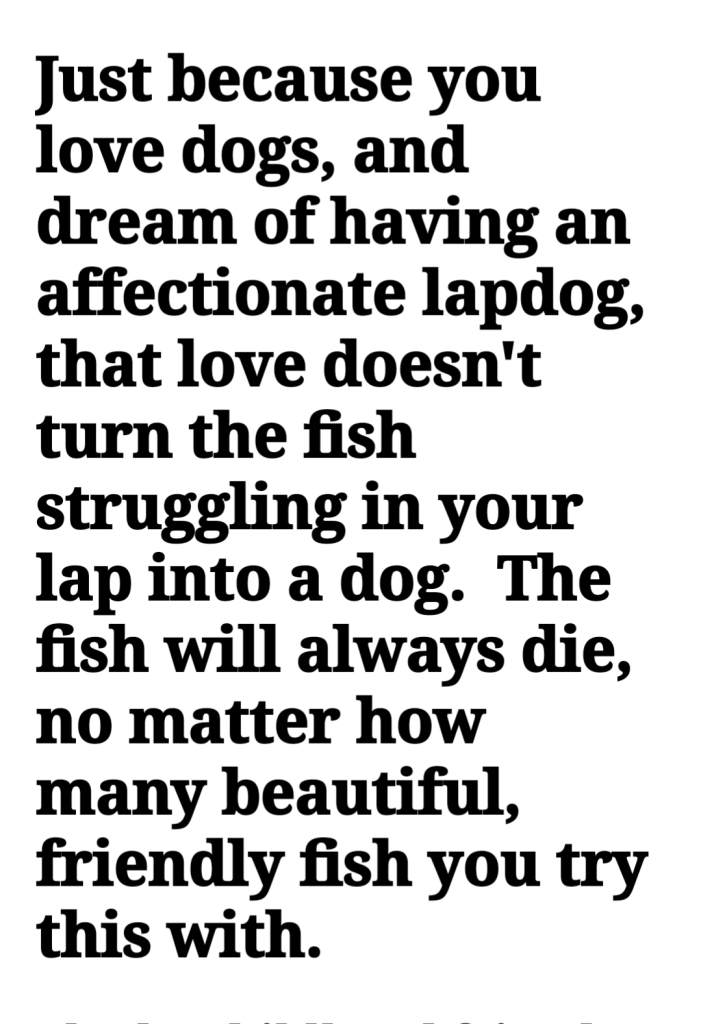
Wishing doesn’t make it so


This evening, at sundown, all over the world Jews will begin their Yom Kippur fast, which is broken tomorrow night, after a long, mournful bleat on a ram’s horn, when it is dark enough for stars to be visible in the sky.
Most don’t have any real sense of why they are fasting, but it is a sacred tradition that even many secular Jews follow every year. I do it myself, though not because I feel like I’m impressing an all-loving, all-merciful, all-seeing Creator with this penitent act of self-denial. If I can’t be slightly hungry one day a year, when billions of our fellow humans live with painful hunger regularly, am I even human?
The sorrow comes in for me because everybody, with the exception of a few gleeful sociopaths, I suppose, wants to feel they are decent people, doing the right thing, living a life that helps others more than it hurts them. We want this feeling always, no matter how badly we may act, no matter what hurt we may cause others, we all need to believe in our own righteousness. We all like to imagine we’d jump into a river to save a drowning child. We admire those who do, and wish we could be like them if we realize we aren’t brave enough (or good enough swimmers). We have high ideals and believe that we always live by them.
Most people, I think, have known people we can no longer have in our lives. Conflicts arise, and if only one person has the desire and the ability to calmly discuss and resolve conflict, the conflict inevitably becomes final, fatal to love and friendship. It is possible to remain in a conflict-plagued relationship, without hope of improvement, but I’ve learned it is much better to move past that particular heartache and learn an important life lesson from it.
There are some people who reveal an ugly side of themselves, often at the worst time for you, that you cannot unsee. It’s human nature to make excuses for that person, if we love them, but once an ugly pattern emerges, usually with an insistence that only you are to blame for any bad feelings, wishful hoping will not change the person you are making excuses for or your relationship with them.
I had a childhood friend I haven’t seen for many years at this point. He calls periodically and we speak calmly about things in our lives. The reason we don’t see each other anymore is that in spite of provoking me to anger every time we met, for years, he refused to acknowledge this, instead insisting that I have a problem with my temper. We all have a problem when we lose our temper, but that is another story. We do not all provoke our closest friend every time we get together with them. We also don’t all reflexively fight to deny that we are doing anything bad to anybody, ever.
I urged him several times over the years, if you hear me start to get upset, raise my voice, you see my muscles tense, my face redden, pump the brakes and let’s change the subject for a while. He doesn’t know how to do this. It’s not his problem. It is mine. So, in the end I did what I needed to do not to be provoked by someone who can’t help himself. I stopped pretending this handsome fish was a cuddly lapdog.
He is, sadly, unable to view his actions, and the actions of others, with the same clarity. To him we are still friends, somehow, because I take his calls and we talk on the phone once in a while. I always like talking to people, it is one of my favorite things to do. I like comparing notes on what we’ve learned over our aging lives. He listens as I recite hard lessons I’ve had to learn. This makes him feel close to me, that I am always honest with him, and talk in a relaxed, nonjudgmental way. I don’t mind talking to him, but that’s a much different thing than us being friends.
Friends comfort each other during painful times. Friends ask good questions when they don’t understand something. Friends extend the benefit of the doubt when the other one is off kilter, gently find out what’s wrong, how they can help. Friends accept responsibility when they hurt their friend. Friends make sure that ill-feelings do not fester in their dear ones. Friends are responsive, and honest, when a friend expresses unhappiness with the way things are. Not all friendships can always be saved, though some can. No friendship can be saved if one friend is always blamed for any conflict, unless the blamed person is a masochist.
If I tell you a sad story of death, with a hard lesson I reluctantly had to learn, and you reply that it was a beautiful story of life, with an inspiring lesson that is the opposite of the lesson I described, what can I possibly say, without being dishonest, that will make us friends again?
Days of Awe Yom Kippur 5785
Please rise.
In ancient times, as the days grew notably shorter, darkness appeared earlier and earlier and the nights turned cold, people fearfully began to pray. A hundred variations of “oh, Lord, please don’t destroy us!” were recited across the land, by trembling crowds presided over by priests who led them in rituals.
In Judaism these rapidly shortening days mark New Years and, ten days later, after the Days of Awe, Yom Kippur, the Day of Atonement. The tradition is that as night falls on Yom Kippur, God closes the immense Book of Life, where He (They, actually, God is commonly referred to in the plural, Elohim) has recorded the fate of every human for the following year, according to our deeds.
During the Ten Days of Repentance, the period between New Years and Yom Kipuur, Jews are commanded to make amends with people we’ve hurt, repay debts, make peace, atone for bad things we’ve done, forgive those who sincerely seek our forgiveness, straighten out misunderstandings, right any wrongs in our power to right. The sages teach that you must try to make amends with someone three times before you can abandon the process.
Sadly, in a world where the best teachings of every religion are not always faithfully carried out, not all Jews follow this exemplary practice, even once. I would estimate that most do not exert themselves to make amends, though many fast and pray to God, rising and being seated over and over as the pages of the Yom Kippur prayer book are turned.
Any Jew who dons white clothes, fasts and fervently prays, without taking a serious moral inventory of their own actions during these days, without approaching people they’ve hurt to make amends, is, to my mind, a sorry, sanctimonious sack.
My closest friend of many years, whose angry wife demanded no discussion of an ugly conflict we’d had, met me for lunch a few days before Yom Kippur two years ago so that we could try to make amends before the Big Guy closed the Book. This Jew who prays every morning became indignant when I got serious and came to the point, told me I’d blindsided him and angrily stormed out of the restaurant where we were eating.
It soon became clear we would never be friends again.
Our mutual friends all took no side, except to say that I was an unforgiving sadist intent on bending others to my will and that therefore they could never forgive me. It was impossible, they said, with no consciousness of the incoherence of their righteous stand, to forgive someone who can’t forgive.
Among this crew of highly moral souls was my friend the brilliant rabbi/fundraiser. His Switzerland-like acceptance of this idiotic verdict was particularly grotesque to me. In a position to make peace between two hurt friends, and being admired and wise, able to influence others to be reasonable, he affected an impeccably neutral stance. It’s clear now he that he made a calculation, thinking only of what was worth the most to him and what was worth the least.
Our subsequent falling out was ugly enough, though friends noted that my final letter to him, though insulting, was somewhat restrained, not nearly as vicious as I am capable of making it.
The following Yom Kippur I wrote him a long, careful, peacemaking letter, many drafts of it. I was careful to set out all of the ugly things that had happened without blame, without making him feel defensive. I offered him the chance to speak like two mensches, at least one last time, a kind of do-over for the ugly ending to our long friendship a few months earlier. I persuaded him that we owed our long, affectionate friendship at least that.
He called and we were both calm, and engaging, and hoping for the best, I suppose. At one point I asked him, in his capacity as a rabbi, if he could think of a situation where it was proper for one Jew to tell another who comes to him to make amends before Yom Kippur to buzz off. “Who is allowed to act this way?,” I asked, almost rhetorically.
There was a long pause, and then my learned old friend said “Only HaShem”. Only God.
The People rest, and please be seated
I’m listening to a fascinating audiobook, The Dangerous Case of Donald Trump. One of the authors, talking about the collective trauma of people living under the control of a demanding bully, states an important precondition for recovering from trauma — communicating and being heard. There are few things more comforting, when you are in turmoil, than feeling truly heard.
A person forbidden to speak honestly, and blamed for having a problem, will never be able to free themselves from the pain of abuse. The truth of this statement becomes very obvious once you hear it, particularly if you’ve ever lived the need to explain your side of a story you are angrily not allowed to tell.
Trauma takes over your body after you are mistreated and hurt, and then, instead of being listened to with sympathy, are harshly blamed and censored. When your feelings are dismissed by the people you go to for support, the trap of trauma closes around you. It is this lack of empathy from those you trust that sears the traumatic event into a lifelong disability. Abandonment by others underscores the painful feeling of hopeless isolation that is one of the hallmarks of trauma.
I had a rabbi/fundraiser friend, an old, close friend of mine, tell me, after a year of my struggle to make peace with two mutual friends of five decades, adamant in their insistence that I am insanely unforgiving and unloving, that he had already made it clear that he’d never speak to me about them or to them about me. “If that’s not good enough for you, I don’t know what else to tell you,” he concluded.
Set and match, actually. No amount of talk or understanding, no honest peacemaking, can resolve this conflict, this close mutual friend of ours concluded. There is only eternal enmity for both of you and your permanent ostracism from the entire group of old friends who take no side, except that they can never forgive someone who can never forgive. If you have a problem with that, asshole, what do you want me to do? If you expect me to listen to “your side”, with any kind of sympathy, when you are so wrong, you’re truly nuts. If the suddenly severely limited friendship I offer is not good enough for you, I don’t know what else to say, except fuck off and die, my friend.
I’m thinking about this universally admired dickhead a lot in the days leading up to another Yom Kippur, high holy day of the righteous and unbearable hypocrite alike. He claimed, during our last calm chat (after I’d exerted myself to extend him the chance to talk like a mensch one last time), to have had unconditional love from his parents during his childhood. He had already demonstrated, in his wild attack while attempting to silence me the last time we spoke, that he was lying about unconditional love too, to himself and to me. Someone who was raised with unconditional love does not explode in rage when an old friend is in pain.
We live and learn in this world, or we remain perpetual two year-olds, ready to explode in rage any time we feel frustrated, instead of calmly listening to people who have always treated us with kindness when we needed it.
This is from a happy new year email to my cousin who lives on a moshav in Israel, not far from Jerusalem.
Your assessment of Jewish values and the reality of living in an antisemitic world was very good. If only the values you rightly attribute to us were practiced by all Jews. It is a trap, like antisemitism, to believe that just because someone is in your tribe they are motivated by only the best of the tribe’s moral code. The bulk of humans are somewhere in the middle, with the best and worst being small minorities of any group (although the worst have the biggest influence, it often seems).
I have experienced a Jewish lynch mob, composed of my dearest old friends, all good people and fine Jews, all of whom now consider me dead and have cut off their adult children from me as well, and I have to say, there is nothing more horrific. To have a rabbi friend (who merely held a torch and remained tactfully silent during the lynching) tell me, when I asked him under what circumstances is it permissible for one Jew to angrily tell another who comes to make amends during the ten days of repentance to buzz off (as my closest friend had), that only HaShem [God] is allowed to do that — the idiotic, blasphemous icing on a disgusting cake.
The mark of a good person is treating other people fairly. No group has any monopoly on this excellent trait.
I just wrote a chapter about the difficulty of learning lessons you don’t want to learn, such as that your closest friends will abandon you en masse when a charismatic member of the group spreads a vicious lie about you (in my case that I am a sadistic, unrepentant torturer who tries to bend others to my will and is totally incapable of love or forgiveness). I certainly didn’t want to learn what I learned about my only sister, about most of my closest friends. I resisted learning it for decades, believing in the undefeatable power of goodwill, humor, kindness, patience, extending the benefit of the doubt, until the power of those things was eventually defeated by a determined will never to be wrong, at any cost.
I’ve been forced to learn (much against my will) that there is a personality type who can never be wrong, no matter what, who will fight to the death if made to feel insecure, and if they are able to, will always exact fatal revenge for defiance of their will (this can be almost anything, this type is very thin-skinned). Trump is an example that comes readily to mind.
I had to finally understand that this also, tragically, defines my sister’s worldview. My sins against her can apparently never be tallied and so she’s been required to lie to her children a few times to protect herself from the existential threat I pose to her and to them. It’s awful, it’s terrible, it’s like antisemitism — reason, fact, cause and effect, love, kindness, patience, giving the benefit of the doubt, appeals for empathy — poof! A desperately held belief may never be changed in this personality type (and others loyal to this type) it seems.
The world is full of broken souls. Some souls are broken early, by cruel or neglectful caretakers. If you are a baby who does not get comforted, or fed, regularly, your tiny soul will get a few deep cracks, always there as you grow. Others are broken later by life itself, injury, sickness, disability, bad luck, death of a particular loved one, abuse, meeting the wrong person at the wrong time and things going badly, and then the depressing pattern repeating.
We are all broken in some way, at least everyone I’ve ever met. The popular goal of achieving a state of permanent happiness appears to be an illusion. Can we remain happy when we read the latest accounts of babies killed, women and girls raped at gunpoint, explosions killing random innocent people in the name of one god or another, popular politicians angrily promising retribution and a return to the good old days of vast concentration camps for all enemies? Chasing after the abstraction of happiness, like the single-minded pursuit of “success” or wealth, is a kind of myopic idiocy, it seems to me. As my ex’s guru put it so poetically: chasing happiness is like a deer who runs after a mirage of water and dies of thirst. Well said, Babaji.
We love others in spite of their brokenness. We help each other heal a bit, by the application of a steady, empathetic love we all need. Every human being has a need for this healing connection to others, being given the benefit of the doubt and treated with kindness. Too many of us live without it, or even the hope for it. This precious love can be perverted, it turns out, when desperate souls place it on a scale against loyalty, righteous grievance and an appeal to harsh judgment and anger. It is a complicated business, being a decent, loving human being.
I think of my cousin Eli, my father’s first cousin. He was a very loving man, though he was rough, volatile, prone to fits of rage, capable of violence, estranged from his children, filled with hatred at times. I say he was very loving because he always showed that side, with warmth and humor, to me and to my mother before me. Both my mother and I fought with him regularly, vehemently sometimes, and in the end we always smiled, kissed and hugged and looked forward to our next battle. It was the complete recovery from our conflict, every time, no matter how fierce the fight had just been, that continually proved our love for each other.
You can look at a guy like Eli, conclude he’s dangerously nuts, give him a wide berth and have only the most polite and superficial interactions with him. Or you can see part of yourself reflected in him, a need to be heard, to have a strong opinion, to duke it out whenever you feel unfairly challenged, and above all, a need for reconciliation and reassurances of love. There was nothing false about my mother’s love for Eli or his love for her. They would each do anything for each other. But accept something from the other that struck them as bullshit? Why would they do that?
So in spite of our brokenness, we can form strong bonds, find love, set boundaries, overlook terrible faults in another because we also feel the steadiness of their love. Love is a stronger thing than happiness, which changes according to circumstances. We may get angry at someone we love, but the love remains. If it can be destroyed by a single conflict, eradicated by unyielding anger, it was not very sturdy, healthy love to begin with. It was the best our broken self was capable of finding at the time we first felt love toward that person.
As we grow, ideally we learn more about ourselves and the reasonable limits of our tolerance for the brokenness of those around us. Those who can’t acknowledge their own pain are the most dangerous motherfuckers on the planet. No amount of love can save someone who is hellbent on never being wrong, always being some childish notion of “perfect”. Can you imagine a love that can truly help a poor devil like that?
There are times when an insistence on telling the truth will cost you your head. Honesty is not always welcome, and we all know when it is best to smudge the truth a bit. A friend serves you a culinary creation that is not tasty, you compliment the consistency of the crust, smile as you point out how beautifully the greasy contents reflect a rainbow of light. You try your best to keep that look off your face as you pretend to enjoy the nasty dish, while looking for the dog to furtively offload it to.
In contrast to little lies to spare the feelings of people we care about, there are times when swallowing the truth you need to tell is like sucking down poison. If you can’t be honest with a friend, when it really counts, that person is not actually your friend. Sometimes a hideous choice will be presented to you by someone with a firm resistance to an unpleasant truth. I had a poisonous condition placed on me if I wanted to preserve my lost friendship with a group of lifelong friends, after a conflict with two friends raged in spite of all my attempts to make peace. I was told I had to admit that I was a sick, vindictive, torturing, unforgiving, venomous piece of shit who was totally to blame for all the bad feelings in this little group of old friends. Maybe then I could be forgiven for being unforgiving.
Accept responsibility for an insane conflict I hadn’t even caused? No can do. I found myself mostly able to refrain from sinking to their level of unreasoned anger — not to mention their uncritical embrace of a grossly counter-factual account of a simple conflict — but being called toxic (in a text) for simply being honest about a series of easy to understand events that actually took place, literally made me spit. I was spitting out the toxin of being mercilessly treated by people I had long loved and trusted.
Gabor Maté points out that the two strongest human needs are for attachment and authenticity. Attachment comes first, as helpless babies we need to be cared for by our caretakers and, because our life literally depends on it, early on we learn to smile, cuddle, do endearing things so that our parents will become attached to us and protect us. Authenticity is the need, once we become conscious individuals, to express ourselves, have our feelings taken seriously, our needs and wants respected. These two primal human needs are often at odds and sometimes, although we shouldn’t be, in a better world than this, we will be forced to choose one or the other.
A parent starts off enchanted by their baby’s seeming adoration and complete need for them. Conflicts arise in any parenting situation and the terrain can begin to change. It is crucial to some parents to keep their child subservient to the parents’ needs. Then the lifelong cycle begins — the child must always navigate the narrow, treacherous terrain between honesty and flattery, authenticity and fear of abandonment. There are many weapons deployed in this ongoing, uneven struggle for supremacy, among parents wired this way by their own fucked up childhoods.
A parent who was traumatically shamed and humiliated as a child will always fear their child’s authenticity. Imagine a more horrifying situation for a parent than the possibility of being shamed and humiliated by their own child. If there is a conflict, this kind of parent must set the entire blame on the kid, there is no real choice for them. To admit weakness, or being wrong, or being fallible, are all direct invitations to a nightmare of shame and humiliation. It’s the goddamn baby who’s the asshole, not me!
It seems comical to state it that way, but otherwise intelligent, educated, sophisticated parents may believe that formulation to the end. I was a good parent, how it is my fault my child was born angry, contrary, needy, stubborn, vindictive? My own very smart parents, to the end of their eighty year lives, both insisted I was born hostile, senselessly fighting them about everything from the day I was born.
“One day old?” I’d ask them.
“As soon as you opened your eyes you glared at us with hostility, you challenged us. I was aware of your judgment and anger toward me from the day you came back from the hospital,” my father always insisted, and my mother would nod along, often citing an idiot pediatrician who confirmed I was having a precocious temper tantrum for absolutely no reason.
“Oh, wow. I guess I don’t remember that. No wonder you always treated me as a dangerous enemy.”
“Now you’re trying to be cute.”
“I never attempt the truly impossible.”
And around it went.
With tyrants there is always a foundational lie that must be accepted as beyond question, an article of faith that must always be pledged to. If there is no evidence to support the lie, and a mountain of evidence that it is a lie, it is that much more important that everyone publicly insist the lie is true and the so-called truth, devastating to the leader’s cause and credibility, is pure, evil, godless, pedophile commie bullshit. This clinging to the truth of demonstrable lies is a consistent tic with those who can never be wrong. If the truth is harmful, create a truth that is invincible.
Be true to yourself, painful as that may sometimes be. It will rarely come down to having your head literally cut off. I am living proof of that (so far).
As psychiatrist James Gilligan, who spent years working with violent prison inmates, observed: all violence is an attempt to replace shame with self-esteem. It is an illuminating and important insight.
How does a child turn into a violent sadist? By being traumatized at the hands of those they relied on, beyond the ability to trust anyone, beyond hope of self-esteem. They internalize this hopeless, isolated, humiliation and must inflict violence on others to get a twinge of what feels to them like self-esteem. The suffering and helplessness of their crushed victims confirms for them that they are powerful after all, to be respected, and feared.
In one sense this seems obvious, after years watching the nonstop sickening performance of a thin-skinned, whining “strongman” who controls one of our two major political parties, banished all critics and bent it to his perverted will. He perceives violence carried out in his name as love, as he observed on January 6 when the “patriotic” mob of political martyrs were forced, by a massive bipartisan cabal of his cheating enemies, to attack Capitol police. He’d never seen so much love, he tweeted, as when his people were passionately injuring dozens of cops in his name.
It is true of any narcissist who is far enough on the scale to behave psychopathically. They literally cannot help what they do, though that’s no excuse for their predictably treacherous behavior. They are compelled by a desperation someone not traumatized to the extent they are can ever fully comprehend.
These creatures need to feel the power of hurting others, otherwise they feel utterly worthless. The humiliating feeling of being undeserving of love motivates monstrous behavior. The attempt to gain self-respect, respect and love by dominance, fear and manipulation is, as Gilligan points out, a misguided attempt to replace shame with self-esteem.
I point this out because knowing this basic mechanism of all abusers is important, if you are faced with one of these supremely destructive assholes. Once you see abusiveness in your personal life, say nothing (appeals to empathy or fairness are futile with these assholes) but put maximum emotional distance between yourself and one of these hopeless, reflexively harmful humanoids.
Narcissism has come into popular consciousness after almost a decade of a malignant narcissist dominating the news cycle every day, amplified by the destructive behavior of the ambitious psychopaths who justify his rage to dominate, all normalized by profit-hungry corporate media. One key feature of narcissists, because their ability to see things from anybody else’s perspective was destroyed early on, is a rigid insistence that they can never be wrong, no matter what they have done.
If they are wrong, it is somebody else’s fault for making them wrong, so they’re actually right. They justify every excess by blaming others for their temper tantrums, hurt, rage, shame, need for revenge and everything else that makes them unbearably uncomfortable. You get a great encapsulation of narcissistic rage, and its reflex to justify retribution, from our former president as he made his lying case during the privately organized, privately funded pep rally at the Ellipse on January 6, 2021, the tasteful prelude to the peaceful, patriotic Trump riot at the Capitol.
Very different rules. You can “illegally” take millions of dollars from foreign powers for your campaign, in exchange for promised political favors, because the other side is cheating. You can claim your predecessor illegally wiretapped you, because he wasn’t even a legitimate president, he’s a liar. You can order your attorney general to violently remove peaceful protesters from the streets so you can show strength in a photo op, because the protesters hate America and are violent terrorists. You can have the wife of a Supreme Court justice walk into the West Wing at will, and when she leaves, decide which disloyal members of your staff need to be fired, because, separation of powers (or States Rights, or whatever). You can make political martyrs of those who violently attacked police, because, when there’s fraud, you know… You can lie to your supporters over and over, and steal money from them based on those lies, because the other side is a powerful cabal of cannibal pedophiles who advocate the murder of newborn babies and are legally killing them by the truck loads in Blue States.
I think of my one time closest friend, today on his 68th birthday. His primal wound is that his father, a strong and generally admirable man, never protected him from a crazy mother with a violent temper. He grew up triggered by his manipulative mother, now over ninety and as able to reduce him to anger as when he was a child, and mourning the loss of a father who emotionally abandoned him.
The punchline, I suppose, is that he inflicted the identical damage on his own children, by being helpless to intervene whenever they were raged at by a mother who became abusive whenever she felt challenged. Here’s the man’s perfect rationale for nonintervention, as he’d explain to his children when they insisted on being hurt: what you think was abuse was really not abuse, you have to understand, because mom loves you so much, it’s just that she’s used to being in charge, has been since she was a girl, and so when you defy her she gets her back up, understandably.
Imagine falling asleep at night after your mother unfairly raged at you and your sympathetic father fed you that big, comforting spoonful of shit. Why would you not find yourself prone to panic attacks?