How to Deal with Unintentional Tasering

This tricky subject is definitely a work in progress, though I have a few strong theories I’ve been testing.  I am referring to the best way to react after someone close to you, with the very best of intentions and full of love, accidentally tasers you in the genitals.  Intentional tasering is another subject for another day.

Undeniably, this unintended injury hurts like Evangelical hell, but what is the best thing to do when you have recovered the ability to speak, and breathe, and refrain from writhing on the floor in agony?

I’ve had the opportunity to ponder this from time to time during my more than six decades of the occasional tasering virtually all of us experience once in a while.   I am trying to hold myself to a difficult standard of peacefulness in my personal life, a standard I wish was more universal.   I try to live a life of non-harm, what Winston Churchill’s little brown man in the diaper taught the world is called Ahimsa.  

Ahimsa is a strong, principled stance against violence that resists violence without inflicting it.    It has its limits, as far as I can see, I certainly would drop it like a bad habit if somebody was coming to kill me or do me or a loved one bodily harm, but as a general principle of behavior that would vastly improve all life in this world, I can find no fault in it.

Violence comes in many forms, some of them devilishly sneaky.   Being acutely conscious of exactly what hurts me, in its many shades and nuances, I try my best not to do it to people I care about.  In the abstract, I care about all people.  So, since I try not to react truculently to things like an accidental application of electric current to my testicles — if I know the shock was delivered unwittingly — I should also be working on not lashing out angrily at misguided Nazi-admirers, though that will have to be a project for another decade, I think.  Certainly the subject for another essay.

Hard enough in my personal life, not to get up from a tasering and smack somebody hard across the nose, before remembering that the taser was not applied with any ill-will.   The person may not even have realized they were holding a taser.  The first things to do when you are angry, I’ve learned, at a high personal cost, are breathe, wait, and think.  Your head will clear and after some time passes you will have a better idea than your first angry response.   Hard to do, friends, but very important, if you don’t want to live in a shrinking world of constant, eternally justifiable conflict.

I’ll give you an example, if I can, of a subtle form of tasering that may be delivered inadvertently.   Each of us has been sensitized to certain mistreatment by our upbringing.  To some people, silence is a perfectly valid response to a question.   “Hmmmm… you have very much provoked my thoughts, excellent inquiry… wow… let me work this one between my silent lips for a while as I meditate on your provocative line of self-reflection.”   I can picture Shakers, or Quakers, or some silently praying sect, nodding sagely, exchanging small smiles, while they ponder something deep one of them has offered.   On the other hand, there are people, and I am one of them, who have had strategic silence deployed against them, sometimes in a cruel manner, from their earliest memory.   When I ask a friend “what do you think?” and I hear no reply, it has the effect of a hard, accidental knee to the groin.  

This is because my father, a deeply troubled man, lived his personal life with a helmet and flak jacket on, probing with his bayonet whenever he felt cornered, which was often, since he lived in a trench with an opening on only one side.  If I’d ask him for something that was impossible for him to give — like non-judgmental emotional support in a moment of fear, for example — if he couldn’t deflect my question by framing it as another instance of my sniveling emotional neediness (sadly, I began displaying this lifelong trait at a very precocious age) — he would set his jaw and say nothing.   “Dad,” I would ask, at five, or six, before I learned better, “you are seriously not going to say anything?”   Silence and a short thrust of his bayonet would be his only reply.  As a result, I became very sensitive to this kind of silent reply when I ask things of people.  

My father, a highly intelligent man who was able to present his point of view adroitly, always argued that people cannot change on a fundamental level.  I can grant him part of that point — our fundamental natures, our original impulses, are very hard to change.   We are born with certain traits, we emerge from our mother’s womb more or less emotional than others, more or less prone to fear, anger, violence, calmness, happiness, whatever.  Then, of course, how we are nurtured plays a large role in how powerful these impulses remain in us.  Then, ideally, if childhood works out, we become adults with choices, people free to learn crucial skills we realize we lack, work on improving the limitations that increase our suffering and the suffering of those we care about.  

On a fundamental DNA level, sure, one person will still feel a reflex to be angry while another, given the same stimulus, will be reflexively optimistic, or whatever. My father’s argument, if taken to the logical extreme, is ultimately a defense of the wisdom of hopelessness, a proof against our ability to learn and improve ourselves, no matter how miserable we may be in our current stinking foxhole.  We should note that my father changed his view on this, and sincerely regretted he had not examined the view more carefully, hours before he died.

So the question, after being accidentally tasered by someone close to you, comes down to this, as far as I can see: a short series of direct questions to be put simply to ensure against future accidental genital tasering, each hopefully to be answered with a clear “yes.”  [1]

Do you understand why that thing you pressed the trigger of sent an electrical current to some very sensitive nerve endings in my privates?  

Can you relate to a sensitivity in yourself that would react the same way, if I accidentally sent a small charge of electricity there?    

Do you see my “please do not taser” area clearly now?  

Will you kindly promise to refrain from sending another jolt there?  

Outside of that, I see only the potential for more shocks to what my eight year-olds in Harlem sometimes referred to as my privacy.   If what constitutes a taser to the good friend’s privacy is not made clearly understood between both friends, feel free to live your life flinching, ducking, ready to writhe.   It doesn’t seem a viable life strategy to me, though we all have our own opinions on such things, one supposes.  

If somebody cares about you, they should be able to understand your non-angry explanation of why their sincere attempt to help you hurt you so much.  They should then make an effort not to taser you in the same place, ever again.  Kind of a bottom line, I think, in what we should expect from our loved ones in this best of all possible worlds.


[1]  Practice tip:  if these questions are not asked carefully, with supreme humility, they will result in the opposite of the intended effect, if the person you are seeking peace with is prone to flying off the handle when angered.    Live and learn…

We must often make do with the best we can do

Dr. Pangloss, an absurdly optimistic character created by Voltaire, famously lived in the “best of all possible worlds” where everything happened for a preordained purpose, even the most senseless and horrific things.  As I recall he kept this belief even after half of his ass was removed by cannibals for use as a ham (and many other equally atrocious things befell him and his student).  Easy to laugh at a panglossian chap like that as we look around at a world that could certainly be better in many obvious ways, but I mention him to remind myself that sometimes doing very little is actually the best we can do in this world, and doing that little takes us, in a real sense, to the “best of all possible worlds.”   Under less than ideal circumstances, of course, but still, by far the best alternative available to us, the little we can do.

Being able to transmit complicated thoughts and difficult emotions in words is a gift of being human.    It is among the miracles of being a “wise ape.”  True, it exists along side our susceptibility to mass terror, mass murder and so forth, but our ability to speak, to read and write, is, in itself, a great blessing.   Words that literally change the world can sometimes be conceived and written.   Words can save a person from despair when she reads them, actually save a life.   Save a single human life, say the sages, and you have saved all of mankind.

Many of us write here on the internet [1].  We write for many reasons — to entertain, inform, make our opinions known, for attention, the illusion of writing for a readership, to brag, to show off our skills and our humility, to pretend to wisdom or expertise, to sing, to play, to force ourselves to write as well as we can, to drum up business, to gather an army of followers to invade and conquer other websites, to pass the time, etc.   But every one of us knows, I think, that, confronted by a sudden vexation, it is a great advantage to be able to write it out clearly.  

The ability to write clearly allows us to set things out for others to share and also, to see things more clearly ourselves.  Often this thinking-writing process is the best we can do and the time we spend here becoming better at writing with clarity is time well-spent when the last seconds are ticking away on the clock and the game is on the line.

You get screwed by a bureaucracy, say you lose your health coverage, without warning, during a deadly pandemic (to take a random example).   Frightening, disorienting, unfair, possibly illegal — just writing these words provides the beginning of relief.  Putting a scary or aggravating scenario into clear language does something to neutralize panic.  The practice of writing an aggravation down, tweaking the lines for clarity and brevity, adding helpful details, deleting distracting ones… an excellent discipline for taming thoughts and feelings that might otherwise run amok and rob you of rest in your slumbers. 

We’re living in a fucking worldwide plague, literally, with cynical, calculating, clueless cretins in charge of Federal Emergency Management and many other areas of public health, safety and liberty.   The thought that the forces of greed and death are exploiting this tragedy to gain even greater advantage over the masses of us worldwide is objectively horrifying.  There are many reasons to be concerned, afraid, magnified by disorienting loneliness during this time of “social distancing” when the closest to socializing many of us can get is the telephone or “social media” which is a shorthand for how to be in touch without actually venturing anything personal that you wouldn’t want the entire world to know about.  

Social media fosters the actual opposite of intimacy, it creates the superficial illusion of connection.  Intimacy is a rare and life-sustaining form of friendship that can only be achieved one on one, over time, with the ongoing sharing of vulnerabilities, values and trust.  You cannot, strictly (or even permissively) speaking, share real trust via social media, trust me on this.

Being old school, you reach out in your isolation to write a personal letter to an actual flesh and blood friend, knowing that she has a tendency to freak out sometimes and suffer in silence, to make sure she’s okay, extend a hand for mutual support.   “This plague is a disorienting ordeal, n’est-ce pas?  I hope you and your pup are OK” you write in a hand-written letter that sets out some of your own worries.

The answer comes directly a few days later, typed and delivered on your phone’s beautiful, glowing screen.

“Me and Bonesy are fine, old friend, thank you for asking, and, as you know, even if I was struggling and terrified, which I am not, thankfully, I wouldn’t be a whining, self-pitying wuss like you and make a squealing incoherent federal case out of bad luck that is entirely of your own making, pal.  Thanks for reaching out! Always great to hear from you.  Please keep in touch.”  

You might think, poised over the tiny keys of your phone: it appears my old friend might be in  trouble, I wonder — is there anything helpful I can do from here in my own quarantine?   Well might you wonder.   You might want to write a few hundred words, to make the wonder something you can set out in front of you, organize, study, explain a bit to yourself, mull over.   Edit, clarify and repeat.   Word to the wise.


[1] It occurs to me from time to time that I need to figure out how to collect the probably millions of words I’ve composed and posted here on this website the last few years and save them in a format I can store on various hard-drives.   If I had a mass of readers I’d ask for any ideas about how to do this, but since few stop by, I’ll keep the question to myself.  On second thought, anyone have any ideas?  Does WordPress still have something like that old RSS feed that can be copied and pasted easily?

This Plague Too Shall Pass

In the end, at the end of our widespread terror and disorientation, the vast majority of us —  at least if we are not homeless, destitute, imprisoned, illegally detained, already ill with something else, housed in nursing homes, forced to work without personal protective equipment, or foolishly expose ourselves to known risk —  will survive this deadly pandemic.  It is terrifying, it is hard to adjust to living in a plague.  Some days will be better, some days will be worse.  

It is good to remember this:  in the end, this too shall pass, as all things, and even all of us, inevitably do.

When the deadly threat has passed we may find ourselves living in a society that has made significant institutional changes for the better.  Perhaps this horror will cause Americans to finally force lawmakers to recognize everyone’s human right to have health care in this country, and an affordable home, and access to a good, healthy diet.  

Chances are equally good, of course, given the energetic organizing on, and far above, the ground to keep things as they are, we could find ourselves in the Fourth Reich, since Nazi-types are much better at mobilizing their true-believers who know exactly who they hate and blame, than are ordinary people just trying to live decent lives.   We need to stay vigilant, and organize to fight for what we must — for example, the right not to live in a failed state ruled by remorseless kleptocrats where millions starve and tens of thousands die in the name of maintaining a brutally unjust “status quo”.

When you take stock of the major stresses that we are actually up against at the moment, this may be the most stressful non-holocaust moment in recorded human history, for the most people, all at the same time.   I took a few of the top reasons for our reasonable terror and despair and put them in a paragraph.   It might help you keep some perspective — or it might just add to your nightmares.   I hope it helps you feel better, to see how much we are up against right now and how gigantic your right to feel upset really is.

Random footnote from a deleted email response whining about something or other [1].

[1] short evocation of selected horrors from previous, rejected draft:
 
We’re living in an extraordinarily fucked up moment in human history: foreseeable end of the habitable planet, fascist-type strongmen in charge of most countries, totalitarian types who rule by dividing populations along ethnic and racial fault lines, a ruthless and unrestrained global economy now in free-fall, doomsday clock set to mere seconds to midnight due to unprecedented nuclear threat, this wicked plague where asymptomatic people are infectious and immunity may or may not occur after recovery from the disease, instant mass unemployment, the potential for sudden mass starvation (even for average Americans in a nation that produces vast amounts of often uneaten food) — the weird, sudden attenuation of all social ties, nobody making eye contact in the public space, even from 20 feet, the world’s most powerful maniac lying openly and dementedly on State TV every evening to keep his zombie base jacked up to the max, a gaffe-prone, sometimes lying (though genial and nicely toothed) husk of a compromiser being proffered as the opposition’s best hope ghost candidate — this list can literally go on for another twenty lines.   The stress is palpable, unbearable some days, and people are not holding up well under it.   It certainly doesn’t always bring out the best in most of us.
 

Now Good Americans are actually happy about the deaths of Bad Americans during a plague

I don’t consider myself a particularly evil person.  I get angry, for example when I’m overpowered by somebody who grabs my arm and keeps slapping me hard in the face with my own hand, asking solicitously why I keep hitting myself.   I may have a lower threshold for being bullied than a more highly evolved earthling, but I do my best to remain as mild as I can, under circumstances that sometimes make mildness seem a very unappealing option.    Anger is a good warning system, it seems to me, not to give in the urging of righteous, enflamed feelings and do something outright evil.  And yet…

The other day I saw a piece quoting the evangelical minister of a mega-church, telling his flock, in a packed church, at a time when more reasonable people were “social distancing” all over the world, that faith protected him from COVID-19, that the Lord would protect all the faithful.  He added a nice underscore to the effect that AND YOU CAN TAKE THAT TO THE BANK, PRAISE GOD!   A couple of weeks later this man of God was dead of COVID-19.   It immediately struck me as a rare instance of justice, a wonderful “good for you” joke on a pompous, influential, ignorant jackass.   I posted the short news item here.  

So a fellow citizen, as opinionated as any of us have an absolute right to be, died a horrible death in ironic circumstances and I took in his death only as a great punchline.   Never thought about it any other way.

Served the ignorant snake-oil selling motherfucker right, was my only thought as I posted it here, thinking myself wry, for the few and the misguided to read.   Good joke, no?   “God loves and protects righteous people like me, this so-called virus is God’s message to the accursed non-believers, ignore what these people of no faith are telling you… oh, shit, I … I … can’t breathe…. what in Lord’s name?   Ahhh, get me… to … the h-h-hospital…” 

Is it really funny?  Yes, and definitely also not funny at all.  Is it funny to laugh about a death sentence someone got just for being a fool or a blowhard?   Laughing about it reminded me of what I read years ago about the officially approved humor of the Third Reich, at a time when other humor was increasingly punishable by death [1].   Nazis were not without humor, many of them loved to laugh.  What made them laugh?   A good, spicy Jew joke was surely a winner at the old brauhaus. A joke about Hitler being a little nuts?  The weakest penalty for that was referred to as the “Hitler Cut”– castration.

Hoo, boy, right away, a bee line to that dark place with the Nazis…

Am I saying it’s wrong to laugh when a bully of some kind, while berating you and brandishing a club to beat you with, slips on a banana peel and lands wrong, cracking his skull and spilling his brains out on the sidewalk?   Of course not.  I’m just saying… what have we come to as a species when we “wise apes” celebrate the actual deaths of people who espouse views repugnant to our own?     Put the shoe on the other foot, picture a death sentence for someone you agree with for expressing what you both believe, it’s easy to see the sickness of it.    

Hypocrisy is not a crime, though, in the absence of all other sports and most entertainments during this plague,  it’s become something of our national pastime here in our gruesomely divided states of America.


[1] Richard Grunberger had a chapter on Nazi humor, if I recall correctly, in his The Twelve Year Reich, A Social History of Nazi Germany 1933-45.  

About the tome, from Jeff Bezos’s ad:

“In chilling detail, this social history brilliantly demonstrates the awesome power of a brutal government to corrode the human spirit.”–Wall Street Journal
 
“Invaluable for every student of the Nazi era.”–New York Times Book Review
The 12-Year Reich, the first comprehensive social study of the Third Reich, shows what the Nazi regime proffered as the “ideal” society and how the German people responded. Along with the violence, corruption, persecution, public extravaganzas, the ever-present Party, and the cult of the Fuhrer, a ghastly imitation of ordinary life went on.
How did people talk during the Third Reich? What films could they see? What political jokes did they tell? Did Nazi ranting about the role of women (no make-up, smoking, or dieting) correspond with reality? What was the effect of the regime on family life (where fathers were encouraged to inform on sons, and children on parents)? When the country embraced National Socialism in 1933, how did that acceptance impact the churches, the civil service, farmers, housewives, businessmen, health care, sports, education, “justice,” the army, the arts, and the Jews? Using examples that range from the horrifying to the absurd, Grunberger captures vividly the nightmarish texture of the times and reveals how Nazis effectively permeated the everyday lives of German citizens. The result is a brilliant, terrifying glimpse of the people who dwelt along the edges of an abyss-often disappearing into it.

A Vision of Heaven

As a child I had a picture of heaven as a place of eternal peace.   I’m sure this came from my father, who, though angry and embattled while he was on this earth with the rest of us,  is living in such a place now.   My child’s image of heaven was of old enemies meeting on a cloud, embracing and laughing off their old, earthbound enmity.  Their old reasons for hating each other now delicious jokes to be shared and laughed about together in the ever-after.

I was reminded of this today, when I had a wake up call from Elaine at Healthfirst, the health insurance company that has done so much to impersonally fuck me over lately.  Apparently my DFS complaint, which I had attempted to revoke by email on Tuesday, had been quickly assigned to an investigator who contacted Healthfirst.  Good to know that process still works so quickly, anyway.

The last time Elaine and I spoke, things had not gone well.  I had asked her pointedly several times if she was drunk.  I eventually hung up on her after one too many incoherent, drunk-sounding answers from the Resolution Specialist.  That was back on March 7, I think, the last, and ugliest, of several long conversations we had.

She began our conversation cautiously, as you might imagine.   I immediately informed her that I’d contacted DFS to retract the complaint (I believed I had finally successfully done that last night on their website).   I told her that this time Healthfirst was not to blame for the termination of my health insurance.   I told her I wished Healthfirst had contacted me on March 11, when they were informed that they needed to terminate my insurance effective March 31. I could have prevented the cancellation of my health insurance if I’d had a heads up from them in time to stay insured.

She explained that the March 11 notice Healthfirst got contained the same claim my on-line, inbox-posted version had — that I’d received two notices to remedy my easily fixable error, one the day after I re-enrolled and the March 11 notice I was never notified of.   Healthfirst was in the same boat as I was, it seemed.   No other notice had been sent to anyone, I never got the March 11 notice in any form, until after my insurance was terminated and it was too late to do anything about it.  Unlike Healthfirst, only I had had my health insurance interrupted for a month during a plague, but that wasn’t Healthfirst’s fault.  

The odd thing is how gentle our conversation was.  I had no animus toward poor Elaine, a native Russian speaker doing her best in a difficult language.   Her promised written summaries had been the best she could do, subject to redactions from “regulatory”, I grasped that now.   It was not her fault that NYS does not provide consumers with the laws that protect them from, for example, termination of health insurance without notice.  

“Did you call the New York State of Health?” Elaine asked sympathetically.  I explained to her that on a good day one cannot easily get through on the phone, during the pandemic wait times are much longer.  The reps one eventually speaks to there are as limited in their knowledge and their power to help as the ones at Healthfirst, they cannot see the entire picture or explain difficult things that are difficult, or even impossible, to explain.  She seemed to understand this.   I told her I’d found and fixed the mistake easily on-line.  If only I’d had notice to do it sooner!

Thinking about the surprisingly pleasant call afterwards (she’d been palpably relived to get no fight from me), and how we wished each other well, and spoke for the first time without defensiveness or anger on either side, two humans in very similar little boats, I was reminded of my childish view of heaven.   From the minds of children…


Laddie Boy, and bullying for no reason

There was a popular dog food, when I was a kid, called Laddie Boy.   For all I know it’s still around, I’m seldom in that aisle in the supermarket these days.  I think our brilliant dog Patches may have eaten Laddie Boy.  I recall the stink of it when the can was opened — in later years on an electric can opener that sounded like George Harrison’s electric guitar on Revolution (White Album version).  

I had a classmate, for a couple of years, named Fred Ladner.  I liked Fred, we stood at the back of the sized place line in fourth or fifth grade and he was always pleasant.   One day, for reasons– or more likely simple, brutish reflexes — I can’t recall, I menaced Fred in the school yard.   I remember how he recoiled, confused and hurt and I recall the vitriol with which I called him “Laddie Boy” as I glared at his sudden fear.  I may have grabbed his shirt, but I don’t think I even did that.  He didn’t make a move to get away, just stared at me wide-eyed, his sense of my senseless betrayal clear in his wet, scared eyes.   I don’t know how it happened, I don’t know what, if anything, may have precipitated it.   What I remember was his fear and confusion, and that I was the direct cause of it.  

I don’t remember any other incident of myself being a bully in childhood.   I sometimes expressed a bit of malevolence here and there, as any boy sometimes does, like after a friend’s mother drove him and his sister into a concrete stanchion and the guy wore a maroon wool hat, a la Mike Naismith of the Monkees (not sure what color Mike’s wool hat was) all day long in school.  One day somebody snatched the kid’s hat off and we saw that it covered a white circle shaved into the dark curly hair of his head, where he had been probed, or stitched or whatever.   He was very unhappy to be exposed this way and I was in the circle of boys, his friends and classmates, who sadistically kept the hat away from him in a game we used to call Saluji, for some reason.  He desperately tried to get the hat back, only to see it flicked away at the last second by the mercilessly grinning little boy he rushed.

It was a momentary thing, and this kid was probably my best friend at the time, something I quickly forgot about.   I had no recollection of it until, to my surprise, I learned that he was still very bitter about it more than fifty years later, when he brought it up one day with great feeling.  

It is easy enough for me to see these behaviors, and if there were two instances I can recall there were surely more, as me acting out what I experienced at home.  Where my sister was sly, passive aggressive, darkly, sadistically funny, I fought back directly whenever our parents took a verbal swing at me.  My father was, I can see now, often tormented by demons that caused him to act contrary to the way he taught my sister and me to behave, contrary to his ideals and highest beliefs.  He bullied my sister and me, often goaded by my mother’s demand, after a long day at work, as he was trying to rest up a bit before going to his second job,  that he do something about the two disobedient, disrespectful little pricks she had been dealing with all day.

We are aggressive and sometimes irrationally hostile, we smart apes, and, in crowds, we are capable of doing things that are the stuff of nightmares.   We have always been this way.   We don’t always know why we are screaming and pumping our fists into the air as someone we hate is being publicly tortured to death.   It’s a homo sapiens thing.   You don’t see cats and dogs doing this kind of thing.   Pigs raised for slaughter in Auschwitz-like conditions don’t act this way.   Only humans form lynch mobs, send armed men into villages to rape and burn, build vast state-of-the-art machines to kill as many as possible in the shortest amount of time.

As I state the obvious I’m also thinking about what makes a reliable narrator.  Is somebody trying to get to the bottom of his or her pain a reliable narrator?   For example, I wrote hundreds of pages, posted here, in a first draft trying to get to my father’s point of view as he was inflicting terrible damage on his children.  This process caused me to swing wildly at times, in an attempt to vividly describe the damage and also understand it from a bully’s point of view.  

Although he generally bullied us, is that really what my father was at his essence?   Surely there were many other things at work in his nature, more salient features that those who knew him would see him as before “bully”.   Describing my father’s angry glare as “psychotic,” for example, was a wild swing and a clear miss.   In the second draft, should I live long enough to produce it, these missteps will be corrected as I convince the reader, and, more importantly, the publisher, that I knew what I was doing all along when I stumbled through the first draft.   (Tip of the yarmulke to Neil Gaiman who hipped me to this in his Mahster-clahss youTube ad).

I don’t think it requires a Sigmund Freud to convince anyone that the indigestible traumas of our childhoods live on in us many years later.   The pain we can’t understand or process has nowhere to go except various, mostly unconscious, survival strategies: a rigorous daily exercise regime, sarcasm, constant busy-ness, “recreational” drug use, etc.   We make vows to do better, as I have with my attempt to apply an “if I can’t help, I don’t hurt” ahimsa-based approach to my own life.   Knowing that I am as capable as the next little Hitler of cruelty to my fellow creatures, I try to be aware of my hurtful actions as I keep my own interactions with violent or provocative assholes at a minimum.   A neutral straight face shown to a vicious person one encounters by chance, I’ve learned, is usually better than a sneer, a comment, a middle finger raised.  As is getting away from them as smartly as possible.

Still, most of us get to understand so little about what makes us act the way we do. Of course, we’re all masters of justifying it, to ourselves and anyone who might be offended by it.   I realized a few weeks ago, to my great surprise [1], that after writing everything I could think of about my father, in the course of a daily practice over two years, that I am now able to clearly see things from my father’s point of view.   I imagined his voice, informed by the regrets he had while dying and the lifetime of progress he made in the last few days of his life, expressing what he wished we could have talked about when he was alive.  

Talking to his skeleton regularly explained things to me I could never understand before.   I don’t pretend to understand exactly how this happened, but imaging the conversations I know he wished we’d had revealed things I never had a conscious clue about.   I finally understood this perplexing character, in a way I cannot presently understand the little boy who suddenly turned on his friend Laddie Boy and made his eyes grow wide in betrayal and fear.    Very much like my father’s eyes when, one day during a verbal beating he was dishing out, I stood, a skinny fifteen year old, with such violence that the old man in his chair was suddenly afraid.  


[1]   As I learned, to my great surprise, one day during law school while I was transcribing words of a legal decision into a paper I was writing, that I wasn’t looking at the keys as I typed.  I was amazed to realize that I’d taught myself to touch type, completely unconsciously, simply by typing countless pages during my dreamy creative writing days and as a rat-like law student. 

On an IV of your favorite pleasure drug

I was thinking about the one percent again after hearing John Oliver cite experts for the proposition that 2% of vulnerable victims of Coronavirus, COVID19,  die of the disease.   A 2% death rate is not as bad as the 3.4% I heard just days ago, you have to like your odds of survival, but, still, you’re talking about millions of dead, potentially.   Even at a 1% death rate poor management of the crisis would, in ordinary times, be a death sentence to a political leader who grossly bungles the serious duty under the pressure of actual emergency events.   

Luckily for those in power, the vast majority of Americans, deadened by years of increasingly painful political malice and legislative deadlock, regard politics, even now, as a grim spectator sport they can keep track of on their phones.  They are desperate not to find themselves living in a dictatorship, they are merely realistic about their options for having any actual say in actually avoiding it.  They have no clue how to organize, how to militate, how to demand concessions from power by the sheer force of mass mobilization, power yielding nothing without a powerful demand [1].

The reasons authoritarians always rely on police power for social control is that when enough people are pushed to the point of desperation, anger builds. Dictators harness this anger and release it as police rage on fellow citizens.   Works for the ruling few, if not for the teeming masses.

The essential skill everyone of us needs to figure out is how to organize with fellow citizens, how to gather our forces and discuss the best way forward, speaking to the powerful in a clear, strong voice.    The only change worth fighting for is change worth fighting for, to state the obvious yet never stated.   Is it worth fighting for a legal end to involuntary servitude that will go into effect one hundred years in the future?   I think 1% would buy that idea.

Speaking of one percent, here’s a fun one.  Put one billion in your calculator. Assume the least sophisticated billionaire in history, on a full-time IV of his favorite pleasure drug, has his money in a series of FDIC insured bank accounts making 1% interest.  Tap those numbers in and you will see what even this drugged out idiot earns in simple interest in one year:  $10,000,000.   Almost a million a month, not bad for a complete dope!   Of course, at 5% the annual earning would be $50,000,000, a significant sum by any reckoning,  and at 10% a hefty and very livable $100,000,000 a year in interest, but, of course, those are just numbers.  No reason to get excited.


[1]  Frederick Douglass, genius and good twitter friend of @donaldjturnip


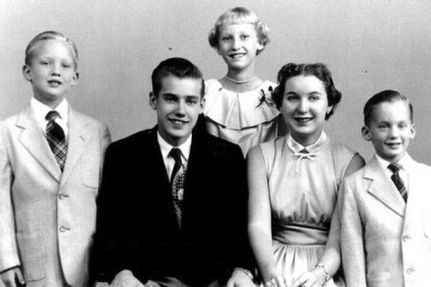
Mary and DonaldRump and DadTrump siblings

How To Avoid The Second Civil War

In a nation that has long been an innovator in the inter-related arts of public relations, advertising and propaganda, most of us get our news in a highly mediated, skillfully filtered form that caters, increasingly, to our own personal prejudices.    It seems impossible to find a reasonable consensus at this historically perilous moment.   At least 45% of the country sees Abuse of Power and unprecedented blanket obstruction of all investigations as not impeachable.

Many now believe that there are facts and there are equally valid alternative facts, in this threatening pre-civil war funhouse we are all living in at the moment [1].  We are living in a historically perilous time, like Kansas 1860, or Berlin 1932, with the unsettling overlay of the foreseeable end of a habitable planet ticking loudly in the foreground.   If we are to spare ourselves another actual bloody civil war, followed by mass extinction, we need to be very smart going forward.

We consumer-citizens rely largely on commercial mass media, run by profit-driven corporations with deeply intrenched interests– largely increasing profits — for most of our information about our limited political choices.   Noncommercial news sources like Democracy Now! and the Intercept, outlets that cover the struggles of activists against institutional injustice unreported elsewhere, (and never to my knowledge successfully sued by anyone over a false report), are unknown to most Americans and the news they report is easily dismissed by low information voters and pundits on the right and center as … choose your favorite word for the ranting of liberty-hating, unAmerican losers.

Old friends rage at each other over perceived political dogmatism, blindness, defeatism, stupidity, idiotic idealism, long friendships sometimes ending in bitter inter-partisan disagreement over how to get to the end result both may desire.   Rage is effortless on social media, where trolls reign, delighting in provocation.   

We are sharply drawn into inimical opposing camps, every one of us powerless except as part of a larger block.  As far as political action, we are largely constrained by the design of the two party system, the only game in town, and forced to vote for whichever candidate is chosen for us by a National Committee.  We try to choose the less hateful of the two and hope for the best, a sorry version of actual democratic participation.  

Both major parties run on corporate dollars and the dark money of our super-wealthy, many of them the privileged inheritors of vast fortunes.  Our Supreme Court is staffed by at least five hardcore corporate rights judges who believe that corporations are “persons” entitled to all the freedoms the rest of us enjoy, including the freedom to all the speech their vast money can buy.  Our highest court holds that corporations are citizens just like the rest of us, only with infinitely more power and influence than any thousand of us regular people working together can hope to exert. [2]   The individual, unless very wealthy (see several billionaires currently vying for the presidency) is almost utterly powerless in our democracy.  Except for our freedom to speak, to reason, and to organize.

(brace for a slightly disjointed next paragraph, citizens)

If you are the victim of an illegal practice committed against you by a corporation, join the club, it’s a gigantic one.   Millions of us are fucked by corporations on a daily, hourly basis — they are not in business to make sure consumers are not being fucked, they are in business for the bottom line– maximizing profit, by any means that is not specifically illegal and enforceable against them.  The Supreme Court itself clarified that the sole legal imperative of the American corporation is maximizing profits for shareholders.   If a corporation violates the law, the consumer must find the precise law it violated and then find a legal remedy.  No specific illegal act under law and/or pertinent regulations found, no remedy, stay screwed, asshole.

I was recently victimized by the corporate “person” that provides my health insurance under Obamacare.  On January 22, when I called to pay my premiums through June, I was told Healthfirst could not accept my payment and that my ACA health insurance for 2020 had been terminated.   A supervisor, Daiya by name, confirmed that this had been done “pursuant to the guidelines” for my failure to pay during a once-a-year ten-day “grace period”.   She told me the corporation had no obligation to inform customers in advance of the severe and irreversible consequence of failing to pay within this one-time “grace period”.  She initiated what she said was the only available appeal, an internal one within the company, and called two days later to pleasantly let me know that Healthfirst had not restored my insurance.

Working hard and having a great piece of good luck, I managed to find the only appeal process that could remedy this particular illegal act (at the NYS Department of Financial Services, naturally– here’s the LINK).   Two business days after my on-line complaint I had a call back from Healthfirst, apologizing for its “mistake” and accepting payment of my premiums through June.

Two weeks later, after my letters to the CEO of the corporation and the Attorney General’s office, I had a call from a “Resolution Supervisor” telling me “billing” had asked her to call me.  She assured me that my insurance had never been cancelled.  I was not reassured and questioned this long-suffering, apologetic woman at length.   She told me she’d try to send me the records of my dozen recent calls with Healthfirst, but had to first run it all by another office.

To my surprise, I learned there is an office at Healthfirst called “Regulatory”.  They were reviewing whether I was entitled to call records of my own calls to the private corporation.  I wrote an angry second letter to the CEO, cc’d it to the Attorney General.  I mailed it, then emailed it to her.   The next day I had a call from Healthfirst — I’d be receiving a written apology from Daiya, the confidently “mistaken” supervisor.  I’d get copies of my phone records with dates, times, person I spoke to, the substance of each call.

I am a perversely insistent motherfucker living in a corporately run nation where we non-corporate persons have  very few protections of any kind from routine predatory practices by largely unaccountable entities.   While I was helpless prey I managed to luck onto to a mechanism to almost immediately reverse an extremely stressful interruption of my ongoing medical treatments.   I was fortunate to find someone in an agency, a sympathetic woman who listened carefully, who told me how to get an emailed copy of the sections of the laws that Healthfirst apparently violated in putting me into that upsetting situation.   

I was surprised to learn today that the corporation is giving me everything I asked for without forcing me to bring a lawsuit against them.  I will soon be able to look over the law itself and see which specific sections and subsections were violated in my non-terminal termination.  I am positive than I am the lucky one in a thousand, or ten thousand, maybe a million,  getting almost immediate relief from intolerable, illegal mistreatment by a health care provider, under the Patient Protection and Affordable Care Act.

I am have a certain skill set, I’m diligent and, in this case, my illegally terminated health coverage was saved only by a miraculously fast resolution process that is well-hidden from the average consumer.   We live in a country where the powerful are free to oppress the rest of us, often without consequences to themselves, the burden being heavily upon those fucked to figure out how to unfuck ourselves (not easy, I can tell you for sure).   The laws that exist are co-written by expert lobbyists providing careful loopholes and provisions (like the now ubiquitous “arbitration clause” in every contract — thanks to now-Justice John Roberts, a genius of corporate law) that protect their fantastically powerful clients against things like class actions.

What was done to me, personally, can be multiplied by a hundred, or a thousand, or tens of thousands, just in New York City, where I live.  The woman at the NYC office I spoke to today (NYSDFS) told me they get HUNDREDS of health insurance complaints every day, many similar to mine.   

Do we have vast institutional problems in our country, including opaque laws that allow gigantic unaccountable private profit-driven institutions to do business largely unrestrained by effective laws?   You betcha.    Are many of our government officials, the people we trust to protect our interests, incompetent, lazy, corrupt, complacent or otherwise of little use?   You betcha.   Is the Republican Party, supported by vast funds from our wealthiest and most greedy, going to address this oppression of the many by the few?  Not likely.  (Picture me holding a fortune-telling 8-ball when I ask these questions)   Is the Democratic Party, supported by vast funds from our wealthiest and arguably slightly less greedy, going to address institutional injustice?   Perhaps over the next hundred years, if history is any guide.  If there are still two political parties by then.   If the earth itself is still a habitable place for human life.

We, people of good faith who are living through these viciously partisan times, when even old friends savagely attack each other like angry rats in a failed lab experiment, must find a way forward.    We must talk to each other as reasonably as we can, allow ourselves to hear and consider reasonable arguments. 

We need to meet likeminded strangers, and strategize and organize for effective influence and representation in our Republic. 

We need to act in concert to put pressure on, and keep pressure on, elected officials and the political parties that choose them.    How we do that is a great challenge in our atomized social media surveillance state.   I embrace that challenge as my only alternative to crippling hopelessness, though I have no immediate way forward to report.

I leave you with these wonderful, wise words from historian Howard Zinn, delivered while accepting a prize, toward the end of his life, for his groundbreaking A People’s History of the United States :

I wanted, in writing this book, to awaken a consciousness in my readers, of class conflict, of racial injustice, of sexual inequality and of national arrogance, and I also wanted to bring into light the hidden resistance of the People against the power of the establishment.   

I thought that to omit these acts of resistance, to omit these victories, however limited, by the people of the United States, was to create the idea that power rests only with those who have the guns, who possess the wealth.  I wanted to point out that people who seem to have no power — working people, people of color, women– once they organize and protest and create national movements, they have a power that no government can suppress.

I don’t want to invent victories for people’s movements, but to think that history writing must simply recapitulate the failures that dominate the past is to make historians collaborators in an endless cycle of defeat. 

And if history is to be creative, if it’s to anticipate a possible future without denying the past, it should, I think, emphasize new possibilities by disclosing those hidden episodes of the past when, even if in brief flashes, people showed their ability to resist, to join together, occasionally to win.

I am supposing, or perhaps only hoping, that our future may be found in the past’s fugitive moments of compassion rather than in the solid centuries of warfare.

(you can watch Zinn deliver these short remarks HERE, highly recommended)


[1]  fact or alternative fact?   From CNN:

The Department of Justice has dropped its criminal investigation into former FBI Deputy Director Andrew McCabe without bringing charges.

Back to me (channeling an alternative fact citer): a president pursuing “groundless” two year DOJ criminal investigations into his personal enemies is not an abuse of power, and even if it was, fuck off you partisan haters!   See Article Two!   It’s the only one you need to read!

[2]  The great Bill Moyers had the best reply to the legal fiction of “corporate personhood.”   He said “I’ll believe that corporations are people when the State of Texas puts one of them to death.”

What to do if your ACA health insurance is illegally terminated

If your insurance company terminates your insurance, claiming you missed a once a year ten-day “grace period”  for payment, go to this site and make an immediate on-line consumer complaint.   The complaint at this agency restored my illegally terminated health care in two business days.   The New York State Department of Financial Services (yeah, I know) now, finally, does the consumer protections functions of the abolished (in 2011) Department of Insurance.  The NYSDFS does what the Attorney General cannot do.  (I know…)

Here are the numbers of two offices in New York City that were enormously helpful while I was trying to have the illegal decision terminating my insurance overturned:

For immediate support, and solid advice during this illegal termination, contact the New York City Human Resources Administration, Department of Health, Public Engagement Unit (212-331-6266  M-Th  9am-8pm  Fri til 6:30).   Alexa at this office urged me to file the NYS Department of Financial Services’s on-line consumer complaint form.  She also assured me, 100%, that the unappealable corporate decision to terminate my insurance without notice would be reversed, which it was.  Bless her.

In addition to excellent and knowledgable support they will direct you to New York City’s new  program, NYC Care.  It  provides an extensive safety net for low-income individuals who lose access to affordable health care.   This wonderful pilot program can save a lot of lives, because it provides for low cost doctor visits long before a too late, ER diagnosis of a fatal stage of a once treatable disease.  This compassionate, life-saving program should be well-known by all New Yorkers and well-publicized until it is.   

NYC Care has a helpline at 646-NYC-CARE (692-2273).  The program is only active in the Bronx, so far, but if you go to any public hospital (Bellvue, Harlem Hospital, Jacobi, Lincoln, Montefiore and others)  you can enroll, at the Financial Planning or Business Office of that hospital, in the low-cost, pay-as-you-go “Options Program”.   


Hereditary Trait — war between siblings?

Years ago I had a terrible fight with my sister.   A few days later I was visiting my father’s first cousin Eli, a rough character as capable of tenderness as he was of socking somebody with one of his hard fists.  The old man thoughtfully listened to my description of the fight.  He paused to take it all in, then gave me his advice.

“Look, she’s your sister, I hear what you’re saying about the fight but don’t let the bad feelings linger.   You have to swallow your pride, tell her you’re sorry you two fought, you don’t have to apologize for starting the fight or not starting it, you’re just sorry about the whole thing.   Tell her you want to make up, put it behind you, tell her you love her and you feel terrible and you want it to be over.  Don’t let your pride stand in the way of making up with her.  Do it sooner rather than later when it might be too late.”

I told him it was good advice, and that I appreciated it, but that I was still too hurt and angry to make that move, and then, taking a page from my mother’s book, I told Eli it was a little ironic coming from him, a man who hadn’t spoken to his own sister in over thirty years.   This got the same reaction my mother’s challenging comments always got from Eli.  His face immediately turned magenta and he leaned forward menacingly, ready to attack.

“My sister is a completely different story!   There is no comparison between my sister and your sister!   My sister is a complete bitch!” he yelled in a cry of pain and anger, as acutely stung by the painful falling out they’d had decades earlier as if the unforgivable offense had just happened.

Fast forward three decades.  I get a call from Eli’s daughter.  She and her sister are visiting the cemetery where their parents and mine are buried.  She asked if I’d like to meet them, it’s been too long since we’ve seen each other.   I took the train up to Peekskill and we drove over to the cemetery.   It is a Jewish tradition to take a small stone and place it on the gravestone of the dead person we are visiting.     We gathered our stones and walked among the graves.

At their parents’ grave we put our stones on Eli’s side of the large headstone and then, as I put a stone on their mother Helen’s side, I said “she was a sweet lady.” That was my memory of her — long-suffering, hospitable, kind smile.  I was a boy when Helen died young, but I remember her pretty well.  Neither of her daughters said anything when I said their mother had been a sweet lady.

Afterwards, over lunch, they told a couple of stories involving their mother, as though to set the record straight, letting me know that their mother, in her way, had been as problematic as their emotional, sometimes violently opinionated father.

If your father is tyrannical, as the beloved Eli also was, and your mother always goes along with the tyranny… well, an ally of your enemy is also your enemy.  I know this well from my own childhood.  Helen always seemed sweet to me, she’d smile warmly and bring us good things to eat.   She was quiet and kept herself busy being the perfect hostess during our visits, she laughed easily.  She died of cancer when I was about 11 or 12.   Why wouldn’t a boy remember her as a sweet person?   Particularly if his own parents often attacked him, sometimes quite savagely.

We can think of these childhood observations without attaching value judgments to them, somehow, but it’s not easy, or even always a great idea, I think.   Value judgments are our assessment of what’s the right way to act and what not to do.   Even the doltish Nazi Adolf Eichmann, the subject of Hannah Arendt’s brilliant book on his trial in Israel, was able to accurately summarize Immanuel Kant’s view on this, the Categorical Imperative.   When pressed by the judges at his trial he defined it: to act in such a way that you could will your actions to be universal principles.   Would the world be better or worse if everyone acted like I am acting now?

I think of this as another statement of Hillel’s famous summary of morality: what is hateful to you, don’t do to somebody else.   Loving your neighbor as yourself is a difficult golden rule to follow.   Phrasing it the way Hillel did cuts through difficult theory to practical practice.   It’s a simple matter to know what you hate, you hate it instantly, always, it’s like a chemical reaction.  

You can do something hateful to you to somebody else, if you don’t expect that person to treat you any differently in return, but what kind of world would it be?  If everyone treated everyone in this hateful manner we’d have a state of constant war, each against all.  If we all stopped ourselves from doing things to others that we hate done to us, that would be a huge step toward solving problems before the oceans rise to drown all of us not turned into desperate climate refugee/cannibals determined to not to die by water.

But back to my original thought about whether we inherit certain idiosyncrasies regarding siblings (begging, of course, the equally valid question of whether we learn them as children).   Eli didn’t talk to his sister for the last 30 or 40 years of their long lives. He lived to be almost 90, his sister to 103.  I believe their final dispute was related to sharing their father’s modest inheritance, more than 40 years before Eli’s death.    Eli’s daughters have a younger brother I haven’t seen or heard from in years.  When I asked his sisters about him they said he was fine.  I got the feeling that they haven’t talked to him for a long time.

Although I often ascribe this family harshness to the brutal pruning of our family tree back in 1942 and 1943, and the centuries-long culture of persecution my surviving family comes from, I suspect these estrangements between siblings happen in many cultures.  I just read a book about sibling strife by psychologist Jeanne Safer,  Cain’s Legacy.  She states her credo at the start of the book:   “Cain’s Legacy reflects my passionate conviction that it is essential not to gloss over the dark side of life.”   She states my credo as well.  

I have to peer into the darkness until I can see the fucking thing, I can’t stop myself, nor do I want to.   I need to understand what is there.  If it can be fixed, let’s fix it.  If it provides a lesson, let’s take the lesson from it.  If it is too monstrous to survive in the light, we’re better off leaving it there in the dark and both walking away from it.  To pretend it’s not there does not seem to be a life-affirming option.

The common peace-seeking instinct is to move toward the anodyne, the inoffensive, compromise version of conflict that blames nobody.  An explanation that lets everybody off the hook, you dig.  This is the purportedly non-controversial version of sometimes unbearable things we often hear from those who urge us that both sides always have an equal right to their opinion and that we should not judge.  We always judge, it’s part of our nature.  It’s how we survived as a species, as individuals.   It’s what we’ve learned to do from the experience of our lives, to the extent we ever really learn anything.

My father’s brother was younger, sickly as a boy and mom’s favorite.  Where my father was literally whipped in the face by mom, from the time he could stand, his brother was coddled.   Neither one emerged from their childhood without deep emotional scars, although my father’s problems are easier for me to understand now than my uncle’s.  My uncle, to his credit, spent years in psychoanalysis.  His son, my first cousin, would scoff to read the reference to his father’s long exercise in denial, dressed in a suit, lying on a shrink’s couch week after week, gaining so little insight. What did he learn?  When the mood struck, he remained tyrannical in his rage until the end. My father, for his part, had a lifelong scorn for people so weak they needed to whine to a shrink about the demons all of us must battle in our lives.

My uncle, much smaller than my father, often cringed around his brother, like a younger brother who’d often been sucker punched by his older, bigger, stronger antagonist.  One of the few stories my father ever told us about his brutal childhood of grinding poverty was the time he stuffed his little brother’s mouth full of raw chopped meat.   He told us the story more than once, chuckling each time he did.   The brothers had a strained relationship throughout their lives.  One time my father stayed at his brother’s overnight and I asked him over the phone how my uncle was doing.  I wrote his immortal reply on the page I was doodling on:  “let’s just say he remains unchanged.”

Yet, check this out– when my father was dying, he kept asking for his brother.   I picked my uncle up at the airport and the two brothers clung to each other morning to night for the last couple of days of my father’s life.   It was incredibly poignant to my sister and me.  After my father died his brother sat with his dead body (along with my brother-in-law) until members of the Chevre Kadisha (the Jewish burial society) claimed the body to watch over it and prepare it for the funeral.

My paternal grandmother, a savage little woman who died before I was born, used to yell at her sons when she saw them at each other’s throats.   “Seenas Cheenum!” she would shout — baseless enmity!   No reason on earth for these boys, growing up in extreme poverty, one beaten, the other coddled,  to be at each other like that!  I can imagine my grandmother grabbing my father roughly, pulling him away from her beloved younger son.   This kind of thing is detailed in the Old Testament where sibling treachery abetted by mothers and deadly fights between brothers are reported multiple times.  

This tendency for eternal ruthless war between siblings appears to wind up in the blood.  A combination of nature and nurture,  I suppose.  It is seemingly replicated down the generations.   Without insight into it, we remain prisoners of strong feelings we cannot understand or get past.  We pick up a rock and slay, sometimes.  

This unreasoning, murderous side of us lurks in our wounded hearts– there are circumstances that will bring out this rage.  The challenge is never to pick up a rock and slay, or maybe, to learn, without a doubt, that the wisest thing to do is to remove yourself from a situation so emotionally fraught that, under pressure, it will inevitably yield to the impulse to pick up the rock.