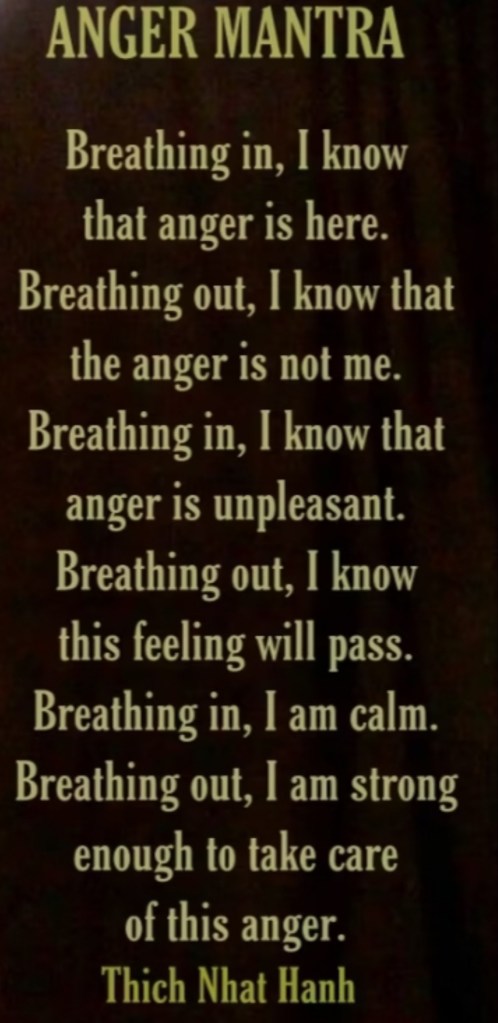
Sitting with corrosive emotions

This has got to be one of the hardest things humans have to do.   A feeling that causes pain, and is left unaddressed by the people involved in causing it, leads to anger or depression (anger turned against the self, in an apt description I read), after an increasing bitterness that becomes impossible to ignore.  The reflex in most will be to turn anger on the person causing the pain, simply blame them, or to quietly take the pain on yourself as confirmation that you deserve no better, somehow.  Hard to sit with corrosive emotions, though sit with them you must, sometimes.   

There are a few reasons a loved one will not hear you when you ask them to, few of them are very promising for the relationship.  Particularly if they, understandably, demand to be heard at once when they are in pain and then tell you just to wait a few more months to talk about what’s bothering you.   

Parents, for example, may feel supremely challenged by a very smart child.  The kid will have to learn to navigate around the insecurity of the parents, find his or her own way forward, without the help of the parents.  Sometimes just a difficult question about something that perplexes the kid will set the parents off.   How do we explain something that gives us so much pain to think about?  Nobody knows the answer to human evil!   Why do you ask such goddamned questions all the time!?   Jesus, can’t you just be quiet?!  The kid derives various lessons from this consistent feedback, adjusts the best they can.

Some people cannot be wrong.  If you point out something they did thoughtlessly, or unfairly, you are pointing to something intolerable, something inhuman, unthinkable to them.   “You don’t seem to understand, I cannot be wrong.  It’s not that I don’t like being wrong, I can’t be wrong.   How do you not know this about me after all these years?  I will not be wrong, I will not be challenged to defend my actions, you have the problem, not me!  I am loved by everyone, you’re the only one with a problem, look at your own life!” 

My dear old dad had this feature, an inability to admit fault for anything.  It endured through almost fifty years of constant war with his children, two provocative little shit snots who constantly challenged him, and lasted until the last night of his life, when he realized how much of a horse’s ass (his phrase, only time I ever heard him use it) he’d been to see the world as black and white.   He wistfully imagined the world he could have been living in instead, full of nuance and color, rather than the bleak high contrast warscape he inhabited and imposed on his young children.  He apologized for forcing my sister and me to grow up in the grim shadow of his irrationally limited emotional worldview.  I appreciated the apology.  He died a few hours later.

Once, two years before he died (two years of the meaningless fake small talk he demanded at the end) he told me I had to respect his right not to respond to concerns I raised. For once I was there with a reply I couldn’t later improve on. I told him I understood that he was choosing not to talk about a difficult subject but that I certainly did not have to respect that choice. He then demanded we keep our conversations politely superficial, talk only about sports, health, politics, and so we did, until that last night of his life, when he admitted he’d felt me reaching out to make peace with him many, many times over the years. He regretted, that last night, that he hadn’t been mature enough to reach back, even once. He’d been too afraid, he told me. And so, to avoid pain he could not bear, we’d had to pretend to be a loving father and son, on his strict, limiting terms, until I was there to support him as he died.

Sometimes, I have to say, I am the last one to understand the full scope of a situation.  Sometimes it feels like I’m the last to realize that something I’ve long cherished is already dead.  My efforts to not react with anger, to fully process what needs to be said so I can speak without the anger, must make me some kind of aggravating holier-than-thou freak to loved ones who get anger off their chest and move on, without the need to understand anything about what set off their anger (since, after all, they know who to blame).    By the time I put my thoughts together, particularly after a couple of follow-up challenges (threats like “I’ve dropped people from my life for doing less to me than what you did”) the subject is ancient history, being dredged up needlessly by a troubled person, and nobody in their right mind cares about that stuff.

My best advice is to somehow make peace with the bitterness that churns up when your needs are dismissed.  That bitterness is to be expected when you are stonewalled in your need to be heard.  Forgive yourself for being unable to stop feeling it. I find that setting things out clearly on a page provides some temporary relief.

You will have to leave the embittering situation in the end, if you can’t find a way to make it better, it is Survival 101 for anyone but the hardcore masochist. Remember that making peace requires goodwill and openness on both sides, you can’t do it alone. In the meantime, finding the patience you will need is a great challenge, a mind-fucking challenge some days, as is maintaining a posture of peace, when the sides seem to have been drawn in black and white, the final irrefutable victim story irrevocably arrived at, all details agreed to, and the terms of any possible peace treaty have already been carved in stone.

Picturing the familiar festive table without you is a little foretaste of death, the place we all must go in the end.  If you’d been hit by a truck, or died suddenly of a heart attack, the effect would be the same.  A chair you used to sit in, occupied by someone else, as life goes on, as it must.
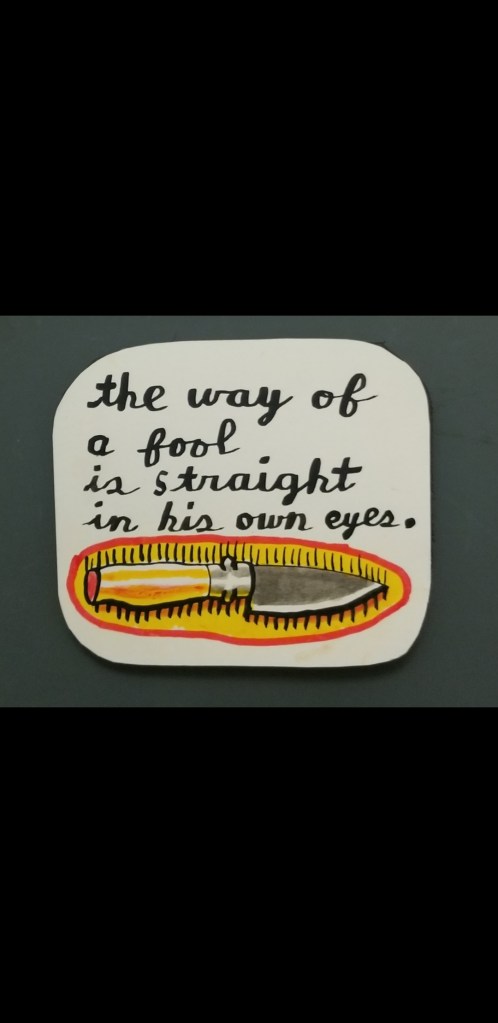
More and less acceptable ways to express hurt and anger

On a scale, from most obviously harmful to most subtle, we have violent murder to quiet, implacable disapproval.  In between we have, in random order, punching, kicking, slapping, shoving, handling roughly, verbally abusing, threatening, glaring at, mocking, humiliating, ignoring, demeaning, belittling, emotionally and physically withdrawing and many other techniques.  Sarcasm and silence can both be deployed effectively to express displeasure, as can an uncompromising refusal to engage with the other person’s feelings, including the ever popular dead fish expression in response to the other person’s attempts to be funny. Silence might be the king of all of them, with its wonderful feature of complete deniability (as compared to, say, bashing somebody in the face in public no matter how much they may have seemed to deserve it).

My father, in most ways a wonderful human being, had been repeatedly physically abused and emotionally brutalized as a young child, by his own mother.   He was a master at showing anger, employing numerous techniques from the in-your-face to the demonically subtle. As he was dying, literally on the last night of his life, he lamented, for the first time (after a lifetime of denying that childhood has anything to do with your adult life) that his life was effectively “over” by the time he was two years old.   The next seventy-eight years was a determined exercise never again to experience the trauma of being humiliated, powerless, viciously treated.   In his case a tiny, violent, ill-tempered religious fanatic mother had convinced herself, somehow, that whipping her first born in the face from the time he could stand was what God wanted.  We all know that the Old Testament God is a vengeful diety, He told us so Himself, but fuck…

Anything that awakens a childhood trauma hurts well beyond the event that activated it.  It is unsettling to find yourself, as an adult of many years’ experience, suddenly as vulnerable as a baby about to be mistreated again by an insane caretaker.  It makes us feel coldly abandoned, particularly if done to us by somebody we love and trust.   There is no end to the cycle of hurt and anger this provokes in us, unless we constantly strive to do the goddamned difficult work not to become enraged, intransigent, capable of doing things to others that we ourselves would suffer terribly if done to us.

On the other hand, of course, much easier to simply join an angry mob, under incoherent banners, to scream, pump your fist in unison, and let the fucking chips fucking fall where they may.

Easier is not always better, though. 

When the world crushes you

Some days the world will try to crush you, you may wake up with the weight of it solidly on your chest.  It’s nothing personal, the world does it to everyone sometimes.  Stay busy enough, I suppose, and you can often outrun thoughts that will otherwise stop you in your tracks: the senseless war over slowing or speeding up climate catastrophe, finally addressing racism head on, the war over public education, a propaganda machine effectively substituting grievance-stoked rage for discussion.   If you stay busy enough you may never think, “Jesus, all the evidence is out there in public, has been for years, why are these dangerous, powerful criminals not being indicted?”  Then, after a day of great exertion you collapse into bed, exhausted, ready for needed seep, but there is a small crew with jackhammers outside your bedroom window, waiting to energetically make sure you will make do with short sleep.  

The world will crush you sometimes, it always does.  What to do on those days?  Do something you love, even if only for a short time.  Remember, the world is a crushing machine on certain days and you are not wrong to feel squeezed by it.   Moods change, the people and things you most love remain.  Reminders of all the rest of this miraculous life can help lift the weight of the fucking world off of you. It won’t lift at once, or permanently, but, shoot, I’ll take less of an anvil on my heart any day.  It may be tough to dance with a million tons on your shoulders, but it’s easy enough to listen to the music that makes you want to dance.  

The first thing is to breathe.   Breathing is the best thing to do, the first, most essential and naturally calming thing you can do.  Remember to breathe, slowly, deeply, appreciating with each inhale and each exhale how much more beautiful this life giving process is than the inevitable alternative which always comes in its time.   If you wake up feeling crushed, focus on breathing, first.  My two cents.

Insight vs. a punch in the face

Gaining insight is hard, delivering a punch in the face, when provoked, is pretty straightforward.   Not to say you might not pay a price for the punch, you can break your thumb, bruise your knuckles, have the shit beat out of you, even get shot or stabbed, but the reflex to lash out when angry is pretty basic.  It’s simple, primitive, sometimes effective in dealing with a real or imagined threat.   Those who train to deliver a punch effectively learn to harden their hands, protect their fingers from damage, turn the fist just so right before impact for maximum effect. Everybody else is free to let fly, with real or metaphorical fists, like a hurtful series of words you can never take back.

Insight, on the other hand, is hard to come by, often painful.   You need to learn to see things from a perspective not your own, feel things that may never have happened to you directly, learn to study the broken pieces calmly, detached from your ingrained reactions.  Insight allows you to make connections on a more thoughtful level than our world consistently operates on.   

The level our world operates on is a well-deserved punch in the face.   More specifically, a punch in the smug, fucking face.  Insight allows you to understand the operation of life on a less reflexive level.  Gain enough insight and almost everybody may want to punch you in the face, if you’re not insightful enough to be cool about your path toward insight.

I give the example of my own attempts to not replicate what I experienced from my parents in my youth.  That is, I try to follow Hillel’s formulation of the Golden Rule.  I try not to do things to others that I hate being done to me.   All we can do is try, but trying is a step in the right direction, every time.  I hated being unfairly accused of things I hadn’t done, painted in an ugly light, I still do, as does everybody else, of course.  In my parents’ house I was constantly confronted, always portrayed as coming home from the hospital two days old angry and ready to fight, usually blamed for the anger that was always exploding all around me, and always required to fight.   I fought, and got pretty good at it, even as I understood how tragically ridiculous the nonsensical war I was drafted into was.

I have made it a long project to make myself less susceptible to my anger, less ready to react with rage.  Reading about Gandhi’s philosophy of satyagraha (not in detail, mind you) I began trying to practice ahimsa, non-harm, as a first principle.  A difficult stance, in our violent world, particularly without a religious framework and a community of fellow non-harmers, but I have found the goal very worthwhile. Trying to keep the principle of non-harm in mind has made my life better, even if I am far from serene.

If you come from a mindset of not harming others, of being straight in expressing what you need, being direct and patient, it seems to me your life will improve, particularly if you were raised in a senseless war where everybody had to fight all the time for no real reason. 

It turns out even a straightforward insight like this is very shaky in the real world.  Certain old friends will insist that you’re deluding yourself, that you may have become a tiny bit better at DELAYING the arrival of your famous fucking anger, but you are actually just kidding yourself, propped on a flimsy moral pedestal that with only a few hours of determined kicking I can topple, proving that your rage is very real and present, you fucking superior fucking asshole.  In the end, I will make you want to punch me in the face, Ahimsa-boy, proving that I and the brutal real world are right and your ahimsa pose is just gas, self-righteous fumes, no matter how much you may think you’ve improved in overcoming your reflex to respond with anger.

To me, resisting the impulse to react with anger is a net good, no matter how incremental the improvement. If in the past you would have been angry a minute into an aggravating situation, you now find you are able to go for an hour before the anger starts sapping your will to remain peaceful.   In one sense it is a huge step forward, you will find yourself doing better in many situations that would have turned to shit instantly in the past.   It is a useful skill in our world, to refrain from striking others with words or fists. 

On the other hand, to someone intent on proving that you, like them, are a piece of shit beyond redemption, beyond the possibility of meaningful change of any kind, well, in the end they will be able to grind you down.   You are not a bodhisattva, you are just trying to do better, and in the end you will reach your limit and get that look on your face that will prove their triumphant point.

Been there, done that, showing great patience with people who demonstrated that insight was not for them, that a punch in the fucking face was much more to their taste (even if beyond the limits of their physical courage), and that I, actually, rather than being less angry and provocative with my so-called insight and ahimsa was even more of a piece of shit for trying to be better than them.  Of course, and I say this just between us, I was already better than them, in terms of treating people the way I would like to be treated myself, but my goal was to be better than myself, not anybody else.  I’m not in competition, in any field you can name, except to make myself better.

Insight is the only way out of pain, outside of the usual painkillers.  It is not a magic door you can walk through, of course, it is a path you take, a goal you aspire to.  Much easier than pausing to gather yourself and trying to develop understanding is staying on the treadmill, running until your heart gives out.  Hard to blame people who recoil from introspection.  People don’t like things that cause them pain, unless they are masochists. 

Think of it this way, though — you can repeat the same tragedy over and over in your life, with minor variations, or you can learn from the way you play your part in the tragedy and do it a little bit less tragically next time.  Or, you know, you can just punch me in the fucking face, it’ll probably feel better, at least until the adrenaline and cortisol rush wears off.

Rage farming?

When I read this headline yesterday in the Washington Post:

I immediately pictured the in-your-face, proudly ignorant, provocatively opinionated, unvaccinated, infectious former running mate of maverick John McCain smugly saying to the world, and NYC in particular, “here’s your fucking honor system, assholes.” It was enough to piss me off, the thought of that provocateur giving the finger to the honor system, like everyone else in her slavishly authoritarian party.

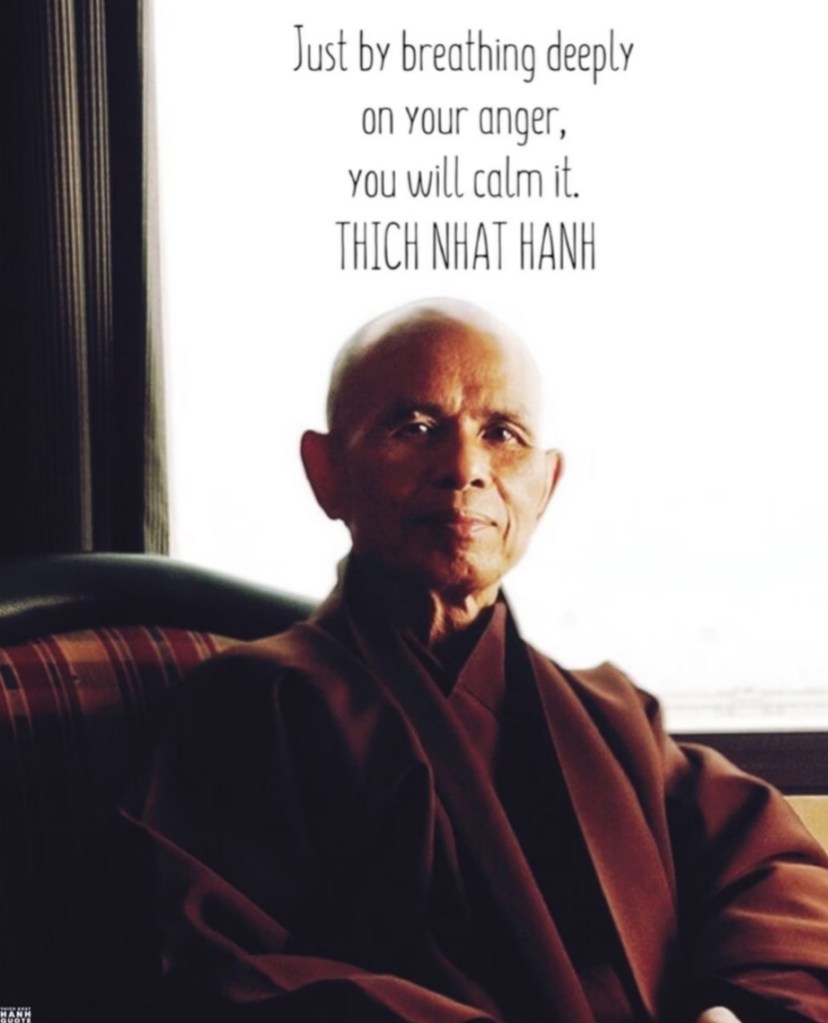
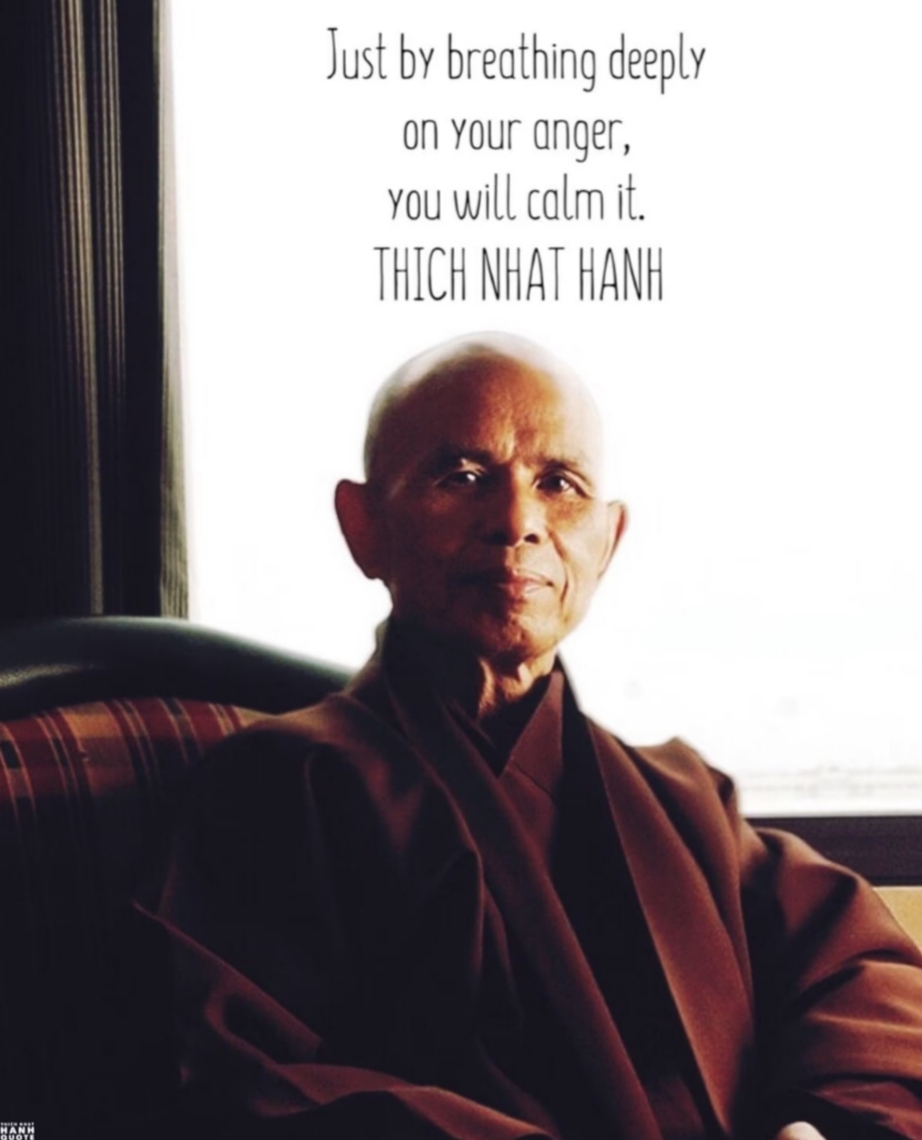
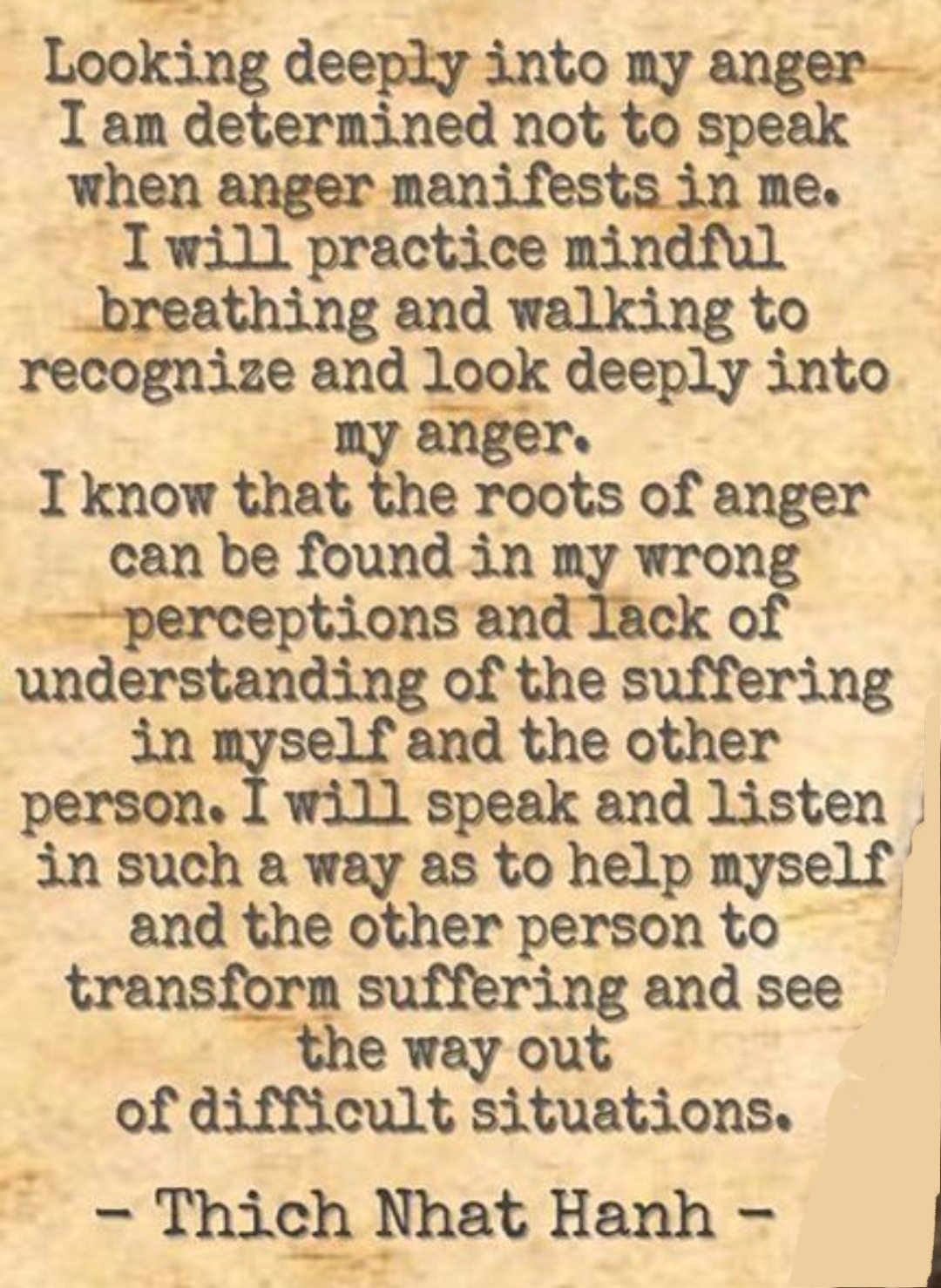
I felt a flash of anger. I thought of Tich Nhat Hanh’s good advice.

Here is Sarah Lazarus’s wry version of the Palin story:

Sarah Palin dined out at multiple New York City restaurants after testing positive for COVID, but in her defense, she’s had a lot of time to fill since her libel trial got delayed because she tested positive for COVID

The New York Times had their usual judiciously worded headline today:

A few hours after I saw the Washington Post headline I went back and took a look at the Washington Post article.

https://wapo.st/3G1f7RO

It turns out Sarah Palin ate outdoors, which is apparently fine in New York City if you are unvaccinated, whether tested or untested (covid positive could be a deal breaker there, it is an honor system). The article states that, according to someone, she went back to the restaurant to apologize for the ruckus she’d caused a few days earlier, which may be true. The article also noted that it has not been disclosed when Palin tested positive for covid-19, meaning the five day isolation period the CDC recommends could theoretically have passed. All unlikely, perhaps, but possibly true.

So is the attention grabbing headline really fair? Sarah Palin is in NYC to testify in her federal lawsuit against the New York Times, she claims a 2017 editorial libeled her. She’s waiting for a negative covid test so the trial can get started. By dining outdoors, it seems she had not actually flouted the letter of New York City’s pandemic regulations, assuming she wasn’t lying about her infectious status. She surely also enjoyed the attention she got for making the radical left covid-haters mad, you betcha.

She is an ignorant asshole, and a sassy symbol for millions more, standing on the right to infect whoever they want with a potentially deadly disease, in the name of performing rabid partisan politics and “owning”, if not also killing, political enemies. She is an aggravating pustule on the eyelid of American democracy, the wet dream of cynical fucks who pictured someone exactly like Trump as the president one day. But is the provocative, click bait headline fair in announcing that she deliberately flouted New York city’s covid rules when the article under the bold headline makes a something of a case that she may not have? Just asking.

Everybody wants to be treated fairly, you could even say we all deserve it. Fairness is another word for justice, after all. Even a provocative piece of shit is entitled to make the case that she’s being treated unfairly, as Ms. Palin is about to do in federal court in this anarchist jurisdiction.

t’s Be slow to anger, quick to seek better understanding. Breathing is much better than holding your breath til your face turns blue. Trust me on that one.

Not succumbing to anger is very, very hard to do, I know, particularly when provoked, even moreso when constant provocation is part of a deliberate plan to keep everyone enraged, to increase “engagement” on “social media” and bring about long planned American fascism, a privatized corporate state with unlimited wealth for a few and a hearty fuck you to everyone else.

It is best, for yourself and for all of us, to practice being slower to anger, quick to seek better understanding. Breathing, and letting ourselves calm, not immediately reacting to each provocation, is much better than holding your breath til your face turns blue. Trust me on that one.

And, yeah, calmly, and with love, fuck Sarah Palin.

R.I.P. Rom

Rom Rosenblum was my dear friend Howie Katz’s best friend. Howie, a man with an irrepressible sense of humor, was never known to have said a bad word about anyone. Howie died the gentle, early death of a person beloved of God, he was stopped at a red light, his foot on the brake, and his life winked out like a candle flame extinguished by a whisper, his passenger unaware until the light changed and he said “Howie, Howie…”

Rom went to the airport to pick up Howie’s daughter for the funeral. “I’m the adult,” he told me, “her father’s best friend, who held her as a baby, I’m like her uncle, I’m supposed to be comforting her, but as soon as I saw her I just started crying, and she’s trying to comfort me. I couldn’t stop crying.” They both no doubt bawled together on that ride back to the city.

Rom was a beautiful soul, kind, funny, a great musician. I used the past tense because I got a text, out of the blue, that Rom died of pancreatitis a few days ago. I wish I’d known he was sick, I certainly would have called him. We might even have had a laugh. No matter how dark the situation, I think Rom could find a way to laugh about it.

Rom was about five years older than me. We met when I was seven or eight. Rather, he performed for my little sister and me when I was that age. It’s a story I can now never confirm with anyone, my father, who knew Rom well, was an appreciator of Rom’s quick, irreverent wit, and who Rom thought highly of, is gone. Now Rom is gone too. My first encounter with him was at a weekend convention of teenagers my father was supervising, held at a big hotel in Hampton Bays, Long Island, either November 1963, starting the day JFK was murdered, or perhaps the following spring. My father, a high school social studies teacher, had a second job as the director of the Nassau-Suffolk region of a Zionist youth movement for teenagers called Young Judaea. If my math is right, Rom was probably about the youngest of the high school-aged Young Judaeans at that convention.

He was walking with a cane, having injured himself, I always assumed, playing ice hockey, a game he loved. To my sister and me he looked a bit like a young John Lennon, which puts this convention the year after the JFK assassination, since no American kids our age had ever yet heard of John, let alone knew what looked like in November 1963. I recall the tall, skinny kid with the glasses and the attitude, slouching on a couch outside the dining room, where everybody else was still occupied. When he saw my younger sister (she was five or six) and me he went into a performance, pretending he was drunk (or maybe not pretending? he kept slurring the ad line “sure didn’t taste like tomato juice…”) and using the cane as a hockey stick to reenact the action on the ice, as he called out the exciting play by play of a sport I never understood “Giacomin with the save, wait, slap shot, SCORE!” and so forth. Eddie Giacomin, I confirmed years later, was a goaltender for the NY Rangers, the only NYC hockey team at the time.

My sister and I found the young Rom delightful, entertaining, as clever and hilarious as Peter Sellers, who he also slightly resembled. Here’s what he looked like in more recent years:

Our paths crossed over the years, as my father continued his involvement with the youth group and eventually became director of their summer camp in Barryville, NY. It was at this camp. in the summer of 1969, that I ran into Bruce Rosenblum, the guy who’d entertained my younger sister and me with his madcap improvisations years earlier. By then he was going by the name of Peanuts — on his way to Rom. His was riding in the back of a small, open, flatbed truck with a large group of other high school seniors at the camp, the overloaded truck negotiating a twisting road, when the truck flipped over, flinging its occupants, causing numerous injuries. Peanuts spent some time in the hosptial, I recall and came back from the hospital on crutches. He was no less stylish and cool, clomping around the camp on crutches than he had been with his cane.

A few years later he was in Israel, a new immigrant, serving time in the Israeli army with his buddy Howie Katz. Howie was part of a tank crew that wound up in a firefight in the Sinai desert during the Yom Kippur War. I believe Rom was in the same crew. So was Don Tocker, the guy who’d go on to be the first director of the new kibbutz they were all founding members of. Suddenly, seeing something, Don yelled “jump!” and they all leapt off the tank. The tank blew up after a direct hit from an Egyptian artillery shell. The entire crew miraculously escaped unharmed. I met Howie shortly afterwards on that brand new kibbutz in the Aravah desert, in the valley across from the mountains of Jordan. Howie was my kibbutz father, and nobody ever had a better father than Howie. We became lifelong friends.

Howie eventually became disillusioned with life on the kibbutz, a small town where people gave him a hard time, among other things, for walking around everywhere naked. I don’t know much about Rom’s reasons, but after a year, or maybe more, he too left the kibbutz, and eventually returned to the US. They both settled in the Bay Area, Howie in San Francisco (where he and his wife raised two children in the heart of the Castro, the gay district of SF, during the AIDS epidemic, a time of great human rights battles over the “right to be gay”) and Rom settled across the bay, in East Bay, near Berkeley.

Over the years I maintained some contact with Rom. Any time I was in California I made a point of getting together with him. We played music together a few times, the first being at a Halloween party where, as part of an impromptu band, all in costume, Rom (a brilliant keyboard player) played an excellent harmonica and sang, and I played a borrowed electric guitar behind him. I can’t overstate what a great musician he was. He was also a recording engineer. I visited him in East Bay once, we played a bit, and then Howie came by in his truck to take me back to San Francisco. Howie requested “All Along the Watchtower” and Rom, in about a minute, put together a great loop of that simple vamp. We played variations on the theme for a couple of minutes, Howie beaming at us the whole time.

After Howie died suddenly, Rom, who was in agony, comforted me on the phone when I called to express anguish about inadverently alerting a difficult former friend of Howie’s who’d angrily written Howie off, who was now heading to Howie’s funeral and might upset Howie’s widow. I asked Rom for his help. “Don’t worry about it, it won’t be a problem. It’s not your fault you that talked to his mother, it will be fine,” said Rom, “There’s nothing you did, or can do, nothing I need to do, everything will be fine. Don’t worry, we’re all adults, it will be fine.” And it was.

A couple of years later Howie’s daughter asked a friend and me to do the music for her wedding. We were honored, it was a thrill, and very hard work leading up to the wedding, particularly for me, the entire rhythm section, in real-time, on one guitar. The guy I played with was very nervous, unsure if I was up to the task he’d set of me holding down the entire accompaniment for him. I had to arrange and learn each tune perfectly, the bass, embellishments, each chord, perfectly in time and at the right place. Otherwise we’d be embarrassed as his melodies crashed over an unsteady one man backing band.

I was not worried, but I knew I had to keep working my ass off to get ready. A few days before the wedding I spoke to Rom, who was officiating at the wedding with his wife Debby, both of them duly empowered by the State of California. As always, Rom urged me not to worry. He’d bring his keyboard and back us up, he would need no rehearsal could easily play off the cuff whatever we’d taken days to learn. It was a great relief that he’d round out the band, it instantly took a lot of weight off my shoulders. The plan was quickly nixed, it was deemed improper for the rabbi to be in the band. Taking Rom’s lead, I did not protest. I played 8-10 hours a day in the days before the wedding and mastered playing all the parts. The music came off without a hitch.

Rom and Debby performed a beautiful wedding ceremony. There was something otherwordly, and at the same time so fundamentally sane and perfect, in two great humanists, a married couple, ushering a young couple into marriage. Very joyous. Rom’s face, as he lovingly hugged everybody at the wedding, stays in my memory. It was the second to last time I ever saw him.

In this troubled world, people who seem slightly above it, more sensitive, more aware, gentler, more generous, more understanding and amused, readier to amuse, than most people, give the rest of us hope. The human is capable of this, and we have examples living among us. They inspire us to be better. Rom was one of the best of us.

How Not to Be Depressed

Fuck if I know.

The only insight I have, and this took me years to really take in, is not to make depression more bitter by blaming yourself for feeling hopeless. This is the trap of depression — you feel depressed because you believe you don’t have what it takes, you lack the qualities that everyone else has, you are a loser, too weak to do what everyone else manages to do. That is the fucking depression talking, trust me. If you feel depressed, it is burden enough without adding unforgiveness toward yourself. It is also useful to remember that depression almost always passes, nuance, taste and color return.

As for good reasons for depression, there are currently many. At the top of the list is the accelerating pandemic, a wildly proliferating virus much cannier and more adaptable than the puny earthlings fighting over how to fight it, as the planet plummets toward ecosystem apocalypse. From the demented, “transactional” former president’s point of view, and millions in his cult, the more Americans who die of Covid-19 under Biden the better. It will prove that Biden is a loser, working with the Chinese Communist Party and Burisma Energy to kill as many white Christian Americans as possible and let George Soros replace them with brown fake Americans dumb enough to vote for elite pedophile cannibals. Luckily for Trump, he’s got a 6-3 Supreme Court majority poised to make it much harder for the Biden administration to fight this relentlessly morphing, deadly worldwide disease. US Covid death numbers are climbing every day, as a burned out health care force, on the front lines now for more than two years, in a war with no seeming end, starts to call in sick and quit. Talk about fucking depressing.

Any chance of justice after a president who lost reelection by a large margin repeatedly lies about a stolen “landslide victory” then unsuccessfully twists the arms of election officials to change results, then tries to get the DOJ to announce fake fraud investigations while his henchmen in Congress do the rest, then executes the elaborate, extra-constitutional “Green Bay Sweep” to sweep aside certified, recounted election results, based on what Ted Cruz yelled were “unprecedented allegations of massive electoral fraud,” before he unleashes a whipped up crowd, and everything else the defeated never-say-die motherfucker does daily? The Attorney General announced finally that the DOJ is very seriously considering doing something to restore faith in American justice, as long as the DOJ can convince people that it has no political agenda, in a society where even basic safety precautions during an unprecedented modern pandemic are weaponized for partisan advantage (by only one party, boys and girls).

Even Mike Pence, a Trump loyalist who embarrassed actual obsequious miniature poodles with his stone-faced ass-licking of his master, realized the game was over prior to the “Green Bay Sweep” on January 6. He consulted far-right former federal judge/Republican operative J. Michael Luttig about John Eastman’s absurd interpretation of the Twelfth Amendment which supposedly gives the sitting Vice President the right to overturn the results of any election that does not keep him in office. Even Luttig, a man who defended as proper Bill Barr’s meddling to get insane Trump fanatic Michael Flynn’s guilty pleas for perjury thrown out, told Pence not to do it. So did former VP Dan Quayle, in no uncertain terms.

Here’s the kicker: after Pence broke the bad news to Trump, that he could not hold up the certification of Biden electors, based on a lie — no matter how big — and a crackpot legal theory, Trump was furious. To Pence’s reported horror and anger, on the evening of January 5th Trump released a press statement announcing that Pence was fully on board with the plan to force another fraud investigation before Biden could be certified as the duly elected president.

Think about just the Pence angle of this hundred ring shit show MAGA seditious conspiracy circus. A crass yet obsequious far-right Christian crusader who had taxpayers fund Gay Conversion Therapy in Indiana (fuck the teen suicides, Jesus said to cure ’em!), an unlikable, charisma-free smudge of Santorum put in office by the connivance and funding of Charles Koch and company (like equally disgusting, suddenly invisible Mike Pompeo, who started as the Kochs’ personal Congressman from Topeka), Pence deserves whatever fate karma might have in store for his type. Still, when he decided to do the right thing, to follow the law, Trump set him up as a traitor by publishing a lie that made him seem like a suddenly vacillating liar too weak to do what he’d promised. That’s why the mob wanted to hang him as a cowardly traitor, because he’d chickened out at the last second, because he didn’t save America from the illegitimate brown and yellow hoards. When Trump sent a motorcade to evacuate Pence from the besieged Capitol, Pence declined to get in, fearing, not unreasonably, that his boss had taken out a hit on him. What the fuck?

We learn that the Fulton County DA spoke to Trump’s lawyers last month, and Trump reacted in fury that was then hard to understand, since nobody knew about the meeting with Trump lawyers, outside of the DA, the lawyers and Trump. The only sticking point in prosecuting Trump for that well-known attempt to cajole, persuade, threaten and otherwise get Georgia officials to “find 11,780 Trump votes”, we are cautioned, is the question of Trump’s intent.

What if Trump actually believed he’d really been cheated? What if he sincerely didn’t believe Barr, Chris Krebs and everybody else he appointed, and who were soon out of his government shortly after telling Trump there’d been virtually no voter fraud in 2020? I went to law school and practiced law, and I still don’t understand this lack of intent business, unless it goes to an insanity defense for the former president.

So, yeah, there are countless reasons to feel as depressed as I did opening my eyes this morning. Unless your depression is so severe that you feel life is not worth living (in which case, exert yourself to seek help) my best suggestion is get out of bed, use the bathroom, brush your teeth, take a shower, get yourself walking. Much of soldiering through depressing times is just getting yourself walking, and connecting with others, however you can, no matter how how horrific the prospect of being in contact with others may seem. It is very easy to feel alone in this, and very important to stay connected, as best you can. My two copeks on how to endure any perfectly reasonable depression you are feeling right now in these exceptionally depressing times.

The supremacy of a story

As illustrated by the NY Times framing of the rash of Omicron in Puerto Rico (see previous two posts) the way you tell a story makes all the difference in what the people who hear your story believe and what they take away from it.

One frame on the spike in covid cases in PR might focus on the poverty and lack of humane and efficient health care for millions of American citizens, including, conspicuously, natives of Puerto Rico. One frame might, as my doctor friend does, stress that Omicron is rarely a serious health threat to vaccinated people and that breakthrough infections are to be expected with a strain so infectious. There are multiple ways to tell the same story. Which version of the story you believe will determine how you feel about the things described by the storyteller.

Nothing humans do is done without a convincing story behind it. We have a strong need to believe in our good intentions, pure motives, righteousness, that we are doing things for a good and sometimes even noble reason. Only a sociopath acts without the need to justify himself. For the rest of us, a story we believe in is necessary for any action or inaction we take. Some stories speak to our best impulses, others to our worst, but any story we truly believe can motivate us, for better or worse.

People who storm the Capitol, battle the police, chant about hanging the Vice President, shooting the Speaker of the House in the head, defecate in the halls of Congress, do it because they truly believe the intolerable story that they’ve had their legitimate presidential choice stolen from them. The supremely infuriating story of a stolen election, a rigged system in state after state riddled with widespread systemic fraud, massively fraudulent results — a stolen landslide victory — hidden even by corrupt, smelly, traitorous RINOs, is told to them over and over by everyone they trust.

It is not even a matter for them of suspending disbelief, or asking how so many Republicans won in 2020 on the same ballots Joe Biden and his co-conspirators rigged to steal only the presidency from the rightful winner. They will never ask why Republican state officials and federal officials appointed by Trump confirmed that the election with the largest turnout in American history was also one of the most secure, that the incidence of voter fraud was, as always, infinitesimal.

The story you believe as you gather with fellow faithful patriots, watching a blood curdling betrayal video on a giant screen and getting fired up to storm the Capitol and Stop the Steal, covers all of that. The lack of actual evidence for your point of view, or that it may appear illogical in light of the facts, is only the final proof of how cunning and vicious the evil, inhuman, traitorous enemy is!!!

We humans are simply this way, and we are probably the only creatures who act based on a story that tells us how to see things and what our duties are. Few other species march off in long columns to kill and die based on a fervent belief in the story that Jesus died on the cross to cleanse the world of sin and violence.

I’m reading a fascinating book, The Drama of the Gifted Child, by a psychiatrist of mysterious origins who wrote as Alice Miller. It is in part about the stories told to justify all sorts of harmful things done to children, often by generally well-meaning parents. Depending on who’s point of view you look at things from, you will emerge with very different stories about a family dynamic. This framing inevitably reminds me of my father’s story about me. Here’s a snapshot, told to me from my father’s pre-deathbed point of view:

You are a very angry person with an explosive fucking temper and a mouth like a fucking toilet bowl. You’ve always been troubled and challenging and had an irrational hatred of authority. From the time you came home from the hospital as a newborn you stared at me with those big, unblinking, black, accusing eyes, you judged me harshly from the very beginning. Nothing I ever did was right, no sacrifice I made was ever appreciated, you always just angrily attacked me. You were “born with a hard-on against the world”, and since people can’t change their essential nature, no matter how much they delude themselves that they can, it was preordained that you and I should have been lifelong adversaries engaged in an existential war that could never end.

A hard story to swallow for me. It always was and always will be. It leaves out many important parts of my character and personality, any progress I’ve made in my life, any valuable lesson I’ve ever learned, reduces me to one intolerable trait justifying an angry reaction in turn. More ridiculous still is the self-prophecy aspect of this story, the more forcefully the story is told the more it comes true. Anger is predictable for a child insistently told that even as a newborn baby he was simply an angry, challenging little bastard and will always be treated as such.

Telling me variations on this story over and over did nothing to help my father, outside of making him always feel justified in fighting me on everything. The simplistic story did nothing to help me. It only hurt us both, and it hurt my mother and my sister. But there it was, preferable, by a million miles, to the awful story my father finally told me as he was dying:

My life was basically over by the time I was two. I never experienced love as a child, only brutal punishment for things I didn’t do and fear. I grew up in terror, hungry all the time, for food and for things I didn’t even know what they were. I finally exceeded the low expectations placed on me as a stupid boy and started a family of my own. The anger I expressed toward you, you have to understand, it was really nothing personal. I’d have done the same to any child of mine. Nothing you could have done would have changed the story I believed, and I am so sorry to have put that burden on you and your sister, the burden of having an immature, angry horse’s ass as a father.

Imagine how painful and threatening that would have been for any father to feel and try to work through prior to having a few final days to consider his life as he was dying.

On the other hand, and contradicting my father’s undisturbed fifty year story about me, I was a peaceful and supportive listener as my father was speaking his last few hours of thoughts. As he catalogued his regrets I told him that he should have no regrets, that he’d done the best he could, that if he could have done better he would have.

My calmness was possible only because I’d gone through a course of sometimes excruciating psychoanalysis that left me at times feeling like all my skin had been peeled off and I was only nerve endings. The only memorable benefit of this painful process was that, at a certain point, only months before my father discovered his death was less than a week away, I was able to concretely grasp that my father’s unyielding story about me had been told because he needed to tell it. He told it for his benefit, needed to believe it in order to live, that he could not change it and that if he was capable of doing any better he surely would have. This understanding allowed me to take a step away from my anger at my father, since I finally understood he couldn’t figure out how to do any better, pitiful as that also is, and that my understandable anger toward him was most painful to myself. I was able to let some of it go, and not a moment too soon.

I sometimes think of this calm ending of the long war with my father as a kind of mutual blessing. I thought so more at the time than I do now, fifteen years later. His admission, hours before he died, that he felt me reaching out many times over the years to try to make peace (I had), but that his emotional immaturity had prevented him from taking a step toward me, gave me valuable validation that I had not been the belligerent cartoon he always insisted I was. He saw his inability to ever compromise or admit fault as the mark of an unforgivable asshole, but he hoped for forgiveness anyway. Easing his suffering however I could, short of lying, helping make his death as gentle as possible, was my main thought as I listened, so it was easy to make him feel forgiven, for whatever help that might have been to him at the end.

Knowing all this about myself, and having lived how an insane story can be pressed quite rationally and reasonably, stated as fact and embraced by others with cult-like fealty, I accept my own strong, uncomfortable feelings when someone unfairly blames me entirely for something that is only, in small part, my fault.

Here’s my story now: I take the burden of things I do wrong and do my best to make amends, but I don’t carry the burden of a story that paints me as the entire problem, to make someone else feel better about their story. That shit, you understand, is for the birds. I simply can’t do it. Neither should anyone else.