Cheer Up

It’s hard to watch somebody suffering.  People don’t know what to do.  What do you say to an emaciated ninety year-old woman, lying on her back, hands curled on her chest in a pose of death, face impassive, eyes staring, composing a prayer: “please help me die”?   You bend over and kiss her dry, cool cheek.   She cannot speak.  What do you say after that?

“You’re looking well….”

“How are you?”

“I see you’re not feeling well and that you can’t speak, is there any way you can tell me what you want?   Shall I go?  Shall I keep talking?”

“I have my ukulele here, would you like a little music?”  And if she doesn’t, how is she going to let you know?

Her daughter is at a loss.  Maybe not the easiest relationship, going back to when the woman was a child and this now cadaverous looking old lady in the bed was up and around and raising her.  This disabling disease has surely not made things easier betwen them.  She complains about her mother’s depression, that she just will not look on the bright side.

If the old woman could talk she’d say “there is no bright side for me, bedridden, unable to even communicate, in constant pain from a disease that, with maniacal slowness, continues to get worse and worse, more disabling and more painful.  In a merciful world I’d be allowed to die.  I have a fucking DNR on the door, why can’t I just have a goddamned stroke already like everyone else?”

But the old woman cannot talk, though she’s expressed her wish to die to her daughter whenever she’s been able to.  I play the ukulele, her daughter and Sekhnet, both wearing surgical masks against the daughter’s bronchitis, sing.   At a certain point she manages to raise one finger which her daughter translates “one more?”  The old woman gives a kind of nod.

We play Goodnight, by the Beatles, the one sung so fetchingly by Ringo at the end of the White Album.  We do not perform it anywhere near as fetchingly as Ringo and the boys did, but, under the circumstance, even if Ringo and the boys were there, John and George alive again and at the peak of their powers, with a string section, it wouldn’t have mattered that much.

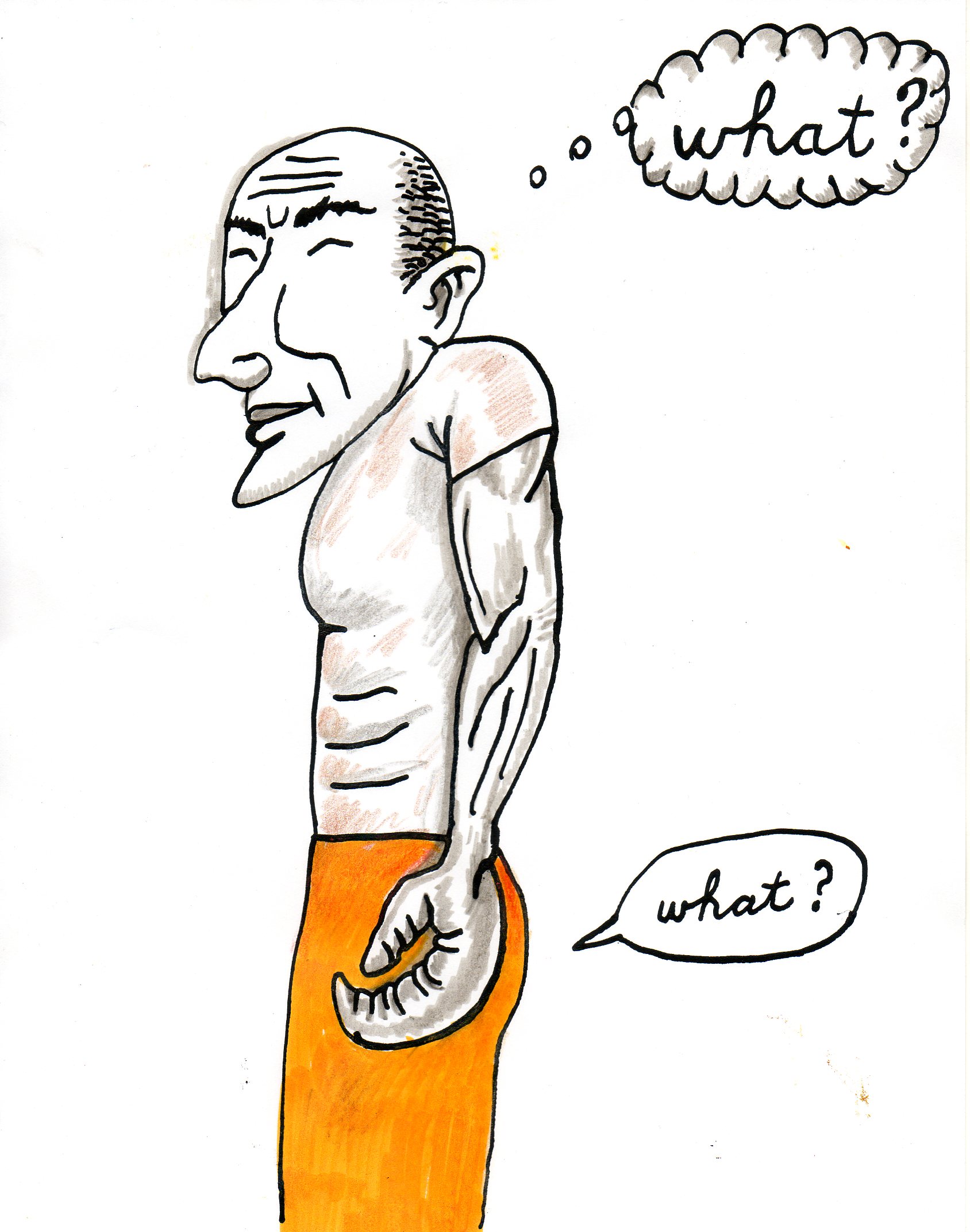
I think of how much worse many people have it than I do at the moment.  It is only a dream of mine that is on a respirator, after all, not me myself or any loved one.  I try to cheer up, much like the old woman being urged to make the best of her disabling Parkinson’s Disease.

Doing the Impossible

The only essential ingredient for doing the impossible, outside of talent, work, dedication, perseverance, luck and strategic support, is faith that you can do it.  

Lose that spark of sometimes unreasonable hope for success and the world is right– what you are trying to do is impossible, a million reasons it was doomed from the start.  Tongues will cluck, sad looks pass behind your back.  Life will go on, just not for your dream.

Depression, it emerges, is like riding a bike.  Don’t do it for 25 years, find yourself in the right situation and, bingo:  no training wheels needed. 

Sleep Resister

One more from the last visit with Florence (and a perfect one it was).
 “Ever since I was a young girl I’ve been a sleep resister,” she told me toward the end of my visit, around 1 a.m.  I knew exactly what she was talking about and no words were necessary, she knew I knew.  The phrase is a perfect description of my variety of insomnia most of the time.  The mind resists shutting down.  It’s not worry, per se, or anxiety, as much as just a stream of thoughts and ideas that does not want to be shut off.  A clinging to consciousness.
 
“When I went off to Syracuse my father gave me a little bottle of blackberry brandy to have a few sips of before I went to bed, to help me get to sleep,” she recalled fondly, and then smiled as she reported that it didn’t really help– she remained a sleep resister right up to the end.
 
She was found dead in her computer chair, with the NY Times open in front of her, her glasses on and a bowl of M & Ms nearby, probably resisting sleep at 4 or 5 a.m. when her ticker, pronounced sound earlier that very day by some Brooklyn quack, finally gave out.

Cancer Journals

Alone, in the middle of the night, cancer victims I have known wrote long emails, sent to everyone they hoped might care.  I recall cc’s I got from two of them, one many years ago (she has survived, I saw her dancing at a wedding not long ago) and one, more recently, who was a wasted shell at my father’s funeral — held up on her son’s arm, who died not long afterwards.


The emails were excruciatingly detailed descriptions of cancer treatment, hopes, drug interactions, side effects, verbatim reports of talks with oncologists, nurses, spiritual advisers, descriptions of articles from medical journals.  One might call these email journals obsessively detailed.  The writers did not seem to pause for a breath, in their desire to tell the entire story, in every detail, how the drug trial, a long-shot, was nonetheless a hopeful thing, citing the literature, comparing side effects, describing how the previous chemo had made them feel, reciting many cancer terms of art with facile familiarity. They had been educated in a deadly grad school and they wrote long, scholarly emails.


These arrived in the night in one continuous paragraph, many screens long, or so my memory makes them appear.  I recall responding early on, and wishing them well and thereafter being at a loss, though they each thanked me profusely for writing a couple of sentences to them.  


One lived far away, the other I saw frequently as she grew thinner, lost her hair, grew it back, became drawn and skeletal, her beautiful smile more and more fleeting until it was just a memory.  Both wrote in the same way, writing to think out loud, writing to call out to other souls to answer them, writing not to feel so alone, awake and rattling the keys as they clung to their precariously teetering lives in otherwise silent houses.


I bring these up because I had an eerie feeling earlier today, thinking about some obsessively detailed emails I’d sent lately, in real time, about very specific aggravations I was going through.   The frustrations of buying mandated health insurance on the New York marketplace, by tomorrow’s deadline, for example, and having to pay $1,750 out of pocket, in addition to premium payments, before any insurance benefits kick in.  Or being dicked around by a corporation that helps nonprofits, and others, raise money on-line and does not make full payment more than a month after the campaign ends, its Customer Happiness bots cheerfully cranking out generic emails with update links that cannot be opened.  I realize the level of aggravated detail in my screeches of pain was probably similar to the emails from these two cancer patients.  Some suffer silently, others at great, sometimes unbearably detailed, length.  


I also had the troubling thought that diagnosed with cancer myself, I would probably find myself writing similar journals.  The odds are pretty strong both ways.  All four of my grandparents and both of my parents died of cancer, along with a young first cousin and a second cousin once removed, also quite young.  I’ve had a few small skin cancers already myself, and a few polyps snipped.  And I write by day and in the silence of night, sometimes in great detail.


I will now be as brief as I can as I explain to myself why I was so worked up by today.


On Monday a week ago I called my almost 93 year-old friend Florence, a great artist and a great soul.  She sounded befuddled on the phone, as she sometimes did.  I told her I’d call back.  When I spoke to her later she was completely clear and glad I’d be visiting her the following day.  I did.  The visit was wonderful and she looked great.  Three nights later she died.


I walked around the day after she died, last Sunday, feeling mostly grateful.  It was only when I told Sekhnet that Florence was gone that I found myself getting tearful.  Sekhnet is adept that way.

The following day my very promising young animation assistant was put into a terrifying position as the young man I am paying over-generously to arrive early and run the workshop showed up late and unprepared.  When I arrived the kids were one step from cannibalism, a bullied girl ran from the room.  This new group, and this promising and diligent assistant, may now be lost, the kids horses out of the barn and too late to lock the barn door. The young woman, seeing the carnage, may have been scared skittish.  I’d placed a lot of hopes on this new workshop and my new assistant.


Had dinner afterwards with Sekhnet, got choked up talking about a variety of things.  The next day and night I prepared a forced and muddled demo for the Wednesday workshop.  One girl correctly called the soundtrack creepy and I watched helplessly as my plans were cut to ribbons with little safety scissors.  I saw my dreams of this animation workshop flourishing and expanding littered across a classroom floor with the shredded materials that had been wasted.


Afterwards, after a long walk with Sekhnet, carrying heavy bags in the rain and expressing my hopelessness, she hit on an idea to help me.  Finding the 800 number for the company giving me the cold shoulder about the $450 they owed me from the fundraiser she urged me to call and straighten it out.   It was a sincere attempt to be helpful that resulted in me, on the fourth or fifth call, leaving a snarling message referring to the California attorney general’s office as Sekhnet called out the name of my nonprofit several times in the background as I tried to talk.  Wiping the foam off my lips I eventually accepted the tranquilizer she offered and found myself falling asleep twisted into a grotesque position memorialized by Sekhnet’s Blackberry.


A visit the following evening to an old woman dying slowly of Parkinsons, who seems to have lost the ability to communicate, didn’t feel like it brought anyone much joy.


Hours on hold trying to buy health insurance today, and so on.  I can add these things up and say “rough fucking week, man,” but I could not add them up in real time or distance myself in any single instance from the totality of them.  

Neither could I really get anyone to understand how unbearably painful any of it was to me, except for the sudden death of my oldest living friend.  Everyone can probably understand how much that one would hurt.
Gratefulness gently triumphs over sorrow

Gratefulness, that I got to see my old friend before she went, grateful that something pressed me to make sure I kept our long overdue appointment days before she kept her last one. Grateful for a lovely, lesiurely meeting, it turned from 11:04 pm to 1:00 a.m. in the wink of an eye and I was bundling into my filthy parka and she was remarking that I looked like an explorer.   Grateful that she seems to have gone peacefully in her chair.

Grateful to have known her, and loved her, and to have been loved by her for so many  decades.   Grateful for the light she shed, and the love of her mysterious calling that she wore so lightly, and by her great example, taught me to wear lightly.  

Grateful that she laughed and agreed when I asked her if she’d mind if I began to hold myself out as her protégé.  She treated it as an absurd request I was playing for laughs.  I was, she had a great laugh, but I was also dead serious.  The woman was a major role model.

Image

When You Have Little Time

When you have little time, are up against the loudly ticking clock, counting down– that’s the moment to slow down a little.  Breathe for a moment, gather what’s left of yourself.   Do not be distracted by the chaos that may be swirling around you, there is not time for distraction. Apply yourself to the task in what time remains, give yourself your best shot at doing the thing well.      

Death is the score keeper, waiting grim and confident at the end of every life.  Do not worry about Death, which comes when it wants to.   Life is the matter at hand, and living it as well as you can.   The timer is always counting down, but it doesn’t stop us, most of the time.   “I will always be here for you,” the loving parent reassures the child, as children must sometimes be reassured.   Not true?   A matter of opinion.

“Why such morbid thoughts, my friend?”  asks nobody in particular.  

“I lost a dear friend yesterday, and I was philosophical when her daughter called to tell me, and grateful that I’d seen her less than a week ago.  I hadn’t seen her for a while, and she was almost 93, and I was planning to see her regularly going forward.  That plan has changed, I will not see her again.   I was philosophical yesterday, grateful I’d seen her, grateful that her death seems to have been painless, after a long, wonderful life, but now the pain of that finality is breaking through.”  

As, it seems, the pain of finality always does, in the end.

Words are Tipsy Messengers Sometimes

Bandy legged, unable to pull themselves together, slightly mad, or stupid, or in a stupor, or just lazy. Capable of inspiring great passion, unleashing a flood of tears, a rushing river of life-restoring laughter, sometimes they just kick their skinny legs, eyes glassy, and don’t want to have anything to do with each other.

Like when you learn the good looking young CEO of the small company that hired your animation workshop died suddenly of a cancer she’d kept to herself.   Or the old friend you visited the other night, who looked so well and chatted so relaxedly with you long into the night, gone.

After I zipped up my dirty jacket, years worn but trusty against the cold, she said “you look like an explorer.”  I said “I am an explorer,” and she smiled.   We loved each other and told each other so.  I marveled that it was such a quick subway ride back from her home, even at 1:30 a.m.  Then she was gone, sitting in her chair by the computer, but no longer there.