US Covid deaths back to a 9/11 body count weekly

Now that the brutal daily death tolls of Covid-19 are behind us, we are all relieved to act like Covid-19 is no longer a deadly threat.   We now have vaccines, boosters and a drug that cures it in many cases.  The number of people dying of the pandemic has gone way down from its horrific peak numbers around the 2020 elections, even here in America, the world leader in Covid deaths (thanks Jared, Pence and Donald).  The sad fact this holiday season: Covid death in the US is on the rise again, a 40% rise over the last two weeks.   

The tracker on the NY Times website shows that 466 Americans died of Covid yesterday.  Multiply that number by 7 and you get 3,262.   More than the 2,996 people who died in the horrific terrorist attack on September 11, 2001.   The numbers are also up for the seasonal flu and a new threat called RSV.

Sekhnet, vaxxed and triple boosted, is often the only person wearing a mask outside.   I was the only person I saw on the E train last night wearing a mask.  Everyone is so relieved not to have that invasion on our personal autonomy, the slight difficulty drawing a breath, that every subway car, supermarket and restaurant is now a superspreader site.  Since the radical right weaponized reasonable health precautions and equated wearing masks with intolerable tyranny (totally different from forcing ten year-old rape victims to give birth!), many now see wearing or refusing to wear a mask as a political statement.  

If so, think of the statement this way: if I have asymptomatic Covid-19 and could give it to you, there is less chance of transmission if I submit to the tyranny of wearing a fucking face mask, for your sake, and the sake of everyone else who might be susceptiple to dying of this deadly disease, you ignorant, racist, misogynistic, kool-aid drinking, MAGA hat wearing, USA! USA!!!chanting asshole.  

American Exceptionalism #43

You’re goddamned right we’re exceptional, this is the only wealthy country in the world where every old person is guaranteed the right to have no teeth. Every American knows that teeth and dental care are no more a part of a person’s health than the ability to see, no matter what the so-called scientific community might have to say. Insurance carriers have the last word here and even government insurance, unless you’re dirt poor and qualified for Medicaid, does not cover so-called dental and so-called vision.

Two things that rarely afflict seniors anyway, losing teeth and failing eyesight. We salute you here, from the land of the toothless and the home of the blind.

If you live long enough, in the land of freedom loving mass shootings.

Bezos newspaper describes Elon Musk

From last week’s Washington Post, in an article about Twitter suspending the account of swastika posting genius Ye. Note the pathologically greedy Jeff Bezos’s generous framing of his fellow suremely entitled psychopath

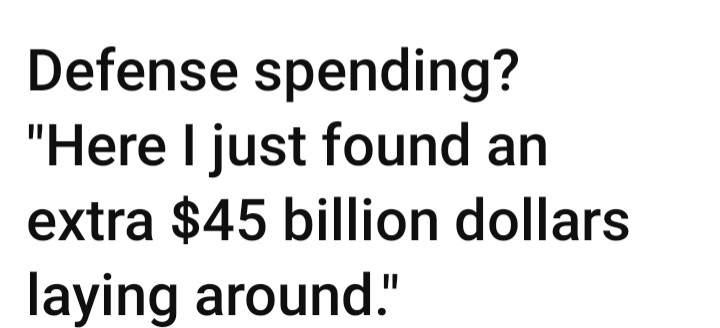
Musk purchased the site for $44 billion in late October, and has moved rapidly to shift the company in the direction of his free speech ideals.

Free thinking idealists, one and all. Democracy dies in darkness, y’all.

A nice understated invitation to exchange fisticuffs

The guy from Procol Harum who wrote the Bach-like intro to A Whiter Shade of Pale sued the other members of the group, all of whom had made millions from royalties on this universally played wedding tune, for writing credit.   A British journalist interviewed him on the eve of his lawsuit.  The guy explained how he’d written the iconic opening and had not been given songwriting credit with the others.  No credit, no royalties, on a song that is apparently among the most played tunes in history by wedding bands and other party bands.   

The reporter said: “so, you’re saying they could have been more generous with you?”

The British musician answered with beautiful British understatement “they could hardly have been less generous.”

An old friend, after fighting me for many months to establish that I’d hurt him much worse than he and his wife had ever hurt me, eventually conceded that telling me “you have to understand that I am too upset by what you did to listen to your explanation about why you were upset” was wrong, and not an act of friendship.  Though it took a long time for him to be able to admit it, I felt like an anvil had been taken off my chest when I heard that.   It was a phantom anvil removed from a phantom chest, as things turned out.

Months later, after a second ugly attempt for the four of us to discuss the original upsetting events, the long ongoing silence and discomfort, anger, denial, cover-up, blame, constant reframing and so forth, I realized the problem underlying all this hideous, insoluble tension is beyond my ability to even try to help solve.  I am, after all, in the eyes of my old friends, their threatening common enemy, therefore  my insights, such as they are, can only make things more dangerous for everybody.  I told my old friend I was not encouraged by the second angry session, even as I had largely refrained from showing anger of my own, instead literally banging my head against the wall by the end of another senseless argument over who had a right to feel more hurt.

He wrote to tell me that the second session had been difficult, but important for our friendships and a step forward.  I answered that it felt like a big step backwards to me.  He responded that he was sorry I felt that way and then offered me this marvelous bit of understatement:

Yes it’s important to have people there for you as you deal with trauma.  To use his dog bite example [parents immediately comforting a child just bitten by a dog, preventing lifelong trauma], I could have done better [when I told you I was too upset by what you did to hear why you were upset] on our walk or soon thereafter.

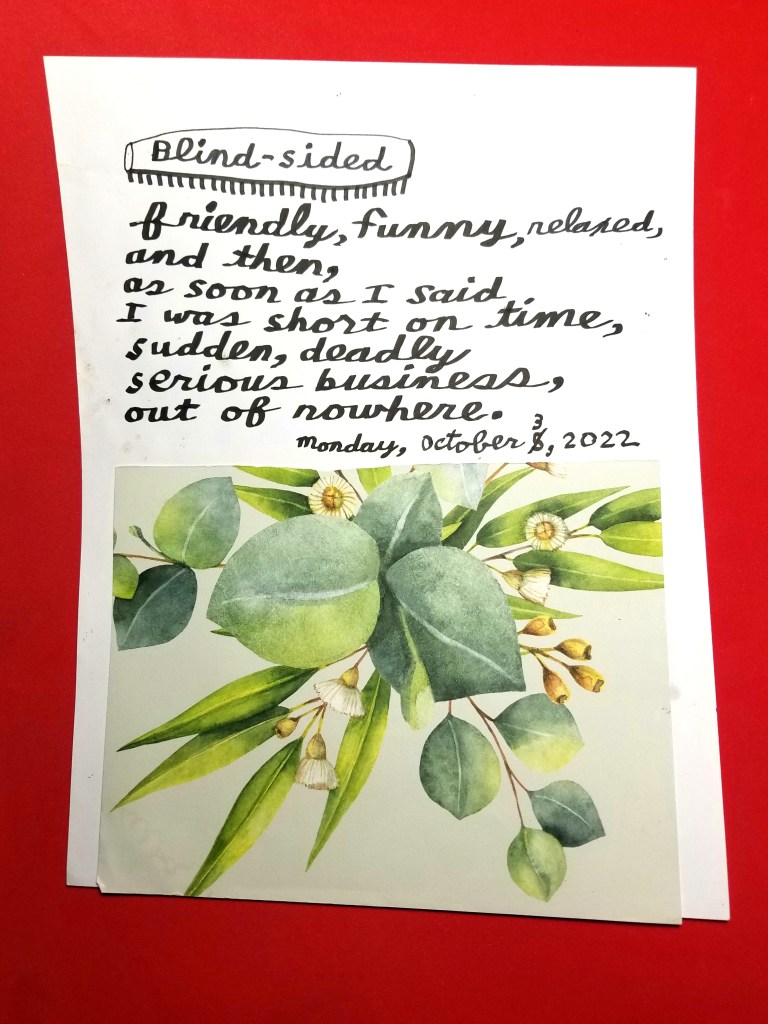
I could have done better.

Done better than being wrong and not showing a trace of empathy and righteously, angrily clinging to that view for eight or nine months?  You don’t say!  How petty of me to overlook how difficult it must have been for you to avoid kicking, punching or even stabbing me, in addition to not showing a hint of our long friendship, or even a casual one!

Jeez, what an unforgiving cunt I am!

Irv’s dilemma

My father was a friend of the underdog, ally of the oppressed and broken-hearted idealist turned bitter cynic in the latter years of his life.   He truly wanted to instill in me a love of independence, unwavering honesty, fearlessness in advocating for what was right, and resoluteness opposing tyranny in all forms. 

His dilemma was that his own trauma compelled him to behave tyrannically whenever he felt confronted.  He was unable to control this impulse to dominate, by any means necessary, and so he constantly offered himself as the model of the tyranny I must reject, according to the principles he taught me, while wanting more than anything my respect for his authority and my independence from it.  Damn!  Talk about a no win dilemma.

He instilled in me a lifelong quest for justice, even as he insisted on the most unjust proposition imaginable — the child who is being made to suffer is the cause of everyone’s suffering.   

This intolerable proposition had been forced down his throat, from the time he could stand.  His mother, a diminutive redhead prone to fits of uncontrollable rage, used to whip him in the face.   How does a mother whip her toddler in the face?  She truly believes the kid is viciously defying her.  She has to beat this devil out of him.

The kid, in turn, grows up to hate a bully more than anything in the world.   The only problem is that nobody is more prone to bullying others than someone who has been bullied.  The anger toward the bully is there, along with a determination never to be bullied again.  If the only way to avoid being bullied by a challenging, defiant new born baby is to bully them, how is that anybody’s fault?

So my poor devil father had a dilemma that could only be solved by difficult work that was too painful for him to do, too excruciating to even consider doingPoor bastard!

Perception management

Sometimes somebody in a disagreement will insist that everything is simply a matter of perspective.  Everyone has their own perception, and different people can see the exact same thing from very different perspectives.   There is a certain universal truth to that.  Think of any work of art that shows the same event from multiple points of view, it appears like a completely different event, depending on whose version you accept.  

It is a small step from the undeniable truth of how our perceptions shape reality to the conviction that no two people can necessarily ever agree on anything that took place, if it aroused strong emotions, since we all see things from our own point of view based on our emotional histories.  The trouble with this view is that it removes the possibility of ever agreeing about anything based on actual events or evidence of any kind that can be agreed on.  It leads to the acceptance of “alternative fact” as well as a perfectly defensible difference of opinion about those ever pliable, transactional “facts”.  It fosters the idea that since everyone’s emotions are always true to them, everyone’s perspective is equally true to them and that persuasion, learning and improving are therefore also strictly subjective matters

An easy way to refute this kind of solipsism is the punch in the face.  If I punch you in the face, I may perceive that you made me do it, you may perceive it was a vicious, unprovoked attack, but we won’t be disputing the actual punch.  If you are susceptible to self-doubt, or if you can acknowledge that you provoked the violence, I may be able to convince you that it was your own goddamned fault I had to sock you, but the fact that I socked you is not a matter of perspective, it objectively took place.  Just look at your bloody nose if you have any doubt.

Take the case of an unappeasable parent. The child finds herself locked in a war she has no insight into, turned into a combatant from before she can even speak. Nothing the child can ever do, even as an adult, can appease someone who is unappeasable.  The parent will insist the kid is the source of all the hostility, tension, anger, misunderstanding, stubbornness, refusal to be reasonable or well-behaved, a plague on the family.  A family friend will likely have a different perspective, caring for both parties and wanting to help both.  Tell the kid their parent is unappeasable and make an enemy of the parent.  Tell the parent it’s not the kid’s fault and you will face the ire of the unappeasable parent now outraged that you are blaming them for the kid’s genetic predisposition to be a provocative, angry, mean, needy little asshole.

It is a tragedy of human history that many of the most angry people in the world are the most adept at blaming their victims.   It is the true genius of homo sapiens (the “wise ape”) to justify our actions, no matter how badly we act.   We can justify them intellectually, when we have facts in our favor, or emotionally, when the facts will not so easily support our hurtful actions.   We never, with no exception I can think of, act not believing that we are right, or at least justified, in doing what we do.  Every act of violence is committed in a moment where the angry person believes 100% that what they are doing is righteous.  After cooling down, many will have regrets about the damage they did, but in the moment of attack they believed in their righteousness absolutely.   That’s what it takes to hurt people, true belief that they fucking deserve it.

A feeling can’t be right or wrong, it is what you truly feel.  The important thing is to analyze the feeling after you calm down, see what in it is reasonable, and to be heeded, and what part is purely your old pain kicking up and making you feel bad again. And if you keep reacting out of pain, and keep inflicting pain with your reactions, and learn nothing from it, you’re just an asshole I’m sorry to say.

What you can healthily accept — and what you must not

You can, and must, accept the imperfections and weaknesses of those you love.  It is easy enough to do.  We all have our faults and we all need to be accepted as the damaged souls we are.   We should also try to do better once we know that certain of our tics are hurtful to someone we love.  

Not everyone is capable of self-reflection and change, sadly, such things terrify some people.  But it’s important to the health and mutuality of intimate relationships to try to do both of those things, when needed.   Criticism from a loved one does not mean repudiation and rejection — it means you need to be aware of the hurtful effects of your actions on someone you care about.   You need to sometimes accept criticism from those you love, it may be fair or unfair, and it can be discussed, but it is brutal, and deadly, to angrily shut down any talk about it.

What you must not accept is blame for the imperfections, weaknesses and vices of those you love.  If the ultimatum below sounds familiar, and does not change no matter how calmly you manage to proceed, walk away:

“As long as you don’t ever criticize me, or show impatience, or raise your voice, or employ mean body language, as long as you accept everything I say as beyond dispute, we will remain dear friends forever.  Once you make me feel bad about myself, even one time, I will show you who the actual irredeemable asshole is in this equation.”

Rest assured that if they set those conditions, and insist on them, that they will make good on their threat, because, no matter how patient you might be able to remain most of the time, we all have our limits and will be pushed to them.  

Once you reach your limit, and start banging your head on the wall, as I found myself doing recently (actually, I picked up a small wooden stool and bopped myself in the forehead with it), the proof is now there for everyone to see — only an irredeemable asshole acts that way after only an hour or two of no-holds-barred conflict over who has a greater right to feel hurt for the last year and over what.

Somebody recently called me a saint because I’ve been trying to remain very patient with two, dear old friends in the face of this kind of ongoing ultimatum.  I told her “I am one very goddamned fucking angry saint, I can tell you for sure.”   While faintly amusing, it was also true.

If you can accept that you must remain eternally patient while those who feel criticized or challenged by you can show immediate anger whenever they feel desperate, I’m not sure what to tell you, except, perhaps, that you need to think it through again.  It is very, very hard, unthinkable, really, to leave people you love — there may be nothing harder to do.  Except, in my experience, it is even harder, and much more destructive, to cling to one-sided relationships where every conflict can only be stopped by assuming the entire fault for it and never again making the other person feel discomfort by talking about anything you need to resolve.  

The damage to yourself of accepting this kind of lack of mutuality is ongoing, and will never stop until you put a stop to it.  Once the cycle of blame, and who has a greater right to be aggrieved, sets in, you cannot change it on your end alone, no matter how sincerely you try to show love.  You must be blamed, and accept all fault, or be destroyed.  If you have friends in common, it will be necessary to destroy your good name among them as well.

It’s as hard as death itself to leave a long, loving relationship that has become corrosive, but harder still is living in a ruthless funhouse where honesty is discarded and angry desperation is turned relentlessly and implacably on you.  I grew up in a house like that, moved out when I was 17, many years ago.   The harm it did has been a long lifetime healing, as far as I have been able to heal.  The echoes of it, whenever I am made the focus of other people’s hurt and anger, extending to a tyrannical insistence that I simply stop fucking talking about what’s bothering me, have become impossible to bear.  

So I recognize now that I am in mourning, having finally, and with extreme reluctance, seen what a healthier person would probably have been able to observe a year ago, ten months ago, six months ago, last month.   It does nobody any kind of favor to carry the heavy cadaver of what was once a loving friendship around, hoping it will begin to breathe again, and smile, and thank you for having undying faith in resurrection.  

And just like physical death, or maybe even more so, the thought of a forever parting can feel unbearable, which is why we cling to things even after we’ve seen over and over they are not as they were.  Even after they have become intensely painful and impossible to stop pondering.

So, mourn I must, as I forgive my understandable slowness to take my leave from an unbearably painful situation.   The only alternative is pretending there is nothing to fix that can’t be fixed by simply not bringing up pain ever again and placidly accepting the entire fault for a deadly impasse I am at best 50% responsible for, and somehow accepting that doing those things will magically restore something, including trust, that is now irretrievably gone.

Accept all the blame and simply act like everything is fine again?   No can do.  Neither should you.