This cast iron octoroon has aged beautifully, the sign not so much. When I was a boy, more than half a century ago, this little jockey had a brown face. Now he’s in white face. My, how times have changed.
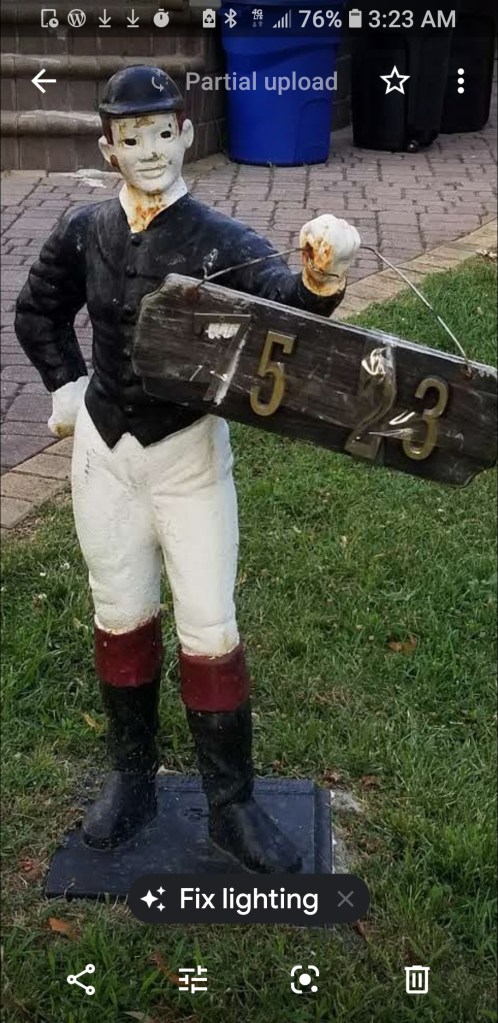
This cast iron octoroon has aged beautifully, the sign not so much. When I was a boy, more than half a century ago, this little jockey had a brown face. Now he’s in white face. My, how times have changed.
I’ve been lucky enough, during this pandemic, to be locked down with Sekhnet at her little farm, in a neighborhood of lower density than my place in Manhattan. It’s actually a short walk from here to where Fred Trump’s mansion was, where little Donald grew up to be the great man he is today.
Here, unlike in the more urban parts of New York City, you can walk on tree-lined streets and easily avoid contact with the few others also out walking. It seems a bit safer here, in this much lower density area, taking precautions and waiting for the Second Wave the experts predict for flu season. We’re taking all reasonable precautions — isolation, N95 masks when out in public, frequent hand washing — even though several speakers at the RNC made it clear– to their base, at least — that the Leader has eradicated the pandemic in the USA in an amazing and praiseworthy fashion that only the deranged can’t see.
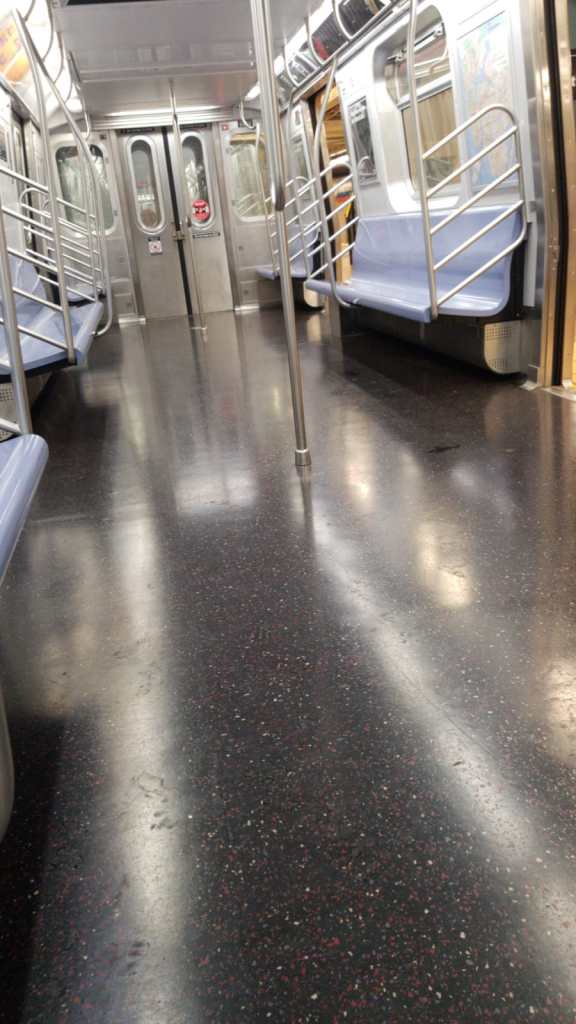
Anyway, a couple of weeks ago I took the subway for the first time in months, to meet Sekhnet and a friend at one of our favorite vegetarian restaurants in Manhattan. We ate under a tent on lower First Avenue. The condition of the subway car (which I caught at the first stop) was amazing. It was actually gleaming.
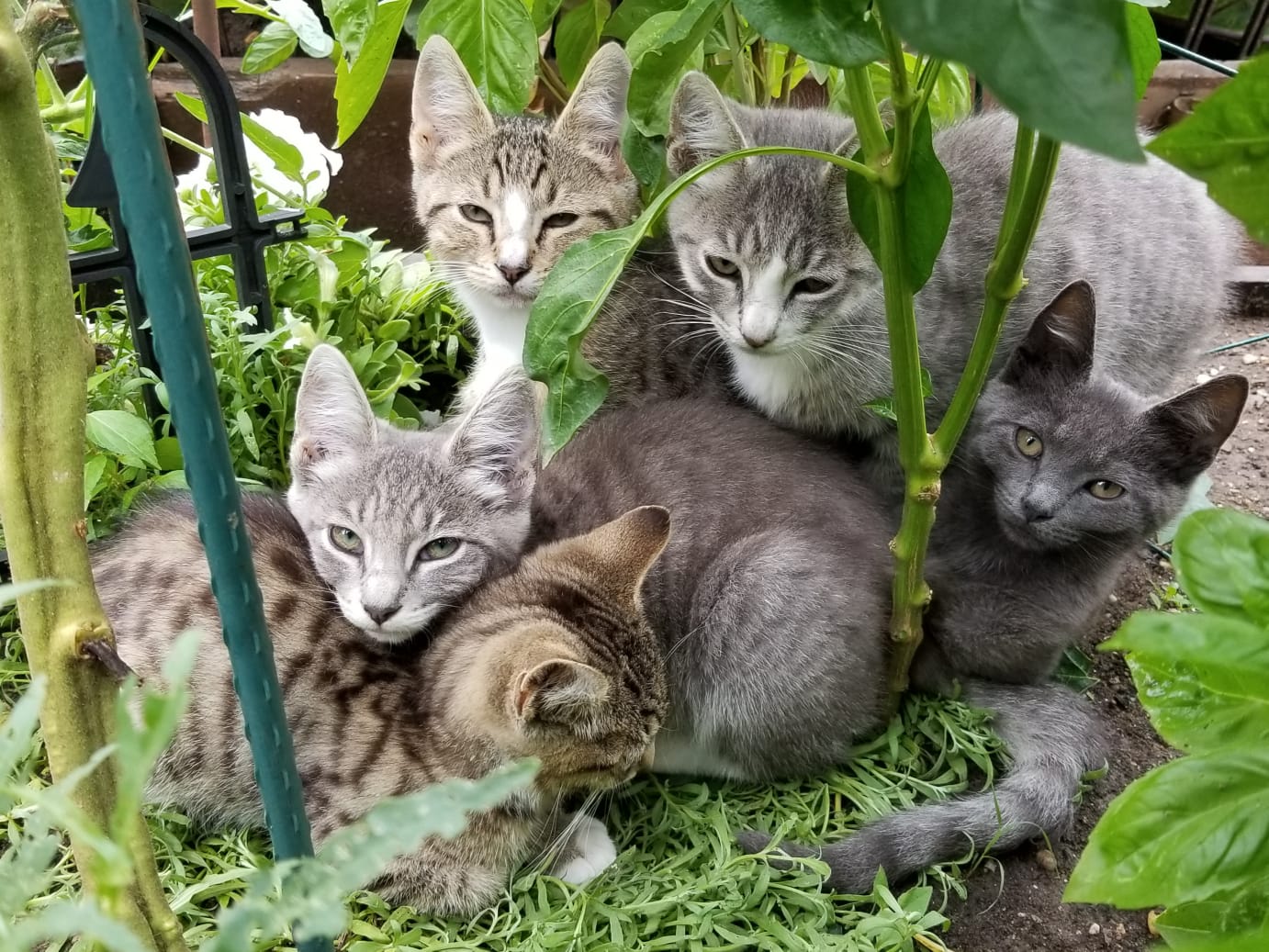
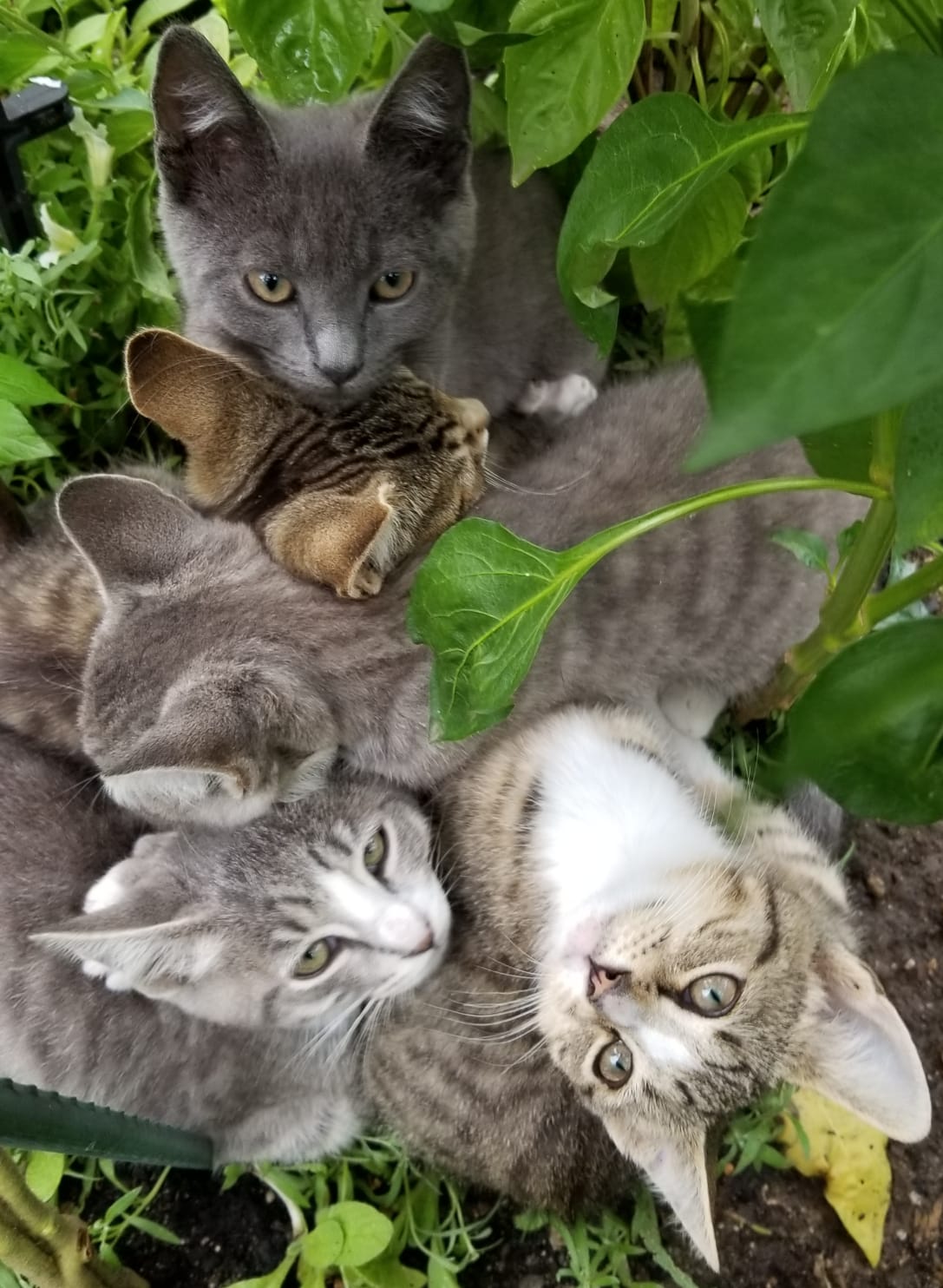
Sad as we felt the last few days, knowing we’d have to part with these beautiful, trusting, affectionate little souls, that sorrow is fading as we know they’re in good hands. We brought them to a great cat shelter in Freeport yesterday, spent a sad night missing them, but today was much better.
A reminder that doing the right thing might sometimes hurt for a while, but it passes, the thing was worth doing and what remains is having done a good thing. This case was the literal living out of the old saying — if you love somebody set them free.
The sudden withdrawal from that unlimited tender playfulness on demand that these little cats gave us whenever we spent time with them (when they weren’t napping) was painful, true, but our plan all along was to give them long lives of affection and safety we couldn’t provide them, much as we may have wanted to.
They are all being well cared for at an excellent shelter (where they’re all currently sleeping together and being treated for roundworm — they’ll be roaming the rooms with the others in a few days). They will shortly become pets, sharing tenderness with humans who will fall for them quickly.
As they deserve.
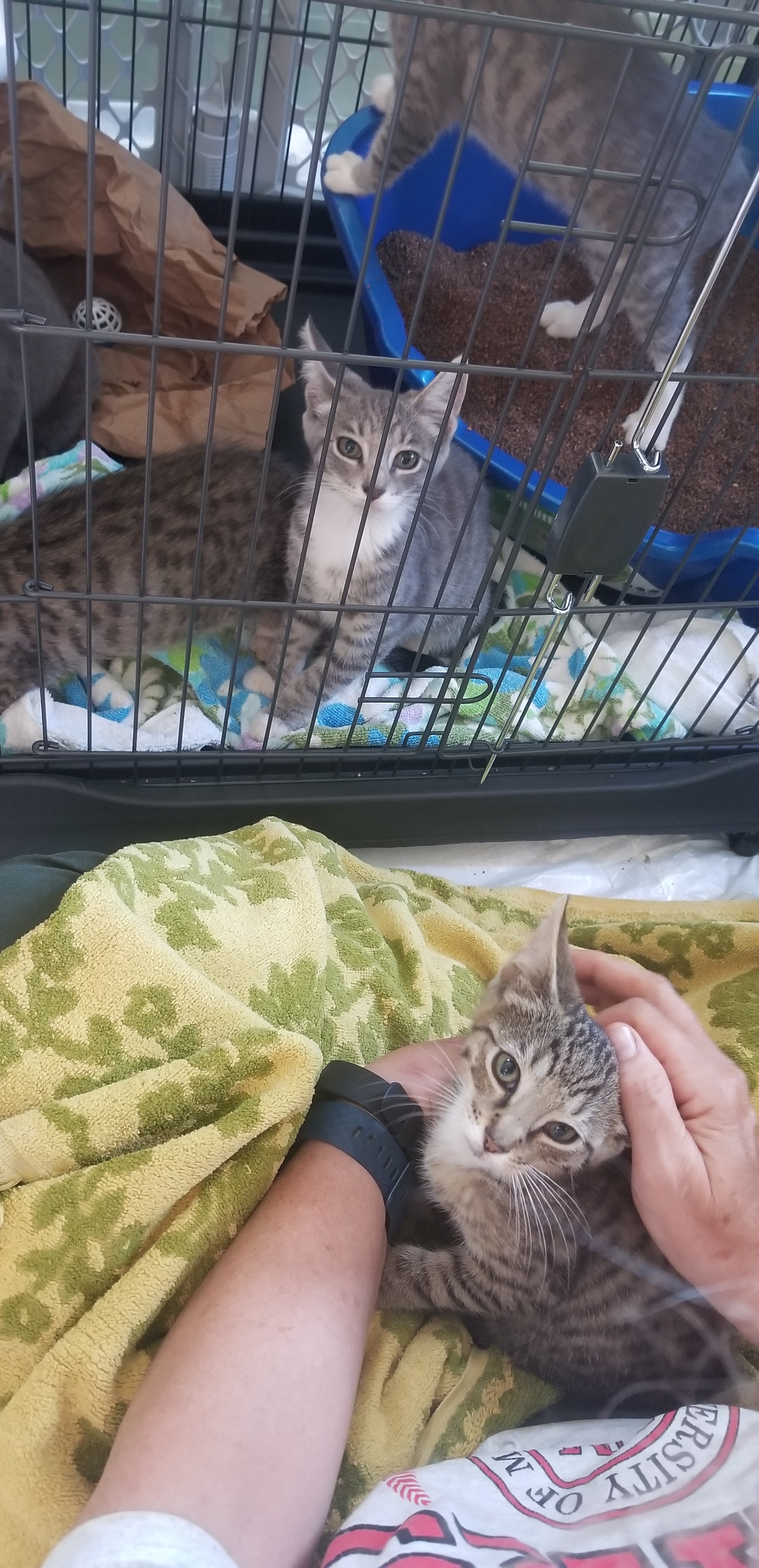
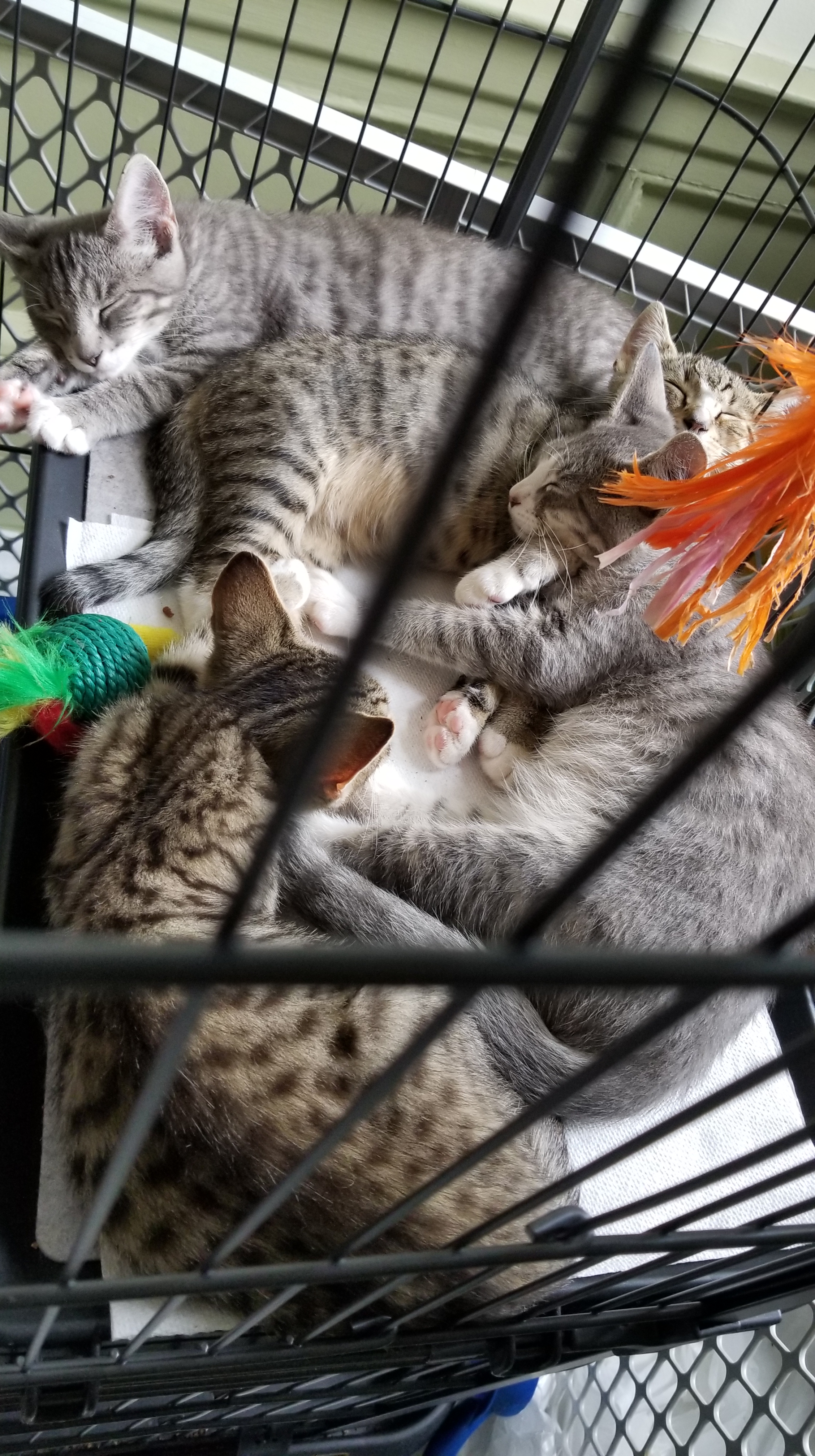
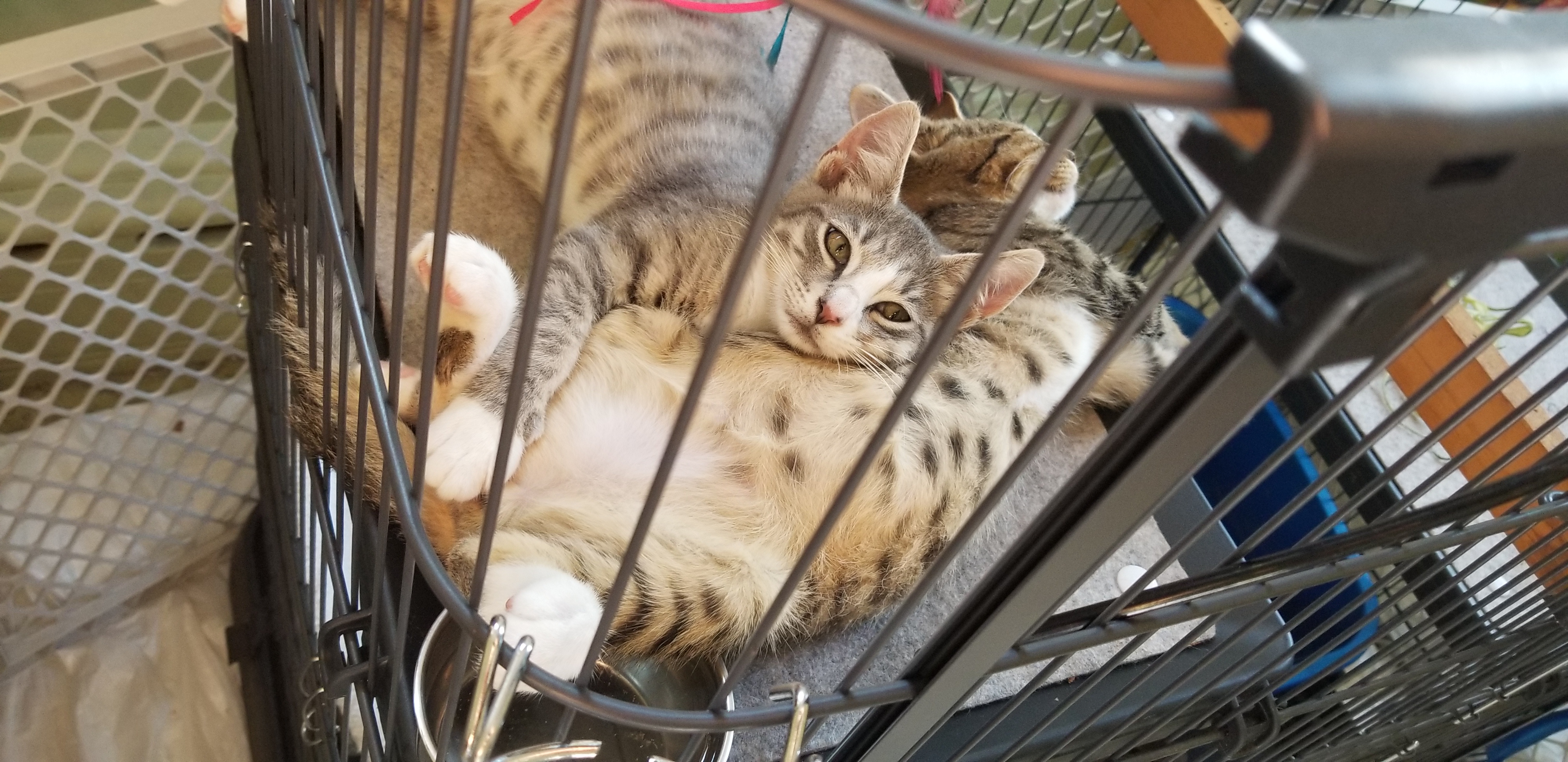
Yesterday I chased a rogue male cat who’d been aggressive toward the little feral colony we feed. This cat, who we call Grey Guy, is usually quick to leave the garden when threatened, but yesterday, though I sprayed him with the garden hose, he hardly moved. He didn’t move away very far, got a bit wet, looked back at me, reproachfully. When Sekhnet encountered him a few minutes later, he was determined to make contact with her, though she at first sprayed him too.
“He’s dying,” she told me afterwards, with tears, “he figured he had nothing to lose.” She brought him a meal, and as she led him to it I saw for the first time how sick he looked, skinny, mangey, sad, with a distended stomach hanging to one side. His eyes were barely open, he moved with difficulty. He seemed clearly close to death. He ate a bit of his last meal, before an opportunistic intruder named Giovanni made off with the last of it. He was too weak to fight off the much younger challenger and Sekhnet was not guarding him at the moment. We’ve taken to pegging the aggressive Giovanni with small stones when he hops the fence looking for food.
The cats we feed are Mama Kitten (so named because she gave birth to at least 20 kittens over the course of about three years, from a very young age) her three surviving daughters, Paint Job, White Back and Little Girl, and their probable father, Spot. We watched almost every one of Mama Kitten’s offspring die or disappear. We learned not to get too attached to the kittens, who tended to have very short lives in the wild. Recently we trapped Mama, Spot and the three surviving daughters (who were old enough to get pregnant) and took them to a vet to be “fixed.” Here is Mama with her first litter, back in September 2015.
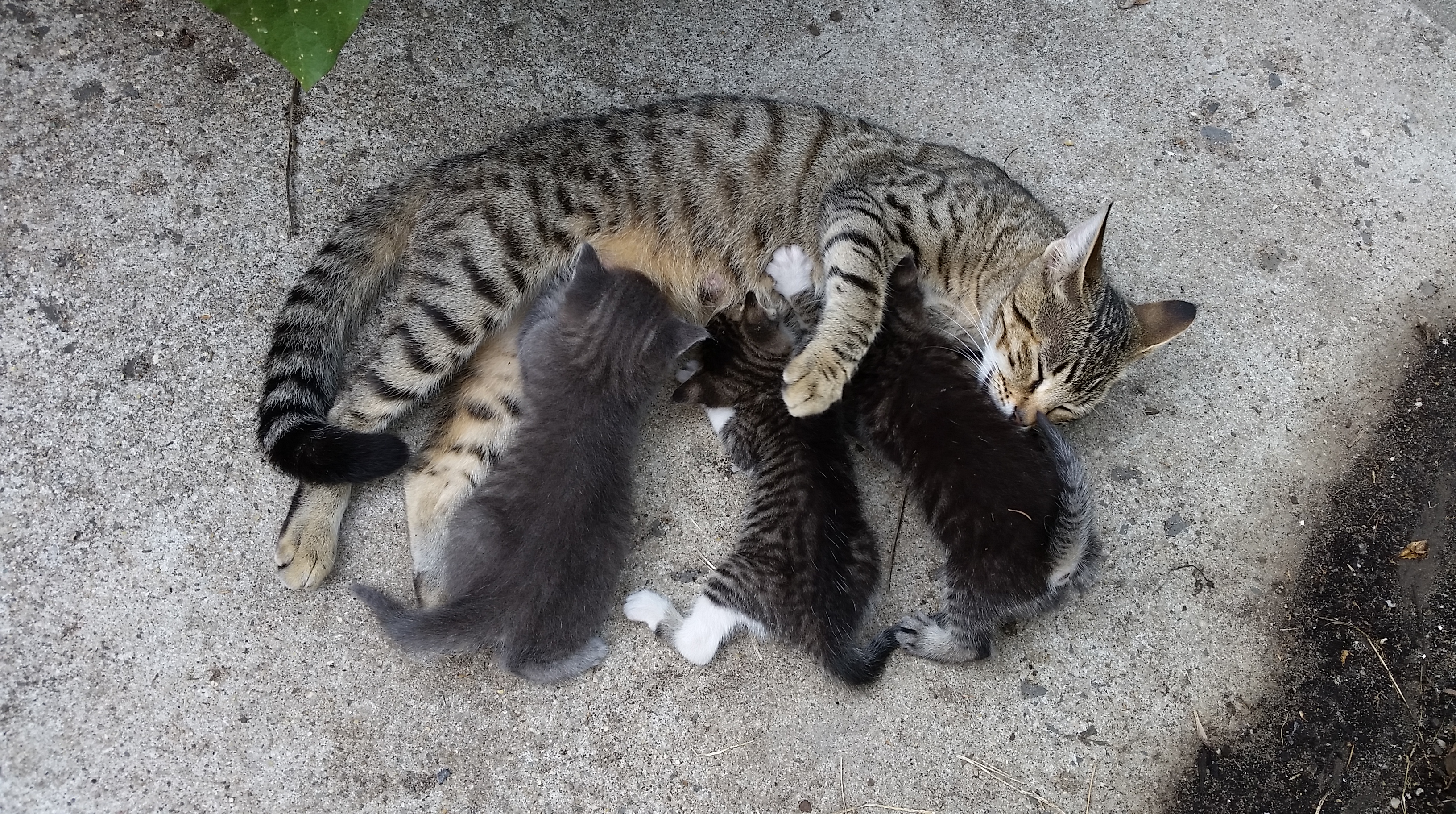
That big kitten toward her back legs we named Grey Guy. He also disappeared after a few months, we assumed a hawk got him. Hawks circle overhead here during kitten season. They are circling today.
This stable little group protects their turf from intruders and we help them enforce their claim whenever we see another cat trying to get in on their action. Giovanni (likely another of Spot’s offspring) has been a particularly insistent interloping pain in the ass, he bullies White Back and Paint Job and I’ve changed my attitude toward him. It’s true he’s only trying to survive, but still, chasing our cats across the speeding traffic in the service road is a one way ticket to somewhere else.
About a year ago a haggard looking grey cat stood watching me on a street a couple of blocks from the house. He didn’t run, or even back away, when I approached him. He seemed to know me, and he was clearly hungry. He appeared to be the grey kitten from Mama’s first litter, Grey Guy, a cat we assumed had died along with the others who all disappeared within a few months. I called Sekhnet, and Grey Guy stood by, waiting with me until she brought a can of food and he ate it from a spoon, like he did as a wee pup.
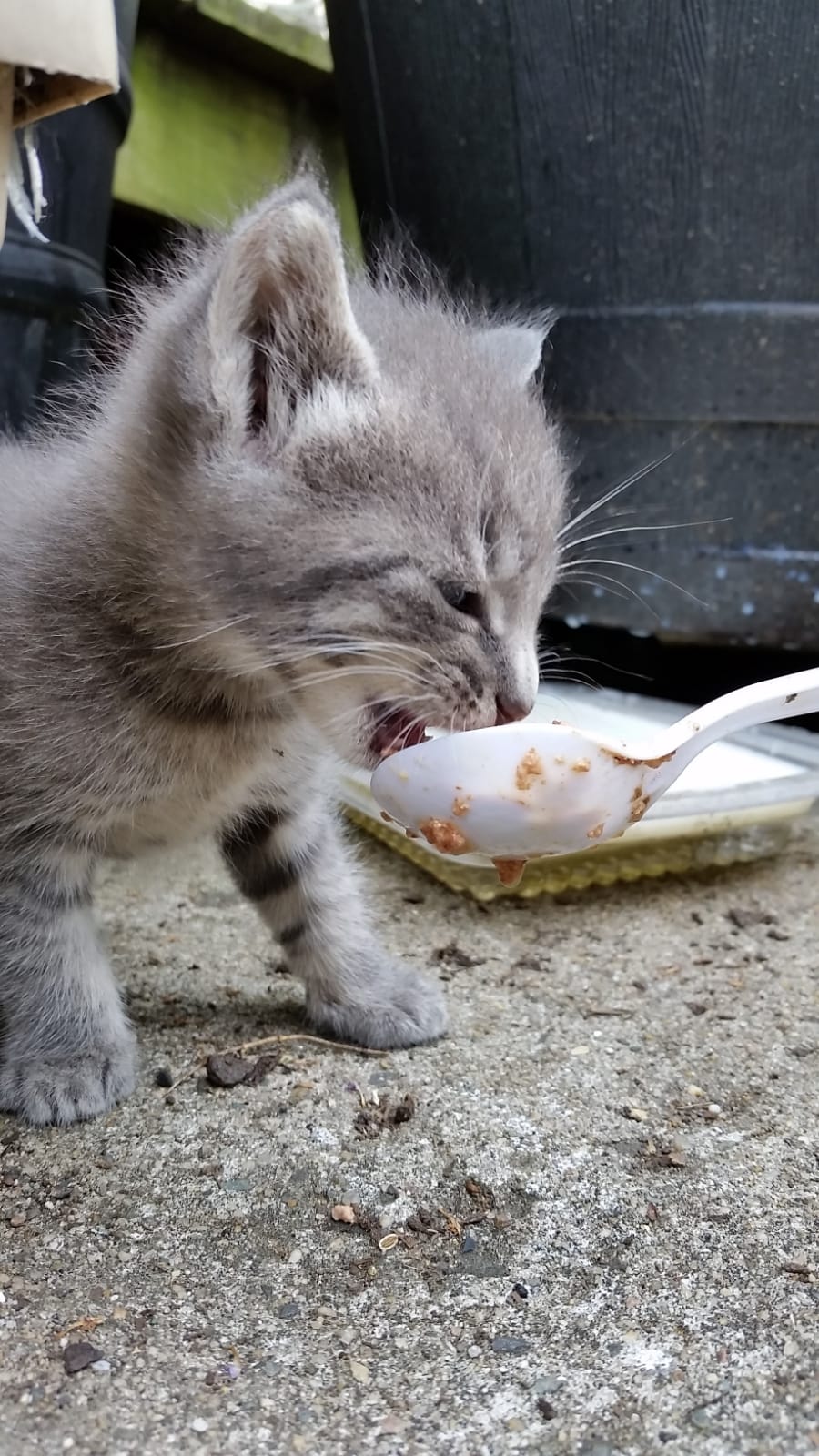
It was, in fact, Grey Guy. He’d been living a rough life on his own and the years had not been kind. After feeding him a couple of times we saw he was often savage with the other cats and we eventually drove him away. He apparently came back the other day for one last visit before he died.
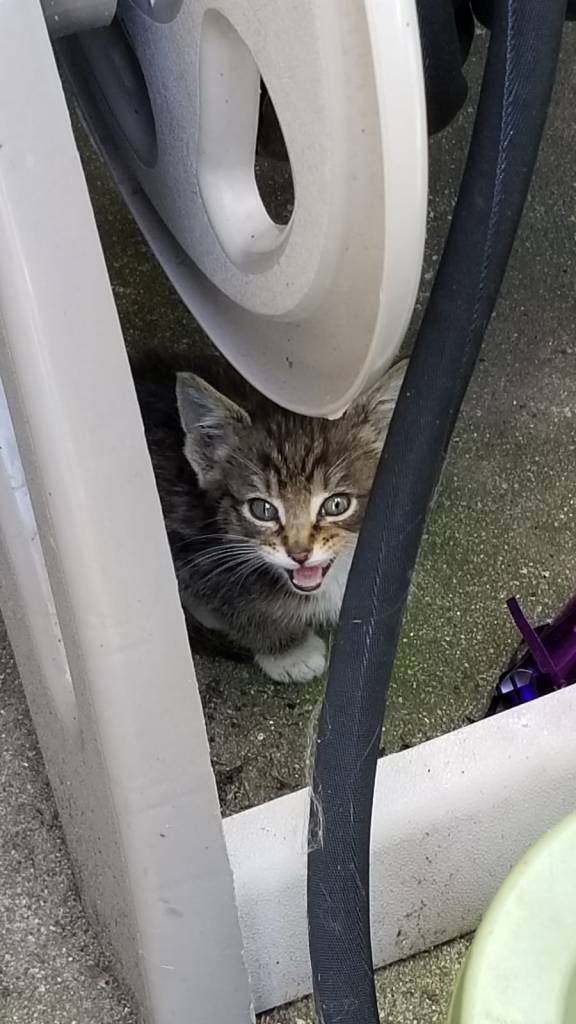
His presence reminded us how hard life is for a feral cat living on the street. “He came as a harbinger,” Sekhnet said. His poignant farewell came as we are completing the process of domesticating five feral kittens another mother cat dropped off in the garden, introducing them to big-hearted Sekhnet and the greatest cat buffet in the area. Grey Guy’s appearance was a reminder of the short, brutal lives these affectionate little animals face in the wild. At five years-old he was ancient. A house cat typically lives two or three times that long.
We became determined to find homes for these kittens, to give them full lives as beloved pets. The boldest of them (and the runt of the litter) we named Alpha Mouse. He was ready to be a pet right away. His brother Beta was not far behind. Both liked being petted from the start. The other three were wary, as stray cats tend to be. Here’s two shots of Alpha, then Beta:
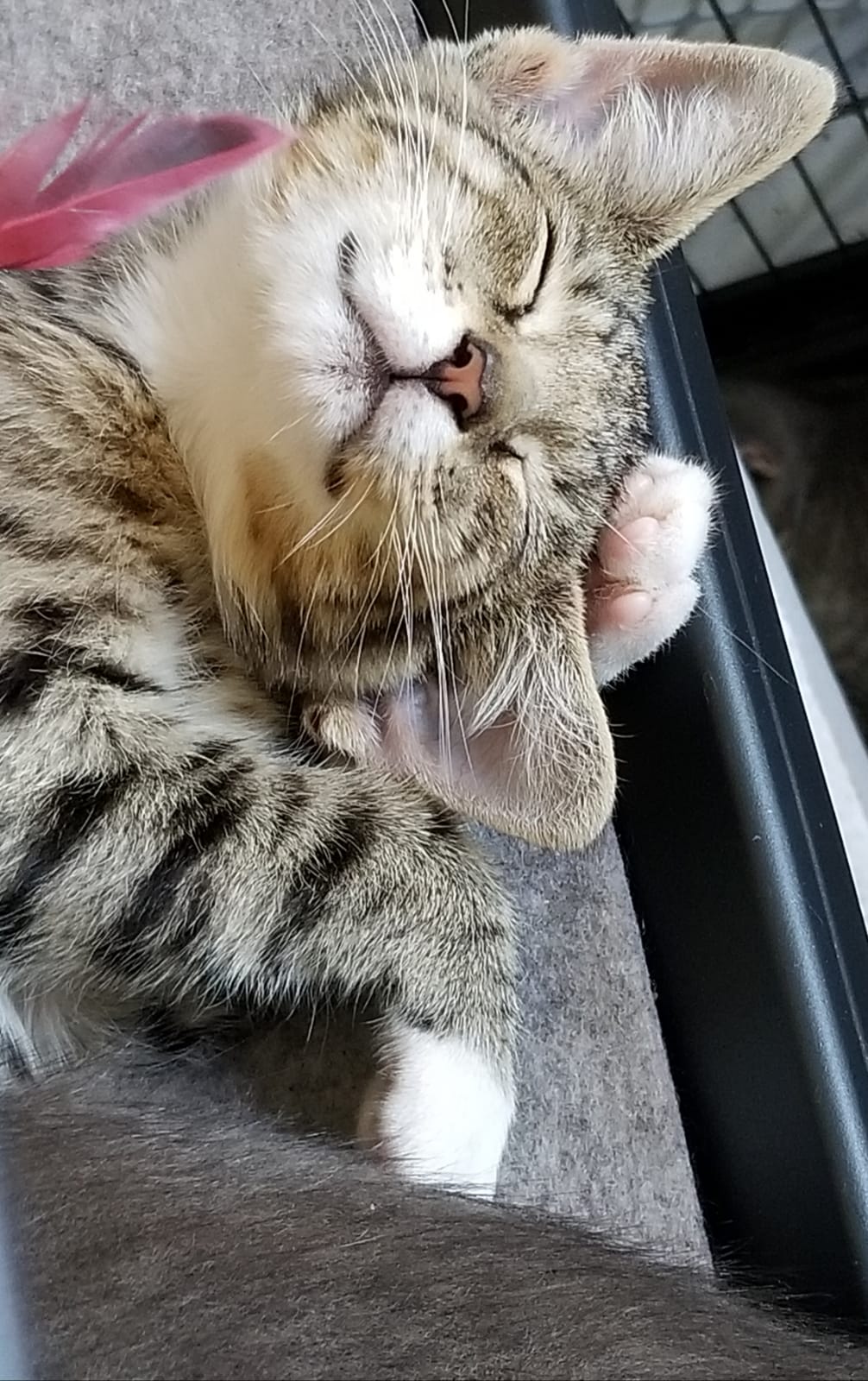
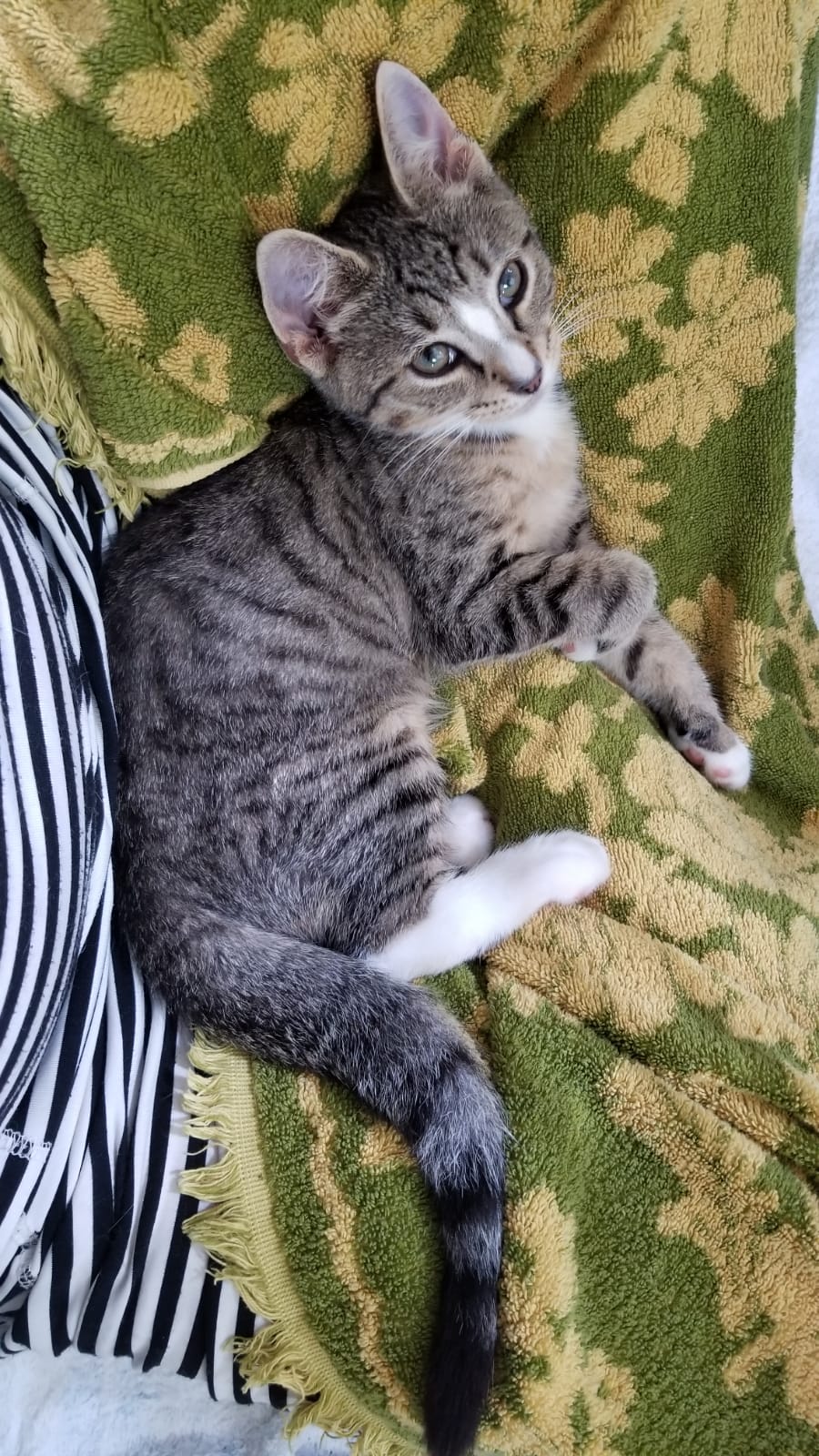
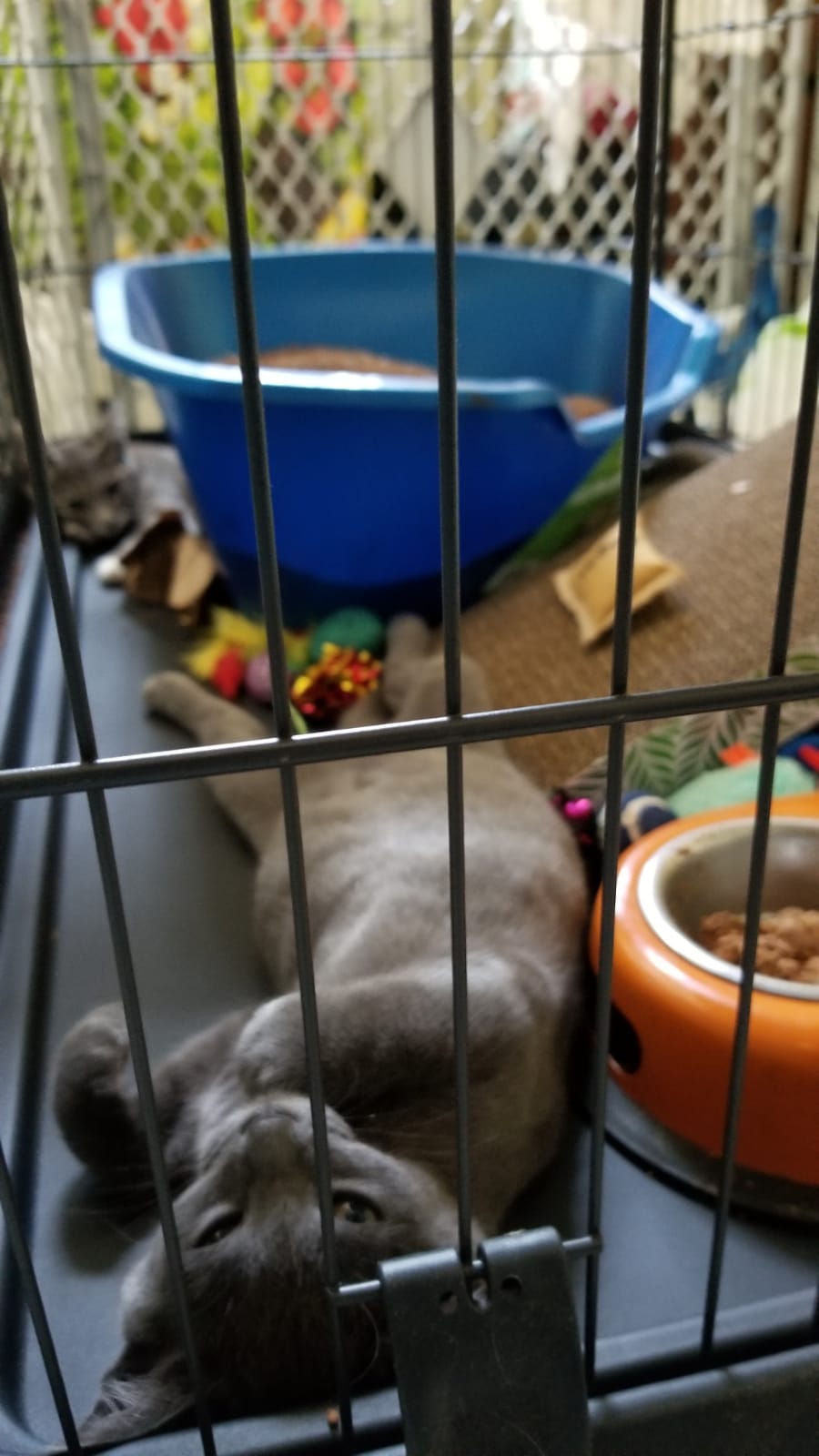
We found a shelter twenty miles from here that would take them, we caught them and brought them inside, into a large cage Sekhnet bought online. We couldn’t bring them to the shelter for adoption until they are calm and happy being handled by humans. A volunteer at the shelter gave us some good tips, the rest was just time spent with them, petting them in the cage, feeding them by hand, gaining their trust.
The patience and tenderness you need to show to get a feral kitten to trust you is repaid with a tender affection that can’t be explained. The little creature who was afraid to be touched now solicits your caress, cranes her neck to be stroked just right, pushes her little face into the palm of your hand, purring in contentment. They all sit on our laps now, after only a few days of adjustment.
We are doing the right thing trying to find them homes, as hawks continue to circle outside looking for their little tidbits of delicious prey, as all of the hardships that oppose any animal’s existence rage out there at a moment when we humans are also hunted during this pandemic. The right thing, the kind thing, turns out to not be easy sometimes.
I’m waiting for a call back from the small shelter that they have room at the inn for these five (they do). A friend is on hold to do us a tremendous favor, renting a cargo van so we can drive them out to the shelter in their cage tomorrow, rather than stuffing them into the single cat carrier we have for a fairly long trip, their first in a car.
Meanwhile, Alpha sometimes cries and is only consoled by being petted a bit. Sekhnet and I are crying all the time. They are so affectionate with each other, it makes Sekhnet cry every time she thinks of them being separated.
Every moment with them is a reminder of the relentless inevitability of separation, the pain of eternal leave-taking. Having this constant reminder is hard work, particularly during this depressing pandemic, I can tell you for sure. Operation Poignant, I told my friend’s voicemail yesterday, my voice cracking.
Here’s one of the last feral hold-outs, Devilhead, who now likes nothing more than the feeling of human fingers brushing lightly along the underside of her jaws.
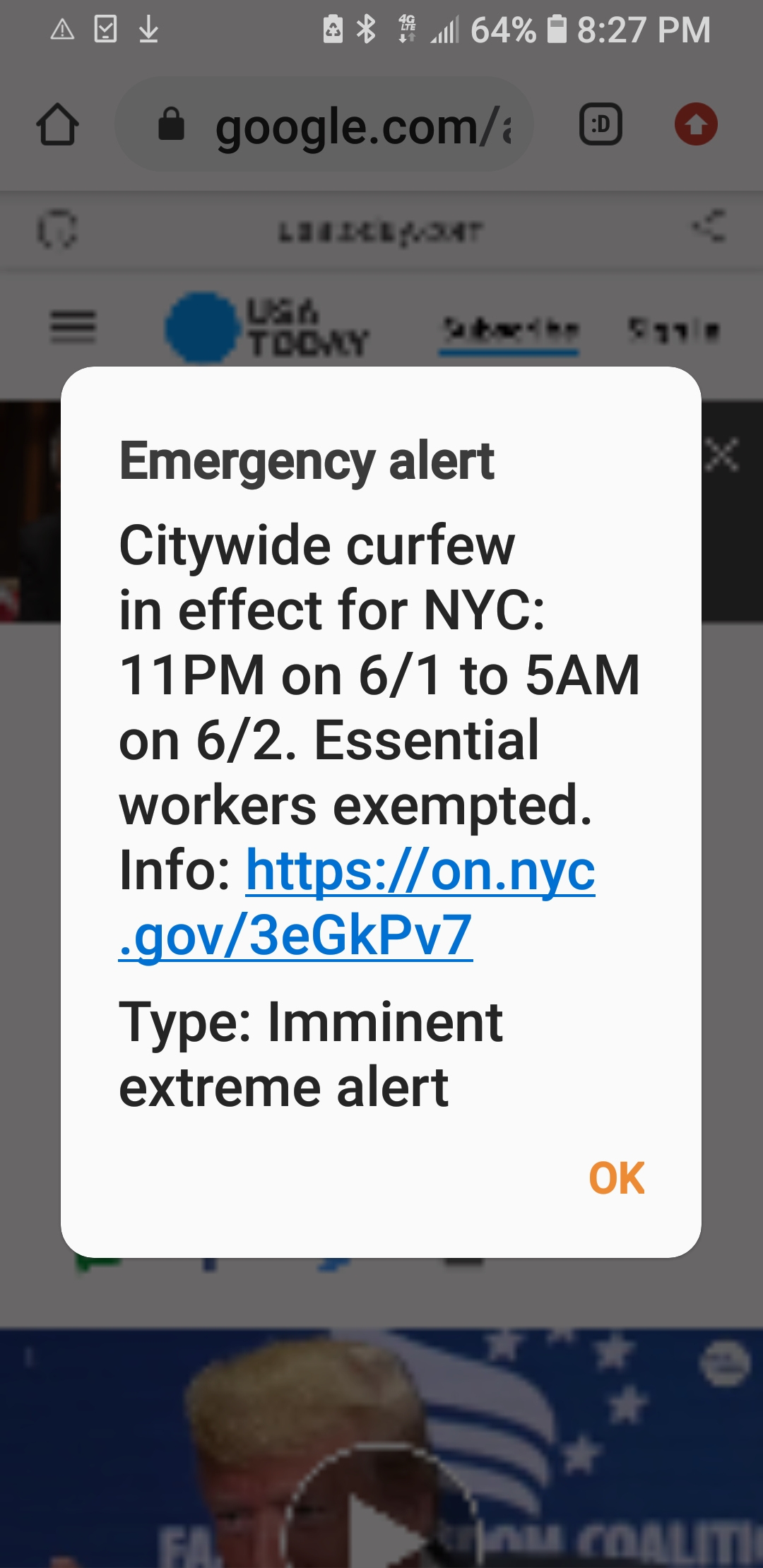
First time since 1943.
When it comes to glittering generalities pulled out of a wordsmith’s talented ass, grand-sounding but largely meaningless, American Exceptionalism is no exception. What it actually means … well, it’s similar to The Free Market, Manifest Destiny or Making the World Safe for Democracy. I offer a humble example here, of how profit-driven private industry is the most exceptional possible answer to American health care needs [1].
I went to a lab for a blood test today, in preparation for next week’s telephone appointment with a nephrologist to find out if my rare kidney disease is still in remission, as it was seven or eight months ago, when we last checked. I was supposed to have checked in with the doctor last month, but as I found out on the eve of the visit, I had no health insurance, though I’d paid my premiums through June. Nobody had bothered to inform me that my health coverage had been summarily cancelled a few weeks earlier. Oh, well. Apparently no law requires it.
No worries, problem fixed, a few short weeks later I have my affordable health insurance back. I call the lab yesterday to make sure they have the digital paperwork, but because of COVID-19 nobody at the lab can pick up the phone to confirm this. No appointment needed, come on in, short waiting times, says the recording. So I take a ride over today. Pleasant place, everyone very nice, short wait, plenty of hand sanitizer available, they call me in and ask for my paperwork.
I explain that it was digitally transmitted, on April 10, according to a note on my phone. The lab has no paperwork on the computer for me. Perhaps there was a paper file faxed over? I am asked. They open the file cabinet, check the hanging folders of paper files. Nada. Can I have them fax over the paperwork? I call the hospital where the nephrologist’s office is, navigate the phone tree, get connected to the person I need to speak with.
Carmen at the nephrologist’s assures me they uploaded the document on April 10, it’s in the lab’s database, she’s looking right at it on her computer. I give her the fax number and she tells me she’ll fax it right away. No fax arrives. I call Carmen again and she informs me the lab’s fax machine is not receiving faxes. She reads me a requisition number 0062216, this should allow them to pull it right up on the network. Only it doesn’t, as I find out a few moments later.
Crystal, a lovely phlebotomist with whom I am starting to become friendly by now, asks me to spell my name. I do. She is surprised. Somehow they had my name as a long, hard to pronounce one, starting with a P, not a W, something like Pidelszkfflmm. Crystal asks if I could have typed it in wrong when I signed in on the iPad.
I look at the keyboard on my phone and notice that P is all the way on the other side of the keyboard from W, the first letter of my last name. Not likely I typed in my own name as Pidelszkfflmm, I’ve typed my name many times, never anything like that. Never mind. There must be some work-around. Yes, Crystal says brightly, I can ask them to email it to me, go home, print it out, bring back the paper copy. When I explain the many extra steps involved for me, and how I want to leave time for the results to come back, and remind her I’m still fasting and ready to have my blood drawn, Crystal gives me her email address. I call Carmen a third time, we repeat the email address to each other a few times, she tells me she’s emailing it, she waits with me on the line until the email arrives.
“You got any jokes?” I ask Carmen after a while. She finds this funny, but can’t think of one.
“I watch the news conferences every evening,” she says, and we do a kind of sickly pseudo-laugh together.
Crystal gets the email from Carmen, she does the blood test, all very pleasant, all within an hour or so of walking in to the place. I am ready to leave, take off my N95 mask, find some food, break my fast.
“I hope you didn’t just use the bathroom,” Crystal says to me after my blood is drawn. I’m thinking of COVID, but it’s not that, she also needs some urine to send to the lab. I shake my head, three minutes ago I could have filled up two of those little cups, but…
While I’m waiting for a tall cup of cold water to do its thing, thinking about Crystal’s warning to me that the PSA test (prostate-specific antigen — a screen for prostate cancer) included in the kidney doctor’s blood test might not be covered and I may be billed separately (I assure her I throw such bills in the recycling bin) I ask her if she knew that in Iraq, under the brutal dictator Saddam Hussein, Iraqis had universal health care. She is non-committal. I continue: after the US liberated Iraq from the dictator and brought democracy, after destroying hospitals and so on, they instituted American-style health care, with the result that today many Iraqis no longer have health care at all.
Crystal nods. “Of course, of course we did that, ” she says, her eyes smiling savagely over her mask, “American Exceptionalism.” I give a little chuckle, have to hand it to her. Great girl, and the way she slipped the needle in, with barely a prick, also most exceptional. We talk about how it is exceptionally American that teeth, vision and care in our old age are not considered part of basic health care, not covered by most American health insurance. I nip off to the bathroom for a moment with the little plastic cup. She calls me Mr. Eliot again as I hand her the little cup of warm urine. As I’m leaving, her last customer of the day, she fondly calls me Mr. Eliot again. Very likable young woman, Crystal.
If you have a “Free Market” where the fittest bring the best product to market for the cheapest price for the invisible hand of the marketplace to place in front of wise consumers, why wouldn’t you commoditize every aspect of human life? Health, you understand, is just a commodity like everything else. Life itself, you can actually put a price to it, make a pretty exact valuation based on net-worth and earning potential, easily calculated by actuaries. There’s actually no guesswork involved, it’s practically science, fixed and elemental as the stones themselves; that’s the exceptional thing about American Exceptionalism!
[1] I think of the Grey Lady, America’s second finest news source (The Onion is America’s finest news source), whose distinctive, objective style of reporting harkens back to an earlier time, when the status quo was not questioned in any fundamental way by decent people. She fittingly got her nickname in a more proper era when we still had firm notions about what was ladylike and what was gentlemanly, when an unruly girl was admonished to act like a lady. The Grey Lady, now a stately, dignified, respected old matriarch, was, in her earlier days, a hard-working, discreet and strictly upper-class sex worker. You can look it up.
There’s a plague raging in New York City. We try to stay indoors as much as we can, those of us who have the option. We avoid being near people when we go out (again, those of us who don’t live outdoors). We wear masks and wash our hands frequently. Stores are doing their best to keep people safe, marking the sidewalk outside to let people line up at least six feet apart. Some places, the smart ones, require customers to come in a very few at a time, wearing masks, touching only what they purchase, or having people with gloves select the items they point out.
This is a highly contagious, sometimes deadly disease without a cure at this time. The death caused by this virus is a terrible one. The best course, though not without its obvious problems and frustrations, is keeping this deadly pathogen off your hands, your face, out of your lungs and not spreading it to others if you are an asymptomatic carrier.
Since New Yorkers can’t get to fast food, and cravings don’t stop just because there’s a pandemic, fast food will come to you. Underpaid workers who need the cash (now deemed essential workers by our mad King who uses the War Powers Act to order low-paid meat processing plant workers to go to work) deliver things like fast food hamburgers and fruit punch, on demand. This bag was on our stoop a few nights ago, two cheeseburgers and a fruit punch, an order we didn’t order.
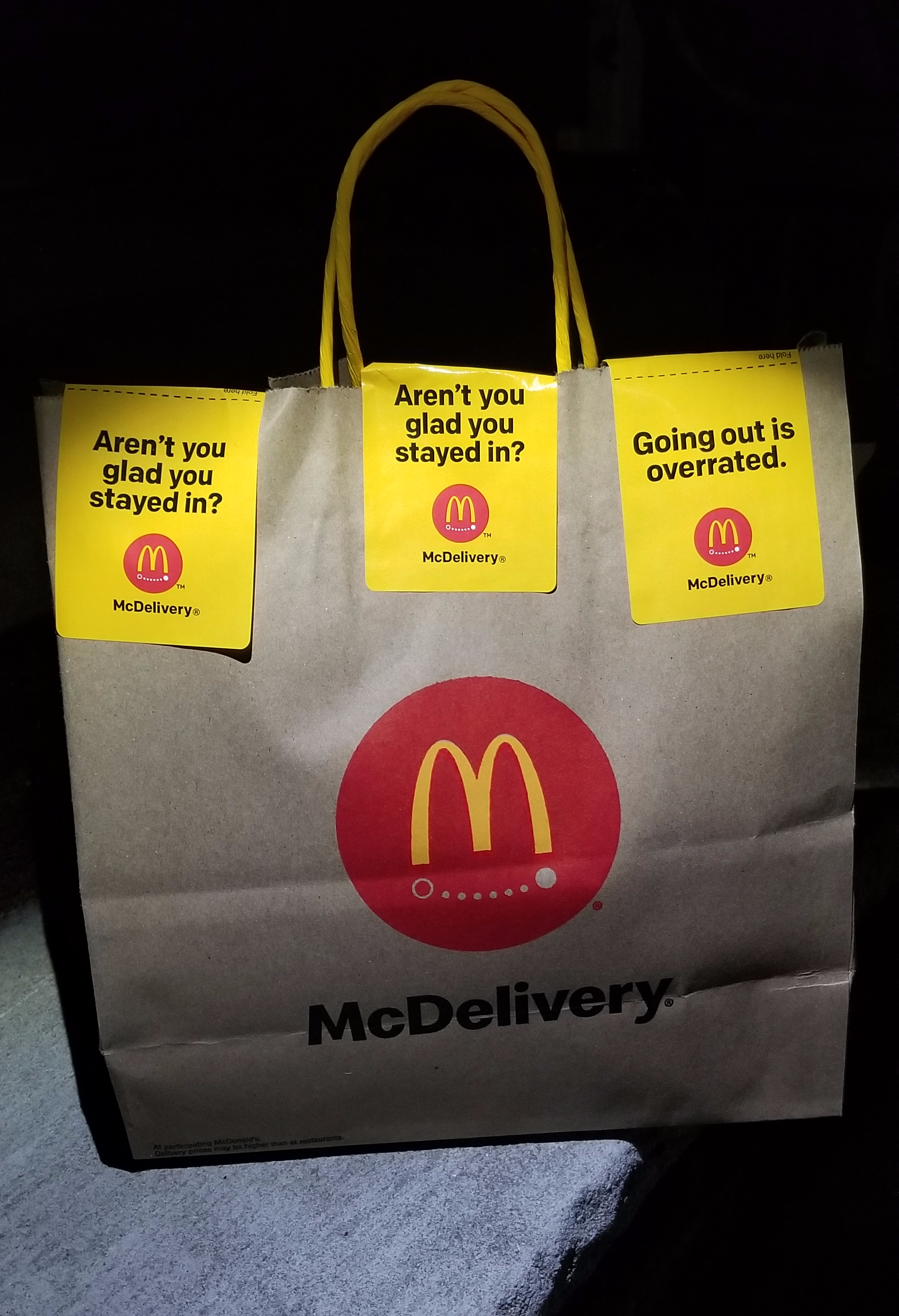
For many years I loved McDonald’s hamburgers, though I tried not to eat them very often. They were not designed for healthy eating, they were simply delicious. They were engineered to have the perfect balance of the addictive: salt, fat, sweet. I haven’t eaten meat in many years (though a few shrimps I encountered recently would probably contest that) but I still clearly remember the taste of a McDonald’s cheeseburger. I recall all the flavors combined into a Big Mac too. As they say, just because you become a vegetarian doesn’t mean bacon suddenly stops smelling delicious.
There was no address on the receipt stapled to the bag, where it listed the two burgers and the fruit punch. (At least I was relieved of the thought of McDonald’s fries being in the bag). The house next door is rented to college students, and as there was a light on upstairs, I brought the bag of food over to their stoop and left it there.
The light stayed on in the student house day after day, I guess the last one out just forgot to turn it off. Two or three days later I gripped the bag’s handle with two fingers I later disinfected (I had no ultraviolet light source to introduce under the skin) and walked the bag over to a garbage bin down the street.
Here is the part I am lovin’ —
We have hungry raccoons who patrol the area regularly, as well as the occasional large possum and a couple of colonies of constantly prowling feral cats. All of them hungry, all constantly on the hunt, all meat eaters. Not one of them touched the bag of fast food.
I’m lovin’ it!
These are extraordinarily scary times, an historically realistic multi-dimensional horror show going on all around us. It is good to keep that firmly in mind and then not dwell on it. What was already hard has been made monumentally harder by this plague, a plague of deadly disease on top of the devastation already done by hellbent deadly maniacs. It’s good to remember how disorienting this imposed self-isolation is. A few of us may have already crossed the line toward real paranoia. We must remember to be very gentle with each other in these times.
It’s easy, after weeks of isolation, out walking on a mild night in early May (the streets here in the epicenter have been virtually deserted for weeks), to see the small clusters of approaching people as threats, infectious carriers of gruesome suffocating death. The reflex to fear others turns out to be quick to acquire.
“Oh, no!” Lucy says and points to a group of silhouettes moving closer and closer, some, we see can already see, are not even wearing masks.
“Christ,” I say, suddenly in a full-blown zombie movie, “there must be twenty of them, it looks like they’re trying to keep six feet apart.”
They are walking slowly, stiffly, in a loose phalanx across the wide street, spreading from sidewalk to sidewalk. As we approach it becomes clear we’ll have to pass right through them, within breathing distance, as they rotate in every direction to wish each other well, calling out with big exhalations of breath that are visible as plumes in the humid night air. Looks like a scene out of that plague movie with Dustin Hoffman where you see the green cough cloud travel into all the surrounding lungs in that crowded movie theatre.
It is easy to see them as zombies, shambling closer, unsteady on their legs, many in masks, others without masks, wearing strange, alienated expressions, not making eye contact. In other states, we hear, hoards of them have massed at the capitol, carrying guns, demanding the right to return to normal life during this time of a massively infectious, deadly plague without a cure.
The zombie president urges them on. Real Americans need to be free, freedom means normal life, going outside, going to work, buying things, voting in person, eating in restaurants, going to the movies and the beach, getting your hair done, getting an “I Survived COVID-19” tattoo, before it’s too late. The urge to go about your normal life is quite understandable. The angry, lemming-like drive to raise your gun and scream “fuck Fauci and so-called Science! We demand FREEDOM!” maybe a little less so.
These people on the street in Queens are just regular folks, out getting some fresh air on our first real Spring evening, greeting neighbors they haven’t seen in weeks.
Anyway, because you can’t be too careful during a deadly plague, my love and I slip on our N95 masks as the hoard approaches. N-95s are the ones that not only protect others from anything we might exhale but also protect us from airborne pathogens that might be swarming toward us in the night air. As we get close, we reach under our long coats, take out our baseball bats and begin swinging with all we’ve got. As everyone knows from the zombie movies, the only way to kill one is by busting their head open. There’s a loud wet pop, then another one, they begin quickly dispersing, making their dismay loudly known as they scatter.
“Shit,” Lucy says to me, her eyes suddenly wet, “I guess they weren’t zombies.”
“True,” I say, looking down at the two unmoving at our feet, the others rushing off in all directions “zombies keep coming no matter what, don’t they?” . I’m suddenly seized with regret.
The wail of a police siren breaks my train of thought and we take off at a good clip, Lucy verbally googling the closest Trump 2020 campaign office as we run. Our thinking is that this is a place we might realistically seek sanctuary, particularly if we give a large donation. They’ll protect us, we stood our ground, Stand Your Ground, right? Plus we honestly believed those old zombies threatening us were actual zombies. If we truly believed it, it’s OK, then, how could they really not protect us? The Alan Dershowitz Principle from the impeachment show. It’s worth a shot, anyway!
 gratuitousblahg