The Body Knows

In the same way that animals instantly know when a tsunami or other natural disaster is about to happen, and begin fleeing the soon-to-be killing zone, our bodies know many things before we are aware of them.

Years ago I watched my father bully his granddaughter, my niece.   She was about five, it was the evening before her birthday and my father asked her where she wanted to eat the next day to celebrate.  She told him and he shook his head.  No way.   When she tried to argue a case she shouldn’t have needed to argue, her grandfather cut her off with a smiling “you show me a girl who insists on going to Shells and I’ll show you a girl who doesn’t get the bike her grandparents bought for her.”  This bike, by the way, a sparkly little purple number with training wheels and girlish streamers coming out of the handlebars, long coveted by the birthday girl, had already been purchased.

The girl’s parents remained silent.  I tried to reassure my niece that we’d go wherever she wanted, but she ran upstairs crying.   A few minutes later, when I went up to say goodnight before heading back to where I was staying with my father, the bully, my niece smiled and pretended she was fine.   She’d been taught to do this and was already, at five, a master of the fake, but very ingratiating, smile.  I later learned that as soon as we left she ran into the bathroom and vomited.    She was 100% right to vomit.   She couldn’t have articulated, perhaps, the exact reason she was puking her guts out, but any observer of the scene with her mean grandfather and her silent parents could get a pretty good idea of what had upset her so much.  Her body had no hesitation to vividly express her feelings for her.

Five or six weeks ago I pushed myself a little too hard on a nine mile hike that, with my arthritic knees, was a little too strenuous.   The hike was beautiful and painless, except for the steep, rocky descent and climb back up which were very painful for my knees (the descent had been particularly excruciating).  I needed to rest after the climb, as I’ve learned to do periodically when walking, to take the stress off my knees for a few minutes, but my fellow hikers, none of whom have arthritis, continued happily on and I grimly struggled to catch up over those last few miles.  

I felt fine after the hike and woke up the next day, after a long sleep, feeling fine. That evening, in the car, I suddenly found myself unable to speak.   The sounds I made were the incomprehensible sounds of nonfluent aphasia.   One syllable expletives, expressing my frustration at not being able to speak, were about the only intelligible things I could get out.  

By the time we got to the ER, a few minutes later, my episode of transient nonfluent aphasia was over.  I was able to explain exactly what I’d experienced during those twelve to fifteen minutes of not being able to speak.   Sekhnet reminded me, in telling the doctors, that I’d maintained my ability to say “fuck” and “shit” and things like that.   I was rushed through several tests to rule out an ongoing stroke and determine the severity of this TIA, transient ischemic attack or mini-stroke.   None of the tests showed any reason to keep me in the hospital, I felt fine, my blood pressure and heart rate were normal.   They gave me a pill to take, an anti-coagulant called Plavix (clopidogrel to you and me) that is apparently part of the post-stroke protocol.   I swallowed the first dose in the ER, as instructed, and filled a prescription for the drug the following day, as I found a neurologist to follow up with.

Before it was time to take my second dose of clopidogrel (where do they get these names?) I had dinner and went for my customary walk.   About a mile from the house I suddenly experienced severe abdominal cramps.   I stopped and waited for the rumbling to pass, googling the side effects of clopidogrel (prominent among them were bloating, cramps and diarrhea), and, in the moment that followed, learned the terrible truth of the cliche about when you’re old never pass a bathroom and never trust a fart.  I have long understood the first part of that adage, and I live by it.  The wisdom of that odd bit about never trusting a fart suddenly became clear to me for the first time.

The back of my pants suddenly felt damp and, I’ll be damned, there was a little wet spot,  quickly becoming a cold wet spot.  I shook off my horror and headed home in mounting discomfort, my intestines groaning as I made my way through the residential neighborhood I walk in, where, I thought ruefully, every house I passed has several bathrooms.  As I got close to the house I called Sekhnet in panic, telling her to unlock the door and clear the path to the bathroom.  It was one of the most terrible miles I’ve ever walked.  Arriving at home at last, I pulled open the unlocked door, climbed the first step, and as my foot hit the second, learned the sinister Latin meaning of Plavix:  “explosive diarrhea while walking”.

The neurologist I consulted told me to discontinue the aptly named clopidogrel and I did.  The trauma to my excretory system persisted, day after day, week after week.  Clopidogrel had apparently ripped the hell out of my insides.   This side effect is only experienced by a statistically very small number of patients, and there appears to be no lawsuit related to it among the many against the makers of the drug for several other terrible, even deadly, side-effects.   If I’d had a serious stroke or heart attack, most doctors would have insisted I take this drug.  For a suspected mini-stroke, the protocol apparently requires it.   But it’s some fucked up shit if you fall into that statistically insignificant category who get 100% of side effect number 26, I can tell you from hard personal experience.

As the sudden spasms in my colon continued, punctuated by stirring episodes of what can only be described as a spastic colon, I began a liquid diet.  After 48 hours without solid food, the spasms eventually subsided.   I cautiously began introducing solid foods, noting on paper what I was eating every day.  Brown rice was fine, so were carrots, oddly enough and popcorn, steel cut oatmeal and whole wheat bagels were fine, even with tofu spread, tofu was also fine, persimmons and grapes were OK, raisins immediately brought back all of the symptoms.  

This has been an ongoing dance since October 21.  It’s been improving slowly and by Thanksgiving I ate virtually everything (our host made everything vegan, except for the turkey), in moderate portions, and I was fine.   Even the fine scotch went down without any problem.  I figured I was finally OK again.    Last night, throwing yer proverbial caution to the proverbial wind, I ate a normal dinner with friends, celebrating Sekhnet.  A few hours later my colon announced, with an unmistakable lack of ambiguity, that I’d once again be paying certain prices for my imprudence.

It occurred to me the other day that my colon is absolutely right to be freaking out, roiling and lashing out spastically.  

I follow the news closely and even do a little side reading to get some of the backstories.   The most recent post here, for example, is about the little side story that 3/5 of the president’s original campaign brain trust are now convicted felons.   The fourth was fired early on and was not directly implicated in any improprieties or illegal acts.   The fifth, a pugnacious, crew-cutted twat who should have been held in contempt of Congress for his open contempt, started a lucrative lobbying business across the street from the White House with direct, friendly, personal access to the most “transactional” president in history.   Presumably he is now very wealthy– and loyal to his president beyond question.

The Democrats, we hear, are reluctant to bring the damning conclusions of the Mueller Report (based on specific sworn testimony) into Trump’s impeachment.   (My colon tightens slightly as I write these sentences).  Their reasons for this are practical.  They cannot prove, without sworn testimony from those same witnesses, that the president engaged in the pattern of obstruction Mueller laid out because — the president continues to obstruct access to all fact witnesses who testified to Mueller under oath and all related documents.  It could take more than a year for the Supreme Court to rule on the constitutionality of the president’s clearly obstructive behavior.  (An abdominal sonogram ruled out an obstruction in my digestive system, by the way).

This ongoing obstruction by Trump and his myrmidons continues the pattern of the president’s successful obstruction of the original investigation into his campaign’s collusion in massive Russian interference in the 2016 election.  Trump interfered enough, by continually denouncing the “witch hunt” “hoax”, refusing to cooperate, giving “inadequate” evasive, lawyerly written answers and intimidating, praising and floating pardons to witnesses, to ensure that the investigation produced “insufficient evidence” of criminal activities, though Mueller’s report also, explicitly, if almost silently, did not exonerate him of the crime of obstruction of justice.   Mueller’s investigation also put several of Trump’s closest associates (3 of the 5 originals) in prison for felonies related to this obstruction.

My gut correctly points out that it is not intemperate, nor hyperbole, to call the aggressive, diehard, fact-denying followers of Mr. Trump Nazis.   Nazi officials under Mr. Hitler were supremely ambitious men guided by only one principle: das Führerprinzip, the “leader principle” [1].   This meant their supreme duty was loyal, absolute obedience to the will of their leader, their Führer.  As Nazis themselves would put it, even the fine, decent Nazis our president praised after their march in Charlottesville: Führerworte haben Gesetzkraft — the leader’s words have the force of law.   Keep repeating any theory Trump spouts — that is the surest ticket to the leader’s approval and support.

Check out the party of Lincoln now, says my twisting colon.  It’s the party of Trump. We read that he now actually controls all the money the RNC raises, he decides which candidates get party funds for their campaigns and how much they get.   The party strongman is unprincipled, uncurious, viciously opinionated, vindictive, petty, cruel.   The perfect kind of man to blindly obey, if you are an ambitious Nazi.  When Nazis are ascendant, and “facts” no longer even exist, guys like me start getting the heebie jeebies.  So I don’t blame my guts at all for being in an uproar, even as I do my best to calm them.

I sip my broth and think about making a cup of tea.  Yes, my twitchy colon says, a little pineapple chamomile sounds about right.


{1]   The Führerprinzip [ˈfyːʀɐpʀɪnˌtsiːp] (About this soundlisten) (German for “leader principle”) prescribed the fundamental basis of political authority in the governmental structures of the Third Reich. This principle can be most succinctly understood to mean that “the Führers word is above all written law” and that governmental policies, decisions, and offices ought to work toward the realization of this end.[1] In actual political usage, it refers mainly to the practice of dictatorship within the ranks of a political party itself, and as such, it has become an earmark of political fascism.
 

Take Your Inspiration Wherever You Find It

Here is a bit of inspiration for those who can take it. Admittedly, I’m not the typical hero of an inspirational story, I haven’t had that great heartwarming moment of underdog triumph we are used to seeing in movies, hearing about in author interviews on Fresh Air.  I have achieved little in the outside world, though my inner world, where I live most of the time, is a place I can recommend highly.  I offer this encouragement to follow your impulse to delve, imagine and create, and to go boldly where it leads.

The world will grind you down, constantly, it is a machine that seems designed to do that to most of us.  It doesn’t give a rat’s cuisse about you, your thoughts, desires, what you love, what you need, what you think you deserve. It is run, down to the smallest subdivision, by the most desperately misguided, almost by definition. The most driven, entitled, selfish, forceful, corrupt and violent will often decide matters for everybody else. Look around the world, it is largely run by vicious motherfuckers who did not get to rule everybody else by chance.

At the same time, the natural world is an infinitely beautiful place – a miracle. Plants, animals, the sky, the oceans, rivers, mountains, the ground you walk on, what is under the ground you walk on, its colors, tastes, sounds and smells. Human imagination is a miracle. Unimaginable things are routinely accomplished by our puny fellow earthlings. Our ability to communicate using combinations of symbols, as you and I are doing right now– no less miraculous for being also somehow explainable. Empathy and kindness from strangers, another characteristic of the species, another kind of miracle. Is there a miracle greater than the intimacy we share with those we love?

Leave aside the destructive myths of the cultures we live in, the false values that cause untold suffering to the vast majority of us, the vain, heedless leaders hellbent on destroying the marvelous planet we all live on. Human creativity, that eternally surprising source of inspiration and hope, and the unshakeable will to do something new and amazing, are among the best parts of being human.

I’m typing quickly, I’m excited, following this thought. I’m in a hurry now, hastening to urge you, and myself, to take inspiration at every opportunity, from wherever you find it.

I’ve been listening to the remarkable Robert Caro reading his book Working. In it he collects a few thoughts about how he goes about his work, gives a few choice illustrations, assembles some notes for an intended longer memoir he hopes to write one day. He is now in his eighties, and working on the last volume of a vast biography of LBJ.  Before he embarked on that work of several decades he wrote his first, now famous, ground-breaking study of power, his tome on Robert Moses, The Power Broker.

Caro has a great, down-to-earth New York accent and he speaks and reads his writing beautifully.  He is a kind of genius. When he was broke, and feeling desperate, five years into his work on his first book, the study of all-powerful New York City colossus Robert Moses, he found himself, several times, almost at the end of his faith in himself as an author.

Each time he felt about to give up and go back to working for New York Newsday, at the time a crusading liberal newspaper on Long Island, he managed to catch a break.  At one point it was a literary agent who got a sum of money for him and his family to live on as he continued to work on the book. Beyond that, she told him the New York literary world was already abuzz, very excited about his upcoming book and she found him the perfect editor. Later, when his faith was beginning to falter again, the stroke of good fortune was a key to a research and writing room at the New York Public Library.

This is the inspirational bit I am getting at. He was in a kind of despair that he might never be able to finish the massive book he was working on. Originally, naively, he’d envisioned taking a year to research and write it. Then it was two years, soon it stretched to five years and a million words.  He was trying to get at how power works in the world, using the person of the most powerful man in New York City, an unelected public builder who ruled for half a century and inexorably shaped the city forever.  He was writing a biography of Moses as a way of laying out the workings of political power.

Understanding how power works entailed learning and telling the stories of the many anonymous people screwed by the exercise of power, to get at power’s effects in the real world, on the daily lives of millions affected by it.  These anonymous people were hard to find, it took a lot of work to locate them.   The more research he did, the more interviews he conducted, the more he wrote, the more questions emerged and the further he seemed to be from the end of the gigantic project he’d devised for himself.

His wife had sold the family home she’d inherited, that money was gone, after some desperate days the additional advance from the literary agent was allowing them to rent an apartment as he continued to work in a tiny rented space, but his isolation as he worked was taking its toll. At the newspaper he’d been surrounded by colleagues, worked closely with an editor, got support from seasoned investigative journalists, had constant feedback and tight deadlines. Working in the tiny Bronx office he rented he was alone with his massive assignment.

He began to realize how much he missed the company of other writers, people who understood and could relate to the lonely work he was driven to undertake. He started thinking he might never finish the book, five years seemed an eternity and he was nowhere near done.

Off of the large research room at the main branch of the New York Public Library, there was a smaller room for several authors with book contracts who were doing research at the library.   Caro was given a key and a desk where he could write and keep the books and other files he was working with.  There were several other writers working at other desks in the room. Everyone worked in silence and for a few days he didn’t talk to anybody.

One day in the grubby library cafeteria (“grubby” I believe is the word Caro used) a writer he admired asked him about his project and how long he’d been at it. It turned out five years was not unreasonable, this writer had taken longer to research and write a book Caro had prized. Another impressive writer told him a similar story.  Suddenly he was not an outlier indulging a fantasy that could never be realized, he was a working writer trying to see an ambitious project to completion.

He reports how the simple revelation of these facts by two writers he greatly respected made him feel like kissing each of these men. You can feel his relief in the way he tells the story.  I take inspiration from his relief.

I don’t have Caro’s elite education, I went to public schools all the way through graduate school. I don’t have his background as an award-winning investigative journalist who spent years honing his craft under the watchful eyes of skilled editors and seasoned reporters he admired.  I don’t have Caro’s prodigious work ethic, if I’m being totally honest.   I work in my own imagination, in almost complete silence. Once in a while I write something that moves someone I know and they send me a quick email or text to tell me so. That is as close as I come to the world seeing me as a writer.

I write every day, as I have for many years. I’ve become good at setting things out clearly and I have a short shelf of books in mind to write. The tools are sharp, and waiting for me every time I sit down to write.  I write with a great appetite to set things out as plainly as I can and I rarely hesitate to write what’s on my mind to tell.

I had a remarkable conversation with my father the last night of his life. In that confession, which I heard with the mildness of a good priest, a whole life was encapsulated, sorrows expressed with terrible regret. My father candidly said things that night that he’d fought tirelessly to deny for all the years I knew him. A nurse friend later told me this happens sometimes to people close to death, Death hovering nearby can have this truth-encouraging effect.

Searching for a way to make some money, I learned from a writer friend about a website that pays $250 for short pieces about the experiences of Baby Boomers. I’d told this guy many stories over the years, including the story of my father’s deathbed conversion.   He told me to write some up and send them to the editor, that these family stories were just the kind of thing this website buys.

I sent the highly condensed story of a combative childhood, the constant war around the dinner table, the screaming every night, the verbal abuse. The call from Florida, decades later, father admitted to the hospital, time running out, rushing to Ft. Lauderdale airport. That final deathbed conversation, where my father, with almost no time left on the clock, told me he should have been mature enough to have had real conversations with his children, that the eternal, absurd black and white combat had been his fault. “You’re supposed to have some fucking insight…” he said in that raspy dying man’s voice. I told him it was OK. He died the next evening as the orange and pink Florida sunset outside the hospital windows turned the palm trees into silhouettes.

After a few back and forths during which I cut the piece from 1,500 to 1,000 words, it was published on the website and I had my first $250 check.  I had a bracing moment reading it on-line.  The editor had changed a few lines, swapping in a cliché here and there for a well-chosen, precise description, and in one egregious case, rewriting an entire sentence to make my narrator an insight-challenged idiot who could not understand how his mother could have loved his father, something I understood very well.

He left the next piece I sent him virtually intact, and sent me another $250, and he also loved the third, which he promised to publish soon. When I got no check for the third I inquired and he told me he thought he’d sent me an email about changing his mind. The piece was great, he wrote again, but maybe a bit too edgy for his audience. I sent one or two more but got tired of having this ham-fisted editor as the arbiter of whether my work was worth the fee. I should have begun flinging these pieces, and others, over the transoms of every magazine out there, but I didn’t.

Instead, I set out to write the book of my father’s life and times.  Every day I’d make a cup of coffee and sit down to recall what I could of my complicated, difficult father.  It was work I greatly looked forward to every day.   A man of charm, great intelligence, dark humor, idealism, sensitivity, my father was, at the same time, a broken soul who generally acted like a merciless, prosecutorial dick to my sister and me.

I proceeded on the theory, initially, that I had to show the traits that endeared him to so many, his wit, his empathy, his championing of the underdog, his intelligent counsel, and then dramatically contrast them to the dreaded monster he turned into in private during the ruthless nightly battles over dinner.  A monster! Jekyll and Hyde, something dramatic that the kids would want to buy.

After the intervention of my father, in the form of his talkative skeleton, and more than a thousand pages written over the next two years, and a year thinking more about the book I was trying to write, I came to realize that my initial theory had been crap.   Irv was an ordinary, even typical, man of his generation, of many generations. His story was not about a monster but about the crushed dreams of a little boy who’d grown into a man, doing his best, but always fearing the worst. A man, like all men, who wrestled with terrifying demons, not always elegantly, not always without damaging those closest to him.

My life was basically over before I was two,” he said with infinite sadness, yet without self-pity, that last night of his life.  By then I knew exactly what he was referring to, and he knew that I knew.

The story of a life is an elusive thing, it changes radically depending on your point of view, your proximity to it, how that life affects your life. Your life, my life, how do you summarize it?

Robert Moses was very unhappy with the detailed portrait Robert Caro painted of his life in The Power Broker. He wrote a seething 3,500 word refutation of Caro’s book, based on the excerpts of it he’d read in The New Yorker. He wrote like a haughty, angry child who’d gone to the finest schools. Larded with obscure literary quotations and references to the classics, defensive and pretending not to be, from beginning to end it was the wounded cry of a man who felt he’d done great things, for millions, without a bit of gratitude.  A master chef who had made the world’s most beautiful omelets, admittedly having broken a few eggs in the process, a thing impossible to avoid, and whose artistry was so unappreciated.

The half million people Robert Moses had summarily evicted from their longtime homes, destroying their neighborhoods (like my mother’s) to build his dream projects that allowed cars to drive quickly through what he regarded as former slums?  “You can’t make an omelet without breaking a few eggs” was how he summarily  refuted that assertion by the scurrilous Mr. Caro.   You can read his 3.500 words here

In trying to fairly assess my father’s life, the valuable ideals he instilled and the terrible harm he inflicted on my sister and me, I found it necessary to talk things out with my dead father. There was no trove of documents to read through, no witnesses to interview, no writings left behind to ponder. There were only my memories, my intimate knowledge of the man, and the hints of a final conversation between us that should have started decades earlier.

That last chat was a good starting point for a relationship, then he was dead. I was glad to hear that I was no longer being blamed for the whole long series, senseless skirmishes, relieved to finally be let off the hook as the instigator of all the ugliness between my father and me, but then… poof! the suddenly reasonable man was gone. All that was left was the image of his skeleton, sitting up in his grave outside of Peekskill, piping up from time to time, giving me someone to discuss these perplexing mysteries with.

I started writing the manuscript daily in 2016. I worked on it every day through the end of 2017. Then, overwhelmed by a rambling 1,200 page draft that had not yet captured a real likeness of my complicated old man, had only touched on the damage he’d done, the deeper lessons of his life and the inspiration he left behind, I found myself sucked into the swirling toilet bowl of the ever-distracting, attention craving Donald J. Trump and his destructively transactional worldview.

Trump, for his part, was fond of saying that his father, the ruthless Fred Christ Trump, was his teacher, his mentor and his best friend.  In more honest moments, the second youngest of the five Fred and Mary Trump children acknowledged that Fred was a hard man, ambitious, demanding and impossible to please. Young Trump, paid $200,000 a year from birth for undisclosed work he did for his father as a baby– his life was basically over by the time he was two.

Inspired by the example of historian Robert Caro, I feel like I’m ready to get back to work on the book of my father. Take your inspiration wherever you find it. Here is Robert Caro on the time-consuming search to get as close as we humans can come to historical truth:

The part of me that, now that I was writing books, kept leading me, after I’d got every question answered, to think, in spite of myself, of new questions that in the instant of thinking them I felt must be answered for my book to be complete. The part of me that kept leading me to think of new avenues of research that, even as I thought of them, I felt it was crucial to head down, it wasn’t something about which, I had learned the hard way, I had a choice – in reality I had no choice at all.

In my defense, while I am aware that there is no truth, no objective truth, no single truth, no truth simple or unsimple either, no verity eternal or otherwise, no truth about anything, there are facts, objective facts, discernible and verifiable, and the more facts you accumulate, the closer you come to whatever truth there is. And finding facts, through reading documents or through interviewing and re-interviewing, can’t be rushed, it takes time. You could say that truth takes time.

But that’s a logical way of justifying that quality in me and I know it wasn’t only logic that made me think I’m never going to write about a crucial election, a pivotal moment in my subject’s life, and say that no-one’s ever going to know if it was really stolen or not until I’ve done everything I can think of to find out if it was stolen or not.

I could not track down the character who had falsely counted the votes for LBJ in that long ago local election, and perjured himself in a court proceeding decades earlier, and interviewed the now regretful old man, as Caro managed to do.  All I can do is imagine and re-imagine my dead father’s life, in light of the discussions his skeleton and I have had, taking into account every fingerprint he left on my own life and on my sister’s.

Come to think of it, I haven’t heard a peep from the voluble skeleton in many moons. Probably time to wake him up, we have a lot more work to do if I’m going to get to the bottom of this challenging puzzle I’ve been assembling in this dark room.

Take inspiration from my determination, if you can, as I will also try to.

Moral Dilemma of the day

You have a conversation with a close friend who, when you broach a certain subject, suddenly becomes upset, angry, tells you hotly that you’ve weaponized his confidences against him and are putting the relationship in serious jeopardy.  In tracing these feelings back with the person it’s clear that you’ve put your finger on a painful wound and the attack is basically a cry of pain.    At the end of the call you both agree it was great the peaceful way the worst was avoided, and certain insights were gained, and that a path back to trust and friendship was found.

Unease lingers after the call.   The explosive thing you mentioned that caused your friend to go wild is a bad and recurring part of the dynamic with that friend.  A toxic bomb waiting to explode again next time.   

It is something hard to avoid sometimes, as the person complains about their anxiety regularly, even while avoiding mention of the omnipresent stimulus of the anxiety itself.   The ever-present 300 pound gorilla in the room is always in the room.   Nothing can ever change unless this troubling this subject is dealt with, but mention of the actual gorilla is forbidden on pain of ending the friendship. 

Tolerating the intolerable cries out to be addressed.  If not with a friend or family member’s help then, for god’s sake, with a good therapist or someone willing to patiently listen.  Nothing can change unless the trouble is addressed, it only makes things worse to merely push the feelings down and proclaim that the monster is “being handled”.

You have the choice, as a friend, to avoid this subject completely — the easiest, if not most satisfying way to do it — or to find a way to talk about it productively (not easy, but possible, I believe).   There is one specific event that encapsulates this whole dilemma in your relationship, but your friend, while acknowledging it probably happened just as you say,  tells you they don’t really remember it very well and don’t really want to relive it.

We have different levels of intimacy with different people in our lives.  Some friends are fun companions we’re very fond of, but we don’t seek them out to confide in and get advice from when we’re in great pain or trouble.  We value others in our lives for different reasons, though the people we’re truly intimate with are in their own necessarily small category.   We tend to listen to these people carefully and remember the most important things they entrust to us.

I also must say — not everybody is capable of intimacy, since it requires openness, trust, honesty, confidence that your vulnerability will not be betrayed.   Not everyone is capable of all that, sad to say.  If you continue to seek deeper connection with somebody who is not able to operate in that mode, trouble is bound to follow.

Today’s moral dilemma: 

The forgotten past is prelude to the deniable future.  That horrible incident I brought up that so upset me, that thing you don’t really remember in detail and don’t really want to discuss… why do I keep bringing it up?   

I bring it up because it upset me profoundly, because it stands in perfectly for what continues to upset me, for what I see as the underlying dilemma: your belief that painful things must never be revealed or talked about and that raising them is an act of war.   This is particularly true for potentially shameful things.   

You believe that these things are too painful and threatening to face and you require others to respect your right to remain mute about them — which all sounds fair enough.  The trouble is, you want friends and family to listen supportively to your troubles without giving an opinion that might involve anything challenging, difficult, painful, embarrassing or shame-inducing.

I believe that if we are as close as siblings and can’t talk about what is really bothering you, the chitchat dancing around the obvious is pretty much a waste of both of our time.  If you don’t trust me, you don’t trust me.  I didn’t make the world.  Look carefully at this upset you gave me that time, I’ve written it out on a page.  See if you can identify with why  I was so shaken up.  See if it gives you a clue to what you could do going forward to better consider my feelings, to have less fear, anger and anxiety in your life.

I had a long-time friend, now dead, who made the unreasonable demand of just being listened to without comment until it became unbearable.    He had nobody else to confide in, since he lived in a world where literally everyone he ever met disappointed and betrayed him, and he needed to tell his best friend the ongoing tales of this horrible personal torture chamber he lived in.  Every story was exactly the same.   Somebody he really admired turned out to be crazy, brutal, vindictive, a total putz.   The three act play was identical every time.   Admiration, suspicions of imperfection, vicious betrayal by the formerly admired person.

You can only hear the same awful story so many times before it is unbearable to withhold the opinion that your friend’s unreasonable expectation of human perfection needs to be addressed before anything can change for the better in his life.

This infuriates your friend who angrily tells you he just needs you to shut up and “be there for him”, listen to his latest painful tale without the fucking commentary, just let him tell the long, complicated story.   Eventually this becomes impossible, you are obliged to reveal your human imperfection and move on to act three — betrayal by repudiation.

Today’s moral dilemma: 

That painful incident you told me you pretty much forgot, though you don’t dispute my version of it, you also say that you truly don’t really remember it in any detail.  These erased details of what upset one person are the essence of what causes the most trouble between people, the erasure of how I hurt you plants the seeds for the next episode, which is guaranteed to be worse that the previous one since it is the same hurtful thing I did before and managed to forget about.   

Here, then, are the details, laid out clearly and concisely.  Take a look.  Do you understand now why I was so upset, why it upsets me that you’ve managed to put it out of mind?   Do you understand that you would have been equally upset if I had placed you in that position?    Are you capable of self-knowledge?  If not, what are we doing here?

The dilemma is how to balance a desire to help, and be heard, and treated fairly, with the certain knowledge that you are dealing with someone who, no matter how objectively you set an uncomfortable thing out, is likely to be enraged by your intrusion into their painfully protected privacy. 

The dilemma:  do I maintain an essentially false relationship with little trust, for the sake of having any relationship at all, or do I respectfully risk everything to try to have a better, healthier one?


Learning or not learning

An old friend was lamenting the other night how many years it has taken him to learn the most basic things about being a kind person.  How to overcome the ready reflex to react violently to provocation, for example [1].  I commiserated, that kind of transformation is not accomplished overnight, if at all, particularly if you grew up regularly under attack in a family war zone.   On the other hand, struggling to be a more compassionate person is the right thing to do and whatever progress we make benefits those we love as much as it benefits us.

We’re taught many things as children that are not only wrong, but do great damage to our young souls, damage we’re often compelled to pass on to others who don’t deserve to be mistreated.   Every abusive person in the world was subjected to abuse as a young person.  It doesn’t excuse the asshole behavior, but it makes it understandable.   Nobody becomes a bully unless they grew up in fear, humiliated and shamed regularly.

I reminded my friend at one point of something he’d long ago forgotten, a random moment of kindness he had no reason to remember, but one that made a deep impression on me.   That moment showed me, more clearly than anything up until that time, that there was a gentle beauty to life that had been largely hidden from me during a combative childhood defending myself against an antagonist who waited until the last night of his life to express sorrow and regret for the lifelong war he’d always blamed me for.   The random act of my friends’ kindness opened my eyes to how nurturing and healing real gentleness is.

I reminded my friend of that long ago day at the lake (which I wrote about here) and he had only the vaguest memory of  it.    He recalled taunting me, at one point, until I laid back on the rock, a crust of bread held between my lips, and waited for the beaked kiss of a hungry Canadian goose.  The aggressive birds had surrounded us during lunch, looking for some lunch.  He’d been doing it, and laughing as the birds snatched the bread from his mouth, and urging me to try it, but I’d resisted.   He called me a pussy in front of two female friends, “PUSSY!” he taunted, and like a true pussy, I put a crust of bread in my lips, laid back and waited for the hungry kiss of a large bird.  It was pretty cool.  I then reminded him about swimming in the lake and Audrey, who he’d only met that one time, and I fondly praised her as a great girl, talented, funny, cute, sensuous.     

“Why didn’t you stay with her?” my friend asked, hearing the obvious affection I had for her. 

I explained that at the time I was still way too immature to know how to handle somebody as damaged as Audrey also was.   I loved hearing her laugh, her touch, her beautiful singing voice, many great things about her, but I was too big an asshole, still, at age thirty or so, to know how to take care of the parts of her (or myself) that were so broken.     

She gave me stern advice one day, late in our friendship, and I resisted what she was telling me.  She pressed on, telling me that she wasn’t telling me anything she didn’t also tell herself.  I smirked and told her, with a bit too much coldness, that the things she told herself included “put your head in the oven and inhale the gas” and “take the razor blade into the bathtub and end this suffering.”   I said, if somebody told me those things, I’d defend myself violently against them.

That wasn’t the point, of course.  I managed to reject her advice, and win that little round of an ongoing disagreement, but the cruelty was unnecessary, and damaging.   She had struggled against suicide (and I hope never afterwards succumbed to the urge to do herself in, I haven’t heard of her for decades now) and prevailed more than once against a self-destructive tic I could not relate to.   Others might kill me, and I’d fight them about that, but I won’t ever raise my hand against myself (unless, perhaps, I am in unbearable pain in the final stage of a terminal disease).   Those things might all be true, but it was very mean of me to use them against her like that.   At that time I was simply too hardened against critical voices, even if they were right, and too intent on being right.

The world of hurt in Audrey’s heart, the pain that sometimes made her want to die?  I had no way to touch it.  I could make her laugh, I could make love with her, I could accompany her on guitar when she sang and played the flute, but beyond that, I was pretty much clueless.  

What we learn, I don’t know how we do it.  I’ve sometimes thought that the things that trouble us most make us think deeply about them (if we are wired that way, denial is probably a more common response) and look for insights into how to have less pain.    Pain, of course, is famous for distorting our thinking beyond endurance.   

Look at the tens of thousands of deaths of despair every year in America: suicide by gun, drunk driving, drug overdoses.    There is no help for this kind of hopelessness in a nation that divides the world into great winners and fucking losers.   We can learn to repudiate this false, asshole version of the world, though it is not easy.  “Winning” is really about the love and kindness we have in our lives, everything else is deliberately misleading advertising.  If you live without much love in your life you know this, if you live with a lot of love, you know this too.

How do we learn anything?  I don’t know, even as I know I’ve learned some important things over the years.  Some things we learn without effort, because we love them, are fascinated by them, drawn to them, can’t help improving because we are involved in them all the time, curious, thrilled by them.  If you love the sound an instrument makes, for example, and how it feels to play that instrument, odds are you will get better and better playing it.   If you love to draw, you will draw all the time, and if you do, you will get better and better at it.   Writing, same deal.   Critical thinking may also be in this category– finding and assembling the facts to figure puzzling things out.

But the really hard emotional stuff — how not to behave like our earliest role models?  How not to blame ourselves for the cruelty that’s sometimes inflicted on us?  How not to be tortured by fear?   How to remain mild, and as kind as we can, even when we feel hurt?   Very hard things, all of them.

I don’t know that I have a nice bow to tie this up with.  I don’t.  Life rarely includes real closure, or black and white changes that are beyond dispute.  In our war-torn world, nothing is beyond dispute, if you are willing to fight to the death over it.   Our current president is the perfect example of this: never wrong, always justified, always perfect.   Angry too, of course, because he is so innocent and lives in a corrupt world with so much wrong, so many enemies unjustifiably hellbent against him, everything so imperfect. 

The changes my friend and I discussed the other night are sometimes subtle, other times impossible to see at all.   We still react with anger when we feel provoked, but we probably react with less anger at times.   We still are unable to do much to heal the hurt in people we love, but we are better at it than we were.   We have learned a few important things, after many, many years.   I congratulate my friend for this learning, even as I commiserate about the hard road he is on, has always been on.   It is, of course, much easier simply to remain an asshole.


[1] If there is a harder trick, for somebody who was subjected to abuse as a child, I’m not sure what it is.

Empathy requires focus sometimes

Empathy is what we hope we always give to people we love, what we always hope for from those closest to us.   Sharing another person’s pain, fear, sorrow, weakness is the kindest thing we can do for them.  It’s not always easy to empathize, even with those we’re closest to, especially about things we ourselves have never experienced.   Empathy is an essential element of kindness, its absence feels like indifference, abandonment, even if the lapse in empathy is purely unintentional and leaves us aghast when it is revealed to us.

Some people are simply dicks, we can stipulate to that.  This type is too immature and selfish to think of anything but their own needs.   This tendency is exacerbated by the extreme nature of the on-demand winner-take-all society we live in.   In our individualistic, competitive culture it’s easy to get sucked into the prevailing mentality that it’s no vice to step over somebody weaker and do a crowing victory dance next to their fallen body.  We are unconsciously conditioned to view the world in a crudely Darwinian way.   That said, most of us are empathetic, whenever our hearts are touched.  

There are rare types on either end of the empathy scale.  Finely tuned empathetic souls who are always concerned for the feelings of others, of every stranger they encounter, about the fate of others they will never meet, the well-being of the planet itself.  On the other end of the spectrum is the clinical diagnosis for evil: the malignant narcissist, incapable of empathy under any circumstance.    The rest of us are in between, our own empathetic abilities varying according to circumstance.  

I give two illustrations of things I will always remember, pictures from both sides of the empathy scale.

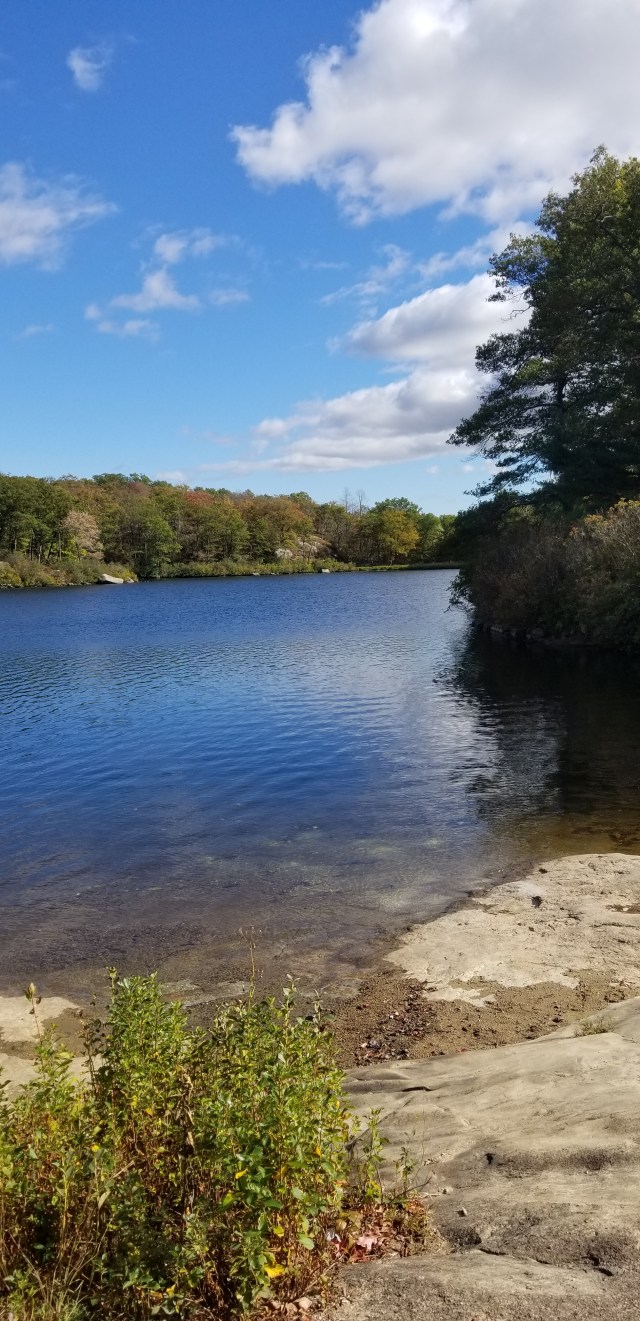
Years ago I went to the lake  with three friends.  

20191004_150114

It was a warm spring day, but not hot.   Audrey and Alain went into the lake, up to their necks, and began cooing about how perfect the water was. They soon starting urging me to come in.  I was quite comfortable on a cool rock and the idea of being wet didn’t appeal to me.  It wasn’t that hot out and my clothes would probably stay wet and become increasingly chilly for the rest of the day is what I was thinking.

They called me from the water, laughing and smiling.   “It’s fantastic!” Alain called.  “You have to come in, you won’t regret it!” said Audrey.   They were both smiling from ear to ear as they eventually came out of the water towards me.

In my experience this was their chance to drip cold water over me, to hug me wetly, to behave like happy, dumb, obnoxious kids do.   To my surprise they did none of these things.  They spoke to me quietly, cheerfully, telling me to trust them, urging me on as they gently took me by my arms and helped me reluctantly to my feet.   There was no pushing or pulling, no coercion, just their reassuring touches and gentle slowness, letting me decide if I wanted to join them, doing their best to make my decision easier for me.   I stood and took a few steps toward the water.

It is perhaps thirty years ago, and I remember my feelings in this moment more clearly, more fondly, than almost any in my life.   It was the feeling of being loved, taken care of, supported, listened to, respected.  I felt like I was in the nurturing hands of my ideal parents, two gentle souls who truly wanted the best for me.  I felt protected, certain that they had my best interests at heart and only those interests.  

Step by step we walked into the water, which felt cold when I put my first foot in it, but which they assured me was perfect once I went in.   They were right, it was fantastic, perfect, delightful.  I’d worry about being wet later.  I certainly wasn’t worried about anything as we splashed and swam happily.   Gayle was not coming in under any circumstances and none of us tried to convince her to come in once she made that clear.

I think of those moments as one the greatest demonstrations of empathy I can call to mind.  So simple, so trivial, but their kindness touched me so deeply and the swim was so well worth it.   The odd thing is that Audrey and Alain had never met before that day, yet they worked in perfect, loving coordination.   As far as I recall they never met after that day either. For one moment in time the stars were aligned perfectly and I was given this beautiful gift: to feel in this random moment, as an adult, the beauty of a perfect childhood memory.

I was going to contrast this with another image, but, on second thought, it’s much better to leave off with that transcendent image of empathy.  It is easy enough for anyone to imagine the opposite of being treated with this much consideration.


Repentance and Atonement

It may seem churlish, arch and dickish of me to bring this up, especially during our Second Civil War here in the land of the conditionally free and the home of the transactionally brave, but a sincere apology is a powerful thing, a force for peace and reconciliation.   Sad to say, as Sir Elton sang it, in words probably written by Bernie Taupin, ‘sorry seems to be the hardest word’.

I think about this each year at this time on the Jewish calendar, during the Ten Days of Repentance.   We are supposed to use this time to honestly review our actions of the past year, find acts we regret, times we were wrong, seek out, apologize to and make amends with the person we hurt.   

It is a beautiful and very humane idea.  It is a caring thing to do for people we care about.   It is a hard fucking idea, to make yourself humble and vulnerable, especially when the hurt was mutual, where you feel like the other person also  acted like a jackass.  Too hard for most of us to sincerely apologize because, seriously, the world has probably been meaner to us than we were to some provocative asshole who desperately demanded whatever we might or might not have done to them.   

This self-justification is the working of anger and its first cousin pride.  These emotions have one demand: I am right and you are an asshole.   It’s a zero-sum emotional landscape.   While I am angry at you, my friend, you are a fucking piece of shit and I have a hundred reasons why.   Deny it, go ahead, it only makes you more despicable, unredeemable, deserving of my wrath.     

I realized the other night that in my understandable desire to have someone stop talking aggravating shit to me, I went too far.   I didn’t stop to consider that this old friend’s sudden rage might have indicated he was having a serious problem or something.   He attacked like a petty prosecutor, he doubled down when I tried to explain, when I  asked for the benefit of the doubt.  His final email came back lightning fast and really got under my skin. 

I waited a few days, removed some expletives from my reply and methodically,  surgically, wounded his pride to shut him up.  The hideous noise stopped, peace, end of story.   

I can rationalize my hurt, my anger, 100%.   The guy acted like a world class jerk, no question.   Yet, look, I was also very harsh to him.   Those are two different things — his acts and mine, and we are each responsible for our own.   I was wrong.   I erred on the side of hurting him too much, to guarantee he would have no reply.   His timing had also been bad, his instant double-down on his anger came back right before my birthday.   A self-righteous, superior, stupid stream of steaming shit, right in my inbox.   I needed to make it stop.   

Did I need to cut off both of his arms and legs, and his head, to make sure he couldn’t respond?   It felt like I needed to at the time, to be sure, but now I can see a range of choices I didn’t consider, much more productive ways to proceed.   I did the one thing that would guarantee the quiet I needed, though it also ended not one but two friendships.

Was I wrong?   Arguably not.  Still, did I need to be so harsh?  Probably didn’t need to be so harsh.   So I sat down the other night to write a letter apologizing for my role in our titanic, fatal battle of the assholes.   No point arguing over who was more at fault, we were both hurt and angry and lashing out. 

I did something I now know was wrong and I am sorry.   Sorry I was so viciously hurtful, what I did would have hurt me, would have hurt anyone.   It cost me two old friends, and I was wrong to offer no way back from our dumb fight over nothing specific.

Writing that letter while refraining from justifying myself cost me blood.  As I was writing it I had to keep separating what I had done from the several strong provocations.   You may well have provoked me to want to punch your lights out, but I can still regret punching your lights out.  It does not accord with the way I want to live — being provoked and lashing out in return, I try to do better.   

Maybe it’s impossible to be friends with an insecure, competitive person who turns out to be a cheap-shot artist when it comes down to it, still, my reaction to even a cheap shot is my choice.   I chose wrong by calmly and methodically cutting this guy’s limbs and head off.

I spent a few hours writing the letter of apology.   I think it was a decent apology.   I have no expectation that it will change anything, and I wrote as much, but it was important to me to seize this important, widely neglected religious obligation to try to make peace instead of war.    I went to sleep and had troubled dreams.

I had been challenged, by a gang of Thai toughs, to body surf down a steep flight of stairs and, for some reason, I’d accepted the challenge.   A Thai tough had put on a motorcycle helmet and, when I wasn’t watching, supposedly tobogganed  down the steps on his belly, arms outstretched like superman.   I stood at the top, having accepted their challenge, and had many second thoughts — though there was clearly no way out. 

I asked for the helmet.  The owner of the helmet refused, handing me a soft stocking cap instead.   So soft I stood there petting it, a really beautiful material.   I put it on, stalling, not quite sure how I’d wound up in this untenable position.   I told them I needed to go next door.

Next door, in the bar,  I ran into a girl I used to know.   I told her about my predicament and that I had to go back and body surf down this steep staircase next door.   Instead of talking sense to me, or urging me to flee, as I was out of the presence of the toughs, she told me she’d go with me, that she had to see this.   She accompanied me next door, back to the top of the stairs, where she took a seat on a long bench with the Thai toughs (why were these toughs Thai?  No idea) and waited for me to make my injurious descent.   What the fuck, I thought?   I continued to stall.

I stalled long enough to wake up from this dream.   When I did, my first thought was that letter of apology I’d written to a person who had already told me that my previous two apologies, while sincere, were beside the point.  A person incapable accepting an apology and of apologizing himself.   I was angry about bending a knee to someone I still thought of as a petty tyrant, a giant two year-old.    

I understand:  you don’t apologize for the petty tyrant’s sake.  You apologize for your regrettable, if arguably justifiable, overkill.   You apologize to remind yourself to try to do better next time.

You apologize for the way your taking of the high road (no cursing, no outward show of hurt or rage) was nonetheless dismissive, vicious, and reduced the other person to sputtering, silent rage he could only take out on his wife. 

You apologize for the sake of the wife’s feelings, and because you probably didn’t need to remove all four of the guy’s limbs, and his head, no matter how loudly and aggressively the angry tough guy may have demanded it.   

You apologize because it is the right thing to do, because the world is better when people try to make peace than when they hold ugly grudges.  Even if it makes you feel like you are giving in to a smirking bunch of asshole bullies who wait for you to break a limb or two, or perhaps your neck, as you try to keep your word.

I Can’t Keep Blaming Mr. Hitler

True, Hitler did send columns of determined men with guns to conquer areas where my family in Europe lived, followed by special squads of “ideological” specialists who worked with desperate, angry locals to kill everyone in my family (and their ilk) left in Europe.   Not a bit nice, as my grandmother Yetta used to say about people who did awful things.   Yetta herself had six siblings (every brother and sister she had) and her two parents murdered, by local Ukrainians, granted, but at the behest of specialized men who took an oath of personal loyalty to Mr. Hitler and did everything he told them to do. [1]     

I tend to think regularly of the outsized influence this conceited little puke had on my family, by killing virtually all of them — and then I think– you know, it all took place thirteen years before I was even born.    There are, after all, two sides, at least, to every story, plus all that nuance.   Maybe I am, as my father insisted when I first brought it up, just being a melodramatic little bastard by continuing to make a big deal about this Hitler business, blaming that long-dead extremist demagogue for things that had nothing whatsoever to do with him.

I mean, people in my small family here, people I actually knew well, hated each other– having nothing whatsoever to do with Adolf Fucking Hitler.   A pair of half-siblings, my father’s first cousins, didn’t exchange a word for the last thirty years or more of their long lives.   What had Mr. Hitler to do with that?  Absolutely innocent on that count, your honor!

My fractured family, largely extirpated by men obedient to Mr. Hitler, was composed, a couple of generations back, in Hitler’s day, of a large group of hardworking poor people.   They were what you call “nobodies”.   Their lives fell silently into that huge statistic of dead people killed in the deadliest war in history.   On my father’s side the disappeared hamlet they came from, down to its precise location in the marsh land of Belarus, was one of literally thousands of Jewish enclaves permanently wiped off the world map in those years, when men like Mr. Hitler and his kind made big, important decisions about who shall live and who needed to be exterminated.  

I look at my own circumstances, ponder the epigenetics of it sometimes, the way my grandparents’ experience of being the sole survivors of large, murdered families might have shaped their personalities, how that unspoken of trauma of their murdered brothers and sisters and everyone else they knew altered the things they passed on to me without any of us being aware of it.   Then I think, there you go, blaming Mr. Hitler again!

I sometimes find myself comparing the circumstances of my own family with those of the proud, accomplished Jared Kushner and his family.   Jared has that haughty bearing, proud and imperious as a top SS man in the old photos.  It may seem unfair to make that comparison between a very wealthy Jew and the most “ideological” of the Nazi leadership cadre (most top SS men, as they say, were “well-born”), but you have to admit, looking at the way he carries himself, that Jared is an indomitable man and appears quite certain of his superiority.   Jared would never allow himself to be marched to a ravine for a bullet in the back of his head, after giving up his clothes for payment to his murderers.  No way.  Jared would find a way to win, to vanquish his enemies, because a guy like Jared Kushner, let’s face it, one of the President of the United States’ top advisors, is a winner.   His kind doesn’t get shot lying face down in a ditch like a nobody.

You may be tempted to call it a matter of pure, dumb luck, observe that Jared was randomly born to a very wealthy family of Jews who escaped the Nazi murder machine and managed to thrive in the United States, amassing a fortune of almost two billion dollars in barely two generations.  Think deeper.   It is just as likely a matter of character, which is, of course, destiny.  The best are the best for a reason, n’est-ce pas?  If it was mere dumb luck that Jared’s grandparents arrived here and were able to build a modest family business, buying and renting out multiunit apartment buildings in New Jersey, into a thriving real estate empire in just a few decades while mine worked as hard for a fraction of the reward, then what does it all mean?  What is the possible meaning of this random, merciless arrangement? 

I get worked up sometimes considering questions like these and I eventually get back to blaming fucking Hitler.   At the same time, I know that Mr. Hitler was merely a symptom, a purulent boil that was fated to burst upon the scene, like any inevitable destructive psychopath whose message manages to resonate with millions and spurs them to unthinking violence.  

I mean, if Mr. Hitler had never lived, had never come to power in the most civilized, highly industrialized nation of his day, had never held sway over millions of Germans (36.8% voted for his party in the last election of the democratic Weimar Republic), how different would the world be today?  How different would my life be?  Hard to imagine.   And senseless to try, really, except for the lessons I take from it, having studied Mr. Hitler and the rise of the movement he led, some might say obsessively, on and off for literally decades.

I realize, of course, that even if Mr. Hitler (I’m adopting the New York Times style here, the Grey Lady once puckishly referred to “Mr. Clapton” and “Mr. Diddley” in a piece about Eric and Bo) had never existed, most of my family probably never would have arrived here in the USA anyway.   By 1924 prominent American “nativists”, xenophobes and racists, under the banner of Eugenics (a discredited sham science that the learned and unimpeachable Mr. Trump devoutly espouses to this day), had severely restricted immigration from shit-hole countries like the places my people come from.  The few who arrived here came in before the land of the free largely closed its doors to immigrants in 1924, the last of them, my grandfather, sneaking in in 1923.

1924, coincidentally, was the year of my father’s birth, in an unforgiving, crime-infested  slum in Lower Manhattan.    Trump’s feverishly imagined Baltimore has nothing on the Lower East Side of New York City in 1924.   1924 was also the year, nine years after D.W. Griffith’s darkly influential silent film masterpiece The Birth of A Nation extolled the heroism of the Ku Klux Klan, that Klan membership in America reached its all-time peak of 2.4 million proud sheet wearing members.   Birth of A Nation was the first motion picture screened in the White House and President Woodrow Wilson, who watched it raptly, [2] later enthused “it’s like writing history in lightning, and my only regret is that it is all so terribly true!”

What was so terribly true, in the eyes of the otherwise progressive Woodrow Wilson (aren’t people complex?), was that the former slaves down south had been completely out of control, savagely and vengefully dominating the innocent local whites and raping the women — also attaining political office in many areas with their new bayonet-imposed right to vote.   As Griffith showed in his blockbuster epic, history written in lightning fifty years after the fact, a heroic band of white underdogs, modern day knights in sheets, arose to protect the glorious South from these unrestrained black beasts and protect the honor of their pure, white women.  

I was exposed to a big chunk of this controversial movie by an Italian visiting professor, during my time in graduate school at City College.   Almost ninety years after Griffith wrote his terribly true history in lighting, she insisted the group of us in her comparative literature seminar watch it.   I was there as part of my study of, eh, creative writing.   We all agreed that movie was some fucked up and incendiary distortion of history as we knew it.   It also explained a lot about historical revisionism and the dramatic power of heroically presented bullshit shouted through the right megaphone.

The forces of violent, irrational hatred in the world are always simmering (open virtually any history book anywhere if you doubt this).   Mr. Hitler sometimes, in the early days, when he was up and coming, humbly referred to himself as a “drummer”, the kid tirelessly banging the drum to set the cadence for the righteously marching troop parade.   Like the guy on the old slave-powered Roman galley, the hortator, some poor bastard who beat a drum and chanted to set the cadence for the coordinated pulling of the heavy oars by the other slaves, as ordered by the captain.

We have a hortator, inciter, encourager, exhorter, urger like that right here, in charge of scrawling his name jaggedly across the bottom of Executive Orders, veto pen in his other hand, and though I hesitate to invoke his tiresome name (again) in a piece about blaming Hitler, well, really, who can blame me?   Ah, fuck him [3] and the Nazi hordes he rode in on.   I really do have to stop blaming Mr. Fucking Hitler, though.

[1]  Hitler’s every word was, literally, law.   The Nazis phrased it “Fuhrerworte haben Gesetzeskrafte” and it was left to an army of Nazi lawyers to put their infallible leader’s every utterance into crisp legalize and codify it into the German legal code of the time. 

[2] I’ll try to keep the fucking toilet type adjectives and nouns here in the footnotes, gentle reader.  Wilson was a racist motherfucker if there ever was one.  He was the only U.S. president  in history born and raised in the Confederacy, so there’s that– he grew up in besieged and eventually defeated territory that had staged an armed rebellion against the United States.  In fairness to him, the famous Progressive also apparently hated Jews, a people who are not, except to certain racists, actually a “race”, though, like the Fuhrer himself (who had more than 300 “do not touch” Jews on his list) he had Jews he thought were first class.    He nominated Louis Brandeis to the Supreme Court in 1916– a bold and progressive move.    As it was later written of Brandeis by Justice William O. Douglas:

 “Brandeis was a militant crusader for social justice whoever his opponent might be. He was dangerous not only because of his brilliance, his arithmetic, his courage. He was dangerous because he was incorruptible … [and] the fears of the Establishment were greater because Brandeis was the first Jew to be named to the Court.”

the Wiki continues:

On June 1, 1916, he was confirmed by the Senate by a vote of 47 to 22, to become one of the most famous and influential figures ever to serve on the high court. His opinions were, according to legal scholars, some of the “greatest defenses” of freedom of speech and the right to privacy ever written by a member of the Supreme Court.

source

[3] Shit, sorry, gentle reader, I f–ed up.  So hard to keep the fucking cuss words out of it, idn’t it?

Organizing my attack

Sometimes we get insight in a very roundabout way, only after a thing has been gnawing at us for a very long time.   It can take being nibbled by a particular demon for many years before you jump out of your chair one day and say “what the fuck?!!” look down and see what is snacking on you.

At the end of several long, stressful days getting the house ready for the contractors (the lioness’s share done by indefatigable, self-proclaimed working dog Sekhnet)  I went through a pile of papers (a short stack) propped helter skelter on a board laid across an open desk drawer.   More than half the pages immediately went onto the recycle pile to be carried down to the bag.   The rest, mostly drawings, I clipped neatly into the clipboard they were lying haphazardly on.   

Not really very hard, I realized, though the volume and variety of papers here, as I glance around, is many, many times more than that short stack at Sekhnet’s I dispatched in a few minutes.   Of course, Sekhnet is right — spending a half hour a day at it would make a big difference within a few days, even here, in the eye of the storm.

Another insight hit me when I pulled a page I’d printed out of the pile and began reading.   It was my unsent pitch to a publisher who welcomes book proposals from unknown authors.   A two paragraph evocation of the book I thought I was writing about my father, something I worked on hours every day for two years, a massive, unwieldy first draft.   

I stopped reading my pitch shortly into the second “reveal” paragraph.   I was glad I’d never sent the thing, it was a labored, strenuous, grunting swing at nothing but air.   It did not present a hint of a compelling idea for a book.

I recently saw a best-selling author, in the windup to an ad for his Master Class on how to become a successful writer, describe the writing of the second draft as an exercise in convincing everyone that you knew exactly where you were going when you wrote the first draft.    Wow.    That’s precisely my challenge in putting together the book of my father’s life and then successfully pitching it.   

The story of my difficult father’s life is not the tired old story of a smart idealist with an abusive dark side, fighting for justice for strangers while doing great harm to his own family.   It’s not the story of a man’s triumphant emergence from childhood poverty into the middle class (along with a large cohort of World War Two vets at a unique and fleeting moment in history).  It’s not the story of monstrous anger, righteous and senseless both, and a rigid inability to forgive.   

Those things are part of the back story.   The book is more of a meditation on the nature and substance of history itself, what we remember and what we forget, and the imagining of a lifelong conversation that should have been.   That conversation with the skeleton of my father, the one that began the last night of his life, is the heart of the book, though it’s not the story I need to tell, shop and sell.  

The real story is what I suspected from the start, the difficulty of forgiveness and a rare moment of grace, just before death, when an unbearable burden is lifted, the regrettable truth finally spoken and reassurance given to the dying man just before his light winks out.  The story is about exactly what those regrets are made of, what was learned, and lost, how the unlikely and precious moment came to happen at all.

Twenty-five years ago an old friend celebrated my decision to become a lawyer (an ill-considered one, at best) as me finally being about to “compete”.  I get what he was saying, I’ve always kept myself out of the economic competition that defines our materialistic culture, refusing to race the rest of the rats for the mirage of an illusory goal (or simply being a cowardly rat, depending on your view).   I did not embrace the world’s second oldest profession, nor did I ever really compete in it, outside of plucking the occasional victim out of the meat grinder of justice, as when I saved an old woman from homelessness at the hands of zealous NYCHA attorneys.

In mulling over the anger I’ve been feeling lately I realize part of it is my chafing feeling of paralysis (not helped by painfully arthritic knees — as Vonnegut said “be kind to your knees, you’ll miss them when they’re gone.”), of being overwhelmed by difficult things that are hard, true, but clearly not impossible.    Part is anger at my resigned acceptance of a limited, frugal life, foregoing comfortable middle class options while muttering here in great, sometimes worthwhile, detail about the objectively atrocious state of things and what I have pieced together.   

I’m angry about having no voice, in spite of speaking all the time (as I am silently doing right now, you dig?), and often finding and saying things I think would advance the larger discussion in a threatened world increasingly dominated by mindless bluster and vapid shouting.   I’m angry that evil idiots, often born “booted and spurred” to ride the rest of us [1] rule and I that have nothing to say about any of it, no matter how well I may say it.    And that others, professionals, who blow “thoughts” out of their asses, are well-paid to do it.

I’m angry about my inability to marshal my abilities to tell a story and get paid.   I’m angry that I have to monetize my writing in the first place (but in an uncertain casino economy one needs to keep some money coming in) and I’m angry that I’m not getting any money for it.

I’m angry that I’m not getting paid for writing what I write and I’m angry that I’m doing virtually nothing about it.  It is a frustrating cycle and it presses on because I do not confront the hard work I need to do to market and sell my work.   I am, on a fundamental level (and as hard as I’ve often worked in my life) lazy, preferring at any given moment to do what I like rather than what needs to be done.  Since writing itself is satisfying to me, once I have the words in final form, I never think of it as unproductive unless paid for.   When I think of it that way, through the eyes of the world, it pisses me off.   

I don’t mean to say that lazy is the last word on my life, it certainly isn’t (he hastily added).  There is also fear, of course, long habit, the actual daunting difficulty of the uphill task, and so forth.   I learned a very important life lesson during a dark time in my life — how crucial it is to be kind to yourself.   I don’t pile on myself when the going gets tough and I never reduce myself to the sum of my faults.   

On the other hand, this anger I’ve described is something only I can work on, a grating car alarm only I have the key to silencing.  I also remind myself that I don’t need to be paid a million bucks or write a blockbuster hit, a couple of thousand dollars would be a very good start.

Sekhnet observed the other day that the therapy I’ve gone through did not touch my powerful aversion to organizing my papers, my life.   Fair enough.  I’ve recently come to think of my great and irrational resistance to going through old papers as an odd reflection of my fear of death, but what the fuck is up with that?

Anger at how difficult it has been for me to read the proverbial writing on the wall, about situations, sometimes about people, the bottom-line nature of the reality we are all living in, is less than useless.    Anger, while it can alert us to a problem in the manner of all pain, disables the ability to see any path out of it, as anger directs all energy back to itself.  Time to poke a few breathing holes in this smothering carapace of aggravation, I say.  


[1]   The well-read Thomas Jefferson, master of the felicitous phrase, stole this famous image for his final letter (shortly after the great passage about democracy  “arousing men to burst the chains under which monkish ignorance and superstition had persuaded them to bind themselves, and to assume the blessings and security of self-government”).

The general spread of the light of science has already laid open to every view the palpable truth, that the mass of mankind has not been born with saddles on their backs, nor a favored few booted and spurred, ready to ride them legitimately, by the grace of God.

source

from Richard Rumbold, a man executed by the English for treason more than a century earlier.  Rumbold delivered the line toward the end of his final remarks, moments before he was drawn and quartered :   

I am sure there was no man born marked of God above another, for none comes into the world with a saddle on his back, neither any booted and spurred to ride him.

source

I always loved this image of people born “booted and spurred” to ride the rest of us, particularly at a moment like this — Avi Berkowitz, 30 year-old assistant to Trump Special Advisor Jared Kushner, himself the supremely unqualified son of a billionaire. is elevated, by another very important man who inherited hundreds of millions and squandered more than that, to take the helm of  Trump’s secret, still unreleased Middle East Peace Plan that these born booted and spurred individuals are already boasting about. 

as to Richard Rumbold, here’s some great detail:

Note 1. Delivered in Edinburgh. Rumbold was captured after having been wounded and then separated from his companions in arms. An immediate trial had been ordered that he might be condemned before he died of his wounds. He was found guilty on June 26, 1685, sentenced to be executed the same afternoon, and was drawn and quartered, the quarters being exposed on the gates of English towns. [back]
Note 2. At this point Rumbold was interrupted by drum beating. He said he would say no more on that subject, “since they were so disingenuous as to interrupt a dying man.” [back]


To Feel or Not To Feel

An old friend reminded me the other night that it is better (though not easier) to feel what you’re feeling, experience the pain of it if it’s painful, than to pretend not to feel any part of what is oppressing you.   Feeling your feelings is an essential part of processing, healing, moving forward, being respectful and kind to yourself. Which seems counter-intuitive when you feel like shit.   It was good to be reminded of this pillar of humaneness.  If we practice not feeling what we’re feeling, how do we remain empathetic to difficult things our loved ones often go through?

I think of the choice to feel or not to feel as closely related to the choice between knowing and not knowing [1].   I think it’s better to feel and to know.  The choice not to feel a given feeling or consider a given fact is often simple denial.   Repressing the feelings your soul is going through, denying things that make it go through turmoil, is a one way ticket on the Miserable Asshole Express, as far as I can tell.   As they say on TV, individual exceptions may apply.   I’m not certainly not advocating no anesthesia before a painful procedure, I like a good anodyne as much as the next agony avoider, but I also see the importance of feeling my feelings and having my thinking informed with as much actual knowledge — and feedback from people I trust —  as possible.

What we feel is often closely related to what we know, or, just as often, to what we don’t know.   I’ve been feeling mostly anger since I learned of the sudden, senseless, premature death of a once very close friend.  He died alone and virtually friendless, in spite of possessing many great and rare qualities that could have made him a good friend to many.   It irked me, in large part, that his mere death, a purely random event two thousand miles away,  compelled me, involuntarily (as far as I could tell) to focus once more on his irremediably painful life of wasted potential.  To me an important piece of working out the puzzle of anger is figuring out exactly why the hell something makes me so mad.  I don’t know a better way of trying to digest things and come out the other side of anger.

I’ve been remembering viscerally, continually, the many years I tried to make the pain-filled solipsist see another perspective, how hard I banged my head against the locked door of his highly intelligent but utterly closed mind.   Part of my anger is at myself, for remaining friends with such an impossible person, expecting the clearly impossible, even after ample proof of its impossibility, not accepting the futility of this abzurd expectation years earlier, not saving myself a decade or two of stressful, energy-sapping adversarial relations with a very unhappy and demanding, yea, toxic, person.

Sometimes something we learn or realize can immediately begin to change our feelings for the better.   We can’t learn this kind of crucial thing without being open to learning, and to our feelings about what we learn.   We can’t feel any differently, can’t get relief from hurt, without additional insight.   Not that learning a better way, or discovering an objective, revealing fact that changes a story,  instantly makes bad feelings go away.   Feelings, bad and good, will always arise and often challenge us.

One insight I was blessed to be given was that sometimes much of what we suffer over is not remotely our fault or our doing.  No less an authority than the Buddha taught that the nature of life in this world involves this kind of impersonal suffering we can’t help but feel personally, from the pain of being attached to things that can vanish at any time.   I don’t know much about Buddha, but I do know that what the fox said in William Steig’s beautiful The Amazing Bone rings very true in regard to perplexing things beyond our control we sometimes agonize over:  I didn’t make the world.

All we can do is live in this world the best we can, trying to be kind, maintaining the relationships we value as well as we can, until it is our time to move on, hopefully with some grace, as a final gift to those we love.  

I’m thinking about this today in part because of what my friend said the other night about feeling his painful feelings and partly because of two very different reactions from two old friends to my last angry piece about the now recently cremated Mark.

One read the final email exchange between me and my relentlessly exasperating old friend and didn’t understand what was so provocative about his final response that I felt compelled to drive a stake through his grieving heart right after his mother died.  His question caused me to re-read Mark’s last words carefully and write a detailed explanation.   This process entailed putting my finger on exactly why it had set me off, giving him the context of my long experience that had left me with the conditioned reflex to react that way.   He wrote back that he understood now, and found my explanation quite complete and sensible.

Another old friend had a much different reaction.  He was troubled by the outpouring of rage, which struck him more as the reaction of a betrayed lover than a merely disillusioned friend.    I wrote back that we were like siblings, bound in a constant sullenly competitive rivalry (Mark really wasn’t my romantic type, I’d have to say).  I offered to send him the long email I’d already written explaining exactly where the rage came from but he declined, having read enough already.   De gustibus non disputandum est.   I don’t judge anyone about their appetite for the hideous details, we are all different that way.

I have an appetite for the hideous details.   As, to some extent, does my friend who asked me why I’d been so savage replying to what appeared to him as an inept, clumsy, odd yet sincere attempt at reconciliation, not the final provocation I took it to be.   It was a good question, I saw, rereading the awkward reply that had set me off.   Sitting down to examine my anger and setting out exactly what ignited it was an excellent use of several hours.   In the end I felt neither arbitrary nor capricious (nor unfair) in responding the way I had.  

This can also be seen as merely my take on the endlessly justifying human need to endlessly justify our behavior and the justness of the feelings that lead us to do what we do.   Sure.   I made a good case for why I was angry, cited a few persuasive examples from the text.   It is what lawyers do in our litigious society and I did it to the satisfaction of my fellow lawyer.  

It was also an examination, for me, of the more vexing question of whether I had been fair to do what I’d done.   I questioned my actions, my motives.   The whole process of unraveling Mark’s maddeningly “un-unravelable” lifelong conundrum, as reflected in his final email, was some help to me.  In the end I was satisfied that I’d behaved as I’d want to behave, as I’d will anyone else in the same situation to behave, if I had the power to make it so.   The old Kantian Moral Imperative: act in a way that the world would be a better place if everyone did likewise.

One more annoying question and I’ll be on my way.   Why write things like this and hit “publish”, why put these sometimes troubling personal musings up on the internet for anyone to find?     Aren’t these private thoughts best shared among a small handful of closest friends?  Couldn’t they potentially torment people who might have loved Mark and not shared my anger at him?

I write them for an invisible reader as a way of putting things that feel important to me in a more objective, finalized form.   I need to provide enough general background for anyone to understand what I’m talking about.   In doing this I practice sorting through everything in mind and putting it forward in a way that is most easily comprehensible.   It’s not good writing if the average reader can’t follow it.  

Writing it, and constantly re-editing it, allows me to go back and clarify whatever is left unclear, on the page and in my mind.  In combing away cluttering words (in a way I wish I could attack my desk or kitchen table) I am able to make what I am saying, what I am feeling, clearer and clearer — to the virtual reader and to myself.

When it is as clear as I can make it, there is a feeling of completeness, the satisfaction of a job well-done.   Before I hit “publish” I read it one last time, to make sure everything is in the place where it makes sense for it to be (I often continue editing an already ‘finalized’ post any time I find something confusing in it).  If somebody in Kenya reads it, and it helps her see something in her life better, my work is worth it, I suppose.


[1[  Mind you, though you surely don’t need reminding, I speak merely as one opinionated, self-appointed pontiff (the better to pontificate, I say).   Feel free to skip this entirely, reject my right to write it or mock away.  This thinking/writing business works for me, better than the alternatives, anyway, but reading it is not for everybody — it goes without saying… just sayin’…

Mark’s last words to me

This will be my last post about my old friend Mark, who died recently.   It will contain the last exchanges we had, including the final thing he wrote to me, which was gracious, touching and something I appreciate greatly.   This long back and forth will not be for everyone.   If you want to scroll to his kind and touching lines, the last thing he ever wrote to me, they are in large print, right before the footnotes.

Mark had a unique and maddening style, in part due to his long-windedness, in part due to his intense and unwavering self-regard and his need to prevail, and these last emails between us showcase this prolix, convoluted, battling style beautifully, or horribly.   In fact, this post is almost guaranteed to extend to tedious, even excruciating, length, (Christ, I’m starting to write like him…).   I write it for those with the appetite for the fascinating, terrible details.   As well as to write the final words on this sad person I’ve been thinking about the last few days, since he was found dead in his home by a woman named Fatima.

I reconstructed our final exchanges last night (exchanges that occurred about ten years after our final falling out, mind you)  and was shocked  by the ferocity of my final words to him.  Then I reconstructed our actual email conversation to try to see why I’d been so merciless.  Once I read the back and forth, I was no longer shocked at how brutally I made sure never to hear back from him again.   I accomplished this brutality by removing all traces of sympathy from my remarks.

Reading the last few posts you may think I’m hard-hearted to speak with so little affection of a long-time friend.   This loss of my friendship was many years in the making.   In fact, I worked very hard the last few years to try to save the burdensome friendship, writing long letters, spending hours on the phone, having long talks with him whenever he was in town.   

His argumentative unhappiness was aggressive and growing, he was like an evangelist for misery.   Enduring his own demanding unhappiness required reducing everyone he knew to his level of moral agony, bending them to his view of things.   People tended not to stay around to listen to much of this, once he settled into his evangelical mode.  In his world there was only his will, his unfounded hope, unrealizable expectations and senseless betrayal by a parade of merciless false messiah putzes.

He was insistent that only he saw the world clearly, a horrible world where even his musical heroes got hideously old and let him down by aging.  It was exhausting to try to counter his grim emotional conclusions.   In the end, after a marathon conversation in a Florida diner (during the most drenching rain I’ve ever seen) I finally reduced him to silence, a process that had taken maybe five years and a million words– not to mention a law license and several years practicing law.   

He simply had no answer to what I finally said.  He sat glaring at me, arms folded across his chest, the picture of churlishness, very hurt to have been trapped that way by his old loser friend.  I found it a very satisfying moment.

I mentioned yesterday the profound similarity between Mark and Trump.   It was embodied in one quality more than any other: an unyielding need to be right, motivated by a feeling of being at a permanent disadvantage in the world.  Mark could not yield, though he’d sometimes, in an attempt to be conciliatory, refer to things like wishing he was wrong, or allowing the possibility he was seeing things badly, and things like that.  His absolute refusal to simply yield when it was called for, when he was mistaken or wrong, is what made him so hard to deal with.   My father had this quality too.   

You don’t need to have a keen mind to be unyielding, as our president shows every day, if you’re consistent in your insistence that you’re the rubber and the other person is the glue and that whatever they say will bounce off you and stick to him.  My father was by far the most skillful of the three, he almost never needed to outright bend the truth in order to prevail in an argument.   Mark was also not an untruthful person by nature, but when he felt cornered, which happened a lot,  he wouldn’t hesitate to insist, using easily disprovable assertions, that his feelings were right no matter what the facts might have to say about it. [1]   

I noticed a striking example in his final emails to me.   He mentions with hurt that I never responded to his many attempts to reconcile with me.    I reminded him of every time I responded to one of his attempts to reach out.   He agrees, when confronted, that, actually, I did almost always respond, at times beautifully.   However, he reminds me, there was that one time I didn’t respond and he’s still terribly hurt by it.   So the accusation that I never responded turned out to be an admission, when confronted, that I had actually written him back all but one time, but STILL!

Bear in mind, I had no obligation to respond at all to this overbearingly demanding former friend, outside of my promise to his mother to please not lock the door against him.  I kept my word to her as best I could.  When she died, and I got his final, completely characteristic, response, I felt released from that vow.   

Here is an email I sent somebody about my promise to Mark’s mother that I found from six months after my mother died in May of 2010:

The idiots who painted my mother’s apartment told me the enamel oil-based paint they’d have to use on all the doors was highly toxic.   The idiot in chief advised me to sleep elsewhere when they painted it.  I told him I’d be gone Tuesday and Wednesday night.  He said, “very good. we’ll paint with the oil Tuesday and Wednesday.”  When I got back to the apartment Monday night the air was so toxic, from enamel paint, my lungs began to ache after an hour in the house.

Luckily Sophie, the vampire Mark’s mother, was happy to have me drive up to her place and sleep in her guest room, which I did.  The vampire was arriving the following day.  It was somewhat ticklish.  I arrived at 11:00 pm, Sophie and I talked until 2:30 a.m., mostly about Mark.

Mark has no friends, every former friend is a ‘putz’ who betrayed him.   Sophie understands that he’s very difficult to get along with, she does everything he demands, she understands that he’s immature, and angry, and very unhappy, and bossy, and pushy, and so forth.  She wishes she could do something to help him, but he lives in a world where everybody but him is the problem.  She completely understands my point of view, why I can’t be friends with someone who, like Irv used to, views me as a rival to constantly battle.  I told her I am a good fighter but I don’t want to do it anymore, especially not with friends.

The next morning we had breakfast and I left a few hours before he arrived.  Standing by the car, leaning on her cane, this wonderful, upbeat, life-loving 94 year-old said as I started the car.

“I know all the reasons, and I wish it could be different, he doesn’t have a single male friend… and I love you so much, and I love him, it breaks my heart that you can’t be friends,” and she gave me that heartbreaking sunshine-filled smile of hers.

As I put the car into reverse she said, “maybe I shouldn’t mention this, but he’s jealous that you and I have maintained a friendship when you won’t be friends with him.”

“That’s because he lives in a black and white world,” I told her immediately.  “he can’t see the shades of grey, the gradations that make the world rich, and complicated and beautiful.”  We told each other we loved each other and I drove off, leaving her to two weeks with her loving and demanding youngest son.

His mother knows: Mark is immature and petulant, he sees himself as a victim, you’re with him or against him.  He can’t hold contradictions in his head, or see that one thing may have nothing to do with another, or that not every two different things are mutually exclusive.

I’d promised her I’d reply to his email, sent to me on the eve of his coming to Florida, since he knew from his mother that I was there too.  He sends out these feelers periodically when we are going to be in the same town for any period of time.  I was at a loss to reply to his email about which my sister’s comment was the best  “He’s completely insane and, to top it off, not a good writer,”

A few days ago I finally wrote back to him, honest and gentle as I could be, and blind cc’d it to Sophie, for whose sake I’d written it, hoping it would ease her 94 year-old mind and heart ache a bit.  She never wrote a word about it, naturally, though she’s an old fashioned kind of correspondent, almost always responsive, but when I called her tonight, with Sekhnet on the line, she told me she loves me.

Here is the last exchange with Mark, minus my  final, merciless-and-plain-as-Death words. I leave his kind final couplet as the last word on our long, tortured friendship, as I did, gratefully, in my otherwise brutal reply.

Mark wrote me this characteristic note on November 22, (JFK Conspiracy Day) 2014, after his mother died, when the brothers were arranging a memorial service for her in New York City:

Hey there — well here’s one exquisitely stanky hanky . . . . and I just want to check in with you, if there’s the slightest chance that my read of the situation is wrong, which could have very sad & profoundly tragic dimensions. You may have heard, there’s an upcoming NY memorial gathering for my mom. Several people have said to me — in light of your appropriateness to be there — “just let it go . . . . reach out.” To which I could only respond — first — that it’s never been me holding on to anything to begin with, this split was all your choice, so there’s not even anything for me to let go of . . . . and second, that I’ve already tried reaching out, repeatedly , and got no response. So I finally had to give up, as eventually it could only be taken as the very manifestation of the resoluteness of your choice, the confirmation. The art of answering without answering. Which was further seemingly confirmed by having received no personal reach-out in this, the most ultimate of moments.

But I’ve certainly had my experiences of the same reality being experienced completely differently by the two people involved (the source of so many problems & tragedies on this stinking planet), and if there’s the slightest chance whatsoever that that might be the case here, it’s too big and fraught a thing not to give you the courtesy of checking in on. And this is one situation where, contrary to how you’ve previously characterized me, I’d gladly welcome being absolutely wrong. But it’s not a thing for sugarcoating, I guess it’s a simple “yes, you’re right about the resoluteness of my decision” — or a not-so-simple (to-follow-up-on-but-I’m-willing-to-try) “no.” If it’s the first, well, then, so be it, but you’ll hopefully understand why I can’t even consider extending the invitation that you otherwise so rightfully deserve. Two of the very stankiest of hankies ever dealt me, at the very same time? Unthinkable & unbearable. There’s already more agony on this overflowing plate than it can barely hold.

Given which . . . if it is in fact the second, there’s still highly uncharted & choppy waters to immediately set forth on to see if it’d even lead to a place where, even then, the extreme existential discomfort factor could be mitigated to a level bearable enough for this most vulnerable & raw & emotional of events.

So this is me, reaching out,
Mark

I replied to his email [2] three days later:

Your note reminded me that each of us has his own terrors, his own style of terror, and there is very little one can do for another on that primitive level, even if a healthy, reciprocal friendship is there.  The end line “this is me reaching out” was particularly terrible in the context of the rest of the email.  

I’m done fighting, unless somebody comes to do me harm, even so, it’s hard to not point out that when you emailed me when my mother died, I wrote back.  I believe I wrote back to another email you sent maybe a year later when we were in Florida at the same time.  I didn’t answer the time you emailed to ask for my “most efficacious address” so you could send me a long letter and addressed me as “kind sir” or whatever it was.  It would have been very easy to get my same old address or phone number, you didn’t need me to email it to you, except as a sign that I was game to play a game I’d already told you I was done with.  I didn’t send a thank you card for your birthday CD of your newest composition in 2006, true. 

But to say I never responded when you reached out is just rewriting history to make yourself the victim and pretending you don’t recall any of the many long discussions and long letters, over an extended period, that finally led to our not being friends any more.  

I contacted Greenstein when I heard your mother died and gave him the option of contacting you again, as I’d done years back, another time you’d written him off as a putz and were planning on not visiting him while in London.  He magically called you on the eve of your trip, you may recall, just as he magically wrote you shortly after your mother died, in spite of your having written him off again.  (Not to say that he and I have remained close, sadly, though it was looking good for a while a few years ago.  I think Gill doesn’t like me.)

Very sad that your mother died, but she sounded about ready to go, I think, she died peacefully in her sleep as we’d all choose to go and she was very old, after a very long life of mostly excellent health.  Few people have their mother until they are sixty years old.  Most would be grateful for that luck, but gratitude is a tricky thing, at best. 

Your email made it clear that you’re still determined to be the blameless victim, the only one who suffers at the hands of others and seemingly always for no reason at all.   You may have the least insight into your own role in your repeated miseries (and a remarkably consistent, predictable story arc virtually every time) of anyone I’ve ever known.

I don’t know what to say about that, except that the only possibility for change is if you start to do the hard, painful fucking work of dealing with your consuming anger, developing empathy and, also, kindness to yourself.  The world is cruel, a merciless slaughterhouse, and then you age, decline and die, if you’re lucky.  Otherwise you’re sitting in your car and a drunk in an SUV kills you, or cancer does, or you die at 58 like Howie — another person you wrote off as a putz, and the closest to a saintly person I ever met– waiting for a light to change.

Since you were hurt that I didn’t write to you personally when your mother passed on, I have rewritten the email Gary forwarded to you.  Your mother was a remarkable woman and this remembrance of her was about the easiest thing I ever sat down to write.

Dear Mark:

I heard an echo of your mother’s graceful style in the way Gary broke the news:

My Mom and your buddy passed away peacefully in her sleep Wednesday am.  She got this, her final wish, a royal death.

Sekhnet cried when I read his email aloud to her.  She agreed that when we talked to your mom a month or so back, it was the first time we’d heard her voice any kind of weariness.  I guess it was her time, and a blessing that she got her royal death after a long, full, royal life. 

I realized that I am older now than she was when I first met her at 807 Edgewood Lane.   If I could live the rest of my years as well as she did those 40 plus that remained to her when we met, I would be very blessed.  

She was, as Gary said, your mom and my, and Sekhnet’s, buddy.  I realize she could be vexing at times to you kids, demanding and so forth.  All mothers cause some vexation to their children, as, sadly, we all do to our mothers.  Though I could see what could be vexing about her as a parent, I was privileged to never experience it personally.  

“I want to be Sophie when I grow up,” Sekhnet said often.  If talking to Sophie she’d say “I want to be you when I grow up!” and Sophie would laugh the easy, distinctive laugh she practiced often.  What Sekhnet meant was Sophie’s joy for life, her sense of adventure, her ready embrace of the good side of whatever else the thing might be.   Her robustness and optimism, the way she drew people to her by these qualities.

She became friendly with my parents in 1999 when they met for the first time.  You will recall that my parents came up from Florida for my law school graduation in the spring.  The graduation was in Newark.  You mom emailed my parents, inviting them to stay with her and Al.   The email was typical of Sophie — charming, well-written, mischievous.

She laid out the many advantages of staying in her home and stressed what a pleasure it was for her and Al to be able to offer this hospitality, and how small an effort it would be for them.  “If you say no, we’ll say you’re being stubborn,” she ended, closing the deal.  Our parents became friends at once.

Not long after Al died, my father was hospitalized suddenly with only days to live.  Your mom was then close to ninety and didn’t drive on the dangerous Florida speedways, but she wanted to say goodbye.  She took local streets, Military Trail, State Road 7, etc., a trip with traffic lights that took several times as long as going by the turnpike, and a journey much longer than any she’d driven in years. 

I will always remember her face as she sat by my father’s bed a few hours before he died.  It was like the sun.  She beamed a smile on him as he feebly gestured and made such small talk as he could.  She showered him with love and a huge smile in a room where everyone else was frowning and fretting.  It was about the most beautiful thing I’ve ever seen.   She stayed a short time, hugged and kissed us all, and made her way back the way she’d come, while there was plenty of sunlight to navigate by.

A few years later she and my mother booked an apartment in a residential building in the West Village, the Chelsmore, that was rented out as a cut-rate B & B.  The two of them were going to share a place for a week and then my mother would move to a studio apartment for the second week of her last visit to New York.  

I brought them to the apartment and when they opened the door my mother looked around and let out a gasp. “Oh, my God,” she said to Sophie, looking around at walls that needed painting, almost no furniture, a mattress on the floor in the living room “what a dump!”.  My mother turned her expressive face to Sophie– the expression was of someone about to throw up.  This cracked Sophie up.

“Oh, Evelyn!” she laughed “it’s an adventure!”  She immediately offered my mother the better of the bedrooms and they had a very nice little adventure together in that perfectly adequate semi-shabby apartment on West 15th Street.

Walking with them during that visit illustrated another contrast between my mother, a glass half-empty gal, and Sophie, for whom the glass was always, at the very least, half-full.  My mother walked with a cane at that point and would walk quickly until she had to stop, breathless and feeling she was about to die.  “I can’t breathe!” she’d say with some degree of panic, “I can’t breathe, I have a sharp pain…” she’d point to her heart and double over slightly as she struggled to catch her breath.   I’d calm her as she caught her breath and then she’d be fine, dash off on her next sprint.   Sekhnet and I switched walking partners after she and Sophie caught up to us.

Your mother walked slowly and deliberately at 92.  She would take your arm and cause you to walk at her pace.  She would converse, and observe, and laugh, never running short of breath, walking at a slower than average NYC pace, but steadily onward.   She made the whole process of being old and wanting to see and do everything seem effortless.

One trouble with living long and having old friends is that eventually they all die.  Your mom kept up with the children and grandchildren of old friends and continued to make new friends everywhere she went.  She was an inspiration, my life was enriched by knowing her, watching her remarkable example.  I hope very much that Sekhnet gets her wish and grows up to be her.

May her memory be a blessing,
Eliot

Mark’s well thought out email reply, sent four hours later (I have inserted some paragraph breaks where Mark should have, to make the going a little easier):

Jeez, “fighting.” that’s the last thing I want or am thinking of, my intention was the exact opposite of that.  Feeling that may be the clearest indicator of an impasse that does deserve to be honored.  It seems that that feeling came up for you because you felt I was presenting you with inaccuracies, which reveal the un-unravelable tangle, to embark upon which yet again would be soul-wearying & fruitless, plus feel like a fight.  

This has previously come up frequently, has been an intrinsic part of this impasse.  Me responding to things where the theme is “misunderstood, misinterpreted” — which feels like an argument to you, thus untenable–and a Catch-22 for me, not allowed to respond to what feels like erroneous perceptions. That is an impasse indeed.  

Do not think I reject your critical observations out of hand, I certainly have issues & difficulties  — and can be difficult, not the blameless victim at all.  You are capable of a rare degree of insight, though often so stabbing as to be painful, and vindictive-feeling, though that could very well be a self-protective misinterpretation.   And I’ve certainly had a lousy repeating pattern, that I may never unravel. Hopefully I’ve made some progress.  

Which you of course wouldn’t know about.   For what it’s worth –and please don’t construe it as “fighting”  or even arguing — just allow me to revisit the few things you mentioned to describe the view from my shoes.  Most importantly, this thing of “you not responding to my previous reach-outs” which I’m guessing is the crux of what put you off to my note — what seemed like a rewriting of history so as to maintain my fatally erroneous, eternal blamelessness.   I could have gone into detail then but didn’t feel it appropriate, possibly alienating.  But hey, I managed to alienate you anyway, so now here it is, for what it’s worth.  

You wrote me back a really nice letter to my letter following your Mom’s death.  And yes, you certainly had responded to previous “reach-outs” that had given me hope that the break might not be permanent.  That very nice & full letter was different — by far the strongest suggestion of that, possibly the first strong one — in those difficult years of struggling with this soul-blowing break & hoping it could be gotten past.  

Given that whiff of what I hoped was an open door, I wanted to eagerly go for it– for which my antipathy towards this e-medium made it feel not appropriate.  Something my Mom said had suggested that you had given up the Seaman apartment, so I simply wanted to know where to send a proper letter.  And that there is the sum total of the “no response” feeling– I asked several times & finally had to conclude the obvious, that you did not want me to write you.  

Which, by the way, I did not envision as simply taking up the rounds of this wearying wrung-out back & forth issue.  If there were to be any hope whatsoever, it’d have to be putting it behind, which I was prepared to try to do, but never got the chance.  I really did not know any other way of ascertaining your address, plus it wouldn’t have made sense to even think of ways to get it elsewhere– if you didn’t want to give it to me, that spoke for itself.  I certainly had no “game” in mind, don’t even know what that game could be, it was just the simplest of logical questions.

The way you’ve contacted Greenis on my behalf demonstrates great consideration, soul & graciousness, and I thank you for it, you have eternal respect & gratitude there.  I don’t recall ever thinking of Howie as a putz– I always think of him with love & respect — or of ever writing Greenstein off (since the recontact 20 years ago).  

No, the epicenter of my problem is being overly-sensitive to perceiving that it’s ME that’s getting written off, and having a horror-aversion to imposing myself where it seems I’m not wanted, and reacting too quickly & strongly & overly-sensitive to that perception (and to go forth trying to be a performing artist with that personality trait is downright comical & ludicrously misguided.  Plus it leads to others often getting a feeling of overly-demanding expectations, need for reassurement,  hence off-putting, hence leading to pulling back, hence the vicious cycle, the self-fulfilling prophecy).  

Perhaps in the midst of what seems to be a disengagement of that sort it’s certainly possible I could’ve uttered an untoward epithet, out of pain & self-defense, but that’s a small picture thing.  Greenstein I’m at my wits end about, it’s been a 30-year occasional dialogue-about-dialogue that he certainly hates & so do I, but I’m at a loss for what else there is to say in the face of resolute non-initiating.  His thing is “I just don’t have that communicative urge or need , but I’ll always respond” & my thing is “if someone never initiates, indicates a personal interest, lets it go for years, what does friendship even mean?” (an ironic flip-image of one of yours & mine past main issues)  

And then the next level of that, friendship consisting of encompassing & honoring this dialogue as a means of learning what bothers each other & with the basic premise that there’s caring, accommodating accordingly–well, there’s none of that, it’s his way or the highway, what to do at that point?

Finally, I don’t know how you read into my barely-mentioned reaction to my mom’s death as being “the blameless victim suffering at others’ hands,” how you made that leap.  And how as if I don’t recognize the blessing of having had her so unusually long, as if because of that blessing and her great life, it’s wrong to be extremely sad & somewhat unmoored by the loss of that constant presence, love, anchor, rock, support, orientation point?  You’re even criticizing me about my reaction to my mother’s death?  Did somebody mention anger?

There were many wonderful touching & expressive heartfelt notes we got, but your eulogy was way far above & beyond any of those, a whole other league. Which was no surprise– you are a true writer  & extremely sensitive soul, and I hope you’ve continued, and will continue, to find suitable ways & outlets to have that artistry make its deserved impact on many other souls.

MF  [3]


[1]   and, as a friend wisely pointed out to me, feelings themselves cannot be wrong or right, they are how you actually feel.  The trouble comes when your persistent feelings cannot be changed by anything, not by looking more objectively at what upset or excited you, not by realizing the importance of seriously listening to people who love you, not by working on your perceptions to avoid feelings that have little or no basis in what actually happened.   

[2]  These two friends nailed a lot of truth in their comments about the first email from Mark, which I’d forwarded them as I tried to formulate a reply:

Not ever having really known him–I was around him at times but have no recollection of actually exchanging any words with him directly–I could only vaguely comprehend the basis for your position. His email opens a window. Very manipulative and emotionally Byzantine, the art of placing blame while trying to appear not to have done so, but rather to have made a bold and mature gesture. Very frustrating, if not infuriating, watching someone bob and weave so strenuously to evade emotional connection and basic responsibility, seeking to anticipate and counter objections and arguments rather than open a line of communication.  I can only assume it’s infinitely more exhausting for him than it is for the recipient, and that’s saying something.

and

The man’s style is insufferable and unparsable.  An interesting read, I suppose, in the sense that a fatal six-car pileup is an interesting sight.  No pardone necessary, though.  I think it’s been established by now that communication ain’t always pretty, and besides, since MF (hmm, suggestive initials) has figured in your narratives from the get-go, it’s instructive for me to get some verbiage straight from the source.  Your characterization of it as a fly-covered turd strikes me as accurate, erring, if at all, on the side of charity.

[3]  I’ll leave that lovely, generous observation as Mark’s last word.   

I replied to his last email by removing all ambiguity about where I stood, in the end thanking him for his buried lede about how much he appreciated my words about his mother.

As I wrote to another correspondent at that time, still fuming over Mark’s “response”  email:

The punchline he predictably sent back stuck sideways in my craw, going on 8 hours or so now.  If I could only see him for a minute it would be enough.  [account of bar room style violence deleted]    Then, nothing but ahimsa for me going forward.