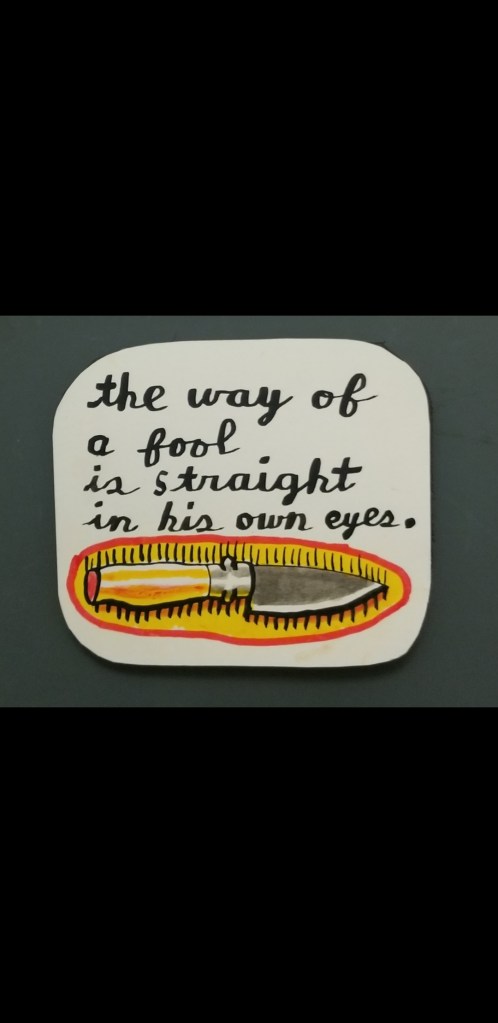
Watchful Waiting

When my father was diagnosed with prostate cancer, late in his life, his doctor told him that most men who live to be eighty will develop prostate cancer but that it grows very slowly at that age and they will generally die of causes other than prostate cancer.  His doctor recommended “watchful waiting”, keeping an eye on the slow, inexorable advance of this common cancer in older men.  Sure enough, something else killed my father, undiagnosed liver cancer, though saying it that way is a bit unfair to the several highly regarded specialists he saw regularly in the last two years of his life, it actually was diagnosed, in the ER, six days before he died.   

A few decades later, I myself watchfully waiting, in this case for the results of an MRI on my prostate, an MRI done because my prostate specific antigen levels were quite high.   The test results were quickly emailed to me, along with a bill for $162 (thank you, Medicare… the US Gold Standard…) for the short visit with my urologist to set up the MRI (bill for that to follow).  I have learned that reading medical test results without knowledge can be needlessly stressful, so I am watchfully waiting for the call from my doctor to tell me what the MRI results mean for my immediate futire.

In this waiting mode you can invent stories, more or less likely, that may or may not explain the delay in hearing from the doctor — though we have no idea about any of these theories.   If it was good news, the MRI showed everything nice and benign on the old prostate, the doctor would have immediately called to tell me, no?   Since it’s not good news, next step biopsy to confirm cancer suspicion from MRI, he’s waiting to have a few minutes to talk to me since the discussion is longer than “good news, it was benign”.   If it was bad news, another theory goes, he’d have called right away.   No, wait, he’d give me a day or two in my preferred fool’s paradise before dropping the bad news that I need to have a long needle repeatedly inserted up my ass and jammed into my prostate, likely followed by cancer treatment of some kind.  Or any other story I can imagine, including a list of stories involving complications in the doctor’s own life that have caused him to fall behind in updating anxious patients.   Since each theory is equally plausible, and equally implausible, I put the whole theorizing out of mind now that I’ve emailed my doctor telling him I have my fingers crossed until he tells me what the MRI results mean.  Figure of speech, “fingers crossed”, since I am clearly typing with uncrossed fingers.

I think, philosophically, that everybody has to die of something.   I also recall the foamy urine I was seeing five years ago, foam that got so thick it looked like the head on a well-pulled pint of Guinness, foam you could piss deep holes in as you went.  Ending with a smiley face in the foam was always fun.   That foamy urine, with the swelling of the legs, turned out to be symptoms of a rare kidney disease that taught me a new word — “idiopathic”.   What does idiopathic mean?   It means we don’t know what causes it, as to the pathology of this disease we are, as they say, idiots.  As to the cure?  33% of the time a short course of chemotherapy (at around $25,000 a bag) knocks it out, and I was in that lucky 33%, and lucky too that Obamacare hadn’t been repealed.

That constant itch on the inside of my left scapula?   A dermatologist told me the name several years ago but I never retained it.  It’s neurological, not topical, I recall that — put what you like on the skin, the itch is caused by a signal sent from a nerve, so nothing will really help with the itch, outside of a good scratch, which I was advised only makes it worse.  In the Age of Surveillance Capitalism we live in, I was discussing this itch with Sekhnet, as she scratched it, and soon had videos about Notalgia Paresthetica sent to me, for my edification, or shopping pleasure.

Fucked though so much of this world is, designed by the greediest for the benefit of the greediest, with applause and hero worship for the most successfully greedy, the mass of humanity not only viciously screwed but driven mad by deliberate lies that benefit the worst people alive at any given time, spread with increasingly ridiculous ease by those paid to do it, for the enormous profits of selected far-sighted tech billionaires … we don’t want to leave it.  This miraculous world is not the problem, the problem is that we must all leave it one day.  The only consistently useful practice available to most of us is taking care of ourselves and our loved ones as well as we can, and watchful waiting.

A Note on my Denial

The terrible thing lately about my desire to avoid having to fight over trifles is that
I’m even procrastinating about things like calls to merchants where I have credits of hundreds of dollars because I don’t want to fucking hear:

“well sir, under corporate policy you needed to redeem all credit within 90 days, which has expired by one year, as you can plainly see, so you will have to talk to corporate if you have a problem.”

And I go “I thought I was talking to fucking corporate”

And they’ll say “no, corporate is corporate and we’re customer service, there’s no direct connection. We have no authority over corporate, we can’t connect you with corporate, our system doesn’t allow it, so you have to call corporate directly because that’s corporate policy, sir.”

And the galling thought of that likely conversation with an otherwise nice, completely powerless kid makes me go fuck no, not today, you fucking corporate Nazi fucks

Though history teaches us that in the end Nazis will lose, while they are in the ascendancy they can make life very, very bitter. As we can see with just a glance in any direction.

The Hideous Power of Denial

We all practice selective denial, it’s part of the human condition.  One philosopher observed that the greatest miracle we humans perform is living every day as though we are not going to die.   My denial often takes the form of procrastination, it is much easier to put off a difficult thing than to tackle it directly.   

There are many forms of denial, including the most dramatic: in your fucking face denial.  This is the denial some insist on when confronted with anything painful or something we fear would make us look insane, or make us ashamed.  This is the kind denial we defend until death, bracing ourselves against all proofs that are advanced against it.

The denial of bullies, who make a public show of hiding their terror, is an infamous kind of denial.   “I’m not afraid of you, asshole, I’ll fucking kill you and dance on your fucking face.   Tommy, take care of this piece of shit.”   

Denial, clearly, is a powerful force in politics, as we see Putin’s forces marching to kill as many as necessary in the name of deNazifying and demilitarizing a neighboring country Putin has long sought to annex.   We see it in sickening excess in the party the Koch network built over decades transforming the conservative, big business friendly GOP into the openly authoritarian John Birch Society/Trump party.     

Trumpism is the American triumph of denialism.  Racism?  Never fucking happened, N-word.  Yeah, I fired a top advisor for lying, a man who repented and pleaded guilty to perjury, then I had DOJ move to have the charges dropped, pardoned him and had him in the bunker at the end as a top advisor urging me to impose martial law after I was illegally declared the loser in my reelection bid.  So?  My campaign worked closely with a foreign power who favored my first and second bids to be president, why wouldn’t I gloat that all the elements of criminal conspiracy with that power could not be proved, as I legally pardoned those who lied to hide the most incriminating evidence?  A bunch of sick liars claim I extorted a promise from a foreign leader militarily threatened by my foreign supporter, and that I violated U.S. law in the process, but I insist the call was not only OK, it was “perfect”– I was entitled to gloat after complete and total acquittal by my party.  Covid was a hoax designed by never-Trumpers to rig an election against the greatest American leader of all-time, no precautions needed, I assured a terrified nation that the so-called pandemic would miraculously end soon, which it did.   Supposedly lost a rigged election by eight million clearly fraudulent votes, an election I not only won (no proof needed, denial is powerful shit), but won in a landslide.       “We fight, and if you don’t fight like hell you’re not going to have a country left” was not urging anyone to march down Pennsylvania Avenue (“I love Pennsylvania Avenue”) to fight like hell, it was meant as a metaphor about freedom.     

My mother was prone to flying into fits of anger at times.  She’d go from perfectly calm to ready to smash your face in the space of a few seconds when she felt provoked.   I got good at avoiding and defusing these flashes of anger toward the end of her life, but I always recognized this readiness to become enraged in my dear mother.   I knew better than to bring it up directly, she’d sooner box my ears than admit she ever got angry.   I saw this in others I’ve known over the years, ready to become enraged, stubbornly set in their righteous anger, and most of those folks would vigorously deny they had been angry at all, reminding me that I was the enraged asshole who keeps bringing up anger, not them. 

The beauty of denial is that you can just deny it.   “So you deny that you denied the charges against you, in spite of the videotape of you denying it?”   “Yes, I vehemently deny it.”  Case closed.   As Trump pointed out after Muhammed bin Salman had Jamal Kashoggi strangled and dismembered, the billionaire medieval prince had strongly denied any involvement, what more needs to be said?

Hannah Arendt on Evil

Arendt’s observation that Adolf Eichmann, rather than being an inhuman monster, was actually an ordinary man of at best average intelligence who believed the aberrant culture of Nazi Germany was completely normal and behaved accordingly, was regarded as radical, even heretical, in 1964. Events have proved her thesis sickeningly correct, (see, for example, Jared Kushner.) From the introduction of her masterpiece Eichmann in Jerusalem.:

Evil need not be committed only by demonic monsters but, with diastrous effect, by morons and imbeciles as well, especially if, as we see in our own day, their deeds are sanctioned by religious authority.

And here it is in the beautiful reading of Wanda McCaddon:

History for Americans

Americans, as a people, are not super interested in history, the past is old, tired, boring, we love updates, the latest, new and improved.  Because we pay so little attention to events of the past, and history is often so superficially taught, we live through familiar echoes of it all the time that many are unaware ever happened in the human experience.  The current rise of angry, armed, violence-threatening contrarians who shout “NO, Hell NO!” in unison, no matter what the underlying question is (if the question is posed by a perceived enemy) is regularly repeated, worldwide, throughout history.   If you hate Jews, and a Jewish epidemiologist urges you to take precautions against a highly infectious and deadly disease, this mob has a ready answer, a regional variation on “fuck you, Jew. How about a noose for the good doctor?  What say ye, fellas?”  The same goes for anybody who contradicts the “populist” leader’s message.

We have these Hallmark greeting card style themed history months here, a sad American attempt to provide an inkling of historical perspective, a nod towards correcting historical injustices.  February is now Black History Month, and even though it has largely been preempted this year by the racist shenanigans of Trump’s base, as the legal hot water gets hotter for the daring old man in the yellow hair, we get some programming and mass media coverage of overlooked Black achievements in American history, as well as infamous stories of long ago racist atrocities we have somehow never been told.   There is Women’s History Month, a month devoted to the progress of a crucial half of the human species.  You can add Immigrants History Month, LGBTQ History Month, Workers’ History Month, Corporate History Month (these vampires are people too, just like you and me, ask John Roberts), Billionaires’ History Month, etc.   Every interest group and demographic can get a slice of a month for the promotion of their history (though some, including Women and Blacks, have more of a right to it than most, very important struggles, stories and lessons that everyone should know).   

But here’s my idea: History Month.   Every day during that month another celebrity (from across the political spectrum, such as it is here) would go on prime time TV (repeated on demand and forever on the internet) and deliver a short, snappy factual account of some illuminating aspect of American or world history.  Teachers would discuss it the next day in class. It would increase interest in history, and awareness of its lessons, if done right.  Why not?   

Though there are radically different “historical” views of events (January 6th — riot or peaceful protest) there are not radically different facts, there is documentary evidence on which a more or less reliable story can be based.  You have Putin’s old KGB Firehose of Falsehood, employed by Sloppy Steve Bannon and the regular and “alt” right, which deliberately overwhelms a society with wild, distracting lies and crazy conspiracies — the only antidote to that high pressure hose of diarrhea is clarity, one subject at a time, laid out clearly and calmly. 

I see the objections, we are too divided, extremists have seized control of history, everything is weaponized, the firehouse is too powerful, propaganda is too sophisticated, even when it seems incredibly stupid.  These are all reasons we need a history month, the restoration of the Fairness Doctrine (abolished by Reagan in his pursuit of Morning in America and Making America Great Again) and a renewed focus on public discourse.  Many in their silos will tune out this attempt to agree on the basic cause and effect of history, but many others will learn and begin to consider things they never thought about.  When people know the actual choices they face in a democracy, based on what happened the last time these ideas were tried, things tend to be more intelligently decided.    My two cents, as someone with an abiding interest in the past — and the future.

“Winners” vs. “Losers”

One of the more destructive myths that rule our thinking and behavior here in America, and much of the world, is the idea of “Winners” and “Losers”. Winners, the myth goes, are rugged, brave, determined and unconquerable, they have the character to fight on and win no matter what the odds are against them. Losers are weak, lack any will at all, are lazy, greedy and terrified of hard work and competition. There is no other possibility for human experience, in a free society you have to fight and you either win or you’re a fucking loser. Which means that the vast majority of human beings are, clearly, losers.

How is winning defined? Having so much money you can tell anyone you like to go fuck themselves. Losing? Not having enough money to survive, let alone tell people to fuck off. A loser angrily telling people to fuck off is seen as pathetic (and, in bad cases, worthy of jail time), a winner doing it is just, well, availing herself of part of the privilege of victory.

Why this myth is so destructive is pretty easy to grasp. For one thing, much of “winning” and “losing” is out of our individual hands. The accident of our birth, into wealth or poverty, is probably the single biggest determinant of whether we will win or lose at the American game of life. Most American children born in poverty, to parents who were born in poverty, will grow up to be poor, their children doomed to a similar fate. These people are all, according to the myth, incorrigible losers. It is hard for a child born to great inherited wealth, even the greatest fuck up, given every advantage throughout his life, to blow through an entire family fortune. For one thing, that’s what trusts are for, to protect inter-generational wealth from the stupidity of one heedlessly greedy heir.

Take all the things that flow from being born poor or being born rich: education, physical safety, health care, optimism about life, the ability to buy things, opportunity, life expectancy. The poor who are lucky get one shot, at most, to emerge from their life-shortening predicament. The rich typically get many chances to redeem themselves, even after massive fuck ups that would mark most others as irredeemable losers.

Think of the several self-inflicted bankruptcies of the Orange Polyp, not to mention the criminal schemes and frauds the creature is currently under investigation for committing, the many he’s done openly and paid no price for. A prep school boy who rapes a girl will often get a discreet second chance, his life shouldn’t be destroyed by one youthful mistake, the custodians of wealthy boys agree. A public school boy who gets in a fight in the cafeteria is a menace to society who will have the rest of his life set in stone almost immediately.

I think of this pernicious myth of Winners and Losers whenever I see the face of Swanson TV dinner heir Tucker Carlson, screwed into various expressions of contempt and disbelief. Carlson is undoubtedly what many Americans think of as a winner, he’s rich, influential, has a great job, is a celebrity, gets to opine at great length and influence millions of angry citizen viewers. His employer forced him to take the vaccine, and booster, and he goes on the air urging the 20% of American never-vaxxers that they are 100% right to resist tyranny, this rapey coercion by the Deep State. Every one of that 20% (who have a 20X higher chance of death from the disease than. fully vaccinated Americans) watch Carlson’s act regularly, getting comfort from the supremely confident confirmation of their feelings that this great winner gives them nightly.

Winners are easy to list. Forbes publishes a big list of them every year. Time Magazine gave one Man of the Year for 2021, a year when Capitol Police officer Eugene Goodman saved Mitt Romney’s life during a riot and single-handedly prevented a possible massacre on the floor of the Senate. Losers, on the other hand, tend to be anonymous.

My father, who died without an obituary in the paper, died tormented by the fact that even after escaping dire poverty, and raising his children in a middle class home on a tree-lined street (about a mile, and across the tracks, from where little Trumpie grew up), he still felt like a loser. His emergence from poverty was a triumph few today have any hope of experiencing. He knew that he had emerged from poverty as a result of generous veteran’s programs that allowed him to go to college tuition free and get a low rate mortgage when he was finally able to buy a home. The sale of this house, forty years later, was the bulk of the wealth he was able to pass on to his children. He was among a large number of World War Two veterans who made this transition from lower to middle class, thanks to government programs (programs that did not apply to Black veterans). He knew Black veterans had been fucked out of the chance he had, and that bothered him too, very much so, at one point.

I know it won’t happen any time soon, but think of how much better this threatened world would be if all of us losers got together, across all artificial boundaries, and set out to get rid of the dangerous myth that supremely greedy, hyper-competitive psychopaths are the winners the rest of us need to revere. For one thing, look at how happy all these grim-faced, constantly brawling winners seem to be…

The supremacy of a story

As illustrated by the NY Times framing of the rash of Omicron in Puerto Rico (see previous two posts) the way you tell a story makes all the difference in what the people who hear your story believe and what they take away from it.

One frame on the spike in covid cases in PR might focus on the poverty and lack of humane and efficient health care for millions of American citizens, including, conspicuously, natives of Puerto Rico. One frame might, as my doctor friend does, stress that Omicron is rarely a serious health threat to vaccinated people and that breakthrough infections are to be expected with a strain so infectious. There are multiple ways to tell the same story. Which version of the story you believe will determine how you feel about the things described by the storyteller.

Nothing humans do is done without a convincing story behind it. We have a strong need to believe in our good intentions, pure motives, righteousness, that we are doing things for a good and sometimes even noble reason. Only a sociopath acts without the need to justify himself. For the rest of us, a story we believe in is necessary for any action or inaction we take. Some stories speak to our best impulses, others to our worst, but any story we truly believe can motivate us, for better or worse.

People who storm the Capitol, battle the police, chant about hanging the Vice President, shooting the Speaker of the House in the head, defecate in the halls of Congress, do it because they truly believe the intolerable story that they’ve had their legitimate presidential choice stolen from them. The supremely infuriating story of a stolen election, a rigged system in state after state riddled with widespread systemic fraud, massively fraudulent results — a stolen landslide victory — hidden even by corrupt, smelly, traitorous RINOs, is told to them over and over by everyone they trust.

It is not even a matter for them of suspending disbelief, or asking how so many Republicans won in 2020 on the same ballots Joe Biden and his co-conspirators rigged to steal only the presidency from the rightful winner. They will never ask why Republican state officials and federal officials appointed by Trump confirmed that the election with the largest turnout in American history was also one of the most secure, that the incidence of voter fraud was, as always, infinitesimal.

The story you believe as you gather with fellow faithful patriots, watching a blood curdling betrayal video on a giant screen and getting fired up to storm the Capitol and Stop the Steal, covers all of that. The lack of actual evidence for your point of view, or that it may appear illogical in light of the facts, is only the final proof of how cunning and vicious the evil, inhuman, traitorous enemy is!!!

We humans are simply this way, and we are probably the only creatures who act based on a story that tells us how to see things and what our duties are. Few other species march off in long columns to kill and die based on a fervent belief in the story that Jesus died on the cross to cleanse the world of sin and violence.

I’m reading a fascinating book, The Drama of the Gifted Child, by a psychiatrist of mysterious origins who wrote as Alice Miller. It is in part about the stories told to justify all sorts of harmful things done to children, often by generally well-meaning parents. Depending on who’s point of view you look at things from, you will emerge with very different stories about a family dynamic. This framing inevitably reminds me of my father’s story about me. Here’s a snapshot, told to me from my father’s pre-deathbed point of view:

You are a very angry person with an explosive fucking temper and a mouth like a fucking toilet bowl. You’ve always been troubled and challenging and had an irrational hatred of authority. From the time you came home from the hospital as a newborn you stared at me with those big, unblinking, black, accusing eyes, you judged me harshly from the very beginning. Nothing I ever did was right, no sacrifice I made was ever appreciated, you always just angrily attacked me. You were “born with a hard-on against the world”, and since people can’t change their essential nature, no matter how much they delude themselves that they can, it was preordained that you and I should have been lifelong adversaries engaged in an existential war that could never end.

A hard story to swallow for me. It always was and always will be. It leaves out many important parts of my character and personality, any progress I’ve made in my life, any valuable lesson I’ve ever learned, reduces me to one intolerable trait justifying an angry reaction in turn. More ridiculous still is the self-prophecy aspect of this story, the more forcefully the story is told the more it comes true. Anger is predictable for a child insistently told that even as a newborn baby he was simply an angry, challenging little bastard and will always be treated as such.

Telling me variations on this story over and over did nothing to help my father, outside of making him always feel justified in fighting me on everything. The simplistic story did nothing to help me. It only hurt us both, and it hurt my mother and my sister. But there it was, preferable, by a million miles, to the awful story my father finally told me as he was dying:

My life was basically over by the time I was two. I never experienced love as a child, only brutal punishment for things I didn’t do and fear. I grew up in terror, hungry all the time, for food and for things I didn’t even know what they were. I finally exceeded the low expectations placed on me as a stupid boy and started a family of my own. The anger I expressed toward you, you have to understand, it was really nothing personal. I’d have done the same to any child of mine. Nothing you could have done would have changed the story I believed, and I am so sorry to have put that burden on you and your sister, the burden of having an immature, angry horse’s ass as a father.

Imagine how painful and threatening that would have been for any father to feel and try to work through prior to having a few final days to consider his life as he was dying.

On the other hand, and contradicting my father’s undisturbed fifty year story about me, I was a peaceful and supportive listener as my father was speaking his last few hours of thoughts. As he catalogued his regrets I told him that he should have no regrets, that he’d done the best he could, that if he could have done better he would have.

My calmness was possible only because I’d gone through a course of sometimes excruciating psychoanalysis that left me at times feeling like all my skin had been peeled off and I was only nerve endings. The only memorable benefit of this painful process was that, at a certain point, only months before my father discovered his death was less than a week away, I was able to concretely grasp that my father’s unyielding story about me had been told because he needed to tell it. He told it for his benefit, needed to believe it in order to live, that he could not change it and that if he was capable of doing any better he surely would have. This understanding allowed me to take a step away from my anger at my father, since I finally understood he couldn’t figure out how to do any better, pitiful as that also is, and that my understandable anger toward him was most painful to myself. I was able to let some of it go, and not a moment too soon.

I sometimes think of this calm ending of the long war with my father as a kind of mutual blessing. I thought so more at the time than I do now, fifteen years later. His admission, hours before he died, that he felt me reaching out many times over the years to try to make peace (I had), but that his emotional immaturity had prevented him from taking a step toward me, gave me valuable validation that I had not been the belligerent cartoon he always insisted I was. He saw his inability to ever compromise or admit fault as the mark of an unforgivable asshole, but he hoped for forgiveness anyway. Easing his suffering however I could, short of lying, helping make his death as gentle as possible, was my main thought as I listened, so it was easy to make him feel forgiven, for whatever help that might have been to him at the end.

Knowing all this about myself, and having lived how an insane story can be pressed quite rationally and reasonably, stated as fact and embraced by others with cult-like fealty, I accept my own strong, uncomfortable feelings when someone unfairly blames me entirely for something that is only, in small part, my fault.

Here’s my story now: I take the burden of things I do wrong and do my best to make amends, but I don’t carry the burden of a story that paints me as the entire problem, to make someone else feel better about their story. That shit, you understand, is for the birds. I simply can’t do it. Neither should anyone else.

Brave New World

Comedy Monster Jim Gaffigan made an interesting distinction that illuminates a lot about our current social crisis. He differentiated between being old and being like “no cellphone in high school” old. I am both, as anyone born before about 1990 is. To prior generations, the idea of having a super computer in your pocket, capable of Flash Gordon-style video conferences, was something out of 1950s science fiction, yet there it is, in my shirt pocket as I type.

Has the smart phone changed the world? You betcha. More than the printing press, telegraph, telephone, radio and television changed the world? You betcha, since it makes irreversible changes instantly, simultaneously, in real time, constantly tweaked and updated for billions of us puny earthlings.

The technology of smart phones has released limitless wealth for many smart business people, many of them now powerful, influential billionaires, their fortunes derived from selling targeted ad demographics based on what they learn about the preferences and personal habits of actual individuals.

Printers made a lot of money selling new printed books, and some newspaper owners got very rich, the latter from ad dollars as much as from people buying newspapers. Telegraph and telephone magnates surely got rich. Radio, a populist game changer, was another gold mine. TV made many people very rich, also based on massive ad dollars spent on this powerfully influential new entertainment technology that instantly reached millions. But none of these was on the scale of these current day billionaires who get rich by monetizing the private needs, wants and weaknesses of billions of people using the internet and the smart phone.

How the technology, carried around in a pocket by billions of us, changes the way we interact is what I am thinking of. There is little chance for real nuance in a text, LOL! The loss of this nuance, to me, is a big deal. I spent years making myself a better writer, learning to choose and rearrange my words carefully. I’ve spent a lot of time making my writing a clear and accurate expression of my thoughts, feelings and observations. It is a certain kind of satisfying work, though unappealing work to many, sitting over something you’re writing and methodically revising it to make it clearer and clearer.

An average writer sending an informational or opinionated text dashes off some words, and an acronym or two, with every expectation of being understood. ROTFLMAO is one you used to see, instead of hearing the sound of your friend laughing, watching her rolling on the floor, you know, her ass literally falling off she’s laughing so hard.

Facial expressions, eye contact, body language, tone of voice, irony — all impossible to discern in any but the most skilled text message. The world of interpersonal communication, the world itself, has radically changed, in less than twenty years.

I know, I’m an old fart and there is probably not even a point to registering the things I am trying to express now. It is surely the kind of nuance that we’ve lost that makes no difference at all to anyone raised without it.

Why quibble about a thumbs up being the same as saying “I like the way you phrased that, very sly” with a wink, a pat or an eye roll? Thumbs up! Like. Nothing ambiguous about it, I thought it was cool.

I text and email my friends all the time, sometimes it’s the only contact we have outside of seeing each other at long intervals (now that we have this endless Democrat [sic] plague upon us, a new Trump-resistant variant of the original “Kung Flu”) but to me, even without the eye contact, body language, facial expressions, talking to them on the phone is almost always preferable to the linear process of sending notes back and forth.

In third grade we passed notes, written on slips of paper, to people we wanted to talk to. During lunch break we got to talk. Back in class we passed notes that were not allowed to be passed. We’d be busted for passing notes sometimes, and would have to pretend to be sorry.

Today it seems to be largely passing notes, purely linear back and forths instead of conversations that can turn into discussions where we actually learn something new about somebody or something else. The other regrettable feature is the linear nature of texts, they focus solely on the matter at hand. It strikes me like the difference between googling a source for a term paper, and including a link as a footnote, and reading a book that leads you to other books that give you information you didn’t know was important.

I am old school, I know, a dying breed. I like to listen, I like to talk, I like to bring in divergent topics related to something I hear someone say. I like the idea of learning, shedding light, having it shed for me, gaining what used to be called insights.

Insight is in short supply in a knee jerk world of instant thumbs up or thumbs down. That business is from the Coliseum when the mob indicated if they wanted a vanquished gladiator killed or spared. It is the same today, friend, “unfriend”, have a nice day.

I love a good talk. I understand that conversation is a dying art, in an age when it is so much easier to tap a few keys and wait for a usually instant reply. We are programed to respond to our phones right away. It saves time, yes, but saves it for what? Time with those we care about is really the only real wealth we have.

To me, a conversation can be magic. A text is only a parlor trick that more than a billion people do billions of times a day. We can see what happens to the world when conversation, and the ability to discuss nuance, and problems that are complex, is flattened into a yes/no computer process that ends in a thumbs up or a thumbs down. LOL!

Rolling on the floor laughing…hey, wait! Where the hell’s my ass??!!!