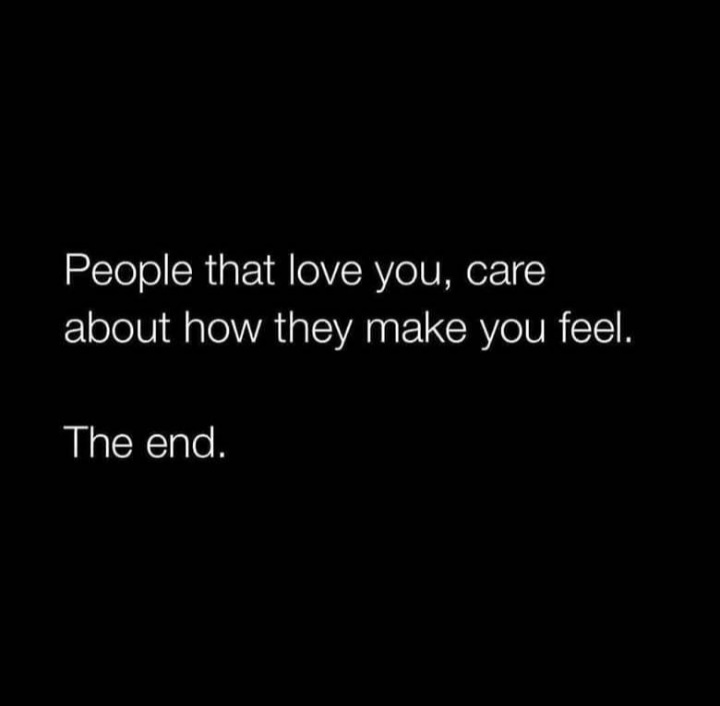
Answer to a lifelong riddle

An old friend suddenly shows you an implacable face, as hurt turns into disagreement, which turns into a conflict, a standoff and finally an all out war.   

No compromise, no more of your fucking feelings, I won’t even hear what you’re upset about, how dare you challenge me, I’m the one who’s been wronged here!   

You protest, call to mind past compromises, a long mutual friendship, a history of two way empathy, honest conversation.  

“No!” you will hear, the jaw set, eyes boring into you to chill your blood, to cow you.   

“When did my old friend become a terrible two year-old?” you wonder to yourself, as you reel yourself back from telling the enraged person to go fuck off.   What is clear is that someone you cared deeply about is now treating you with cold contempt.

This has happened to me a few times over the years, and I am somehow never prepared for it.  It was always a mystery that I knew was somehow related to my troubled father, but I had little grasp of what the connection was exactly.  I had no concept to understand where this sudden implacable anger comes from, this need to blame you for making them feel bad, no matter what actually took place between you. 

The riddle of this confounding rigidity, this angry refusal to bend, has been mindfucking to me for many years.  It was only very recently that I grasped a concept that explained this bad behavior and made the unfortunate pattern sensible to me.

The context of the era we are living in offered me a giant clue I was slow to put to good use in my personal life.  The recent hostile attitude of dear friends was sickeningly familiar, and horrifically Trumpian.  The incoherent story constantly changed, all in a mighty effort to avoid talking about any feelings but their’s and why they were so brutally hurt by me!  My longtime closest friend, someone whose friendship and integrity I never had reason to doubt, seconded every aspect of the shifting story, no matter how implausible the blame narrative became.  The runaround, the noise and fury in response to an expressed need, was familiar as any headline I’d doom scrolled recently.

We Americans have endured years, seemingly a century, of a malignant, compulsively lying narcissist whipping up hatred and division.  Right or wrong, he’s always right.  Facts are bullshit!  What does he do when confronted with his wrongdoing?  Double down, in that now despicably common phrase.  Blame his enemies, attack investigators, judges, diplomats, his intelligence agencies, his military leadership, the sick and dangerous child blood drinking cannibal fucks who traffic and molest children — while running the deep state — the celebrity who insulted him twenty years earlier.   He does this, of course, because he’s a narcissist.

We are living in the age of narcissism.  I just didn’t understand it until very recently, though the number of celebrated current day public narcissists, admired by millions, is huge.  You see them literally everywhere, our greatest, most important citizen influencers.

What is the narcissist’s driving dilemma?  How to preserve the all-important feeling of being in the right when confronted by someone important to them they’ve hurt, or by any mistake they’ve made.  It can’t be their fault, it’s obviously the fault of the thin-skinned, needy prick who’s making them feel bad — on purpose!

I was reading a book by Jon Krakauer a couple of months back and came across this, which was like a light going on, in terms of explaining something I was at a loss to comprehend.

That is exactly what happens with anyone who has survived deep childhood injuries by becoming a narcissist.  They live in a world of agitated semi-recovery where theyre either perfect, beautiful, and admired, better than almost anybody else, or they’re plunged into the unbearable pain of feeling utterly worthless, humiliated, contemptible.  

There is no middle ground for a narcissist, no grasp of the human condition — we all fuck up sometimes, it’s perfectly human to be imperfect.  One of the things the non-narcissistic learn to do is accept responsibility, make amends, do their best to set things right when misunderstanding or conflict arises.

The world, to narcissists, is an instrument to protect them from feeling the agony that bears down whenever they feel vulnerable.  The world is full of souls of infinite worth, each unique, exotic, with a mischievous expiration date.  The narcissist doesn’t buy this pie in the sky bullshit, the world is about never being hurt.  If you don’t make yourself vulnerable, it’s harder to be hurt, though a narcissist’s invulnerability comes at a high price.  If youre hurt, hurt back twice as hard to make them back the fuck down.

This zero-sum worldview is the essence of narcissism.  The narcissist’s world is a demented see-saw.  There is only victory and defeat, nothing else.  I win, you lose.  If you win, somehow, I must lose, and that is intolerable to me.  So no matter what, you must lose.  If I have to assassinate your good name, and throw aside our long, close friendship, it’s a very small price to pay to defeat somebody who will not capitulate to my need to be perfect and beyond criticism of any kind. 

Though they seem strong, nobody is weaker than the narcissist.  The tension they live under is tremendous, the pressure they put on everyone around them is relentless. 

All you need to do is admit that I’m right and you’re wrong, no matter what.  How hard is that to do?

Mary Trump said that her uncle Donald is the weakest man she’s ever met.  His genius, she notes, is finding people even weaker than him, to do his bidding, to take the fall whenever needed.

Narcissism is a zero-sum game.  My father was a narcissist, it’s painfully obvious to me now.  He saw the world as black and white and, I realize now, from his point of view, he actually could not change, which was the tragedy of his life as he lamented at the end.  My little sister followed in dad’s footsteps.  He was her role model for strength in the face of terrible pain.  I’m sad to say, but like with her father, cross her and you’re fucking dead, though she might not tell you that for a few decades.   

The willingness to kill does not make you tough, or strong, it just shows a desperation never to feel like an utterly worthless piece of shit.  No amount of belated love can save you from that terrible fate, if you can’t somehow see your own way out of there.
Dead Man Walking

Sometimes the pain we experience can stop us dead in our tracks.  Feel a powerful enough jolt of pain and you may find yourself unable to move in any direction.  I know it happens to me, anyway.  Look across the gravestones and see people who once comforted you, strangers now, so intent on avoiding eye contact it can bore a hole in your heart as long as you still care, still cling to counterfactual hope. 

In a sense we are all dead people walking, and one day our walking becomes only sitting, then lying down, then less than that.  The dead can’t do anything about it and death is a final refuge from shame, anger, pettiness and every other terrible thing we must sometimes tolerate in life.  Death is a very high price to pay for that kind of relief.

I have to reschedule a cancer biopsy that was cancelled yesterday, can’t lift the phone.   Need to find a surgeon to replace my left knee, but I also need to buy additional insurance to supplement the generous Medicare that will pay 4/5 of the $80,000 operation.  I need to get the Medigap insurance ASAP, since it takes six months to become effective for treatment of a preexisting condition, like bone on bone osteoarthritis.  Meanwhile, paralyzed, as I continue the painful knee exercises.  The guy who is supposed to be making the Don Joy medial compartmented unloader brace hasn’t called me back and I haven’t been able to call him.

What I can do at the moment is sit and type.  Writing is an indispensable part of my day.  I do this now to try to move some of the awful feelings out of the way, to understand, and then compartmentalize, things that are otherwise unthinkable.  My hope is to make a few phone calls once I tap here a bit. 

My niece and nephew, irretrievably lost to me, because of their mother’s unspeakable humiliation at her untruthful husband’s shame.  Kool-aid was served up any time my name came up, it would appear, a more bitter flavor than any I know.  It has turned me into a monster and enemy to two kids I used to play with.  That this has been accomplished by lies is little consolation to me, after all, I know myself to be a truthful person of good character. 

Two of my longtime closest friends are now shambling zombies, avoiding eye contact with me in a graveyard.  I don’t blame them for feeling that way, actually.  If I had treated them the way they treated me, explicitly and undeniably for the last year and a half, I’d probably do anything I could to cover my shame.

What do we do with this kind of pain, these unwanted tastes of our own death, the death of loved ones, while we are alive and, theoretically, able to talk things out, apply love and understanding to fix things so tragically broken?   Tragedy is when a beautiful thing that should be able to be mended is instead destroyed, out of anger and humiliation.   The feeling’s now mutual, pal, you are dead to me.  Not very satisfying, really, but a necessary step in healing — the discarding of people who insist they love you while demanding that only their feelings matter.   They have very strong feelings about this, understand.   Strong as death itself, it turns out. 

The final power of silence

Among the gravestones yesterday on a grey morning, the final symbolic act of a long friendship took place.  The return of keys to my apartment.   It was done quietly, with a polite text, a short affirmative reply and the silent handover at the small New Jersey cemetery, during a funeral.  Fittingly very close to the open grave mourners were shoveling dirt into.  Now life goes on.  I no longer have to worry about how crazy my longtime close friend is or what mad act of frustration the poor, tortured devil might be capable of.   When trust is gone, that’s the ballgame.

Preceding this final moment there were long stretches of silence.  Imagine posing a question that vexes you, that you need an answer to from someone who claims to love you.  “Can you understand why that would be so upsetting to me?” for example.  Now, picture silence, in the moment, accompanied by a bland look, then turning away.  The silence stretches into days, weeks, months, a year.   “Do you get why your silence is hurtful to me?”  A long interlude of no reply, no word, no indication of anything.  

Finally you might hear “can’t we just pretend none of this ever happened? Can’t you just move on, like a big boy?   We know you had a rough childhood but why must you live in the past and continue to blame us for what you claim we did to you?”

“You’d like me to pretend you never hurt me, never dismissed my feelings, never returned my patience and concern with accusations and threats, never abandoned me when I needed help, that I’m prepared to tolerate this treatment on an ongoing basis, for the sake of… what shall we call it?  Your need to feel good about yourself, and that you are always right and a good person and all the rest?”

Of course, at this point they will become angry again, probably a few words into your statement.  The tone of reproach, and appeal to fairness, the intolerable insolence of it will enrage them. 

In the end, the greatest gift they can give you is their silence.  They might break it at an odd hour to confront you directly about how cruel and unloving you are being to them, pretending to be hurt by mere silence and torturing them over it by your stubborn refusal to accept no answer as the final answer. 

The final silence will continue until you have processed the last of your hurt, betrayal, confusion, anger and so on.   Then it just blends into the rest of this often irrational, noisy circus that is our life here, among those doomed, just like us, to breathe their last one day.

Learning lessons you do not want to know

With New Year’s Eve approaching on roller skates my mind naturally goes, not to all the great New things of the flipping of the flipping calendar year, but to mortality.  The day after New Year’s Day I’ll be waking before dawn to go to a funeral.  The woman who died was 94, sharp until her last few days, and she went peacefully in her sleep surrounded by her loved ones.  A blessed end to a long life, going the way we’d all like to go, the way we’d wish to anyone we love.  Still, her death causes lacerating pain to her daughter, a grandmother.  There is never a good time to lose your mother.  The permanence of a loved one’s death is always unbearable.

As my life goes along I more and more connect sudden professions of love with a demand, with deadly consequences.   The last three old friends I lost all told me, totally out of character, as things were winding toward their fatal end, that they loved me.  Love, I was meant to understand, means that even if I hurt you, even if I hurt you over and over in exactly the same way, even if I am deaf to your pleas to stop doing it, I DID IT OUT OF LOVE, you heartless, unforgiving fuck! 

It’s not a lesson that I’m happy to learn, that the last card an angry asshole will play before they metaphorically kill you is “I love you!”.  Any wisdom this lesson provides is no comfort to me.   We are all looking for connection in a lonely world, in a life that inevitably ends in death.  Love, like forgiveness, is a steady attitude, a desire not to cause pain to someone we love.  Not everyone lives to experience love this way, it generally has many conditions and strings attached to it.  

“If you really love me you will cut the heads off those people who hurt me by making me feel bad about myself,” is a deadly serious string, and the dutiful partner will go on the quest, decapitate the enemies, and there’s a version of love, I suppose.  Some people, for example, cannot love a fat person — put on one too many pounds and you break the deal.   Some demand total obedience, and if you disobey, you can expect a terrible punishment.  Others require telling a lie and sticking to it doggedly whenever something uncomfortable comes up.

For many, that’s as close to love as they will ever come.  It’s better than no love, I suppose, but not for everyone.

The terror of irrationality, redux

The only way forward in a conflict or problem, any troubling situation that requires thought, planning and an actual solution, is imagining, reasoning, talking and agreement. Some kind of agreement always has to come before the problem can be solved. The really scary part about human conflict is that it is often not amenable to thought, reasonable discussion or compromise. The more willful party, the one who refuses to agree to anything, will insist it has prevailed, to the harm of everyone involved.

I think of the frequent rages of my father. He couldn’t explain exactly why he was raging at any given time, but anger filled him and he needed to vomit it out regularly.

His temper was fierce and he never really forgave. He spoke and reasoned very well, so that amid his terrible curses he was able to mount an argument that was sometimes hard to overcome. Very hard to overcome, because he was adept at constantly shifting what you were actually talking about while he was angry and afterwards. Try talking something out, or calming somebody, when you can’t even agree what you’re talking about in any given moment.

We had an ongoing philosophical dispute over whether someone can change anything significant about themselves. My position was, if you are in enough pain, and motivated to be in less pain, you can change certain things that lead inevitably to more pain. For example, you can learn how to take a breath and be more patient when you are about to lose your temper. In my mind this is kind of a game changer, if your weakness is a proneness to respond to frustration with anger.

My father’s position, understandably, was that my belief in a human’s ability to change anything fundamental about himself was completely idiotic. No matter how much I may have thought that I changed he would always be able to provoke me until he proved that he was right about my fucking uncontrollably violent temper. Even after I proved to him that he couldn’t make me angry anymore, he dismissed any change in me as delusional, a superficial acting job.

It occurred to me recently, after stumbling on some literature about narcissism, and the narcissist’s need to be in control and be right no matter what the facts or the situation, that my father, speaking as a narcissist, was truly unable to change. The whole ball game for a narcissist is about winning the stark black and white conflict that is life, at any cost, no matter how small the issue causing friction. The world is either white, and everything you do is commendable and perfect, or black, and everything you do is despicable, contemptible, shameful. If those are your only two choices, you’re going to pick perfect and commendable and death to all humiliating naysayers. End of story.

What does that leave for everybody else in the narcissist’s orbit? Basically my way or the highway, asshole, you know the fucking rules of this one way road, you contemptible pile of dreck!

Look at any source of media drama and you will see narcissists, like the richest men in the world, our most powerful and greatest genius citizens, acting like petty children to assert their superiority over all of the losers in the world. Facts don’t matter when you’re a wealthy compulsive liar and there is no penalty for lying and calling everybody else a fucking liar. Would you expect a more humane rule in a world run by entitled narcissists?

Interesting how seeing this now through the eyes of narcissism, which is so prevalent in our world today, makes me finally understand that my father, for all his talents and excellent traits, actually was unable to change. The conviction that people cannot change was a core belief that went into making him what he was, because his wounds made change impossible for him. A tragedy, yes, but also very easy to understand, through the right lens.

To me, the terror of irrationality is that nothing can be agreed upon, nothing can be discussed, nothing can be resolved, no conflict can be peaceably ended, except on the terms of the more willful party. This is because all of the tools that humans have to make peace have been taken off the table in the service of one party insisting on their right to do whatever they need to do to the other party in order to control and prevail over their own helplessness in the face of their unbearable pain. So those who can’t solve their own terrible problems inflict their pain on everybody else, fair enough.

Talk about some fucked up shit, Larry...

Why I write everyday

The world doesn’t care very much about any one of us. In fact, it doesn’t care at all. We are fortunate if we have people who love us and treat us with kindness, but as for the world itself, it doesn’t give a rat’s ass about any one of us. It has seen billions and billions of us come and go, often dying violently for no real reason, except that somebody else is angry and takes it out on us in a lethal fashion. The universe itself is clearly indifferent to any individual’s existence.

Hey, that’s a nice Merry Christmas Eve, fella!

That’s not the point, that’s the background. In a universe that is indifferent we have a need to connect ourselves to others who care. And so in this age of the internet, with the illusion of connection to everybody else alive and staring at their phones, we send out our beacon to find others who might have suffered the same things we have, who might care, who might benefit from our thoughts and feelings if we can set them out clearly.

At this moment in history when American deaths of despair have reached these terrible proportions, when millions of isolated people have literally given up on the idea of love, kindness, companionship, decency and fair treatment, voices of calm, voices of reassurance, are so important.

When I write, I feel a connection to people I have never met. It is in part an illusion, since few people ever read these words, but the connection is also real. These posts take on a kind of life, they can be read anytime, they can be found when you might need to find something like them and derive some sense of comfort from knowing that somebody else has gone through things very similar to what you have gone through.

It may comfort you to know that you are not the only person who spent childhood in a senseless war zone, trying to make peace with an insanely implacable foe, and although you are wounded and scarred by this kind of upbringing, it doesn’t have to destroy you.

It may comfort you to know that if you love doing something very much, writing for example, if you do it every day you will get better and better at it. I don’t know that I have much native musical talent, but after half a century of loving to play music I’m a very good self-taught instrumentalist.

Love really is all you need, it makes the world go round. Lack of love is responsible for every terrible mistake that humans make, certainly every act of violence. Loving what you do is a net good. Spend some time everyday doing what you love, you will not regret it.

When somebody tells you over and over who they are, believe them

This turns out to be really hard to put into practice when you’re hearing something new from an old friend. It seems they must be going through some terrible crisis, that they’re not themselves, when they say things like “no matter what you say, you will never change my mind.”

The first time they say this to you, you will say to yourself, perhaps also to them, what the fuck? The second time they say this you should realize they’re being deadly serious. Every time after that, it’s on you that you don’t understand that nothing you can say will make any difference to their immovable position.

And what exactly is their immovable position? Only this: no matter what you say, I don’t care, you’re still wrong and I’m still right.

If you ask what they are right about they will simply repeat “whatever you say, you will never change my mind.”

When you are locked in a tense conversation only about frayed emotions, will and a need to be right, the only way out, since words, thoughts, appeals to friendship and mercy are of no use, is to finally believe that what your one time friend is now insisting on is his absolute truth. Now you will simply have to accept it. Nothing you can say will change it, as has been said over and over.

You don’t have to like it, of course. The point is you won’t like it, nobody likes to be told, essentially, to shut the fuck up. In the end though, you have to believe what they’re telling you, there’s no point wasting your breath in a conversation where nothing you say can will make a difference in any way.

One last metaphorical kick in the nuts, and be on your way, my friend, there’s no longer anything here for you.