You have a right to your feelings

Our feelings, it should go without saying, are always what we really feel, and, while we are feeling them, they are beyond right or wrong. We have to be gentle with our feelings as we consider how to move forward. They send us important messages our monkey minds can’t always perceive through cleverness alone. What we feel is what we feel, and acknowledging that is much healthier than pushing emotions down and pretending we feel some other way.

When you tell someone, particularly a friend or family member, how you feel, you are hoping for understanding. We are sympathetic to people we care about who are aggravated, worried, afraid, in pain, otherwise in need of comfort.

Compare and contrast:

I’m exhausted…”

That’s not hard to understand, you’ve been working your ass off, and working on short sleep, plus you’re worried, and that takes a toll on your energy too. Hopefully you’ll have a long, restful sleep in a few hours.

I’m exhausted…”

How come?

I’m exhausted…”

You shouldn’t be, it’s your own fault, why do you go to sleep so late and wake up so early? You don’t take care of yourself, I don’t know why you do this to yourself. A healthy person knows how important a good night’s sleep is. I always get at least eight hours of sleep, no matter what.

The first two replies are expressions of empathy. The third is not.

So what the fuck is that third response? An inability to empathize? A need to feel superior? A need to have the last, authoritative word? Obliviousness? Moral idiocy? Fuck if I know.

The only thing I can tell you is that when you get this response from somebody a few times, listen to what your roiled guts are telling you – this is fucked up. No matter how nice we pretend to be, it is not right to be treated this way. It is intolerable.

If you dispute somebody’s right to feel the way they feel, you dispute their right to be an autonomous person with as much right to express themselves as you claim for yourself. You can call it love or friendship, but those things both feel much different than whatever the fuck this is.

Dr. House’s Rule 12

My friend’s therapist, John House, has a great set of 18 rules of life that make a whole lot of sense.   Rule 12 is maybe my favorite, since we see it played out over and over and over and wonder why these nasty, painful cycles continue. 

Many people are impervious to the evidence that what they are doing is causing them identical problems over and over.  It is always easier to blame others than to search your own life for your own damage’s role in ongoing bad scenes. House’s lessons apply to anyone who is trying to learn to have less pain in their life by changing reflexive habits that cause them pain over and over.  

Rule 12:   A lesson is repeated until it is learned. A lesson will be presented to you in various forms until you have learned it. When you have learned it, you can then go on to the next lesson.

At my sixtieth birthday Sekhnet threw me a party at the home of old friends.  I held forth in front of a room full of loving friends, several of whom I’m no longer in contact with.  Most of the people there I’d known since I was a teenager.  Most of the people I met back then, and kept as lifelong friends, fulfilled a psychological need for me, to be close friends with people who had many of the traits of my perplexing father.  My father had all the tools to be a great friend, he was hampered by a black and white worldview that made it impossible for him to be wrong in any conflict.   As long as I avoided conflicts with these old friends who were often similar to the old man, everything was fine, for many years.   The pattern of fatal conflict emerged over many years and I could never see it coming or understand it once it arrived.

Tensions would develop, it could be over anything, often over something dear to me, or upsetting to me.  I’d be upset because my health insurance had been illegally cancelled (this happened to me three times, including during the first full month of the pandemic).  Suddenly a friend would tell me I was overreacting, that my anger was not proportional to merely losing health coverage.  According to my friend’s argument, it was an indication of something fundamentally wrong with me, that I was so irrationally upset.  Now we had an actual conflict:  your feelings are out of line, asshole, and what about my fucking feelings?

This was a mirror of the eternal conflict with my defensive, prosecutorial father — denial of my right to feel the way I did, reframing of my feelings to make them a magnifying glass for my problems and shifting the conversation to his moral superiority in not whining about his, much worse, problems.  I’d react to these friends with patience, with a hard-won ability not to explode in anger, extending the constant benefit of the doubt that strikes me as the heart of friendship.  

For some reason, I was unable to see, until this shitshow had been repeated several times over the decades, that In a conflict with a narcissist, none of these things will help in any way, except to prolong a maddeningly insoluble impasse.  If one person in a conflict is incapable of empathy or compromise, on pain of feeling utterly humiliated, that’s all she wrote, boys and girls.

I was sixty-five when I had my first conflict with my two oldest remaining friends.  The conflict itself was supremely easy to resolve, if both parties had been able to remain open, listening, granting the other person their imperfections.  I agonized for a solid year, waking every day with the pain of this impasse boiling in my head.   It caused tremendous agony to Sekhnet as well, that I was in such pain and couldn’t see my way out of it.   I kept thinking of House’s Rule 12, since this conflict had major echoes of several others over the years.  What am I not fucking seeing here?  I kept wondering.

One day, bingo!  When someone shows you they are implacable, will not listen, no matter what, will not grant you the benefit of the doubt that you are extending to them, take notice.  When they show you that face it may be a warning of worse to come.  The second and third time makes waiting for the tenth or eleventh time an exercise in masochism.  How many times can you reassure an angry friend of your good intentions before you realize they don’t have the capacity to care about your good intentions?  Three or four unrequited attempts to make peace should suffice.

Lesson 12, in my case, when someone shows you over and over that they must win the conflict, at any cost, including the murder of your friendship, the best roll of the dice is to throw them away.  No need to agonize for a year, and extend endless chances for compromise with people who would rather kill you, and murder your good name, than admit they had ever behaved badly.

Lesson 12, when someone shows you that they are a childish asshole, believe them.  House’s rule 13 will only be of marginal use at that point:

13. People always do the best they can. If they are doing poorly, it is because they have not learned the lessons that will enable them to do better.

Some people are angrily oblivious to the lessons of their lives. And those who must win at any cost are the world’s greatest fucking losers.

The prison of our minds

There’s a famous story I’m thinking of, as I can’t find my way out of the loop of my two closest friends suddenly and irrevocably withdrawing their friendship from me.   The final communication was now almost four months ago, and it was just my old friend confirming that he would not be honest in trying to resolve our senseless conflict.  I have no illusion about anything involving that long running shitshow, understanding fully now how deadly any conflict is with this inexorable personality type. 

Yet, almost every day, as similar things are played out constantly in mainstreamed extremist politics — projection, incoherence, lies, vilification — I am reminded of my painful struggle to prevent the fatal falling out with my two old friends. They shocked me by continually using every familiar MAGA technique to blame and silence me.

Two monks who haven’t seen each other in many years meet in the forest.  They greet each other and one asks the other “do you still think about those sadists who held us captive and tortured us?”

“No,” says the monk “how about you?”

“I think of them every day and I never think about them without wishing karma to descend on them so that they hurt the way we did when they tortured us” says the other monk.

“Then you are still their prisoner,” says the more enlightened monk.  

True enough.

The thought that consoles me, as I am still the prisoner of thoughts of the brutal unfairness of the mistreatment I experienced at the hands of people who claimed to love me, is that I have no ability, at the moment, to blow off much  steam, to get things out of my system physically.  Strenuous exercise is always good for relieving much of that kind of tension.  In recent years I’d go for long, fast paced walks to clear my head, now I can only walk a block at a time, painfully, before I have to sit and rest.  Try clearing your head with that kind of halting walk. 

So the pain in my ailing knees reminds me to go easy on myself for not being able to break fully out of the prison I can’t think my way out of at the moment.  Mercy is a great gift to give yourself. When I am back in shape, after my knee replacement and rehab, I intend to flush the rest of this ugliness out of my system, daily.

Impossible letter #2 background (conclusion)

So you’re a smart, good looking young woman who has modeled herself after her dominant father, but living in a world of aggressively sexist assholes.  You can’t walk down the street in NYC in the 1970s and 1980s, without these assholes making wolfish comments, giving you the entitled, liplicking asshole looks that make your blood boil.   What you need is a strong, loyal man by your side to kick anyone’s ass who tries this shit with you.

That much is not hard to understand.  The requirements for this guy, aside from size and imposing physical strength, are similar to our father’s requirements for his mate:  good looking, charming, smart, good sense of humor, devoted and ready to do whatever I say.

Then we face the law of unintended consequences.  She found this man, a handsome, athletic giant, who told her he was separated from his wife when their whirlwind romance began.  He would do anything for her, wanted to sweep her away to Arizona, start a new life in Tucson.  She was a New Yorker with friends and a good job, not ready for this radical new start.   He eventually got divorced and they eventually got married.  He was good looking, smart, strong and devoted to making her happy.  The unintended part, unseen, and once seen, rationalized: the guy was sometimes a bit of a compulsive liar and probably a gambling addict.

What did he lie about?  His academic degrees, his former employment, money, why he lost his job, why he needed to borrow more money, why he couldn’t pay back the money he’d borrowed, why he came home with his clothes sliced to rags and his wallet and keys gone, why he lied about a previous lie, why taking that merchandise from his boss and selling it under the table wasn’t actually stealing, why shoplifting really isn’t stealing, why pretending to go to work every day for a year while taking cash advances on your dead father’s credit cards and handing them to your wife every week as your pay is really a victimless crime and so on.

Bottom line, he was bad with money.  At one point he made an excellent living, selling a lucrative yet legal product, but he also spent lavishly, extravagant orders and generous tips at restaurants, many expensive gifts and then, bad news, after a couple of years of living large, a few years scraping by, he finally had to declare bankruptcy.   

He did this a few days after borrowing ten thousand dollars from his father-in-law, the DU, for last minute expenses related to the upcoming closing on the dream house he and his wife were about to buy.  A lovely home with a beautiful back yard, where their soon-to-be born son would grow up playing with his big sister.  The guy was a practiced liar with the gift of looking disarmingly sincere, and vulnerable, when he lied.  He borrowed the ten grand from the DU on Monday, waited for the check to clear.  On Friday he told everyone he couldn’t repay the loan or buy the house, he’d declared bankruptcy earlier that week.

All of these details are humiliating to have set out in front of you, granted.  The only other option is to dummy up about all of it, as he always pressured me to do, about things like his refusal to pay me back money I’d loaned him, back when I still spoke to him. 

The vow of silence on sore subjects required to maintain a sociable relationship includes a big IXNAY on any mention of the death threat when his wife finally called him out about his psychopathic untruthfulness.  

To be fair, the death threat was a one off.  The wife flew into a long overdue rage that had been building for years, after the surprise bankruptcy that ended the charade of closing on the never to be attained dream home.  He angrily shot back that he was going to lock her and the kids in the house (I think a bicycle lock and a piece of heavy machinery came into play in this threat to seal them inside– my nephew had been born by then, was a young baby) get in his car, drive the mile to his in-laws, murder both of them with their biggest kitchen knife, come home, kill the children and set the house on fire, burning himself and his wife to death. 

In fairness to him, he never did any of this, although the graphically detailed threat got everybody’s attention for a while. 

The little family was also teetering on the edge of bankruptcy number two and I offered to look over the family budget, see where they could make cuts to save money.  

There was no family budget, no accounts or receipts except for ones showing the interest rates paid by poor people who buy luxury items, like a giant flat screen TV, on the predatory terms imposed in payment plans.  I reacted badly to the obscene interest rates that doubled the price of the giant flat screen they were still paying for, years after buying it. I see now, thinking about it again, that it had to have been humiliating to be made to feel bad for just trying to live a decent life.

“You have to explain to your kids why you’re so angry at your husband, otherwise all they see is an irrationally angry mother always grim and stressed out, for no apparent reason,” I told my sister.   She wasn’t ready to reveal any of this, assured me her kids had no idea that she was so angry at their father.  I assured her that they were well aware of it.  

For one thing, she’d been sleeping with her young son, in his bed, for several years, until the kid threw her out one night, old enough to point out the obvious and say “this is weird, mom.”   

“They do know,” she told me one day, not long afterwards.   She’d been at the kitchen sink and heard the kids out front talking to the neighbors’ kids.  She’d heard them describe how much their dad loves their mom, but that their mom doesn’t love their dad.

I offered to be in the room when her husband explained to the kids why mommy had a right to be mad at daddy sometimes, as he’d promised her he’d do, at my urging.  Daddy, it should be pointed out, was always playful, gentle and affectionate with the kids, their best friend.  Mommy could be demanding, grim and dreaded if crossed, but daddy was a giant, humorous, always a loving pussy cat.  He loved to cuddle

I was in Florida for two weeks and offered to help my sister inform the kids of some of the reasons she’d been angry at their loving dad.   She agreed, but kept putting me off, in the end assuring me that he’d promised to talk to the kids with her, as soon as I left Florida.  No warning I could have given her would have made any difference.

A week after I got back to New York my mother called me.  “You’d better call your sister, I just heard from her, today was the day that R____ was going to tell the kids about his sordid past, it didn’t go well.  She’s driving a hundred miles an hour on 95, I’m afraid she’s going to crash her car.”

My sister, who was indeed very upset, told me the story.  Her husband started his mea culpa to the children by putting things in context for them.  “You know how your mother has a hard time forgiving people sometimes?  Well, years ago I made a little mistake…” and, as if proving his point about what an unforgiving monster their mother was, she exploded, raced out the door, gunned the engine and started speeding on the highway.

There are things in life you cannot fix, irreparably broken things you had no hand in breaking.  No amount of nuance you can provide will change a black and white world view into a gradient where everyone strives for the best, with needed compromise along the way.  In the world of someone who must win, and always be in control, everything must be viewed in terms of victory or defeat.  

Defeat is the most humiliating thing in the win/lose world and the fierce competitor will do anything necessary to avoid the shame of losing.  You can continue to love people, you can be willing to compromise, do your best to be supportive, understanding, accepting — bear in mind, none of this shit will help you when you are trying it with someone in conflict who can never be on the losing end of anything.

Mistakes.  These wrong things you accuse me of doing are simple human mistakes, when I make them.  When you do bad things, you evil fuck, well, you are completely in the wrong.  But my mistakes are merely the mistakes of an imperfect person with no hurtful intention behind them, you merciless, hypocrite fuck.

Get into a wrestling match with an alligator and you get what you get, sucka.

After my mother’s funeral in 2010 we were standing on Mott Street in Chinatown, on a sweltering, humid NYC evening.  Me, Sekhnet, my sister and my niece, sucking on cold bubble teas in the elbow of Mott Street.  My niece was about twenty at the time.  We were exchanging stories about this high strung woman, the older sister of the high school friend at whose house my sister and niece were staying.  The woman, a doctor, really was a bit of a cartoon character, a female Yosemite Sam.  I listened to a few funny stories and told about the one time I met her.   

Her brother and I had arranged to meet at a Queens restaurant he’d been raving about, his brother and sister would be there with him.  I sent him an email saying I was unlikely to be done with work in time to join them at the appointed hour, but that they should have appetizers and I’d hop on a train and be there as soon as I could.   I got there about thirty minutes after the appointed time.  They were sitting in a car in front of the restaurant, which was closed.   This was before the age when everyone had a smart phone in their pocket, and besides, I’d been on the subway for the previous half hour.   A woman stuck her head out of the front passenger seat and angrily told me that I was an inconsiderate fucking asshole.  I said “nice to meet you, Ellen”.

“But if you really want to hear stories about her, ask your father,” I said to my beautiful, smiling niece  “he knows her best of all, they were married.”

My sister made a desperate throat slash/ixnay IXNAY!!! gesture behind her confused daughter’s back.  I had no idea the father’s previous marriage and divorce was a deeply guarded family secret.  My niece opened her eyes wide and looked from me to her mother, back to me, back to her mother, totally confused.

“Mom, what?!   Was dad really married to her?”

My sister assured her that dad had never been married to anyone but her.  I stood in the street, at a loss for words.  I should have not been at a loss for words, and I rarely am, I must not have been ready for nuclear war with my sister at that moment.   She’d already nuked one of my major cities, true, by insisting that Uncle Elie was either crazy or a liar, or both, but I stood in the street, not ready to launch my counterattack.  I don’t operate that way, blasting first and cleaning up afterwards, for all of my skill at disemboweling desperate enemies with my sharp tongue.

As soon as I was alone with my sister I told her she had to straighten things out with my niece.  She had hammered an intolerable wedge between me and the niece I loved.  My niece now had to consider if her uncle was insane or just a compulsive liar who couldn’t help himself from spewing whatever gibberish came into his head.  My sister told me she understood, and she’d talk to her daughter, explain everything.   

Of course, there were a lot of conditions placed on that talk — both kids had to be informed at the same time (what this had to do with my nephew, who wasn’t there, was never explained) and they had to be informed at a time when their father wasn’t there, which he always was.  It would be tricky, she told me, but she’d do it as soon as possible.

I know what you must be thinking, dear reader, now that I’ve set out this story for you with the full illumination of hindsight.  “You know how your uncle is sometimes really angry and unable to forgive people who didn’t actually do anything to him?”

A year later, the next time we saw each other, my sister told me that she’d tried to keep her promise, but that the time had never been right to tell the kids what she’d promised to tell them, without their father there.  Seriously, though, looking at it in the context of the rest of this, how did I not yet understand the world my sister lived in?  I wasn’t ready to let her and her children go, couldn’t admit to myself that they were probably already gone.

When our father was dying, during the last night of his life, I asked him to record a little message for his daughter, in the event that they didn’t get a chance to speak before the end.   He hesitated for a long time, and everything he said afterwards applied to himself as much as to his daughter.  

Except that, naturally, he started off by saying he could never understand how she could stay with that colossal asshole after all the times he’d betrayed and lied to her.  I told him that his views on the subject were well known to everyone, but that perhaps he had something of a more helpful nature he wanted to say to her, before time ran out.  He had a very hard time formulating anything I could play for her.  

“No matter how much you praise her, it makes no difference, her need for affirmation is a bottomless pit,” said the brilliant man who’d insisted, moments earlier, that he’d been the dumbest Jewish kid in Peekskill — “by far!”. 

I must I must have told her a hundred times what a phenomenally talented teacher she was, but it never made the slightest impression on her. It’s like a bottomless hole that can’t be filled.” said my father, a bottomless hole that couldn’t be filled, on the last night of his life.

“A hundred times?,” I said, not able to let that bit of dishonest hyperbole go, not in our last conversation. 

“Easily a hundred,”  he said. It was probably once, perhaps it was even twice, whatever it was it wasn’t a hundred fucking times. I let it go, aware that I was in his temple, the room he was dying in.

“His life was shame-based,” my sister said after he died.  “His whole life was an attempt to avoid feeling unbearable shame.”

Set and match, if you pattern yourself after someone you admire, in spite of the tremendous damage he did.

I went into a fury when my sister told me she hadn’t had a chance to set her daughter straight, claiming that since it was already a year ago that the kid probably had no memory of it anyway. When I blew up,  my sister burst into tears.  She sobbed like a little kid, I’ve never seen an adult cry that way.  She stood on the street, bawling and shuddering for a long time.  Then she promised again that she’d tell her kids that she’d lied, that their uncle hadn’t been crazy or lying when he casually mentioned an objective, taboo fact.

“Hi, Uncle Elie,” my niece said over the phone a week or two later.  “My mom wanted me to call to tell you that she told us that our dad was married and divorced before my parents got married.”

“Did she tell you why I needed her to tell you this?”

“No, we were both kind of confused about why it was so important to you…” she said.

“A hundred million people have been divorced, people get divorced all the time.  Why would I give a shit about you knowing that your father had been divorced?” I said.

“We were wondering the same thing,” she said.

I told her the story.  She’d forgotten all about it, just as her mom had predicted.  When I finished the story she said “now I understand why you were so upset.”

That may have been the last time I spoke on the phone with my smart, beautiful niece.  Ten years later, after periodic texts exchanged, with many heart emojis, I finally set out to write the impossible letter, to her and her brother.
Impossible letter #2 — background

The impossible letter, I understand now, is any letter written to influence somebody who has unquestioning, unreasoning belief.  The greatest letter you can conceive will not change deeply held beliefs, unless the heart of the recipient is already inclined toward what you have to say.  It’s natural to suspect a nefarious motive when you receive an attempt to persuade you of something you’re not inclined to accept, coming from someone you’ve been warned against.   A charming, personal letter from Hitler, no matter how beautifully written, would have little chance of changing my mind about anything.

Impossible letter number two was written to my only two living blood relatives, my niece and nephew.   I was disappointed, but not entirely surprised, to have no response from either of them.   The back story is long and complicated, though also simple and straightforward.

The roots of this insoluble impasse to-the-death, like most things of a deadly emotional nature, are in long-ago childhood.  I have avoided writing directly about this particular tangled emotional web but at this point my need to set things out is greater than my need to be senselessly discreet.   When you’re forbidden to talk about things, and they continue to bother you, the most obvious option, for those who sit down every day to write, is to write them out.   To me clarity is a much better option than blind emotional commitment to a strong, unreasoning feeling.   If you’re like me, the impossible letter eventually begins to take shape in your head, you imagine the clear telling that will set everything straight, in a perfect world.

In the home my sister and I grew up in, our father dominated our mother.   Dad “won”, mom “lost” — she always compromised, he almost never did.  Our mother was smart, quick on her feet, funny, competent, sociable, a better driver than our father, adroit at solving mysteries, but she always deferred to her strong-willed husband during the hollering matches we had with our dinner almost every night.   She bent to whatever he needed, always took his side, out of love, loyalty, sympathy, knowing how badly he needed to be right, fear, weakness, conditioning, lack of confidence, variable self-esteem, a housewife’s expected fealty to her husband in the 1960s, some combination of all of the above.  Our father was upset almost every evening, exhausted by working two jobs and the monstrous ingratitude of his two spoiled, mean-spirited children.  He flew into a rage easily and in his rage was never without righteousness on his side.  He was rightfully known as the DU, The Dreaded Unit, my sister’s perfect name for him.

My sister paid me a great compliment once, when we were young adults.  We were sitting in a Dunkin’ Donuts in south Florida.  She asked me why I wasn’t like either one of our parents.  I told her that if those were the only two options in life, to become one of our deeply damaged parents, I’d have long ago snuffed myself.  I asked her why she thought those were the only two choices.  I had no understanding then of how inexorably our childhood had marked my sister’s life, limiting her choices to modeling herself after a winner or a loser, righteous dominance or humiliating submission.

“I’m the DU,” she told me somberly, shortly after her second child was born.   She fixed me with a terribly poignant look that shook me as much as her statement.

“No, wait, that can’t be, you can’t… you have to do something about that.  You need to talk to somebody, you need to do some work, you can’t replicate what was done to us.  You don’t want to inflict that kind of damage on your children.  You can’t do that to them, come on, they’re totally innocent.   What are you going to do?  You’ve got to nip this shit in the bud.”

“Being the DU means you can’t do anything about it,” she said. 

Decades later I understand that if you are damaged enough to see the world as black and white, win or lose, pride or crushing shame, with nothing in between (compromise is weakness) you believe, in your core, that there is nothing you can do about it but get up every day and fight anyone who makes you feel bad about yourself.  My father always argued that people cannot change on any fundamental level.  

I understand now, only very recently, that it was a true statement for him.  Being the DU means you feel utterly powerless against your dreaded nature.  If you acknowledge that others can work and change some of the worst things about themselves, how humiliating that would be.   It’s almost like you’re choosing to be too weak to face whatever makes you live in a black and white world.

(part 2 to follow)

Conflict, to many hurt people, is a war to be won not a problem to be resolved

Some people are so hurt that, when it comes to inevitable conflict, they see it as hurt others or be hurt yourself, and take no chances — they attack. They commonly deploy a technique known as DARVO, (Deny, Attack, Reverse Victim and Offender) a reflexive strategy whenever there is conflict — make it the complete fault of the other person.   

Conflict, to this personality, is not something to be resolved, it is a war for existence itself that must be won by any means necessary.  The first rule of conflict, for those who see it as total war, is:  deny any role in the conflict and blame the merciless party you disagree with. Like so:

This conflict is entirely your creation and not my fault in any way, so you are the cause of the entire conflict and the only one who can fix it, obviously!  I need to defend myself against your unfair, sick, dangerous attacks.  I’ve never had conflict in my life, your life is one long conflict, so the entire problem must be you, though, of course, you can’t admit that, because that would make you wrong, which you can never be.  You keep insisting I hurt you but you hurt me continually,  brutally, unfairly and without the slightest mercy or hesitation, etc.

If you think about it for a moment, the only hope of resolving a conflict is through an honest back and forth, everyone gaining a better understanding of the cause of the problem, everyone willing to compromise to make the mutual pain stop.  This takes a certain maturity and faith in the problem solving abilities of the other person in the conflict. 

Honest conversation and understanding are the last things a person who needs to “win” every conflict can tolerate.  So-called honesty is perceived as a vicious attack on vital organs!  So you use all of your powers to transform the other party into the unreasonable aggressor and recruit loyal allies in the brutal war to defend your good name against the slander that you are hell-bent on winning at any price.

Talk about your basic mindfuck.   The cherry on top is that people you have known for years, and considered close friends, could believe this simplistic and ridiculous version of events rather than the much more plausible story of what actually took place… perfectly mindfucking…

Remember the acronym DARVO — deny, attack, reverse victim and offender.  How did I go all these years with no shorthand for the consistent way every angry person who cannot be wrong that I’ve ever had a conflict with has reacted?   What is the word for the flying monkeys who believe the weaponized DARVO version of reality?   Oh, yeah, flying monkeys.   Oh wee yo…  

I understand, but sorry

It’s sad, but also freeing, to understand that while somebody you care about can’t help their anger, feels they must behave as they do, their misery is also no excuse for things they do that become intolerable to you. What you can’t tolerate, you can’t tolerate.

“But if I can’t help it, it can’t be my fault!” the person might cry.

OK, but if you can’t help doing it over and over, and won’t talk about it, and I can’t stand it, I can’t help you either.

It’s as tragic as untimely death itself, but the math of it is pretty straightforward.

Isolation is bad for the health

Isolation, particularly if it also involves an inability to move around freely, is a form of torture.  Solitary confinement has finally been identified by the UN and various human rights organizations as torture.  Take away a person’s freedom, their ability to interact with other humans, and the outlet of vigorous exercise, and you’ve got yourself a nice, self-sustaining torture room.  Economical, too.

Humans, like many animals, are highly social creatures who take comfort in being together.   Being isolated with only your own thoughts, fears and moods as company will eventually drive a person mad.  The beauty of isolation as torture, from the sadist’s point of view, is that, as long as you are also immobilized, you cannot make it stop.  All isolation requires is silence from everybody else, which is easy enough to accomplish in our competitive, hectically busy world.  You just have to whisper a few specific, ugly things about the person you’ve isolated to anyone who might have been sympathetic, sit back, and watch your handiwork.   

People undergoing torture will do anything to make it stop.   To picture how destructive long term isolation is, think of its chilling political implications.  Here in the Home of the Brave (TM) we have tens of millions of isolated, grumpy old Americans riveted to on-line “communities” where their millions of new virtual friends all believe that adrenochrome, the mythical element in a terrified child’s blood that fuels the lust of “woke” cannibal pedophiles while infusing them with ungodly strength, is the demonic currency of the global plan, by you know who, to enslave all white nonpedophiles.   If they are that powerful, and capable of that kind of satanic atrocity against innocent children, what do they have in store for the rest of us?

On a personal level, I woke up with a slightly larger sense of isolation today.  The scared feral cat I had patiently gained the trust of, and who I fed every day as he rubbed his head against me to be petted, is lying dead outside the window, apparently clipped by a speeding car the other night as he waited to cross the street he’d crossed countless times.  

I had been giving two more old friends of fifty plus years the benefit of the doubt for the last few months.  Even as I suspected, during their long silence, that a good outcome from this benefit of the doubt was doubtful.   Today I woke up to more silence, a goodbye kiss from Sekhnet (off to the city for a couple of days) and then, ruminations.  I thought of another unanswered WhatsApp I finally sent out yesterday, after no comment on my upcoming knee replacement surgery text,  “understood, you believe I am unforgiving and dishonest” sent to a close friend I’ve known since we were fourteen.

Do the math, a fifty year friendship with friends since we were teenagers, and you will see another example of the obvious:  childishness is not limited to young kids.  We are sociable, we are also clannish and our choices are subject to whim, peer pressure and narrow self-interest.  Some are immature from cradle to grave.

I had two unsettling conversations with my lifelong friend, months back.  In the first, she lambasted me for being unforgiving, unloving, and torturing two dear old mutual friends who loved me dearly.  When I protested that she’d been told an unfair, untrue story, gave my account of the senseless conflict that was being pinned entirely on me, my “defensiveness” proved my guilt to my old friend.   I had the creepy feeling I was the defendant in a witch trial.

“You’ve worn me out,” she said as she got off the phone to have dinner.  

A few weeks later the theme was my dishonesty.  She told me that if I really can’t forgive these cherished lifelong friends, who clearly love me, I have to be honest enough to tell them.  Neatly, the entire mountain of bat shit had been piled on me.  Not only an unforgiving, loveless, torturing prick, but a lying one too.    My character had been assassinated, this old friend was talking to a despised, stinking corpse.  I seemed to be the only one who didn’t realize I was already dead.

I understand now that what sent the old friend who set this all afoot into a rage was that I was probably the only person in her life who, in fifty years, had never contradicted her about anything.  I was always easy to get along with, even when she was being mercurial, controlling, judgmental, I always understood and never took anybody’s side against her.  Suddenly, during a tense “vacation” with her and her husband, worn out by days of mounting stress, I seemed to be defying her — for the first time ever!  This “et tu, Brute” moment made her fly into a rage and have a full blown shit fit.  And thinking about it, what safer target for her rage, that had been building for a long time, amid the endless Covid crisis at work and awful, mounting tension with her husband, than the one person in her life who had never made her feel bad about herself?

From her point of view, as she angrily explained whenever I brutally tried to resolve the conflict, she never got angry, never did anything wrong, she only apologized to me the morning after I claimed she was mad because I was clearly so weak that I’d been hurt by nothing after I’d been so threatening and aggressive and completely to blame for any “tension” I perceived.  I was also stubbornly unwilling to take responsibility for causing all the bad feelings between everyone there.  From her husband’s point of view, whatever she said, that was his position.  If she said something different, that was his new position.  

While I spent a year of torment trying to fix a broken friendship, and preserving their privacy (since I truly didn’t understand how things had come to this ugly pass), these determined winners were working overtime to control the news cycle and destroy my good name among everyone we knew in common.  Of the two stories about our falling out, their ever-evolving one and the one we’d all lived, one makes much more sense than the other.  This could be a big problem to these two respectable, sociable people, make them look shamefully imperfect and less than 100% admirable.  Intolerable!  They went to work, passionately confiding in everyone we knew in common the story that left them the complete victims of me, an unaccountably vicious asshole. 

From their friends’ point of view, if they were both that hurt, and told the identical story, and Eliot wasn’t talking about it, then Eliot must be a sadistic, diabolical, lying, unloving fuck, no matter how he might use his silver plated lawyer’s logic to try to twist the facts, and love itself, to obscure that ugly truth.  No matter how well he’d hid this from us during those decades of carefree, seemingly loving friendship.

Most people, you may have noticed, prefer simplicity to complication.  It is a worldwide disease at the moment — there are only two choices in any situation.  It is either Red or Blue, Unregulated Capitalism or Totalitarian Communism, Systemic Racism or Senseless Rage, absolute forgiveness no matter what or an inability to love.  This is by design.  It is much easier for tyrants to rule unopposed if everything is phrased as a war — black vs. white, good vs. evil, God vs. Satan, love vs. hate and everyone is constantly provoked to fight to prove they are on the right side of these ephemeral absolutes.  The irresistible power of this divisive strategy is that a statement like “good people on both sides” when one side are Nazis and Klansmen and the other side is their intended victims, cannot be seen as a statement of moral neutrality.   Claiming there are good violent racists means that you agree with their plan.

Political tyranny is a vast human nightmare, and a necessary part of its hellscape is the terrifying personal isolation of all citizens, particularly if they don’t take part in the lynchings and pogroms.  Everyone is vulnerable, at any time, to being denounced to the authorities and subjected to the harshest punishment.  The same goes for the reign of personal tyranny, maintained by what is often called Narcissistic Abuse.  The person who can never be wrong has the same bag of tricks as any despot and the same reflex to deploy them to deadly effect if unquestioning loyalty to them is ever violated.  If you live within the social circle of someone who can never be wrong, who must always be seen as perfect, and obeyed, know that they have always practiced bringing others to their side against all enemies and get used to the taste of being vilified and cast out if you ever make them feel bad about anything.

Doesn’t make the bitterness of it that much easier to get used to, mind you, but it’s a good reminder that the world is simply the world, homo sapiens are not necessarily “wise apes” and that the only things we can really influence, on a good day, are our reactions to the ongoing shit show.  Cold comfort on a cold day, I know, but better than resorting to desperate acts, no?

Then, silence.

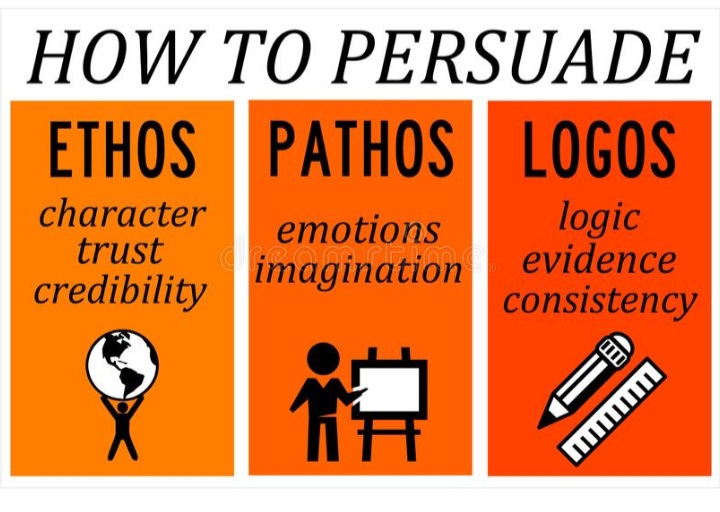
The problem with pathos and ethos without logos

If what I write here doesn’t touch your emotions, it’s useless.  The best writing will sometimes challenge your beliefs about right and wrong, make you see a complicated moral issue in a different light.  Our feelings are classically called “pathos” and our moral views “ethos”.  These two strands of human experience, emotions and trust, are huge and the successful appeal to them is of incalculable power.    Without “logos,” the capacity to set things out coherently, the other two are impossible to talk about, understand or resolve conflicts that arise between people of strong feelings and beliefs. 

Logos, without pathos and ethos, of course, reduces you to a well-programmed chatbot.  Logos by itself can be monstrous, as can any of these strands, in isolation. All three need to come into play in any persuasive presentation, though logos often rides in the trunk as the other two drive the car and scream out the window.

No meaningful debate is possible based only on passionate feelings and a strong sense that the other person is morally deficient.  There is literally nothing to discuss, beyond “I am very upset that you are such a moral cretin” and “I’m upset that you’re such an unreasonably judgmental asshole.”  Not a very long conversation, and one that can only end in disagreement, based on strong mutual feelings of moral repugnance.   The only things that we can really talk about, set out clearly for meaningful discussion, are facts, data, actual events, crucial elements of any true story.

Real life, of course, rarely involves a rational disagreement among philosophers, it’s a dirty, earthy business that sometimes ends in a lynch mob stringing up a big mouth just to win the argument.  “Who’s laughing now, asshole?” is not a very decorous question to pose to a dangling corpse, but there we are.  Cutting off the lynching victim’s body parts as they scream doesn’t prove you are right, except to your fellow enraged torch and pitchfork carriers.

Humans are a cultish lot, and it’s very easy to fall in with a tribe, particularly an aggrieved tribe on the march, in a moral crusade.  We are getting the full downside of this unreasoning cultish tribalism full-stink in recent years.   

In 2009 Congressman Joe Wilson from the great secessionist state of South Carolina (currently considering the death penalty for any pregnant female who refuses to give birth) snarled at the first Black president “you lie!”  The moment of internationally televised in-your-fucking-face disrespect made big news at the time.  Now much worse is said every day about Biden, to his fucking face, and the Big Lie itself is in hot dispute among the pathos/ethos crowd.  What is the Big Lie? 

The latest spin is that it’s the lie that “so-called January 6th” was NOT the fault of fucking Mike Pence!   Pence deserved to be swinging from that gallows, the fucking cowardly traitor who made the riot that never happened necessary … and what about Hunter Biden’s laptop, Fauci’s crimes against humanity and the fucking drag queens raping young children in public?

How do you talk to people in a rival cult, with all logic off the tableIt seems impossible.  It is certainly impossible if the technique for shutting you up is citing outlandish conspiracies to angrily contest every factual assertion you make.  The best you can do, when faced with a relentless, logic-free assault, is to say “understood.”  By “understood” it will be understood, even by a grimly determined foe, that you mean “have a blessed day!”    

And, by “have a blessed day,that you mean just that.

The price of inheritance

The price of inheritance is obedience, to the exact degree demanded.   Dissident children don’t get shit, except for furious punishment while the bequeather is still alive.   Getting nothing, and being cast out of your family, is a very high price to pay for a fleeting feeling of personal integrity.

We spent five days with old friends in a beautiful rented house near Woodstock.  At one point I was sharing my long-running painful estrangement from my niece and nephew, my only two direct blood relatives, with one of my oldest friends.  I haven’t seen either one since my mother’s funeral in 2010.  My attempts to remain in touch have been mostly futile.  Now I don’t even hear back from either one when I reach out.  My friend, at a loss for any idea we haven’t already talked about, seeing how much this seemingly insoluble situation hurts me, looked at me with sad eyes and said “that’s very painful.”   I nodded and we sat there for a minute, just acknowledging how much this kind of thing hurts.

In the case of my niece and nephew I understand what they’ve been told by my brother-in-law and his wife.  Your uncle is an insane, judgmental, vengeful, lying prick.  He stole your inheritance when your grandparents died.  He will eventually kill you, if he ever gets the chance.  He’s a person incapable of love, forgiveness and honesty, though he pontificates at unbearable length about the importance of all three.  He is the lowest form of vicious hypocrite imaginable.  Picture Hitler, only much worse.

Fast forward a year and a half.

My periodic attempts to make contact with any of my old, formerly sympathetic friend’s three adult children, all of whom I have known since birth and fondly played with all during their childhoods, as well as advised and helped as young adults . . . crickets.

My own fault, really, since I refuse to acknowledge that to some people talking about conflict, with an eye toward preventing future strife, is exactly the same as viciously attacking them in their soul.   To speak about any kind of mutual role in conflict is to blame them, 100%, when they are unshakably certain that you are 100% to blame and a very dangerous fucker too, capable of all kinds of satanic appeals to love, fairness and vulnerability, which always come at their expense.  They will explain this to their children with passion, telling them to think of Hitler, only much, much worse.

I understand now that if you have a competitive view of life, see the world as black and white, win or lose, pride or humiliation, no compromise is possible with someone who does not do what you need them to do.   That’s just the way it is.  Keep whatever you want in your heart but keep any look off your face that shows defiance of a will that needs to be right.  Have as much integrity as you want in the quiet of your own soul, but show any glint of that and we’ll cut you dead as we cut our dear, old friend, Hitler, dead.  Clear enough for you, my beloved child?