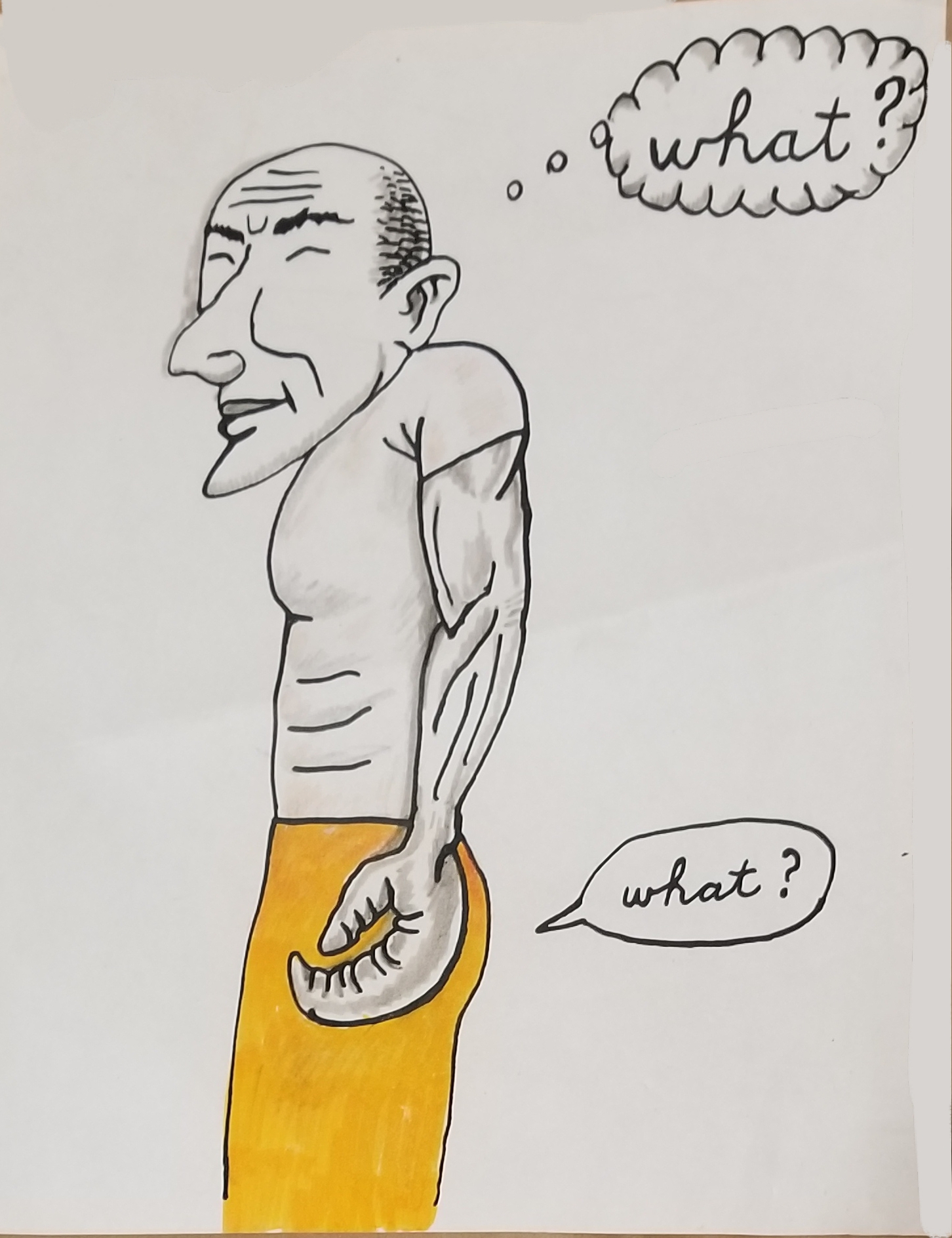
These questions remain as pertinent five years later.
These questions remain as pertinent five years later.
My father would go with that description. Fine, he was a complicated man. He would occasionally refer to the demons we all battle. The highly personal battle with one’s personalized demons is… complicated. In his case, gaining any useful insight into his demons was not an option. He believed that no amount of insight into the nature of one’s troubles could allow a person to make significant changes in their lives, the demons always got the last word. I never bought that pessimistic view of our lives here.
If you were impressed by Irv, as many were, you admired his nimble intellect, his command of language, his irreverence and his wit. He could be very funny. He had charisma of a certain kind. He could be self-effacing in a charming way, as when he joked about often being mistaken for Rock Hudson. He was persuasive. argued convincingly, often in the cause of social justice and basic decency, raising good point after good point based on irrefutable common sense seasoned with insights from his wide reading. He had an excellent memory. He could be a good friend and an excellent mentor. He was loved by many.
Those more attuned to intellectual bullying could observe in Irv the flexing that such types use to keep adversaries off balance, to put them down. The wit, dark, sharp and quick, would be used to parry, skewer, belittle, ridicule, deflate, humiliate. His style in arguments was to quickly prove that any intelligent person, armed with the facts, had to agree with him. He’d often do this by presenting the opposing argument in detail, then dismantling it methodically. He had little patience for anyone who seemed to be on to what he was up to in these displays of intellectual dominance.
We are none of us always our best self. The gifts Irv brought to friendship, teaching and mentoring, were not always at his disposal when dealing with his own little family in the house he’d bought to shelter them, as they ate the food he paid for. He’d grown up in grinding poverty and it had been his life’s mission to never know deprivation again. He succeeded, working two jobs, and his thanks, night after night, were two ungrateful little middle class pricks who had no idea of the despair and humiliation of poverty their father had saved them from.
The complication of this generally fine man arose when his talents were pressed into service by his demons. At the dinner table, after the litany of his wife’s complaints about their unruly kids, the rebellious boy, the sneaky girl, before he got ready to leave for his second job each evening, he’d explode in rage. He’d deploy his entire intellectual arsenal to verbally bludgeon his children, who returned fire according to their personalities.
Why am I writing about my father, a man who has been dead now going on sixteen years? I’m struggling to finally put this story in a clear frame, to tell it in a way that makes sense (we also note my reluctance to wade through the 1,200 page first draft I produced a few years ago– though that seems necessary at some point). I believe my father’s story contains a universal lesson, certainly something to ponder for anyone who was raised by an angry parent who was often impossible to placate. A parent like this puts a kid in an emotional bind that can last a lifetime.
The bones of this story will be familiar to many, the conclusion of the story contains a redemptive surprise, though the value of that gift is sometimes hard to see.
In a nutshell, someone who is prone to anger after childhood humiliation (as Irv was humiliated by the double monster of extreme poverty and an angry, religious mother who whipped him in the face from the time he could stand) will behave toward their offspring with certain emotional disabilities. In the case of a parent with severe emotional disabilities, since none of us want to see ourselves as wrong, they will actively construct, and become unyielding advocates of, a worldview where their fucking children are the real problem.
Now follow me here — if the child is to be made the real problem, you need to lay out, and reinforce, the reasons why, so everybody understands the terrain. So when the kid is an infant, several days old, accuse him of challenging you from his crib.
“You were born with a hard-on against the world. You had it in for me from the day I picked you up at the hospital, staring at me with those big, black accusing eyes, always glaring at me through the bars of the crib by my side of the bed.” The crib had to be moved to the other side of the bed, to mom’s side. Sheesh. You started this fucking war when you were a few days old and have not taken a minute off since then, you merciless little bastard.”
If you believe this remarkable story, and why wouldn’t you, at five, at eight, you are in for a lifelong wrestling match with your own demons, some of whom will insist, not unreasonably, “what the fuck?” You will grow up with cognitive dissonance, the things ascribed to you will not feel like a fit with what you actually learn about your own life. You will be subject to nightmares, dark thoughts, to fear and displays of anger, which you may come to regret, or, alternatively, cringing submission, a shameful surrender which you can later take out on yourself. There are few healthy ways to react to a parent intent on proving that you have the problem, not them, especially when you are a child.
Healing from this kind of upbringing is a hard, complicated process. It requires a certain optimism about our capacity to heal. It also takes learning to be the parent you never had, replacing the harsh internalized voice with a more merciful one. Your odds of success will also depend on the severity of what you were forced to suffer.
Irv was verbally abusive, something he admitted was as damaging as physical abuse — he rarely hit us. I eventually found a way to understand my father’s brutality, and depersonalize it, though if Irv had punched me in face every day of my childhood, I wonder if my path to recovery would have been the same. If he’d sexually assaulted my sister and me? The horrors humans do to each other are varied, I can only speak sensibly about the ones I experienced.
I had the luck, after striking up a friendship with my father’s seventeen years’ older first cousin Eli, a complicated character of infinite charm and equally deep hostility, to have someone turn on a light in a dark room. After talking around my father’s situation week after week, the sad adversarial relationship between us, my father’s arguable streak of madness, Eli revealed a terrible truth to me one day. Coming from him, who gave me the horrific detail one day with great sadness, it had the ring of absolute truth.
His favorite aunt, his father’s beautiful red-haired little sister who loved him to death, was Tante Chavah. He had many stories about Tante Chavah and her fierce love for him. Tante Chava was my father’s mother, the grandmother I never met (she died before my time). I knew she had a terrible temper, I knew she was very religious, I knew that although she was the poorest of the poor, she gave money to charity every week, I knew she had been barely five feet tall and a great cook. Eli confirmed all these things, telling me stories about each of them. One day he took a deep breath and told me how she treated my father as a baby, and throughout his childhood, the abuse she heaped on her oldest boy, who she always called “Sonny”.
This unspeakable tale of severe child abuse, told with infinite sorrow by my father’s much loved first cousin, suddenly made me see my father in a different light. He instantly became sympathetic. His irrational behavior as an adult suddenly made a kind of sense to me.
I count this revelation as maybe the greatest single gift I ever received. How do you understand a man who could ruthlessly bully his six year-old grand-daughter on the eve of her birthday, making her so understandably upset she’d vomit moments after he left the house, without understanding the abuse he’d suffered? Impossible, I think.
I count my unaccountable optimism about our capacity to take deliberate steps toward a healthier life as another great blessing. Both of my parents were confirmed pessimists. I don’t know where I got the feeling that our brains are elastic, our life experiences subject to improvement, our interactions with others improvable. No idea.
I will skip to the end of the story here, in the interest of a spoiler. Or, on second thought, nah. Back at you another time.
I have been wrestling with a difficult issue for many years now, my seemingly all but final estrangement from two people I was always close to. Their loss was a kind of ‘collateral damage’ resulting from the demand to hide someone else’s well-founded feelings of shame.
Seen in the worst light, my constant return to this painful subject is what psychologists call perseverating, self-inflicted pain from regretful preoccupation with an ultimately insoluble tragedy, the neurotic need to constantly relive the past suffering that caused deep wounds.
Seen another way, the way I prefer to see it, I’m searching for an elusive solution to an ongoing tragedy. I’ve been turning the evidence of our estrangement over in my hands, looking at it from every direction, shining light on it from every angle, seeking a creative solution to something important to me, an inventive idea that has been evading me.
Last night I thought of two questions, one for each of them, that sum up my long musings, without divulging anything of underlying shameful events to anyone involved.
They are a sister and brother, the girl a history buff, the guy a poet and a fiction writer. Sadly, I lost touch with them over the last few years. My intermittent attempts to maintain the relationships are finally met with mostly silence. Yesterday, while thinking about something else, I stumbled on a final question I could ask each of them. If I had only one last question to ask, I think it might be these (note the lengthy illustrations to the historian’s question).
To the young historian:
Q: Is history the fact-based inquiry into the nuanced reasons events and trends happen in human society, pursued to give us insight into the challenges of the present and the future? Isn’t the alternative to factual history propaganda, a false narrative supporting a pre-determined outcome?
Historical narratives emerge to make sense of the past. From earliest human history people were strategically erased from memory. In the days of the Pharaohs the new dynasty would send slaves to scrape the faces of their predecessors off the tomb walls, fucking them in the afterlife, erasing them from history. This is an ongoing pattern in human affairs.
When Germany lost the first World War certain Germans came up with an infuriating myth, The Stab in the Back — the victorious German army had been betrayed and humiliated by treacherous enemies who would be made to pay with their lives. The endlessly shifting narratives of history often swing wildly between opposite interpretations. A school of history will hold forth its theory — insist and largely prevail for generations (like the Dunning School at Columbia rewrote the history of the Civil War) inverting the previous understanding. In the case of the Civil War, the revisionist early twentieth century history (influential for decades) held that the Confederacy did not secede over slavery, that in a real way they never lost the glorious war to preserve their way of life, that the people they massacred were the real traitors to the Constitution.
We are watching a historic battle for the soul of history at this fascinating, scary moment in history. The recent riot at the Capitol, the ascendant far-right tells us now, in one voice, was done by leftists posing as Trump supporters, to make Trump look bad after they stole the election from him.
Isn’t inquiry into the facts of what actually happened in the past the crucial work of the historian? Isn’t good history the business of making the often irrational human endeavor understandable by placing carefully uncovered ideas and events into context?
Example:
Senator John Tester (D-Montana) told Bill Maher the other night that the original purpose of the filibuster was to promote bipartisanship by requiring a 3/5 majority vote to hold a legislative debate or a confirmation hearing [1]. Maher had no comment on this origin story, a dubious story Tester offered in passing, one he had no obvious motivation to promote.
Tester’s comment leads to a reasonable question: was the filibuster designed and used to promote bipartisanship in the senate?
Would even a cursory reading of history, or Wikipedia [2], show that John C. Calhoun, our nation’s greatest defender of slavery in the Senate, refined the use of the filibuster to allow the proslavery minority to block legislation that could threaten the viability of the Peculiar Institution? Would we learn that virtually every use of this minority tool during the twentieth century was to oppose legislation that would favor the greater rights for the majority? Does this not strongly suggest that bipartisanship was not the original motivation for this parliamentary device that can instantly disable a majority’s ability to pass laws?
Or, does it make no difference, historically, like whether or not the 2020 Election was actually stolen from the rightful winner by an illegitimate president who was sworn in over the strenuous objection of countless patriots?
In the case of the 2020 election there is a great deal of evidence to suggest this claim of a stolen election is a lie, and no evidence of substantial voter fraud has ever been produced, but couldn’t you say, without being judgmental, that it’s really just a hotly disputed matter of opinion that people of good faith could agree to disagree about?
Or, is there even such a thing as historical fact?
For the young writer:
I was more than forty years old, after solid decades of senseless war with my heavily defended, often aggrieved father, before I got a glimpse of understanding into his desperation, what made him so intent on winning an imaginary war against his children. His mother, it turned out, had whipped him in the face from the time he could stand on his little baby legs. Trying recovering from that primal betrayal.
Learning this, from a relative who’d witnessed it many times and sadly related it to me, flooded me with sudden sympathy for my poor battling old man. I understood, in a flash, the humiliation that led to his desperate lifelong battle against his children. It didn’t fix the years of senseless brutality or reverse the damage he’d done, but it gave me an insight that opened a door I’d never seen. A few years later that insight, and months with a good therapist, enabled me to stand by his deathbed and gently listen to his regrets, help him die as peacefully as he could.
If you are writing about a character who is depressed or angry, or conflicted, or up against it, is it important to show the stress, provocation, abuse and other stresses she underwent that led to her dramatic situation? If you tell the story of an unhappy, angry, anxious character compelled to dramatic action without giving the reader these things, what kind of story are you telling?
Or is all shit simply stuff that just happens? A Zen koan unfolding against unhearable music?
And if someone reaches out to you and you don’t acknowledge it, after a while, shouldn’t that idiot eventually get the message that the continued reaching out is folly? Seems straightforward enough, no?
[1]
I just realized, the filibuster– requiring 3/5 of the Senate to vote to hold a hearing on a bill or confirmation, was our nation’s second 3/5 Compromise (the first being in the Constitution, to increase the power of the less populous plantation states by increasing their populations for Congressional representation by counting 3/5 of each slave towards apportionment in the House).
[2]
Reliance on Wikipedia, in this case, would result in a skewed understanding of the filibuster, which in this telling was first used by Alabama Senator (and future vice president) William Rufus Devane King, and was not the favorite obstruction tool proslavery and later anti-Civil Rights minorities in the Senate, liked the good old boys who blocked anti-lynching legislation for decades during the height of anti-black terrorism in the U.S. Although, you will read:
Then Democratic Senator Strom Thurmond of South Carolina broke this record in 1957 by filibustering the Civil Rights Act of 1957 for 24 hours and 18 minutes,[24] although the bill ultimately passed.
source

Dazivostri is translated by Google as Дазивостри.
The only description available is:
Giant statue of God Emperor Trump made for the 147th Viareggio Carnival Parade in Italy. Emperor Trump wields a mighty “Gigant Twitter Sword”. Politics aside, thats some mighty fine work imo 🙂

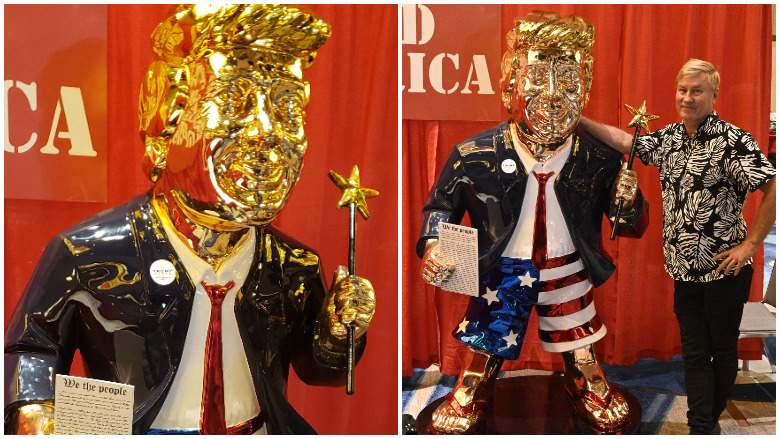
You can’t be a cult if the living representative of Jesus Christ Himself says you’re not a cult!
(note Bugaloo Boy outfit on the fan posing with the CPAC Golden Calf in patriotic underwear– Mike, where are his pence?!!!)
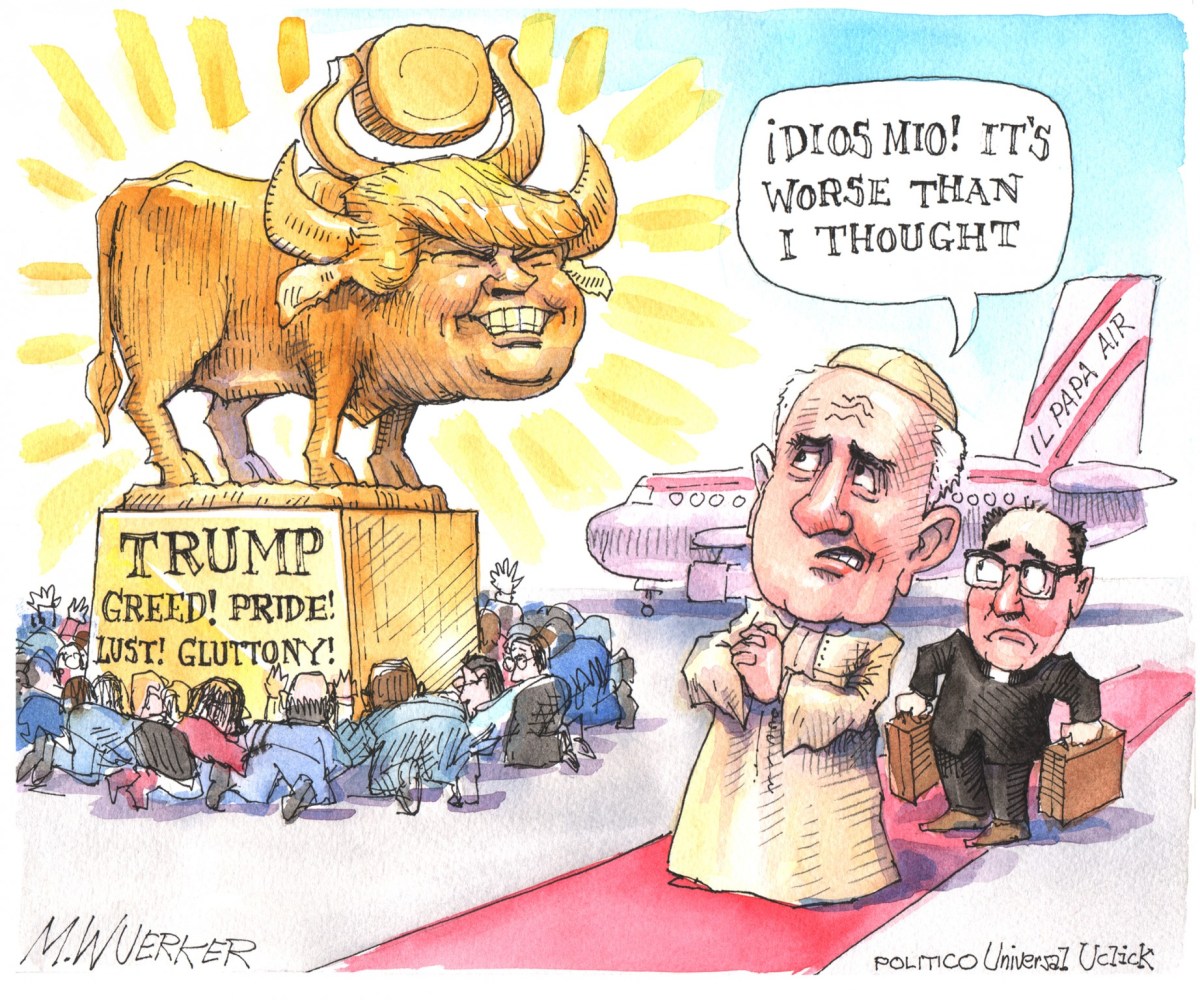
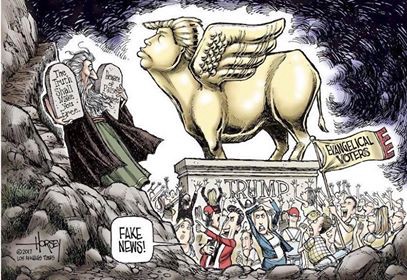
You can almost do the math in your head. $7.25 an hour times forty hours: $290 a week. $15 an hour times 40: $600. Raising the federal minimum wage to a modest living wage, we are told by Trump’s party (and at least two selected Democrats) would somehow be calamitous.
The Senate parliamentarian advised Democrats yesterday that raising the federal minimum wage by reconciliation (which requires 51 votes) as part of their $1.9 trillion pandemic relief/stimulus program is a violation of the Senate’s arcane rules [1]. There was no such ruling, of course, when Trump’s GOP, in a 51-49 vote, gave a similar sum to our richest families, partnerships and corporations in tax give backs in December, 2017. If there was, nobody mentioned it, it derailed nothing.
In the richest country in the world, our lowest paid workers are currently free to work full-time and live in poverty. How is paying workers a modest living wage controversial?
If the real concern is bankrupting small businesses that will be unable to make payroll, there are ways to subsidize those businesses to keep them solvent and profitable. Government support to help small businesses who would be burdened by paying a living wage to their workers would be similar to, and benefit many millions more than, the massive subsidies our government already gives to highly profitable fossil fuel conglomerates and other corporate beneficiaries of taxpayer generosity. But concern for small business is not the real concern here, folks.
It’s a hard to understand the rationale of those who don’t want America’s poorest working people to be able to afford clothing, shelter, healthy food and health care. I don’t understand it as anything more than an expression of disdain by the born-comfortable for anybody who was not prudent enough to be born into reasonable financial circumstances. The children of the poor in America have steeper odds of ever escaping poverty than poor kids in most other wealthy nations, plus they and their parents are routinely vilified as lazy freeloaders who refuse to do the impossible– “pull themselves up by their bootstraps”.
How does the existence of millions of full-time workers who struggle to support themselves and their children, even if they work two 40 hour jobs a week, help anyone? How did slavery help the masses of American workers? Yet, there would be a long, bloody fight to the death to preserve the Peculiar Institution. This fight over a living wage seems to be part of that same struggle, a vicious and well-funded fight to benefit a small group of highly privileged individuals.
The parliamentarian’s ruling yesterday took the most conservative Democrat in the Senate, West Virgina’s Joe Manchin, off the hook, for the moment. His vote is needed to pass any law or confirm any nominee in the divided Senate, even 51-50. Manchin seems to be enjoying his new status as a kingmaker. He announced the other day that he opposes the $15 dollar minimum wage, advocating for a compromise $11 an hour federal minimum wage. Only 4 dollars difference, only $160 a week. Why bitch about $640 a month? Show some class! Let’s show our bipartisan spirit and compromise, y’all. Where I come from, $11 is a lot of money!
Where you’re going, Joe, $11 won’t even buy you a blowjob from one of Satan’s lowliest.
I didn’t forget about Joe Manchin’s fellow conservative Democratic kingmaker, Arizona’s senior senator (in office since 2109), Kyrsten Sinema [2], I just can’t think of anything the staunch defender of the filibuster might try to buy for $11. Maybe a Big Mac, super-sized fries, a giant Coke and a nice dessert from a good bakery.
In other news:
Lynch mob victim and former Senator Al Franken cracked “I like Ted Cruz more than anybody in the Senate does– and I HATE Ted Cruz.” Here’s Ted, doing thirty seconds of standup for his peeps:
[1]
The Senate parliamentarian ruled that a plan to gradually increase the federal minimum wage to $15 an hour by 2025 does not fit the complicated rules that govern budget bills in the Senate. House Democrats included the measure in a $1.9 trillion coronavirus relief bill that is expected to be the first major legislative act for President Biden.
source
[2]
from: Kyrsten Sinema’s Self-Defeating, Nonsensical Defense of the Filibuster: The Arizona senator is almost single-handedly keeping Democrats from wielding their majority power—and the party may well lose that power as a result.
This year, all around the country, Republican state lawmakers are pushing an alarming array of bills that are designed to make it harder to vote. They’re targeting absentee voting, early voting, voting by mail, and virtually every other means to cast a ballot. Though their stated justification is the illusory threat of voter fraud, the goal is to reduce turnout in ways that suppress Democratic votes. In short, it’s a cynical move against basic tenets of American democracy.
Democrats have an answer to this challenge. For the past two years, they’ve put forward H.R. 1, a sweeping bill to reform American elections. It would enact automatic voter registration nationwide, expand early voting and vote-by-mail, and more. And it doesn’t stand a chance of passage, as long as the Senate filibuster remains intact.
The case against the filibuster has been made ad nauseam lately—including in these pages, by me and others. But there’s a reason the argument has become unavoidable: The filibuster is the most decisive force in American governance and policymaking today. It decides—by virtue of requiring 60 votes to pass most legislation, rather than simply a 51-vote majority—the outcome of countless policy debates before they can even begin.
Supreme Court Justice Thurgood Marshall cautioned those who look at skin color as an indication of a person’s views on social justice to remember that a black snake will bite you just as hard as a white snake. Case in point, this extreme right-wing motherfucker:
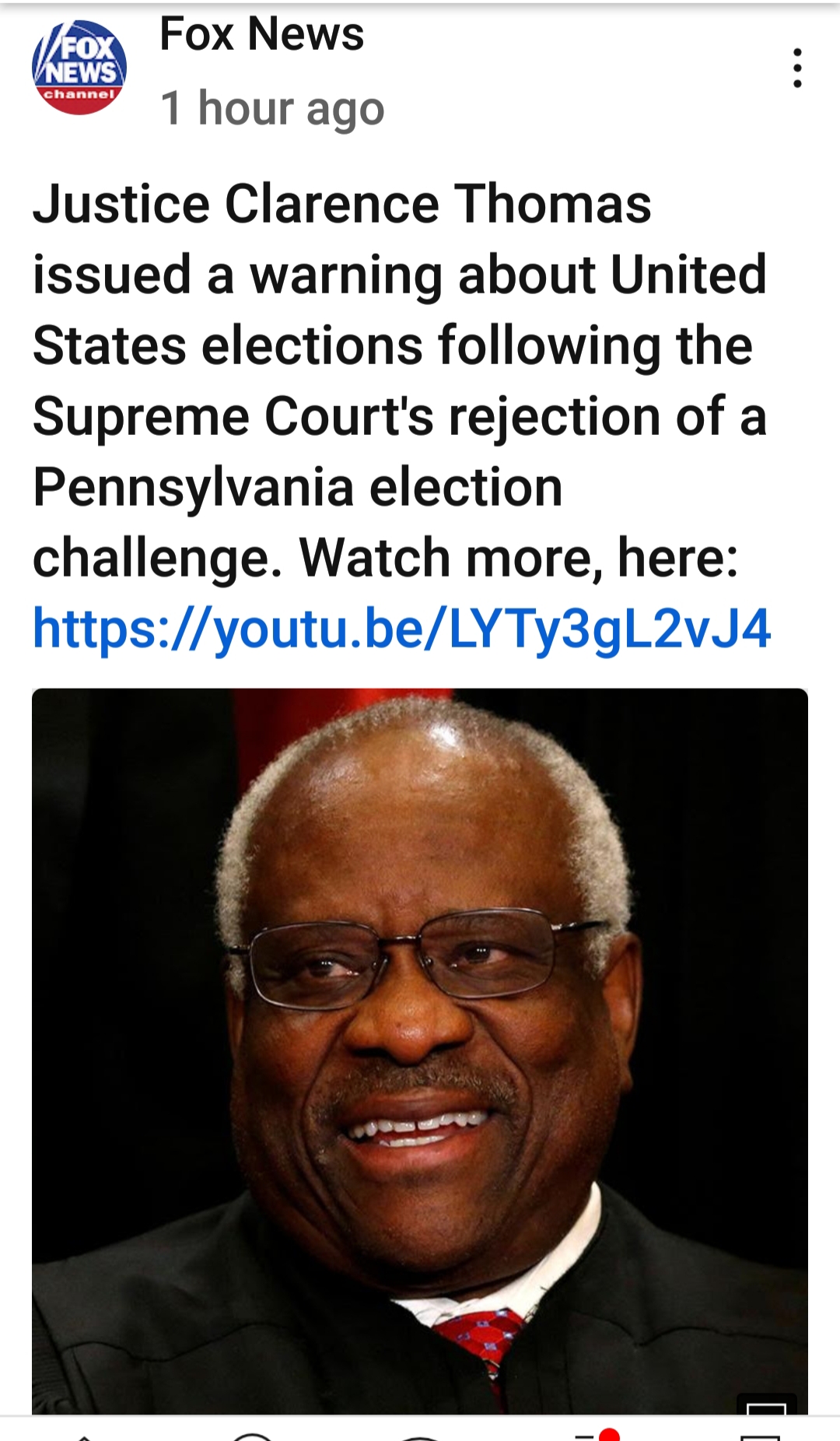
His warning to his fellow justices, who recently declined to hear appeals of several baseless Trump/RNC hypothetical voting fraud cases, presumably was that since the Supreme Court failed to act there will be millions of votes cast by angry Black people intent on making his side, electorally, the minority party that it is. They will vote by mail, they will march from churches to cast early ballots on Sunday, they will go door to door and organize to bring out a tidal wave of first time voters and even the most surgical GOP gerrymandering in the world, and the strictest voter suppression laws (GOP lawmakers in 43 states have already proposed more than 250 in the first 56 days of 2021) may not prevent majoritarian hoards from voting out Trump loyalist candidates who serve the greater good that Thomas views as the true America. An American meritocracy of color-blind rugged individualism, a nation where a long history of racism has no bearing on the current opportunities for, or grievances of, those long persecuted.
A longer, more detailed and legally-based description of Clarence Thomas’s warning was found in today’s New York Times, in an op-ed entitled The Supreme Court Is Not Finished With Elections [1]. In essence, the most rightwing justices seek to end the ability of state courts (elected statewide, not strictly subject to partisan gerrymandering) to overrule the will of the state legislatures (voted into office in gerrymandered districts) when it comes to state citizens’ right to vote in federal elections. You know, States’ Rights, one of the bedrocks of American conservatism.
On a note related to the many baseless Trump/RNC cases that were dismissed, many after protracted and expensive court battles, I read this late last night and said, aloud, to no-one in particular, “that’s what I’m talking about!”
Georgia lawmakers, too, are advancing measures to slash mail-in voting to protect against voter fraud, even as two counties in the Atlanta area want attorneys’ fees from Trump and the chair of the Georgia Republican Party for frivolous lawsuits designed to overturn the 2020 election. “Given the number of failed lawsuits filed by the former president and his campaign, petitioners apparently believed that they could file their baseless and legally deficient actions with impunity, with no regard for the costs extracted from the taxpayers’ coffers or the consequences to the democratic foundations of our country,” wrote lawyers for Cobb County.
source
That’s what I’m talking about!
Courts often sanction lawyers for filing lawsuits that are without merit, trumped up cases brought without evidence and with the intent to harass, intimidate or otherwise use the justice system for leverage or sensationalist publicity. These lawsuits are called frivolous and the penalties courts can impose on attorneys who illegally bring such suits not based on evidence include sanctions and fines against the lawyer, subjecting the lawyer to a disciplinary hearing for filing a vexatious frivolous lawsuit and forcing the litigant who used the court as an expensive bludgeon to pay the legal fees for the person he dragged into court without a legally sustainable reason.
I’ve been wondering when one of the dozens of courts who spent valuable time and resources examining and dismissing dozens of baseless Trump/RNC post-election challenges, and the literally hundreds brought before the election with the intent of making it harder for science believers to vote safely during a pandemic, would sanction someone for subjecting the court, the jurisdiction they were suing and the taxpayers, to the time, anxiety, great expense, of a shameless propaganda spectacle, based in speculation, unsubstantiated allegations and the fear-mongering that these frivolous lawsuits caused. You go, Cobb County!
Hopefully there will be dozens more of these filings, and court-ordered repayment of the massive taxpayer resources wasted to defend against these voter suppression attempts by the most unpopular (and most powerful within his minority party, go figure…) ex-president in American history.
In other news, yesterday President Biden signed an executive order saying, in essence, “I’ve got your ‘anarchist jurisdictions’ right here, asshole.” This order reverses a Trump/Barr policy memo that designated jurisdictions that did not unequivocally support Trump as ‘anarchist’ and attempted to deprive us of federal funds. Presidential in the coolest American sense of the word, particularly during a deadly pandemic, that Memorandum of September 2, 2020 (Reviewing Funding to State and Local Government Recipients of Federal Funds That Are Permitting Anarchy, Violence, and Destruction in American Cities).
Jesus, I hope the next Attorney General will not be a partisan hack/attorney/wingman for the president like that goddamned Obama-sycophant Eric Holder! (As one of the GOP Senators, probably Lyin’ Ted, suggested Garland might be). Oh, speaking of Lyin’ Ted, this gave me a chuckle:
Even Republicans who may vote against him praised Garland.
“In two-plus decades on the court, you have built a reputation for integrity and for setting aside partisan interests in following the law,” said Cruz, before noting that the attorney general job is different.
(from “Clinton News Network” report on Merrick Garland confirmation hearing).
Also, time to update, google:
The 84th and current Attorney General is Jeff Sessions, who assumed the office on February 9, 2017. The attorney general serves as a member of the Cabinet of the President of the United States and is the only cabinet officer who does not have the title “Secretary of”..
U.S. Attorney General | C-SPAN.orgwww.c-span.org › organization › Attorney-General
[1]
Remember Bush v. Gore, the case that decided the 2000 presidential election, in which five justices voted to overturn the Florida Supreme Court’s handling of a statewide recount? That decision was based on a theory of equal protection so wacky that the majority opinion insisted that “our consideration is limited to the present circumstances” — that is to say, don’t dare invoke this poor excuse for an opinion as a precedent.
That didn’t stop Justice Thomas from citing Bush v. Gore in his dissenting opinion on Monday, and he did so in a particularly shameless fashion. The language he cited wasn’t even from the Bush v. Gore majority opinion, but rather from a separate concurring opinion filed in that case by only three of the majority justices, who argued that the Florida Supreme Court had violated the U.S. Constitution by substituting its will for that of the state Legislature.
Justice Thomas invoked that minority portion of the decision to assert that the Pennsylvania Supreme Court was constitutionally out of bounds when, citing both the Covid-19 pandemic and the collapse of the Postal Service as its reasons, it added three postelection days for lawful receipt of mailed ballots.
He went on to warn that fraud was “more prevalent with mail-in ballots,” citing as evidence a 1994 Federal District Court case, an article in this newspaper from 2012 and the 2018 Republican ballot-harvesting fraud in North Carolina. Such occurrences, he said, raise “the likelihood that courts will be asked to adjudicate questions that go to the heart of election confidence.” This was the reason, he argued, that the Supreme Court should have taken and decided the Pennsylvania cases before the next election cycle.
In his inventory of ballot fraud, Justice Thomas of course could not refer to fraud in the 2020 election, because there wasn’t any. Not a problem:
We are fortunate that many of the cases we have seen alleged only improper rule changes, not fraud. But that observation provides only small comfort. An election free from strong evidence of systemic fraud is not alone sufficient for election confidence. Also important is the assurance that fraud will not go undetected.
In other words, Justice Thomas would have it both ways: If there was fraud, the court needed to intervene, and if there was no fraud, the court needed to intervene because the fraud might simply be undetected. Despite his disclaimer, the entire structure of his opinion, suggesting that something bad had happened even if no one could prove it, is fairly read as validating the essence of the Trump narrative.
What color snake do YOU prefer to be bitten by?
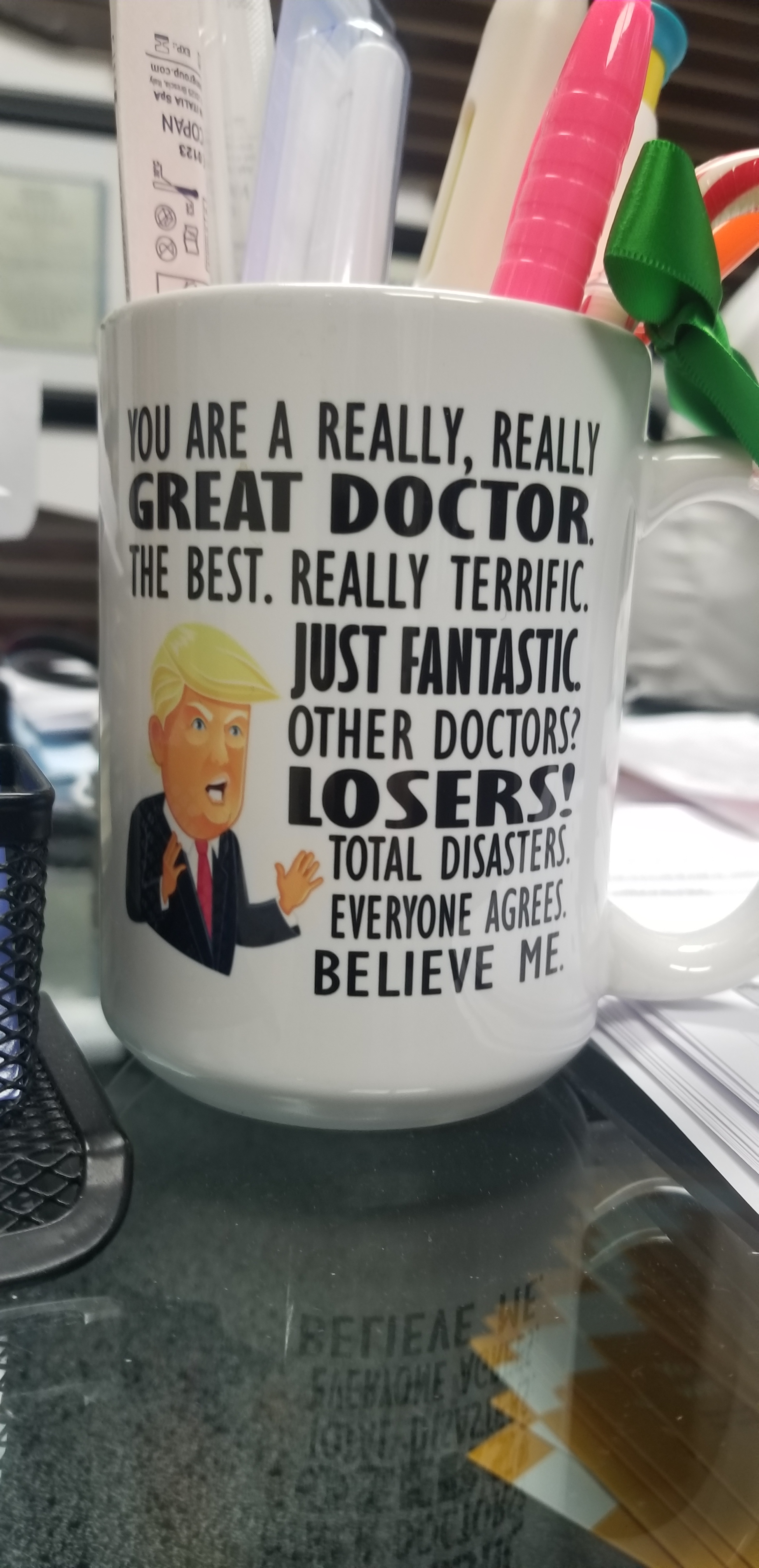
I had a consultation with a high-powered specialist who suddenly had some urgent texts to attend to. While he was tapping his phone I noticed this mug full of pens on his desk, snapped a photo. He smiled when I told him I had to send this to a doctor friend.
“Are you a fan?” he asked with a smile.
“I am absolutely not a fan,” I said, perhaps a bit too frankly.
The smile left his face and there was a moment of silence between us.
In that moment I suddenly understood why he was wearing his mask on his chin.
It seems too basic to point out here, but it’s worth a thought, I think. Many lies are told primarily to avoid shame.
For example, if I lost my job, due to petty embezzlement that was discovered by my friend Dave who had hired me recently, I’d feel ashamed. My wife would have a shit fit and it would ruin our weekend. So I tell her that Dave was forced to reluctantly downsize on Friday, and since I was the last hired, I had to be let go. The guy hired right before me also got the ax from Dave, who apologized and promised to rehire us as soon as business picks up.
My wife will be sympathetic instead of angry, my firing had nothing to do with me, nothing at all. She might be suspicious, since I lost my last two jobs due to petty embezzlement and lied about each of those, and she’d be within her rights to rage at me for another lie to cover another petty theft from my boss, but I can always convince her of a lie she wants to believe. Her short-term sympathy, gained by this harmless lie, will be worth it, especially since she’ll be mad as hell when she finds out in either case. By the time Dave calls my wife on Monday, snarling about my betrayal (he had done me a solid by hiring me, I did kind of betray him) and threatening to have me prosecuted if my wife doesn’t repay the money I stole, I will have had a peaceful, shame-free weekend basking in my wife’s sympathy. Better than nothing.
If you do something you’re ashamed of, you will often feel a strong need to deny it. There are various ways to do this, but if it takes a straightforward lie, so be it. Lying is better than feeling shame, by a mile. If you’re caught in the lie, well, shit happens. You’ll figure out the next lie as you need it.
I’m sure shame comes into the Big Lies too, especially ones based on national humiliation. Are the lies about a rigged, stolen election, and the $50,000,000 ad budget to promote the lie and a well-planned, well-financed ($3,500,000 that we know of) attempted insurrection based on that infuriating lie, based on shame? I suppose we could say so. If you claim, before and after two elections, that the election (even the one you legally won, in spite of an almost 3,000,000 “popular vote” loss) was marred by massive fraud — and you produce no evidence of fraud, beyond the 1 case out of every 2 million votes found by the Koch-backed Heritage Foundation’s election fraud database — does that indicate shame? After all, you were raised to believe that there are only two kinds of people, winners and losers. You are a winner. The only way you can lose is if some powerful force lies to cheat you. That’s how the victorious German army “lost” the First World War, after all.
If a lie is to gain a foothold in the minds of millions, it must be undeviatingly insisted on. Publicly and privately, it must be repeated over and over. Asked point blank if Joe Biden and Kamala Harris won a fair election, supporters of the president’s baseless claim that radical Democrats stole it will point to a swarm of ornate talking points. Ask them on national television: Yes or No, motherfucker, did Biden win a fair election?
You can hear their straight answers to this direct question, from the intellectuals of the GOP, men like Senators Rand Paul, Lyin’ Ted Cruz, Josh Hawley, Rep. Steve Scalise, the head of CPAC:
Well, you see, that’s the kind of question you people always ask, and next you’re going to call me a liar, which is all you liars know how to do. But as even you have to admit, the real question is why the signatures of Black inner city voters were not verified as the state laws require, in state after state, city after city, or why millions of ballots, cast by mail– against state law, were accepted DAYS AFTER THE ELECTION. The real question is why illegal ballots were fraudulently harvested and counted, millions and millions of unverified Muslim, Mexican and Transsexual votes– and countless child-blood drinkers’ ballots. The real question is “fuck you, you fucking fuck!”
Yesterday’s hearing about the federal government’s unaccountable failure to mobilize enough police presence to prevent the January 6th insurrectionist riot at the Capitol featured this moving testimony from U.S. Capitol Police Captain Carneysha Mendoza. She describes, among other horrors, the rioters’ release of military grade CS gas, inside the building, mixed with fire extinguisher spray deployed by rioters, that resulted in chemical burns to her face:
Senator Ron Johnson [1], who comes from Wisconsin, reads into the record the alternative fact that it was not Trump supporters who clashed with police, sprayed them with bear spray, overran the barricades, crushed them in doorways, beat the police with flagpoles, carried Trump and Confederate flags into the Capitol, released poison gas, spread feces over paintings and statues of famous Democrats — it was, literally, a false flag operation! The violent ones were all antifa provocateurs! The Trump supporters were all peaceful — it was the outside agitators who made them look like an ugly mob who wanted to kill Mike Pence and Nancy Pelosi!!!! Posing as Trump supporters, who were, to a man and woman, as peaceful as baby lambs, even as they trampled one of their own to death, her “Don’t Tread on Me” flag notwithstanding.
Where did Johnson, who had previously argued that the mob was not “armed” because most of them had no firearms (military grade CS gas, bear spray, improvised clubs and spears, brass knuckles, knives, tactical gear– not “arms”, snowflakes…), get this account that he read into the official record? A rightwing website, reporting on a single source who made this extremely far-fetched claim — he read directly from their post.
Prove Johnson knew he was lying. Fucking prove it, you fucking liars!
Is Ron Johnson publicly spreading this lie, on some level, because he’s ashamed? Were the GOP 140 Representatives who voted to block the certification of Biden Electors? Hawley? Cruz? Tuberville? The rest of the Senate Voter Integrity Skeptic caucus? Impossible to say, really. That’s what Ethics Investigations are designed to find out.
[1]


I’m trying to turn the page, so to speak, and not tune in on Trump-related news, but it won’t stop for a while (at least until he’s locked up somewhere for any of his numerous crimes) and Sekhnet is addicted to breaking news and follows it daily. So during lunch I got to catch Amy Klobachar and her Republican counterpart at the conclusion of the hearing into why nobody in charge did anything to get reinforcements rushed in while the Capitol was being overrun by heavily armed Q and MAGA maggots (why virtually all 800 beloved, defecation-smearing Trump patriots were allowed to leave peacefully afterwards is still a mystery nobody seems to be touching… I guess the answer is too obvious, the president told them he loved them, and that he felt their pain).
When committee chairperson Klobachar was done with her closing statement, the Republican committee co-chair thanked her and said he enjoyed the bipartisan hearing. He also thanked the witnesses, for appearing voluntarily and answering honestly, as opposed to (I’m thinking) his Congressional colleagues who threatened to be hostile witnesses who’d use litigation to tie up their subpoenas to testify in Trump’s impeachment trial for years and prolong Trump’s “unconstitutional” “partisan” impeachment circus until their leader’s 2024 campaign was fully underway.
Bipartisanism 101. Narcissistic symbiosis…
A friend sent me a great print interview with the brilliant Dr. Bandy Lee, a principled forensic psychiatrist I’ve long admired. Lee’s answers nailed several key points about a dangerously impulsive demagogue and his followers succinctly and clearly enough for anyone but a MAGA believer to understand.
The same friend had earlier sent me the results of a recent “study” that found (surprise!) that people who are slower to make neural connections and have a harder time seeing subtle patterns, points and nuance are more easily drawn to extremism, the black and white, Us vs. Them, world of autocracy, jingoism and racism. With that study in the background, this answer is the clearest, shortest explanation of the phenomenon of our boy Trumpie and his mass of very fine, loyal-to-the-death peeps that I’ve ever seen:
What attracts people to Trump? What is their animus or driving force?
The reasons are multiple and varied, but in my recent public-service book, Profile of a Nation, I have outlined two major emotional drives: narcissistic symbiosis and shared psychosis. Narcissistic symbiosis refers to the developmental wounds that make the leader-follower relationship magnetically attractive. The leader, hungry for adulation to compensate for an inner lack of self-worth, projects grandiose omnipotence—while the followers, rendered needy by societal stress or developmental injury, yearn for a parental figure. When such wounded individuals are given positions of power, they arouse similar pathology in the population that creates a “lock and key” relationship.
“Shared psychosis”—which is also called “folie à millions” [“madness for millions”] when occurring at the national level or “induced delusions”—refers to the infectiousness of severe symptoms that goes beyond ordinary group psychology. When a highly symptomatic individual is placed in an influential position, the person’s symptoms can spread through the population through emotional bonds, heightening existing pathologies and inducing delusions, paranoia and propensity for violence—even in previously healthy individuals. The treatment is removal of exposure.
The leader, hungry for adulation to compensate for an inner lack of self-worth, projects grandiose omnipotence—while the followers, rendered needy by societal stress or developmental injury, yearn for a parental figure.
The description above also fits any cult, abusive marriage or other one-sided power relationship, for that matter. The leader needs the followers as much as the follower needs the leader, for the deepest and most compelling of psychological reasons. Narcissistic Symbiosis! She lays it out in so few words — inner lack-of self-worth, grandiosity (eternal need for praise) meets injured, stressed yearning for a protective parent.
Also, read Dr. Lee’s great dismissal of the “Goldwater Rule” (shrinks are prohibited from assessing even the craziest public officials unless they’ve first done an in-person evaluation — in which case medical confidentiality rules would seemingly be implicated). The Goldwater (“extremism in defense of liberty is no vice”) Rule is always cited by media pundits and politicians as some holy grail, like a well-settled, universally accepted law that only cranks and criminals try to violate. It’s a rule made by a conservative professional association — not actually binding on anyone but its voluntary members.
Groups like the American Psychiatric Association, promulgators of the Goldwater Rule, always remind me that doctors in Hitler’s Germany were the first professional group to achieve perfect Aryan/Nazi membership, under gleichshaltung [“co-ordination”, the process of Nazification by which Adolf Hitler and the Nazi Party successively established a system of totalitarian control. Party membership and an oath of personal loyalty to the leader were required to practice any profession or hold any office, just like in the defunct Trump administration.]
Instead of holding hearings where fine Ever-Trumpers like seditionist Lyin’ Ted Cruz and fist-pumping insurrection-supporter Josh Hawley can pontificate and create soundbytes for extremist media, just set out the details of the long Trump purge, the constant humiliations, vindictive firings and forced resignations, in Trump’s chaotic administration– the replacement of long-time officials of some expertise with ever less qualified loyalists with a proven willingness to do anything their leader demanded. Then, is it really necessary to hold a hearing to figure out why there was no immediate, coordinated response to protect Congress members and their staffs when the Capitol was attacked by a violent, armed crowd waving Trump flags, and Confederate battle flags, and other signs and symbols of resistance to the duly elected government? The president, depressed that a rigged election had been stolen from him (his rigging didn’t work!) was finally enjoying something, live on TV. Seemed like a sin for any of his appointees and other loyal underlings to ruin the poor guy’s fun!
Well, as Biden said the other day at a press conference — five years of Trump on the news every minute of every day is enough, I’m done talking about him. I hope…
Here’s Doctor Bandy Lee, from last month’s Scientific American interview:
The ‘Shared Psychosis’ of Donald Trump and His Loyalists
Forensic psychiatrist Bandy X. Lee explains the outgoing president’s pathological appeal and how to wean people from it
Tanya Lewis on January 11, 2021
The violent insurrection at the U.S. Capitol Building last week, incited by President Donald Trump, serves as the grimmest moment in one of the darkest chapters in the nation’s history. Yet the rioters’ actions—and Trump’s own role in, and response to, them—come as little surprise to many, particularly those who have been studying the president’s mental fitness and the psychology of his most ardent followers since he took office.
One such person is Bandy X. Lee, a forensic psychiatrist and president of the World Mental Health Coalition.* Lee led a group of psychiatrists, psychologists and other specialists who questioned Trump’s mental fitness for office in a book that she edited called The Dangerous Case of Donald Trump: 27 Psychiatrists and Mental Health Experts Assess a President. In doing so, Lee and her colleagues strongly rejectedthe American Psychiatric Association’s modification of a 1970s-era guideline,known as the Goldwater rule, that discouraged psychiatrists from giving a professional opinion about public figures who they have not examined in person. “Whenever the Goldwater rule is mentioned, we should refer back to the Declaration of Geneva, which mandates that physicians speak up against destructive governments,” Lee says. “This declaration was created in response to the experience of Nazism.”
Lee recently wrote Profile of a Nation: Trump’s Mind, America’s Soul, a psychological assessment of the president against the backdrop of his supporters and the country as a whole. These insights are now taking on renewed importance as a growing number of current and former leaders call for Trump to be impeached. On January 9 Lee and her colleagues at the World Mental Health Coalition put out a statement calling for Trump’s immediate removal from office.
Scientific American asked Lee to comment on the psychology behind Trump’s destructive behavior, what drives some of his followers—and how to free people from his grip when this damaging presidency ends.
[An edited transcript of the interview follows.]
What attracts people to Trump? What is their animus or driving force?
The reasons are multiple and varied, but in my recent public-service book, Profile of a Nation, I have outlined two major emotional drives: narcissistic symbiosis and shared psychosis. Narcissistic symbiosis refers to the developmental wounds that make the leader-follower relationship magnetically attractive. The leader, hungry for adulation to compensate for an inner lack of self-worth, projects grandiose omnipotence—while the followers, rendered needy by societal stress or developmental injury, yearn for a parental figure. When such wounded individuals are given positions of power, they arouse similar pathology in the population that creates a “lock and key” relationship.
“Shared psychosis”—which is also called “folie à millions” [“madness for millions”] when occurring at the national level or “induced delusions”—refers to the infectiousness of severe symptoms that goes beyond ordinary group psychology. When a highly symptomatic individual is placed in an influential position, the person’s symptoms can spread through the population through emotional bonds, heightening existing pathologies and inducing delusions, paranoia and propensity for violence—even in previously healthy individuals. The treatment is removal of exposure.
Why does Trump himself seem to gravitate toward violence and destruction?
Destructiveness is a core characteristic of mental pathology, whether directed toward the self or others. First, I wish to clarify that those with mental illness are, as a group, no more dangerous than those without mental illness. When mental pathology is accompanied by criminal-mindedness, however, the combination can make individuals far more dangerous than either alone.In my textbook on violence, I emphasize the symbolic nature of violence and how it is a life impulse gone awry. Briefly, if one cannot have love, one resorts to respect. And when respect is unavailable, one resorts to fear. Trump is now living through an intolerable loss of respect: rejection by a nation in his election defeat. Violence helps compensate for feelings of powerlessness, inadequacy and lack of real productivity.
Do you think Trump is truly exhibiting delusional or psychotic behavior? Or is he simply behaving like an autocrat making a bald-faced attempt to hold onto his power?
I believe it is both. He is certainly of an autocratic disposition because his extreme narcissism does not allow for equality with other human beings, as democracy requires. Psychiatrists generally assess delusions through personal examination, but there is other evidence of their likelihood. First, delusions are more infectious than strategic lies, and so we see, from their sheer spread, that Trump likely truly believes them. Second, his emotional fragility, manifested in extreme intolerance of realities that do not fit his wishful view of the world, predispose him to psychotic spirals. Third, his public record includes numerous hours of interviews and interactions with other people—such as the hour-long one with the Georgia secretary of state—that very nearly confirm delusion, as my colleague and I discovered in a systematic analysis.
Where does the hatred some of his supporters display come from? And what can we do to promote healing?
In Profile of a Nation, I outline the many causes that create his followership. But there is important psychological injury that arises from relative—not absolute—socioeconomic deprivation. Yes, there is great injury, anger and redirectable energy for hatred, which Trump harnessed and stoked for his manipulation and use. The emotional bonds he has created facilitate shared psychosis at a massive scale. It is a natural consequence of the conditions we have set up. For healing, I usually recommend three steps: (1) Removal of the offending agent (the influential person with severe symptoms). (2) Dismantling systems of thought control—common in advertising but now also heavily adopted by politics. And (3) fixing the socioeconomic conditions that give rise to poor collective mental health in the first place.
What do you predict he will do after his presidency?
I again emphasize in Profile of a Nation that we should consider the president, his followers and the nation as an ecology, not in isolation. Hence, what he does after this presidency depends a great deal on us. This is the reason I frantically wrote the book over the summer: we require active intervention to stop him from achieving any number of destructive outcomes for the nation, including the establishment of a shadow presidency. He will have no limit, which is why I have actively advocated for removal and accountability, including prosecution. We need to remember that he is more a follower than a leader, and we need to place constraints from the outside when he cannot place them from within.
What do you think will happen to his supporters?
If we handle the situation appropriately, there will be a lot of disillusionment and trauma. And this is all right—they are healthy reactions to an abnormal situation. We must provide emotional support for healing, and this includes societal support, such as sources of belonging and dignity. Cult members and victims of abuse are often emotionally bonded to the relationship, unable to see the harm that is being done to them. After a while, the magnitude of the deception conspires with their own psychological protections against pain and disappointment. This causes them to avoid seeing the truth. And the situation with Trump supporters is very similar. The danger is that another pathological figure will come around and entice them with a false “solution” that is really a harnessing of this resistance.
How can we avert future insurrection attempts or acts of violence?
Violence is the end product of a long process, so prevention is key. Structural violence, or inequality, is the most potent stimulant of behavioral violence. And reducing inequality in all forms—economic, racial and gender—will help toward preventing violence. For prevention to be effective, knowledge and in-depth understanding cannot be overlooked—so we can anticipate what is coming, much like the pandemic. The silencing of mental health professionals during the Trump era, mainly through a politically driven distortion of an ethical guideline, was catastrophic, in my view, in the nation’s failure to understand, predict and prevent the dangers of this presidency.
Do you have any advice for people who do not support Trump but have supporters of him or “mini-Trumps” in their lives?
This is often very difficult because the relationship between Trump and his supporters is an abusive one, as an author of the 2017 book I edited, The Dangerous Case of Donald Trump, presciently pointed out. When the mind is hijacked for the benefit of the abuser, it becomes no longer a matter of presenting facts or appealing to logic. Removing Trump from power and influence will be healing in itself. But, I advise, first, not to confront [his supporters’] beliefs, for it will only rouse resistance. Second, persuasion should not be the goal but change of the circumstance that led to their faulty beliefs. Third, one should maintain one’s own bearing and mental health, because people who harbor delusional narratives tend to bulldoze over reality in their attempt to deny that their own narrative is false. As for mini-Trumps, it is important, above all, to set firm boundaries, to limit contact or even to leave the relationship, if possible. Because I specialize in treating violent individuals, I always believe there is something that can be done to treat them, but they seldom present for treatment unless forced.
 gratuitousblahg