With thanks to my girl, holding the camera phone rock steady in one hand while flipping the cookies perfectly with her other hand to her partner, the talented three year-old feral Little Girl, check this out (that’s Little Girl’s sister, Whiteback, working on a pile of her own cat cookies, in the foreground):
And here’s another take, even better, by the intrepid Sekhnet:
Here is my version, from a few days back:
Little Girl, the cat who was closest to her mother Mama Kitten (the two of them hung out in the driveway, shaking us down for treats whenever we appeared there, hence “the driveway bitches”), appeared for a few weeks to be succumbing to the same thing that killed her mother a few months ago.She was increasingly withdrawn, weak, unsteady on her legs, didn’t have much of an appetite and very little energy.I wrote about the poor devil’s struggle to survive on March 10.
Since then, starting a couple of weeks ago, she seems to have had a complete recovery. Here she is in the back of the garden, up to one of her old tricks:
I’ve been gripped by unease recently, a hopeless feeling that comes from my helplessness in the face of what I can only call evil. It’s painful to sit with helplessness while watching inexorable horrors. It feels like a continual punch in the gut. I think it’s because helplessness serves to underscore the intractable cruelty of the world, and its irrationality — it doesn’t matter if your perceptions, feelings and beliefs are clearly right — you can do nothing about the upsetting unfairness you are witnessing. Particularly if the perpetrators are willing to employ every weapon imaginable to make you shut up, or, if it comes to it, simply die.
It is useless to argue with an enflamed lynch mob, try to convince them that they are mistaken, whipped up by lies that have driven them insane — you can only run like hell from that kind of lust to kill, and hope your trick knee doesn’t give out.It is a nightmare, truly, standing by and watching someone abuse, even murder, somebody else, and being unable to help, being forced to swallow the horror that you are helpless.
Hence the grating Serenity Prayer, about God granting you the wisdom to know when to stop being tormented about terrible things you can do nothing about. There is a time to walk away from a painful situation, but serenity is certainly not the cure for so many bad things we are told we must simply tolerate.
Listening to some of the testimony in the Derek Chauvin trial you hear over and over the pain of witnesses who felt helpless as they tried to intervene, tried to get Chauvin up off the dying man’s neck, tried to get medical attention for the unresponsive George Floyd after he’d gasped out his last pleas for mercy and lost consciousness. Several of the witnesses broke down crying while trying to describe how they’d been unable to get through to the four policeman who worked together to slowly kill the handcuffed, terrified man they had pinned, face down, on the pavement.
It is 2021, this is probably the first internationally televised trial of the perpetrator of a lynching. Hundreds of years of this practice went unaddressed, with shrugs, with filibusters against laws to make lynching a federal crime [1], with practical warnings about how to avoid being lynched — don’t make trouble, keep your eyes on the ground, head down and your mouth shut, except to say “yes, sir.”
When police commit such killings, in the course of doing their job, they are often protected by a legal concept called “qualified immunity” [2] which makes sure they are never even put on trial, and if they are, only long enough for this protection to be invoked and the case against them dismissed. While a concept that only applies in civil suits, a similar logic — holding the police accountable for every split second (or even nine minute plus decision, as in killing George Floyd) would make the job of the police officer impossible to do — works in decisions about whether to prosecute police officers for deaths of unarmed people they may sometimes cause.
It may seem partisan to call the killing of George Floyd a lynching, instead of a tragic mistake, or the result of a split second judgement call, but check out the behavior of the officers, their unchanging demeanor, even after it became clear to every witness that they were killing an unresisting prisoner, over a fake $20 bill.
Picture the impassive face of the former officer Derek Chauvin, one hand in his pocket, as he steadily pressed his weight on the neck of a handcuffed man, avoiding eye contact with the agitated crowd, choking the life out of a man who had long ago ceased struggling. He ignored the crowd that was yelling that he was killing the man who pleaded for his life, kept his knee on Floyd’s neck long after his victim went limp and lost consciousness (which he never regained).
I don’t see any difference between what Chauvin and his colleagues did to George Floyd and what violent strangers did to my family, most dramatically in 1942-3, what violent men did to families of Tutsis, Rohingya, Armenians, lynching victims of every ethnicity throughout the ages. One commonality of all these atrocities is the enforced reality of helplessness in the face of deadly violence. You have moral objections? OK, step right up, you can be next.
My mother, a lifelong practitioner of helplessness (as well as a great reader), used to love Frank Bruni, who has long written for the New York Times. She told me she used to read him when he was the Times restaurant critic, and that his opinion columns were equally good reading. I check him out from time to time, and my hat’s off to him. He wrote a recent op-ed addressing the pain of helplessness and our duty to help destroy certain kinds of helplessness — like the helplessness of a crowd witnessing a police killing of a handcuffed man and unable to stop it. I’ll let Frank Bruni sum it up, this is from the end of his op-edListening to Those Who Saw George Floyd Die.
Seeking context for Floyd’s cries to his dead mother just before his own death, one of the prosecutors asked Ross about Floyd’s relation with his mother and how the loss of her affected him.
“He seemed kind of like a shell of himself,” Ross said. “He was broken.”
Her testimony was meant to shed light not on how Chauvin behaved but on how Floyd lived, and that made it essential. She reminded anyone paying attention — and a great many of us are paying close attention — that Floyd, now a symbol, was also a man: loving, loved, strong, weak, with virtues, with vices.
And so very, very vulnerable.
The witnesses who were there at the end of his life came face to face with that. I think they came face to face, too, with their own vulnerability — with the confirmation of how many people are unsafe, and sometimes even helpless, when we let hatred and bigotry fester.
Unable to alter that big picture, a few of the witnesses wondered what, if anything, they might have done differently on that one day.
“If I would’ve just not taken the bill, this could’ve been avoided,” said Christopher Martin, the clerk at Cup Foods, where Floyd used a fake $20, prompting a manager to summon the police.
Martin, 19, seemed to be struggling with a kind of survivor’s guilt. So did other witnesses. They shouldn’t, but I can’t say the same for many of the rest of us. We too seldom turn toward the ills that factored into George Floyd’s fate. We too often look the other way.
[1]
imagine what these titans of the former Confederacy would have argued, in opposing a federal law to criminalize lynching, if they hadn’t been allowed, by parliamentary rules, to simply read the phone book aloud
[2]
In the United States, qualified immunity is a legal principle that grants government officials performing discretionary functions immunity from civil suits unless the plaintiff shows that the official violated “clearly established statutory or constitutional rights of which a reasonable person would have known”. Wikipedia
Heather Cox Richardson, late last night, after covering numerous other issues of the day in her newsletter Letters from an American:
But the lasting story today is the one that will hang over everything until it is resolved: the attempt of Republican legislators in 43 states to suppress voting with what are now 361 voter suppression bills across the country.
Today Major League Baseball announced it was pulling the 2021 All-Star Game and the MLB draft from Georgia in response to the state’s new voter suppression law, passed last week. The announcement drew fury from Republican officials.
They attacked MLB’s move as a product of “cancel culture and woke political activists.” Georgia Governor Brian Kemp and Georgia House Speaker David Ralston released a statement blaming “this attack on our state” on President Biden and voting rights activist Stacey Abrams and insisting that the bill in fact expands, rather than contracts, the right to vote. Ralston said that “Stacey Abrams’ leftist lies have stolen the All-Star Game from Georgia…. But Georgia will not be bullied by socialists and their sympathizers.”
Republican politicians also piled on at the national level. Representative Buddy Carter (R-GA) tweeted that MLB was “[t]otally caving to the lies of the Left” and called for a baseball boycott. Senator Tom Cotton (R-AR) called it “a cowardly boycott based on a lie.” Then Representative Jeff Duncan (R-SC) called for Congress to retaliate against MLB with a law to remove MLB’s antitrust exception. The former president urged his supporters to “boycott baseball” and the companies that do not support Georgia’s new voter suppression bill.
But journalists Nick Corasaniti and Reid J. Epstein of the New York Times today reviewed the new 98-page Georgia voting law and had one primary takeaway: “The Republican legislature and governor have made a breathtaking assertion of partisan power in elections, making absentee voting harder and creating restrictions and complications in the wake of narrow losses to Democrats.” Sixteen key provisions hamper the right to vote, especially in the urban and suburban counties that vote Democratic, or take power away from state and local election officials—like the secretary of state, who refused to throw the election to Trump in 2020—and give it to partisan legislators.
If it’s true that the Georgia law is no big deal, Democracy Docket founder and election law defender Marc Elias asked, “why are three separate Republican Party Committees spending money intervening in court to defend it—claiming that if the law is struck down it will disadvantage the [Republicans] in elections?”
MLB’s decision was actually not prompted by Stacey Abrams, who rejected calls for a boycott and urged companies not to leave the state but to stay and fight for voting rights. She tweeted that she was “disappointed” that MLB would move the All-Star Game “but proud of their stance on voting rights.”
Former House Speaker John Boehner, who presided over the House during the Republican wave of 2010, published a preview of his forthcoming book that makes some sense of the Republican attempt to divert attention to Abrams. He says that the rise of the internet meant that by 2010, Republican lawmakers were taking their orders from internet media websites and the Fox News Channel, their only aim to keep viewers engaged and cash flowing.
The Republican focus on media, rather than policy, has mushroomed until lawmakers are now reduced to talking about Dr. Seuss and the Potato Head clan rather than answering the needs of voters, with no policy besides “owning the libs.”
And now they are trying to pin the decisions of MLB on the “socialist” Stacey Abrams, a voting-rights advocate, rather than on the Georgia Republican legislature’s open attempt to undermine democracy.
The GOP, the Party of the Lie, is determined to pass restrictive voting laws to prevent something that never happened from ever happening again.The traumatic specter of a Stolen Election, whether true or false, requires immediate action to prevent another one.
The Brennan Center recently counted the rapidly increasing number of anti-voting “Voter Integrity” laws proposed in virtually every state in the USA. It is no longer 253 proposed laws in 43 states. I will let Amy Goodman, who reported it today, tell it:
A stunning new report from the Brennan Center for Justice finds Republican state lawmakers have now introduced 361 bills to restrict voting rights across 47 states. Restrictive bills are now moving through legislatures in 24 states, and 29 bills have already been passed by at least one chamber of statehouses.
Early on Thursday morning, the Republican-controlled Texas Senate approved a bill to limit early voting hours, ban ballot drop boxes, end drive-thru voting and to allow poll watchers to videotape voters. This is one of just 49 bills to restrict voting being considered in Texas.
This comes just a week after Georgia’s Republican Governor Brian Kemp signed a sweeping elections bill that adds new voter ID requirements, severely limits mail ballot drop boxes and rejects ballots cast in the wrong precinct. One provision would even make it a crime to hand out food or water to voters waiting in line at polling places.
Recent announcements by Coca-Cola, Delta Airlines and Major League Baseball (the first two motivated by activist pressure) have called out the clear unfairness of the Georgia law and its naked purpose of suppressing non-GOP votes. Coke and Delta CEOs changed their tunes from their first statements that the law was basically a good compromise that had some problems with them to state that the laws is, yes, bad, unacceptable.
It may be left up to corporations, those profit-driven psychopaths, to pressure states like Georgia into back off some of the more draconian, restrictive provisions of what promises to be a raft of these new voter suppression schemes. It is another irony of our corporate democracy that corporations themselves may be the final guarantors of the right to vote, if they can be forced, by organized activism, to exert enough pressure on GOP state lawmakers. Georgia governor Brian Kemp, who angrily denied charges of racism after signing his racist law and called out partisan liberals and out-of-control Blacks, people he accused of racism, immediately shot back at the corporations, who want to remain on the State of Georgia’s corporate tit but who still want to unfairly criticize the State for merely obeying Jesus Christ Himself!
The gutted 1965 Voting Rights Acts, after a 5-4 vivisection by the Supreme Court in 2013, now requires the victims of state discrimination to hire top notch elections lawyers and prove their case in court, rather than as the law intended when putting the burden on states proposing such laws, before they could be signed into law, to demonstrate they had no discriminatory intent in making seemingly one-sided laws.
Lawsuits contesting these laws, if passed (and why wouldn’t they be by a majority Republican state legislature?) will eventually reach a 6-3 Supreme Court for final adjudication. John Roberts, the “balls and strikes umpire,” author of the 2013 decision eviscerating the Voting Rights Act (we post-racial now, y’all) who has never met a voter suppression law he couldn’t find legal grounds to wink at, won’t even be a swing vote this time. Like the famously deadly Tinkers-to Evers-to Chance double play combination of baseball lore the decision will go Thomas to Alito to Gorsuch to Kavanaugh to Coney-Barrett for a Federalist Society consistent outcome.
The Party of the Lie believes in straight 51-49 suck it democracy — no rights for the “minority”. If we have the votes, fuck you. If you have the votes, you’re not being bipartisan if you don’t work with us, you’re tyrants, monsters, Nazis.
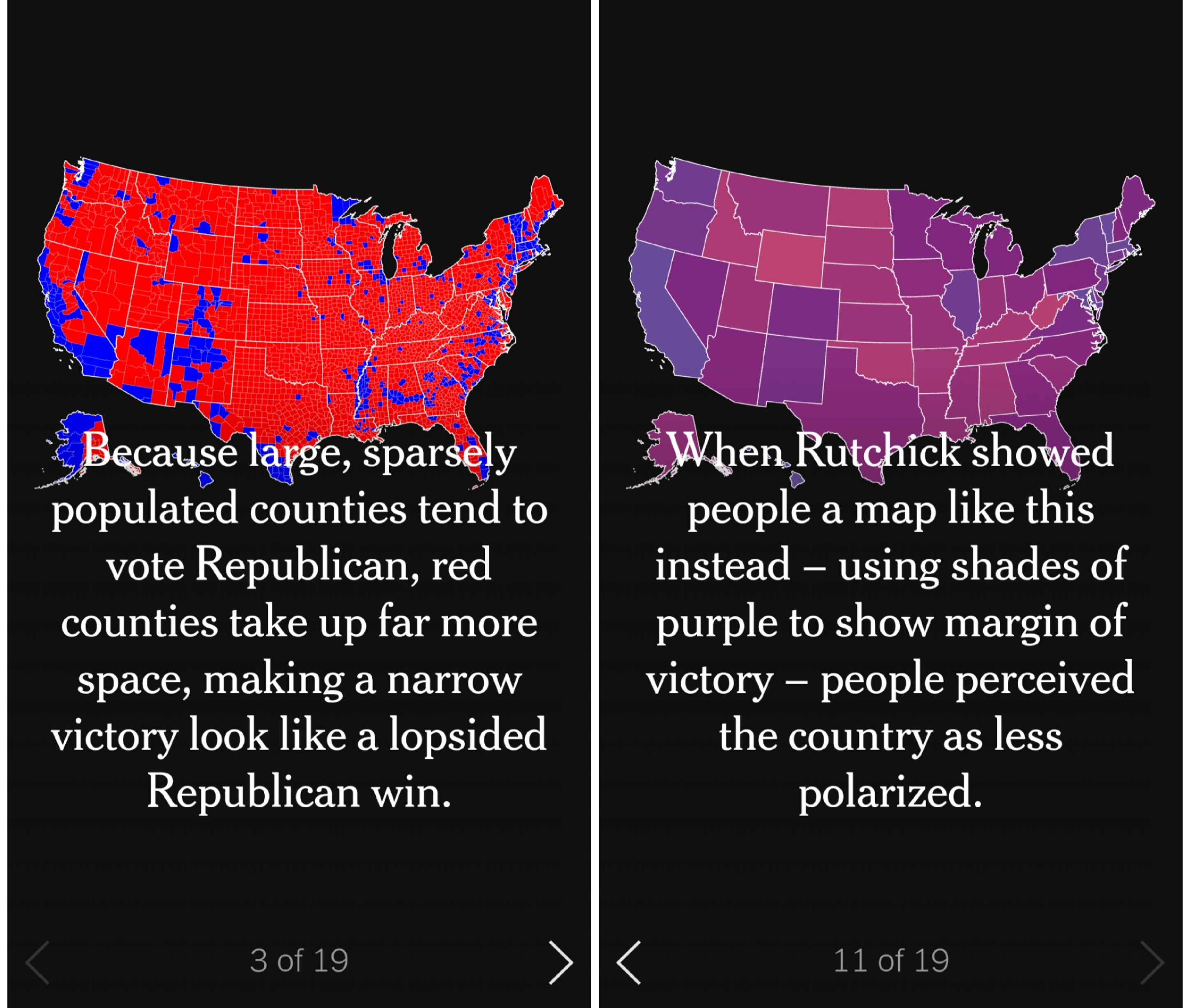
Look again at these two maps and see what you think about 51-49 democracy where if we have 51 votes you can go suck it, cuck. The 49 percent or so who voted against the GOP in Georgia (which Biden won 49.47% to 49.24%)?Fuck y’all, we got the gerrymandered state legislature and the governorship, eat it.
That said, it’s imperative to get rid of both the filibuster and the Electoral College, two anti-democratic institutions falsely claimed to be protectors of democracy. It would also be a very good idea to expand the Supreme Court to 15 or so, and to place term limits on the Justices to ensure a regular opportunity for each party to appoint successors. If those things aren’t done, the Party of the Lie will prevail, wildly successful extremist Charles Koch will continue to smile his “aw shucks” grin during his endless victory lap, and we will have a one party 51-49 suck it state here in the land of the free and the home of the brave.
And, unlike the grounds for voter suppression laws proposed in 47 states, that ain’t no lie.
Oppression is always based on a lie. Not all human lives are of equal value. Blacks, Hispanics and Muslims are inferior to Whites (and no true White can be a Muslim). An animal has no rights whatsoever, nor any real feelings, either. Jesus Christ, and His father, in their infinite mercy, intended wealthy white men to autocratically rule over everybody else, for the benefit of all. A “well-regulated militia” means every individual can own as many guns as he likes, with no regulation allowed. A fair and decisive election that even Bill Barr stated was without fraud on a scale that would change any results was “stolen”, we need to fix the laws to allow the GOP state legislatures to make the final calls in every state on which votes to throw out to ensure “election integrity”. The Civil War was not fought to defend slavery, it was purely an issue of states’ rights (to own slaves or not).
The list is endless.
Someone well-born has the God-given right to rule over the rabble, those who chose the conditions of their birth less wisely. A self-evident truth like “all men are created equal” obviously excludes natural inferiors like women, white men without land, slaves, the servant class, indigenous non-citizens, Chinese, other immigrant groups (unless they obtain sufficient wealth to make themselves equal), felons who’ve served their sentences and the rest of them.
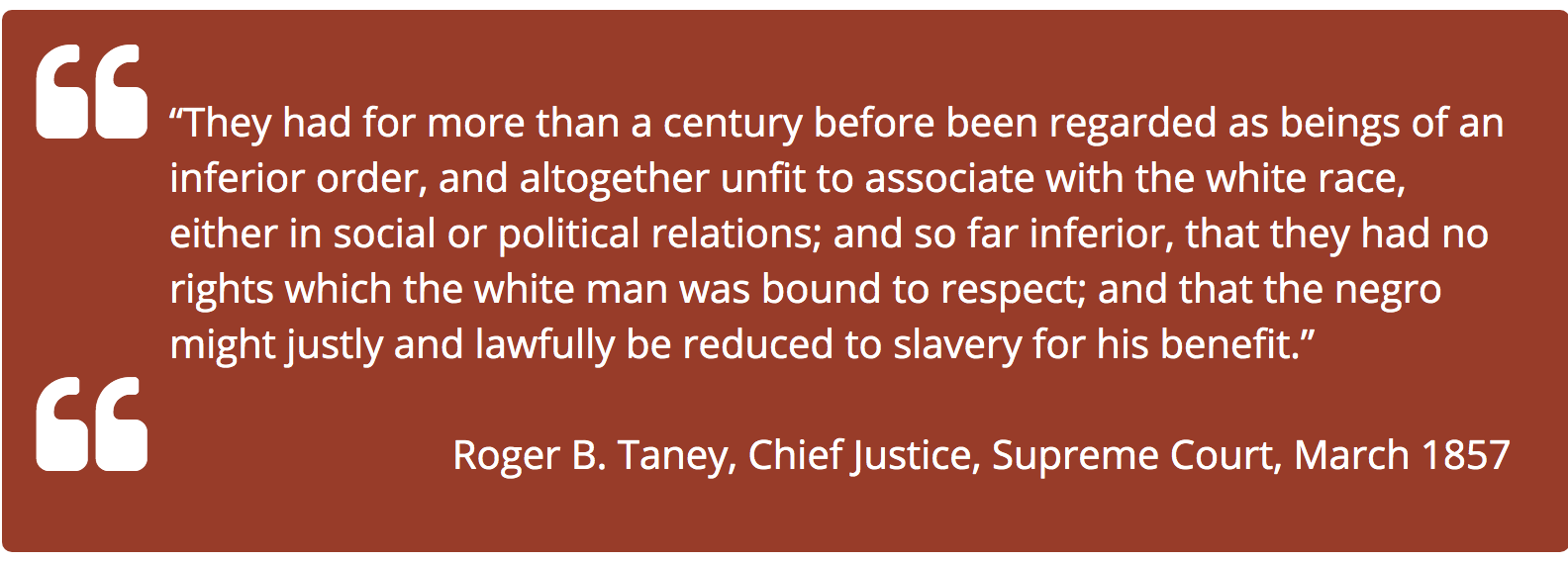
These things are so self-evident, they really go without saying. When the law is forced to say them, they sometimes do so unequivocally, as in the unappealable words of the Supreme Court: the Negro “has no rights which the white man is bound to respect.” [1]
After four fun-house years when repeated presidential lying was just doing what a solid 39% of Americans loved, what they themselves, if they had the power, would do, we have a party finally and irrevocably devoted to defending what is now routinely called The Big Lie — that the 2020 election was stolen. Because of widespread belief in this lie, you see, we need to fix laws that are not broken, to ensure that something that didn’t happen never happens again.
The Big Lie was a technique perfected and named by Hitler’s brilliant Minister of Public Enlightenment and Propaganda Joseph Goebbels. It’s a simple technique. Make an audacious lie (they get more attention and enflame more outrage than small lies) and repeat it over and over and over via the mass media. It works like magic, so seamlessly that after years of doing it, a depraved government can indulge its wildest fantasies. Why not, as millions of credulous Americans would celebrate, put Tom Hanks, Oprah, Hillary and the rest of those sick child blood drinking pedophile fucks in torture camps?
We now have one major political party, representing a solid 40% of our citizens (conservative estimate), marching in lockstep to the Big Lie. Because voting rights advocates have made great strides bringing more people to the polls, and we had a historically large turn out in 2020, during a pandemic, no less, we need new laws that would allow GOP state legislatures the final call on which votes to count in each state.
Such laws, which would ensure “election integrity” would also relieve any future Trump of the need to call individual state election officials, or fly them to Washington, to persuade them not to certify votes or to change certified vote totals. We need these laws, the GOP argues, to stop voting fraud, whether it actually happened or not, because of mass perception of widespread fraud that, tens of millions believe, led to an infernally clever, successful conspiracy to steal the election. This was an argument ambitious Lyin’ Ted Cruz made continually in the days leading up to the January 6 riot at the Capitol, so many Americans believe this baseless lie, we have to have a commission to investigate it before we allow a possibly stolen election to stand.
The 2020 election, with its historically large turn out, was miraculously clean and fair, in spite of widespread fear, and certified as such by members of both parties. This included the president’s own gunsel, one of the most powerful men in government, Bill Barr, who stated unequivocally, after railing nonstop about the danger of unverified massive voter fraud (by mail) leading up to the election, and authorizing federal investigations into suspected fraud right up to election day, that there had been no fraud anywhere on a scale that would have changed the results of the election [2].
Because of this lie, that the 2020 election was stolen, we had a riot in the Capitol to stop the certification of the Electoral College votes that Biden won by the identical “landslide” Trump won by in 2016. A riot there is now great dispute about, Republicans not supporting a full investigation into whether the president and his underlings planned and incited it, spending some $54,500,000 dollars (according to evidence produced in Trump’s second impeachment) to publicize, organize and foment it.
Republicans don’t want an investigation, because, after all, it would be so partisan and unfair, with Democrat [sic] control of the government. Can you really even call it a riot if only five people were killed, and only 140 police officers were seriously injured? The GOP resents all this kerfuffle about the so-called insurrection, this “riot”. Isn’t a riot, by definition, what Black people do? There were no Blacks in this one, among the violent antifa terrorist provocateurs posing as Trumpists, so how can it be a riot?
That is one of the terrible things about a Big Lie, or any lie you insist on, really, it leads to endless lies to support it. You have no choice, once you commit to an audacious and baseless lie, but to continually shore it up with further lies, block any inquiry that could show your lie is a lie.
It’s not even like an investigation into the cause of the January 6 “event” at the Capitol will necessarily lead us to the truth. Recall that when the 9-11 Commission finally met, after many months of stonewalling by Cheney and Bush, it had strict limits put on certain parts of its investigation. For example, when they interviewed Bush and Cheney there could be no notes taken, the two would take no oath to tell the truth, nobody could discuss anything either of them said, and nothing from that “testimony” could be included in the report. In other words, we have nothing to hide, and the power to enforce our right not to have to do so.
Trump, although its most grotesque and tireless exponent, was not the first powerful Republican (or Democratic, for that matter) compulsive liar. Trickle Down Economics, for example, the idea that giving more money to the wealthiest would immediately produce a tiny trickle of money to everybody else, was a big lie. If you give money to poor people, they spend it to buy things they need and want. If you give money to rich people, they hoard it, having no real need for the additional cash. Seems simple enough, but you repeat the idea that those who inherited $100,000,000 or more are “job creators”, that a “Death Tax” on their inherited fortunes unfairly penalizes those same people, and, in time, you can convince enough people to have your way.
As always, Heather Cox Richardson has a great analysis, this time of the current tug of war between voting rights activists, Big Business and the GOP on the final outcome of Trump’s last, greatest, most lucrative [3] Big Lie. Here you go, Heather for the bigger picture.
Barr, of course, his heroic efforts on behalf of Trump during his historically unjust and partisan stewardship of the Department of Justice aside, is now widely regarded by Trumpists as a disgrace who lacked the courage, like cowardly traitor Mike Pence, to do what was needed to keep their president in office. Finally, something we can all agree on in this brutally divided nation, Bill Barr is a disgrace.
[3]
Trump has raked in something like a half a billion in donations based on this Big Lie, the number was about $207,500,000, as of November 23, as the Rupert Murdoch-owned right-wing Wall Street Journal reported on his Big Lie-based fundraising on December 3, 2020, using the election lie to fleece both his sucker followers (they’d love him even more if he shot somebody in the face on Fifth Avenue and skull-fucked the corpse with his unimaginably gigantic member) and the usual mega-wealthy Betsy DeVos-style true believer cynics who fund right-wing crusades ofall kinds.
I came across this article searching, unsuccessfully so far, for how many tens of millions of dollars Trump/RNC spent on their more than 250 lawsuits attempting to limit voter access prior to the 2020 election and the 60 or so claiming fraud and illegality that it lost after the election.
This is from Rupert Murdoch’s WSJ December 3 account:
President Trump’s campaign and the Republican National Committee have raised more than $207.5 million in the weeks since Election Day, his campaign said Thursday, as their claims of voting fraud have generated a financial windfall that could be deployed in future political ventures.
Despite an aggressive legal effort by the president’s attorneys in many states, there has been no evidence of widespread fraud and numerous federal and state officials have disputed the campaign’s fraud claims.
The size of the postelection fundraising haul between Nov. 4 and Nov. 23 is unprecedented for a losing candidate, much less an outgoing president. The fundraising total ensures Mr. Trump will have a considerable war chest at his disposal as a major figure in the Republican Party, especially as he contemplates a second White House bid.
Trump’s party, as measured, principled and intelligent as Trump himself, has consistently attacked the safety precautions of wearing masks and keeping social distance during the pandemic. They phrase it as an issue of freedom from tyranny, like the unlimited constitutional freedom from any regulation of guns. Republican state governments have pushed back hard against these common sense safety measures, calling them everything from tyranny, to unconstitutional, to communist, to Nazi, to Satanist. The Trump plan (such as there was any plan) was to develop a vaccine at warp speed, everybody would be inoculated, “herd mentality” would be achieved and the pandemic would be over. Until Biden succeeded in stealing the election from Trump, with the connivance of many, many traitorous Republicans. Now the vaccine Trump took full credit for is part of the enemy narrative.
If you have been fully vaccinated there is a much lower risk of spreading the infection, particularly to others who’ve been vaccinated. There is a proposal to have some kind of Vaccine Passport you can show to prove you present limited danger in a restaurant, a movie theatre, a tattoo parlor. People can return to these places confident that they will not get deathly ill or make anyone else deathly ill (it seems). Other countries, including our staunch ally Israel, have done this and it seems to make sense, it moves the economy back toward normalcy while protecting the most vulnerable.
But not so fast, though.
Republican talking heads are addressing their audience with a consistent message that the Vaccine Passport is unconstitutional, an “unprecedented power grab”, “literally the end of human liberty in the west”, and an “unprecedented threat to our freedom”. One of the most extreme of the anti-blood drinking caucus have even stronger words for this Satanist, Nazi-like intrusion on American freedom. Marjorie Taylor Green, always good for an incendiary quote, had two: “Biden’s mark of the beast” and “corporate communism.”
Corporate communism, yo.That’s pretty deep.
The far-right Trumpist governor of South Dakota, Kristi Noem, tweeted this “@joebiden #CovidPassport proposal is one of the most un [sic] American ideas in our nation’s history”. At the same time Noem supports the immunization of South Dakota school kids, and requiring proof of vaccination before they can attend a South Dakota school.
You will look in vain for consistency or coherence in the angry catering to inflamed grievance (even fake grievance like widespread “voter fraud” and a Stolen Election, and the outrage of wealthy pedophiles, like Tom Hanks, drinking children’s blood.) The whole Roger Stone/Trump/Roy Cohn/Bill Barr/Charles Koch game is keeping your base in a constant rage. The GOP are doing an excellent job, even if it appears at times quite desperate.
I’m wondering how stupid and/or cynical Joe Manchin, Kyrsten Sinema and a few other, more quiet, Democratic “moderates” actually are. They believe bipartisan legislation is possible with a group who continues to reject science, fact, videotape, testimony and every other form of proof that cut against their wild statements. I realize the politics are complicated for Manchin, whose state voted for Trumpie by 70 points in 2020 — but, seriously, what the fucking fuck? Nazis who scream that other people are Nazis are about the last people you can negotiate with, are they not?
Little Girl, the cat who was closest to her mother Mama Kitten (the two of them hung out in the driveway, shaking us down for treats whenever we appeared there, hence “the driveway bitches”), appeared for a few weeks to be succumbing to the same thing that killed her mother a few months ago.She was increasingly withdrawn, weak, unsteady on her legs, didn’t have much of an appetite and very little energy.I wrote about the poor devil’s struggle to survive on March 10.
Since then, starting a couple of weeks ago, she seems to have had a complete recovery. Here she is in the back of the garden, up to one of her old tricks:
This one hits me deep in my childhood — a furious reaction to anger. What do we learn from this lesson? The larger, more powerful party has the right to anger– you fucking don’t.
Anyone who has been hurt by someone they trusted has a right to be angry. The party who hurt them might be able to reassure them afterwards, placate them, apologize, make things right, but that is not the usual course of things — in my experience. An angry reaction seems to cause defensiveness and even more anger in most cases. Then it is a pure, adrenalized struggle for who will prevail in their right to be angry. This struggle is generally “won” by the more violent party, as when peaceful, shouting protesters against police violence are met with the overwhelming force of militarized anti-riot police violently dispersing them. Anger is explosive, your anger can ignite the adrenalized rage of someone who can bludgeon or even kill you to carry out their oath to protect the peace. You got a problem with that?
The defense in the Derek Chauvin murder trial has a very hard job. They need to convince somebody on the jury that Chauvin acted correctly when he kept his knee on the neck and back of a handcuffed man long enough for the prone man to lose consciousness, after the man pleaded for his life for seven agonizing minutes, and who kept the pressure up once the man stopped moving, then didn’t allow the dying man to receive medical attention. On the other hand, the defense only needs to convince one juror.
How do you do show that Chauvin acted correctly, according to his police training, when his actions seemingly killed a subdued misdemeanor suspect? By showing it wasn’t his fault, that things got out of hand, as well as by establishing arguably reasonable expert witness introduced doubt about whether Chauvin’s seemingly depraved actions contributed substantially to his victim’s death.
To show George Floyd’s death was not Chauvin’s fault, the defense needs to pin the blame on somebody else. In this case, a crowd of random bystanders, who were angry and abusive, and threatening, yeah, they were menacing, they refused to disperse when they were told the slow, torture death of yet another unarmed Black man was NOTHING TO SEE. Chauvin’s colleagues, who will be tried separately for their roles in killing a handcuffed civilian, prevented anyone in the crowd from intervening, prevented CPR on the seemingly lifeless man who was probably already dead on the street. The story their lawyers need need to sell is that the police feared for their lives, feared violence from an angry mob that gathered and surrounded them, and because of that reasonable fear, may have made innocent mistakes.
Leave aside the obvious fact that the police had the guns, the police had the ability to arrest people, call in reinforcements, helicopters and every manner of militarized support. But the angry crowd had them so rattled, you understand, that they didn’t realize they were actually killing the big handcuffed guy who had stopped breathing after they kneeled on him long enough. And as for the victim, he died of other causes unrelated to having the air supply to his heart and brain constricted for nine minutes and twenty-nine seconds. All you have to do, if you’re the defense, is establish a little doubt in the mind of a couple of jurors, even one.
If anyone had the right to be angry, the defense could argue, it’s Chauvin and his colleagues who were being disrespected by this irrationally angry, abusive crowd as they merely performed their duties the way they’d been taught to in the academy.
It reminds me of that bagpiping piece of shit Bill Barr’s smugness in continually blaming, and provoking, victims and protesters for their anger over regular “justified” police killings of unarmed citizens. It reminds me of anyone who provokes, out of their own rage, and blames the victim for being so fucking angry.
It reminds me of my own dear mother, shaking me by the shoulders when I was small, snarling “what did anybody ever do to you to make you so fucking angry?!” If I’d had the presence of mind as a kid, I’d have said “I don’t know, mom, maybe it’s my mother angrily shaking the shit out of me and demanding to know what I was so angry about?”
“She never laid a hand on you, you lying prick,” says the skeleton of my father. And as the doors open, I hop off this train, it’s become a bit stuffy in this car.
Senior critic-at-large March 30, 2021 at 7:14 p.m.
The witness Donald Williams was trained in mixed martial arts. He had experience working in security — and alongside police officers — and handling potentially unruly crowds. He also described himself as an entrepreneur and a father. But during his hours of testimony over two days in the trial of Derek Chauvin, the former Minneapolis police officer who is charged in the death of George Floyd, there is one thing that Williams made clear he was not: an angry Black man.
That he could not afford to be. He was not allowed to be. He could cry for Floyd. He could despair for him. But he was not supposed to be angry, even if that was what Floyd’s death demanded.
Defense attorney Eric Nelson has made anger central to his argument for Chauvin’s acquittal. In his version of events, the anger of the growing crowd on the street that May afternoon distracted Chauvin from the man he had pinned under his knee. Floyd, who had been accused of circulating a counterfeit $20 bill, was in Chauvin’s custody, which meant that he was also in his care. But the crowd — that dangerous, unruly mob, according to Nelson — had distracted Chauvin so that he could not attend to Floyd’s well-being. He could only concern himself with his detainment.
To that end, according to several witnesses, including Williams, the White police officer adjusted his knee to apply more pressure, to ensure that Floyd’s Black body remained immobile — until his immobility turned into unconsciousness.
The defense’s narrative makes use of one of the culture’s most damaging and enduring stereotypes about Black men — and women, too. These people ooze anger, and Black anger is inherently menacing. It isn’t justified or understandable or controlled, even when it is all of those things. It most certainly is not righteous. And when it rises, it must be tamped down, defused and crushed.
Nelson, bespectacled and bearded, and with an affinity for florid neckwear, worked hard to have the jury see Williams as enraged — as a man who was yelling at Chauvin and threatening fellow officers. Nelson detailed the many expletives and insults that Williams directed at Chauvin. He portrayed Williams as a man who was advancing toward the police with his chest thrust forward and spoiling for a fight
“It’s fair to say you grew angrier and angrier?” Nelson asked.
“I grew professional and professional. I stayed in my body,” Williams replied. “You can’t paint me out to be angry.”
Williams said he was speaking loudly so that he could be heard, so that he wouldn’t be ignored. He was imploring Chauvin to relent. He was calling Chauvin a bum and lacing his speech with expletives because the situation was too dire for polite conversation. Derek Chauvin’s defense team said on March 30 that Donald Williams, a witness, grew so angry at police that he wanted to fight them.
What Williams saw was, on its face, enraging. He had happened upon the sight of Floyd facedown on the ground with Chauvin on top of him for more than nine minutes. He heard Floyd cry for help and cry out for air. A young bystander saw him turn “purple” and described him as looking “really limp.” Kids saw this horror. Children. The gathered crowd all watched as their pleas to render aid to Floyd went ignored.
Anger is surely the natural human reaction, along with alarm and concern, but Nelson has characterized that as a wholly unnatural response to Floyd’s dire circumstances, as if he was not worthy of any of those emotions. Should the crowd simply have stood silent?
History would probably have excused their anger. So many other people of color — unarmed and stopped for minor offenses or for nothing at all — have died during encounters with police officers. They have been deprived of air, riddled with bullets; they’ve been killed without consequences because their death was deemed reasonable. When does fury become moral and decent if not in the face of all that?
Williams seemed to understand the perilousness of leading with anger. He refused to let it be his abiding message on Tuesday afternoon in a Minneapolis courtroom as Nelson tested him. No, his words weren’t getting angrier that awful day in May, he said, “they grew more and more pleading — for life.”
Williams was so alarmed by what was unfolding before him that he even called 911. He called the police on the police because he had not given up on law enforcement. He still had faith that they had the capacity to protect and to serve. He trusted in their outrage even if society demands that he deny his own.
The phrase resonated. “I stayed in my body.” Williams remained in control. He maintained focus. He was attuned to his movements and gestures. He didn’t let emotions take hold. He didn’t relinquish his soul.
As he spoke from the witness stand, Williams’s deep voice rumbled from a body that was both solid and still. On his second day of testimony, he wore an open-collared dress shirt in a sea-foam green. His hair was cut close. He didn’t fidget or appear nervous. He didn’t look imposing, but he often looked perplexed.
When Nelson questioned his emotions, pressed him about the expletives he’d used and took a sharp tone, Williams cocked his head sideways and furrowed his brow. Then a slight smile flashed across his face.
Williams did not display a hint of fury. Outrage can be a burden, but it can also be a source of power. If Williams had any anger, he was keeping it in reserve.
Robin Givhan is senior critic-at-large writing about politics, race and the arts. A 2006 Pulitzer Prize winner for criticism, Givhan has also worked at Newsweek/Daily Beast, Vogue magazine and the Detroit Free Press.Follow
There’s a rhetorical question for you. If a guy lies to you, truly believing he is not lying, is that really a lie? Here’s another way of thinking of it: does an unintentional hard knee to the privates hurt?
The law, a problematic beast at best, has an intent requirement for many crimes. If you don’t have the required malicious intent to cause harm, you are not, under these laws, held responsible for committing a crime or even a tort. Malice has a strict legal definition, which comes in several varieties, express malice, malice aforethought, implied malice, etc. most of which boil down to the deliberate, intentional infliction of illegal or tortious harm. An act done knowingly (or in some cases just recklessly) to harm another, without just cause or excuse, constitutes legal malice.
When I complained of malice in the hard-heartedness of a lawyer friend’s increasingly aggravating responses to my aggravation, he told me that it plainly was not the case — he neither felt nor expressed malice, merely his opinion of the facts on the table as he understood them. Therefore, by the legal definition of malice, the definition he assumed I was referring to, with its requirement of no just cause or excuse, it was impossible that he had acted with malice, since he had, alternatively, no intent to cause me harm, nor (he added, subsilentio), lack of just cause or excuse if he had, unintentionally, caused such harm.
This is what comes of arguing with a lawyer, trained to parry and thrust whenever presented with even a straightforward assertion — to be “malice” it all hinges on the strict definition of intent or lack of just cause or excuse, doesn’t it?
I had to resort to other words to describe his unsympathetic stance: ill will, spite, hostility, for as the law notes:
malice in law :implied malice in this entry 2: feelings of ill will, spite, or revenge
NOTE: Such feelings are usually not an important component of malice in legal consideration unless punitive damages or actual malice is an issue.
In the ordinary use of the word malice, among non-lawyers, it is interchangeable with “ill will”, its synonyms are spite, malevolence, animosity, hostility, bitterness, rancor, enmity.
“Yes,” says the lawyer calmly, “but don’t all of these things require an intention to cause harm? If I am accidentally bitter, or arguably hostile, or seemingly spiteful, in your subjective estimation, how can you fault me for that? Accident negates will– there can be no ‘ill will’ without an intentional act of will, as you will have to admit, if you’re being honest. Since any harm I may have caused was purely unintentional and inadvertent, what are you complaining about?”
Might as well argue with a tumor.
This “intent” business is where the law gets sticky. An ordinary person assumes that a powerful man who lies over and over about a stolen election, spends $50,000,000 for media advertising of that deliberate lie, organizes a Stop the Steal rally (at a cost of $4,500,000) on the day the election results are being certified, shows an inflammatory two minute video about widespread voter fraud committed by riotous haters of American freedom, before speaking at length about the many detailed lies he’s already told, (the 205,000 corpses voting in Fulton County, to take just one), who repeatedly tells his crowd that they are the victims of a stolen election and that they have one last chance to fight like hell to stop it — I mean, once you’ve done all that, and a violent riot erupts, the most passionate of your crowd storming and ransacking the Capitol to Stop the Steal — it would seem to the ordinary person that you have set out everything needed to prove this fellow is responsible for the insurrection.
The law, however, often imposes a higher bar than common sense about what seems to be clear cause and effect. It often requires proving the subjective intent of the alleged perpetrator, a deliberate course of conduct, knowing that he was lying, and lying to deliberately bring about the foreseeable result his actions caused. Without this kind of legal rigor … well, you just have mob rule (says the law).
Similarly, when the same guy called the Secretary of State of Georgia and tried to convince him and his lawyer to throw out almost 12,000 ballots with arguments like “fellas, I’m talking about 11,780 votes here, give me a break…” to establish that he violated Georgia law about soliciting interference in an election we must prove that he intended to solicit that illegal interference. What if he did it by accident, truly believing that the 11,780 votes he wanted thrown out had really been cast fraudulently?
I went to law school, passed the bar exams of two states, practiced law for years, and I still have a hard time getting my brain around this shit. In the case of the Georgia law, it’s as if Trump ran his finger down the text of the law while he was trying to convince the Georgia Secretary of State to throw out results that had been recounted and certified three times, and made sure to violate every provision of the law. He went down the list: solicit, cajole, threaten, promise, influence, check! making sure to explicitly violate each provision and every iteration of the crime.
It may be, after the grand jury is done hearing the evidence, that he will be indicted, tried and convicted under this law, which has a mandatory two year prison sentence. I would not be unhappy to see this result, though millions might be, literally, up in arms about their leader being unfairly witch hunted this way.
The same goes for repeated lies about the totally non-threatening love fest at the Capitol on January 6. Cops beaten by the mob? That cop who lost an eye? The one killed? The many videos of anti-police violence? All irrelevant and very misleading, the protesters were peacefully expressing their first amendment rights (unfortunately deprived of their second amendment ones) and the far less than 200 seriously injured that day were injured by over-enthusiastic hugging and kissing. Hugging and kissing, you merciless motherfuckers! Now, prove I KNEW I was lying, asshole! [1].
Ignorance of the law is no excuse, as every school child learns. Just because you don’t know it’s illegal to do X doesn’t mean you won’t be held responsible for violating the law. Unless, of course, you retain diligent, skillful counsel who can create a reasonable doubt about whether you had the required mental state to have committed the crime. Slander, libel, defamation? No worries, if we can show you honestly believed the lies you were telling were true (no malice!).
Does this make sense to you, kid?
As I tap at the keyboard they’ve wrapped up the second day of the trial of Derrick Chauvin, the former police officer who, for 9 minutes and 29 seconds, kneeled on the neck and back of the handcuffed George Floyd, who pleaded for his life until he lost consciousness, while Chauvin continued to keep his knee on Floyd’s neck, long after he was motionless and silent.
The defense is making arguments, as defense attorneys are paid to do, which hinge on this violent constriction of Floyd’s blood and air flow not being what actually killed Floyd. The defense claims he died of a heart attack, caused by adrenaline and the illegal drugs he had in his system at the time of his death. Nothing to do with being pressed to the ground by a large man with his knees on his neck and back until he stopped breathing. Nothing whatsoever. Chauvin was afraid, because a large, hostile crowd was intimidating him. And so on.
It could work. It doesn’t take much to convince one or two in the jury of a plausible sounding excuse, based on actual selected facts. Hmmm. Coroner found fentanyl in his system, he’d been resisting arrest for a misdemeanor (allegedly passing a counterfeit twenty) so there’s the adrenaline, had a bad heart, big as he was, he couldn’t take somebody kneeling on him for eight or nine minutes — he freaked out and died of heart failure. Nobody’s fault, the tragedy, except perhaps the dead guy, who put everybody through all this pain…
Notice, no lying whatsoever required, just reframing. It wasn’t the continued knee on his neck that killed him, with the weight of a grown man behind it — it was a bunch of other things. Not murder, just a fucking tragedy. Not manslaughter, just a cop doing his difficult job under terrible circumstances, with a bunch of unfriendly natives angrily hassling him and mercilessly making videos of him in the course of his official duties. Chauvin didn’t kill George Floyd, George Floyd’s bad choices killed George Floyd.
Sometimes a lie is neither intentional nor unintentional, sometimes shit just happens when people are doing their jobs and we have to make sense of it the best we can. Or maybe we are lying to ourselves that we are not lying. Who’s to say?

 gratuitousblahg