Hiding the truth

Every shameful practice, done by individuals or governments, is generally denied, hidden, explained away, recast as something else, blamed on “leakers” and vicious disloyalty. Often the exact opposite of what actually happened is promoted as the true story. This new false story can become a galvanizing battle cry, or the last stand of personal integrity (by the liar).

“Remember the Alamo!” is a great battle cry from American history, it mobilized the nation to fight a war against tyranny. In that story two hundred brave freedom loving Americans made a valiant stand, outnumbered ten to one by the Mexican tyrant’s army, and fought to the last man (except for Davy Crockett, who surrendered and was later barbarously executed by the Mexicans). The Americans who died at the Alamo mission became martyrs for the cause of a war against Mexico to conquer and seize a giant tract of Mexican land for the United States.

The real story of what actually led up to the doomed stand-off at the Alamo is a bit different from the myth. Americans were allowed by Mexico to settle in the northern Mexican area known as Texas. Mexico liked having a buffer against hostile Indian tribes, the Americans liked free land. They brought slaves, grew cotton, grew wealthy, everything was fine. Until 1830 when Mexico outlawed slavery. Americans reacted violently to this outrage against freedom. You see how this is going?

A full-blown war with Mexico a decade or so later, to the rallying cry of “Remember the Alamo!”, territory seized for the USA, slavery continues in Texas, Texas secedes from the union 15 years later and Texans fight the US government in their glorious ongoing campaign for freedom and human dignity.

I once loaned a guy a large sum of money, a short term loan he promised to repay within days. He didn’t pay it back, as promised, and I pressed him, by then needing the money myself. Unknown to me was that he’d borrowed money from all of his friends (most soon to become former friends), including a very wealthy guy I knew well. He explained that the rich guy insisted on being paid back first, and that he was working his way down the list, to me. I told him I’d talk to the rich guy, explain that I needed to be repaid before him. I was pretty sure the wealthy guy would understand my situation (it turned out he didn’t, being a wealthy guy).

The reaction of the guy who owed me the money should have told me the whole story about him. “I can’t believe you’d be such a rat, such a fucking pussy, to embarrass me like that. You have no respect for privacy, you have no character. What a fucking whiner you are. Do not talk to him about this, it’s between you and me. If you tell him, if you betray my trust, I’ll be really pissed off.”

Years later he would max out his dead father’s credit cards for cash, bringing his wife his “pay” every week, pretending for a year to be going to work every morning when he was actually living off his dead father’s credit cards. As you can imagine, he made every attempt to hide his scam, make it look like he was actually working. When it was discovered by his wife, he had many incoherent reasons for his criminality.

A true story can be talked about, learned from. A fake story, or a buried story, is a dead end. The details of what actually happened can be discussed and the issues they raise can be resolved. The details of a myth that never remotely happened lead only to ignorant opinions and stupid decisions based on the need to keep telling the lie.

Every abuser tells his victim a story that shifts blame from himself to the person abused. “If you didn’t have such a big fucking mouth, I wouldn’t have to shut it for you.” “You want to blame me, but you should look at your own infuriating behavior, then you’ll see who’s really at fault” and so on. As long as the true details of exactly what happened are never discussed, as long as I don’t mention an inconvenient detail like you bloodied my head with a stick because you flew into a rage, we don’t have a problem. “How is it my fault that you fell down and hit yourself in the face with the ground six or seven times? Fucking grow up…”

So we have pugnacious culture warriors, the Bill Barr types (fuck that fucking bagpiping fucking windbag), who smugly insist that angry blacks have nothing to be angry or even upset about, that statistically more unarmed whites than blacks are killed every year by cops, only a small handful of unarmed blacks are killed by police anyway, and whatever other freshly pulled out of the ass talking points his type can spout. “Why talk about police violence against those murderous fucking savages when they’re killing each other like the fucking animals they are? Let’s be honest, isn’t the real problem Blacks?”

In the telling of this type, American history has been one long, unblemished march toward a more perfect nation, based on the unalienable human rights to life, liberty and the pursuit of wealth. To them a simple answer suffices for all the carping, unAmerican critics of how we, as a nation, conduct, and have conducted, ourselves. The self-evident truth that “all men are created equal” should be the end of this Communist propaganda about a country that supposedly oppressed Blacks (it was the Democrats!), making racist laws for a century after the end of slavery that shamed even Mr. Hitler’s top lawyers, slaughtered indigenous people (they attacked us first!), villainized immigrants (dirty!) marginalized women (“all MEN are created equal, duh!”) fought a series of wars on the shakiest of grounds (freedom on the march!), etc.

Now we have non-profit “think tanks”, funded by a handful of right wing billionaires, who, in order to mainstream a narrative more friendly to them, write model legislation to make history denial enforceable by law. If teachers are critical of some of the counterfactual claims of America’s most powerful, well, maybe those teachers shouldn’t be working with young people. Slavery ended 156 years ago, why are we still talking about slavery? The Nazis were defeated 76 years ago, why are we still talking about Nazism? Hitler wasn’t all bad anyway, he had a great economic plan while he was getting the German war economy up and running again, he was a brilliant job creator. Sure, he may have killed a few too many Jews, but look at them… they hated Hitler without mercy…

Now we read that wealthy right wingers, who are furious that the tax records of their fellow billionaires — showing many pay virtually no income tax– were illegally “leaked.” The scandal is not the often legal tax avoidance of the very wealthy and corporations, the scandal is that some piece of shit made it public. You cannot raise taxes on the rich. You also can’t give more money to the IRS for enforcement, to catch wealthy tax cheats and put more money into the public coffers because… that’s Communism, and partisan, racist fuckery, and… uh, it’s unAmerican to start witch hunts against innocent job creators, philanthropists, the best of the best… and… uh… [1]

The main thing is, if you have a story that makes you look bad, rewrite that shit to make yourself look good. The only alternative is the things you have carefully hidden coming to light, inducing shame, and anger, even violence (not to mention accountability, God forbid!), and who needs any of that shit?

Investigators who looked into the use of federal force against peaceful protesters right before Trump’s photo op at the church didn’t interview the man who ordered the use of force.
Nothing to fucking see here!

[1] from accursed Jeff Bezos’s mouthpiece:

Over the past decade, persistent budget cuts have hurt the IRS’s ability to conduct audits, including those targeting wealthy and large corporations. Tax experts have expressed alarm that the weakening of the IRS has helped fuel the increase in U.S. income inequality, in part because the rich have more tools to dodge the increasingly weak tax collection agency . . .

. . . “Reports of increased audits, enforcement and reporting requirements raise red flags with our members,” Kuhlman said. “We would urge and encourage instead increased compliance assistance, better customer service and remedying the processing delays.” . . .

. . . The groups leading the opposition to the IRS budget increase include those that have received funds from major conservative donors, including the Mercer Family Foundation, the Sarah Scaife Foundation and Donors Trust, a donor-advised fund that gives to conservative and libertarian causes. One signatory of the letter, Phil Kerpen of American Commitment, worked for five years at Americans for Prosperity, the main political arm of the influential Koch network.

source

The Educated Voter

We recently had a primary in New York City for mayor, several district attorneys (including the one that will almost certainly be prosecuting Trump, Inc.), public advocate, comptroller and a few other positions. In a moment when democracy is under ruthless attack, on the ropes, face swollen, one puffy eye closed, a mix of snot and blood dripping out of the nose, we New York voters had very little information on the individual candidates we were asked to choose between.

The few debates were not super enlightening, articles of substance about the candidates were hard to find. There was a flood of large format, glossy, paid advertising from the candidates, choking the old mailbox. Some of the material contained things that ruled out a given candidate, like the endorsement of a certain well-known Nazi-type, but the rest of the Democratic candidates all sounded like true champions of equality, justice and decency.

As always in the primaries, you take your best shot at voting for a candidate that seems to represent your views, knowing that almost certainly you will get some corporately selected piece of shit to hold your nose and vote for in the actual election, even in an anarchist jurisdiction like New York City. Politics, as we know, is a nasty business, driven by expensive advertising, largely attack ads stirring up fear and loathing and let the best brand marketing win!

The lack of information continues. The last update on the close, important Manhattan DA race was four days ago when 83.9% of the precincts reported the day after of the primary and the top two candidates were separated by less than four percent, the margin of error. One of the two has already said she will not recuse herself from any investigation involving her big campaign donors and wealthy close friends. What could go wrong?

A digression, one of the candidates in these primaries was my best friend from kindergarten, a guy I have only seen once since then, some time in first grade when our mothers arranged a surprise play date. My mother and I walked up the hill from the turnpike and there was a woman and a boy in the distance, near our house. When we recognized each other (he must have known what he was there for, he was standing in front of my house) we began to run toward each other, like in romantic, slow motion commercial from back in the day, hugged and started laughing. The guy was attending a yeshiva, I was still in our old school. His mother, who turns out to still be alive (at 95, I think) and a Cuban Jew, made the first meat sauce I’d ever tasted. Man, it was delicious over spaghetti. My mother began making it after that and to this day, when Sekhnet’s tomatoes are ripe, I make it with vegetarian “meat” [1]. Thanks to rank-choice voting I was able to vote for my old buddy, though he wasn’t my first choice, based on what I could make out of his positions.

I keep thinking, and writing, as though the facts of the case are really the central deal, that most voters actually care, spend the time to learn about the candidates and use the best information they can get to make an informed choice, select the best people for elected office.

If it was not clear before now, it is now perfectly clear — in the war of whipped up emotions vs. dry, fact-based intellect, passion wins over any form of logic. In politics, in advertising, in the world as we know it. As Mr. Hitler clearly, and approvingly, set out in his otherwise rabidly raving Mein Kampf, a lie works best when it is bold, infuriating and repeated over and over. When a Big Lie is exposed as a total fabrication designed to enrage people, call the fucking liars who exposed it the ACTUAL BIG LIARS, their lie about the lie is the BIG Lie — call for their execution!

We recently had a president who, weeks before the election, secretly paid off two women to dummy up about sex the NY Times characteristically notes they “allegedly” had with the guy. You always pay $130,000 for a non-disclosure agreement for someone who alleges to have had extra-marital sex with you, why wouldn’t you? It’s just standard caution, especially for a politician. Then, also right before the election, his fraudulent “university” was shut down, a tiny, pennies on the dollar, $25,000,000 settlement paid out to defrauded students in NY, with no admission of wrongdoing. (Also, once he was president, his fraudulent charity was shut down, for illegal expenditures of charitable contributions, but, you know, seriously, who among us hasn’t had a fraudulent charity shut down?).

We’ll give him a pass on whether there was anything fishy (or illegal) about 140 known contacts (collusion, sure, chargeable criminal conspiracy? insufficient evidence found) between his campaign and a hostile foreign government. This hostile foreign power openly favored him and released information intended to damage his already hated opponent at key strategic moments (“Grab ’em by the pussy” meet “Hillary’s fucking emails!!!”). We’ll pretend he was exonerated by Mueller for obstruction of justice as well, that his attempts to change the results of an election he lost were just what any real winner does when people say he lost, that it’s normal for a competitive white man to send a violent mob to disrupt the final certification of an election that infuriated him, an election he actually won “in a landslide”.

Ordinarily payments by an adulterer to silence paid sex partners, a finding that your “university” was a fraud, as well as your charity, would be enough to do a certain amount of damage to your candidacy. Yes, it was the perfect storm in 2016, the most hated (though exciting) man in American politics running an aggressive, sometimes ugly, campaign against the most hated (though competent) woman in American politics. A plague on both of their houses, and we are stuck with the bill.

And still I sit here, virtually every day, after reading, listening to a few podcasts, watching a few people I respect in the media, trying to coherently set out the details of what is going on around us, as if coherence is even still a thing in America.

Many people I know feel this practice of mine is a form of masochism, since there is so little you can do about any of it, why keep feeding on the toxic details? We know what the GOP has finally become, the radical, anti-democratic party of obstruction of government. We know the despicable, unprincipled players well, Mitch, McCarthy, Lyin’ Ted, Lindsey, et al, a pack of craven, cynical shitbirds stinking to the heavens. Does it surprise us on Wednesday when they confidently say the opposite of what they said Monday? When they make a solemn vow in 2016 that they break, without consequence or remorse, when the time comes to do the opposite? Are we sad, and sickened? Sure, about 60% of us are.

I like to think we are not doomed, not hostages to those whose enflamed passions will not allow them to look at the larger picture, ratchet down the rage and help us all attend to the massive problems we all face. I prefer to believe that most of us are inherently decent people, no matter how many millions might be easily misled. Most people don’t like liars, crooks, smug, provocative pussy grabbers. We need to keep our focus, and not look away, there is a lot of work ahead if we’re to save ourselves from the worst of us.

The earth is on fire, under water, rocked and ravaged at every turn. There is massive poverty, even in the richest nations on earth, particularly in ours. People still die because they can’t afford the medical treatments that routinely save and extend the lives of wealthy people. Citizens in some areas can’t drink their lead-infused drinking water without taking dire health risks. Our military veterans, “thank you for your service”, kill themselves at a rate of 600 a month. People die every day because police claim they are rightfully in fear of their lives, even when the person they are afraid of is handcuffed and lying face down on the pavement. Women, will you ever get the Equal Rights Amendment added to the fucking constitution?

Like I said, I like to think we are not doomed, pretend that my own doom is likely not a done deal. It is our privilege to be optimistic, to look at the worst and see the possibility of a better outcome, until all of our privileges, and our breath itself, are revoked. And if they are revoked tomorrow, let us live today with a full appreciation of this miraculous beauty and our great potential for goodness, in the face of the ugly as the worst sin you can imagine.

what?

[1]

To make it with meat, add chopped fake meat (or the real stuff, if you insist) to the skillet when you are caramelizing the onions, garlic and peppers/carrots. You want to sear it a bit (brown it, as my mother would say), before you add the tomatoes and start cooking it into sauce. This gives the sauce maximum deliciousness. The simple recipe is here.

The Wisdom of Optimism

It is a good practice, menacing worst case scenario looming, to delay worrying until you know there is something concrete to worry about, a fateful choice is in front of you and you must do something. Speculative worry is draining and unhealthy. The trick, of course, is how to remain optimistic in the face of news that is legitimately scary.

During my miserable, subsistence lawyering years, I frequently stood in the broken, smelly shoes of some of the most vulnerable New Yorkers, trying to stop their evictions into homelessness. Back then the threat of merely losing your home did not trigger any kind of automatic legal representation (on the theory that “jeopardy” for constitutional right of counsel purposes only attaches if you face a year or more in prison) so Housing Court judges began appointing lawyers as Guardians ad Litem (protectors for the litigation.) I served in this largely thankless capacity many times over the years.

Understandably, many impoverished tenants facing eviction, and the terrors of life on the cruel streets, particularly those tenants the judge found “inadequately able to represent themselves in court,” were terrified every time they had to come to court. My job was to delay the Housing Court proceeding until I could get an agency to fix the problem that the landlord was citing to evict the tenant. I was often in court five or ten times for a single case before it could be resolved. The landlord’s attorneys knew the drill, and most of them worked with me without complaint. The tenants were often, for obvious reasons, in terror the whole time. A big part of my job was reassuring them and trying to convince them not to be terrified.

“I know it’s scary to be in court, and, of course, the idea of being evicted is very scary. You should know that I’ve done hundreds of these cases, at least fifty of them exactly like yours, and I mean exactly like yours. In the end, you won’t get evicted, I can assure you of that right now. It may take months, and many trips to court, which I will make, but this case will be over and you’ll stay in your home. Try not to worry. I know it’s hard not to, but please try not to worry, unless you hear from me there is something to worry about — and the chance of that is approximately zero.” And then I would smile and answer all of their questions.

How nice it must have been for the ones who believed me and were able to relax a bit.

“Here is an expert in stopping evictions, someone I don’t even have to pay, who has done this hundreds of times, fifty times exactly like my case, promising me he’s got everything under control. He seems calm and confident talking to that animal my landlord hired to evict me, the judge seems to listen to everything he says, maybe he’s right. Maybe I shouldn’t worry until he tells me it’s time to worry.”

In the absence of this kind of Jesus Christ wannabe expert in your corner, you have to do it for yourself. Got news that is terrifying, something you can’t verify until you see the expert who can verify it? Your imagination can take you to good outcomes as well as bad. Here’s a theory for your alarming 300% jump in PSA — the lab could have made a mistake. It happens all the time. Go see your urologist as soon as you can, but the lab could be wrong too, have the blood test done again.

A much better thought than “fuck me, I’m a dead man walking,” at least until you find out you are.

Worst Case Scenarist

If you are a pessimist, given to worry, and you have any kind of imagination, you have the tools to be a certain kind of novelist. As the disheartening plot turns, everything that can go wrong does go wrong, everything that could easily have been avoided is painfully collided with, every accident is for the worst, complications are always infinite. In the worst case scenario, luck turns inexorably against the doomed protagonist until the reader can read no more, or the reader simply dies, as we all eventually do.

And so it was with your recent medical diagnosis, shocking, suddenly skyrocketing numbers that often indicate cancer. Your own fault! Why was it a year and a half, maybe even two years, all crucial months in catching tumors early, since your last blood test?

Sure there had been a pandemic, but you attempted to get your annual physical on time only to learn, by a form letter from a corporation, that your doctor was no longer participating in your medical insurance plan. Not a problem losing your long time PC, you just pick a new doctor from a list, have an annual check-up, get a blood test, pandemic or no pandemic. Meantime, there were distractions, the pandemic was raging again and a crazed idiot was fomenting an armed insurrection that failed, in its first attempt, to impose a dictatorship in the country you live in.

Later, as people in your city get vaccinated in high numbers and society begins returning to normal, seeking medical records from your former doctor’s office, you learn your longtime doctor is back on the insurance plan, his earliest appointment a few weeks away. You get the blood test.

But, ominously in hindsight, it is now seven crucial months after you originally tried to get your annual physical.

Is the number really so terrifying? It is PSA, prostate specific antigen, a number that roughly correlates with a healthy prostate (yours has been bleeding on and off for months, the urologist told you not to worry about it, just flush the system — and piss out the soft blood clots — by drinking more water). If your PSA is under 4 it is generally considered normal and nothing to worry about. PSA level is roughly correlated with prostate cancer, what they look for is a sudden increase, which sometimes is an early (or late) indication of cancer. The rise in your PSA is what the doctors watch out for, a steady four that is suddenly a five can sometimes indicate the presence of cancer. Your PSA almost tripled in the last year and a half, a long stretch for a tumor to grow undisturbed, the 300% upward leap gets your attention.

Your doctor says “go see your urologist” because it is not his call to tell you “this is something to be very worried about, get to a specialist as fast as you can”. He may feel that way, but he’d rather have a specialist who knows how to treat it break the bad news.

The only problem with seeing the urologist right away is that you will have to provide current insurance information to make an appointment. The Patient Protection and Affordable Care Act ends, with two weeks’ notice, at the end of the month you turn 65. Should have expected that, shouldn’t you have? Your window to enroll in Medicare suddenly shrinks from three months after your 65th birthday to two weeks after. If you’re about to turn 65 you find yourself, suddenly, with days to navigate a complex and unwieldy bureaucracy to avoid a gap in health insurance.

Naturally, the best way to apply for Medicare is online. It turns out to be quite simple to do. You log into your Social Security account (ssa.gov, medicare.gov cannot help you apply) and within ten minutes your application is done and begins to be processed. The only problem you will encounter is if you have not been on ssa.gov since you last logged in five years ago when you created the account. Personal ID? No idea. assword-pay? Not the foggiest.

Eventually a receptionist at Social Security, after you answer a few questions, tells you your Personal ID, which turns out to be the full name of your girlfriend’s beloved cat — of course. Now they can email you a PIN to reset your password, which they do. Now just answer three simple questions and you’re in. Street you grew up on, favorite teacher, make of first car. Easy.

Except that the computer needs an EXACT match to verify your identity. Did you write Miss Richert, Mary Richert, Miss Mary Richert, Richert? Did you include make and model of the car or just the model? Did you write your street number with or without the “th” at the end of the number? You will never know. At least one of your guesses was wrong and you were locked out after the third try, unable to log in that day back in May, when you could have had Medicare in place before the Patient Protection Act stopped protecting you.

No worries, the kind receptionist tells you, they will send you a new PIN, by US Mail, within ten business days. They do, it arrives the second week in June. Only a few weeks after your previous thwarted attempt you are able to log in. Ten minutes later your application is submitted and being processed. Ten days later it is 2/3 complete, pending final assessments of some kind. There are millions of people applying, there is nothing that can be done to expedite any individual application. The pandemic means that anything that once worked a certain way no longer does, because, the pandemic.

There is also the matter of your kidneys, since you had a sometimes fatal (not in your case) kidney disease, you need to track certain things. Your last appointment with the nephrologist showed no sign of the disease, you breathed a sigh of relief and the doctor bid you goodbye. But you should still continue to track certain things.

One of those things is Vitamin D level, since excessively high Vitamin D levels can damage the kidneys, apparently. Sunshine and dairy products provide most people with enough Vitamin D, but if you’ve had five cancer cells removed from your nose, and avoid dairy, you may also avoid walking in the sunshine. Doctor gives you a prescription Vitamin D supplement, a mega-dose, once a week. The nephrologist, who had been tracking your Vitamin D, noted that it was a bit high when he tested it two or three years ago (the private, third-party lab, for whatever reason, didn’t follow his order and test it in the most recent, pandemic blood test…). He advised you to take it only twice a month. Latest blood test shows your Vitamin D level is excessively high, which is bad for the kidneys and other tissues and most commonly causes hypercalcemia [1] — none of which you are aware of.

Doctor tells you your recent blood work shows your blood calcium level is also high (hypercalcemia, which you learn about the next day). When you ask what could cause that he tells you it may sometimes indicate a benign pituitary tumor.

Five minutes on the internet tells you the six most common side effects of excessive levels of Vitamin D — elevated blood calcium levels checks in at the top of the list. Look, nobody is blaming you for not knowing any of this shit, it just is what it is.

Why was your Vitamin D level not tested during your last physical in November 2019, by the private third-party lab (ignoring the nephrologist’s request, which was always done at the hospital lab) in 2020? Anybody’s guess. The pandemic, it was probably at least partly because of the pandemic.

Best case scenario, Medicare is in place in time to make the appointments you need to make and you learn, to your great relief, that you have neither cancer nor the return of that sometimes deadly idiopathic (“cause unknown” from Greek ἴδιος idios “one’s own” and πάθος pathos “suffering”) kidney disease you underwent chemo for a few years back.

Of course, doctors go on vacation this time of year. Plus, the pandemic. Could be a few months before you can see the busy urologist, the busy nephrologist, a competent dermatologist, etc. Nobody’s fault that you didn’t get everything in order months ago, pandemic or no, just in case the worst case scenario was the one that was going to unfold, especially during a pandemic, which messed so many things up, was itself a worst case scenario.

And, seriously, why wouldn’t the worst case scenario be the one that is already unfolding? Hope is good, unless it’s dumb hope. Look at the signs and you will understand that you are most likely fucked. It’s been a good ride, bumpy but good. No complaints, no regrets. Try not to think of your prostate every time you urinate, ignore that slight stinging, it can be anything. Do NOT google warning signs of prostate cancer. Check your Medicare progress bar every other day, maybe it will move from 2/3 done to complete. Try to get some rest and forget those nightmares, things are never as bad as in your worst fears, until they are — which might not happen, except, of course, in the worst case scenario.

[1]

source

NO Debate!

My father, who had his soul broken as a very young child, always insisted that we can do nothing to change our innate, fundamental natures. Some people are born angry, for example, and if you are, my father argued, you will always have the reflex to rage (even if you succeed in controlling its expression) that people born with milder dispositions will never have. They may get angry, everyone does, but they will never have the innate readiness and the quickness to respond with anger that someone born with the anger tic does. As far as that simple proposition goes, I can make an argument for it, if pressed.

My father’s firm, conclusory argument, which melded nature and nurture and foreclosed the idea of ever learning from our mistakes, ever changing to experience less pain, to cause others less pain, had a larger purpose which just occurred to me. It cut off painful debate. You think you can change, I can change, but you are wrong, a sadly deluded fool, as you will learn more and more deeply, the older you get.

Framed in this narrow way, the conversation would never veer into the difficult (but crucial) subjects of what harm was done to you that you can work to fix, how you can react with less anger and violence — particularly when confronted with unfairness, the biological damage abuse does to the brain and the body, the elasticity of the human brain, the resilience of the human spirit, our powers of regeneration, how we physically and emotionally recover from our wounds, how we can learn to treat others with more care and tenderness, etc.

My father could usually argue his positions well, lay out both sides of the argument, or even several sides, in detail. It was part of his skill set, and perhaps it is part of a particularly Jewish skill set, to be able to turn an issue from several angles and make the case, with all the strengths (and admitted weaknesses), that an honest debater seeing it from each perspective would. In the matter of whether we can change ourselves to improve our lives and the lives of those we love he resorted to NO debate.

I woke up today thinking that when you fear the way a debate will turn out, or the pain the discussion will bring up (and my father was terrified of the painful can of worms this conversation would open), when you know that laying out the entire argument leaves you on the short end, an end so fragile you can crush it with a finger, you resort to NO debate. My father always filibustered to prevent discussing issues that were so difficult for him to talk about, so painful for him to consider. In the end, as he was dying, during his last night on earth, he expressed deep regrets about this kind of zero-sum thinking and behavior.

Picture any problem you can imagine. In every case I can think of now, sharing it with a thoughtful friend or family member, who knows how to listen, is helpful. Speaking aloud to another person allows you to sum up and describe a problem in a way that is difficult to do with yourself (outside of writing it out, another helpful practice, I’ve found) and often your friend or family member will have a memory, a story, an insight that will ease your mind a bit, sometimes actually help you out of your trouble.

Of course, this NO debate jazz goes for politics, as we see every day. The filibuster is not only a way to torpedo a policy your party doesn’t like, it’s a way to prevent any and all meaningful public discussion about how to solve a vexing problem we all face. Say the problem is that in some parts of the country violent mobs regularly kidnap, torture and kill people to intimidate their ethnic or racial group and keep them powerless over their lives. The solution is a national law designed to deter this murderous behavior by surely trying and strictly punishing those who take part in lynch mobs, pogroms, massacres. There is not, strictly speaking, a good argument against making the law, except that it would exact a political price for the side that has long used terror and violence to maintain political control in many areas. It is not a winning argument (except to a select few) to honestly point out that lynching helps your political party stay in power. The solution when the anti-lynching bill reaches the Senate? NO debate. Filibuster.

A conservative public-private policy to allow millions of uninsured Americans to have health insurance becomes wildly popular among the millions who were never able to afford decent healthcare. The actual argument for stopping the policy is weak, but when you see the policy about to be introduced into law there is one thing you can do– stop debate. Filibuster! NO debate. There will be no pros and cons laid out for people to consider, no back and forth on this issue, no winning the argument on the merits, you bitches don’t have the votes to stop us so we are using a legitimate parliamentary tool to insist on our right for you to have NO debate.

This was exactly what my father did whenever I tried to talk about the breaking of our souls and our hopes of doing better. There are millions of us walking around with broken souls, in various states of repair. It is very easy to break off part of someone’s soul, particularly if the victim is young. At that tender stage breaking a soul is as simple as hurting a young plant, just calmly withhold adequate water and sunlight.

Had I known the extent of the cruel abuse my father suffered from long before he could talk, I’d have had a good clue how to proceed in this difficult conversation about change, healing, doing better. Sadly for us both, I was born without this innate emotional wisdom about how to proceed with a difficult, broken person. My emotional intelligence lagged far behind what I could grasp intellectually. This is true for many of us, and I don’t raise even the tiniest whip over myself for seeing this trait in myself.

It is easier to understand facts when they are separated from strong emotions. Many of us reach higher levels of book learning than we do life learning. That second kind of knowledge comes from no book, it comes from the faces of the people we hold dear. Back to my father’s innate idea, some people are born with a better grasp of how to correctly read the people around them, and adjust appropriately, than others.

This subject of change/no change is like peeling an infinitely regrowing onion. What is “appropriate” adjustment? Your parents are angry, childish, ill-equipped to provide the water and sunshine you need to grow and thrive. Is an appropriate adjustment to try to make sure they have no reason to be angry, no cause to act childishly? Give it up, kid, they will be the way they are no matter what you try to do. I spoke to a cousin who is moving gracefully toward ninety, she is still tightly gripped by anger at her long-dead tyrannical father, her mother who passively sat by, with a frozen smile, letting the intolerable horrors of my cousin’s long ago childhood proceed.

So we can’t change our lives in any meaningful way, Dad, is that still your position?

“No, Elie, now that I’m dead, and have had sixteen long years — and they go by in a flash, as I’m sure you’ve noticed — I’ve had time to calmly consider the matter and evolve in my thinking. I think you were closer to the truth. If you regularly exhibit a behavior that harms others, and causes pain, and you examine it, and find out what causes you to act that way, you can take steps to, as you say, do better. It’s hard work, though, and painful as hell and there are good reasons many people avoid getting into the whole fucking thing.”

That was the voice of my father’s highly evolved skeleton.

“A tiresome device, Elie, seriously. I mean, that’s one thing you really have to wrestle with as you, hopefully, write a second draft of my story,” the skeleton craned his neck to watch some birds riding the thermals in the perfect blue sky over the First Hebrew Congregation of Peekskill graveyard.

It’s all tiresome, Dad. Watching the way the world is, exhausting. Arguing things that seem so self-evident, like weighing the right to have a voice in your own affairs vs. another person’s right to make you shut the fuck up — phew… The newspaper leads you down a dark path, if you take a wrong step, like reading the headlines. It is all Devils vs. Angels, insane shit, as the world literally burns.

“I’m afraid I have no answer to any of that. The smartest among us, as you suggest, may also be the most destructively ignorant about the larger truths in life. Is anything more important than the ability to truly love and be loved? I offer that to your giants of the Senate and your various lifetime appointees. This world of violently shifting moods is a frustrating mess, as your friend Hendrix sang, and, in a way, I’m glad to be done with it. For you, though, I urge you to keep struggling as long as you can. Keep working on my story. My story is not important because of me, I’m not personally important at all, except maybe to you and your sister. My story should be told for the light it can shed on the human ability to change, the powerful role emotional understanding plays in forgiveness, the real change for the better even the most broken of us is capable of, all the rest of that infinitely succulent jive.”

Ain’t that an ironic mouthful, coming from you?

“Yeah, ain’t dassum shit?” said the skeleton, grinning his manic eternal grin and making a puckish two-fingered hand gesture that conjured a gang sign.

My father and the Jewish Babe Ruth

My father, once a skinny Jewish kid growing up in Peekskill, NY, was a lifelong Detroit Tiger fan. That’s because when he was a boy the Tigers had a big, slugging first baseman named Hank Greenberg. Greenberg was a large, powerful Jew who hit home runs like Babe Ruth, one season almost breaking Ruth’s record. Jews reportedly went into shock when the 6’3″ athlete ducked into Yom Kippur services in Detroit — nobody had ever seen a Jew that big. I was surprised to see, after my father died, that his 1941 Peekskill High School yearbook, under a picture of my father’s thin, bespectacled face, had printed his name as Irving “Hank” Widem. I always knew he’d idolized Greenberg, I never knew he’d gone by that name in High School.

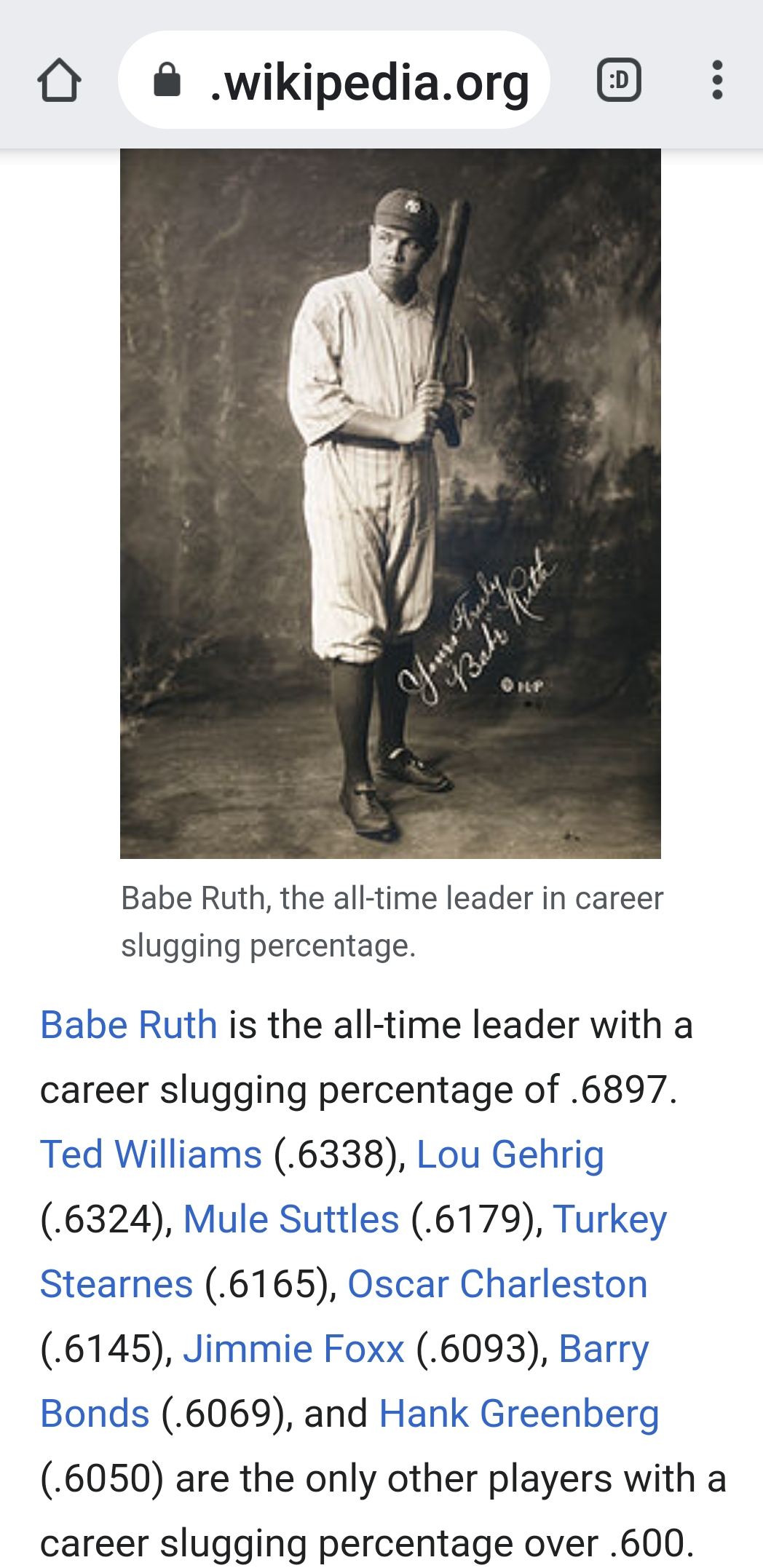
Babe Ruth was by far the greatest Major League baseball player ever. As a pitcher he was among the best to ever play the game, though he is famous for his batting. Before switching to full-time right fielder and setter of mind boggling home run records (he famously hit more home runs by himself, a couple of seasons, than other full teams hit), he also set pitching records that stood for decades.

As a home run hitter, there was really nobody to compare to him. If he’d been up as many times as Hank Aaron, who decades later broke Ruth’s career home run record in four thousand more at bats than Ruth had, he’d have hit hundreds more home runs. The current record holder, asterisk Barry Bonds, batted 1,448 more times (about three seasons for the Babe) and hit 48 more home runs. Plus, Babe Ruth hit .342 for his career (tied for sixth highest lifetime batting average among modern players).

When my father was fourteen, a decade after Ruth set the 60 home runs in a season record that would last 34 years, Hank Greenberg hit 58 in a season. I suspect anti-semitism probably played a role in Greenberg getting nothing to hit the last few weeks of that season, when he could have hit home runs 59 and 60, but, if so, that is not something that should be taught in American classrooms (as it would only serve to undermine American Exceptionalism and make beleaguered white Christian patriots feel bad…).

Maybe the most impressive number Babe Ruth left behind was his lifetime slugging percentage of .690. Slugging percentage measures how well a player hits for power, how many extra base hits (doubles, triples and home runs) he gets. Ruth averaged that gaudy number, over his long career. For comparison, superstars Willie Mays and Mickey Mantle, two great Hall of Fame sluggers, 20 and 21 on the all-time list, had career slugging percentages of .5575 and .5568.

When a current player is red hot, hitting home runs in bunches, his slugging percentage may soar to approach Ruth’s lifetime average for a short time, but by the end of the season it will almost always be below .600. Many modern-day sluggers in the Hall of Fame never approached Ruth’s .690 average slugging percentage in even a single season.

Here is the top of the all-time slugging percentage list. Turkey Stearnes, Mule Suttles and Oscar Charleston, belated (posthumous) Hall of Famers, superstars of the Negro Leagues and victims of the racial segregation of baseball until after their careers were over, have recently been added to the list, as I learned last night after a few minutes of computer querying [1]. Check out where Hank Greenberg winds up on the very short list of baseball power hitters who have slugged at least .600 for their careers. And what company he is in!

To put that in perspective, five “white” major league Hall of Famers, Ruth, Williams, Gehrig, Foxx and Greenberg have had lifetime slugging percentages of .600 or more. (Eight, if you include the other three Hall of Famers, which you should, it’s an American sin that they were forbidden play with the other greatest players of their time by a hallowed racist tradition, see FN 1; nine if you include Barry Bonds, who is creeping toward induction into the Hall of Fame after an amazing career).

* Barry Bonds, is the sixth major league player to slug over .600 for his major league career, and he had some out of the world slugging percentages in his older years .863 when he was 36 (higher than Ruth’s best one season slugging percentage), .799 when he was 37, .749 at 38 and .812 at 39, after he went on his special, controversial asterisk fitness regime. Without those final few superhuman seasons, including the 73 home run season, at an age when most baseball players are slowing down, he would havie been under .600 for his career. For those who like eye-popping stats, here are the remarkable numbers Bonds put up for his career.

[1]

Suttles, Stearnes and Charleston were three superstars of the Negro Leagues, from the openly racist decades before Major League Baseball became racially integrated. All three are now in the Baseball Hall of Fame, inducted decades after each of their deaths, posthumously honored among baseball’s immortals, as they say.

Mule Suttles was a power-hitting first baseman in the Negro Leagues from 1923-1944.

Turkey Stearnes was a five-tool centerfielder who played in the Negro Leagues from 1923-40.

Oscar Charleston, another slugging centerfielder from the Negro Leagues played from 1915-1941.

I Can’t Keep Blaming Mr. Hitler — note

I have a tendency to see Adolf Hitler as the explanation of, or at least the perfect illustration for, so much of what I dread in life. I tend to be judgmental about Mr. Hitler’s career and to blame the Nazi leader for many of the things I hate and fear. The arbitrary designation of enemies, who must be killed, the unappealable and irrational demand for absolute loyalty, breach of which is punishable by death. The long strings of words mobilized and deployed like Panzer divisions and formations of Luftwaffe bombers to convince the desperate that if only they obey absolutely, they will be saved and led to glorious victory over their hated enemies.

Hitler, for his part, started off claiming that he was just a drummer, the guy in front of the parade banging the drum to set the cadence for the march. A very modest self-portrait, I think, for a man who, just a few years later, would be celebrated as a national savior and worshipped by millions.

I apparently wrote up this note to myself back in September, 2019. You can read the post here, if you have a few minutes.

The quick point is this. I come from an average working class Jewish family that was wiped out, down to the infants and pregnant women, along with thousands and thousands of other families, in the aftermath of the German push into the Soviet Union. In the wake of this conquering army, Ukrainians and Belarusians often assisted the Einsatzgruppen, the special squads assigned to rid the world of the Jews and other poisonous threats to humanity.

So it was in the town my mother’s parents grew up in, in the heart of the Ukraine. Every surviving Jew marched from the little ghetto to the ravine on the northwestern edge of town, bang, dead [1]. You can’t even find this murder of several thousand, one airless night in August 1943, among the mass shootings committed by Mr. Hitler’s followers, it simply didn’t make the list. It’s only recorded one place on-line, a transcribed oral history of the massacre of the Jewish inhabitants of that town, and here, from time to time, on this blahg.

A cousin and I have been trying for years to find out exactly what happened to my father’s side, back in Belarus. They, and the benighted little hamlet they lived in, were wiped from the world without a trace. There were various aktions in the area, that much we’ve learned, and they were all killed in the course of those.

So I see myself as fundamentally different from a well-born ubermensch like Jared Kushner. His family had the good fortune (and the money, presumably) to escape the slaughterhouse that was Europe in the last of the Nazi years. They came here, these two poor immigrants, Jared’s grandparents, and slowly bought and operated a small empire of New Jersey apartment houses, which made them very wealthy. Their son, Charles, took this small real estate empire and greatly expanded it, becoming a billionaire, like his son Jared, after him.

Two generations after his grandparents escaped the Nazi killing machine, Jared Kushner has the haughty bearing of a young SS officer. He speaks with the absolute certainty of someone who has never been wrong, or, if he has been wrong, has never been corrected. You simply cannot picture a man like that marched to his dignity free mass execution in a pile of freshly combed dirt.

Easier, by far, to imagine him distractedly smoking a cigarette, in a long holder, as he gives the signal for the Ukrainian auxiliary police to fire the next volley, into the back of my head, and the heads of the people on either side of me.

Fortunately, Jared’s time in power did not last long enough for this important work to be completed. It took Mr. Hitler years to accomplish all that he accomplished, it was not the work of a single four year period, it took at least twice that long to get it all into high gear.

We are all poised in the fall of 1932 here (in other countries it’s already later). Here in US of A the future of our long experiment in democracy is at the mercy of two Democrats who insist there is no problem that can’t be solved if only we all just learn to respect each other and behave differently.

[1] from that transcribed oral history:

At the beginning of Elul 1943, about 10 SS men arrived from Kremenets. They gathered a large number of armed Ukrainian policemen from the surrounding area and stationed them in the shade. One SS man stood next to the great master, Mr. Shtayger, the destroyer of Vishnevets Jewry. He stood up and gave a short speech that I heard in full and still can’t forget.

He said, “Today we’re going to liquidate all the Jews in the ghetto. Go knock on each window, open it, and tell the Jews, ‘Leave your homes, you traitors, you Jewish Communists.’ Beat the Jews who refuse to leave their homes with the butts of your guns. Pay attention: you can strike to kill, but make sure you don’t kill them inside the ghetto. Take them outside town, to the designated area, and kill them there.”

I still don’t understand why he didn’t want to exterminate us inside the ghetto.

source

I get it, they didn’t want the hassle of dealing with all the stinking corpses inside the town, during a hot summer, especially since they had a nearby mass grave ready to accommodate all the dead. You have to use common sense!

Playing soothing music for my dying mother

My mother died a long, slow, painful death from endometrial cancer. She did not want to talk about death, though she often asked, rhetorically, why she felt so awful all the time. I understood that I was not supposed to mention death, or the deadly cancer eating its way out from the lining of her womb.

My mother always gave my father a hard time about his napping. He’d fall asleep a few times a day and, when I was visiting, my mother would point at him and complain. It turns out he was dying of undiagnosed liver cancer the last few years of his life, which could well explain his more frequent naps, but that’s another story.

As my mother got closer to the end, she found herself exhausted during the day and would often fall into a nap. I asked her if she’d changed her opinion of napping.

“Oh, I LOVE to nap!” she said with a big smile.

One day toward the end of her life, when she was trying to sleep off some unbearable pain, I went quietly into her room with my guitar and began playing a soft, soothing vamp, something like this one:

Her breathing seemed to become more relaxed as I played. I played softly for a few minutes, hoping to help her to sleep. Suddenly she sputtered and opened her eyes on the pillow.

“What IS that?!” she said crossly, “it sounds like you’re tuning your guitar!”

I withdrew from her bedroom and didn’t try that shit again.

No skin off my nose, pal

As the narrator of this tale, or the plaintiff in a related medical malpractice nuisance suit, I have the great advantage that you won’t need to squint or strain to see the fingernail sized permanent divot on the bridge of my nose. You can see what I’m peeved about at a glance, even in low light.

This lifetime scar gives me instant credibility as the teller of this particular story, and a bit of pathos too. Juries like pathos, if they shudder to imagine having been subjected to the same thing the plaintiff was forced to undergo.

It’s always a mistake, of course, to believe that a gratuitous scar on one’s face, inflicted by a doctor who has not performed the medical procedure he prescribed, the one authorized by insurance, is a legally cognizable injury.

Let the lawyers fight it out, I say.

“Is this scar going to fill in?” I asked the confident doctor three weeks after the surgery, a single gouge deep into the bridge of my nose, to remove a basal cell invisible to the naked eye, a large round wound which was then cauterized instead of stitched.

“No, that’s about as good as it’s going to look,” he said, with admirable candor.

My next question was based on the four or five previous Mohs surgeries I’d had to remove much more visible, deeper, more advanced basal cells (the most benign form of skin cancer). Each of these surgeries had taken several hours, as opposed to the 30 minute procedure his surgeon had done on my nose.

“I was supposed to have Mohs surgery, which removes one thin layer at a time to preserve as much healthy tissue as possible and minimize scarring. Your surgeon basically took a small, sharp ice cream scoop and scooped out all the surrounding tissue in one pass, down to the cartilage,” I said.

“Yes,” said the doctor. In that moment I didn’t have the presence of mind to say anything more. I suppose my psychic efforts were focused on not cauterizing the good doctor’s nose right then.

The doctor’s attitude about the prominent scar in the middle of my face was a slightly impatient “no skin off my nose, pal.” His body language said “are we done here? Any more rhetorical questions?” He thought for a moment then told me about a powerful prescription cream that reduces scarring.

“But your insurance won’t pay for it,” he told me a moment later. The kindly doc then sent his nurse off to find a few of the free sample tubes the pharmaceutical company rep had left him a case of. The cream, which came with no instructions except his nurse’s “apply in a very thin layer”, seemed to irritate the scar which became increasingly uncomfortable until I stopped using the stuff.

In the debate over “socialized” medicine we often hear the critique about the “rationing” of medical care not provided on a competitive, profit-driven “free market” basis. Healthcare, in Communist nations like Great Britain, Canada, Japan, France, etc. is rationed, we are told, because everyone is presumed to be equal when it comes to health care and so there is often a line for some procedures. While it’s true that the wealthy can skip the lines, even in those countries, by going to a private doctor, health care for most is still “rationed”. Here, under our system, the level of care you are “entitled” to is rationed by your ability to pay a monthly health insurance premium. The more you pay, the higher the quality of care you are entitled to, the less rationing you will be subject to.

Here in America every doctor, even the kind orthopedist I’ve visited a couple of times for the arthritis in my knees, knows exactly the level of your insurance coverage as you sit discussing medical options. “Unfortunately, your insurance won’t pay for it, though it works very well to keep the knee pain-free for six months or so while you strengthen the surrounding muscles,” she said of an injection she proposed. She nodded when I told her I’d be on Medicare soon, hopefully. Medicare will absolutely pay for the shot, she told me with a smile.

A cardiologist, who revealed himself as a mask-shunning Trumpist during the pandemic, billed almost $12,000 for each of the four procedures I had on veins in my calves. He’d told me confidently “your insurance will cover it.” My insurance paid him almost half. Not a bad hour’s work for those first three veins. I had a mirthless laugh when I got my “Explanation of Benefits” for the fourth and final venous ablation. He’d billed $12,000 and received zero. His office, apparently, had failed to renew the authorization to be paid. I guess their lawyers will have to fight it out, and good for them both.

A doctor working for a patient with low-cost health insurance (dictated under the ACA according to your declared income, the only choice a low-income patient has is to accept the offered insurance or reject it — and have none), knows exactly how much of the amount his office bills will be paid by the insurance company. This dermatologist motherfucker had every incentive, based on the small fraction of his billed Mohs surgery fee he’d receive, to get me in and out of his office as quickly as possible. Thus incentivized, I was in and out quickly. Even though the surgeon couldn’t see the tiny spot he was supposed to remove.

He called in the dermatologist for a quick consultation, they looked at the photos of the two biopsies (the second had been necessary because the first was done in haste) and concluded it was there, just next to that broken blood vessel. I had a strong reflex to hesitate, as if in a moment of precognition.

“If you can’t see it clearly, I’d rather wait a few months until it’s visible,” I said with mild panic, knowing that these slowly growing cells can be there for a long time with no terrible effect. The confident dermatologist told me that they concurred, knew exactly where the basal cell was and that there was no need to put off the surgery. Like a schmuck, I sat back and let the surgeon hurry to gouge out the entire surrounding area, taking out a circle of healthy tissue to ensure he got the basal cell.

I was in and out of the office in just over a half hour, less time than even the first phase of Mohs surgery usually takes, as I know from experience, having had the procedure now five times out of six. Cah-ching.

As for Dr. “No Skin off My Nose”, what are the odds that a patient with a scarred face, given one more small scar for good measure (and to maximize the good doctor’s billable hours) will have the ability to coherently make a case that a doctor who prescribed surgery A, had that surgery (as well as a skin graft to minimize the scar) authorized by the patient’s insurance and then provides surgery B, including the burning of the flesh around the unnecessarily large wound, deserves a little shit, from his medical ethics board and a payment from his malpractice insurance carrier for the nuisance he inflicted (I have pain at the site of the surgery months later, in addition to the small crater) to the guy whose nose he brutalized?

It may take me a little while longer, but this slick, confident operator needs his smug fucking face cauterized too, just a little. No? After all, it is really no skin off my nose.