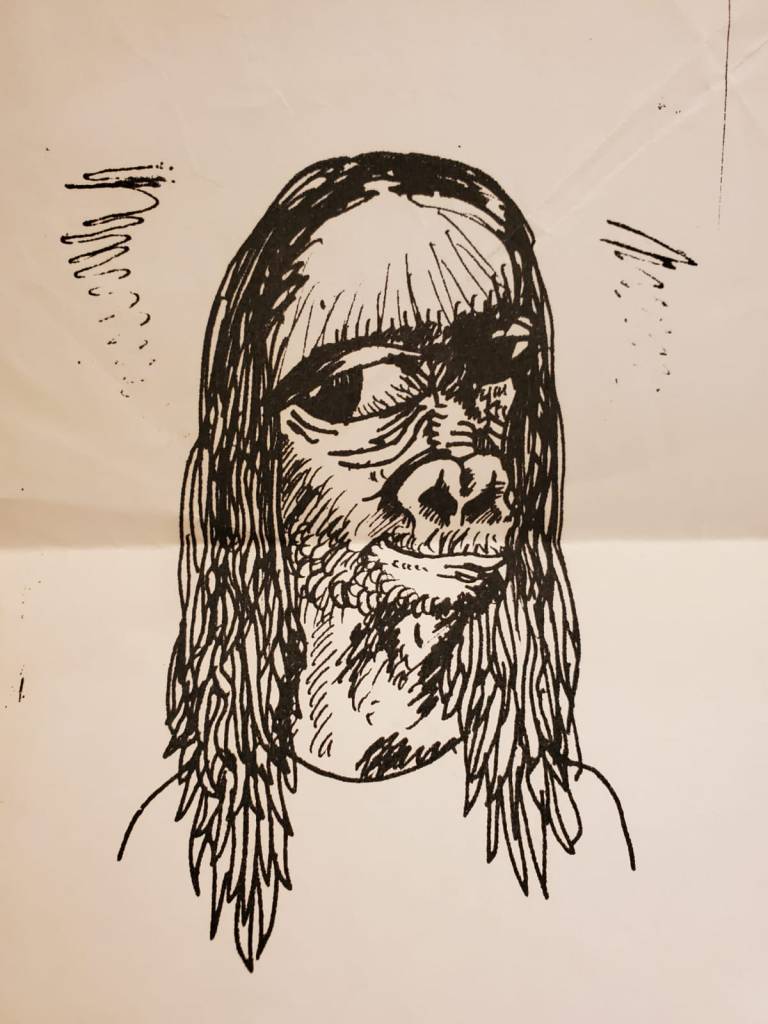
self-portrait at nineteen
The quietly enraged are dangerous adversaries. Because they’re quiet and seemingly calm, their rage, when it gets a chance to express itself, is perhaps the most chilling kind of rage of all, because it’s so stealthily hides in seemingly unruffled quiet and seems to explode out of nowhere. This kind of rage waits for the perfect moment to quietly and inexorably express itself, rendering a final opinion that cannot be appealed. You cannot come back from the conclusions a quietly angry person imposes when they finally make their disapproval clear.
Silence itself is perhaps the single greatest weapon for expressing rage.
The beauty of silence as a weapon is that it is infinitely deniable, you cannot prove the intent of silence, it could have no intent at all. It could certainly have nothing to do with you, why is everything about you? Isn’t your interpretation of my silence just your perverse gloss on it? I said nothing, nothing, how can I have expressed any opinion on what you asked me about, you demanding dick?
How about we put you on the defensive by not answering, by maintaining complete and total silence, and when you cry out we will point to the proof, you are a goddamn, whining hot head.
The beautiful part about expressing rage with silence is that any unbiased observer can plainly see that the person getting upset seems to be working themselves up about nothing.
Picture a ten year old black kid, going to bed every night scared, in the sudden violence of the projects, gunshots outside, in the stairwells, no-knock warrant, undercover police, housing authority security, gangs. Picture answering that kid’s question about the segregated poverty all around him saying, with the smug assurance of Bagpiper Bill Barr, that there’s no systemic racism in America, and its debatable that there ever was race-based slavery here, let alone a Supreme Court ruling [1] that people like you had no rights a white man was bound to respect that you were bought and sold like property because that’s what you were, nothing racist about it.
And then, silence.
The problem of scary, inherited poverty is yours, boy, and nobody else’s.
We can go down a long list of examples of this despicable technique, but consider the quietly enraged reactionary Samuel Alito and his enraging rationale for why Jesus Christ must have the final say in US Constitutional matters, establishment clause be goddamned. You have Mitch McConnell and Ted Cruz, the other day, squealing like stuck pigs about the nefarious malefactor who leaked the Alito draft ruling that women have no rights a white man is bound to respect, the partisan far-left criminal leaker (someone like Ginni Thomas is a much likelier culprit, since the draft must now stand as it is, with no retreat!) who silently stole and leaked a confidential Supreme Court draft decision, in an effort to politicize the fairest court an emissary of Jesus Christ Himself could appoint, to defend the unborn, the rights of good people not to be exposed to perverts, to lies about good, white Christian children, etc.
Makes me wanna holler.
Into the silence of a prosecutorial judge’s quick deliberation, sentence already in hand, not making eye contact as he listens impatiently to your version of events. Lots of cases, nothing personal, I have a lot of hate in my heart, I’m not giving you eye contact as you make your case because, as you know, I am not listening, too enraged.
Silence, the verdict and punishment already in the mail.

[1]
Obvious Commie twaddle:
Chief Justice Roger Taney (above) bluntly and maliciously described the status of persons of African origin in the 1857 Dred Scott decision:
“[Black people] had for more than a century before been regarded as beings of an inferior order, and altogether unfit to associate with the white race, either in social or political relations; and so far inferior, that they had no rights which the white man was bound to respect; and that the negro might justly and lawfully be reduced to slavery for his benefit. He was bought and sold, and treated as an ordinary article of merchandise and traffic, whenever a profit could be made by it.”
Reminding us again that the real sting of death is that eternal silence where a beloved life once was.
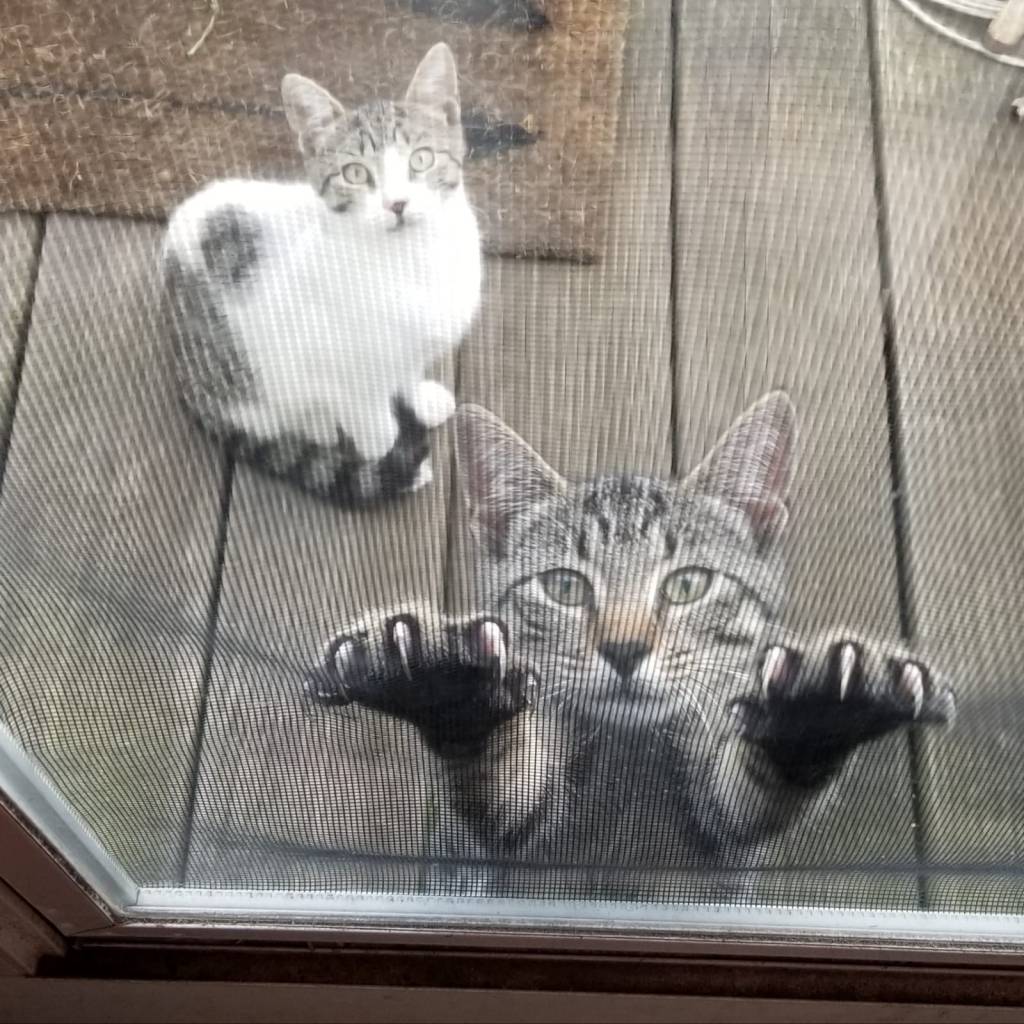
Little Girl (foreground, her sister White Back behind her, as always), who greatly resembled her beautiful mother Mama Kitten, her constant companion and ally, left us as gracefully as she came into this short, precious life four years ago.
Her absence hangs heavily over the turf she bravely defended and enjoyed the many roosts of, and where we touched base late almost every night. She was an agile, athletic hunter who could grab a bird out of the air, a gold glover who could catch a tossed treat and pop it into her mouth. She always showed up in the driveway to shake us down every time we approached the door. She carried on the tradition her mother started. They were known as the Driveway Bitches, two natural beauties, demanding their due, and they always happily collected their toll.
An ordinary event, the natural death of a sometimes affectionate feral cat we loved, filling our mortal hearts with sorrow, threatening to burst them, until the sorrow overflows.
Reminding us again that what takes your breath away at death is that eternal silence where a soul we loved once was.


I am not a person who prays, though I have sometimes prayed to be able to pray. Not really. I suppose, on the good side, prayer is a kind of meditation, an act of surrender to a higher power, a display of humility and faith, to recite your deepest wishes and needs out loud to a deity that may or may not be listening. Perhaps prayer is also an act of arrogance, to suppose your humble personal request to God, one of a billion the deity gets every minute, will be heard and acted upon by the Creator of the Universe. I guess prayer is primarily an act of participation in a community, everyone in the hall reciting prayers in unison, rising, being seated, kneeling, bowing as one. Whatever prayer is, I am not drawn to it. If I did pray, my bedtime prayer last night might have gone like this:
O, Eternally busy one, please hear my humble prayer. Grant me the serenity not to wake up with acid in my stomach thinking about harms done to me in the past by people I love and trusted. Give me the strength to bear these inadvertent injuries in the spirit they were given, that is, without a second thought. Grant me the ability never to think of these as burdens I must carry, let alone need to talk to anyone about. Others hurt by the same things that lodge painfully in my own spirit, spare them these acidic ruminations too. Let them dwell not on unfairness, thoughtlessness, unreasonable demands to get over hurtful things that can never be openly discussed. Let them see there is nothing to be gained by imagining peaceful resolutions are possible in all interpersonal conflicts.
Also, Unfailingly Merciful One, let not today’s angry mobs continue to be directed by the inhuman forces of deadly fascist/religious nationalism. These forces relentlessly inflame the passions of the aggrieved people they exploit and gain their violent allegiance — for their own mad ends. You know what happens every time You turn Your All-merciful Face away during such epochs. Just sayin’, God.
Amen.
I say strange belief because the world often appears to defy understanding. Look around, and tell me an understanding can be reached between people who hate each other. I believe it is possible for two enemies to become friends, once they learn how much they have in common, how many fundamental beliefs they actually share. It is rare, sure, but it has been known to happen.
The mother of a boy randomly killed by a new gang member tells the kid when he’s convicted that she will kill him. She visits him in prison, sends him books and money. When he’s released she lets him live in her murdered son’s room, which he does gratefully as he finishes his education. They become as close as mother and son. The young man asks one day if she still believes what she said at the end of his trail, that she’d see him dead. She tells him she does, and that his current life proves she did kill that monster he was becoming. He understands the truth of that. A beautiful true story I heard the woman herself narrate years ago on a program about the power of forgiveness. Rare, and wonderful, and also, proof that things that seem impossible can be done, if the heart is right and the actions taken are intelligent and consistent.
I enjoy talking with people, particularly when the conversation goes beyond normal pleasantries and daily observations and takes unexpected turns into new terrain and unknown commonalities are revealed. There are difficult things we learn sometimes, important life lessons, and I particularly love those rare occasions where conversation takes this deeper turn and we compare the personal details of hard lessons we’ve learned about a particular vexation.
In my home growing up, though the four of us were all reasonably good at talking, and liked to chat, our conversations often turned into angry arguments. In that previous sentence we see, I suppose, the roots of my strange belief in the power of listening, speaking clearly, acknowledging — my belief in the importance of understanding.
You can argue adamantly, to prove you’re right, dominating the person you’re arguing with, yielding nothing, ever, or you can argue without stubbornness, open to another perspective and trying to illuminate a misunderstanding or unintended cruelty. Dispassion is a word Buddhists and others use to describe thinking and communicating that is not the slave of passion, not in service to strong feelings that impede our ability to reason, to weigh things fairly, under a warm light. If you speak and listen dispassionately you hear better and your responses are not as likely to add fuel to anger. Dispassion is sometimes derided as unemotional, robotic, inhuman, but the real essence of it, I think, is keeping your thoughts slightly apart from your feelings, particularly strong feelings that will often stir you to assemble the troops to counterattack, and bearing in mind the larger, more humane purpose of the conversation.
In the grips of strong emotion we are often not at our best, emotionally, intellectually or morally. In the last five years of my mother’s life, on the rare occasions I said something that made her explode in anger, I became adept at quickly changing the subject to something pleasant. It worked very well, she’d immediately release her mask of aggression and smile with great relief. I came to see that the thing she was angry about was something I could immediately stop pressing and the thing I distracted her with showed that I understood her pain and we were now talking about something she liked instead. I recognized that there were some things, like her painful relationship with her daughter and grandchildren, that she needed to vent about, and get my sympathy for. She was unable to imagine anything better between them and her hurt and anger got inflamed whenever ideas about how to improve the hopeless situation were suggested by her know-it-all son. Finally recognizing this inability of hers, an inability she shared with her daughter, sad to say (and which doomed every suggestion I might make), I would desist in my doomed peacemaking efforts at the first sign of anger.
My father and I had a lifelong debate on whether people can change their fundamental natures. There are good points on either side of the issue, but I was locked into proving that my belief that we can change much of what is painful to us was reasonable and based on evidence, and he was determined to prove that the idea that we have this kind of autonomy and power to change is a cruel illusion that does more harm than good. I can see truths on both sides of the debate as I type these words. Because of the acrimony between my father and me it was never possible to persuade my father of how much we can change our reactions to things that bother us or to move him off his fixed belief about the inevitability of pain, frustration and anger.
“You admit you’re only changing your reaction, the superficial part, and that doesn’t touch the inborn, fundamental nature at all,” my father would say. “If you are born with a prickly disposition, no amount of navel gazing is going to make you able to resist provocation when it arises, provocation that would not even bother some one with an innately placid nature . You might get a tiny bit better at not immediately snarling, but you are only changing your surface reactions, not your genetically programmed reflex. The fundamental things about ourselves are immutable and it’s pathetic to believe in something impossible.”
“But changing your reaction, say not responding with reflexive anger, makes it possible to have a reasonable conversation with others, and that’s not a small thing,” I’d say. In the end I pointed out that he himself had changed his angry reactions toward me, and that our relationship was better for it. This proved a bad example to hand to a wartime prosecutor like my father, though he had, in fact, greatly moderated his angry reactions to me in recent years, after a difficult conversation I’d initiated with him one Yom Kippur.
“I only changed my superficial reactions,” he told me, “nothing fundamental changed in me. I became a better actor, is all. If I ever honestly told you what I really think of you it would do such irreparable harm to our relationship that we’d never be able to talk again.”
He rested his decades-long case by saying the one thing that proved he was determined to be right, more than anything else in the world, and this neither he, nor I, nor any power in the universe could change — and here was the final proof. All this talk of emotional plasticity and the value of a skilled therapist, of introspection, self-criticism and self-acceptance, so much bullshit for contempibly weak people to believe. As for him, he was man enough to admit the difficult truth about humans — however we are, emotionally, at two years old, is how we are for the rest of our lives.
Therefore, following the logic, we cannot learn anything important, not really. Superficial things, OK, we all learn to use toilet bowls, and language, academic subjects, but we can never learn how to hurt ourselves and others less. Some people are born decent, reasonably happy, they get along in the world without friction or conflict. Others are born riled up, unhappy, critical, ready to rumble, and these angry little ass kickers, who can never be wrong, are doomed to live in a world of hurt.
His tune changed on his deathbed, as apparently not infrequently happens. Part of it, I believe, was seeing his lifelong adversary quiet, thoughtful and willing to do whatever he could to make his father’s death easier. He lamented that he’d been unable to consider so many things, had been so limited in what he could imagine, had been so adamant, seen the world as so black and white. He had painful regrets that he expressed for the first time, and I did my best to reassure him about each one that he’d done the best he could.
Now, it’s important to note how many times I have infuriated people close to me in recent years by my determination to remain peaceful and mild-mannered in the face of escalating bad feelings. In the end the ugliness where there was once friendship and laughter, the absence where mutual good will used to be, becomes impossible to ignore. In their defense, there is nothing more maddening when you are angry than some fucking prig on the high road, managing to keep the anger off his tongue.
Expressing anger dramatically is a deadly game I’ve played countless times over the years, so, in the end, after enough angry invitations to tell a friend to go fuck himself, I yield to the surge of righteousness I’ve been trying not to express as contempt and tell the person, in detail, all of the irredeemable things about them I can no longer tolerate. Friendship does not recover from this, because at the point where everything about another person is reduced to their worst and most shameful weaknesses, well, that’s irreparable harm.
So maybe my pre-deathbed father was right all along. If you are locked in a battle with an adamant rival, intent on winning at all costs, you will, in the end, revert to however you were born to be. The angry will rage, the placid will cry. You can pursue dispassion, believe in the power of conversation to illuminate difficulties, remove hostility, the plasticity of the human soul, forgiveness and all the rest, but in the end, when a line is crossed that is impossible to get back to the other side of, you are only prolonging the terminal phase of something that is already dead. All your high ideals about the power of understanding are so much useless, smelly, self-righteous baggage.
Maybe so.
I continue to work on being clear, and listening carefully to others. It is not the work of a few days, that. Do we get better at things we practice faithfully? All signs say we do, however loud the hooting chorus of fatalistic naysayers gets.
Perhaps the most mysterious, profound and illuminating thing my father said to me the last night of his life was that none of the long war between us had been personal. It took me a long time after he died to figure out what he meant by that.
“You have to understand, Elie,” my father told me in the strained voice of a dying man, “on a real level there was never anything personal about our battles.” He explained that the hostilities had little to do with me, personally, though I was the one forced to fight. He assured me he’d have acted the same way with any child, regardless of their temperament.
Nothing personal. When I fought you to the death every night, it was, strictly speaking, nothing personal. My father was fighting his demons, the fears that tortured him all his life, those torments just took on my face when I sat across from him. When he snarled at me it was difficult for me not to snarl back at him. Nothing personal became intensely personal, though he told me that last night that I had to understand none of it had been personal, strictly speaking.
It reminds me of the moth joke Norm McDonald used to tell Conan O’Brien. Norm took a ten second joke and milked it for seven minutes. The set up is a moth walks into a podiatrist’s office and starts pouring out his heart to the doctor. In Norm’s telling the moth is tortured by how much he hates himself, hates the reflection of himself in his son. “When I look at my son,” Norm’s overwrought moth tells the podiatrist, “I am overcome with rage and self-loathing, it’s like looking at everything I hate in myself, and I hate that I hate my own son, which reminds me more how much I hate myself and how much I deserve to hate myself. What kind of father feels revulsion when he looks at his own son’s face? I tell you, doc, that kid, it’s like the worst in me condensed into a face I want to literally hit with a hammer. I’m afraid one day I’m going to act on this rage, and I know it’s irrational, it has nothing to do with the poor kid, who I can see has some good qualities. He’s actually a pretty good guy, my son, but I continue to stare at him with rage, I can’t help it, and I know how sick it is, doc, but I look at the kid’s face and I literally want to vomit, I’m afraid someday I’m going to murder him…” and Norm continues in this vein for several more minutes as Conan chides him and goads him on.
Finally the podiatrist says “listen, it sounds like you have some serious issues you need help with, but you really need a psychiatrist. I’m a podiatrist, I treat problems of the feet and lower legs, I’m not the kind of doctor who can help you with what you just described to me. Why did you walk into a podiatrist’s office?”
“The light was on,” says the moth.
Like the light that went on when I finally understood what my father meant by telling me I had to understand it was never anything personal, strictly speaking. That he put it in context was helpful. He told me he’d felt me reaching out many times over the years to make peace, but that he was always too fucked up to reach back. He told me how much he regretted his lack of emotional maturity, imagination, moral courage. He said he wished we could have had this kind of honest, back and forth conversation fifteen years ago, after only thirty-five years of constant, senseless warfare.
Nothing personal, like the universe itself had decreed it. And we, hapless pawns that we are, blown like leaves in the wind, subject to forces too gigantic and terrifying to have any hope of overcoming. Nothing personal, a great relief and a terrible curse, at once.
It hit me last night during a walk, after a day sadly considering the ongoing righteous anger of people I’ve known for years, that anger is a powerful emotion that often masks even more painful emotions. It is unbearable to sit with the pain of feeling unloved, rejected, abandoned, ignored, powerless, harshly judged, vilified, unfairly punished. Shame, of course, is a famous goad to violence, a cycle observed in every prison, in every slum, where people kill each other for the capital crime of disrespect.
The easy fix for terribly painful feelings is a nice surge of anger at the perpetrators, or those you focus your anger on, which works just as well. In the clean, harsh, black and white light of anger, all becomes clear. These merciless fucking fucks deserve no less than the full force of my manly wrath!
Anger is an automatic reflex to being hurt. Easy as kicking when the doctor expertly hits your kneecap with that little rubber hammer. It also has the great advantage of closing off any conversation that might make you feel uncomfortable, possibly force you to confront whatever terrifying personal demons you are trying to hold at bay. Anger is far superior, and feels much more empowering, than crying in pain about something beyond your control or ability to heal from. It also has the inherent advantage of making you the victim of the person who made you mad. Being the victim is very important for a feeling of righteousness and personal integrity since it lets you off the hook for doing anything you’d be at fault for if you had not been the victim of the person you’re rightfully getting back at with your anger.
On a mass level, which is the aggregate of millions of individuals, anger works exactly the same way. You have middle class citizens who work hard and play by the rules, losing ground every day in a world where your savings are constantly losing value and only the casino of the stock market offers the kind of interest banks used to pay depositors, although you can lose it all when you place your small nest egg on the Wall Street roulette wheel. The job you work hasn’t seen a raise in decades, the union is gone, the plant is about to close so the corporation can make a bundle for the shareholders by moving production to a country with no regulations at all about anything. You look around and more and more “minorities” are getting ahead, they’re on TV, in the movies, winning awards, championships, these rich, spoiled bastards complaining about being mistreated, the victims of systemic prejudice. The so-called party of the working class is openly owned by billionaire corporate donors, just like the other party has always been, and has done little to protect what is being taken from you every day. It’s a billionaire’s world now, and you don’t stand a fart’s chance in a hurricane of getting out of this in the comfort your parents enjoyed at the end. We all know who’s to blame. Time to get some payback!
Make America (insert any country’s name here) Great Again! Like it was in the good days, when everybody was prosperous and before a bunch of activist commie dupes on the Supreme Court unanimously overturned the longstanding protections we all enjoyed during perfectly legal racial segregation. Women knew their place in those days too, did their duty and gave birth to whatever was in their womb, as God intended. And the so-called gays kept their perversions to themselves, on pain of a nice ass whupping, or worse. We put Jesus Christ into the Pledge of Allegiance, for fuck sake, and still the godless communists keep coming, for our God, for our guns, for our children.
Much easier to feel rage toward all these hyped up perceived enemies than to realize you’ve been suckered, divided, conquered, force fed a gallon of stinking bullshit, down the old gullet with a funnel and hose. The problem was never a vast cabal of powerful pedophiles, no such cabal exists (except in fevered fascist propaganda, it’s a favorite charge of Putin) these destructive creatures are universally hated (even when protected and hidden in hierarchies, or by their great wealth and political connections) and don’t last ten minutes in prison. The problem was never most of what you are constantly told it is. Believe it or not, it’s not even a worldwide Jewish conspiracy, and I would know. if it was
The problem in the US and elsewhere is that the super-wealthy 0.01% have finally taken over the political system. Here they’ve orchestrated the appointment of a hand-picked Christian corporatist majority on the Supreme Court, installed by them, that decides what’s constitutional and what must be struck down as contrary to our democratic values. These super wealthy include the eternal vampire psychopaths, created by our courts, known as corporations. Endowed by federal judges with feelings and rights, and even personhood, equivalent to an innocent embryo, these artificial persons are entitled to do whatever they feel necessary, legally spend unlimited amounts of secret money to make the laws, and have the government, that protect themselves, and their profits, the best.
The thought that anger is just a mask, much of the time, for more threatening emotions, struck me as a good starting point to think about a lot of things related to non-harm and kindness. The easiest thing, and it is part of basic survival, is to simply get mad when you feel mistreated. Fuck the fucking consequences, I don’t have to take this kind of treatment from an actual piece of shit! I will rage, and feel righteous, and the unbearable pain and life-sapping fear that lurks inside when I start to consider the harms that were inflicted on me personally will be replaced by a surge of being 100% in the right to smash your fucking face, asshole.
This mechanism, I realize now, was the emotional engine that drove my father, from his shameful childhood to his deathbed regrets. A man, particularly in the 1950s, 1960s, 1970s, could not give in to the need to have a good cry about the painful betrayal he experienced in his earliest life. Feeling humiliation is unbecoming, unhealthy, crippling, weak. Fuck that, a man takes action!
Sometimes, sadly, that action needs to be righteously bellowing at your children. It’s your right, you feed the ungrateful little provocative bastards, and clothe them, house them, bust your ass working two jobs to give them a life a hundred times better than the horror show you experienced. I understand the anger itself, I saw it regularly, daily, for almost the entire time I knew my father. It was only once, not long before he breathed his last breath, that he had his first inkling that maybe there was a better way to be a human being than raging at his children, keeping his wife on a short leash.
Lack of imagination is a crippling handicap, and a very common one. Without it, you cannot imagine better options than variations on the old standard you inherited from your own fucked up parents. It’s like the corporate insistence that it’s either unregulated worldwide capitalism (freedom) or totalitarian communism. Limited in your seeming choices, you are bound to justify everything you do as the only real choice. Real choice, of course, being limited by what you can imagine your choices to be.
If you do something, and feel totally justified doing it, it must be universal, otherwise, shit… it could be abnormal. The thought of not being normal was one of the most terrifying things my father, who never forgave any hurt, was ever confronted by. When I told him once that he was weird, his brain almost short circuited. The odd expressions that played on his face as he repeated the word “weird” with incredulous inflections made a big impression on teen-aged me. Luckily, for him, everyone in the family knew how fucked up and abnormal I was.
This has got to be one of the hardest things humans have to do. A feeling that causes pain, and is left unaddressed by the people involved in causing it, leads to anger or depression (anger turned against the self, in an apt description I read), after an increasing bitterness that becomes impossible to ignore. The reflex in most will be to turn anger on the person causing the pain, simply blame them, or to quietly take the pain on yourself as confirmation that you deserve no better, somehow. Hard to sit with corrosive emotions, though sit with them you must, sometimes.
There are a few reasons a loved one will not hear you when you ask them to, few of them are very promising for the relationship. Particularly if they, understandably, demand to be heard at once when they are in pain and then tell you just to wait a few more months to talk about what’s bothering you.
Parents, for example, may feel supremely challenged by a very smart child. The kid will have to learn to navigate around the insecurity of the parents, find his or her own way forward, without the help of the parents. Sometimes just a difficult question about something that perplexes the kid will set the parents off. How do we explain something that gives us so much pain to think about? Nobody knows the answer to human evil! Why do you ask such goddamned questions all the time!? Jesus, can’t you just be quiet?! The kid derives various lessons from this consistent feedback, adjusts the best they can.
Some people cannot be wrong. If you point out something they did thoughtlessly, or unfairly, you are pointing to something intolerable, something inhuman, unthinkable to them. “You don’t seem to understand, I cannot be wrong. It’s not that I don’t like being wrong, I can’t be wrong. How do you not know this about me after all these years? I will not be wrong, I will not be challenged to defend my actions, you have the problem, not me! I am loved by everyone, you’re the only one with a problem, look at your own life!”
My dear old dad had this feature, an inability to admit fault for anything. It endured through almost fifty years of constant war with his children, two provocative little shit snots who constantly challenged him, and lasted until the last night of his life, when he realized how much of a horse’s ass (his phrase, only time I ever heard him use it) he’d been to see the world as black and white. He wistfully imagined the world he could have been living in instead, full of nuance and color, rather than the bleak high contrast warscape he inhabited and imposed on his young children. He apologized for forcing my sister and me to grow up in the grim shadow of his irrationally limited emotional worldview. I appreciated the apology. He died a few hours later.
Once, two years before he died (two years of the meaningless fake small talk he demanded at the end) he told me I had to respect his right not to respond to concerns I raised. For once I was there with a reply I couldn’t later improve on. I told him I understood that he was choosing not to talk about a difficult subject but that I certainly did not have to respect that choice. He then demanded we keep our conversations politely superficial, talk only about sports, health, politics, and so we did, until that last night of his life, when he admitted he’d felt me reaching out to make peace with him many, many times over the years. He regretted, that last night, that he hadn’t been mature enough to reach back, even once. He’d been too afraid, he told me. And so, to avoid pain he could not bear, we’d had to pretend to be a loving father and son, on his strict, limiting terms, until I was there to support him as he died.
Sometimes, I have to say, I am the last one to understand the full scope of a situation. Sometimes it feels like I’m the last to realize that something I’ve long cherished is already dead. My efforts to not react with anger, to fully process what needs to be said so I can speak without the anger, must make me some kind of aggravating holier-than-thou freak to loved ones who get anger off their chest and move on, without the need to understand anything about what set off their anger (since, after all, they know who to blame). By the time I put my thoughts together, particularly after a couple of follow-up challenges (threats like “I’ve dropped people from my life for doing less to me than what you did”) the subject is ancient history, being dredged up needlessly by a troubled person, and nobody in their right mind cares about that stuff.
My best advice is to somehow make peace with the bitterness that churns up when your needs are dismissed. That bitterness is to be expected when you are stonewalled in your need to be heard. Forgive yourself for being unable to stop feeling it. I find that setting things out clearly on a page provides some temporary relief.
You will have to leave the embittering situation in the end, if you can’t find a way to make it better, it is Survival 101 for anyone but the hardcore masochist. Remember that making peace requires goodwill and openness on both sides, you can’t do it alone. In the meantime, finding the patience you will need is a great challenge, a mind-fucking challenge some days, as is maintaining a posture of peace, when the sides seem to have been drawn in black and white, the final irrefutable victim story irrevocably arrived at, all details agreed to, and the terms of any possible peace treaty have already been carved in stone.
Picturing the familiar festive table without you is a little foretaste of death, the place we all must go in the end. If you’d been hit by a truck, or died suddenly of a heart attack, the effect would be the same. A chair you used to sit in, occupied by someone else, as life goes on, as it must.

