The personality type that can’t be negotiated with

I’m an old man, about to go into my seventh decade walking this brutal, miraculous earth. I only recently learned a truth so simple it seems embarrassing that it could have taken me 67 years to learn. I have well digested it the last few years, while writing hundreds of pages I hope to soon wrestle into a salable manuscript. Here is the condensed version of my belatedly learned lesson.

There are people, traumatized early in life, who develop a rigid personality that renders them unable to show vulnerability, see their role in conflict, change themselves for the better or acknowledge when they’ve hurt people. They live in terror of reliving the crippling humiliation they were subjected to in their earliest days. To protect their brittle egos they insist they cannot be wrong, always blame others for any conflict, escalate the conflict by silence, threats, lies, word salad, every means necessary. They are prepared to fight to the death, against their closest friends, to prove they are never wrong. My father was this way (minus the lying, he was too skilled to need to outright lie). It is a terrible way to go through life, but it is also a fairly common personality type.

They can be charming, funny, playful, sensitive, sometimes generous, they can see nuance, sometimes, but you can’t negotiate with them once there is any kind of disagreement or an expression of hurt that makes them feel imperfect. You can’t find compromise with someone who can never be wrong, they are always your victim — you are the merciless one, not them. They fight with the desperation of a hurt child terrified of further unbearable shame.

We have the grotesque living example of a movement of people guided by these principles: never wrong, blame others, lie, fight to the death over any conflict, no matter how small. Think of cherub-faced fake Christian extremist MAGA Mike Johnson and other creatures of blind ambition like him. They are convinced of their righteousness (or at least play the part), can’t see things from any other point of view (that would require empathy), have no hesitation to lie if confronted with wrongdoing (since they can’t be wrong, and therefore have a right to lie), have a harshly punitive stance toward perceived enemies while being super understanding and lenient to criminal friends, people who simply “made a mistake” but are otherwise loyal.

Politics is not my point here. I’m trying to point out the universal characteristics of this common, extremely harmful, and contagious, personality type. A personal example, then:

Our closest friends of many decades, a couple I’ll call Flack and Gina, planning to celebrate the younger one’s 65th birthday in Europe, were hit with bad news. Covid-19 canceled their fabulous birthday trip at the last minute. They made alternate plans, a week alone together in Vermont and then five days in a spacious cabin with their longtime closest friends, me and Seedj.

When we arrived something was hanging in the air, tension between them, which escalated day by day. Apparently the carefree week in Vermont had not left them feeling refreshed and carefree, they were clearly at odds, keeping their distance from each other, both expressing hurt the other had caused. The tension and passive aggression increased day by day, as I went about my normal business of trying to make them laugh and being conciliatory. I had no understanding that it was already too late for our friendship, I’d witnessed their shameful rage at each other and the sado-masochistic nature of that rage. By the time we left the rented house, after they ate a large breakfast and hadn’t prepared so much as a cup of coffee for me, we were no longer friends.

It had all been my fault, you see, in my irrational need to eventually express frustration with what I couldn’t simply accept like a loving friend, I’d finally resorted the fucking f-word, a blow that sent them both reeling toward the fainting couch. It was entirely my fault that the long weekend had ended badly. They’d been very hurt by my irrational anger. My frustration had nothing to do with one of my oldest friends glaring at me with silent hostility for long minutes after feeling “defied”, her husband trying feebly to explain why she had “her back up” followed by a humiliating forced apology from her the next morning, after I’d had a sleepless night, hyper-adrenalized and unable to keep my eyelids closed. She told me with great shame that she was sorry I’d been so aggressive and threatening toward her that I’d made her act that way, she could have done better but I got her back up. Not exactly the healing apology one might hope for from a loved one.

They had to completely rewrite history to avoid shame. What I had seen and experienced never happened at all. I’d never witnessed cruelty, silence, distance and raging passive aggression between my two closest friends, that never happened, it existed only in my sick, judgmental, unloving brain. They had a new story, that blamed me for everything, put things in persepective. I could accept their story, and remain their friend, or insist I hadn’t been the cause of all the conflict and take a flying fuck at a rolling donut. The weekend had been wonderful, with no tension at all, they demanded I acknowledge, until I’d exploded with a curse word for no reason at all, thus ruining what had been a perfect five days.

You can apply this same “reasoning” to many things happening in our society today. It’s called reframing. Take something as undeniably ugly and traumatizing as hundreds of years of American chattel slavery. Not all bad, say the re-framers, slaves learned skills while being raped, whipped and degraded — and talking about slavery unfairly makes innocent white Christian kids feel bad about their ancestors, which is the real harm of slavery. The January 6th riot that sent 140 injured police to the hospital? Biden’s fault, Pelosi never called the National Guard, FBI provocateurs, CIA goons, the crowd that broke into the Capitol were innocent, meek, patriotic tourists, not violent rioters, “woke mind” virus, a stolen election, treason, sick, dangerous maniacs on the far left trying to bend the nation to their evil will. Government shutdown, the second one orchestrated by Trump and his allies? Not the Republicans’ fault, we promised the billionaires and corporations a huge increase in their wealth, too bad selfish poor people are so irrationally angry about other people’s success!

Once you notice an inability to compromise, a constant need to escalate conflict, to blame others for their own actions, a refusal to ever acknowledge being wrong, or see anything from another person’s point of view — game over. No compromise is possible with someone who can never be wrong, and blames you for making an unfair issue about being supposedly hurt by them.

You can’t go to mediation with someone, as Flack and Gina demanded we do, if there is no agreement about anything that happened to create the conflict. To me, I’d been attacked savagely and blamed for merely trying to help ease the tensions between my tormented friends. To them, I’d unfairly maligned the perfection of their deep, loving, human relationship, refused to acknowledge that Gina had simply made a “mistake” after I made her feel attacked– and she had apologized! — I was the problem, due to the unhealable damage done to me as a child and my unforgiving nature. A mediator would surely help me see that, they insisted.

Of course, a mediator only has the facts and feelings the parties bring to mediation. Successful mediation depends on a mutual desire, and ability, to be honest, compromise and move toward the other person’s needs to solve a conflict. The most brilliant mediator in the world is helpless if the parties don’t agree on anything that caused the conflict. Nonetheless, desperate people who can never be wrong will weaponize everything available in order to prove that the other person was wrong.

The application of this observation to our current political impasse is hard to avoid. In the individual case it is crucial to understand that when you’re dealing with someone who can never be wrong, there is no way to solve problems with them, outside of uncritically accepting their stilted view of reality. You will eventually learn that even if you do, the past conflict will inevitably continue to escalate until the relationship is finally destroyed. You have to get away from them, uproot them from your life. Not a political solution to the creepy billionaire-financed division between Americans, but a good starting point in knowing who you can reason with, work things out with, and who rigidly demands absolute obedience to whatever they need.

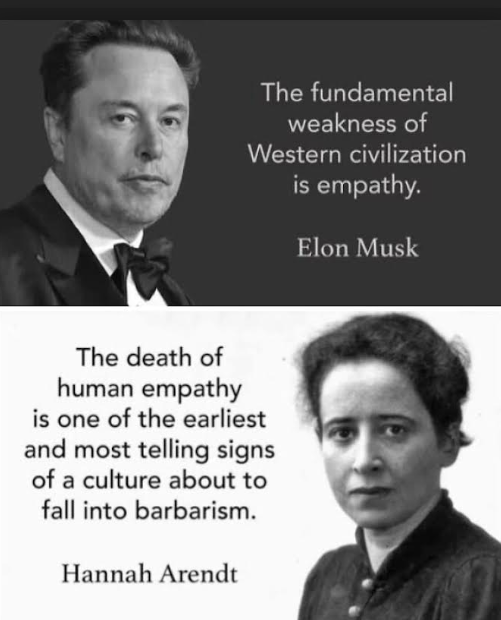
To this type, an appeal to empathy is an intolerable challenge to their projected perfection. Appealing to their empathy is a direct statement that they lack empathy, a mortal insult that must be avenged. If you love the person, you will tend to overlook the early signs of this personality. You do so at your peril, because every bit of mistreatment you tolerate in the name of friendship sets the baseline for what they are allowed to do to you. Once you complain, you break that sacred compact, blindside them with new demands and become an enemy who must be destroyed.

Friendship, loss and Yom Kippur

A good friend is a precious thing. It is painful and difficult to live without friendship. Sadly, sometimes friendships die, like every one of us must in the end. There are various reasons why this happens, some are the fault of circumstances and have little to do with the friendship itself. We hope to keep our most important relationships to the end. This is not always possible.

Sometimes a friendship depends on pretending that things your friend does that hurt you are not really a big deal. We justify this forbearance because of the value of the friendship to us, because of our fond memories of the friend. Tolerating these things requires us to accept the unacceptable by pretending not to feel what we feel. This kind of pretend, with someone who takes no responsibility for inflicting pain on you, always ends badly.

You can either remain unhealthily bound to someone who mistreats you, or, if you stop pretending, you will be angrily blamed for heartlessly killing a beautiful friendship. There is no winning in a scenario where someone reserves the right to hurt you (outside of escaping it); everybody always loses in the end.

Tonight at sundown the holiest day of the Jewish Year, Yom Kippur, begins. This is the spiritual deadline every year for Jews to make peace with people they’ve hurt and to forgive those who come to them to make amends. In light of recent Yom Kippurs, and the eternal silence of friends I loved for decades without reservation, people who did objectively unfriendly things with no remorse, I’ve come to see this day the way Frederick Douglass regarded the celebration of July 4th, in his famous 1852 speech, a hollow sham that would disgrace a nation of savages:

What, to the American slave, is your 4th of July? I answer: a day that reveals to him, more than all other days in the year, the gross injustice and cruelty to which he is the constant victim. To him, your celebration is a sham; your boasted liberty, an unholy license; your national greatness, swelling vanity; your sounds of rejoicing are empty and heartless; your denunciations of tyrants, brass fronted impudence; your shouts of liberty and equality, hollow mockery; your prayers and hymns, your sermons and thanksgivings, with all your religious parade, and solemnity, are, to him, mere bombast, fraud, deception, impiety, and hypocrisy—a thin veil to cover up crimes which would disgrace a nation of savages. There is not a nation on the earth guilty of practices, more shocking and bloody, than are the people of these United States, at this very hour. Go where you may, search where you will, roam through all the monarchies and despotisms of the old world, travel through South America, search out every abuse, and when you have found the last, lay your facts by the side of the every day practices of this nation, and you will say with me, that, for revolting barbarity and shameless hypocrisy, America reigns without a rival . . . [1]

I think of the ugliness of the recent endings of lifelong friendships with those who will insist to the death that they are actually my victims because I can’t forgive them for things they did that I claim hurt me, things they are incapable of admitting they did. I picture these moral paragons dressed in white, fasting and praying tomorrow, rising and being seated, having “productive” “meaningful” fasts and experiencing the glory of God’s forgiveness, even if they are not capable of asking for forgiveness from trusting friends they’ve treated badly. One of these old friends, a rabbi/fundraiser I’ve known since high school, told me two Yom Kippurs ago that God has the right to tell a person who lays his heart bare to his friend on Yom Kippur to go fuck himself. Why not?

May their foul fasting breath (they are too religious on Yom Kippur to brush their teeth before they head off to synagogue) continue throughout 5786, and may it be so inscribed in the Book of Life. Amen.

[1] Right now this speech can be accessed at Constitutioncenter.org. I suspect that will not be the case once Big Balls gets back to work.

How sensitive is over-sensitive?

My father, who had many wonderful qualities, was also locked in a lifelong war never to be wrong. He never escaped the prison of his terror of being humiliated, of feeling again like the helpless victim of vicious abuse he was as an infant, child, teenager. He said as much the night he died. “My life was basically over by the time I was two,” he rasped sadly, in that dying man’s voice that comes at the very end of a losing battle with cancer.

My father was very sensitive, in many cases he was super compassionate and caring. When it came to taking responsibility for his actions that hurt others, he would not. His anger was always righteous, his analysis of who was actually at fault was always flawless (to him), and he had a great ability to turn every conversation to his advantage, to deflect all responsibility by constantly reframing what you were actually talking about. This inability to admit that he was ever wrong caused him to distort reality whenever he felt trapped. He also quickly wrote off people who hurt him, one perceived strike was enough, and he never apologized to or forgave anyone that I can recall.

This distortion, blame and inability to forgive put great emotional obstacles in front of me and my little sister. “Life’s hard enough, Elie,” he said that last night of his life, “without your father placing obstacles in your way, like I did for you and your sister, and I am truly sorry for that.”

Good to hear, finally, and that first and last apology was gratifying, but, sadly, he was dead by the next evening.

I’ve finally come to understand, in the last chapter of my life, that if something hurts you, and you tell the person who’s hurting you that it hurts you, and they continue to do it, you have to get away from them. 

People who continually hurt others have a problem they will always blame you for.  Their problem only becomes yours if you tolerate being blamed for it. It turns out you can’t negotiate with someone who insists on their right to do what you have told them hurts you.  They will immediately become the victim of your unprovoked attack, you are persecuting them, they’ll cry, tears of betrayal in their eyes. This insistence that you are victimizing them is pure contempt for you and your feelings.

Once you have seen contempt on the face of someone close to you, you cannot unsee it.  When you learn a person will never change their insistence that you are solely to blame for every conflict, will never compromise or concede anything, ever, there is only one move: you need to get away from them.

I fondly believed all of my life — to my detriment in the end, when I was metaphorically lynched by a group of my oldest, closest friends during one of the most vulnerable times in my life — that every disagreement or hurtful pattern with people I cared about would yield to goodwill, humor, a gentle, reasonable presentation of facts, an exchange of views, an accommodation of everyone’s feelings.

Displays of genuine friendship can mend a painful situation with someone who cares deeply for your feelings. Someone who loves you yields to what you need. They don’t need to be persuaded that you’re hurt. They can acknowledge when they’ve hurt you, and try not to do it anymore.   

All of the goodwill, friendship and benefit of the doubt in the world will not move someone who, damaged enough early in life, can never, ever, admit they are wrong or ever did anything, even unintentionally, that could possibly hurt you.

You will hear from these types that you are one who has the problem.  Strictly speaking, this is true, the problem you have is that you are locked in a relationship and still trying to reason with someone like them.  They will tell you that you are over-sensitive, self-pitying, ruled by childhood trauma you never overcame, blaming them unfairly, that you frighten them, that your expectations of others are too high, that you can’t control your emotions, you’re too analytical, blind to how much they love and respect you, that you don’t realize how hurtful you’re being to them by unfairly accusing them of hurting you. 

To put it bluntly, these fucks will say absolutely anything to avoid conceding anything to you about the reasonable, foreseeable effects of their hurtful behavior.  When you see this behavior is a pattern, and it doesn’t stop, weed these folks out of your life, there is no other healthy option. There is really no middle course with someone who insists on their right to treat you as they see fit, even if you tell them many times that you can’t stand the way they treat you.

I don’t really mind being called over-sensitive anymore, not as much as I used to, anyway. I am sensitive, exactly as sensitive as I need to be. I would like to become ever more sensitive, because sensitivity is where all the beautiful things, as well as the painful ones, live.  I am sensitive because I am sentient.  I will not deliberately hurt somebody in my life, I try not to hurt strangers either most of the time.  If I find out I’ve hurt someone I know, I’m quick to make amends.  If I am over-sensitive, I greatly prefer it to being insensitive, under-sensitive, whatever the opposite of over-sensitive is.

Being sensitive, and knowing exactly what causes us the most pain, we need to learn to protect ourselves from repeating familiar harm.  I have found, over and over, that once I see contempt in a friend or family member, or anyone else, and contempt becomes their final answer, that I always feel immediate relief when I get away from that person.  Contempt as a final statement doesn’t heal, doesn’t change, is not amenable to negotiation. 

A show of contempt draws a life and death battle line, humiliating to the person who shows contempt, who can then never back down for fear of more humiliation. Their agitated implacability makes finding peace impossible.  Contempt is a relationship breaker, walk away from it and you will always feel tremendous relief. It is one horrible thing you no longer have to try to accommodate your sensitive feelings to.

There is enough of that horror in the world we can do nothing about, without having it inflicted by those close to us who insist, irrationally, counter-factually, that they love and admire us and that we have to love them no matter what because of that. Love is sensitivity to the feelings of the person you love.  It is nothing else.

The tyrannical style

The tyrannical style is sickening to observe, exhausting to read about and stains the history of the world with the suffering and blood of the meek, but it is something essential to recognize, mobilize against, defeat or get away from.    The tyrant is concerned only with power over others and there is no consideration for them outside of being the one in charge of everyone around them.   This personality type sees life as a brutal competition that inevitably involves combat to the death.   They never back down, not to reason, appeals to decency or anything but superior force.   If you can’t safely get away from them, you literally have to club them unconscious to end the senseless war, and then get away from them.

Being a tyrant is not a healthy or helpful way to go through life, of course, human evolution and all progress has been based on cooperation, increased understanding developed by groups working toward common goals.  There is nothing healthy or useful about a tyrant, except to others as monstrously disposed to domination and selfishness as the tyrant himself.   One tyrant is always useful to another tyrant, if they can find mutual benefit in an alliance.

These motherfuckers appear in every walk of life.  They are domineering colleagues, abusive parents, faithless partners, treacherous playmates.  They appear as corrupt public servants, mobsters, executives, bosses who take pleasure in demoralizing and humiliating employees, surgeons who blame their patients for not asking for the proper tests prior to harmful surgery. 

There is, sadly, no shortage of these twisted creatures in our toxic society where everything is for sale, every interaction monetized for maximum profit,   They are, many are duped into believing, the “winners” among us, because they “rule.”

You eventually learn that such creatures are always created by tremendous damage done to them before they had anything to say about it.  There is a genetic component, to be sure, you can see the brain scans of a certain type, drowned in certain hormones in the womb, emerging devoid of empathy, connection or the capacity for regret.  If you add to this genetic code mistreatment by caretakers, particularly traumatic violence, or continual fear and humiliation, you get your adult tyrant, or serial killer, or simply someone who cannot stop themselves from raging whenever they feel defied.  Disagreement of any kind is seen as defiance to them, and will not be tolerated.

You may never discuss what happened, they don’t care what happened, it never happened.  They live in a present where if they are not 100% in control, and acknowledged as your superior, there will be rage until you comply.  The irrationality of these formidably insane fuckers makes any kind of meaningful conversation impossible.  You will hear them angrily insist on plainly ridiculous things.  If you produce evidence that what they are saying is not based on anything real they will forcefully counter that the lack of evidence for proof of their position PROVES that evidence has been hidden and that you are lying.  It is sickening to be locked in a dispute with one of these sick fucks.

My advice is avoid them at the first sign of irrational insistence.  It never gets better, it only intensifies until you finally react with anger.  When you do: trial by combat, usually against  at least 10 to one odds.  Violence, of one kind or another, is the only thing these twisted souls are capable of when their claim to perfection is not accepted.

A few words about real friendship

There are some people who reveal an ugly side of themselves, often at the worst time for you. You cannot unsee the ugliness of contempt once it reveals itself to you. It’s human nature to make excuses for that person, if we love them, but once an ugly pattern emerges, with the insistence that only you are to blame for any bad feelings, wishful hoping will not change the person you are making excuses for or your relationship with them.

Just because you love dogs, and dream of having an affectionate lapdog, that love doesn’t turn the fish struggling in your lap into a dog.  The fish will always die, no matter how many beautiful, friendly fish you try this with.

I had a childhood friend I haven’t seen for many years at this point. He called periodically and we spoke calmly about things in our lives. The reason we don’t see each other anymore is that in spite of provoking me to anger every time we met, for years, he refused to acknowledge this, instead insisting that I have a problem with my temper.

We all have a problem when we lose our temper, but that is another story. We do not all provoke our closest friends every time we get together with them. We also don’t all reflexively fight to deny that we are doing anything bad to anybody, ever.

I urged him several times over the years, if you see me start to get upset, hear my voice tighten, see my muscles tense and my face redden, pump the brakes and let’s change the subject for a while. He doesn’t know how to do this. It’s not his problem. It is mine, as he always reminded me. So, in the end I finally did what I needed to do not to be provoked by someone who can’t help himself. I stopped pretending this handsome fish was a cuddly lapdog.

He is, sadly, unable to view his actions, and the actions of others, with the same clarity. To him we were still friends, somehow, because I took his calls and we talked on the phone once in a while. I always like talking to people, it is one of my favorite things to do.

I like comparing notes on what we’ve learned over our aging lives. He listened as I recited hard lessons I’ve had to learn. This made him feel close to me, that I was always honest with him, and talked in a relaxed, nonjudgmental way. I didn’t mind talking to him, but that’s a much different thing than us being friends.

Friends comfort each other during painful times. Friends ask good questions when they don’t understand something. Friends extend the benefit of the doubt when the other one is off kilter, gently find out what’s wrong, how they can help. Friends accept responsibility when they hurt their friend. Friends make sure that ill-feelings do not fester in their dear ones. Friends are responsive, and honest, when a friend expresses unhappiness with the way things are.

Not all friendships can always be saved, though some can. No friendship can be saved if one friend is always blamed for any conflict, unless the blamed person is a masochist.

If I tell you a sad story of death, with a terrible lesson I reluctantly had to learn, and you reply that it was a beautiful story of life, with an inspiring lesson that is the opposite of the lesson I described, what can I possibly say, without being dishonest, that will make us friends again?

The new N-word (narcissism)

I have been forced, over the last couple of years, to accept that there are people utterly incapable of compromise. When you are in a relationship with one of these folks, often called narcissists, and find yourself in any kind of conflict with them, your choice is accepting their blame-shifting terms, and all blame, or getting the hell away from them. Many of us have come to recognize and understand this destructive personality type in recent years. They see the world in black and white, win/lose, and are compelled, by a gnawing terror of humiliation, to act as they act. They are incapable of real self-knowledge, vulnerability or change.

As a result of constant bombardment by an angry, entitled, mentally unstable, destructive MAGA president, and his hand-picked loyalists, we have all learned, along with the dark, neutral, meaning-obscuring term “transactional”, the term “malignant narcissist”, a psychologist’s post-World War Two explanation of evil. Though a diagnosis of malignant narcissism is not found in the DSM, psychiatry’s bible of diagnostic categories, its workings can be easily observed in the real world. It describes a megalomaniac so intent on dominating others that they will do anything, including violent intimidation and mass murder, to be the most important human on the planet.

In 2022 “gaslighting” was Merriam-Webster’s (famous longtime dictionary) word of the year. It was the word of the year because it described what is being done to the American public, constantly, by a powerful group intent on absolute power and completely unbound from any sort of ethical restraints. Gaslighting is, according to Merriam-Webster:

psychological manipulation of a person usually over an extended period of time that causes the victim to question the validity of their own thoughts, perception of reality, or memories and typically leads to confusion, loss of confidence and self-esteem, uncertainty of one’s emotional or mental stability, and a dependency on the perpetrator

But in recent years, we have seen the meaning of gaslighting refer also to something simpler and broader: “the act or practice of grossly misleading someone, especially for a personal advantage.” In this use, the word is at home with other terms relating to modern forms of deception and manipulation, such as fake newsdeepfake, and artificial intelligence.

When our president and his acolytes practice this technique, and demonstrate every other trait of the narcissist, and no consequences befall them, it empowers anyone inclined to act this way to pull out all the stops. Destructive behavior is normalized, as we say, and suddenly angry drivers feel free to blow through traffic lights as civility itself becomes a vulnerability.

Gaslighting is a major technique of the narcissist. You can’t be right because I have a perfectly good explanation, very convincing, for why you are wrong, insane, deluded, crazy, dangerous, a threat and I am your innocent victim, who loves you very much. Narcissist, I think, was also a recent word of the year, I may be wrong but I’m too lazy to keep searching. There is much on-line opinion that the term is overused. In any case, narcissism is the new N-word. It describes a person so damaged early in life that they construct a superficially confident, brittle, grandiose public persona that can never be wrong, attacks when criticized, blames others exclusively and will fight to the death over any conflict. One of their chief weapons of attack is gaslighting.

Our best hope as humans is avoiding assholes who act this way and practicing mutual vulnerability in our personal lives. This allows us and our loved ones to make human mistakes without immediately hunkering down into kill or be killed mode, as is the narcissist’s reflexive reaction. It is an open question how long it takes to recover from a narcissist’s abuse, full recovery may be elusive if you’ve been subjected to it long enough. On the other hand, the only way forward is through healing, and part of healing is learning to protect yourself from this type, once your antennae is attuned to the clear warning signs of someone who is so perfect that they will kill anyone who says otherwise.

Intermittent Empathy

I described my mother as someone with intermittent empathy. She could be very empathetic but she could also be completely oblivious to what other people needed or wanted. How, the therapist asked, can someone be intermittently empathetic?

My mother was beaten down by her mother. An only child, raised by a talented, demanding, strong-willed mother whose entire family had been murdered in Ukraine when my mother was fifteen, she bore the brunt of her mother’s sorrows, terrors and frustrations. Her father was sympathetic, but also dominated by my grandmother, he could only do so much to protect his daughter. My mother clearly grew up with a lot of pain and anger she constantly had to push down. As a result she had a very low threshold for frustration and flew into anger very easily.

My father had it even worse than my mother. His mother, a tiny, religious maniac famous for her uncontrollable temper, literally whipped him in the face from the time he could stand. On his deathbed my father finally acknowledged the damage this had done to him. “My life was basically over by the time I was two,” he said in a raspy, dying man’s voice.

When my father flew into a rage my mother was always quick to join in. It is, I understand now, a primitive, childish reaction, the same one that animates any lynch mob. Another person’s righteous rage, forcefully expressed, gives you permission to vent your own righteous, often inchoate, anger. As a child I was regularly exposed to this tour de force tag team of parental immaturity. There was little I could do, during an onslaught, outside of telling them both to fuck off. This response, of course, made their anger all the more righteous and me all the more deserving of it.

Intermittent empathy works like this. Hours after the bloody conflict, when my mother was calm, and by herself, I’d sometimes be able to present my side of the most recent dinner table battle. I’d lay out what happened from my point of view. She would listen. Sometimes I’d be able to persuade her that I’d been treated unfairly. When I was able to get my mother’s understanding, I felt her empathy. I have to believe that this intermittent empathy probably saved me from my sister’s fate. My sister, never really having experienced either of our parents’ empathy, until late in life when our father became her chief ally and emotional and financial supporter, became exactly the dreaded parent that tormented and damaged her as a child.

I had a close friend, call him Flack. He often expressed his torment at how difficult it was to get empathy or support from his superficially charming wife, call her Gina. He told me many times, with a lot of emotion, how humiliating it was to have to beg for things from a life partner who should give him those things without being asked.

Empathy, of course, is at the top of the list of what each of us needs from our intimates. I’ve learned, since my execution at Gina’s orders, that Gina is an extreme case, probably a psychopath in her need to be right no matter what and her uncontrollable desire for maximum punishment of anyone who makes her feel wrong. Flack, it turns out, is the classic vulnerable narcissist, he will do anything for anybody at any time, even strangers, and he is heroic in these public efforts, but he is vigilant and quick to rage at anyone who might notice his rigid need to be seen as perfect.

No human has ever been perfect of course, but if you are damaged enough to believe you must be perfect, it’s probably impossible to recover from that. Empathy for the imperfections of others as a first reflex is ideal. I tell you I’m hurt, you ask me why. You listen, show you understand why I’m hurt. Then you can talk about the intricacies of the situation, propose solutions, etc. Empathy ideally comes first. It is the hallmark of our healthiest, most life-sustaining relationships. In my experience, with most people, empathy is often intermittent, as my mother’s was.

People are self-centered, defensive, distracted, react with solutions before they hear the problem, want to fix things before they know what’s broken. We are humans, puny earthlings. Still, empathy that has to be prompted by a clear, calm presentation, is infinitely better than what my old friend Flack has to contend with — token empathy conditioned on absolute obedience to the will of someone with very little empathy.

Given the choice, we’d all like empathy without having to ask for it. Also given the choice, real empathy we can elicit from someone else is infinitely preferable to the situation Flack finds himself in. With a mate incapable of empathy he is always required to peevishly beg for it, which he finds humiliating.

This eternal, reflexive humiliation leaves him angry much of the time, performing a lonely dance of brittle perfection. The only time he feels intimately connected to this woman he has bound himself to is when he is vindicating her honor by cutting off the head of an old friend she now insists is a deadly enemy. They are never closer than when he is manfully serving her need for revenge. For me, even the spottiest intermittent empathy beats that irresolvable fucking tragedy every day of the week.

Trump pardons a corporate “person”, a fellow psychopath

Breaking news: since John Roberts and the Federalist Five ruled that no presidential pardon can ever be questioned in a court of law, Donald Trump gave the first ever presidential pardon to a corporation. Some bitcoin outfit incorporated in the Seychelles that had some trouble with authorities over shady dealings, money laundering, trifles. They got an absolute, blanket presidential pardon. Even if Trump committed a crime in granting the pardon (say he was paid $50M for the pardon by these bitcoin bros), pardons are part of his core presidential powers, so — absolute immunity, even if he took a $50,000,000 bribe to grant the unappealable pardon. Suck on it, cucks.

Meantime, a few words about the modern, American global corporation.  I’m thinking about corporate medicine since a recent run in with a urological corporation, the biggest in the USA, apparently, whose top local branch biller shanked me in the urethra with a rusty ice pick a few weeks ago:

You  can’t avoid the word psychopath to describe the corporate  person.  A psychopath cannot feel empathy or regret and acts only in his own self-interest. Very few psychopaths are serial killers like the ones we see on TV.  Most are charming, determined, ambitious, highly intelligent, strategic, great salesmen, fearless entrepreneurs, CEOs, top surgeons, pundits and the highly focused leaders of many professions. James Fallon, affable neuroscientist and expert in the psychopath’s brain, who discovered he was a psychopath at the age of sixty, lays out the entire constellation of psychopathic traits.  The thing that convinced him he was a psychopath, after the familiar PET scan of that distinct brain and the unanimous answers of all of the people in his life indicating that he was indeed a psychopath, was that he truly didn’t care about the conclusive diagnosis.

In order to understand the nature of corporate medicine, it’s necessary to grasp the essential personality of the Supreme Court-created “person” that is the modern corporation. The case for the psychopathy of corporations is made beautifully in a 2003 documentary called The Corporation, (now available for free on youTube, highly recommended). Corporations possess all the attributes of psychopathic serial killers. These traits, as outlined by an FBI profiler of serial killers, are: callous unconcern for the feelings of others; incapacity to maintain enduring relationships; reckless disregard for the safety of others; deceitfulness: repeated lying and conning others for profit; incapacity to experience guilt; failure to conform to social norms with respect to lawful behaviors. It is ridiculous to expect the human representatives of such a “person” to “first do no harm” since the entity they serve cannot feel empathy or regret and has only one concern – maximizing profits. It is better to bill for an unnecessary, painful operation without doing any prior tests, and to hurt the patient, than not to bill at all.

A corporate “person” has only one legal duty, according to the Supreme Court, to maximize shareholder profit. To this end a corporate person, unburdened by empathy or regret, often has a high tolerance for what economists call ‘externalities’, the unfortunate downside outcomes of corporate profit-making activities. The price of settling a class action lawsuit from a community downstream whose children are poisoned by lead, or any toxic bi-product of the corporate product, for example.

The corporate “person” is a complete psychopath. Corporate culture encourages the human embodiment of its essential character to rise to leadership positions. The corporate structure keeps every psychopath working for it free from personal liability for anything. Fair is fair. The corporate personality also explains a lot about the severe, mechanical, sometimes deadly, practices of corporate medicine. The awful truth is that we are currently living in the judicially-approved, psychopathic billionaire-created Age of the Corporation, in other words, the Golden Age of Psychopaths.

Death by corporate medicine (part 1 of many)

Corporate medicine is medicine conducted, primarily, for the profits of shareholders in the corporation.  Health insurance, healthcare, pharmaceuticals, death prevention in general, forms the most lucrative sector in the American economy. To be sure, decent medical results are required, usually, for a corporately held medical group to stay in business, but make no mistake: the primary goals of the board of directors and CEO of the corporation are for doctors to see as many patients as possible, do as many expensive tests and  surgical procedures as possible, bill for every contact with a patient and make the most money for the corporate “person” that employs the medical staff, invests in the medical technology, conducts public relations and fundraising in the community to be seen as self-less healers.

You will notice fewer hospitals with an ombudsman or patient advocate.  These skilled professionals calm down patients who are upset, make them feel heard, resolve conflicts that can complicate healing.  They also avoid lawsuits against hospitals and doctors.  None of these outcomes are as important as a good security system to remove agitated patients who demand things of doctors or medical staff.   I will be writing about death by corporate medicine again soon, but for the moment, here’s one example of corporate medicine that might seem subtle, though it doesn’t feel that way to the patient.

The patient (me) was scheduled for an emergency cystoscopy, the insertion of a miniaturized camera into the penis, down the urethra and into the bladder.   I’ve had these before, they sound much more nightmarish than they actually are.  The phrase associated with things like cystoscopies is “most patients tolerate” the procedure, often with an initial grunt.   I was nervous about this emergency test, since my urethra was still painful from an unnecessary surgery conducted on me two weeks ago by a surgeon who, although charming and a great salesman, never did any test before plunging into my urethra and tearing the tissue therein.

I was told by my new urologist that if I arrived one minute after my appointment time the emergency cystoscopy would not be done.   I arrived ten minutes before my appointment time.  I then waited ninety minutes for my appointment.   During those ninety minutes I urinated five times.  I was nervous, and annoyed to be kept waiting this long.   I had to go again and again because my bladder doesn’t empty easily, but every one of these pisses was pretty much pain free, especially compared to the relentless pain of the last two weeks.  Then I was escorted in for the cystoscopy.  I told the attendant that a lab report on my recent urine culture was back and that if I had an infection I probably wouldn’t be having a cystoscopy.  He turned us around and took me into a regular consult room.

When the doctor finally arrived, I had one thing to say, a final word to clear up our initial misunderstanding.  I told her I needed ninety seconds.  I wanted to make it clear that I respected her longtime colleague, and my longtime urologist, and that we’d been having a mutual bad day the last time I saw him, that I was under pressure from recently diagnosed kidney disease, the inability to walk and other medical issues.  She cut me off about ten seconds in, I was by now, apparently, her last patient of the day.  She was not interested in rehashing any of this, she said.  She told me I had a massive urinary tract infection and that was the cause of my pain.  Obviously we weren’t going to insert a scope into a painfully inflamed urinary tract.

I could have been told that ninety minutes earlier, by the doctor’s smart, engaging personal receptionist.  The knowledge that I wasn’t going to have to tolerate a painful (initially) procedure  might have saved me two or three trips to the bathroom.  It certainly would have spared me some anxiety.   But that kind of thing is strictly the patient’s concern, not anyone else’s, in a corporate setting where your doctor is seeing twenty other patients a day.

Because I had urinated so many times while in her office, because I had a massive infection, the doctor assumed that I was still in as much pain as a few days earlier when I was still recovering from an unnecessary procedure (as the surgeon conceded afterwards, I need a different one) that had torn tissue in my urethra.   Based on the lab results of a urine culture and her assumption about urinary urgency and pain, she prescribed the Cipro and told me to take two pills, phenoazopyridine, three times daily, to help with the urgency and pain of urination.

I was unable to convey to her that balancing my water intake (after days of trial and error, 48 ounces seems to be the sweet spot) is the best way to keep the urine flow going throughout the day.  I began telling her that my previous experience with phenoazopyridine had left me unable to urinate at all for hours at a time.  If the goal was, as she said, to keep urine flowing to help protect my kidneys, and empty my bladder as much as possible, this drug, which had not worked for me pain-wise either, was not one to take.  She quickly dismissed my experience and encouraged me to take it three times a day, whatever it said on the box.

Updating this post just now I seem to have deleted my final paragraph. Had the doctor asked me my level of urgency to urinate and pain during urination, instead of making hasty assumptions about what I needed to do, I’d have given her a pain score of two on each of those, as opposed to a solid 7 to 8 several days ago, when my torn urethra was still inflamed. I didn’t need pain medication for the infection, only the antibiotic to cure it. I won’t be taking phenoazopyridine again, and I’ve regained much of my ability to urinate as before after last night’s dose, but … seriously, what do you expect from a doctor who works in the setting of corporate medicine? She doesn’t get paid to schmooze or ask patients about their feelings, there’s absolutely nothing in it for a doctor with a tough quota to meet every day.

Next time, remind me: corporate medicine’s denial of any mind/body, affective/corporeal, emotional pain/physical healing connection.

There are two kinds of anger

There are two different forms of anger, one saves your life, the other destroys it in the end. The life-saving form of anger has an evolutionary/survival purpose. Suddenly flooded with adrenaline, cortisol and who knows what other miracle substances, you explode in a show of threat to scare off something that is threatening you. This anger, when successful in keeping you safe, is followed by relief. The flight or fight chemicals in your bloodstream dissipate and you go about your business. There is another kind of anger that is extremely dangerous to our bodies, our lives and the lives of those around us. This shapeshifting anger lingers, keeps your body coursing with fight or flight chemicals, which do great harm over time. This kind of anger is always ready to leap out when enflamed, often is not aimed at an appropriate threat, can’t be calmed, does not dissipate when the threat is warded off because the threat, which is internal, is never gone.

Anger that makes someone back off when they are in your face and unable to control their aggravating emotional reaction is good anger, anger necessary for survival, it makes the immediate pain stop.   It doesn’t need to stick around after it has done its job.  Seedj and I have expressed this kind of anger regularly to each other, especially during these recent hellishly aggravating weeks, when we have stepped over some line in our mutual pain and frustration and angered each other.  Anger is not easy, not pretty, not clean but it is sometimes necessary, and when it is, if understanding and reconciliation follow as soon as possible, no harm is done. You can learn valuable lessons from another person’s explanation of what made them angry, learn to do better. Anger is particularly common when personal stress is running high, and aggravated by external events in the larger world, where, at the moment, every corporation and institution appears to be lining up, and ponying up big bucks to Dear Leader, to fund the gold-plated, gloriously violent MAGA swastika revenge parade that America’s greediest, along with the stupidest, angriest and most violent, are all spoiling for.

The anger that kills is the building set of grievances that gather, linger and are endlessly swallowed after occasional bitter complaining, constant passive-aggression, or violence, achieving nothing to resolve any of the causes.  This inchoate anger is the unresolvable, constantly recurring, self-fueling anger that creates every cripplingly painful health problem Dr. John Sarno talks about.    It has no end, is tangled in a self-hatred and self-blame that can never be surmounted, so it also kills relationships, including the crucial one with the self.