Dying for Principle

It has been said that the mark of a life worth living is being willing to die for your most deeply held beliefs, your principles. This sounds like a profound formulation, but the jury, as far as I can see, is still out on this one. If someone is coming to kill you or someone you love, and you have the means to fight back, by all means, defend yourself and your loved ones, to the death. But it is rarely this simple.

Usually, in matters of principle, there are no lives directly in the balance, but, equally important principles, larger than any individual life, at stake. You can see the problem right away of willingness to die for your beliefs as the mark of a life worth living: the nineteen Al Q’aeda suicide bombers forced those planes into buildings for their deeply held principles, their most fervent beliefs. Does it make them admirable in any way?

My father considered himself a man of principle, and in many ways he was — in the best sense of the word. As he was dying, he exerted himself to take one last principled stand. It was important to him, before he breathed his last, to apologize, at least to his son, for being such a relentlessly combative father. Everything in life was a matter of principle for him, though sometimes the principle was that he was simply emotionally unequipped to do what he knew deep down he should have done.

As a father he believed he was always acting out of love, and duty to his children’s best interests, but he realized, as death came for him quickly, that his black and white view of the world was not only stupid (he lamented missing the nuanced palette of gradations that would have enriched his life), but had exacted a terrible price on those he loved.

“Life is hard enough,” he said, in a dying man’s voice, “and instead of helping you, like a father should, I put even more obstacles in front of you and your sister, made your lives so much harder…” He then apologized for the only time in memory.

The forces of our personality that we can’t see are the ones that bite us the hardest, this also goes for the hidden obstacles in our path, the things that infallibly trip us up. They are truly the most destructive demons we must battle in our effort to learn from our mistakes, to become better people.

In the last few years I’ve made a close study of my father’s life, looking for lessons for my own. I may have stumbled on an important one recently that had been impossible for me to see until the other day. It was a painful thing to realize, for the first time, at 64, and it hit me with some force. It also gives rise to a great irony of my long, solitary attempt to create a meaningful public memorial for my parents and their erased ancestors, as I will try to explain.

My father was an intelligent, well-read man with a grasp of history and a good sense of humor who fought like the devil his entire unhappy life. He believed people cannot change, because he could never change, never hope to heal from or overcome the deeply instilled pain of a childhood of abuse. In the end he had to acknowledge, in the face of my mildness as I listened to his final confession, as I did my best to reassure him, that he’d been wrong to reject the idea of working to change himself in any way.

He resisted the idea that people can work to change themselves as as a matter of principle, mind you. He was honestly looking life in the face, as he saw it, while weak people who indulged in endless therapy were deluding themselves, and the victims of pathetic quacks working in a field where even the supposed experts wildly disagreed about the fundamentals of what worked. His unshakable belief that our inborn traits and traumas mark us for life was always argued as a matter of principle.

It was insane, he insisted, to think that we can meaningfully change our natures, natures unknowable to ourselves that are largely innate and then baked in before our consciousness is even fully formed. It was no doubt sobering to him to see his lifelong adversary standing by his deathbed without any trace of anger or judgment, without recriminations.

We have too many examples of this kind of mad belief in “principle” to need more than a reminder. Look around, everything in public and private life has been reduced to inarguable zero-sum matters of black and white, non-negotiable “principle”. The principle, for example, that liberty itself depends on defense of the personal right to infect whoever you want during a raging pandemic. To insist that everyone take simple, easy to follow, proven effective precautions to slow the spread of a deadly disease, supposedly for the common good, is AN ACT OF INTOLERABLE TYRANNY that must be resisted!

If you are acting on deeply held moral principle there is little room for discussion with unprincipled people, compromise is certainly out of the question. In my father’s case he saw the world, as billions now do, as a raging, merciless war zone; perhaps not an unreasonable view in many ways.

The harder to defend part was his view that the family dinner table, too, was an eternal battlefield, bloody and savage, where in the end, he warned his young children angrily, no matter how many battles they might think they’d won, they would “lose the war”. In the end he would prevail. It was a matter of principle. An insane principle, perhaps, but a principle nonetheless. Also, of course, the bit about losing the war was a self-fulfilling prophecy in many ways.

Fighting in this senseless war of principle every night shaped me in ways I can see and ways I can’t see. I am like a former child soldier, in some deep recess of my soul I was shaped and scarred by the brutality that was a regular feature of my life at the dinner table war zone, night after night. My sister considers that I suffered more than she did, because while she often kept her head down and endured the attacks, I always fought back. I have the opposite view, though both sides of the argument have merit.

I learned how to use my intelligence to cooly inflict maximum harm on the old man when the fighting got ugly. I learned how to provoke him to rage with a slight shift of my mouth, the look in my eyes, a half turn of my torso, an inhalation of breath.

These skills did not serve me well in the world. Confronted by a bully at any point in my now long life, I was helpless, I could not avoid a confrontation in the end. Once I recognized an unreasonable person craving some kind of violent domination I’d eventually smirk and say the very worst possible thing “you’re an unreasonable person, craving some kind of violent domination, you know you’re a weak, contemptible bully, don’t you, asshole?”

It was not in my skill set to smoothly back away from someone who made it clear they wanted to fight for no discernible reason. It is still hard for me to do when suddenly confronted with this behavior, as much as I strive to avoid confrontation with unreasonable people these days.

It turns out a lot of change is possible with hard work, self-acceptance and the blessing of supportive friends, while other, deeper changes are very, very difficult to make.

You can learn to recognize when you are getting angry, what is about to make you angry. You can take steps to resist getting angry, to allow your breathing to calm you a bit, to control your reaction, to not blurt out the regrettable words that can’t be taken back. There are many things you can learn to do to have a less angry, less violent life.

My father may have been right about one thing – you may never be able, once the hateful game is afoot, to lose that provocative set of your mouth, the look on your face, the exaggerated intake of breath that makes someone want to slug you – it’s baked in, it’s yours to keep forever, no matter how hard you might try to disown it.

Once you do any of those angry moves, it instantly proves the point of the person who insists you’re a ruthless killer, no matter how hard you try to deny it, no matter how patient you’ve already been, no matter how much better you might be doing at self-restraint than before.

I can’t help thinking of political oppressors in the same way. Provoke a hurt response and then punish the person for that response. Keep a knee on somebody’s neck for years. When the person gets up, and is angry about the mistreatment, it proves the oppressor’s point. “That’s why I had to keep my knee on your neck. Look how fucking angry you are!” Bill Barr is a master of this particular despicable trick.

Of course, the beauty — and horror — of being human is that anyone can convince themselves that they are only acting for highly principled reasons. It’s the other side – you know, that is doing all the hating, cheating, obstructing, killing, drinking the blood of murdered child sex slaves. We are only doing these things because THE OTHER SIDE IS DOING IT ALREADY! It’s a matter of principle – and survival.

Here’s what hit me hard the other day. I decided at a certain point a few decades back that I will not tolerate abuse in my personal life. I try hard not to abuse anyone’s feelings, and if I do something that I learn hurt somebody, I am quick to try to make amends, first by apologizing. I’d will this to be a universal principle. I saw the other day that this is only a first step, that it really prevents no part of your lowest nature from coming out if the provocation is sufficient. You can read these posts over the years for several examples of fatal fallings out I’ve had with longtime friends and acquaintances. Here are three off the top of my head. Bear in mind that each of these characters has their own version of these dramas that make me as much the irredeemable villain as these may make them appear to be.

I had an acquaintance I used to see once or twice a year. A writer by profession, a great storyteller with a merry aspect, always good for several hours of spinning interesting tales back and forth and having some knowing laughs. We weren’t friends beyond that, but we liked each other. When I was first working on the book about my father we discussed it over dinner and he seemed intrigued. He told me to send him some pages, he’d give me his two cents. I sent him some pages, didn’t hear back, sent a few more, didn’t hear back, asked him about it, didn’t hear back.

Was it unreasonable of me to feel hurt? Probably not. Was it unreasonable of me to expect a working craftsman of a writer who had never published anything of a personal nature to have any meaningful input on my first draft of a highly personal memoir? Maybe yes, maybe no. Writing is writing, you could say.

In my mind, his year-later defensive email that I was being an asshole to hold it against him that he may or may not have ever commented on pages he doesn’t even remember if he ever read, and that if he had read them he’d almost certainly have written back about, was abusive. Perhaps not everybody would interpret this response, or the ones that followed, as abusive. I did. The gloves I’d carefully kept on came off, I ripped him into several bleeding pieces and walked away [1]. Proving to him, as well as to his ex-wife, that I was indeed a vicious, unreasonable asshole. Case closed, end of story.

Many people might have had a different reaction than mine. OK, they might reason, he was the wrong person to ask for this feedback, even if he offered it. OK, we were never really friends, just acquaintances, it was unreasonable of me to expect him to be able to react to these deeply personal pages. OK, he admitted, toward the end, that he was raised to be insanely competitive, maybe these intensely personal pages were something he felt overwhelmed by, that he felt he could not compete against. I don’t know. I do understand now, that only someone raised in a war zone would calmly slash the guy five times with a sharp sword over it, making sure he knew why he was good and dead, before walking away [again– 1].

Same with the longtime musician friend who offered to do me a favor, then changed his mind, then insisted I had no right to ask why he’d changed his mind, then admitted he did it because he’s been harboring a lot of anger and resentment against me and this was his way of telling me “fuck you.” Many people might file this somewhere, lower their expectations, no longer think of the guy as a friend – maybe even write the guy off. Not everybody would feel compelled to cooly and methodically remove each of his limbs and pile them in front of his head and torso in order to ensure he’d be hurt enough to shut the fuck up [2].

One last, most recent one. A very good friend, since late childhood, and I came to (figurative) blows a few months back. He’s a very smart guy with a dark sense of humor and we’d known each other since Junior High School. In hindsight, most of our intimate conversations were about my troubles. He told me once that he doesn’t like to complain about his life. He always seemed to have a good appetite for my troubles, though. In the latest round his efforts to help wound up antagonizing me, several times in a row. The more I tried to explain why, the more he told me I was wrong, not making sense, that he still didn’t understand. The clearer my explanations became, the more he asked me to please explain further, more clearly, since he was finding it impossible to understand what I was talking about.

A game for suckers, no doubt, and by then I should have recognized it and gracefully written him off, reduced my expectations to near zero, preserved what I could of our long friendship, if only for the sake of our mates. Something was rotten here, clearly, but I kept trying to explain what he kept telling me he still couldn’t understand. I kept believing in this mutual good faith effort we were not managing to make.

He got angry a few times, snarled and even hung up on me during a tense conversation after gruffly apologizing, although he really wasn’t sure what I needed an apology for or why the hell I insisted on shoving him into a corner when he’d done nothing any other good friend wouldn’t have done in his situation.

It is what happened last that lingers for me. I eventually saw that this was an emotional impasse I could not get him to understand with his fine and subtle mind. Emotionally, he was unable to recognize or take responsibility for the hurtfulness of his actions. He waited weeks to apologize for his little temper tantrum, and the follow up text that he was done being “reamed” by me, even as he wrote me several long emails attempting to be conciliatory and expressing a desire to do everything possible to save our friendship.

In the end he once again insisted he didn’t understand why or how I could have been so hurt by anything he might have done, though he apologized again, for whatever it might have been. He made an unusual complaint: since my communications had been so mild mannered he’d had a very hard time realizing how much I’d been hurt by his inadvertent acts. If he accidentally stepped on my toe and I didn’t cry out, how could he possibly be expected to know how much it had hurt me? When in the end I did cry out, he was inconsolable.

Again, why bother crying out at that point? It was clear, over and over, that my old friend did not have the emotional bandwidth to understand what was missing in our friendship. He insisted I was his dearest friend ever, that he loved me and would fight to remain friends. It was equally clear that he had much different expectations of a lifelong friendship than I did. My crying out, upon request, by going through several emails and pointing out the seamless folly of our back and forth, struck a fatal blow in the guy. It was unkind and hurtful of me to make it so clear that there was nothing further to discuss, he wrote. In the end, he couldn’t fathom my unprovoked viciousness.

In each of the above cases, an argument could be made that, after all my attempts to be reasonable, I did nothing to regret in writing a suitable ending to each of these dramas. In one, an acquaintance set me up for a cruel disappointment he then blamed me for. The musician friend had a long list of unspoken reasons to tell me, in no uncertain terms, to go fuck myself. My old friend’s limitations only finally overwhelmed me when I was in a tight spot and his inability to empathize kept making it tighter. In each case, not much to salvage, whether or not I insisted on having an unkind last word.

In each case, yes, in the end I was categorical in stating the obvious. I seemingly could not stop myself. The other party felt brutalized by me. All unfortunate, in a better world than this one.

The insight for me is how hard it is to root out this final urge to kill someone who insists on their right to hurt you. Perhaps I am setting an impossibly high bar for myself, but this reminder that I am still helpless against certain specific emotional circumstances, was an unwelcome one.

If someone accuses you of being angry, and you remain mild, and they keep insisting you are irrationally angry, and you start to become frustrated but hold yourself back, and they redouble their efforts to prove you are an implacably angry bastard – well, a wiser person would manage to get out of the loop before he explodes in anger. This trap is one of the obstacles my father apologized for putting in my path. How I never saw it before a few days ago is a mystery to me.

The irony I mentioned about the seeming impossibility of completing the public personal memorial to my parents and their erased ancestors: it seems impossible to me for the very reasons I’ve discussed above. A sense of futility was instilled in my sister and me, from a young age, seeing there was nothing we could do to avoid eternal war with the father who always blamed us as the aggressors.

“I can hear you whining to the fucking shrink about how your parents ruined your life,” our father would predict from time to time. A pretty judgmental way to put it, perhaps, though not unreasonable, given the hard work he was putting in to make it so.

So, granted, my father had many great qualities, along with a few tragic failings, that would make him an excellent protagonist for a memoir. I’ve written at least 1,300 pages of an unwieldy first draft of his story. Granted, the vast majority of my family, on both sides, were lost in the cold fog of history, mere statistics, victims of Hitlerism without names, their mass graves and even the godforsaken hellholes they came from erased from human memory. I’d like to write and leave a living memorial to them, before I fold up my tents here and cash in my chips. The irony?

The obstacles my father unwittingly placed in the way keep me from feeling able to complete this gigantic task I have set myself, a task I have probably already come more than 80% toward completing. So those obstacles will prevent my father, his life, the world he came from, from being memorialized in a book strangers can read, to ponder the difficult, important lessons I’ve been grappling with since I was a young child.

Ironic, eh wot?

[1] to be clear, this bloody act came in the form of a blahg post methodically dissecting and dismissing his maddening if-pology, phrase by phrase

[2] This gruesome dismemberment took the form of three stinging paragraphs, responding to his “personality conflict” conclusion. I corrected it to a worldview conflict — the first paragraph savaged his vanity and materialism, the second disclaimed responsibility for his inferiority complex — the third I don’t recall at the moment, but it was apparently as hurtful as intended.
Echoes of Disturbing Issues from Childhood

My father, pursued to his deathbed by what he referred to as his demons, suffered unimaginable abuse as an infant that he was never able to heal from. He told me as much as he was dying. “My life was pretty much over by the time I was two,” he said, by way of opening our last conversation, on the last night of his life.

At that point I knew exactly what the man whose fluids were draining into a bag on the side of his hospital bed was talking about, but only because I’d spent literally decades puzzling out the painful secret he guarded to his death. His mother had been a violent, enraged, religious fanatic who literally whipped him in the face from the time he could stand. A light suddenly went on in a dark room when I learned this.

I can hear his voice now, saying what he couldn’t when he was alive and frantic to stay just ahead of the demons that drove him to act in ways he’d regret while dying. “You don’t recover from that kind of betrayal, Elie. How do you come back from a mother who treats you as a despicable enemy from your earliest memory, from before you could even talk to her?” I’m not sure I know the answer to that question, though it is worth pondering.

Whenever I raise my voice to Sekhnet, or otherwise show frustration (something I am sadly prone to), she immediately reacts with pain. She feels unfairly under attack like she did as a girl, and I understand this.

My nastiness immediately triggers painful childhood feelings from a childhood that was harsh in certain ways. All I can do is try to always be aware of this trigger and not react in a way that hits it, a great challenge in a matter of reflex. Making matters harder, my facial expression alone will pull the trigger, even if I manage to keep my mouth mostly shut. I can only apologize when I provoke this pain in her and try better to not do it the next time. My apologies, no matter how instant or sincere, only offer so much consolation, I have learned.

I don’t mean to sound like a sniveler, but disturbing issues from childhood remain for many of us, most of us, I suspect, to the end of our lives. We do our best to be aware of and overcome them for the sake of those we love, it’s the best we can do.

The subject of childhood pain is either tedious or fascinating, to be avoided or delved into, depending on your tolerance for a certain kind of discomfort and your need for a certain kind of clarity. It is tricky, emotionally fraught terrain dotted with patches of quicksand.

There is a term for constant self-punishing brooding on painful feelings from the past, rumination. There is even a psychological disorder for those addicted to this form of self-flagellation, Obsessive Rumination Disorder:

Rumination is focused on past events. It is a preoccupation with perceived mistakes, losses, slights, actions taken or not taken, opportunities forever lost. The feelings associated with obsessive rumination are guilt, regret, anger and envy.

(two second google search: what is obsessive rumination disorder?)

Here’s a short piece on the dangers of rumination and tips on how to overcome the worst of it, and lift ourselves out of it, by a guy with the incomparable name of Guy Winch.

The harm of repeatedly chewing over and reliving past hurt, churning pain you can do nothing about, is not hard to see. The difference between torturing oneself with guilt, regret, anger and envy and thinking about and learning from past pain, moving toward healthier reactions, not remaining stuck in negative cycles for reasons you can’t see or grasp, becoming a more self-aware and kind person, is not as easy to see sometimes.

Our past experience, of course, is the lens through which we view everything. More crucially, it is the filter through which we feel everything. I see this paragraph from today’s news and am struck (by the part I’ve put in bold) by an immediate painful feeling straight out of my own childhood, beyond my adult horror at the larger meaning of this news item:

Judge Amy Coney Barrett would be Trump’s third appointee to the Supreme Court and the sixth conservative justice on the bench. During her Senate hearing, she refused to state her position on abortion rights, gay marriage, the Affordable Care Act, voting rights, climate change, family separation at the U.S.-Mexico border and presidential powers in relation to the elections.

source

Not answering specific, troubling questions by authoritatively turning the conversation away from reasonable, concerns, was a specific technique my adversarial father deployed frequently. I found myself on the short end of this technique over and over during my childhood and well into my adult life.

This move is the complete negation of the rights of the other, a calm, unappealable pronouncement that the thing you are so concerned about is of no legitimate concern whatsoever. It dismisses your concern as the unreasonable product of your own shortcomings.

It seems clear that a Supreme Court nominee should be able to state, without hesitation, that armed people at the polls intimidating voters is against the law, is, in fact, a felony in many, if not most, states. There is no political point of view expressed in stating the black letter law in answer to a direct legal question — this behavior, though endorsed by the incumbent president, violates rights guaranteed by the Constitution, as well as federal statute. It is a crime to interfere with a fellow citizen’s right to vote, by intimidating them or in any other way (not authorized by a superseding state law.)

This carefully vetted zealot nominee, about to become a sixth unappealable vote in the 6-3 majority to suppress anti-Trump votes (with or without legal justification [1]), refused to state her position even on this simple, important matter of voter intimidation on behalf of a president who exhorts violent resistance to “Democrat tyrrany” and vows to protect his followers from legal consequences. Instead of a straightforward answer to an uncomplicated legal question, Coney Barrett reserves all judicial options by standing on the absurd claim that she’d need, in a fact-specific situation, to consult with her interns and fellow legal scholars before deciding how to answer. She adds, in the politest possible tone, that the people asking such questions are simply partisans intent on “borking” her perfectly legal and proper nomination.

There are many reasons to be disturbed by the powerlessness many of us, a large majority of Americans, feel at the brazen and unstoppable bit of cynicism of appointing another extremist justice to cement a 6-3 right wing majority just days before an election she’ll have a vote on deciding, on behalf of democracy-averse corporations and reactionary billionaires. Add to this disturbance, in my case, a painful personal reminder of an ongoing childhood torment.

Here is the important distinction between what I always try to do and being stuck in the self-harming cycle of reliving pain from the past that psychologists call rumination. I recognize that there is a painful, personal echo in this news item for me. I can put my finger on it. I understand its harmfulness precisely. It does not send me into a spiral of negative thoughts from the past.

There is plenty negative and abusive about McConnell and company’s ugly, unprincipled move (several prominent votes in the 51-49 majority to rush Coney Barrett on to the bench took a “principled” stand, in 2016, against the very thing they are rushing to do now), days before a highly contested election, without this particular feature that strikes me so hard.

This refusal to address important concerns is one particularly personal component of this outrage for me, one I feel in my body and I understand why it strikes me that way. It’s as they say: the personal is political. It reminds me again how crucial it is for me not to do this hateful thing to people I care about.

It’s all we have when the going gets tough — the understanding of what hurts us the most, the desire not to inflict it on others and the knowledge that our concerns will not be brushed aside by the people closest to us.

We are living through historically tough times now, with the active message delivered over and over by our own government that hundreds of thousands of unnecessary American deaths, and untold deprivation, fear, hunger and other suffering, is the appropriate price of liberty, for certain powerful, unaccountable forces in our nation.

You can only look at the calculated ugliness of this and countless related daily outrages for so long, before you begin to lose hope, feeling, desire to even fight it. That is part of the deliberate design of overwhelming government-sponsored brutality like this– to emotionally dominate its victims beyond their power to resist. Resist we must, of course.

It is understandable that few, if any of us, are at our best in this disorienting moment of multi-faced crisis. It is plain that there are different styles of coping with the present horrors as they continue to unfold with such mind-numbing monotony. We all find our own ways to remain sane and hopeful, to balance the need for information and the need for relief from the assault of deliberate misinformation.

Tolerance for our differences is more important than ever. Only by hearing and understanding each other’s concerns is there any chance of emerging from this awful moment with our full humanity intact. Patience for the foibles of others is much harder under these worst of circumstances, when we are on each others’ nerves, locked up in small, isolated groups during these fearful days, granted. For that reason patience is even more needed. The reward for patience and fortitude is proportionately greater in scary, disorienting times like these.

[1]

The emergency ruling Kavanaugh authored in April, overturning two lower courts to prevent the expansion of voting in Wisconsin during the pandemic (with Ruth Bader Ginsburg’s short, sparkling, crystal clear dissent), was one of many recent un-argued eleventh emergency rulings by the Supreme Court. Unsurprisingly:

The Trump administration has been a major contributor to the trend, Professor Vladeck wrote, having filed 36 emergency applications in its first three and a half years. By contrast, the administrations of Presidents George W. Bush and Barack Obama filed just eight such applications over 16 years.

source

The Challenge of Staying Human

Listening to a recent episode of the excellent Behind The Bastards podcast by Robert Evans, How Nice, Normal People Made the Holocaust Possible, I was struck again by how many regular, decent people merely go along to get along, try to keep their heads down, not make waves, get what they can from an unfair world. Yes, we reason, it’s bad to (insert the worst thing you can think of here) and we don’t support that, of course, but on the other hand (insert other hand here). Take rapper and actor “Fitty Cent”, he doesn’t condone the overt racism and divisiveness of President Trump, but he got a very generous tax break from the man, got to keep a bundle of his own money, so how can he say the man is all bad?

Nobody likes to admit that the party they support, the community they feel part of, does terrible things. We all consider ourselves good people who want the best for ourselves and our loved ones, the best for everyone. We are masters at justifying our actions, even hard to defend things we may do are done for the greater good. Robert Evans, a man fascinated by the lives of powerful bastards, gleefully mocks their justifications for being a piece of shit in every episode. The one I heard the other day focuses on the “little Nazis” who made Hiterlism possible, the millions of small, humble citizens, with no particular strong beliefs or philosophy, who supported the Nazi movement because, even if Mr. H’s rhetoric about the need to cleanse the world of Jews, Communists, Roma, etc. was a bit over the top, he was undeniably making Germany great again.

I woke up full of regret today, with the news of extremist Amy Coney Barrett’s nomination being voted out of committee in preparation for putting her in Ruth Bader Ginsburg’s recently vacated seat in time to rule on the legitimacy of the 2020 election, that I didn’t dedicate my life to investigative journalism, human rights advocacy, environmental activism, that I didn’t find a meaningful way to join with others of like mind, to step meaningfully into the fight against the destructive forces I hate. Fighting bullies in my own life, and working to become less angry and violent, were small, all-consuming battles that distracted me from the larger war going around all around me. I won’t dwell on any of that now, just put this out there today.

I heard someone recently cite the murder conviction and sentence of Lieutenant William Calley, for the killing of twenty-two Vietnamese civilians (among hundreds he and his men murdered that day), as an instance of American justice. For his war crime, the slaughter of an entire village of unarmed men, women and children, the American justice system sentenced him to life in prison [1]. With Nixon’s help, Calley was free after three years of house arrest.

When I was teaching elementary school a lifetime ago, I heard an inspirational educator tell this story at a teachers’ conference:

A young boy is walking down the beach at low tide. There are thousands of starfish washed up on the beach, slowly drying out, as far as the eye can see. The boy is picking up starfish and flinging them back into the ocean. A man shakes his head and says “you think you can save all these starfish? What difference does it make if you throw a few back?” The boy picks up another starfish, says “it makes a big difference to this guy” and tosses it back into the ocean.

This was a moral lesson to teachers, depressed about the impossibility of helping most of the students in their overcrowded, underfunded classrooms, reminding us that our efforts were not wasted. The Talmud states that saving one life is like saving the entire world, we can only do what we can do, our responsibility is to do the best we can for those we encounter. Our duty is to fight for good no matter how terrible the odds for success may be.

The Lieutenant Calley morality tale is kind of the starfish story in reverse. The rare case of temporary justice for a mass killer in uniform who orders his men to kill women and children and being put away for life — followed by the typical injustice of a politician freeing him to score political points with that good, decent Silent Majority who don’t think the murder of some anonymous gooks in some far off godforsaken hellhole means that a decent American boy’s life has to be destroyed [2].

We see, daily, that the president we have now is prepared to do far more dastardly things than even Mr. Nixon, to stay in power. To pluck one example by a starfish leg, he pardoned a Navy officer whose men turned him in for, among other things, torturing and killing a captive Iraqi teenager then posing for a photo with the corpse.

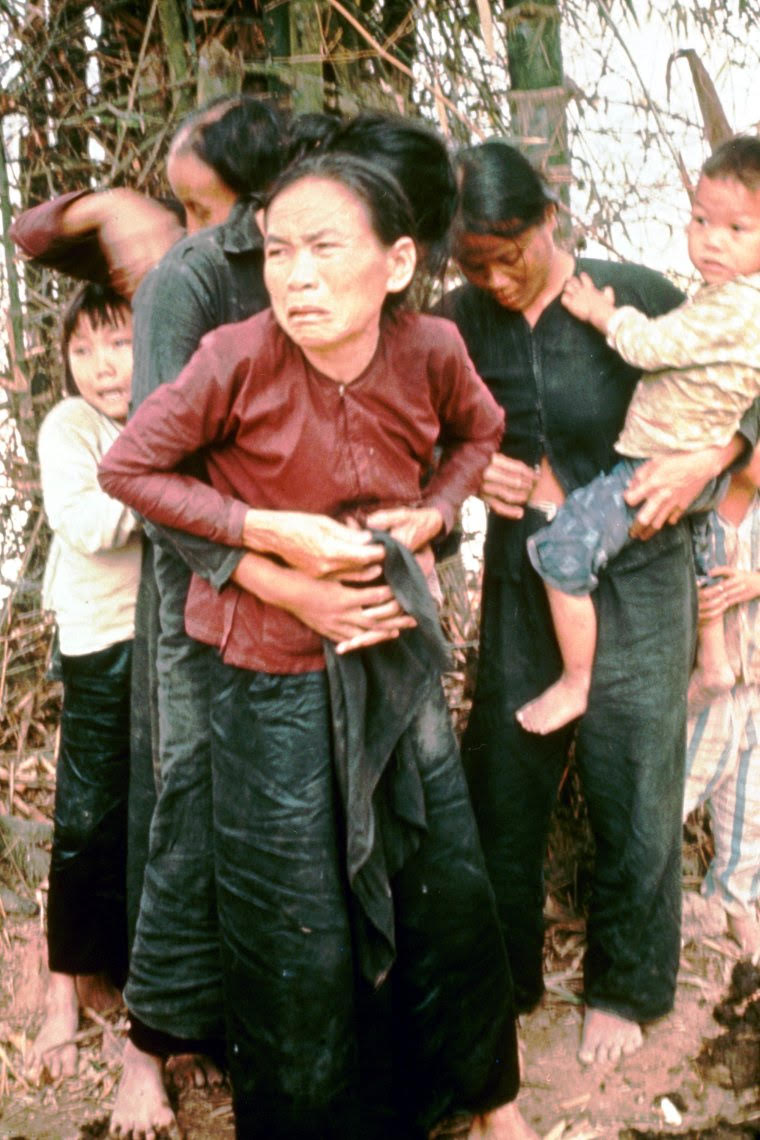
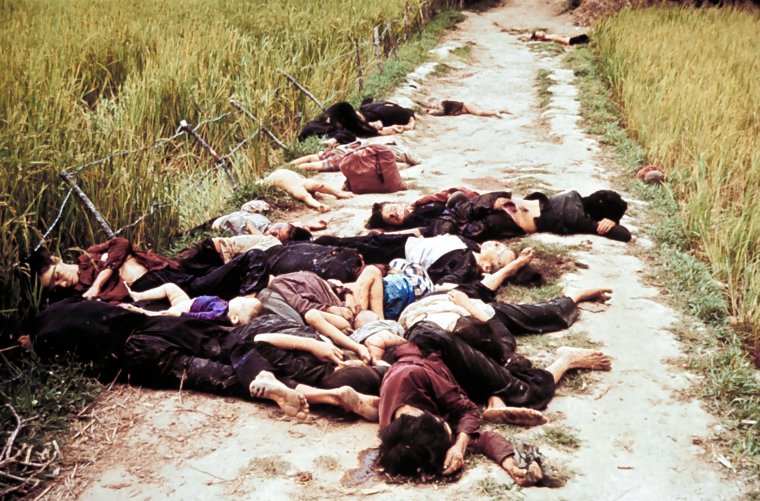
The massacre at My Lai, a war crime by any definition of the term, was at first covered up by the military. It only came to light because a helicopter pilot named Hugh Thompson and his crew, gunner Lawrence Colburn, and crew chief Glenn Andreotta, (who landed to stop the killings, risking their own lives) and a few dogged soldiers who could not unsee the horror they’d witnessed that day, including Army photographer Ronald Haeberle pushed ahead. Their cause was assisted by journalists, including Seymour Hirsch, who pressed to make the story public The scope and brutality of the atrocity was undeniable, it had been documented in real time in the photographs of GI war photographer Ronald Haeberle.

Vietnam veterans report that the massacre was one of many, perhaps hundreds, that took place during that misguided, un-winnable, depraved war. The slaughter at My Lai would have to stand in for all of them. In the fog of war, all kinds of nightmares play out all the time, that’s why they say “war is hell”. In more recent times, we’ve had a military whistle-blower tried as a spy and sentenced to a long prison term for disobeying orders to keep secret video of an American helicopter crew receiving permission to massacre civilians in Iraq. NOTHING TO SEE HERE.

Just two Ronald Haeberle photos [4], then, and another weak-ass reminder to get out to vote.

As my father, overwhelmed by his young son being so upset to learn about the murder of his own family back in Eastern Europe not many years earlier (in a manner quite similar to the slaughter in My Lai, actually), angrily said: THOSE PEOPLE WERE ABSTRACTIONS, NOBODY KNEW THEM, WE DON’T EVEN KNOW ANY OF THEIR NAMES!

A group of abstractions in My Lai, March 16, 1968, waiting to be killed:

A few moments later:

[1]

William Laws Calley Jr. is an American war criminal and a former United States Army officer convicted by court-martial for the premeditated killings of 22 unarmed South Vietnamese civilians in the Mỹ Lai massacre on March 16, 1968, during the Vietnam War. Wikipedia

[2] the reporter who got to know Calley during the trial writes:

There was nothing about Rusty Calley, as he was called, that would make you say that he was an explosion waiting to happen. He didn’t have killer instincts. He didn’t love guns. None of that was the case. He was a young guy from South Florida who loved being around people and going to parties. He was fun to be around. He was not the kind of guy who should be commanding other men in warfare, in my view. But he was probably not the only one out there like that, either.

source

[3] These photos, by soldier/war photographer Ron Haeberle, and the following, are from an article published in Time Magazine on the fiftieth anniversary of this notorious American war crime:

It was 50 years ago — on March 16, 1968 — that a group of American troops killed hundreds of civilians at the hamlet of My Lai, in what would become one of the most infamous atrocities of the Vietnam War. Months passed before the news of that event began to spread, and it would be years before anyone involved would face possible punishment. Though several of the men involved faced courts-martial, only one—1st Lieut. William Laws Calley Jr.—was ever convicted. He was found guilty in 1971 of murder and sentenced to life. (President Nixon changed Calley’s sentence to house arrest, and he served about three years. He apologized in 2009.)

source

Only 41 years between the mass murder and the apology, but he DID apologize! Here’s the motherfucker’s actual apology:

“There is not a day that goes by that I do not feel remorse for what happened that day in My Lai,” Calley told members of the Kiwanis Club of Greater Columbus on Wednesday. His voice started to break when he added, “I feel remorse for the Vietnamese who were killed, for their families, for the American soldiers involved and their families. I am very sorry.”

source

Note the killer’s repeated use of the passive voice to distance himself from his own deliberate, atrocious actions “what happened that day in My Lai” and “Vietnamese who were killed” and “the American soldiers involved”. He did the best he could to express how sorry he was, as shown by his voice starting to break, but, seriously– fuck him.

Then have done to him what happened that day in My Lai, have him tortured him a bit, scalped, shot, once or twice in each hand and foot, a couple of times in each leg, and left in a ditch, with a sobbing infant clinging to him as he bleeds out.

Little Rehearsals for Our Own Deaths

At a time when so many are dying around the world, and around our nation, from the pandemic, from hunger, by suicide, thoughts of death are closer than usual.

Death may be the beginning of the dead person’s embrace of eternity, I suppose, but it’s a high price to pay for that union. What’s left behind is the painful absence, forever, of that loved one. In a way, our mourning for those we love and lose contains an element of rehearsal for our own death. This secret, internal rehearsal is very hard for us to do, in a society dedicated, to an impressive extent, to the eternal denial of aging, death and dying.

I thought about these little rehearsals for our own deaths recently when I reluctantly took my leave of a friend I’d known since Junior High School. Losing this old friend felt like a kind of death, partly my own. A lifetime of shared experiences, personal references, little inside jokes, good will, great favors done for each other, erased as by death. Erased, rather, by an unwillingness, or inability, to do what needed to be done to continue a mutually beneficial friendship.

I’ll take my share of blame for the final death, and though my friend angrily concluded I’d been the unreasonable, cold-hearted aggressor, I did my best to avoid the silence that eventually had to come in the absence of empathy and understanding. I spent months taking him up on his offer to grapple with how to fix what had gone wrong in our friendship. When I laid out my side for him as clearly as I could, with as much patience and lack of blame as I could muster, he was hurt and angry about it. Your choice at that point becomes stark: eternal grievance and unresolvable fight or quiet. There’s enough angry noise in this mad world without it hissing from an always virtuous person who insists he can’t be hurtful because he’s your true friend — my former good friend surely agrees with that.

When someone we love dies, the pain we feel is universal. It’s hard to imagine a person who does not share this terrible clutching in the chest, or wherever one feels it, when someone he was close to is no more. Hard to picture a human being unmoved by a selected death, unless we dehumanize them, that is. Once the despised party is no longer seen as fully human, it’s much easier to imagine the worst. That’s what rabid partisanship is all about. If you’re the malicious type, the death of someone you despise can leave you feeling “good for them… only tragedy is that it didn’t happen sooner

I am about as far to the left on the political spectrum as I can imagine anyone being. It feels to me like the pull of liberalism, progressivism, socialism, whatever you want to call it, is toward mercy and inclusion. It aims to foster recognition of our common humanity, our unalienable equality and value as humans, the right of poor people to live with dignity. The magnetic pull of conservatism, autocracy, militarism is toward exclusion, protecting the privileges of the few, employing a punitive order that enforces divisions according to class, race, religion, nationality or, usually, a combination of those things. The right sees these divisions among people as natural and inevitable and the friction they cause as something best controlled by a well-armed police force and prison system.

Of course, someone on the political right will characterize the philosophical difference in reverse. Conservatives want to preserve freedom, decency, the value of hard work, free competition, justice, moral righteousness and so on. Liberals want to impose a kind of politically correct tyranny, giving away hard-earned money to reward lazy, corrupt people who refuse to compete on a level playing field. Liberals also don’t want to punish criminals, they want to “understand” them. And so on.

An animating belief of humanism is that our shared humanity can rise above any artificial divisions, given empathetic understanding. A very liberal writer, Jeanne Safer, gave a beautiful illustration of this in a book about seeing beyond partisan animus [1]. Her very religious, right-wing neighbor, a person with whom she shared almost no beliefs and few opinions, took her to chemotherapy every time she went, sat with her, brought her home, made sure she was comfortable, did her shopping. Her gratitude for this woman’s selfless kindness in her time of need made her appreciate the deep humanity of this undoubtedly good woman. She may vote for Trump, march in Right to Life rallies, believe homosexuals will burn in hell, but she has an undeniably generous heart on a personal level. Safer learned to cherish this wonderful heart, even as she disagreed with virtually everything else this neighbor was passionate about.

This, my friends, is a subtle fucking point well worth pondering in our troubled times.

It is a very difficult point to get a hold of during this nakedly partisan cold civil war we’re all living through. The stress acting on us daily is almost disablingly heavy, but the point is worth considering. People on the other side of every great question, people we write off as mindless partisan fucks, love their kids, take care of aged parents, would jump in front of a moving car to save a stranger’s toddler, watch videos of animals doing adorable things, to take their minds off the horrors we are all swimming in daily.

Part of the intent of keeping us all constantly at war with each other is to destroy this larger truth of our innate human connection to every other human. How many humans can kill a baby? Not many, I’d wager. Tribalism is one thing, and often a destructive one, but our common humanity, in the end, is the only thing that can save us and the planet we live on. Not easy, of course, not often seen, but urgently needed, going forward.

Looking at any history book it’s not hard to see the interests of the wealthiest (and generally most conservative) behind every war fought between average people. Poor people, young ones, from each combatant nation are indoctrinated against an enemy and sent to kill each other with the ultimate aim of making an elite group of rich, older ones, richer and more secure in their wealth. To understand war, follow the money, as they say.

And the horrible reality is that when the war sweeps through, there is no survival for the meek, no possible appeal to our higher nature. All bets are off when they come for you with machetes, guns, planes, flame throwers, mobile killing units. This is the nightmare scenario our species has lived, and perpetrated, over and over since before there was a system for recording these slaughters. In the world right now there are tens of millions displaced, people who ran from a meat-grinder that hacked up the unluckier, meeker members of their families, their community. Those who hid, cowered (not unreasonably!) and were caught are not shown mercy, not by bombs, not by men crazed with the wild adrenaline of life and death battle. They shoot first, at people who may well want to kill them, ask themselves questions later.

Extreme partisans are ready to die for their beliefs, to kill for them. This willingness to die is sometimes seen as the ultimate expression of having the “courage of your convictions” though it is just as often the “enduring brutality of your mistake”. In this country, according to the FBI, violent, deadly partisans are mostly on the far right. Far right groups have killed many Americans in the last twenty years, as part of their general operations, far left groups have killed few, if any, over that same span.

A willingness to use violence is the hallmark of terrorism — in fact, the use of violence to achieve an aim IS terrorism. We terrify you into doing what we say, because we’ve killed some innocent people, as you’ve seen, and we’ll fucking kill you. too. The threat of violent death is our calling card. Our side will beat down your side and stick those protest signs up your asses!

You wonder what has to happen to a human heart to conclude, during difficult times, that it is better to take up arms and take as many of the bastards with you as you can before they kill you than to look for a way out of war. Something the equivalent of Nazis coming to your area, rounding up local leaders and publicly executing them. If you have the ability, that moment is definitely your last chance to organize and take up weapons for self-defense against a deadly enemy.

The specter of a nation finally struggling to come to terms with a long history of racism, de jure and de facto, seems to present this endgame scenario to those ready to believe that equality among people inevitably leads to tyranny. Got to arm and kill as many of those fucks as possible before they can force us to live as slaves in a world like that! We never did anything to them, why are they coming to persecute us?! They are the violent tyrants, not us!

As I think about these little rehearsals for our own deaths, I wonder how ready I’d be, if forced into that terrible position, to die for my beliefs. Even to be beaten up, or even menaced, by armed thugs outside my polling place. Fanatics are famous for their willingness to go down in a hail of bullets, guitarists and calligraphers, not so much.

When things are put into black and white, life and death frames — if socialists are elected to Congress it will be the violent end of freedom as we know it — evil, righteous men with the money to influence mass events will eventually put death squads into motion. You can take that to the bank, the smart money will bet on it. As we all do our little, trembling, mostly unconscious, rehearsals for our own unthinkable deaths.

[1]

I Love You, but I Hate Your Politics: How to Protect Your Intimate Relationships in a Poisonous Partisan World, 2019, All Points Books ISBN 9781250200396

A Lesson in Death

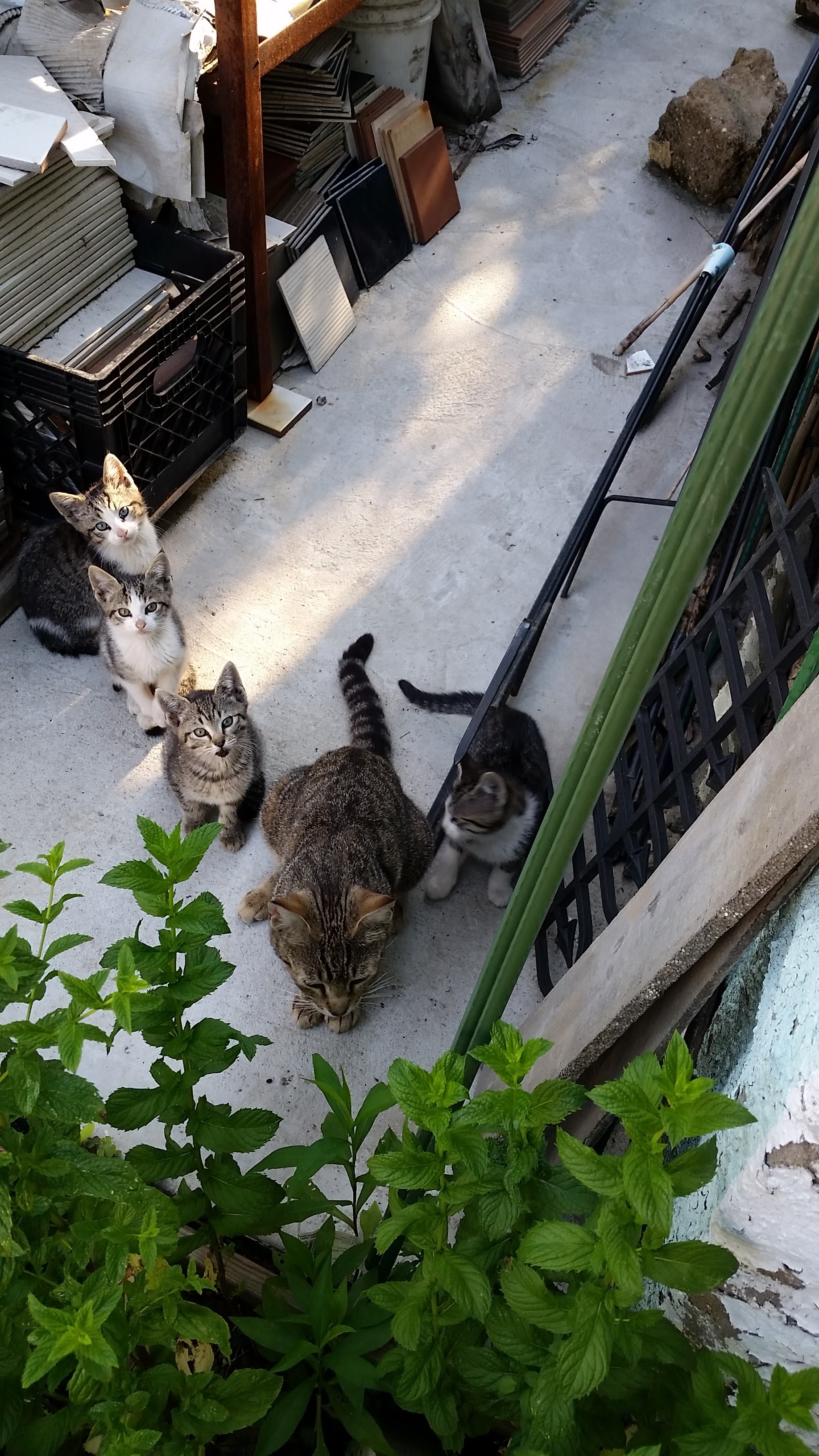
A friend who knew a lot about cats told us it was a shame the wild little beauty who was sitting at our feet, just out of reach, had been untouched by humans for the first months of her life. Once they are feral you can’t really get too close to them, she told us. This kitten came to trust us and eventually love being petted by us (when she felt like it, of course). She became our outdoor pet.

One day, in the first spring of her life, before she was even six months old, she marched her first litter of tiny lookalikes out of the bushes, to show Sekhnet to them. She will feed you when I’m done, she told them, and it came to pass.

Sekhnet was horrified when Mama Kitten chased her first kittens out of the garden. They’d been weaned, and learned to get food from humans (and to hunt a bit as well) and suddenly Mama was driving them away, quite savagely. What a bitch! said Sekhnet. We started to learn about cats in nature, nature which is as cruel as it is kind.

Mama Kitten was tough. She had to be to survive out there. She gave birth to her next litter shortly after banishing her first.

Over the next three years she gave birth to many more, producing more than twenty beautiful little kittens in her first four years of life. Few survived very long — five that we know of.

We hesitated to give them names, because it would create more attachment and make their deaths more personal, somehow. Sekhnet began giving descriptive names only, so we had a way of referring to them as they had their adventures in the garden.

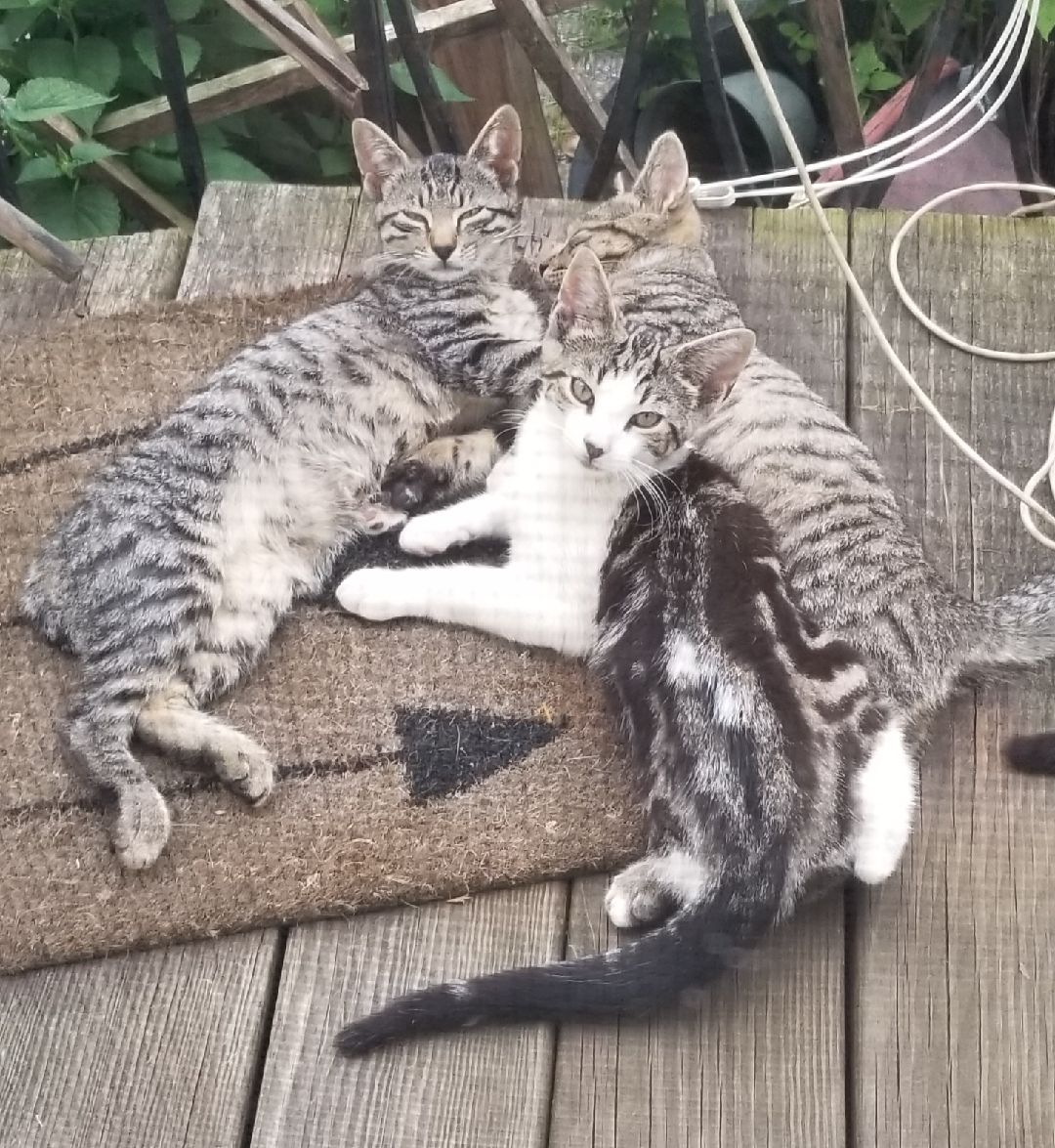
Of Mama’s second to last litter of four, two daughters, Little Girl and White Back, survived. They occupy the garden to this day. The girls stood together, refusing to be intimidated by their mother, the first to do that, and both survive.

Here is the dominant one, Little Girl (left), with her two brothers, Turtleback and Whitefoot, fine little cats who had very short lives.

In the end, with the help of an almost insanely dedicated cat rescuer, we were able to trap Mama Kitten and the others and have them spayed, and the father (we assume) neutered as well. For a year and a half we’ve had a stable little colony in the garden. It was disrupted briefly a couple of months ago by five adorable little ferals whose mother abandoned them by the best cat buffet in the neighborhood. We managed to catch, domesticate and find homes for all five.

One day, not long ago, Little Girl, who always stayed close to her mother (they were known as the Driveway Bitches for their ruthless shakedowns for treats) and had always deferred to her mother in all things, snatched some food from her. I instantly intervened, and Mama finished what she was eating, but the writing was on the wall.

A day or two later a friend noticed one of Mama’s eyes looked a little funny. A few days later she lost interest in food, even the favorites Sekhnet brought to her. She took to one of the houses we made, staying warm. Then, one rainy, miserable night a couple of days ago she disappeared. Little Girl was now sleeping in her house.

We figured Mama Kitten had crawled off to die somewhere, probably in the nearby strip of wooded area across the service road. She was not yet six years old, but feral cats live much shorter lives than pampered indoor cats.

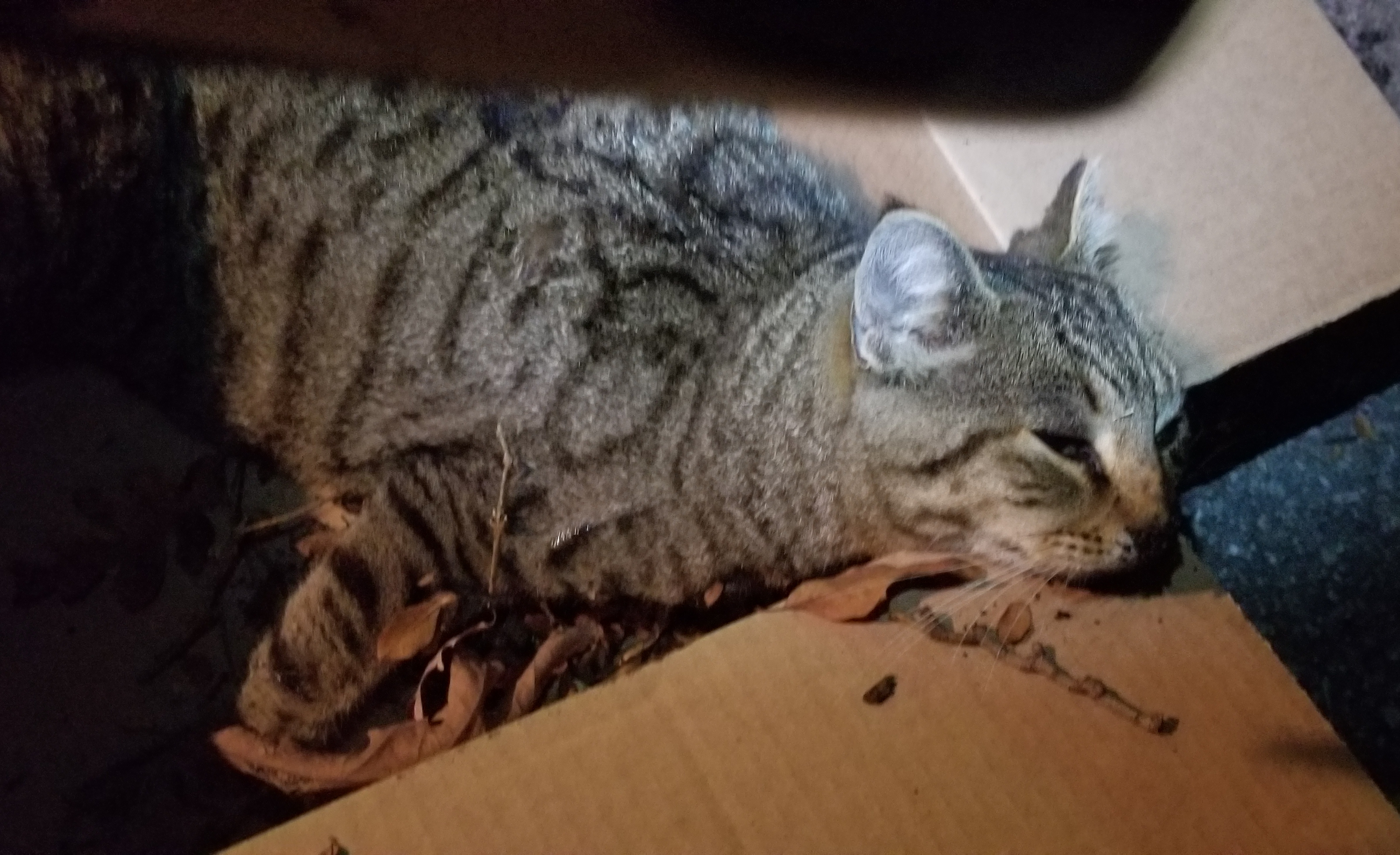
I had intended to write about her death yesterday, but somehow I didn’t get to it. Last night, after we moved the car for the firs time in a few days, to do some shopping, we found out what happened to Mama Kitten. She’d made it as far as the narrow space behind the car, before breathing her last. I put her in a box, closed the flaps carefully, and carried her a short distance to a wooded area where Sekhnet covered her coffin with branches full of dry leaves.

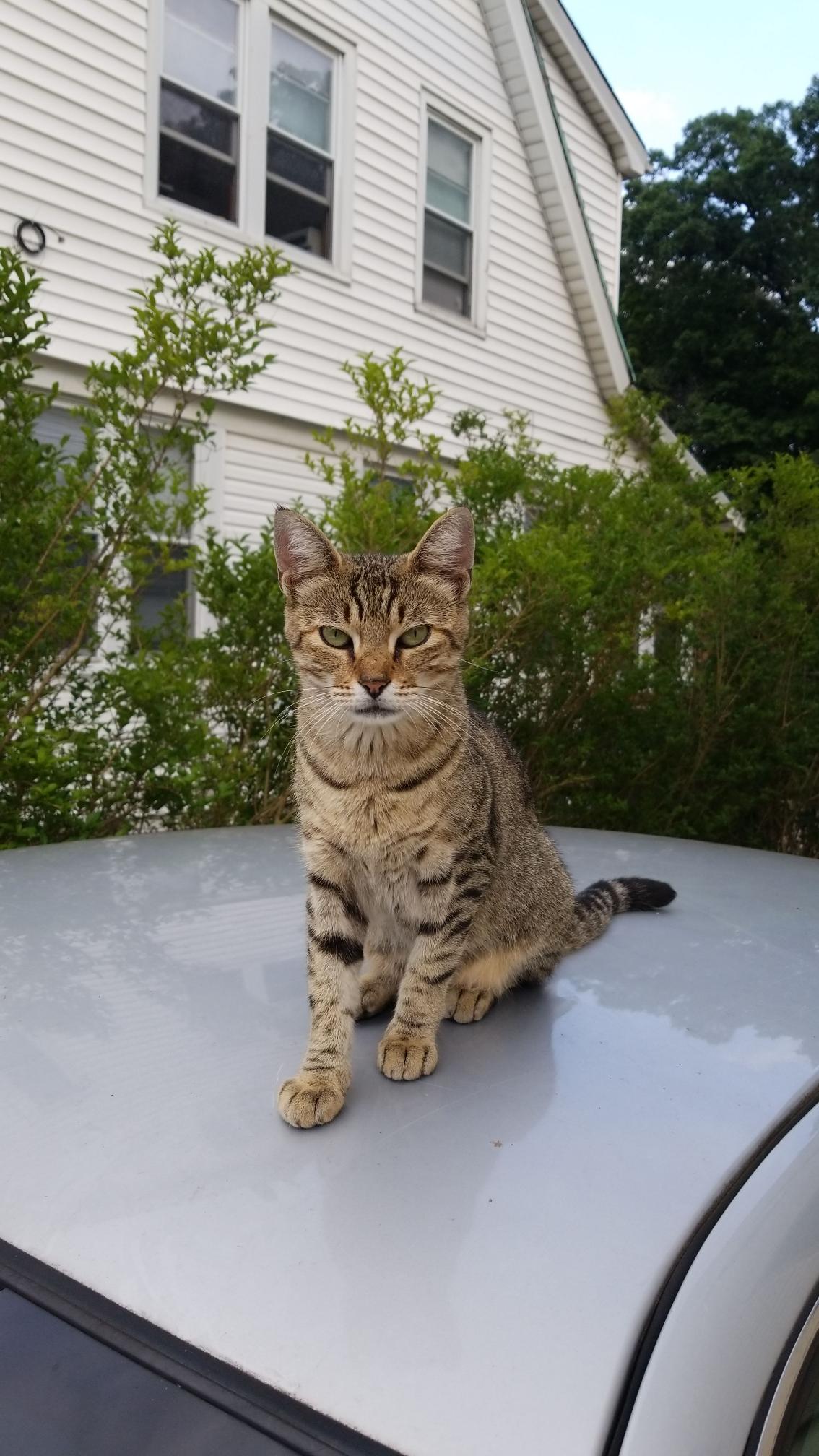
We spent the next few hours looking for photos of this beautiful cat. Here is the hero shot:

I thought at first that the lesson of Mama Kitten’s death was the simple reminder that we all must die, that it is part of nature and that a creature who showed no signs of being sick (she could jump up on to her petting table until the end) knew when to accept the approach of Death and when to go gracefully with it.

During these fearful days when the possibility of our own deaths is closer than usual, I’ve been thinking about death a lot. Mama Kitten’s death was a reminder of the pain for those left behind. I feel it clutching at my chest as I try to conclude this post with some thoughtful words. The pain is great for this stray cat we cared for, who crawled off to die, and didn’t make it to the woods.

How much more immense is our pain for a human we have known, who has touched our lives, made us laugh, held us when we were afraid?

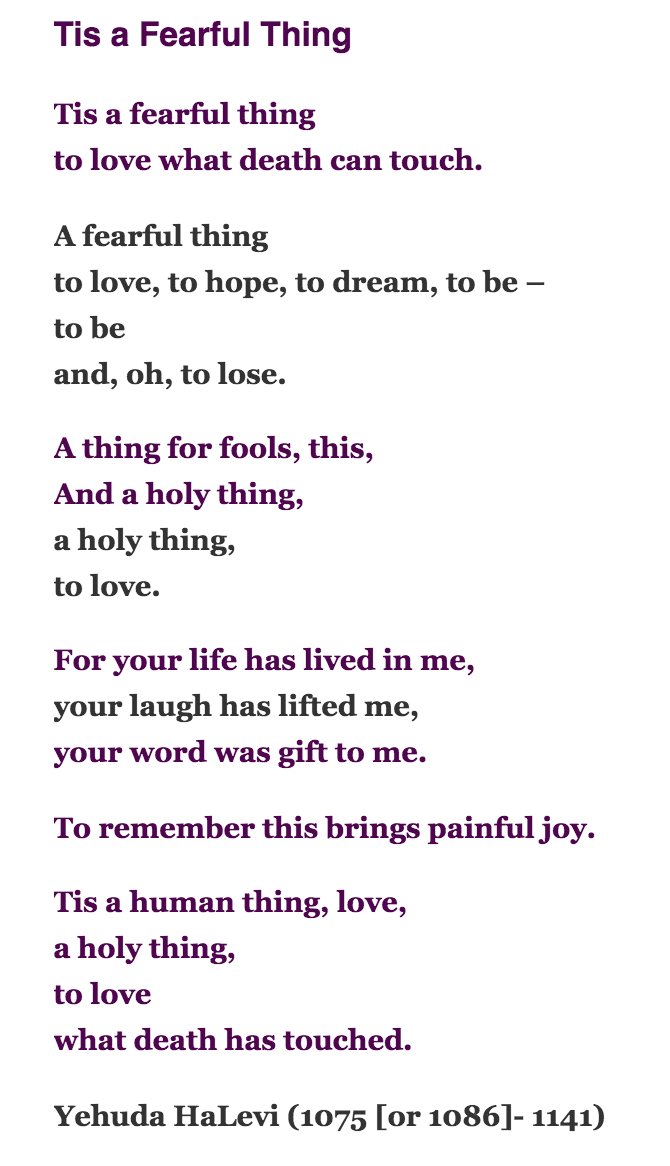
This long-dead poet says it best, as I recalled with tears when I found it among my emails last night, searching for pictures of Mama Kitten, in her prime.

How’s things? Funny you should ask…

We may be justifiably optimistic that change is about to come, at the last moment, before we’re all plunged irretrievably into the toxic soup. The signs are encouraging, millions lining up for hours to cast ballots instead of leaving them to the less than up-and-up Louis Dejoy to deliver for counting. These early in-person ballots will all be tabulated before Election Day, eliminating one worry about electoral hanky panky and a premature declaration of Four More Years, with an exhortation to the enraged white men in the Second Amendment brigade.

We may keep ourselves on an even keel, most of the time, remaining positive, taking care of ourselves and our loved ones, remembering to be grateful for the blessings we have. We may even make somebody laugh once in a while. But how well can any of us actually be doing at a historically stressful time like this?

A friend asked me the other night, after a few minutes of batting the latest crazed news items back and forth, how I’m doing. I thought for a moment then said “limping along, I guess” and he probed– why limping?

I told him that even without the pandemic, the stress we are all under at this point is pretty much off the charts. Just reading the headlines is now accurately called “doom scrolling.” The American carnage evoked during the president’s first inaugural address has come to pass.

The natural world is being destroyed at an alarming rate — anyone who brings up this terrible fact is labeled “an alarmist.” The norms of public life in our democracy that once provided a certain amount of civil discourse in politics, moral limits and predictable outcomes, have been flagrantly ignored, replaced by expressions of open partisan hatred.

We literally have a mad man in charge of the country, intent on turning back the clock on every form of social and political progress our nation has struggled to make since the 1950s. New episodes of the man’s florid insanity are released several times a day, day and night, weekends included. The news media is flooded by a firehouse of official misinformation spraying lies faster than they can be corrected, or even taken in. By pure coincidence, perhaps, this is a famous Soviet technique for keeping the populace off balance.

We’re on the brink of the literal end of democracy here, if this election goes the wrong way, if a 6-3 Supreme Court decides the election results all across the country were tainted by massive unverifiable fraud, even as millions were disenfranchised by open and covert means during the election itself.

Our nerves are shot, millions more of our fellow citizens have recently officially entered poverty, masses of people are starting to get evicted from their homes as winter approaches.

That’s a lot on the old plate, he agreed, after I’d stated a bit of the obvious.

Now, add, on top of that overflowing platter of hideous treats a deadly, incurable virus spreading wildly here in this country and to some extent also worldwide. “Freedom,” we are urged by our mad leader, now includes the right to infect whoever you want, here in the Home of the Brave. You walk into a room where somebody shunning the most basic personal protective equipment recently coughed, someone with no symptoms of the disease, who doesn’t even know he’s sick, and catch an incurable disease that could kill you, or mess you up very badly if you survive.

Here’s an illustrative COVID-related snapshot of the extent of the horror we’re facing: the leader of the free world is literally infecting his followers and donors with a deadly disease and it doesn’t seem to matter.

It appears likely the president knew he had COVID when he sat at that buffet with rich Republican donors, (the day after his close advisor Hope Hicks was diagnosed with the virus) glad-handing them and breathing on their food, hours before he was helicoptered to the hospital. Of course, we’ll never know if he actually knew he was infectious — although it’s virtually certain he was tested as soon as the woman who is always by his side came down with COVID — at least not until after the election.

Should we all be happy, and feeling no anxiety at all, at this moment, when we all are quite possibly living in Berlin right before the election of 1932? (Some of us more perilously than others). With an overlay of the Black Death, for good measure, just to heighten the dramatic effect? Why not? Don’t worry, be happy.

I’m happy, I suppose, with this uninterrupted shit show as the background and foreground to every waking moment, to be limping along. Forward and onward, with all deliberate speed.

For me, the answer to “how are you?” is a game “limping along, baby.” “Doing fine” is a lot to ask for right now, and less strictly honest than at most times. I hope you’re making your way forward too. Try to be of good cheer, know that everybody else you meet is on the verge of freaking out and totally losing it, and remember — this too shall pass.

You Can’t Argue with A Feeling

There’s a point in a serious, hard to resolve conflict where nothing you can say or do will avert a terminal impasse. It is no longer possible to talk about objective things that actually happened and find any agreement, we’re in the realm of feelings – hurt feelings, at that – so, everybody gets to be right.

Everybody gets to be right. You get to have very fine people, on every side of every issue. You get to have courts rule in your favor with or without evidence, if you have the power to make them feel the way you do. You get to be right, no matter how strong the case is that you’re wrong.

Among people who care about each other, things can be done to soothe hurt feelings. The first thing we do for someone is listen, without trying to correct anything the person is feeling. Between people who despise each other, or have hurt each other beyond caring, hurt feelings are their just desert for being assholes — you know, fuck ’em.

Common Argument Technique (Reframing) Analyzed

When you argue with someone who constantly reframes what you’re talking about, so that you’re always discussing the issue they want to talk about, from their chosen perspective, it’s difficult, if not impossible, to ever reach agreement about anything. This technique is used all the time in bare knuckle politics and the partisan interpretation of law, and it can be maddening. It can also be hard to see or counter, until you learn to spot it as it’s happening.

Here is a recent example, from my life, which lays out clearly how reframing can create a false equivalency that can then be used to drop the mic, having won the argument. It’s likely you’ve experienced the same thing, possibly without being able to get a handle on what actually happened. If so, this illustration may help you see it more clearly.

An old friend questioned me about my falling out with an old jamming partner. I described how tensions had been rising and anger was being stored up by the ace harmonica player. I wasn’t aware of how much resentment this guy had stored up, since he never mentioned any of it to me. In the end, and suddenly, a spark burst into a bonfire. Hurt escalated quickly, and, had the confrontation been in person, and we were the types to resort to violence, we would have come to blows. Things were said in anger that could not be taken back. It was the end of our ability to ever get along again. My later attempt to make peace did not succeed.

The old friend who questioned me later jumped ugly during a couple of tense phone calls, yelling and angrily hanging up mid-sentence the last time we spoke. We then communicated a few times by email, trying to make things right. He felt no need to apologize until I brought it up weeks later, in taking my leave of the troubled friendship he said he was trying his best to save. He no doubt felt justified in his angry actions, under the theory, I suppose, that since I had mercilessly and infuriatingly provoked him, I was the one at fault and so he didn’t need to explain why a person would hang up on somebody like that, let alone apologize for it. Anyone with any self-respect would have done the same thing.

It became impossible to pretend to a friendship that had obviously outlived itself. I finally threw in the towel. To my mild but persistent dismay, he was determined to have the last word.

Here is his reframing of my comments about the awful final, unresolvable confrontation with the harmonica player, which he used to demonstrate that I was the unreasonable, unyielding party in our unresolvable dispute, the cruel bastard who had ended our friendship for no understandable reason:

You’ve said many unkind words to me, Eliot, and I’ve been deeply hurt. When we were discussing your issues with Noam about a year ago, you said something along the lines of, when you have a disagreement with a friend, you try hard to get to a meeting of hearts and minds, but once you conclude that’s not happening, you give it to them with both barrels. I feel that’s where you’re at with me. I feel you no longer value the relationship, but value articulating your grievances and causing me pain in retribution, for whatever purpose that may serve for you. If at this point you just want to be sure you’ve “given as good as you’ve gotten, and then some,” I think you have. 

The beauty of this paragraph is that it makes one of us clearly wrong and the other one the victim of the wrong person’s senseless, deliberate cruelty. When I disagree with a friend, and don’t manage to persuade him I’m right, I blast him with both barrels of the old shotgun.

Note that it could not have been accomplished without reframing.

Substitute “disagreement” — a common human experience we all deal with regularly, a largely intellectual conflict — for “violent fight” — an emotional flare up, something hopefully rare, and always upsetting — et, voila! you have the proof you need of who’s being reasonable and who is undeniably at fault for the end of a long friendship. Never mind that it always takes two to Tango, Foxtrot or Waltz.

What I actually told him, in relation to Noam, was that once I recognize behavior as abuse, motivated by sustained, righteous anger, and I fail in my best attempts to defuse that abusive situation (where anger is dumped on us that we’ve done little to bring on and the other party won’t yield a millimeter in their insistence that we are exclusively at fault), I owe that person nothing but a figurative punch in the face.   

Friends can do this sort of thing sometimes, argue using unfair politician’s tricks to reframe what is actually at stake and why, particularly when they feel defensive, and it is best to overlook it most of the time. We all can be assholes, our friends are people who value the best of us and don’t slam us for our weaknesses. I had a friend for many years who was a habitual liar, it never bothered me much since it rarely had a direct effect on me or my friendship with the guy.

These kinds of flaws only become dangerously contentious when good will has been otherwise lost in a friendship. When we share a problem with a friend who tells us we’re crazy, that it’s all in our head, or who won’t address our concerns at all — it’s pretty much game over. Once that happens, every technique available can come into play to pry whatever remains of friendship apart. What I think about then is trying to leave with integrity, taking my leave in a way that explains my position as clearly, and nonviolently, as I can.

Of course, not matter how gracious I may try to be, it doesn’t change the other person’s sincerely held belief that I am the violent, enraged asshole who deliberately and unilaterally blew everything up. Nothing I can do about that. Having extended courtesy and fairness to the other party makes me feel better about my difficult decision. It also supports my improved ability to make healthier choices based on an honest assessment of what actually took place, to own and try to fix damage I’ve caused and to let go of blame unfairly thrust on to me.

Of course, the injured party, reading this account, will snarl at this further proof of my pathological need to be right, and sanctimoniously unforgiving, and the lengths to which I’ll go to preserve my self-righteousness. Fortunately, that particular snarl is no longer really my problem.

white stubble

I realize it is a reflection of my luck, to have lived long enough to see this, but it gives me a small shudder every time. In the bathroom mirror downstairs, with diffused light coming in from the left, the short white hairs sprouting on my unshaved cheek and neck are unmistakable. They are identical to the ones on the lower half of my father’s face, and his neck, a few days after he died, when they popped open the plain pine box to make sure we were burying the right guy. It’s apparently true, hair continues to grow after death, he was clean shaven when he breathed his last.

I often hasten upstairs to shave. I’m not sure why. That white stubble is no different, really, than the tuft of now white hair that reaches up through the open collar of my shirt, tendrils that can only be constrained by the collar of a t-shirt. My father had the exact same tuft of white hair on his chest. I remember it from when he tried on the blue and white flowered Hawaiian shirt I brought him from my trip to those islands. Reaching up like a clump of dry grass, animated by some crazed will to climb.

Thinking of my father’s face in his coffin, I often recall the guy who instructed the gravedigger to lift the lid. He was a cheerful, ghoulish creep in a sharp black suit, a former lawyer. “I like this much more,” he told my mother and me with a big smile, as he counted the eight thousand in cash we had to bring to the cemetery before they’d release my father’s dead body for burial.

The Book of Lost Souls

As my grandmother, who loved me fiercely, was on the bed in my childhood bedroom dying a painful death from colon cancer, I went down into the basement where I slept and wrote a song one night. I was in my early twenties at the time and was certain I knew a great deal more about life than I actually did. I sang quietly there in the basement, playing some nice guitar chords against a plaintive melody I can almost remember. The lyric that I recall, the chorus, was “when you have love, you never die.” The line repeated several times, and then again as the song faded out. It wasn’t true, of course, she died a few days later and remains steadfastly so. The fact is, no matter how much love we have, we always die.

My grandmother was one of seven children born to her parents in a Ukrainian town near Kremenetz, not all that far from Khmelnitsky, a city named for a Ukrainian nationalist famous in Jewish history as an enthusiastic slayer of Jews, a major pogromnik. A talented, ambitious girl and an adventurous young woman, my future grandmother embraced the vision of universalism, equality and the brotherhood of workers she learned from the idealistic young commissars of the Red Army who took over her neighborhood of the Ukraine after a bloody civil war. She brought that vision with her, along with her dreams of some kind of personal greatness, to the United States, where she arrived, after a fairly harrowing ocean crossing, at twenty-one or so, in 1921. She was the only one of her family to leave. My grandfather, also one of seven siblings, followed two years later, also the only member of his family to get out.

As I write about my grandmother, as you read these words, a small sense of her eternal soul flickers and shimmers a bit. Her soul, while I am considering it, is not truly lost. I knew and loved her well.

Then I think of her six siblings, and their spouses and children, and my grandfather’s six siblings and their families. Of all these only her adored youngest brother, Yussele, Joe, has a name that anyone alive (me) knows. I wonder how many were still around when another group of true believers took control of that inhospitable corner of the Ukraine. One airless Ukrainian night in August, 1943 the last of them officially became Lost Souls.

What I know from a small monument in the cemetery where my grandparents are buried (erected by the Vishnivetz Benevolent Society), and from transcripts of translated witness history (the only mention of the atrocity that I have found on the internet) is that the survivors of the hastily constructed ghetto in that small town, after being starved and tortured for a year or so, were marched after dark to a ravine on the north western edge of town.

They were marched to the sound of drums, the clanging of pans and the yowling of brass instruments, to drown out the cries. The ravine had been prepared in advance, the earth softened up. Layer after layer of doomed Jews were buried there, fragments of their bones skitter in the wind to this day, according to a travel piece about the town I read in the New York Times a few years ago.

What to do about these lost souls? Have they nothing to say? No right to their tiny place in the mad story of in the world? Who am I to write about these lost souls? The only one left alive who knows any of them ever lived.

When I was a boy, and learned about this mass murder of every one of my great aunts and great uncles and all of their children, the immensity of the horror was too much for my parents to discuss. My grandparents never uttered a peep about their loss, I never heard so much as a clue from either of them that anything bad had ever happened. Everyone pretended, it appears, that everyone getting a bullet in the neck and being hastily tucked into a mass grave was normal; that bad, even unthinkable, things happen, that you clutch tightly to the people you love, even as you sometimes battle them to the death.

At one point, for two years or so, I sat every day, as I am sitting now, thinking and tapping at a computer keyboard, trying to tell a story that is, at best, a puzzle with most of its pieces missing. I wrote more than a thousand pages diving into the life of my father, holding it against him, at first, as I had for decades, that he got angry when I persisted in trying to learn more about the murder of our family. True, he called me a drama queen (or whatever the equivalent of that phrase was when I was eight years old) and accused me of trying to claim some kind of victimhood I wasn’t entitled to since the people who died were mere abstractions I’d never even met. I understand now that he had no way to process this atrocity, no way to discuss it with his young child. In the context of his own life, articulate, righteous anger was the best he could summon.

When I was thirteen, by the tradition of my religion, I read part of a holy book to the community and “became a man,” I have few recollections of that day, except that a girl from Hebrew School who I liked, who had not been invited to the bar mitzvah party, showed up anyway in that catering hall on Hillside Avenue. She spirited me away from the party, down a flight of stairs, sat on my lap on an upholstered chair under the room where the festivities were going on and kissed me on the lips a few times.

I mention this to illustrate how elusive the past is. I was there, I am said to have an excellent memory, and I remember one detail. I have a few mental images of myself in the chapel, reading from the Torah (my part was read from the same xeroxed and marked up page I’d learned it from). Mostly, no memory at all of that memorable day.

As we also learn, given enough time, a life seems to go by in the wink of an eye. Thirteen years is not very long to be alive. Thirteen years passes quickly, I’ve discovered as 13 turns to 26 then to 39 and so forth.

A few months less than thirteen years before I was born there was a terrible racket in the Ukrainian night, and then, after the ruckus was over, the silence of death. Every Jewish soul that was alive that night when the banging started — that soul was lost forever. Have we nothing to learn from this?