Reservoir of Rage

The Age of Reason was an age of optimism, unfounded in many ways, as an insightful psychiatrist named Frank Yeomans observed. We like to believe that we “wise apes” act based on the intelligent use of actual knowledge — the wisdom gained through experience. We also like to believe that Death will never actually come for us. Look at any newspaper for a glimpse into the role of Reason in our world today and compare its effect to the workings of terror and anger.

In these days of increased isolation caused by this raging pandemic I sometimes find myself thinking back to a series of lost friendships, looking for a common denominator. The common trait in every friendship of mine that went to shit, I can easily see now, is rage — anger and disappointment that wound up being mutual. Good luck reasoning with that force of nature.

My friend Mark, one of the first close friends I finally had to cast over the side, was frequently in an agitated depression but if you pointed out that he was angry, as shown by the harshness of his judgments of himself and others, he’d hotly deny it, quickly become enraged. I am prone to expressing my anger when it flashes, a trait I’m not proud of, but my anger is often there to be seen by others when I am hurt.

Most people do not readily display this unseemly emotion, carefully covering the embarrassing lack of control it reveals. It doesn’t mean they don’t get angry, of course, they just don’t readily express it most of the time. I’ve done better, recently, sometimes, not reacting with anger when something irks me beyond endurance, but the strong reflex is always there.

What I’ve learned, at great expense, is the value of breathing and keeping quiet when the impulse to say something cruel is strong. Quickly apologizing is also a necessity after angrily expressing harshness toward someone, I’ve found, not that it will always be the healing balm it is intended to be. One or two sincere apologies will often be accepted, and I quickly accept the sincere apologies of others, but once the need to apologize becomes a pattern, it indicates something deeper and, well, good luck to you and your friendship.

My father, a man prone to outbursts of anger, always insisted that we cannot change our fundamental nature, our reflex to act a certain way. He’d point to babies born with an easygoing nature, placid and easily contented from day one, and others, like me, that fussed all the time, rarely satisfied, defiant from the day they first focused their eyes to glare accusingly. There is a certain amount of truth in this, the over-the-top surrealism of the description of the second baby aside.

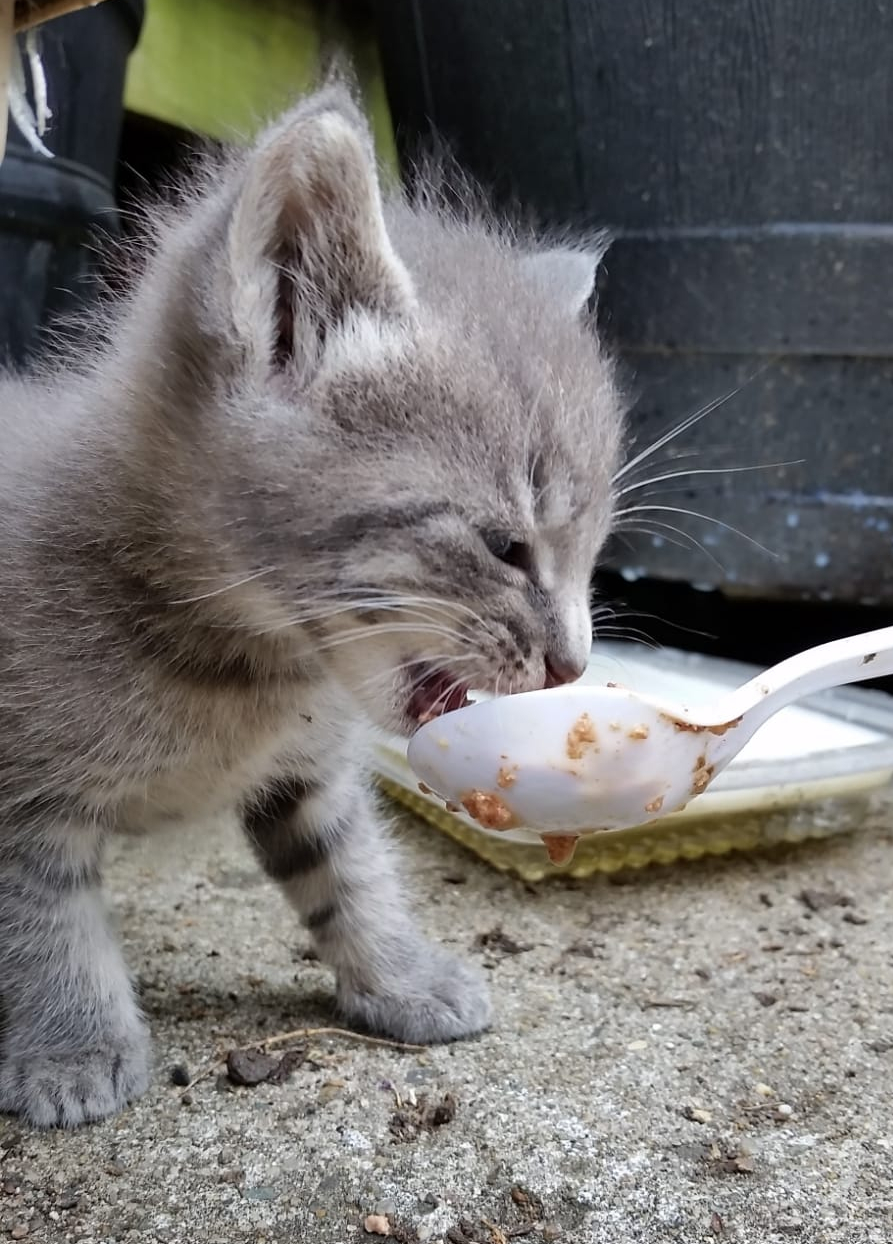
You can see the truth of this principle illustrated in every new litter of feral kittens. Some baby cats are bolder and more trusting than others, others more prone to flee, to bite, to cower. This behavior was not learned, they were born with a certain predilection, a fundamental nature that will not change that much. The reflex to be petted or to cower will always be there to a certain extent, no matter how much they may learn about the tender intentions of the people who take care of them.

A friend of mine cheerfully reported on an article she’d read about the discovery of a suspected “happiness gene”, a bit of DNA that predisposes one to optimism and contentment. She looked across the table with her sly smile and observed to her fellow happiness gene recipient, Sekhnet, that her husband and I sadly did not seem to have much of this gene. I told her to fuck her so-called fucking happiness gene. But the point is made again, we are born with certain traits that are then pounded into more or less permanent form by how we are treated while we are malleable little lumps of clay.

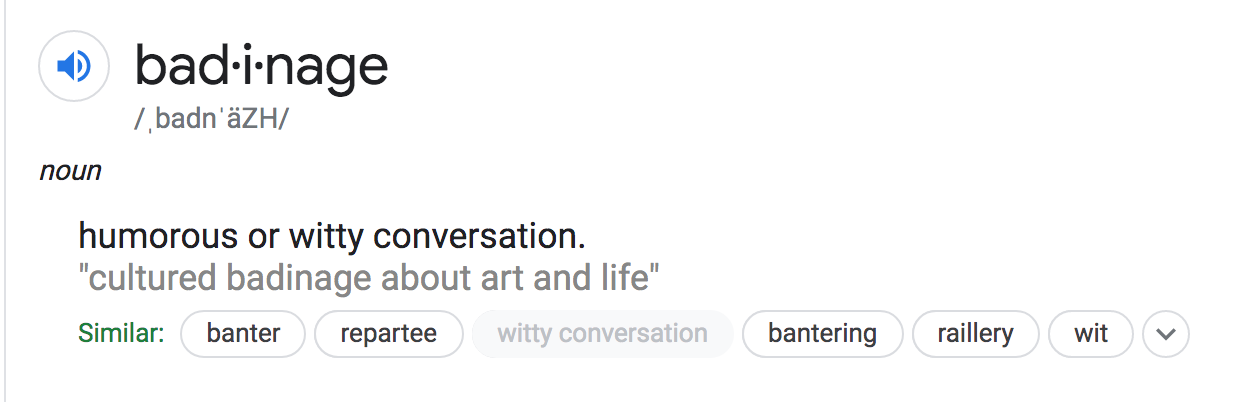
I think back to the list, now considerable, of former friends, people with whom I shared confidences and a love of badinage [1]. All affable, smart people, articulate, many quick with a witty comeback, most of them connoisseurs of dark humor. One other common factor I saw only too late: each had a deep reservoir of rage and an inability to forgive.

I understand the workings of the Repetition Compulsion, to some extent. Some of us are compelled to recast and repeat painful relationships, the dynamics of which we don’t understand, in an unconscious effort to have a better outcome. It’s called a compulsion because it is not something we choose, those of us who do this must do it. I saw it clearly in my old friend Mark’s life– he endlessly repeated variations on the identical three act drama: idealizing, being disappointed by, violent betrayal. Easy to see in someone else, if you are around long enough. In our own case, it’s hard to see if we’re behaving reasonably or out of some kind of compulsion.

So, take my case, say you were raised in a long war with your parents. Your father is angry just about every evening at the dinner table, raging, making ugly pronouncements, baleful predictions. Your mother, for the most part, indignantly takes your father’s side. Her mother once famously said of her, in Yiddish, “you stick to his ass like a wet rag!” Both parents, at the same time, are smart, avid readers, expressive, love to laugh, enjoy the old badinage, are connoisseurs of dark humor. When searching out friends to commiserate with about your often painful life at home, it is not surprising that you would always be attracted to people who had these fine, cherished qualities.

It may seem funny to write this, but witty repartee with friends, which used to mean so much to me, now means little. I like to laugh, of course, I’ll often toss off an absurd take on something ridiculous (the menu of such things is comically gigantic), but whether you are a wit or not means little to me these days. My friends are funny, sure, but that back and forth of smart rapid-fire commentary doesn’t seem to play a large role in my life these days. The release of humor, it seems to me, was necessary in those years to protect me from the painful darkness all around me. Now that I’ve emerged from the worst of that darkness (for the moment) that need for banter just seems funny, if you follow me.

What we want in a friend is a person who will give us the benefit of the doubt. If a friend snaps at us, they will immediately express their sorrow as soon as they calm down. The larger world does not operate this way, neither does nature. This good will is what separates our friends from everyone else. The loss of good will, the benefit of the doubt, the lost impulse to quickly overlook a friend’s bad moment, is painful. Once good will is gone it is almost never coming back.

When I go down the list of people I once shared intimacies with I see that despite variations in their personal styles, they were all capable of titanic anger (maybe everyone is, but each of these bastards sure was).

The more introverted, quiet ones were no less given to implacable fury than the more extroverted ones. In fact, the reservoirs of rage in those who rarely expressed any sort of displeasure was perhaps the deepest of all. Keeping that existentially threatening anger inside at all times means that when it finally explodes, it’s going to cause an avalanche, helpless villagers running in terror.

Then silence again, which in friendship is the deadliest and most final expression of eternal anger.

1]
[
The United States of Hate

I don’t want to hate the people who hate people like me. Not only because I think hate is bad (it is) but also, practically, because it leads to hopelessness and rage, which lead inevitably to deadly violence. The only way out of this cycle of viciousness is through conversation, listening, understanding, honestly working to solve big problems that oppress us all. Powerful forces are intent on making that kind of helpful dialogue impossible among the billions of regular people of limited power. Hate is the antidote to Reason.

One thing unites the half of the country who voted for Biden and the almost half who voted for Trump: hatred of the other side. The stoking of agitated hatred by political attack ad is a successful tactic in American elections, as proved every election cycle. Do not discuss ideas, plans, strategies to deal with the many daunting challenges we face, do not mention what is actually happening in the world — attack the godless Communist you are running against (if she’s a Democrat) attack your hypocritically pious Fascist opponent (if she’s Republican.)

Let us not pretend that this is a mutual, even, fifty-fifty war, with very fine, and very horrible, people on both sides. There is no real equivalence between the political parties in 2020, as far as the lengths they will go to create hatred, provoke fear and rage, threaten violence from angry, low-information voters who want revenge on people they honestly believe are stealing their very lives from them.

I won’t go into the accursed mass media false equivalence business here, except to state one obvious fact: one party’s leader wants to count only votes for himself, and his supporters in Congress insist the president has every right to take this radical position, no matter what the so-called courts might say: because the future of the world depends on it! A brazen, stubbornly irrational position (without proof of fraud or irregularities) that until it was done would have been unthinkable — to petulantly and baselessly contest an election everybody from both parties has certified the results of and says you lost — is now in some bizarre way “normal”. A few years ago, this kind of open defiance of national election results, which includes repeated calls to violently resist a “stolen election,” would be considered treasonous. Now the president’s apologists insist this open attack on American democracy cannot even be investigated. To investigate sedition is itself sedition!

Facts, as we have noticed over and over, no longer matter in politics. Faced with a tidal wave of pandemic infections, overflowing hospitals and morgues, millions more Americans thrust into poverty, the president’s party, passionate, mouth breathing anti-maskers, focused only on putting a hyper-conservative religious cult member on the Supreme Court days before the election.

The national moratorium against evictions will end December 31. On the first working day after New Years there will be a million evictions of people behind on their rent, their mortgages, who have not been able to work and have not received any government help (aid repeatedly blocked by the president’s party — unless corporations are immunized against liability for all harms they inflicted during the pandemic). These pauperized American families, newly homeless as winter descends, will be thrust directly into the jaws of a deadly, highly infectious, airborne medical emergency. Because?

During The Enlightenment, the Age of Reason, centuries when science and technology took great strides as philosophers rediscovered the writings of the ancient (pagan) Greeks, Reason was held up as the guiding principle of human endeavor. Renewed was the forgotten belief that humans are creative, primarily rational, actors, free to make the best choices and find the best solutions, based on considering free-flowing good information and making intelligent calculations based on knowledge. A world guided by Reason, it turns out, is a very optimistic view of human affairs (this was pointed out in this excellent video). We seem to have returned, en masse, to the monkish ignorance and superstition (a phrase I always loved) [1] of the Dark Ages.

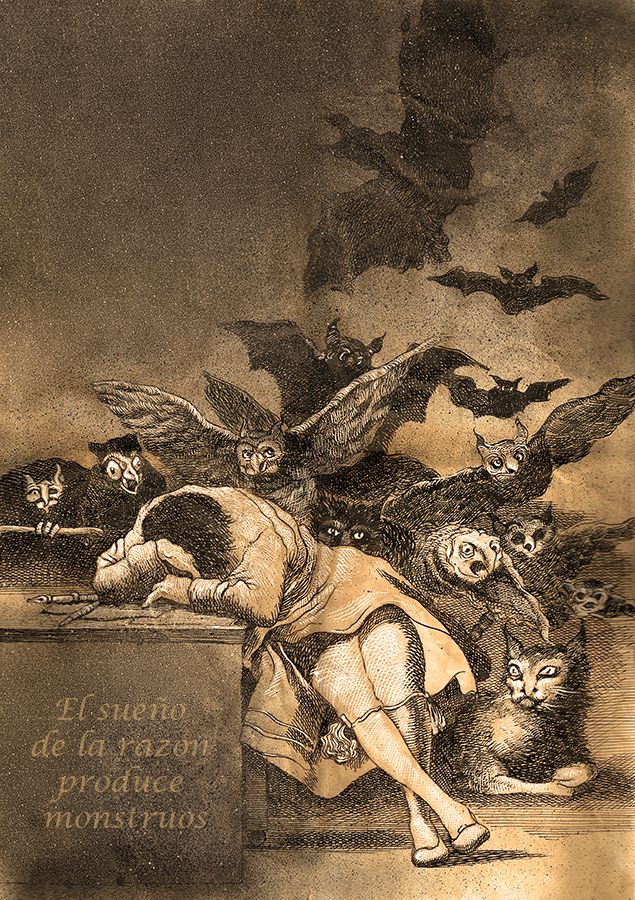
As the painter Francisco Goya wrote on a famous image, (a 1799 aquatint, Jeeves informs us): the Sleep of Reason produces Monsters.

Medieval monkish ignorance and superstition 101: to fight the mass death of the Bubonic Plague, round up and kill every single Satanist witch, burn them to death, along with their evil “familiars,” the cats. In Europe cats were killed wherever they were found. With the cats gone, rats proliferated and so did the plague, which was carried and transmitted by rats. I don’t need to make the comparisons to how the party of Trump is reacting to science’s best efforts to control the spread of our modern day plague.

A few years ago, after listening to the beautifully read audio version by Wanda McCadden (from the NY Public Library), I picked up my own copy of Eichmann in Jerusalem, Hannah Arendt’s masterful rumination on the world famous trial of a high ranking Nazi bureaucrat. The book, which started a shit storm even before it was published, is deep and thought-provoking, as well as a treasure chest of illuminating historical detail about this dark era of human history. I’ve read it several times now.

I wrote a piece, back in 2018, called Hannah Arendt, towering intellectual It-girl. It was read a handful of times when I posted it, and forgotten (not a single reader in 2019, WordPress informs me). I’ve been surprised at how many readers seem to have discovered the piece in 2020. In it I express my great admiration for Hannah Arendt, who wrote that real, honest internal dialogue is the key to puzzling out any vexing mystery. All evidence must be carefully weighed, as many specious arguments as possible removed from consideration, and to the best of your ability, patiently analyze what you have and act on it. Arendt convincingly shows that the inability to conduct this kind of principled internal debate marks an ambitious person for life as the perfect Eichmann, a person of limited imagination whose only moral duty is unquestioning obedience to authority.

What does the average Eichmann want? Respect, praise from his boss, a world he can feel safe in. Nothing unreasonable there, once you accept the terms. In Eichmann’s case those terms were that forced emigration would not solve the Jewish Problem after all — only wiping out every Jew in the world would solve the Jewish Problem. Eichmann himself was not happy about mass killing, not at all, he was no killer, no sadist, not crazy, but he did his duty, to the best of his ability, as Nazi morality demanded. How did he become convinced that tirelessly facilitating mass murder was his duty? The Leader, a man endowed by God with 100% confidence in his infallible convictions, told him he must. End of conversation.

Here’s an insightful analysis of how the process of winning angry hearts and overwhelmed minds works in the age of mass media [2]. Mr. Trump is doing the same thing now that successful fascist demagogues of the past did, doing it with surprising adroitness. The bloodbath he keeps coyly inciting will hopefully not start, Trump dead-enders may have to content themselves with sabotaging everything possible to ensure that the Biden administration inherits a chaotic, failed country nobody can fix. The blame for the ugly mess will then go to the hated Democrats, again, who will be voted out in disgrace. I vote for them, but, I have to be honest, I hate them too (with a handful of exceptions).

Hate is so fucking easy, takes so little work and gives a strong feeling of righteousness — I guess it’s just irresistible to us “wise apes”.

[1]

May it be to the world, what I believe it will be, (to some parts sooner, to others later, but finally to all,) the signal of arousing men to burst the chains under which monkish ignorance and superstition had persuaded them to bind themselves, and to assume the blessings and security of self-government. That form which we have substituted, restores the free right to the unbounded exercise of reason and freedom of opinion. All eyes are opened, or opening, to the rights of man. The general spread of the light of science has already laid open to every view the palpable truth, that the mass of mankind has not been born with saddles on their backs, nor a favored few booted and spurred, ready to ride them legitimately, by the grace of God. These are grounds of hope for others. For ourselves, let the annual return of this day forever refresh our recollections of these rights, and an undiminished devotion to them.

Thomas Jefferson, author of Liberty and father of mulatto slave children, in a letter written before the final July 4th of his long life.

source

[2]

Possible Trump tweet:

Give me 2 months and a few million violence-prone, low-information, chanting, gun-toting angry white men and I’ll show you how to put on a show! “Abuse of power”, “contempt of congress” (fuck them!), open defiance of things like the stupid Hatch Act, quid pro quo with foreign leader for electoral advantage, nada! Ditto incitement to violent overthrow of the duly elected government. USA! USA! LOL! LO fucking L!

Take Care of Yourself, friend

There are things you love to do. You should do them. When things are at their worst, at their scariest, when life on our planet is teetering on the brink of extinction, it is imperative to remember to cherish the things we love and to do them often.

The people we love too, of course, of course, we have to try extra hard to take good care of them. It is more important now than at other times to show them as much mercy and kindness as you have in your heart, and that goes for mercy and kindness toward yourself too in this terrifying, aggravating time. But what I am talking about now is doing the things that make us happiest, that restore us to ourselves. It is super important now to remember them, and do them often.

I love to play music. I am a good guitar player and a limited, though functional piano player. Few things I know compare to the pure joyful relaxation that takes over once the guitar is staying in tune (cold weather, and sudden changes in temperature, can really mess with the strings), the instrument is warm in your hands and the musical sounds emerge as beautifully as you can make them. Take a beat, if you like, swing another beat against it. It’s probably as close as I’ll ever come to taking off and soaring on thermals, or gliding a mile under a perfect ocean.

The words you are reading now, something else that gives me great pleasure to put together. Obviously, I spend time every day doing this. I am compelled, but, also, I love to do it.

Cooking a tasty, healthy meal, something I’ve always liked to do, has taken on more meaning to me during this lockdown as Sekhnet feels up against the daily horrors and it is a comfort to us both to share a fresh meal that is actually good for us. I am starting to love the whole process of making a pot or pan of something good.

Walking is something I’ve always liked to do. Now that I have arthritis in both knees, it has become a necessity for me to walk throughout the day, to avoid pain. An hour or two in nature, breathing in the trees, is always a beautiful thing. I love certain moments of my long daily walk. There is a time, after walking long enough, when the stiffness and soreness in my knees melts away. The pleasure of sitting on a bench after thirty minutes of purposefully striding along — I love it.

Odd to say, though I’ve always loved to draw, and make all kinds of marks on paper, have always carried a drawing book with me, and several of my favorite pens and pencils, I’ve done virtually no drawing or calligraphy during this pandemic nightmare.

I showed a friend’s super-talented granddaughter how to do simple stop frame animation the other day. Under the mounted camera I drew a simple face and quickly showed her the principle of making animation out of two or more carefully registered drawings (or in this case, two stages of the same drawing).

I explained to her that you can later make the drawing as colorful or detailed as you like, photograph it and add the changes to the animation. (We were working outside in a park, so our art supplies were quite limited). At home afterwards I decided to refine the drawing above to demonstrate this idea to her. You will understand at once, I think, why I decided not to send her the drawing.

Who wants to look into those bizarre, hopeless, death-haunted eyes? Certainly not a sensitive seven year-old who is living through one of the worst periods in recent human history.

Shoot, maybe that’s why I’m not drawing these days. More than in anything else I do, my subconscious emerges most freely in drawings. I can play a stiff version of a beautiful tune on the piano, it’s not great music, but it doesn’t have even a hint of the terror in the face above. Perhaps I’ll try a bit of calligraphy later.

For now, do yourself a kindness. Think of something you love to do, maybe have forgotten about in your overwhelmed concern about the simultaneous and intrusive plagues that are upon us now, and do it. You will thank yourself afterwards, I’m pretty sure. Even if you don’t thank yourself (ingrate!) time is never wasted doing something you love to do.

groove for Plague Mice, collaboration with PG, 5-16-20 (with thanks to Jimi for the bassline)

Final Note on Estranged Friends

Note: the title of this piece is probably about as true as any of Mr. Trump’s assertions — this subject is one my thoughts inevitably return to from time to time [1]. Fascinating and terrible at once, it’s hard for me to keep from periodically chewing on the perplexing mystery of losing old friends. I will try to add a few thoughts to a piece I posted the other day called The Complex Difficulty of Human Affairs.

Zora Neale Hurston, toward the end of her 1937 masterpiece Their Eyes Were Watching God, wrote of two women sitting together under the night sky sharing that “oldest of human longings — self-revelation.” The desire to know and make yourself known to another in an authentic way ideally leads to acceptance — you will know all these things I share and give me similar things in return and neither will judge the other. It strikes me as a profound comfort human beings often seek in a world that is often indifferent, in a life that inevitably ends in death.

It is foolish, of course, to seek this profound connection in every relationship. Mutual self-revelation, on more than a minimal scale, is a rare thing. The good news is that good friendship can be based on many things, without any express self-revelation as such. We know each other by our deeds, our mutual willingness to help, our desire not to hurt. When you need my help, I’m there, when I need a hand, you won’t hesitate to lend one.

In thinking about the end of my long correspondence with Karl, a short, politely worded email about the impossibility of continuing our almost daily writing, I have to think about our very different expectations of life. Also, Karl as part of a troubling pattern over the course of the second half of my life — fatal estrangements. As a friend noted recently, finally putting these terminal friendships out of their misery helps me sleep at night. On the other hand, the mystery of why I’ve experienced so many of these fatalities remains. Is it not better to let friendships that have outlived their lives simply drift away?

It is a mild spring-like day outside, and an argument could be made I’d be better off vigorously exercising out there than rattling the keys here in a dim room overlooking Sekhnet’s garden. We each have our own way of doing what we need to do. I’ll take a long walk with Sekhnet when the sun is low in the sky.

I’ve written about my now deceased former friend Mark and his eternal three act tragedy. Mark, a man with high expectations, was compelled to relive the same excitement, deterioration, betrayal pattern in every relationship he ever had. It was easy for me to see, easy for anyone I mentioned it to to recognize, there were countless examples, stories with the identical dramatic arc. Mark had no insight into his need to idealize, criticize, alienate. He lived an unhappy life and died alone, probably of a broken heart, naked in his chair.

Looking at the many friendships I’ve had over the years, relationships that I no longer have, I must recognize the possibility that I am as blind to my role in their inevitable deaths as Mark was to his role in driving people he once loved away. After all, it is not one person who has angrily attacked me for being angry, or considered himself so intolerably provoked by me that he had to strike back hard, or felt the need to use deadly force to defend himself against a detailed list of “intolerable” offenses I insisted on “resolving”.

It could simply be that the many subtle ways I learned to infuriate my father during our hundreds of senseless fights to the death are something I cannot control. I believe, when I reach my breaking point with someone I’ve known for years, that I’m being logical, fair and humane, that I am presenting reasonable needs calmly; the recipient sees only a death ray. I do not discount the possibility that to them I show every aspect of a raging, over-sensitive asshole, though I also don’t accept that view as necessarily true.

I can also see that the people I wind up estranged from fit a certain personality type, not unlike my father on a fundamental level. They are people who will never back down when they feel cornered, no matter how gently one may have “cornered” them. This kind of casting is a feature of the Repetition Compulsion, placing others into the role of a primal trauma-inducer in an attempt to replay the psychological drama to a better outcome. It’s a game for suckers, that, a game we play unconsciously. I can also see, in hindsight, that over my life I’ve chosen many friends for their intelligence, wit and, often subtle, similarity to my combative father’s desperate zero-sum mentality. We both can’t be partially right and come to an understanding based on compromise of any kind — one of us has to die.

There is a small counterbalance to be had, looking at the subsequent lives of people I could no longer maintain friendships with. Raj and his wife finally divorced, his old friend I fell out with years ago (former husband of a woman I recall as Hitler) and Raj are no longer friends, Pavel told me I was by far his closest friend (before I unfairly accused him of insensitivity when he was only being cooly analytical about my vexing medical insurance situation) Karl lives an isolated life in Poland swallowing anger and serving a strong-willed second wife, etc.

I can look at each of these largely unhappy guys and think — we couldn’t help each other when we needed support the most. It happens. It is not the fault of anything but our respective human natures. The miracle is not that we finally went our separate ways, but that we were friends for so many years.

What expectation do I have of the world? To try to be patient listening to and honestly discussing the worries of my mate, without making her feel worse about things that already bother her. To have her listen to my troubles, without rushing to offer solutions before she’s heard the entire problem. To immediately make amends when I know I’ve hurt somebody. I have to admit, I eventually find these things, when they are missing, intolerable.

What expectations does Karl have of the world? I have no idea, but his worldview seem fundamentally more pessimistic than mine. Life is brutish, unfair, short, I suppose. In his case, it strikes me as a characteristically grim Protestant view of our duties to each other here on the earth. Impossible in the end, perhaps, for a humanistic Jew like me to fully grasp and appreciate, just as my outlook must seem absurd to him.

What expectations does someone who will only offer an apology when forced into it have? It seems they’d be unlikely to expect an apology if they were hurt — though perhaps they would expect it more than most. It is largely futile trying to imagine what is in the head and heart of somebody else, unless they work to reveal it to us. In most cases, the inner lives of others are a mystery.

As we can see all around us, people will construct whatever meaning they need to live as they see fit in our troubled world. A candidate they back can lose an election by more than six million votes and they can honestly insist he didn’t lose — the states that returned majorities against him were in on a conspiracy to steal the office from him. Proof or lack of proof do not come into strong convictions that will cause righteous armies to march — they feel the truth of it boiling in their blood.

So it is with people I’ve been close with, who, in several cases, I have had to behead in the end. They will believe, with the irrefutable proof that I wielded the sword that felled our friendship, that I am a vicious and unforgiving hypocrite who talks about not causing harm but who is as destructive as end-stage cancer. In my estimation, they were not capable of the kind of honesty that is a bottom line in my own life: if someone tells you they are hurt, hear them out before dismissing their complaint as the whining of a weak, corrupt, spoiled, hypocrite bastard.

On the other hand, and, of course, I may simply be a whining, weak, corrupt, spoiled, hypocrite bastard. Something like that is very hard to ever know for sure, no matter how certain we may feel in our bones.

[1]

A murdered darling I couldn’t totally delete, I’d originally added: as a dog returneth to his vomit.

Which is part of that great, largely meaningless, proverb:

כְּ֭כֶלֶב שָׁ֣ב עַל־קֵאֹ֑ו כְּ֝סִ֗יל שֹׁונֶ֥ה בְאִוַּלְתֹּֽו

As a dog returneth to his vomit, so is a fool who repeateth his folly.

The Complex Difficulty of Human Affairs

A few days ago I read a few pages of that eternal provoker of thoughts, Hannah Arendt’s masterpiece Eichmann in Jerusalem, a book I pick up and open at random from time to time — most of the time finding something I didn’t notice in the previous readings.   Read a section on the Israeli judges asking Eichmann, who knowingly and diligently sent countless people to their deaths, about his conscience.  Arendt then shows how he actually exercised a kind of conscience, at first (a little) in diverting a trainload of Jews and Gypsies to a ghetto instead of a killing center (they were still using bullets at that point) and then how quickly (four weeks) his conscience reformed itself into a standard loyal Nazi one.    

That gave me a fleeting thought about former buddy Karl, American expatriat in Poland (the action on the page had taken place in the Nazi Protectorate, near Lodz) and my childhood friend Raj’s concern a few years back that his childhood friend Karl was becoming a fascist (I’d also noted a slide to the nationalist right in Karl).

Which led me to this thought, in regard to someone like Karl being angry enough to silently write me out of his life forever (for my offense of no longer being friends with Raj, I suppose, since Karl and I never had any argument I can recall). This is that area of human life that makes knowing anything for certain tricky — for we are all very certain of our justifications when we act decisively. When we write somebody off there is seldom any doubt in our mind that our decision was a righteous one.

To Raj, I was heartless not to keep forgiving the inadvertently aggravating things he may have sometimes, even often, done. He was angry that I wouldn’t let an ongoing bygone be a bygone. To me, Raj’s habitual passive aggression was as intolerable as his “I know you are, but what am I?” insistence that he was not doing anything objectionable, that I was the one who was being unreasonable in trying to get him to refrain from doing things that, in his mind, I constantly overreacted to.

Karl seems to have written me off out of simple loyalty to his childhood friend, tartly dismissing whatever we’d observed about the difficulty of dealing with Raj’s neurosis. Karl, in Poland, had little regular contact with Raj and as for their once yearly visits, things were as cool between them as between Karl and any of his other longtime friends in the USA.

I’ve always tended to express my feelings more than most people I know. This leads to my not unfair reputation as a belly-acher, a tendency I’ve tried to dial back in recent years — with mixed results.  I get this largely from my mother, I think, this sometimes plaintive expressiveness. I’ve also always had more time and inclination than most people to ponder and more ways to express myself– as well as a greater need to do those things than most.  My friends know pretty much exactly how I feel most of the time.  I’m interested in their thoughts and feelings too, and I try to listen to them with the same engagement and empathy I hope for from them. Because we are all homo sapiens, this does not always guarantee a good result. That’s where mutual compassion becomes indispensable.  

We are lucky if we have one other person in our life who we can safely have this kind of mutually vulnerable exchange with. With a close friend there should never be much mystery about how the other feels about things that are important to us, and it’s a big part of the strength and resilience of a close friendship — managing to listen with engagement even when the other person’s feelings might not be like our own in a similar circumstance.   

A rare and extremely valuable thing, that.  It goes a long way to reminding each other we’re no more insane than the next person, no matter how shook up we might have felt before discussing the thing, and, importantly, it may be the only assurance we get of that from anyone.

Here’s the thought that dawned on me, taking Karl as the example.  He’s very bright, an excellent writer, introspective, sensitive, dry sense of humor, fine piano player (though he rarely plays in recent years).   Karl has been married to two women (divorced from the first after her traumatic open infidelity) who are strong-willed, demanding and make all the life decisions.   He is very devoted, but also chafes under their tyranny, while not allowing himself to talk about it except in quick, bitter asides — and suffers what he recognizes as regular repressed-rage symptoms from digestive, to migraines, to sometimes crippling nerve pains in back, neck, legs, hands, to other ailments.   

What could be more infuriating to a man who constantly swallows his anger than watching somebody else assess an unfair relationship, identify exactly what is intolerable about it, make several attempts to fix it and finally throw up his hands and say “so be it, asshole, adios” ?  

I don’t know why the Eichmann pages made me think of this, exactly. The insight about Karl here is not new, it just popped into relief somehow. You can sometimes trace a conflict to a fairly simple root. Karl, of course, will have an equally compelling story behind his brief formal email telling me not to bother writing back, ending an almost daily correspondence of several years.

There is also this about Karl. He is a fine writer who no longer writes (except to confide to his journal), an excellent piano player who doesn’t play. It is not surprising that he might well take a bitter view of a lesser writer (such as myself) who writes a “public” journal every day and although not a good piano player, plays contentedly several times a week.

 We’ve had a recent whiff of totalitarianism here in the USA, where we have came sickeningly close to a fascist overthrow of an election that went against a strongman, members of his party looking for ways beyond the law to nullify the clear will of the voters. It inspires nothing but horror in me (horror and a strong desire to stand with others against it). Karl’s drift to the right, his support of a nationalistic autocracy in Poland, seems an apt illustration of Hannah Arendt’s portrait of the ideal supporter of totalitarianism.

The “fascist” angle, Karl’s lurch to the right, seems to confirm to me that an inauthentic emotional life like the internally dishonest one Karl leads is fertile ground for a politics of grievance like Polish Nationalism, whatever the hell that entails.   Arendt makes this profound point about those who embrace totalitarianism, they are isolated and emotionally hollowed out, finally incapable of comparing things intelligently and making humane decisions — preferring membership in an orderly, militant hierarchy of (even insane) beliefs to the terrifying uncertainty of their emotional isolation.

This feeling gets stored up for release as hostility, saved for when the friend is in a tight spot. I was in a spot like this when my old friend Pavel expressed his curiously neutral concern when I was angrily flailing, again suddenly and unfairly without the health insurance I’d already paid for, during a pandemic, trying to find the laws governing termination of a policy under the Patient Protection and Affordable Care Act– laws nobody in the world can find, as it turns out. 

Karl, Raj and Pavel had something in common, all three spent years in combative relationships with their womenfolk, marriages that ended badly, as so many do.   I watched the ugliness up close with Raj, heard tales of an insanely bitter divorce from Pavel and had many examples of subtle one-sided warfare from Karl. Sekhnet and I have our share of conflict, but here’s a funny thing about our relationship — how good it must look to guys who are in constant war with their partners.

Sekhnet is hard-headed. I say this with a mix of admiration and vexation. Sekhnet is as loving a hard-headed woman as you will find anywhere. She is also funny, cute, smart and a great actress in social settings (as many of us are, but she’s really good). From the point of view of somebody battling hourly with his significant other, in a war that will eventually end in an ugly divorce, I seem to have an almost ideal situation that I often seem to be ungrateful for. From their vantage point, watching Sekhnet and me interact, I am a lucky bastard who enjoys a stress-free, relaxed relationship  with a supportive, delightful, loving mate with a great sense of humor.

So how intolerable must it be to them that I’m constantly belly-aching about my hard life, while men like Karl manage to manfully keep their fucking mouths shut and don’t trouble others with their personal problems, which are many times worse than my pampered whining about how hard it is being carried from pillow to pillow? 

Which leads finally to the fuller answer to my old friend’s good question from the other day — why is it often necessary to kill them in the end? 

There comes a point in the frustrating back and forth, after a once close friend’s hostility has become impossible to ignore, after they insist that they love me (Pavel, and his new girlfriend, and Raj and Raj’s wife, all insisted that because they “loved” me that I was being a complete vicious asshole not to forgive them, an assholishness which would justify them hating me if I didn’t immediately forgive them) when I am handed poison to swallow — in Raj’s case that I am wildly oversensitive to imagined “provocation” and an unforgiving monster insanely determined to be right and “win” at any cost, I demur. When poison is splashed into my mouth, I have to spit it out, cat with a hairball style, as I would pantomime for you if we were not interacting on a page.

Part of the process, sometimes, is severing the insistent hand that is holding out the familiar poison, to prevent another attempt to force it on me.   It is a move I had to use many times during childhood as I battled my poor bastard of a flailing father, who regenerated more limbs than a thousand embattled crabs and octopuses — a move, ironically, he implied at the end was right and appropriate when somebody is doing that to you. I don’t relish the brutality, but once it reaches the point of irreconcilable war, all attempts at peace dashed, it is preferable to the taste of poison in my mouth and I sleep better once it’s done.

Reasons to remain optimistic

Because a friend called me Mr. Sunshine the other day, with some irony (for one thing, I avoid the sun, I hate that life source which has caused me multiple operations to remove cancers from my nose) I feel an obligation to set out a few reasons to feel hopeful and to act with optimism and determination.   Particularly about taking those two senate seats in Georgia, the ones that will allow the democratic process to move forward without the deliberate, cynical obstruction that McConnell and his 51-49 will insist upon.

Terror is scary as hell — obviously, it’s terror. The threat of terror can be terrifying, as it is intended to be.   When an angry, powerful person promises an army of 50,000 armed loyalists making sure there’s no (wink wink) “voter fraud” at certain polling places — it’s very scary.   It didn’t happen, anywhere really.  There were no crowds of Proud Boys standing by, or Bugaloo Boys, or Game Boys, few of the best members of the Klan, very few of the finest of American Nazis.   The goon squads, the death squads, the terrifying, bellowing armies of the night did not appear.   A beautiful thing, speaking well of our nation, and something to be happy about.   

ONE:  We withstood the threat of goon squads intimidating voters to support a would-be tyrant (and tens of millions lined up to vote in spite of the threats)

The goon squads were as absent as the predicted rioting, invocation of the Insurrection Act, martial law, counter-insurgency forces deployed in “anarchist jurisdictions” and the rest of a would-be dictator’s terrifying fever dreams.  Of course Trump is going to do everything possible to set a thousand shit fires before he leaves office, and will certainly set hundreds, but the very worst did not come to pass, which speaks well of our experiment in democracy here.

TWO:  In spite of the relentless pressure on millions of our fellow citizens, there has been no wave of crime during this awful pandemic

The pandemic is terrifying.  Under the best government control, it would be a hard road protecting millions from a worldwide disease that is airborne, highly contagious, incurable and potentially deadly.  Under our federal government’s laissez-faire approach (that’s French for “let the powerless fuck themselves, ehn?“) a quarter of a million of our fellow citizens who didn’t need to die horrible deaths died unspeakably awful deaths.   Our neighbors and loved ones continue to get sick, thousands die.  The stress of it is sometimes hard to bear. 

We have an administration coming in that will make every effort to have us all follow the best medical advice to control the spread until everyone can be vaccinated, but the beginning of their work could be another 100,000 deaths from now, as the disease continues surging uncontrolled in many parts of the country.   

There is only this reason to be hopeful at this moment in regard to the pandemic (yes, the vaccines will be great, too, but in a few months, at the earliest — if you and your loved ones live that long):  under incredible pressure, terror and increasing desperation, Americans, particularly ones forced into official poverty and threatened with imminent homeless, have not been committing violent crimes of desperation. 

 Think of that for a minute, this lack of wild lawlessness says something very good about the basic humanity of our people here.   A corollary — people tend to help each other during public emergencies, after catastrophes, when trouble is worst, Americans always have too.  

THREE:   The incumbent Republican president lost the race in faithfully Republican Georgia.   We can get two senators to make it 50-50.

Trump’s open (and clandestine) attempts at nationwide voter suppression, although many and mighty, did not manage to swing the election to the unhinged would-be strong man.  In spite of an open criminal conspiracy to suppress mail-in voting, and widely stoked fear about intimidating in-person voters, record numbers lined up, sometimes for 8 hours, to personally cast enough votes to indisputably vote the “You’re Fired” guy out by the largest margin since incumbent Herbert Hoover lost to Franklin Roosevelt in 1932.   

In Georgia, where the current governor was elected by a 55,000 vote margin (after purging 107,000 eligible voters who were likely to vote against him — among the more than 500,000 voters he’d purged prior to the gubernatorial election he supervised), where voter suppression is practiced fairly openly, the anti-Trump candidate managed to eke out a victory. 

 Reason to be optimistic: Americans, including a large contingent of Georgians understand exactly how crucial a 50-50 senate is to the continuation of democracy.  Every reactionary, evangelical and racist in the great state of Georgia will be driving people to the polls to vote Republican– millions will go to cast their votes for Jon Ossoff and Reverend Raphael Warnock.   Warnock led Loeffler by 7 points on Nov. 3, though he didn’t approach the 50% needed to win in Georgia [1]. Ossoff and Perdue were close, Perdue had a 2% lead (and thankfully 2/10ths of a percent less than the required 50%). 

Democracy can win this close runoff in Georgia.  There are activists, led by Stacey Abrams (who registered tens of thousands of voters in Georgia) who is mobilizing many of them, bringing out the vote, particularly those voters who never registered.  It’s going to be close in Georgia, two votes crucial for democracy or continued corrupt government dysfunction and obstruction.   

More on what you and I can do to bring out the vote in Georgia tomorrow. 

Love beats hate in the end.  Believe it, because subscribing to the opposing view leads inexorably to the end of all hope for anything better, ever.   Things that look hopeless often get better, if enough work is done.  The work starts now.

[1] 

On Nov. 3, Warnock topped a field of 20 candidates running in a “jungle primary” special election that included Loeffler, who Gov. Brian Kemp appointed to fill the Senate seat vacated by Johnny Isakson in late 2019. Warnock received 32.9 percent of the vote, while Loeffler got 25.9 percent. Her main Republican challenger, Rep. Doug Collins, received 19.9 percent.

source

How To Be Right, No Matter What

There is a way to be right no matter what. Declare yourself right and walk away, or simply stand your ground and keep insisting you’re right.

It won’t work in every situation, granted. A policeman or judge (or jury) does not necessarily have to agree with your assertion that you are right. But in many, many situations, you’re free to simply argue “I’m right and fuck you!” and be done with it. If you get away with it, many people will applaud you for this ballsy “take no prisoners” attitude. Who cares what anybody thinks, based on whatever supposed evidence, when you know beyond any doubt that you’re right?!

The price for employing this technique? You’re pretty much an asshole who doesn’t listen to reason, cannot be persuaded, believes only your will has weight or value, no matter how terrible the consequences of your insistence. It marks you as a person for whom being right is the only acceptable outcome, no matter how idiotic and/or destructive what you’re insisting on might be.

It is a prerogative more easily used by a wealthy person than a poor person. A poor person can use this time-tested technique too, but there is a higher likelihood of problems flowing from it, if you are poor. Being wealthy carries some perks most people don’t have. It’s why they call having more money than you can spend in your lifetime “fuck you money.” Have enough money, you can tell anyone to take a hike, or take a long, luxurious one yourself.

It seems obvious to note that we’ve seen this hardline approach to right and wrong up close for the last four years, playing out many times every day IN ALL CAPS on our televisions, computers, phones. It’s about all everyone has been talking and texting about lately because of our dynamic social media president, a man who knows only one move: “double down”. Mr. Trump, a self-made billionaire business genius who was a millionaire by age eight, a multimillionaire by his teen years, is about the greatest example of what you can do, if you are rich and confident enough and only want to be right, no matter what.

His election mandate in 2016 was a slim 78,000 votes, in Wisconsin, Michigan and Pennsylvania, combined, (not much over 1% total in those three states) that gave him the Electoral College landslide of 306 votes. The large margin for his opponent in the popular vote, Crooked Hillary, was the result of Mexican zombie votes, three million cases of voter fraud. His Presidential Voter Fraud Commission would prove it. They were unable to prove that even 10 dead Mexicans voted illegally for Hillary (or one, for that matter), though they successfully referred six people for prosecution for voting fraud before disbanding after a diligent six month search. Then, goddamn it, wouldn’t you know it? In 2020, another rigged, fraudulent election, this time outright stolen from him!

Just a few of Donnie T’s greatest hits: abuse of power is not an offense for which a public official can be legally impeached (though quietly carrying out one’s duties, like Alexander Vindman’s brother, is more than adequate grounds for firing), the pandemic is fake, a mere attempt by radical Socialist Democrat partisans to hurt his presidency; asking a foreign leader for dirt on your political opponent– if they want the weapons you’re holding back– is perfectly fine; ditto engaging in a four year pattern of contempt of Congress, defying legal subpoenas, using litigation, and multiple appeals, to prolong debates over one issue after another you know you will lose, delay is the ticket in U.S. Courts as every skilled litigant (who has a lot of money) knows.

You can get upset about US government workers ripping babies from their refugee mother’s arms at our Southern border, but only if you forget that those babies are illegal alien babies, most of them mere props of terrorists, rapists and worse. Firing career public servants is perfectly legal, as is making the entire Civil Service “at will” employees who can be fired at any time, with or without cause; ditto the so-called environment– we need jobs more than we need anything else. If 250,000 more of us have to die during this pandemic, it is the will of God, the God who gave us the brave, brilliant flawed vessel of Mr. Trump, an unlikely but uncanny champion, to tirelessly fight America’s real secret enemies who would steal, rape and murder all white, Christian, children (so as to drink their blood).

Am I right, or am I right?

Another word on Truth

One or two more thoughts about the search for truth, after learning just now from Healthfirst (sic) that my Primary Care Doctor is no longer in my health insurance network and that I need to find a new one, pronto, if I want my “free” annual check up by December 31. Life in America, boys and girls, no reason to get excited… just add finding a new PC to the other doctor I need to find for an unrelated medical situation. The Free Market knows the best way to marginalize these sorts of inevitable externalties, no worries.

I, for example, am not worried (though I am fucking disgusted).

In yesterday’s far-ranging “philosophical” post I may have created some unintended ambiguity about my view of the nature of truth. I said at one point that both faith-based and fact-based arguments are both essentially based on faith, the latter on the faith that facts are necessary to an intelligent debate. The way I left it could leave the impression that I feel there is no difference in how one approaches the question of truth– a narrative that follows as logically as possible from what we can observe and verify or a story based entirely on what we strongly believe. I’d like to clear up any confusion about that now.

While approaching capital “T” truth is a lifetime’s dedicated work, and we each only get as close as we are capable of getting, there are many things in life that are simply true or false. If you are 5’9” and you claim to be 6’3”, there are ways to know (including direct observation) whether your claim is true or false. You can use a tape measure, or we can stand you next to Clyde Frazier, or John Mayer, for example.

It is our human ability to say things that are to our advantage, that are provably not true, that gives rise to the word “liar” and our frequent shunning of such people. There are liars big and small among us, sad to say, and that is something to consider while pursuing truth, if it is your lot to pursue such things. I tried to explain yesterday why it is my sad lot to do this and why my search, my best theories, are based, as much as possible, on demonstrable events and verifiable facts. Arguments I can lay out without distorting the facts I have learned.

It isn’t true, as I may have given the misimpression, that an opinion based on pure faith and an opinion based on logical conclusions drawn from our best observation, verifiable data and controlled experiment, are equally valid. Not at all. The old “you’re entitled to your own opinion, but not your own facts” comes into play.

The argument of a paid spokesman for an oil company must never be given equal weight to the argument of thousands of government and private industry scientists on whether the burning of fossil fuel is a good thing or a destructive thing for the earth. Sadly, in our great American “marketplace of ideas” such, eh, arguments are often fought to a “draw” (let’s all agree to disagree and, now, a word from our sponsor) in the mass media.

Faith is a great thing, a comfort to millions. In addition. no difficult task could ever be sustained, no hope for better days kept alive, particularly during the worst of times, without faith. Life itself, you could argue, is impossible without a certain amount of faith. Of course, faith is also one of those squishy words that mean a few distinctly different things. Much depends on what your faith is based on.

You can have faith in your physical strength, based on your life experience, real comparisons with the strength of others, and know, with perfect faith, that you can carry a load most other people couldn’t lift. If you have done something many times and are comfortable doing it, even if others would be fearful before trying it, your faith is founded in fact-based confidence.

I saw an eight year-old launch himself off a bannister, over concrete, and gracefully complete a backflip in the air, upside down, the top of his little skull pointing directly at the pavement, before flipping to land on his feet, graceful as a cat. It was probably the greatest demonstration of confident faith I’ve ever seen. It is faith based on the proof of direct experience, on the knowledge that you can do this daunting thing. It is a mighty thing. It is different than faith based on pure belief.

Faith, in the sense of a faith-based religious belief, is obedience to a higher will, a surrender, based on a spiritual longing, to a power far greater than yourself, infinitely greater than any human power. I get the appeal of this idea, even as I see, over and over, the dangers this kind of faithful faith in pure faith can lead to.

If you obey a higher power, a power whose mysterious will is often unknowable, and acknowledge your own lowliness, you’ll require an earthly authority of some kind to tell you what this higher power wants of you. It is a central tenet of your faith that obedience and surrender to this power are the highest values in life, and you will willingly do whatever is required, as set out by a faithful intermediary.

Such devoted faith is a beautiful idea if you are directly following the teachings of, say, Jesus Christ. Jesus teaches us to love the meek, be kind to our enemies, wary of the rulers, a generous friend to the helpless and so on. I read on Brett Kavanaugh’s alma mater Georgetown Prep’s website that Jesuits believe that when two people meet it is the spark of the divine in each one that recognizes the divine spark in the other. Two particles of God, infinitely precious, communicating in divine unity, a very beautiful idea of how to treat one another.

My Corsican friend snorted when I repeated that to him and told me to look up the origin of the fucking Jesuits on the internet. Oops. They started as Defenders of the Faith (the One True Faith), the faithful lawyers for the faithful torturers of the Spanish Inquisition. They conclusively explained, with learned legal arguments of great sophistication, the legality, indeed the righteousness, of the auto de fe, the strapado, the rack, Divinely endorsed methods of inflicting agony on infidels. They expertly cited chapter and verse of religious texts and related law, fully justifying torturing and killing in the name of Jesus Christ, the Prince of Peace. Apparently, if you buy their arguments, Jesus loves the screams of despised and terrified heretics as they are burned to death. Who knew?

The civic problem with religious faith is not hard to see looking around at the political activities of various churches in the USA. The American Baptist church split in two in the years before the Civil War. There was a northern, anti-slavery Baptist church and a southern, pro-slavery Baptist church. Each church defended its views based on Biblical verse and Christ’s teachings. You figure that one out. Anyway, after slavery was abolished under secular law, Baptists north and south shook hands and became one church again, as far as I recall.

There are many wonderful things about many people of true religious faith. They are among the most caring people in the world, the best of them. At the same time, honesty requires us to acknowledge that there are many horrible things tolerated in the name of true faith. More blood has been spilled in clashes of faiths than for any other reason.

So when I wrote that on one level a passionate argument based on pure faith and one based on verifiable facts are both, in one way, based on faith, I did not intend to imply that these arguments are somehow equal. You either have faith that facts matter, and the truth is a supreme value that may never be sacrificed in order to win a point, or you have faith that if somebody lies for a greater purpose there is no real sin to that little untruth. There is nothing remotely equivalent about those two kinds of “faith”, though in one sense, yes, they are both based on faith.

The faith that gives someone the right to kill someone else for violating the first person’s faith? We need another word for that kind of “faith”. The Framers of our democracy were wary of this kind of misuse of sacred principles, while they winked at slavery, they built a wall between church and state. The kind of depraved individuals who believe it benefits them to make sure hundreds of thousands more die of this pandemic, in order to weaken the hand of their political enemies in the future — well, any of their millions of devoutly religious Christian political allies, a considerable chunk of the 73,000,000 who, knowing this, turned out to vote for it in record numbers recently — they’re on their way to hell, no matter what they may believe about the righteousness of protecting the unborn and other pious acts.

You know what I’m sayin’?

Searching for the Truth

“I’m searching for truth,” I admitted.

“You poor bastard, I did that to you,” said the skeleton of my father.

Things that make no sense to us can sometimes be explained after enough research and pondering. When you can lay out and understand the reasons behind something perplexing it becomes a little easier to deal with. That’s my belief, anyway. In my experience, there often seems to be a certain relief in understanding how a terrible thing actually works.

I feel like the recent years I spent, hours each day, considering and sorting through every aspect of my father’s troubling life that I could, finally gave me useful insights into his life, into my own. Many of my waking hours, during this present shit-storm of propaganda-directed anger, are spent gathering as many verifiable facts as I can. I use this information to try to construct some kind of reasonable meaning for truly awful things that otherwise make little or no sense.

History, my own and our common human heritage, is indispensable to me in this project. Our lives here are fleeting and often seem meaningless, millions of lives are regularly written off as disposable, but there is a long human history to learn from, as well as our own personal histories. Learning history can lead to the desire to try to do better, become better humans. Which is something, a considerable thing, it seems to me.

I’m aware that my long habit of “study” and pontificating may make me insufferable at times, because not only am I as opinionated in my certainty as my mother was, I feel that keeping myself closely informed (as my father always did) gives my opinions a certain weight. It also creates impatience in me for opinions based on less, or false, information. It’s hard to have a productive discussion, or influence anyone’s thinking, if your own thinking betrays any kind of feeling of superiority. “I know more than you about this so I’m definitely right” is a very weak, invariably maddening, line of persuasion.

A real search for truth requires challenging yourself from time to time, placing your own ideas into the uncomfortable position that they may be wrong. It requires, most difficult for me, considerable humility. A sense that the deeper mystery may never be revealed, no matter how much you come to understand the layers above those deepest ones.

We homo sapiens are fundamentally irrational beings, it would appear, geniuses though we are at self-justification and self-deception. Our lives here are not, as much as we may want to believe it, based mainly on rational considerations taken for reasons we fully understand. To test the proof of this — look at the passionate American fight over the use of personal protective gear during a pandemic.

As for strong opinions based on hard fact — on some level these are not fundamentally all that different from strong opinions based on faith alone. The person of deep religious faith will cite the deep benefits of spiritual faith while the believer in a world ruled by empirical fact will cite the undeniable clarity science and Reason provide. Both human opinion systems, in the end, are matters of faith, on one level. (To be clear, on another level, they are not remotely the same thing)

Do I know, for example, based on logic, with examples for proof of my argument, that there is a workable large-scale economic system better and more humane than the eternal growth model of the “Free Market” system of capitalism that rules the world today? It is not hard to find a dozen contemporary books making excellent, detailed cases for how inhumane this problematic concept of economic freedom really is in practice, how barbarous it is in many of its demonstrable outcomes.

But as I spout my fact-based outrage at a deeply flawed, unsustainable, extractive system that leaves hundreds of millions in desperate poverty so that others can be unimaginably wealthy, do I have a better idea that is actually possible? Our lives here, on many levels, are a mystery. As for someone who will challenge my dissection of the so-called Free Market and demand my better idea (one that comports with human nature, a crucial caveat in any such discussion) — I cannot point to a large scale system that works in the world today that is not based on this idea, on this transactional assessment of human nature and what motivates our behavior. My actual alternative?

“You don’t really have one, do you? Outside of your fond dream of greater justice and a more ‘fair’ distribution of resources and wealth, elimination of poverty and so on, which is a very high-minded idea, and for which I salute you– the world you dream of living in is superior to this one, I’ll grant you,” a kindly neoliberal will counter, when I am done reciting my facts. “But, sadly for us, time is money and both are short at the moment, so, back to your books, genius, back to your idealistic echo chamber with you. Unfortunately for me, I’ve got to go make some money now, so you’ll have to continue enlightening me some other time.”

I can see clearly, in my own case, that a world that made no sense to me — my family life during childhood and beyond — was my initial motivation to seek what was behind a rigid insistence on the demonstrably insane. My sister and I were frequently warned by our angry father that however much we thought we might be winning certain battles, we would inevitably lose the war.

“The war, father? Don’t you always tell us that family is the most important thing in life, the place where we are always safe, the only love we have that we will never lose? How can we four be in permanent war, around the family dinner table, father? Please explain, I’m only a boy, but I truly don’t understand.”

Sadly for my younger sister and me, I somehow did not have this enlightened dispassion within me as a seven year-old. Few of us do. People experience constant, irrational anger from demanding parents all the time. Many convert it into self-doubt, self-hatred and, in some notable cases, a driving ambition to succeed. If a brutal parent doesn’t crush you, you can sometimes convert the restless energy they’ve instilled in you into a billion dollar enterprise, as history shows. Particularly if you have limitless financial help from the tyrant parent that insisted you become a killer instead of the piece of shit you already are.

This search for “truth” is increasingly lonely work for me. Destructive things that are easily seen in others can be impossible to see in ourselves. I lost an old friendship a few years ago because a friend since fourth grade was unable to stop provoking me. He believed I was wrong to feel provoked by his actions, which he always could justify as motivated by his love for me. He believed that as sincerely as I found it intolerable to be constantly provoked.

Each of us eventually took our hurt, and our belief that we had acted with integrity, and went our own ways in the end. There is not that much solace in that kind of “resolution”, but it is better than being pissed on by someone who angrily insists you’re whining about the rain. As I say, we are all masters at self-justification, with a strong bias toward seeing ourselves as right.

I can clearly see the pathology of my recently deceased former longtime friend Mark’s life. I mention it from time to time as the clearest example I know the Repetition Compulsion-– the endless reflexive replaying of an unresolved primal battle. In Mark’s case the form was the identical three act tragedy each time, though superficial details varied. Act one: idealizing an object of love, Act two: mounting disappointment as imperfections are revealed, Act three: an unforgivable betrayal by the one time object of perfect love.

Mark was unable to recognize this inevitable story arc of every relationship he ever had. He relived it over and over, with the same hurt and anger every time. It was painfully frustrating to me that he couldn’t see it, even as we played out a years-long Act two, as my imperfections as a friend became more apparent, more galling, my betrayals more and more inevitable.

“Is this slimy?” Mark’s ex asked me, drawing back slightly, as my heart pounded against her chest. This was several months after he’d rejected her, along with the rest of his small circle of neurotic New York City loser friends, and moved across the country in search of the superior people he dreamed of meeting. The first time she’d stayed over at my place she sent me into my own bed to deal with my youthful passion on my own timetable. The second time, for some reason, she showed up in a clingy, transparent shirt, with no bra.

When she asked if what we were about to do was wrong, what choice did I really have but to reassure her with an immediate, definitive, only slightly quivering “no-o-o-o…”? Few choices I have ever made in life have been so unequivocally right. Still, you know, this was an unmistakable step into act three of Mark’s eternal play.

In each case of a long, close friendship that is no more, I can tell you exactly, step by step, how we came to the impasse that ended it. Most people simply mutually lose touch with people from the distant past they have grown apart from, I kept quite a few in my life. With predictable results, it seems. If you have a circle of fond acquaintances, updated periodically, it is easier not to fall into the illusion that you are intimate friends with somebody just because you’ve known them for decades. True lifelong friends are rare for most of us.

In every case of a friendship that is no more, I can give you a sixty second overview of why I was right to write them off, why they behaved with an unconscionable lack of self-knowledge and empathy. Does this certainty about right and wrong, and what is tolerable and what intolerable, enrich my life in any way? Is it different than Mark’s hideously repeated three act tragedy?

Clearly, I am not the ultimate judge of that — as you wouldn’t be based strictly on my account. On the other hand, nobody else is the ultimate judge, either. We can only do what we believe is right, and almost always will.

If I was writing these kinds of pieces for a sizable book or magazine-buying audience, perhaps reading this to you in a bookstore (all of us wearing masks, and keeping our distance), this daily work of mine would be rational and completely understandable. I’d be a writer, after all, perhaps even some kind of thinker as well, and a reader here or there might be moved or even awakened by some of the ideas I present. On the other hand, a guy with a blahg, who refines a piece for a couple of hours and then hits “publish” … well, you know, literally anybody could do that.

On the other hand, to me, I’m not just anybody, you understand.

Buffeted by Moods?

I woke up today fighting off a strong feeling to just stay in bed, even though I knew that wouldn’t help me at all. I could think of little else that might help me today, as I started going about my day. My reaction to stressful feelings (which I neither endorse nor reccomend), things some experience as acute anxiety, is to think of something else, focus on something that makes me feel engaged and “productive” (like tapping out these words, to organize the thoughts behind them) and worry about the anxiety-producing tasks later (three or four medical appointments — one involves finding a new doctor– and spending a few hours on the phone to take care of paying some old tax penalties).

I began thinking about a recent conversation between Lewis Black and Marc Maron (on Maron’s WTF podcast) I heard the other day. They covered a profound point about the disorienting situation we find ourselves in, and the required American response to it. Profound, but obvious, once you think about it for a moment.

Lewis Black is famous for his angry rants. He got one of the last big laughs my mother had before she died in 2010, answering his own question about whether the voting booth is a place where you ever find the name of a candidate you truly believe will do a great job representing your beliefs. “No! you pull the curtain closed and it’s two bowls of shit! And you have to pick one!”

At one point Maron says that lately, in his isolated state, in these crazy times, when the latest infuriating news story unfolds, he just feels like crawling off and dying. Black chuckles sympathetically and says “you missed the anger exit! You drove right past the anger off-ramp.”

Black tells Maron that he had never much experienced anxiety or depression in his life, but that during his first ten weeks in solitary in his New York City apartment he became familiar with both, acutely, daily, hourly, for the first time in his life.

He realized why: anxiety is an appropriate response to the terror of an uncontrollable pandemic that kills tens of thousands, especially when you’re in the epicenter of the American outbreak and in the top risk group for death (Black is 72). He noted that depression is also a natural and understandable feeling, when you’re suddenly prevented — by a legitimate fear of death — from doing many of the things that made your life enjoyable, even bearable, before the pandemic. Then Black points out the great American disconnect.

Here in the good old USA, of course, we’re pretty much required to pretend everything is pretty much fine. How are you holding up, man? “I’m fine, all things considered.”

You’re not fine, really, even if you mostly are safe. You’re also more than usually isolated, anxious, disoriented, depressed, angry, many things are legitimately buffeting your moods these days. You’re right to feel all those feelings. Sure, you’re not intubated in a hospital like thousands of Americans, not dead in a portable morgue outside an overflowing hospital, not beaten up or shot to death by white nationalists violently overthrowing the results of the most recent US election, acting to defend a president who continues to show depraved indifference to the unchecked mass death of his citizens, but are you really “fine”?

I ask you to consider the question again — are you really fucking fine?

I try to give everybody I know a wide emotional berth these days. We are all in a very, very tough emotional situation, a do-or-die daily struggle. Nobody knows how to handle this, though we manage to put together coping strategies for a very difficult situation as best we can. I spend a couple of hours writing every day, take in the news, read an article, a court decision or two, cook a meal, play the guitar, learn something on the piano, walk 4.5 miles in 75 active minutes or so. Good for me, most days. Most people I know have much different routines. Those routines are good for them, most days.

This is not in anyone’s experience, how to emotionally adapt to a quick spreading incurable worldwide airborne killer disease that appears intent on infecting people for the foreseeable future. We’re now eight months into this semi-lockdown, with no end in sight. Places that have not tried to reasonably control the spread of this horrible disease have seen huge surges in infections — those places continue to infect every place else. The federal government washes its hands of the whole deadly situation as its leader defiantly hosts super-spreader events that infect dozens of his own inner circle.

Add to it that half of our country is militant in insisting that scientists and politicians urging safety precautions based on science, are a bunch of lying, tyrannical, traitorous liberal weenie douche bags whose lying, self-serving heads should — in a more just world than this one — be on pikes. Wearing a mask is a sign of contemptible cowardice to a sizable proportion of our fellow citizens. Anthony Fauci requires government security protection due to the many death threats against him and his family.

Add to it that we have a stridently divisive president, who lost the election decisively and trials in the Electoral College 306-232, and still insists he won the rigged election while his most ardent lackeys (and more than 73,000,000 of our fellow citizens) passionately defend his decision to not give up until it’s actually indisputably proven that he actually lost the election — which many of them believe he hasn’t actually lost.

These are not any way close to “normal” times, which, lest we forget, always provide most of us many reasons to be sad, stressed, anxious, angry, depressed. These trying days are about the furthest thing from “normal” time. Conjuring this coordinated constellation of shit would challenge the imagination of an inspired writer of dystopian future novels.

If you love Trump, you’re outraged because he got robbed by corrupt lying liberals and an army of his enemies in the lying liberal media. If you hate Trump, well, you have reason for outrage, too.

Entitlement to our feelings is always in dispute, often very hotly. Much human energy is spent contesting the strong feelings of others, “unreasonable” feelings we don’t feel, relate to or agree with.

People we love, when they have strong feelings, need to be heard — it’s the very first thing they need. When they are hurt, we need to soothe them. To pretend everything’s fine so you can feel like you’re not a “loser” (whatever the hell that is) well, it may be characteristically American, but that don’t make it… I don’t know… right.

Yes, it is always good to feel gratefulness, as we all should, if we have our health, are not in danger of eviction and homelessness, are not being forced into poverty (as millions of Americans are and have been in recent months), are not mourning for dead loved ones, like millions of our fellow Americans who lost the 246,000 American loved ones already recently dead of COVID-19. If we are not directly in danger, or grieving soul-tearing loss, we should be grateful, of course. Gratefulness is a great blessing we can give ourselves.

Remember, though, you have every right to feel what you are feeling in these scarily maddening days. Seriously, if you are not, at least sometimes, feeling anxious, depressed, angry, discouraged, oppressed, disoriented– what the hell is the matter with you?

Have a blessed day.