Deleterious Cognition

At the request of a friend, and regular reader of these posts, I grapple once again with the slippery concept of Deleterious Cognition — a thought process that leads to harm rather than better health, optimism or anything good.

My friend himself provided an excellent example of the process recently and has graciously offered it for use here.   He had a wonderful long weekend in Roma, his wife was charming and delightful, the light and food were fantastic, everything was beautiful.  Then, on returning home, crippling pain a few days later.  The cause and effect, in his beleaguered state, seemed clear to him.   He’d enjoyed himself, therefore there was a karmic price to be collected ASAP, and it had come in the form of this crippling pain.

His theory  may be true, it may be bullshit, in any case, there was nothing good in it for him believing it — except to be on guard against enjoyment.  The main thing was that it made his suffering worse.  I wrote:

I don’t know about your karmic payback for enjoying yourself in Rome theory.  There’s cause and effect and then there’s just bitter coincidence.  A belief in the karmic payback theory might qualify as Deleterious Cognition.  A theory that makes the reality even worse than it might otherwise be, absent the theory.  As good a definition of that elusive concept as I’ve ever arrived at.

And there we go.  You can see this kind of thinking everywhere, such as when we fear the worst and are later relieved to find out we were wrong, though we can never get back the time spent fearing the worst.  We can construct elaborate thought castles, every room a different kind of torture chamber, but walking through these castles is a game for suckers.

I had great success with the workshop last week.  It was almost unbelievable how close to my conception of how the workshop would operate it was.  The children ran things wonderfully, several discreet jobs done well and the room a beehive of focused creative activity from 3:15 to 4:55.  I was almost giddy as I sent off a touchy feely email to the parents of the workshop members, along with the edited animation.   As often happens, I heard nothing back from any of them.  

Then, a day or two later, speaking in a voice as clear as these bold-faced words you are reading now, Deleterious Cognition said: “you went too far, they now believe you are nuts, maybe you are nuts.  Why did you ruin everything?”

The plain facts are these: I did not go too far, nobody thinks I am nuts (though maybe I am) and I have ruined nothing.  Far from it, I have created something out of the air, something with great potential to help everyone who comes in contact with it.

But I would not know that listening to the voice that, while seemingly quite logical, and bedecked with a fancy name, is only a kick in the balls dressed up as a well-meaning thought process.
Intentions

bulletin 

Intentional kicks may actually hurt more than accidental ones, least hurtful being accidental, followed by a quick, sincere apology, a new study suggests.   A thought experiment, actually.

There are thoughts that hurt, like words, and thoughts that can heal, like proper words at the needed time.   Thoughts can freeze right action in its tracks, lead directly to tissue death, heart failure, horror.  

Thoughts can also open a window high on the wall, gracefully fly up through that window to wherever you want to go.   Words discourage and disable, words encourage and enable.   Deeds, same, same.   Silence, same.  What you think the world is– it is.

For example: there are, it is said, a thousand reasons for the thing to fail, but only one needed for it to flourish.  

Smiling faces may smile for different reasons, but a real smile strikes a certain beautiful harmonic note.

There are people who look good, have winning personalities, charm and talent, who assure you, through proxies, of their affection.   You want to believe them, whether they mean any of it or not, because they are such appealing people.  And it is shame on you if you let a mistaken belief in friendship shake you up.  

 Take off the fairy glasses, man, yer old to be so naive.

Some kindness is done with great intention.   Some is done with no thought attached to it at all.  This unintended kindness may be the greatest kindness of all.  The same holds true for unkindness.

Bipedalism foo

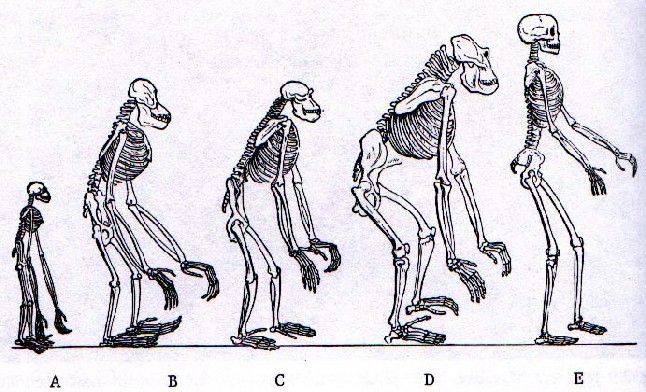
I’m going to start walking on four legs.  Screw this bipedal bull dung, if you know what I’m saying.   Tired of the upright pretense of walking on two legs.   Too much work and not much pay off, I say.  My lower back hurts more than it used to and I’m pretty sure I know why.

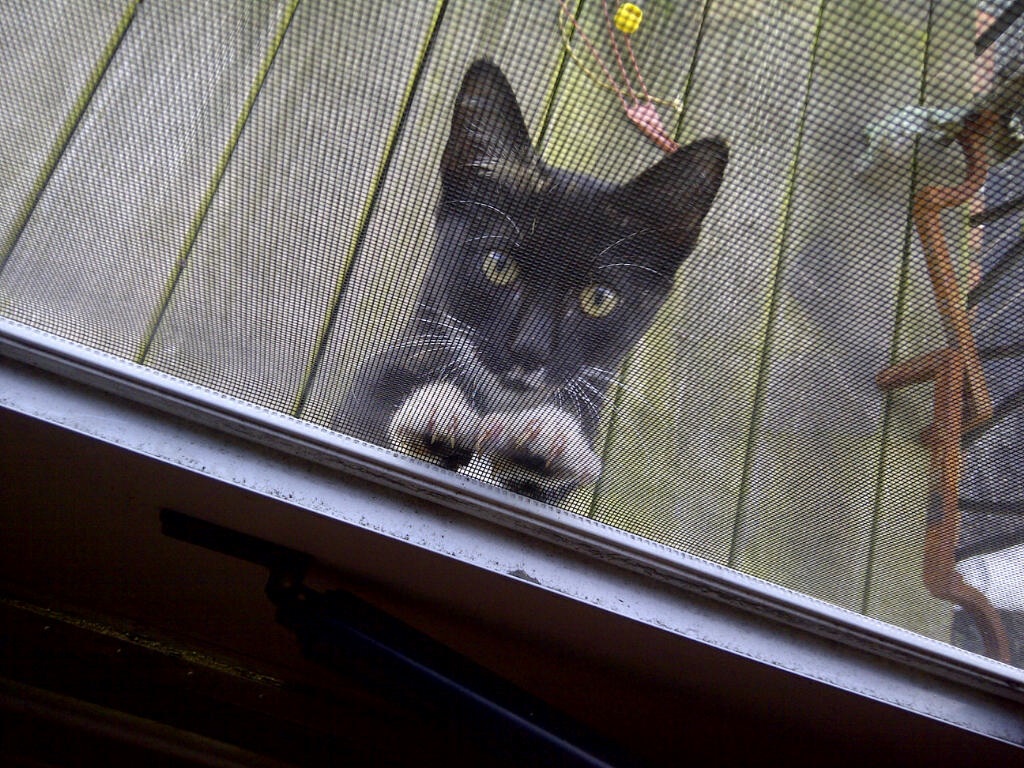
I look at my master, the only time he’s up on two legs is to grab my wrist with sharp claws and sink his fangs into my hand.   The rest of the time he moves and relaxes horizontally.  Way to go, I say.  And I’ve never heard him complain about his back hurting him.

“Where are you going with this?” asks one of those upstanding prigs, the kind who scrutinize with a wrinkled nose.

“Follow me if you can,” I say, putting my palms on the floor, along with my toes, and moving smartly up the staircase.

Louis Armstrong was once asked by a square what the meaning of jazz was.  “If you got to ask, Daddy, you ain’t never gonna know,” said Armstrong.

So if I go on two legs, or on four, what I’m saying is the same– and so is the song I’m humming.  Only my hands will be a little more calloused when I gesticulate, you know, since I’ve been walking on four instead of two limbs.

Real time

In real time, sometimes, we get our ass kicked.  I feel it at the end of every two hour workshop with nine energetic and creative kids I work with on Thursdays after school.  I leave it all on the field, and feel like I’ve had my ass kicked and accomplished nothing.

But I remind myself every week, after I revisit the frames and sounds they’ve made, that real-time ain’t the only time.   Tweaking, combing and refining, I’m thrilled with what we accomplished, in spite of everything.

Good to remind ourselves to appreciate the blessings we are too preoccupied to recognize.

Experience

Deeply experienced things remain, even years later.  The moment, the light, how things smelled, facial expressions, every tiny unverifiable detail is contained in the memory.

I remember sitting on a stone bench on a cool evening, watching a gangly puppy’s uncontrollable excitement as he discovered the delights of eating deer shit.  “Let’s not mention this to her,” my friend says, laughing, raising a shot of excellent scotch.

Painful experiences are also in there, no doubt.  The blessing is that the beautiful experiences, though sometimes more subtle, more elusive, are just as strong as the other kind.


A Thousand to One

A THOUSAND TO ONE*

I take those odds, because, what is to be gained in that one-in-a-thousand shot is great and, also, I don’t have another plan that makes sense.

A fellow blogger had a great unattributed quote, maybe it was his own.  I love it.  I’ll find the link to his page of quotes and put it here later, there are some good ones.  This quote really spoke to me:

Forget the thousand reasons the thing won’t work, remember the one reason that it will.

People make more daring, brave and foolish bets daily.  Millions line up for Lottery tickets every week, people bet the house and farm on the spin of a roulette wheel, accidentally put desperate, impossible pressures on their children, work hundred hour weeks expecting the reward of a comfortable retirement, if they don’t die trying to gain that comfortable nest egg first.  This short list does not include the many brave and wonderful things people continue to bet on, in spite of the poor chances of success.  People do all kinds of things in the teeth of long, if not impossible, odds.

Here’s my bet:  I am right to believe that children, once they are free to follow their imaginations, in a safe, protected place, will learn all kinds of things along the way.   I am betting that many among them will teach their peers what they have learned.  I am betting they will also produce materials that can be used to teach other kids.  I am betting everything I have on this longshot horse.  It is a wonderful little horse that I raised myself from a tiny pony that used to sleep at the foot of my bed.

* yo, WordPress, what’s with my titles not showing up anymore?

What Would Gandhi Do?

Let’s say someone made multiple derogatory comments about your religious group, asked you to do favors under a tight deadline that you delivered and that they then ignored, made a promise to you they then violated and informed you of in a cc in an unrelated email?  Let’s say the success of your fledgling nonprofit organization was in some way dependent on this person and that the broken promise related to the very existence of that outfit.

Few would probably blame you for being upset, hurt, angry or all of the above.  The question is, what would Gandhi do?  The other question is: what would Bruce Lee do?

I wrestled with these questions for almost a week.  It was not an easy wrestling match.  In the end I decided that Gandhi and Bruce Lee would do the same thing.  Take a minimalist approach that deflects action back on the other party.  Responding to the cc’d email that informed me he had no intention of keeping his promise to the organization I wrote: don’t worry about it.

It didn’t take long for him to put on his clown costume and begin capering.  But I’m not worried about it.

To a fellow blogger and my cousin J

There are two ways people go after being abused as children.  Both are difficult, but one is much better than the other.

Some people grow up to abuse others, become nightmare spouses, parents, friends, colleagues, bosses and leaders.  They feel they have the right to act like pricks, since life was cruel to them.

Others grow up to defend their loved ones from abuse.  They feel obliged to model caring behavior, to protect others.   They become beacons of hope in an often indifferent world.  

Deep feelings can change our hearts, for better or for worse.  But better is better.