Leading up to, and even immediately after, the Trump-donor funded MAGA rally, and separate subsequent march to and riot at the Capitol on January 6, loyal Trumpists with presidential ambitions, like senators Lyin’ Ted Cruz (R-Texas) and rioter high-fiver Josh Hawley (R-Missouri), were holding up the certification of Biden’s victory and calling for the formation of a commission to investigate why millions of Americans believed allegations of widespread voting fraud that may have, quite possibly, led to Joseph R. Biden being able to steal the election from Donald J. Trump.
These senators, and their indignant counterparts in the House, kept insisting “we’ll never know who the real president is, unless there’s a commission to revisit every faulty or corrupt bipartisan state recount and each of the dozens of unfair court decisions from judges prejudiced against Trump … unless we form a commission to study this, America will never know who our real president is!”
We know who the real president is. But tens of millions of Americans, for some reason, believed (and still believe) the Big Lie (which 2/3 of Republicans polled spontaneously appear to regard as the Big Truth) about widespread voter fraud that led to the theft of an election, and so seven Trump supporters in the Senate, and 140 in the House (including ‘March for Trump’ speakers Madison Cawthorn and Mo Brooks, both of whom gave stirring speeches right before the riot), contested the awarding of Electoral Votes to Biden and called for a commission to figure out exactly how the Democrat [sic] party pulled off this slick, massive, historically unprecedented voter fraud. In service of Trump’s lie about a rigged, stolen election, they called for the formation of a commission, before any Electoral College votes were made official.
To which uber-conservative Liz Cheney (R-Wyoming) responded, on the first page of her long January 3 memo to her anti-reason caucus:
The recent proposal for a new “Commission” is even more problematic [than Congress overruling state determinations about Electors]. It is not reasonable to anticipate that any commission so formed could wrap up its work in 10 days; indeed, the subsequent debate at both the state and federal level would likely require months. Did those proposing a new commission realize that they were in essence proposing to delay the inaugural? Did they mean to set up a new future precedent where the inaugural is delayed and we have an “Acting President?” For how long? Who decides when that process is over? Will that require another Act of Congress? Could the Acting President veto any such future Congressional action? If Congress has authority to create such a commission now, are state elections, recounts and state law legal challenges just “make-work” until Congress gets around to investigating and deciding who should be President? Members who support the new commission proposal may need to answer each of these questions. And in particular, Members should be prepared to answer how such a commission would be justified by the actual text of our founding documents.
No wonder the Wyoming Republican Party censured Cheney! Many want more fitting, more consequential, punishment than censure — she should be primaried, tarred, feathered and drummed out of the Grand Old Party! What kind of goddamned stupid, counterproductive questions are those, at a time when a rigged election has been brazenly stolen, when Black Lives Matter rioters — and antifa terrorists — are burning down the country in a reign of terror as power-mad pedophile cannibals drink our children’s blood and laugh at us while patriotic white militias do their best to hold off the violent non-white hoards?!!!!
Is there a single coherent answer to ANY of the questions Liz Cheney raised in her memo three days before the widely supported MAGA riot? I address this question to the 147 Trumpist Congress members who voted to block the certification of the 2020 presidential election on the grounds of massive fraud Trump claimed, without proof (and advertised to the tune of $50,000,000), had happened everywhere he “lost”. Their answer, of course, is a united “fuck you, Democrat [sic] party! Fuck you, Liz Cheney!”
I heard a very insightful discussion (between therapist and trauma specialist Resmaa Menakem and Kritsta Tippett) of the deep bodily harm racism inflicts, on a cellular level. Menakem describes how the subjects of racist attention are born inheriting, in their bodies, the stress their mothers felt while carrying them in their wombs. It made a lot of sense to me, the innate vigilant tension that must be carried in the body by those who society marks, solely by their external appearance, as inferior and threatening.
Menakem makes this profound point:
Not just that they lived through trauma, but that the angst and the anguish was decontextualized. And so for my Black body to be born into a society by which the white body is the standard is, in and of itself, traumatizing. If my mom is born as a Black woman, into a society that predicates her body as deviant, the amount of cortisol that is in her nervous system when I’m being born is teaching my nervous system something. Trauma decontextualized in a person looks like personality. Trauma decontextualized in a family looks like family traits. Trauma in a people looks like culture.
I immediately knew the truth of this. I thought of my advantage, as a white person raised in safety by white middle class parents [1], when an off-duty cop tried to punch my face in for a disrespectful remark I’d made to him. (In my defense, I had no idea the violent piece of shit was an off-duty cop.) When three of his colleagues finally pulled us apart, two pinned my arms. I immediately relaxed my body, signaling to them I was not resisting, that I was calm, that they could safely let me go, which I quietly asked them to do.
Had my body been programmed to tense up and resist, knowing in my ancestral memory that the next likely thing was for all four of them to start beating me, or worse, I’d never have been able to relax and free myself so easily. I’d never have had the chance to reasonably ask the guy who’d tried to punch me in the face over and over what was stopping me from doing the same to him, then doing it, in front of three witnesses, and making my exit without having the shit beaten out of me afterwards.
The trauma of growing up in a despised, feared group is somaticized, it becomes part of the body’s response system (making the body more susceptible to disease and early death, among other things [2]). Not surprising at all, once it’s put out there, but fascinating and important to consider. The inherited, instinctive fight or flight mobilization in traumatized bodies can also be described by epigenetics, which Krista Tippett also did a great show about.
The new field of epigenetics sees that genes can be turned on and off and expressed differently through changes in environment and behavior. Rachel Yehuda is a pioneer in understanding how the effects of stress and trauma can transmit biologically, beyond cataclysmic events, to the next generation. She has studied the children of Holocaust survivors and of pregnant women who survived the 9/11 attacks. But her science is a form of power for flourishing beyond the traumas large and small that mark each of our lives and those of our families and communities.
These biological expressions of stress and trauma can be worked through by survivors who receive help and support, once the traumatic events are far enough in the past. But what of those whose stress and trauma are ongoing, systemic, unending, in the news every single day?
In the context of now daily police killings of unarmed Black people, this dynamic is very important to consider. The day after Derek Chauvin was convicted, unarmed, unresisting Andrew Brown was, shot to death in a rural county in eastern North Carolina. The warrant for his arrest called him a dangerous drug dealer and the unidentified sheriff’s deputies who went to serve the warrant on him wound up killing him. According to the officers who shot him, the proof that he was resisting arrest is that once they began shooting into his car, and four shots are confirmed to have hit him, he tried to drive away, attempting to back down his driveway, which seems to have been when the fatal fifth shot was fired into the back of his head.
Ask yourself how a Black man, even if he is not a “dangerous drug dealer”, does not try to flee from police bullets coming into his car, particularly after he has complied and kept both hands on the steering wheel.
Recall the original police account of the murder of George Floyd: “Man Dies After Medical Incident During Police Interaction.” We know now, thanks to the video shot by a courageous seventeen year-old, the testimony of several witnesses, police officials and medical experts, and the guilty verdict by a jury of twelve of Derek Chauvin’s peers, that the original police account, while strictly true (there was a “medical incident” but it was Floyd’s murder) was a grossly misleading oversimplification of what happened during those fatal final nine and a half minutes of the “police interaction” that ended George Floyd’s life.
Makes me want to holler, it really does.
I’ve been reminded that most people who become police officers, the vast majority of them “white,” grow up with a conservative mindset, conforming to the norms of our society and believing in a basic code of right and wrong based on enforcing the law, whatever it is, against lawbreakers. I believe many, if not most, are motivated to become police officers by a real desire to protect and serve. The burning, killing question is who and what, exactly, you have vowed to protect and serve.
[1]
Leaving aside my own epigenetic trauma to be the child of parents who lost all but a few family members, every single family member left in Europe, to an outbreak of murderous group madness in Ukraine and Belarus in 1942 and 1943. Every one of them murdered and disappeared without a trace, just thirteen years before I was born. Try as I might, it is something I can never get out of my head, or my body, I suppose, though my own experience never included anything like the killing crews that were the last thing my grandparents’ family members ever saw.
Here’s a dramatic illustration of why Joe Manchin’s present fetish for bipartisan consensus, highly desirable though such consensus is, is so misguided in the age of the cult of Trump that the GOP has become. By simply stating true facts about the 2020 election and Trump’s attempts to overturn it, arch conservative Liz Cheney has become a pariahin her party.
After the former president and his closest allies, in the two months after the election, spent $50,000,000 on ads falsely declaring the “rigged” 2020 Election had been stolen from America’s Greatest Sore Loser (he made the same claim in 2016, when he won), and at least $3,500,000 to organize and stage the January 6 rally at the Ellipse and the march-permitted march to the Capitol to “Stop the Steal,” and speaker after speaker (including newly elected Congressman Madison Fucking Cawthorn) urged the rally attendees to fight like hell or democracy would be stolen from them, there was little but silence from Trump’s party in Congress after the deadly riot of January 6th.
Only one top Republican member of Congress immediately spoke out, without equivocation, against the president’s attempt to overturn a US election by force. Liz Cheney (daughter of evil incarnate, the aptly named Dick Cheney), stated “there has never been a greater betrayal by a president of the United States of his office and his oath to the Constitution.” She voted for his impeachment, along with nine other House Republicans. Cheney was almost immediately censured by her state’s Republican Committee (as were virtually all of the others who concluded Trump deserved to be impeached) for disloyalty to the former president and his party. Cheney is poised to become the leader of a post-Trump GOP, if there is such a thing, but for the moment, she’s a Republican villain to most Republicans.
To defend [Liz] Cheney is to invite the wrath of Trump and his base, while for those members who remain Trump loyalists, interaction of any sort with “fake news media” is increasingly to be avoided. But I [writing for the NY Times] was able to listen in on Cheney’s remarks at a virtual fund-raiser for her on Feb. 8, hosted by more than 50 veteran lobbyists who had each contributed to her political action committee.
At the event, Cheney lamented the party’s drift away from reality, the extent to which it had become wedded to conspiracy theories. The party’s core voters, she said, “were misled into believing the election was stolen and were betrayed.”
Alongside a legitimate concern over a Biden administration’s priorities was “the idea that the election somehow wasn’t over, and that somehow Jan. 6 would change things. People really believed it.”
When one lobbyist raised the specter of Trump re-emerging as the G.O.P.’s dominant force, Cheney responded that the party would have to resist this. Citing the Capitol riot, she said, “In my view, we can’t go down the path of embracing the person who did this or excuse what happened.”
She added: “We really can’t become the party of a cult of personality. It’s a really scary phenomenon we haven’t seen in this country before. Our oath and our loyalty is to the Constitution, not to an individual — particularly after what happened on Jan. 6.”
This month, she told Fox News that she would not endorse Trump if he ran again in 2024.
Too bad she’s not in the Senate (though she holds mostly repellant views [1] and, for all of our sakes, is better off arguing them in the House) — because the plain speaking Joe Manchin might find common ground with the staunch Wyoming opponent of Obamacare, environmental regulation, gun control, gay marriage and apologizing for our use of overwhelming military force to protect American interests around the world.
Who knows, they might even reach a principled compromise on a national $10/hr minimum wage.
[1] Her position on the first Trump impeachment, for example:
“It’s a system and a process like we’ve never seen before, and it’s really disgraceful,” Cheney said during one TV appearance. Voting to impeach Trump under such circumstances “may permanently damage our republic,” she warned on the House floor.
Even her principled positions are laced with partisan accusations against Democrats, as she wrote in the opening section of an otherwise praiseworthy long memo to her colleagues three days before Trump’s riot at the Capitol:
The following summary begins by addressing the Constitutional issues, then provides excerpts from and a description of the principal judicial decisions in each of the states. As you will see, there is substantial reason for concern about the precedent Congressional objections will set here. By objecting to electoral slates, members are unavoidably asserting that Congress has the authority to overturn elections and overrule state and federal courts.
Such objections set an exceptionally dangerous precedent, threatening to steal states’ explicit constitutional responsibility for choosing the President and bestowing it instead on Congress. This is directly at odds with the Constitution’s clear text and our core beliefs as Republicans.
Democrats have long attempted, unconstitutionally, to federalize every element of our nation—including elections. Republicans should not embrace Democrats’ unconstitutional position on these issues.
States’ Rights, y’all, as sacred as the Second Amendment itself.Can’t be a good conservative without attacking the fucking unscrupulous, partisan Democrats, not in 2021.
I watch Democratic Senator Joe Manchin interviewed and often feel an impulse to slap that complacent reasonableness off his face, particularly when he smiles amiably after the interviewer asks no follow up to his prepared bipartisan-sounding answers. Yes, Joe, we all agree it would be a better country if the two parties worked together, if we did not live in a zero-sum moment where one party, making no concessions, can simply tell any lie to justify their unconscionable actions to their angry base. We’d also be a better, more decent country if millions of our countrymen stopped being violent racists and misogynists, agreed Joe.
I’ve got two words for Joe Manchin and his idealism about bipartisanship: Mitch McConnell.
Do you think, for a second, that Scorched Earth Mitch would hesitate to nuke the filibuster once he regained the majority? He already did it for Supreme Court nominees, after blocking Obama’s nominee because it was only ten months from an election. You recall Mitch blamed it on the Democrats, who’d eliminated the filibuster for presidential nominees after a record shattering number of the president’s nominations were filibustered by Mitch and his colleagues and never reached a hearing.
Our government was not always gridlocked this way. Ruth Bader Ginsburg was confirmed 96-3. Radical right-wing activist Boof Kavanaugh did not enjoy quite as much bipartisan support, he prevailed 50-48, after Mitch got rid of the filibuster.
Tell us more about this principled bipartisanship of yours, Mr. Manchin, and how it will melt the heart of a power-crazed troll like McConnell. Or how it will enlighten even a handful in a united Republican Congress that continues to block a commission to get all the facts about the riot at the Capitol, a party that will not denounce its 147 members who voted, without evidence of any kind but the former president’s lies, to contest the counting of Electoral College votes, even after #Stop the Steal rioters, infuriated by the exhortations of the president and other rabble rousers, stormed their workplace, put many police in the hospital and interrupted the ceremonial counting as members of Congress scrambled for their lives and rioters looked for Pence and Pelosi, to string them up. This is Trump’s party, a party in which even “moderates” refuse, as a block, to vote with the radical Democrat left embodied in Biden and Harris (no vote for Covid relief, Mitt?)
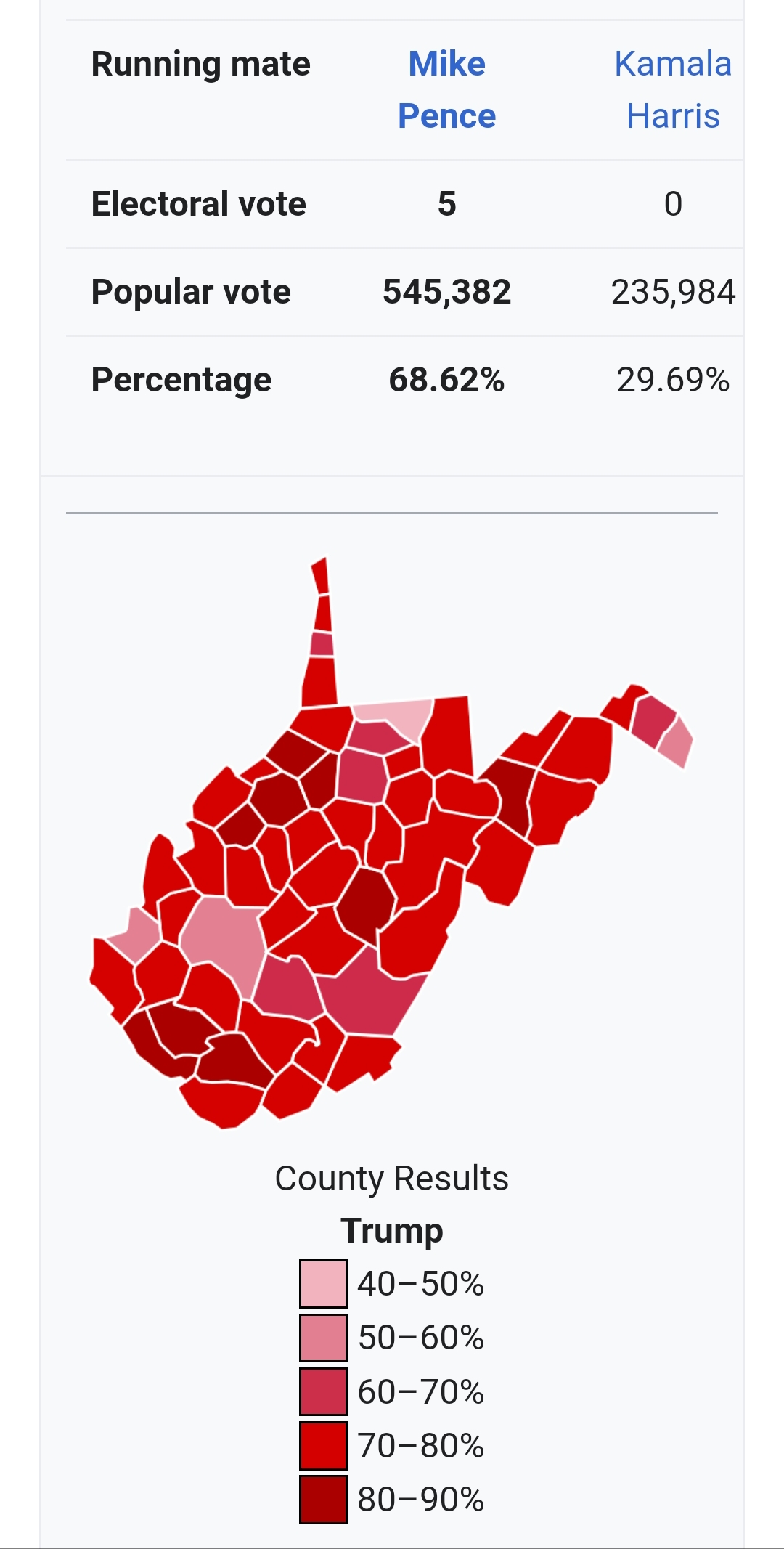
On the other hand, Manchin, former governor of West Virginia, was elected to the Senate in a state that voted this way in 2020:
A decisive ass-whupping from a state where Trump had promised crowds of cheering West Virginians he’d send them back into the coal mines. Thousands of mining jobs were lost under Trump, a man with a spotty record on telling the truth, but MAGA man is apparently still beloved in West Virginia, at least among the 63% who turned out to vote in 2020. It’s clear, in light of the heavy Republican tilt of the great state of West Virginia, that Joe Manchin has to be mindful of the likelihood of being lynched if he calls too loudly for helping an illegitimate Democrat [sic] president by making it harder for obstructionists to filibuster every one of his proposed laws.
Yes, white people do get lynched too, once in a while, “race traitors” in particular, when it’s extremely necessary for a mob to make an example out of one who violates sacred norms and folkways.
So, while I don’t like it, I can understand Manchin’s tap dance. In a hopeful part of my brain it reminds me of the recent statements Biden has been making about fighting the climate emergency and job creation. Fighting climate catastrophe will create millions of good, clean jobs, he says (not unreasonably) and transform our economy from an extractive system that is destroying the world into a sustainable one that will allow our children’s grandchildren to live on healthy planet. As he talks I keep hearing the term he refuses to say, the plan he vowed to veto if it ever reached his desk: The Green New Deal. That’s politics, you can’t always say what you actually mean, for fear of stoking partisan rage that will sink a good idea before it can get political traction.
If Manchin says, before it is absolutely the last moment to do so, “fuck the filibuster, I’m with Joe and Kamala” he’s done, as he knows. Could he do a better job by making a less moronic argument for why he’s against changing a frequently abused parliamentary rule that is not part of the original design of our government? Possibly, even though all arguments in support of the filibuster require overlooking its mostly racist history. But people who are dying deaths of despair in large numbers, as they pine for good jobs they once had in the coal mines, in a state that American prosperity has left behind, likely would not cotton to even the most otherwise reasonable arguments for making the filibuster harder than merely sending an email to the proper authority. They like Joe because he fights for West Virginia and is basically an older-style Republican conservative who ain’t gonna do anything we don’t want him to do.
Here’s an interesting article about the challenges West Virginia faces. It provides several ideas for how the federal government could help states like West Virginia and win voters away from the idea that all federal programs are part of a coercive system that must be resisted as strongly as the deprivation of States’ Rights once was by states that took up arms against such tyranny.
The article points out:
The economics of redevelopment in the state are particularly tricky given that the state government has limited resources, local governments have meager tax revenue, and philanthropic dollars are scarce (those out-of-state coal companies didn’t leave behind a lot of local family foundations).
The solution, of course, collect taxes from giant corporate “persons” that currently pay none and let the federal government invest the money to help actual human persons in places where the entire economy in some small towns, in recent years, has been based on obtaining and selling millions of doses of the prescription drugs people with no other options use to dull their pain, and 238 times a day, end their pain once and for all.
That kind of large-scale economic development program, directly benefiting a wide swath of his constituency, is the only thing that will allow a Joe Manchin to take less maddening positions on things like actually allowing debate on bills in the Senate.
I have no insight into what motivates the first openly “bisexual” member of the Senate, Arizona’s anti-filibuster reform, anti-minimum wage hike Kyrsten Sinema (elected in 2019 to fill John McCain’s seat), but I have no reason to suspect it is high ideals about democracy. Arizona and West Virginia Democrats have to keep the pressure on these two “centrists” to do the right things. It’s unlikely they’ll listen to anyone else.
If you believe that you can help make change for the better, you have reason for hope. Starting therapy, which is based on the idea that understanding leads to personal growth, change and less pain in life, is an expression of hope. Marching in protests is an expression of hope. Supporting friends who have made even small changes for the better, an affirmation of hope. Hope is a precondition for creative action of all kinds. Despair, a firm belief that no positive fundamental change can ever be accomplished, that we are as we were born, the world is what it is and nobody can change any of that, results in a hardened certainty about the grimness of life that nobody can influence.
Raised by two frustrated, anger-prone parents, broken by their own strong-willed mothers, I was never taught that it’s possible (and smart) to take a breath, remain silent for a moment, think a bit more, consider the effect of my reaction. You could say I was trained to have a handicap — when something aggravates you, get mad and vent loudly. The reflex to get angry is still strong in me, when a computer has its way with me I can be heard to snarl and yell like I’m in a barehanded fight to the death with a young, energetic Mr. Hitler, armed with a Bowie knife. Seeing the terrible impact getting angry all the time had on my life, I set out to become milder in my reactions. Over many years, I’ve made some progress.
My father snarled when I brought this progress up twenty years ago or so. No, he insisted, you changed only your superficial reactions, not your reflex to fly into a rage. I pointed out that changing my reactions meant I am more often able to control my reflex to fly into a rage.
“I’ve seen big a change in you,” my mother said, as she passed through the room, on her way to the bedroom to read a murder mystery. It is hard to express how much her passing comment moved me, fortified my efforts to change even more. Particularly since it was spoken early into my attempt to become a less angry person.
That change may not fix everything that’s broken is often cited, by Positive Change Skeptics, as proof that real, fundamental change is impossible. To me, if I get angry 40% less than I used to, am more consistently able to not hurt those around me by taking anger out on them, I consider that change very valuable. To those who insist we are what we are, and foolish hope of change is a game for chumps, a paltry 40% less anger is the same as telling everybody to fuck themselves. I hope I will not infuriate anyone by admitting I have no idea by what percentage I’ve lessened my angry reactions, I pull the 40% stat out of my ass by way of random illustration.
Without hope, without faith in our power to choose more wisely than we did when we were children, the only alternative is a pessimistic acceptance of every bit of negativity we encounter as the natural order. Remove hope and you have only a grim acceptance of a bitter world, run by evil people, a brutish place where you get as much as you can before some other syphilitic rat bastard tries to steal it from you.
We are living in a moment of mass despair, millions worldwide taking desperate action out of their sense of hopelessness. There are many reasons for despair. Humans are destroying the planet we live on, quickly, irrevocably, much faster than even the most pessimistic climate scientists predicted. The economic system that prevails on our dying planet is unashamedly extractive, not sustainable and it exploits most people who work for it.
The powerful could give a shit what happens after they’re gone, if piping toxic tar sand thousands of miles to toxically extract more gasoline from it will increase their vast wealth, fuck “water protecters” and “tree huggers” and “climate alarmists” and “climate scientists” and everyone else who has a concern about unsustainable, deadly levels of toxins released into our air and water. You fund influential “think tanks”, hire lobbyists, judges, goons to beat protesters up, sic dogs on ’em, strip search ’em. Have legislatures pass laws labeling every demonstrator an eco-terrorist, put ’em all in jail. People can’t change, we are an irredeemably evil bunch, fuck it — set it all on fire, let God sort through the ashes.
Deaths of despair in this country last year, all other forms of suicides excluded, included a U.S. record 87,000 drug overdose deaths, an average of 238 a day. Nothing can change, China stole all the jobs, the radical left stole the rigged election from the only man who can protect us from a cabal of powerful Satanist cannibal pedophiles, what is the point, what is the fucking point? Doctor, I need more Oxycontin!
Despair is understandable. It’s also deadly. If the news is too depressing to watch (which it is, by design), if it fills you with despair that there is not a moment when hope can simply be allowed to breathe, you learn to tune it out. This exhausted disengagement works to the advantage of despair and grievance mongers.
When the Georgia run-off resulted in a narrow Senate majority for new president Biden, the forces of reaction immediately sent an angry lynch mob to storm the Capitol, their violence erasing all celebrations of a resurgence of democracy in Georgia. Almost at the moment Derek Chauvin was convicted of murdering George Floyd (after a short trial during which there were dozens more police killings across the country), a sheriff in North Carolina refused to release videos of someone killed by police. It fills you with a sense of dread, of despair for even the hope of anything getting better.
Watch the affable Joe Manchin insist, with every appearance of measured reasonableness, that the only way out of this viciously deadlocked and divisive partisan political hellscape is by working together, reaching across the aisle to those who support the unfounded claim that Biden stole a rigged election from their party leader, and compromising on changes to proposals that are already compromises. What’s wrong with $11 an hour minimum wage, y’all? Not as much as what generous Amazon pays, but, heck, a lot better than the $7.25 the Fair Labor Standards Act requires all American employers to pay certain workers not exempt from the law because they make tip money as well [1]. Hard not to feel a bit of the old despair, a flash of the old anger.
That’s when it is important to remember things like this. Manchin takes this conservative position because he represents one of the poorest, Reddest states in the nation. Created in 1863, West Virginian’s primary industry has long been coal mining. Trump promised to send West Virginians back to work in the coal mines, and they apparently loved him for it. West Virginia voted for Trump in 2020 by an 40% margin. Now– tell me, if Biden crafted a law to spend billions in recovered corporate tax dollars to revitalize the devastated economy of places like West Virginia, investing money for massive job retraining, new sustainable industries, health care for all, funding internal infrastructure projects hiring thousands, giving West Virginians new hope for the future, would Manchin still not be able to take a reasonable position on weakening or eliminating the filibuster? Would it not give someone like Manchin political cover to insist that the minority filibustering should at least be required to hold the floor and actually argue the merits of why they are blocking debate on the bill they’re obstructing?
It is easy and natural to give in to despair, particularly when every reasonable hope you can muster is continually and deliberately pissed on by unscrupulous powerful people who do not care about justice in any form, except to hoard more of its prerogative to selectively withhold justice for themselves.
The words of Trump’s new internet sensation Frederick Douglass are worth considering here:
Let me give you a word of the philosophy of reform. The whole history of the progress of human liberty shows that all concessions yet made to her august claims have been born of earnest struggle. The conflict has been exciting, agitating, all-absorbing, and for the time being, putting all other tumults to silence. It must do this or it does nothing. If there is no struggle there is no progress. Those who profess to favor freedom and yet deprecate agitation are men who want crops without plowing up the ground; they want rain without thunder and lightning. They want the ocean without the awful roar of its many waters.
This struggle may be a moral one, or it may be a physical one, and it may be both moral and physical, but it must be a struggle. Power concedes nothing without a demand. It never did and it never will. Find out just what any people will quietly submit to and you have found out the exact measure of injustice and wrong which will be imposed upon them, and these will continue till they are resisted with either words or blows, or with both. The limits of tyrants are prescribed by the endurance of those whom they oppress. In the light of these ideas, Negroes will be hunted at the North and held and flogged at the South so long as they submit to those devilish outrages and make no resistance, either moral or physical. Men may not get all they pay for in this world, but they must certainly pay for all they get. If we ever get free from the oppressions and wrongs heaped upon us, we must pay for their removal. We must do this by labor, by suffering, by sacrifice, and if needs be, by our lives and the lives of others.
Power concedes nothing without a demand. It never did and it never will. Find out just what any people will quietly submit to and you have found out the exact measure of injustice and wrong which will be imposed upon them, and these will continue till they are resisted with either words or blows, or with both.
Given the choice between hope and despair, I’ll choose hope every time. It’s not really that much of a contest.
[1]
Manchin’s state already has a more generous $8.75 hourly minimum wage (a state could hardly be less generous than the $7.25 minimum wage 19 U.S. states still have). Ironically, DC is the only US jurisdiction that currently has a $15 minimum wage, $3.25 more than surrounding state Maryland.Kyrsten Sinema’s (of the parody of McCain’s famous thumbs down on Trump’s attempt to abolish the Affordable Care Act, in opposing a $15 national minimum wage) state of Arizona already has an $11 minimum wage, so, you know, enough is enough…
In 2013 Bill Moyers had a guest, Henry Giroux, who made an excellent and depressing case for America’s Culture of Cruelty [1]. In a materialistic society that monetizes everything and reduces every encounter to a transaction over monetary value, where the super-wealthy consolidate ever greater say in our laws, most of us are expendable, worth only as much as our net worth. Cruelty may be carried out with impunity against people without economic or political power, that’s what “winners” and “losers” is all about. That’s just the sad reality, for losers — winners get rewarded, losers lose, no mystery there.
America, with our divisive, concession-free, attack ad-based politics, is no less cruel as a culture in 2021, despite the growing humane impulse of many of us in the face of cascading evidence of brutal inequality, and outright state brutality, during a deadly pandemic that calls on each of us to summon our higher natures, to consider others, to finally end these ongoing plagues.
Instead, we have unified, irrational, bare knuckled political calculation in the GOP’s uncompromising resistance to voting for even a long overdue Covid-19 relief bill. The GOP is united in refusing to endorse vaccines and basic safety precautions, on the depraved theory that if there is less misery in the country and less Americans die of the pandemic it will make Biden and his Democrat [sic] party look good and hurt Republican chances at the polls in 2022.
People rightfully fear cruelty, particularly when it has the power to harm behind it, hence the vindictive Trump’s continued hold on the party he took over after humiliating and exhausting all opponents to win the nomination and the Electoral College in 2016. He has demonstrated over and over his zeal to punish, to make examples of, to humiliate, to pardon friends and attack and vilify enemies.
Predictably, and depressingly, the 6-3 right-wing Supreme Court that McConnell orchestrated (it would be 5-4 today if Merrick Garland had had a hearing and confirmation vote in 2016), with the three Koch-vetted and dark-money supported extremists appointed by Trump, is marching ahead with quiet, decisive cruelty.
The other day Brett “Boof” Kavanaugh authored a 6-3 decision making the law of the land that teenagers convicted of violent crimes can be imprisoned for life without the possibility of parole, as long as a judge exercises “discretion,” considering the sentence and deciding it’s appropriate.
Ruth Marcus, writing in the Washington Post, in an op-ed called At the Supreme Court, a tale of two Bretts:
Supreme Court Justice Brett Kavanaugh has enjoyed a life of comfort and privilege, the son of a Beltway lobbyist and the product of the Ivy League. Mississippi prisoner Brett Jones has endured a life of misery and abuse, the son of an alcoholic father who brutalized his mother and a stepfather who beat him.
As fate would have it, their lives converged this week: In an opinion released Thursday, Brett Kavanaugh upheld Brett Jones’s sentence to life in prison without the possibility of parole for killing his grandfather just 23 days after his 15th birthday. (And, yes, let us pause here to note a certain irony in the fact that the opinion was written by a justice whose confirmation hearings featured discussion about how people can change after high school.)
The 6-to-3 ruling in Jones v. Mississippi was notable not only for the juxtaposition of the two Bretts. It offered a snapshot of a court transformed by the arrival of Kavanaugh and two other conservative justices named by President Donald Trump. And it demonstrated how a conservative majority bent on reshaping the law can do so without the showy fanfare of explicitly overruling precedents.
According to the punitive right, rehabilitation and personal growth are myths, when applied to poor people. A fifteen year-old with a history of abuse, from a family of limited means, convicted of murder, sentenced to life without parole, just has to continue to be punished, without hope of anything beyond a long prison life, no matter what profound changes he may have undergone while locked up. Fair is fair.
A fifteen year-old from a wealthy family must not be made to unduly suffer, must not have his life “ruined” decades later by being confronted with his unfitness for a Supreme Court seat, for creepy things he was credibly accused of doing at that immature age.
Kavanaugh’s personal unfitness to serve on the Supreme Court was not only his failure to accept responsibility for his youthful bad behavior, it was even more powerfully demonstrated by his angry, tearful, paranoid partisan screed about a cabal of Clinton-assassins and powerful Jews intent on lying about him and spending millions in dark money to keep him off the nation’s highest court, thereby ruining his life [3].
The right is always supremely generous extending mercy and understanding to their own in this game of cruelty. After all, who among us, at a tender age, has not drunkenly fallen on top of a cute much younger girl, in a locked room, started groping her and been too drunk to actually recall it years later? Could happen to anybody at Georgetown Prep! And, besides, it’s totally, totally different from killing someone at fifteen just because you were “abused” by your stepfather.
Makes me think of that study of political orientation that was done a few years ago. Liberals tend to be optimists about human nature, conservatives are pessimists. Liberals skew toward forgiveness and permissiveness, conservatives toward retribution and punishing. Liberals tend to seek to understand the reasons for violence and strategize about how to change conditions that produce it, conservatives prefer to keep things exactly as they are and harshly punish those who deserve it.
Boof Kavanaugh, who deliberately lied several times during his confirmation hearing (including about the definition of “boof” on his elite prep-school yearbook page– everyone knows it’s having a tube inserted into your ass and having vodka poured in — Boof said it was an inside joke about his flatulence, LOL!), and was voted into his lifetime post by a party-line 50-48 vote, the smallest margin since 1881 [2](and only after McConnell nuked the filibuster for Supreme Court nominations to allow an up or down vote), is a mean son-of-a-bitch, no matter how many millions in public relations dollars from dark money sources went into crafting the image of the gentle, woman and girl protecting junior high school girls’ basketball coach and religious churchgoer during the bitter fight for his nomination.Recall that the Jesuits of America eventually called for the religious Catholic Kavanaugh to withdraw his name from consideration, and that instead he angrily and tearfully cited a vast, evil left-wing conspiracy, in his defense of not having his life ruined by liars.
Here’s what the face of that gentle man, and supremely qualified, unbiased right wing lifetime justice, looked like, when he was challenged by liberal partisans during his confirmation hearings. It is the entitled face of our culture of cruelty.
[1]Giroux writes:
… a growing culture of cruelty brought about by the death of concessions in politics — a politics now governed by the ultra-rich and mega corporations that has no allegiance to local politics and produces a culture infused with a self-righteous coldness that takes delight in the suffering of others. Power is now separated from politics and floats, unchecked and uncaring.
Two of the oldest justices on the court — Stephen Breyer and Ruth Bader Ginsburg, both nominated by President Bill Clinton — were confirmed with near-unanimous support that would seem nearly impossible today. Breyer was confirmed in 1994 with an 87-9 vote; one year earlier, the Senate confirmed Ginsburg 96-3.
[3] Part of the remarks that he claimed to have written himself, that should have disqualified him for his Supreme Court position, particularly since millions in right-wing “opposition group” money supported the well-organized (calculated and orchestrated, one might say) campaign to put him onto the court:
In our federal republic, established by our Constitution, government power, unless explicitly granted to federal authorities, is presumed to be under the exclusive control of the state governments. The Tenth Amendment, the last provision of the Bill of Rights, reads: The powers not delegated to the United States by the Constitution, nor prohibited by it to the States, are reserved to the States respectively, or to the people. Under our federal system every state has its own marriage laws, criminal codes, family law, business laws, voting laws, gun laws, abortion laws, drug laws, capital punishment laws, etc.
The legal wrangling over States’ Rights vs. Federal enforcement of citizens’ rights has a long and sordid history in the US, during which federal enforcement of civil rights (guaranteed in the post-Civil War Constitution) have often been denied to selected groups of citizens (usually “non-white” groups). This continuous effort by states to restrict the rights of certain citizens is rearing its hideous, often irrational head as I write these words. 60% of American state legislatures are currently ruled by Republicans, after a fifty year effort to gain control of state governments and the federal courts by conservative groups funded by billions in largely “dark money”.
Those who argue for inviolable States’ Rights can rest their argument firmly on the Tenth Amendment, although they had a much stronger argument for it before the Civil War. and the resulting constitutional amendments that were added to the U.S. Constitution. These changes to the constitution were intended to increase liberty and justice for all and create a federal guarantee of these new rights.
Four score and seven years after the founding of the United Sates an American civil war raged, following the secession of one third of the then-existing states, over the issue of States’ Rights, specifically, a state’s right to decide if a sizable percentage of its population would have only the same rights as cows, pigs, donkeys, chickens, hunting dogs and other chattels.
After that long, bloody war, slavery was definitively abolished throughout every state in the Union (except as punishment for those duly convicted of any of the new, targeted crimes, like the enhanced “anti-vagrancy” laws that affected mostly former slaves and returned them to unpaid bondage). Following the Civil War, Congress passed three amendments to establish in law what had been contested by the Confederacy in a hard fought war — that race is not grounds for enslavement or inferior treatment under law.
The thirteenth, fourteenth and fifteenth amendments outlawed slavery [1], guaranteed federal enforcement of due process of law and equal treatment under the law, and extended voting rights to men formerly enslaved. The devastated states of the former Confederacy were required to sign on to these amendments as a condition for re-entering the Union (and receiving federal funds to rebuild their shattered infrastructure.)
The federal government made sure to reserve its right to enforce the 14th Amendment, a right that explicitly superseded the power of any state on matters covered by the newly amended constitution — as required by the 10th Amendment. The last section of the 14th amendment explicitly states that Congress may make any laws necessary to enforce the guarantee of due process of law and equal rights to all Americans, regardless of what state they lived in.
One equality-enhancing innovation that flowed from the 14th Amendment was Congress’s creation of the Department of Justice in 1870, to enforce newly universal civil rights for all citizens, now constitutionally defined as anyone born in the USA. The 14th Amendment was ratified after president Andrew Johnson vetoed the Civil Rights Act of 1866, on the grounds of white supremacy.
The first post-war civil rights act was enforced only haltingly and was soon written out of law by the Supreme Court’s absurdly narrow interpretation of the 14th Amendment [2] and later rulings upholding segregation. The idea of civil rights for Blacks was a dead letter in many states for generations, until The Civil Rights Act of 1964 again made it possible for individuals to enforce those rights in federal court. The Civil Rights Act only became law after decades of organizing, activism and struggle against often violent racism at law, efforts that culminated in the Civil Rights Movement of the 1950s and 60s. Democratic president Lyndon Johnson knew that signing the Civil Rights Act would turn the white south solidly Republican, which it remains to this day. He hoped that the Voting Rights Act of 1965 would level the playing field in those states, by allowing Blacks to register and vote in large numbers.
There are many devilish details in how the Supreme Court, Congress and the States spun the 14th Amendment, and more than one civil rights act, into oblivion. One of the most infernal examples is how quickly and efficiently several judges on the Supreme Court wrote the protections of the 14th Amendment out of law, for individuals (corporate persons continued to make good use of it during the first Gilded Age and beyond) during its almost century long judicially-induced coma. In the years from 1873 to 1963 no citizen, outside of corporations, was able to vindicate their civil rights under the 14th Amendment. The amendment that was supposed to provide access to the federal courts for citizens denied basic civil rights by their state government took a century long nap and the doors of the federal courts were closed to any persons not corporate in nature.
These maneuvers by federal judges and federal and state legislators allowed many of the worst evils of slavery to persist virtually unchanged for a century of winked at white supremacist violence after the Peculiar Institution was legally abolished. The Ku Klux Klan Act, which after vigorous enforcement by the new DOJ actually shut down the Klan for a short time, was quickly abandoned in a political compromise over the close presidential election of 1876, Reconstruction officially ended and law enforcement was left solely to state and local officials in the former Confederacy. Then, a century of Klan rule in many places.
None of the Congressional shenanigans over the course of that unjust, murderous, openly racist century would have been possible without the Senate filibuster and the steady, impartial hand of the Supreme Court, deciding case after landmark case that enforced segregation and other forms of unequal treatment under the law as matters of States’ Rights.
The filibuster was regularly used by a racist minority to block any law that would allow federal oversight of a state’s discriminatory racial practices. The 14th Amendment, which is now recognized as applying the protections of the Bill of Rights to the citizens of every state against infringement by their state, gave the federal government jurisdiction over the enforcement of civil rights. Enforcement of civil rights for millions of our newest citizens was the primary mission of the Department of Justice, at least for its first few years of existence. (Compare, for example, the recent policies and actions of the DOJ under the racist Jeff Sessions and unapologetic, pugnacious right-wing provocateur Bill Barr — read that ten month old article on Barr’s treachery in light of the Chauvin conviction for murder and the Big Lie about the rigged, stolen 2020 election, yikes)
The facially non-racist mantra of the filibusterers is always bipartisanship and “States’ Rights,” an impartial, hallowed, constitutionally endorsed doctrine expressing an understandable preference for local sovereignty and freedom from a central government “bureaucracy”. States’ Rights, its inconstant advocates always insist (on certain issues — abortion, marijuana, gay marriage — the same people insist federal bans should prevail), has nothing whatsoever to do with race, however disgruntled angry Black, brown and anti-racist white citizens might otherwise feel about it.
At the troubled heart of the States’ Rights argument is the unspoken, eternal question of who, in each state, actually gets the right to have a say about those rights and who in the state will enjoy them. The phrase is one of those glittering generalities, used to justify all sorts of devilment, like “Freedom is on the March” (shock and awe, Iraq), “Manifest Destiny” (ethnic cleansing of indigenous people and free land to pioneers) and “Liberty and Justice for all” (play ball!)
States’ Rights is really an argument for keeping the power relations and status quo firmly in place. “Local Rule” is an argument against change of any kind, unless it is to criminalize political protest, further suppress voting, harshly punish the users of certain drugs, and their families, ensure that partisan officials can overrule election results they don’t like, as many GOP state legislatures are now doing.
States’ Rights, the right of a free people to local sovereignty, has also long been advanced by historical revisionists as the sole reason why the states of the former Confederacy seceded from the Union. The Civil War had NOTHING to do with slavery, y’all, in spite of what the Articles of Secession of each state may have said about the constitutional right to own and breed slaves free from federal government tyranny.
Senator Strom Thurman (racist, segregationist father of a black daughter) heroically filibustered for almost twenty-four hours to block the Civil Rights Act of 1957. More than twenty bills to make lynching a federal crime were killed by filibusters over the years, most recently less than a year ago by fucking Rand Paul. Racist obstructionists constantly blocked any bill that would have made racist practices — like unpunished racist terrorism or openly restrictive race-based voting laws finally eliminated by the Voting Rights Act of 1965 — federal crimes that could be enforced by the Department of Justice rather than by the otherwise sovereign and impartial states of Mississippi, Georgia, Florida, Louisiana, Alabama, South Dakota.
Americans do not know this history. Many barely recall the horrific videos of the bloody insurrectionist riot at the Capitol that took place only three months ago. Imagine if Mike Pence and Nancy Pelosi had actually been captured and executed, as the crowd that breached the Capitol announced its intention to do.
Wait…wasn’t that a peaceful and legal demonstration by patriots rightfully outraged at massive Democrat [sic] voter fraud that stole the election from Mr. Trump? Weren’t those loyal, peacefully assembling patriots set up to look violent, and make Trump look bad, by Black Lives Matter and anti-fa? If we allow a commission to investigate the so-called Trump riot, claim proponents of the stolen election, don’t we have to investigate Black Lives Matter and antifa and their raging riots last summer, claiming George Floyd and a handful of others had been “murdered” by police? Why do Blacks and anti-fascists always get off the hook for their terrorism? (One possibility, there is no evidence that either group engage in the kind of organized, deadly, terroristic violence we saw at the Capitol where police were attacked and 140 officers were seriously injured, along with $30,000,000 of damage to federal property. The vast majority of those arrested in connection to Barr/Trump’s militarized federal crackdown on both groups last summer had all charges against them dismissed, almost a year later).
I am interested in history, read history books and articles about history and law, as well as historian Heather Cox Richardson’s nightly newsletter, and I had little grasp of the legal underpinnings for a century of open racism at law until I went to law school and learned about the Constitution and Supreme Court precedents in detail.
Did you know, as I learned in first year “Con Law”, that virtually all of the early federal civil rights cases were brought under the “commerce clause” a few words in the Constitution that gives the federal government jurisdiction over interstate commerce? A segregated restaurant in Georgia that served potatoes shipped from Idaho? Interstate commerce, yo, here come the federales. As a public accommodation, post Brown v. Board, you’ve got to serve everybody, or you’re in violation of the commerce clause… chump.
All Americans know that slavery was abolished after the Civil War, the constitution was amended — but how did this ongoing shit — racist voting laws, unaccountable Klan lynching for a century of “Separate but Equal”, the huge wealth gap between whites and Blacks, disparate treatment under the law for whites and people of color, disproportionate, unpunished police violence — actually happen?
States’ Rights, my friends, and a federal government obstructed at every occasionally well-meaning turn by committed zealots, halted in its tracks from enforcing the plain intent of the framers of the 13th, 14th and 15th Amendments.
The only Framers talked about today, by conservative purists like the Federalist Society, following in Antonin Scalia’s “originalist” footsteps, are the original group, from 1789. You know, the founding fathers who wisely compromised on things like slavery and apportioning representation in the House on the white population plus 3/5 of the slave population and carved in stone that a well-regulated militia being necessary for the protection of a free state — no regulation of guns allowed! It’s like the Civil War never happened for them, or, if it did, the kerfuffle was a reasonable response by states to having their constitutional right to own other human beings as chattels ripped away from them, their genteel, Christian society torn apart.
You can find these same manipulative weasels making the same speeches today (yes, I heard you the other day on the steps of the Supreme Court, Lyin’ Ted, you “fat wolverine”), defending the rights of certain people (coincidentally always white) to be free from the tyranny of other people (oddly, always “non-white”), mindless, manipulated people who want to “replace” them, as the theory goes. Republicans like Cruz call for bipartisanship, and the sanctity of the filibuster, whenever they are in the minority, even as their colleagues make state laws to suppress the vote, reserve the party’s right to tally all votes, and criminalize protected peaceful assembly, while immunizing those who kill protesters with their cars, as the great state of Florida did just the other day.
The massive multi-racial largely peaceful protests after the murder of George Floyd, protests Bill Barr’s DOJ sent federal troops to violently put down (pursuant to Trump’s hastily promulgated executive order on defense of federal property), are held up as an example of “anarchy” and unreasonable and violent expressions of irrational rage.
Now that the murderer of George Floyd is convicted, as a result of the massive public demonstrations that led to his prosecution, states are getting busy curtailing the First Amendment rights of speech and assembly in their states as they remain uncompromising on the Second Amendment, which they claim does not allow any regulation of gun ownership whatsoever.
Cynical, power hungry politicians playing to their “base” will do whatever it takes to remain in power, no matter what the majority of their constituents might actually want them to do. They will spin everything in terms of liberty from tyranny, in the manner of Groucho Marx flummoxing his unpaid workers:
But there is also history, the record of things that actually took place, who said and did what, what event precipitated another, what the law was and how the Supreme Court ruled on it, which can explain a lot about why the modern day counterparts of the slaveholding class are basically the same impious, largely racist ilk who used Christ’s teachings to justify holding other Christians as farm animals.
[1]
With a very important, and profitable, loophole written into it, no doubt the result of a political compromise by the centrists of their day, insisted on by those who could benefit from it:
“except as a punishment for crime whereof the party shall have been duly convicted”
13th Amendment:
Neither slavery nor involuntary servitude, except as a punishment for crime whereof the party shall have been duly convicted, shall exist within the United States, or any place subject to their jurisdiction.
see also, Thirteenth (excellent and highly recommended)–
[2]
The infamous Slaughterhouse cases put the 14th Amendment into a century long, judicially-induced coma. The only rights of federal citizenship the amendment protected, according to the unappealable majority on the Supreme Court in 1873, were the right to freely move from state to state, the right to use navigable interstate waterways and one equally crucial liberty I don’t recall at the moment. Everything else was left to the states, whatever the “intent of the framers” (most of whom were alive and outraged after the ruling was announced) might have been. Wikipedia blurb:
The Slaughter-House Cases, 83 U.S. 36, was a landmark U.S. Supreme Court decision that held that the Privileges and Immunities Clause of the Fourteenth Amendment to the U.S. Constitution only protects the legal rights that are associated with federal U.S. citizenship, not those that pertain to state citizenship.
This ruling was effectively reversed ninety years later when a federal court in the South allowed a lawsuit brought on 14th Amendment grounds, under the never-repealed Ku Klux Klan Act, to proceed. This allowed the federal government to prosecute the Klan murderers of civil rights workers Chaney, Schwerner and Goodman. Wikipedia:
The murder of the activists sparked national outrage and an extensive federal investigation, filed as Mississippi Burning (MIBURN), which later became the title of a 1988 film loosely based on the events. In 1967, after the state government refused to prosecute, the United States federal government charged eighteen individuals with civil rights violations. Seven were convicted and received relatively minor sentences for their actions. Outrage over the activists’ disappearances helped gain passage of the Civil Rights Act of 1964.[5]
Since 1967, tens of thousands of 14th Amendment cases, violations of the Civil Rights Act of 1964, have been litigated as many of us work to bend the moral arc of history toward justice.
“On Tuesday evening, President Biden urged Congress to get moving on federal police reform. The George Floyd Justice in Policing Act passed the House in March, but Republicans have filibustered it in the Senate—primarily over a provision to change qualified immunity, the doctrine that protects law enforcement officers who brutalize people from civil liability. The bill would also ban deadly chokeholds and no-knock warrants, restrict the flow of military-grade equipment to state and local agencies, and create a national police-misconduct registry, among other measures.”
The verdict yesterday, while welcome, and historic — police supervisors testified that an officer was out of control when he killed (we can now say murdered) a handcuffed prisoner — sets a limited precedent.
The writer of an op-ed in the Times today makes this horrific point:
Yet [in spite of an “avalanche” of damning evidence] right up until the reading of the verdict, much of the nation was on tenterhooks about the outcome of what ought to have been an open-and-shut case. This suspense over whether the reams of evidence would matter is itself a scandal. Only by wading through the facts as the jury saw them can you appreciate this.
In a case where there is overwhelming multi-perspective video, witness and forensic evidence of the officer’s guilt, and his supervisors testify against him, and the defense has nothing but ridiculous, irrational, counterfactual stories aimed at producing reasonable doubt in at least one racist juror, and there is a massive movement on the streets in a country ready to explode from centuries of ongoing, unaddressed racism and police brutality with no accountability — sure, in that case, a jury of twelve will vote to convict that kind of murderous, very bad apple.
It’s a rare and encouraging moment of accountability, yes, but the uniquely overwhelming, unambiguous, incontrovertible evidence in this particular police killing of a handcuffed “suspect” is something to keep in perspective (as I figure out how we point the Jewish space laser at certain rabid Qanon members of Congress, and at Tucker “Jews will not replace us” Carlson, who needs to be replaced, if not simply vaporized.)
Bear in mind that the original police report blandly reported that a suspect, after resisting arrest, appeared to have been suffering from a medical condition and was rushed to the hospital where he died. Darnella Frazier’s real-time videotape of the murder directly contradicted the official report — and went viral worldwide. But for the 17 year-old’s courageous action documenting the killing, the lying police report would have been the last word on Mr. Floyd’s death.
In another great moment for justice, the Department of Justice is investigating whether Chauvin violated George Floyd’s civil rights by slowly choking him to death [1]. It’s the kind of thing you read and think “what the fuck? the fucking law… grrrr…”
It reminds me of the infamous, little known, constitutionally pernicious Cruikshank case, which was brought by the brand new Department of Justice in 1873 after a white mob massacred more than a hundred Blacks in Colfax, Louisiana. The case was the first decisive death knell for the “equal protection under law” promised in the new Fourteenth Amendment. It was a long nail into the coffin of Reconstruction after the Civil War and a case that could be cited in support of any “states’ rights” argument.
The case was brought on violation of civil rights grounds against the mob that massed for a day of burning, shooting and slaughter, after an election that was going to put candidates voted for by Blacks into office, an election the mob claimed had been stolen. The mass killing, the indictment read, denied at least two named victims (one was named Tillman, as I recall) of their civil rights.
Cruikshank made its way up to the Supreme Court where the indictments against Cruikshank and his fellow pogromists were dismissed due what the majority found to be to the inartful [2] drafting of the original indictment by the Department of Justice. The case held that the US could not prosecute a federal criminal case against a conspiracy of private citizens to violate the civil rights of the dozens of people they butchered on Easter Sunday, 1873. That kind of prosecution was left exclusively up to the discretion of the individual states, in spite of whatever might be implied from the language of the Fourteenth Amendment or the laws passed to enforce it.
The case made abundantly clear that the 1870s Supreme Court had a very, very narrow view of the 14th Amendment, which had been ratified to provide rights the states denied on “states’ rights” grounds. States would be able to openly deny these civil rights for close to a century, largely due to the holding in Cruikshank, and its more famous sibling, the aptly named Slaughterhouse cases.
Here’s the plaque some fucking racists erected in Colfax, long after the events of that hellish Easter Sunday in 1873:
[1]Democracy Now reports:
The U.S. Justice Department has opened a civil investigation into whether the Minneapolis Police Department has engaged in a pattern or practice of unconstitutional or unlawful policing. Attorney General Merrick Garland announced the probe Wednesday, one day after former Minneapolis police officer Derek Chauvin was found guilty of murdering George Floyd.
Attorney General Merrick Garland: “Yesterday’s verdict in the state criminal trial does not address potentially systemic policing issues in Minneapolis. … The investigation I am announcing today will assess whether the Minneapolis Police Department engages in a pattern or practice of using excessive force, including during protests.”
The probe is separate from a federal criminal investigation into whether Chauvin violated George Floyd’s civil rights.
This piece on the recent origins of the word “inartful” by the late William Safire is artfully done. He attributes it to Barack Obama, to whom he ironically tips his cap for another remark, which Safire gives us the ancient on-the-nose Latin analogue for.
The Harvard-trained senator’s best subtle play on Latin so far was his comment about problems with those checking out his potential vice-presidential choices: “I would have to hire a vetter to vet the vetters.” As lawyers know, this catchy noun-verb construction is bottomed on a phrase in the poet Juvenal’s sixth satire in the second century A.D. advising his friend Ursidius to remain a bachelor because eligible young women were no longer as chaste as in the old days and, as wives, tended to dally with those assigned to protect them: “Quis custodiet ipsos custodes?” is translated as “Who shall guard the guardians?”
Minneapolis was poised for riots, 3,000 National Guard troops standing by, in the event that a jury did not hold former police officer Derek Chauvin legally responsible, in some form, for the slow killing of George Floyd that was videotaped in its entirety by a high school girl, Darnella Frazier. The agonizing to watch video inspired nationwide, even worldwide, demonstrations against the continual unaddressed killings of civilians, particularly Black and brown ones, by American police.
Dozens more civilians have been killed by police during the three weeks of the Chauvin trial (50% of them white!), so there’s no question that this horrific, ongoing problem of deadly, often racist, police violence persists. The trial, even the conviction, of a single guilty officer is a drop in the rapidly rising, acidified ocean that goes a very short way to addressing any part of the larger problem. The adversarial system is a supremely stupid way to try to address institutional police violence, though, in our system, convicting Chauvin for callously killing a handcuffed suspect is, of course, the right thing to do. Many people are very relieved at the verdict which proves, if you have indisputable evidence, a police hierarchy ready to testify against a killer cop and a perfectly presented prosecution case, a just outcome can be obtained.
Sekhnet, who cannot turn off an ongoing national news story, listened to the defense’s closing argument in the Derek Chauvin trial the day before yesterday. The defense, hired to raise reasonable doubt, had a very poor hand to play. They were reduced to claiming that it was reasonable for Chauvin to continue kneeling on a dead man’s neck, that the nine and a half minute slow suffocation of George Floyd was justified and that any reasonable officer would have done the same, because of what had happened twenty minutes earlier — the part the prosecution won’t let you see because nobody videotaped it. The defense’s argument echoed the original elliptical police report on the death of George Floyd [1].
The defense also argued that the officers kneeling on the face down, handcuffed George Floyd for almost ten minutes had nothing to do with his death. Nothing. The experts the prosecution produced, who testified about the prolonged denial of oxygen to Floyd’s brain caused by the weight of men on his neck and back, were merely speculating. Floyd’s death, the defense insisted, was caused by his ingestion of several illegal drugs — indisputably found during his autopsy — his heart condition, adrenaline pumping through his struggling system, carbon monoxide. The defense’s position is that George Floyd’s death was his own damned fault, actually, that his own poor choices killed him, not Derek Chauvin and his colleagues kneeling on the face down Floyd’s neck and back while the restrained man’s hands were securely cuffed behind his back and he struggled to breathe.
The Chauvin defense team was in a bad position, in light of the incriminating video that showed Chauvin’s depraved indifference to the pleading man he was kneeling on, hands nonchalantly in pockets, and the credible testimony of a strong roster of prosecution witnesses in a clearly presented case. On the bright side for Chauvin, his lawyers only had to convince one angry white man on the jury, or an angry white woman, that the giant Black ex-convict somehow deserved what happened to him when he carelessly lost his life. Fortunately, that didn’t happen.
Leaving “justice” up to the subjectively reasonable doubt of one stubborn bigot on the jury is not the way to ensure fairness, solve a gigantic problem or promote healing. The adversarial system is not the way to create real systemic change. It’s certainly not the mechanism to enforce common decency.In fact, the adversarial system often requires indecent, sometimes maddeningly absurd, arguments from lawyers and prosecutors. Desperate arguments that can make your head explode and make you want to take a baseball bat to a store window. If someone in your own life made arguments like these, you’d be within your rights to slap them out of their mouth.
The thirteen year-old recently shot dead by a policeman in Chicago while surrendering with his hands up? Obviously, claimed police, the boy “surrendered” right after he threw away his gun and turned, menacingly, in that split second afterwards, during which the officer had less than the blink of an eye to decide whether to kill the kid or risk being killed himself. The story is hotly contested, and told completely differently, by adamant adversaries insisting on their version of events– he said, we said. Something happened, there are actual facts, an actual videotape. A jury trial with each side sticking to whatever theory they can concoct, no matter how unlikely, to convince twelve people on a jury, is not the way to the truth.
It is the American way, as encompassed in the American Rule for lawsuits of all kinds — each side pays its own way, fair is fair. If you face a year or more in jail, the constitution requires that some lawyer will be provided for you. In criminal trials you get the Dream Team you can afford to pay for, or an overworked public defender with fifty other open files in her briefcase. The American Rule: a giant corporation pays its lawyers to defend a case, why shouldn’t an individual suing the corporation be held to the same standard? It’s the American way, except in rare cases where an aggrieved party, vindicated in court, can be reimbursed for legal fees, as in most other countries when you are forced to go to court by a person or entity that knows it did wrong and uses the adversarial system to fight, even bankrupt, you.
What is the proper way to address a plague like police violence against mostly poor and “nonwhite” people? It will take a massive overhaul of how things are done. It will be a very heavy lift, but it needs to be done.
My best idea, once the filibuster is lynched (and don’t think McConnell won’t do it, the second he gets a majority back) and the George Floyd Justice in Policing Act of 2020 becomes law, is an independent commission, composed of experienced police officials who have demonstrated their ability to be objective (I’m thinking of someone like Minneapolis police chief Medaria Arradondo who, whatever his faults, drew the line at what Chauvin did and testified against it) about the need for systemic changes to ensure better police-civilian relations, and civilians who have shown the same impulse to be fair and find sustainable solutions. The commission would also be free of police union influence.
This commission would review the evidence and make a finding about every instance of police use of violence against civilians. No jury would have to be convinced of anything, no intelligence-insulting counterfactual arguments would be heard, no jury to convince, no blue wall of silence to be breached. An investigation would yield actual facts and the committee would have the final say as to discipline, dismissal and/or prosecution of officers. Early on this commission would be very busy, but as time went on, and the certainty of consequences for bad apple cops became a reality, instances would dramatically decline. The findings of the commission would help legislators pass laws to to find the best way forward.
There are cases when the police are justified in fearing for their lives and resorting to deadly violence (many involve the War on Drugs, which is a whole other subject). There are cases where the police have no demonstrable fear for their own safety when people are nonetheless roughed up or even killed. You can watch the videotape, like those two bad apple cops who pulled over an active duty military man, in uniform, who’d broken no laws. They threatened him, shouted contradictory orders (show your hands! Reach down and take off your seat belt!) pepper sprayed him in the face, forced him to lie on the ground, handcuffed him. Peace officers who responded to this brown-skinned man’s entirely reasonable fear by telling him he ought to be afraid, one telling him he was going to “ride the lightning.” That particular case will go in front of a jury, or be quietly settled, but the deadly problem is institutional.
Aside, while we’re talking about the adversarial system that assholes are constantly exploiting to hide and distort the truth, Mitch McConnell’s Kentucky colleague Rand Paul singlehandedly blocked a vote on a federal anti-lynching bill, part of a new hate crimes law, approved 410-4 by the House, shortly after the killing of George Floyd [2]. Paul objected to, among other things, calling it the Emmett Till Act, after a Chicago boy lynched in the former Confederacy in 1955. Rand Paul also voted, more recently (and with fellow Big Lie supporting senators Cruz, Hawley and Lee), against enhancements of federal hate crime law to better protect American Asians during a rash of violence against Asians by angry Americans galvanized by Trump’s racist rhetoric about Covid-19.
Politics is now a completely adversarial system. A small handful of diehard pieces of shit suffice to block laws that virtually all Americans are in favor of.
There are things too important to leave in the hands of a few lifelong partisans, or juries.
Like the political party that controls presidency and the Senate, even by a single vote, choosing members of an unappealable court that has the final say on the constitutionality of many life and death human rights issues every day. The adversarial process is no way to choose these powerful justices. An independent commission is needed, a bipartisan committee, a non-partisan group preferably (career partisans like Boof Kavanaugh, lifelong right-wing activist, would be disqualified, based on their history of partisanship), to ensure that fairness in the selection process prevails and that only the most qualified, least ideologically pure, judicial candidates are appointed to their limitless posts.
I’m writing, of course, as though we live in a world where Reason prevails over ignorance, superstition and conspiracism. If you live in a world where powerful Jews and our Satanist pedophile cannibal coconspirators are plotting your replacement by Colored people, stupid pliable robots who will vote for whatever these Jews tell them to, you might have a good shot at representing constituents in a gerrymandered 70% Red district in Georgia, but you are unlikely to be able to prove this replacement theory based on evidence or even common sense. To replace you, I have to put someone there in your place and get rid of you. Nothing short constitutes actual “replacement”, but that’s not really crucial to the “theory” of the case now, is it, darling?
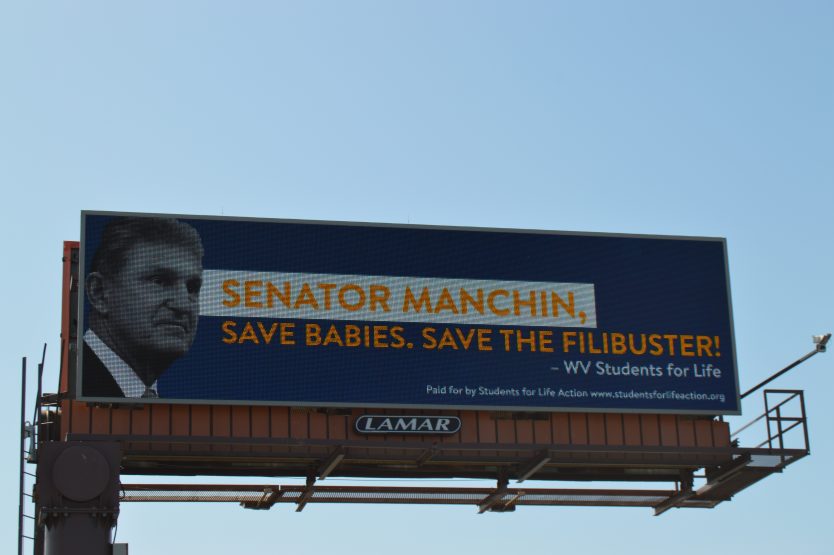
Save babies. Protect the filibuster!
[1]
When they released information about Floyd’s death on May 26, the Minneapolis police department described it like this: “Two officers arrived and located the suspect, a male believed to be in his 40s, in his car. He was ordered to step from his car. After he got out, he physically resisted officers. Officers were able to get the suspect into handcuffs and noted he appeared to be suffering medical distress. [He was, in fact, dead.] Officers called for an ambulance. He was transported to Hennepin County Medical Center by ambulance where he died a short time later.”
Amid the visceral national outcry for racial justice in the wake of the police killing of George Floyd, a lone US senator is standing in the way of a bill that would make lynching a federal hate crime.
Rand Paul, a Republican with a reputation as a one-man awkward squad in the US Senate, has put the historic legislation into limbo, frustrating black colleagues and civil rights leaders, including the Rev Jesse Jackson.




 gratuitousblahg