Merry Christmas From New York

I was headed downtown to visit friends in from far away.  After a groggy start to Christmas Day, a day that generally fills me with despair,  I was running late, well after the time I’d told my friend I’d aim for.   I had a twenty minute or so southward train ride to get there, then a short walk west.  

As you approach the elevated Number One line at Dyckman Street you can see up the track almost to the next station north.   If you see the southbound train coming around that bend, experience teaches you can catch that train if you run into the station, Metrocard in hand, and make a smart dash straight up the steep steps.  

I went through the turnstile and made my dash smartly, but there was no train.  The one I’d seen, apparently a mirage.  There was no train on the horizon either.  I noticed how winded I was, I’ve run up these stairs many times– this was the most winded I’ve been.  I walked it off.  

At the end of the platform a man was talking on the phone with his back to me.  He had a baby carriage with him.  The baby was also turned away from me, but I noticed how solicitous the man was, walking the baby carriage in little circles to soothe the baby.  I watched them absently for a moment, thinking of the human parent’s instinct, if everything falls right, to comfort their child.  I recall feeling impressed with how this guy was taking care of his baby.

The train came.  The man turned the baby carriage slightly to move his child on to the train.  I could now see that the baby was a full grown beagle, sitting very patiently upright in the baby carriage.   I made a note to tell this story to my friends when I arrived, but as things happened I forgot about it.

We exchanged handshakes, hugs and pleasantries and then my friend said “I have a small gift for you,” as if remembering some trifle.  He went into the other room and returned with the best gift anybody has ever given me, possibly the best gift anyone has ever given anybody.  “It’s really nothing,” he said, handing me a hard-shell ukulele case with the imprint of a palm tree on its shell.

Over the years my friend has mentioned a dream image he has, of himself, sitting on a porch somewhere beautiful at sunset after his work day is done.  His work would be gently but firmly bending wood, plying it, smoothing it, skillfully using tools to turn beautiful wood into a beautiful musical instrument.  In another life, he’d have loved to have been a luthier.  

A few years ago he took a course from a master luthier and made a tenor ukulele, out of beautiful wood, over the course of several weeks.  He sent me photos of it at the time and mildly self-effacing comments about the instrument when it was done.   I opened the case and there was the hand-made ukulele, a very beautiful one.  Everyone I showed it to later could not help stroking it.  It is lovingly detailed, with several unique flourishes, and finished to the texture of perfect skin or something like that.  It is so silky that it’s hard not to pet it if you hold it in your hands.   Everyone who held it did.

It plays beautifully, with a rich tone I haven’t heard from most ukuleles.   He also somehow rigged the lowest string to be in a lower octave, as on a guitar, making this uke a much more useful instrument to play melodies on.  I smiled as I played a little Django ending that had been impossible to play on my other ukes.  Sekhnet could not stop commenting on its beautiful tone, just as I could not stop playing it in the car after we left our friends.  

“What an amazing gift!” Sekhnet said, “I hope you really thanked him.”  I assured her I did.  I think I did, I’m sure I did, I had to have.  Of course, now that I’ve played it for hours, and re-tuned it to concert pitch, I’ll sing its praises some more when I talk to him tomorrow.  He’d looked at the label inside, with his name and the year he made it, 2009, and told me, since he never played it (although he certainly could), that I should have it, since I would play it.  I certainly am playing it.

I played it happily for an hour or so in the background with Sekhet’s family.  Each of them had admiringly held and petted the beautiful instrument, a few even strummed the open chord it plays if you don’t finger the frets.  I then played it all the way back to the city.  When we got back I was concerned that the constantly sleep deprived Sekhnet get some sleep.  I left her and walked to the subway to head uptown.

Being Christmas, it was only natural that the train service would be fucked up.   The high-tech interactive electronic information signs on the subway platform gave random misinformation.   According to the fancy new sign the next A train was a Brooklyn-bound one scheduled to arrive in 46 minutes (average wait is supposed to be about twelve minutes).  There was no information about any uptown trains at all.   “We’re working harder to serve you better,” I said finally to two other sour-faced men waiting for information on the uptown train to take them home Christmas night.

A moment later there was an incomprehensible PA announcement and a Brooklyn-bound A train rumbled in on the downtown platform.   Another announcement began as the Brooklyn-bound train was departing, making a great racket across the station.

The MTA had decided, in its infinite puckishness, to have the crackling, irrelevant, over-driven announcement delivered by the employee with the heaviest and hardest to decipher foreign accent.   I don’t know where this guy was born, but I’m sure the last thing his parents ever dreamed of for him was delivering this incomprehensible message to disgusted New Yorkers over the public address system moments after the end of Christmas Day. I have no idea what he said, but I do recall sincerely muttering something about fucking retards that I do not now feel very proud about having muttered.  

A dirty, smelly beggar was striking out as he made his way toward me on the platform.  He’d start to speak and get waved off.  I saw this happen a few times, found I had a single dollar bill in my pocket and thought “what the fuck?”   When he came toward me I handed him the dollar, which he dropped.  

Before he picked it up, he looked me in the eyes and asked “could you please help me out with two or three more?”  I told him I didn’t have it.  It was true.  My other bills were twenties, and outside of that, I had two pennies.  He continued down the platform and I was reminded of my dislike of people who don’t have the grace to say thanks. 

On the uptown A, which finally arrived, a large man asked “may I sit next to you?”  This is not a question anybody phrases this way on the New York City Subway.  It was the only seat in the car, and I nodded, almost imperceptibly, and without looking up from my book, only because it was the right thing to do.  

Then, because you know what they say about unpunished good deeds, he began humming in a soulful way, and turned his head toward me as I tried to read, which made his humming suddenly way too loud.  He began to sing, in the same manner as his humming, turning his head like a slow moving leslie-speaker to heighten the effect.  

He did that African spiritual-inspired melisma, making every quavering note a long, stylized, if cliched, statement of his soul.   After a few minutes of this I wanted to do something to make him stop. I thought about my vow to remain mild and kept reading.  

A seat opened across the way, and I took it.  I couldn’t hear his fucking singing from over there, and it was a relief.  Suddenly, I smelled ass, dirty feet, filthy clothes.  The smell was coming from the seat behind me, turned out to be a homeless woman.  But the smell wasn’t that bad, it was better than the fucking soul singer.  

The singer got off a few stops later and I went back to where I’d been sitting.  I watched the poor homeless woman, who appeared to be very much insane.  I thought of the almost infinite varieties of suffering in this world, and of God and the mythical baby Jesus weeping over it all, less than an hour after Christmas.  I  took out the ukulele, played a bit of Django’s version of “I’ll See You In My Dreams” and put the lovely instrument into its protective case as the train pulled into Dyckman Street.

As I walked up the hill to my apartment, carrying the perfect tenor ukulele my old friend had made, I thought of the blessings of this life. Those blessings are not the physical things everyone is taught to covet, of course, but what lies behind them, what we might call their spiritual dimension– what they represent in terms of our souls.   If the physical manifestation is also a beautiful thing, that’s ideal.

I thought of my friend’s ancient mother, now well-past ninety and noticeably much older than the last time I saw her, not that long ago.  She made mention tonight of her approaching death.  I’d never heard her speak of death, but when I quickly broached the subject of Trump, during a moment when her son had gone back upstairs to fetch something she’d forgotten, she told me that the only good in it for her is that this would be a good time for her to die.  

I told her that my mother, at the end of her life, had begged me to promise her that Sarah Palin would never be the president.  I made the promise and I’m as sure as it is reasonable to be that Sarah Palin will never be the president of the United States.  There are things as unthinkable as President Sarah Palin, but that’s an imponderable story for another time.

When I put her son’s ukulele in her hands she immediately began stroking it.   She admired it for a long time, and mused about how many other hidden talents her talented son had (he was cooking a delicious smelling dinner at the time).  

Later, sitting around the coffee table, my friend’s mother smiled, and pointed at her son and her grandson, huddled over the young man’s cellphone, looking at photos of some of the grandson’s recent architectural projects, I assume.   To her daughter, with a big smile, she said “kvelling…” This is Yiddish for a parent’s pleasure in seeing their child do something that makes them kvell with pride.  The daughter looked at her blankly and asked “who?”   

“Me,” said the old woman happily, as she pointed to her chest with a gnarled hand.
Death, implacable motherfucker

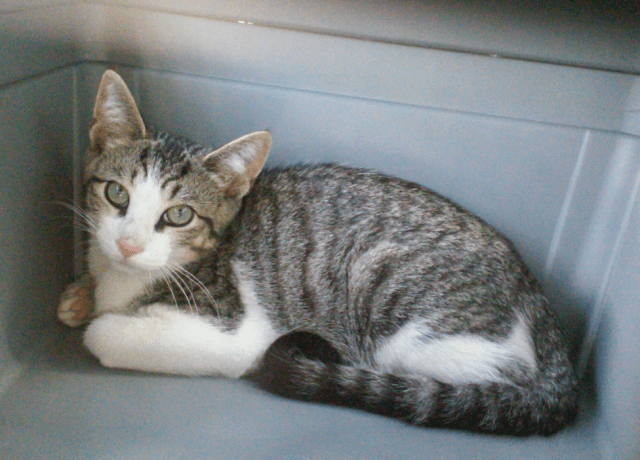
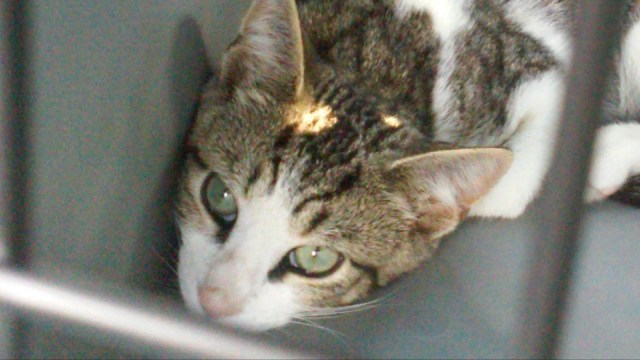
Death, that implacable motherfucker, stalking Sekhnet’s farm, killing the helpless, the adorable, just for kicks.

“Once we give them a name, that’s the end of them,” said Sekhnet of Blue Eyes, who, like Dobby before him, no longer plays, eats and sleeps with his two sisters and older brother.   He hasn’t been seen in three days, meaning Death has made him an unwilling play thing.

The neighbor reports hearing a terrible scream in the middle of the night a few days ago.  He said he never heard anything like that sound.  It was the scream of a tiny frightened kitten, fighting for his life, with no chance in hell of winning.

Little Bro headshot


Patches

Before I was born my parents took in a local waif, a part spaniel mutt they named Patches, for her black and white patched looking coat.  Patches had lived on the street as a puppy and had acquired street smarts, as some creatures who have to live by their wits do.    My mother told me Patches had adopted them, rather than the other way around.  She was a very smart dog, I remember that.

“Yeah, she was very smart,” said the skeleton.  “And when you were little you used to try to ride her and pull her ears.  She wanted no part of that shit.  When you came into the room, Patches and Pop would immediately head to the other side of the room.   You used to sit on Pop’s lap and start pulling his nose.   They both quickly learned to avoid you.  It was funny as hell to observe: as soon as you’d toddle into the room they’d both get right up and move as far away from you as they could.”

Shortly after I was born my parents moved from the garden apartment in Arrowbrook to the house on the tree-lined street where my sister and I grew up.  Patches had the run of the new neighborhood.  She wore a collar with a vaccination tag and a tag with my parents’ name and address, but never a leash.  She didn’t need one.  My mother would let her out, if the weather was good, and Patches would make her rounds, the metal tags clinking as she went.

She used to visit the dumpster behind the bar where she would occasionally score part of a chicken carcass she’d drag home with her.  She found other delicacies from time to time, there was butcher shop nearby, and they liked her there.   She was a friendly, likable dog, like the Artful Dodger.  

On summer days, when the Good Humor truck came down our street, she’d run with the other kids at the sound of the Good Humor man’s bell.  As the kids ordered their ice cream the Good Humor man would set out a cup of vanilla ice cream on the side of the street for Patches.  As the dog lapped up the ice cream my mother would come out and give the Good Humor man a dime, or send my sister or me out to pay Patches’ tab.

She was a good dog and truly part of the family, rather than a pet. My father sometimes pointed out that she had been there first, before me, the first born.  Patches had been their trial run for raising a child.   As a street smart waif she was able to give them a lot of help in that sometimes tricky endeavor, whereas my sister and I were not so independent.

I have no idea what Patches said or did to Eli’s ferocious Boxer Taffy that ended her up with her entire head between the big dog’s jaws.  Eli leaped into action, grabbed Taffy by the neck, cuffed him with one of his hard hands and pulled Patches safely away.  I remember Patches was covered with slobber, and my mother was hysterical, but Patches was unhurt and did not seem overly concerned afterwards.

“Play is the mammalian way of learning social behavior”

Not to mention an important source of bonding between mother and offspring.  Not to mention fun.  Play is a more and more neglected art, sad to say, in a world grown more and more serious, pressurized, intent on the “bottom line”.  The feral kittens in the backyard play, and it’s cool to watch, even as we know how short their lives are.

Humans, always striving, have created a culture of excess, which makes our lives much easier in some ways than our ancestors’ lives were.  This convenience comes at a price, though.  A price we pay because– well, there is only one market in town.  That very expensive one we call The Free Market.

Here is a great section from the audiobook of Yuval Noah Harari’s brilliant Sapiens: A Short History of Humankind.  He writes here about the transition in human consciousness, and our relation to animals, when we moved into the Age of Industrialized Agriculture to feed growing cities during the Industrial Revolution, which morphed quickly, thanks to mass production, into our current Consumer Age where thrift is no longer regarded as a virtue.  

I don’t own the copyright to this audiobook selection, clearly, but I heartily recommend Harari’s wonderful book.  Check out this seven minute fifty-eight second clip, it’s a good example of this fascinating work.  

Brave male kitten returns from catch-and-release

He whimpered a bit, then was stoic for the rest of the ride, watching me as I drove.  When I opened the carrier in his ancestral garden he cried again.   His sister, the alpha kitten, hearing this, came towards his cage as he emerged.  He went into the bushes and straight to business: a long piss.  Then he hunched like Arnold Palmer, instead of a putt he dropped a long, slow turd.  He kicked some leaves over it, found the food bowl, had a bite to eat, and dashed off in the direction his sister had walked off in.

Screen shot 2016-08-15 at 5.16.51 PM.png


Little Bro headshot.jpg

Dog Days

The dog days of summer, dear diary, are heavily upon us here in New York City.   The radio warns of a fourth straight day of heat alert, real-feel temperatures again well above 100 with humidity to melt you.  Keep your pets inside, air-conditioner on high, the expert on the radio advises.   Check on the old people next door, make sure they have not parboiled.   The city opens “cooling centers” where sweat-soaked, stinking citizens can come and recover in super-cooled public rooms scattered around the more working class neighborhoods.

I am a complainer by nature, so it will surprise no-one to hear me bitch about lifting my head from a wet pillow, unpeeling myself from the wet sheets and picking up the thermometer I’d dragged up to the bedroom late last night.  I smirked as I read “95”.    I nodded grimly, this all figures, I said to myself, possibly out loud, as I began to mutter and staggered downstairs to get something to drink to restore some of the lost hydration I’d left soaking the bed.

A pair of bare feet at the bottom of the stairs startled me, I caught the next mumbled syllable in my throat.  It was Sekhnet, waiting for a call-back from work, stretched out near the cat, both of them vaguely in the warm wind of a tower fan, the only thing standing between any of us and certain death from heat stroke.   There is a tower fan next to me now as I write, bringing semi-cool air to my left armpit and side, wicking away the freely flowing sweat. I dare not write much longer, for fear of burning out this laptop in the 95 degree heat up here.  

Sekhnet was somber there on the living room floor.  We’d trapped three feral kittens the last few days, had them neutered by a vet a friend recommended, with certificates from a nonprofit making each wild animal’s care come in at not much more than a hundred and thirty dollars.  The two I picked up at the vet’s yesterday, after their hysterectomies, cried all the way home.  It was pitiful.  I was glad Sekhnet wasn’t there, her sobs would have drowned out the wails of the miserable little cats.

These feral cats have brutal, short lives in Sekhnet’s garden, though she cares for them like they were her own pets.  An old one lives to be two or three.  We have seen many generations now, and each generation has ended badly, dead kittens found here and there virtually every season, the older ones simply disappearing.  A dead kitten was found today, one of the almost full-grown males from Mama Kitten’s previous litter.  The grey, tiger striped corpse was found under the Chan’s apricot tree.  Sekhnet had Joe open the contractor bag so she could identify the dead cat.

“Scratchy,” she told me, and urged me not to mention it to the younger brother of the neighbor next door if I see him across the garden fence, to let his older brother tell him when he gets home from work.   The younger brother is a sad, limited man.  He has some kind of mental problems that erupt in screams sometimes, once in a while the cops are called in.   Not much danger of me running into the brother, or anyone else, as I won’t be spending more than a moment out there today, and certainly not a second at the garden fence.

“Mama Kitten had her litter, as I told you she was,” said Sekhnet, “she came by today and she’s not pregnant any more.”  Mama Kitten had her first litter at the age of six or seven months.  Three kittens, two of whom survived, one of whom survives today (the third is the corpse in Joe Chan’s contractor bag).  The runt of that litter, cute, spunky Dobbie (named for his long ears which made him look like J.K. Rowling’s house elf) made a nice meal for a red-tailed hawk, as far as we can tell.

We watched the two surviving kittens of that first litter eventually drive Mama Kitten out of the garden and take the turf for themselves.  Talk about ungrateful fucking offspring.  Talk about the cruelty of nature.  (Talk about a metal laptop heating almost to frying pan temperature…).  She’d come around to visit, always affectionate– rare in a feral cat.  She’d come to trust Sekhnet and me, would rub her face on our legs, let us pet her one stroke as she’d walk the length of her body under our hand.  

One day, as all the feral mother cats around here have always done, she came to the garden to introduce her new kittens to their benefactor, Sekhnet.  She marched four of them past, three with white faces like Dobbie’s, one who looked like her tiny twin.  Of those four, three survived (one disappeared a week or two ago, probably lunch for a red-tail).  All three have now been neutered (though it seems the runt may not be up for the challenge of survival– not having taken a bite since returning from the vet’s yesterday, staying out of sight) and…

“Mama Cat came by, skinny again,” reported Sekhnet somberly.  In a nest somewhere nearby she has her next litter, four or more adorable little doomed kittens born on a very muggy day in hell.   Mama Kitten was the one we were trying to trap, to have her spayed and the embryonic kittens aborted, but she was too wary, too close to giving birth by the time we arranged with our friends to come by with the traps and expertise in how to catch the ferals so they could be released back into the wild in a way that would not increase their already too large numbers.  

“She loved the turkey, which is what we should bait the trap with, once she reappears with her new batch of kids, once they’re weaned,” said Sekhnet.  “She hated the sardines though, she gave me a very dirty look and jumped back when I offered them.   Mini-Me ate the sardines, though Mama Kitten hissed at me for offering them to her.”  

The mother kitten began hissing at her kids when she became pregnant again, making sure they were on their own before she brought the next batch into the world.  So far this beautiful little cat, now little more than a year old, maybe a year and a half at most, has given birth to seven kittens that we’ve seen and several more newborns, tiny and suckling somewhere behind a garage, waiting to become Sekhnet’s adorable little charges.

Meanwhile, it is about a hundred degrees and only two of her last batch of four kittens is accounted for, the one who looks like her and the one still at the vet’s.  Hearty, brave and recently spayed, the little alpha kitten who looks like her has been up and around, eating with her usual gusto.   Her sister, skinny and withdrawn, traumatized by her trip to the vet, did not eat yesterday and has not been seen today.  The blue-eyed Dobbie-looking sibling, who turns out to be a boy, I will pick up at the vet’s tomorrow.  He will probably cry the whole way home, like his sisters cried yesterday.  Luckily, Sekhnet will be at work and not in the car, crying along with the cat.

Well, diary dear, I’d better shut this machine down, before it fries itself.  I ought to hop into the shower and drink another liter of seltzer, if I know what’s good for me.  Stay cool!


Being Right vs. Being Lucky

“You know, Elie, I’ve been thinking about this the last couple of days,” said the skeleton.  

What’s that, dad?  

“You’re spending too much time talking to a dead man recently.  Look, not that I don’t enjoy our conversations, but, I mean, do you think it’s healthy for this chat to be the highlight of your day?” the skeleton turned his head, as though looking around.

You mean as opposed to my mediocre diet, my relative lack of exercise, the less than ideal amount of sleep I get, my solitary life, the lack of a new network of needed doctors thanks to the vagaries of Obamacare, things like that?  

“Yeah, you’re right.  Listen, what I was really thinking about was the need to be right, where it comes from, how it does its idiot work.  My mother, who you learned from Eli whipped me in the face and sealed my fate before I was two, was a powerless, angry woman.  All she had was being obeyed, by anyone she could bend to her will.   I cannot imagine the terrifying shithole she was born into.   Talk about born under a bad sign, the filthy little hamlet off a river outside Pinsk was literally stomped out, rubbed right off the map of the world.  Never existed.

“The Jews who eked out an existence there?  Fuck ’em, who gives a shit?  Poor people, Jews, grind ’em up, pfooo! good riddance, rabbi.  I cannot begin to imagine all the nightmare elements that went into making my mother a little tyrant.  I never thought much about these things when I was alive, for fear of what thinking about them might do to me.   People who claim to love you can use you as a slave?  Your family can just be stomped into the mud without a trace?   What kind of arbitrary, brutal life are we born into?

“That was one reason I loved animals so much, as your mother also did.  I think we transmitted that to you and your sister.  A dog will return whatever treatment he gets, will always give you the benefit of the doubt.   It’s like animals cut to the chase, to the essential thing we all need in life: caring for each other.   It was my pleasure, although I didn’t enjoy it, of course, giving those insulin shots to Sassy every evening.  The dog was a complete sad sack, you remember.  Nobody particularly liked her, she’d hide under the bed, cower from people for no reason.  We knew she had no reason to cringe because we’d raised her from a newborn pup, she never had anyone do anything mean to her.  Still, she was an odd dog, very paranoid.  Your mother said she was mentally ill, maybe she was, I guess it’s possible a dog can be mentally ill.  

The thing was, Sassy trusted me and I took care never to hurt her.  You know, I’d pinch the skin on her back, make a little fold, and the needle was very thin, I don’t even know how much she felt it.  But she seemed to know I was doing this for her benefit and was always very calm and trusting when I’d give her the shot.  I think now how natural it felt to take such tender care of her and could kick myself again for being so unnatural so much of the time, like in those battles you describe around the dinner table.”

Well, there’s nothing natural about being natural a lot of the time, I suppose.  Our society is based on being unnatural, of course, on a false and desperate notion of winning and losing that makes us the best possible, most driven, consumers.  We’re in the hands of cannibals, no different in their essential natures than they’ve ever been, like true believing functionaries of the Nazi or any other ruthless single-minded party.  You mention the need to be right– that’s the only game in town, a town that can, as far as we can tell, be rubbed out under a jackboot with or without notice.

“The white indentured servants made common cause with the black slaves and Indians during the early days of our great experiment in democracy,” said the skeleton.  “It seemed obvious enough to poor whites that they were in the same boat as the other servants and slaves, as well as with the Indians whose land was being stolen by the wealthy whites.   Black and white servants became romantically involved, escaped slavery together, often found sanctuary with the Indians, with whom they made common cause.  

“This caused a major concern for the wealthy new land barons, you understand.   The idea of poor people of all races united and looking for some measure of justice gave the status quo the heebie jeebies.   ‘How to keep everything for ourselves?’ wondered the wealthiest and the greediest.

“You read about it in Zinn’s Peoples’ History, Virginia, in the 17th century, actually put it into law– the white man’s superiority over the Negro.  A white indentured servant got much better treatment than the average African slave.  You couldn’t strip him naked when you whipped him, for example.  When you freed the white man after his indenture you had to give him 100 acres to farm, and a mule, and ten barrels of corn meal, a musket, some money.   Every white servant knew this was coming to him at the end of his years as a common nigger, and he got it under Virginia law even before the year 1700.   The wealthy ‘planters’ created a culture down there that enlisted poor whites to oversee their fellow slaves, where the white man could look down on his inferiors, no matter how low the white man’s station in life.

 “That’s what segregation was all about.  Even the poorest white trash could walk into a bathroom with plumbing, tile on the walls and floor, doors on the toilet stalls.  The Colored bathroom?  Hah, sometimes those creatures would just have to do their business behind a bush.  You know, not every place had a bathroom where a Negro could sit on a regular toilet, wash their hands in a regular sink.   So ‘separate but equal’ was like a hilarious joke told over and over again by winking whites, it was a way of saying everyone got what they deserved.

“The examples are countless.  How does the great democracy, who welcomes the poor and starving of all nations to participate in this experiment in human equality, justify forcing the natives off their land, sometimes in death marches, destroying the buffalo herds that are their sustenance, making treaties they will violate over and over, eventually just killing the fuckers en masse?   Manifest Destiny.  Ask any junior high school student what gave the descendants of white Europeans the right to march over Mexicans, Indians and anyone else in their way and they’ll tell you:  manifest destiny.  

“The phrase was invented by a newspaper man, caught on quickly.  Our destiny is manifest, look, it’s right here, plain as the nose on your face, see?  Destiny is in our hands.  Like a team one game behind with four games to play, just keep winning, that’s all we can do by way of controlling our destiny.

“Being right, it’s all most powerless people get, Elie,” said the skeleton, slowly shaking his head. “The people you talk to, they are all smiling at you as they think ‘he’s a smart guy, he can seem to justify his beliefs, articulate his values… but he’s a loser.'”  

I’ve always been that way, dad, clever with words, able to articulate my values and beliefs.   With those things, and a paid Metrocard, I can get on any subway I like.   We are judged on one scale here, as you know, what we are worth.  And that is measured the only way it can be, in the honest coin of dollars and cents.  

“Well, it’s all most people can understand.  It’s as manifest as Manifest Destiny.  Is it better to be rich or poor?  Ask anyone and you will get the same clear, entirely reasonable answer.  If your goal is something you can show clearly to the world, how much easier is your life than struggling to advance abstractions?  Just say ‘Manifest Destiny’ shoot the savage in the face, force the women and children into an icy river to drown and build your railroad.   People who hesitate, who think too much, people like you… well, what is the point?”  

Ah, you pose a question I cannot answer today, father.  I think I will lie down with that familiar black dog and rest my eyes for a while, as I ponder my manifest destiny.


The Mod Squad

Most Baby Boomers will remember a TV show called “The Mod Squad” that ran in the late 60s.  On that show three rebels with criminal pasts, a blond hippie chick, a black revolutionist and an angry young white man, were drafted into a tight-knit undercover crime fighting squad where they could use their smarts and street cred to bust bad guys.  The black guy, played by Clarence Williams III, used to whip off his sunglasses, shake his head with its large afro, and defiantly pronounce his name:  Leeen-KAHN! during the opening of each show.  Lincoln “Linc” Hayes, what a cool guy he was.

Around this time the NYC Board of Education launched its own Mod Squad.  They had the blonde hippie chick, a member of MENSA who played guitar and sang protest songs in a high, pure voice.   They had a couple of angryish Black men and women and a few Hispanics who talked like their hermanos from the streets.  There was a young Italian guy named Phil Trombino, very funny, a former minor league ballplayer.  There was a big Jew with longish hair and bushy “mutton chop” sideburns, who always said exactly what was on his mind, who had your back, no matter what, and who was regarded by the rest of the Mod Squad as a no-bullshit character.

The big Jew quickly became the leader of the sensitivity and role playing sessions the outfit conducted with troubled high school gang leaders.  His plain-spoken style, understanding of the underlying issues and quick wit facilitated dialogue.  He was a fan and skilled practitioner of the old Black game he called “the Dozens”– cutting contests in which the participants made fun of each other brutally and personally and the winner was the guy who got the biggest laugh from his put down.  “If you grin, you’re in,” he explained.  Laugh and you’re next, fair game, let’s see what you got.

He was quick to spot bullshit during the training sessions he ran, and when he did, he wouldn’t hesitate to call it.  “Dass some shit,” he’d say, with a sneer.  He’d come home at night, after a few days with the rumbling “brothers”, and the other “bad actors” he’d worked with, and bring the street to the table with him.

“Dass some shit,” he’d say, when I pushed away the plate of whatever it was my mother was trying to make me eat.  He’d quiz my sister and me about the meaning of the street lingo he’d picked up at these sessions.  We generally had no idea what these bizarre phrases could be referring to.  “As they say in the street,” was often added to the things our father said at the table.

“The language they speak in the ghetto is a constantly evolving insider language, it changes very fast, so that you have to run the streets, with an ear to what’s happening right now, to have any idea what the insiders are talking about.  It’s a hipster language designed to exclude squares and act as a code to bedevil The Man,” he hipped us.

I could see that.  “The only power they have, most of these kids, is the power to create their own style, to create a sub-culture.  The underclass always creates what’s hip, then it gets co-opted by the retail establishment and used to sell product.”  Soon enough we began to notice this all over.  McDonald’s, purveyors of death to millions and destroyers of the lungs of the planet in the Amazon, was called Mickey D’s on the streets of many poor neighborhoods.  It wasn’t long until Mickey D picked up on it, called themselves Mickey D, to show they were hip, you know, down with the niggas in the hood, you understand, bringing and slinging that delicious shit.   The advertising motto that helped them sell a few billion more burgers and fries was a slightly more marketable version of “I be loving me that shit all up in here, yo.”

I don’t know how long the Board of Ed Mod Squad was in business.  I was just a kid, at an impressionable age, and it made a big impression on me.  Here was an honest, no-bullshit approach that seemed like it could work to really change the world for the better.  Have kids from groups who were fighting each other meet in a neutral setting where adults, who were not squeamish about telling an asshole kid to sit the fuck down and listen to your colleague, or discuss the origins of the word “motherfucker”, could, with humor, understanding and frankness, get them to see that they had much more in common with each other than they had reason to fight.  If this was ever done on a large scale, all poor people would realize the folks they should be organizing to fight were not other poor people, but folks like the powerful folks who could unblinkingly say on TV, “frankly, we tortured some folks.”

Like all human institutions, and many of our more noble experiments, this short-lived Board of Ed innovation appeared, in retrospect, to have been doomed from the start.  The violence escalated year after year, as these gang members fought each other before being drafted into a senseless, endless war thousands of miles away.  American society itself was increasingly violent, it didn’t really give a rat’s rump about what poor people needed, young people, anybody. The government sent the military against protesters, continued putting people to death, incarcerated them in larger and larger numbers for smaller offenses, sent them to be maimed in wars that made sense only to the industries and individuals who directly profited from them.  The poor were subjected to this violence disproportionately, but that’s always the case.

“During the Civil War, if you had the cash, you could get out of serving in the Union Army by paying $300,” my father informed us.  “You could also hire a substitute to serve in your place, some poor bastard who had no other options.  Do you think the sons of the rich were rushing off to die in trenches during the worst carnage of that war, once it became clear what the nature of it was?  A few, maybe, at the start, seeking glory, but most of them?  Their lives were far too valuable to throw away charging up some muddy slope in Georgia.”

It has always been so.  One last thing about this Mod Squad for now: my father, who was at one time best friends with the blond haired Marxist WASP with the beautiful singing voice, came to truly hate her after a couple of years.  She actually left New York City in the aftermath of their falling out, which she saw as a traumatic betrayal.  The Human Relations Unit, and its Office of Intergroup Relations, (for which my father was Coordinator of Pupil Programs) soon went the way of the Dodo bird and ten thousand other unique and cool species since.


RIP Tawny

My sister loved her dog, a pit bull named Tawny.  My memory of Tawny is as an ageless lioness, limber, strong and perfectly formed.  Sekhnet recalls her as a giant lioness.   She was not small.  She had boundless nervous energy, if you threw her saliva soaked white sock for her once you’d be obliged to do it a hundred more times.  

The wet sock would be on your lap, at your feet, or next to you on the couch, Tawny, head cocked, staring longingly at you, at the sock, at you, making sure you saw her, knew the sock was there.  Whatever else might have been going on, she had one concern, her paw up on you now, to focus your attention to the matter:  throw, run after that sock and bring it back, drop it for throwing,  repeat.  

She was beautiful.  She was gentle, too.  She wouldn’t bite a hamburger, as the phrase goes.  She was not cuddly, had too much energy for that, and her coat was not smooth and silky for petting, she wanted to move, to bring back the sock, a ball, whatever.    

You could picture her on the savanna, with no fear of any creature, sitting under a tree gnawing a bone.  My sister said that is how she died today, at the ripe old pit bull age of more than 13, deaf, unable to use her hind legs any more.  Chewing on a bone, peaceful, as her loved ones sat around her and the vet administered the stuff to knock her out.  Very gentle and very sad.  My sister and her family are all crying tonight.  

To those who have never loved a dog or a cat or other animal, I have to say, I am a little bit sorry for you.   There is no love greater than that shared with a familiar, loyal animal whose life and warmth connect with yours.  We are lucky who have experienced that kind of love with another human.  

This love between humans and animals is not a new thing, either.  The bonds between human and animal go back to earliest prehistory.  The first friendly wolves who ran with humanoids, becoming the first dogs, defending the group, being rewarded with food and affection, a warm place to sleep by the fire.   The pack was as familiar to dogs as to humans.  Cats and other animals long ago joined into this most excellent arrangement.  


398

Freedom (and the Unthinkable)

Born free and in chains at the same time, it is written.  We are free to choose, within our choices, chained to things beyond our control.

“Good fortune, I have found, comes most often as the result of hard work.”  This was written by an industrious young man who’d inherited a thousand acres of fertile farm land and almost a hundred slaves.   History remembers him as one of our greatest geniuses.

Bad fortune, I suppose, to have been born one of this humanist philosopher’s slaves.  Hard work would not likely fix this egregious pre-birth planning mistake.  Your options are fewer than the boy landowner: you can complain, look for justice, or vengeange , you can seek to be the illuminating exception — but those don’t usually make for a felicitous pursuit of happiness.  

Once a prince left an opulent, pampered life in the palace, he renounced his wealth, the life of desire, searched for enlightenment, became the living embodiment of enlightenment.  Simpler, ironically, for the son of a king than for the son of a field laborer.

We are free and we are in chains.   Your government.  The policies and laws by which some live as philosopher kings while others lead lives of fear, violence and want.   Fairness and the world?  A grimly humorous idea.  Good social media skills in 2015?  Inspire a worldwide band of psychologically delicate people looking for a cause to rally to, convince them to create terror for that cause.  Stand back and wait for the internet to blow up.


251