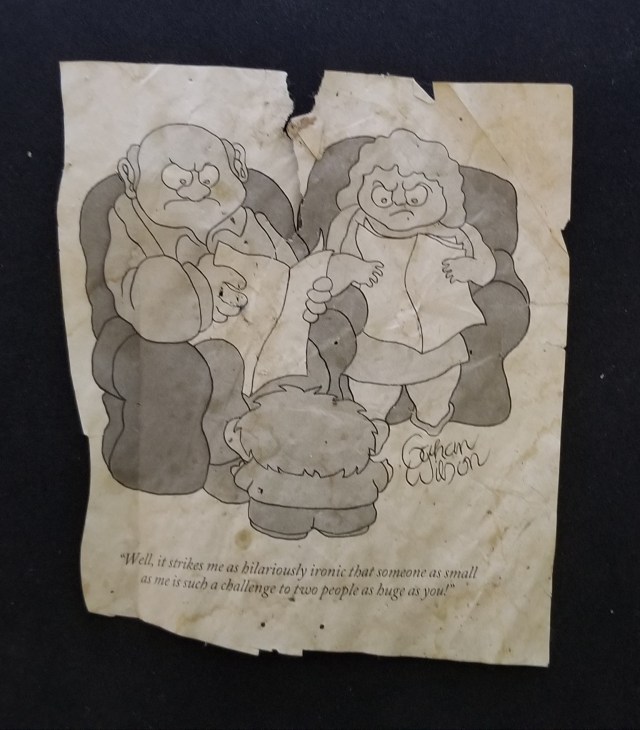
Weaponizing civility

I had a falling out with a friend from my childhood over his tendency to ignore my feelings, something that seemingly got harder and harder for him to control as time went on.   It was irrelevant to him that he was making me angry about his insistence on one thing or another, my anger was my own problem, the painful truth he was driving at was too important to turn into a referendum on the propriety of putting an old friend in an aggravating position, attacking him or ignoring his clear discomfort.

My childhood friend has a troubled relation with anger, something he was taught to swallow by parents who were also taught to swallow anger, whether they had a right to feel angry or not.   His mother recently described to me how she was taught by her mother, who I knew and could believe it of, to concoct a story rather than ever confront anybody in a way that might result in anger.   Following this practice, she learned late in life, did not always have the intended result.

Every one of us has to deal with anger, a difficult, sometimes scary emotion that is often quite appropriate in an unjust world.   Most things that provoke people  are things most people would be angry about if subjected to.   The key to how you view these provocations is often whether you personally are provoked or not– it is a matter of whether or not you identify with the anger personally.  

Not everyone is taught that swallowing anger, and coming up with an anodyne story to bring a close to the underlying conflict, is the best way to deal with that harsh emotion.  It may be a widely practiced method, but that just puts it in the same category as racism, misogyny, advocating mass killing for a patriotic reason or for no reason and a lot of other widely practiced human emotional excesses.  Compared to raging outright whenever one feels aggrieved, swallowing anger is probably a better alternative, though neither approach leads to a good outcome.

Swallowing anger is a demonstrably bad long term strategy.   Anger is corrosive, comes out one way or the other and it leads to many terrible things including a tendency to irrationally fly off the handle, to lash out at people it’s safe to attack who may have nothing to do with the source of one’s anger, to be stricken by bodily pains so severe that the sufferer cannot even move.  

Maybe the worst thing about swallowing anger is that it makes any anger shown by anyone else, no matter how reasonable it might be, infuriating.  Denying another person’s right to their feelings is a common cause of anger, which must then be swallowed.   It also, sadly, makes friendship ultimately impossible with anyone not committed to pretending about fundamental things that might be absent:  like the right not to have their feelings repeatedly hurt by their closest friends, the right to swallow or not swallow anger, the right to try to make things right when a relationship is about to be lost.

The reasons this old friend was so angry at me are hard to know exactly.   I don’t seem as jittery in my own skin as he is, I’m a little more affable, more comfortable in social settings.   I play guitar better than him, I seem to stand up for myself and my beliefs in a way he can’t and I can express anger when I need to.  

I don’t know what exactly it was that made him provoke me so frequently, beyond the fact that he knew he could lash out at me without much consequence for him.   As mad as he sometimes made me, as furious as some of his attacks were, I never hit him back very hard.   There was probably nobody else in his lifetime of swallowing rage that he felt safe enough to do this with.  

Just because a person can take punches and kicks without responding in kind doesn’t mean he likes being punched and kicked.  There comes a time when even the fondest sentimental attachment frays and finally tears apart under this kind of regime.   My competitive friend’s anger, in the end, was as much about this as anything:  even though my life is manifestly a failure in every way our society uses to measure a life (beautiful home, nice car, good income, social status, quantifiable financial success), he somehow felt I have the upper hand, have the more enviable life.  My squalid rented apartment in a marginal neighborhood somehow provides me the same sense of security as his beautiful home in a wealthy suburb, which is objectively unfair.

His anger at the unfairness of this, it appears, became like a snowball rolling down an immense hill in heavy snow.  As his troubled  marriage reached a new crisis, I became the go-to guy to lash out at.   Finally, when he petulantly told me his extracted apology was apparently not good enough for a prig like me, that my stubborn demand that he actually change the way he behaved toward me was very unfair, especially considering that he was actually the victim, now and forever, we were finally done. 54 years and … poof!

Now we come to the killing power of civility.   You can rage in a polite way, as our newest Junior Associate Supreme Court justice did at his recent hearings.   Nothing he said while raging is unprintable, he never lost control to the point that he uttered a line that could cost him his position on the nation’s highest court (like when I recently referred to him as a “piece of shit” and a “motherfucker” — the end of my Supreme Court dream).   He never cursed, never even came close to using an off-color term.   He never crossed the line into easily dismissible rage, everything he said while raging, however childish and regrettable it may also have been — every word was printable, “good enough”, anyway.  

Reading a transcript of his remarks you may not feel he acquitted himself as the brilliant, impartial jurist he presented himself as, his responses make him look like an hysterical zealot to some, and less than 100% candid and truthful, beyond question, but he clearly adhered to the rule of civility, firmly, if crudely.   It is that angrily clenched sphincter of a mouth, whenever confronted with a question he was in any way threatened by, that speaks louder than anything he actually said.

So it is with civility, being civil means never really having to say you’re sorry.

I recently saw the end of a long email correspondence with a friend who is a master of civility.    He was a mutual friend of the old friend mentioned above, the guy with the unexpressible, irrepressible anger problems.   He suffers periodically from disabling physical conditions he sees as directly related to the ongoing, inchoate rage he has to swallow daily.   He subscribes to Dr. John Sarno’s theory of Tension Myoneural Syndrome (TMS), the mind/body’s creation of crippling physical pain to mask even more terrifying psychic pain.   We’ve had many discussions over the years about this, and I’ve learned things from the exchange.  He is an excellent writer, a smart man and over the years we’ve regularly exchanged countless facts, observations and opinions that have enriched both of us.    

Recently he informed me that he’s unwilling to hear any story even tangentially related to our once mutual friend, or to be part of any conversation in any way related to any of the issues raised by that long friendship, the impasse we came to and our current estrangement.  I made a last attempt to get back on the same page with him.  

I laid out the harm of preemptively forbidding whole areas of conversation,  This ban, I pointed out, ruled out some of the most fundamental things friends should do for each other, starting with hearing what’s on your friend’s mind.   To him, his stance was simple loyalty to an old friend and a refusal to take sides.   Reasonable enough, on one level, and one might ask why I could not abide by his request to talk about anything else.   I couldn’t help but think of Switzerland during the Second World War, neutral, not taking sides, right and wrong — not our business… and my correspondent’s longtime aversion to difficult topics of conversation.  

I imagined the conversations available after the ban on any talk related in any arguable way to my falling out with my childhood friend.   Out of bounds: the corrosive nature of unacknowledged rage, the sharp brutality of denial and the nimble, desperate inventions of shameful secrecy.  The blackout would render our once frank correspondence untenable from my end since it closes the door to the things I am wrestling with daily.   I wasn’t looking for a taking of sides, though my correspondent felt that taking sides was inevitable, once the door opened, and that he would not allow himself to be placed in that position.  I took considerable pains not to offend my sometimes fussy correspondent, rewriting my email a number of times before sending it to make sure not to bruise his feelings.  I raised a handful of separate points, as tactfully as I was able.   Perhaps the most important section was:

We’re touching on a core belief about life: you explore freely and openly with those closest to you to try to get to larger truths, learn something from our own experiences and the lives and choices of those we know, trusting a good friend, in the course of a larger conversation, not to deliberately fuck you or thoughtlessly put you in an untenable position — or, out of deep loyalty or some other principle, you put up a wall, set parameters on what can be discussed against the possibility that such fucking and untenable torment is as inevitable as the next attack of TMS whenever anger is some part of the equation.

It points to the very different expectations we have of our closest friends, of our inner lives.  Also to our different relationships with anger.   I’m drawn to this kind of troubling but sometimes illuminating inquiry and the related stories, the more insight I can get the better; you appear to be drawn away from it.  Conflict, like pain, instructs us about which way to go sometimes.   Conflict is supremely uncomfortable, I know, but it’s also occasionally unavoidable if people are to grow, change, become wiser.   

It’s possible to work through conflicts if you can clearly see the part you’re playing, and there is openness to honest discussion on both sides.  There is a way of viewing conflict that is not starkly black and white, right or wrong, zero sum, winner/loser.  It is rare, and hard, but conflicts can be resolved without war (and can never be with war).  You can look squarely at what needs to be changed to resolve a conflict and, for the sake of a valued relationship, change it, sometimes.  There are general principles and a lifetime of beliefs involved in every choice a person makes, things that should be fair game for discussion, or… apparently not.

I didn’t have to wait long for his short, quick reply.  I read it to my sister.  She chuckled and said he was really smart, and agreed that he had channeled the DU (our relentless father) beautifully, it was the model wonderfully civil fuck you.   It reads, in its entirety (outside of a closing sentence wishing me luck, good health and good times in the coming weeks):

You’ve expressed your view of things here very clearly, and I truly appreciate both the re-send (with a more navigable font) and the mildness of your formulations.

We’ve had a great run with this correspondence for ten years now.  But in light of what you’ve written, and other developments over the past year or so, I think we may well have reached the point where our differences outweigh our many affinities, and that it is indeed time for a break.

Heh, can’t argue with that.   I particularly loved the lawyerly genius of  “and other developments over the past year or so”.  The DU himself could not have topped that one.   Reminiscent of the immortal line, uttered by my defeated father at the end of a desperate fight not to have an honest discussion with his adult son:  “if I ever honestly told you what I really think of you it would do such irreparable damage we’d never have any chance of ever having any kind of relationship between us.”  

Set and match.  

Nicely done, dad, we’ll revisit this on your death bed a few years from now, when I’ll have one last chance to be mild about how wrong you were, you poor bastard.  

Have a blessed day.

How Do We Learn About Life?

I will grant you at the start, learning real lessons in this difficult life is hard work and many people do it only haphazardly, when some crippling tragedy knocks them back and forces them to take stock.   In fact, if you’re like most people, you might want to skip this entry entirely, because I am pretty much talking to myself, and for myself.

I find I learn some of the most valuable things I know by studying the lives of people I know well who do not learn the lessons of their own lives.   My father was one I knew very well, watched very closely for decades, and there are many others.   This makes me sound judgmental, I know, but I don’t stand by, like a scientist with a gigantic pair of tweezers, observing my lab rat friends.   I was once accused of that, actually, by one of the cheekier lab rats, he actually said to me “I get it now– you’re the scientist and we’re all your lab rats!”   I smiled, because he was right, in a way, but I said nothing, because, you know, I don’t talk to lab rats, as a rule.  I try to help the people I know as I hope they will help me if the need arises.   It is sometimes subtle, but I like to think my good will is always apparent.  I am willing to listen and keep talking until the story breaks apart into incoherence.

Humans need a story to grasp anything.  I’ll tell you an old one, featuring the brilliant, troubled lab rat above.   He was the youngest of three brothers, always felt he got the short end of everything, that life was a zero sum game he was always losing.   He learned to negotiate, wheedle, demand, pout, glower.   These things served him well in business, I suppose, I believe he eventually made a shitload of money by nickel and diming everyone involved.  It did not make him successful in friendship or love, sad to say.   But here’s the thing:  over the years I watched him stage and brilliantly perform an identical three act play maybe a hundred times.    There is a lesson in this.

Act one: meet a new person and view this new person in glowingly idealized terms.  If the person is funny, he’s the funniest person ever.  This goes for coolness and every other perceived quality.  Act one is animated by playfulness, infinite promise and  the protagonist’s belief that he has finally found a great person, not just another neurotic asshole like all the ones who have previously let him down.    You will always be compared, unfavorably, to the new person, just so you have a personal stake in the rest of the play.  Audience participation, you dig.

In Act Two: complications arise, as in any good drama, or any good comedy, for that matter.  The person is still very funny, sure, but there’s a snide edge creeping in sometimes.   Yes, the person is very charismatic, but also, careless, not very thoughtful, kind of dumb, in a weird way.   The promises made in the first act are being strangely revisited in act two and everything is suddenly coming into question.  Reality itself is starting to come into doubt.  Drastic corrective action is called for and eventually taken by the protagonist.

Act Three reveals that this is no tragicomedy we are watching, it’s a rather stark tragedy.   In Act Three the inevitable betrayal comes, sometimes in a terrible form.  One time it’s an anti-Semitic outburst and threatened punch in the fucking face.  Another time it’s the trashing of your commercial kitchen.   People break into your house, almost certainly people you know, steal a bunch of your things, including every valuable in the house, take a shit on the piano bench, for good measure.    Or you’re invited to the wedding of illegal immigrant, underpaid workers of yours and are then served food stolen from your own kitchen.  Or the new best friend is fucking your now ex and the two of them are laughing about it when you confront them.  Or, paint your own betrayal picture here, the possibilities are truly endless.

Classic repetition compulsion, one of the defining neurotic behaviors of our time, maybe of any time.  I could not have learned about it more thoroughly from even the best psychology course as I did from watching a close friend tirelessly at work for many years.   It’s a simple process, keep repeating the same painful thing the same way until, well, just keep repeating it.  

If at first the play seems a tragedy rather than an enlightened comedy, recast the play and play it again.  You dig how this works, right?  You get a new star to play opposite you, you stage the thing with a genius director, or better, direct it yourself, who knows your vision better than you yourself?   No need to change the script, because this time– THIS TIME– everything is perfect for the desired result.   The play cannot fail to entertain and enlighten because– look at the incandescence of the new star I have cast!

But back in the dressing room, it’s always the same.  Opening night and the incandescent new star is loudly having sex with your mother, who is loving the sex and shockingly uninhibited about expressing it, not even looking away when you walk into the dressing room shocked.   Another fucking putz!   Un fucking believable… Another shocking betrayal, is it not?  IS IT FUCKING NOT?!!!

You look at this lab rat, after he tells you story number one hundred identical in every detail to the ninety-nine that came before: idealized new person, disillusionment, betrayal.    Every story exactly the same dramatic arc, exhausting.   You think to yourself: how can you not see this, my dear lab rat?   Hard for the scientist in me to truly understand.   When they hook me up to the machines that deliver that awful shock, I try to figure out how not to get the electricity full blast, there is always some way to get less pain from the sadists who designed the experiment.  That’s just me, OK, I get that, and maybe I haven’t come up against a sadistic enough experimenter, but still.   I’m left holding my clipboard and scratching my head when I see a rat rushing constantly, inexorably toward the button that delivers electrocution.

Now I have told you a simple story, about a rather extreme case, yes, but true in every detail, I assure you (except for mom and the star in the dressing room).  Most people conduct their repetition compulsion business on a much more subtle level.   We are, virtually all of us, geniuses of justification.    We can give a rationale that makes insane behavior seem more or less rational.   Why did you march all those indigenous people to their deaths when you could have made an arrangement that would have served everybody, preserved peace, honored wisdom and honor itself?   Manifest Destiny.  Social Darwinism.   Freedom on the march.   Done.  What is your fucking point, asshole?  Get off my land.

I am trying, as I believe I sometimes demonstrate in these pages, to understand the sources of pain in my life, in the lives of my friends and loved ones, and behave in ways that seem productive, healing rather than harming.    It is better to be gentle than to be harsh, better to help than to hurt.  I may not always be up to that challenge, but it seems better to struggle with remaining gentle than not to.  For me.

Not everyone welcomes this kind of struggle, it’s a matter of temperament.  I understand that, even as it sometimes makes me sad.  It is, to my way of thinking, cheating yourself out of the full richness of this life, not being open to looking deeply into these highly educational situations that shed what little light there is to be had here in a world of darkness.  

If I manage to reel myself in from anger over and over, while provoked without mercy by someone who believes I am stronger than them and therefor able to take multiple punches and kicks, it is a good day for me– not giving in to rage, remaining calm enough to remain open and almost cordial.   It is not as good a day, of course, as a day when I don’t have to prove my ability to take multiple punches and kicks, but there is something worthwhile in it for me– proving to myself again that constantly giving in to righteous rage is not my fate.   If the person I finally have to walk away from is sobbing piteously, or cursing me angrily, convinced that I am a heartless bastard, it is something I just have to live with.   

All this is well worth thinking about, I think.  And if not– well, there’s always the weather, good books, politics, culture (and lack of same), our well-stocked catalogues of frustrations and the relative fascism of various nations to discuss. The vexing smugness of powerful lying fucking hypocrites who make decisions the rest of us must live by is always easy enough to bat around (see previous several posts, and the next few, no doubt).

There is also philosophy, of course, observations about life made in a general sort of way that don’t need to  touch on tangible details that are personal or difficult, don’t force us to take sides in moral pissing contests.   No need, in a philosophical chat, to go into the well-known intimate examples of the thing we are talking about– why go there?   There’s always all that to kick around.   But that shit is really not the beating heart of a human life, or why it sometimes grabs us by the throat, this flickering miracle of being alive.

Death Threats

“Work hard, play hard, pray hard, but most of all, be a good guy!” is the motto of Mater Dei, the independent Catholic school Brett Kavanaugh attended as a boy before moving on to Georgetown Prep in ninth grade.   It is a good motto.  If you do all those things, especially the last one, you will be a credit to your loved ones and a gift to your community.     

Georgetown Prep is a Jesuit school (founded in 1789) and if you spend some time on their website you will learn a little bit about the guiding philosophy of the Jesuits. The principles of Ignatian spirituality seem simple and straightforward.  If you believe that God is in every person you meet, you will treat every precious soul you encounter in the gentlest possible way.  Every interaction is a chance to reaffirm your connection with your creator.   I wish, based solely on the beautiful ideas I read under Georgetown Prep’s Spiritual Life tab, that the world operated that way, by the admirably high principles of Ignatius of Loyola. [1]  

I write this on the holiest day of the Jewish year, Yom Kippur.  God is up there with his unfathomably gigantic Book of Life, pondering the fate each of us deserve for the coming year, according to the tradition.   On this day Jews all over the world fast, many also gather in temples, trembling and praying.    I don’t have much use for many parts of the tradition, or prayer, and most of the 613 commandments supposedly ordered by God leave me cold, as do the jealousy and the over-the-top rages of our All-Merciful God expressed in the problematic Good Book.   There is an essence of my spiritual heritage that I take very seriously:  trying to make amends when I know I have caused harm and identifying with the weak, the poor, the powerless, the persecuted.  

The larger point, of course, is that it is very easy for us humans to speak words, to write them, to array them beautifully, powerfully, to argue our most cherished beliefs using them.   The much harder thing is how you actually put those beliefs into action.   No society, no intimate club or family, for that matter, ever boasts of being founded on principles of love, generosity, hypocrisy, secrecy and duplicity.   Everyone loves love, and generosity is a beautiful thing.   The devil, however, lives in the details, the devil loves him some details.  Those sticky details we generally do not discuss, as we extoll the things we love and believe in, steer away from things that stir us unpleasantly.  

Does anything about the beauty of Ignatian principles change if we learn that Ignatius meant that only people who have accepted the divinity of Jesus Christ are imbued with the divine spirit?    What was the role of the early Jesuits, if any, in the infamous Spanish Inquisition?   

On the other hand, Jesuits are known for their intellectual rigor and a commitment to justice.  How can you not want to do justice if you see the spark of God in every person you meet?  

I don’t hold Brett Kavanaugh to the standards of St. Ignatius of Loyola, whatever those impossibly high standards for canonization may have been.   We are all people, with needs, wants, flaws.  I don’t even want to bring the entitled Mr. Kavanaugh into the conversation at all today, or any day.   I dislike his rigid, right-wing partisanship.  I despise his smug evasiveness, the way he appears to think he’s the smartest man in the room.  I think he is pretty clearly, in the vernacular, a piece of shit as a spiritual person, at the very least a hypocrite (based on his rulings and the tiny fraction of his writings we’ve seen).   It appears to me he learned nothing from the Jesuits but making arguments.  But that is between him and Jesus, and not my place to even opine about.

But you are a federal judge, after attending all the finest schools money can buy, after membership in the right wing Federalist Society, after being an extreme partisan lawyer working to impeach and convict a so-called liberal president for lying about a blow job, then a partisan lawyer advising the Bush/Cheney White House during some troubling years of torture, kidnapping, illegal wiretapping, extrajudicial murder, transfer of wealth to the wealthiest,  attempts to shred the social safety net, initiation of an endless, borderless war against those, everywhere, who hate our freedom, and as a federal judge. appointed by the extremists you worked for, you rule, in virtually every case, for the rights of the powerful and against the rights of the weak.  Not very goddamned Christian of you, I’d say.

Donald Trump’s people figured out exactly which districts they needed to win to prevail in the Electoral College.  They got those crucial districts, every one of them.   The number of votes, maybe 100,000 (he won the 16 electors of Michigan by a whopping 10,740 perfectly placed votes, a 0.23% margin), don’t matter, he won, even if he also lost nationally by nearly 3,000,000 votes.  Fair and square, he won fair and square under our current federal election rules, let’s even stipulate to that.   In office Trump has appeared to be mostly a jackass, OK, always a jackass.  Not only tone deaf and morally retarded, but a compulsive liar who only seems comfortable when bragging outrageously to adoring campaign rally crowds.  He can’t help himself.

As long as Trump is in office doing their bidding the lunatic fringe of the Republican Party, the true believers, will ride that donkey as far as he will take them.  He has already delivered uber-conservative Justice for Life Neil Gorsuch (Georgetown Prep, class of ’85 — Kavanaugh, class of ’83), appointed a record number of other Federalist Society endorsed federal judges, rammed through a generous tax break for our nation’s wealthiest.  The rest of the Republicans will ride him hard, as far as he goes before hubris blows him up.   Our politicians are not known for showing great integrity, or any devotion to principles higher than staying in office, sad to say. 

The Koch Brothers understand the nature of our democratic system and have been playing a long game, with no expense spared to tilt the playing field the way it advantages them most to tilt it.  If you control all state governments and the Supreme Court, the small group that decides what is legal and what is illegal as far as the law of the land, that’s pretty much checkmate.

If you don’t believe that, look at the aftermath of the Civil War.   Amendments were added to change our constitution from one that legally protected the rights of slaveholders to one much closer to the inspiring words of the Author of Liberty (and father of several mulatto slaves) that this nation was “dedicated to the proposition that all men are created equal.”  Endowed by our creator, of course, with unalienable rights and so on.   The most important of the three wartime amendments, the Fourteenth, was intended to extend the protections of the federal government to the citizens of every state, particularly in the former slave states that had recently taken up arms against the United States.  In other words, the 14th amendment was enacted to make sure no state could infringe anyone’s rights as an American citizen.   The federal government would intervene to protect those rights, under laws made pursuant to the 14th Amendment.

Enter the Supreme Court, six years after the 14th Amendment was ratified.  They made the “intent of the framers” of the Fourteenth Amendment clear in a way those framers, less than a decade earlier, could never have imagined.   For almost a century after the Supreme Court was done ruling on it, the Fourteenth Amendment was rendered useless to citizens subjected to every kind of indignity and brutality under cover of state law.  During the century the 14th amendment was in a judicially induced coma for individuals, it was used, exclusively, by corporations, to establish their rights as persons, just as important in our democracy (to the Robber Barons and their impeccable ilk) as those unvindicatable rights of the many anonymous persons who were being lynched, terrorized, paid unfair wages, re-enslaved under state law, etc.  

The Supreme Court gets the last word, and that word can last for a hundred years before it is corrected, generations later, by activists backed by brilliant and dogged lawyers who successfully fight to overturn precedent.

The Supreme Court gets the unappealable last word in our democratic scheme. An openly anti-democratic president is attempting to pack the court with his extreme choices before the curtain comes down on his corrupt administration.   Trump got into office with glib promises to make everybody’s head spin about how much we are all winning.   Things are not looking great for the persecuted billionaire populist at the moment, people close to him have been disloyally turning on him during a long witch hunt by a disloyal Republican named Mueller.  There is no time to waste, not a penny of political capital to be squandered.  He needs to get this second Supreme Court appointment done in record time, before the midterms that his party could lose bigly.  Getting a second extreme right wing judge on to the Supreme Court would do wonders for energizing his base, making their heads spin.

The confirmation hearing for Kavanaugh was arranged with extreme haste, scheduled for the first available slot.  A ridiculous and unprecedented 90% of Kavanaugh’s documents were not given to the Judiciary Committee for inspection. There were probably things in there better for the Committee not to see before questioning him, before voting to confirm him.   42,000 pages of his documents were made available to the Committee three hours before the hurried hearings began (technically delivered the evening before, they took many hours to download on government servers).  The main thing was to confirm him fast.

Now a woman steps forward, reluctantly but bravely it seems, to testify that the prep school aged Brett Kavanaugh sexually assaulted her.  Her claim appears to be credible, it did not come up only recently, she has been suffering with the traumatic memory for some time, spoke to a marriage counselor about it in 2012.  Immediately after the woman came forward a letter signed by 65 women who encountered Kavanaugh when he was at the all boys prep school appeared on the judicial committee’s website, praising his sterling character, his great respect for women, how unthinkable it is that he might ever have tried to rape anyone.  You can read that letter now, the link is at the bottom of this list of public documents on Brett Kavanaugh’s nomination  (go to September 7 for the Kavanaugh list, Letters Received, the last one is this letter).

There is nothing in it for Dr. Christine Blasey Ford, except to prevent a man of questionable character, and perfect extreme right wing bona fides from being appointed to the highest court for life.   A Supreme Court Justice who will, among other things, provide the deciding vote to overturn the federal right of a woman to choose what to do about her pregnancy, from making unappealable right wing decisions on the Supreme Court for the rest of her lifetime.   Think of the 14th Amendment.  Every civil rights case in the country since 1963 has been brought under a law enacted to enforce the 14th Amendment, but for the previous ninety years– y’all shit out of luck, losers.

Not every young man has tried to rape someone, it takes a certain type, even if he is stumbling drunk.   The percentage of such types may be slightly higher in elite private schools, perhaps, where such youthful indiscretions are dealt with discreetly in-house, if they ever come up at all, to preserve the young man’s options later in life, but I don’t believe even among students of our finest schools most young men at some point attempt rape.  It takes a special kind of boy, who grows into a certain kind of man.  A dick.

The Republicans on the Judiciary Committee insist they are being incredibly fair to the woman who claims she was victimized so many years ago by a young would-be rapist of sterling character.   They’ve set up an immediate session for her to give her sworn testimony against the sworn rebuttal of the next Justice of the Supreme Court.   They are being very generous, they claim, letting her immediately confront her alleged victimizer, and doing it in a way that won’t unfairly hurt the man’s chances of being immediately confirmed before the midterms.  They are certainly being generous, the 85 year old asshole chairman, Chuck Chuck Bobuck Grassley and the equally hoary 84 year-old Orin Hatch, with their intimidation, bullying and ultimatum making.

Recall, the other day these same Republican toadies were refusing to make Kavanaugh answer questions about the alleged sexual assault under oath.  Then, in the interest of every appearance of fairness they said both the alleged victim and the alleged assaulter would both be under oath, on the earliest possible date, Monday, September 24, as long as she responds in full, with her complete written testimony, by 10 a.m September 21.  Fair is fair.  Need to keep this fine Christian’s confirmation on schedule, we’re on a tight schedule as the president may need another ally on the high court, an undefeatable block of right wingers not subject to appeal or being voted out, very soon, to rule in his favor on his potential troubles..

Meantime Dr. Christine Blasey Ford’s lawyers have made the next move in the chess game.   They are demanding an FBI investigation to have an independent opinion on the credibility of Dr. Ford’s accusation.  This is exactly what Hatch and Grassley publicly endorsed in the Anita Hill-Clarence Thomas situation– a required FBI investigation, something that apparently would take only a few days.   Trump announced blandly that the FBI doesn’t do these kinds of investigations, “they don’t do that, that’s not what they do”.  Turns out he was talking out of his ass.  The FBI regularly does these kinds of background investigations, they generally take only a few days.   The current chairman of the committee said loudly in 1991 that this was the only proper way to conduct a hearing of this sort, after an FBI investigation.  But things have changed for the doddering old fuck, now there is tremendous urgency to get the finest man ever nominated for the Supreme Court immediately into his new robes.

SO UNFAIR!   If Trump doesn’t get Kavanaugh in there by the midterms, he will lose face, a lot of political capital, his base will be deflated instead of energized right before this crucial election that could decide his fate, the fate of what he was sent to Washington to do.  So fucking unfair!  Fake news, fake accusers, fake outrage, fake hypocrisy, fake fakeness!!   Amonynous, really, an ominous cowardice.

Of course, living in the violent charnel house that is now the USA, Dr. Ford has predictably  received credible death threats from violent partisan morons.  Her family had to move out of their house, is now in hiding.  But fair is fair, you come to the Senate first thing Monday morning, Dr. Ford, and we’ll see who the country believes in a high-pressure, nationally televised swearing contest, you, the so-called victim of long ago attempted drunken sexual violence or the wonderful family man, girl’s basketball couch and believer in Christian and American values, the defender of all that is holy and good, the impeccably pedigreed Brett Kavanaugh.

They have to get this confirmation done before anything else bad happens in the days leading up to the fast approaching midterms.   Their slim majority in Congress could be washed away in this shit storm midterm and who can say how much mortal peril America’s fetuses would be in then, if Democrats controlled the Senate, without another true believer on the Court?!   What kind of accuser is this, who needs some kind of external assurance of a fair chance to be heard before she will rush across the country to Washington D.C. go toe to toe, on live national television, with someone poised to be one of the most powerful men in America?!!   HOW DARE SHE.

When Anita Hill took the stand to accuse Supreme Court nominee Clarence Thomas of sexual harassment, Thomas was expected to receive ninety confirmation votes in the Senate.  The men on the Senate Judiciary Committee (all men) treated Anita Hill very badly, accused her of erotomania, treated her as a hostile witness.  In the end, even after the shitshow of dickish behavior by the Committee toward Anita Hill, Thomas was confirmed 52-48, the smallest margin for a Supreme Court nominee in a century.  

Today there are several women on the Judiciary Committee (all Democrats) and the questioning of Christine Blasey Ford, should it take place under these artificially pressurized terms, will have a much different tone than the hostility Anita Hill faced.  Donald Trump can get away with his in-your-face misogyny, people expect it from him, it’s his brand, he’s a pig (and a very useful idiot, in the short run, to the billionaires who made sure he won the Electoral College).   Chuck Grassley, Orin Snatch and John Cornyn will get no such pass if they try to act like dicks, it won’t play well, except to the 38% who think Trump is doing a heck of a job.  

There are six Republican Senators in the Senate today (though we only hear of two, Susan Collins and Lisa Murkowski, the rest are from the former Confederacy, Nebraska and Iowa, and so impervious to moral suasion it would appear).  If only two or three of them are moved by the testimony of a woman almost raped by an entitled preppie now about to assume the nation’s most powerful lifetime post, deciding what rights women will have… well, you can do the math.  

I am looking forward to the next scene in this soap opera.  I think these pious men of the right, and the women who support them, may be overstepping here in this #metoo moment.  I am hoping Christine Blasey Ford and her lawyers make the right chess moves and keep this partisan hack off the Supreme Court.  If she does, Dr. Blasey Ford will be remembered as a national hero.   A live national confrontation about character and decency is our only hope, at this perilous moment for our democracy.


[1]  What little I just learned about this sainted 16th century leader of a Catholic society created to defend the Pope’s infallibility contained not a shred of the spiritual legacy discussed on the Georgetown Prep website, but that’s a secular version for you.   What to make of this picture?   The man was a soldier for Christ, clearly, or… maybe not.

Ignatius_of_Loyola_(militant).jpg

Should any of the following disqualify him for sainthood, after the devoted work he later did for his Lord?

As a young man Íñigo had a great love for military exercises as well as a tremendous desire for fame. He framed his life around the stories of El Cid, the knights of Camelot, and the Song of Roland.[12] He joined the army at seventeen, and according to one biographer, he strutted about “with his cape slinging open to reveal his tight-fitting hose and boots; a sword and dagger at his waist”.[13] According to another he was “a fancy dresser, an expert dancer, a womanizer, sensitive to insult, and a rough punkish swordsman who used his privileged status to escape prosecution for violent crimes committed with his priest brother at carnival time.”[14] Upon encountering a Moor who denied the divinity of Jesus, he challenged him to a duel to the death, and ran him through with his sword.[13] He dueled many other men as well.[13]

Reconciliation vs. Prayer

Reconciliation is crucial for restoring trust after violence has been done between people.  An apology is a good first step, as long as acknowledgement of the harm done is part of it, and an honest vow to try not to do it again.   I know that what I did was bad, I know how much it hurt you, how much it would have hurt me, I am sorry I hurt you, I will try hard not to do it again.    Hard, hard words for anyone to utter.  

It takes humility and self-confidence to speak that way to someone we’ve been unfair to, and a strong desire to mend torn feelings and have an ongoing relationship.  It takes resolve to keep a promise to try not to repeat the harm, and sensitivity to the other person’s expression of discomfort when you start doing it. The most important single part, after the apology is accepted, is to be vigilant against repeating the harmful behavior.  Without that last step the apology is as empty as an abuser’s protestations of love. 

A soothing apology comes from a real desire to make peace, to abandon all the quick, limitless rationales that are the human genius, the imagined scenarios where what we did was not really so bad, where the unforgiving asshole waiting for our demanded apology is actually the aggressor, the self-righteous fuck.  The sufficiency of my apology, which I gave without condition or eye roll, is now under dispute!  Fuck him!  Fuck that fucking prig!

I am a prig.  I had a friend weaponize a casual observation I made during a conversation.   My weaponized remark was shoved up the spouse’s ass at a therapy session, with explosive results.  The spouse contacted me in utter panic, showed up eye lid twitching, informed me that either through malice or stupidity I had rendered their marriage untenable.  My words, “oh, that makes more sense, I was left with some questions after X’s story” adduced as proof that X was a chronic liar, made me responsible for the destruction of a long marriage.  Neither spouse was sure they could still be friends with someone like me. That would depend on how convincingly I recanted the awful thing I had said.  Their therapist had recommended I be confronted, and so I was.

We live in a world where fucked up shit happens continually.  Nothing personal, really, except in a case like this, where there is an element of choice in how this stark, allegedly vicious crime by an old friend is framed and prosecuted.

So I brought what I thought was logic to bear.  Y told me a story over the course of five minutes, relating in detail events involving X, Y and Z that had happened a few months earlier.   X had told me the same story right after it happened, in about thirty seconds, and hating Z, I had zero follow-up questions about it, though the story made little sense to me at the time.   X had concluded his short telling with the words “I probably shouldn’t have told you this…”.  Y’s longer version made much more sense than X’s short one.  I said so.  

That was the crime I was on trial for.  My friendship with X and Y was at stake.  I had to remember very clearly exactly what I’d said weeks ago when I compared one story to the other version I’d heard several months earlier.

I told my friend, at one point, if I maliciously confirmed your spouse’s opinion that you are a chronic liar, neither of you should be friends with me.   A friend waiting for a moment of weakness to strike a painful blow is not a friend.   If you don’t believe my comment was an honest reaction to a retold story that made more sense than the original version, there’s nothing more to be done here.  

Of course, it turned out there were some other old wounds that needed to be pried open and poked into, other accusations against my character that I needed to make an accounting for.  I did the best I could, seeing my old friend in obvious pain, without realizing how insane what I was being put through was.   That didn’t sink in until later.   In the meantime X reported that things were better with Y after the confrontation with me.

I know what you’re thinking, dear reader.   These people are clearly nuts.  What kind of example is this insane trap they put you in?   It is the insane trap of two desperate, drowning people.  What kind of example is it?

It is no more insane that a lot of wars.   Kill them over there so they don’t kill us here, freedom on the march, manifest destiny, Remember the Alamo, the Gulf of Tonkin, a new Hitler, a new Hitler, a modern-day Hitler.  We are not known for not being insane when we are whipped into a rage or goaded by terror.   My friend X in the car was mostly insane when he confronted me about all the malice he imagined I had toward him.  The confrontation was no more insane than many things in the news every day.  Of course, we have a fairly insane person in charge of a huge stockpile of nuclear weapons, so there’s that.

I wrote all about this as it was unfolding and didn’t intend to go so far into the details this time.   I am musing on it today because X’s mother has called me several times lately, looking for advice nobody can possibly come up with in the quantity she needs.   I’ve done my best to help her figure out the lay of some very troubling land.   X is very close to mom, though apparently has revealed nothing about our falling out.   X’s mom asked me to keep our conversation secret, as is their way, so I have already violated that trust, in a technical sense.  Oh, well.

To conclude, then.   During the last of the ten days when our religion requires us to approach anyone we have wronged and make amends, if possible, X sits in the shul praying with the rabbi of the congregation that awarded Donald Trump’s business partner, a convicted felon (grievous assault with a deadly weapon among other, more white collar felonies where he got immunity for giving evidence against his criminal colleagues) its Man of the Year award twice in recent years.  

They pray, for a better world, for more understanding, for forgiveness, for prosperity.  I begrudge them nothing.  But, truth, those prayers are not the same as taking an honest inventory of our deeds and seeking actual reconciliation, by our actions, with people we have recently hurt.

In the end, we choose to hear a friend who is in pain or to keep fighting for some kind of imagined supremacy in an ongoing war we have no insight into.    The endless, unreasoned war is some fucked up shit, my friend.  X is no doubt thinking the same thing as his rabbi asks the congregation, including their generous Man of the Year, to please rise, please be seated, please rise.

Fact or Fiction

My version of the story may be fact, or fiction.   You can take that to the bank, even though fact and fiction may be woven together without a seam and almost always are.  I’m not telling you anything you don’t already know.   Think of any story you’ve heard, it contains the seeds of fact and the seeds of fiction grown together.  A little bit of fiction thrown into an otherwise completely truthful account of a well-recalled event can explain something in a very satisfying way sometimes.   Wisdom, if it is to be had, is choosing what is most useful, most evocative and real, among the interactive facts and fictions.

Wisdom, I joke.  There is only the way we treat each other.

I think of how many ways a child might be lied to.  The lies are limited only by the imagination and determination of the liar.  What do we call these lies?   Fact, because the world may repeat them loudly, over and over, in a chorus sung to an earwig tune that is hard to drum out of mind?  Fiction, because in the clear light provided by someone who loves you without selfishness or thought of profit, the ridiculousness of these lies can be easily seen?

How about the boy who watches his father be emasculated every day, what is the fact and fiction in his life?   Hard question.   What is it to be “emasculated”?   It is to take away from a man, by some kind of force, the vital sense that, in a rugged moment, he can protect himself, protect others.   This is the one thing a man has, at heart — the image of himself as strong enough to protect himself and those he loves.  Forget all the other trappings of what we think of as toxic masculinity, and no mistake, those are some toxic trappings to what we commonly think of as masculinity.  Emasculation is called that because the symbolism is easy to grasp: you hold a man powerless and forcibly remove that masculine quality that makes him think he has any control. [1]

We can call this rendering powerless by other names, or by no name, and it is certainly not restricted to use against men.   It is routinely and brutally done to women, and to vast multitudes of children, to anyone who attempts to act, as we all start off doing, with self-agency.   With the belief that our life is of infinite value, and unique, that our soul is a miracle, that there is right and there is evil and that we must be warriors against evil without becoming like those motherfuckers.

I see myself standing with the kid who is having his ass kicked.  I see myself there, even though I am almost never there during the actual ass whupping.   Kids have their asses handed to them every day, every minute of every hour of every day.  The things routinely done to kids make a certain kind of grown up want to scream.   Screaming is no help in this case.  A scream is only a reaction to horror, a turing up of the volume, it only makes things worse for everybody.  

Picture a hand moving quickly enough and strongly enough to intercept the fist heading toward the child’s face.  Picture Bruce Lee’s Jeet Kun Do, the Way of the Intercepting Fist, not practiced for personal glory, not for inflicting punishment on a violent jackass, but to intercept the fist, turn aside the blow, save the child from the punch, make the adult hesitate, afraid, perhaps become amenable to a larger discussion of right and wrong.

Picture the same child at dinner, watching someone she loves reducing her father to a puddle of fear, the awful lessons she must draw from it.   My father can’t protect me, my mother is a monster!   Fact or fiction, makes no difference in the individual case, everyone can picture this child’s dilemma.  The best fiction, of course, has the ring of truth throughout, is played without false notes.   Maybe it didn’t happen, maybe it couldn’t even happen, no matter, the story itself makes sense.  Real people would really do that, or want to do that, or dream of doing that.   The line is not always clear between fact and fiction, is it?

“Who are you talking to, dear?”  

And then, of course, there is always “who are you talking to, asshole?” which can be said in every shade of viciousness or perfect politeness if the tone is done just right.  And the tone is always done just right, done to a turn.


[1] Note, please, how daintily I have avoided any reference to the horrifically graphic castration.    Oops.

The Ten Days of Repentance

The rabbis have long spun the fable about how God, the All-Merciful, sits over His gigantic ledger, the Sefer Chayeem, the Book of Life, during the first ten days of the new year.   In that unimaginably vast book the fate of every human is mapped out in detail for the coming year.  Who shall live and who shall die.  Who shall wax rich and who shall be poor.   On and on, to every disease, accident, windfall, every twist of fate we can, none of us, imagine.    

The Sefer Chayeem and God sitting over it like a divine accountant is a metaphor, of course, and we moderns see it that way.  I think we do.  I can’t speak for the rest of the moderns, but to me the image has the ring of a poem written to explain the inexplicable.   Jews have the first ten days of the year to make amends to people we have wronged.   When night falls on the tenth day, Yom Kippur, right after the final long blast on the shofar, a ram’s horn, and before the Jews rush home to eat after a long, high-stakes day fasting and praying, God seals the Book of Life and everyone’s fate is sealed for the year.   That’s the poetic version, anyway.

The Jewish New Year (5779 this year) is the first day of ten days, Days of Awe, when Jews are required to search our souls and do whatever we can to set right whatever we have upset during the previous year.    This is difficult work, since we rarely do things that are knowingly wrong, making it much harder to see our own bad deeds than it is to see the ones others commit towards us, and as the songsters sing, sorry seems to be the hardest word.  It is rare, and the truest sign of love, to feel another person’s pain as strongly as your own.   In those situations, we are required to act, directly and without hesitation.

Meanwhile, God sits with the Sefer Chayeem open, watching.  God is watching for a hard heart to soften, for someone who has angrily told a loved one to fuck himself, at the worst possible moment, to approach that same person and sincerely show contrition, and love.   When someone who has wronged you is truly contrite, you should never turn them away.  Under that circumstance, especially during the Ten Days of Repentance, a Jew is obliged to accept a sincere apology, a repaid debt, an attempt to restore what was torn or taken.  

Like I said, this is fucking hard work all around, and, because humans are a deeply flawed species of ape, is work more often not done at all.   There are the endless prayers at this time of year, hours and hours in the temple, rising and being seated. Please rise, please be seated, please rise.  Special prayers are chanted aloud and others are recited silently, standing.  The prayers beseech God to show His infinite mercy, not like to all the victims of unspeakable horrors, who seemed to have died or been maimed without any mercy from the All-Merciful, but to those who promise their everlasting love and unfailing obedience to His will, whatever that may be, however it may stack up against Free Will, which, as far as I can see, is almost as puckish a phrase as Free Market.  Almost.   Unlike the Free Market, Free Will is something each of us possesses, in matters of our heart, in how we act, even if it seems to be the merest spark.

Personally, I am not one for prayers, for rising and please being seated.   It was ruined for me in my youth, the whole congregation rising and being seated again together, and rising, and being seated.   Struck me as an exercise in appearing to be doing the right thing, without the hard work of actually having to do anything more than turning pages, rising, being seated, mouthing words in a language you don’t know to a deity who may or may not exist.   A communal worship of the source of all that is miraculous, while all that is truly horrific is, we are told, the work of humans abusing the great God-given gift of Free Will.   God loved us all so much, you dig, that He left each of us free to become Hitler, if we can.   Nice work, God.

Of course, God needs my praise as much as He needs my prayers.   Which is to say, not at all.   The only thing God or, more to the point, my fellow creatures, need from me is my heart and my mind and the actions I take in this broken world.  Our life is only the things we do, no matter how hard we pray to be spared responsibility for the most thoughtless of our deeds and the people we hurt.

The DU was not generous

My father, the Dreaded Unit, was not a generous person.  He gave us things, he provided a nice lifestyle for the family, he didn’t begrudge us what we needed or wanted, he just was not personally generous.   It seems easy enough to blame this on the “grinding poverty” he experienced until he was drafted into the Army.   Though the most generous kids I ever worked with were always the poorest.   My sister’s experience working with children has been the same.   We both, at different times and in different places, taught classes of well-to-do kids and classes of poor kids.   Certain rich kids were prone to grabbing the last cookie and shoving it into their mouth.   Poor kids always seem concerned that everyone gets a fair piece.  Of course, I over-generalize, there were wonderful rich kids and poor kids who were complete dicks.   When it came to sharing, and my sister will back me up, the poor kids unfailingly shared, rich kids not such unfailing sharers.  So my father’s poverty by itself does not explain his difficulty being generous.

Generosity is a trait, like kindness and fairness, that if not planted young has a hard time growing later in the depleted soil of a love-starved soul.  My father told me as he was dying, in that weakened voice as his life force ebbed, that he’d had never had any idea how to show affection.   “I’d never seen it done,” he told me, a slight pleading in his tone, alluding to the house of violence, poverty and madness he’d grown up in.   His mother and father never touched each other.   No affection was ever shown.

These days I am trying to learn each of the lessons of my father’s tragic life and put them into practice to live a better life.   Being unforgiving is closely related to a lack of generosity — you will not extend the pardon you yourself would want to be given in the same situation.   It is a terrible thing never to forgive.  I watched my father do it all his life, the man never forgave anyone, starting with himself.   Unforgiveness feeds a deeply destructive need, the need to feel completely vindicated in one’s anger.  We see it played out on a mass level today with our vengeful Insane Clown President, as Matt Taibbi dubbed him when writing about the 2016 campaign.

I am always impressed by generosity.   I recall going to the home of a Palestinian who lived in East Jerusalem, in the Old City.   He took everything out of his refrigerator, he and his children literally emptied it, and put it all on the table in front of us.  “Take, take,” he said, smiling, gesturing at everything.   There turned out to be more to the story, but this kind of generosity, holding nothing back, is a beautiful thing.   

What does it cost to be moved by something beautiful somebody has just done and saying “beautiful”?   The thing is beautiful, is there a price to saying so?   I don’t know, I can’t see one.   To some people, I suppose, it costs a lot.  It appears that way, anyway.    Maybe it’s related to envy, or distraction, or simply being bitter, I don’t really have a handle on that kind of reticence.  My mother didn’t have it.   She would read something I’d picked out for her and smile and say “it’s wonderful”.   I could tell she meant it.   My father would read the same piece looking for the fatal booby trap I’d hidden in there, the tell-tale adjective that would show the rigging about to collapse on his head.

What does it cost to give the benefit of the doubt?   You can give it once, be disappointed, give it again, remaining hopeful.   After enough disappointments you will stop extending this generous courtesy, but what does it cost to give it in the first place?   It requires trust, I suppose, a certain faith that good will is going to be returned.   It often is.   It often isn’t.   I think more often than not, good will is reciprocated.   My father did not think so.   It was hard for him to make himself vulnerable in any way.    

As he was dying he said:

I know a lot of people are sorry for what they did, yet at the time you don’t see anything but just a battle which there has to been winners or losers, and there’s no gradation.

 I know when we had our differences, I realize that it was nothing personal in the classic sense but I also know that it’s the only way that I could live… like I told mom, we always had these battles where she’s saying “we’ve got enough money, we’ve got enough money” — for me it was never enough. I’ve got to make sure that every dot is dotted, every ‘t’ is crossed because I don’t want her to want a thing.  So, it’s kind of a lifetime battle, I don’t know, I think now how much richer my life would have been if I hadn’t seen it as a battle—good versus evil.

I know we should have had this talk ten, fifteen years ago. I couldn’t reach that level because I was really thinking that it was going to be a battle and that there wasn’t any way I could make it into a dialogue, and that’s my fault. You’re supposed to have some fucking insight.


Son of Why Do You Bother?

I was extremely reluctant to spend $152 for a pen, even a fountain pen with a beautifully flexible nib.  I’ve dreamed of a pen like that for years, but $152 seemed nuts.   I carry several favorite pens with me every day and their price in total doesn’t come near $100.   Which is not to say I don’t value each of my favorite pens greatly, I do.  A good pen is like a true musical instrument, one that stays in tune and is a pleasure to play.   You can’t make music without a true instrument, nor love the marks you make on a piece of paper without a pen that feels good leaving its mark.  

Still, $152 for a pen struck me as ridiculous, even in a store that sells $4,000 pens.   It was a beautiful pen, with a wonderfully flexible nib.  I tried it for a long time in the store and sighed when I handed the pen back to the salesman.   The salesman took the pen back when I told him I couldn’t spend that much for a fountain pen.   He smiled and said “you’ll come back for it.”

A few days later I did.  It quickly became my favorite pen.   The salesman had assured me that the soft, delicate, flexible nib was under warranty for three years.  That was reassuring, especially since, from the beginning the pen was temperamental, finicky.   It was a challenge to get it to write sometimes.  I learned a few tricks to gently help get the ink flowing.  I cleaned it with cool distilled water periodically.   I learned I had to use it every single day to keep it flowing.  My cheaper pens never hesitate, this little prima dona rarely wrote as soon as you picked her up.   I began carrying a little pill bottle filled with distilled water to clean the nib, on subways and wherever else I drew.  

Over the course of seven months I had worn the nib down, mostly from trying to get it to write when it didn’t feel like writing, and, eventually, found myself trying to write with the dreaded “sprung nib”.   This means the nib no longer flexes since it cannot return to its thin state, the tines being now permanently separated.   Picture two fingers splayed apart.  The pen is ruined.   I hesitated for a long time, dreading the likeliest outcome,  and finally brought it back to the “Fountain Pen Hospital” where I had purchased the fine writing instrument.  Sekhnet met me there for moral support. 

The kid at the counter was sympathetic when I told him how much I loved this pen and that the patient was in bad shape and needed a fountain pen hospital.   He recommended a place I could send it where they could fix the nib for about a hundred dollars.   I reminded him of the three year Namiki warranty.  The older man at the desk chimed in to tell me there was no warranty for the nib.  He told me he’d been doing this for sixty years and that nobody gives a warranty for a nib.   I told him what his salesman had told me.  He said it was impossible, Paul had worked for him for twenty-five years, he could not have told me the nib was under warranty.   Paul himself passed by a few times.   I was clearly a desperate man, lying, and Paul was cool as a cucumber, his boss had his back.

I somehow left the store without expressing any anger and walked away feeling a little bit kicked in the balls, but there was little I could do but call the number the kid had given me and plead my case to Namiki/Pilot.   I’m not optimistic there either, but it’s worth a shot.  Japanese companies still seem to take a pride in their products that American corporations have long ago realized is for losers.  

Our next stop was the Samsung store in the ultra-trendy Meat Packing District of New York City.   The guy who sets up the repair appointments admitted that the oversensitive moisture sensor of the Galaxy S-8 that prevents charging with a cable was a design defect.  They had fixed the defect in subsequent models, Jose said, examining my phone.    In high humidity the sensor goes off, and even though the phone is advertised as surviving immersion in water… but hold on.   My screen was cracked, my warranty was voided and I’d have to pay $249.99 for Samsung to correct the design defect that prevents me from charging the expensive phone with a cable.   Here is my cracked screen:

IMG-20180820-WA0003.jpg

I snarled and stalked away from the guy to cool off, as Sekhnet continued to talk to Jose.   A large security guard, hearing my curses before I walked away from Jose, came over to stand guard nearby.   I calmed myself, looking into the distance, breathing slowly.  After a minute I  went over to the guard, who had been watching me.   I explained why I’d gotten angry and showed him the phone.   He agreed that the tiny scratch voiding the warranty was bullshit.   He agreed that corporations regularly fuck customers, it’s just part of their business plan.  Profit making means breaking a few balls here and there, no big deal for a “person” who only has one job, maximizing profit.   The security guard was a lovely guy.  I told him about “The Corporation”  available to watch on youtube, and he told me he’d definitely check it out.  My friendly chat with him helped calm me the rest of the way down.

I went back over to Jose and Sekhnet to confirm my appointment for the following day and Jose said he hadn’t made the appointment since I’d walked away from him.  I told him he would have walked away too.   He admitted he probably would have. “I can’t lie,” he said, as likable a response as you could hope for in that circumstance.   I’ll be going over there in a couple of hours to have the phone ‘s design defect repaired, the battery replaced with an improved one, the screen replaced.   All for only $249.99 plus tax.   Minus the 15% goodwill discount Jose said he’ll give me, which brought the actual price down to a mere $230.43.  

Minor interaction in an art supply store we went to next left me feeling no better.   The manager was confused and defensive regarding a refund for a bunch of piss-poor nibs I’d bought in another store of their chain.   She told me she couldn’t refund anything without the original packaging (they came out of boxes behind the counter, there was no original packaging), and that to her knowledge they didn’t make the 3B mechanical pencil leads I was looking for (I held up my pencil with the 3B lead in it– another branch a few blocks away, I learned later,  had it in stock)… etc.   I started getting pissed off and left my credit card with Sekhnet to take care of the business while I sat outside, calming myself, reading off my “cracked screen”.  A few minutes later Sekhnet handed me the receipt and I saw that, for whatever reason, $2.18 had been not refunded.   Well worth the price of not walking back into the store.

Then I remembered Sekhnet pays for insurance for the two phones, about $25 a month.  Almost 40 minutes on the phone with T-Mobile (the first 25 or so on hold, with a syphilitic robot periodically coming on to tell me to please continue to hold, we don’t value you pieces of shit enough to hire enough representatives, all of whom are busy helping other customers) eventually connected me to the third party that Sekhnet pays to insure both of our fancy phones.  

I could send my phone in, they’d send me a temporary replacement phone, and they’d do the repairs for only a $175 deductible (about $60 less than Jose’s place which will do everything within 3 hours today).  I asked her what the deductible is if the phone is lost or stolen.  $175 she said.

“So your company’s policy incentivizes fraud,” I said, “I’d be better off just tossing the phone into the nearest sewer, or selling it to a crackhead for $20 and reporting it stolen.”

“Well, that’s why our rates and deductibles have to be high, because people take advantage of insurance companies, that’s why it’s so important for us to be watchful for fraud,” she said pleasantly.  

“No,” I told her, ” that’s insurance industry b.s..  Your rates and ‘deductibles’ are high because insurance companies are in business to pay out as little as possible.   It’s a fabulous scheme as far as your profits go, even if a bit sleazy, though nothing personal, you sound like a very nice person.”  

I managed again, for a third time in a few hours, not to get unreasonably angry.  One’s asshole eventually gets used to the uninvited probes, I suppose. 

If the corporation was actually a person it would be someone like Donald Trump.  They owe nothing to anybody.   They are incapable of real conversation, of any kind of mutuality, really.  They control the terms of every interaction.   They refuse to lose, or even compromise, no matter what the price.  They can never admit wrongdoing, nor can they apologize.  They do what they do because the law allows it, or at least does not explicitly proscribe it.   If it comes to it, they’ll  change the law to make their latest profit-increasing scam legal.   They have an army of lawyers, on salary, just waiting around to make their boss’s day.   Ever been sued by a billionaire?  Nothing like it, boys and girls.   

Capitalism, its defenders always say, is the most accurate reflection of human nature.   It is an expression of human freedom that incentivizes creativity and innovation, rewards the entrepreneurial spirit, maximizes liberty and the pursuit of happiness for everyone.  These defenders are always at least moderately wealthy. Those who do not fare as well under the Darwinian law of the jungle may be excused for seeing the out of control greed-driven psychopathic form of capitalism that is currently energetically destroying our habitat as a reflection of only a certain facet of human nature:  the insanely greed-driven psychopath.    

A powerful church that rapes children and protects the rapists is… we may as well just say it, even if the Pope can’t … evil in the eyes of Jesus, and of every dispassionate child you can ask.   An economic system that makes obscene wealth possible for a very few and a decent lifestyle possible for another 10% or so, while creating health-destroying insecurity or inescapable poverty for many times that number… and unspeakably brutal  poverty for billions more worldwide, the unseen collateral damage of the global “free market”, well, you do the math.

And have a blessed day…

Shades of Anger and Avoiding Rage

Anger comes in varying shades.   Not every shade is dangerous, but unchecked anger always has the potential to explode into rage, which is the main thing to avoid.  Anger is a threatening emotion, difficult to sit with, and anger that is denied, pushed down, diverted toward people who don’t deserve it, is as corrosive as sulphuric acid.

Anger often starts as annoyance, escalates to feeling provoked.  Sufficient provocation gives rise to a righteous and difficult to control desire to strike back.   Depending on the situation, anger can easily turn to rage.   Recognizing the initial signs that you are becoming angry, and taking as many breaths as needed to avoid the easy cycle of anger,  is crucial to not flying into a rage.  Not flying into a rage may be the best we pitiful earthlings can do when we are provoked to anger.   Important work, friends, learning to not fly into a rage, even when sorely provoked.

I have been in this cycle of provocation and escalation countless times.  Over my childhood angry confrontations were a regular occurrence in the little house I grew up in.   I was a kid, and did the best I could in an insane situation where everyone was screaming at each other.   Much of the anger came straight out of my parents’ frustrations with their own lives.   Neither of them ever learned to control their anger very much, certainly not when it came to the two ungrateful children who presented such challenges to them.  In terms of dealing with their anger, both of my parents were essentially children.

I had a friendship for a while with a New York City criminal court judge.   He was a brilliant man, if also deeply troubled.  Sekhnet, who has a talent for hitting such nails on the head, said of him “Bill’s a child.   A brilliant child, but a child.”   The same could be said for my father, and to a great extent, my mother.   Both were highly intelligent, both had been raised by domineering mothers who frequently made irrevocable vetoes of their child’s deepest wishes.  

Each overbearing mother had broken up the most exciting  romance of each of their childrens’ lives.  My mother’s mother chased off her daughter’s first fiance, simply would not stand for this dashing young con-man becoming her son-in-law.  In my father’s case, it was a longterm relationship with a Christian woman, a young widow a couple of years older than my father.   There are photos of them together before World War Two in Connecticut and after the war in Syracuse.   My father never looked happier than in those couple of black and white photos.   It appears to have been some kind of love story.   In the end, the overbearing mother won, the lover was extirpated forever from my father’s life.  

There is the kind of anger that makes people lose their minds.  When angry, they feel they are simply fighting to stay alive.   Anything is fair to somebody in this hopped up state.   This is very common with anger– it convinces you of the rightness of whatever you do in that state.   Defend the homeland!!!  Death to the infidels!!!  Death before dishonor!!!  Take it out of their skulls!!!

I am thinking about anger today because yesterday, once again, I spent a considerable amount of time on the phone with someone who called to tell me, essentially, that I had no right to my feelings.  No matter how much I may have been hurt and provoked, the caller told me, or how many times I may have been hurt in the exact same way, they love me, I am like family and the thought of me not in their lives is too painful for them to deal with.   All this was happening, I was told, because I was not looking at myself deeply enough, not finding a way to forgive a series of escalating provocations that were very aggravating, true, but completely, or at least largely, unintended.

It was an aggravating conversation with a person I like very much.  It was aggravating largely because the person had no idea, outside of endless, limitless forgiveness on my part, for what I should do going forward with a friend seemingly incapable of not provoking me in every encounter.  Aggravating because I’ve thought deeply about all these things, studied the situation over the course of the last few months, consulted friends whose opinions I respect.  

In the end, I had nothing, and nobody else could see any way forward, outside of the miracle of an old friend suddenly discovering how to be a mensch, something completely out of my hands.  I gave this old friend every opportunity not to keep attacking, but he was unable to refrain from being on defense and offense instead of seeking a way out of the toxic cycle that was killing our friendship.

A few times during the conversation yesterday I got angry.   Each time the person I was talking to squawked, hurt and mad that I was expressing anger at not being heard.   Each time I took a deep breath and quietly expressed the thing that couldn’t be heard when I expressed it with anger.  In the end little that I said seemed to have had much effect, but the exercise of not exploding in anger was a good workout.  A sad, mutually unsatisfying conversation ended calmly enough, with neither of us telling the other to fuck off.

No matter what else can be said about the difficulty, sometimes, of not exploding in rage, it is always a good idea.   It is hard work, Jack, very goddamned hard work. Especially if I keep denying your right to feel hurt by something I did to you, no matter how unfair I admit that thing was.   Keep bringing it up, I will keep shifting the blame back to you — you are unforgiving, you are heartless, rigid, you don’t see yourself, you exaggerate, you betray.  If you look deeply enough into yourself, I will say, you will see that you are wrong — it is possible, isn’t it, that you are wrong also? Love conquers all.    I will lay down the love card, the final card, the card only someone without love could deny.   I could not have really hurt you that badly because I LOVE YOU.

You respond that love is not words, no matter how beautiful, but actions, how we treat the person we love.  If I treat you harshly you have every right to expect a sincere apology from me, if I care about your feelings.  If I can’t give you an assurance that I understand the harm I’m doing, will do my best not to inflict more of it, there is no way forward.

I will insist, if I am that type of person, that you are no saint either.  You betrayed my confidence by writing on a blahg that you know a person who has a faulty memory.  I would never do that to you!   You have no idea how hurtful that public betrayal was to me.   I wouldn’t be surprised if you wore a wire on me when we talked the other day.   Are you wearing a fucking wire on me now, you fucking fuck!?   I’ll bet you are.

And away we go!


Heartbroken

My sister recently recommended Home, a book she loves, by Marllynne Robinson. The book is apparently part of a trilogy, all deep and beautifully written, according to my sister, but Home is her favorite and it stands alone as a story.   I placed a hold on a copy at my local library and a few days later began reading it.  

The protagonist arrives at the ancestral home to stay with her old, ailing father in his last days.   On page two the narrator writes: 

Why would such a staunch and upright house seem to her so abandoned? So heartbroken?

Framing the question this way made me suddenly see the book through my sister’s eyes, our father’s eyes.   Our father, like that staunch and upright house, was heartbroken.    He was abandoned and heartbroken.  It struck me that in the 1,200 page manuscript I’ve written about the man I don’t recall using the essential word heartbroken even once.  

The human world is impossible to understand without grasping the mortal suffering a broken heart inflicts.   Heartbroken people try many things to not feel like their hearts are broken, almost all of it in vain.   Heartbreak does not heal, fade with time or go away of it’s own accord.   We are resilient creatures, our damaged nerve endings display impressive plasticity, an ability to regenerate and recover from many kinds of harm.  A broken heart is in a category by itself.  Difficult hard work, empathy, fortitude, persistence and a few strokes of luck can begin to heal a broken heart, if it is the right kind of luck.

Irv, my father, had his heart broken very early in life.  He didn’t have a single stroke of righteous luck, really.   Being an infant and child in extreme poverty inflicts one kind of permanent damage, life-impairing  damage already very close to heart break.   Having nobody in your life to love and protect you in that harrowing situation breaks your heart, would break any little heart.   Add to this poverty and non-love your mother whipping you in the face from the time you can stand, your father cowering, powerless, without the ability to stop your pain.   Your child’s heart will shatter into a million pieces. 

Hours before your death, eighty years later, you will tell your son “my life was essentially over by the time I was two.”   You will insist, after a life as a well-read, quick-witted and brilliant conversationalist, that you were the dumbest Jewish kid in the depressed little river town you grew up in.  Your son will express disbelief.  You will emphatically respond “hmmpf!  by far!”

Did little Irv really have nobody in his life to love and protect him?   His first cousin Eli, maybe, though he feared the tough, sandpaper voiced man his entire life.   Outside of Eli, who by his own admission more than once witnessed the whipping of baby Irv without stopping his beloved aunt, Irv’s mother, who?   Nobody.   Abandoned and heartbroken.   His entire life, a desperate exercise in not appearing to be mortally wounded.  

And yet, I would not reduce his life to this terrible misfortune, this cruel tragedy.    To do so ignores the admirable traits he also displayed, his principled morality, the struggles he wrestled with (even if not very successfully) not to inflict on his children the harms done to him, the many valuable life lessons he was able to impart to his children about mercy, kindness to animals, fairness, protecting the weak.    It would be a terrible tale without a moral, the tragedy of someone crushed before he was two spending his entire life desperately fighting the horror of feeling how he was crushed.  

Many years ago I sent a description, and a few sample pages, of my Master’s thesis/novel (the degree was in Creative Writing) Me Ne Frego (“I Don’t Give A Damn”) to a contact I’d been given at Farrar, Straus and Giroux.  I have the concise rejection letter somewhere in my unorganized library of fifty to a hundred and fifty thousand pages of drawings and other papers.  The kind and thoughtful rejection letter was from a young woman named Straus, no doubt with literary credentials from one of our top Ivy League schools, who praised the writing but found the material, unfortunately, not suitable for their prestigious house to publish.  The kernel of wisdom she imparted was that every great narrative is the story of a dramatic change in the protagonist.  She had seen no such change in the narrator in the few pages I’d sent.   She wished me the best of luck, which I proceeded not to have.

Part of my father’s abiding tragedy was that he fought the idea that people can change themselves in any fundamental way.  I might think I could get a handle on my temper, believe I might make myself less easily provoked, become more gentle, but he was there to assure me at every step that my struggle was doomed, that we are what we are born and wired to be and that was that.   Better, he always said, to simply suck it up and act like a man.   And no, he countered, eight years-old was not too young to start taking responsibility for your own life and acting like a man.  

He had nobody to teach him any differently.   Nor did I.   I didn’t have a magical stroke of luck in my life that left me believing, and able to somehow confirm, that we can change fundamental things if they cause us enough pain.  I have seen it in two old, very dear friends, fundamental changes in character.   Further proof, for me, is my greatly improved ability to forebear, a stubborn challenge I’ve worked on for decades now.    I can now, for the most part, endure direct, prolonged provocation without completely losing my shit, that is to say without doing anything violent or insane. [1]  

In a way Ms. Straus’s idea about a compelling narrative necessarily involving a dramatic transformation of the protagonist (now that I think of it, she probably wrote her under-graduate thesis on that proposition) was reflected in my father’s last words about his life.    He lamented that he had been too fucked up to realize how much richer his life would have been had he embraced its many gradations instead of blindly fighting for black or white. 

Broken-hearted, that’s what the man was.   He had deep regrets as he was dying, and long overdue apologies that came very late in the game, hours before he died, that was as close to change as he could come,.   But, in a way, Ms. Straus, aren’t those both proofs of how much he was actually able to transform in the end?   Does that count toward your compelling narrative thesis?


[1] Sekhnet, in her infinite love for me, always likes to tweak me when she hears me make this claim, but it is a tic of her’s I do my best to ignore.   Screaming horrible things at a computer in frustration, or venting angrily about the thousand indignities we are forced to suffer for the privilege of living in an inhumanly capitalist world,  is not the same as taking a hammer and smashing the computer, or hurting another person.   Even if the computer is made by slaves somewhere so that the global corporation that sells it can triple its own value on the stock market.  

I have improved my ability to endure all this, though, it goes without saying (especially by a man who regularly waxes Tourretic) that I have not perfected my absolute equanimity.   That is not the point of the exercise.   The point is to avoid the worst of what you’re inclined to do when you feel angry.  That you rein yourself in and learn to take a breath when you need to.   That you are not distracted from the conversational point by anger.  Those things are all good, and each one of them is quite valuable.