Category Archives: Ahimsa
Lake
Repentance and Atonement
It may seem churlish, arch and dickish of me to bring this up, especially during our Second Civil War here in the land of the conditionally free and the home of the transactionally brave, but a sincere apology is a powerful thing, a force for peace and reconciliation. Sad to say, as Sir Elton sang it, in words probably written by Bernie Taupin, ‘sorry seems to be the hardest word’.
I think about this each year at this time on the Jewish calendar, during the Ten Days of Repentance. We are supposed to use this time to honestly review our actions of the past year, find acts we regret, times we were wrong, seek out, apologize to and make amends with the person we hurt.
It is a beautiful and very humane idea. It is a caring thing to do for people we care about. It is a hard fucking idea, to make yourself humble and vulnerable, especially when the hurt was mutual, where you feel like the other person also acted like a jackass. Too hard for most of us to sincerely apologize because, seriously, the world has probably been meaner to us than we were to some provocative asshole who desperately demanded whatever we might or might not have done to them.
This self-justification is the working of anger and its first cousin pride. These emotions have one demand: I am right and you are an asshole. It’s a zero-sum emotional landscape. While I am angry at you, my friend, you are a fucking piece of shit and I have a hundred reasons why. Deny it, go ahead, it only makes you more despicable, unredeemable, deserving of my wrath.
I realized the other night that in my understandable desire to have someone stop talking aggravating shit to me, I went too far. I didn’t stop to consider that this old friend’s sudden rage might have indicated he was having a serious problem or something. He attacked like a petty prosecutor, he doubled down when I tried to explain, when I asked for the benefit of the doubt. His final email came back lightning fast and really got under my skin.
I waited a few days, removed some expletives from my reply and methodically, surgically, wounded his pride to shut him up. The hideous noise stopped, peace, end of story.
I can rationalize my hurt, my anger, 100%. The guy acted like a world class jerk, no question. Yet, look, I was also very harsh to him. Those are two different things — his acts and mine, and we are each responsible for our own. I was wrong. I erred on the side of hurting him too much, to guarantee he would have no reply. His timing had also been bad, his instant double-down on his anger came back right before my birthday. A self-righteous, superior, stupid stream of steaming shit, right in my inbox. I needed to make it stop.
Did I need to cut off both of his arms and legs, and his head, to make sure he couldn’t respond? It felt like I needed to at the time, to be sure, but now I can see a range of choices I didn’t consider, much more productive ways to proceed. I did the one thing that would guarantee the quiet I needed, though it also ended not one but two friendships.
Was I wrong? Arguably not. Still, did I need to be so harsh? Probably didn’t need to be so harsh. So I sat down the other night to write a letter apologizing for my role in our titanic, fatal battle of the assholes. No point arguing over who was more at fault, we were both hurt and angry and lashing out.
I did something I now know was wrong and I am sorry. Sorry I was so viciously hurtful, what I did would have hurt me, would have hurt anyone. It cost me two old friends, and I was wrong to offer no way back from our dumb fight over nothing specific.
Writing that letter while refraining from justifying myself cost me blood. As I was writing it I had to keep separating what I had done from the several strong provocations. You may well have provoked me to want to punch your lights out, but I can still regret punching your lights out. It does not accord with the way I want to live — being provoked and lashing out in return, I try to do better.
Maybe it’s impossible to be friends with an insecure, competitive person who turns out to be a cheap-shot artist when it comes down to it, still, my reaction to even a cheap shot is my choice. I chose wrong by calmly and methodically cutting this guy’s limbs and head off.
I spent a few hours writing the letter of apology. I think it was a decent apology. I have no expectation that it will change anything, and I wrote as much, but it was important to me to seize this important, widely neglected religious obligation to try to make peace instead of war. I went to sleep and had troubled dreams.
I had been challenged, by a gang of Thai toughs, to body surf down a steep flight of stairs and, for some reason, I’d accepted the challenge. A Thai tough had put on a motorcycle helmet and, when I wasn’t watching, supposedly tobogganed down the steps on his belly, arms outstretched like superman. I stood at the top, having accepted their challenge, and had many second thoughts — though there was clearly no way out.
I asked for the helmet. The owner of the helmet refused, handing me a soft stocking cap instead. So soft I stood there petting it, a really beautiful material. I put it on, stalling, not quite sure how I’d wound up in this untenable position. I told them I needed to go next door.
Next door, in the bar, I ran into a girl I used to know. I told her about my predicament and that I had to go back and body surf down this steep staircase next door. Instead of talking sense to me, or urging me to flee, as I was out of the presence of the toughs, she told me she’d go with me, that she had to see this. She accompanied me next door, back to the top of the stairs, where she took a seat on a long bench with the Thai toughs (why were these toughs Thai? No idea) and waited for me to make my injurious descent. What the fuck, I thought? I continued to stall.
I stalled long enough to wake up from this dream. When I did, my first thought was that letter of apology I’d written to a person who had already told me that my previous two apologies, while sincere, were beside the point. A person incapable accepting an apology and of apologizing himself. I was angry about bending a knee to someone I still thought of as a petty tyrant, a giant two year-old.
I understand: you don’t apologize for the petty tyrant’s sake. You apologize for your regrettable, if arguably justifiable, overkill. You apologize to remind yourself to try to do better next time.
You apologize for the way your taking of the high road (no cursing, no outward show of hurt or rage) was nonetheless dismissive, vicious, and reduced the other person to sputtering, silent rage he could only take out on his wife.
You apologize for the sake of the wife’s feelings, and because you probably didn’t need to remove all four of the guy’s limbs, and his head, no matter how loudly and aggressively the angry tough guy may have demanded it.
You apologize because it is the right thing to do, because the world is better when people try to make peace than when they hold ugly grudges. Even if it makes you feel like you are giving in to a smirking bunch of asshole bullies who wait for you to break a limb or two, or perhaps your neck, as you try to keep your word.
Fight for Nature
To Feel or Not To Feel
An old friend reminded me the other night that it is better (though not easier) to feel what you’re feeling, experience the pain of it if it’s painful, than to pretend not to feel any part of what is oppressing you. Feeling your feelings is an essential part of processing, healing, moving forward, being respectful and kind to yourself. Which seems counter-intuitive when you feel like shit. It was good to be reminded of this pillar of humaneness. If we practice not feeling what we’re feeling, how do we remain empathetic to difficult things our loved ones often go through?
I think of the choice to feel or not to feel as closely related to the choice between knowing and not knowing [1]. I think it’s better to feel and to know. The choice not to feel a given feeling or consider a given fact is often simple denial. Repressing the feelings your soul is going through, denying things that make it go through turmoil, is a one way ticket on the Miserable Asshole Express, as far as I can tell. As they say on TV, individual exceptions may apply. I’m not certainly not advocating no anesthesia before a painful procedure, I like a good anodyne as much as the next agony avoider, but I also see the importance of feeling my feelings and having my thinking informed with as much actual knowledge — and feedback from people I trust — as possible.
What we feel is often closely related to what we know, or, just as often, to what we don’t know. I’ve been feeling mostly anger since I learned of the sudden, senseless, premature death of a once very close friend. He died alone and virtually friendless, in spite of possessing many great and rare qualities that could have made him a good friend to many. It irked me, in large part, that his mere death, a purely random event two thousand miles away, compelled me, involuntarily (as far as I could tell) to focus once more on his irremediably painful life of wasted potential. To me an important piece of working out the puzzle of anger is figuring out exactly why the hell something makes me so mad. I don’t know a better way of trying to digest things and come out the other side of anger.
I’ve been remembering viscerally, continually, the many years I tried to make the pain-filled solipsist see another perspective, how hard I banged my head against the locked door of his highly intelligent but utterly closed mind. Part of my anger is at myself, for remaining friends with such an impossible person, expecting the clearly impossible, even after ample proof of its impossibility, not accepting the futility of this abzurd expectation years earlier, not saving myself a decade or two of stressful, energy-sapping adversarial relations with a very unhappy and demanding, yea, toxic, person.
Sometimes something we learn or realize can immediately begin to change our feelings for the better. We can’t learn this kind of crucial thing without being open to learning, and to our feelings about what we learn. We can’t feel any differently, can’t get relief from hurt, without additional insight. Not that learning a better way, or discovering an objective, revealing fact that changes a story, instantly makes bad feelings go away. Feelings, bad and good, will always arise and often challenge us.
One insight I was blessed to be given was that sometimes much of what we suffer over is not remotely our fault or our doing. No less an authority than the Buddha taught that the nature of life in this world involves this kind of impersonal suffering we can’t help but feel personally, from the pain of being attached to things that can vanish at any time. I don’t know much about Buddha, but I do know that what the fox said in William Steig’s beautiful The Amazing Bone rings very true in regard to perplexing things beyond our control we sometimes agonize over: I didn’t make the world.
All we can do is live in this world the best we can, trying to be kind, maintaining the relationships we value as well as we can, until it is our time to move on, hopefully with some grace, as a final gift to those we love.
I’m thinking about this today in part because of what my friend said the other night about feeling his painful feelings and partly because of two very different reactions from two old friends to my last angry piece about the now recently cremated Mark.
One read the final email exchange between me and my relentlessly exasperating old friend and didn’t understand what was so provocative about his final response that I felt compelled to drive a stake through his grieving heart right after his mother died. His question caused me to re-read Mark’s last words carefully and write a detailed explanation. This process entailed putting my finger on exactly why it had set me off, giving him the context of my long experience that had left me with the conditioned reflex to react that way. He wrote back that he understood now, and found my explanation quite complete and sensible.
Another old friend had a much different reaction. He was troubled by the outpouring of rage, which struck him more as the reaction of a betrayed lover than a merely disillusioned friend. I wrote back that we were like siblings, bound in a constant sullenly competitive rivalry (Mark really wasn’t my romantic type, I’d have to say). I offered to send him the long email I’d already written explaining exactly where the rage came from but he declined, having read enough already. De gustibus non disputandum est. I don’t judge anyone about their appetite for the hideous details, we are all different that way.
I have an appetite for the hideous details. As, to some extent, does my friend who asked me why I’d been so savage replying to what appeared to him as an inept, clumsy, odd yet sincere attempt at reconciliation, not the final provocation I took it to be. It was a good question, I saw, rereading the awkward reply that had set me off. Sitting down to examine my anger and setting out exactly what ignited it was an excellent use of several hours. In the end I felt neither arbitrary nor capricious (nor unfair) in responding the way I had.
This can also be seen as merely my take on the endlessly justifying human need to endlessly justify our behavior and the justness of the feelings that lead us to do what we do. Sure. I made a good case for why I was angry, cited a few persuasive examples from the text. It is what lawyers do in our litigious society and I did it to the satisfaction of my fellow lawyer.
It was also an examination, for me, of the more vexing question of whether I had been fair to do what I’d done. I questioned my actions, my motives. The whole process of unraveling Mark’s maddeningly “un-unravelable” lifelong conundrum, as reflected in his final email, was some help to me. In the end I was satisfied that I’d behaved as I’d want to behave, as I’d will anyone else in the same situation to behave, if I had the power to make it so. The old Kantian Moral Imperative: act in a way that the world would be a better place if everyone did likewise.
One more annoying question and I’ll be on my way. Why write things like this and hit “publish”, why put these sometimes troubling personal musings up on the internet for anyone to find? Aren’t these private thoughts best shared among a small handful of closest friends? Couldn’t they potentially torment people who might have loved Mark and not shared my anger at him?
I write them for an invisible reader as a way of putting things that feel important to me in a more objective, finalized form. I need to provide enough general background for anyone to understand what I’m talking about. In doing this I practice sorting through everything in mind and putting it forward in a way that is most easily comprehensible. It’s not good writing if the average reader can’t follow it.
Writing it, and constantly re-editing it, allows me to go back and clarify whatever is left unclear, on the page and in my mind. In combing away cluttering words (in a way I wish I could attack my desk or kitchen table) I am able to make what I am saying, what I am feeling, clearer and clearer — to the virtual reader and to myself.
When it is as clear as I can make it, there is a feeling of completeness, the satisfaction of a job well-done. Before I hit “publish” I read it one last time, to make sure everything is in the place where it makes sense for it to be (I often continue editing an already ‘finalized’ post any time I find something confusing in it). If somebody in Kenya reads it, and it helps her see something in her life better, my work is worth it, I suppose.
[1[ Mind you, though you surely don’t need reminding, I speak merely as one opinionated, self-appointed pontiff (the better to pontificate, I say). Feel free to skip this entirely, reject my right to write it or mock away. This thinking/writing business works for me, better than the alternatives, anyway, but reading it is not for everybody — it goes without saying… just sayin’…
Mark’s last words to me
This will be my last post about my old friend Mark, who died recently. It will contain the last exchanges we had, including the final thing he wrote to me, which was gracious, touching and something I appreciate greatly. This long back and forth will not be for everyone. If you want to scroll to his kind and touching lines, the last thing he ever wrote to me, they are in large print, right before the footnotes.
Mark had a unique and maddening style, in part due to his long-windedness, in part due to his intense and unwavering self-regard and his need to prevail, and these last emails between us showcase this prolix, convoluted, battling style beautifully, or horribly. In fact, this post is almost guaranteed to extend to tedious, even excruciating, length, (Christ, I’m starting to write like him…). I write it for those with the appetite for the fascinating, terrible details. As well as to write the final words on this sad person I’ve been thinking about the last few days, since he was found dead in his home by a woman named Fatima.
I reconstructed our final exchanges last night (exchanges that occurred about ten years after our final falling out, mind you) and was shocked by the ferocity of my final words to him. Then I reconstructed our actual email conversation to try to see why I’d been so merciless. Once I read the back and forth, I was no longer shocked at how brutally I made sure never to hear back from him again. I accomplished this brutality by removing all traces of sympathy from my remarks.
Reading the last few posts you may think I’m hard-hearted to speak with so little affection of a long-time friend. This loss of my friendship was many years in the making. In fact, I worked very hard the last few years to try to save the burdensome friendship, writing long letters, spending hours on the phone, having long talks with him whenever he was in town.
His argumentative unhappiness was aggressive and growing, he was like an evangelist for misery. Enduring his own demanding unhappiness required reducing everyone he knew to his level of moral agony, bending them to his view of things. People tended not to stay around to listen to much of this, once he settled into his evangelical mode. In his world there was only his will, his unfounded hope, unrealizable expectations and senseless betrayal by a parade of merciless false messiah putzes.
He was insistent that only he saw the world clearly, a horrible world where even his musical heroes got hideously old and let him down by aging. It was exhausting to try to counter his grim emotional conclusions. In the end, after a marathon conversation in a Florida diner (during the most drenching rain I’ve ever seen) I finally reduced him to silence, a process that had taken maybe five years and a million words– not to mention a law license and several years practicing law.
He simply had no answer to what I finally said. He sat glaring at me, arms folded across his chest, the picture of churlishness, very hurt to have been trapped that way by his old loser friend. I found it a very satisfying moment.
I mentioned yesterday the profound similarity between Mark and Trump. It was embodied in one quality more than any other: an unyielding need to be right, motivated by a feeling of being at a permanent disadvantage in the world. Mark could not yield, though he’d sometimes, in an attempt to be conciliatory, refer to things like wishing he was wrong, or allowing the possibility he was seeing things badly, and things like that. His absolute refusal to simply yield when it was called for, when he was mistaken or wrong, is what made him so hard to deal with. My father had this quality too.
You don’t need to have a keen mind to be unyielding, as our president shows every day, if you’re consistent in your insistence that you’re the rubber and the other person is the glue and that whatever they say will bounce off you and stick to him. My father was by far the most skillful of the three, he almost never needed to outright bend the truth in order to prevail in an argument. Mark was also not an untruthful person by nature, but when he felt cornered, which happened a lot, he wouldn’t hesitate to insist, using easily disprovable assertions, that his feelings were right no matter what the facts might have to say about it. [1]
I noticed a striking example in his final emails to me. He mentions with hurt that I never responded to his many attempts to reconcile with me. I reminded him of every time I responded to one of his attempts to reach out. He agrees, when confronted, that, actually, I did almost always respond, at times beautifully. However, he reminds me, there was that one time I didn’t respond and he’s still terribly hurt by it. So the accusation that I never responded turned out to be an admission, when confronted, that I had actually written him back all but one time, but STILL!
Bear in mind, I had no obligation to respond at all to this overbearingly demanding former friend, outside of my promise to his mother to please not lock the door against him. I kept my word to her as best I could. When she died, and I got his final, completely characteristic, response, I felt released from that vow.
Here is an email I sent somebody about my promise to Mark’s mother that I found from six months after my mother died in May of 2010:
The idiots who painted my mother’s apartment told me the enamel oil-based paint they’d have to use on all the doors was highly toxic. The idiot in chief advised me to sleep elsewhere when they painted it. I told him I’d be gone Tuesday and Wednesday night. He said, “very good. we’ll paint with the oil Tuesday and Wednesday.” When I got back to the apartment Monday night the air was so toxic, from enamel paint, my lungs began to ache after an hour in the house.
Luckily Sophie, the vampire Mark’s mother, was happy to have me drive up to her place and sleep in her guest room, which I did. The vampire was arriving the following day. It was somewhat ticklish. I arrived at 11:00 pm, Sophie and I talked until 2:30 a.m., mostly about Mark.
Mark has no friends, every former friend is a ‘putz’ who betrayed him. Sophie understands that he’s very difficult to get along with, she does everything he demands, she understands that he’s immature, and angry, and very unhappy, and bossy, and pushy, and so forth. She wishes she could do something to help him, but he lives in a world where everybody but him is the problem. She completely understands my point of view, why I can’t be friends with someone who, like Irv used to, views me as a rival to constantly battle. I told her I am a good fighter but I don’t want to do it anymore, especially not with friends.
The next morning we had breakfast and I left a few hours before he arrived. Standing by the car, leaning on her cane, this wonderful, upbeat, life-loving 94 year-old said as I started the car.
“I know all the reasons, and I wish it could be different, he doesn’t have a single male friend… and I love you so much, and I love him, it breaks my heart that you can’t be friends,” and she gave me that heartbreaking sunshine-filled smile of hers.
As I put the car into reverse she said, “maybe I shouldn’t mention this, but he’s jealous that you and I have maintained a friendship when you won’t be friends with him.”
“That’s because he lives in a black and white world,” I told her immediately. “he can’t see the shades of grey, the gradations that make the world rich, and complicated and beautiful.” We told each other we loved each other and I drove off, leaving her to two weeks with her loving and demanding youngest son.
His mother knows: Mark is immature and petulant, he sees himself as a victim, you’re with him or against him. He can’t hold contradictions in his head, or see that one thing may have nothing to do with another, or that not every two different things are mutually exclusive.
I’d promised her I’d reply to his email, sent to me on the eve of his coming to Florida, since he knew from his mother that I was there too. He sends out these feelers periodically when we are going to be in the same town for any period of time. I was at a loss to reply to his email about which my sister’s comment was the best “He’s completely insane and, to top it off, not a good writer,”
A few days ago I finally wrote back to him, honest and gentle as I could be, and blind cc’d it to Sophie, for whose sake I’d written it, hoping it would ease her 94 year-old mind and heart ache a bit. She never wrote a word about it, naturally, though she’s an old fashioned kind of correspondent, almost always responsive, but when I called her tonight, with Sekhnet on the line, she told me she loves me.
Here is the last exchange with Mark, minus my final, merciless-and-plain-as-Death words. I leave his kind final couplet as the last word on our long, tortured friendship, as I did, gratefully, in my otherwise brutal reply.
Mark wrote me this characteristic note on November 22, (JFK Conspiracy Day) 2014, after his mother died, when the brothers were arranging a memorial service for her in New York City:
Hey there — well here’s one exquisitely stanky hanky . . . . and I just want to check in with you, if there’s the slightest chance that my read of the situation is wrong, which could have very sad & profoundly tragic dimensions. You may have heard, there’s an upcoming NY memorial gathering for my mom. Several people have said to me — in light of your appropriateness to be there — “just let it go . . . . reach out.” To which I could only respond — first — that it’s never been me holding on to anything to begin with, this split was all your choice, so there’s not even anything for me to let go of . . . . and second, that I’ve already tried reaching out, repeatedly , and got no response. So I finally had to give up, as eventually it could only be taken as the very manifestation of the resoluteness of your choice, the confirmation. The art of answering without answering. Which was further seemingly confirmed by having received no personal reach-out in this, the most ultimate of moments.
But I’ve certainly had my experiences of the same reality being experienced completely differently by the two people involved (the source of so many problems & tragedies on this stinking planet), and if there’s the slightest chance whatsoever that that might be the case here, it’s too big and fraught a thing not to give you the courtesy of checking in on. And this is one situation where, contrary to how you’ve previously characterized me, I’d gladly welcome being absolutely wrong. But it’s not a thing for sugarcoating, I guess it’s a simple “yes, you’re right about the resoluteness of my decision” — or a not-so-simple (to-follow-up-on-but-I’m-willing-to-try) “no.” If it’s the first, well, then, so be it, but you’ll hopefully understand why I can’t even consider extending the invitation that you otherwise so rightfully deserve. Two of the very stankiest of hankies ever dealt me, at the very same time? Unthinkable & unbearable. There’s already more agony on this overflowing plate than it can barely hold.
Given which . . . if it is in fact the second, there’s still highly uncharted & choppy waters to immediately set forth on to see if it’d even lead to a place where, even then, the extreme existential discomfort factor could be mitigated to a level bearable enough for this most vulnerable & raw & emotional of events.
So this is me, reaching out,
Mark
I replied to his email [2] three days later:
Your note reminded me that each of us has his own terrors, his own style of terror, and there is very little one can do for another on that primitive level, even if a healthy, reciprocal friendship is there. The end line “this is me reaching out” was particularly terrible in the context of the rest of the email.
I’m done fighting, unless somebody comes to do me harm, even so, it’s hard to not point out that when you emailed me when my mother died, I wrote back. I believe I wrote back to another email you sent maybe a year later when we were in Florida at the same time. I didn’t answer the time you emailed to ask for my “most efficacious address” so you could send me a long letter and addressed me as “kind sir” or whatever it was. It would have been very easy to get my same old address or phone number, you didn’t need me to email it to you, except as a sign that I was game to play a game I’d already told you I was done with. I didn’t send a thank you card for your birthday CD of your newest composition in 2006, true.
But to say I never responded when you reached out is just rewriting history to make yourself the victim and pretending you don’t recall any of the many long discussions and long letters, over an extended period, that finally led to our not being friends any more.
I contacted Greenstein when I heard your mother died and gave him the option of contacting you again, as I’d done years back, another time you’d written him off as a putz and were planning on not visiting him while in London. He magically called you on the eve of your trip, you may recall, just as he magically wrote you shortly after your mother died, in spite of your having written him off again. (Not to say that he and I have remained close, sadly, though it was looking good for a while a few years ago. I think Gill doesn’t like me.)
Very sad that your mother died, but she sounded about ready to go, I think, she died peacefully in her sleep as we’d all choose to go and she was very old, after a very long life of mostly excellent health. Few people have their mother until they are sixty years old. Most would be grateful for that luck, but gratitude is a tricky thing, at best.
Your email made it clear that you’re still determined to be the blameless victim, the only one who suffers at the hands of others and seemingly always for no reason at all. You may have the least insight into your own role in your repeated miseries (and a remarkably consistent, predictable story arc virtually every time) of anyone I’ve ever known.
I don’t know what to say about that, except that the only possibility for change is if you start to do the hard, painful fucking work of dealing with your consuming anger, developing empathy and, also, kindness to yourself. The world is cruel, a merciless slaughterhouse, and then you age, decline and die, if you’re lucky. Otherwise you’re sitting in your car and a drunk in an SUV kills you, or cancer does, or you die at 58 like Howie — another person you wrote off as a putz, and the closest to a saintly person I ever met– waiting for a light to change.
Since you were hurt that I didn’t write to you personally when your mother passed on, I have rewritten the email Gary forwarded to you. Your mother was a remarkable woman and this remembrance of her was about the easiest thing I ever sat down to write.
Dear Mark:
I heard an echo of your mother’s graceful style in the way Gary broke the news:
My Mom and your buddy passed away peacefully in her sleep Wednesday am. She got this, her final wish, a royal death.
Sekhnet cried when I read his email aloud to her. She agreed that when we talked to your mom a month or so back, it was the first time we’d heard her voice any kind of weariness. I guess it was her time, and a blessing that she got her royal death after a long, full, royal life.
I realized that I am older now than she was when I first met her at 807 Edgewood Lane. If I could live the rest of my years as well as she did those 40 plus that remained to her when we met, I would be very blessed.
She was, as Gary said, your mom and my, and Sekhnet’s, buddy. I realize she could be vexing at times to you kids, demanding and so forth. All mothers cause some vexation to their children, as, sadly, we all do to our mothers. Though I could see what could be vexing about her as a parent, I was privileged to never experience it personally.
“I want to be Sophie when I grow up,” Sekhnet said often. If talking to Sophie she’d say “I want to be you when I grow up!” and Sophie would laugh the easy, distinctive laugh she practiced often. What Sekhnet meant was Sophie’s joy for life, her sense of adventure, her ready embrace of the good side of whatever else the thing might be. Her robustness and optimism, the way she drew people to her by these qualities.
She became friendly with my parents in 1999 when they met for the first time. You will recall that my parents came up from Florida for my law school graduation in the spring. The graduation was in Newark. You mom emailed my parents, inviting them to stay with her and Al. The email was typical of Sophie — charming, well-written, mischievous.
She laid out the many advantages of staying in her home and stressed what a pleasure it was for her and Al to be able to offer this hospitality, and how small an effort it would be for them. “If you say no, we’ll say you’re being stubborn,” she ended, closing the deal. Our parents became friends at once.
Not long after Al died, my father was hospitalized suddenly with only days to live. Your mom was then close to ninety and didn’t drive on the dangerous Florida speedways, but she wanted to say goodbye. She took local streets, Military Trail, State Road 7, etc., a trip with traffic lights that took several times as long as going by the turnpike, and a journey much longer than any she’d driven in years.
I will always remember her face as she sat by my father’s bed a few hours before he died. It was like the sun. She beamed a smile on him as he feebly gestured and made such small talk as he could. She showered him with love and a huge smile in a room where everyone else was frowning and fretting. It was about the most beautiful thing I’ve ever seen. She stayed a short time, hugged and kissed us all, and made her way back the way she’d come, while there was plenty of sunlight to navigate by.
A few years later she and my mother booked an apartment in a residential building in the West Village, the Chelsmore, that was rented out as a cut-rate B & B. The two of them were going to share a place for a week and then my mother would move to a studio apartment for the second week of her last visit to New York.
I brought them to the apartment and when they opened the door my mother looked around and let out a gasp. “Oh, my God,” she said to Sophie, looking around at walls that needed painting, almost no furniture, a mattress on the floor in the living room “what a dump!”. My mother turned her expressive face to Sophie– the expression was of someone about to throw up. This cracked Sophie up.
“Oh, Evelyn!” she laughed “it’s an adventure!” She immediately offered my mother the better of the bedrooms and they had a very nice little adventure together in that perfectly adequate semi-shabby apartment on West 15th Street.
Walking with them during that visit illustrated another contrast between my mother, a glass half-empty gal, and Sophie, for whom the glass was always, at the very least, half-full. My mother walked with a cane at that point and would walk quickly until she had to stop, breathless and feeling she was about to die. “I can’t breathe!” she’d say with some degree of panic, “I can’t breathe, I have a sharp pain…” she’d point to her heart and double over slightly as she struggled to catch her breath. I’d calm her as she caught her breath and then she’d be fine, dash off on her next sprint. Sekhnet and I switched walking partners after she and Sophie caught up to us.
Your mother walked slowly and deliberately at 92. She would take your arm and cause you to walk at her pace. She would converse, and observe, and laugh, never running short of breath, walking at a slower than average NYC pace, but steadily onward. She made the whole process of being old and wanting to see and do everything seem effortless.
One trouble with living long and having old friends is that eventually they all die. Your mom kept up with the children and grandchildren of old friends and continued to make new friends everywhere she went. She was an inspiration, my life was enriched by knowing her, watching her remarkable example. I hope very much that Sekhnet gets her wish and grows up to be her.
May her memory be a blessing,
Eliot
Mark’s well thought out email reply, sent four hours later (I have inserted some paragraph breaks where Mark should have, to make the going a little easier):
Jeez, “fighting.” that’s the last thing I want or am thinking of, my intention was the exact opposite of that. Feeling that may be the clearest indicator of an impasse that does deserve to be honored. It seems that that feeling came up for you because you felt I was presenting you with inaccuracies, which reveal the un-unravelable tangle, to embark upon which yet again would be soul-wearying & fruitless, plus feel like a fight.
This has previously come up frequently, has been an intrinsic part of this impasse. Me responding to things where the theme is “misunderstood, misinterpreted” — which feels like an argument to you, thus untenable–and a Catch-22 for me, not allowed to respond to what feels like erroneous perceptions. That is an impasse indeed.
Do not think I reject your critical observations out of hand, I certainly have issues & difficulties — and can be difficult, not the blameless victim at all. You are capable of a rare degree of insight, though often so stabbing as to be painful, and vindictive-feeling, though that could very well be a self-protective misinterpretation. And I’ve certainly had a lousy repeating pattern, that I may never unravel. Hopefully I’ve made some progress.
Which you of course wouldn’t know about. For what it’s worth –and please don’t construe it as “fighting” or even arguing — just allow me to revisit the few things you mentioned to describe the view from my shoes. Most importantly, this thing of “you not responding to my previous reach-outs” which I’m guessing is the crux of what put you off to my note — what seemed like a rewriting of history so as to maintain my fatally erroneous, eternal blamelessness. I could have gone into detail then but didn’t feel it appropriate, possibly alienating. But hey, I managed to alienate you anyway, so now here it is, for what it’s worth.
You wrote me back a really nice letter to my letter following your Mom’s death. And yes, you certainly had responded to previous “reach-outs” that had given me hope that the break might not be permanent. That very nice & full letter was different — by far the strongest suggestion of that, possibly the first strong one — in those difficult years of struggling with this soul-blowing break & hoping it could be gotten past.
Given that whiff of what I hoped was an open door, I wanted to eagerly go for it– for which my antipathy towards this e-medium made it feel not appropriate. Something my Mom said had suggested that you had given up the Seaman apartment, so I simply wanted to know where to send a proper letter. And that there is the sum total of the “no response” feeling– I asked several times & finally had to conclude the obvious, that you did not want me to write you.
Which, by the way, I did not envision as simply taking up the rounds of this wearying wrung-out back & forth issue. If there were to be any hope whatsoever, it’d have to be putting it behind, which I was prepared to try to do, but never got the chance. I really did not know any other way of ascertaining your address, plus it wouldn’t have made sense to even think of ways to get it elsewhere– if you didn’t want to give it to me, that spoke for itself. I certainly had no “game” in mind, don’t even know what that game could be, it was just the simplest of logical questions.
The way you’ve contacted Greenis on my behalf demonstrates great consideration, soul & graciousness, and I thank you for it, you have eternal respect & gratitude there. I don’t recall ever thinking of Howie as a putz– I always think of him with love & respect — or of ever writing Greenstein off (since the recontact 20 years ago).
No, the epicenter of my problem is being overly-sensitive to perceiving that it’s ME that’s getting written off, and having a horror-aversion to imposing myself where it seems I’m not wanted, and reacting too quickly & strongly & overly-sensitive to that perception (and to go forth trying to be a performing artist with that personality trait is downright comical & ludicrously misguided. Plus it leads to others often getting a feeling of overly-demanding expectations, need for reassurement, hence off-putting, hence leading to pulling back, hence the vicious cycle, the self-fulfilling prophecy).
Perhaps in the midst of what seems to be a disengagement of that sort it’s certainly possible I could’ve uttered an untoward epithet, out of pain & self-defense, but that’s a small picture thing. Greenstein I’m at my wits end about, it’s been a 30-year occasional dialogue-about-dialogue that he certainly hates & so do I, but I’m at a loss for what else there is to say in the face of resolute non-initiating. His thing is “I just don’t have that communicative urge or need , but I’ll always respond” & my thing is “if someone never initiates, indicates a personal interest, lets it go for years, what does friendship even mean?” (an ironic flip-image of one of yours & mine past main issues)
And then the next level of that, friendship consisting of encompassing & honoring this dialogue as a means of learning what bothers each other & with the basic premise that there’s caring, accommodating accordingly–well, there’s none of that, it’s his way or the highway, what to do at that point?
Finally, I don’t know how you read into my barely-mentioned reaction to my mom’s death as being “the blameless victim suffering at others’ hands,” how you made that leap. And how as if I don’t recognize the blessing of having had her so unusually long, as if because of that blessing and her great life, it’s wrong to be extremely sad & somewhat unmoored by the loss of that constant presence, love, anchor, rock, support, orientation point? You’re even criticizing me about my reaction to my mother’s death? Did somebody mention anger?
There were many wonderful touching & expressive heartfelt notes we got, but your eulogy was way far above & beyond any of those, a whole other league. Which was no surprise– you are a true writer & extremely sensitive soul, and I hope you’ve continued, and will continue, to find suitable ways & outlets to have that artistry make its deserved impact on many other souls.
MF [3]
[1] and, as a friend wisely pointed out to me, feelings themselves cannot be wrong or right, they are how you actually feel. The trouble comes when your persistent feelings cannot be changed by anything, not by looking more objectively at what upset or excited you, not by realizing the importance of seriously listening to people who love you, not by working on your perceptions to avoid feelings that have little or no basis in what actually happened.
[2] These two friends nailed a lot of truth in their comments about the first email from Mark, which I’d forwarded them as I tried to formulate a reply:
Not ever having really known him–I was around him at times but have no recollection of actually exchanging any words with him directly–I could only vaguely comprehend the basis for your position. His email opens a window. Very manipulative and emotionally Byzantine, the art of placing blame while trying to appear not to have done so, but rather to have made a bold and mature gesture. Very frustrating, if not infuriating, watching someone bob and weave so strenuously to evade emotional connection and basic responsibility, seeking to anticipate and counter objections and arguments rather than open a line of communication. I can only assume it’s infinitely more exhausting for him than it is for the recipient, and that’s saying something.
and
The man’s style is insufferable and unparsable. An interesting read, I suppose, in the sense that a fatal six-car pileup is an interesting sight. No pardone necessary, though. I think it’s been established by now that communication ain’t always pretty, and besides, since MF (hmm, suggestive initials) has figured in your narratives from the get-go, it’s instructive for me to get some verbiage straight from the source. Your characterization of it as a fly-covered turd strikes me as accurate, erring, if at all, on the side of charity.
[3] I’ll leave that lovely, generous observation as Mark’s last word.
I replied to his last email by removing all ambiguity about where I stood, in the end thanking him for his buried lede about how much he appreciated my words about his mother.
As I wrote to another correspondent at that time, still fuming over Mark’s “response” email:
The punchline he predictably sent back stuck sideways in my craw, going on 8 hours or so now. If I could only see him for a minute it would be enough. [account of bar room style violence deleted] Then, nothing but ahimsa for me going forward.
Real Nonviolence is very fucking hard
I grew up in a violent home. There was not much hitting, but a lot of rage. I can hardly blame my parents — though in hindsight they could have done things better for themselves– because I learned of the violence they had endured as children. Not that it excuses violent rage, but it explains it, makes an adult’s difficulty controlling their strong emotions at least understandable.
Finding myself frequently having to defend myself against anger that was often indefensible, I acquired an edge. I learned to say something in a way to make you want to punch me in the face. I can do this with the best of ’em. All it takes, really, is anger, experience and a certain facial expression, delivered at the exact right psychological moment. Strictly speaking, no words are needed to make an already angry person explode, though a few well-placed words are like the icing on the cake.
I got tired of fighting. It’s tiring. It’s a useless way to spend your life. It makes for unhappiness. If you’re attacked, sure, don’t tolerate it. Be straightforward, make the hurtfulness clear, tell the attacker to stop. If he doesn’t, walk away. If you can’t get away, don’t let him hit you (if someone comes to kill you, don’t let it happen). If he has a gun, just pretend he is the most reasonable person in the world and listen to what he has to say.
About fifteen years ago I became very impressed with the idea of Ahimsa, “non harm”, which I’ve been trying to practice without any religious framework to support it. Probably a hubristic fool’s errand, but at least I am conscious of not adding fuel to a fire, trying not to provoke people, not fighting when it is completely senseless to fight, when there’s another choice. Better to walk away than engage in a battle of rage, a familiar horror I have walked away from many times now.
I think of my father’s old insistence that people, on a fundamental level, can never really change. There is a problem with that formulation, because we can change ourselves greatly, but on a fundamental level the old man had a point. Somebody who is constantly whipped in the face when he was a baby, as my father was, will be very sensitive to any perceived aggression in a way that somebody born into a warm, nurturing family will not be. Burnt child ‘fraid of fire, as the old song goes (a title my father would quote from time to time).
I was playing touch football with three other young guys (I was around 21, this goes back decades) on a gigantic field in the East Bay in California, near Berkeley. It was two on two, one guy would be the quarterback and the other guy would race out to try to catch a long pass. It was a delightfully cool early fall day. I spent most of the game as the guy who sprinted, with a guy about my size and speed trying to either knock the ball away or intercept the pass. We played for hours, until it got too dark to see the ball in the air.
When we stopped playing I recall feeling an unfamiliar burning in the front of both of my thighs. We’d spent a long time running in short bursts at top speed then trotting back to the line of scrimmage then racing again. We were all tired, but in good spirits, it had been a good game.
We were getting ready to leave, gathering up jackets from the ground, when my fellow receiver, a guy named Joey who drove a sporty convertible with a license plate that said JOE-WHEEEE, tackled me hard from behind. He ran at me and knocked me down from the blind side, as they say. I hit the ground hard and I recall literally seeing red. In about a second I had Joey pinned under my forearm leaning my weight on his windpipe as he struggled to breathe. He thrashed for a few long moments as I calculated if he’d had enough yet. I let him up. He was very hurt, telling me how violent I was. I told him he was an asshole and that was that.
That was years before I’d ever even heard of Ahimsa. I truly don’t know if I’d react any differently now, given similar circumstances. It would go against my deeper belief that there’s no point to answering violence with violence, but, on the other hand, there is also a point, a kind of justice involved. True, it’s the kind of justice that leaves everybody crippled, or missing an eye, but it goes deep in our human experience of what is fair and what is not.
I’m thinking about this because I had a dream last night about a friend who played the melody of Body and Soul beautifully, on harmonica, on a crowded elevated subway train in some city in Europe, while I accompanied him on, probably, a ukulele. We played it something like this (though much less ornately). Nobody in the train car noticed, but I was transported in the dream by the Larry Adler-like virtuosity of my friend’s harmonica playing as I focused on keeping the heartbeat of the music steady and pulsing. The guy in the dream doesn’t play the harmonica in real life (he plays guitar). I have only known one harmonica player, an excellent blues player with a beautiful tone, but he’s not talking to me anymore.
Sekhnet made the obvious connection between this longtime friend who jumped ugly with me recently and the harmonica of the dream. I told her again why I am so perplexed at the permanent loss of my old friend, his wife, a gentle soul forced to take sides in an ugly dispute, who had no real choice. He’d offered to do me a relatively easy favor, changed his mind and insisted he didn’t need to explain anything to me, no means no and that my stubborn refusal to accept this was, apparently, a “New York thang” — I was a pushy fucking New York lawyer Jew to press him in this prosecutorial way about something he had no obligation to explain to me. Then he went on to browbeat me a bit, just for the heck of it, over a series of trifles. He opined that perhaps our “personality conflict” was too great to overcome, though he loved me, man.
I let my hurt and anger cool down before I sent him my reply, but in a way my response was every bit as hurtful as if I’d returned the full measure of his anger at me right away, both barrels blazing. I told him calmly, a week after his final challenge (and I’d savored making him wait), that since it was so important for him to be right, I’d agree that everything he said was correct. He was 100% right.
Then, in a few short, neatly manicured paragraphs, I told him I was not responsible for his low self-esteem (I’m not) and took it from there, bringing in his selfish materialistic values and his tragic misunderstanding of everything truly important in life. My intent was to make him shut up. It worked, there was nothing the fucker could have possibly said in response, but my email was exactly like my forearm across JOE-WHEEE’s throat.
I never saw Joey again after that touch football game, but he was virtually a stranger to me so there was not the slightest pang attached to my arguably appropriate reaction. This harp player and his wife have been good friends of mine for more than thirty years, almost fifty in the case of the wife, who I met when we were teenagers. The guy styles himself a hipster, a pacifist, a laid back Californian (by way of New Jersey) who shuns anger and embraces the light. Except on those rare occasions when he is provoked beyond endurance by someone who won’t fucking take “because I fucking said so, asshole” as the final answer.
Like on a game show: “is that your final answer?”
My reaction leaves me, the type to think about these things long afterwards trying to extract some lesson, some insight, beyond ‘that person is something of a dick’, to wonder about my hard forearm to the harmonica player’s windpipe.
Avoiding Climate Disaster
Woke up to the wrenching news that city workers, arriving early outside Sekhnet’s home, were well into the process of cutting down a healthy 60 year-old tree that shades the house. Sekhnet ran out, spoke to the guys busily taking the old tree apart, and saved the tree, or at least the trunk and half of its top. Turns out, when the workers called in to confirm, that they were cutting down the wrong tree. Sekhnet got emotional as she told the workers about the day, when she was a young child, she stood next to her father as he put a tire around the base of the seedling to protect it. One of the guys gave her a hug.
The planet is losing trees, the lungs of the earth, at an alarming rate. Much of the Amazon rainforest is currently on fire as the would-be dictator of Brazil, a true fascist, talks about selling off the entire rainforest to the highest bidders. What does he give a shit? He’s as smart as Trump, as tough, as much of a winner.
An old friend of mine got so worked up about this mindless destruction of the earth that she went back to school and got a doctorate in how to do her part to save the planet. She learned about a process of sequestering carbon in the soil that, if practiced globally, would do a significant amount of good. It would prevent about 13% of the carbon that is currently being released into the atmosphere from leaving the ground. It turns out that “modern” agricultural practices release massive amounts of CO2 into the air. Carbon in the form of CO2 is one of the main greenhouse gases responsible for warming the planet. The catastrophic effects of this warming can already been seen many times every year and the best case scenario gives earthlings twelve years to get CO2 emissions down to zero. If not, we’re toast, leaving a dystopian horror story to the next generation.
Severe drought leads to massive suffering as crops fail and people become parched and hungry (see, for example, what started the Syrian civil war). Floods and landslides displace poor people at an alarming rate. Wildfires are raging in places where there were never fires. We have earthquakes in areas that never had them (thank you, hydrofracking) and tornadoes in places that never saw them before. Killer storms that dump oceans of water rage regularly. Once enough polar ice melts (and it’s going fast) the sea level rise will create new disasters. Populous regions will become uninhabitable. Tens or hundreds of millions of climate refugees are no joke. There will be widespread chaos, starvation and cannibalism. The US military, armed with data amassed by government scientists, has long been warning about the destabilizing effect of millions of desperate, starving, homeless people on the verge of becoming cannibals, looking for a place to live.
Armed with her doctorate, my friend is doing her part to prevent this approaching nightmare. She’s working on a proposal to get food corporations (starting with one that’s already preaching sustainably sourced food) to incentivize farmers to follow a two step carbon sequestration process. Two tweaks to our current agricultural methods would prevent many tons of C02 and other greenhouse gases from getting into the atmosphere. This carbon remains in the soil if farmers plant without tilling the soil and plant cover crops in between cash crops. Turning over the earth, it turns out, releases tons of carbon into the air. Having a cover crop on the land actually captures carbon from the air. The best science shows these practices would reduce atmospheric CO2 by 13%. If humans stopped refining and burning fossil fuels today, that would reduce greenhouse gas emissions by about 75%. As one scientist pointed out, hair on fire “it’s all hands on deck!”
I tried to do my little part yesterday by helping her tweak the proposal she’s been improving for weeks now. We spoke for a long time, and I thought of two main points that needed to be emphasized. One was to put forward the scope of the problem at the top, to kindle a little wildfire of urgency under the proposal reader’s ass. The other was to emphasize the bottom line — of all the ways to keep carbon out of the atmosphere, this is by far the cheapest, as well as the simplest. Check it out.
The increase of carbon in our atmosphere is warming the planet and already causing massive climate disruption: floods, droughts, wildfires, deadly storms, widespread extinctions. Modifying our agricultural practices can remove a significant percentage of atmospheric carbon, help us mitigate these increasingly common disasters and avoid climate catastrophe.
The monetary cost of implementing no-till and cover crop agricultural practices to sequester carbon is minute compared to other methods. The price to remove one ton of carbon from the atmosphere has fallen by 300% since 2011, to an avg. $150/per ton (ballpark figures, she’ll calculate more precise numbers), the price for removing one ton of atmospheric carbon by this method of carbon sequestration is about $13, less than a tenth of that. More importantly, it is sustainable, the carbon sequestration is ongoing once these changes are implemented.
I urged her to eliminate the “only 13%” language, because a 13% reduction is significant. If you got a 13% return on any investment you’d be happy. If you improved your test score by 13%, same thing. If a .250 hitter improved his batting average by 13% he’d be hitting a very respectable .283. All hands on deck. All hands on deck!
Too Much Truth can be dangerous!
Truth, a thing that actually happened, or a process that is really taking place, is often excluded from a conversation. This is done to benefit the side that the truth would be harmful to. Someone coined a good term for it “an inconvenient truth”. This is a large, explanatory truth that allows us to fully understand something otherwise unknowable.
Few problems can be solved unless this often troubling truth is set on the table, since without it the clues to the more difficult underlying part of the problem have been made to disappear. The suppression of this kind of truth is necessary if your intent is to hoodwink people, or to continue an unfair system. When an important underlying truth, or even a key fact or two, is excluded from a conversation about problems, it’s impossible to arrive at a reasonable solution. All that remains is the anodyne explanation, a partial story that puts everything in its best light and leaves out anything troubling, upsetting or controversial.
I have a personal tic about the importance of a truthful laying out of facts, of “transparency”. I grew up in a home where most discussions immediately became adversarial and key points that needed to be addressed were swept off the table. My poor father’s main technique in conducting these impromptu adversarial proceedings was constantly reframing what we were actually talking about. This reframing served to remove certain topics from the discussion entirely and to constantly shift the “burden of proof” onto a set of moving cross-accusations.
Whenever you got close to making a point, the conversation would be redirected to your anger, your intractability, whatever unrelated point was necessary to derail your train of thought and make you eventually back off in frustration. Luckily for me (he said, spreading irony like butter), decades later, as my father was dying he admitted with regret that he’d done my sister and me a grave disservice by turning everything into an unfair zero-sum fight to the death. I say that with a touch of snideness, though it was a piece of great good fortune, to have my father confirm that for me before he went.
I can see things from another side more now than I could as a young man. I can easily see now that an upset eight year-old asking his father to tell him about the dozens of family members killed by the Nazis only thirteen years before he was born would be very upsetting to a father. My father, admittedly, did not respond well, but I can now fully understand the painfully difficult position my question put him in. His regrettable reaction was to turn the inquiry into a conversation about “mere abstractions” (the people who died) and, more importantly, about why, at eight years of age, with all my so-called maturity, I still couldn’t simply act like a man. My whimpering, defensive responses only confirmed the sorry image of my unmanliness. The People rest.
“Nothing to see here!”, following a quick hiding of an inconvenient truth, is so common a refrain today that it’s hard for me to refrain from barking it out regularly. Shame concealeth itself, only a sucker admits anything! We live in a competitive culture where any admission of guilt, wrong-doing, shame, is seen as the mark of a loser. Look at Al Franken [1]. Loser! The winner, we all know, will always deny everything and make them prove every aspect of the case against him, and if it takes ten years, and a mountain of money for lawyers, so much the better. The loser will question himself when accused, guiltily slink away, even if he hasn’t really done anything that bad.
I was thinking about this concealing damaging truth business in connection with the National Rifle Association’s wildly successful effort to have the number of Americans who shoot themselves to death daily with a gun (about 55 a day, more than two an hour) excluded from all discussions of gun violence in the United States. It’s a standard ploy, take a harmful piece of verifiable information, claim it’s irrelevant — for any reason pulled out of your ass– and bury it as deep as possible.
Here’s a recent personal example, you be the judge if the larger truth changes anything about the story.
An old friend recently refused to do me a relatively simple favor. When I asked why he told me he didn’t need to explain anything to me, that I was a pushy bastard to ask, that I don’t know how to take no for an answer. He eventually gave me a flimsy rationale, and later, when things began turning tense, admitted he wasn’t doing me the favor because of his anger and resentment toward me, which finally made sense, although it was not reassuring.
Do the facts really matter? They don’t really, in terms of our friendship, though they help me see there was probably nothing I could have done to avoid his hidden anger. Looking at the only solid facts we have, our recent emails and texts, and reading his original offer to do me the favor, before changing his mind later and getting angry when I asked why, it was hard to see this sudden rage as anything I could have seen coming. Or anything I might have been able to avoid. It was clear, in hindsight, that he’d been looking for a damned good reason to explode, my pushy query was the fucking last fucking straw!
Feelings are often this way. We feel a certain way and then marshal whatever facts we need to support the utter reasonableness of our feelings. You can’t argue with feelings, they’re as real as our breathing, as the awful prospect of our inevitable deaths. I can’t help thinking that the things that actually happened, or are currently taking place, matter and should be part of our consideration, part of any real conversation. A raw feeling, like rage, should not have the final say in a conversation or friendship (though, sadly, it often does).
This concealing of “harmful facts” is at the root of virtually every vexing and hard to resolve situation we face, as individuals, as a society. The tobacco industry knew very well that it was pumping up the addictiveness of its deadly product, but nobody needed to know this. They denied it for years and spent millions defending their denial against a giant class of addicted plaintiffs, before finally agreeing to make a huge payout to a fund for their past, present and future victims.
The oil industry hired scientists, decades ago, whose studies laid out the harmful effects of burning fossil fuels, the relation of this massive burning to the accumulation of greenhouse gases and the warming of the planet. They had the answer they didn’t want, so they decided to hire another army of experts to deny the science and create public skepticism and “debate”. Hard to blame these industries, these “job creators,” if you truly believe that maximum monetary profit is society’s most important product.
Has our current president monetized the presidency in a way that offends norms, laws, the constitution itself? Too bad you can’t see his financials, he has an army of lawyers to fight that to the very end and beyond. In fairness to him, those documents could reveal business connections to wealthy international criminals and even his own criminal money laundering. The president would be a fool to let these fall into the hands of his enemies, whatever the law might say about it.
Did former White House Counsel Don McGahn commit perjury, as Trump claimed, when McGahn told Mueller’s investigators, under oath, that Trump called him twice on a Saturday to pressure him to fire Mueller and then asked him write a memo saying they’d never had any conversation about it? Too bad it will take months, if not years, for the courts to decide on the facially absurd blanket immunity defense the president is asserting as he blocks all subpoenas and document requests of any kind. Etc…
I heard a great discussion of an issue deeply related to this whole truth vs. half-truth spin business on the July 31, 2019 broadcast of WNYC’s On the Media. The show is about an alternative to punitive incarceration and the hopeless cycle of violence caused by our carceral state. The conversation centered on Restorative Justice, a community-based process of truth and reconciliation where perpetrators acknowledge the harms their actions have caused and seek the forgiveness of their victims. Bob Garfield’s guest, Danielle Sered, a pioneer in the Restorative Justice movement and executive director of an organization called Common Justice, makes a strikingly succinct and deep point well worth pondering:
The four core drivers of violence are shame, isolation, exposure to violence and an inability to meet one’s economic needs. The four key features of prison are shame, isolation, exposure to violence and an inability to meet one’s economic needs.
These are also, coincidentally, four key features of poverty: shame, isolation, exposure to violence and an inability to meet one’s economic needs. It is a terrifying and demoralizing constellation of features that all but guarantees a terrible outcome, including a high likelihood of being locked up. Those four factors form a terrible truth that explains a lot about the failings of our prosecutorial law enforcement culture and our enormous prison population. We have a bumper crop of hardened, violent criminals that no amount of humiliating punishment seems to be curing them of. Same goes for drug addicts.
If we were truly intent on creating a safer, better society, we would take this hard truth into consideration. We need to seriously consider it in any discussion of creating a safer, more just society that protects all of its citizens and maximizes their chances for a peaceful life largely free of shame and violence. Like in a discussion of the crisis of opioid addiction and overdose, if we addressed the causes of this desperation instead of criminalizing and punishing the addicts… If… we… were… truly… intent… (don’t forget, there is a very lucrative private prison system here, and a more profitable than ever private immigration detention center industry here, and a super profitable opioid production and sales industry… don’t forget).
Or we can leave that awful truth about shame and violence and hopeless poverty out of it entirely. Here’s an idea. We could simply, honestly say that people born to the unspeakable shame and violence of poverty are just fucked. Sad but true. You know, in a way, they kind of made their choice to be born poor. Had they been of better stock and born wealthy, they’d have every right to live peacefully and happily in the most exceptionally free and luxurious society the world has ever known. Too bad those young children of the poor are already weak, dirty, morally compromised, lazy, other-blaming parasites.
I leave the “race” and ethnicity of these doomed children for you to imagine. Keep in mind, many millions of them are as white as the president’s family, as his mother’s nine pale, dirty-faced siblings in Scotland [2]. As Martin Luther King said often in the last years of his life, the color of poor people has little to do with it. Poor children of every color in America are growing up in a country that has no use for them, except as cash cows for the privatized prison barons. Racism, militarism and poverty are three faces of the same vicious, insatiable monster. But that will have to be a hard truth for another day.
[1] Former Senator Franken was accused, by a conservative media provocateur (and former nude model), of making her feel sexually abused on a USO tour years earlier. It was not a super-credible accusation, not supported by a single witness, and it was made public before Franken was given any chance to comment, then was quickly followed by a handful of women who came forward to claim Franken had put his hand creepily low on their waists, or otherwise touched them inappropriately during photo ops.
Franken responded to these charges by calling for an ethics investigation of himself (during which he’d be able to hear the full accusations, call witnesses and defend himself against the charges). Hopped up members of Franken’s unthinkingly politically correct party, led by the ambitious Kirsten Gillebrand, formed a kind of lynch mob and angrily, publicly demanded that their colleague immediately resign instead. Another reason to shake your head about elected Democrats and their high-minded circular firing squads. Franken resigned, something he regrets every day, something I regret whenever I think of it.
Read this excellent investigative piece by Jane Mayer and you’ll see what I mean about the poisonous effect of throttling the truth, and a lawful inquiry into the truth. Do the actual facts of the case matter? They fucking should.
[2] Trump’s mother’s ancestry:
Mary Anne MacLeod (Trump) was born in a pebbledashcroft house owned by her father since 1895 in Tong on the Isle of Lewis.[2]Local historians and genealogists have described properties in this community at the time as “indescribably filthy” and characterized by “human wretchedness”.[5][6] The outbreak ofWorld War I weakened its economy and male population.[2]
Raised in a Scottish Gaelic-speaking household, Mary was the youngest of ten children born to Malcolm (1866–1954) and Mary MacLeod (née Smith; 1867–1963).[7] Her father was a crofter,fisherman and compulsory officer at Mary’s school.[2][3][8][9]English was her second language, which she learned at the school she attended until secondary school.[2]
As one account has put it, she “started life in America as a dirt-poor servant escaping the even worse poverty of her native land.”[8] Having obtained a U.S. Re-entry Permit—only granted to immigrants intending to stay and gain citizenship[8][9]—she returned to Scotland on the SS Cameronia on September 12, 1934.[13] She was recorded as living in New York by April 1935 in the 1940 U.S. Census.[13]
Though the 1940 census form filed by Mary Anne and her husband Fred Trumpstated that she was a naturalized citizen, she did not actually become one until March 10, 1942.[3][8][9]
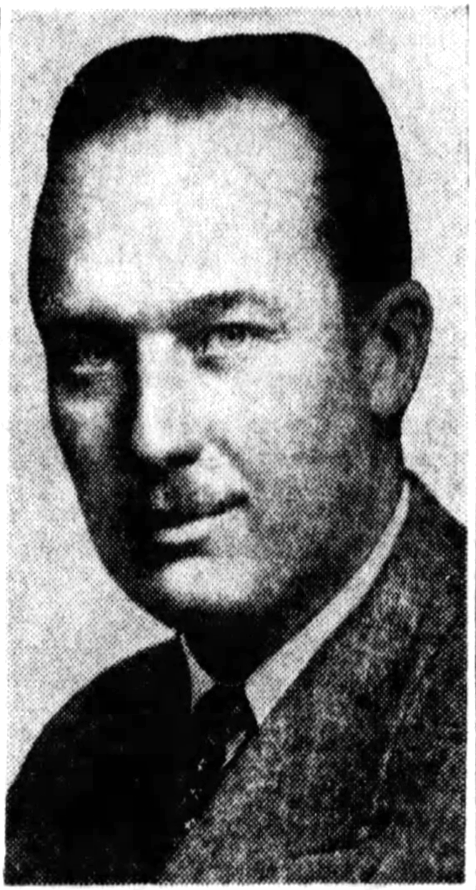
Check out the mustache on Fred Christ Trump, in 1950, for fuck’s sake, five years after Hitler’s defeat in World War Two.. Talk about yer Nazi bastards….
ANGER schematic
Anger works in a specific way — it’s a powerful emotion that convinces you, beyond any doubt, that you are completely right to feel mad and that the person (or thing) you’re angry at is a complete fucking asshole. When you’re righteously angry there are no gradations of right and wrong, only black and white, only you being just and the other party being fucking infuriating.
In order to sustain anger, you need to feel that you are right, righteous, justified, that you were deliberately wronged, unfairly abused. Sometimes this feeling is the clear result of actual things that have happened to you. These things happen in life, we make each other angry from time to time. It is best to make peace and try to avoid the same ugliness next time, though that’s not always in the cards.
Sometimes anger results from a creeping feeling, often of being disrespected — a feeling that finally gives rise to your angry mind putting together an airtight prosecutor’s case against the person you feel has disrespected you. Once you have made the irrefutable case, you feel justified in sentencing the other party to whatever they deserve. And carrying out the sentence.
A feeling may have been gnawing at you for a long time, though you couldn’t exactly put your finger on it, but there’s no mistaking the moment you’ve finally had enough. Your anger is burning, you’re dangerous, the only thing left to do is to flesh out the reasons you’re angry, make your case for why you’re right and the other person is totally wrong. Anger has a notoriously low threshold of proof, you’re already mad, any rationale will do, simply grab one. Then accuse. Your accusations will lead to infuriating responses. An argument then begins, in which everything the other party says only convinces you more and more what an unredeemed piece of shit you are dealing with.
Feelings are real, not to be sneezed at, or trifled with. What we feel is more real to us than anything else, actually. You can’t argue with a feeling, it is how you truly feel. You can’t even have a productive talk with someone who has a strong feeling until you acknowledge the feeling. Most of the time we keep our feelings to ourselves and these repressed feelings are prone to fester and grow more powerful, even monstrous. Classically, in our macho society, this applies more to men than to women, who are often more adept at talking about their feelings than men are.
It’s the classic bottle up and explode scenario sung about by the late, great Elliott Smith. Somebody does something that makes you feel like shit, you say nothing, the next insult is added on, you feel a bit shittier, the next thing is added on, you say nothing. Eventually somebody will do something somewhat like the thing, or begin to, or seem to be about to, and then the anger at the whole long torment explodes. Way out of proportion to whatever provoked it, usually.
I had a friend from childhood who was visibly nervous in his own skin. He always thought I was much cooler [1] than him and though he loved me for it, it also bothered him. Increasingly over the years. He was trapped in a nightmare marriage, to a woman he physically feared, he felt helpless and fought her constantly, viciously, helplessly. He was angry and afraid all the time (these often go together). I was somebody he could provoke, get a rise out of, someone he felt perfectly safe in making angry. Indeed, angry as he sometimes made me, I never took a swing at him.
I’d grown up in a house where everybody raged at each other all the time. My parents never learned to control their tempers, their frustrations, their deep sense of being powerless, abused children. In fact, both were abused by their violent mothers, unprotected by their gentle, timid fathers. So it was rage all the time. It sucked, growing up in a fucking madhouse, and it did great damage to my sister and me. It took me decades to make any progress toward learning to recognize the signs that I was getting close to the edge, how to calm myself, however slightly. Awareness that you’re getting angry, and experiencing that you can reel yourself back in, is the first step to exiting the cycle of rage.
One thing I learned, after many years, is to tell people close to me when they were hurting me and exactly how, and what I need them to do differently. Each time my childhood friend provoked me I would tell him I was getting aggravated, ask him to back off, to realize that he was poking a raw nerve and making me angry. His response each time was to deny that he was doing anything, then double down and tell me pointedly that I was the one with the fucking anger problem, not him.
When you find yourself stuck in one of these kind of insane revolving doors, all the good will in the world will be of little use. It is too late, once you make your feelings clear and are met with more denial and blame. Making me angry was the only thing that made the poor bastard feel good, feel like he had any power in the world. He felt safe, you see and, clearly, he felt he needed to do it. Otherwise, his head would explode. What is an old friend for if not to feel safe with?
In the end, after our friendship was dead and cold, after many months trying to preserve our friendship, I pressed him for the reasons he was angry at me. The reasons I couldn’t be friends with him (unless he changed his behavior) had been on the table for months, though he energetically denied the validity of my feelings. It emerged that all of the reasons he could never be friends with me were related to things his wife told him, things that happened after our friendship was already beyond reviving.
The schematic of anger is always the same. A feeling that chafes, gets worse, builds to an intolerable pitch. A case is made, because though angry and mad are synonyms, nobody likes to feel “mad”. We need a good reason, or a rationale, anyway. Nobody does anything unless he is convinced he has a good reason. Sometimes there is one, sometimes there isn’t. Our feelings will not allow us to behave without a good reason, so sometimes we create one.
OK? I fucking created this inescapable straitjacket case specially for you, just to say “fuck you.” I love you, man, but you’re dead to me, because, I never told you this, you are a complete fucking asshole.
[1] whatever the hell that means. I suppose in his case it was watching someone comfortable in social situations, by the looks of it, not a victimized, anxious, self-conscious person like he felt himself to be.
 gratuitousblahg