
The right to have a good larf
Sorry, I keep forgetting that everyone I know is much more sensitive than I am.
That was not your loud, cloying fart, it was my auditory and olfactory hallucination and I should seek psychiatric assistance for my florid psychosis.
I’m sorry for your pain and sad that I can’t carry it for you. Maybe meds or talk therapy will help.

There are among us, I’d imagine, people who don’t need to struggle with demons living inside of them. Impulses and fears that gnaw and chafe and cause us to exert ourselves, sometimes at terrible cost, not to succumb to terror, shame and rage. There may be some people who simply don’t have to contend with demons, though I doubt it.
I mentioned to an uncle that his nephew, though I don’t know him well, strikes me as someone who doesn’t wrestle with many demons. Personable, strong, good looking, doing meaningful work that he is good at and enjoys, surrounded by loving friends and family, he seems to move through the world with grace and ease. I told the uncle that I imagine he also has some demons.
“He has no demons,” said the uncle. “He’s never had to really suffer in his life so far, he’s never had to deal with any of the pain the rest of us know. He will, but up until now his life has been blessed. From the beginning he’s been loved, protected, respected, treated as well as a person can be treated.”
Pretty good blessing, I thought, even though the uncle’s formulation of his nephew’s demon-free life seemed a little glib.
In a world where ball breaking is regularly done, always justified and virtually never acknowledged or apologized for, there’s no point feeling shocked or indignant about it. You just have to find ways to live with it, and getting over it as soon as you can, without that look on your face, is a blessing to everybody. Welcome to the world!
Since silence can be for many reasons, and is construed differently by different people, please let me know what your silence means.
If you simply don’t know what to say, let me know. This leaves open the possibility of future communications from me.
If your silence means “fuck off!” let me know. It is the courteous and considerate thing to do, you fucking fuck.
There are some relationships that can only be maintained by agreeing to lie, omit, reframe, delete, deny, pretend. I mean ones where this agreement is a prerequisite for the relationship itself. I have been forced to oblige in some cases, with my father and a few other close family members.
It was always hard for me, but it is unsustainable now, the requirement that I continue to suppress my true feelings to maintain the illusion of love. Maybe it’s my artistic fucking temperament, I don’t know. Understanding my feelings and dealing with them is of supreme importance to my life. My health suffers, my sleep turns unrestful, if the requirement of a relationship is pretending that I’m wrong to feel whatever it is I am feeling, no matter how precisely and reasonably I can describe those feelings.
Beyond that, we all know in our hearts that a feeling itself cannot be wrong. It is truly what we feel, whether we deny it or embrace it. We may feel hurt based on a misunderstanding sometimes, and it’s always a relief to work that out afterwards when it happens that way, but the hurt we felt is just as real, even after we understand we felt that way based on an incomplete understanding. The feeling itself often disappears once we learn more about why we felt hurt. A mistaken feeling can be neutralized by the truth, a beautiful thing.
Pain, unbearable, terrifying pain, causes people to lie. I understand that. Shame and humiliation cause people to blame others for their pain. I’ve seen it up close, when I was too hurt to see anything else. It is a bad place to be. Doing it reflexively is a childish way to live
To me, reducing the world to this flat, dry, one choice right or wrong place is a kind of death. My father stated it succinctly and poignantly, hours before he died “if only I hadn’t seen the world as black and white, winners vs. losers. I think now of how much richer my life would have been if I’d allowed myself to see all the colors, all the nuance of this beautiful world.” The poor guy was dead a few hours after expressing this. More tragic words are hard for me to conjure at the moment.
The personal, of course, is also political. If you defer to tyrannical demands in your personal life — act like you were never hurt, no matter what — you will be apt to do the same when it comes to political choices. You compensate by pretending to be the hardest hard-ass in the world. You accept one lie and the next, and feel righteous in your anger, blaming others for complicated mutual dilemmas. You can wear a red baseball cap and passionately claim that the elected president is a fraud, an imposter, a lying puppet of some sick, dangerous people. And your life is great, because you’re not a fucking loser.
The demand that you deny your own feelings launches you directly into an incoherent, intellectually indefensible world. Everything becomes a reflex to deny, oppose, prevail. Accede to this demand, accepting as true the opposite of what you deeply feel, and you cease to exist as an agent of your own heart. You were hurt? YOU WERE NOT! You are confused? NO, YOU ARE NOT. You feel misunderstood? NO, YOU DO NOT. In the end everything you feel is reframed to something else, all problems are yours alone and can only be resolved by pretending they’ll resolve themselves if you ignore them. Does it make sense? Who cares?
To which an artistic, self-expressing fuck like me can only say “fuck that.” It is no way to live. You can do it short term, to weather some emergency, maybe, but as a long-term plan for love or friendship, it sucks its own crusty ass.
The last surviving friendship from my childhood, dating back to when we were best friends at eight, is no more. Both old friends are still alive, but one is too, what used to be called neurotic, to remain friends with the other. There were specific issues that became unbearable to me, a series of unsuccessful attempts over the course of a few years to talk them through, and hurt, mutual silence for several years after that. The most terrible death is the stubborn death in life of a once close relationship while both parties and their loved ones are alive for the shimmering moment we are given to breathe here.
Thinking about this estrangement, and my old friend’s basic decency and true inability to see his own role in angry conflict (he fancies himself so gentle, reasonable, meek) I decided to call and break the ice. I sent him a text. He wrote back that he was delighted to hear from me and it was only a few days before he was able to clear a 45 minute block on his busy schedule for us to talk.
During our talk I told him of a friend’s psychiatrist’s indisputable insight that our lives take place in a vast school where we either learn or don’t move out of sometimes crippling childhood pain. Here are a few of his rules:
12. A lesson is repeated until it is learned. A lesson will be presented to you in various forms until you have learned it. When you have learned it, you can then go on to the next lesson.
13. People always do the best they can. If they are doing poorly, it is because they have not learned the lessons that will enable them to do better.
14. If you forget what you have learned, a refresher course will be presented to you. You will take it.
15. Learning lessons does not end. There is no part of life that does not contain its lessons. If you are alive, there are lessons to be learned.
One lesson I learned, I said, is that unless a friendship ends in violent, damaging attacks, it can probably be resumed. My friendship with this guy ended in more or less mutual mildness. Though we were both hurt and angry at each other, neither of us mauled the other at the end. This, I told my old friend, was an encouraging sign going forward. He agreed, told me he had to go, but that next time he’d tell me the revelations he’d had since last we talked. I told him I looked forward to it.
We spoke once again, briefly, a month or so later. He had no idea what revelations he could have been talking about, but it was great to be talking to each other again. Last I heard from him.
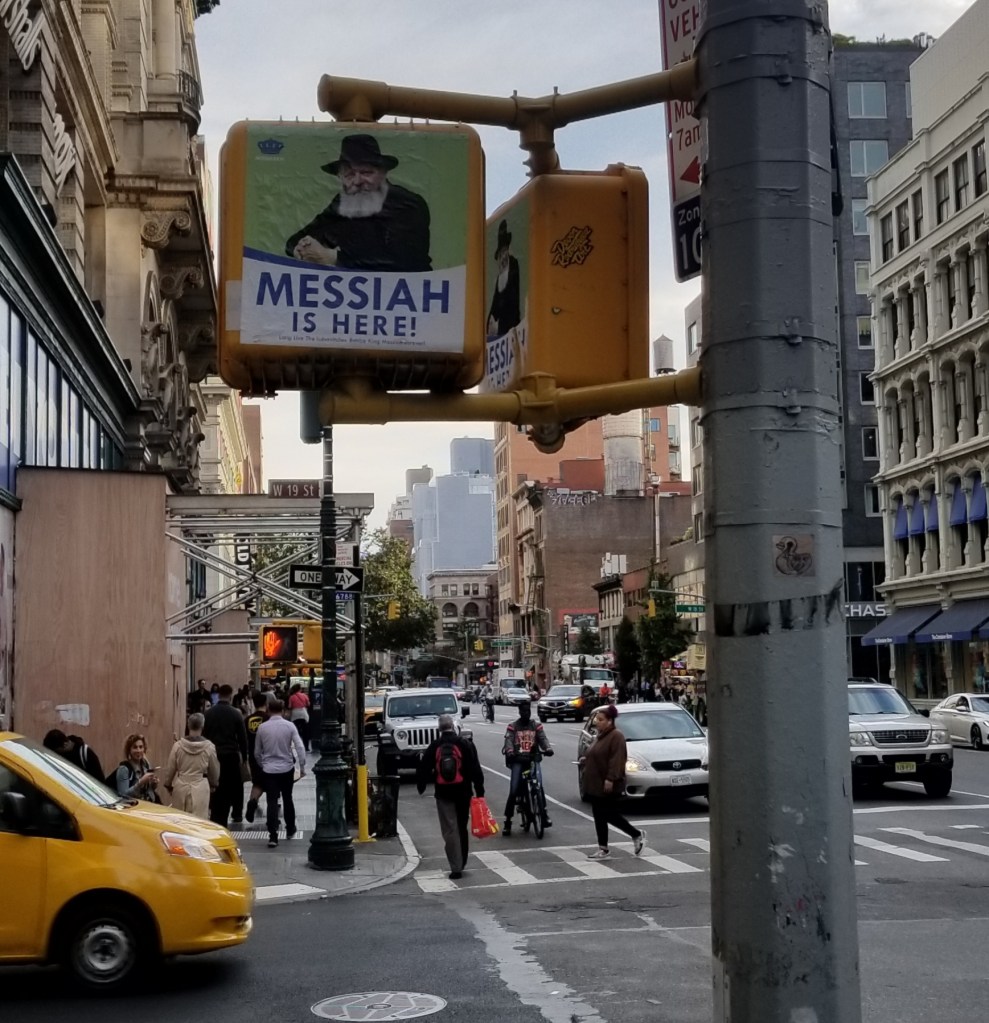
He has taken spiritual refuge with the Chabad community where the rabbi is wise and compassionate. He prays every morning and studies the holy books. I guess it didn’t occur to him that we should speak during the ten days of making amends when Jews are supposed to try to heal all past hurts and move forward in a better way. True, I could have called him, but the idea of how hard it would have been to schedule must have made me put it off, especially while I am trying to save another old friendship that is not doing very well on its respirator.
Love without right action is as useless as an expensive friendship card with a handwritten note expressing how important your love is.
Right action reassures those we love of our intentions. We take immediate steps when we see they’re hurt, to comfort them, to protect them.
Love that can’t listen patiently but jumps in to interrupt and object, defensive, deflecting, anticipating hurt, is not the kind of love that can heal anybody’s hurt.
You can declare your love with a torrent of heartfelt words, and with complete sincerity, but only love you demonstrate by compassionate action is worth more than an expensive Hallmark card and an impressively pricey token made of gold.
Two old friends come to a painful impasse, each blaming the other for causing the hurt and extending their deepening estrangement. Everything that happens between them afterwards seems to confirm their view that the other person is a hurtful asshole, probably hurtful beyond redemption.
This pain between them, and the corrosive blame they place on each other, will resolve either into eternal silence, that resolute death during life, or they can learn things they don’t really know how to do regarding friendship: how to make amends, how to forgive, how to heal after an angry, traumatizing conflict.
These lessons must be learned by both of them before there is any hope of fixing their mortally wounded friendship. Silence, whatever comfort one may take in sheltering in it, may not be the best way to learn these difficult arts.
And not a moment too soon…
 gratuitousblahg