third in a series of consecutive daily texts to Chuck Chuck BoBuck
Senator Schumer:
Some still find it hyperbolic to compare MAGA to the Nazi party. This critique is made by people unfamiliar with the Nazi seizure of power, the cast of characters involved and Germany’s lawless, violent lurch to Nazism. A longtime student of the history of the Nazi rise to power (Mr. Hitler and company killed almost my entire family back in Europe) I can point to a number of reasons the comparison of the Trump administration to Hitler’s is directly on point.
Understanding what we are facing in “MAGA” (aka GOP, John Birch Society, Kochtopus, Project 2025) demonstrates the abject futility of trying to negotiate with this type. Only organized, unified resistance, without fractures, or compromises by ‘moderates’, the ruptures that made Weimar liberal opposition fail, can overcome the plans these hyper-motivated American fascists have been carrying out for decades.
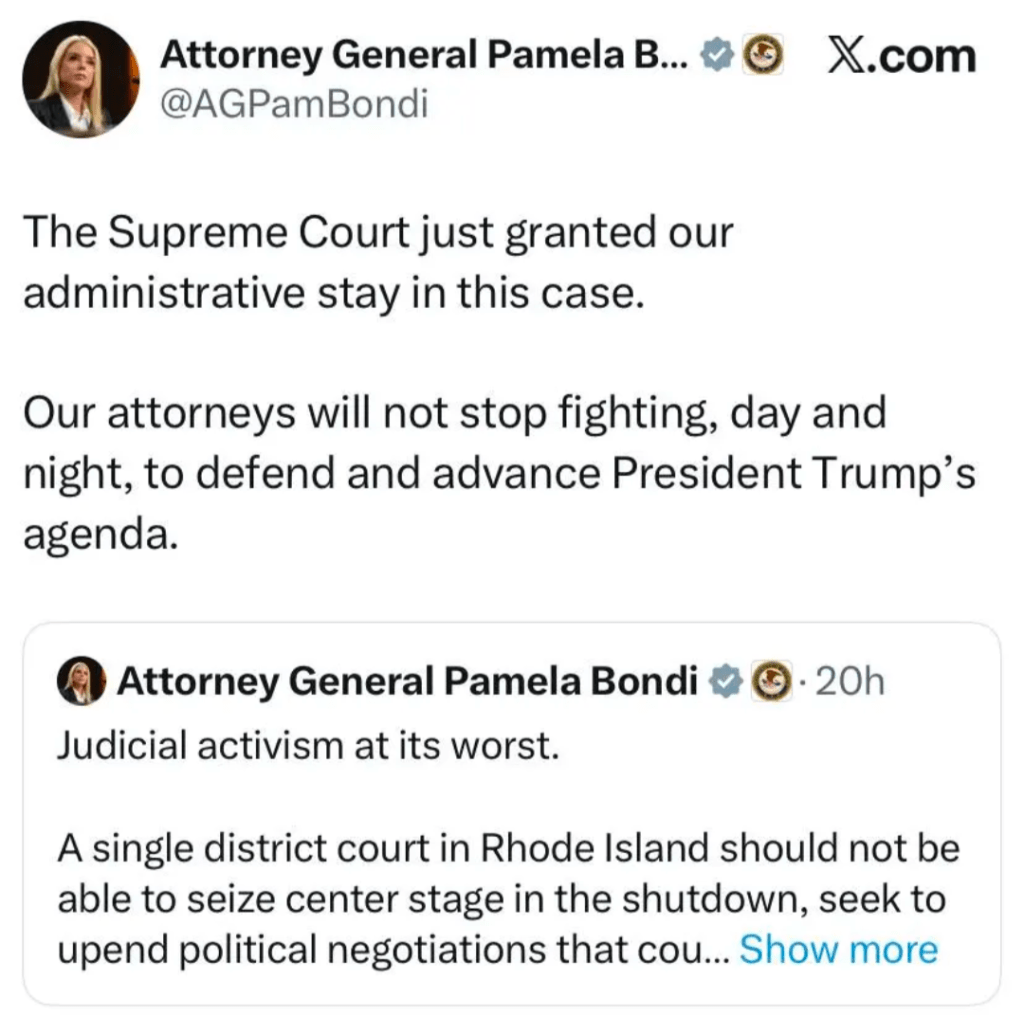
“The Leader’s word has the force of law” (Fuhrerworte haben Gesetzenkraft) — Trump claims Article II as the complete justification for virtually all of his unlawful actions including his usurpation of Congressional powers delegated by Article I. He has a doctrinaire 6-3 “Unitary Executive” Supreme Court that agrees with him, on an emergency basis, almost every time one of his unconstitutional, abusive assertions of power is challenged.
Trump has purged the government and civil service, replacing qualified long serving officials and experts with those who publicly profess complete loyalty to his every lie. The Nazis made membership in the party, and proof of “Aryan blood”, requirements for practicing all professions in Germany. A personal oath of loyalty to Hitler replaced the standard military oath.
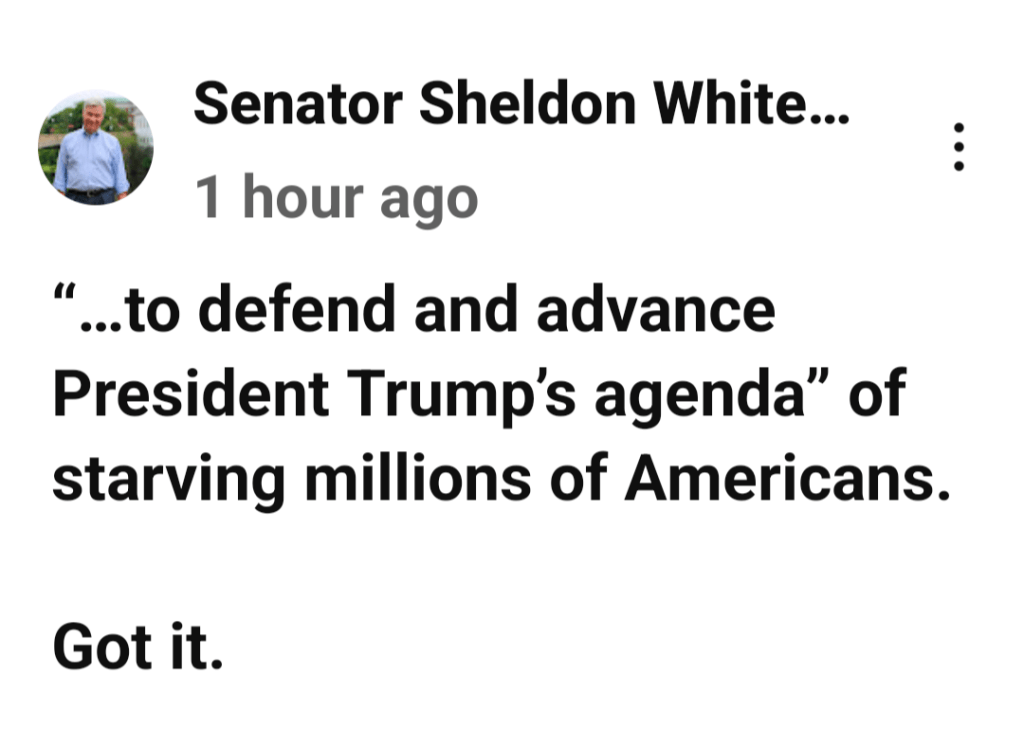
Trump had a volume of Hitler’s collected speeches at his bedside when he was married to Ivana. He refers to enemies as illegals, vermin, dangerously sick people, blood poisoners. He is a racist demagogue with a thirst for killing. Recall the lame duck rash of executions of federal death row inmates he ordered before he was dragged out of the White House kicking, screaming and stealing classified documents, after fomenting a violent attack on the Capitol to overturn the certification of an election he lost. Consider his ongoing war crimes in the Caribbean and Pacific, extrajudicially executing “drug dealers” to provoke a war with Venezuela, his bombing of Iran, his willingness to starve millions of Americans to advance his “agenda”.
There is also Trump’s Sprachregelung (“rules for how to properly refer to unpopular things”). Hitler’s government prescribed what words could be used, always anodyne terms for things like “killing” “liquidation” and so on. Here we have “efficiency”, “anti-corruption”, “patriotism,” “drain the swamp.” “transparency,” “Democrat traitors” and so on. These framings cover the deliberate destruction of careers, further immiserating the already challenged, increasing homelessness, desperation, violence, allowing starvation and increasing preventable medical deaths. All desirable and useful outcomes for President Project 2025 and his dream of a rebellion by poor people and the imposition of a police state.
Project 2025 has unleashed a massive force of heavily armed ICE agents, masked, out of uniform, executing SA (Brown Shirt) street tactics against non-violent civilians. He is spoiling for forceful reactions from protesters of these abuses, and the general precarity he has raised to almost unbearable levels, to justify a police state he controls completely. Your vote, and a few other Democratic votes, allowed him the obscenely massive budget for this unaccountable paramilitary arm of MAGA, in the name of keeping the government open.
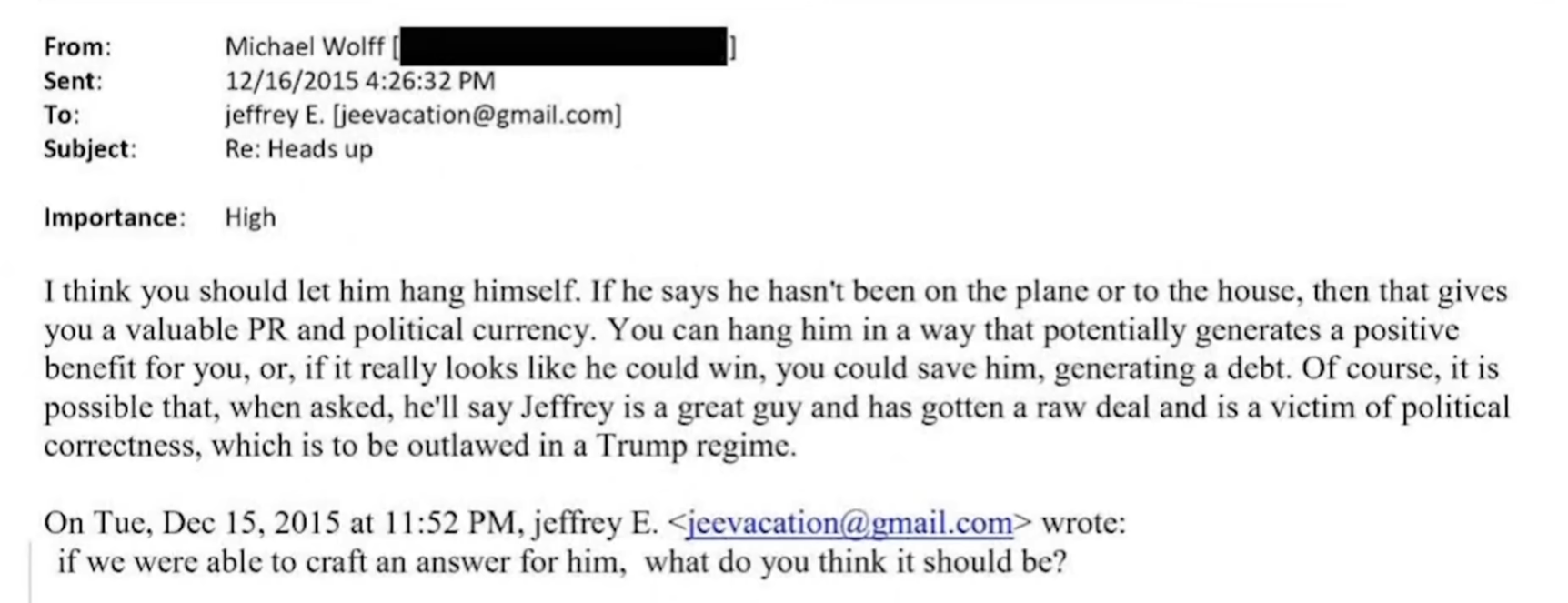
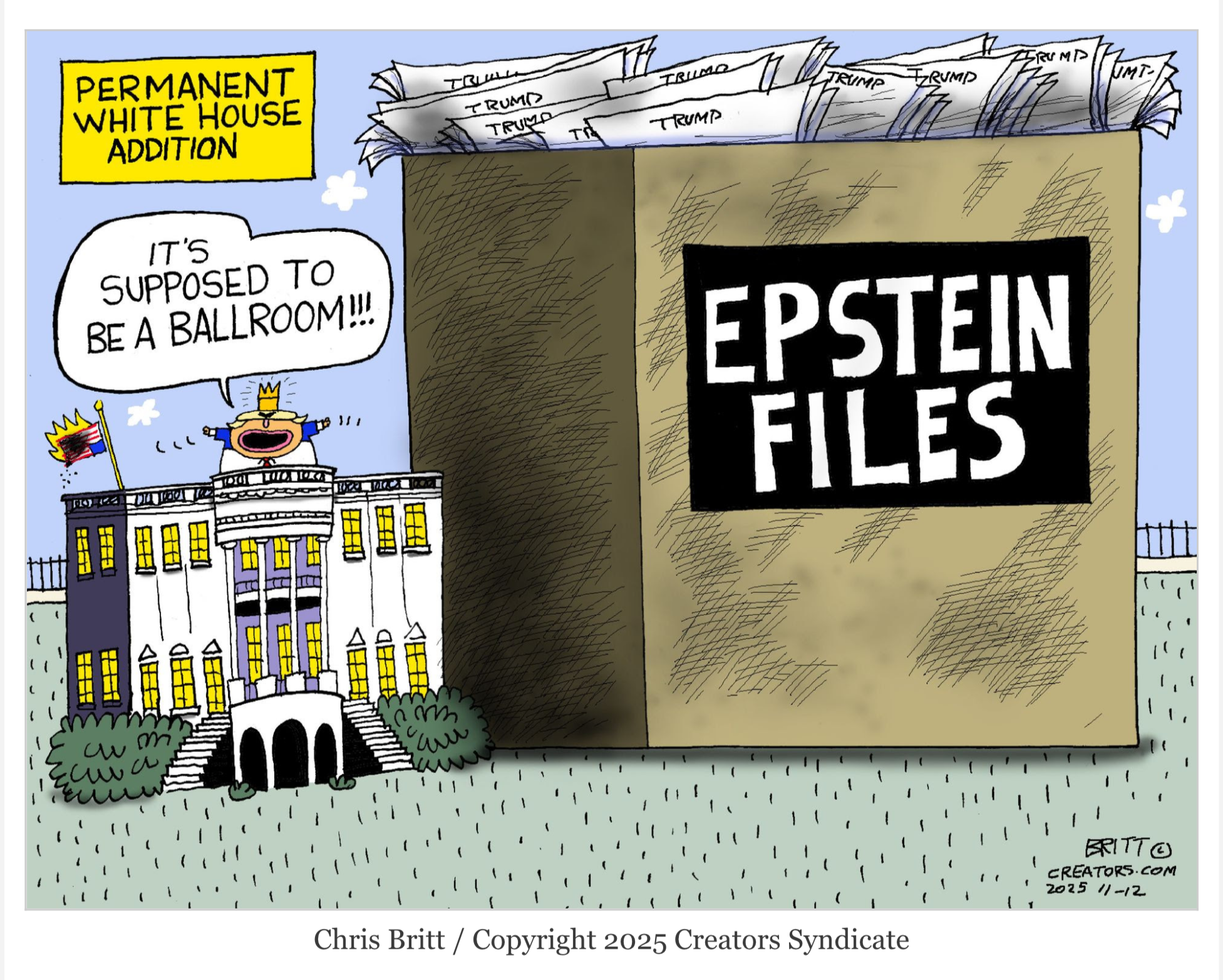
He is building an immense bunker under the Epstein/Marie Antoinette Ballroom after illegally demolishing the East Wing. It’s hard not to imagine what will take place down there if democracy, we all hope, prevails over American fascism — a remake of the final scenes of that great German movie Downfall. Hopefully he won’t set off a nuclear holocaust before he exits the scene, an option Hitler didn’t have but surely would have taken.
Joseph Goebbels (1943): “We will go down in history as the greatest statesmen of all times or as their greatest criminals” (Hannah Arendt, Eichmann in Jerusalem, p. 22)
You seem to believe that Democrats can find common ground, and bipartisanship, with American Nazis, their Congressional allies, and a dictatorial president who will not condemn praise of Hitler and “jokes” about gassing those who need killing. As the kids used to say: WTF?
You’re in a supremely difficult no-win situation. It is time for you to step aside as Senate minority leader and let new, bold, leadership take the reins to give us the best shot at defeating this “movement” before you and I meet in a cattle car, newly stateless and off for “resettlement” somewhere, treated with the most solicitous of sonderbehandlung in our final days.
Your constituent,
Eliot Widaen







 gratuitousblahg