Tribalism erases doubt

It is terrifying to feel isolated in this cold, chaotic world, and a great relief to find your tribe. That tribe may be small and specialized, other guitar players who love Jimi Hendrix and Django Reinhardt equally, or the gigantic tribe of a religious or national identity group. A tribe may be just a group of old friends who love each other, laugh together and comfort and support each other in times of pain and sorrow.

One benefit of membership in a tribe is the erasure of doubt — tribe members get absolute certainty. You belong, and that is the most important thing about tribalism, a beautiful thing you need never question. Disagreements may sometimes happen among members of a tribe, but the main thing is that we are a tribe and have a bond, and common values, that transcend our individual disagreements. The tribe has an uncomplicated view of the world, of life, usually a simple turn on love vs. hate or good vs. evil, which all members take as true, the tribe being on the side of the gods in every case.

In my small tribe of guitar players, people I’ve rarely ever met, half-tone bends are very groovy, as are whole tone double stop bends, if you know what I’m saying, standards and three chord vamps are equally cool. These are core tenets of our beliefs. (Sadly for me, both of my electric guitars are out of commission, so I can’t work on Si Tu Savais today with the looper.)

Research shows that people with a supportive group around them tend to live happier, less stressed, longer lives. If you have a few true friends, even one or two, you have a better chance of thriving than someone without good friends. If you come to hate somebody, and manage to alienate their friends from them, you have exacted a wonderfully effective revenge, increasing their pain and isolation and actually shortening their life expectancy. Bingo!

The American epidemic of loneliness, no doubt also a worldwide problem, leads lonely people down rabbit holes to join with other lonely people. You have nobody you can call when you are in pain, nobody who will answer your call, listen, make you feel connected to another person who cares.

Capitalism has devised an addictive cure to this lucrative loneliness: “social media”. In your painful isolation you can sit at your computer, or with your phone, and find many people who feel just like you, are as angry as you are about the same things you’re mad about. What a relief to find a tribe! The more you check in with your millions of new friends, the less alone you feel!

Think of the giant room full of guys Mohammed bin Salman has working for him, sitting behind computers, each one controlling a thousand spam bots and fake social media accounts, writing and disseminating messaging for the tribe. 100,000 likes for something you already agree with, minutes after posting, the algorithms have tailored each message perfectly for your opinion and those 100,000 likes tell you you’re not alone. An hour later a million of you, in perfect agreement! What you believe is shared by millions and millions, so how can you possibly be wrong?

The beauty of tribal identity is also the ugliness of the world, the reason the history of mankind is written in the blood of helpless victims. My tribe can beat up your tribe, bitch. My tribe is right, no matter what, and your’s is wrong, no matter what! The life of each member of my tribe is of infinite value, your tribe, which hates mine, are all vermin. Suck on that for a while.

When allegiance to a belief system conquers all questions of right and wrong, the stage is set. There is nothing the group can do to somebody outside of the group that you will question. There can be no mercy for evil. If you have any hesitation about what your tribe is doing, just remain silent. All your tribe needs to continue marching is for you and other waverers to keep your hesitation to yourself. After all, if you express dissent you risk expulsion. Expulsion from the tribe leaves you in the cold, alone, and ready to die before your time. Beware!

Chapter 54 Self-soothing behavior

Many of us, particularly if we suffered as children, develop behaviors to soothe ourselves when we feel up against it. Some methods of dealing with stress are more productive than others. While I have bad habits that make me feel a bit better than not doing them, I have one that feels productive. I always take comfort from expressing myself clearly. It is a great relief to feel heard and understood.

I enjoy conversing with someone, or writing clearly to someone, who grasps what I have to say, adds their personal observations, allows me to reflect and refine my thoughts and feelings. This essential human give and take is a beautiful thing, and at the root of much learning. Expressing myself as clearly as I can, while listening as closely as I can, facilitates this exchange. The next best thing to this human back and forth is writing and its mirror twin reading.

I was sensitized to not being heard early in life. My parents alternated listening to me anxiously with studiously ignoring what I had to say. This strategic, selective silence was more the practice of my father than my mother. With my mother, who could flail and fight with the worst of them, I always knew that in a calm moment afterwards I could approach her and, most of the time, be heard. I was even able to persuade her from time to time, which is no small thing for a child to receive from his mother. Understanding after angry disagreement is one of the great balms of love.

This balm is something neither of my parents experienced much growing up. My mother clearly got it a bit more than my father, but my father got pretty much zero understanding from his angry, religious fundamentalist mother or from his father, a damaged cipher unable to protect his son, himself, or anyone else. The little brother he bullied throughout their lives clung to him as the big brother was dying, but prior to that time there seemed little love or understanding between them. My father found understanding, appreciation and love in his wife, my mother, and that was the greatest blessing of his embattled life.

The damage inflicted on my father throughout his childhood rendered him largely helpless against frustration and rage. I understood, shortly before he died, that he’d truly done the best he could, based on the monumentally shit hand he’d been dealt in life. I think of the rage I was regularly faced with at the dinner table. My father’s vehemence and abuse was a shadow of the horror my he’d gone through, but bad enough for me.

Unconsciously I knew that to respond with rage, which I sometimes did, would be final, terminal, irrevocable and the harm of it could never be revisited or undone. Over time I resisted going to that rage zone when my parents were furious. I eventually became pretty good at masking my rising emotions and reining in my anger. I have noticed over the years that for a type prone to humiliation it is humiliating, when in a rage, to be confronted with superficial calmness. They are out of control, and calling out their enemy for a good Western saloon-style fistfight, and their would-be opponent remains mild, unruffled, expressing honest confusion about the disproportionate rage blazing around them. Talk about humiliation.

What could be more provocative, for someone ready to deliver a righteous punch to the face, the gut, followed by kicks in the stomach, than a mild reply? They are enraged and you remain enragingly, humiliatingly composed as they circle for the attack. I realize now, given the set-up, that I couldn’t help becoming that way. I had no choice but to learn that survival skill when my father made me his adversary from before I even had words.

It is no surprise, given that background, that using words to present my view as clearly as possible would become supremely soothing to me. A good talk reminds me of the basic goodness of the world. The most painful type I still have to face sometimes is the righteous, angry person who will not let me speak. They insist on the right to silence me in spite of the many years I’ve listened to them as a good friend, brother, colleague, in spite of many excellent talks we’ve had over the years. What gives someone the right to tell another person they may not speak is another, hideous question.

We meet people like this sometimes in life, we may become close friends, having no reason to suspect how badly they will act in a moment of pressure. We don’t discover, til a moment of supreme tension, that a friend or other loved one may be so damaged in their souls that they truly cannot listen to someone else’s pain. In fact, another person expressing hurt and expecting sympathy is infuriating to them, given the right circumstances. Nothing is more hurtful for this type, at a vulnerable moment, than to be reminded of the fragile emptiness of the shell they created to make themselves feel better and more important, than others.

This is a certain type of asshole, the snarling, angry one standing on their right to anger. You can easily picture them in a lynch mob. Nothing you can say will make the slightest impression on their anger because they will never acknowledge wrongdoing of any kind without blaming you, somebody else, everybody else. They also always insist on one condition for any conversation once there is a conflict: you shut the fuck up about your goddamned feelings. The one condition I can’t agree to.

There is a deathly pain associated with being silenced. When you are prevented from speaking by someone else, it is a direct negation of your humanity. It presupposes the right of one person to make the other person shut up. Enforcing silence requires force, or the credible, frightening threat of force. Once you have shown your mercilessness to the others, say be ostracizing one critic, there is no reason to demonstrate your power again, unless strictly necessary. Your reputation as an indomitable competitor not above a quick kick to the shorts precedes you in your social milieu. Brutalize one and the rest tend to fall in line.

So on a bleak day, thinking about the silence of longtime, now former, friends, their unshakable, righteous enmity, to the death, I console myself by presenting my thoughts and feelings as clearly as I can.

I set the basic idea down quickly, once it’s in my head. I read it again, trying my best to make like an innocent reader seeing it for the first time. I clarify things that could be confusing. I elaborate on things I didn’t develop, condense whatever seems tedious. This work is a pleasure, considering my words and their effect, as I refine them into successively better reflections of myself and my views. When everything is combed through and smoothed down into its simplest form, I put it up in an online journal, another example of my soul doing its best to make my notion of a good life tangible on a given, otherwise shit, day.

The dilemma of trying to maintain integrity in a war to the death

When I was very young, and first learned that Switzerland had been neutral in World War Two, I took that as a good thing.  They fairly didn’t take sides, the Swiss loved peace, I reasoned in my childish brain (they also made delicious chocolate, as I knew very well).  By the time I was eight, and saw nauseating film clips of what the Nazis had been up to not long before I was born, I understood that Swiss neutrality was essentially an acceptance of Nazism.   With friends like fair and balanced Switzerland, who needs Franco’s Spain?

How do we negotiate a world that demands a black and white taking of sides in so many cases?   Nuance is the weapon of obfuscating, timid pussies, we are told over and over by those with an interest in division and the loudest megaphones on earth.  The criticism of liberals and progressives often focuses on their presentation of detailed nuance rather than fierce, no holds barred, smashmouth, simple to grasp angry political rallying cries.  The right is not afraid to act like Nazis, including threats of violent reprisal against political opponents, why are the good guys so “principled”? 

There is something brutal about all politics, especially if one side is out for actual blood.   How do you discuss poisonous subjects with integrity?   The difficulty of this is hard enough to stop us from even trying, most of the time.   Can you actually come to a compromise with a Klansman, unless you somehow agree that their point of view is somewhat justified?  A separate question: why would you want to?

As I watch the unfolding horrors in Israel and Gaza I also watch the clannish response of so many.   Israel, as a haven to long persecuted Jews, has a right to exist.   The people of Gaza and the West Bank, Palestinians, have a right to exist.   May I go so far as to opine that all people, all creatures, have a right to exist?

There is an extreme right wing/religious fundamentalist government in Israel, the most extreme and divisive in its history.  The government is so extreme that hundreds of thousands of Israelis regularly march to protest Netanyahu’s ongoing plan to curb the Israeli Supreme Court, an institution that has long been Israel’s protection against anti-democratic and inhuman practices.

This fight between Israeli democracy and religious and ethnic autocracy provides the perfect historical moment for a murderous group, purporting to represent the persecuted, to attack Israel and inflict a grievous wound in horrific fashion.  No need to propagandize, Hamas provided the torture, burnings, slow death of parents in front of terrified children and vice versa.   They bragged about it themselves and took two hundred plus hostages.  No secret, Hamas said, we went to your villages to terrify you, make you feel vulnerable, enrage you, provoke the bloodiest possible response to make you look like the blood thirsty mass-murderers you are.

Now the world is divided into two simple camps on this awful question, as on most questions today.  The Jewish state has a right to exist, and to do anything necessary to survive, particularly after the Nazi-style atrocity on October 7.   The other side points in outrage to Israel’s long oppression of millions of Palestinians, to the open air prison conditions in Gaza and the impunity with which violent settlers dominate the West Bank, and demands that this oppression end now.

There is a moral core, and righteousness, to each argument, to both sides in this violent dispute to the death.  What does a person who sees both sides do?  In my case, I look up the history of the creation of the State of Israel, a country I’ve spent a lot of time in, whose language I speak.  

Nothing clean about that moment of international guilt, when, in the shadow of death camps for Jews, the Jewish state was “created” as a haven for a historically despised and persecuted minority.  Read about Mandatory Palestine, it was a shit show.  The British, as the Ottoman Empire was being defeated, were given control of newly created Palestine and all the inhabitants thereof.  There was also the “creation” of Lebanon, Jordan (Palestine was part of Transjordan), Iraq and the rest of the current Middle East, national boundaries drawn by the victorious European nations who had ousted the Ottoman Empire in World War One.  

The British Mandate was won in a war.   The winners imposed the rules, the local inhabitants had nothing to say about it.  Nations in the former Ottoman Empire were created by drawing lines on maps, in some cases combining, in the old British practice, warring tribal and ethnic groups in the same national boundaries.  The better to control them, if the newly created Iraqis themselves were fighting and killing each other, so much the better for ruling them.  European colonial powers had perfected this technique in Africa.

You had Jews displaced by Hitler’s plan to kill them arriving in Palestine, intercepted by the British, who were also fighting Hitler.  You had the “illegal immigration” of thousands of such persons.   You had Arabs who had lived on the land for generations and owned over 90% of the land.  You had the Jewish claim to the land rooted in the Old Testament, when God promised the land to His people.   That biblical claim, one must concede, is as problematic as any claim made in any holy book anywhere.   You had violence and killing, including by Jewish terrorist groups intent on ousting the British by any means necessary.  You had Arabs occasionally killing Jews, many of whom had escaped Hitler’s death machine.  There was a decade or more of desperate dealmaking, dealmaking that rarely included local poor people, Arab or Jew.

The vote for the creation of the state of Israel in the newly created UN was hotly contested, as was the map of the new state.   There was no worldwide recognition of the need for this Jewish state, in spite of Hitler’s heroic efforts to demonstrate the need for such a nation and our collective memory of this rare moment in history when support for Jews overcame long hatred.  Israeli independence squeaked through, with all kinds of compromises.  The British couldn’t wait to get out by then. 

Soon after Israel announced its independence the new country was attacked by a huge force of its Arab neighbors.  The war went on for months.  Israel’s existence was touch and go.  During the war 700,000 Palestinians became refugees.

We have the Israeli story of this exodus: Arab nations broadcast messages to the Palestinian Arabs to leave so that the Jews could be forced into the sea.  Once all the Jews were gone, they could go home in peace.  There were such broadcasts, but that was not the only reason Palestinians left.  

There was a war raging.  There were forced expulsions of Arabs from their villages in what was now Israel, war crimes, documented (see Deir Yassin) that terrified Palestinians and made them flee.  There was the usual displacement of any war.   There were multiple compelling reasons Palestinians fled.

At the end of the 1948 war Israel had expanded its borders slightly and the new status quo did not include the reintegration of Palestinians who had fled.  While understandable, from an Israeli point of view, that unaccomodated mass of refugees, which has lived in poverty for generations now, planted the seeds for what has followed.

The Israeli government’s position has long been that those refugees are Arabs and should be taken in by other Arab nations.   The Arab position was a hard “fuck you.”  The Palestinian refugee crisis was too good for Egypt, Syria, Jordan, Saudi Arabia and friends to pass up.  Nobody likes impoverished refugees, so how about a resounding, righteous international “Fuck Israel” instead?

Not to say that the Israeli position on Palestinian refugees being the responsibility of other Arab nations made much sense.  All of these talking points, if you take them one at a time, are easy enough to debunk as bullshit.  The practice of partisans on both sides is to have a few self-serving, one-sided talking points ready to deploy when needed, to make a complicated problem the sole responsibility of the enemy.

We cannot talk about these things calmly.  The killing of children, of old people, always rightfully enrages us.  I heard a journalist I love and respect (Amy Goodman) point out that Hamas had treated the 85 year-old Israeli hostage they later released humanely, even kindly.  Really, Amy, Hamas gets points for not beating and raping an 85 year-old hostage?

So back to the question: how to talk about what an Israeli fascist/theocratic government is doing in response to a hellish masterpiece of terrorist strategy in a world where Putin and Trump are the biggest beneficiaries of this kind of explosively divisive war.  If you have any idea, I’d love to hear it. 
Chapter 53 negotiating with terrorists

There are people, imbued with righteousness forged in unbearable injustice, who believe that their suffering allows them to do unspeakable things.   They inspire terror by their willingness to behave viciously, in the name of never being wrong.  When someone in your life makes it clear that they will behead someone you love and force you to watch the video, your prospect of reaching a mutually acceptable compromise with them is pretty much done.   

“If you don’t accept what I tell you to accept, my personalized version of history, and accept all blame, then I will rain holy hell down upon you and everyone you love, I will fucking destroy your world,” is an inauspicious starting point for a productive conversation.

If someone is truly willing to kill you, destroy your good name, your friendships, trust, throw away years of loving mutuality, in the name of never being in the wrong, accept that there is no fixing that.  You are dealing with a damaged, destructive soul, too desperate and determined to make peace with.  You cannot make peace with someone willing to kill anyone who makes them feel in any way bad about themselves.  These people are terrorists and are absolute in their demands.

This impossibility of solving problems with someone who cannot be wrong is a painful, but important, thing to digest.   If your best efforts to be patient, kind, fair and honest are met with dismissal, anger, recriminations, you’re not going to find a way to fix things with that person.  

It may seem impossible to imagine that someone you love, someone who loved you, can become an implacable enemy, but it sometimes happens.  When it does, you need to look at it without sentimentality, realize you are no longer dealing with any form of love, and get away from it.

The therapist asks “what do you think your role in these recurrent situations is?”   It is an important question.

In my case, maybe it is no more than my infuriating insistence, in the face of irrefutable evidence of incapacity in the other, that an old friend must be as vulnerable as needed to feel somebody else’s pain.  And my belief that empathy, and the ability to put yourself in a hurt person’s shoes, always leads to a desire to help heal that pain.   This belief turns out to be tragically, masochistically misplaced when dealing with someone who cannot be wrong.

My insistence in the face of their inability must be fucking maddening to the point of violence to them.  I suppose it is that stubbornness in the face of implacability that marks me for the violent endings, the displays of rage and idiotic denial I sometimes have had to face at the end of long relationships.

A person who reserves the right to rage, with or without reason, and never to concede fault or responsibility for harm they may cause, who needs to control others and be viewed as perfect, especially when they act destructively, is not a good partner for peace talks.   

Over time you can understand how badly they are damaged, how violently they feel compelled to react when criticized, but, sadly, that understanding gives you no tool to help fix anything broken in them.   

No amount of patience, kindness or understanding can help them change anything about themselves.   The only change possible is your own point of view, and learning to make yourself scarce as soon as you see that you are locked in a conflict with this type.   Any conflict with this type, no matter how seemingly easy to resolve, must end in death, as it is written.   Save your own life by learning when it is time to walk away.

Cancelled

Like it or not, we are all now living in a black and white world where irreducible moral sides must be immediately taken, to the death. Whose side are you on, freedom or tyranny? Who is good and who is evil, Israel or Palestine? Who is mostly perfect and who is an irredeemably sick fuck with no right to speak who must be silenced forever? Take a view I find hateful, after hearing just the first few words? CANCELLED!

As I recently wrote to a righteous old friend who had no intention of ever talking to me again:

In talking there is always the chance of accidentally rescuing our friendship.  In silence, only the grim certainty of continued death during life, a true shame on both of us, to share the short remainder of this brief moment when we are both alive and waste it in mutual anger.

In righteous anger you instantly, satisfyingly cancel the motherfucker who makes you angry. Boom — dead! Then, that person being dead to you, you have eliminated the risk of being infuriated again by someone who keeps maddeningly insisting there are at least two sides to a story you already wrote the fucking ending to.

The great virtue of buying into a belief system is that you don’t have to be blindsided by so-called facts, cause and effect and the rest of the exhausting, caviling so-called nuances you already firmly believe are bullshit.

Reading about the recent cancellation of a book-related event by an author who wrote a nuanced book about Palestinians and Israeli settlers in the West Bank, and the firings and forced or protest resignations of others who made points about the horrific conflict in a way that was deemed indelicate, I had a creepy realization. What a cohort of old, dear friends did was cancel me. I’ve been cancelled.

Back to Israel and Palestine, for a flaming example. It is apparently a deadly sin, to some, to observe that Hamas behaved like blood-crazed Nazis, 100%, when they went on a murderous pogrom, and that Israel is behaving now, even if understandably in some ways, not like non-Nazis. To slaughter a Jewish baby is a Nazi-type war crime. To slaughter a Palestinian baby, in revenge for inhuman Nazi atrocities … what do you want to call it, boss?

The conversation is apparently taboo now, you have to be very, very careful how you phrase your opinion on the ongoing civilian slaughter in Gaza as Israel pursues the demons who hellishly rampaged recently. Israel has every right to protect herself, many people believe. But if you justify the murder of children on one side, you justify it on both sides

Got to be so fucking careful these days that you may as well say nothing about raging controversies that make people ready to kill each other. Your silence, of course, is assent. Whatever is going on, whoever is holding the noose, and pitchforks, and spewing hatred with veins popping on their necks, the torch bearers, the ones outside the makeshift jail chanting “bring him out!”, by standing among them silently you are part of the lynch mob, my friend.

That’s my basic problem with the righteously silent. Fuck those putos. You may cancel me now, asshole. And happy birthday, dear.

The difficult art of making amends

Ask your spiritual advisor what true repentance is. They will tell you that it is sincere regret for a wrong that you did to someone and a determination to make it right in whatever way is possible.  

Repentance contains an acknowledgment that you’ve hurt somebody, with an admission that what you did to them would have badly hurt you too.  Key to repentance is a willingness to help in the healing and the promise not to do that thing, or anything like it again, to that person, a soul just as precious as your soul.

The opportunity to be forgiven is a gift a hurt person can give to another, but the words “I’m sorry” and “I accept your apology” are meaningless formalities much of the time, as many of of us have experienced.  

Most of us know how easily a formal apology can be turned into a club to beat your victim with “I fucking apologized to this unforgiving asshole ten times, it’s never enough!”

The heart of repentance is atonement, the true determination of the person being given the gift of forgiveness to return that kindness in kind.

The human propensity for cannibalism

Given the right horrific circumstances, every human being is capable of eating another human being. We live with this hard to digest fact the same way we live with the certainty of our own death: by putting it out of mind as much as possible.

We are social creatures, human babies are more helpless than most baby animals and need the most care if they are to survive. We feel tenderness toward babies, even if they are strangers to us, and most of us have a reflex to leap to their defense if we see one toddling into traffic. At the same time, we are also programmed to survive.

In my first semester in law school we read a British case from the height of the British empire, Regina v. Dudley and Stephens. Dudley and Stephens, sailors, had survived a shipwreck with two other guys, one being the teenaged cabin boy. There were four of them, barely alive in the lifeboat in a remote area of the ocean, day after day. The kid was close to death, but hanging on. Reasoning that the boy was going to die very soon anyway, and that they’d all die if they didn’t eat him, two, Dudley and Stephens, voted to kill the boy. They killed him, over the moral objections of the third, and all three men ate and were eventually rescued. The principled cannibal gave evidence in the criminal case against Dudley and Stephens, who were sentenced to be hanged by the neck until dead.

The verdict was designed to send a message to the civilized British navy. You cannot eat the cabin boy until he is dead of natural causes. Once that lesson was imparted, the queen (Regina) quietly commuted the death sentences of Dudley and Stephens and that was that.

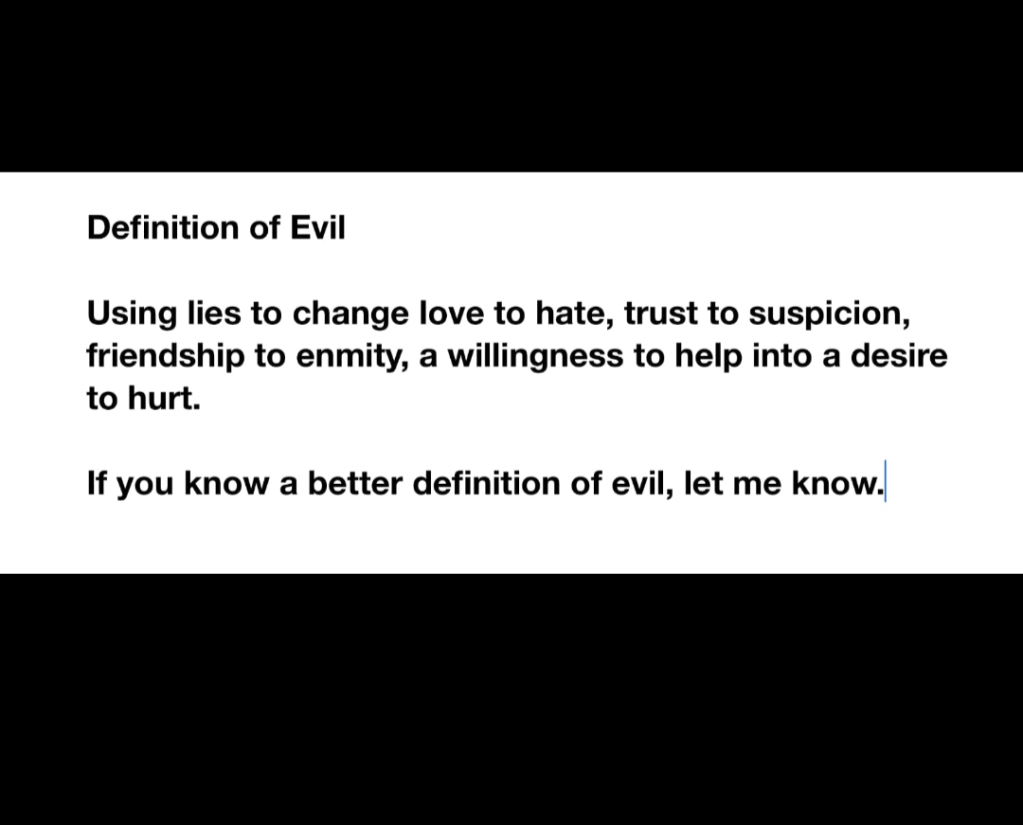
In real life, recently, I have seen this impulse toward cannibalism among friends I’ve had for decades. When you are under enough stress, and feel desperate enough, you will believe any lie that makes you feel alive, part of a loving group and righteous in your shared fury. It is a short trip, step by step, from angrily denouncing someone, based on an ugly lie, to hating them, to hanging them from a tree, to eating their barbecued corpse.

We are all capable of this kind of abominable group behavior, in an extreme enough situation, but some are able to do it even when there is no direct threat to their own life. I don’t want to sound judgmental, God forbid, but my best advice is to avoid this kind of grimly transactional motherfucker, once you see that hungry gleam in their beady eyes.