Why?
Listening to a recent episode of the excellent Behind The Bastards podcast by Robert Evans, How Nice, Normal People Made the Holocaust Possible, I was struck again by how many regular, decent people merely go along to get along, try to keep their heads down, not make waves, get what they can from an unfair world. Yes, we reason, it’s bad to (insert the worst thing you can think of here) and we don’t support that, of course, but on the other hand (insert other hand here). Take rapper and actor “Fitty Cent”, he doesn’t condone the overt racism and divisiveness of President Trump, but he got a very generous tax break from the man, got to keep a bundle of his own money, so how can he say the man is all bad?
Nobody likes to admit that the party they support, the community they feel part of, does terrible things. We all consider ourselves good people who want the best for ourselves and our loved ones, the best for everyone. We are masters at justifying our actions, even hard to defend things we may do are done for the greater good. Robert Evans, a man fascinated by the lives of powerful bastards, gleefully mocks their justifications for being a piece of shit in every episode. The one I heard the other day focuses on the “little Nazis” who made Hiterlism possible, the millions of small, humble citizens, with no particular strong beliefs or philosophy, who supported the Nazi movement because, even if Mr. H’s rhetoric about the need to cleanse the world of Jews, Communists, Roma, etc. was a bit over the top, he was undeniably making Germany great again.
I woke up full of regret today, with the news of extremist Amy Coney Barrett’s nomination being voted out of committee in preparation for putting her in Ruth Bader Ginsburg’s recently vacated seat in time to rule on the legitimacy of the 2020 election, that I didn’t dedicate my life to investigative journalism, human rights advocacy, environmental activism, that I didn’t find a meaningful way to join with others of like mind, to step meaningfully into the fight against the destructive forces I hate. Fighting bullies in my own life, and working to become less angry and violent, were small, all-consuming battles that distracted me from the larger war going around all around me. I won’t dwell on any of that now, just put this out there today.
I heard someone recently cite the murder conviction and sentence of Lieutenant William Calley, for the killing of twenty-two Vietnamese civilians (among hundreds he and his men murdered that day), as an instance of American justice. For his war crime, the slaughter of an entire village of unarmed men, women and children, the American justice system sentenced him to life in prison [1]. With Nixon’s help, Calley was free after three years of house arrest.
When I was teaching elementary school a lifetime ago, I heard an inspirational educator tell this story at a teachers’ conference:
A young boy is walking down the beach at low tide. There are thousands of starfish washed up on the beach, slowly drying out, as far as the eye can see. The boy is picking up starfish and flinging them back into the ocean. A man shakes his head and says “you think you can save all these starfish? What difference does it make if you throw a few back?” The boy picks up another starfish, says “it makes a big difference to this guy” and tosses it back into the ocean.
This was a moral lesson to teachers, depressed about the impossibility of helping most of the students in their overcrowded, underfunded classrooms, reminding us that our efforts were not wasted. The Talmud states that saving one life is like saving the entire world, we can only do what we can do, our responsibility is to do the best we can for those we encounter. Our duty is to fight for good no matter how terrible the odds for success may be.
The Lieutenant Calley morality tale is kind of the starfish story in reverse. The rare case of temporary justice for a mass killer in uniform who orders his men to kill women and children and being put away for life — followed by the typical injustice of a politician freeing him to score political points with that good, decent Silent Majority who don’t think the murder of some anonymous gooks in some far off godforsaken hellhole means that a decent American boy’s life has to be destroyed [2].
We see, daily, that the president we have now is prepared to do far more dastardly things than even Mr. Nixon, to stay in power. To pluck one example by a starfish leg, he pardoned a Navy officer whose men turned him in for, among other things, torturing and killing a captive Iraqi teenager then posing for a photo with the corpse.
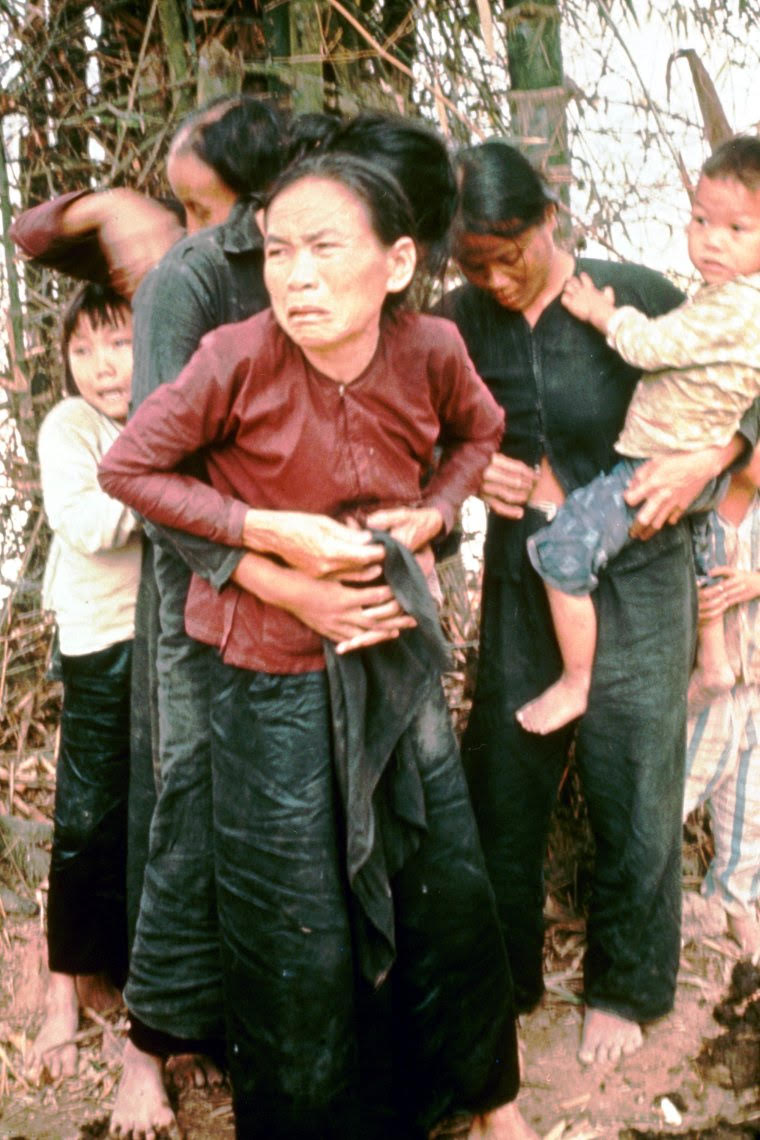
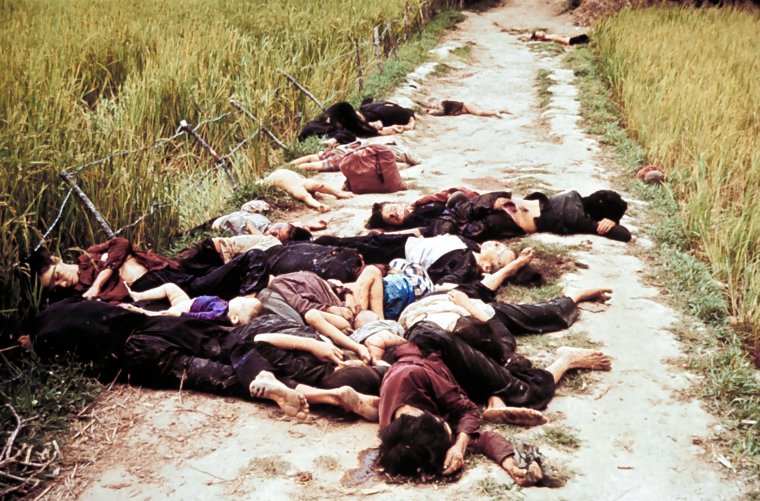
The massacre at My Lai, a war crime by any definition of the term, was at first covered up by the military. It only came to light because a helicopter pilot named Hugh Thompson and his crew, gunner Lawrence Colburn, and crew chief Glenn Andreotta, (who landed to stop the killings, risking their own lives) and a few dogged soldiers who could not unsee the horror they’d witnessed that day, including Army photographer Ronald Haeberle pushed ahead. Their cause was assisted by journalists, including Seymour Hirsch, who pressed to make the story public The scope and brutality of the atrocity was undeniable, it had been documented in real time in the photographs of GI war photographer Ronald Haeberle.
Vietnam veterans report that the massacre was one of many, perhaps hundreds, that took place during that misguided, un-winnable, depraved war. The slaughter at My Lai would have to stand in for all of them. In the fog of war, all kinds of nightmares play out all the time, that’s why they say “war is hell”. In more recent times, we’ve had a military whistle-blower tried as a spy and sentenced to a long prison term for disobeying orders to keep secret video of an American helicopter crew receiving permission to massacre civilians in Iraq. NOTHING TO SEE HERE.
Just two Ronald Haeberle photos [4], then, and another weak-ass reminder to get out to vote.
As my father, overwhelmed by his young son being so upset to learn about the murder of his own family back in Eastern Europe not many years earlier (in a manner quite similar to the slaughter in My Lai, actually), angrily said: THOSE PEOPLE WERE ABSTRACTIONS, NOBODY KNEW THEM, WE DON’T EVEN KNOW ANY OF THEIR NAMES!
A group of abstractions in My Lai, March 16, 1968, waiting to be killed:
A few moments later:
[1]
William Laws Calley Jr. is an American war criminal and a former United States Army officer convicted by court-martial for the premeditated killings of 22 unarmed South Vietnamese civilians in the Mỹ Lai massacre on March 16, 1968, during the Vietnam War. Wikipedia
[2] the reporter who got to know Calley during the trial writes:
There was nothing about Rusty Calley, as he was called, that would make you say that he was an explosion waiting to happen. He didn’t have killer instincts. He didn’t love guns. None of that was the case. He was a young guy from South Florida who loved being around people and going to parties. He was fun to be around. He was not the kind of guy who should be commanding other men in warfare, in my view. But he was probably not the only one out there like that, either.
[3] These photos, by soldier/war photographer Ron Haeberle, and the following, are from an article published in Time Magazine on the fiftieth anniversary of this notorious American war crime:
It was 50 years ago — on March 16, 1968 — that a group of American troops killed hundreds of civilians at the hamlet of My Lai, in what would become one of the most infamous atrocities of the Vietnam War. Months passed before the news of that event began to spread, and it would be years before anyone involved would face possible punishment. Though several of the men involved faced courts-martial, only one—1st Lieut. William Laws Calley Jr.—was ever convicted. He was found guilty in 1971 of murder and sentenced to life. (President Nixon changed Calley’s sentence to house arrest, and he served about three years. He apologized in 2009.)
Only 41 years between the mass murder and the apology, but he DID apologize! Here’s the motherfucker’s actual apology:
“There is not a day that goes by that I do not feel remorse for what happened that day in My Lai,” Calley told members of the Kiwanis Club of Greater Columbus on Wednesday. His voice started to break when he added, “I feel remorse for the Vietnamese who were killed, for their families, for the American soldiers involved and their families. I am very sorry.”
Note the killer’s repeated use of the passive voice to distance himself from his own deliberate, atrocious actions “what happened that day in My Lai” and “Vietnamese who were killed” and “the American soldiers involved”. He did the best he could to express how sorry he was, as shown by his voice starting to break, but, seriously– fuck him.
Then have done to him what happened that day in My Lai, have him tortured him a bit, scalped, shot, once or twice in each hand and foot, a couple of times in each leg, and left in a ditch, with a sobbing infant clinging to him as he bleeds out.
pass it on, fits on a phone screen
from Democracy Now! (democracynow.org) which comes with this notice:
The original content of this program is licensed under a Creative Commons Attribution-Noncommercial-No Derivative Works 3.0 United States License. Please attribute legal copies of this work to democracynow.org. Some of the work(s) that this program incorporates, however, may be separately licensed. For further information or additional permissions, contact us.
and another good one:
At a time when so many are dying around the world, and around our nation, from the pandemic, from hunger, by suicide, thoughts of death are closer than usual.
Death may be the beginning of the dead person’s embrace of eternity, I suppose, but it’s a high price to pay for that union. What’s left behind is the painful absence, forever, of that loved one. In a way, our mourning for those we love and lose contains an element of rehearsal for our own death. This secret, internal rehearsal is very hard for us to do, in a society dedicated, to an impressive extent, to the eternal denial of aging, death and dying.
I thought about these little rehearsals for our own deaths recently when I reluctantly took my leave of a friend I’d known since Junior High School. Losing this old friend felt like a kind of death, partly my own. A lifetime of shared experiences, personal references, little inside jokes, good will, great favors done for each other, erased as by death. Erased, rather, by an unwillingness, or inability, to do what needed to be done to continue a mutually beneficial friendship.
I’ll take my share of blame for the final death, and though my friend angrily concluded I’d been the unreasonable, cold-hearted aggressor, I did my best to avoid the silence that eventually had to come in the absence of empathy and understanding. I spent months taking him up on his offer to grapple with how to fix what had gone wrong in our friendship. When I laid out my side for him as clearly as I could, with as much patience and lack of blame as I could muster, he was hurt and angry about it. Your choice at that point becomes stark: eternal grievance and unresolvable fight or quiet. There’s enough angry noise in this mad world without it hissing from an always virtuous person who insists he can’t be hurtful because he’s your true friend — my former good friend surely agrees with that.
When someone we love dies, the pain we feel is universal. It’s hard to imagine a person who does not share this terrible clutching in the chest, or wherever one feels it, when someone he was close to is no more. Hard to picture a human being unmoved by a selected death, unless we dehumanize them, that is. Once the despised party is no longer seen as fully human, it’s much easier to imagine the worst. That’s what rabid partisanship is all about. If you’re the malicious type, the death of someone you despise can leave you feeling “good for them… only tragedy is that it didn’t happen sooner“
I am about as far to the left on the political spectrum as I can imagine anyone being. It feels to me like the pull of liberalism, progressivism, socialism, whatever you want to call it, is toward mercy and inclusion. It aims to foster recognition of our common humanity, our unalienable equality and value as humans, the right of poor people to live with dignity. The magnetic pull of conservatism, autocracy, militarism is toward exclusion, protecting the privileges of the few, employing a punitive order that enforces divisions according to class, race, religion, nationality or, usually, a combination of those things. The right sees these divisions among people as natural and inevitable and the friction they cause as something best controlled by a well-armed police force and prison system.
Of course, someone on the political right will characterize the philosophical difference in reverse. Conservatives want to preserve freedom, decency, the value of hard work, free competition, justice, moral righteousness and so on. Liberals want to impose a kind of politically correct tyranny, giving away hard-earned money to reward lazy, corrupt people who refuse to compete on a level playing field. Liberals also don’t want to punish criminals, they want to “understand” them. And so on.
An animating belief of humanism is that our shared humanity can rise above any artificial divisions, given empathetic understanding. A very liberal writer, Jeanne Safer, gave a beautiful illustration of this in a book about seeing beyond partisan animus [1]. Her very religious, right-wing neighbor, a person with whom she shared almost no beliefs and few opinions, took her to chemotherapy every time she went, sat with her, brought her home, made sure she was comfortable, did her shopping. Her gratitude for this woman’s selfless kindness in her time of need made her appreciate the deep humanity of this undoubtedly good woman. She may vote for Trump, march in Right to Life rallies, believe homosexuals will burn in hell, but she has an undeniably generous heart on a personal level. Safer learned to cherish this wonderful heart, even as she disagreed with virtually everything else this neighbor was passionate about.
This, my friends, is a subtle fucking point well worth pondering in our troubled times.
It is a very difficult point to get a hold of during this nakedly partisan cold civil war we’re all living through. The stress acting on us daily is almost disablingly heavy, but the point is worth considering. People on the other side of every great question, people we write off as mindless partisan fucks, love their kids, take care of aged parents, would jump in front of a moving car to save a stranger’s toddler, watch videos of animals doing adorable things, to take their minds off the horrors we are all swimming in daily.
Part of the intent of keeping us all constantly at war with each other is to destroy this larger truth of our innate human connection to every other human. How many humans can kill a baby? Not many, I’d wager. Tribalism is one thing, and often a destructive one, but our common humanity, in the end, is the only thing that can save us and the planet we live on. Not easy, of course, not often seen, but urgently needed, going forward.
Looking at any history book it’s not hard to see the interests of the wealthiest (and generally most conservative) behind every war fought between average people. Poor people, young ones, from each combatant nation are indoctrinated against an enemy and sent to kill each other with the ultimate aim of making an elite group of rich, older ones, richer and more secure in their wealth. To understand war, follow the money, as they say.
And the horrible reality is that when the war sweeps through, there is no survival for the meek, no possible appeal to our higher nature. All bets are off when they come for you with machetes, guns, planes, flame throwers, mobile killing units. This is the nightmare scenario our species has lived, and perpetrated, over and over since before there was a system for recording these slaughters. In the world right now there are tens of millions displaced, people who ran from a meat-grinder that hacked up the unluckier, meeker members of their families, their community. Those who hid, cowered (not unreasonably!) and were caught are not shown mercy, not by bombs, not by men crazed with the wild adrenaline of life and death battle. They shoot first, at people who may well want to kill them, ask themselves questions later.
Extreme partisans are ready to die for their beliefs, to kill for them. This willingness to die is sometimes seen as the ultimate expression of having the “courage of your convictions” though it is just as often the “enduring brutality of your mistake”. In this country, according to the FBI, violent, deadly partisans are mostly on the far right. Far right groups have killed many Americans in the last twenty years, as part of their general operations, far left groups have killed few, if any, over that same span.
A willingness to use violence is the hallmark of terrorism — in fact, the use of violence to achieve an aim IS terrorism. We terrify you into doing what we say, because we’ve killed some innocent people, as you’ve seen, and we’ll fucking kill you. too. The threat of violent death is our calling card. Our side will beat down your side and stick those protest signs up your asses!
You wonder what has to happen to a human heart to conclude, during difficult times, that it is better to take up arms and take as many of the bastards with you as you can before they kill you than to look for a way out of war. Something the equivalent of Nazis coming to your area, rounding up local leaders and publicly executing them. If you have the ability, that moment is definitely your last chance to organize and take up weapons for self-defense against a deadly enemy.
The specter of a nation finally struggling to come to terms with a long history of racism, de jure and de facto, seems to present this endgame scenario to those ready to believe that equality among people inevitably leads to tyranny. Got to arm and kill as many of those fucks as possible before they can force us to live as slaves in a world like that! We never did anything to them, why are they coming to persecute us?! They are the violent tyrants, not us!
As I think about these little rehearsals for our own deaths, I wonder how ready I’d be, if forced into that terrible position, to die for my beliefs. Even to be beaten up, or even menaced, by armed thugs outside my polling place. Fanatics are famous for their willingness to go down in a hail of bullets, guitarists and calligraphers, not so much.
When things are put into black and white, life and death frames — if socialists are elected to Congress it will be the violent end of freedom as we know it — evil, righteous men with the money to influence mass events will eventually put death squads into motion. You can take that to the bank, the smart money will bet on it. As we all do our little, trembling, mostly unconscious, rehearsals for our own unthinkable deaths.
[1]
I Love You, but I Hate Your Politics: How to Protect Your Intimate Relationships in a Poisonous Partisan World, 2019, All Points Books ISBN 9781250200396
Bravo, again, John Fogerty. Amy Goodman reports, after a taste of the Creedence 1969 anti-war rocker:
AMY GOODMAN: “Fortunate Son” by Creedence Clearwater Revival. The song was written by member John Fogerty, who just issued an official cease-and-desist order Friday to President Trump for using it as part of his campaign’s soundtrack. The song came out in 1969 during the Vietnam War.
Fogerty said, quote:
said John Fogerty.
original post:
AMY GOODMAN: “Fortunate Son” by Creedence Clearwater Revival. The song was written by member John Fogerty, who just issued an official cease-and-desist order Friday to President Trump for using it as part of his campaign’s soundtrack. The song came out in 1969 during the Vietnam War. Fogerty said, quote, “I wrote this song because, as a veteran, I was disgusted that some people were allowed to be excluded from serving our country because they had access to political and financial privilege. I also wrote about wealthy people not paying their fair share of taxes. Mr. Trump is a prime example of both of these issues. The fact that Mr. Trump also fans the flames of hatred, racism, and fear while rewriting recent history is even more reason to be troubled by his use of my song,” said John Fogerty.
The original content of this program is licensed under a Creative Commons Attribution-Noncommercial-No Derivative Works 3.0 United States License. Please attribute legal copies of this work to democracynow.org. Some of the work(s) that this program incorporates, however, may be separately licensed. For further information or additional permissions, contact us.

A friend who knew a lot about cats told us it was a shame the wild little beauty who was sitting at our feet, just out of reach, had been untouched by humans for the first months of her life. Once they are feral you can’t really get too close to them, she told us. This kitten came to trust us and eventually love being petted by us (when she felt like it, of course). She became our outdoor pet.
One day, in the first spring of her life, before she was even six months old, she marched her first litter of tiny lookalikes out of the bushes, to show Sekhnet to them. She will feed you when I’m done, she told them, and it came to pass.

Sekhnet was horrified when Mama Kitten chased her first kittens out of the garden. They’d been weaned, and learned to get food from humans (and to hunt a bit as well) and suddenly Mama was driving them away, quite savagely. What a bitch! said Sekhnet. We started to learn about cats in nature, nature which is as cruel as it is kind.
Mama Kitten was tough. She had to be to survive out there. She gave birth to her next litter shortly after banishing her first.
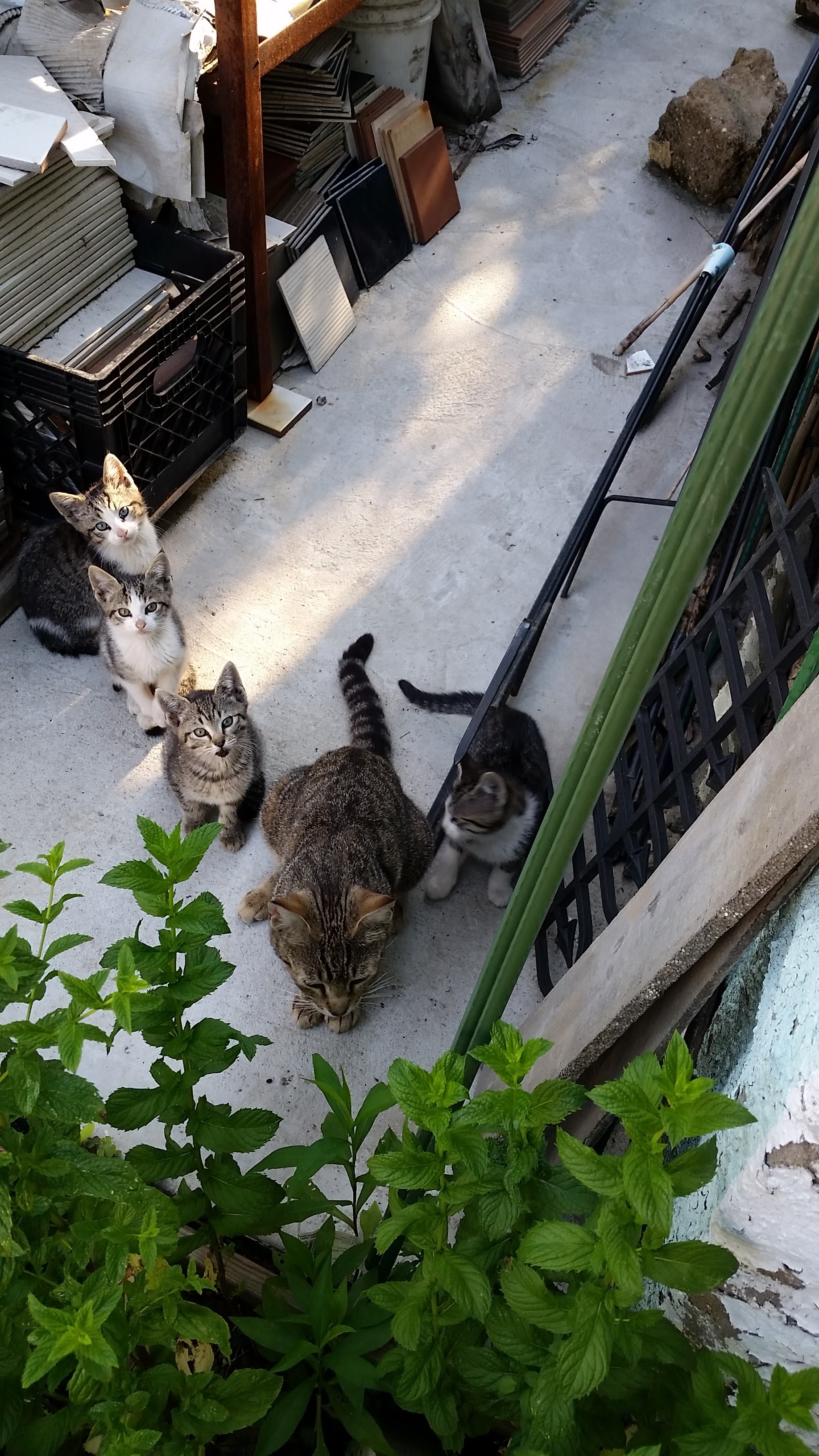

Over the next three years she gave birth to many more, producing more than twenty beautiful little kittens in her first four years of life. Few survived very long — five that we know of.

We hesitated to give them names, because it would create more attachment and make their deaths more personal, somehow. Sekhnet began giving descriptive names only, so we had a way of referring to them as they had their adventures in the garden.
Of Mama’s second to last litter of four, two daughters, Little Girl and White Back, survived. They occupy the garden to this day. The girls stood together, refusing to be intimidated by their mother, the first to do that, and both survive.
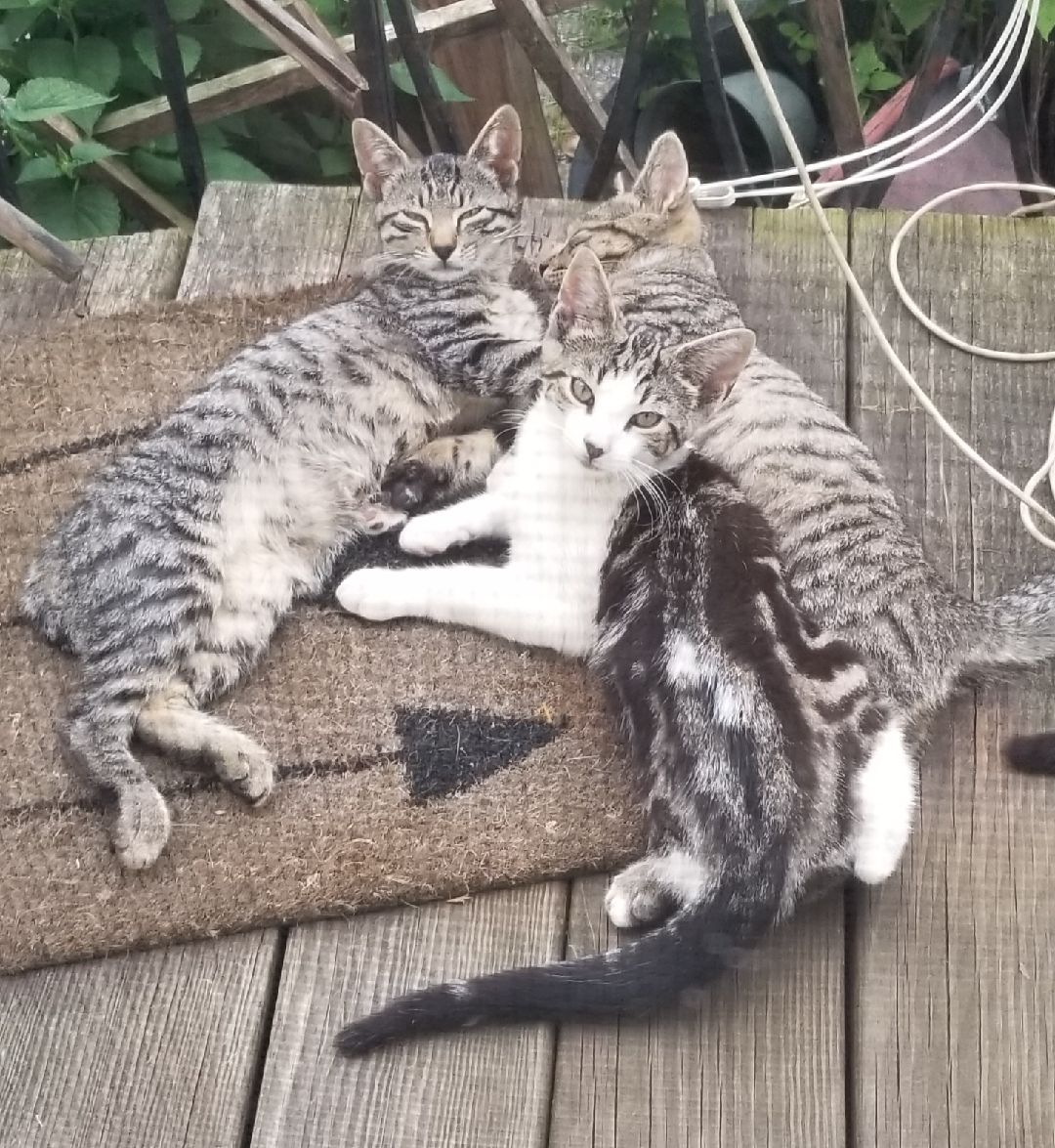
Here is the dominant one, Little Girl (left), with her two brothers, Turtleback and Whitefoot, fine little cats who had very short lives.
In the end, with the help of an almost insanely dedicated cat rescuer, we were able to trap Mama Kitten and the others and have them spayed, and the father (we assume) neutered as well. For a year and a half we’ve had a stable little colony in the garden. It was disrupted briefly a couple of months ago by five adorable little ferals whose mother abandoned them by the best cat buffet in the neighborhood. We managed to catch, domesticate and find homes for all five.
One day, not long ago, Little Girl, who always stayed close to her mother (they were known as the Driveway Bitches for their ruthless shakedowns for treats) and had always deferred to her mother in all things, snatched some food from her. I instantly intervened, and Mama finished what she was eating, but the writing was on the wall.
A day or two later a friend noticed one of Mama’s eyes looked a little funny. A few days later she lost interest in food, even the favorites Sekhnet brought to her. She took to one of the houses we made, staying warm. Then, one rainy, miserable night a couple of days ago she disappeared. Little Girl was now sleeping in her house.
We figured Mama Kitten had crawled off to die somewhere, probably in the nearby strip of wooded area across the service road. She was not yet six years old, but feral cats live much shorter lives than pampered indoor cats.
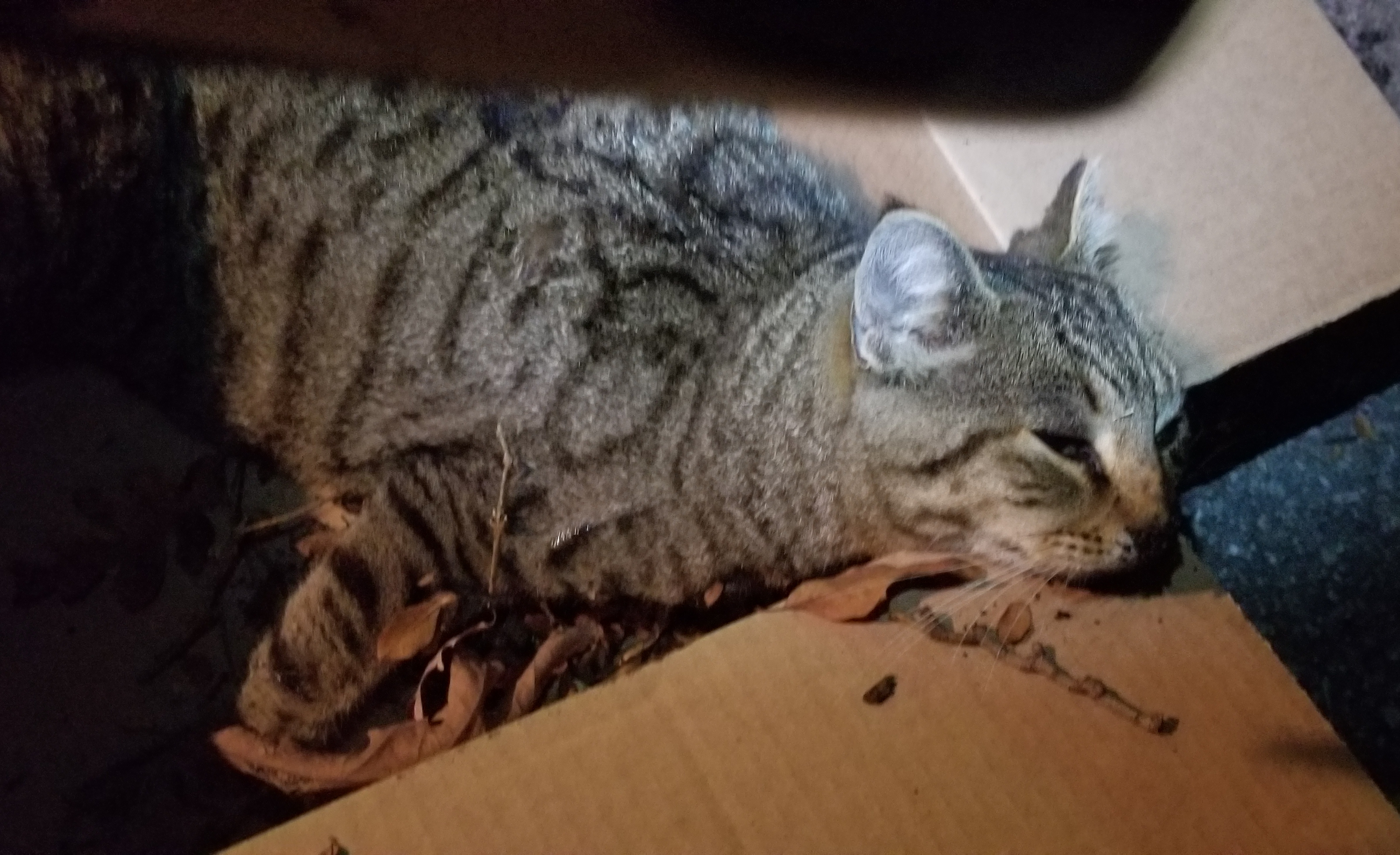
I had intended to write about her death yesterday, but somehow I didn’t get to it. Last night, after we moved the car for the firs time in a few days, to do some shopping, we found out what happened to Mama Kitten. She’d made it as far as the narrow space behind the car, before breathing her last. I put her in a box, closed the flaps carefully, and carried her a short distance to a wooded area where Sekhnet covered her coffin with branches full of dry leaves.
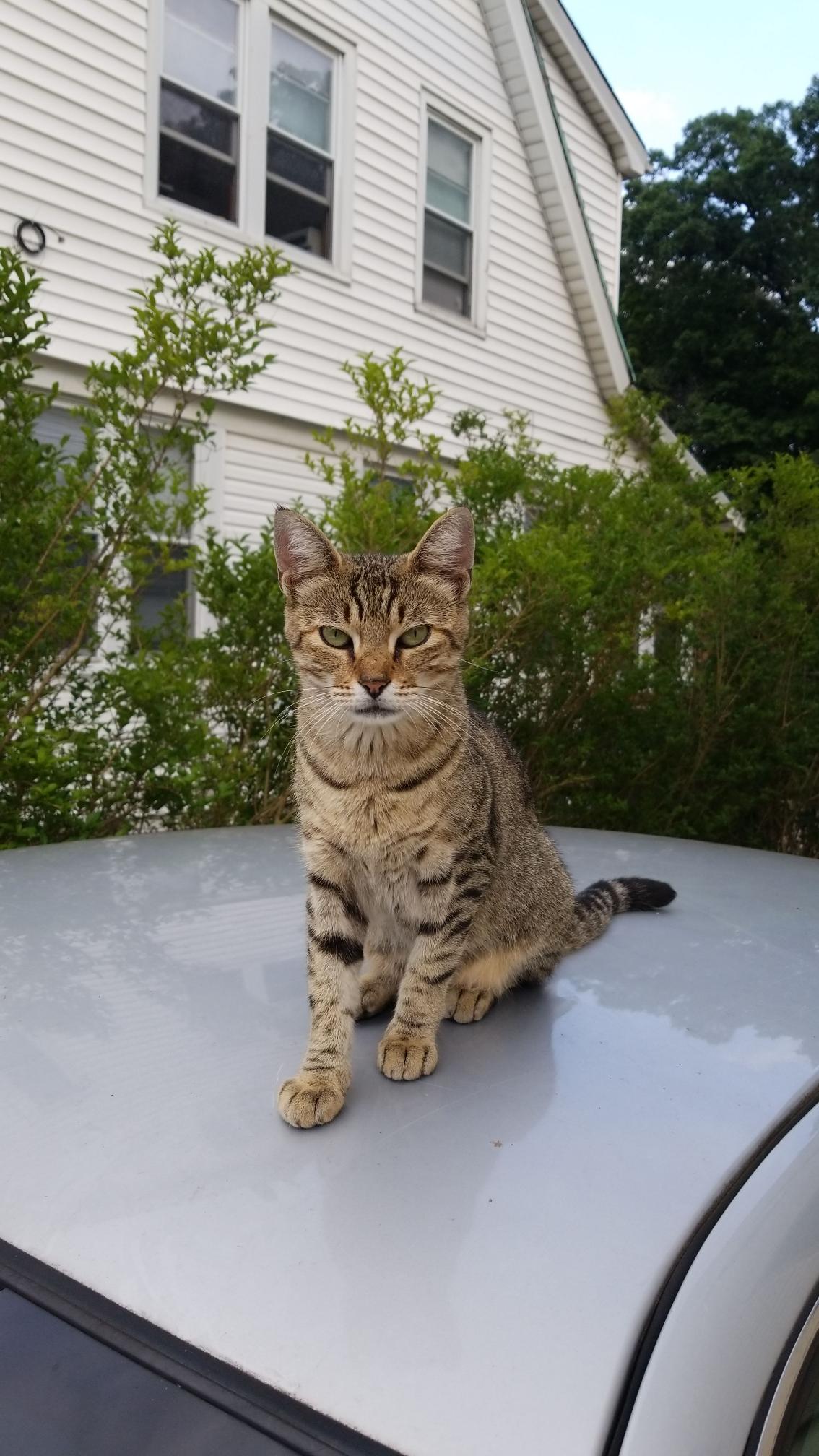
We spent the next few hours looking for photos of this beautiful cat. Here is the hero shot:
I thought at first that the lesson of Mama Kitten’s death was the simple reminder that we all must die, that it is part of nature and that a creature who showed no signs of being sick (she could jump up on to her petting table until the end) knew when to accept the approach of Death and when to go gracefully with it.
During these fearful days when the possibility of our own deaths is closer than usual, I’ve been thinking about death a lot. Mama Kitten’s death was a reminder of the pain for those left behind. I feel it clutching at my chest as I try to conclude this post with some thoughtful words. The pain is great for this stray cat we cared for, who crawled off to die, and didn’t make it to the woods.
How much more immense is our pain for a human we have known, who has touched our lives, made us laugh, held us when we were afraid?
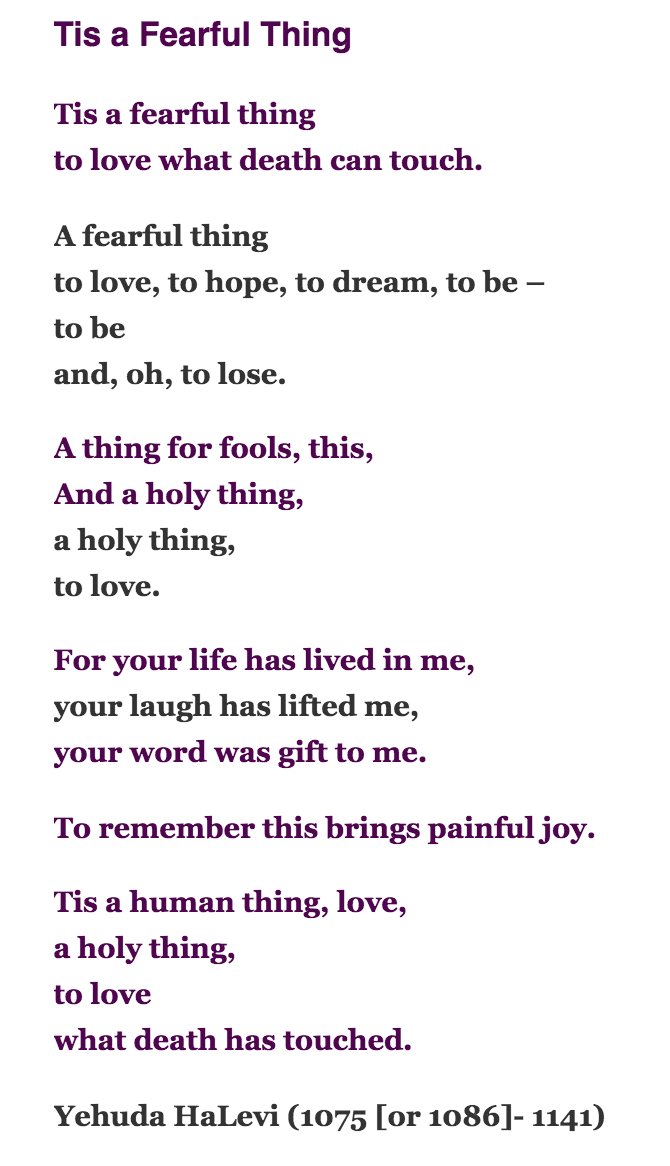
This long-dead poet says it best, as I recalled with tears when I found it among my emails last night, searching for pictures of Mama Kitten, in her prime.
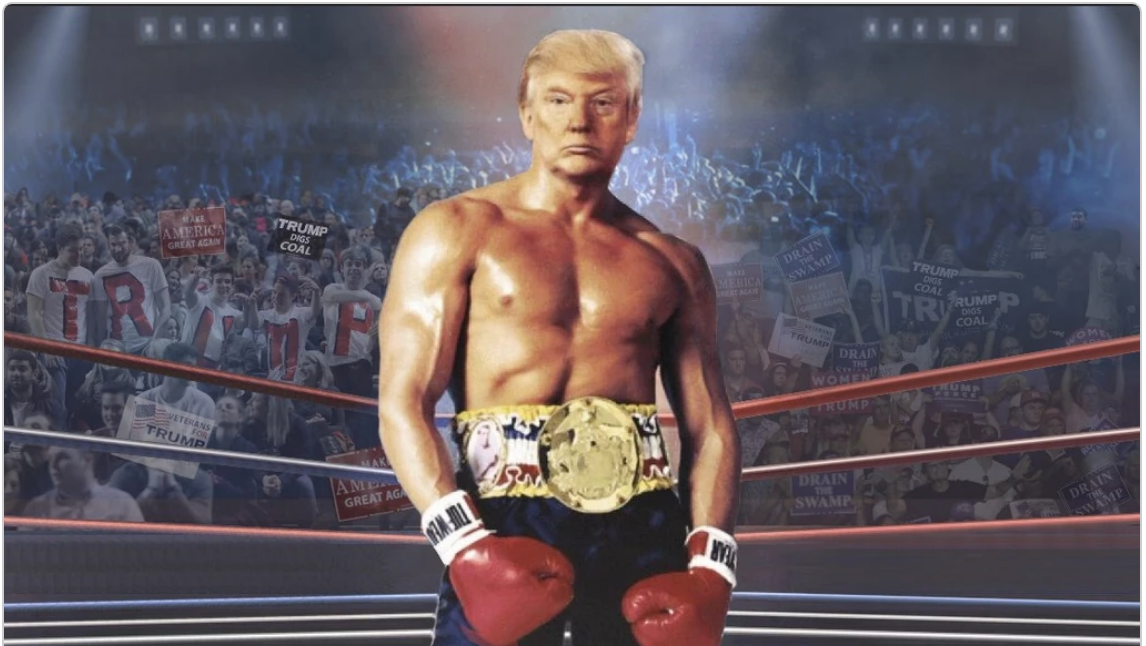
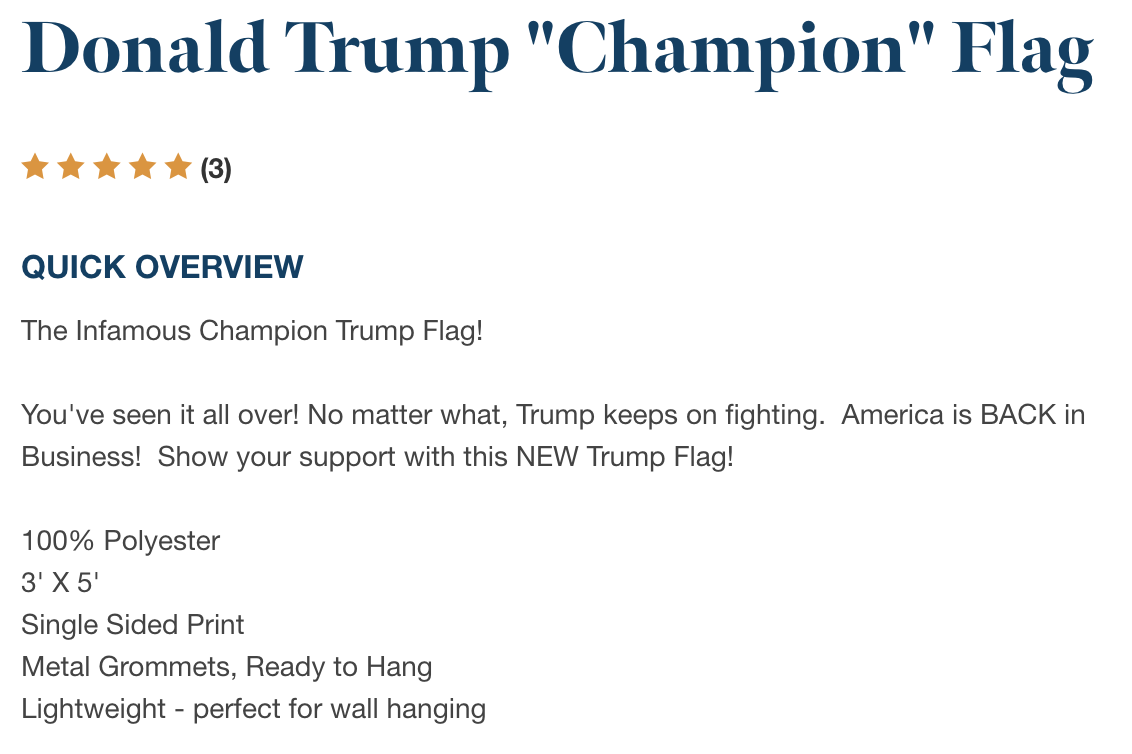
Also from the GOP shop (this magnet proudly made in USA) same great price as the flag above — also available in a ten pack for only $19.99:



We may be justifiably optimistic that change is about to come, at the last moment, before we’re all plunged irretrievably into the toxic soup. The signs are encouraging, millions lining up for hours to cast ballots instead of leaving them to the less than up-and-up Louis Dejoy to deliver for counting. These early in-person ballots will all be tabulated before Election Day, eliminating one worry about electoral hanky panky and a premature declaration of Four More Years, with an exhortation to the enraged white men in the Second Amendment brigade.
We may keep ourselves on an even keel, most of the time, remaining positive, taking care of ourselves and our loved ones, remembering to be grateful for the blessings we have. We may even make somebody laugh once in a while. But how well can any of us actually be doing at a historically stressful time like this?
A friend asked me the other night, after a few minutes of batting the latest crazed news items back and forth, how I’m doing. I thought for a moment then said “limping along, I guess” and he probed– why limping?
I told him that even without the pandemic, the stress we are all under at this point is pretty much off the charts. Just reading the headlines is now accurately called “doom scrolling.” The American carnage evoked during the president’s first inaugural address has come to pass.
The natural world is being destroyed at an alarming rate — anyone who brings up this terrible fact is labeled “an alarmist.” The norms of public life in our democracy that once provided a certain amount of civil discourse in politics, moral limits and predictable outcomes, have been flagrantly ignored, replaced by expressions of open partisan hatred.
We literally have a mad man in charge of the country, intent on turning back the clock on every form of social and political progress our nation has struggled to make since the 1950s. New episodes of the man’s florid insanity are released several times a day, day and night, weekends included. The news media is flooded by a firehouse of official misinformation spraying lies faster than they can be corrected, or even taken in. By pure coincidence, perhaps, this is a famous Soviet technique for keeping the populace off balance.
We’re on the brink of the literal end of democracy here, if this election goes the wrong way, if a 6-3 Supreme Court decides the election results all across the country were tainted by massive unverifiable fraud, even as millions were disenfranchised by open and covert means during the election itself.
Our nerves are shot, millions more of our fellow citizens have recently officially entered poverty, masses of people are starting to get evicted from their homes as winter approaches.
That’s a lot on the old plate, he agreed, after I’d stated a bit of the obvious.
Now, add, on top of that overflowing platter of hideous treats a deadly, incurable virus spreading wildly here in this country and to some extent also worldwide. “Freedom,” we are urged by our mad leader, now includes the right to infect whoever you want, here in the Home of the Brave. You walk into a room where somebody shunning the most basic personal protective equipment recently coughed, someone with no symptoms of the disease, who doesn’t even know he’s sick, and catch an incurable disease that could kill you, or mess you up very badly if you survive.
Here’s an illustrative COVID-related snapshot of the extent of the horror we’re facing: the leader of the free world is literally infecting his followers and donors with a deadly disease and it doesn’t seem to matter.
It appears likely the president knew he had COVID when he sat at that buffet with rich Republican donors, (the day after his close advisor Hope Hicks was diagnosed with the virus) glad-handing them and breathing on their food, hours before he was helicoptered to the hospital. Of course, we’ll never know if he actually knew he was infectious — although it’s virtually certain he was tested as soon as the woman who is always by his side came down with COVID — at least not until after the election.
Should we all be happy, and feeling no anxiety at all, at this moment, when we all are quite possibly living in Berlin right before the election of 1932? (Some of us more perilously than others). With an overlay of the Black Death, for good measure, just to heighten the dramatic effect? Why not? Don’t worry, be happy.
I’m happy, I suppose, with this uninterrupted shit show as the background and foreground to every waking moment, to be limping along. Forward and onward, with all deliberate speed.
For me, the answer to “how are you?” is a game “limping along, baby.” “Doing fine” is a lot to ask for right now, and less strictly honest than at most times. I hope you’re making your way forward too. Try to be of good cheer, know that everybody else you meet is on the verge of freaking out and totally losing it, and remember — this too shall pass.
I began watching a very well-made documentary called Safeguard, advertised as a non-partisan look at the Electoral College. The film makes a unified case for the genius of the Electoral College as a safeguard of democracy in our republic. All the experts cited seem to agree that without this visionary safeguard, which ensures a presidential candidate has achieved broad national consensus, state by state — beyond just the number of popular votes he or she gets — say a vast popular majority in only our largest cities — you could have the masses voting in unprincipled, non-consensus minded populist demagogue presidents who could do great damage to democracy.
The summary description of the documentary touts a nonpartisan view of why the Electoral College remains a brilliant and indispensable device for moving our experiment in democracy forward. As you hear a very reasonable-sounding historical discussion, you begin to notice something about the speakers’ credentials, they are always from schools and other institutions you’ve never heard of. I guess that could be a kind of tip off that they’ve gone a bit off the mainstream grid for experts on democracy.
Then, you see this guy, misleadingly identified as a nonpartisan former high government official:

Hans von Spakovsky. Defender of democracy and enemy of divisive partisan demagogues everywhere. Architect of the one ballot drop box per county voter suppression scheme for the 2020 election. The filmmakers identify him as the former Commissioner of the Federal Election Committee (years before Trump left the FEC without a quorum to do investigations), although he is currently a Charles Koch/Heritage Foundation employee and secret national Republican strategist for the re-election of the unpopular unifier Donald J. Trump.
Trump, we recall, won the presidency in the Electoral College by 78,000 surgically placed votes in Wisconsin, Michigan and Pennsylvania [1]. He won these states Electoral College electors, legally and indisputably making him president, by less than one percent in each state, a total margin of 1.6% of the vote in those three states, combined.
Mr. Trump is, of course, the very man the Framers envisioned when they imagined future presidents of the United States of America. Who but von Spakovsky better to speak about the genius of the safeguard of democracy that is our Electoral College?
As the filmmakers tease in their trailer, without the Electoral College there would have been no Emancipation Proclamation — Lincoln became president because of the Electoral College! (Did he really? [2])
[1]
According to the final tallies, Trump won Pennsylvania by 0.7 percentage points (44,292 votes), Wisconsin by 0.7 points (22,748 votes), Michigan by 0.2 points (10,704 votes). If Clinton had won all three states, she would have won the Electoral College 278 to 260. source
[2] the fruits of forty seconds of dogged research:
Despite minimal support in the South (Lincoln’s name was not on the ballot in 10 Southern states), he won a plurality of the popular vote (40%) and a majority of the electoral vote.
1860 United States presidential election – Wikipedia
Four candidates vied for the office of president of the United States during the 1860 election. When the voting concluded on November 6, 1860, Abraham Lincoln had received more popular votes in the United States than any of the other candidates and had won a majority of the electoral votes.
1860 Presidential Election – Education from LVA
 gratuitousblahg