Son of To Whom It May Go Fuck Yourself

The Honorable Eric Schneiderman
Attorney General of New York
The Capitol
Albany, NY 12224-0341

Dear Mr. Attorney General,

I am writing to alert you to a massive consumer protection failure in New York State and to seek your help in correcting it. There is currently no state agency meaningfully overseeing the practices of private corporations providing health care insurance in the state of New York.   This letter lays out the current non-functional administrative apparatus, such as it is.  

I urge your office to launch an investigation into this administrative vacuum.   Patients faced with denial of needed health care services have no government forum in which corporate abuses, oversights and fraud can be remedied.   An investigative report would recommend legislation to redress the literally life-threatening menace of corporate denials of health care without any recourse under the law.  At minimum we need something like a State Ombudsman’s office to oversee health insurance in our state.

As our new president forcefully carries out his announced intention to dismantle the apparatus of government regulation, the need for state oversight of health industry corporations in New York State has become urgent. The promised replacement for the Patient Protection and Affordable Care Act (“PPACA”), whatever it might be, won’t eliminate the need for protection of vulnerable older and low-income healthcare consumers.   It is unlikely that the need for these protections will become less pronounced under a completely deregulated health insurance system.

The administrative ‘remedies’ that currently exist in New York State allow no timely or meaningful process to resolve adverse healthcare-related decisions. That there is no state agency empowered to supervise this crucial sector of our state’s welfare is a terrible oversight.

I’ve admired the courageous and proactive steps your office has taken against the powerful perpetrators of various frauds and urge you to consider this letter in the context of systemic healthcare-related fraud against a large class of vulnerable low-income and senior citizens of New York State.

Uncertainty about health care, lack of information about high surprise costs and the denial of prescribed medical services without explanation are all stressful. They negatively affect the health and quality of life of those mandated to purchase their health insurance plans in New York State.   As detailed below, health insurance buyers in our state are denied any state protection against the practices of private health insurance companies, even when the denial of necessary service appears to be fraudulent.    

This consumer protection emergency transcends the current health care scheme under the PPACA.   The president’s threatened repeal of the PPACA makes it all the more essential for New York State to regulate private health insurance companies.  

In googling your mailing address to mail this letter I came across the New York State Health Care Bureau, under services at the bottom of your office’s home page. That bureau informed me they can help me resolve a billing dispute with a provider or insurance company. The citizens of New York State sorely need a regulatory apparatus that can make expedited, binding determinations on when insurance companies cross the line into actual fraud against their mandated customers.  

 Of course, the creation of a regulatory agency is a matter for the legislature. A fraud investigation by your office into practices such as the ones described below would highlight the need for state regulation; a report would give momentum to legislation to create a bureau where life and death health decisions could be expeditiously heard and resolved.  

As stated, defrauded health insurance consumers (patients) in New York State have no forum where complaints can be resolved, outside of the New York State Department of Financial Services, which, it turns out, does not hear such complaints.

The fraud investigator I spoke to there could not find a word other than ‘fraud’ to describe the facts I set forth, but urged me to call the NY State Department of Financial Services Consumer Services Hotline. He assured me that they were the specialists in the area of health insurance. The recorded menu at the hotline, which I recognized from my first call many hours earlier, offers no option for resolving issues with insurance companies of any kind.  

On my original call to the Department of Financial Services, a long wait to speak to a representative yielded the number of the proper federal agency to contact.   Calls to the U.S Department of Health and Human Services are robotically routed to a NY State number that is, sadly, the office of Temporary and Disability Assistance, where a helpful party connects you to a fraud hotline, which turns out to be at the office of the Medicaid Inspector General, where the office of legal affairs is also sympathetic, but unable to help, and so forth.

As for the PPACA, I understand that it was drafted by Liz Fowler, a career health industry insider who went on to a senior executive position with Johnson & Johnson immediately after her work on the PPACA was done. I‘ve witnessed the many attempts to repeal the law and thwart its implementation, rather than fix any of its original flaws, as other complicated laws affecting millions are tweaked and improved over time. Even so, the lack of any provision for oversight of corporations participating in the PPACA by New York State is grotesque. To a sixty year-old cardiac patient unable to see a cardiologist now for many months, the lack of oversight may also be deadly.

Although the situation I’m complaining of is personal and extremely aggravating, it is sadly typical.   I’ve commiserated with many others who suffer under similar insurance coverage.  Erroneous bills are a common, if relatively innocuous, theme.

I receive bills that there is no way to resolve, most recently an invoice for $1,324 for a fully covered sonogram I had in August. The x-ray and kidney sonogram I also had that day were fully covered, the sonogram of another body part was not.   The billing issue was resolved with the insurance company (Anthem/Empire Blue Cross) and the provider to a zero balance in October. Two months later, the full bill for $1,342 was sent to me again in a Third Notice.  

Nobody at Empire could give me the reason the provider had sent that bill, although the representative, who checked my account and called the provider again, informed me that, this time, it was my responsibility to pay it in full.   She offered to send a consumer handbook for my plan that would fully explain the reason, which she claimed was clearly set forth there, though she could not state it.

There is nobody in New York State to adjudicate something as small as a billing dispute, let alone fraud, outside of a judge on some court one must file an actual lawsuit to appear before, assuming one could find a cause of action to get in the door of the courthouse.

Empire recently sent me an email warning of termination of my insurance for non-payment of December’s premium. This warning arrived two weeks after their email confirmation of my payment for December and January.

More ominously, a patient can be denied medical service without explanation (site-specific provider NPI numbers and proper CPT pre-authorization codes notwithstanding), and there is nobody in New York State you can appeal to, except to the insurance company itself.   Empire Blue Cross “Health Plus” recently sent me to two providers for needed medical services, a cardiologist and a physical therapy facility.  Neither provided me with any service. 

I received the site-specific NPI number for the cardiologist, scanned and emailed the back and front of my insurance card, got pre-approval from his office. The consultation was halted ten minutes in and I was informed that my insurance would not cover the visit.   When I arrived at the ‘physical therapy facility’ Empire had referred me to, it was a nursing home.  The director told me the facility offers PT, but only to residents.

The circuit of government agencies I have contacted in vain came full circle with the “consumer help line” the NYS Department of Financial Services Fraud Unit investigator had me call, which I immediately recognized as the very first number I’d called.   Here is a summary of that cul du sac:

NYS Department of Financial Services referred me initially to the US Dept of Health and Human Services which, supposedly, connected me to NYS Health and Human Services, although to an incorrect branch of that agency, the pertinent branch apparently having been merged into the NYS Department of Financial Services which took over all functions of the former NYS Insurance Department as well as oversight of banking and several other discrete and seemingly unrelated areas.  

The NYS Department of Financial Services, one learns, has sole responsibility for oversight of health insurance companies, as well as all fraud investigations related to consumer fraud against insurance companies, and complaints about the practices of banks and brokers.   Everything but, according to a fraud investigator for the Department of Financial Services, investigations of colorable fraud committed by insurance companies against mandated health-care “consumers” in New York State.

My political and legal conclusions are beside the point. Whatever the reasons, the fact remains that in New York State in 2017, even under the PPACA, citizens whose health is menaced by private insurance company denials are denied any legal process to have these vexing, sometimes life-threatening situations resolved.   

Outside of a possible Article 78 (which government agency would you sue for relief, the Department of Financial Services? The New York State of Health Marketplace cannot be sued, even over their own clear error, until exhausting their slow and inadequate ‘administrative remedies’) or a class action under a private attorney general or qui tam statute, what is a patient trying to get an appointment to see a cardiologist since August to do under the PPACA in New York State?   At minimum an ombudsperson, or a few hundred of them, would be a good start.

I’ve followed your career from the start and have admired your principled engagement in the fight against injustice.   To have a legal right that cannot be enforced is to have no legal right.   The mere existence of an ‘administrative process’ (four to six month wait for an appeal of a clearly erroneous adverse NYSOH determination) does not mean there is anything like due process. Widespread injustice is accounted by some as a kind of ‘externality’, a cost of private industry doing business. The lack of legal recourse for denial of purchased health care must not be allowed to stand in New York State.

I have attached the specific grievances I was until the other day unable to submit directly to Anthem/Empire.   I have forwarded them to the organization indicated in Anthem/Empire’s internal directive. I have since learned from an attorney at that non-profit that they do not play this role in the complaint process. She provided me with an online version of Empire’s Handbook, I quickly found the mailing address for complaints on page 15.

I will be glad to do what I can to help your office take steps towards sorely needed due process for denial of health care for some of the State’s most vulnerable citizens.  If needed, I can assist in researching and drafting the report. I am open to being a plaintiff in any lawsuit the State might want to bring and to testifying in any proceeding, in any forum.

I look forward to hearing from your office and stand ready to give any other details or assistance your office might require.


Yours sincerely,


What good is history?

“You remember I told you about my brother and I taking Uncle Peter to the zoo?” said the skeleton of my father from his grave on the side of Cortlandt Road.

You showed him the giraffes.  

“Yeah, we said ‘look, Uncle Peter!  Those are giraffes, from Africa –aren’t they amazing?’  Uncle Peter said ‘what good are they?’.   My brother and I looked at each other, took him to see the crocodile, one of the world’s most impressive reptiles.   Do you remember what Uncle Peter said?”  

“Who needs it?”

“Well, the same goes for history.   To some people it is an empty abstraction full of ambiguity and threatening, unresolvable nightmares better forgotten.   Why think about what our forefathers did to Africans, to Native Americans including the Mexicans?    We committed some horrible genocides, wrote laws to protect the most vile occupations man has ever engaged in, protected those practices for almost a hundred years under the world’s most revolutionary blueprint for democracy, our U.S. Constitution.  

“Of course, you’d have to be a lawyer to find the discreet little phrases where the Constitution protects those hideous practices, but to a lawyer and a judge, no matter could be more cut and dried.  ‘ ‘Other such persons,’ Yaw Honuh, what could be more clear cut and precisely, perfectly dried, suh?’   

“The learned Chief Justice, a man a hundred years ahead of his time, is compelled to write: ‘Whatever the constraints of our individual conscience, the law requires a faithful interpretation of the intent of the Framers. It was clearly intended by our founding fathers that this genocidal practice be authorized under our law, at least until the year 1807.’     

“What American wants to hear that shit?  What, we are no better than the Nazis?  Who wants to hear that Americans, many times in our history, have celebrated mass murder as enthusiastically as the fervent mobs at Nazi rallies?   There was never an anti-lynching law, and those lynch mobs used to be quite enthusiastic, bring a picnic, the whole family, buy souvenirs afterwards to recall the amazing day.   There were no protests when Truman insisted we had to drop those atomic bombs on Hiroshima and Nagasaki.  There was dancing in the street when Japan surrendered.    

“With Hitler, you had, for the first time in the history of warfare, a ruthless maniac with the modern means of killing civilians on a mass scale and no hesitation to use the new technologies.  The blitzkreig in the skies over London, for example, a continuous, nightly bombardment of civilians, was designed to terrorize the populace and demoralize support for the war effort.  So the Allies responded in kind, we killed untold hundreds of thousands of civilians during World War Two.  The historic city of Dresden was wiped out with incendiary bombs, the massive firebombings of Tokoyo killed many more Japanese women and children than both atomic bomb blasts combined.  So, of course, in a time when everyone is filled with dread and fear, it’s no surprise that many people turn away from history.”  

“Add to that the notion many people have that history is generally written by rascals, in the pay of other, sometimes pernicious, rascals.   Which is often true, you have to look at who the person was who wrote the history, who paid for the book, what the hidden agenda is, why the story is told this way, certain facts highlighted, others left out completely.  You know first-hand that it’s possible, by the way you tell a story, to convincingly describe something completely alien to those who actually lived through and survived it.”

It’s fascinating to me that you had such a keen, lifelong interest in history, and bending the moral arc of history and all that, and at the same time you always insisted that people can’t change themselves in any fundamental way.   That optimistic impulse, to read history and learn lessons in hopes of avoiding the worst stupidities of the past,  set against the pessimistic belief that people’s lives are laid out for them immutably by the age of three.

“Well, look, Elie, you can hold up history to support either proposition, or both of them.  Did America change for its black citizens?  You now have a black middle class, much larger than it was sixty years ago.  You have black millionaires, even a black billionaire or two.  Certain changes toward equal rights have been made, as a result of a titanic, organized struggle and sometimes unbearable sacrifices.  You can say a lot has changed.  The power company in Georgia has a policy of firing employees if they say the word ‘nigger’, you know, what is now universally, in mixed company, pronounced as the ‘n-word’.  

“On the other hand, you have, for the vast majority of blacks in America, the same eternal charnel house.  Brown v. Board of Ed was decided in 1954, segregation in education was unconstitutional, it imposed inferior education on black students.  States were ordered to de-segregate schools ‘with all deliberate speed.’ Now, going on 63 years later, longer than your lifetime so far, schools are as segregated as they were the day before Brown was decided.  So you tell me how much has changed for the average Negro in America.”    

I’ll tell you one thing that has changed, with a president who cunningly positioned himself with the White Supremacists, hate crimes are up.   Every other day we see a scene in a Jewish cemetery, grave stones knocked over; a mosque set on fire.  The anger of the master race is quite palpable, and we have a guy who is stoking it in a cynical attempt… well, you just have to listen to the political pronouncements of each side to get a pretty good idea what is going on.  

“History, what good is it?  I can hear my Uncle Peter, an uncurious man with only practical concerns related to life on his farm.   I guess I’m with Howard Zinn on the constructive use of history– taking courage from those rare moments when people have organized and triumphed over evil things like slavery, child labor, denial of basic rights to women.    We have to take courage from these things or we could not act.  We’d be in despair with a destructive narcissist like this one in power, appointing people who are dedicated to destroying the agencies he’s putting them in charge of.  

“We have seen this before, seen the mistakes a divided opposition makes in opposing each other as the far worse evil takes root.  I grant you it makes little sense, looking toward society wide change for the better while denying a person can do it in his own life– but there we are, Elie.  People are not consistent, or logical, or, in most cases, very brave.”    

The skeleton looked over his shoulder to Cortlandt Road and we both pictured the line of cars, traveling slowly past after being energized by Pete Seeger and Paul Robeson, and their message of brotherhood and positive social change, at the moment the fist sized rocks began pelting down on their windshields.    

“The power of hatred, Elie, one of the big ones in human affairs,” said the skeleton.  

No shit, Shylock.

Why Do We Pay Tribute to the Baron?

A serf boy asks his father why they pay rent to the Baron.  Not only rent, says the boy, the Baron gets ninety per cent of our crops.  And I notice, says the boy, that mom sometimes goes to the Baron’s, in his carriage, and while she’s gone you’re always in a violent mood. “Why do we have to pay tribute to the Baron, who doesn’t even seem like a nice man?”

“We pay tribute to the Baron so that he will protect us from other barons,” says the father, the boy staring at the man’s clenched fists.

600 foot home run

“You know, Elie,” said the skeleton of my father, as weary of this long posthumous chat as I have been lately, “your trouble is that you feel like you have to hit a six hundred foot home run now.  The legend says Babe Ruth hit one almost that far, you can ask my man Jeeves about it and get time and place.  It was hit in Florida, if I recall, in some kind of Spring Training or other exhibition game.  Your boy The Mick supposedly hit that tape measure job in Washington D.C. that went 565 feet, I think that was the mythical number the Yankees’ creative PR flack immortalized in the press release after the game.

“You read the whole story of that tape measure shot that left Griffith Stadium and went over a row of houses across the street from the park in Jane Leavy’s great biography of Mantle.  It may have gone that distance, 565, it certainly was hit out of the stadium, a rare feat, it went an impressive part of that amazing distance, for sure.  It may have dented a car, and bounced, and finished rolling another 40 feet away where a kid showed the guy with the tape measure where he found it.  The details are not important (though this is a cool read, thanks, Jeeves).

“Mantle was, at the time of that home run, a young man of prodigious physical strength uniquely adapted to hitting a baseball, thrown at ninety miles an hour, a long way.  The physics of how someone his size hit a ball as hard and as far as he did is discussed in a chapter of Leavy’s book.  It’s not important now.  Nor is it in any way significant that he hit that ball, if I’m not mistaken, in the year you were born, 1956, the year he won the Triple Crown.”  

Your boy Jeeves informs us he hit it on April 17, 1953.

“Fascinating to have the world’s accumulated facts at your fingertips, isn’t it?  This is what I want you to realize, Elie.  Mantle was a twenty-three year-old superstar at his physical peak when he blasted that pitch on an atmospherically perfect day for a legendary home run to fly.  Babe Ruth was a force of nature, his like will never been seen again, he would have been a first ballot Hall of Famer as a pitcher, for fuck’s sake, and nobody has approached his lifetime slugging percentage — and even he is known to have hit only one or two that distance.  

“You’re standing at the plate, knocking dirt off your spikes, sometimes hitting the fuck out of the ball– but in an empty stadium.  You imagine, and I know you do, because I’m in your head, as you know very well, that you need to hit the ball over all the seats and out into Shitshow Avenue.  You figure if you hit the hell out of that heater up in your wheelhouse, somebody will have to take notice.  This is not a reasonable position, for a number of reasons.

“First of all– you have to hit the ball where there are people to see it, paying customers with their fannies in the seats.   Second– you don’t have to hit the fucking ball 600 feet.  You’d be better off, in some way, blowing the general manager, if you want to be brutal about it.   If you hit a single and a double every day, by July you’re still hitting .420, a very big story without any fancy tape measure home runs.

“But it isn’t about baseball at all, is it, Elie?  You’re not a baseball player.  I mean, obviously, it’s a metaphor.   You recall that hothead relief pitcher who claimed he could strike Ty Cobb and Babe Ruth on six pitches?   He got some shit, smirked and said ‘for Christsakes, man, they’d be over a hundred years old!’  Do you think even Ted Williams could have hit the ball 600 feet at your age?

“Look, I understand you never did what every professional in the world does, unless they have a famous father (and you could have, if you’d been smarter about it, of course)– that is, position yourself in an industry, make useful connections, get yourself powerful mentors, learn to use the tongue for more than witty badinage.  You never learned to make the connections successful people make.  You dropped out early, did not go to a college where the best and the brightest meet to rule the world.  You were open with your disdain for the ambitious, those young people willing to do whatever it takes to ‘make it’, to ‘do well’ and so on.  

“I take some part of the blame for that, you know, because I also always openly despised careerist opportunists.  More blame comes to me because I was such a relentless fuck and I kept the rage hissing full blast all the time.   I am not deaf to the great irony that my book, no matter how well-done you manage to make it, will never see the light of day because I disabled you from taking the needed steps to get some influential corporately adept genius to champion the book.”  

“Are you right to be distracted at the moment, filled with hate that the beloved liberal former president who left among his great legacies a health care plan that requires you to jump through several flaming hoops, in a fleeting sixty day period, to have a chance to reverse their mistake that makes your current health care ten times more expensive than the shit care you had last year?   Sure, hate away.  In the end, if all goes well, you’ll pay what the law says you should pay.  In the mean time, figure out how to get a tax transcript, the correct one, there are six or seven, you know, and make sure to upload it and perfect your administrative appeal within the next few weeks or lose the right to any appeal whatsoever.  I mean, fine, be enraged.  What has it to do with your duty to me, with your filial piety?”  

“I may be a selfish prick here, and I see I’ve reduced you to tooth sucking silence, but I want you to finish this book.  Not only for my sake, and I say this in all honesty, but for your sake as well.   If the book is not a mammoth home run, if it gets you a very low advance and sells a few hundred copies, it will be a greater reward than I deserve.  It may also position you to get paid for what you do, for what you have spent the last few decades doing, whatever else you have been doing.  As so many assholes have pointed out, and every lottery winner knows, you have to be in it to win it.”  

“So stop sucking your teeth, get your tongue out of your cheek, and find the right anus to gently probe with it.  You already know a literary agent, stop pretending you don’t.   She may not be the agent you want or need, but she’s a place to start, the best place you’ve got.  Can’t you even do that, for fuck’s sake?”

Slice of New York City Life

A friendly guy often stood in front of Sekhnet’s building having a cigarette.  Sekhnet hates the smell of cigarette smoke, and noisily protests whenever a whiff of it rolls over her, but she and I became friendly with this guy who always had a big smile and small talk when we ran into him in the street.  He worked as a contractor of some kind, with only modest financial success, and his hours were odd.  You could run into him smoking out there during the day or at two a.m.  

His girlfriend lived in the building, he lived there too, in fact.  She wouldn’t let him smoke in the apartment, and fair enough, so he went down to the street, stood in front of the building, and cheerfully shot the shit with people coming in and out.   It emerged that his girlfriend, a fairly agoraphobic woman, was deeply involved in the rescue and fostering of unwanted cats.   They had two adopted strays, Sid and Gus.  When our cat, Skaynes, was suddenly very ill– on the eve of a two week trip we had planned— these two lovingly trundled him off to the vet for daily treatment of his newly diagnosed pancreatitis.  Along with the son of old friends, on hand in the apartment to otherwise take care of the cat’s needs, these three literally saved the Baron’s life.[1]

We had dinner with them a couple of times, I read the dark play the guy’s father had written about his life in prison, culminating in a smuggled razor blade, presumably to end his life, tucked somewhere safe as they transported him to another prison, or a death chamber.   Father and son had had a reconciliation before the old man died.  Actually, it was all good, it’s just that the older man had spent much of his life locked up for crimes he claimed he’d never committed.  Lived out the last years of his life a free man.

Now we fast forward a year or so, troubles in the relationship between these new friends of ours.  The man also had untreated heart issues, the occasional pains in the chest, shortness of breath.   He’d been told he had heart issues, but didn’t have insurance so had been reluctant to see a doctor.  He got a stern lecture about smoking every time Sekhnet passed him having a cigarette downstairs.  There was a self-destructive side to him, certainly.  

Then, a phone call.  The woman had been having problems with her phone, when they got fixed she heard the message from the man’s mother.  He was in the hospital in New Jersey.  He had signed a DNR.  They had taken him off life support. “He looked good,” she reported after visiting the young, healthy-looking man lying unresponsive in the hospital bed, disconnected from all life support.   A day or two later he was dead.


[1] Among his names is the title Baron Von Doghead


On The Road to Bethpage

It’s hard to imagine my father’s thoughts in the dark car as he headed out to Bethpage after dinner for his second job.   Bethpage is on Long Island, in Nassau county, a fairly long jog east from Queens.   The roads were not as good back then, the Long Island Expressway was narrower and did not extend as far, and I picture him tooling along bumpy, unlit roads at about 45 miles per hour, the stretches he did on the highway.    This would be after a dinner spent snarling, sometimes shouting, at his children, a pair of merciless pricks who took time out of their war against each other to gang up on their father.  

“I work two fucking jobs so these ingrates can give me shit…,” he is muttering to himself as he backs the car on to the tree lined street where he has situated his children’s cozy childhood.  Then he drives the twenty odd miles over dark roads to an office in Bethpage.     He parks his car and walks up the steep staircase to his second floor office in that little structure.  His small office, which looks somewhat like an attic, takes up the whole second floor of the house, or maybe the third.  He sits at a desk and begins making phone calls in a circle of lamplight.   At least that’s what he did the night he brought my sister and me with him to Bethpage.  

“There is somebody else you should contact,” says the skeleton of my father, “you should be in touch with Rom, the artist formerly known as Peanuts.  You know how to reach him and you know what a good guy he is.  He’ll give you another point of view, will shine some needed light on these dark musings of yours.  I didn’t just sit at that desk making phone calls, I visited each Young Judaea club in Nassau-Suffolk region.  I drove out to Smithtown and Riverhead, wherever a few Jewish kids got together, I was an ambassador  and organizer to high school aged Jews on Long Island.  I was director of Nassau-Suffolk for years, you don’t think I made a few friends?”  

I have no doubt you did.  You had Donnie Ingram and Artie Friarman, to name just two.  Rom, I’m sure, has a couple of good stories, remembers you as a great guy, a funny and straight shooting bastard, no doubt.  

“Which I also was, mind you,” said the skeleton, holding up a finger.

Which nobody can deny, which nobody can deny.  

“Look, Elie, you’ve got to stop this neurotic shit already and start taking steps.  You have to take steps, Elie,” said the skeleton of my father, from his grave outside of Peekskill.

Steps, yes.  There are steps to be taken.

The Constant Sharp-toothed sucking

Frank Zappa had a song called “The Torture Never Stops”, which is about right. Like pugnacious people looking for a reason to punch someone, it’s one of those things that hums along in the background of our enraged, maddening world.  Here’s a seemingly random one, crosswise in the old throat, that I will try to briefly dislodge.  

That’s one of the beauty parts of writing.  Describe it well and experience a moment of relief.  Why am I foaming at the mouth, you ask?  Let me wipe away the foam, like Mr. Hitler delivering a coherent, if amoral, description of effective propaganda in a book otherwise composed of rabid dog spittle, and give myself that momentary illusion of relief.  

The current figurehead of our Deep State, an entitled, irascible and seemingly unhinged reality TV big shot, has promised, among other things, to abolish and replace Obamacare.   That he is the man to provide America with a health care scheme like the one citizens of every other wealthy nation depend on is as ridiculous an idea as his modern day Great Wall of China proposed for our long southern border.  I have critiqued the corporation-friendly, cynically-named Patient Protection and Affordable Care Act at length.  You can click on the Obamacare link stage left (to the right for you pogues) to read the disheartening details.  I am no friend of Obama, a probably good man with a record of accomplishments as shameful as Bill Clinton’s.  Depleted uranium and cluster bombs dropped in Syria?  Not done by Mr. Trump, that was the handiwork of my man the Nobel Peace Prize laureate.  

Anyway, in the last phase of Mr. Obama’s second term, New York State came up with a pay-as-you-go Medicaid plan for New Yorkers living slightly above the poverty line.  It’s called the Essential Plan.  The name turns out to be apt.  You can essentially get the health care you can force someone to provide under the plan.  Based on my income I qualified for this no-frills plan.  In fact, I was forced to enroll, or have no health insurance and pay a fine as a scofflaw come tax time.  

My experience with this “Essential” plan was literally sickening.  I wound up so sickened that my visit to the ER resulted in my being hospitalized for cardiac tests.  Follow-up care was deemed unnecessary, an undue burden, no doubt, on the corporation to which I paid my low monthly premium.  

When I enrolled for health insurance in 2017 I was determined to pay more and get a plan that could provide me with some measure of actual health care.  My subsidy level, and choice of plans, would be determined by my projected 2017 income.  It had to be above a certain level, to allow me to choose anything but the Essential Plan.  My actual 2016 income would have doomed me to the Essential Plan.  Luckily for me I was not asked my actual 2016 income, I was asked to project my 2017 income.  

After hours on the phone I learned what was not available anywhere on the internet– what the income threshold to choose a health plan was, somewhere around $29,000.  Nobody could tell me if this was gross or net income, so I declared my 2017 income to be a robust $32,000, to leave myself a margin for error.  

I instantly received a Notice of Disenrollment.  What I mean is that, this shit popped up on my screen within seconds of clicking in that income number.  I got a document emailed to me at the same time, helpfully labeled Template 09, like all the others, which informed that I was no longer qualified for the Essential Plan.  Good news, I naively thought.  

I will spare you a hundred details and tell you that my Navigator (the website and marketplace are so opaque it literally requires a navigator to help you get around) informed me that my income level qualified me for a subsidy of about half the monthly premium.  Meaning, with the subsidy I’d pay an affordable $230 a month for “Silver level” Obamacare with only a $1,200 out of pocket deductible.   Meaning that’s what I should be paying, under the law.  Except I’d had another notice telling me, erroneously, that I was not entitled to any subsidy.  Fair enough, we have already had vivid illustrations of what contemptible morons the administrators of the complicated and opaque program are.  

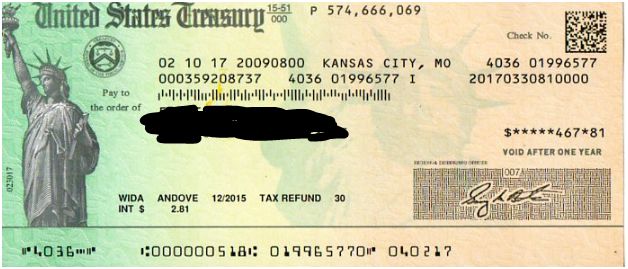
It will take about six months to have my appeal heard, my Navigator (also an attorney at a New York non-profit mandated to help consumers) informs me.  In the meantime I will pay $453 a month and have a $2,000 deductible.  Although, once they correct their mistake and reinstate my subsidy I will get a tax refund, some time in the second half of 2018, for the overpayment in 2017.  All I need to do to get an appeal of their clearly mistaken determination is to submit a letter, my 2015 tax return (the last one filed) and a Tax Transcript from the IRS.  

What the fuck is a Tax Transcript, you ask?  No fucking idea.  Click this  shit to learn all about it:  https://www.irs.gov/individuals/get-transcript.

OK, easy enough.  The IRS will send you an electronic one, chop chop.  All you need to do is create a log-in and request one.  They assure you it’s quick to create a log-in, only about 15 minutes.  Easy.  Except that each of the four times I have tried so far, over the course of more than an hour over two days, punctuated with Tourretic outbursts that have terrified, and horrified, Sekhnet, they log me out, sometimes because their system malfunctions, other times informing me it’s done for my own protection, before I can complete the process.  There is no 800 number where you can speak to a human being for assistance.  

So, I can just relax for Presidents’ Day Weekend, since there is nothing to be done at the moment.  Two days in a row, unable to complete this easy log-in business.  No reason to get excited.  Just keep loaning this giant insurance company $230 a month, since I’ll, theoretically, get it back a year and a half from now anyway.  Assuming this Orange Winner does not actually make good on abolishing the whole plan and replacing it with something terrific.  

I feel much better now, thanks, I really do.

20:400

My father always wore glasses, even at the end of his life when, after laser surgery, his vision was almost 20:20.  

“I couldn’t stand it, he looked so weird, we had a pair of glasses made with plain glass lenses,” my mother said.  I think she told me that after he died and I tried on his glasses, which I had never been able to see through, and I saw plainly without having to whip off the glasses in pain.

20:400, my father told us, is considered legally blind.  Being legally blind was not, apparently, an obstacle to serving in the armed forces in World War Two.  My father was drafted and inducted.  By sheer luck of his assignment, reading the manuals for aircraft when the mechanics got stuck, he didn’t find himself in Europe until after the remnants of the Nazi government surrendered.  

I picture him, the twenty one year-old Jew, arriving in the epicenter of the madness, looking around through those strong corrective lenses he wore.   I can’t imagine what was going through his mind, and he never spoke of it.

Thinking of it now, I wonder how he managed the first few years of his tortured childhood, legally blind, trying to see the world that was always blindsiding him.  It wasn’t until well after he entered school, I’m fairly sure, that he got his first pair of glasses.  His untreated legal blindness was probably another reason he believed he was the dumbest Jewish kid in Peekskill — unlike the other kids in his class, he simply couldn’t tell a vowel from a consonant.

Irv, physical description

“The reader will want to have a physical description of me,” said the skeleton, “you know, before I was this universal soldier we behold now, as you slink toward your own old age.”

I am always struck by an uncanny resemblance to James Earl Jones.  The face, the eyes, the deliberate dignity with which he carries himself, the set of the downturned mouth, the body type, with the assertive, athletic thrust of its belly-prominent torso.  Every time I see James Earl Jones it strikes me again how much, in his looks and the way he presents himself to the world, he looks like my father.  

“Wow,” said the skeleton, “that’s a weird one, I have to hand it to you.”  

No less an authority on the subject than Pablo Picasso said that art was a lie that helps us see the truth.  It’s also a matter of poetic license, as they used to call it, but if you picture James Earl Jones, you have a pretty basic idea of what my father looked like.   I think it may be his lightly colored eyes, as much as anything, and the downturned mouth, when his face is otherwise at rest.  A kind of defiance.

“We can assume those burning light colored eyes are the genetic gift of a white man who owned an ancestor of his,” said the skeleton.    

You yourself, with your six foot two frame, rangy as a young man, as we see in the army photos, filled out to the point of bursting in later years, and your thick, jet black hair, remarked self-effacingly from time to time, and out of nowhere, about how often you were mistaken for Rock Hudson.  

“I did say that,” said the skeleton.

That was like your singing, in a way.  You could pull off a few syllables of a very soulful Sam Cooke imitation, or some other singer of an earlier time.  It wasn’t so much an imitation as an homage, a fleeting demonstration of how much you loved soulful singers.  

“Your goodbyes,” you’d croon to mom, out of the blue, “leave me with eyes that cry…”  You’d sing it very tunefully, and cut it off right there, go back to cutting your steak, shoveling down your dinner.   “I got a house, a showplace, but I can’t get no place, with you…” you’d sing, as mom got that odd smile on her face. 

“I…. wish… you…. bluebirds,” you’d sing, with a perfectly digested sense of Sam Cooke’s other worldly timing.  

“Well, in spite of everything, I saw myself as a seductive, devilishly handsome man,” said the skeleton.  

I know what you mean.  It reminds me of that revelation I had as a young man, that you don’t have to smile at a girl you like.  If the girl likes you, that is.  

“I have no idea what you’re talking about,” said the skeleton, “but if you mean you felt handsome, or unself-conscious, or whatever, and felt no need to smile or ingratiate yourself… I know you remember me telling you that when I look in the mirror I see what I want to see and ignore what I don’t want to see.”  

I do remember that, and I do the same thing.  You know my sister, a good looking woman, has always placed a tremendous premium on what a person looks like.  She can’t stand to hear my critique of Obama, because he’s so handsome, as well as so well-spoken.  “No, please, stop talking about my boyfriend that way.  He’s too handsome,” she’ll say.  

“Well, Eli said that about his love at first sight relationship with my mother,” said the skeleton, “you know, how much they both were drawn to good-looking people.  How they could forgive anything, if the person was good-looking.”  This is one of those odd moments, since I never mentioned any of this to my father when he was alive or since.    

“Oh come on, stop being coy, Elie, you know very well how this works now,” said the skeleton.  “Besides, how many times, in trying to describe Eli, piece together the painful mystery that was my mother, have you set out that scene, the reunion of oldest brother and youngest sister in New York City, when Aren brought Eli to pick up Aren’s little sister, Tante Chava?  Eli would have been a boy of about seven years old, right, born in 1908, my mother came right before the War to End All Wars.   Eli was regarded as a very handsome young man.  Uncle Aren was a very handsome man too.”

“The D.U. was very handsome in his wedding photos,” my sister points out.  The D.U., of course, the Dreaded Unit.  

“This is what happens at this hour, when you would really much rather be asleep,” said the skeleton, not without a touch of sympathy.  “You sleep for a couple of hours and then are suddenly awake, and desperate to go back to sleep, and you get up to try to mentally tire yourself out enough to go back to sleep.  If you have a thought in mind and get up to write, this is the kind of thing you might write.”  

Right.  I got out of bed with the thought of a clip from a great Norman Lear documentary I saw the end of tonight.  Lear is 93, completing his memoir, a work that takes him eight years, years when he is also in therapy.  He looks at the filmmakers and tries to explain how difficult it is grappling with feelings about his father, who let the family down by undertaking a shady job that resulted in his being hauled off to prison when Norman was nine.  Broke up the family, since the provider was gone.   Lear is tearful as he wrestles with eighty five year old feelings about his father.  A 93 year-old tormented by his feelings about his father.   In the next scene he is watching a clip from All in The Family, a show that sheds tremendous life on our family.  

The skeleton regards me warily.

Archie Bunker always reminded me of you also, his hectoring certainty and the aggressive thrust of his face, his belly.  In this clip young Rob Reiner, The Meathead, is trying to convince Archie that Archie’s father was wrong to be brutal to Archie.  The Meathead is hammering at a single very key emotional truth– that Archie’s father had been wrong to so badly mistreat his child.   The subtext is that Archie is in a rage against a world he mistrusts because of his father’s cruelty, but the Meathead is all sympathy, genuinely horrified to hear that Archie was beaten and harshly punished as a child– and takes his father’s side. They are both, momentarily, completely out of character.

Archie wavers thoughtfully for a second, seeming to consider this, and then, remarkable actor that Caroll O’Connor was, his face becomes ineffably tender as he tries describes his father.   A generic father, the first person to throw you a baseball, and take you by the hand for a walk.  With that faraway look he describes his father’s hand, and how his father broke that hand beating Archie, for Archie’s own good.   The camera pans to the ninety-three year old Norman Lear, tears running down his face.  “Oh, God, is that good,” he says, wiping at his eyes with a handkerchief.

Earlier in the documentary Dick Cavett introduces Caroll O’Connor on his show with a phrase about the lovable bigot O’Connor plays.  O’Connor comes out, in a suit, smoking a cigarette, and immediately speaks in a way that makes it very clear he is not Archie Bunker.  He tells Cavett and the audience that Archie is not lovable, though he may make them laugh.  He talks about how much pain Archie is in, and how imprisoned he is by that pain, how limited his world is.  How much more fun he could be having, if he wasn’t so damaged. [1] Cavett does not try to make a joke.

I look over and the skeleton of my father is quietly weeping.   I’m heading back to sleep, with Sekhnet and the cat.

[1] O’Connor nails it succinctly and insightfully for Cavett and his audience: 

Well, you said ‘lovable bigot’, I don’t know about the lovable part of it.  We’re presenting the story about a man who is basically a pretty unhappy guy.  People may laugh at him and enjoy him but we must look at Archie as a man who could be getting a lot more out of his life, if he didn’t have these burdens on him and these things that have poisoned his life.  

“Jesus,” said the skeleton of my  father, parenthetically and in a footnote, “those words could be carved on my gravestone…”