A Mug’s Game

Running in the background, constantly and to everyone’s detriment.  I’ll try to describe it in summary.

Dreams are seldom realized, that’s the set-up, the hard truth, why dreams are mostly dreams.  A variety of myths about freedom, living the dream, exist, but they are mostly bullshit.  Our idea of freedom is like holding a cloud.  Becoming free, in any meaningful sense, is hard, scary work.   Too hard and scary for most of us.  We collect, instead of the thing we actually want, a series of consolation prizes.  Then we try to believe that these prizes are as good as what we once held out for.

There is nothing so terrible in this, except how it predisposes us to cast a critical eye on others while we try to console ourselves.   Nobody is singing our praises, why should we sing anybody else’s?  And the cycle, vicious as any, rides on downhill with the wind at its back.  It takes only gravity to keep it going.

Someone weaker than you, recognized for strength?  Maddening.  A mediocre singer praised for singing when what you love best is to croon soulfully?  Infuriating.  In the real world it’s who you know and who you blow and blah blah blah.  So you send me your best attempt at a poem, in a moment of hope, I’ll let it drop into the silence it came from.  

You’d do the same for me, I’m sure, most people do.  And, of course, we’re all very busy trying to be born before the lights go out forever, or trying to forget death, or trying to write our own symphony, or pop masterpiece, or the perfect haiku, or chasing the distraction to end distraction.

Maddened in the city of abandoned dreams we rush about chasing consolation prizes.  The dream we dreamed fading mostly.  They only torment us when we dream of them again and ponder the gulf that now separates us from them.   Watching somebody else rush towards some noble truth or another only reminds us how far we are from ours.  It sticks in our throats.

Best of all not to even mention it, nobody gives much of what we really need to us, anyway.  In fact, forget, if you can, that I even mentioned it.

Soldiering On

Being a soldier sucks in many ways.  You lose autonomy, are sent to a place where people want to kill you, watch your closest friends die awful deaths, you occasionally have to take a life, you see horrible things in war– children cut in half, old men bleeding and crying.  It gives you a chance to prove your bravery and loyalty, I suppose, but other things do too.  I wouldn’t be a soldier for all the ducats in Dick Cheney’s Halliburton portfolio.

Still, I am soldiering on.  Just because I send a request for help to a dozen people and eventually hear back from two,  that doesn’t mean I should lose hope.  I can’t lose hope, quite simply, for without it my program would die.  It’s based on hope, an admittedly fucked up thing to base anything on in a covetous world that sends soldiers to kill people, at great expense, for often very flimsy reasons.

The Ask (third draft)

wehearyou.net is a 501(c)(3) nonprofit dedicated to helping children have their voices heard as they work together in a community of creative problem-solvers while having fun.  You can learn more about the program at wehearyou.net.

Image


We’re a traveling animation workshop set up for the children to run.   Although animation is famously labor-intensive, it is also great fun.   The basics of stop motion are simple, the camera is not complicated, the computer programs are easy to use.  

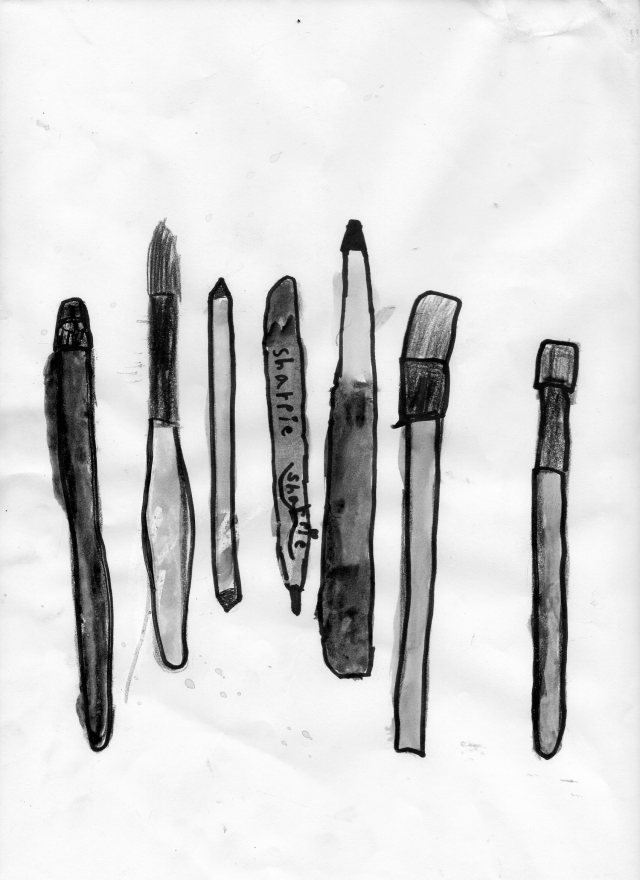
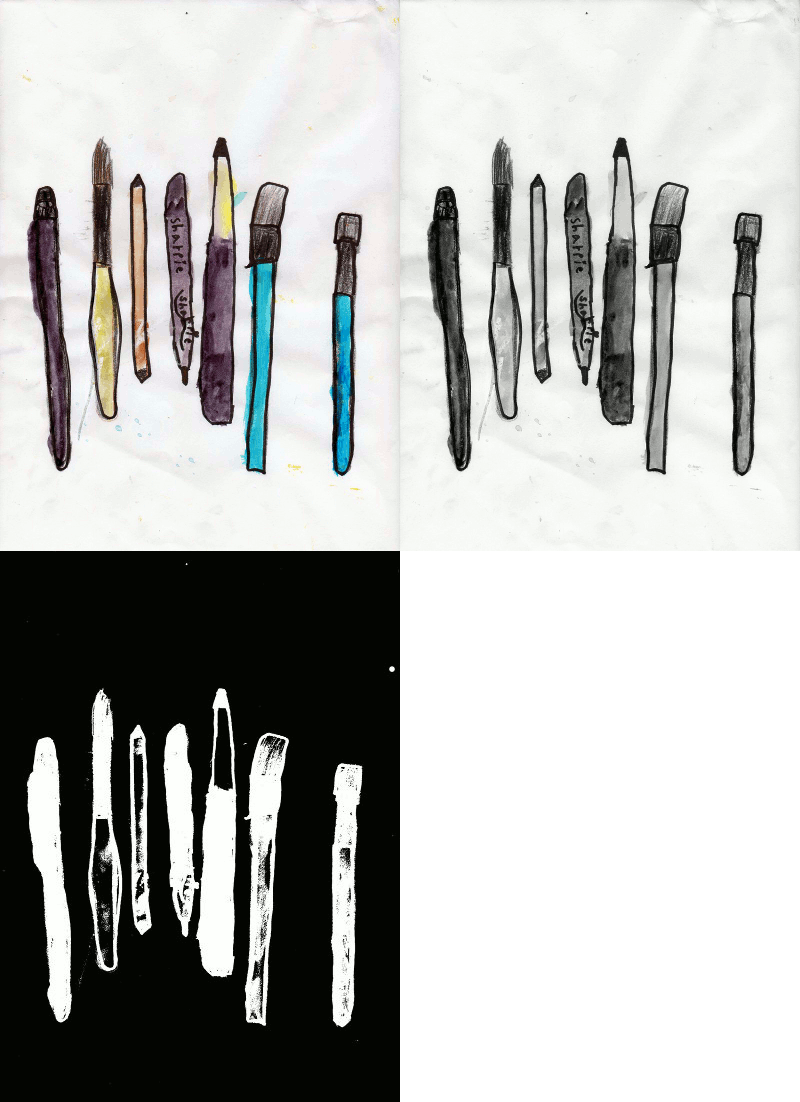
In the second session of our current workshop the children, 7-11 years old, quickly took over every aspect of production, excitedly pursuing their many ideas.  Their creativity has been pouring out in drawing books, notebook pages, watercolors, cut paper and foam, recycled objects, a lot of talk.  They are ready to do some amazing things, as they learn to work together.  

Critical thinking and  collaborative problem solving skills will be crucial to a generation that faces an immense array of global problems .  Teamwork, improvisation and increased communication are natural products of the workshop.  Children become helpers and teachers to each other, their skills and confidence increasing session by session.  

Making animations may seem a small thing, but while they play the students become a small community of creative, focused problem-solvers and peer-teachers.   The challenges this generation must resolve in the near future future are tremendous, but so is the  creative potential of children and young adults working together.

 In addition to producing entertaining, animated inventions (done the old fashioned way, by hand), the program fosters cooperation, self-confidence, student-directed inquiry and the emergence of an organic learning culture.

Wehearyou.net is ready to expand and seeks operating funds for basic capital expenses (new workstations and camera set-ups so the program can expand to other schools and venues), to hire teaching artists, a development team, web gurus, etc. and to keep the workshop stocked with inexpensive and largely reusable art supplies.

 Our mission is to create a productive play setting where we can hear what children have to say, help them show what they can do, listen to their concerns.  They are right to have a few concerns– and to want a place for safe, serious play.  

 Please help by giving what you can.  Click here to make a tax deductible contribution, and thank you!

  http://wehearyoudotnetblahg.wordpress.com/2012/12/12/please-donate/

Your Proverbial Slippery Slope

Development of the concept

According to the author of Medical Killing and the Psychology of Genocide psychiatrist Robert Jay Lifton, the policy went through a number of iterations and modifications:

Of the five identifiable steps by which the Nazis carried out the principle of “life unworthy of life,” coercive sterilization was the first. There followed the killing of “impaired” children in hospitals; and then the killing of “impaired” adults, mostly collected from mental hospitals, in centers especially equipped with carbon monoxide gas. This project was extended (in the same killing centers) to “impaired” inmates of concentrationand extermination camps and, finally, to mass killings in the extermination camps themselves.[1]

Lebensunswertes Leben

I’m listening to a disabled woman whine on National Public Radio that she can barely live on the $1,200 a month SSD disability payment she gets now.  She complains that her parents, in their eighties and in poor health, with many medical expenses of their own, have very little to kick in from their monthly Social Security check for her upkeep.  

And the President is negotiating to lower future payments to the old and infirm for Social Security and SSD.  I’m sick to hear it, that he’s left the New Deal Social Safety net on the negotiating table in the artificial emergency hostage situation Republican phrase masters, at no small expense, have named The Fiscal Cliff.  I say they forget Fiscal Cliff– call it by what it is, when you ask the weakest to make the sacrifice for other people’s comfort, Lebensunswertes Leben (see FN below).  

This disabled caller is worried, calling Tom Ashbrook on On Point to speak for others like her, people already feeling desperately squeezed, living under the poverty line, a line that is drawn artificially low to begin with.  Do the math, $1,200 a month is less than $15,00 a year, excluding the bounty she gets in the form of the Food Stamps and Medicaid.

It seems, according to her, that the price of the transportation for the disabled where this physically and cognitively disabled woman lives  has tripled in recent years.  It now costs her ten dollars to leave her house to go shopping.   Logic would dictate she go out less often, but somehow, she seems very unhappy with the idea of how much this semblance of independence eats into her meager budget.  It’s not as if this lady is rich, strictly speaking she lives on $14,400 a year.  She doesn’t have a cleaning lady and a driver, if that’s what you’re thinking, Eric Cantor. 

She is calling Tom Ashbrook in the context of a conversation about President Obama’ s willingness to hack at the Social Saftey Net in the name, presumably, of bipartisanship — showing more of his famous willingness to concede on major principles before the horse trading actually begins– and preserving the oligarchic status quo.

Oligarchic,” a political adversary will say, raising eyebrows and hackles both.  I say, that is the proper name for the United States in 2012, there is no question of it being otherwise as the rich get richer and the poor and gullible are constantly called on to make more and more dire sacrifices.  

It’s not as if I don’t see the arguments against the position  I’m taking.  After all, why should a person making only $400,00 a year be forced to take the hit and go back to the old tax rate before the Bush Tax Cuts?  That’s why they built the Fiscal Cliff (you can be sure that well-paid right wing genius of phraseology, the coiner of  Death Tax, Collateral Damage, Friendly Fire and so forth, was well-paid to coin this hard image of looming, desperate catastrophe)  to capitalize on Bush’s deferred 2004 mandate to privatize Social Security.

How cool would that have been?   Everyone free to freely invest their retirement money on twenty thousand lottery tickets,  or getting mortgages to buy houses to flip, or on the spin of a roulette wheel that could make them fantastically rich — if they had enough to bet with.   2008 would have been a big “whoops…” for millions who would have lost all retirement income, in addition to the millions who did lose everything, (like the employees of Enron once upon a time) after the last unnatural Fiscal Disaster– the huge fraud that led to the massive losses of 2008. 

That organized effort by fantastically wealthy institutions to defraud people with limited means was perpetrated by very, very, very wealthy people, people it wouldn’t be right to prosecute, or imprison, or force to give back billions obtained by fraud and deception.  They are too big to prosecute, and besides, they are not considered a threat in the same way that an angry young black man is a threat, but, if you look at the full picture, these are some very dangerous motherfuckers.  But anyway, back to lives not worth living, those expendable millions at the bottom of the food chain.

The sickening spectacle unfolds, there goes our supposedly liberal President Barack Obama, sleeves rolled up, agreeing to pony up the Social Safety Net in favor of letting the wealthy pay as little as possible in taxes, the old rate before Bush gave them his temporary one-time tax cut gift a decade ago.  

The President seems to have agreed in principle to tie future Social Security payments to a new cost index that would gradually decrease the amount our nation’s oldest and poorest, our most helpless, receive every month.  They’ll eat cheaper meat if the market dictates it, they’ll eat less meat, they’ll live like Gandhi.  We didn’t make them losers.  If they’d made better choices in life they could have also been winners.   We didn’t make the jungle.

Still, I have to ask:  why is the New Deal being renegotiated at this particularly difficult moment for most people?  Whence this radical right wing drive to shred the Social Safety Net?   Are we still fighting the damned Civil War?   Did Germany win World War Two and nobody told me?   Why is the onus for settling an artificially engineered showdown to cut social spending placed squarely on the backs of our most vulnerable?  Why is it being  presided over by Nobel Peace Prize Winning President Change We Can Believe In?  

There must be a hundred more likely places to start to cut the deficit before we talk about cuts to a program that is solvent for at least the next twenty years without any changes.  

There are those who insist we live in the freest nation on earth.  The vast majority of children who grow up in poverty die in poverty in America.  They live shorter, more dangerous lives, their infant mortality rates are like those of Third World mothers.  American children in poverty, in the patriotic view of those who proudly call our nation the greatest nation in the history of the world, have the freedom to choose between obedience, discipline and participation or anger, rebellion and prison.  

A rational actor, the theory goes, would choose to pay close attention as the cards are dealt and gamely play the crap hand he’s being dealt every round.   He is not playing at a high stakes table anyway.  For example, if he or anyone he knew were to die and a corporation had liability for that death, their family would get a tiny wrongful death settlement.  Think World Trade Center bus boy wrongful death number ($20,000) vs. World Trade Hedge Fund guy’s (multiple millions, widows complaining about the meager pay-outs).

“Let’s see,” the lawyer for the corporation negotiating the settlement for the guy’s death from some kind of toxic product or procedure, would say, consulting charts and punching a calculator “a life expectancy of 31 years times an annual salary, interest, benefits and dividends, of…. let’s see…. zero— prisoners in the State prison system do not make very much money, would be…. we’ll give you $10,000.”

The family would take it, in sorrow and in rage.  But really, that’s the game, the way its set up, how the board is rigged, where the finger rests heavily on the scale, how the field tilts, who the refs are, how corrupt and greedy they are, and billions and billions in wealth to be taken, the wealth of the world is inexhaustible, more money than you could spend in a thousand lifetimes, but who cares?  God bless unfettered Capitalism, nobody can put a limit on an American’s right to luxury a million times over, as if he had a million lives to spend it.  

It’s Winners versus Losers, punk.  It’s a clear choice, really.  You can choose the side that wins every time– even if you personally keep losing big time you can still root for the Winners, bask in their glow.  Or, you can side with the Losers, those who will always lose, always be screwed by those who can.  Some are born with advantages, others with disadvantages.  It’s up to you— pick a side.

So this disabled woman talking to Tom Asbrook complains that if the monthly check is decreased, if she’s told to buy a cheaper cut of meat, lose some weight, don’t use so much heat in the house, wear two sweaters inside, and a scarf and a hat,  live like Gandhi, then she will suffer.  The rest of us need it all, so let’s just say, to her and the millions like her:  be quiet and have a blessed day.

FN:  Lebensunswertes Leben (from Wikipedia)

The phrase “life unworthy of life” (in German:“Lebensunwertes Leben”) was a Nazi designation for the segments of populace which had no right to live and thus were to be “euthanized“. The term included people with serious medical problems and those considered grossly inferior according to the racial policy of the Third Reich. This concept formed an important component of the ideology of  Nazism and eventually helped lead to the Holocaust.[1]  The euthanasia program was known as Action T4.
Making The Ask

Odious as marketing and branding jargon is, with its hideous bluntness and odd verbing, they do cut it to the quick for you.  The bottom line:  there is a trillion dollar a year art to Making the Ask.   If you are a beggar it is essential to master this art.  Truly, it is the difference between survival and the grim alternative.  90% of new ventures fail, regardless of how bold, interesting, useful or passionately held their animating idea may be.  90% of all new businesses of all kinds go under, for failure to skillfully monetize a dream by attracting enough customers.  In the case of nonprofits, early and immediate death is a direct result of failing to master the art of Making The Ask.

I have to confess, I am among the last to know how to Make the Ask.  Up here on the high road we don’t really make the ask, we hold fast to our ideals and, well, we might as well pray as believe we can make the ask.  Prayer requires a faith not all of us up here possess.  Without faith, is anything more ridiculous than prayer?

“Everything is an exchange of value,” says a well-dressed marketing/branding type who cornered Sekhnet at a party before he was skillfully spatulaed off her and on to me by the adroit, self-preserving Sekhnet.  “It’s not necessarily an exchange of money, but you have to give value to people and they will give it back to you.”  Soon he was rolling, the current verb of choice, “leverage”, was appearing in virtually every clause; you have to leverage the value of the idea you already have to create more leverage for leveraging exchanged value to the people you would have leverage your levers for you.

“It’s a fantastic idea,” he said again brightly, “I think you could really leverage it.” The brainstorming continued, all around us the glittering marketing generalities, platitudes and talking points swirled.  In the background, in huge, ominous letters shimmered one phrase.   

Making The Ask.  An organization needs an idea person, the one who develops the program, and an outside person, the fundraising face of the organization, a business savvy bottom-liner, turning the organization’s profile this way, and then that way, according to the needs of the particular Ask. Confusingly, that second person, the one who drums up business and funding, is called the Director of Development.  The one who has the idea and actually develops the program, the creative person, is called the creative person.  That position, and all hypothetical positions, are eliminated, along with the entire wonderful and needed idea, unless the Director of Development is able to get financial legs under the idea and march it forward, monetized and ready to do business in the real world.

The real world is famously strict.  A person may have half a notion that your idea might be good, and they are writing charitable donation checks anyway this time of year.  If they are a betting person they might feel like wagering a few bucks on your tax-deductible project, but where is the Donate Now button on your website?  Now you are asking them not only to copy down an address but to find an envelope and a stamp, write a check– oh, for fuck’s sake— back to the pile of solicitations with their check boxes and their mailers.  They’ve already sent the “perk”– a page of return address stickers, reproductions of the work of doomed kids, the promise of a mug, a bag, a hand-cranked emergency radio flashlight.

“You should have a Donate Now button on your website!” a chorus will immediately agree.  I agree.  So I make the first call.  Network for Good provides this service for thousands of nonprofits.  I talk to Lisa, she’s bright as the young woman I used to know who made her way into the middle class and beyond selling ad space.  I do the math in my head as she talks, for $600 a year I can have a Donate Now button, provided by this nonprofit who will also process the donations and deposit them into my organization’s account, for an additional 3% administrative fee.  Her follow-up email has additional incentives: she will, to close the deal, waive the $199 set-up fee and front me three months, which I will then pay, along with the fourth month, once my coffers are overflowing.

All the Donate Now buttons in the world are useless without a) a good flow of traffic to your donation page and b) a compellingly made Ask.  Crisp, concise, compelling.

I have lunch with my most active Director.  He describes another nonprofit, in the Bronx, on whose board he sits, an outfit with a budget of $16,000,000– mostly government grants. He balks at the price tag for the donate button, as I did.  He’s going to look into Pay Pal and some other ones that are probably free.  Then he tells me the Bronx nonprofit  just hired a guy, an eccentric old koot with a good track record of raising money for nonprofits.  He knows everyone and he gets face to face meetings with people who can drop large checks into the coffers, or get others to do so.  He also recruits Directors of Development and works closely with those directors.   This is the kind of guy I’m looking for, we both agree.

“How much does he charge?” I ask.

My friend laughs.  “He gets $10,000 a month.”  I laugh too, but it is very much like the laugh he apologizes for later.   

“I wasn’t laughing that your friend is losing a battle with cancer, it’s horrible,” he says, “it was that uncomfortable laugh when you don’t know what to say.”  I understood that, but I also appreciated that he’d said so, it made him even more of a mensch in my eyes.  

“Call him today,” he said, “don’t put it off.”  And he was right again.

Meantime I came to the computer just now to start wrestling again with the Ask I am trying to make crisp, clear, compelling, and as much as any of those, concise.  Everyone I know, virtually, has the money to drop a few hundred bucks for dinner from time to time, and they all do.  It is their delight to savor delicious new foods paired with the perfect wine.  Me, if I never ate in another fancy restaurant again it wouldn’t bother me.  Them, it would bother very much.

“This is what you’re doing now, instead of Making the Ask?” demands one too busy gathering and storing nuts for the winter to focus on anything, in relation to my program, but what I should be doing, instead of what I am.  That said, she’s also right.

I’m going to post the Ask in progress, maybe it will spur me to work on the cute little tart in time to send it around for solicitations during this crucial week for fundraising.

You can also, of course, both of you, go here to donate.